Abstract

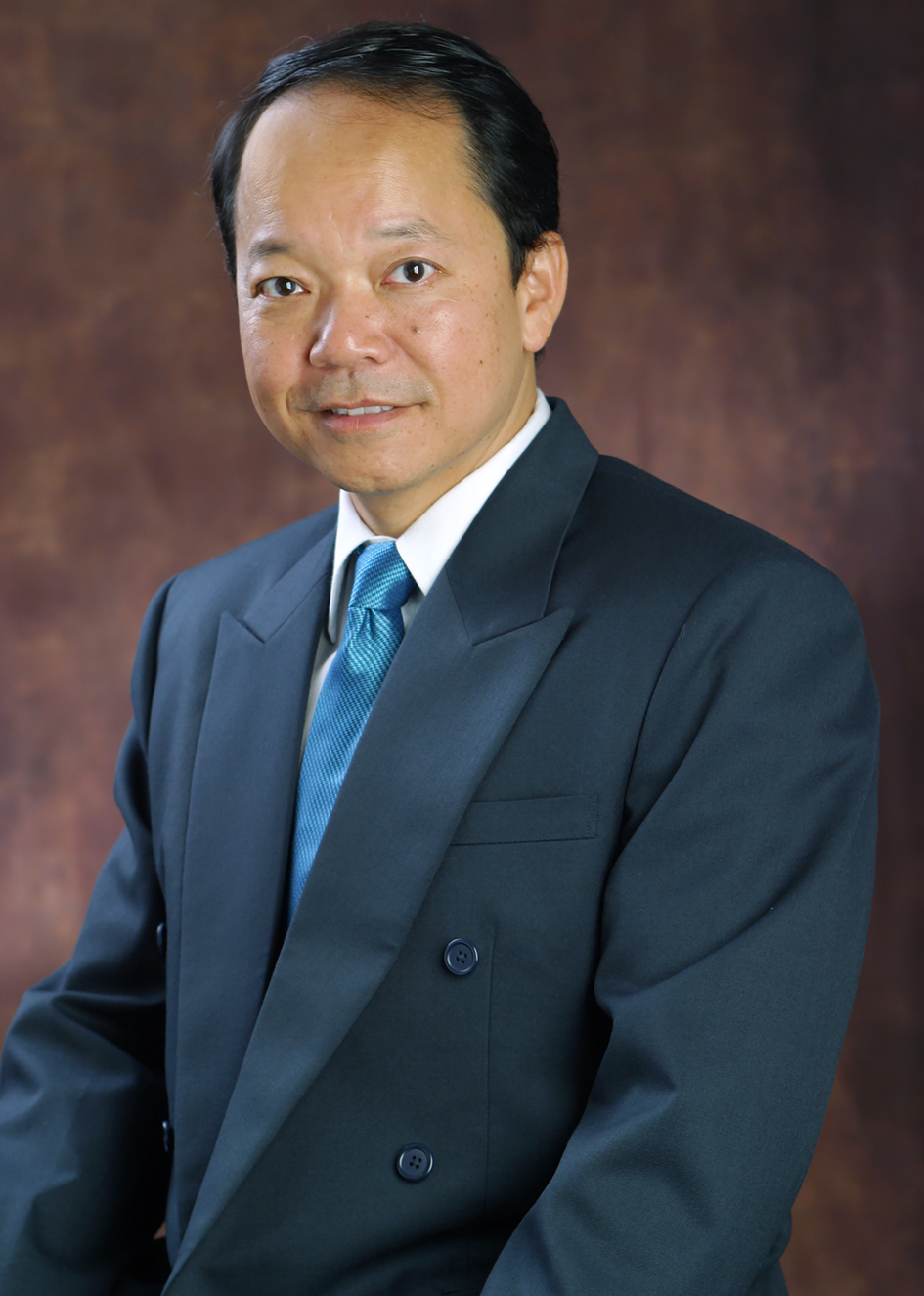
Professor Christopher (Chris) S. Tang has made tremendous contributions to the POMS community. He is a visionary in research developments. It is hard to describe all his accomplishments, but there are a few key directives that are worth mentioning – scope expansion, multi‐disciplinary integration, rigor with relevance, and inspirational.
Chris is a UCLA Distinguished Professor and the holder of the Edward W. Carter Chain in Business Administration. He has formerly served as Senior Associate Dean and Chairman of the school, and Dean of the Business School at the National University of Singapore from 2002 to 2004. He was the President of POMS in 2013‐2104, and has just started his tenure as Editor‐in‐Chief of Manufacturing and Service Operations Management.
Chris earned his B.S. in Mathematics from King's College, London, M.A.in Operations Management, M. Phil. in Statistics, and PhD. in Operations Research from Yale University.
In research, Chris' work is of very high quality, with publications in mostly top‐tiered journals. His early work was on production planning and control, inventory models with yield uncertainties, design and control of flexible manufacturing lines, and capacity configuration problems. This set of research problems were mainstream operations management problems. But even at this early stage, Chris worked with wafer fabrication lines at IBM to ensure relevance and applicability of his model‐based research.
From production management problems, Chris expanded his research to supply chain management. He has made significant contributions to modeling the values of postponement, process re‐engineering, management of contract manufacturers, value of information sharing, and product rollovers. He worked closely with global companies such as Hewlett‐Packard to motivate his research and to provide problem definition and structure.
Then, Chris expanded his research portfolio through the integration of other disciplines into POM. He worked with marketing researchers on production planning and promotion, joint pricing and production decision making, and advanced booking. He continued his integration with retailing by his exploration of joint operations decisions and assortment planning, consumer shopping behaviors, and product pricing. The integration resulted in a deeper specification of the underlying operational issues embedded in marketing decisions.
Chris continued his multi‐disciplinary research in contract design and incentive alignment in supply chains, where economic theories were used to form the basis of his supply chain work.
Another distinctive feature of Chris' contributions to the POMS community is his ability to expand the scope of what POMS is, leading to the push of the community to work on frontier issues that increase POMS' impact to society at large. Here are some examples. First, Chris worked on supply chain risks that could impact new product development. Using Boeing's 787 as a motivating case, he and his co‐authors developed incentive alignment models to show how new product development projects could be adversely affected if the contract designs were suboptimal. Second, Chris identified the importance of socially and environmental responsible supply chains. Motivated by case examples like Nestle, he and his colleagues addressed the problem of how multi‐national buyers could improve the responsibility performance of their supply chain. Third, Chris led the latest research on the use of social entrepreneurship as a way to address the poverty problems in developing economies. He was among the first ones to develop operations management models to explain how values could be created through aggregation, disintermediation and informediation.
Scope expansion is important to the POMS profession, as it helps to ensure relevance and increase impact of POMS. Chris often breaks new ground by opening new research areas for the community.
Chris is also well known in the world of supply chain practitioners. He has given talks, provided consulting projects, and written managerial articles for the practicing world.
Besides research, Chris has been an exemplary educator. While his research was motivated by real life problems and projects that he worked on in industry, such exposure has also enabled him to develop teaching cases that complement the expansion of the POM scope. He has developed cases on micro‐financing for the poor, mobile platforms for developing economies, creating shared values and direct procurement of agricultural products, response management in disasters, and new business models in the age of the internet. These new cases are just examples to show that Chris' courses often went beyond the traditional topics of operations management, addressing the trendy and pressing issues faced by supply chain executives, as well as innovations that industry leaders are looking at to create higher values in the global market. He has won teaching excellence awards at UCLA numerous times.
Chris has also been an outstanding coach for the young scholars. He collaborated with students and colleagues, advised directly and indirectly with many PhD students, and provided encouragement and mentoring to many. This is why the word “inspirational” is used as one of his directives. Besides students, Chris has also served as an advisor to some startup companies.
With an outstanding research record, Chris has also served diligently for the profession. He has served on the editorial boards of many leading journals. His accomplishments in the profession have been recognized through his election to be a Fellow of INFORMS and POMS. Before elected as President of POMS, he has also served on POMS' board.
While serving as President of POMS, Chris greatly expanded the programs and activities that the Annual Conference had on OM practice. The participation by practitioners and industry leaders has increased multi‐fold. Attendance to the talks by these practitioners had been overwhelming, benefitting tremendously the research community. He worked with other colleagues to create prizes and develop other means to promote and recognize practice‐oriented research.
The POMS profession is fortunate to have had the visionary impacts of Chris.