






Abstract
Today, software supports many important tasks in a variety of industries. In the specialized nature of these environments, a common problem faced by software vendors is to correctly signal the true value of a software product to the end users. For example, telecommunications equipment manufacturers design complex software for important functions like provisioning new users in the network. These software products automate various functions that would otherwise need to be done manually. In order to enable potential customers—telecommunications providers—to evaluate and recognize the full value of the product, equipment vendors often provide a free, feature‐limited version of the product to the customer. As the specific features included in the feature‐limited version influence whether the full product is purchased or not, it is essential that the features included in the feature‐limited version be selected judiciously. While the importance of identifying the best set of features has been well recognized, there has been little research to date that systematically addresses this fundamental business decision. This study fills this gap in the literature by providing an objective approach to the design of demonstration software. We illustrate the benefits of our approach through a case study involving the design of a feature‐limited demo for a wireless telecommunications equipment manufacturer.
Keywords
Introduction
Software products are typically classified as experience goods (Chellappa and Shivendu 2005), as their value is difficult to estimate before actual use (Nelson 1970). Customers account for the greater uncertainty associated with experience goods by lowering their valuation of such goods (Heiman and Muller 1996). Vendors often circumvent this difficulty by letting consumers “use the software for free under certain limitations such as time and functionality” (Ilan 2001). These free evaluation (or demonstration) versions, typically referred to as demos, allow the customer to experience the product directly, and to estimate the values of the features included in the demo more precisely. A well‐designed demo can significantly reduce the uncertainty associated with the product, and thereby facilitate a more informed purchasing decision on the part of the customer.
This study was motivated by a demo design problem drawn from the telecommunications industry. For telecommunications providers, provisioning—the setup and configuration of equipment to activate telecommunications services with customer information—plays a crucial role in improving efficiency and reducing costs. The degree of automation facilitated by provisioning software is a key driver for these gains, and a good understanding of the capabilities of the features in the software helps discern the extent of benefits that can be realized. The vendors of provisioning software—telecommunications equipment manufacturers—usually signal the value of their product by providing free, feature‐limited versions of their software to potential customers.
The full provisioning software product typically has hundreds of features that can be invoked by the operator (or end user) as needed for the task being performed (e.g., adding new neighbors or auditing the network). The features included in the demo version are available for free, while the remaining features can be accessed only after obtaining a license. The demo helps operators estimate the functionality and the economic impact of the full product by allowing them to try out the features in the demo.
While our work is motivated by a problem from the telecommunications industry, it is important to recognize that this is not an isolated context. Customized, feature‐limited versions of industrial software are popular in other domains, with the enterprise software segment being of particular relevance. They are particularly prevalent in industries that require close interaction between customers and vendors (such as the telecommunications and enterprise systems industries), and vendors in these contexts typically have a good idea of their customers' cost structure. While this is convenient, the approach presented in the study remains applicable even when this is not the case.
Companies like Oracle, Salesforce.com, and SAP use feature‐limited versions of their enterprise software to entice customers into buying the full product. Oracle provides a restricted‐use‐license containing many free features of its software products, with the PeopleSoft Interaction Hub being one example. While the restricted‐use‐license allows free access to some of its features, customers need to buy a full‐use‐license to use it as a full‐feature enterprise portal (Oracle 2012). Feature‐limited versions of software are also prevalent in the software‐as‐a‐service (SaaS) industry. For example, Salesforce.com provides its CRM enterprise software in two feature‐limited editions, Professional and Enterprise. The Enterprise edition contains all the features of the Professional edition, along with some additional features at a higher subscription rate. The customer can access even more features through the Unlimited edition 1 by paying an even higher subscription rate. Along the same lines, SAP provides their Product Stewardship Network software in tiers—a free feature‐limited basic edition and various licensed editions. 2
In general, a demo could be feature limited or time limited. The appropriate limitation to impose often depends on the type of software product in question. As time‐limited demos provide the customer with the complete software for a limited period of time, they provide customers the opportunity to estimate the value of every feature in the product. On the other hand, customers may be reluctant to invest the significant amount of time that might be needed to do a comprehensive evaluation of a large software product that they will not have after the evaluation period has expired. This is particularly true in the context of enterprise level software, where a customized feature‐limited demo could substantially reduce the time customers need to spend evaluating its potential benefits. Unlike the consumer sector where time‐limited demos are common (e.g., WinZip), feature‐limited demos are more appropriate for large customized software products that are to be deployed on an enterprise scale. Feature‐limited demos eliminate the possibility of a comprehensive evaluation. However, if the features included in the demo are not too many and have been arrived at judiciously, the customer might be more willing to evaluate the product as they will be able to estimate its value without committing a significant amount of time.
Conceptually, a demo provides a potential customer with a signal of the product's utility. This signal, which is the expected value of the full version over the demo, should influence a customer's willingness to purchase the software product, and therefore, it is crucial that the signal be chosen such that it maximizes the customer's willingness to pay. The key criterion that should determine the signal, and consequently drive the design of feature‐limited demos, is elucidated in a posting on the discussion board The Business of Software, 3 which states that, by limiting the features, “you are selling the difference between the trial version and the full version, and you make that difference bigger by disabling some features.” Froberg ( 2015) of freemium.org suggests that the value of features should impact the design—that is, the vendor should “look at what value is created from the customer's perspective with your free and premium products respectively.” We recognize that the vendor has to incorporate the customer's evaluation criterion into their optimization model, and explicitly incorporate this idea into the demo design process.
At a high level, there are some similarities between the demo design problem and the strategy of creating a minimum viable product (MVP) to avoid developing features that customers do not want. However, the problems are fundamentally quite different. In the context of designing a demo, the intent is to reduce the customer's uncertainty and signal to them that the full product has value. In the context of a MVP, the point is to build a minimum set of features that is enough to deploy the product. Once the MVP is deployed, feedback from early adopters is used to decide the direction future versions of the product will take. While the full product in the demo design context is a well established entity with a known set of features that have relatively predictable impacts on a customer's tasks, the full product is a nebulous and evolving object in the case of MVP.
This study makes various contributions, the most important of which are a formal representation of the design of feature‐limited demo as an NP‐complete optimization problem, and fast, effective procedures to solve it. While prior research has investigated strategies for providing demos (e.g., Cheng et al. 2015, Niculescu and Wu 2014), very little research exists that provides a scientific basis for the design of feature‐limited demos.
We first present the customer's problem of estimating the incremental benefit of purchasing the complete software product, given a feature‐limited demo. The benefits could be through productivity gains resulting from the increased efficiency with which a customer can carry out the tasks they need to perform, or from a re‐engineering effect which enables the customer to execute tasks that were not being performed before. We formulate the customer's problem as an integer program, and show that it is easy to solve. Next, we present the vendor's problem of designing the best feature‐limited demo to provide to a specific customer, as a nonlinear integer program. We show that the vendor's problem is NP‐complete in the strong sense, and that state‐of‐the‐art solvers like BARON and CPLEX have difficulty solving realistic versions of the problem. We solve the problem effectively using a fast converging “scenario aggregation” (SA) approach based on Lagrangian decomposition (Guignard and Kim 1987). As solving the problem in situations where the parameter variability is low is observed to be time‐consuming, we develop a continuous version of the problem that exploits the fact that the parameters have low variability. We incorporate the results from the continuous model into an “augmented heuristic” that solves the problem very quickly.
The problems faced by most telecommunications and enterprise systems companies tend to be quite large in terms of the number of features and the number of tasks the features can affect. We have used an example from the telecommunications industry to illustrate that addressing the problem systematically can make a difference, even for small problems. We also conduct several experiments on large versions of the problem to show that the approaches introduced in the study can scale well to solve large problem instances.
As this work is motivated by a problem from the telecommunications industry, we have focused on the problem from the perspective of designing a demo for customized industrial software. This customization can be viewed as being done either for a single customer, or a segment of customers who can be viewed as homogeneous for the purposes of this study, that is, all customers in the segment have similar needs and value their features similarly. However, we also show how the formulation can easily be generalized to fit a multi‐segment context, where a single demo needs to be created across all customer segments. We illustrate how this provides the vendor with a process to estimate the expected benefit of perfectly identifying the segment to which a customer belongs.
The rest of this study is organized as follows. We begin with a brief review of related work in section 2. The customer's problem is introduced in section 3, and the vendor's problem (which incorporates the customer's problem in it) is presented in section 4. A real example of the demo design problem from the telecommunications industry is discussed in section 5. Section 6 shows that problems of industrial scale cannot easily be handled by commercial solvers such as CPLEX and BARON. A heuristic leveraging Lagrangian decomposition is introduced in section 7; this is refined using results from a continuous adaptation of the vendor's problem in section 8 to address the case where the problem parameters have very low variability. A generalized version of the model that can create a single demo across multiple segments of customers is presented in section 9, and section 10 concludes the study.
Literature Review
Consumers make decisions on products to purchase based on the value they expect to gain when using the product (Kreps 1990). In general, products can be classified as experience goods or search goods, where experience goods are distinguished by the consumer's inability to determine the quality of the product attributes before purchase (Nelson 1970). Heiman and Muller ( 1996) note that consumers incorporate this uncertainty into their decision making by lowering their valuation of such goods. They go on to point out that, “in the case of high‐quality products, both consumer and producer have an incentive to reduce the uncertainty about the product's performance” (Heiman and Muller 1996).
In the context of software products, the consumer can utilize descriptions of the product and its features to obtain an estimate of the value of the product. However, as the estimation of these values is inherently difficult, the estimate so obtained may not be a very accurate reflector of actual product value. It is in this context that software vendors often resort to providing an evaluation (or demo) version of the product. If a carefully designed demo is made available, it helps the consumer estimate the value of the full software product more accurately (Li and Gery 2000). Buying a full‐feature version based on a free demo is similar to purchasing an upgraded version based on a basic version. Several factors, such as the obsolescence of an existing product (Mehra et al. 2014) or the cost of upgrading (Bala and Carr 2009), affect a customer's decision to upgrade. Given a demo, the customer can estimate the value of the full software and use that as the basis for making a purchase decision. While there is consensus in the literature on the positive value of demos, there is little research to assist with the configuration and design of demo software. The research that does exist focuses primarily on various aspects of quality uncertainty, and the role of demos in mitigating this uncertainty.
Feature‐limited software can be viewed through the lens of versioning, where a product is vertically differentiated into free and premium versions. Versioning of products using free trials and samples to increase the customer's willingness to pay for the full version has been shown to be an effective strategy for promotions (Lewis and Sappington 1994, Wang and Zhang 2009). Wei and Nault ( 2014) consider the monopolist strategy of selling feature‐limited information goods to customers who differ in individual tastes for quality, and find that any horizontal differentiation favors versioning. In the context of learning by word‐of‐mouth, Niculescu and Wu ( 2014) find that feature‐limited software is optimal when the prior on features not in the demo is either relatively low or high, but not in between. Li and Gery ( 2000) suggest that demos allow customers to make a more informed estimation of a product's true value, thereby reducing the uncertainty faced by the customer. Roberts and Urban ( 1988) argue that by reducing uncertainty, demos help software vendors increase the consumer's perceived value of the product.
While the feature‐limited business model has been around since the 1980s, there has been renewed interest in recent years due to the fact that a large number of internet start‐ups and smartphone app developers have found the model to be very attractive. Seufert ( 2013) shows how a data‐driven approach is best implemented in the development of feature‐limited software. Using case studies of successful feature limited demos, Semenzin et al. ( 2012) suggest that it might be better to make the core features of the software available for free. Lee et al. ( 2013) consider consumer usage, upgrades and referrals to find the value of the demo relative to the premium product. Similarly, freemium.org has a model that uses conversion rate, number of free users, marginal cost per free user and contribution per premium product to decide the optimum mix of free and charged features. However, these approaches are less appropriate in the context of designing customized industrial software, where the customers are few but large, and where vendors usually has a deeper understanding of the tasks being performed by end users.
The Customer's Problem
Given a feature‐limited demo, the customer has to estimate the incremental benefit the complete software product will provide over the demo. This incremental benefit includes the benefit from new tasks that the customer can perform (re‐engineering effect) and from the ability to perform existing tasks more easily (productivity effect).
Terminology and Related Notation
We consider customers who routinely perform a set of tasks. The relevant set of tasks


The set of features


The problem facing the customer is that of identifying the tasks to perform had the complete software product been available, and of estimating the total benefit from performing these tasks. The original total profit, when no software or demo is available, is
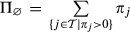


The value of the software product to the customer,







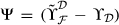
The signal Ψ is defined as the gap between the estimated product value and the value of the demo, that is,


Relevant Notation
An Illustrative Example
Consider the simplified network monitoring software in Figure 1. It has six features, represented by the nodes in the lower part of the figure; that is, 


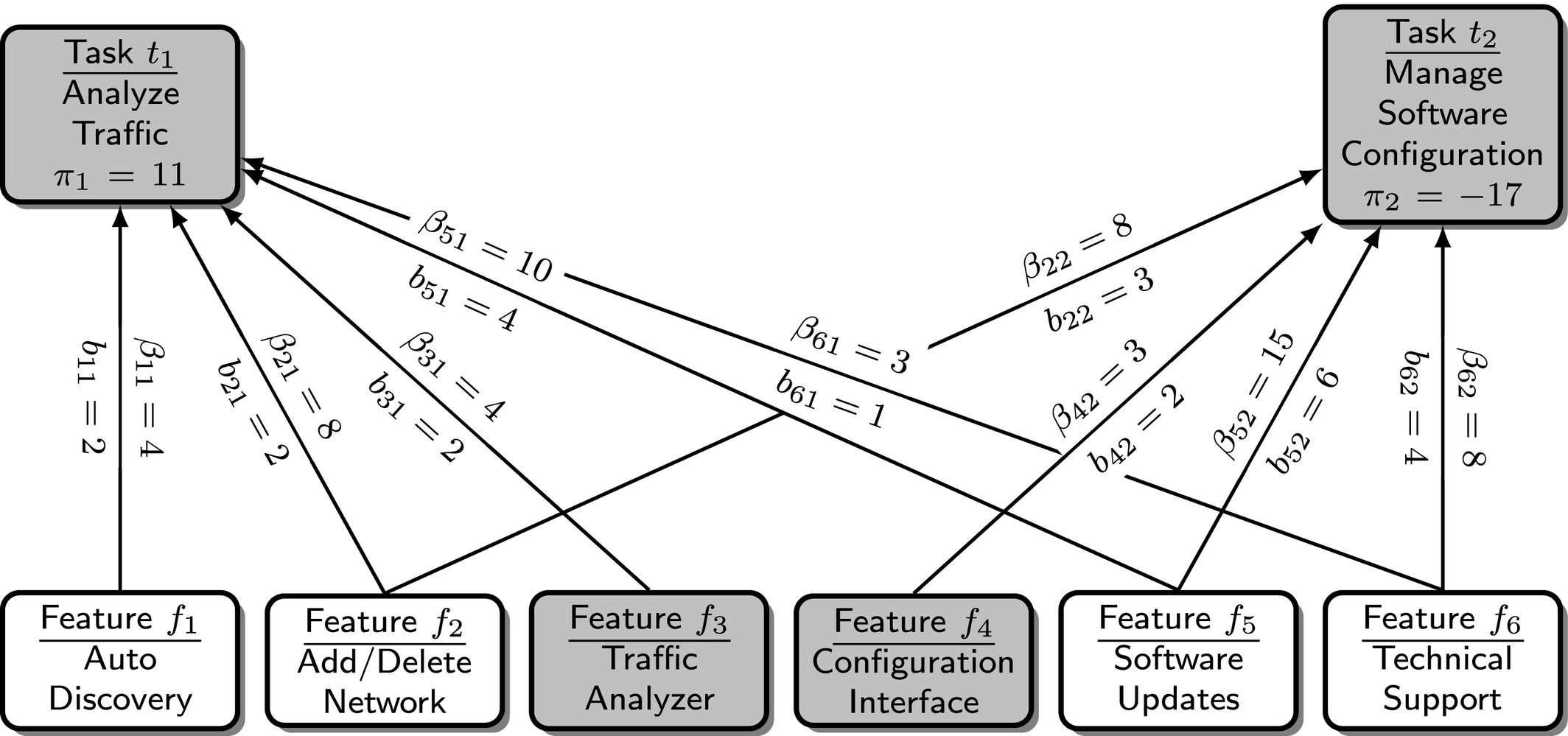
Simplified Example
Feature i and task j are connected by an edge if the availability of feature i will improve the profit from task i (by 


Prior to the software being considered for evaluation, 


Incorporating Uncertainty: The Scenario Approach
Recall that the customer approximates the 


The customer's problem can be viewed as a multi‐period planning problem under uncertainty. The decision to purchase the software has to be made in the first period in the presence of uncertainty. If the product is purchased, the estimated incremental profit is 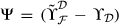
Given the inherent nonlinearity associated with integer programming, we cannot replace a random quantity (


One approach to solving stochastic programs is to approximate the uncertainty in the parameters through a set of scenarios with associated probabilities. A scenario can be interpreted as a state of nature, or equivalently, as one possible outcome of the uncertain parameters. In most cases, incorporating all possible scenarios into the decision making process is not practical as the number of scenarios is too large. Consequently, the deterministic equivalent 4 is usually approximated by a model involving fewer scenarios. If the number of scenarios used is large enough, the approximation obtained will be of good quality.
In the context of the customer's problem, each scenario s is represented by a random draw 




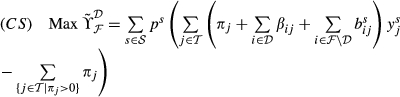






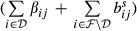



Based on our initial motivation of the telecommunication provisioning problem, we have considered that the customer can perform each task independent of the others. If a task 


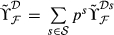


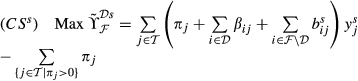
As the demo being considered is a feature‐limited one, the customer has to identify the intrinsic value of the demo and subtract this value from the optimal objective function value of (CS) in order to identify the real benefit from buying the software. The intrinsic value of the demo 

The Vendor's Problem
The vendor has to design the best feature‐limited demo possible. The best feature‐limited demo will comprise those features that will maximize the value of the signal detected by the customer. The process of identifying the features to include in the best feature‐limited demo has to incorporate in it the customer's evaluation approach. In the previous section, we established that the best way in which the customer can identify the signal is through the scenario approach. The vendor needs to include this process into the design process and therefore, the customer's problem and the vendor's problem are intricately linked together. Identifying the best signal is in the interest of the customer, as is providing a demo that will result in the best signal in the interest of the vendor. To this extent, the objectives of both parties are aligned, and there is no reason for the customer to intentionally use an inferior approach to estimate the signal.
The Discrete Model with Uncertainty: The Scenario Approach
The discrete version of the vendor's problem can be formulated as (VS), after defining the following additional variables—(i) 

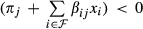
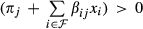
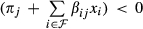



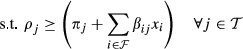



The objective function maximizes the estimated strength of the signal by taking the expectation over the signals from each of the scenarios. The estimate of the signal obtained by the vendor need not be identical to that obtained by the customer as the scenarios generated by the two parties are likely to be different, and the vendor is constrained in the number of scenarios that can be used when solving formulation (VS). As with the customer's problem, the objective function coefficient of 


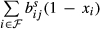





The telecommunication problem that motivated this study does not have any dependencies among the features, and we have not incorporated such dependencies into the vendor's problem. However, they can be easily introduced by adding constraints of the form 



As we are considering customized software where the vendor has a good understanding of the customer's cost structure, we have assumed that it is possible for the vendor to obtain reasonable estimates of a customer's 


Problem (VS) is a nonlinear integer program, with the product of the 






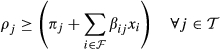



The objective function can be interpreted as follows. For any task j that is selected to be performed in scenario s, the associated benefit is at least equal to 


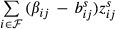


The feature inclusion decisions 


The vendor's problem is NP‐complete in the strong sense.
As the vendor's problem is NP‐complete, the number of scenarios the vendor chooses to use will play a key role in its solvability from a practical perspective, with the vendor's problem taking longer to solve as the number of scenarios increases. While it is feasible (and realistic) for the customer to generate thousands of scenarios (given that the customer's problem is not NP‐complete), this is not an option for the vendor. Ideally, the number of scenarios used by the vendor has to be small enough to ensure solvability and large enough to ensure that the optimal demo stays relatively unchanged if 
One characteristic of the optimal demo is that the effective re‐engineering benefit signaled by any feature included in the demo will exceed the productivity benefits given away as a result of this feature being part of the demo. This is because the signal is obtained as the difference between the estimated value of the software given the demo, and the value that is given away through the demo. Consequently, if a feature gives away more than it helps improve the value of the signal, a better signal can obtained by removing this feature from the demo.
Case Study: 3G Wireless Network Provisioning Software
As mentioned earlier, this work is motivated by a feature‐limited demo design problem encountered by a major wireless telecommunications equipment manufacturer. In this section, we analyze a small version of the problem they encounter, and show that a systematic approach can help even with small problems.
A typical 3G wireless network consists of base‐stations deployed across a geographical region controlled centrally by a base station controller. Once a network is deployed, the network operator only needs to manage the network.
WiNetPro is a free feature‐limited software developed by the company to automate several network operator functions for a telecommunications service provider. This helps the operators get familiar with its functions and enables them to make an informed decision on the purchase of the complete, licensed version. The company assigned features into their demo in an ad‐hoc manner based on intuition about customer requirements and feature functionalities. Our model identifies an optimum mix of features that provides a better signal to the customer. Specific names have been altered and the model simplified for the purpose of illustrating the case study.
Figure 2a gives the technical overview of how the software operates. The Wireless Telecommunications Network Manager represents the wireless network that is currently under operation. All configuration data of the network is stored here. In order to automate configuration value changes, the operator would extract and upload all the system data from the network manager to WiNetPro. WiNetPro also has the provision to take configuration change instructions or recommendation from an external source. The External Performance Tuning Software takes as input performance data of the network and makes parameter change recommendations to WiNetPro. The operator would then use WiNetPro to automate various functions such as Neighbor list changes or backhaul reconfigurations. The software would in turn generate configuration value change scripts which can be downloaded to the network manager so that they can be run on the network at a convenient time.
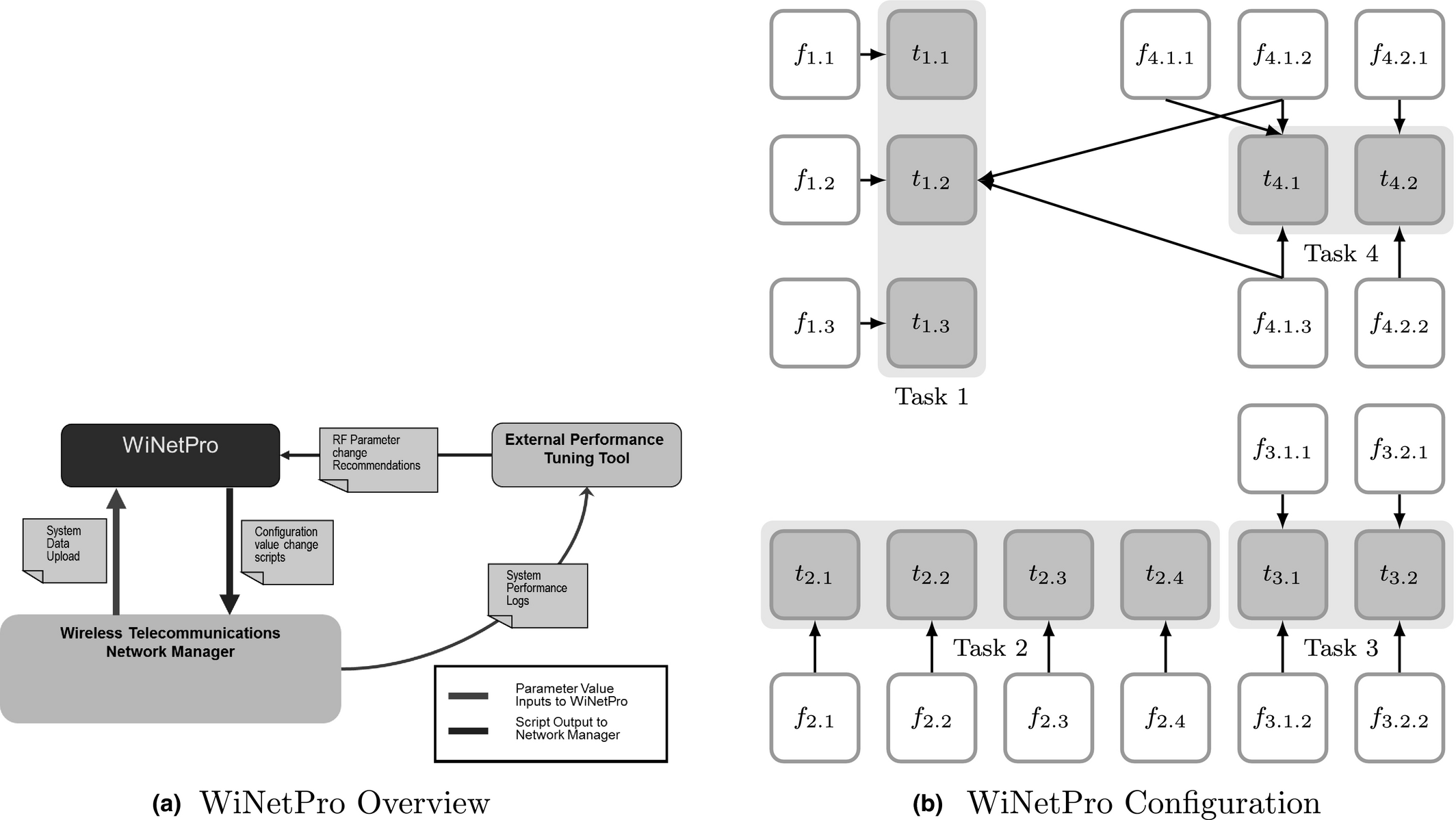
WiNetPro Overview and Configuration
Features
Figure 2b is an adapted version of a much larger version of WiNetPro's features‐task network. There are 4 tasks consisting of 11 subtasks. Task 1 consists of three subtasks 


The list of features to include in the demo were originally chosen in an ad‐hoc manner. The intention was to select one basic feature from the set of features contributing to a task. The demo consists of features 


Case Study Optimization
We solved the problem in CPLEX to identify the set of features to include in the demo version of this simplified WiNetPro software. The average values of the parameters 


Average Values of 


Average Values of 


We obtained 100 scenarios through 100 random draws from a uniform distribution 





Signal Comparison (in $1000s)
Performance of Commercial Solvers on Large Problems
The larger version of WiNetPro has over 100 features. In this section, we conduct additional experiments on problems of realistic size to investigate how effective commercial solvers are in solving the vendor's problem. The Branch‐And‐Reduce Optimization Navigator (BARON) (Sahinidis 1996) is a state‐of‐the‐art computational system for solving non‐convex optimization problems, while CPLEX ( 2011) is recognized as the leading software for solving integer programs. CPLEX is run on Intel Core i5 CPU running at 3.20 GHz while the BARON solver is run on NEOS servers. The server used for our experiments had 2 Intel Xeon X5660 CPUs running at 2.8 GHz (12 cores total).
There are various aspects of the problem that could potentially affect the effectiveness and quality of the solutions obtained. Two critical ones are the variability of the parameters and network structure (the density of the network linking features and tasks). The average connections per feature (r) and the average connections per task (q) are set to 10% in the sparse network, 50% in the medium network and 90% in the dense network.
The results presented in this section are for a software product with 75 features that can (profitably) perform 100 tasks for the customer. We recognize that in general, enterprise software programs contain more than 75 features and 100 tasks. For example, Oracle's PeopleTools 8.53 has 425 features (PeopleTools 2013). The results of these experiments make it clear why we chose not to consider more than 75 features and 100 tasks—neither of the commercial solvers were able to provide any result even after 2 days. The parameters 


Performance of BARON and CPLEX on Large Problems
While BARON is able to solve the smaller problems relatively quickly, it encounters difficulty as the problem sizes get larger (in terms of network density and the number of scenarios used). Moreover, we find that the solutions found by BARON are often suboptimal, and hence not reliable. CPLEX on the other hand, is able to solve all the problems but one. However, it takes a considerable amount of time to solve them. The largest problem in the sparse network was not solved even after 50 hours. As more scenarios give more precise estimates of the signal, these results make clear that neither solver will be able to solve problems of realistic size, when more features and tasks are involved.
The Scenario Aggregation Approach
As the number of scenarios increases, so does the difficulty of solving formulations (VS) and 


Lagrangian decomposition (Guignard and Kim 1987) based approaches have been successfully used to solve scenario aggregation problems (e.g., Glockner et al. 2001, Jönsson et al. 1993), and the approach proposed by Jönsson et al. ( 1993) can be easily adapted to our context. This involves defining scenario‐specific “clones” 






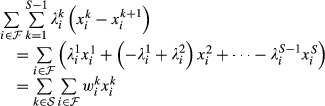
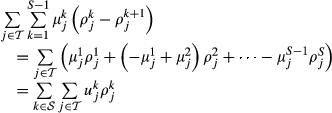




The Lagrangian dual problem 











Performance of Scenario Aggregation
As we observed in our earlier experiments, neither BARON nor CPLEX can solve problems of realistic size efficiently. We apply the scenario aggregation algorithm to the same problems, and the results are provided in Table 6. We also repeat the results presented in Table 5 for easy comparison. The maximum iteration counter is set to 30, and the procedure terminates when the gap between the upper and lower bounds falls below 1%. The upper and lower bounds are obtained through the scenario aggregation procedure described in the Appendix B. Note that the lower bound is always a feasible solution to the original integer program 
Performance of Scenario Aggregation
Scenario aggregation identifies optimal or near‐optimal solutions extremely quickly, taking <25 minutes on average, across all the 12 problems solved. The sparse network problems took around 5–10 iterations (mostly to reduce the upper bound to reach the tolerance of 1%) while the medium and dense network problems took only a single iteration to find the solution. The best feasible solution identified is the same as the optimal one obtained from CPLEX in 9 out of 11 problems—for the remaining 2 problems, the feasible solution is <0.03% away from the optimum. The relative effectiveness of scenario aggregation gets more pronounced as the number of scenarios approaches 100. In the largest problem involving the sparse network, both BARON and CPLEX failed to provide any solution within a reasonable time while scenario aggregation found a solution in <2 hours. These results show that scenario aggregation can find near‐optimal solutions quickly, with the benefits being more apparent when the number of scenarios is large. A large number of scenarios is preferred, as it gives more precise estimates of the signal. However, that is precisely when both the optimal approaches are likely to fail.
Next, we conduct a similar set of experiments to study the impact on the performance of scenario aggregation as the variability of parameters decreases. In these experiments, we use 


Performance of BARON and Scenario Aggregation (Low Parameter Variability)
A tolerance of 3% is used.
Scenario aggregation solves all the problems involving medium and dense networks relatively quickly, taking 1278 and 207 seconds respectively on average. BARON had difficulty with these problems and could only solve the smallest problem in the medium network suboptimally. The performance of scenario aggregation deteriorates considerably when the network is sparse; it takes 5–8 iterations and over 36 hours on average for the heuristic to converge within a gap of 3%. While the best solution found was always better than that provided by BARON, the slow convergence is a concern.
A Continuous Approximation and the Augmented Heuristic
We see that BARON, CPLEX, and scenario aggregation are all unable to solve problems efficiently when the variabilities in 


The Continuous Model
We start with a simplified model where the feature‐to‐task mapping is assumed to be homogenous. This implies that we have 

We define q (≥1) to be the average number of features connected to a task and r (≥1) to be the average number of tasks connected to a feature. Therefore, the total number of connections between features and tasks is qT = rN. On average, each task will map to 









For a homogenous feature‐to‐task mapping with 


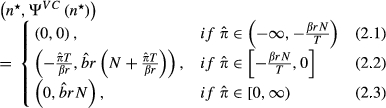
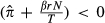
Propositions 2.1 and 2.3 identify situations where it would not be in the best economic interest of the vendor to provide a feature‐limited demo. Proposition 2.1 says that the vendor will not provide a demo if the pre‐software profit 



Incorporating Insights from the Continuous Model
We saw earlier that both the optimal and the scenario aggregation approaches have difficulty when the parameter variability is low, and the network is sparse. In this section, we develop an Augmented Heuristic (AH) that explicitly incorporates the results from the continuous model into formulation 
First, we obtain an estimate of the optimal demo size 







Table 8 compares the results of the Augmented Heuristic and scenario aggregation for problems involving low parameter variability (


Performance of Augmented Heuristic (Low Parameter Variability)
A tolerance of 3% is used.
The quality of the signal degrades slightly as the network becomes sparser. However, the signal from the Augmented Heuristic is almost the same as the best one obtained from scenario aggregation. In fact, in several cases, the Augmented Heuristic is able to improve upon the signal from scenario aggregation. This is probably because the scenario aggregation algorithm is terminated at the convergence tolerance of 3% for the sparse network and 1% for the medium and dense networks. The fact that these near‐optimal solutions are identified in a matter of seconds—the average solution time for the 12 problems we tried was only 27.8 seconds—makes the Augmented Heuristic particularly appealing for low parameter variability contexts. We see that the optimal demo size decreases as the network density increases, as predicted by the continuous model.
Table 9 provides a quick reference for the best method to adopt for each combination of parameter variability, network structure and number of scenarios. The Augmented Heuristic is preferred for problems with low parameter variability. It is able to find a near‐optimal demo within 28 seconds on average with an accuracy within 3% of the optimal. For problems with high parameter variability, the scenario aggregation approach is able to find the optimal signal in <25 minutes on average. Moreover, scenario aggregation is the only method that is able to solve all 12 trials. In the sparse network with high variability, scenario aggregation occasionally gives suboptimal signals when the number of scenarios is fewer than 25. CPLEX is practical here, and we recommend using it when the number of scenarios is fewer than 25.
Performance Comparison
CPLEX is the preferred method for scenarios ≤25.
Extending to a Multi‐Segment Model
So far, we have considered a context where the demo is being constructed either for a single customer, or for a single segment of homogeneous customers. This is because our work is motivated by a problem from the telecommunications industry where, even when the demo is not being built for a single customer, the customer segments were clearly identified. Many software vendors do not have that luxury, and would need to either design a single demo to serve across multiple customer segments, or spend time and effort to identify the customers in each segment (which would enable them to provide customized demos to each segment). All the formulations and solution approaches we have presented so far easily extend to the context of building a single demo in a multi‐segment environment.
Usually, vendors can segment the market according to customer needs. Suppose 







If the vendor had perfect information on the segments each customer belonged to, they could provide customized demos to each customer segment and do better. The difference between the expected signal from the customized demos and from the signal from the single demo is the expected value of knowing the customer segments perfectly. This expected value of perfect information (EVPI) provides the loss in the signal resulting from the need to build a single demo. Conversely, it provides the vendor an estimate of the amount they should be willing to spend in order to identify the segments their customers belong to.
Table 10 shows results from computational experiments involving three customer segments—a “low” segment comprising customers who generate limited benefits from the software, a “high” segment comprising customers who generate substantial benefits from the software, and a “medium” segment comprising customers who generate benefits that are somewhere in between. The “Low,” “Medium,” and “High” columns in Table 10 present results based on providing a customized demo to each segment. Results for providing a single demo that hedges across all three customer segments is provided under “Combined.” The “EVPI” column provides the expected value of perfect information—this is the expected benefit to be gained by identifying the members of each customer segment perfectly.
Multiple Segments and EVPI
For these experiments, the segments are created by keeping the coefficients of variation (CV) for 


Experiments are conducted on three customer segment type distributions for each network structure. A total number of 100 scenarios are generated in each experiment; the first category has 







We see that the EVPI is smallest when the probability of a customer belonging to a high type segment is high. This is partly a result of the fact that the high segment drives the combined demo to a great extent, and the loss in signal is primarily a result of some features not being in the demo to help the low and medium types. Overall however, Table 10 suggests that the loss in the signal by combining all the segments is not very high. It is possible however, that the magnitude of the loss will increase as the number of segments increase.
From a business perspective, the decision of whether to provide a single demo or not must be made carefully. As we now provide a single demo that, in a crude sense, averages across different customer segments, the single demo is clearly not optimal for any single segment. Ideally, the best option is to customize a demo for each segment. However, this requires that the firm distinguish between customers in different segments. Table 10 provides the benefits of identifying customer segments perfectly. However, there is benefit to be gained even if the customer segments are not identified perfectly, that is, even if the firm can make noisy observations about the segment to which a customer belongs. A very similar analysis can provide the vendor with the expected value of imperfect information as well. That is, the models presented in this study offer a sound basis for the firm to choose between providing a single demo and providing several customized demos based on a noisy signal about the segment to which a customer belongs.
Conclusions
An important problem for many companies is that of designing a feature limited version of their product targeted to specific customers in order to signal the value of the full product. Such feature‐limited products have been used successfully in various industries. In spite of the popularity and advantages of this model, there has been very little research into the optimal design of feature‐limited demonstration software. This study is the first attempt to develop a theoretical basis for designing feature‐limited demos.
We first develop a scenario‐based approach to model how customers should evaluate software products, given a feature‐limited demo. The customer's problem is shown to be easily solved through the sequential evaluation of the signal under many scenarios. However, this is not the case with the vendor's problem—the vendor needs to incorporate the customer's evaluation process into their decision, and identify the best demo to provide the customer. We formulate the vendor's problem of designing the best feature‐limited demo as a non‐linear integer program that incorporates in it the scenario‐based evaluation approach used by the customer and show that it is NP‐complete. We show how to linearize the non‐linear formulation, and show through a case study from a telecommunications company how optimal design can be beneficial even when the problem is small. The case study highlights how feature‐limited demos can be used by a vendor to “showcase” features of a product and entice customers to try out automation for common tasks. Implemented well, this can help vendors break into new customer segments.
We find that, as the problem size increase and approach realistic dimensions, neither the non‐linear nor the linearized version can be solved directly in state‐of‐the‐art commercial optimizers. This is particularly relevant as a large number of scenarios are required to get a stable solution. To overcome this difficulty, we present a heuristic solution approach that relies on Lagrangian decomposition and scenario aggregation. Computational experiments show that this approach identifies optimal or near‐optimal solutions, and takes substantially less time than the optimal approaches.
However, this heuristic also requires considerable computational time to find good solutions when the network is sparse and the variability in the problem parameters is low. We tackle this by simplifying the problem into a homogeneous one and solving for the number of features to include in the demo analytically. The insights gained from the analytical model are used to identify the tasks that contribute to the signal. Fixing these tasks reduces the size of the integer program, which can then be solved quickly using standard optimizers. We provide a comparative table to guide vendors on the solution approach to take, given their specific context.
The formulations and solution approaches presented in this study can easily be extended into a context where multiple segments of customers exist—the vendor can either create a single demo across all customer segments, or segment‐specific demos for each segment. The vendor can use the ideas presented in this study to estimate the expected value of identifying the segment to which each customer belongs. This provides the vendor with an estimate of how much they should be willing to spend to identify the customers precisely.
Footnotes
Vendor's Problem: Proof of NP‐completeness
The Scenario Aggregation Algorithm
Proof of Proposition 2
1
2
3
discuss.joelonsoftware.com/default.asp?biz.5.499021.12.
4
A deterministic equivalent of a stochastic program is a deterministic model that incorporates in it every possible scenario.