







Abstract
Conspicuous consumption of status goods signals consumers’ status and grants status value to them. In this article, we examine how firms selling status goods make vertical line extension decisions when they take consumers’ status preferences into account. Analyzing an incumbent's vertical line extensions when it faces a threat of entry, we find that status preferences can make unprofitable extensions profitable. Moreover, without status preferences, an incumbent can introduce line extensions to crowd out the competitor's profit and deter entry. However, with status preferences, introducing line extensions can increase the competitor's profit and attract entry. We also find that incumbents should introduce downward extensions when they are monopolists and upward extensions when they face competition from lower‐quality entrants. As the cost of entry increases, incumbents should change from introducing upward extensions to introducing downward extensions. As consumers’ status preferences increase, incumbents introduce downward extensions under a wider range of situations.
Introduction
Firms frequently introduce new products in the form of line extensions. Studies show that nearly 90% of new product introductions are line extensions while 6% are brand extensions and 5% are new brands (Aaker 1991, Aaker and Keller 1990, Reddy et al. 1994). Firms often introduce new products in the same segment with modified quality and price levels to stretch their product lines upward or downward. This type of vertical line extension is widely used by automakers (Kirmani et al. 1999), fashion brands, and manufacturers of sporting goods, home appliances, and consumer electronics (Speed 1998). For example, the luxury automaker Mercedes‐Benz introduced its entry‐level CLA class in 2013 to stretch its product lines downward. The high‐end fashion brand Armani introduced its accessible Armani Exchange line in 1991, which represented a downward stretch from the Giorgio Armani line (Fashion Model Directory 2016). In 2008, the South Korean economy automaker Hyundai introduced Genesis as a premium sedan to stretch its product lines upward. Yet, despite the prevalence of firms’ practice of vertical line extensions, extant research on optimal vertical line extensions is limited.
Moreover, products such as cars, fashion products, and luxury personal items grant status value to consumers, as conspicuous consumption of these products signals their wealth and status (Amaldoss and Jain 2005a,b, Bagwell and Bernheim 1996, Belk 1988, Hinz et al. 2015, Veblen 1934). The status‐good industry is an important and increasingly growing economic sector. In 2016, global spending on luxury products was more than US$1.14 trillion (Bain 2016). The worldwide value of the personal luxury goods market was US$262 billion, and the value of the luxury car market was US$462 billion. In the United States, spending on luxury goods totaled approximately $83 billion (Statista 2016). As the largest luxury market of the world, the United States projects increased spending in luxury goods between 2016 and 2021 (EuroMonitor 2016).
In this article, we examine how firms selling status products make vertical line extension decisions. This question is important for three reasons. First, intuitively, consumers’ status preferences affect their purchase decisions, which in turn influence firms’ profits and the profitability of introducing vertical extensions. Therefore, firms selling status goods should take consumers’ status preferences into account when they make vertical line extension decisions. Second, when consumers exhibit status preferences, prior knowledge on vertical line extensions from contexts without status preferences may not apply. That is, managers may make sub‐optimal line extension decisions from research recommendations about regular goods. Third, given the importance of the status‐goods industry, examining the impact of status preferences on vertical line extensions is relevant for a large number of managers. For these reasons, it is important to examine how consumers’ status preferences affect firms’ vertical line extensions to provide guidance to managers on these issues.
This article's objective is to fill the research gap by investing the impact of status preferences on firms’ vertical line extension decisions. In doing so, we provide qualitative insights into when and why firms selling status goods should make vertical line extension decisions differently from firms selling regular goods. Specifically, we consider a status‐goods market in which an established incumbent firm faces a threat of entry from a lower‐quality entrant. This modeling framework is consistent with many business situations. For example, the luxury fashion brand Louis Vuitton faces competition from the affordable luxury brand Michael Kors (Timberlake 2014). Apple's iPhone faces competition from LG's cheaper smart phones (Pressman 2016). We investigate how the incumbent responds to the threat of entry by making vertical line extension decisions, as well as how consumers’ status preferences affect these decisions. We also examine how the incumbent's vertical line extensions change with market characteristics, such as market structure (monopoly vs. competition) and the entrant's cost of entry.
To address these questions, we build a game‐theoretic model with vertically differentiated firms that sell status goods. An incumbent sells a base product and can expand its product lines by introducing an upward or a downward extension. The incumbent faces a threat of entry from a lower‐quality competitor (Carpenter and Nakamoto 1990). Therefore, it needs to make vertical line extension decisions by taking the entrant's optimal entry decisions into account. We formulate the status value of a product with the expected wealth and social status of consumers who buy the product, in which consumers are ranked by their valuation for quality on a vertical line (Gao et al. 2016, Rao and Schaefer 2013). Given that firms’ line extensions and prices affect consumers’ purchase decisions, they in turn influence the location of the average consumer who buys each product and the product's status value. Thus, each product's status value is endogenously determined. As a result, firms need to take this effect into account when making optimal line extension and pricing decisions.
This research contributes to the literature by showing that several results that hold in the context of regular goods without status preferences may not apply to status goods and that consumers’ status preferences change their price sensitivity and firms’ price competition, thereby driving these results. First, prior research suggests that if its market does not expand, the incumbent should not introduce a product that represents a lower quality differentiation from the competitor's product. This result implies that when an incumbent faces competition from a lower‐quality entrant, it should not introduce downward extensions (Johnson and Myatt 2003, Lane 1980), as doing so would intensify inter‐firm price competition and worsen intra‐firm cannibalization. This result holds in our model if consumers do not exhibit status preferences. However, if consumers do exhibit status preferences, even without market expansions, an incumbent can obtain a higher profit by introducing downward extensions when it competes with a lower‐quality entrant. 1 This is because status preferences increase the differentiation between the incumbent's downward extension and the base product in consumers’ status value, which alleviates intra‐firm cannibalization. As a result, the incumbent can raise the price of its base product. Furthermore, with status preferences, introducing a downward extension reduces consumers’ price sensitivity, thereby softening inter‐firm price competition and leading firms to raise prices. Moreover, with status preferences, by raising the price of its base product, the incumbent can entice its competitor's consumers to buy its downward extension, which also leads the incumbent to sell its base product at a higher price. These effects increase the incumbent's profit from the level without line extensions and make introductions of downward extensions profitable.
Second, prior research commonly finds or assumes that a firm's new product introductions reduce its rival's profit (Brander and Eaton 1984, Eizenbereg 2014, Heil and Robertson 1991, Toivanen and Waterson 2000). Therefore, the firm can introduce product line extensions to crowd out a competitor's profit and deter entry (Bonanno 1987, Hay 1976, Schmalensee 1978). This result holds in our model if consumers do not exhibit status preferences. By contrast, if they do exhibit status preferences, a firm's vertical line extensions can increase the competitor's profit and attract entry. This occurs when the incumbent introduces an upward extension that exhibits greater quality differentiation from its base product. With the line extension, status preferences cause the entrant's price to increase by reducing consumers’ price sensitivity. The increase in price offsets the decrease in volume sales and increases the entrant's profit. As a result, introducing line extensions can induce competitors to enter the market.
Third, we show that an entrant's cost of entry plays an important role in determining the incumbent's optimal line extension decisions. When the cost of entry is low, the entrant enters the market, and the incumbent introduces an upward extension to avoid head‐to‐head competition with the entrant. When the cost of entry is in a moderate range, the incumbent introduces a downward extension to deter entry and obtain the monopoly profit. When the cost of entry is high, the entrant does not enter the market. Thus, the incumbent acts as a monopolist and introduces a downward extension to price discriminate consumers at a lower production cost. Over the entire spectrum of entry cost, the incumbent introduces a downward extension if and only if the entry cost exceeds the entrant's profit when it enters the market, while the incumbent introduces a downward extension.
Finally, if consumers’ status preferences increase, consumers value the incumbent's products more and value the entrant's lower‐quality product less, because the two firms’ products respectively signal superior and inferior status. As a result, the entrant's profit declines with consumers’ status preferences, leading to a wider range of situations for the incumbent to introduce downward extensions rather than upward extensions. Therefore, incumbents should adjust the direction in which they introduce vertical line extensions in response to the intensity of consumers’ preferences for status.
Related Literature
Psychological research shows that the desire for status is an important force driving the market for luxury goods (Dreze and Nunes 2009). Conspicuous consumption of luxury products serves as a costly signal of wealth and social status (Ball and Eckel 1998, Nelissen and Meijers 2011, Saad 2007). Social scientists and economists have established that status seeking is a universal behavior (Geiger‐Oneto et al. 2013). For example, Rao (2017) empirically estimates transaction data and shows that demand for platinum credit cards is higher than demand for its tangible benefits and services, indicating demand for status value. In their Social Status, Consumption, and Happiness Survey, Alderson and Katz‐Gerro (2016) randomly called 652 adult residents in the United States. Respondents reported significantly greater happiness and life satisfaction if they owned status products (e.g., cars, clothes) with a higher relative standing. Chao and Schor (1998) use sales data from a market research company and data from Consumer Reports and find that women spend more for cosmetic brands that display status than for those that do not. Goldsmith et al. (2010) survey 421 college students and find that they are less price sensitive when buying clothing that signals status.
Consumers’ preferences for status lead to consumption externalities or network effects; that is, the value of a product to an individual consumer is dependent on the purchases of others. Economic research examines firms’ competition and compatibility decisions when the utility of products (e.g., software, telephone) increases with the number of users (Farrell and Saloner 1985, Katz and Shapiro 1985,1994). Extending these studies, research in marketing investigates firms’ pricing, product, or innovation decisions in the presence of positive externalities (Chen and Xie 2007, Dhebar and Oren 1986). In the context of status products, network effects arise from consumers’ psychological desire for social status, while the status of consuming a product depends on the number and composition of consumers who purchase it. Amaldoss and Jain (2005a,b) introduce a framework with two segments of consumers: snobs, who prefer exclusivity, and conformists, who prefer conformity. The utility of a product for snobs decreases with the number of buyers, while the utility of the product for conformists increases with it. Using this framework, Amaldoss and Jain (2008, 2010, 2015) examine firms’ optimal pricing, product, and branding decisions when firms are horizontally differentiated. In contrast with these studies, we allow a product's status value to be determined by the composition or social status of its buyers, where buyers have different willingness‐to‐pay levels for quality and are continuously distributed on a vertical line.
We adopt the formulation of status preferences that Rao and Schaefer (2013) introduce. They examine a status‐goods firm's dynamic pricing decisions when it sells durable products to consumers with heterogeneous valuation for quality. They find that consumers’ status concerns lead a monopolist to reduce the prices of its durable goods more sharply over time. Gao et al. (2016) use a similar approach to capture consumers’ status preferences in vertical models to examine the entry of copycats. They show that copycats with a high physical resemblance but low product quality are more likely to successfully enter the market. Entry of copycats can decrease consumer surplus and social welfare. The firm producing genuine products makes pricing decisions but does not introduce new product lines. In contrast with these studies, we focus on incumbent firms’ vertical line extension decisions when they face a threat of entry and how the line extension decisions qualitatively change with consumers’ status preferences.
Other researchers examine the social signaling value of status goods and its implications on firm strategies. Kuksov (2007) finds that brands can serve as a valuable statement about the self in social interactions when oral communication is less informative. Kuksov and Xie (2012) find that a status‐goods manufacturer can benefit from a competitor's entry and cost reduction. Yoganarasimhan (2012) investigates firms’ information provision and shows that a firm selling status goods can choose to either cloak or flaunt information to change the level of social interactions.
The current article is also related to the literature on vertical line extensions. A stream of literature examines the optimal timing and sequence of vertical line extensions. For example, Moorthy and Png (1992) show that firms can reduce cannibalization by sequentially introducing vertically differentiated products rather than simultaneously introducing them. Ke et al. (2013) find that inventory cost influences the optimal introduction timing of products. Other researchers examine some of the determinants and consequences of introducing vertical line extensions. For example, Chen et al. (2015) suggest that by adding a downward line extension, original equipment manufacturers can induce a strategic supplier to offer more favorable pricing. Research also shows that introducing vertical line extensions can expand demand (Wilson and Norton 1989) and help firms price discriminate consumers more effectively (Joshi et al. 2015). However, introducing downward extensions can drive consumers to migrate to cheaper products and cause cannibalization (Desai 2001). Brands may incur higher costs when producing and supporting multiple product lines (Bayus and Putsis 1999, Moorthy 1984). Introducing new products may dilute the brand image and reduce brand equity (Caldieraro et al. 2015, John et al. 1998). Line extensions tend to be more successful when the parent brand is stronger, with marketing competencies and advertising support (Reddy et al. 1994). Unlike these studies, we examine how consumers’ status preferences affect firms’ profits when firms introduce vertical line extensions with a threat of entry.
This research is also related to studies that show conditions under which product introductions can counter‐intuitively improve the rival's profit. Thomadsen (2012) finds that when selling horizontally differentiated products, a firm's new product introduction can increase the appeal of its competitor's product and benefit the competitor. Joshi et al. (2015) show that introducing horizontal line extensions can lead the extending firm to raise prices for its core customers and induce the competitor to reduce prices. As a result, the increase in demand leads to higher profits for the competitor. Qian (2014) empirically shows that entries of counterfeiters can increase awareness of the authentic brand, and this advertising effect can increase the authentic brand's profit. Our research complements these studies and shows that a firm's introduction of vertical line extensions can increase the competitor's profit and attract entry. Taking a different approach from these studies, we examine a vertically differentiated status‐goods market and explore how consumers’ status considerations can increase the competitor's profit.
Finally, this research is also related to the marketing literature on brand loyalty and switching costs (for reviews, see Klemperer 1995, Farrell and Klemperer 2007). Consumers may exhibit inertia or loyalty when purchasing a product and incur physical or psychological costs when they switch products. Klemperer (1987a) tests a two‐period duopoly model in which consumers are partially locked‐in by switching costs in the second period. He shows that switching costs soften price competition and increase profits in the second period but make the first‐period price competition more intense. Klemperer (1987b) shows that noncooperative behavior in the presence of switching costs can lead to collusive outcomes in mature markets (i.e., the second period). However, competition in the new market (i.e., the first period) becomes more intense. He finds that firms become worse off when paying customers to switch than when offering uniform pricing. In this article, we show that status preferences exhibit a similar competition‐softening effect to the switching costs in the second period of a two‐period game when customers must decide whether to switch firms. However, status preferences work differently from switching costs in three ways. First, switching costs intensify price competition in the first period when firms acquire initial customers, whereas status preferences do not intensify price competition. Second, status preferences exert effects in static games, while switching costs are relevant in dynamic games. Third, the mechanism is different. Switching costs increase second‐period prices because customers are less willing to switch and firms exploit the switching costs. Status preferences increase prices because of two effects: (i) the incumbent raises the price of its higher‐quality product to increase the status value of its lower‐quality product, thereby leading the entry's customers to buy its lower‐quality product, and (ii) demand becomes less price sensitive because of the endogenously determined status value of products.
Model
Firms
An incumbent firm A sells a conspicuously consumed status product (e.g., cars, phones) in a market. The product's base value is v. We assume that v is sufficiently high so that all consumers buy the product and the market is fully covered. This assumption rules out the market‐expansion effect that may arise with line extensions and helps highlight the strategic effect of line extensions. We relax this assumption to consider partially covered markets and show that our main results continue to hold (see section B2.1.1 in Appendix S2). In addition to satisfying consumers’ basic needs, products with higher quality provide higher utility. Let q a denote the quality of firm A's base product. Firm A needs to make a line extension decision, specifically whether to introduce a vertical line extension to stretch its product lines or to sell only its base product. For a line extension, it must decide whether to introduce an upward extension whose quality is q ah > q a or a downward extension whose quality is q al < q a . 2 Let w > 0 denote the quality differentiation between firm A's product lines. In the main model, we assume that the quality differentiation between firm A's base product and upward extension is the same as the quality differentiation between its base product and downward extension; that is, q ah − q a = q a − q al = w. In section 5.2, we relax this assumption to allow the quality differentiation to be different (i.e., q ah − q a = w h and q a − q al = w l ).
Now consider firm B, which wants to enter the market with a product whose quality is q b . We consider situations when the entrant's product has a lower quality than the incumbent's (Carpenter and Nakamoto 1990). In section 5.1, we examine situations when the entrant's product displays a higher quality than the incumbent's product. Let q b = q a − m, where m indicates the quality differentiation between the two firms. To ensure that firm A's product quality is higher than firm B's, the quality of firm A's downward extension needs to be higher than firm B's quality (i.e., q al > q b ). For example, firm A could be an established luxury car brand, such as BMW. Its low‐end luxury car (e.g., BMW 3 series) has a higher quality than an economy brand (i.e., firm B) that enters the luxury car market (e.g., Hyundai Genesis). We standardize the inter‐firm quality differentiation to unity (i.e., m = 1), and this assumption implies that the intra‐firm quality differentiation is less than unity (i.e., w < 1). 3
We assume that firms incur a convex marginal cost for producing a higher‐quality product. In the main model, we assume that the cost functions take a specific form to simplify analysis and focus on the demand‐side mechanisms, that is, how consumers’ status preferences affect firms’ vertical line extension decisions. Specifically, we standardize firm A's marginal cost for producing its downward extension to zero and assume that its marginal cost for producing its base product is a quadratic function of the incremental quality; that is, c
al
= 0 and


Consumers
Intrinsic Consumption Utility. We refer to the utilitarian value that consumers receive from consuming the product as the intrinsic consumption utility. Consumers have heterogeneous valuation for quality. We model this heterogeneity by assuming that consumers are uniformly distributed on a vertical line that ranges from 0 to 1. 4 A consumer's location on the line represents his or her valuation for quality. If the consumer located at x buys a product with quality q and price p, the intrinsic consumption utility is v + xq − p.
Status Utility. Conspicuous consumption of status products signals the owner's wealth and status, thereby providing status utility of consumption (Bagwell and Bernheim 1996, Belk 1988, Veblen 1934). We follow Rao and Schaefer (2013) and formulate consumers’ status utility from consuming status products (Gao et al. 2016 also use this formulation). We first describe the formulation of status utility for buyers and nonbuyers and then explain the rationale behind it.
Status Utility for Buyers. We assume that a consumer's location on the line or valuation for product quality is proportional to his or her wealth, as wealthier consumers are willing to pay more for product quality (Frank 2014). Suppose that consumers located in the range of

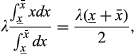


In the context of multiple products in the same product line (e.g., Mercedes C‐Class and S‐Class), we assume that products are distinguishable from one another by product name and exterior design. As a result, each product's status utility is determined by the group of consumers who buy the product; it is not influenced by the group of consumers who buy another product of the same product line. Suppose that consumers in the range




Status Utility for Nonbuyers. Instead of exogenously fixing the status utility of nonbuyers at 0, we allow their status utility to be endogenously determined by the number and composition of nonbuyers (Gao et al. 2016, Rao and Schaefer 2013). Specifically, the status utility derives from the expected wealth of nonbuyers. If consumers in the range of [0,
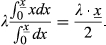

This formulation of status utility captures two key characteristics of conspicuous consumption of status products. First, the status value of a product is determined by wealth and social status of consumers who buy the product. Second, as more wealthier or higher‐status consumers buy a product, the product's status utility becomes higher. These two characteristics are consistent with findings in the theoretical literature and practical reality. For example, Veblen's (1934) theory of leisure suggests that differentiation in the consumption of goods distinguishes a superior leisure class from a base inferior labor class. The superior leisure classes at the head of the social structure consume expensive products, prompting the working classes to desire these products for their social prestige (Veblen 1934). Muniz and O’Guinn (2011) also suggest that consumers derive the symbolic meaning of a brand from the type of consumers who buy that brand. Escalas and Bettman (2005) find empirical support for this hypothesis in lab experiments. This formulation is also in line with the behavioral theory on “in‐group” and “out‐group” effects. Essentially, desirability increases when more people from a desirable group (the “in‐group”) use it and declines when more people from an undesirable group (the “out‐group) use it, which is also known in popular parlance as “keeping up with the Joneses” (Pritchard 2013). Han et al. (2010), Kuksov and Xie (2012), and Amaldoss and Jain (2005a, 2010, 2015) provide similar arguments. We can also observe such behavior in reality. For example, amateur golfers buy luxury Callaway clubs to feel like pros (Amaldoss and Jain 2008, Silverstein et al. 2004). Status‐product manufactures selling luxury cars and watches use celebrities as spokespeople to increase desirability for their brands. Manhattanites stopped wearing mesh trucker hats when the bridge‐and‐tunnel crowd (those who commute into Manhattan from surrounding communities) adopted them (Barker 2003), and Shanghai residents began avoiding shopping Volkswagen Santanas when these become a favorite car among suburban residents (Berger and Heath 2007, Wonacott 2004).
Given that the consumption patterns and the locations of consumers who buy each product are endogenously determined by line extensions, prices, and consumers’ status preferences, we endogenously determine the status value of products accordingly. Firms need to take these effects into account when they make vertical line extension and pricing decisions.
Timing of the Game
This game consists of four stages. In the first stage, the incumbent firm A makes a line extension decision by deciding whether to sell its base product without line extensions, introduce an upward extension, or introduce a downward extension. In the second stage, firm B observes firm A's line extension decision and decides whether to enter the market. Let parameter M denote firm B's cost of entry, such as the investment in product‐specific capital (Judd 1985). In the third stage, if firm B enters the market, the two firms set prices simultaneously to compete with each other. If firm B does not enter the market, it makes zero profits, and firm A sets its price to serve the market as a monopolist. Note that the incumbent makes pricing decisions after observing firm B's entry decisions. This sequence of decisions reflects that prices are short‐term decisions, which are easy to adjust, and the incumbent adjusts prices depending on the entrant's entry decisions. In the fourth stage, consumers observe the products and prices that firms offer and decide which product to purchase. In section 4, we treat product quality as exogenous, to focus on the strategic pricing effects. In section 5.3, we discuss the robustness of our results when we allow firms to make endogenous quality decisions.
Analysis
Table 1 summarizes the notations in the model. We solve the game using backward inductions. We first analyze two cases: (i) the cost of entry is prohibitive, such that the entrant does not enter the market and the incumbent acts as a monopolist, and (ii) the cost of entry is minimal, such that the entrant enters the market and competition exists. This sequential analysis helps shed light on the impact of competition on the incumbent's optimal line extension decisions. Then, we examine the following situation: (iii) the cost of entry is moderate, such that the incumbent's line extension determines the entrant's entry decisions. In this case, we examine the incumbent's optimal line extension when it anticipates the impact of its decision on the entrant's entry decisions.
Monopoly
Suppose that the cost of entry is sufficiently high such that firm B does not enter the market. If so, firm A serves the market as a monopolist. We analyze the monopolist's line extension decisions. We discuss three cases separately and use superscripts to indicate the equilibrium in each case.
Summary of Notations
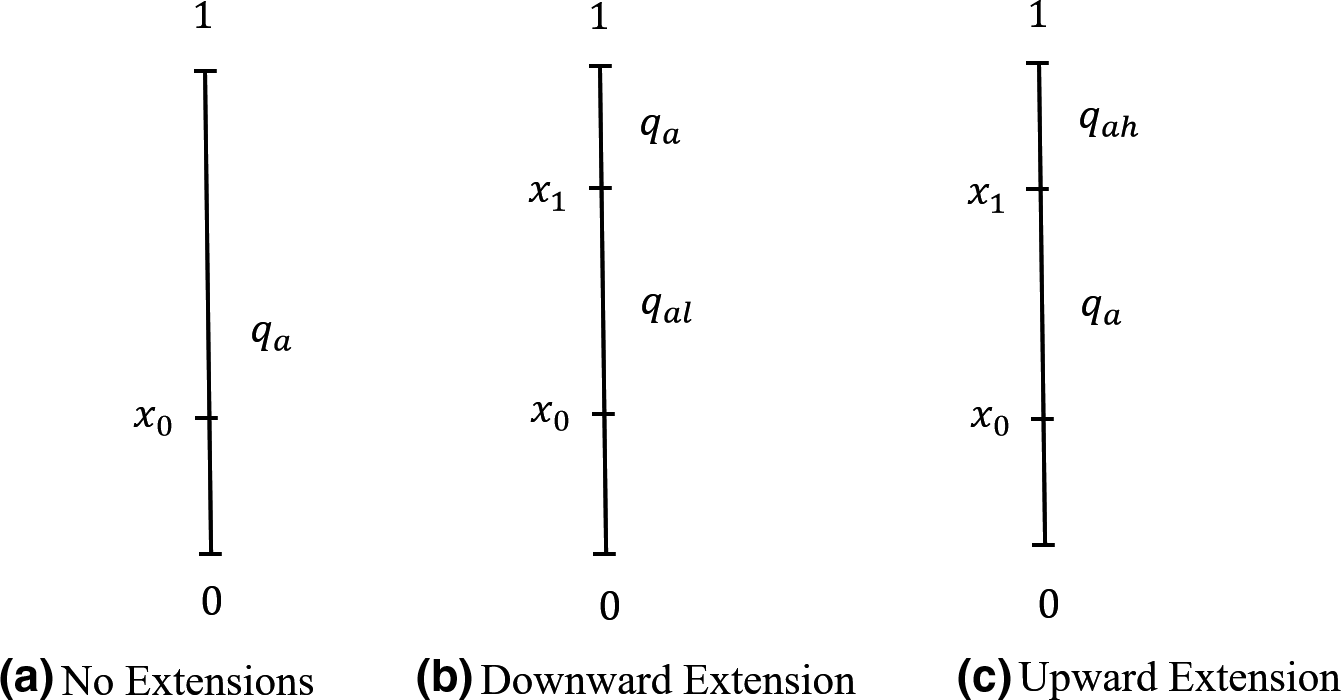
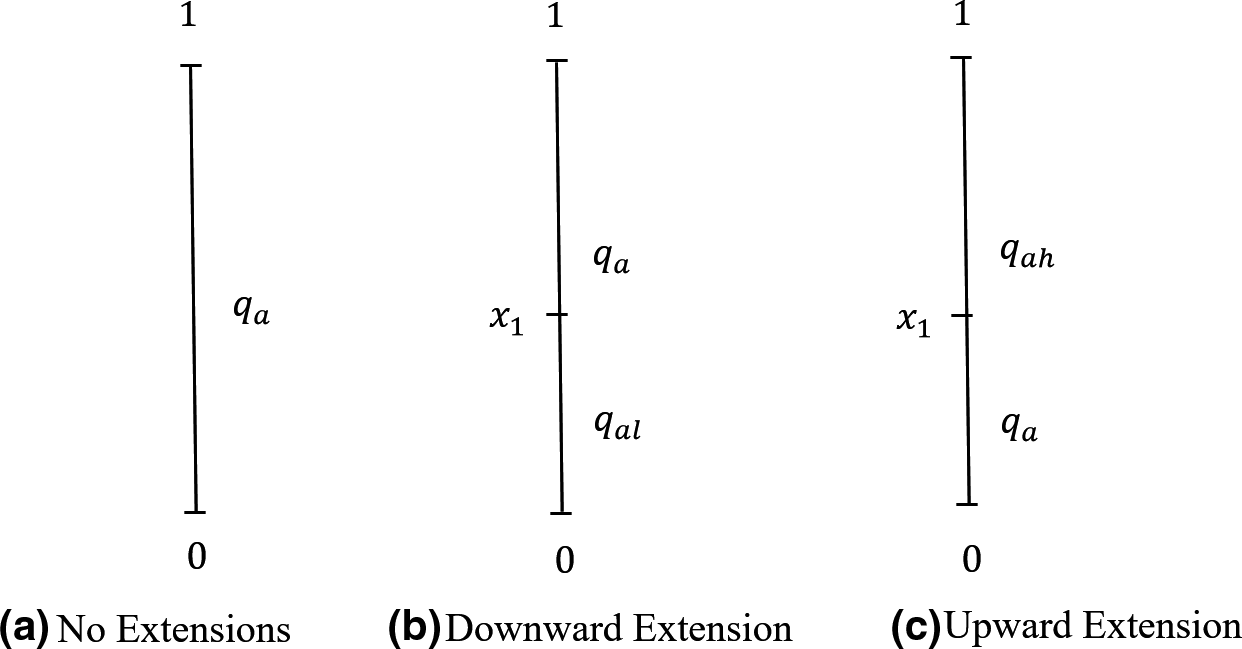
Case MN: Monopoly with No Extensions. If firm A does not introduce line extensions, it serves the market with its base product. Let x
o
indicate the marginal consumer who is indifferent between buying and not buying; then, 






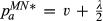



Monopoly with Partial Market Coverage
Monopoly with Full Market Coverage
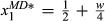
Case MD: Monopoly with a Downward Extension. If firm A introduces a downward extension, consumers with higher valuations for quality buy firm A's base product, and consumers with lower valuations for quality buy firm A's downward extension. Let 












Case MU: Monopoly with an Upward Extension. If firm A introduces an upward extension, the consumer located at 









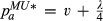


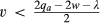
If the market is fully covered, introducing an upward or a downward line extension is profitable for a monopolist. The monopolist obtains the highest profit by introducing a downward extension.
Introducing vertical line extensions with differentiated quality and price levels helps the monopolist price discriminate its consumers who exhibit heterogeneous valuations for quality. Therefore, introducing either type of vertical extension is more profitable than selling only the base product. The monopolist's profit is higher when it introduces a downward extension because the marginal cost of production is convex and increasing in quality. The firm can achieve the goal of price discrimination at a lower cost by introducing a downward extension. Therefore, profit is higher when the monopolist introduces a downward extension than when it introduces an upward extension. 6
Competition
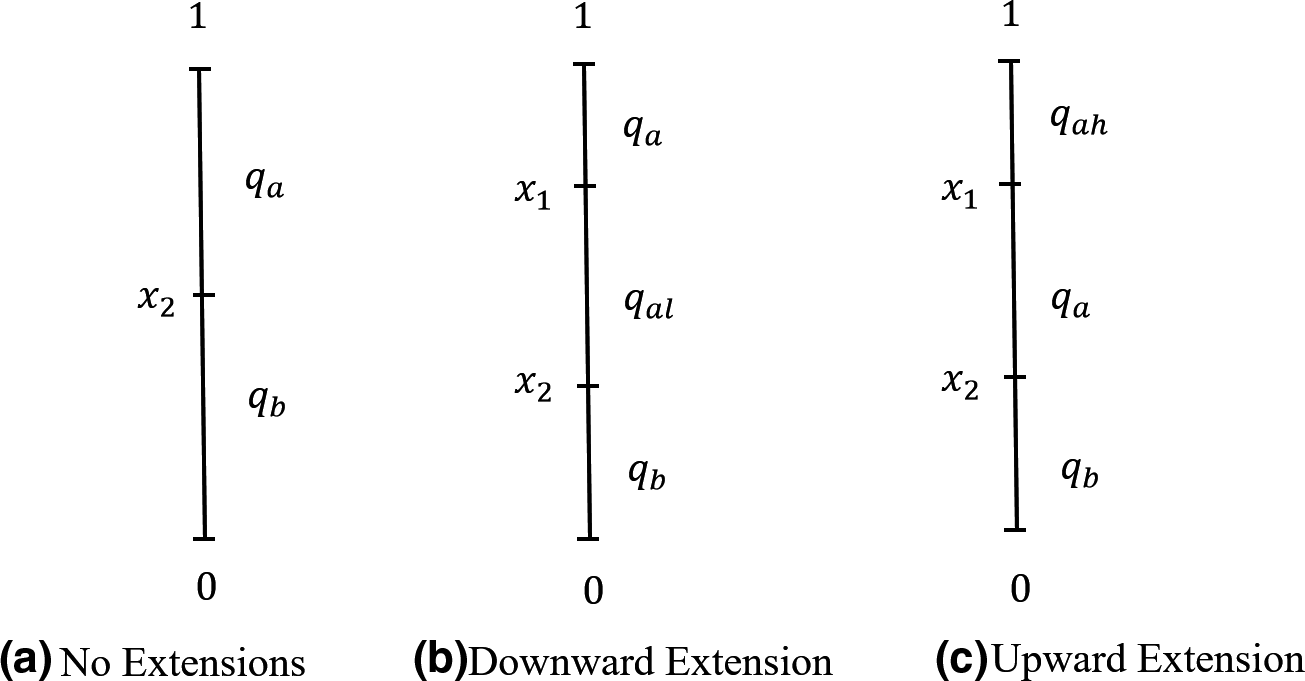
Suppose that the cost of entry is sufficiently low and firm B enters the market regardless of firm A's line extension decisions. Then, firm A competes with firm B. We assume that with competition, the market is fully covered. We relax this assumption to consider a partially covered market in section B2.1.2. We analyze firm A's line extension decisions in the presence of competition. As in the monopoly, we discuss three cases separately (for consumption patterns, see Figure 3).
Competition with Full Market Coverage
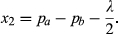
Case CN: Competition with No Extensions. If firm A does not introduce extensions, the consumer located at x
2 is indifferent between buying firm A's product and firm B's product (see Figure 3, panel a). We can write that






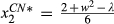
Case CD: Competition with a Downward Extension. If firm A introduces a downward extension, the consumer located at 





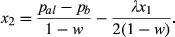





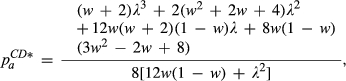




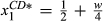

Case CU: Competition with an Upward Extension. Panel C of Figure 3 depicts the consumption pattern when firm A introduces an upward extension. We derive the location of the marginal consumers. The consumer located at 


As in Case CD, an increase in x
2 reduces the status value differentiation between firm A's products and shifts consumers from buying firm A's upward extension to buying its base product, and 

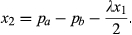










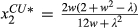
We focus our analysis on the region λ < 2(1 − w); that is, consumers’ status preferences are not too strong (see Figure 4). This condition ensures that firm B generates positive sales in the equilibrium with competition. If λ is so strong that firm B cannot generate positive sales, firm B will not enter the market, firm A will be a monopolist, and the results in the monopoly will apply. We compare firm A's equilibrium profits with and without line extensions to assess the profitability of line extension introductions.
Profitable Downward Extensions with Status Preferences [Color figure can be viewed at
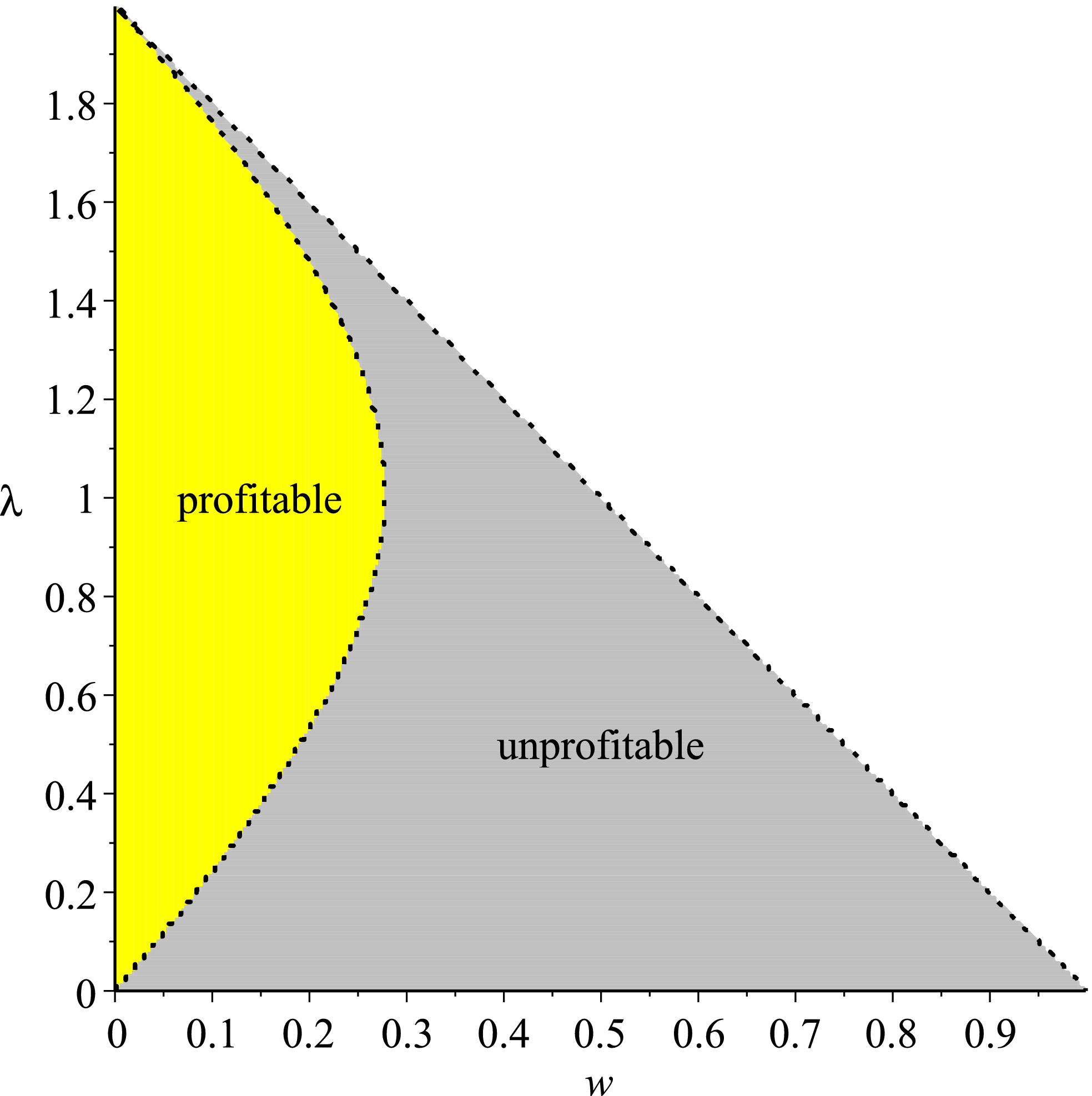
When the incumbent competes with a lower‐quality entrant: Without status preferences (i.e., λ = 0), introducing a downward extension is not profitable, while introducing an upward extension is profitable. With status preferences (i.e., λ > 0), introducing a downward extension is profitable when the quality differentiation (w) between the downward extension and the base product is low.
Part (a) of Proposition 1 suggests that without status preferences, the incumbent should only introduce upward extensions. This is because in the absence of status preferences, introducing upward extensions does not affect the competition between firms. It only helps firm A price discriminate consumers in its own market, thereby increasing profits. Because competition between the two firms does not change, prices of the competing products (p
a
and p
b
), the location of the marginal consumer who chooses between the two firms’ products (x
2), and the profit of the competitor (Π
b
) are the same as in the case without line extensions. Mathematically, when λ = 0, 



However, without status preferences, introducing a downward extension is not profitable, because the downward extension displays a lower quality differentiation from firm B's product. As the quality differentiation between the two firms’ competing products declines, competition becomes more intense. Prices of competing products (p al and p b ) decline. For firm A, the reduction in the price of the extended product induces consumers who would have bought firm A's base product to buy its downward extension. As a result, the demand for firm A's base product declines and causes the price of the product to decline. Both the competition‐intensifying effect and the cannibalization effect associated with introductions of downward extensions reduce firm A's profit. Therefore, introducing a downward extension would leave firm A worse off. These results hold in situations involving regular products that do not provide status value to consumers.
By contrast, part (b) of Proposition 1 states that these results may not apply for status products. Consumers’ status preferences change the competition between firms and the cannibalization between firm A's products, which in turn affect the profitability of introducing line extensions. In particular, firm A can increase profits by introducing downward extensions that represent a low quality differentiation from firm A's base product (see Figure 4). The intuition is as follows.
With status preferences, consumers who buy firm A's base product and its downward extension are separated into two social groups. The status value of firm A's base product is higher than that of firm A's downward extension. The difference in status value increases the differentiation between firm A's products, reduces consumers’ willingness to switch from firm A's base product to its downward extension, and reduces the intra‐firm cannibalization. Thus, firm A can charge a higher price premium for its base product than when status preferences are absent. In addition, firm A has incentives to raise the price of its base product to strengthen the status value of its downward extension. To understand this intuition, suppose that firm A raises the price of its base product (p
a
). If we hold other prices constant, fewer consumers purchase firm A's base product, and 

At the same time, segmenting firm A's consumers into two social groups also softens the competition between the two firms. Firm B has lesser incentives to reduce prices, because its demand becomes less price sensitive. To understand this intuition, suppose that firm B reduces its price p
b
. If firm A's prices are held constant, the demand for firm B's product expands, and x
2 increases. The increase in x
2 increases the status value of firm A's downward extension. Therefore, some consumers switch from firm A's base product to its downward extension, and 



As a result of these effects, firm A can increase profits by introducing a downward extension. This occurs when the quality differentiation (w) between firm A's downward extension and its base product is not too high, such that the downward extension does not display too much quality similarity (1 − w) to the competitor's product. In this case, the benefit of introducing downward extensions outweighs its negative effects, and the incumbent's profit increases after it introduces downward extensions. This result is consistent with observations of business practices. For example, in the automobile industry, luxury brands produce higher‐quality products and compete with economy car brands. We can envision luxury brands as the incumbent that sells high‐quality products in our model. Secondary data from Automotive News show that in the US automotive industry, luxury car brands introduced 32 downward extensions between 2001 and 2016 to compete with economy car brands. For example, Mercedes‐Benz introduced its downward extension CLA in 2013, BMW introduced its downward extension BMW 1‐series in 2009, and Lexus introduced its downward extension Lexus CT in 2012. Our model provides a rationale for why high‐quality firms introduce these downward extensions.
In addition, the positive impact of status preferences on firm A's profit applies when firm A introduces upward extensions. Therefore, with status preferences, introducing an upward extension is also profitable. By comparing firm A's profits with an upward extension and a downward extension, we derive firm A's optimal vertical line extension strategies in the competition.
An incumbent that faces a lower‐quality competitor obtains the highest profit by introducing an upward extension.
In contrast with the monopoly case in which the incumbent obtains the highest profit by introducing a downward extension, we show that with competition, the incumbent is better off by introducing an upward extension. This is because the downward extension exhibits a lower quality differentiation from firm B's product. Introducing a downward extension intensifies the inter‐firm price competition, which does not arise when the incumbent introduces an upward extension. Although with status preferences introducing a downward extension can be profitable, it is still less profitable than introducing an upward extension. However, if firms do not have the option to introduce an upward extension, which could occur when introducing upward extensions requires a technological breakthrough or significant R&D investment, with status preferences, firms can reap higher profits by introducing downward extensions than by selling only the base product.
Endogenous Entry
In section 4.2, we focus on the special cases when the cost of entry to the market is either very high or very low, which determines whether the market structure is a monopoly (without entry) or a duopoly (with entry). Here, we consider cases when the cost of entry is in a moderate region, such that the entrant's entry decisions are endogenous and depend on the incumbent's line extension strategies.
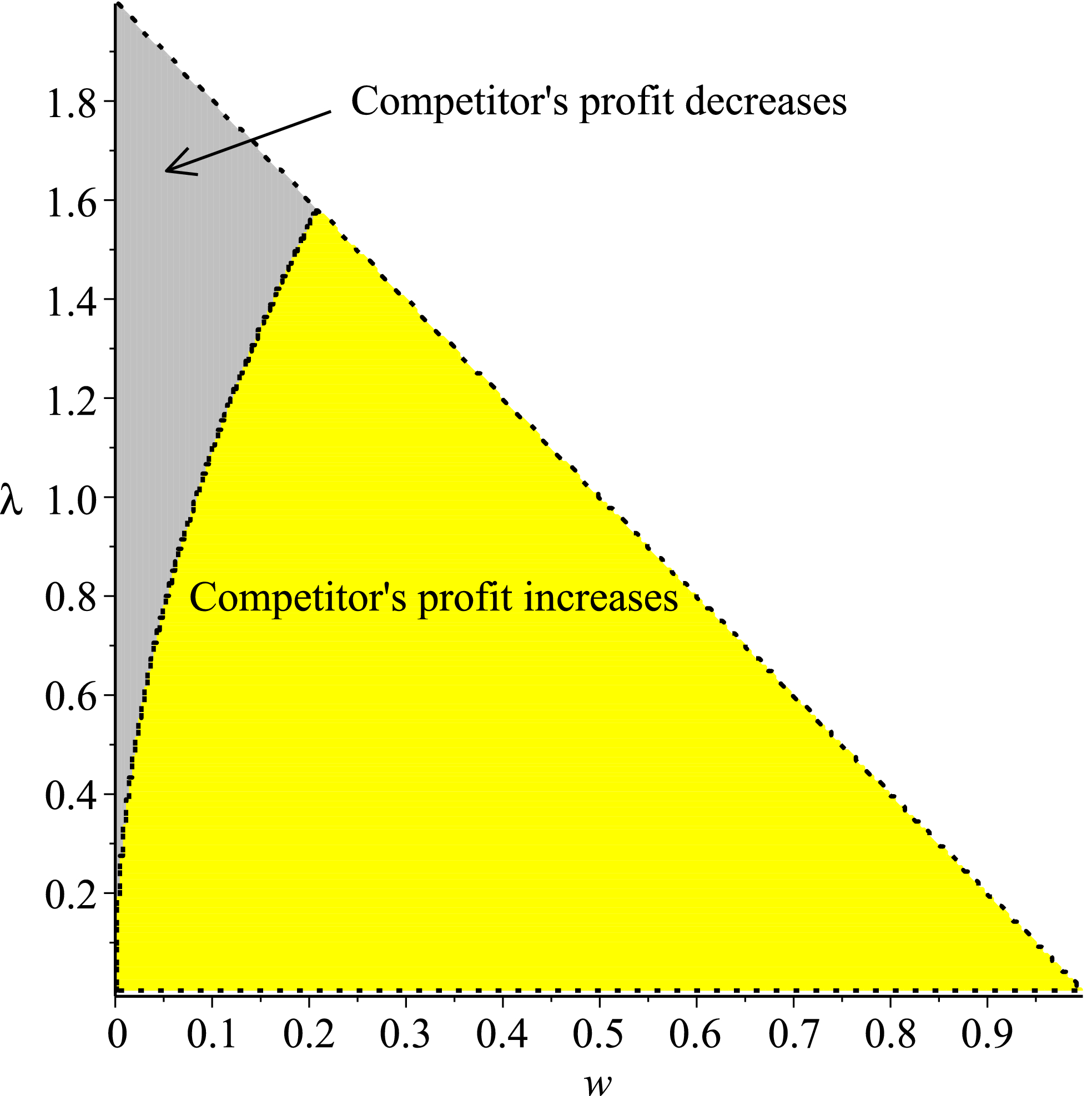
Without status preferences, introducing line extensions weakly reduces the competitor's profit and deters entry. With status preferences, when the incumbent introduces an upward extension that exhibits sufficiently high quality differentiation from its base product, introducing line extensions increases the competitor's profit and attracts entry.
Conventional wisdom suggests that when the market does not expand, a firm's product line expansion decreases the competitor's profit. This is a common finding or assumption in the literature (Brander and Eaton 1984, Eizenbereg 2014, Heil and Robertson 1991, Toivanen and Waterson 2000). This result holds in our model framework when firms sell regular goods and consumers do not exhibit status preferences (i.e., λ = 0), because introducing line extensions weakly reduces the volume sales of the competitor. If the new product represents a lower differentiation from the competitor's product, it competes fiercely with the competitor's product and drives the competitor's price to decline. As a result, introducing line extensions reduces the competitor's profit after entry, which is a crowding‐out effect. Given that entry is costly, introducing line extensions weakly deters entry.
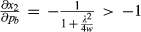
However, this result may not hold when firms sell status products. In particular, when the incumbent introduces an upward extension, the entrant's profit can increase. The reason is that though the market does not expand and firm B's volume sales decrease after firm A introduces an upward extension, firm B's price can increase and offset the loss in volume sales. Firm B's price increases because consumers with status preferences become less sensitive to firm B's price. Mathematically, consumers’ sensitivity to firm B's price is 


Upward Extensions Can Increase Competitor's Profit with Status Preferences [Color figure can be viewed at
When the cost of entry is in a moderate range, the incumbent introduces a downward extension to deter entry. As the cost of entry increases, the incumbent changes from introducing an upward extension to introducing a downward extension.
Lemma 2 states that the incumbent obtains the highest profit by introducing an upward extension in the presence of competition. However, when taking the entrant's optimal entry decisions into account, the incumbent may choose to introduce a downward extension to reduce the competitor's profit and deter entry. Specifically, when the competitor's cost of entry is in the range 


Numerical Example: Firm Profits after Entry
Note. w = 0.25, λ = 1, and M = 0.02.
When 


Greater status preferences increase a firm's incentive to introduce a downward extension as long as the incumbent's quality differentiation w is not too low.
A sufficient condition for the result in Proposition 4 to hold is 


Extensions
In this section, we relax several assumptions made in the main model to generalize our results.
Higher‐Quality Entrant
In the main model, we consider situations when a high‐quality incumbent faces a low‐quality entrant. This setting represents business situations in which the incumbent is an established industry leader with premium products. There may be situations when the entrant has access to new technology that enables it to produce a higher‐quality product than the incumbent's. Now, we relax our model to account for this possibility. Suppose that the entrant's product displays a higher quality than the incumbent's. Then, q
b
= q
a
+ m. We standardize the inter‐firm quality differentiation m to unity. As in the main model, to simplify exposition, we standardize the marginal cost for producing firm A's low‐quality product to zero and assume that the marginal cost is convex and increasing in incremental quality over the region 

Consistent with the intuition in Proposition 1, we find that without status preferences, the incumbent should not introduce a product that has a lower quality differentiation from the entrant's product. Given that the entrant sells a higher‐quality product now, the incumbent's upward extension has a lower quality differentiation from the entrant's product. Therefore, without status preferences, introducing upward extensions is not profitable for the incumbent. However, with status preferences, introducing upward extensions can be profitable because status preferences soften price competition between firms and reduce cannibalization between the incumbent's products. Status preferences soften price competition between firms by making consumers less price sensitive. Consumers’ sensitivity to the price of firm A's upward extension is 



In addition, consistent with Proposition 2, without status preferences, introducing line extensions weakly reduces the competitor's profit and deters entry. However, with status preferences, introducing line extensions can increase the competitor's profit and attract entry. This is because status preferences reduce consumers’ sensitivity to firm B's price, enabling the firm to charge a higher price in equilibrium. Specifically, consumers’ price sensitivity with respect to firm B's product is 

Generalized Quality Differentiation and Cost Structure
In the main model, we assume that the quality differentiation between the base product and its upward extension is the same as the quality differentiation between the base product and its downward extension (i.e., q
ah
− q
a
= q
a
−q
al
= w). We also assume that the marginal cost of producing products takes specific values (i.e., 
In the monopoly, the quality differentiation between products needs to justify the cost differentiation for the firm to sell two products rather than only the low‐cost product. This requires that w
l
> c
a
− c
al
and w
h
> c
ah
− c
a
. Under these conditions, introducing a downward extension is more profitable than only selling the base product. Introducing an upward extension is also more profitable than only selling the base product if its quality differentiation from the base product is greater; that is, w
h
> 2(c
ah
− c
a
). Introducing a downward extension is more profitable than introducing an upward extension when 
In the duopoly, without status preferences, introducing an upward extension is profitable as in the main model, whereas introducing a downward extension could be profitable if the cost differentiation between the two firms is sufficiently high while the incumbent bears similar cost for producing its two products; that is, 



Endogenous Quality
By focusing on the incumbent's vertical line extensions and the entrant's entry decisions, we make simplifying assumptions about product quality in section 4 First, we assume that the quality levels of the incumbent's and the entrant's products are exogenously determined. This assumption holds in situations when technology determines product quality and firms cannot change quality in the short run (Gao et al. 2016). Second, we assume that when the incumbent introduces a line extension, it does not change the quality of its base product. For example, in the U.S. automotive industry, 37 brands introduced 139 line extensions between 2001 and 2016. While introducing line extensions, car manufacturers made little or no changes to the quality of their existing car models. Secondary data show that 82% of car models have less than 10% of quality changes when their brand introduces a line extension, 71% have less than 5% of quality changes, and 51% have no quality changes (for a detailed description of the empirical data and analysis, see section A4.3 of Appendix S1).
However, technology may evolve and give firms more flexibility to adjust product quality. Firms may be able to endogenously set the quality of line extensions in a given range. Moreover, firms may also be forward‐looking and set the quality of their base product in anticipation of future line extensions and entry. We relax our assumptions of exogenous quality to examine whether our main results still hold.
First, we allow the incumbent firm to choose the quality of its extension in a range that technology accommodates (i.e., 




Second, we allow the incumbent firm to choose a product portfolio—sell one base product or two products by introducing a line extension. The incumbent is forward‐looking and makes the line extension decision while anticipating future entry by a low‐quality firm, which chooses its product quality in response. This game proceeds as follows: in the first stage, the incumbent decides whether to sell the base product only or to introduce a line extension to sell two products. In the second stage, the incumbent sets the quality of its product(s). In the third stage, the entrant observes the incumbent's line extension and quality decisions and decides whether to enter the market. If it enters, it sets the quality of its product. In the fourth stage, firms observe each other's product quality and set prices simultaneously. Last, consumers observe product portfolio, product quality, and prices and choose which product to buy.
We find that in a monopoly, the incumbent introduces line extensions to maximize profits through product and price discrimination (see Lemma A8 in Appendix S1). In the duopoly, if the incumbent sells one product, firms maximize quality differentiation to reduce price competition (i.e., 

In addition, we have extended the model to allow for heterogeneous status preferences, partially covered markets in the competition, normal distribution of quality preferences, multiple products of the same product line, lower‐quality downward extension. Our main results and mechanisms are still valid in these generalized frameworks (for detailed analyses, see Appendix S2).
Conclusions
Firms frequently introduce new products in the form of vertical product line extensions. Conspicuous consumption of status products provides status value to consumers, and the status of a product is endogenously determined by the social status of consumers who buy it. Firms selling status products need to take consumers’ status preferences into account when making optimal line extension decisions. In this article, we use a game‐theoretic model to investigate how consumers’ status preferences affect an incumbent's vertical line extension strategies when it faces a threat of entry from a lower‐quality entrant, and how the optimal vertical line extension strategies change with competition and the entrant's cost of entry. We offer the following key findings as well as managerial implications.
Should firms selling status products make vertical line extension decisions differently from firms selling regular products? We show that status preferences affect firms’ profits from introducing line extensions. Unprofitable extensions for firms selling regular products can become profitable for firms that sell status products. Overall, consumers’ status preferences encourage firms to introduce vertical line extensions. Therefore, firms selling status products can be more aggressive in introducing vertical line extensions.
How does an incumbent's vertical line extension affect entry of a competitor? Without status preferences, an incumbent can deter entry by introducing vertical line extensions to crowd out the competitor's profit. However, with status preferences, introducing vertical line extensions can increase the entrant's profit and attract entry. Therefore, the conventional wisdom on the entry‐deterrence effect of line extensions may not apply for firms selling status goods. Instead, these firms may strategically deter entry by forfeiting line extensions.
How does competition affect firms’ vertical line extension decisions? We find that without competition, firms should introduce downward extensions to cost‐efficiently price discriminate consumers with heterogeneous valuation for quality. However, with competition, firms should introduce upward extensions to avoid intensifying price competition with the competitor. Therefore, firms should extend product lines in different directions depending on the presence of competition.
How do consumers’ status preferences affect an incumbent's optimal vertical line extensions? As the cost of entry increases, the incumbent changes from introducing upward extensions to introducing downward extensions. As status preferences increase, the incumbent is more likely to introduce downward extensions rather than upward extensions. Therefore, firms selling status products should strategically change the direction of vertical line extensions in response to the intensity of consumers’ status concerns.
This study provides several directions for future research. First, we focused on how consumers’ status preferences affect firms’ vertical line extension strategies. Future research could examine the impact of status preferences on other important firm strategies. Second, we considered the impact of status preferences on the incumbent's decision to introduce either an upward or a downward extension. Future research could examine how status preferences affect firms’ decisions to introduce both upward and downward extensions at the same time. Third, the status preferences considered herein are a special form of network effects. We establish that under certain circumstances, status effects can shift market equilibria. Future research could extend this study to examine other network effects and their impact on market structure. Last, it would be noteworthy to empirically examine how the characteristics of markets and consumers affect the profitability of status‐goods firms’ vertical line extensions.
Footnotes
1
In section  , we consider situations when an incumbent faces a higher‐quality entrant. In this case, an upward extension represents a lower quality differentiation from the competitor's product. We show that introducing an upward extension is not profitable without status preferences but can be profitable with status preferences.
2
We assume that the incumbent makes a binary choice of either introducing an upward extension or introducing a downward extension; that is, it introduces one extension at a time. We verify this assumption using empirical data from the automobile industry. Specifically, we obtain annual sales of 272 passenger car models owned by 37 brands that were sold in the U.S. market from 2001 to 2016. We check brands’ new car introductions in the 16‐year period. We find that of 139 new car models introduced, 103 (74%) were introduced by themselves in a year, which is in line with our assumption that the incumbent introduces one product at a time. However, on some occasions, brands introduced both upward and downward extensions in the same year, and it is feasible that the incumbent introduced both upward and downward extensions at the same time. Future research could examine how status preferences affect this nonbinary vertical extension.
3
In section B5 of Appendix S2, we show that our results continue to hold when the quality of the incumbent's downward extension is lower than the entrant's product quality (i.e., q a > q b > q al ).
4
Uniform distributions allow us to obtain closed‐form expressions of products’ status utilities and to make the analysis tractable. In section B3 of Appendix S2, we provide conjectural assessments and discuss how our key insights could still hold with normal distributions.
5
6
In section 5.2, we consider a general cost structure and allow the quality differentiation between the base product and its upward extension to be different from the quality differentiation between the base product and its downward extension. We show that Lemma continues to hold if quality differentiation justifies cost differentiation (i.e., w
l
> c
a
− c
al
and w
h
> 2(c
ah
− c
a
)) and