







Abstract
The role of national culture interactions is important in operations management and supply chain management decisions. Yet, cross‐cultural research in this field is limited. Our goal in this study is to review relevant research, to raise awareness about the critical role of national culture among operations management and supply chain management researchers, and to offer directions for future research. To achieve this goal, we report our research findings in three major categories: (i) Operational Decisions (innovation, and research and development, quality management, workforce management, performance measurement, and risk, security and disaster management); (ii) Supply Chain Management (buyer–supplier interactions, governance mechanisms, outsourcing, and offshore operations); and (iii) Interdisciplinary Topics (entrepreneurship, investments, joint ventures, and mergers and acquisitions). We also suggest methodological considerations for future research by those interested in studying national culture.
Introduction and Motivation for This Research
Understanding the role of different national cultures is important in conducting businesses across countries. Hofstede (1980, p. 25) defines national culture as “the collective programming of the mind which distinguishes the members of one human group from another.” When “national” precedes “culture,” the term “national culture” distinguishes the cultural character of one nation from others. We further elaborate on the concept of national culture in section 2 in this study. We explore whether and how this cultural character of a nation influences decision‐making in operations management and supply chain management (OM/SCM). Our goal is to raise awareness about the critical role of national culture among OM/SCM researchers, to review current research about this topic, and to offer directions for future research. We discuss several OM/SCM areas that have been studied from a cultural perspective, identify potential further areas that can benefit from cross‐cultural research, and list some methodological considerations specific to analyzing cross‐cultural data related to the OM/SCM field. Our focus is on national culture, not organizational culture. The two concepts, though related, are distinct. Read Marshall et al. (2016) on the role of organizational culture in the OM/SCM discipline.
Motivation for This Research
Our motivation for this research comes from our observations and interactions with people from different countries. As academics, we interact with fellow researchers, students, and business leaders from around the world. Our academic conferences provide a global platform for visiting different countries and interacting with international audiences. These experiences often show that there is no single universal culture and that people from different countries behave differently because their national cultural values differ. For instance, punctuality, a measure of the value of time, varies across cultures (Mallinson 2016). People from different countries also differ in their risk‐taking attitudes, acceptance of inequality, gender differences, reliance on rules, perceptions of quality, service expectations, acceptance of deceptive practices in negotiations, and meaning of life. These differences in individuals across countries have important implications for the OM/SCM field. Given this background, we wondered to what extent these issues have been studied by OM/SCM researchers. To answer this question, we undertook this study to examine the degree to which OM/SCM researchers have incorporated the concept of national culture in their research and to highlight future research opportunities.
We started looking at systematic studies to understand the impact of national culture on OM/SCM decisions. We found that national culture has been studied in many business disciplines. The non‐OM/SCM journals that contain papers on national‐culture‐related research include: the Academy of Management Journal (papers on organizational behavior, strategy, and organizational theory); the Journal of Marketing (papers on new product development, brand positioning, customer value creation, consumer innovativeness, and consumer attitudes towards buying); the Journal of International Business Studies (papers on change management, decision‐making, strategy, and leadership across countries); and the Management Information Systems Quarterly (papers on technology acceptance). We describe below in some detail research studies found in OM/SCM journals.
Management Science, in 1994, published a special issue titled “Is Management Science International? In Search of Universal Rules.” Its focus was to assess whether the published OM/SCM research at that time was universal and generalizable to countries outside the Western world. The editors wrote that the extant research “is much less universal and generalizable than we acknowledge in any systematic and formal way” (Aharoni and Burton 1994, p. 3). In the Journal of Operations Management, Prasad and Babbar (2000) echoed similar concerns as most of the OM/SCM articles published before 2000 were focused on Western industrialized countries and regions. They further questioned the applicability of Western‐biased OM/SCM constructs in non‐Western countries. In fact, Frohlich and Dixon (2001) described evidence of considerable variance in the degree to which non‐North American firms followed differentiated manufacturing strategies. Similarly, Ahmad and Schroeder (2003) demonstrated differences in the extent to which Pfeffer's (1998) seven human resource management practices were used in manufacturing plants across Germany, Italy, Japan, and the United States. In another study, Kaunonen (2014) stated that three Western‐focused industrial buyer‐supplier relational process models (joining theory, stage theory, and state theory) may not be appropriate in the non‐Western world.
In 2010, the Journal of Operations Management published a special issue (Issue 28) titled “Culture, Development, and OM Viewpoints in Asia.” The papers in this issue focused primarily on the national culture of China and how it affected the use of total quality management practices, the structure of buyer‐supplier contracts between Chinese and Western firms, and the use of technology in planning. The papers in the special issue addressed the concerns of Zhao et al. (2006), who emphasized the rapid growth and recent economic development in China and called for research in operations management focusing on Chinese firms.
Metters et al. (2010, p. 178) sum up these concerns: “The basic premise is that OM decisions may need to take culture into account: some OM practices are altered or precluded by a culture, while others are more effective in some cultures than in others.”
Overall, there is a prima facie case to show that the OM/SCM constructs, theories, and models developed within the context of North American firms may not be generalizable to other parts of the world; and cross‐cultural research in the OM/SCM discipline remains scarce. Increased cross‐cultural research is important for today's global supply chains in which manufacturers operate in multiple countries and interact with various international partners. While differences across nations can be studied using such criteria as socioeconomic factors, technological developments, topology, regulations, political factors, and religious beliefs, our focus in this paper is to study the impact of national culture on OM/SCM decisions.
We have divided this study into eight sections. After an introduction and explanation of our motivation for this research in section 1, we describe the concept of national culture and explain different national cultural dimensions and their relevance for OM/SCM in section 2. The literature search is covered in section 3. This section also includes the chronology of research growth, publications by journal, and various research topics found in the literature reviewed. In section 4, we discuss national culture for operational decisions. The subsections include innovation, and research & development, quality management, workforce management, performance measurement, and risk, security and disaster management. Section 5 concerns supply chain management. Its subsections include: buyer–supplier interactions, governance mechanisms, outsourcing, and offshore operations. Section 6 concerns interdisciplinary topics including entrepreneurship, investment, joint ventures, and mergers and acquisitions. Section 7 focusses on methodological considerations in analyzing cross‐cultural data including a focus on cultural clusters instead of the East vs. West dichotomy, the unit of analysis problem in cross‐cultural studies, the choice of national cultural framework, and the interaction of national and organizational cultures. Finally, in section 8, we provide conclusions and recommendations for future research.
National Culture
Over the years, cross‐cultural researchers have proposed several cultural dimensions that could help scholars to understand the variations in national cultures. We list below eight dimensions of national culture of which the first five were proposed by Hofstede (1980) and are also part of the GLOBE (Global Leadership and Organizational Behavior Effectiveness) study (House et al. 2004); the next three were proposed by Hall and Hall (1976), Earley and Ang (2003), and (Gelfand et al. 2011).
Power distance: This dimension captures the degree to which the less powerful members of a nation accept and expect that power is distributed unequally. It has important implications for outsourcing, innovation, success of joint ventures, and disaster management.
Individualism/collectivism: This dimension concerns the extent to which individuals in a nation are affiliated with loosely or tightly knit social groups. It has implications for OM/SCM areas pertaining to quality management and buyer‐supplier relationships, including governance mechanisms, trust, and the use of deceptive practices during negotiations.
Uncertainty avoidance: This dimension expresses the degree to which the members of a nation feel uncomfortable with uncertainty and ambiguity. Cultural differences in uncertainty avoidance exist across countries, and they may affect risk‐taking attitudes, disaster management, entrepreneurship, offshoring of services, and workers’ preference for standardization.
Masculinity/femininity: This dimension measures the extent to which individuals in a nation prefer achievement, heroism, assertiveness, and material rewards for success vs. cooperation, modesty, caring for others and quality of life. This dimension will likely cause differences in workforce management practices across countries and affect decision about outsourcing.
Long/short‐term orientation: This dimension concerns to the extent to which a nation relies on its own past while dealing with the challenges of the present and the future. Technology alliances, joint ventures, and the rate of entrepreneurship will likely be affected by long‐term or short‐term oriented national cultural values.
High and Low Context: Hall and Hall (1976) suggested that a high and low context dimension can account for cultural differences in the ways individuals communicate across countries. While individuals in low‐context cultures rely on direct verbal communication, those in high‐context cultures, in addition to verbal communication, rely on participants’ non‐verbal behaviors and the context such as participant backgrounds and associations. This cultural dimension may play an important role in cross‐cultural interactions between culturally diverse supply‐chain partners and their preferences for communication media.
Cultural Intelligence: The term cultural intelligence refers to an individual's ability to function effectively in situations characterized by cultural diversity (Earley and Ang 2003). It may influence cross‐cultural collaboration and research and development initiatives.
Cultural Tightness‐looseness; Another seminal cultural framework is based on the concept of national cultural tightness‐looseness, which captures the strength of societal norms and tolerance of deviant behaviors in a country (Gelfand et al. 2011). This cultural concept may have consequences for human resource management across countries.
Overall, we believe that different cultural dimensions are important for different OM/SCM functions.
Literature Search
The role of national culture in OM/SCM is a new area of research. To review this research, our initial step was to identify the potential outlets for it. We started by reviewing publications in the four top‐tier journals, namely, Journal of Operations Management, Management Science, Manufacturing & Service Operations Management, and Production and Operations Management. We restricted our search to recent publications (January 2000 to September 2017). In our review, we identified 31 articles, whose authors proposed and empirically tested the relationships between national cultural constructs and OM/SCM‐related outcomes. Then we identified the journals cited in the references of the 31 articles and organized them from most cited to least cited. The review produced a list of 265 journals. Of the 265 journals, we selected those cited 10 or more times. This gave us a list of 33 journals. Using Google Scholar, we then searched these 33 journals for published studies containing the term “national culture” in either the title or the abstract. We searched for articles published through 2017 without specifying a starting year. This search yielded 261 articles. Of the 261 articles, we identified articles that had an OM/SCM focus or cut across OM/SCM functions and other management disciplines. Finally, we had a list of 69 articles, published in 17 journals, which we review in this study. However, during the review process we realized that we should include some additional papers to provide a perspective on national culture and proper grounding in the national cultures discussed in the 69 papers. Table 1 lists various categories and subcategories in which the 69 articles are grouped. We included the category Risk, Security and Disaster Management in Tables to highlight the importance of these topics even though none of the 69 papers belong in this category. These topics are important for future research, and we elaborate on them in section 4.5.
Categories, Sub‐categories and List of References
Figure 1 shows the publications count of the 69 papers by year. The publication record has been sporadic and lumpy. The first paper we found was published by Hofstede (1984) focussing on dominant work‐related values to define the quality of life as affected by national culture patterns. There were almost no pertinent publications during the next decade (1985–1995). Only one such paper was published in 1994 and one in 1995. The Journal of Operations Management published a special issue in 2010 that contained 12 papers focussing on national culture. The number of publications peaked to 12 in 2010. There were no relevant publications in 2017. OM/SCM researchers may be missing a fertile ground for research.
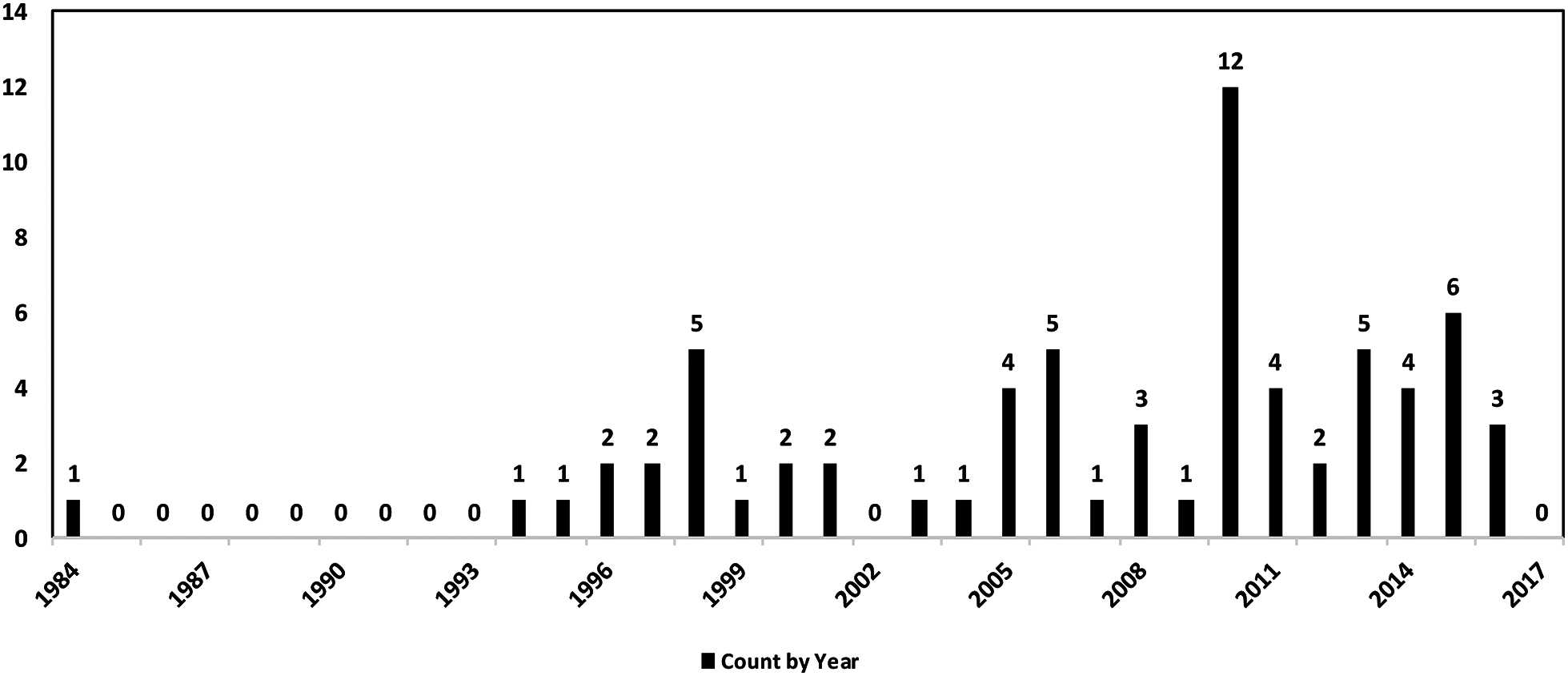
The Number of Papers Dealing with National Culture by Year
Figure 2 shows the number of papers published by each journal. Of the 18 journals, the Journal of Operations Management published the most articles (22). The number of articles published by each of the other OM/SCM related journals varies. The International Journal of Operations and Production Management (5), Management Science (8), Production and Operations Management (2), the Journal of Supply Chain Management (1), and Decision Sciences (1). Of the 69 articles, 39 (56.52%) were published in the OM/SCM related journals.
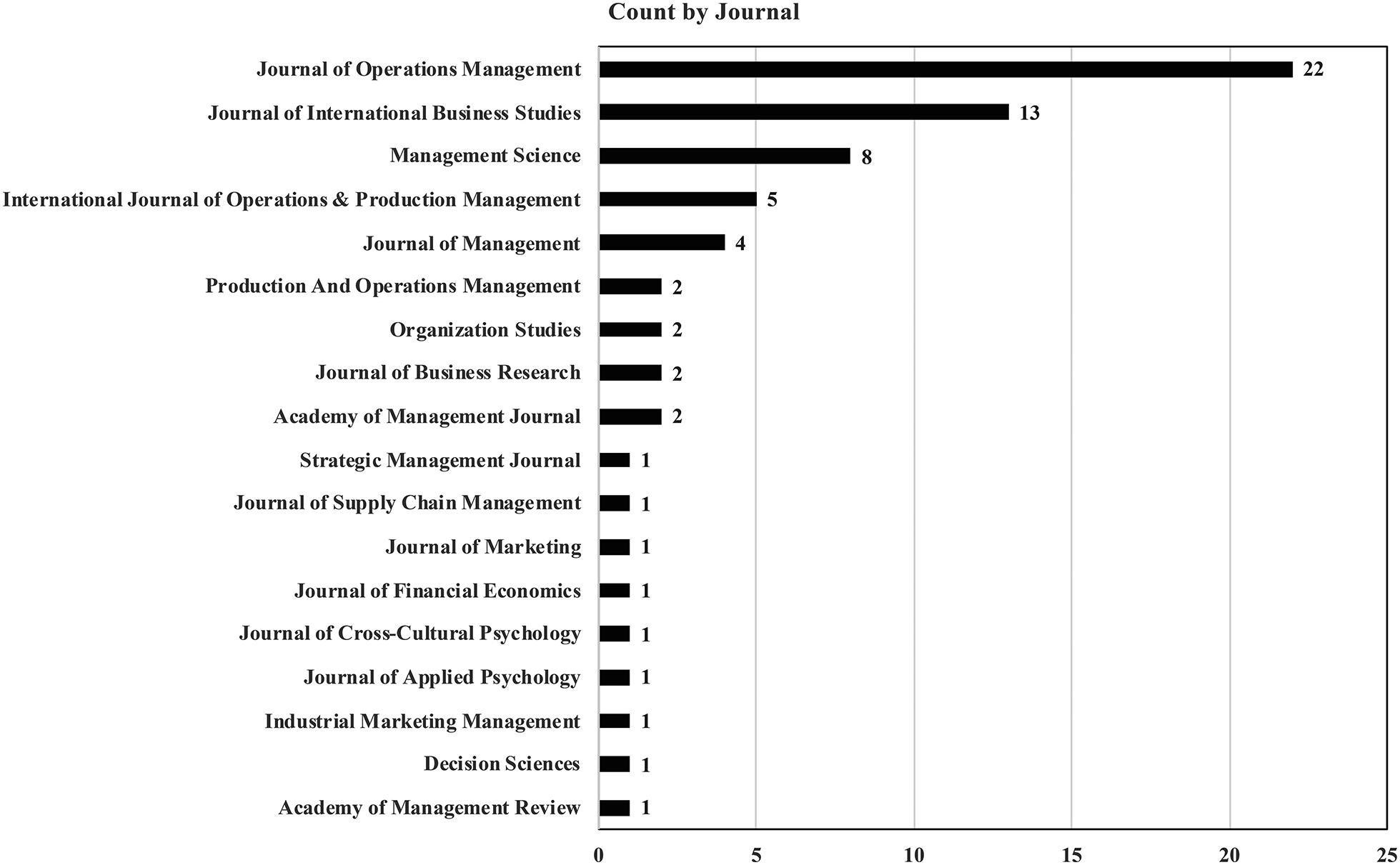
The Number of Papers Related to National Culture Published by Each of Listed Journal
Figures 1 and 2 show that the OM/SCM researchers need to increase the total number of their publications and gain a larger share of the space in the field.
Operational Decisions
Research papers that highlight the role of national culture in operational decisions can be grouped in five categories: (i) innovation, and research & development, (ii) quality management, (iii) workforce management, (iv) performance measurement, and (v) risk, security, and disaster management. We discuss the papers within each category in subsections 4.1–4.5.
Innovation, and Research and Development
The global nature of today's business presents researchers with challenges and opportunities to collectively conduct research and develop innovative products, processes, or services in collaboration with diverse group of individuals and partners.
Shane et al. (1995) explored how national culture would affect the process of introducing a new innovative process. They asserted that, in collectivist societies, innovation champions (those who take personal risks to implement innovative ideas in an organization) should garner cross‐functional support, while in high uncertainty‐avoidance situations, employees prefer introduction of any innovation process in an incremental manner. In power distance societies, it is essential to persuade people in authority to introduce new ideas across the organization.
Nakata and Sivakumar (1996) devised a conceptual model of the relationship between Hofstede's four national cultural dimensions (individualism, power distance, masculinity, and uncertainty avoidance) and their impacts on different stages of new product development. However, they did not empirically validate the proposed relationships. Xie et al. (1998) studied the role of national culture in resolving interfunctional conflicts (such as those between research and development, marketing, and manufacturing departments) and improving a new product development process.
In another study, Mueller et al. (2013) investigated the moderating role of national culture in the relationship between two types of innovation (exploratory and exploitative) and firm performance. Exploratory innovations pertain to search, discovery, and experimentation, whereas exploitative innovation concerns to improving existing technologies or processes. While both collectivist and power‐distance values positively moderated the relationship between exploratory innovation and firm performance, these two cultural dimensions did not moderate the relationship between exploitative innovation and firm performance. Uncertainty avoidance, on the other hand, negatively affected the relationship between both exploratory and exploitative innovations and firm performance.
Cheung et al. (2010) found that national cultural differences did not deter firms from sharing knowledge with their international partners. However, they measured cultural differences in this study using a composite index of deviations for each Hofstede's cultural dimensions between two countries; and, therefore, they did not explore the individual roles of each cultural dimension in knowledge sharing.
Bockstedt et al. (2015) questioned whether divergent thinking is a prerequisite for creativity. Using online global innovation contests, they found that contestants who shared national cultural values similar to those of the contest holder were more likely to offer better creative solutions than those with different cultural values. However, a limitation of this study is that they examined the creativity construct through several online contests that do not mirror real‐world joint research‐and‐development efforts between global buyers and suppliers.
Apparently, we lack understanding of the role of national culture in fostering creative and innovative buyer‐supplier relationships. This situation is likely to improve if Western firms do not ignore suppliers from emerging countries for contracts that require innovation (Li et al. 2010a).
Quality Management (QM)
We found four research themes under quality management: (i) Total Quality Management, (ii) Quality Sustainability, (iii) Quality Adoption and Compliance, and (iv) Service Quality Perception.
Total Quality Management
Rungtusanatham et al. (2005) tried to clarify the two conflicting arguments in the international OM literature pertaining to the universality of total quality management (TQM) practices. While they found that some TQM practices converged in Japanese and American manufacturing firms, they found that German and Italian firms were less likely to do so. Rungtusanatham et al. (2005) called for a “better understanding about how to transfer best TQM practices from one country to another” (p. 59).
Since then, Flynn and Saladin (2006), Power et al. (2010), and Kull and Wacker (2010) have studied TQM practices across cultures. Like Rungtusanatham et al. (2005), Flynn and Saladin (2006) found differences in quality management practices across countries and recommended tailoring criteria for awards, such as the Malcolm Baldrige Award, according to the country's national culture. Power et al. (2010) found that manufacturing firms in collectivist countries, such as China, would likely invest in infrastructure resources leading to successful TQM programs. Kull and Wacker (2010) did not find collectivism to be a significant factor affecting TQM effectiveness. Instead, they found that countries with high uncertainty‐avoidance cultural orientation were more likely to apply quality management approaches, such as TQM and Six Sigma.
While these studies offer interesting insights, we still do not have enough clarity about the role of national culture in the adoption and effectiveness of QM practices around the world. The last two studies we cited were published in 2010. QM researchers may find avenues for additional research.
Quality Sustainability
Gray et al. (2011) examined quality risk across 30 matched pairs of regulated drug manufacturing (parent) plants in the US mainland and their offshore locations in Puerto Rico. Quality risk is a measure of the sustainability of quality standards. The study showed that Puerto Rican plants faced greater quality risk than the plants located in the US mainland. They attributed this finding to the difference in culture between the US mainland and Puerto Rico. However, since the study sample consisted of only the US and Puerto Rican firms, future research should include a sample of firms from culturally diverse countries.
Quality Adoption and Compliance
Albuquerque et al. (2007) studied the adoption rate of two quality management standards (ISO 9000, and ISO 14000) from the perspective of a cross‐country contagion mechanism. They found that, while the diffusion of ISO 14000 standards was stronger among culturally similar countries, the diffusion of ISO 9000 standards was driven by bilateral‐trade relations.
Gray and Massimino (2014) examined the roles of national culture and language differences in process compliance at plants located in different countries. They argued that process compliance was critical for manufacturing quality because any lapses in quality compliance could result in injuries or deaths and could have financial implications for the firm. They found that language differences between the plant location's country and the headquarter location's country diminish process compliance at the plant level. However, they did not observe effects of national cultural differences on process compliance. The study has some shortcomings. The study sample consisted primarily of manufacturing plants located in the United States. This limitation may explain why national cultural differences were not found to be important. Moreover, a substantial amount of cross‐cultural research indicates that culture and language are inseparable (Jiang 2000, Moran and Lu 2001).
Service Quality Perception
The perception of service quality may differ greatly across cultures. For instance, Pullman et al. (2001) reported that firms in service industries could maximize their market share by creating multicultural segments and then tailoring their services to cater to the needs of each cultural segment. In another study, Ueltschy et al. (2009) collected data from Chinese, Japanese, and South Korean subjects regarding their perception of dental services. Chinese participants reported higher perceptions of service quality than the Japanese and South Korean participants.
Workforce Management
According to Hofstede (1984), individuals in different countries tend to have quite different views of work‐related values. Some cultures emphasize material success, while others endorse subduing one's material needs to improve one's quality of life. We found the following five themes of research concerning workforce management: (i) Employee turnover, (ii) Employees’ preference for standardization, (iii) Employee empowerment, (iv) Employee satisfaction and (v) Commitment, and employees’ work assignment.
Employee Turnover
Miller et al. (2001) examined employee turnover in US‐owned plants in Mexico. They found that certain compensation practices, such as profit sharing and generous saving plans, reduced employee turnover. A major limitation of this study is that the sample consisted of plants in Mexico and the authors presented no comparison with the US plants.
Employees’ Preference for Standardization
Newburry and Yakova (2006) found that national culture influenced employees’ preference for standardization (i.e., uniformity in work practices). They found that employees from high power distance, high uncertainty avoidance and high context cultures prefer greater standardization, while employees in individualistic cultures do not favor standardization. They collected data from employees of an international public relations firm, and therefore, it is imperative that the findings of this study be tested in manufacturing contexts.
Employee Empowerment
Robert et al. (2000) found that the managerial practice of employee empowerment decreased employee satisfaction among Indian participants, while it increased satisfaction among the US, Polish, and Mexican participants. In another study, Jiang et al. (2015) found that, while empowering employees leads to operational effectiveness, the effective ways to encourage employee participation vary across nations. They recommended that, in high power‐distance societies, managers should adopt instrumental mechanisms (i.e., directly dictating and facilitating desired employee behaviors), whereas in low power‐distance cultures, managers should pursue symbolism mechanisms in which employees react to implicit workplace norms.
Employee Satisfaction and Commitment
Gelade et al. (2008) found that individualism and masculinity strongly (positively) influence the relationship between employee satisfaction and organizational commitment in comparison to collectivism and feminism.
Employees’ Work Assignment
Past research indicates that “some types of work are simply inconsistent with certain cultures. As an interesting case, can one imagine offshoring the Victoria's Secret call center to a traditional Muslim country?” (Metters 2008b, p. 205). Though this is an extreme example, cultural norms carry different meanings pertaining to beliefs about procreation, life, and death across countries (Minkov et al. 2013). The way most individuals behave and react in various everyday social situations and what they consider appropriate or inappropriate in a society (or an organization) also depends on their country‐specific cultural norms (Gelfand et al. 2011). For instance, wearing fashionable clothes to the office, especially by women, is considered inappropriate in some countries, and working in a call center is thought to violate the cultural norms of some countries (Freeman 2000, Metters 2008b). Many cultures have implicit norms regarding what is “men's work” and what is “women's work” (Metters 2017).
The findings of the studies cited in this section are insightful; however, most researchers either used a country name as a proxy for national culture or relied on a select few dimensions of national culture to test their hypotheses. As a result, our understanding of workforce characteristics across cultures is limited.
Performance Measurement
Naor et al. (2010) studied the relationship between national culture and manufacturing performance of firms in Eastern and Western countries. The study indicated that organizational culture is more important than national culture in predicting firm performance. However, the authors applied the same cultural framework (i.e., GLOBE) to operationalize both national and organizational cultures. At the organizational level, they collected survey data on various GLOBE dimensions, while for the national culture, they relied on the national scores reported in the literature.
In another study, Wiengarten et al. (2015) found that the effects of lean practices on operation performance would be stronger in plants located in countries with collectivist cultures than in those with individualist cultures.
Risk, Security and Disaster Management
A country's national culture plays an important role in establishing a culture of security (Mearns and Yule 2009). This effect exists because perceptions of risk and how to deal with risk tend to vary across cultures (Hofstede et al. 2010). Though this area in the OM field is underexplored, scholars outside OM have looked at the role of national culture in risk, security and disaster management.
Liu et al. (2015) conducted case studies of construction projects led by international contractors across in countries—China, Poland, and Singapore. They found a significant relationship between culture and risk management. Specifically, they found that “the local way of running a project is likely to be quite different from the contractor's [and thus] the risks perceived could be more and the contractor's usual way of addressing such risk may not be accepted by the host nationals as they have different values and behavioral principles” (p. 573). In another study, Mearns and Yule (2009) looked at the global oil and gas industry and found that the relationships between national culture, perceived management support for safety commitment, and risk‐taking behaviors differ across countries. Moreover, the willingness to report errors may also vary considerably among employees in different countries (Casey et al. 2015).
This limited body of cross‐cultural research provides important avenues for research pertaining to disaster management. A disaster can be natural (e.g., hurricane, flood, and earthquake) or man‐made (e.g., nuclear accidents and oil spills). While natural disasters are frequently viewed as being inevitable, most manmade disasters are preventable (Gupta et al. 2016). Therefore, “paying attention to warning signals and taking preventive measures can avoid catastrophes. This is particularly important to avoid industrial accidents and terrorist activities. When disasters are inevitable, steps are taken to reduce their impacts through mitigation activities. The examples include building levees in flood prone zones and establishing building codes to strengthen buildings, bridges and other infrastructure” (Gupta et al. 2016, p. 1619).
Surprisingly, despite the criticality of this topic to both academia and practice, studies focusing on disaster management from an OM perspective remain rare. Even less is known about the role of national culture in the management of disasters across countries. For instance, employees in countries with high power distance values may feel less empowered to report warning signals to their superiors, especially if doing so questions the authority and ability of the superiors. By comparison, employees in collectivistic countries tend to consider themselves to be parts of a close‐knit community in which they are comfortable sharing their perspectives with each other. While community consensus is important, employees in collectivist countries may be more likely to talk about warning signals and preventive measures that may cause disasters. In addition, compliance with evacuation orders and preparation for an oncoming disaster is likely to be influenced by national cultural values. Research on the intersection of national culture and disaster management will produce interesting insights about disaster research and will yield practical implications for OM managers.
Supply Chain Management
In subsections 5.1–5.4, we review and analyze the impact of national culture on supply chain management from the following four perspectives: (i) Buyer–supplier interactions, (ii) Governance mechanisms, (iii) Outsourcing, and (iv) Offshoring.
Buyer–Supplier Interactions
With ever‐increasing globalization, it has become important to “understand the impact of cultural differences on business interactions” between cross‐cultural buyers and suppliers (Ribbink and Grimm 2014, p. 114). The success of these relationships depends on how buyers and suppliers interact. Negotiations are central to any interaction between a buyer and a supplier. Some early research emphasized the role of national culture in forming coalitions during negotiations among three or more parties. Money (1998) proposed that individuals from collectivist, high uncertainty avoidance, and feminist national cultures would likely form coalitions in multilateral (international) negotiations. However, Money's study was conceptual, and the author provided no empirical evidence.
We discuss the following five aspects of buyer–supplier interactions in subsections 5.1.1–5.1.5: (i) Deception, (ii) Social bonding, (iii) Trust among supply chain partners, (iv) Cultural background of decision makers, and (v) Communication styles and preferences.
Deception
The extent to which deception, including concealment, ambiguity, exaggeration, and outright lies, is acceptable in negotiations differs across cultures (Fisman and Miguel 2007). Some authors point out that making false promises or lying during business negotiations is a common practice in some collectivistic countries (Li et al. 2006, Triandis et al. 2001). However, it is highly inappropriate in individualist cultures, such as the United States and Australia. Moreover, while negotiators from the United States consider emotional deception (i.e., intentional display of emotions to influence others) more acceptable than Chinese negotiators do. The Chinese approve the use of informational deception (deliberately misrepresenting information) more than American negotiators do (Zhang et al. 2014). Given the difference in the acceptability of deception across cultures, this practice may have negative implications for a buyer‐supplier relationship (for example, between the United States and China), which in turn will likely affect the performance of their supply chain.
Social Bonding
One way to develop strong buyer‐supplier relationships is through social bonding, that is, ties between firms that are not driven by legal agreements (Kaufmann and Carter 2006). Not only does social bonding foster cooperation between buyers and suppliers, it also positively affects the non‐financial aspects of the supplier's performance, such as timely delivery and items delivered per specifications. However, when buyers and suppliers come from different countries, their different national cultures will likely affect the strength of social bonding between them. Kaufmann and Carter (2006) studied international suppliers of US and German firms. They found that, while German managers formed stronger social bonds with their culturally distant suppliers, US managers formed weaker social bonds with their culturally distant non‐US suppliers. Based on this finding, they concluded that American buyers would need more training concerning the cultural orientations of international suppliers than would German buyers. However, they did not provide a reasonable explanation for the observed individual‐level national cultural differences between the US managers and the German managers. They relied on variance–weighted averages of Hofstede's four dimensions (power distance, uncertainty avoidance, individualism‐collectivism, and masculinity) to calculate cultural distance for each supplier country in the sample. Consequently, the individual effect of each of the four cultural dimensions was masked.
According to Hofstede (1980), Germany and the United States score similarly on the national cultural dimensions of power distance and masculinity. Thus, it is likely that the observed differences could be due to their cultural differences in individualistic and uncertainty avoidance values. Since a stronger buyer‐supplier relationship benefits both the buyer and the supplier, we need more insightful research focusing on the differences in national cultures that stimulate (or deter) social bonding between cross‐cultural buyers and suppliers.
Trust among Supply Chain Partners
Some researchers have also investigated the role of trust in cross‐cultural buyer‐supplier relationships. Cannon et al. (2010) found that buyers in collectivist cultures considered trust of a supplier firm more important in building long‐term relationships than did buyers in individualist cultures. By comparison, firm performance was more valued for a buyer's long‐term orientation in individualist cultures than in collectivist cultures. The study focused primarily on the individualism‐collectivism cultural dimension and did not consider the role of other important dimensions of national culture described in the literature.
Mortensen and Neeley (2012) also emphasized the importance of fostering trust among global collaborators. Specifically, they found that trust among globally distributed collaborators was enhanced by reflected knowledge, that is, employees’ perceptions of themselves based on their interactions with geographically distant colleagues. Mortensen and Neeley (2012) surveyed the employees in a division of a global chemical company, but they did not control for national culture based on the participants’ countries of origin.
Özer et al. (2014) examined differences in trust between Chinese and American participants. They found that, in comparison to Americans, Chinese participants were less trusting of their partners when there were no signs of a long‐term business relationship with those partners. Furthermore, Chinese participants perceived Americans to be more trustworthy than Chinese partners. A major shortcoming of this research is that the participants were undergraduate students, raising doubts about generalizing the findings to a real buyer‐supplier interaction.
Cultural Backgrounds of the Decision Makers
The issue of cultural differences applies not only at the country level, but also at the individual level. Today's manufacturers have culturally diverse workforces that consist of individuals belonging to different cultures, rather than individuals belonging to the national culture of the parent organization in executive‐level and other decision‐making roles. Prior research shows that individuals’ personalities and behaviors are influenced by their national‐level cultural values and norms (Gelfand et al. 2011, Srite and Karahanna 2006). We found three studies with a focus on culture at the individual level: Mortensen and Neeley (2012), Giannetti and Yafeh (2012), and Delis et al. (2016).
Mortensen and Neeley (2012) found that individuals with culturally diverse backgrounds are more likely to adjust their behaviors to develop global collaboration while interacting with individuals from other cultures. In a similar vein, Delis et al. (2016) state that firms can increase their corporate performance by forming a culturally diverse board, consisting of directors from countries with different social, cultural, and institutional characteristics.
On the contrary, Giannetti and Yafeh (2012), who studied a large sample of international syndicated bank loans, found that cultural differences between bank agents with decision‐making authority and borrowers may affect the terms and conditions of the loans. Specifically, they found that bank agents charged higher interest rates and offered smaller loans to borrowers from culturally distant countries. This finding implies that the extent to which individuals with decision‐making authority espouse the cultural values of their (native) countries and are aware of other cultures may greatly influence their business decisions.
Communication Styles and Preferences
For effective communication, the two communicating parties must understand each other and work towards attaining common ground. Prior research suggests that individuals’ communication styles differ considerably, as do communication preferences across cultures. For instance, one study found the telephone to be the most used communication medium among Chinese firms, while it found communicating via emails to be a common practice in Western firms (Lockström et al. 2010). In addition to communication preferences, the communication styles of individuals may vary across cultures. Some cultures value direct face‐to‐face explicit communication in which the focus is on verbal communication rather than on non‐verbal behaviors. However, some cultures place more emphasis on non‐verbal behaviors than on verbal communication (Hall and Hall 1976). Interestingly, one recent study showed that differences in the physical communication styles of buyers and suppliers can reduce the profits of both parties (Ribbink and Grimm 2014).
Though these studies make important contributions, given the major differences between face‐to‐face and computer‐mediated communication, it will be interesting to investigate how national cultural differences between buyers and suppliers affect their preferences for face‐to‐face vs. computer‐mediated communication. In addition, computer‐mediated communication is an umbrella term used to describe a variety of Internet‐based media such as social networks, video conferencing tools (e.g., Skype and FaceTime), and other communication technologies, such as e‐mails and instant messages. Thus, another interesting avenue for future OM/SCM research is to examine the role of national culture in the choice of different computer‐mediated tools in cross‐cultural buyer‐supplier communication.
Governance Mechanisms
Strong contractual (and non‐contractual) mechanisms are needed to govern conflicts and foster cooperation and coordination between and among various actors in a supply chain. Two major types of governance mechanisms described in the literature are contractual (based on a legal contract) and relational (based on informal ties) (Cai et al. 2010). Ryu et al. (2008) state that the choice of governance mechanism and the extent to which a supply chain actor emphasizes control over its suppliers depends on their national cultures.
Cai et al. (2010) studied governance mechanisms primarily from the buyer perspective and recommended that future research should incorporate the perspectives of both cross‐cultural buyers and cross‐cultural suppliers. Lockström et al. (2010) conducted a qualitative study of foreign‐owned subsidiaries of automotive companies in China. They found that buyers and suppliers must cooperate closely to keep up with the challenges of the automotive industry. Given that this study concentrated on the Chinese automotive industry, Lockström et al. (2010) recommended the need for further research consisting of sampling across industries and from other emerging countries.
Li et al. (2010b) suggest that Chinese firms in their dealings with other domestic firms will likely substitute one governance mechanism for another, whereas the two governance mechanisms may complement each other among domestic firms in the United States. Consequently, supply chain governance mechanisms in China are structured differently from those in the United States (Cai et al. 2010). Li et al. (2010b) collected their data in 2002; thus, more recent data are needed to verify their findings. Handley and Angst (2015) examined how firms can address the concerns of opportunism and foster cooperation with their service partners in foreign countries. Their results revealed that contractual governance is more suitable for individualistic and low uncertainty avoidance cultures, whereas relational governance is more suitable for collectivist and high uncertainty avoidance societies.
Eckerd et al. (2016) examined the behaviors of US and Chinese buyers following a post‐psychological contract breach, which is “when an individual perceives insufficient fulfillment of obligations believed due from the contract partner” (p. 69). The results of their experiment indicated that the American buyers were less likely to work with their foreign partners than were Chinese participants. In another study of Chinese suppliers, researchers found that contractual governance is as effective as relational governance when it was exercised moderately (Li et al. 2010a). The preliminary evidence regarding the differences in preferred governance modes in partners from China and the United States is interesting; however, the bigger challenge is that today's supply chain is highly global in which firms interact with ever‐increasing numbers of international partners.
Outsourcing
In our review, we found the following papers concerning the effects of national culture on outsourcing: Pagell et al. (2005), Samaddar and Kadiyala (2006), Kalaignanam et al. (2013), Handley and Benton (2013), and Mishra and Sinha (2016).
Pagell et al. (2005) observed that cultural dimensions of masculinity and power distance affect outsourcing decisions; however, they neither described the direction of the relationships nor explained the findings. Samaddar and Kadiyala (2006) examined the factors affecting the success of technology outsourcing by South Korean firms. They found that South Korean firms, unlike Western firms, value building and maintaining relationships with their provider firms. However, the study sample consisted only of South Korean firms, and thus they could not make a direct comparison between Korean and Western cultures.
Kalaignanam et al. (2013) studied customer relationship management (CRM) outsourcing, which refers to “a firm contracting with other independent firm(s) to perform front‐office processes all aimed at the establishment and maintenance of customer relationships” (p. 4). They found that the national cultural distance between the customer and vendor firms negatively affected the shareholder value of the customer firms. In addition, the increasing cultural distance resulted in increasing agency costs and declining customer satisfaction. However, Handley and Benton (2013), using dyadic data from 102 outsourcing relationships, found that customer firms experience lower control and coordination costs when engaging with more culturally distant providers. Mishra and Sinha (2016) examined integration glitches in globally distributed technology projects. Their analysis revealed that projects that were outsourced to firms in foreign countries faced more integration issues than projects outsourced to domestic firms. However, they did not account for differences in culture between the customer and provider firms in their empirical analysis.
Offshore Operations
In this section, we review cross‐cultural research on offshore operations. Chang and Taylor (1999) compared the extent to which American and Japanese multinational firms exercised staffing control over their Korean divisions. Staffing control is a type of cultural control in which the parent (host) company hires “parent nationals to fill top subsidiary positions” (Chang and Taylor 1999; p. 546). The study revealed that Japanese firms applied more cultural (staffing) control than American firms did over their Korean subsidiaries. While examining cultural control was a novel idea, the authors noted that it might vary greatly across industries and their business units (such as manufacturing and marketing). Moreover, we know from prior research that not all individuals in a country adopt and promote the cultural values of the country in the same manner. Thus, even though the top managers of Korean subsidiaries may be from the host country, there are likely to be individual‐level personality differences among them. In fact, Caprar (2011) conducted an ethnographic study concerning host country nationals of American firms working in their Romanian subsidiaries. The study showed that host country nationals were “not always culturally interchangeable with the rest of the host‐country population” and their individual cultural values might not reflect the national cultural values of their countries.
Stringfellow et al. (2008) advocated several propositions regarding the challenges companies face in offshoring work to foreign countries. They argued that while offshoring would likely lead to cost savings, it might cause invisible costs for the parent company because of cultural, geographical, and language barriers. However, empirical research is needed to validate their claims. In another study, Metters (2008a) focused on an airline company headquartered in the United States and its offshore sites in Barbados and concluded that national culture affects operational decisions pertaining to facility location, shift work, and implementation of TQM practices in offshore locations. The findings of the study have limited generalizability, given its focus on Barbados and the case‐study approach.
Hahn and Bunyaratavej (2010) explored the desired national cultural characteristics in host countries that make them attractive to firms in home countries that are interested in service‐ offshoring work. They found that countries with low uncertainty avoidance, high power distance, and high individualist cultural values had many service‐offshoring assignments. They noted that the use of count data (the number of service‐offshoring projects) in analysis and the failure to control for the effects of different industry sectors limit study's contribution. Youngdahl et al. (2010) further emphasized the importance of service‐offshoring and said that more research is needed at the intersection of national culture, national economic development, and service offshoring.
Interdisciplinary Topics
In this section, we review the contributions of those papers that cut across POM/SCM and other business disciplines. We have divided the relevant research into the following four categories: (i) entrepreneurship, (ii) investments, (iii) joint ventures, and (iv) mergers and acquisitions.
Entrepreneurship
Entrepreneurship refers to “occupational choice to work for one's own account and risk (i.e., the self‐employed and other business owners)” (Stephan and Uhlaner 2010, p. 1348). Stephan and Uhlaner (2010) investigated how the rate of entrepreneurship varied across national cultures. They found that socially supportive cultures (those high on humane orientation and low on assertiveness) produced higher entrepreneurship rates. They also found that performance‐based cultures (individualistic, high uncertainty avoidance and future‐oriented cultures) lead to favorable environmental conditions (i.e., favorable government policies and regulations) and increased opportunities for entrepreneurship. The study included a sample of 40 countries.
Autio et al. (2013) also explored the effect of national culture on two aspects of entrepreneurship—entrepreneurial entry and post‐entry growth aspirations. They found that societal institutional collectivism had a negative influence on entrepreneurial entry but a positive effect on growth aspirations. Moreover, uncertainty avoidance practices had a negative impact on entrepreneurial entry, whereas performance‐orientation practices had a positive influence on entry. They recommended that future researchers should examine how national culture affects the relationship between individual‐level characteristics and entrepreneurial behaviors.
McGrath and O'Toole (2014) examined the role of national culture in developing network capability within the context of entrepreneurship. Network capability refers to a firm's “ability to develop and utilize inter‐organizational relationships to gain access to various resources held by others” (p. 897). The authors interviewed 14 microbrewery entrepreneurs (eight in Ireland and six in Belgium). Based on their qualitative analysis, they found that low power distance would facilitate network capability development, while masculinism and individualism would deter network capability development. However, given that the study was qualitative and included data from only two countries, future researchers should extend this research by collecting empirical data from emerging countries and different industry types.
Investments
National culture plays a critical role in determining the extent to which manufacturing firms make investments. Power et al. (2010) found that manufacturing plants in collectivist cultures were more likely to make infrastructure‐related investments than plants in individualist cultures. They also found that Asian firms were more likely to invest in physical assets than firms in Western countries. Shao et al. (2013) further studied the effects of individualism on corporate investments. They found that firms in individualistic cultures preferred to invest more in risky assets than in safe assets. According to them, this risk‐taking behavior of firms in individualist countries allows them to invest in long‐term research and development projects. However, Shao et al. (2013) did not consider the roles of other national cultural dimensions, especially uncertainty avoidance and long‐term orientation, which might directly affect corporate investments.
While both Power et al. (2010) and Shao et al. (2013) considered only the role of the individualism‐collectivism cultural dimension in their works, Wiengarten et al. (2011) investigated the moderating role of different cultural dimensions on the relationship between investment in manufacturing practices and organizational performance. They found that investments in manufacturing plant equipment led to superior organizational performance in collectivist national cultures. They also found that, for collectivist, feminine, and low uncertainty avoidance cultures, investments in quality‐oriented manufacturing practices increased organizational performance.
In another study, Power et al. (2015) found that, though manufacturing companies would try to align their plant‐level investments with their corporate‐level environment and safety goals, this relationship would depend on the national culture of the plant's site. Using GLOBE's framework, they found that cultural dimensions of uncertainty avoidance and performance orientation would positively affect the relationship between the extent to which top management values environment and safety and the plant‐level investment in environment and safety practices. They also found that in‐group collectivism negatively affected this relationship. They noted that their study failed to examine how national culture would affect environmental and safety‐oriented practices and investments and suggested national culture as a good subject for future research.
Joint Ventures
A joint venture is an agreement in which two or more organizations form a single organization by sharing parts of their resources (Kogut 1988). Joint ventures provide additional options for firms interested in mergers, acquisitions, or contracting (Kogut 1988). In this section, we review research focused on joint ventures between firms from different countries.
Barkema and Vermeulen (1997) studied the role of national culture in the survival of joint ventures. They found that joint ventures were more likely to fail because of differences in uncertainty avoidance and long‐term orientation cultural values between the partnering firms than because of other cultural differences due to power distance, individualism, and masculinism. By contrast, Park and Ungson (1997) studied US–‐Japanese joint ventures and found no impact of cultural distance on their subsequent dissolution. Instead, they indicated that threats due to opportunism and rivalry were the primary reasons for terminations of the U.S.‐Japanese joint ventures. The contradictory findings imply that we still do not know the fundamentals of the roles national cultural differences play in the success and stability of the international joint ventures.
Glaister and Buckley (1998) found that joint venture performance is affected when the perceptions and effects of cultural dissimilarity are apparent to the partners. Sirmon and Lane (2004) proposed that differences in national cultures between partner firms lead to increasing differences in the joint venture's organizational and professional cultures, which in turn affect the value‐creating capability of the joint venture. While these propositions are informative, they need to be empirically tested.
Hennart and Larimo (1998) found that greater cultural distance would lead to the formation of international joint ventures. They found that Japanese investors, in comparison to their Finnish counterparts, were more likely to enter into joint ventures with firms in the United States. This behavior exists because the cultural distance between Japan and the United States is greater than that between Finland and the United States. One way to extend this research would be to reassess the findings by including data from more countries. Steensma et al. (2000) examined the role of national culture in cross‐border technology alliances. They found that small independent manufacturing firms in high uncertainty avoidance, feminist, and collectivist cultures were more likely to form technology alliances than firms in uncertainty‐tolerant, masculine, and individualist cultures. The study did not consider the roles of power distance and long‐term orientation in the formation of technology alliances.
Tihanyi et al. (2005) conducted a detailed meta‐analysis and found no direct relationship between cultural distance and multinational enterprises’ strategies concerning entry mode choice, international diversification, and performance. However, they concluded that these relationships vary across different industry types and developed/developing country types. Rothaermel et al. (2006) studied US Internet firms and the cultural challenges they face when they enter international markets. They found that cultural distance, especially due to uncertainty avoidance, had a negative impact on international market entry, while the cultural dimensions of individualism and masculinism had positive effects. One of the major limitations of the study was that the sample was derived solely from the United States and from a single type of industry (Internet firms).
Mergers and Acquisitions
In this section, we review the role of national culture pertaining to mergers of firms and acquisitions of firms in different countries. Calori et al. (1994) studied 75 international acquisitions. They found that the American firms promoted more informal communication and teamwork in the (acquired) British firms than did the French buying firms. By comparison, the American buying firms exercised more formal control than British buying firms in the firms acquired in France. They noted that the observed differences could be due to national cultural differences between the buying firms and the acquired firms, but they did not hypothesize on the relationships between national cultural values and buying‐firm characteristics.
Weber et al. (1996) explored the interplay between national and corporate cultures in international mergers and acquisitions. They asserted that national and corporate cultures were distinct constructs. They found that differences in the national cultures, rather than in the corporate cultures, between acquirer and target firms “better predict stress, negative attitudes towards the merger, and actual cooperation” (p. 1225). Their study had two limitations. First, it was exploratory in nature, and thus further research is needed to validate the findings. Second, the study sample consisted mainly of firms from the West. Morosini et al. (1998) examined 52 international acquisitions consisting of Italian firms as either the acquirer or the target while the counterpart firm was headquartered either in the United States or in Europe. They found that the greater the national cultural distance was between the acquirer firm and the target firm, the greater was the (post‐acquisition) firm performance. However, they cautioned that the findings might not apply to non‐Western firms, given the mostly Western sample in the study.
Elango (2005) studied the factors that affect a manufacturing firm's choice to set up greenfield operations instead of buying a firm in a foreign country. He found that foreign entrants were less likely to acquire firms in culturally distant countries and instead would prefer setting up greenfield operations in the host country. Similarly, Ahern et al. (2015), based on their analysis of 127,950 mergers around the world, found a lower number of mergers between firms from culturally dissimilar countries. Moreover, cultural distance negatively affected the combined returns. This finding contrasted with the findings of Morosini et al. (1998), who found that cultural distance would likely lead to superior joint performance post‐acquisition.
Malhotra et al. (2011) investigated the different effects of national culture on cross‐border acquisitions between US firms and firms in developing countries (e.g., Colombia, Egypt, and India). They found that both the US firms and those in developing countries preferred to acquire firms in culturally similar countries; the negative effects of cultural dissimilarity were stronger for the US firms than for firms in developing countries. They also recommended avenues for further research. First, future research should look beyond Hofstede's framework of national culture. Second, more research is needed to understand the appropriate governance strategy, and third, determine what cultural factors affect performance in cross‐border acquisitions.
Issues in Design and Analysis of Cross‐Cultural Data
In subsections 7.1–7.4, we discuss (i) cultural clusters, (ii) choice of national culture framework, (iii) unit of analysis, and (iv) interaction of national and organizational cultures.
Cultural Clusters
Our review shows that most of the existing cross‐cultural OM/SCM research focusses on a few countries, such as the United States and Germany in the West and China, India, and Japan in the East. Thus, researchers must exercise caution while interpreting the findings of these studies with respect to countries that were not included in the sample. Moreover, the dichotomous classification of countries (and national cultures) into the East and the West is problematic. Not only are there considerable differences between Eastern and Western countries, but there are also critical cultural differences among them (Hofstede 1980). For instance, Kull and Wacker (2010) found that the implementation of quality management practices differs considerably among Asian countries. Similarly, though both Portugal and the United States are considered Western countries, Portugal, unlike the United States, has rigid cultural norms and is highly intolerant of non‐traditional behaviors and ideas (Giuliano 2007).
One way to address this limitation is to focus on countries that belong to dissimilar cultural clusters. For example, Gupta et al. (2002) collected data on cultural values and beliefs from 61 countries and proposed 10 cultural clusters—South Asia, Anglo, Arab, Germanic Europe, Latin Europe, Eastern Europe, Confucian Asia, Latin America, sub‐Saharan Africa, and Nordic Europe. Focusing on countries from different cultural clusters enables OM/SCM researchers to generalize the findings of their research to countries that belong to the same cultural cluster, and to look at how differences in cultures between clusters affect OM/SCM outcomes differently.
Choice of National Cultural Framework
Hofstede's (1980) framework remains the most used paradigm for studying national cultural differences though some researchers have also used GLOBE's framework. However, the OM/SCM field should not rely solely on these cultural frameworks. Instead, it can benefit from other well‐accepted cultural frameworks, such as cultural looseness/tightness, cultural intelligence, and high/low context cultures. We do not suggest that OM/SCM researchers should prefer one cultural framework over another; however, the nature of the research questions should drive the selection. Moreover, since different cultural frameworks capture distinct, unique national level cultural characteristics of countries, these frameworks should be seen as complementing each other rather than competing.
Unit of Analysis Problem in Cross‐Cultural Studies
A review of cross‐cultural studies across different disciplines suggests an important challenge regarding collection and analysis of data from multiple countries. The challenge pertains to the unit of analysis. It is a common practice in the (cross‐cultural) business field to average individual‐level scores, for example, those collected from firms or employees in a single country) at the national‐level, and then to use aggregated scores to indicate country‐level differences. However, some prominent methodologists have criticized the use of consensus models because of their reliance on means and their lack of sensitivity to variance in individual responses (Cole et al. 2011, Roussin et al. 2016).
These methodologists argue that individual‐level “psychological analysis is more sensitive to the possible effects of cultural values on the behavior of a particular people [or firms] than are [aggregated] analyses that treat all members of a culture in the same way” (Tyler et al. 2000, p. 1139). Another group of scholars have criticized the lack of research dealing with multiple levels of analysis and have urged cross‐cultural business scholars to study the effects of cultural constructs at both individual and national levels (e.g., Kirkman et al. 2006). In addition, it is imperative to establish relationships between constructs at the individual and country levels, and it is critical to establish structural equivalence, that is consistent relationships between constructs across countries.
Interaction of National and Organizational Culture
Individuals acquire national cultural values in their early childhoods from their families, their schools, and their environments (Hofstede et al. 2010). By comparison, organizational culture refers to a set of practices that individuals acquire, as young adults, when they enter a workforce. Hofstede comments that, since global firms hire individuals from a number of countries, it is unlikely that all employees will share common cultural values. However, firms may learn from different national cultures how to develop global organizational cultural practices that their employees can learn even though they have different national cultural backgrounds.
Moreover, prior cross‐cultural research in business and in non‐business disciplines suggests a strong conceptual and empirical relationship between national culture and organizational culture (Aycan et al. 1999, Hewett et al. 2006, Hofstede et al. 2010). However, OM/SCM researchers should include organizational and national cultures in their research models and investigate any possible effects that interaction between the two may have on organizational outcomes, such as firm performance.
Conclusions and Directions for Future Research
Our review of research on the influence of national culture in the OM/SCM disciplines opens up new vistas for future researchers. Many studies have used the word “country” as a surrogate for “national culture.” We need to move away from this mind‐set and identify the dimensions of the national culture that support or inhibit various OM/SCM decisions.
Based on our literature review, we offer future research directions. However, note that we list potential research issues below, that we included in previous sections with the intention of benefiting readers by emphasizing their importance.
Study the impact of cultural dimensions on established performance measures in the OM/SCM discipline. The researcher should identify performance measure(s). Examine how national culture affects individuals’ perceptions of risk and security. Willingness to report errors and anomalies promptly can avert disasters. Deception and trust, social bonding, communication styles, decision‐making process, and governance mechanisms between culturally diverse supply chain partners need to be explored using dimensions of national culture. We need to identify the promoters and inhibitors of building effective relationships among supply chain partners. Examine the benefits and disadvantages of outsourcing and offshoring, especially service offshoring, through the lens of national culture Examine the role of national culture in determining individuals’ entrepreneurial behaviors across countries by collecting data from different countries, including both developed and emerging ones, and do the same for various industries. Factors that are important for manufacturing firms in making investment decisions (e.g., quality, environment, and safety) may be influenced by national culture. These factors are another area for potential research. Examine the role of national cultural differences between firms in the success and stability of international joint ventures and international mergers and acquisitions. Explore the role of national culture, as it relates to various service providers, such as organizations in healthcare, hospitality, transportation, disaster management.
Below, we list some methodological recommendations for future researchers interested in cross‐cultural work in the OM/SCM area: Incorporate cultural cluster paradigms instead of using a simple dichotomy of “East vs. West” cultures. Gupta et al. (2002) described the cultural clusters paradigm in which they grouped countries that shared similar cultural traits. Analyze data collected from multiple countries at both individual and national levels. Consistent relationships between constructs across different levels of analysis will lead to the development of a coherent multilevel theory of national culture relevant to the OM/SCM discipline. Incorporate a mixed‐methodology approach, for instance, one consisting of both quantitative and qualitative methods to understand the impact of national culture on OM/SCM outcomes. Consider the interaction between national culture and organizational culture in research design. National culture will likely affect a manufacturer's organizational culture.
In addition, studying and establishing links between national culture and traditional OM/SCM topics is an important area of research. Future research should investigate how national culture affects goals, objectives and subsequent decisions pertaining to inventory management, subcontracting, and other OM/SCM areas. Decisions about safety‐stock levels and embracing the just‐in‐time concept may be influenced by national culture. The tendencies to hoard, to value time and to build operational slack to mask inefficiencies (e.g., in production scheduling) are likely to have their roots in the national culture. Moreover, the recent US ban on the entry of nationals from certain countries in the United States raises the question—do some national cultures encourage terrorism?
Finally, while researchers have found repeatedly that cultural differences between countries tend to be stable over time (Beugelsdijk et al. 2015, Hofstede et al. 2010), one may argue that with the accelerating pace of globalization, differences among national cultures are likely to diminish and even disappear. This topic is important for future research in the cross‐cultural field.