







Abstract
We investigate the causes behind the underwhelming adoption of voluntary Time‐of‐Use (TOU) tariffs in the residential electricity market. TOU tariffs are deployed by utilities to better match electricity generation capacity with market demand by giving consumers price incentives to reduce their consumption when electricity demand is at its peak. However, consumers in residential electricity markets are heterogeneous in their consumption preferences. Hence, utilities face a trade‐off when deploying voluntary TOU tariffs—to provide aggressive price incentives that will only appeal to consumers with flatter profiles or milder incentives to appeal to a larger proportion of the market. Using a game‐theoretic model, we identify the key factors that determine the viability of voluntary TOU tariff deployment. On the supply side, the gap between wholesale prices in the peak and off‐peak periods determines how much the utility stands to benefit by inducing demand response. On the demand side, heterogeneity within target consumer sets determines how much demand response the utility can induce with a certain price incentive. We show that misaligned incentives between utilities and regulators lead to underwhelming TOU tariff adoption compared to the socially desirable level, and that this under‐adoption is worse when consumption preferences are uniformly distributed. We also evaluate the degree of cross‐subsidization across tariff structures to identify their implications for equity among the different consumer types, and find that low levels of voluntary TOU adoption are less equitable than the default tariffs.
Keywords
Introduction
In the last decade, the utilization rate of power generation capacity in the United States has been less than 50% (U.S. EIA 2018). Simply put, power plants across the nation are sitting idle much of the time throughout the year. The residential sector is a significant contributor to this mismatch between supply and demand due to the high intra‐day variation in household electricity consumption patterns. The primary reason for this under‐utilization of power generation capabilities is due to the fact that the grid is built to satisfy consumer demand at its peak; that is, power generation capacity must be sufficient to meet demand even during the most brutal few days of summer and winter. What utilities pay for power during these occasional demand spikes drives up the average electricity price that consumers pay throughout the year.
One effective way to curtail such spikes in electricity demand is to induce consumers’ demand response through time‐based rate programs such as a time‐of‐use (TOU) tariff. Through the use of such incentive mechanisms, the utilities can induce a shift in electricity consumption by raising the price during the times when demand typically peaks while offering discounts during the off‐peaks. The benefit of demand response is clear to all involved parties. Consumers can save on their bills by moving some of their electricity consumption from peak to off‐peak hours. In turn, the market—utilities and generators—also benefits from the reduced need for peak‐time capacity that helps streamline electricity supply planning and reduces the overall cost. From the late 1970s, time‐of‐use tariffs have been experimentally deployed in the commercial and industrial sectors in which they have now become mandatory in many regions in the United States.
Experts envision great potential in deploying time‐based rate programs in the residential sector as well. Electricity consumption in the residential sector has been growing steadily over the last 40 years in OECD countries, from 19% of overall consumption in 1973 to 34% in 2018. The residential sector accounts for more than one‐third of total electricity consumption in the United States (IEA 2018), and its share of peak demand is constantly increasing (Faruqui and Sergici 2010). Even though the price responsiveness of residential customers can vary, recent studies point out that price elasticity in the residential sector is comparable to and may even exceed that in the commercial and industrial sectors (Badri 1992, Cappers et al. 2016, King 2001, U.S. DOE 2006, Wang and Mogi 2017). Residential consumers’ capability to shift demand is also expected to increase as more smart appliances are deployed in the near future. 1 Hence, more states in the United States are beginning to implement time‐based electricity rate programs in the residential sector since the early 2000’s.
Unfortunately, despite the clear potential and success in the commercial and industrial sectors, TOU tariffs have not been well‐received in the residential sector. While TOU tariffs have been offered to nearly half the US population (U.S. EIA 2017), and some regions have been offered these tariffs for over 40 years, the current overall residential market penetration rate of voluntary TOU tariffs in the United States is less than 2% (Cappers et al. 2016). So, the question arises: why are time‐based electricity rate programs falling short in the residential sector?
Joskow and Wolfram (2012) summarized some of the issues left unsolved for time‐based electricity rate programs in the residential sector. Among them, technological barriers such as the need to deploy a smart metering system were once believed to be a major challenge for the effectiveness of TOU tariffs in the residential sector. This is no longer a critical obstacle, as more than 70 million (advanced) smart meters have been installed in homes across the U.S. reaching about 50% of all households in the last couple of decades (U.S. EIA 2017). Instead, many now claim that the main culprit is the economics underlying TOU tariffs and the resulting implications for customer billing. There have been studies revealing that consumers are concerned whether TOU tariffs will actually reduce their bills (Alexander 2010, Faruqui 2010, Hogan 2010). Moreover, residential customers exhibit a considerable degree of heterogeneity in electricity consumption patterns, where some households have a relatively “flat” consumption pattern while others have a “peaky” pattern and prefer to consume most of their electricity in the peak periods. As pointed out by Faruqui (2010), the traditional fixed flat rate (FFR) tariff creates an undesirable cross‐subsidy between the flat and peaky consumers, and is hence unfair to flatter consumers in the residential market.
While time‐based rate programs such as TOU tariffs can potentially alleviate the degree of cross‐subsidization, utility companies may not benefit from their deployment. Due to the difficulty in implementing mandatory or default TOU tariffs, the majority of TOU tariffs introduced in the residential sector remain voluntary opt‐in programs (Borenstein 2013). It is typically those consumers with the flattest consumption profiles that opt‐in to these programs since they can benefit from the off‐peak discounted rates without making significant changes to their consumption patterns. As a result, utility companies face potential revenue shortfalls without the upside of large cost‐savings from demand response. Hence, such consumer self‐selection behavior (also referred to as the “free‐riding effect”) makes utilities lukewarm towards marketing the TOU tariff (U.S. FERC 2012); the lack of incentive in turn can fail to entice peakier consumers who could potentially contribute more to demand response.
Our primary research goal is to enhance our understanding of why voluntary TOU tariffs have struggled in the residential sector thus far and to obtain managerial insights to overcome such challenges. To that end, we investigate the profitability, equity, and welfare implications of voluntary TOU tariffs in the residential electricity market. Specifically, we aim to: (i) investigate the optimal design of voluntary TOU tariffs and the resulting market equilibrium, (ii) identify the gap between the socially desirable level of TOU adoption and the market equilibrium with voluntary TOU tariffs, (iii) explore the consequences of voluntary TOU tariffs for cross‐subsidization across heterogeneous consumers, and (iv) identify the practical potential for TOU tariffs using a case study of the US residential electricity market.
The main contributions of our study are as follows. First, we identify the key factors that determine the viability of voluntary TOU tariff deployment and adoption in the residential sector. On the demand side, we find that heterogeneity in consumption preferences within a target set of adopting consumers is the main determinant of how far voluntary TOU tariffs can penetrate the residential market. Residential markets that are skewed toward consumers with peakier consumption profiles are more conducive to high levels of TOU adoption than markets where consumption profiles are more evenly distributed. On the supply side, the gap between the wholesale prices of peak and off‐peak electricity is the main determinant of the success of TOU tariffs—without a sufficiently large wholesale price gap, the utility firm lacks the incentive to deploy effective TOU tariffs because it does not stand to gain as much from consumers’ demand response. Second, we find that the degree of voluntary TOU deployment in the residential market by utility firms (particularly, investor‐owned utilities (IOUs)) will always lag the socially optimal adoption level desired by regulatory bodies like public utilities commissions (PUCs). This is attributable to the fact that, while voluntary TOU tariffs benefit consumers by reducing their electricity bills as well as utilities by reducing their costs of electricity provision, the profit‐maximizing utilities’ perspective does not properly capture the benefits to consumers and thus undervalues TOU tariffs. Moreover, utilities may also be wary of aggressively pursuing TOU tariff deployment fearing possible revenue shortfalls. Third, we evaluate the degree of cross‐subsidization to identify the implications for equity under voluntary TOU tariffs relative to the default FFR tariffs. Interestingly, we find that voluntary TOU tariffs increase the cross‐subsidies from TOU adopters to non‐adopters when the degree of TOU adoption is low. This results from the adopting consumers having to overcompensate for the underpayments by non‐adopting consumer types relative to the cross‐subsidies under the default FFR tariffs. It is only when the market penetration of voluntary TOU tariffs approaches full adoption by all residential consumers that the individual cross‐subsidies become smaller and the overall degree of cross‐subsidization under TOU tariffs falls relative to FFR tariffs. Therefore, from an equity perspective, our analysis supports the emerging trend of a gradual shift toward mandatory or default TOU tariffs in the residential sector.
We note that our perspective as well as the managerial implications of our work are substantially different from the literature; for example, energy economists mainly focus on estimations of demand (and demand response) or mechanism design for optimal pricing, while electrical engineers focus on operations of electricity dispatching/scheduling or management of capacity/grid resilience.
In what follows, we first review related literature in section 2. In section 3, we present a game‐theoretic model to characterize the behavior of a utility firm as well as consumers with heterogeneous consumption patterns under the FFR tariff. We examine the optimal structure of a voluntary TOU tariff along with its social and equity implications in section 4. We then apply our theoretical results to obtain practical insights using data acquired from the US residential electricity market in section 5. We conclude the paper in section 6 by providing relevant managerial insights and identifying directions for future research. We study two extensions to our base model in Appendix A, and proofs of technical results are provided in Appendix B.
Literature Review
From the early 1980s, most studies on TOU tariffs in the residential sector have focused on estimating the price responsiveness of consumer demand using an econometric approach. Faruqui and Malko (1983) examine residential consumers’ demand response during peak periods from 12 pricing experiments involving about 7000 consumers in the United States. Keane and Goett (1988) verify that TOU tariffs have great potential for demand response from an experiment in California. Based on several experimental TOU tariff designs deployed in northern California, Train and Mehrez (1994) develop an econometric model that characterizes TOU adoption and consumption choices. The study finds TOU tariffs to be ineffective with a modest level of participation, and not necessarily leading to a Pareto improvement. Baladi et al. (1998) examine both the participation decision for voluntary TOU tariffs and load pattern changes of residential consumers using data from an experiment in Iowa. Faruqui and Sergici (2010) address whether consumers respond to higher peak prices by lowering their demand based on 15 recent experiments in the United States. They find that consumers do so, and provide an estimate of the magnitude of price response which depends on several factors including price increase, availability of central air conditioning, and other enabling technologies. Based on electricity consumption data in Ireland, Ata et al. (2018) empirically examine the effects of time‐based tariffs on the electricity market as well as implications for consumers, retailers, and the environment. While all the above consider voluntary TOU tariffs, some recent studies evaluate the impact of mandatory TOU pricing. Jessoe et al. (2013) study an experimental rollout of mandatory TOU tariffs targeted at large‐scale residential consumers in the northeastern United States. In addition, Maggiore et al. (2013) and Torriti (2012) examine the changes in electricity demand, price savings, and peak load shifting behavior of residential consumers in Italy where mandatory TOU tariffs have been implemented since 2010. Despite the concerns regarding the increase in consumer expenditure and electricity bills, they show that bill volatility is minimal even when the TOU program is mandated to all customers.
There is also a stream of research that analytically examines optimal pricing strategies within time‐based tariffs and the resulting interactions between utility firms and consumers. These studies connect time‐based tariffs in the electricity markets to the Operations Management (OM) literature (e.g., Banal‐Estanol and Micola 2009, Garcia et al. 2005, Kok et al. 2018, Mays and Klabjan 2017, Sioshansi 2012). Mays and Klabjan (2017) examine the optimal design and configuration of various time‐based tariffs, such as a time‐of‐use (TOU) tariff, critical peak pricing (CPP), and real‐time pricing (RTP). More recently, there is an emerging stream of work that focuses on the demand side of electricity management, typically in conjunction with a renewable energy source. Papier (2016) studies a control mechanism to manage electricity peak loads in manufacturing lines. Qi et al. (2017) propose a revenue sharing mechanism which ensures voluntary participation of prosumers (e.g., an owner of a solar panel who actively consumes and produces electricity) while enhancing resource utilization efficiency. Gärttner et al. (2018) examine a demand aggregator’s problem that includes designing and dispatching a portfolio of electricity supply (volatile renewable and conventional generators) and demand (inflexible bases and shiftable load) under various market scenarios. Liang et al. (2019) explore the demand side energy management problem taking into consideration energy storage and trading decisions. The problem is modeled as a finite markov decision process and an approximate dynamic programming approach is presented as a solution method. Qi and Shen (2018) point out the needs and opportunities in exploring the pricing and transaction structure of demand side energy management.
Most of the studies cited above do not consider a consumer’s demand response between the peak and off‐peak period. A few exceptions are described below. Yang et al. (2013a) is one of the first to highlight the importance of considering consumer response in designing and implementing the TOU tariff program. Using a game‐theoretic framework with two consumption periods, peak and off‐peak, they find that a well‐designed TOU tariff can induce a win–win situation for both the utility and the consumers. In addition, Yang et al. (2013b) consider a game‐theoretic model consisting of multiple types of consumers (residential, commercial, and industrial) with differing price responsiveness. These studies however focus on the case in which the TOU tariff is mandatory, and not a voluntary option for consumers. Dong et al. (2017) examine a utility firm’s problem in which consumers can voluntarily choose between TOU and FFR tariffs. They show that under realistic scenarios, the required power generation capacity can go down with the TOU tariff compared to the status quo, that is, the fixed flat rate. Webb et al. (2017) study the value of coordinating energy efficiency and demand response incentives provided to industrial consumers. We extend this literature by studying the design of voluntary TOU tariffs while considering heterogeneity in consumption patterns among residential consumers, as well as taking a social perspective on demand response programs. One distinct contribution of our study is that we are able to identify the misalignment between the incentives of a utility firm and a social planner that illustrates the ongoing struggle for TOU penetration in residential markets.
Finally, there is a stream of work that focuses on the economics underlying TOU tariffs and the resulting redistribution of customer bills given a certain consumer’s electricity consumption patterns. Using a stylized economic model, Mackie‐Mason (1990) illustrates that a voluntary TOU tariff can be Pareto superior or Pareto inferior depending on consumers’ consumption patterns. Woo et al. (1995) and Horowitz and Woo (2006) show that the TOU tariff with a cost‐sharing structure can be Pareto superior regardless of consumers’ consumption patterns. Due to heterogeneity among consumers in their electricity consumption patterns, Ericson (2011) highlights the importance of incorporating the free‐riding effect in TOU design; that is, voluntary TOU tariffs will only attract those consumers whose consumption patterns are already favorable under the TOU pricing scheme. Consequently, a discrete choice model that forecasts residential consumers’ self‐selection into TOU tariffs is presented. Finally, Borenstein (2013) singles out the concern about increases in electricity bills as one of the key reasons for resistance to time‐based pricing (including TOU tariffs) in the residential sector, and proposes improvements to rate designs based on an empirical analysis. Our paper extends this literature by analytically investigating the interaction between the utility firm and consumers, while quantifying the cross‐subsidization across consumers with heterogeneous consumption patterns in our case study of the US market.
Baseline Model
Model Setting and Assumptions
We consider a parsimonious stylized model setting to capture the essential characteristics of the utility’s (henceforth, the firm) and consumers’ optimization problems. In particular, we consider two electricity consumption periods, peak and base (off‐peak), denoted by j ∈ J = {p, b}. Normalizing the length of a time period to 1, and representing the beginning and end of the peak period by





Not all consumers have the same consumption preferences. To capture consumer heterogeneity, we assume that there are N distinct consumer types based on their electricity consumption preferences. In particular, we denote the consumer types by i ∈ I,= {1, 2, …, N} where the consumption patterns are ordered by the index from the flattest, i = 1, to the peakiest, i = N. That is, flat consumers exhibit the least difference in consumption preferences between peak and base periods, whereas peaky consumers have the highest preference for peak period consumption relative to the base period.
2
Therefore, a type i consumer’s consumption of (or demands for) electricity (in MWh) in each period can be expressed as

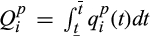

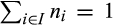
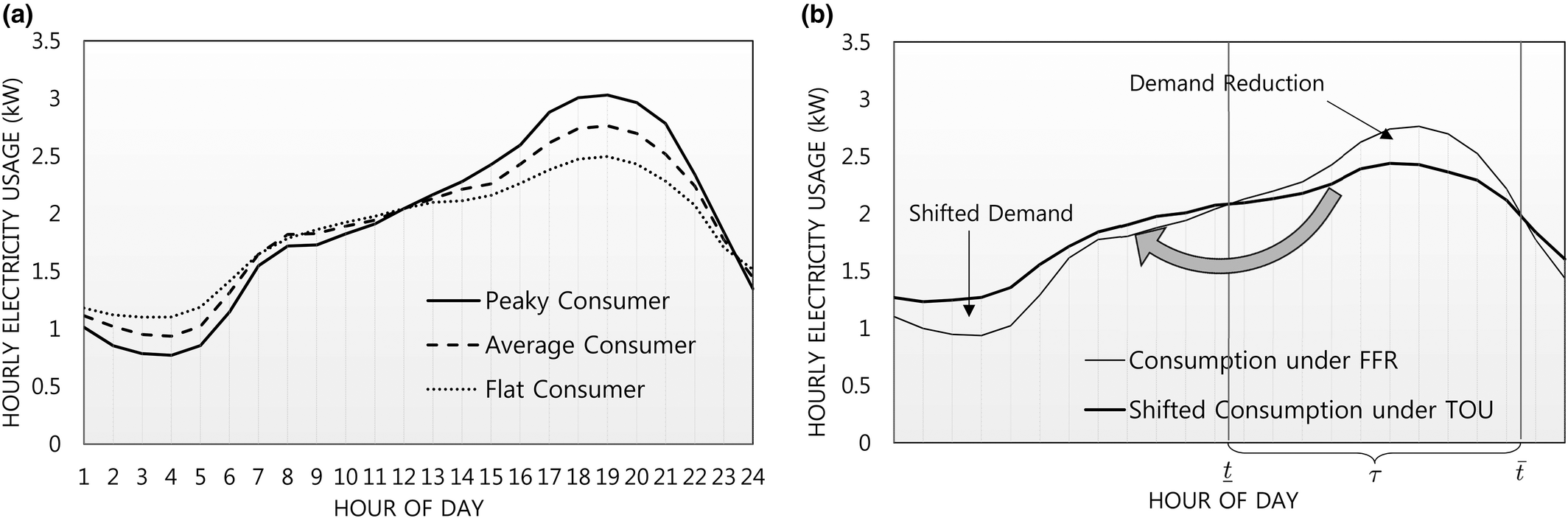
Illustration of Consumer Types and Consumption Behavior under Fixed Flat Rate and Time‐of‐Use Tariffs. (a) Electricity consumption profiles, (b) Consumption after demand response
We define the following consumer utility functions under a given tariff scheme depending on consumption levels in the peak and base periods and payments to the firm (Gilbert and Jonnalagedda 2011, Mohsenian‐Rad et al. 2010):



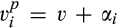
We express consumer type i’s consumption preference in period j as



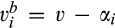
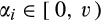


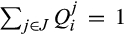
We do not presuppose any relationship between customers’ income level and their electricity consumption preferences, as no conclusive evidence of any such relationship is found in the literature; for example, see Faruqui and Sergici (2010) and George et al. (2018). Therefore, we restrict our attention to differences in consumption characteristics in the residential market and remain agnostic to the relationships these characteristics might share with other demographic factors.
The intention of the TOU program is to induce consumers to shift consumption from peak hours to off‐peak hours. The TOU tariff consists of a set of prices, a peak price


In what follows, we first examine the market equilibrium for the baseline model that employs a default fixed flat rate program.
Status Quo: Fixed Flat Rates
We consider the following two‐stage model. In the first stage, the profit‐maximizing firm chooses the fixed flat retail electricity price



Next, we address the profit‐maximizing firm’s problem as follows:

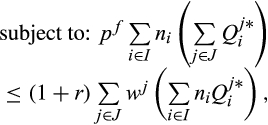

The lemma below summarizes the solution to the firm’s problem in the FFR program. In addition, the resulting social welfare is obtained which is defined as the sum of consumer and producer surplus, where consumer surplus is captured by the weighted sum of utilities enjoyed by each consumer type in equilibrium.
Under the FFR program, the firm charges the price of




We note that the constraint 3 is binding in equilibrium, and thus the firm’s profit is always restricted by the regulator. As the status quo, this equilibrium will provide the basis for our further analyses of demand response programs in subsequent sections. To that end, we substitute the optimal price in the FFR program and obtain the consumer type i’s utility in the status quo (which will serve as their reservation utility while considering voluntary time‐based tariffs) as follows:

In the next section, we consider the impact of introducing TOU tariffs and examine the interactions between the utility firm and the consumers.
Analysis: Introduction of Voluntary Time‐of‐Use Tariffs
To take a comprehensive perspective of TOU tariffs, we investigate the impact of TOU tariffs on the three major parties involved in the residential electricity market: the private utility firms (Investor‐Owned Utilities), regulatory bodies (Public Utility Commissions), and consumers. In particular, we examine how the introduction of voluntary TOU tariffs affects the market and the firm’s profit in section 4.1, social welfare in section 4.2, and the distribution of benefits across the different types of consumers in section 4.3.
Utility Firm’s Perspective
To examine the market equilibrium under voluntary TOU tariffs, we consider the following three‐stage problem. In the first stage, the firm sets the respective TOU electricity prices






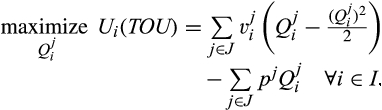
Solving the problem backwards, we first examine the consumers’ problem to find their best responses (i.e., consumption patterns) to the TOU tariffs if they decide to opt‐in. Recall (1) for the respective utility of each type of consumer. Given the prices under the TOU tariff, consumer i’s optimal consumption level in each period is obtained by solving the following:




In the second stage of the game, each consumer type chooses whether or not to opt‐in to the TOU tariff. A consumer belonging to type i will opt‐in if and only if

Suppose it is optimal for consumer type i to opt‐in to the TOU program, that is,

Lemma 2 illustrates a useful property of the voluntary TOU adoption equilibrium. It implies that TOU adoption occurs in increasing order of consumers’ peakiness

Lemma 2 also indicates that it suffices to only consider (N + 1) possible outcomes in examining the equilibrium with N consumer types. That is, starting with Case 1, we consider cases up to Case N in an incremental order. When no consumer type opts in, then the situation reduces to the FFR tariff which we refer to as Case ∅.
We now turn to the first stage wherein the firm makes its pricing decisions under the voluntary TOU tariffs. Note that the profit the firm obtains in Case ∅ is identical to that for the FFR tariff, that is,

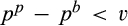


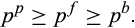
Before we introduce the utility’s TOU pricing problem, we first define the TOU adoption equilibrium as follows: Case k equilibrium refers to the case in which the utility firm sets TOU prices optimally such that the first k flattest consumer types,





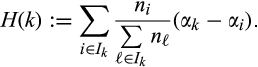
We now obtain the resulting outcome under each equilibrium case. For expositional convenience, we define the heterogeneity within the adoption set for Case k as
In the presence of TOU tariffs, If TOU Case k emerges in equilibrium, then the firm charges prices

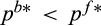
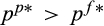




Lemma 3(i) presents the necessary condition for each equilibrium case to be feasible. If the condition does not hold, that is, if




If the necessary condition holds, then Lemma 3(ii) demonstrates the tariff scheme that induces the first k consumer types to opt‐in to TOU while yielding

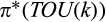
Lemma 3 also suggests that the TOU tariff dominates the FFR tariff from the firm’s perspective. That is, the Case 1 TOU equilibrium always yields a greater profit than FFR, since


Case k emerges as the equilibrium under the voluntary TOU tariff if and only if the following two conditions hold:
for all





Proposition 1 characterizes the necessary and sufficient conditions, (a) and (b), respectively, under which each equilibrium case emerges under the voluntary TOU tariff. These conditions, when taken together, imply that the optimal degree of TOU adoption is achieved when the heterogeneity in consumption preferences H(k) within a given adoption set


Next, we examine the impact of consumer characteristics on the benefits of deploying voluntary TOU tariffs.
Suppose TOU(k) is optimal to the utility. Then, the incremental profit to the firm,




Proposition 2 indicates that the benefit to the firm and society of inducing the next peakiest consumer segment into the TOU adoption set is increasing in the size of that consumer segment but decreasing in the peakiness of that consumer segment. Intuitively, an increase in


For any k and





Proposition 3 indicates that an equilibrium with a more homogeneous adoption set (lower H(k)) will result in a larger price gap, and hence, a larger incentive for demand response from consumers. In other words, the magnitude of the demand response incentive,

Social Welfare Perspective
We now extend our analysis by taking the perspective of regulatory bodies such as Public Utility Commissions. In particular, we examine the social‐welfare maximizing equilibrium under the voluntary TOU tariff, and obtain relevant policy implications. The following result is the counterpart of Proposition 1 from the social welfare perspective.
Under the TOU tariff, Case k achieves the greatest social welfare if and only if the following two conditions hold:
for all





As in the firm’s perspective on TOU tariffs, condition (a) in Proposition 4 provides the necessary condition for the feasibility of TOU tariffs targeted to an adoption set


Suppose TOU(k) is optimal from the social welfare perspective and


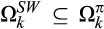
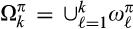

Proposition 5 highlights the misalignment between the firm and social welfare perspectives on TOU tariffs. In particular, we find that the deployment of TOU tariffs by the firm will always be lagging relative to the socially optimal degree of TOU adoption. While a greater degree of TOU adoption benefits more customers by allowing them to lower their bills, it also cuts into the firm’s revenue due to the free‐riding behavior of flatter consumer types. Figure 2 illustrates the misalignment between the optimal deployment of TOU tariffs according to the two perspectives when there are three consumer segments (N = 3): flat, average, and peaky.

Time‐of‐Use (TOU) Adoption Equilibria from Firm’s Perspective, Regulator’s Perspective, and the Contrast between the Two as a Function of the Number of Flat (


The first two graphs in Figure 2 illustrate the equilibrium TOU adoption cases from the firm’s perspective and the regulator’s perspective. The third graph illustrates the misalignment between the two perspectives, where the unshaded region indicates a difference in the firm’s and regulator’s preferred degrees of TOU adoption. Alignment between the firm’s and social welfare perspectives occurs in the top and bottom of the rightmost graph in Figure 2 (shaded gray) when there is either a large or small number of extreme consumers. When the number of peaky consumers is sufficiently large (small), then the optimal number of adopting consumers is identical from both perspectives because there is a (no) clear benefit to the firm and society to inducing (not inducing) demand response from the peakiest consumer segment. It is when the peaky consumer segment is intermediate in size that there arises a gap between the firm’s and regulator’s preferred levels of TOU adoption, wherein the firm does not perceive the added benefit of inducing demand response from the peakiest consumer segment while the regulator may continue to do so. Therefore, misalignment between the firm and the regulator’s perspectives occurs when consumption preferences are relatively uniform.
Consumers’ Perspective
Time‐of‐use tariffs have been proposed as a measure to reduce the undesirable cross‐subsidization across consumers with different consumption preferences by passing on to customers the true costs of their consumption patterns (Borenstein 2013, Faruqui 2010). Faruqui (2010) notes that a lower degree of cross‐subsidization is more desirable in an electricity tariff. Accordingly, we seek to compare the cross‐subsidization resulting from voluntary TOU tariffs with those under FFR tariffs. As discussed in the literature (e.g., Faulhaber 1975,2005), we consider cross‐subsidization as the difference between the actual electricity bill paid by a consumer and the cost‐based allocation of the revenue collected by the firm from all consumers. Specifically, we define the cross‐subsidization of a single consumer of type k under a given tariff scheme T as follows:




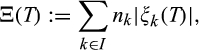
We characterize the impact of a consumer’s type on their degree of individual cross‐subsidization in the following proposition.
Under both the FFR and TOU tariffs,
there exists a unique


Proposition 6(a) implies that flatter consumers are worse off than their peakier counterparts under both the FFR and TOU tariffs; that is, a flatter consumer will pay more in cross‐subsidies (alternatively, receive less in cross‐subsidies) than peakier consumers. Proposition 6(b) further indicates that flatter consumers (specifically


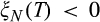
TOU tariffs were introduced in part to resolve the problem of disproportionate benefit distribution inherent to the FFR tariff structure (Faruqui 2010). However, the TOU tariffs considered thus far are voluntary in nature (as is generally the case with the rollouts of TOU tariffs across the United States), and as such, they often suffer from the inability to induce the peakiest consumers to adopt TOU tariffs. In what follows, we describe the impact of voluntary TOU tariffs on the degree of cross‐subsidization of the peakiest consumers who do not opt‐in to the voluntary TOU tariffs.
If



Lemma 4 shows that those consumers who do not opt‐in to the TOU tariff are cross‐subsidized more heavily (alternatively, cross‐subsidize less) under the voluntary TOU tariff structure relative to the FFR tariff. This results from the fact that non‐adopting consumers continue to make the same payments to the firm as they did under the FFR tariff while imposing higher costs relative to their counterparts that opt‐in to the TOU tariffs and participate in demand response. This has significant implications for the performance of voluntary TOU tariffs from an equity perspective—if enough consumers fail to opt‐in to the TOU tariffs, that leads to a large volume and magnitude of underpayments that must be compensated by larger overpayments from the adopting consumers. Therefore, voluntary TOU tariffs are likely to be less equitable than FFR tariffs unless they induce a sufficiently high degree of adoption. We next contrast overall performance by comparing the system‐wide cross‐subsidization of FFR and TOU tariffs in the following result.
For all In addition, Ξ(TOU(N)) < Ξ(FFR) holds.
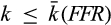
From Lemma 4, we noted that lower levels of adoption would likely lead to an inequitable tariff structure due to the relative underpayments made by the non‐adopting consumer types. Indeed, Proposition 7(a) reveals that if sufficiently few consumer types opt‐in to the TOU tariffs, the overall distribution of benefits under the TOU tariff would be less equitable than the default FFR tariff. Specifically, if the only types of consumers that opt‐in to the TOU tariff are those that were cross‐subsidizers under the FFR tariff (i.e., if


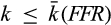

It is worth pointing out that the converse of Proposition 7(a) does not necessarily hold. That is, it is not guaranteed that TOU tariffs will be more equitable than FFR tariffs if they achieve more adoption than the threshold indicated. However, Proposition 7(b) notes that if all consumers are induced to adopt TOU tariffs thus yielding a Case N equilibrium, then equity is always improved relative to the status quo. We illustrate the degree of cross‐subsidization through an example of a market with three consumer segments in Figure 3.

Individual and System‐Wide Cross‐Subsidization for Three Consumer Types with


We observe from Figure 3a that regardless of the tariff structure, flatter consumers overpay relative to their peakier counterparts as noted in Proposition 6. However, while full adoption under the voluntary TOU tariff (Case 3) results in each consumer overpaying or underpaying (weakly) less than in the FFR tariff, the TOU tariffs with lower degrees of adoption, particularly TOU Case 1, result in significant over and underpayments relative to the FFR tariff as shown in Lemma 4. As a consequence, Figure 3b illustrates that only full adoption under the TOU tariff outperforms the FFR tariff from an equity perspective. While such high adoption rates are difficult to achieve in practice, several states such as California have taken the unique step to install TOU tariffs as the default tariff structure for their residential consumers (Rocky Mountain Institute 2015). While not mandatory, these default TOU tariffs benefit from the inertia faced by consumers as documented by literature on the status quo bias (Kahneman et al. 1991), and are thus likely to improve equitable distribution of benefits by approaching full adoption, particularly if no consumer is worse‐off relative to the FFR tariffs.
Numerical Study: US Residential Sector
In this section, we explore the application of our theoretical insights by simulating the state of TOU deployment in the US residential sector and comparing those results with the current state of TOU adoption. For the simulation, we calibrate our models using the data set and assumptions that are outlined below.
US wholesale electricity market data is obtained from the Federal Energy Regulatory Commission (U.S. FERC 2018) which publishes reports on regional wholesale electricity markets. FERC also provides market reports for each regional transmission organization (RTO) and independent system operator (ISO) that can be used to determine the average locational marginal prices (LMPs) during peak and off‐peak periods across various regions of the United States. Using this data, we calibrate


To illustrate some potential customer types across states in the U.S., we use the data for simulated energy profiles for US residential buildings for cities in the United States developed by the U.S. Department of Energy (U.S. DOE 2013). These profiles include three residential building types: baseline, low‐load, and high load. The baseline residential building has heating and cooling set points of 71 and 76


For the numerical analysis, we choose one representative city from 17 different states in the United States. These 17 states are mainly served by electricity trading hubs in four different regional wholesale markets. We characterize the peakiness of electricity consumption for a city as being representative of the corresponding state. Using the load profiles of the three consumer types and the assumptions stated above, we estimate the peakiness

Summary Statistics on the Simulated Consumption Scale, Patterns and Wholesale Market Prices in 17 U.S. States


The resulting equilibrium outcomes from the respective firm’s and regulator’s perspectives based on our model are presented in Figure 4. We summarize the current state of time‐varying tariff deployment in Table 2 based on firm‐by‐firm level data provided by the U.S. EIA (2018). While we compare the equilibrium outcomes with the actual state of the TOU adoption in the United States, we note that our simulation results are meant to provide insights on the general trend of TOU adoption rather than to estimate the size of TOU enrollment or to predict consumption volumes in each city. This is because our stylized model does not capture certain aspects of market conditions (e.g., market power, local regulation), technical details of electricity operation (e.g., transmission constraints, generator’s characteristics) as well as consumer behaviors (e.g., psychological barriers to TOU adoption).
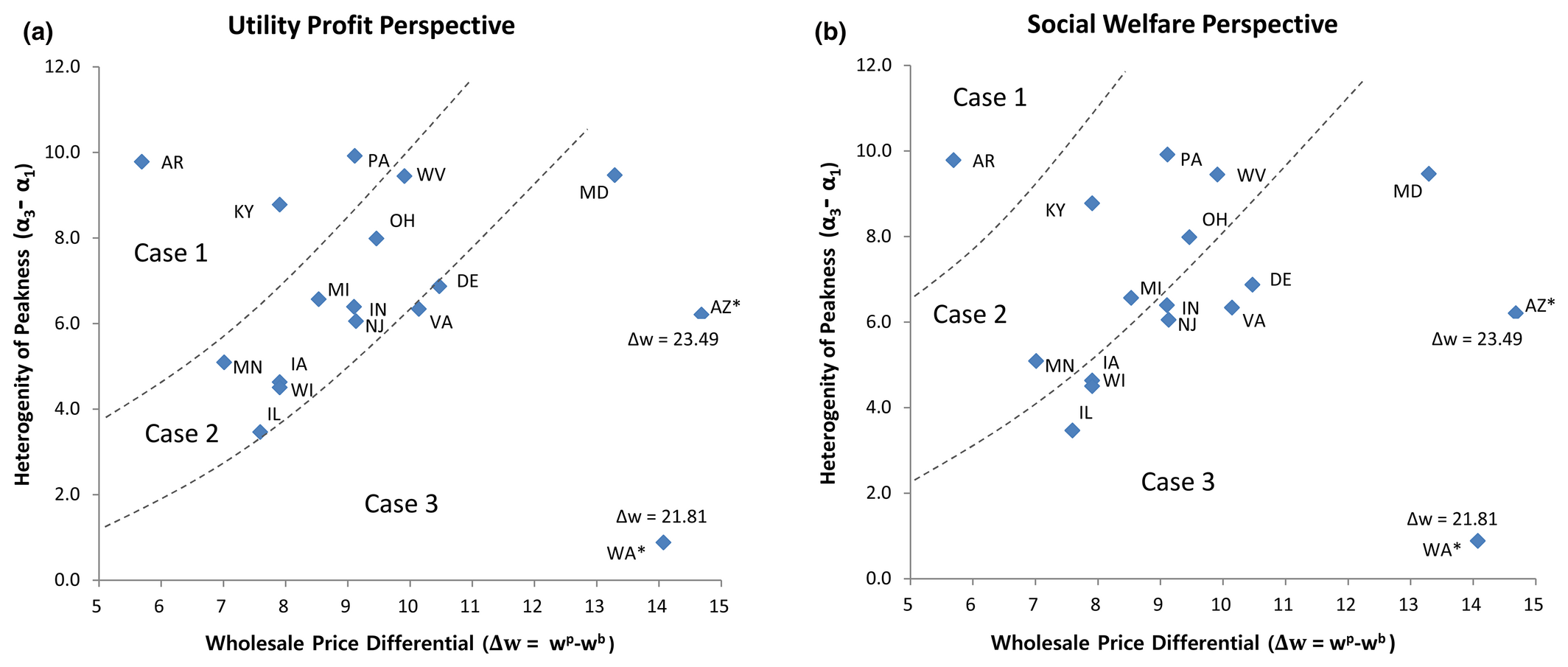
Equilibrium Cases for 17 US States from the Firm’s Perspective and the Social Welfare Perspective. (a) Utility firm’s perspective, (b) Regulator’s perspective [Color figure can be viewed at
Summary Statistics on the Deployment of Time‐Varying Tariffs for the Residential Sector in 17 U.S. States
Note
*This includes all time‐varying tariff types including TOU (time‐of‐use), CPP (critical peak pricing, CPR (critical peak rebate), VPP (variable peak pricing), and RTP (real time pricing).
Figure 4 highlights that the TOU adoption trend from the firm’s perspective is lagging relative to the socially optimal degree of TOU adoption, as shown in Proposition 5. In particular, misalignment between the two perspectives is prevalent at intermediate levels of consumer heterogeneity in peakiness and the wholesale price gap, that is, where consumers are not too dissimilar in their consumption preferences and the utility firm’s incentive to deploy TOU tariffs is moderate. Comparing Figure 4 and Table 2, we see that the three states with the highest TOU adoption—Maryland, Delaware, and Arizona—all appear in the utility firms’ Case 3 region. In addition, two of three states in the utility firms’ Case 1 region have very low TOU adoption. This adoption pattern is consistent with the model developed in this study (exceptions include Washington and Virginia that have low adoption and Arkansas that has relatively high adoption). Furthermore, the proportion of utility firms offering demand response programs to consumers in the states falling within the Case 3 equilibrium in Figure 4, with the exception of Washington, is nearly 25%, which is relatively higher than that in other states. Utility firms in several other states have not even introduced TOU tariffs in the residential sector; currently, only 5 utility firms out of 31 in Pennsylvania and 6 out of 49 in Kentucky are offering TOU programs.
We find that a considerable degree of misalignment persists in states that exhibit a moderate degree of consumer heterogeneity and wholesale price gaps. For instance, while the Northern Indiana Public Service Company identified a 36% market penetration potential for residential demand response in 2015 (Applied Energy Group 2016), TOU tariffs were not offered to customers there until 2017. Other states too including Pennsylvania (adoption rate nearly 0%) and Wisconsin (1.7%) have not realized their adoption potential. Therefore, despite public interest in demand response programs, utility companies may lack the necessary incentives to deploy TOU programs in a manner that induces meaningful large‐scale adoption while maintaining profitability.
We next turn to an analysis of cross‐subsidization under TOU tariffs in the states considered previously. Here, we rely on the interpretation of our simulation results since the relevant data for these states are not available. Using Lemma 1 along with the 


Comparison between Voluntary and Mandatory TOU Tariffs


Note
1This indicates the average amount of demand response per consumer during a day.
2This indicates the proportion of demand response relative to total electricity consumption; that is, percentage demand response = average demand response/average electricity consumption.
Table 3 compares the retail prices and demand responses achieved under three tariffs: FFR, voluntary TOU, and mandatory TOU tariffs. In all states, the gaps between retail prices, 
Cross‐Subsidization under the FFR, Voluntary TOU, and Mandatory TOU Tariffs (mil.$/yr)


Our simulation results for the analysis of cross‐subsidization in the US residential sector are in line with the analytical results obtained in section 4.3. We find that while flat consumers always cross‐subsidize their peakier counterparts regardless of the tariff scheme, average consumers may either provide or receive cross‐subsidies. Notably, in states where voluntary TOU tariffs do not induce enough consumers to opt‐in (states with a Case 1 or Case 2 equilibrium), cross‐subsidization increases relative to the FFR tariff; that is, the TOU tariff relatively overcompensates the peakier, non‐adopting consumers. It is only in those states with a Case 3 equilibrium that the degree of cross‐subsidization within each consumer segment as well as throughout the entire residential market is ameliorated relative to the FFR tariff. Interestingly, despite participating consumers being better off as a result of decreased electricity bills, these same consumers also end up cross‐subsidizing the others more when the TOU tariff induces low levels of adoption. This confirms that voluntary TOU programs are not guaranteed to be improving equity among residential consumers. A mandatory TOU program with Pareto improvement constraints (or a policy mechanism that promotes greater TOU adoption than the voluntary program) may be considered by policymakers to improve the equity of electricity pricing in the residential market. Figure 5 illustrates the comparison of the simulated system‐wide cross‐subsidization under the three tariffs across the 17 US states.
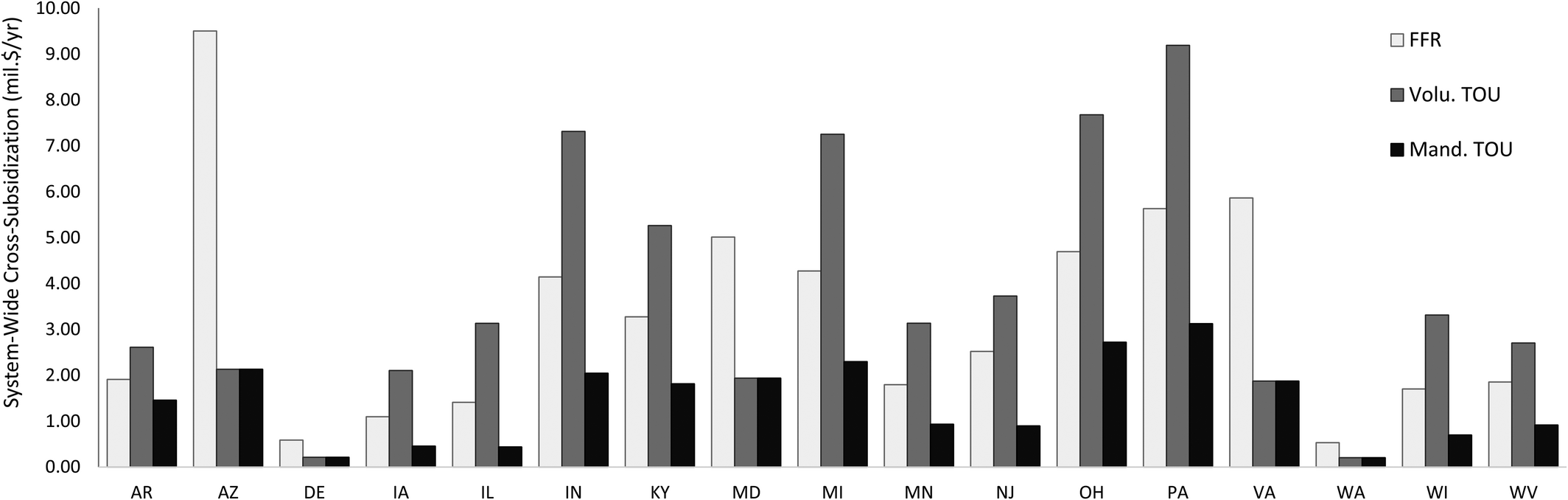
System‐Wide Cross‐Subsidization under the Fixed Flat Rate (FFR), Voluntary Time‐of‐Use (TOU), and Mandatory TOU Tariffs
Concluding Remarks
Voluntary Time‐of‐Use tariffs were conceived as a simple demand response tool to address the problem of matching electricity supply with demand—a feat which longstanding flat rate tariffs were unable to achieve. On the supply side, high wholesale prices during the peak period provide utility firms with the incentive to induce consumers to shift demand to the off‐peak periods when it is cheaper to meet demand. Further, appropriately designed voluntary TOU tariffs also have the advantage of giving consumers the opportunity to lower their electricity bills. Therefore, TOU tariffs present a win–win opportunity for the utility firms as well as consumers. Despite this potential, TOU tariffs have been sluggishly deployed across the US residential sector and adoption rates among consumers have been extremely low.
A major source of difficulty in designing appropriate TOU tariffs arises from the heterogeneity in the consumption preferences of residential consumers. We find that adoption of voluntary TOU tariffs by residential consumers follows an incremental pattern wherein it is easiest for the firm to induce those consumers with the flattest consumption preferences to adopt TOU tariffs. Unfortunately, the flattest consumers are also the least expensive consumers to serve, and moreover, allowing them to opt‐in to voluntary TOU tariffs gives them the opportunity to free‐ride by reducing their electricity bills without making a significant reduction in peak‐time electricity consumption. Therefore, the firm faces a trade‐off between inducing more demand response from a small number of flat consumers and increasing coverage of the TOU tariff to include more consumers with peakier consumption preferences. Our model captures this trade‐off by the heterogeneity within the set of adopting consumers; we find that this measure must be sufficiently small relative to the wholesale price gap to warrant expanding the coverage of TOU tariffs to include peakier consumer types.
We also show that the optimal deployment of TOU tariffs will always lag the socially desirable level of TOU deployment and penetration. This is because the socially optimal degree of penetration considers both the reduction in the electricity bills of residential consumers as well as cost savings for the utility firm. Expanding coverage to peakier consumers is less palatable to the firm when the heterogeneity in consumption preferences is large, as this forces the firm to leave a large amount of savings to flatter consumer types which consequently affects the total revenue it can generate. This explains the tug‐of‐war between public utilities commissions and investor owned utility firms, wherein the former require the utilities to advertise and promote TOU tariffs aggressively while the latter may only do so reluctantly with little success by way of TOU penetration. States such as Indiana, Pennsylvania, and Wisconsin have not seen significant adoption of demand response programs in the residential sector despite public interest to that end.
TOU tariffs have also been touted as a mechanism to improve the equity of electricity pricing by imposing the real costs of electricity provision on all consumers. However, we find that when the deployment of voluntary TOU tariffs results in low adoption rates, the flatter adopting consumers end up cross‐subsidizing the peakier non‐adopting consumers more than in the status quo. Therefore, voluntary TOU tariffs can in fact exacerbate the inequitable distribution of benefits inherent in flat rate electricity pricing. This is an unavoidable consequence in those markets where voluntary TOU tariffs cannot induce adoption from consumers with greater than average preference for peak electricity consumption. Only a high degree of TOU adoption can produce superior outcomes from an equity perspective relative to FFR tariffs. This provides support to the growing practice of installing default TOU tariffs in states such as California that effectively results in very high adoption rates approaching full adoption. That is, TOU tariffs can reduce the degree of cross‐subsidization and thus consequently improve the equitable distribution of benefits only if the degree of TOU adoption is sufficiently high—approaching full adoption in the residential market. This occurs as a result of high TOU adoption ensuring that most consumers’ face the true costs of electricity provision through time‐dependent prices.
In closing, we acknowledge some limitations of our study and suggest potential extensions. First, we focus on the short‐run implementation of demand response programs wherein utility firms procuring electricity from the wholesale markets face exogenously fixed prices. In the long‐run, the supply‐side of the market can make significant adjustments to generation portfolios in reaction to the outcomes of these demand response programs. Hence, a natural extension to our model can consider the long‐run adjustment of the supply‐side of the electricity market by incorporating supply functions or by explicitly incorporating generation portfolios into the decision‐making framework of the utility firms. Second, we note that our analysis does not account for any barriers to demand response adoption arising from behavioral characteristics or biases of consumers. As states such as California exploit behavioral phenomena such as the status‐quo bias to increase TOU adoption by designating them as default tariffs, it is worth considering the impact of these deviations from rational consumer behavior on the potential for achieving demand response in the residential sector. Despite these limitations, our model can readily be applied to evaluate the potential for, and the optimal design of TOU tariffs in a given residential market. Recent studies have shown how consumers can be segmented into groups in the residential electricity market based on consumption characteristics (Haben et al. 2016, Kwac et al. 2014, Rhodes et al. 2014). With the widespread rollout of smart meters in recent years, utility companies can use the consumption data collected from these meters to segment the consumer market and evaluate the salient characteristics within each of these segments, thus preparing the groundwork for effectively utilizing our model to predict TOU potential and design appropriate tariffs.
Footnotes
Model Extensions
Proofs of Main Results
Acknowledgments
Dong Gu Choi thanks the support by the Ministry of Education of the Republic of Korea and the National Research Foundation of Korea (NRF‐2016S1A5A2A03925732). Michael K. Lim acknowledges the support by Creative‐Pioneering Researchers Program through Seoul National University and the Institute of Management Research at Seoul National University.
1
Products that use electricity for their main power source and have the capability to receive, interpret, and act on a signal received from a utility, third‐party energy service provider or home energy management device and automatically adjust their operation, depending on both the signal’s content and settings from the consumer (for example, clothes washers, clothes dryers, air conditioners, dishwashers, rooftop solar PVs, and electric vehicles) (Sastry et al.  ).
).
2
Existing research on residential demand response programs has mainly focused on differences in consumers’ intrinsic consumption preferences (e.g., Haben et al. 2016, Kwac et al. 2014). In Appendix , we consider heterogeneity in demand‐shifting flexibility that can arise from differences in work schedules, demographics, and housing conditions.
3
Dong et al. (2017) find that there is essentially no significant change in the total electricity consumption when consumers switch from FFR to TOU tariffs barring some extreme cases. Nonetheless, we relax this stipulation and extend the base model by endogenizing electricity consumption in Appendix .
4
Ontario, Canada has been considering mandatory TOU tariffs since 2005 (Ontario Energy Board 2018). In addition, Italy has rolled out mandatory TOU tariffs in its residential sector since 2010 (Maggiore et al. 2013), and other countries in Europe such as Ireland and Spain are considering mandatory or default TOU tariffs (Hledik et al. ).
5
While generally true because a larger number of adopting consumer types will exhibit a wider deviation in peakiness from the kth consumer type, the sizes of the consumer segments could be specified in a manner such that
6
7
If