







Abstract
We examine the effect of parental unemployment on the school well-being of children aged 6 to 9 while considering differential effects by unemployment duration, reemployment, and parents’ socioeconomic status. The analysis is based on a mandatory school well-being survey, which is answered by the children and conducted annually in Danish public schools (2014–2019) and linked to administrative register data. A child-level fixed effect model is used to adjust for time-constant confounders. The findings reveal no statistically significant effects and suggest that parental unemployment either has no impact or at best a very weak effect on children's school well-being. If fathers become unemployed, any effect on children's school well-being appears to be limited to those who do not regain employment. Moreover, the potential effects were more pronounced among children of lower socioeconomic status fathers. Interestingly, among mothers, remaining unemployed seems to be associated with improved child well-being at school.
Keywords
Introduction
Becoming unemployed can have detrimental effects not only on the well-being of affected adults (Gowan, 2014; Luhmann et al., 2012; Rauf, 2020) but also on the well-being of their children (Brand, 2015; Kalil, 2013). Reductions in well-being and family stress are often hypothesized to spill over into children's schooling reducing school performance and later educational outcomes (Lehti, 2023). Yet, this mechanism is left untested, with research not addressing whether parental unemployment negatively affects children's psychological outcomes at school.
The specific circumstances surrounding parental unemployment likely influence the severity of its impact on children's school well-being. The effects may not be solely attributed to the event itself but are contingent upon factors such as the speed at which the parent secures reemployment or experiences prolonged unemployment (Kalil and Ziol-Guest, 2005; Mooi-Reci and Wooden, 2022).
The role of reemployment in mitigating the consequences of parental unemployment on child outcomes has received limited attention in the literature, but one study suggests that it reduces the negative effect on enrollment in higher education (Pan and Ost, 2014), while another indicated that reductions in children's self-esteem and mastery following maternal job loss predominantly affect those children whose mother fail to regain employment (Kalil and Ziol-Guest, 2005). Those who fail to secure reemployment will experience a longer period of unemployment, which likely has more severe consequences for children's outcomes, due to harder financial circumstances, uncertainty, and increased stress of the parents (Brand, 2015; McKee-Ryan et al., 2005). Hence, reemployment may have a positive effect by preventing the individual from experiencing a prolonged period of unemployment.
Parental unemployment is generally assumed to affect child outcomes through two interconnected mechanisms: the loss of economic resources leading to decreased parental investment in the child, and increased parental stress that spills over to the child (Conger and Donnellan, 2007). Yet, in particular, research from the Nordic countries finds that the negative effects of parental unemployment on academic achievement, and enrolment in secondary and tertiary education are not mediated by parental income–despite significant income losses resulting from becoming unemployed (Huttunen and Riukula, 2019; Jensen et al., 2023; Lehti, 2023; Lehti et al., 2019; Rege et al., 2011; Willage and Willén, 2022). In the literature, it is assumed that the comparatively generous unemployment insurance and free access to education in these countries negate the loss of economic resources (Lehti, 2023; Lindemann and Gangl, 2020). Consequently, family stress is frequently hypothesized in the literature to be the underlying mechanism responsible for the effects of parental unemployment on educational outcomes in the Nordic countries (Lehti, 2023).
If parental stress spills over to children–which in turn affects their educational output–we would expect to observe a decrease in related outcomes such as children's well-being at school following parental unemployment. Such decreases would suggest that parts of the negative effects on educational outcomes are due to a disruption of children's schooling. As a potential link between the situation in the parental home and the children's progress in school, we focus on the children's social well-being at school.
The effect of stressful life events, such as parents becoming unemployed, can differ by socioeconomic status (SES). On the one hand, individuals with lower SES may be more severely affected due to their limited economic and psychological resources to offset the negative consequences (Pearlin and Bierman, 2013). On the other hand, unemployment may be more prevalent among lower SES individuals, potentially reducing the social stigma associated with such events and therefore having fewer negative consequences for them (Aquino et al., 2022). Despite the importance of SES in understanding the effects of parental unemployment on children's well-being, research in this area remains limited.
Over the life-course stressful life events such as parental unemployment are not expected to uniformly affect children's outcomes (Elder et al., 2003). Rather, specific developmental phases and transitional periods should be particularly sensitive to such life events. One such phase is the early school years. School entry constitutes a major transition in children's lives, as they face new expectations, meet new peers, and establish new friendships (Entwisle et al., 2003; Rimm-Kaufman and Pianta, 2000). If parental unemployment disrupts this transition, it may have negative consequences for children's school-related well-being. This specific period, and the early childhood years more generally, have received limited attention from previous research.
Our article has three primary theoretical estimands in mind (Lundberg et al., 2021). First, it addresses whether parental unemployment is related to children's social well-being at school, testing whether this disruption to the home environment follows children into their school environment. This provides insights into whether negative effects found for educational outcomes in previous studies are partly driven by a disruption of students’ schooling or primarily due to the disruption of the home environment.
An ongoing discussion in the literature is whether unemployment scars or bruises the well-being of the individual (Luhmann et al., 2012; Rauf, 2020; Zhou et al., 2019). Hence parental unemployment may have either lingering or temporary effects on children's school well-being. Due to this uncertainty regarding the persistency of effects on well-being, we model the dynamic impact of unemployment on children's well-being, testing not only the initial relation but also how unemployment relates to well-being in the years after it occurred.
The dynamic effects of unemployment will likely depend on two characteristics of the unemployment experience; reemployment and unemployment duration, which are the second and third theoretical estimands. We expect that parental reemployment is asymmetric to parental unemployment so that any negative effects are reversed by parental reemployment. 1 In contrast, we assume that the duration of unemployment will increase any negative effects, as both financial hardship, stigma, and parental stress seem likely to increase with longer unemployment spells. This question is also relevant in light of the abovementioned welfare state replacements of income losses in Nordic contexts, which buffer the economic loss related to short-term unemployment in particular.
Besides these three primary estimands, we consider these relations separately for unemployment of mothers and fathers, as it is often assumed that they can have different effects. In addition, we analyze how the relationship between parental unemployment and children's well-being may depend on the SES of the parents.
We address these estimands in Denmark, which constitutes a conservative case for studying the effects of parental unemployment on children's school well-being. Unemployment has, via unemployment insurance, active labor market policies and good re-employment chances, a smaller effect on the economic situation of families, and the economic sitution has been shown to play a limited role in explaining the negative effects of unemployment on children's schooling. The reduced financial consequences in the Nordic countries also negate parts of what makes parental unemployment stressful. Hence, not only is the economic mechanism negated but the family stress is also reduced. Nevertheless, the dominant perspective in the literature is that if parental unemployment affects children's outcomes it is due to family stress in the Nordic countries (Lehti, 2023). Thus, the Danish context provides an interesting test case for the role of family stress–and if there are negative effects there, we would expect them to be larger in other welfare systems.
Parental unemployment
We define parental unemployment as situations, where a parent is without a job and actively seeks employment (Brand, 2015). Unemployment can be voluntary and involuntary, with individuals voluntarily leaving their jobs by terminating their contract, or involuntarily due to the individual being fired, a non-permanent contract that expires, or as part of mass layoffs and plant closures. Unemployment that occurs due to mass layoffs or plant closures is specifically referred to as job losses in the literature (Brand, 2015; Lehti, 2023). A large part of the literature focuses on this specific event, as it is more likely to be involuntary and exogenous to the individual than other unemployment, addressing the non-random occurrence of unemployment (Ruiz-Valenzuela, 2021). Yet, this approach focuses on specific types of unemployment. It ignores unemployment that occurs for other reasons, such as the employee being targeted and fired, which may affect the individual more severely. We, therefore, focus on the wider definition of involuntary unemployment that includes both scenarios (Lehti, 2023). Although we focus on involuntary unemployment, we consider both job losses and involuntary unemployment in our representation of the literature.
Parental unemployment and child outcomes
The literature almost unanimously expects negative effects of parental unemployment on children, most often based on two mechanisms, the parental investment perspective (Becker and Tomes, 1986), and the family stress model (Conger and Donnellan, 2007). The parental investment perspective describes how families invest economic resources in raising their children. These investments include living in a good neighborhood, engaging in extracurricular activities, entertainment, and being able to afford an adequate standard of living including food and housing. If unemployment comes with a reduced income such investments may be inhibited and children's well-being reduced (McKee-Ryan and Maitoza, 2014) As noted, previous research has suggested that the parental investment mechanism plays a very limited role in explaining the negative effects of parental unemployment, in particular in the Nordic countries (Lehti, 2023).
Instead, family stress is expected to be the primary mechanism. The family stress model highlights how economic pressure and stress within the family can impair parents’ ability to provide adequate psychological support for their children. Moreover, parental unemployment can increase conflicts between parents, which can reduce the well-being of children. Previous research has demonstrated that parental unemployment can have negative psychological consequences in both childhood and adolescence in several areas of life with strong implications for children's schooling. Maternal job loss has been linked to a decline in mastery and self-esteem in adolescence (Kalil and Ziol-Guest, 2005), an increase in socio-behavioral problems among preschool children, and a decrease in adolescents’ belief in self-determination (Peter, 2016), and an increase in problem behavior among children aged 8 to 10 (Hill et al., 2011). Furthermore, parental job loss has also been found to increase problem behavior in children ages 3 to 5 (Mari and Keizer, 2021). In contrast, one study suggests that for 11-year-old children, parental unemployment has a positive association with overall happiness. However, for older children, the association is either negative or non-existent (Powdthavee and Vernoit, 2013). While previous research has provided ample evidence of the psychological consequences of parental job loss for children, many of the studies rely on selected samples such as low-income single mothers (Hill et al., 2011; Kalil and Ziol-Guest, 2005). Moreover, there is limited evidence for the Nordic countries, with one study from Denmark finding no effect of parental job loss during the Great Recession on well-being (Andersen et al., 2022).
Parental unemployment and children's school well-being
Parental unemployment can disrupt the children's home environment, which can affect their overall well-being. Yet, these effects may be reduced or absent in other contexts such as when children are at school. The school environment may even be a sanctuary from the conflicts at home, and teachers and peers may help reduce the stress experienced at home. Yet, parental job loss has been shown to increase problem behavior in younger children (Mari and Keizer, 2021), which can increase conflicts at schools harming children's school well-being. More generally, the family and home environment is a stronger determinant of children's well-being than schools (Parcel et al., 2010), and overall well-being is strongly correlated with school well-being (Bradshaw et al., 2011). Hence, the reduced well-being at home is likely to be carried over into the school environment, affecting the child's behavior and experience at school.
School well-being is understood in this context as the quality of life during school time, including a positive emotional state and health status, good social relationships with other children, as well as the absence of negative experiences such as stress or bullying (Konu and Rimpelä, 2002).
Unemployment duration, reemployment, and socioeconomic status
Longer spells of unemployment will likely amplify the negative effects suggested by both perspectives discussed above, as financial problems and family stress will aggravate over time. Regarding family stress, it can be expected that stress is increased during a longer period of unemployment due to an unsuccessful job search history with repeated episodes of negative feedback and rejected job applications.
Previous research has established that the duration of unemployment accumulates into more negative effects on child outcomes (Lindemann and Gangl, 2019; Mooi-Reci et al., 2019; Powdthavee and Vernoit, 2013). While spells of unemployment can amplify the negative effects, reemployment should reverse or dampen them (Pan and Ost, 2014). The effect of reemployment on child well-being has not been studied so far, but research focusing on the individual shows that unemployment reduces well-being and reemployment has positive effects on the individual (Brand, 2015; Ferreira et al., 2015; Rauf, 2020; Zhou et al., 2019).
An ongoing discussion in the literature on reemployment is whether reemployment completely compensates against the negative effects of unemployment on the well-being of the individual, or if it leaves a permanent ‘scar’ (Rauf, 2020; Zhou et al., 2019). As such, it is unclear if we should expect reemployment to completely compensate against the negative effect on children, or if there is a permanent reduction in well-being compared to the time before unemployment occurred.
The effects of negative life events such as parental unemployment are often assumed to depend on factors such as the socioeconomic status of the family (Aquino et al., 2022). On the one hand, parental unemployment might affect higher SES families more, as they simply have more to lose, which can result in these families ‘falling from grace’ (Newman, 1999). In addition to experiencing a greater loss, the high SES families might also be less accustomed to the experience of negative life events and hence might not have developed the resilience or coping strategies to deal with the event (Aquino et al., 2022). On the other hand, the additional financial resources of high-SES families might compensate for the loss of income. Moreover, high SES families have more psychological resources (Pearlin and Bierman, 2013), which could further dampen the effect.
One previous study suggests that paternal job loss in lower SES families affects children's physical and mental health more (Schaller and Zerpa, 2019), but limited research has considered how the psychological consequences of parental job loss on children might depend on SES. Studies addressing other outcomes such as academic achievement and enrollment in secondary or tertiary education, in general, suggest that lower SES families are more affected (Lehti, 2023; Ruiz-Valenzuela, 2021), although there are some studies suggesting that the effects can be more severe among high SES families for tertiary education (Coelli, 2011; Lehti et al., 2019).
Paternal and maternal unemployment
Paternal and maternal unemployment are typically considered separately, as the effects are expected to differ due to gendered family roles and relations to the labor market. As such, paternal unemployment is expected to result in a larger loss of income and more stress since gender norms expect men to be employed. Moreover, mothers are likely to allocate additional time to their children if they become unemployed thus compensating against the negative impact of unemployment (Kalil and Ziol-Guest, 2008; Rao, 2022; Ruiz-Valenzuela, 2021).
Although previous studies addressing the psychological impact have found negative effects of both maternal and paternal unemployment (Hill et al., 2011; Kalil and Ziol-Guest, 2005; Mari and Keizer, 2021; Peter, 2016; Powdthavee and Vernoit, 2013), they focused on either the fathers or the mothers’ job loss and have therefore not been able to address which of these affects children more. An exception is a study by Powdthavee and Vernoit (2013), which indicates that the negative association with ‘overall happiness’ is more pronounced for fathers’ unemployment.
Previous research considering educational outcomes and later earnings has consistently found negative effects of paternal unemployment, while the results for maternal unemployment are more mixed (Lehti, 2023; Ruiz-Valenzuela, 2021). Yet, a few recent studies from Nordic countries have suggested either a similar negative effect (Jensen, 2023; Jensen et al., 2023; Lehti et al., 2019), or an even stronger negative effect of maternal job loss (Mörk et al., 2020; Willage and Willén, 2022), which has been argued to be a result of the strong dual-earner norms in these countries (Mörk et al., 2020).
Context: Danish school system and labor market
School system
In Denmark, parents can decide between subsidized private schools and free public schools. About 85% of children in grades 0–3 attend public schools (Statistics Denmark, 2021). In our study, we only have access to information on the children attending public schools. To reduce the role of population composition school resources are allocated so that schools with a larger share of disadvantaged students receive more funding than schools with less disadvantaged students (Houlberg et al., 2016).
Labor market institutions: unemployment insurance and employment protection
About 80% of the Danish workforce subscribes to state-subsidized unemployment insurance (Dalskov and Mølgaard, 2010). The insurance covers unemployment for two years and up to 90% of the prior income up to a monthly maximum of 19,322 DKK (∼2600€). If unemployment insurance does not apply, the government provides unemployment checks of 15,355 DKK (∼2000€) to households with children. A prerequisite for receiving these benefits is that the individual is available to the labor market and actively seeking employment.
The Danish labor market is characterized by a low level of employment protection, enabling employers to dismiss and hire employees with relative ease. The combination of a flexible labor market and income security – also known as the flexicurity model – is likely to interact with the effect of unemployment. On the one hand, the security net reduces the economic impact of unemployment on the family by a lower ‘scar’ in the wage of the affected parent (Gangl, 2006). On the other hand, a flexible labor market makes it more likely to experience unemployment for all workers, but also more likely to find a new job quickly, which should reduce the stress going along with unemployment. Workers in Denmark have been shown to both have less of an earning loss and to be more likely to find reemployment following a job loss compared to other European countries (Bertheau et al., 2023). Hence, by international comparison, the economic impact of unemployment is certainly lower than in many other welfare state contexts, particularly liberal institutional settings (Gangl, 2006). Moreover, becoming unemployed may be less stigmatized in a country characterized by ‘flexicurity’ as the event is more common.
We argue that the combination of a school system with low levels of inequalities between schools, relatively generous unemployment insurance, and good reemployment opportunities at comparatively high risks for any worker to lose a job makes Denmark a conservative test case for the overall effect of unemployment on children's outcomes. We expect that the Danish context contributes to mitigating the loss of income following parental unemployment, while also reducing the role of family stress.
Method
Data and sample
We linked data from two sources, the Danish administrative register data and the Danish Student Well-being Survey (DSWS), a mandatory survey in all public schools collected yearly by the Ministry of Education since 2014/2015. The register data contain information on children and their parents (e.g., on educational career, income, relationship status, employment status). All students in Danish public schools are expected to participate in the DSWS each year with a response rate of ∼90%. Different surveys are used for 0- 3rd-grade students and 4-9th-grade students. We used the survey answers for the 0-3rd-grade students (ages 6 to 9), which have 20 items addressing children's school-related well-being.
As we study maternal and paternal unemployment separately, we constructed separate samples for mothers and fathers. We excluded several individuals from our analysis. First, we dropped children attending special needs education schools- or classes since the survey was not developed for children with special needs. We also dropped children who are older or younger than the designated age for the child's grade level; we expect most older children to be due to the postponement of enrollment in compulsory education, which is only given after an individual assessment of the child, suggesting that they might be special needs education children as well. Moreover, we dropped children who did not live with their parents.
We restricted our sample further based on parental characteristics such as their labor market participation. Since we were interested in the effect of a loss of a stable position in the labor market, we reduced the sample to parents who were registered as employed by Statistics Denmark in the year before the child started school. Hence, we also dropped parents who were unemployed throughout the observation period. Additionally, we omitted parents who were self-employed during the year before their child started school, as the occurrence of unemployment likely differed significantly for this group.
To observe changes in well-being at school over time, we excluded children who were only observed once in the DSWS, which primarily were children in grade 0 in 2019, and children in grade 3 in 2015. Moreover, we excluded children, who did not have a valid pre-measure of school well-being, i.e., a measure before the occurrence of parental unemployment. Last, we dropped students with missing values on our control variables, or on at least three of the variables that compose our outcome measure ‘school well-being’ in a given year. The final samples include 181,558 children in the father sample, with 4580 children experiencing a paternal unemployment event; and 173,660 children in the mother sample, with 5690 experiencing a maternal unemployment event. The total number of observations in the father sample was 523,349 and 499,998 in the mother sample. The final samples differ somewhat due to differences in father and mother characteristics, and missing information on mothers and fathers.
Characteristics of the two samples can be found in Table 1, split into no-unemployment and unemployment. Overall, the descriptive statistics give a clear indication that unemployment occurs more often among less well-off individuals. As such, parents without a college education, lower disposable income, who are divorced, and who are immigrants were more likely to experience unemployment during their children's first four years of schooling.
Descriptive statistics.
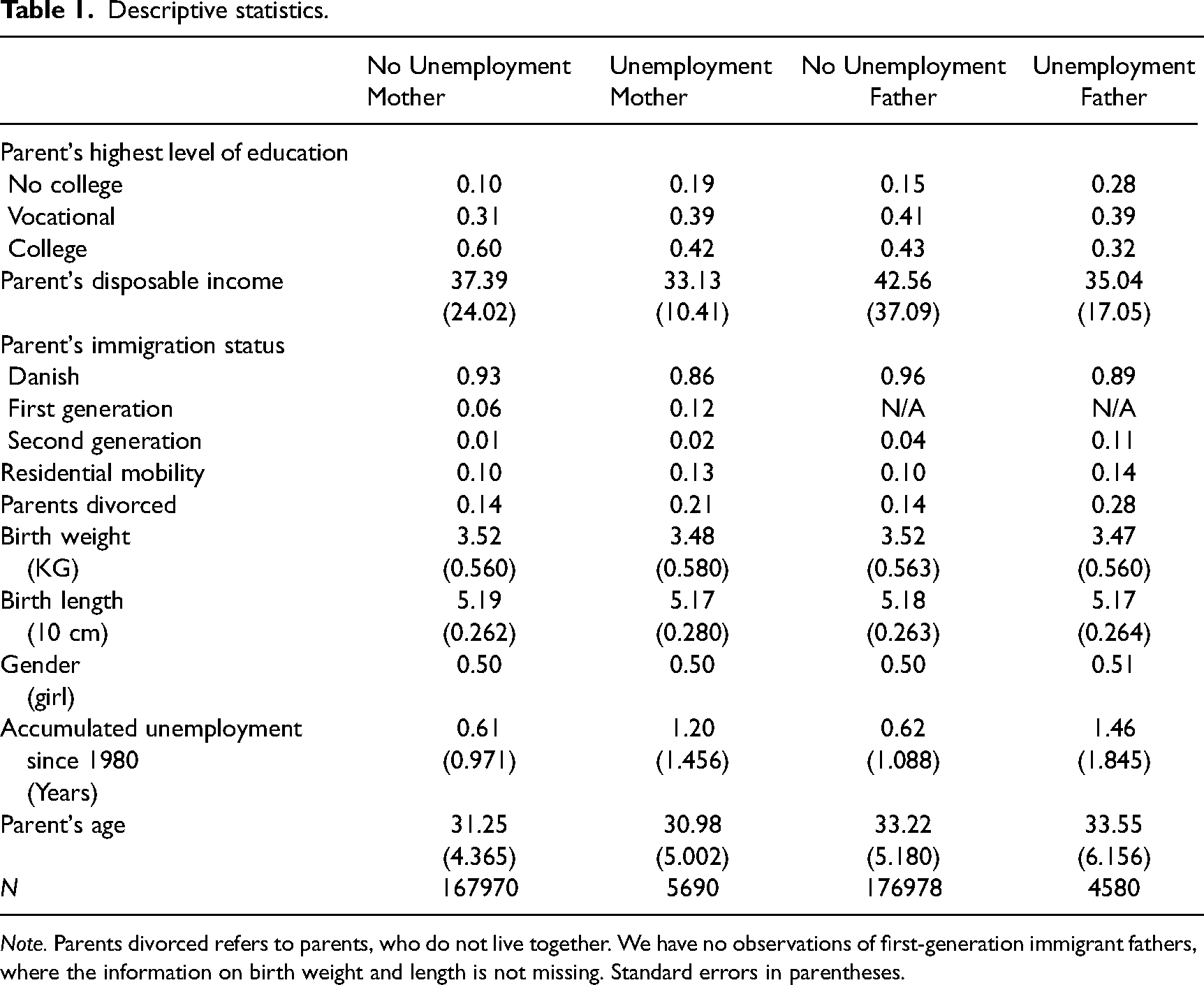
Note. Parents divorced refers to parents, who do not live together. We have no observations of first-generation immigrant fathers, where the information on birth weight and length is not missing. Standard errors in parentheses.
Measures
Child school well-being
The DSWS is collected once a year. Students answer the survey electronically and have the option to have the survey read aloud if they have reading difficulties. The Ministry of Education has few formal requirements for how the survey is conducted, but teachers are asked to encourage students to answer honestly and inform the children that their responses are not shared with their parents, teachers, or other personnel at the school. The responses from the survey are made available to the school personnel aggregated at the classroom level only. Each item from the survey had three answer options (3 = yes, often/a lot/usually; 2 = yes, sometimes/a little/once in a while; and 1 = no; we recoded all items so that higher scores indicate higher school well-being).
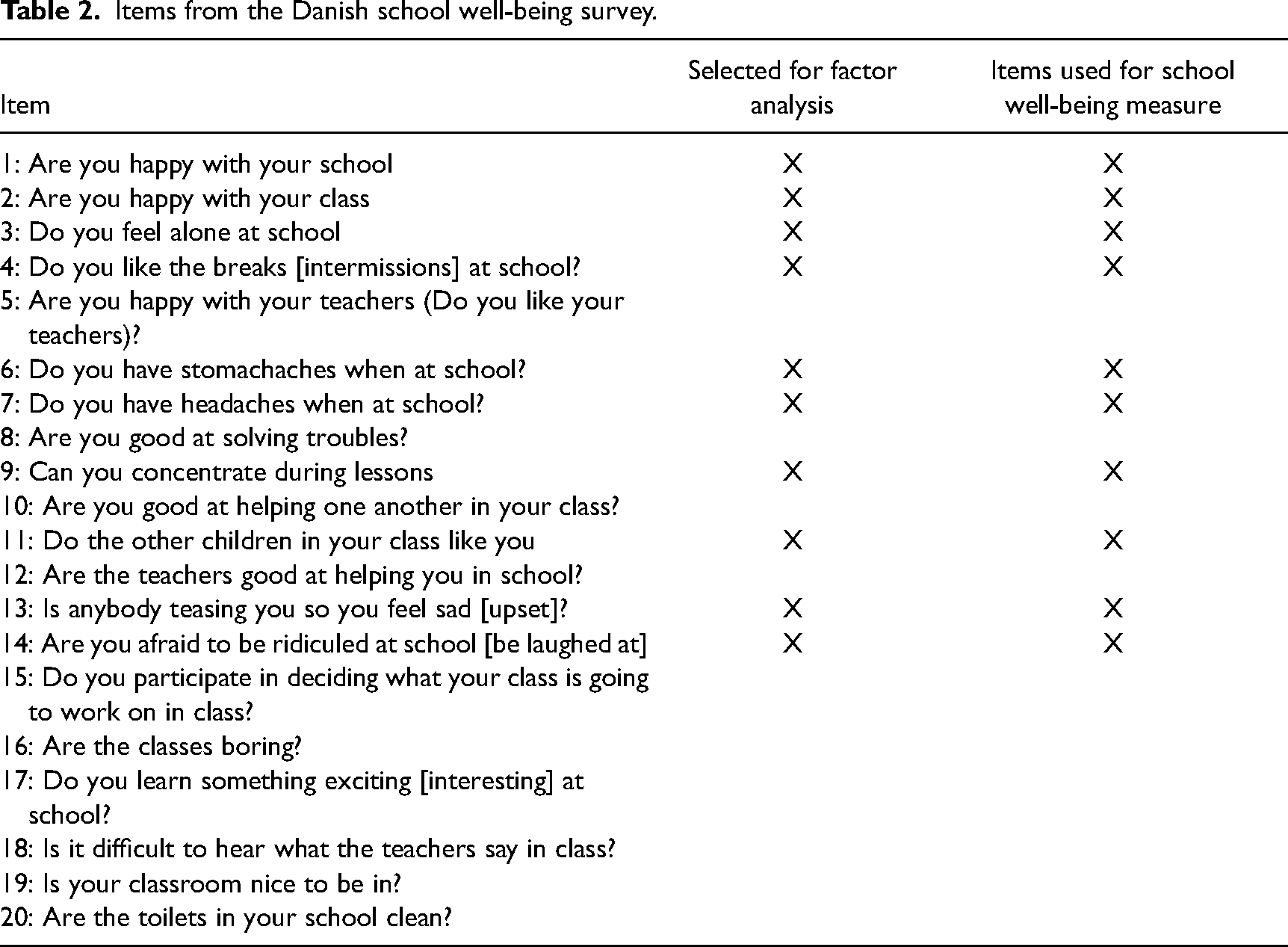
To create a measure of children's school well-being, we conducted an exploratory factor analysis. In this analysis, we excluded items on student relations to their teachers, the learning environment, or the school and classroom context. Table 2 lists all items of the DSWS, the items we selected for the factor analysis, and the items chosen from the factor analysis to construct the school well-being index. Our item selection is similar to the social well-being measure suggested by the Danish Ministry of Education for the 4th-9th grade survey (Ministry of Children and Education, 2016). Results from the factor analysis are presented in Appendix A. We constructed the school well-being index as the average value of the child's answers and standardized the variable to a mean of 0 and a standard deviation of 1. If a child had missing values on one or two items, we still included them. We calculated their average based on the items that were non-missing. Cronbach's alpha for this index varies slightly between years but is approximately 0.72.
Items from the Danish school well-being survey.
Unemployment event
Our definition of unemployment states the individual is involuntarily without a job and actively seeking employment. Based on employment registries, we defined the occurrence of unemployment as working zero hours in three consecutive months, while being registered as employed in the year prior by Statistics Denmark. Furthermore, the respective parent had to receive unemployment benefits or some other social insurance at some point between months 0 and 3 relative to the first month of unemployment. To receive benefits or social insurance the individual is required to be actively seeking employment. We chose these criteria to reduce the number of voluntary unemployed. We did not include unemployment when the parent received benefits due to sickness since we expect sickness to have an independent effect on the children's school well-being.
A parent is registered as becoming unemployed if they have an unemployment event prior to a child's well-being measure, and we have a valid premeasure for the previous year. For the study of parental unemployment, the treatment indicator is ‘constant’ after the event, and the parent is kept as treated, irrespective of what happens in the following years.
We do not consider multiple events and treat the indicator for the unemployment event as constant after the event. Our panel is relatively short, which minimizes the possibility of multiple events. Moreover, addressing the dynamic effects of multiple events would add additional challenges such as ‘treatment-confounder feedback’ (see Hernán and Robins, 2020 for an introduction; see Jensen, 2023 for an example applied to unemployment).
Reemployment
We defined reemployment as working for three consecutive months for an average of 75 h and no longer receiving any benefits or social insurance, after having been registered as unemployed. A three-month criterion seems reasonable here since a longer period would have caused us to exclude many reemployments that happened before the time of the well-being measure. Based on this information, we constructed two groups: parents who became unemployed but found reemployment before the child answered the survey, and parents who had not found reemployment when the child took the survey.
Like unemployment, a parent is considered as becoming reemployed if they have reemployment prior to a child's well-being measure, and the treatment indicator is then kept constant afterward.
Unemployment duration
Our measure of unemployment duration is based on the criterion of finding reemployment. If a parent had not found reemployment prior to a well-being measure they were registered as still unemployed. As an artifact of our analytical approach, elaborated below, we consider three categories for unemployment duration. Unemployed for less than a year when well-being is measured, unemployed for more than a year when well-being is measured, and unemployed for more than two years when well-being is measured. Individuals can contribute to multiple estimates, so those who eventually become unemployed for two years also contribute to the estimation of earlier years.
Socioeconomic status
We used two measures for the individual SES of mothers and fathers. The first is their disposable income coded into quartiles. The second is the parent's highest level of educational attainment coded as 1: Lower secondary and academic upper secondary, 2: Vocational upper secondary, 3: College or higher. We code lower secondary and academic upper secondary together as they do not provide access to a skilled position in the labor market. The socioeconomic status of the parents is measured in the year that the child turned 5, i.e., the year before school starts. We choose year 5, as it is the closest in time prior to the well-being measure, but still prior to the occurrence of the unemployment events we consider.
Control variables
In addition to parental education and disposable income, we also observe whether the biological parents of the child were living together when the child was 5 years old, residential mobility until age 5, birth weight and height, gender, accumulated unemployment experience of the parent from 1980 until the year the child turned 5, parent's immigration status, and age of the parents. In the analyses, we only observe the controls for the parent, whose unemployment is considered to reduce missing observations.
Analytical approach
Our analysis aims to estimate the dynamic effect of maternal and paternal unemployment on children's school well-being. To address the dynamic effects, we take an ‘event-style approach’:
As shown in Table 1, parents who experience unemployment differ on many observed attributes from those who do not experience unemployment, and there may be other unobserved differences that can potentially cause selection bias. To address these differences, we apply the fixed effects for child and year. This model accounts for both observed and unobserved time-constant differences between children such as genetic factors, gender, and ethnicity, as well as parental education and income to the extent that these do not change over time.
The conditional parallel trends assumption is the core assumption for an unbiased estimate of the effect of parental unemployment on children's school-related well-being in our model. Our ‘event-style approach’ allows us to test whether this assumption is reasonable. The pre-treatment periods (the leads) work as a placebo test for whether children who experienced unemployment and those who did not exhibit similar school well-being trends prior to the occurrence of unemployment. If there is no discernible difference in the school well-being development before the unemployment event, it suggests that the parallel trends assumption holds. However, it is important to note that the assumption of parallel trends is essentially untestable.
The event-style approach not only allows us to estimate the immediate effect of parental unemployment on children's school well-being but also enables us to assess the “dynamic effect” (the lags) in subsequent years following the occurrence of unemployment. This dynamic effect examines the association between unemployment in one year and its impact on school well-being in subsequent years, such as the relationship between unemployment in year one and school well-being in year two or year three. Hence, we can test whether the effects on school well-being are temporary or persistent.
We take the same approach for addressing the role of reemployment and unemployment duration. Similarly, it allows us to investigate if reemployment has an immediate positive effect on children's well-being, if it is delayed, or fadeouts over time. In relation to not finding reemployment the post-treatment effects (lags) indicate the role of additional years of unemployment. This allows us to explore the varying impact of different durations of unemployment on children's school-related well-being.
Recent work has shown that the two-way fixed effects model is not reliable if the treatment effect is heterogeneous across groups or time (Callaway and Sant’Anna, 2021; de Chaisemartin and D’Haultfœuille, 2020; Goodman-Bacon, 2021). One problem is that the model uses already treated units as controls for later treated units, which will bias the estimated association if heterogeneous effects are present. This could potentially even lead to an estimate that is the reverse of the true causal effect. To address this problem, we use the estimator developed by Callaway and Sant’Anna (2021) and Sant’Anna and Zhao (2020), which is robust to heterogeneous effects. This estimator breaks down the event-study design into multiple difference-in-difference estimations with only one pre-treatment and one post-treatment based on each unit's treatment timing. This ensures that the control group is only based on the never-treated and the not-yet-treated, effectively excluding bad control units. These group-based estimates are then aggregated into the average treatment effect for the
The double robust estimator combines results from outcome regressions (e.g., weighted least squares) and treatment predictions (e.g., inverse probability tilting). In essence, this estimator allows for matching based on observables through the treatment predictions using inverse probability of treatment weighting. These weights are then used for the estimation of the outcome regression. Our weighting variables are parental SES and the listed control variables.
The strength of the approach is that only one of the prediction functions must be specified correctly to obtain an unbiased estimate of the effect. Using the double robust estimator we accept a conditional parallel trends assumption, meaning that we assume that children with the same observable characteristics follow the same trend in well-being at school if they do not experience parental unemployment. We use the package CSDID for STATA developed by Rios-Avila et al. (2023) to estimate the model.
A limitation of the study is that we rely on a comparatively short panel with a maximum observation period of four years. As one pre-measure is needed in the model, we cannot test more than the initial effect, and the following two years. Hence, the effect of two years of unemployment is only based on children, whose parents became unemployed while they were in 1st grade and had not found reemployment by the 3rd grade. Reversely, only a limited number of children contribute to the placebo test used for assessing the parallel trends assumption.
Yet, a strength of the short panel is that fewer circumstances are likely to change over the study period, making the individual fixed effects model more likely to adjust for important confounders. Nevertheless, estimates of the causal effect may still be subject to bias due to time-varying factors such as parental divorce, e.g., a parent may become unemployed while the child is in 3rd grade, but 6 months prior the parents also got divorced. This could both cause the unemployment event and reduced well-being. Other such factors are residential mobility, and parental substance abuse or other instabilities in the family environment. The estimator we apply cannot incorporate such time-varying confounders.
Additionally, our definition of parental unemployment likely encompasses both voluntary and involuntary unemployment, and some parents may cease working to provide additional care for a child due to the child's declining school well-being, thus creating reverse causation. Hence, while the analysis method can account for many potential biases, these aforementioned factors may limit the interpretability of the estimates as a precise representation of the causal effect of parental unemployment on school well-being.
We test the role of SES by splitting the samples based on the SES of the parent. The split sample approach was used as the estimator we use cannot estimate interaction effects. Furthermore, we run separate models for analyzing paternal and maternal unemployment. We use cluster-robust standard errors on the treatment level corresponding to the parents, as one parent may have more than one child that experiences the observed unemployment event (Abadie et al., 2022)
Results
Parental unemployment, reemployment, unemployment duration, and children's well-being at school
Figure 1 presents the results for paternal unemployment, reemployment, and subsequent unemployment duration (no reemployment), along with their association with children's school well-being pre- and post-unemployment. The x-axis refers to the time before and after the occurrence of the events, where 0 refers to the initial event, 1 is a year or more after, 2 is two years or more after the event, while −1 and −2 are the year prior or two years prior to the occurrence of unemployment respectively. The latter two estimates provide the test for the parallel trend assumption. In the context of those who did not find reemployment, the estimate gives the effect of unemployment duration, with 0 meaning unemployed for less than a year, 1 meaning unemployed for more than a year, and 2 indicating unemployed for more than two years.
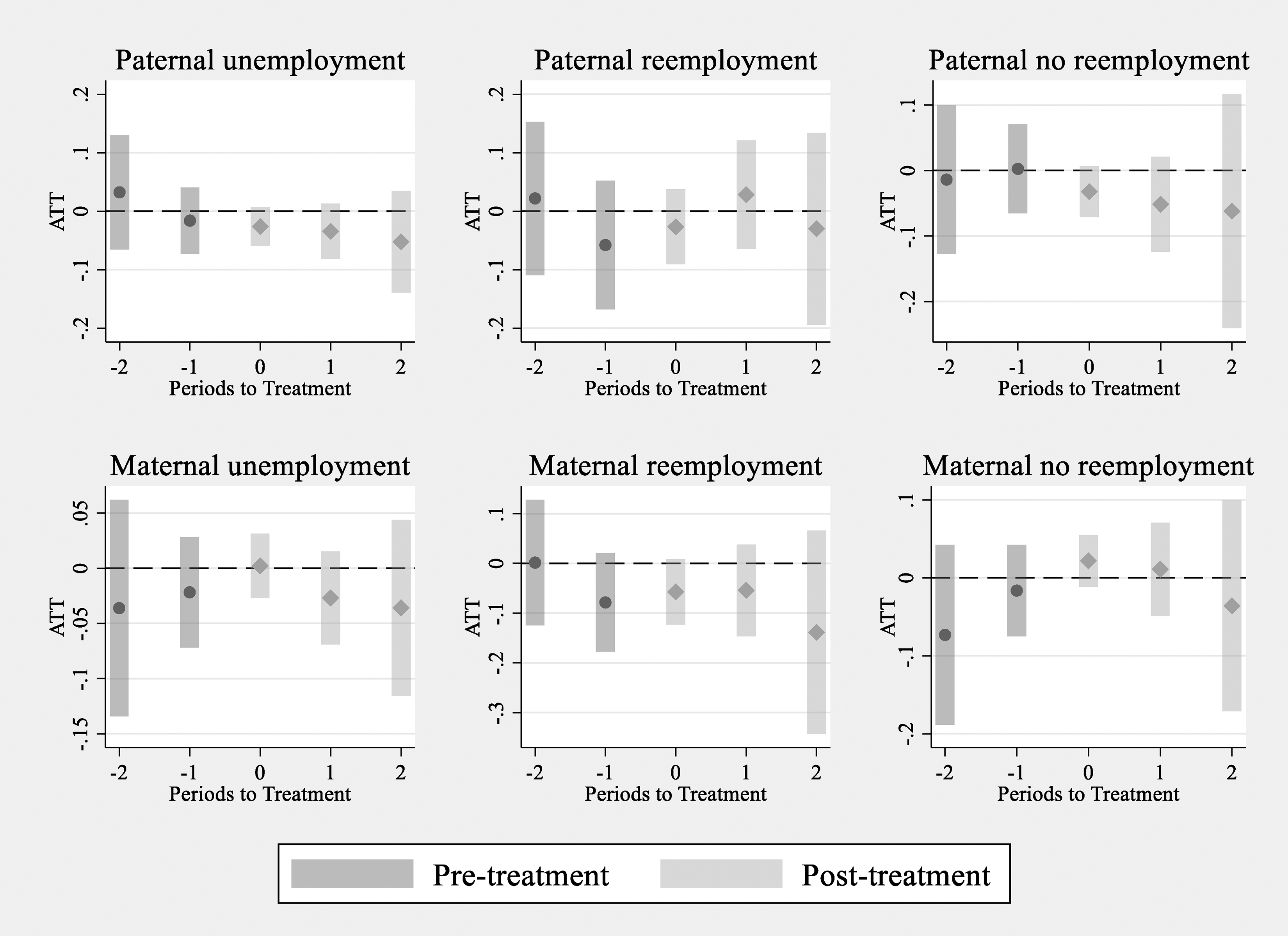
Parental unemployment, reemployment, and no reemployment, and children's school well-being. Note. The figure illustrates the association between children's school well-being and parental unemployment before and after the event, and how these associations might depend on parental reemployment. The results for ‘no reemployment’ correspond to unemployment durations (0: < 1-year duration; 1: > 1-year duration; 2: > 2 years duration. Standard errors are clustered at the father/mother level. Bars are 95%-confidence intervals. Appendix B1-B6 reports the full tables.
Beginning with paternal unemployment, we see that children who experience parental unemployment had a similar development in school well-being before the occurrence of unemployment. Following unemployment, we observe a slight drop in children's school well-being, which persists over the two-year period that follows the unemployment event. However, it is important to note that none of the estimates are statistically significant at the conventional α < 0.05 level.
Considering the role of reemployment, the results show that if fathers’ unemployment is related to reduced child school well-being, this effect primarily manifests in cases where the father fails to secure reemployment. The results pertaining to fathers who do not secure reemployment and undergo a more prolonged duration of unemployment exhibit similar negative associations to those observed for overall unemployment. Yet, the results are not statistically significant. For those who have an unemployment event and regain employment, the results point towards a null effect on children's school-related well-being.
Regarding maternal unemployment, we observe similar developments in school well-being before the event, and that unemployment does not affect school well-being. When considering the heterogeneity by reemployment, a different pattern emerges than that observed for fathers’ unemployment. Among mothers who secure reemployment, we find an indication that the children already had a lower level of school well-being in the year prior to unemployment. Furthermore, children continue to exhibit lower school well-being after the mother finds reemployment. In contrast, the first year of maternal unemployment (estimate for no reemployment at t = 0) is associated with an improvement in children's school well-being. However, none of the results are statistically significant at the conventional α < 0.05-level.
Socioeconomic Status and Unemployment
The relation between paternal unemployment and the children's school-related well-being by the father's previous income is presented in Figure 2. For the three highest income quartiles, we find no association between unemployment and children's school well-being. However, within the lowest quartile, the results indicate a reduction in children's school well-being of −0.048 SD following paternal unemployment. However, the estimate is not significantly different from the estimate for the other income quartiles.
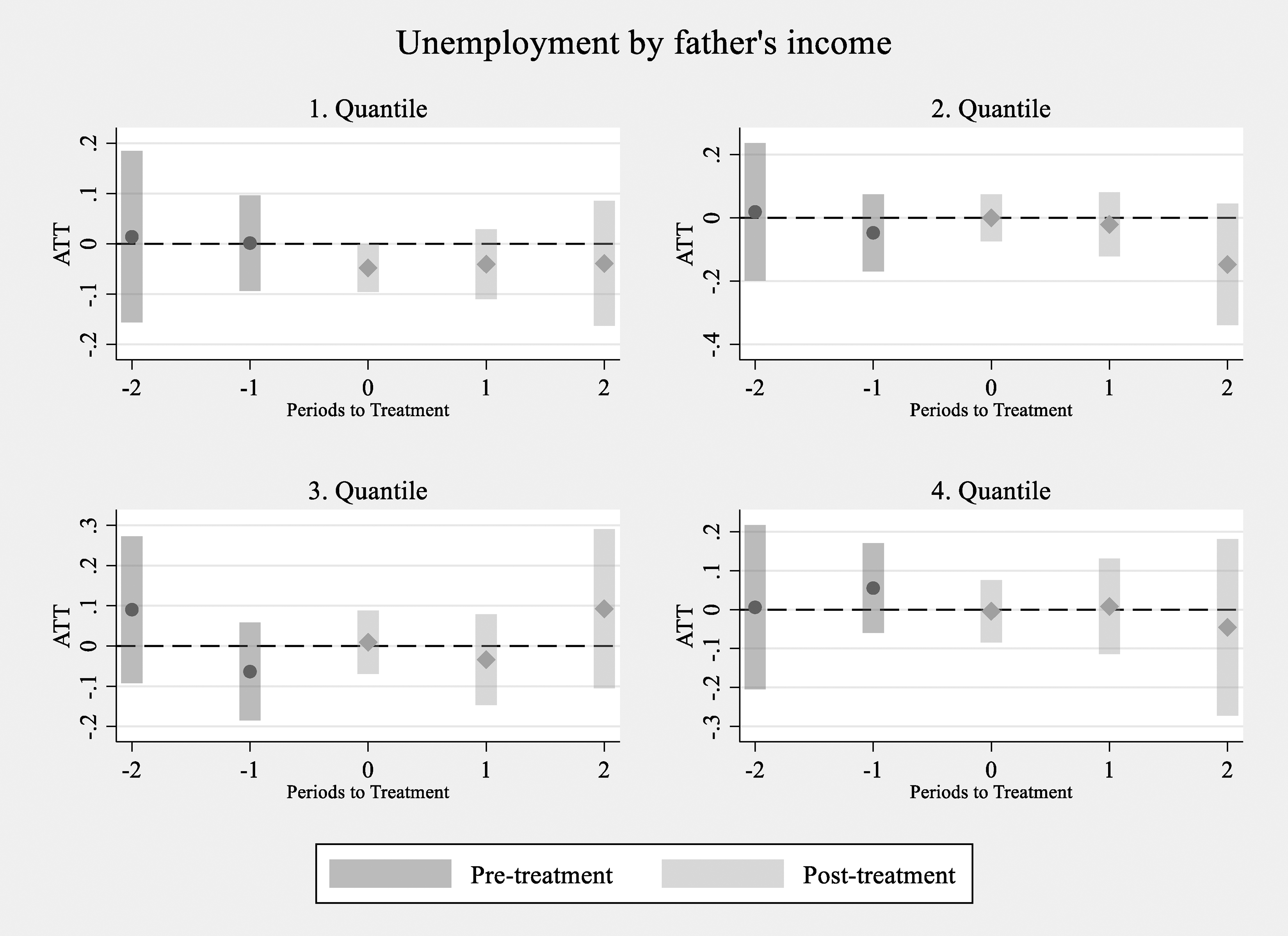
Paternal unemployment and children's school well-being by father's income. Note. The figure illustrates the association between children's school well-being and paternal unemployment before and after the event for fathers with different levels of disposable income. Standard errors are clustered at the father level. Bars are 95%-confidence intervals. Appendix B7-B10 reports the full tables.
Figure 3 presents the results of paternal unemployment by fathers’ educational attainment, the results suggest that among fathers without a college education, unemployment is associated with a −0.061 SD (p = 0.053) reduction in children's school well-being in the year of the occurrence of unemployment. Conversely, no significant effects are evident for unemployment experienced by fathers with a vocational or college education. However, it is important to note that the estimate for fathers without a college education does not exhibit a statistically significant difference from the estimates observed for the two other groups.
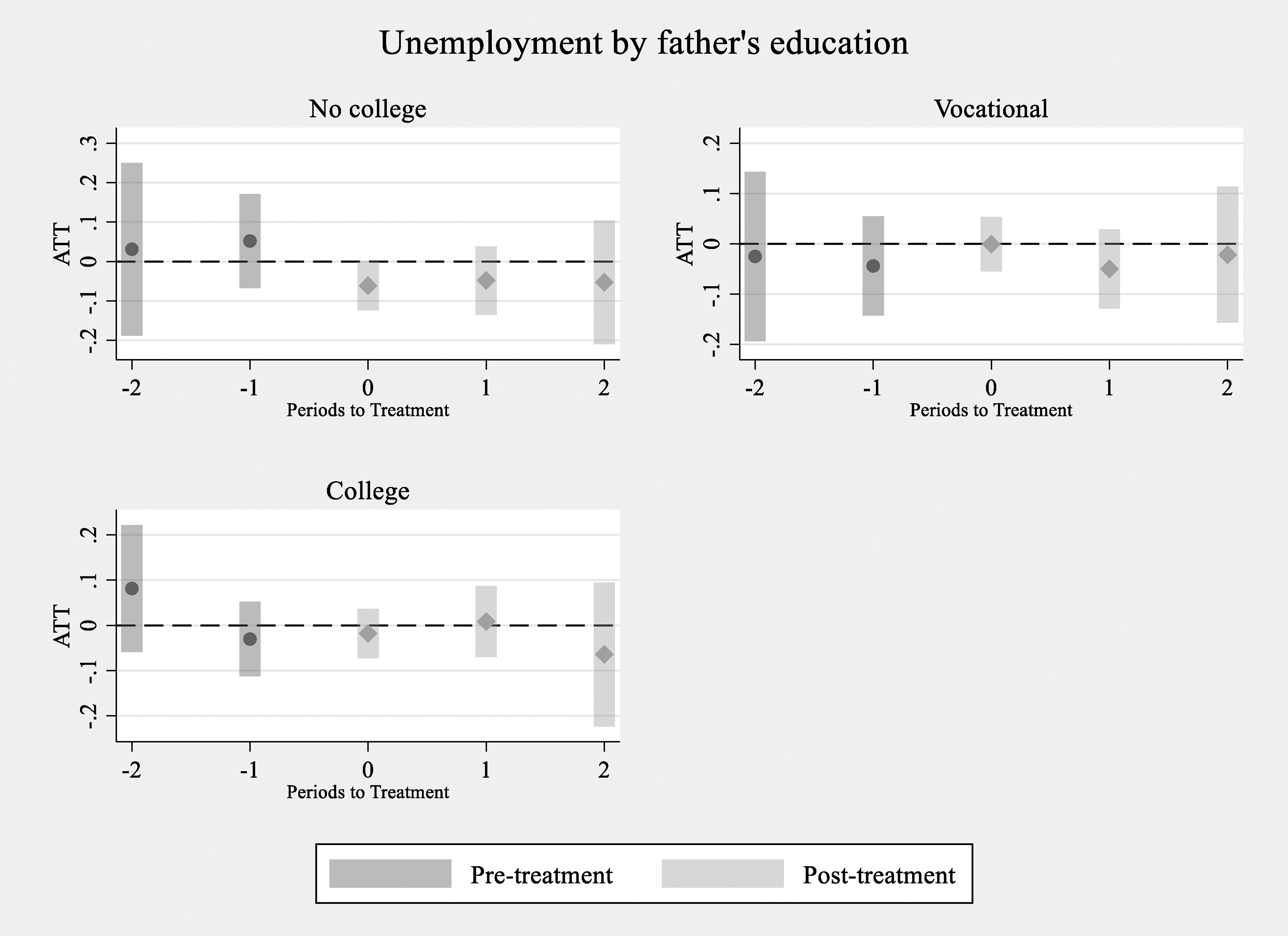
Paternal unemployment and children's school well-being by father's education. Note. The figure illustrates the association between children's school well-being and paternal unemployment before and after the event for fathers with different levels of education. Standard errors are clustered at the father level. Bars are 95%-confidence intervals. Appendix B11-B13 reports the full tables.
The findings pertaining to maternal unemployment in relation to the mother's previous income are reported in Figure 4. Across the four income quartiles, we observe indications of null associations between maternal unemployment and children's school well-being in the year of the unemployment event. However, within the lowest quartile, our results reveal a noteworthy association: more than two years after the occurrence of maternal unemployment, there is an associated reduction in school well-being of approximately −0.115 SD.
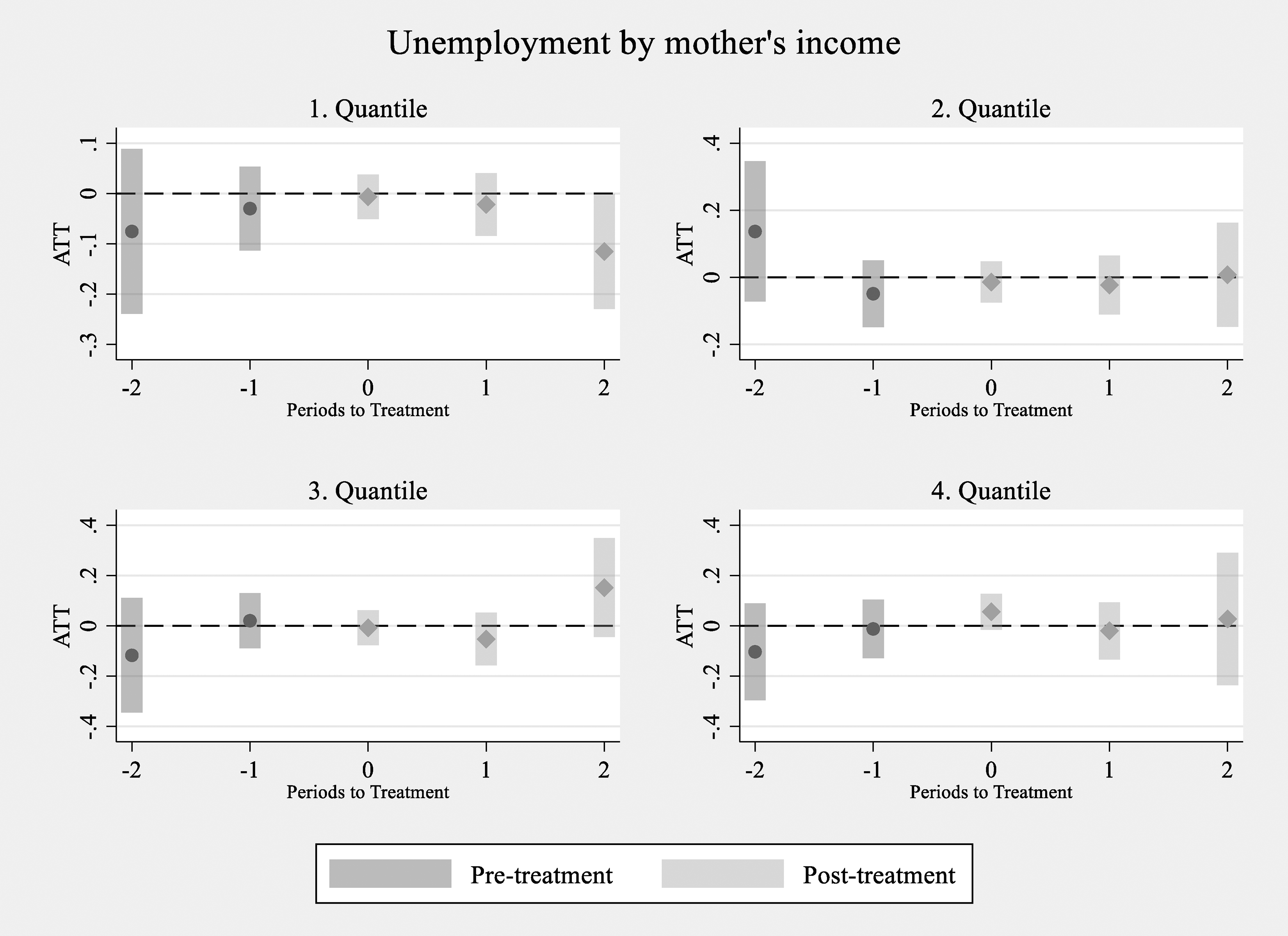
Maternal unemployment and children's school well-being by mother's income. Note. The figure illustrates the association between children's school well-being and maternal unemployment before and after the event for mothers with different levels of disposable income. Standard errors are clustered at the mother level. Bars are 95%-confidence intervals. Appendix B14-B17 reports the full tables.
Figure 5 presents the results by mother's highest level of education; we do not find any associations between the initial occurrence of unemployment and children's school-related well-being. Among college-educated mothers, there is a negative association of −0.068 SD in the year after unemployment occurred (not statistically significant from the estimates for the other groups).
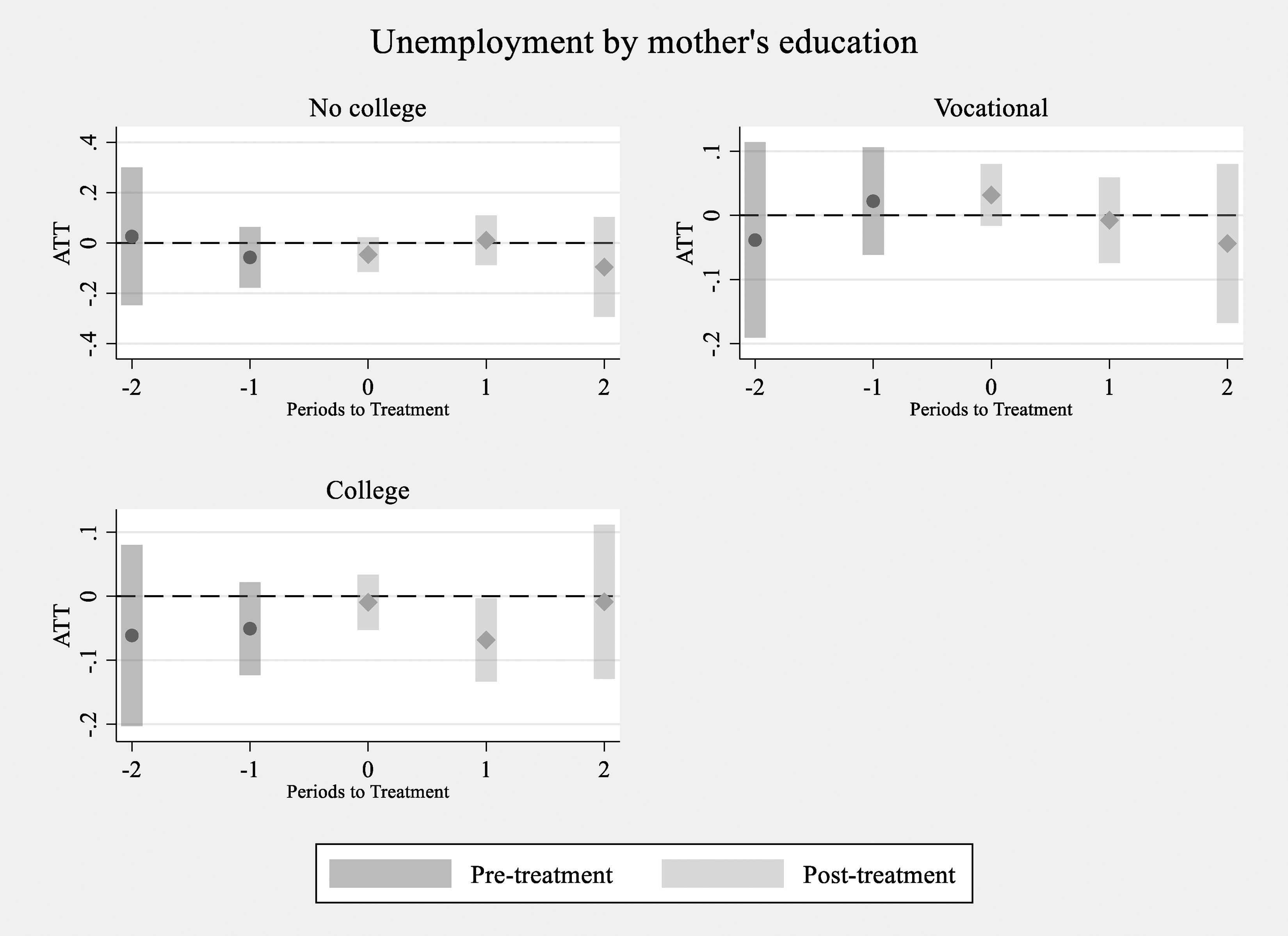
Maternal unemployment and children's school well-being by mother's education. Note. The figure illustrates the association between children's school well-being and maternal unemployment before and after the event for mothers with different levels of education. Standard errors are clustered at the mother level. Bars are 95%-confidence intervals. Appendix B18-B20 reports the full tables.
Discussion
The current study aimed to investigate if the occurrence of parental unemployment impacts children's well-being at school, considering the role of reemployment, unemployment duration, and previous SES. Overall, most of the findings are statistically insignificant and small in substance, and hence point towards that parental unemployment does not impact children's well-being at school in Denmark. Yet, there remains some uncertainty that prevents us from proclaiming a null effect. Our study indicates effect sizes of approximately −0.05 SD. It is plausible that our study may have lacked sufficient statistical power to detect these relatively small effect sizes. This may seem counterintuitive with the very large sample size applied in this study; however, we only observe ∼5000 parental unemployment events, which in the child fixed effects approach are the only individuals that contribute to the estimation of parental unemployment. Recognizing this limitation, we argue that our results provide a foundation to conclude that if there is any effect of parental unemployment on children's school well-being, it is of a very modest nature.
Family stress is frequently highlighted as a possible explanation for the negative effects of parental unemployment on educational outcomes, as losses of income do not seem to mediate the relation, especially in the Nordic Countries (Lehti, 2023). Our findings suggest that, if this is the case, it is not due to psychological consequences at school, which could have disrupted children's schooling. Yet, family stress may still affect educational outcomes through the disruption of children's home environment. However, school well-being measures are strongly correlated with overall well-being (Bradshaw et al., 2011), making it unlikely that there is a large effect on overall well-being that is not captured by the measure of school well-being. Thus, our findings challenge the assumption that the effects of parental unemployment on educational outcomes can be attributed to increased family stress in the Nordic countries.
Disregarding statistical significance, the results provide some insights into the relation between parental reemployment, unemployment duration, and children's well-being at school. Notably, if the occurrence of fathers’ unemployment does impact their children's school well-being, it does so only among fathers who fail to secure reemployment, and additional years of unemployment do not appear to intensify the negative association. Furthermore, the results provided some indications that the negative association between fathers’ unemployment and children's school well-being pertains to lower SES fathers (fathers without a college education or who belonged to the lowest income quartile).
Concerning the role of reemployment for mothers, our findings were contrary to our initial expectations. Specifically, we observe a negative relation between maternal reemployment and children's well-being at school, while the absence of maternal reemployment exhibited a positive association. The positive association with not finding reemployment may be attributed to a self-selection process, where mothers in families with the financial means to do so choose to cease working in order to provide additional care for their child. It could also be related to the fact that mothers prioritize child care during periods of unemployment (Kalil and Ziol-Guest, 2008; Rao, 2022; Ruiz-Valenzuela, 2021). The indicated lowered school well-being among children of mothers, who find reemployment was already evident before they became unemployed, suggesting that the lowered well-being at school was unrelated to unemployment.
The study is subject to several limitations that warrant consideration. Firstly, we are not able to discern whether a given unemployment event was voluntary or involuntary. We tried to address this limitation by focusing on unemployment events that lasted at least 3 months, and where we observed the individual receive some type of social insurance, which requires them to be actively seeking employment.
Nevertheless, there may still be cases included in our sample where individuals voluntarily separated from their employers. By accounting for parental reemployment, we intended to minimize this bias further, as we expected prolonged unemployment to be more likely to have been involuntary, and unemployment followed by reemployment to be more likely to have been voluntary 2 . At least for paternal unemployment, this seems to have been the case.
Another limitation is that the results might be biased by unobserved time-varying factors. While our analysis method accounts for time-constant factors on the individual level, there are still many unobserved factors, such as family instability, that could produce the results.
Our measure of school well-being both constitutes a limitation and a strength of our study. Unemployment and its effects on everyday life are most likely playing out in private households, and some of the negative effects might not be captured by the school well-being measure. However, as mentioned school well-being is known to be strongly correlated with other aspects of well-being (Bradshaw et al., 2011), and we would therefore expect it to capture the effects on overall well-being. Moreover, our intention was to address whether the family stress mechanism was a likely explanation for the negative effects of parental unemployment on children's educational outcomes. In this context, we consider it to be particularly relevant whether school-related well-being drops following parental unemployment, as we would expect to happen if educational outcomes are affected by an increase in family stress.
Another limitation is that the DSWS only allows us to observe the children for a maximum of 4 years. This rather short panel means that we are limited in assessing both the parallel trends, but also the role of even longer unemployment durations.
Yet, the survey also constitutes a major strength of our study. Previous studies addressing the effects of parental unemployment and job loss on child outcomes for similar age groups have relied on survey data and parental reports. This practice can result in common-method bias, and biased reporting by parents due to their mental state being affected by their unemployment as well as their awareness of the child (Mari and Keizer, 2021; Schaller and Zerpa, 2019). The combination of self-reports by the children and the use of administrative data for observing unemployment addresses both these biases.
Supplemental Material
sj-docx-1-asj-10.1177_00016993241277038 - Supplemental material for Parental unemployment and children's well-being at school: The role of duration, reemployment, and socioeconomic status
Supplemental material, sj-docx-1-asj-10.1177_00016993241277038 for Parental unemployment and children's well-being at school: The role of duration, reemployment, and socioeconomic status by Simon Skovgaard Jensen, Michael Kühhirt and Felix Weiss in Acta Sociologica
Footnotes
Data availability statement
This study is based on the Danish Administrative Register Data. These data provide individual-level data on the Danish population and are therefore not publicly available. Access to the data is obtained through Statistics Denmark.
Funding
This work was supported by the Aarhus University Research Foundation (AUFF, grant number AUFF-F-2020-7-10).
Aarhus Universitets Forskningsfond, (grant number AUFF-F-2020-7-10).

Supplemental material
Supplemental material for this article is available online.
Notes
Appendix A: Factor Analysis
Note. Factor analysis was done on the answers from 2017. Only one factor had an eigenvalue above 1. Factor loadings above >0.30 are presented.
References
Supplementary Material
Please find the following supplemental material available below.
For Open Access articles published under a Creative Commons License, all supplemental material carries the same license as the article it is associated with.
For non-Open Access articles published, all supplemental material carries a non-exclusive license, and permission requests for re-use of supplemental material or any part of supplemental material shall be sent directly to the copyright owner as specified in the copyright notice associated with the article.
