






Abstract
Socialization theory has focused on enculturating new employees such that they develop pride in their new organization and internalize its values. We draw on authenticity research to theorize that the initial stage of socialization leads to more effective employment relationships when it instead primarily encourages newcomers to express their personal identities. In a field experiment carried out in a large business process outsourcing company in India, we found that initial socialization focused on personal identity (emphasizing newcomers’ authentic best selves) led to greater customer satisfaction and employee retention after six months than socialization that focused on organizational identity (emphasizing the pride to be gained from organizational affiliation) or the organization’s traditional approach, which focused primarily on skills training. To confirm causation and explore the mechanisms underlying the effects, we replicated the results in a laboratory experiment in a U.S. university. We found that individuals working temporarily as part of a research team were more engaged and satisfied with their work, performed their tasks more effectively, and were less likely to quit when initial socialization focused on personal identity rather than on organizational identity or a control condition. In addition, authentic self-expression mediated these relationships. We call for a new direction in socialization theory that examines how both organizations and employees can benefit by emphasizing newcomers’ authentic best selves.
The desire to be authentic is a defining characteristic of the human experience. Defined as “the unobstructed operation of one’s true, or core, self in one’s daily enterprise” (Kernis, 2003: 13), authentic living allows individuals to achieve the most fulfilling and satisfying life possible, according to many philosophers, writers, and researchers (e.g., Guignon, 2004; Seligman et al., 2005). Because organizations are made up of people, many of whom spend the majority of their waking hours at work, the human drive for authenticity creates a tension for organizations. On one hand, employers can address an essential yearning for authentic self-expression, helping employees articulate, project, and exercise their “best selves” at work (Roberts et al., 2005). On the other hand, organizations need to ensure continuity and control: they need their employees to behave in specified ways and express particular emotions in order to differentiate the organization’s value production and succeed in the market (O’Reilly and Chatman, 1996; Pratt, 2000).
The potential for tension between employees’ self-expression and organizational control is perhaps most likely when new employees first enter an organization and encounter socialization. Organizational socialization is the process by which an individual acquires the values, expected behaviors, and social knowledge needed to assume an active role as a member of the organization (Van Maanen and Schein, 1979; Louis, 1980). When entering a new organization, newcomers usually experience anxiety as a result of being asked to question or put aside comfortable routines and assumptions, having their senses inundated with unfamiliar cues, and searching to fit in socially (Louis, 1980; Feldman and Brett, 1983; Bauer, Morrison, and Callister, 1998). For this reason, newcomers are particularly impressionable during their first few weeks in a new organization and thus are vulnerable to organizational influence regarding appropriate behaviors, values, attitudes, and emotions (e.g., Schein, 1971; Van Maanen and Schein, 1979).
The initial stage of socialization, known as the encounter stage, is also a distinctive point at which employees must first negotiate their identities with peers and supervisors and attempt to define acceptable roles for themselves within the new environment (Reichers, 1987). During this stage, “a newcomer is likely to be concerned with building or confirming a situational identity,” according to Reichers (1987: 280). Entering a new organization provides a rare fresh start for newcomers, a chance to show who they truly are and what they can do. Organizational entry is thus an unusual period in life when people can negotiate their identities anew; in most other aspects of life, we interact with people who have already implicitly agreed to honor the identities we have negotiated with them (Goffman, 1959; Ibarra, 2003; Cable and Kay, 2012). In addition to negotiating identity, newcomers may attempt to develop or innovate in their new roles, thereby “imprinting the stamp of their identity and unique skills upon the role and its surrounding milieu” (Nicholson, 1984: 176).
Much of the socialization literature has focused on the ways that organizations can enculturate employees—that is, transmit and maintain the organization’s culture by enabling them to understand and accept its identity and behavioral norms. As Bauer, Morrison, and Callister (1998: 151) noted in their review of the literature, “When socialization is effective, newcomers understand and adopt the organization’s central values and norms.” From this vantage, the goal of many organizations is “absorption,” or convincing newcomers to accept a new identity, namely, an organizational identity (Nicholson, 1984). This organizational identity can help newcomers fit in and understand and conform to organizational norms, thereby helping organizations overcome the difficulties associated with employees’ idiosyncratic values, ideas, and perspectives (Sherif, 1958).
Although it clearly provides some benefits, the absorption model of enculturating newcomers falls short of resolving the tension newcomers may face when they are “processed” to accept an organization’s identity and forego their own, at least while they are at work. First, newcomers may not internalize organizational values, even if they comply through external behaviors, which may prevent employees from exhibiting many desirable behaviors that are volitional and unscripted (O’Reilly and Chatman, 1986). Moreover, because suppressing one’s identity is upsetting and psychologically depleting, subordinating a newcomer’s individual identity and unique perspectives to those of the organization may not be optimal for either organizations or employees (Hochschild, 1979, 1983; Kahn, 1990; Thoits, 1991; Grandey, 2003). Thus socialization practices that succeed in causing newcomers to behave inauthentically might not be sustainable because they do not address broader issues concerning emotional exhaustion and life dissatisfaction (Seligman, 2002; Seligman et al., 2005; Melamed et al., 2006). This issue may be particularly problematic in service roles, in which employees are “on stage” as the face of the organization, and customers expect them to display certain cues and behaviors (Goffman, 1959; Hochschild, 1979; Grandey, 2003).
In this paper, we propose an alternative view of organizational socialization that addresses the basic needs of both organizations and newcomers. Drawing on authenticity research, we suggest that organizational socialization is optimized when organizations start by recognizing and highlighting newcomers’ best selves at the very beginning of the employment relationship, when identity negotiation is a critical concern for both parties. Following Roberts et al. (2005: 713), we define a person’s best self as the “individual’s cognitive representation of the qualities and characteristics the individual displays when at his or her best.” An individual’s best self emerges from using and being recognized for his or her signature strengths, which increases his or her feelings of authenticity (Seligman et al., 2005).
Given an appropriate start, newcomers should be able to frame their new role and its necessary tasks as opportunities to use their signature strengths and unique perspectives at work, thereby bringing more of their authentic best selves to the job. Thus, without disputing the organizational need for control or the benefit to employees of reduced uncertainty, we suggest that the existing socialization literature can be strengthened by incorporating individuals’ desire for authentic self-expression. Organizations that successfully channel this desire should realize greater commitment and higher-quality work.
We conducted two studies to test this possibility. In our first study, we used a field experiment to examine whether initial socialization tactics that promote individual identity versus organizational identity result in greater productivity and lower turnover. In our second study, we used a laboratory experiment to test whether individuals joining a new work environment are better enabled to authentically express their strengths when socialization tactics emphasize their personal identities rather than the organizational identity, with consequences for engagement, productivity, job satisfaction, and turnover. By combining field and laboratory data, we help ensure both external and internal validity when testing our hypotheses.
Socialization Tactics and Employment Relationships
The full process of socializing a newcomer is an ongoing one that lasts for at least six months (e.g., Bauer, Morrison, and Callister, 1998), as newcomers learn the organization’s values and how to fit into their new roles. Here, we focus on the initial stage of socialization—the time when newcomers first encounter organizational life. As discussed earlier, the tension between organizational enculturation and individual self-expression is greatest during this stage, suggesting that organizational processes should be particularly influential during this time.
Socialization Theory
There appear to be two dominant assumptions in the socialization literature (e.g., Van Maanen and Schein, 1979; Louis, 1980; Nicholson, 1984; Reichers, 1987; Bauer, Morrison, and Callister, 1998). First, transitions into organizations induce anxiety, which increases newcomers’ susceptibility to influence. Second, organizations can strategically invest in structured tactics that produce relatively uniform responses across newcomers. “Like a sculptor’s mold, certain forms of socialization can produce remarkably similar outcomes no matter what individual ingredients are used to fill the mold,” noted Van Maanen and Schein (1979: 231).
Conceptually, the defining characteristic of an organization’s collection of socialization tactics is the extent to which they are designed to reduce newcomers’ ambiguity about how they should behave. In terms of how leaders can help newcomers’ transition into their new roles, Van Maanen and Schein (1979) proposed a seminal framework of six different “people-processing” tactics. Subsequent validation of this framework has placed the six tactics on a single continuum ranging from individualized to institutionalized tactics (e.g., Jones, 1986; Ashforth and Saks, 1996; Bauer, Morrison, and Callister, 1998; Lueke and Svyantek, 2000; Cable and Parsons, 2001; Kim, Cable, and Kim, 2005).
The goal of highly institutionalized socialization tactics is to remove uncertainty by conveying a consistent message to newcomers about the organization’s values and how they should interpret and respond to situations. Nicholson (1984: 180) wrote that “formal socialization will favor personal development,” such that the newcomer alters his or her frame of reference, values, or other identity-related attributes to match those of the organization. Institutionalized socialization is exemplified by military basic training and by Disney’s “Traditions 101,” in which newcomers go through a structured, off-the-job training program with other newcomers. Conversely, individualized socialization tactics exacerbate uncertainty and encourage newcomers to challenge the status quo and rely on themselves to develop their own responses to the situations in which they find themselves on the job. Individualized socialization tactics force newcomers to “sink or swim” using their existing values and expose employees to different experiences. Given that newcomers feel anxiety and seek order at this early stage in the employment relationship, they are more likely to assume a “custodial” or “absorption” stance, accepting organizational values and norms as their own when experiencing highly institutionalized socialization tactics as opposed to more individualized tactics (e.g., Cable and Parsons, 2001; Kim, Cable, and Kim, 2005).
Thus Van Maanen and Schein’s (1979) original theory suggested that firms could either invest in institutionalized socialization tactics to inculcate their values and norms or invest in individualized tactics to encourage newcomers to question the status quo and bring their unique perspectives to the job. Conceptually, then, firms could strategically employ individualized tactics to leverage newcomers’ uniqueness and increase their expression of their authentic best selves. In fact, Van Maanen and Schein (1979: 250) noted that rather than trying to divest newcomers of their identities, an individualized process “wishes to take advantage of and build upon the skills, values, and attitudes the recruit is thought to possess already.”
A careful examination of the socialization literature, however, reveals that Van Maanen and Schein’s (1979) proposed continuum, which they conceptualized as individualized-to-institutionalized, actually has been reinterpreted in subsequent research as apathetic-to-institutionalized socialization. That is, despite Van Maanen and Schein’s (1979) brief discussion of the value of investing in individual-focused tactics that build on newcomers’ strengths, thanks to Jones’s (1986) scale, the literature has defined non-institutional socialization as consisting of informal, low-investment tactics that reflect an absence of structure. As a result, firms investing in institutionalized socialization are advised to (a) put newcomers through a common set of off-the-job learning experiences while they learn their roles, (b) give newcomers explicit information about the sequence and timing of the stages they will go through in their new roles, and (c) provide experienced role models who offer social support for newcomers. Fulfilling this end of the socialization continuum obviously reflects a substantial investment of time, energy, information, and money.
By contrast, the individualized end of the socialization continuum drops newcomers directly into their jobs without formal training, provides no information about the different stages of becoming an insider, and does not offer mentoring from experienced organizational members. This low-investment, reactive approach to socialization could lead to innovation if newcomers’ resulting confusion and uncertainty forces them to rely on their own values and create innovative approaches to their tasks. Realistically, however, uncertainty may result in more discomfort than successful innovation; in fact, research suggests that people hold implicit biases against innovation, and these biases are activated when people feel motivated to reduce uncertainty (e.g., Mueller, Melwani, and Goncalo, 2012).
The proactivity stream of the socialization literature does advocate a more active role for the individual in the socialization process. But it also suggests that newcomers can and should take the initiative to learn and adopt the values of the organization (Bell and Staw, 1989; Miller and Jablin, 1991; Morrison, 1993; Ashford and Black, 1996; Bauer and Green, 1998; Bauer, Morrison, and Callister, 1998; Griffin, Colella, and Goparaju, 2000). Thus, rather than advising organizations to highlight and leverage newcomers’ unique perspectives, proactivity research suggests that new employees can play an active role in networking and seeking information so that they can learn organizational norms and fit into the culture (e.g., Kim, Cable, and Kim, 2005). In short, the proactivity research stream suggests that some newcomers are quite motivated to quickly “socialize themselves” into their new environment (Bauer, Morrison, and Callister, 1998).
What has not yet emerged in the socialization literature is an active, individualized approach to socialization that organizations can use strategically to encourage authentic expression of newcomers’ identities. Although Van Maanen and Schein (1979) described investiture tactics that take advantage of newcomers’ skills, values, and attitudes, they did not incorporate newcomers’ desire for authentic self-expression as a key motivation during the socialization process, nor did they theorize about the possible synergistic positive effects for both newcomers and the organization if those needs were met. Moreover, Van Maanen and Schein’s (1979) conceptual ideas became crystallized in all subsequent empirical research through Jones’s (1986) scale, which treated individualized socialization as no strategic socialization at all and reversed Van Maanen and Schein’s (1979) conception by placing the investiture tactic on the institutionalized end of the continuum.
Thus the notion of using socialization strategically to facilitate newcomers’ authenticity does not appear in the past three decades of socialization research. Instead, the literature has focused on a continuum ranging from institutional socialization that is strategic and structured to individualized socialization that is apathetic, low-investment, and unstructured. Here, we propose that organizations can formally structure personal-identity socialization, which we define as programs that help newcomers recognize and apply their authentic best selves to their new roles. Structured investments in personal-identity socialization could in fact have a remarkable effect on the retention, job attitudes, work quality, and productivity of newcomers.
Authenticity and Socialization
With its emphasis on enculturating newcomers, it is easy to see how an institutional approach to socialization might lead to conflicts with authenticity. The core aspect of authenticity is that each person has a true inner self and can only achieve self-fulfillment as an authentic human being by expressing this inner self through actions in the external world (Guignon, 2004). Thus, to be authentic, we must align our internal experiences (e.g., feelings, values, perspectives) with our external expressions (Kahn, 1992; Avolio and Gardner, 2005; Wood et al., 2008; Roberts, 2012).
Naturally, there may be elements of an individual’s true self that are not part of his or her best self. Research has shown that people also are motivated to reveal negative aspects of themselves, even if this means making themselves look less than ideal (e.g., Swann et al., 2004; Cable and Kay, 2012). Although our true, authentic selves may have both positive and negative aspects, here we focus on ways that organizations can elicit newcomers’ authentic best selves. By encouraging newcomers to consider and express their authentic best selves, organizations can positively affect their job attitudes, performance, and retention. We base our prediction on three complementary streams of logic.
First, we know that people who alter or mute their unique values or perspectives in order to fit into an organization’s dominant culture create a sense of alienation from themselves (Grandey, 2003: 89; Roberts, 2012) and must divert cognitive resources to cope with identity conflict (Higgins, 1989; Bell, 1990; Settles, Sellers, and Damas, 2002; Hewlin, 2003). Perhaps not surprisingly, authenticity is associated with fewer depressive symptoms, lower emotional exhaustion, and less anxiety than a lack of authenticity (Zapf, 2002; Ryan, LaGuardia, and Rawsthorne, 2005; Lopez and Rice, 2006; Goldberg and Grandey, 2007). Research also has shown that emotionally exhausted employees are more likely to quit and less likely to perform effectively and please customers than other employees are (Wright and Cropanzano, 1998; Maslach, Schaufeli, and Leiter, 2001; Garman, Corrigan, and Morris, 2002; Cropanzano, Rupp, and Byrne, 2003; Taris, 2006).
Second, people who feel they are acting authentically are more likely to attribute their behavior to internal causes than are those who feel they are acting inauthentically. This internalization increases commitment to a course of action (Kahn, 1990; Shamir, House, and Arthur, 1993) and promotes an optimal state of well-being characterized by feelings of enjoyment, personal meaning, and direction in life (Waterman, 1993; Ryff and Keyes, 1995; Ilies, Morgeson, and Nahrgang, 2005; Roberts, 2012). Thus we expect people to be more likely to invest energy in and less likely to leave environments in which they have the opportunity to act authentically.
Finally, research suggests that people have a deep need to have others see them as they see themselves (Rogers, 1951; Swann, 1990; Baumeister, 1998) and that they withdraw from relationships in which they feel they are not understood (for reviews, see Swann, 1990; Swann et al., 2004). Research also has shown that people contribute better performance on creative tasks when members of their work group view them as they see themselves (Swann, Milton, and Polzer, 2000). Thus when socialization practices encourage newcomers to display their authentic best selves, newcomers should be more satisfied with the employment relationship, less likely to quit, and more likely to perform well.
Playing to Strengths
Entering a new organization is stressful and threatening. One way to buffer newcomers from threat and encourage productive, authentic self-expression at work is to help them identify and leverage their best selves, or who they are when they are at their best (Roberts et al., 2005). Most people can recall times when they felt they were reaching their peak potential and that their contributions were being affirmed by others. For many people, using their signature strengths and being recognized for their best selves makes them feel more alive, truer to their deepest selves, and as if they are pursuing their full potential as human beings. Not surprisingly, the state of being at one’s best is often characterized by being authentic or true to oneself (Harter, 2002; Roberts, 2012).
The encounter phase of a socialization process represents a fresh start in a new social setting. “From an initial interaction with a recruiter to meeting one’s new supervisor, newcomers have the opportunity to negotiate their identity through the way they act, the clothes they wear, and the way they describe themselves and their experiences” (Cable and Kay, 2012: 360). Likewise, Ibarra (2003) argued that new social connections and new relationship development help people update their identities, while old connections bind people to old identities. In other words, the time of initial socialization offers an extraordinary opportunity for individuals to negotiate an identity with colleagues around their best self.
Thus while socialization practices have traditionally concentrated on imbuing newcomers with organizational values, socialization practices could focus on soliciting and highlighting newcomers’ best selves as they develop relationships in a new employment setting. Specifically, upon their entry, newcomers could be given time to reflect on personalized questions such as, “What three words best describe you as an individual?” and “What is unique about you that leads to your happiest times and best performance at work?” (Roberts et al., 2005). Likewise, newcomers could be encouraged to create a “personal highlights reel” by recalling times in their life when they felt they were using their signature strengths (Selk, 2008). If newcomers are given the opportunity to introduce themselves to new colleagues along the lines of their best selves, they can construct a positive social identity based on who they truly are (Roberts et al., 2005). Likewise, when they reflect on and formulate ways they can actively use their signature strengths in a new job, they can frame the job as an opportunity to be their best selves at work (Wrzesniewski and Dutton, 2001).
Encouraging newcomers to reflect upon, highlight, and use their authentic best selves on the job should result in several important outcomes. First, at this early pivotal point in relationship development, newcomers should react positively when an employer encourages them to introduce themselves along the lines of their authentic best selves. This encouragement should lead to greater feelings of connection with colleagues and more positive reactions to the employment relationship (Polzer, Milton, and Swann, 2002; Swann et al., 2004). And because newcomers who feel they are using their signature strengths at work should experience greater satisfaction, lower stress, and less emotional burnout, employee retention also should increase (Ryan and Deci, 2001; Goldberg and Grandey, 2007). In fact, the positive psychology literature has suggested that regularly using one’s signature strengths improves life satisfaction and decreases depressive symptoms (Seligman et al., 2005). Finally, in terms of job performance, newcomers should invest more personal energy in their work when socialization practices frame the workplace as a place where they are understood for their authentic best selves and where they can reach goals by using their signature strengths (Wrzesniewski and Dutton, 2001; Roberts et al., 2005). Thus we hypothesize:
Overview of the Present Research
Our hypotheses rely on psychological mechanisms: that is, when socialization practices emphasize personal identity rather than organizational identity, newcomers are more likely to express themselves as who they truly are, ultimately leading to better performance and higher retention. Given that, it is important both to test whether outcomes (i.e., job attitudes, turnover, and productivity) are differentially affected by different socialization practices and then to demonstrate why such effects occur (i.e., authentic self-expression).
To test our hypotheses, we conducted two studies. In Study 1, we tested hypotheses 1 and 2 using a field experiment with new employees at a large business processing outsourcing firm. In Study 2, we conducted a laboratory experiment to constructively replicate our tests of hypotheses 1 and 2 and to test hypotheses 3 and 4.
Study 1: Field Study
Sample and Procedures
We conducted our first study, a field experiment, at Wipro BPO, an India-based, global leader in the business process outsourcing (BPO) industry. Wipro provides telephone and chat support for its global customers. The support provided varies by customer but typically involves answering customers’ queries about Wipro’s clients’ services (e.g., buying an airline ticket) or products (e.g., configuring a printer).
An Indian call center provides an excellent context for studying the effects of socialization practices on employees’ productivity and turnover, as such organizations routinely experience annual turnover rates ranging from 50 to 70 percent (Budhwar et al., 2009). Like other companies in this industry, at the time of the field experiment, Wipro was experiencing high quit rates of call-center employees, with many employees burning out and quitting only a few months after completing their training. As a service role, the job can be stressful, not only because employees must help frustrated customers with their problems, but because Indian call center employees are often expected to “de-Indianize” many elements of their behavior, for example, by adopting a Western accent and attitude (Marantz, 2011).
Employees at Wipro, called agents, traditionally start their employment in batches of 15 to 25 people with whom they complete all of the training stages. Agents do not know which customer account (e.g., airline, printers) they will provide service to when they are hired. On the day of their arrival, Wipro holds an orientation during which new agents learn about Wipro and receive human resource information. Agents then complete two weeks of voice training in which they must exhibit competency in the English language (the language used with all customers that we studied).
Once language training is complete, agents are assigned to their customer account, where they receive approximately six weeks of process training. During process training, agents learn about their customers and the steps necessary to complete their work for customers. For instance, an agent providing technical service will be trained on the troubleshooting process to follow with inbound callers. Upon completion of process training, an agent moves to the floor, where he or she serves customers and undergoes on-the-job training. On-the-job training lasts approximately six weeks and consists of taking actual calls, with supervision, and additional classroom training to address issues identified on calls. Finally, agents transition to line operations, where they take calls full time.
We implemented a field experiment around the initial socialization process in Wipro’s telephone support operations in which we assigned incoming batches of agents to three groups: (1) individual identity, (2) organizational identity, and (3) a control group. 1 Those in the two identity groups received the treatments described below. The control group went through Wipro’s traditional socialization process, which focused primarily on skills training and general firm awareness. Specifically, newcomers were introduced to the responsibilities of their new role and then were assigned to the same customer accounts as the groups receiving a treatment in our investigation. Workers in the two identity groups received the same training and materials as the control group, with the addition of the following three-part treatment: (1) a one-hour presentation during the first day’s orientation session (described in detail below); (2) two fleece sweatshirts, customized by condition; and (3) one badge (the size of a typical agent-identity badge), customized by condition. With this one-hour treatment, we focused on the newcomers’ initial socialization, in that we influenced how newcomers were treated upon their arrival and earliest orientation to their new employer (i.e., the encounter stage). Although socialization is a process that unfolds across months, not hours (Bauer, Morrison, and Callister, 1998; Cable and Parsons, 2001) and socialization to norms and values clearly continued after our experimental conditions were completed, our results can be viewed as conservative effects that might be stronger with a longer-term intervention.
In the individual condition, the one-hour orientation session was run as follows. First, a senior leader from within Wipro spent 15 minutes discussing how working at Wipro would give each new agent the opportunity to express himself or herself and generate individual opportunities. 2 Second, agents were given 15 minutes to individually complete a “lost at sea” exercise during which they ranked 15 items on their usefulness if the individual were to be stranded in a life raft at sea. This exercise is similar to other commonly used decision-making exercises, such as “arctic survival” and “desert survival.” Our intent was to give newcomers an opportunity to do individual work that would permit self-reflection in the next part of the orientation session. Third, the agents were asked to spend 15 minutes thinking about how the decisions they had made in the exercise may have compared with other people’s responses. Still working alone, newcomers wrote down answers to the following questions: (a) “What three words best describe you as an individual?” (b) “What is unique about you that leads to your happiest times and best performance at work?” (c) “Your Personal Highlights Reel: Reflect on a specific time—perhaps on a job, perhaps at home—when you were acting the way you were ‘born to act,’” and (d) “How can you repeat that behavior on this job?”
Finally, agents spent 15 minutes introducing their best selves to their future work group and discussing their answers and the approach they took to solving the exercise. At the end of this session, the agents were given two fleece sweatshirts with their individual names on them. They were also provided with a badge with their name on it. They were asked to wear the sweatshirts and badges during training.
The organizational condition also consisted of a one-hour session during agents’ first day at the firm, in which we mirrored the steps above but focused on organizational identity. First, a Wipro senior leader spent 15 minutes discussing Wipro’s values and why it is an outstanding organization. Leaders were asked to discuss the organization’s status and achievements during this talk. Second, a star performer at Wipro (e.g., an individual who had won the Employee of the Quarter Award) spoke for 15 minutes about Wipro’s values and why it is an outstanding organization. Third, the agents were asked to spend 15 minutes alone writing answers to the following questions: (a) “What did you hear about the company that was most intriguing or appealing to you?” (b) “What did you hear about Wipro today that you would be proud to tell your family about?” and (c) “What did you hear about Wipro that makes you proud to be part of this organization?”
Finally, agents spent 15 minutes discussing their answers as a group. At the end of this session, the agents were given two fleece sweatshirts and a badge with the company name on it. As in the individual condition, agents were asked to wear the sweatshirts and badges during training.
Empirical Strategy
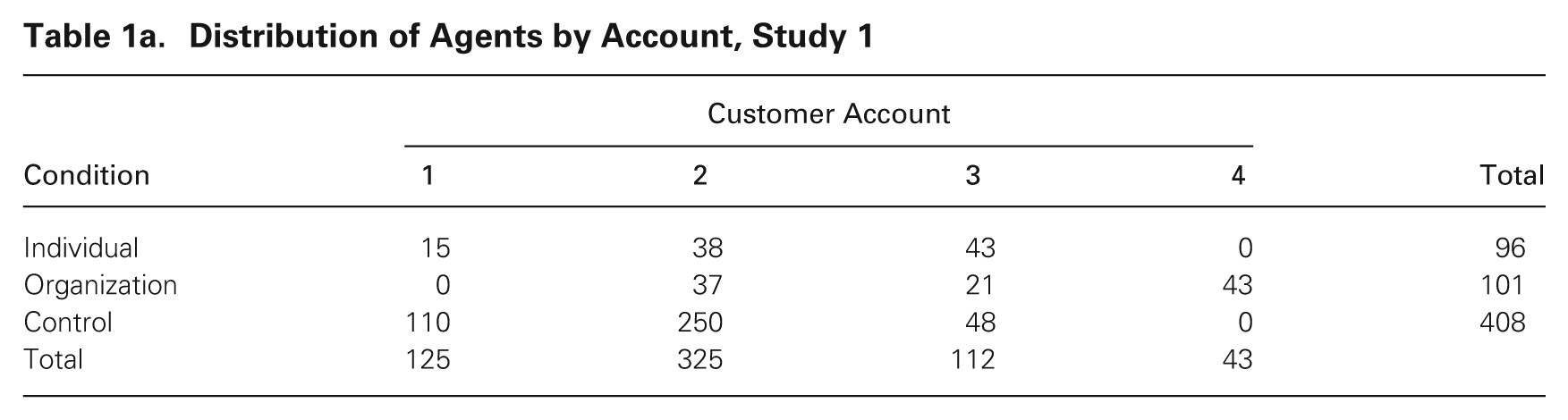
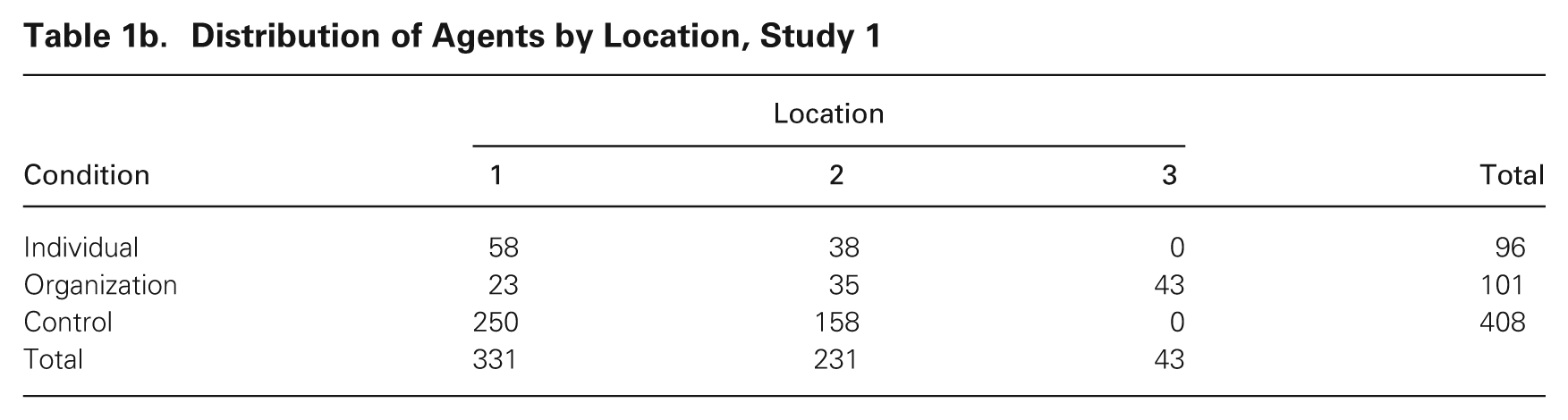
Our data include information about each agent’s demographic characteristics and time at Wipro. Our experimental manipulation targeted newcomers who joined Wipro from November 2010 until January 2011. We then collected an additional six months of data for all employees, including agents’ operational performance. Due to the sensitivity of these data, we were able to collect it for only one of the customer accounts (described in more detail below). A total of 96 and 101 agents received the individual- and organizational-identity treatments, respectively. Our control group consisted of 408 agents (i.e., those not affected by the study) who received no identity treatment. The combined 605 agents were located in three different operations centers. Initially, three customer accounts were selected for the field experiment, but two batches of agents who started in the organizational condition were assigned to a fourth customer when one of the initial three customers decided they did not need the additional agents. The reassigned agents were not aware that they had been reassigned, and dropping them from the analysis does not change the reported results. Tables 1a and 1b provide a breakdown of agents by account and location.
Distribution of Agents by Account, Study 1
Distribution of Agents by Location, Study 1
Our first hypothesis concerned whether agents in the different conditions left the firm at different rates, based on their identity condition. We constructed a variable, Turnover, equal to 1 if an agent left Wipro prior to May 30, 2011 (the end of data collection, approximately seven months after the experiments began) and equal to 0 otherwise (later, to control for different numbers of days at the firm, we ran a hazard analysis). Examining the differences in turnover rates across conditions, we found that the turnover rate in the control group was 47.2 percent higher than that of the individual-identity condition and 16.2 percent higher than that of the organizational-identity condition. Additionally, we found that turnover was 26.7 percent higher in the organizational-identity condition than in the individual-identity condition. To test our first hypothesis, we used the turnover variable in a conditional logistic regression. We conditioned on the customer account to control for time-invariant aspects of the customer being served (e.g., the difficulty of the process, characteristics of the individuals calling Wipro, etc.), and we also clustered our standard errors by the customer account. 3 Therefore, for individual i, we estimated the following equation:

where Age and Prior experience are an agent’s age when he or she joined Wipro and his or her months of prior experience at the start date, respectively. Additionally, we included an indicator variable for an agent’s gender (Male) and location (Location). Customer Account 4 and Location 3 were co-linear with each other (i.e., only agents at Customer Account 4 were located at Location 3); therefore we dropped the Location 3 variable from the model. Finally, we entered the indicators for whether an agent was in the organizational condition (Organizational) or the control group (Control). Therefore, the individual condition is the missing condition, and the coefficients on both Organizational and Control should be interpreted relative to the individual condition.
Hypothesis 1 predicted that socialization practices emphasizing newcomers’ personal identities (as occurred in the individual condition) will lead to lower turnover than the firm’s traditional socialization practices (control group) or socialization practices that emphasize the organization’s identity (as occurred in the organizational condition). Thus, based on this hypothesis, we expected that β1 > 0 and that β2 > 0.
Second, to control for the fact that agents start at different times and may stay a different length of time, we estimated a Cox proportional hazards regression model. A hazard model permits us to examine how different covariates predict the time until an event occurs (in our case, departure), while also accounting for censoring in the data (e.g., a worker not leaving the firm, Cleves, Gould, and Guiterrez, 2004). We defined failure as an agent leaving the firm and then estimated the hazard rate of an individual i as:

Time t corresponds to days that the agent is present in the workforce at Wipro. We included the same control variables as in the conditional logistic regression model with standard errors clustered by customer account, although this time the account indicators were added directly to the model. In these models, the regression coefficients of interest are the indicators for the organizational-identity condition—γ1—and the control group—γ2 (again, the missing category is the individual-identity condition). Based on hypothesis 1, we expected that γ1 > 0 and γ2 > 0.
In addition to examining agents leaving the firm, we also examined the operational performance of those agents who stayed at the firm. In particular, Wipro provided customer satisfaction scores for agents in Account 2. Callers for Account 2 were randomly sampled after their calls were completed, and they were asked a number of questions about their experience, concluding with an overall question asking how satisfied they were with the agents’ performance (the company only provided us with this overall measure). Performance scores vary from 0 to 100 percent with an average of 61 percent. We have information on an agent’s average score from all of the customer satisfaction responses, and we used this value to generate the variable Customer satisfaction. We used ordinary least squares regression to estimate the following model:

We again used the same control variables described above and the indicator variables for the organizational condition and the control group (the individual condition is the missing category). Hypothesis 2 predicted that when socialization practices emphasize newcomers’ personal identities (i.e., individual condition), they will result in higher-quality work than the firms’ traditional socialization practices (control group) or the socialization practices that emphasize the organization’s identity (organizational condition). Thus, based on this hypothesis, we expect δ1 < 0 and δ2 < 0.
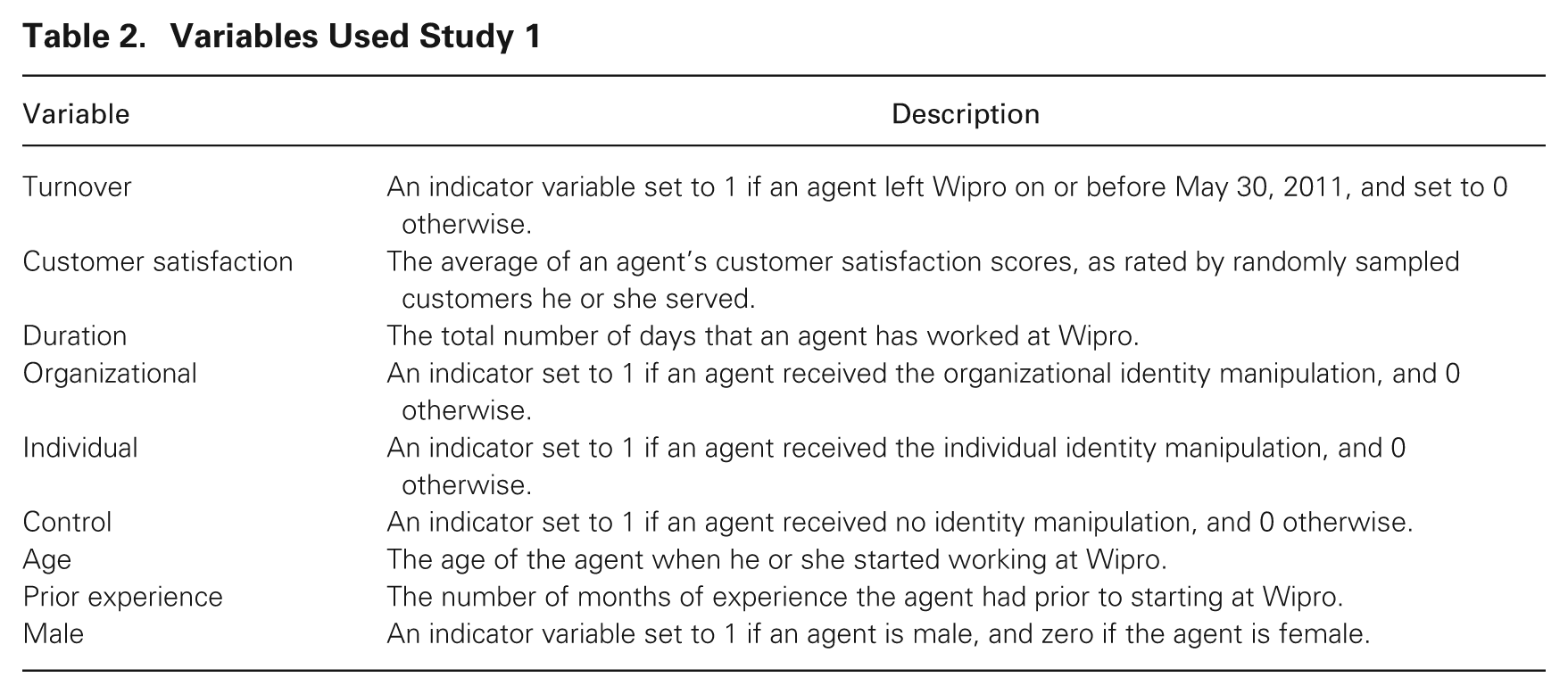
Table 2 provides an overview of the variables used in our analyses, while Table 3 provides summary statistics for the variables.
Variables Used Study 1
Summary Statistics, Study 1*
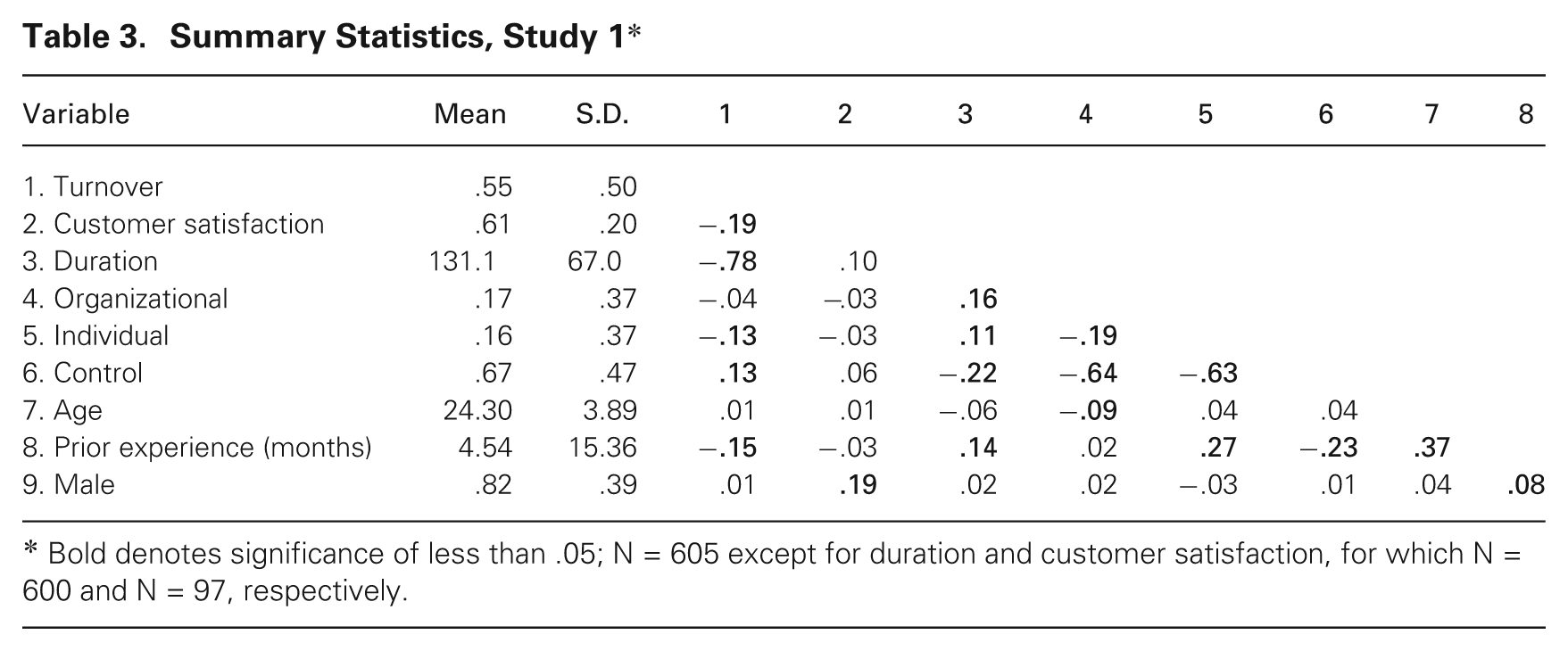
Bold denotes significance of less than .05; N = 605 except for duration and customer satisfaction, for which N = 600 and N = 97, respectively.
Results and Discussion
Table 4 provides the conditional logistic regression results for models 1, 2, and 3. Column 1 includes only the control variables; column 2 adds the treatment indicators for the model on turnover. As predicted by hypothesis 1, individuals in both the organizational-identity and control conditions were more likely to leave the firm as compared with those in the individual-identity condition. Specifically, the coefficients in column 2 indicate that being in the organizational-identity (β = 1.252) or control (β = 0.944) condition increases the odds of turnover by 250 percent and 157 percent, respectively, as compared with the individual-identity condition. Moving to the hazard model in columns 4 (control variables) and 5 (in which the condition indicators are added), we again find support for hypothesis 1. 4 The results reveal that the organizational-identity (γ = 0.648) and control (γ = 0.769) conditions have a hazard ratio that is, on average, 91 percent and 116 percent higher than that of the individual-identity group, respectively. Although the organizational-identity condition had lower quit rates than the control condition, this difference was not statistically significant in column 2 or column 5.
Regression Results, Study 1*
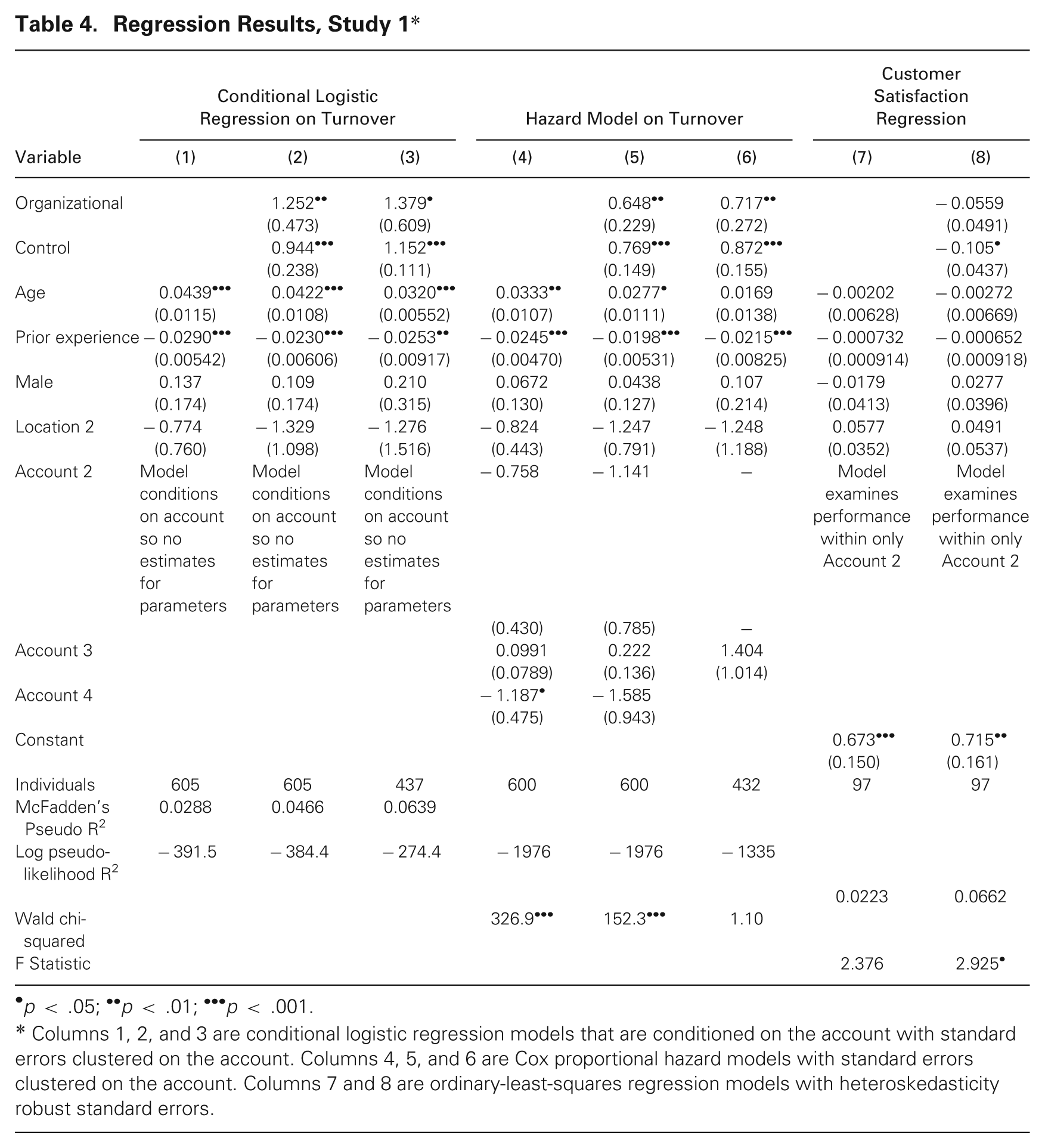
p < .05; ••p < .01; •••p < .001.
Columns 1, 2, and 3 are conditional logistic regression models that are conditioned on the account with standard errors clustered on the account. Columns 4, 5, and 6 are Cox proportional hazard models with standard errors clustered on the account. Columns 7 and 8 are ordinary-least-squares regression models with heteroskedasticity robust standard errors.
Columns 7 and 8 provide the linear regression model on customer satisfaction performance. While both the organizational-identity and the control condition coefficients are negative, suggesting worse performance as compared with the individual-identity condition, only the comparison between the control group and the individual-identity condition was statistically significant. Thus these results provide partial support for hypothesis 2.
Finally, we examined the robustness of our results. We repeated the two turnover models on only Accounts 2 and 3, as these accounts have agents in the control group as well as in the individual-identity and organizational-identity conditions. As seen in columns 3 and 6 of table 4, the coefficients on the organizational-identity and control variables continue to be negative and statistically significant, providing further support for hypothesis 1. We could not repeat these tests for the model testing hypothesis 2, as the operational data were only from one account. Additionally, we repeated models 1–3 using a linear probability model (OLS) and generated the same pattern of results. Finally, we repeated the hazard models using a piecewise-constant hazard rate model and again generated the same pattern of results.
The results of our first study show that when the organization focused its initial socialization processes on newcomers’ personal identities (i.e., authentic best selves) rather than on organizational identity, it fostered stronger employment relationships. Specifically, a focus on newcomers’ unique perspectives and strengths led to lower employee turnover than a focus on emphasizing pride from organizational affiliation and also led to greater customer satisfaction as compared with the organization’s traditional approach.
Although these results provided support for our first two hypotheses in an actual employment setting, they did not allow us to examine the proposed mediating mechanisms of self-expression. Furthermore, employees at an Indian call center may react differently to best-self socialization practices than individuals from other cultures or other organizational contexts. To address these issues, we next conducted a controlled laboratory experiment. In the second study, we examined the effects of different socialization practices on both organizationally relevant outcomes (i.e., retention and productivity) and job attitudes (i.e., work engagement and satisfaction). In addition to examining the effects of personal-identity versus organizational-identity socialization practices, this experiment also allowed us to examine whether perceived self-expression mediated the hypothesized relationships as compared with other plausible mechanisms. Finally, Study 2 included manipulation checks to confirm the effectiveness of our manipulations.
Study 2: Laboratory Study
Sample and Procedures
One hundred seventy-five students from a university in the Northeastern United States (mean age = 22.47, s.d. = 2.67, 82 male, 93 female) participated in the study for pay. We recruited participants for a three-hour study that would take place over two consecutive days. All participants completed the study on day 1 and were then given the choice of whether to come back on day 2 for the second part of the study. Participants received $35 for their participation on day 1 (for a 120-minute session) and had the opportunity of earning an additional $15 if they returned the second day (for another 60-minute session).
On day 1, after explaining that we were interested in understanding the factors that influence task performance, we told participants that they would be joining our research team during the study and would be working on a series of tasks, including a data-entry task from a recent experiment we had conducted and some problem-solving tasks. We manipulated only one factor between subjects: personal-identity socialization versus organizational-identity socialization versus a control condition. We conducted nine sessions and assigned three sessions to each of our three conditions.
In each session, participants first received the socialization manipulation and then engaged in a series of tasks for about 60 minutes. After the time had elapsed, we asked participants to answer a short survey, which included our measures of interest and manipulation checks. Participants were also invited to return to the laboratory the next day for another one-hour session during which they would be entering data. Participants could choose not to come back for the second day.
Identity manipulation
We introduced this manipulation at the beginning of each session of day 1 and modeled it after the manipulation used in the field experiment we conducted as Study 1. To keep the experimenter blind to the study hypotheses and to the study conditions, however, we gave participants their instructions on the computer. In the individual-identity condition, students first spent about ten minutes reading about how working in the research lab would give each of them the opportunity to express themselves and generate individual opportunities (see the Appendix for our script). Second, students were asked to think about and write down answers to the following questions individually: (a) “What three words best describe you as an individual?” (b) “What is unique about you that leads to your happiest times and best performance at work or in school?” (c) “Your Personal Highlights Reel: Reflect on a specific time—perhaps on a job, perhaps at home—when you were acting the way you were ‘born to act,’” and (d) “How can you repeat that behavior in this job today?” Students spent about 10–15 minutes working on these questions.
At the end of this procedure, participants were asked to use the materials at their desk (a piece of paper, colored pens, and markers) to write their own names creatively in a personalized logo so that they could be recognized as a member of the research team. They were asked to use their self-created nametag during the lab session by placing it next to the computer they would be using.
The organizational-identity condition consisted of a similar procedure. First, participants spent about ten minutes reading about the research lab’s values and why it is an outstanding group (see the Appendix). Second, the participants spent time alone thinking about and writing down answers to three questions: (a) “What did you hear (if anything) about the research lab that was most intriguing or appealing to you?” (b) “What did you hear about the research lab today that you would be proud to tell your family about?” and (c) “What did you hear about the research lab that makes you proud to be part of it, even if for a short period of time?” Students spent about 10–15 minutes working on these questions.
At the end of this procedure, participants in this condition were asked to use the same materials to write the name of the research lab creatively on the piece of paper (i.e., to create a logo for the research team). As in the other condition, they were asked to place the logo next to their computers throughout the session.
In the control condition, participants received general information about the session and the research team they would be working for (see the Appendix). Next, they were asked to use the materials at their desk to create a creative logo for the research team and place it next to their computers throughout the session.
Participants in all three conditions spent the rest of the time working on a variety of tasks individually and spent the last ten minutes of the session on day 1 answering a short questionnaire with our measures of interest. As explained below, our survey measures included both job attitudes (i.e., engagement at work and job satisfaction) and two sets of manipulation checks. We also recorded data on organizationally relevant outcomes (i.e., performance on the data-entry task and turnover).
Measures
Unless otherwise indicated, all items used a Likert-type scale anchored at 1 = “disagree strongly” and 7 = “agree strongly.”
Dependent variable 1: Work engagement
To assess work engagement, we used four items from Schaufeli, Bakker, and Salanova’s (2006) 17-item measure (i.e., “While working, I felt bursting with energy,” “Time flew when I was working,” “When I was working, I forgot everything else around me,” and “I got carried away when I was working”) (α = .91).
Dependent variable 2: Job satisfaction
We measured job satisfaction by using four items developed by Quinn and Shepard (1974). Participants were told that the items concerned their beliefs about their job as part of the research team that day, and they were asked to indicate their agreement with each of the beliefs stated (i.e., “All in all, I am very satisfied with this job,” “If a friend told me she/he was interested in working in a job like this one I would strongly recommend it,” “In general, this job measures up to the sort of job I wanted when I took it,” and “Knowing what I know now, if I had to decide all over again whether to take this job, I would”) (α = .89).
Dependent variable 3: Job performance
We measured productivity by counting the number of entries from surveys that participants completed in a 30-minute time period. Each survey included multiple pages and was printed on paper. Participants entered the data into Excel spreadsheets. To capture quality of performance, we also checked the number of errors made in the entries each participant completed.
Dependent variable 4: Retention
We measured retention by recording whether each participant returned to the laboratory to work as part of the research team on day 2 (1 = if the participant returned, 0 = otherwise).
Mediator: Authentic self-expression
To measure authentic self-expression, we used a six-item scale from Waterman’s Eudaimonic Well-being Questionnaire Scale (see Waterman, 1993, 2005). For example, participants indicated the extent to which they agreed with items such as “In this job, I can be who I really am,” “In this job, I feel authentic,” and “In this job, I don’t feel I need to hide who I really am” (α = .91).
Manipulation checks
We proposed that a socialization process stressing individuals’ identities rather than the organization’s identity would focus on employees’ unique strengths and would require less conformity from newcomers. To capture these two elements, we assessed personal distinctiveness and socialization intensity. To assess the former, we asked participants to indicate their agreement with three items measuring personal distinctiveness from Sheldon and Bettencourt (2002) (i.e., “In this job, I feel like I stand out,” “In this job, I felt unique,” and “Within this research team, I felt like a distinctive person”) (α = .93). To assess the latter, we asked participants to indicate their agreement with four statements measuring the intensity of the socialization process: (1) “I felt this research team wanted to change the way I act and solve problems,” (2) “While working, I felt I had to conform to the team’s way of thinking and acting,” (3) “I felt that the team was invading my personal space in terms of how I behaved and acted,” and (4) “The way the research team asks new members to fit in is more extreme than other groups or organizations I have been part of in the past” (α = .83).
Alternative mechanisms
Conceptually, our identity manipulation may have an impact not only on participants’ authentic self-expression but on other attitudes that could improve performance and retention and thus represent alternative explanations of the results. Accordingly, in our second study we included additional measures to test for the role of potential alternative mechanisms, including self-esteem, self-verification, and attraction toward other team members. We measured self-esteem with six items from Heatherton and Polivy’s (1991) state self-esteem scale (e.g., “I felt confident about my abilities,” “I felt like I was not doing well”; α = .87). We measured self-verification with five items from Wiesenfeld et al. (2007) (e.g., “In this job, other team members see me as I see myself,” “Around here, team members have an accurate view of who I am”; α = .90). Finally, we assessed attraction with eight items (e.g., “I feel close to this research team and its members,” “It is likely that this research team’s members and I could become friends if we interacted a lot”; α = .81) from the relatedness scale of the intrinsic motivation inventory (Sheldon and Deci, 1996). We used this scale because relatedness captures individuals’ desire to feel connected to others (Ryan, 1993).
Results and Discussion
Table 5 reports the summary statistics of the main variables assessed in the study. Means and standard deviations by condition for our focal variables appear in table 6.
Summary Statistics, Study 2
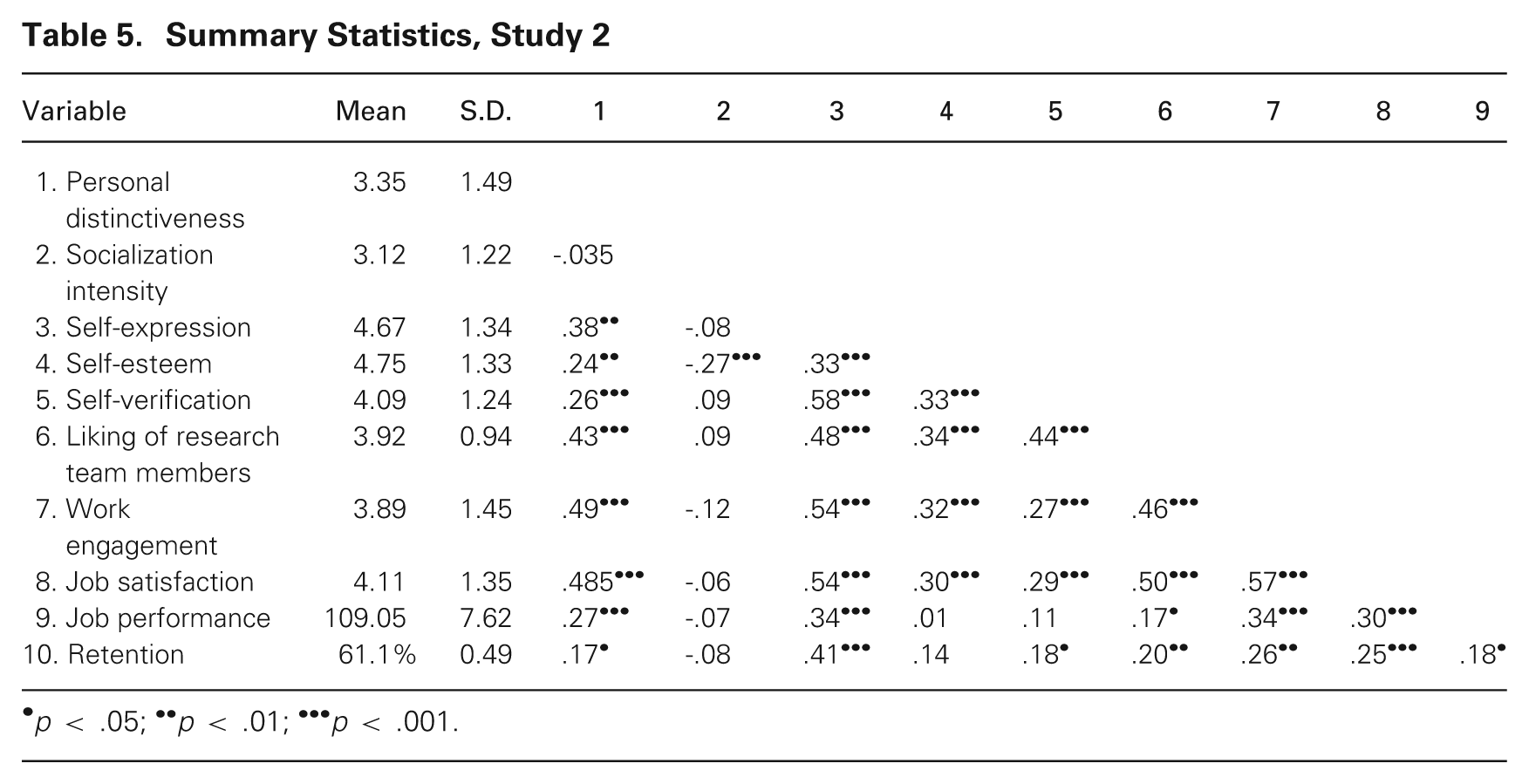
p < .05; ••p < .01; •••p < .001.
Summary Statistics by Condition, Study 2 *
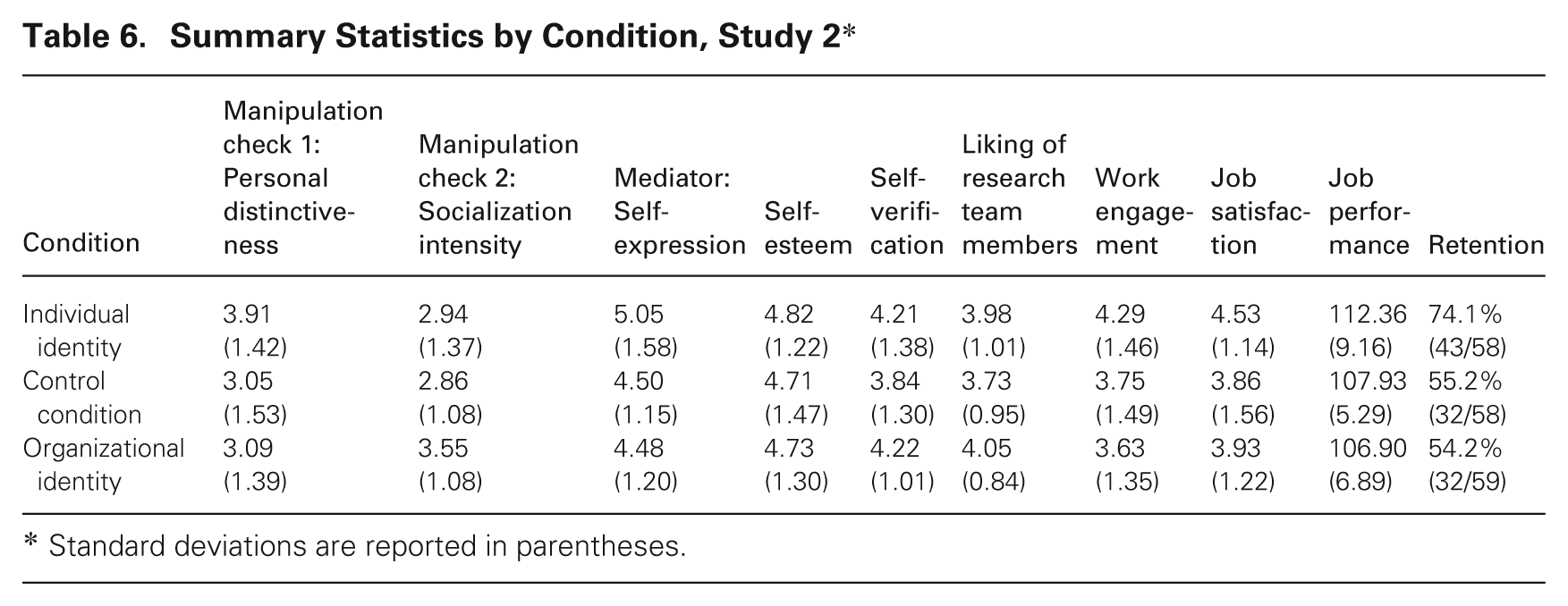
Standard deviations are reported in parentheses.
Manipulation checks
We first examined whether participants’ beliefs about the intrusiveness of socialization varied across conditions and found that in fact it did [F (2, 172) = 5.95, p = .003]. Participants rated the socialization process as more intrusive in the organizational-identity condition than in both the individual-identity condition (p = .006) and the control condition (p = .002). In addition, participants’ perceived personal distinctiveness varied by condition [F (2, 172) = 6.49, p = .002]. Specifically, participants in the individual-identity condition reported greater personal distinctiveness than did participants in both the organizational-identity condition (p = .003) and in the control condition (p = .002). Together, these results indicate that our manipulation was effective.
Performance effects
As shown in table 6, as compared with participants in both the organizational-identity condition and the control condition, those in the individual-identity (i.e., best self) condition reported being more engaged [F (2, 172) = 3.50, p = .032] and more satisfied with their jobs [F (2, 172) = 4.59, p = .011], and they were also more likely to return to the laboratory a day later to do more work as part of the research team [χ2 (2, N = 175) = 6.18, p = .046]. Participants in the individual-identity condition also performed more efficiently on the data-entry task than did participants in both the organizational-identity condition and the control condition [F (2, 172) = 9.25, p < .001]. Importantly, they also committed fewer errors [F (2, 172) = 5.23, p = .006], indicating that their work was of greater quality. We then considered only the correct entries participants completed and found that participants in the individual-identity condition performed better (mean correct entries = 105.57, s.d. = 9.80) than those in both the organizational-identity condition (mean correct entries = 97.29, s.d. = 11.12) and the control condition [mean correct entries = 98.64, s.d. = 5.91, F (2, 172) = 13.52, p < .001]. In all these analyses, post-hoc comparisons revealed that the differences on these measures between the individual-identity and the organizational-identity condition, as well as those between the individual-identity and the control condition, were all statistically significant at the 5 percent level.
Authentic self-expression
We predicted that participants would experience greater authentic self-expression in the individual-identity condition than in both the organizational-identity condition and the control condition. We found support for this prediction [F (2, 172) = 3.47, p = .033]. Results revealed that participants in the individual-identity condition reported higher levels of authentic self-expression than did those in the organizational-identity condition (p = .021) and the control condition (p = .026).
Additional measures
We conducted similar analyses to examine whether our identity manipulation had an impact on the additional measures we included in our second study, namely, self-esteem, self-verification, and attraction. We found that it did not (all p-values > .16). As shown in the correlation reported in table 5, however, all three measures were positively and significantly correlated with participants’ self-reported authentic self-expression.
Mediation analyses
Next, we tested whether authentic self-expression mediated the relationship between socialization (i.e., focused on personal identities versus focused on organizational identity or the control condition) and the various outcomes we measured: job attitudes (i.e., work engagement and job satisfaction), job performance, and retention. We conducted regression analyses that included an indicator for our individual-identity condition and an indicator for our organizational-identity condition. Given that we found no significant differences across the measures assessed in Study 2 between the organizational-identity and control conditions, when discussing our results below, we only comment on the coefficient that refers to the individual-identity condition.
When both socialization and authentic self-expression were entered into a regression model predicting work engagement, socialization was no longer significant (B = .23, SE B = .23; t = 1.00, p = .32), whereas authentic self-expression significantly predicted work engagement (B = .57, SE B = .07; t = 8.00, p < .001). The Preacher and Hayes (2004) bootstrapping technique (with 10,000 iterations) produced a 95 percent bias-corrected confidence interval for the indirect effect that excluded zero (.03 to .64), thus suggesting a significant indirect effect.
When both socialization and authentic self-expression were entered into a regression predicting job satisfaction, socialization condition was no longer significant (B = .39, SE B = .21; t = 1.84, p = .07), whereas authentic self-expression significantly predicted job satisfaction (B = .51, SE B = .07; t = 7.88, p < .001). The Preacher and Hayes (2004) bootstrapping technique (with 10,000 iterations) produced a 95 percent bias-corrected confidence interval for the indirect effect that excluded zero (.02 to .61), thus suggesting a significant indirect effect.
Similarly, when both socialization and authentic self-expression were entered into a regression predicting job performance, socialization condition was reduced in significance (from B = 4.43, SE B = 1.35; t = 3.28, p = .001 to B = 3.54, SE B = 1.32; t = 2.69, p = .008), and authentic self-expression significantly predicted job performance (B = 1.62, SE B = .40; t = 4.03, p < .001). The 95 percent bias-corrected confidence interval for the indirect effect we obtained through the Preacher and Hayes (2004) bootstrapping technique (with 10,000 iterations) did not include zero (.12 to 2.22), thus suggesting a significant indirect effect. Importantly, we obtained the same results when considering only participants’ correct entries. When both socialization and authentic self-expression were entered into a regression predicting the number of correct entries in the data-entry task, the effect of condition was significantly reduced (B = 6.25, SE B = 1.72; t = 3.64, p < .001), and authentic self-expression significantly predicted higher-quality work (B = 1.24, SE B = .52; t = 2.37, p = .019; 95 percent bias-corrected CI = .05, 1.96).
Finally, when both socialization and authentic self-expression were entered into a logistic regression model predicting retention, authentic self-expression was significant (B = .69, SE B = .15, Wald χ2 = 22.40, p < .001), but socialization was no longer significant (B = .66, SE B = .44, Wald χ2 = 2.28, p = .13). Using the bootstrapping method (with 10,000 iterations) recommended by Preacher and Hayes (2004), we tested the significance of the indirect effect of socialization on retention through perceived authentic self-expression. The 95 percent bias-corrected confidence interval for the indirect effect did not include zero (.03, .83), indicating that authentic self-expression was a mediator, as we predicted.
Taken together, these results replicate the findings of Study 1 in a controlled, laboratory environment and also provide support for hypotheses 3 and 4. Notably, they also rule out the role of self-esteem, self-verification, and attraction to one’s team members as potential alternative mechanisms of the effects on job attitudes, job performance, and retention of socialization processes that focus on personal identities.
General Discussion
Organizations invest considerable resources to locate new employees whose personal values match the organization’s culture (e.g., Chatman, 1991; Cable and Judge, 1997), but often it is not feasible to find a perfect match. Accordingly, many organizations use socialization processes as a second vehicle for transmitting and maintaining their cultures, such that new employees accept organizational values and behavioral norms (Chatman, 1991; Bauer, Morrison, and Callister, 1998; Cable and Parsons, 2001). Thus the goal of many organizations’ socialization practices is to help newcomers adopt a new organizational identity. In fact, many organizations require newcomers to wear standard wardrobes and follow detailed verbal scripts, forbid personal possessions, and enforce appropriate displays of emotion—all measures designed to suppress self-expression (O’Reilly and Chatman, 1996; Martin, Knopoff, and Beckman, 1998).
Contrary to this traditional perspective on socialization, in both a field and a laboratory experiment we found that both organizational and employees’ outcomes were more positive when socialization tactics encouraged newcomers’ authentic self-expression. In Study 1, the results suggested that a personal-identity approach, as compared with an organizational identity approach, led to significantly greater employee retention in an Indian call center after six months, producing customer satisfaction that was as high as the organizational-identity approach (and significantly higher than the organization’s existing socialization procedures). We then replicated and extended these main findings in a laboratory experiment in which we examined job attitudes (i.e., work engagement and job satisfaction) in addition to job performance and retention, as in Study 1. Importantly, the results of our second experiment demonstrate that our hypothesized relationships are explained by greater levels of authentic self-expression.
Taken together, our studies provide evidence that authenticity at work can be promoted by emphasizing newcomers’ authentic best selves. By integrating authenticity research with socialization theory, we developed novel, counterintuitive predictions about how framing socialization tactics around authenticity can have long-lasting effects on employees’ psychological experience, their commitment to and satisfaction with their work, and critical organizational outcomes such as productivity, quality of work, and retention. The implications of this perspective for organizational commitment may be quite far reaching: that is, the best way for an organization to develop organizational commitment may be to commit to each of its members by highlighting and encouraging the daily use of their unique strengths.
Theoretical Contributions
Should newcomers be expected to forego their personal identities in order to fit into a new role? Understanding how to effectively enculturate employees by “breaking them in” to an organizationally defined role (Van Maanen and Schein, 1979) has been the major focus of the socialization literature to date. This approach to organization-focused socialization clearly is useful to both organizations and newcomers in terms of removing ambiguity. Moreover, as compared with socialization focused on personal identity, organization-focused socialization also triggers greater changes in newcomers’ values, thereby helping them adapt to the organization’s culture (Cable and Parsons, 2001).
By contrast, we propose that tactics emphasizing employees’ personal identities ultimately may be more effective at strengthening employment relationships. We contend that while newcomers do seek to reduce uncertainty and fit in, they also yearn for authenticity. Namely, they want to feel that they can behave authentically in the environment in which they spend the majority of their waking hours—to be recognized for who they are rather than being subsumed by an organizational identity. We argued and found that the concepts of newcomer authenticity and self-expression are integrated into socialization processes. Thus firms can make strategic investments in individualized socialization tactics that facilitate expression of their best selves, with beneficial outcomes for both organizations and newcomers.
Our research also contributes to existing work on positive organizational scholarship, a field of scientific inquiry emphasizing the benefits of personal authenticity to both employees and organizations (Cameron et al., 2003). While past research has framed striving for authenticity as a personality trait (e.g., Wood et al., 2008; Cable and Kay, 2012), our perspective is that regardless of employees’ traits, organizational policies can strategically encourage authenticity at work with benefits to both parties. A related contribution of our paper is its integration of authenticity research into the socialization domain. Although there is some evidence in work settings suggesting that individuals are more productive when their self-views are reflected back to them (Polzer, Milton, and Swann, 2002; Swann et al., 2004; Cable and Kay, 2012), these ideas have not been examined in the context of the pivotal period of meeting new work colleagues. Clearly, authentic self-expression helps predict important outcomes in the organizational entry context, and it provides an important conceptual balance to the socialization literature, in which uncertainty reduction through congruence of values has been the dominant theoretical perspective for the last 30 years.
One important implication of integrating authenticity into socialization processes is that it may help address the homogeneity problem that organizations face when they hire and then socialize people toward similar values (Schneider, 1987) to the point that the organization becomes culturally ingrown and occupies an increasingly narrow ecological niche (Aldrich, 1979). Environmental demands on firms change over time, but organizational cultures are sticky, perpetuated long after the rationale for a cultural value has passed (e.g., Nicholson, 1984; Schneider, 1987). Accordingly, organizational-focused socialization tactics that attempt to press organizational values directly onto impressionable newcomers—while neglecting the fact that values need to solve environmental problems—may sacrifice adaptability.
Integrating the authenticity perspective into the socialization literature may help to address this homogeneity issue, as it encourages newcomers not only to align their behaviors with their best selves but also to use their unique values, perspectives, and strengths to solve organizational problems. As such, a personal-identity socialization process may offer a practical means of helping organizations adapt and maintain a competitive advantage. By making authenticity a core value that is communicated to newcomers, organizations may not only inspire greater workforce contributions but may also enable positive deviance that keeps them fresh and agile. For example, firms such as Southwest Air and Zappos.com hire new employees based in part on their willingness to be themselves at work and solve problems using their unique perspectives and strengths (Freiberg and Freiberg, 1998; Hsieh, 2010), a strategy that has had a positive impact on both employees’ engagement and organizational success.
Strengths, Limitations, and Future Research
There are a number of strengths of our investigation. First, while considerable research suggests that both employees and organizations are better off when employees are able to be authentic, less is known about how organizations can facilitate authentic self-expression in the workplace (Dutton, Roberts, and Bednar, 2010). We suggested that authenticity initiatives should be pivotal at the very beginning of an employment relationship, as identity negotiation is a critical concern at this stage, and early expectations cast long shadows. Thus we highlight organizational socialization as a particularly rich environment in which to encourage employees to bring their authentic best selves to work and consequently engage with their work in a more personally fulfilling and productive manner.
Second, we tested our hypotheses by conducting a field experiment, which is one of the strongest methods for maximizing both internal validity and external generalizability (Shadish, Cook, and Campbell, 2002). To enable causal inferences, we compared a control group with two approaches to socialization that reflected different sets of theoretical assumptions. To circumvent problems with self-report data, we examined newcomers’ actual departures from the firm and the quality of their actual work (as reported by customers) six months after the experimental manipulations. Thus the design we employed in our first study minimized typical common method variance problems such as priming, hypothesis guessing, and mood effects. We then constructively replicated our results in a controlled laboratory setting in a different country with different work tasks, to further increase internal validity and also examine whether authentic self-expression mediated our results, as hypothesized.
Naturally, our studies also have a number of limitations that point to potential opportunities for future research. First, although we studied both employee departures and customer satisfaction six months after newcomers arrived, it would have been useful to have measured and modeled the outcomes of organizational socialization over an even longer period of time and across multiple customers. Second, although the outcome variables we focused on are clearly organizationally relevant, it also would have been useful to have examined other important outcomes that are both theoretically meaningful and practically relevant, such as newcomers’ role innovation (e.g., Van Maanen and Schein, 1979; Jones, 1986; Ashforth and Saks, 1996). Although it is likely that some element of employee innovation is inherent in the measure of customer reactions we employed in Study 1, future research could directly model the effect of personal identity socialization on proactivity in meetings, new ideas submitted for products and processes, and willingness to take risks at work.
There are a number of interesting potential boundary conditions surrounding our theory that will be important to test in future research. Although our focus on socialization in an Indian organization helps address calls for socialization research outside the United States (Bauer, Morrison, and Callister, 1998; Kim, Cable, and Kim, 2005), there may be characteristics of Indian culture, the particular organization studied, or even the particular job studied that contributed to the results that we reported. The fact that our second study replicated the main results of Study 1 in a very different context gives us some confidence that the relationships we identified are robust.
Nonetheless, it will be useful for future research to examine our hypotheses in other contexts. For example, it is interesting to consider the appropriateness of authentic socialization in jobs in which high-reliability processes and outcomes are necessary (e.g., surgical teams, aircraft carriers). In settings in which reliability across individuals results in life or death, it becomes even more important for individuals to apply the best of themselves within the constraints of a reliable, understood process. This may suggest that the framing of a task as an opportunity to use signature strengths, rather than sculpting employees to do the job, becomes more important in some contexts. More broadly, future research could examine whether newcomers trained with an identity manipulation actually do use their signature strengths more in their jobs, or whether the early discussion prompted by our manipulation helped them cognitively frame the work in a way that is consistent with their personal and work goals. Future investigations of these and related questions would further our understanding of how socialization processes emphasizing newcomers’ personal identities or the organization’s identity affect newcomers’ experiences at work.
Next, employees had little task interdependence in the jobs we examined, which was useful in helping us rule out alternative explanations for the results. But it is possible that this context offers a conservative test of personal-identity socialization because teams seem to function best—in terms of better relationships, the desire to contribute, drawing out each person’s unique contributions, and ultimately group performance—when each person feels known and understood by the group (e.g., Swann et al., 2003; Swann et al., 2004). In fact, some evidence has pointed to relational coordination in teams as a primary causal mechanism connecting high-performance work systems and performance outcomes (e.g., Gittell, Seidner, and Wimbush, 2010; Huckman and Staats, 2011). Because personal-identity socialization should increase the quality of employees’ relationships, the benefits should theoretically increase for teams that work interdependently (although, of course, future research is needed to test this logic). In particular, it would be useful for future research to focus on employees who work interdependently to measure the extent to which others honor (or do not honor) what newcomers introduce as unique about their identities or strengths.
Across our studies, we focused on the effects of different socialization practices on job attitudes, employee productivity, and retention. Other organizationally important variables may be affected by the framing of socialization processes. Expressing authenticity at work involves voicing one’s unique perspective and ideas rather than suppressing ideas in order to conform to group norms. Thus if newcomers are socialized from the start to reveal and use their unique perspectives, they should demonstrate greater creativity and help improve decision making (Argyris and Schön, 1978; Morrison and Milliken, 2000; Van Dyne, Ang, and Botero, 2003; Avery and Steingard, 2008). Future research could examine whether socialization processes focused on individual rather than organizational identity also produce benefits in employees’ creative performance.
It also would be interesting for future research to consider whether socialization aimed at highlighting organizational identity could be combined with tactics that leverage newcomers’ authentic best selves. For example, if the introduction to socialization focused on organizational strengths and identity, then transitioned into a session on newcomers’ best selves as a means of remaining competitive, it may be possible to combine the best of both types of socialization. Though it is possible that emphasizing the organizational identity would create a strong “normal induction” prime that would minimize the effect of the active individualization approach. It also is worth noting that, conceptually, the greater a newcomer’s perceived fit with an organization (Cable and Judge, 1996), the more likely it is that personal identity socialization and organizational identity socialization will yield similar outcomes. This means that hiring people who share the organization’s core values might allow the two socialization approaches to be integrated into a seamless whole.
Finally, in this initial investigation, we did not examine whether individual differences moderate the effectiveness of authentic socialization, such that a newcomer’s need for uniqueness (Snyder and Fromkin, 1977) or self-concept orientation (Cooper and Thatcher, 2010) are boundary conditions of successful authentic socialization. Conceptually, differences between organizations also should serve as moderators of socialization based on individual identity. For example, newcomers’ authenticity may be more possible when the organization’s culture is weak and crystallization is low (Chatman, 1989), perhaps due to organizational age, size, or how loosely coupled it is (Orton and Weick, 1990). Logically, we also would expect that an authenticity-based approach to socialization should be more effective when there is high psychological safety, as self-expression appears to be riskier than conformity (Edmondson, 1999). It also will be interesting to examine whether the effects of the individualization approach to socialization will be stronger or weaker for high-status, highly paid employees than for low-status, poorly paid employees. On one hand, it is more likely that emphasizing unique strengths would be a more striking and unique focus for lower-status employees, who may be unaccustomed to having their leaders be interested in their authentic best selves. On the other hand, higher-status individuals likely have greater latitude to sculpt their work environments around their best selves and thereby may be inspired to create environments that allow them to express their best selves more often (Wrzesniewski and Dutton, 2001).
Conclusion
More than just a theoretically meaningful phenomenon, socialization is serious business for organizational leaders. The process of recruiting, hiring, and training new employees is expensive and time consuming, and quitting is a likely outcome of unsuccessful socialization (Fisher, 1986; Bauer, Morrison, and Callister, 1998). Failed socialization puts leaders right back where they started after months of investment: trying to recruit new employees. Conversely, successful socialization results in productive, committed employees who are excited to come to work and proud of their role in helping their organization succeed. We found surprisingly large and valuable changes in employees’ work quality and retention when organizations made relatively small investments in socialization practices that focus on newcomers’ personal identities.
Both existing research and anecdotal evidence suggest that it is rare for organizations to take an authenticity perspective on socialization, despite the fact that it appears to be valuable for newcomers and causes them to want to commit longer to the organization and do higher-quality work. Our research indicates that when organizations find a way to balance this tension—or, even better, use the tension to differentiate themselves to employees as a great place to invest their energies—they appear to have a line on sustained competitive advantage.
Footnotes
APPENDIX: Instructions Used In Study 2,by Condition
Acknowledgements
We thank Drew Carton, Kathleen McGinn, Jeff Polzer, and Dan Turban for their insightful comments on earlier drafts. We also thank Associate Editor Katherine Klein and three anonymous reviewers for their developmental and insightful comments throughout the review process. We are grateful to Devender Malhotra, Amit Rastogi, Rajesh Sehgal, Deepak Gupta, and others at Wipro BPO for their substantial investment of time and attention in this study, without which the work would not have been possible. Any remaining errors are our own.
We also included a group that received a team-identity intervention. This group was divided into groups of five. For theoretical reasons, we decided to focus on the individual- versus organizational-identity comparisons, but including these agents in the turnover models does not change our reported results. Moreover, we do not have equivalent customer satisfaction data for these employees because there were no agents who received the team-identity treatment working for the customer for which we analyzed customer satisfaction performance.
Senior leaders were not given a script to follow in any of the conditions, as the company felt that a script would be inconsistent with their socialization process. In this case, the leader was asked to give a 15-minute talk about how working at Wipro will give an individual the opportunity to be him- or herself and create individual opportunities. The leader was asked to include examples from his or her own career at Wipro.
An alternative empirical approach would be to control for differences across accounts by using a hierarchical linear model. We ran all turnover models using a mixed-effects logistic regression model in which individuals were nested within accounts and replicated all reported results.
Duration data are missing for five individuals in the control group and so they were excluded from this analysis.