







Abstract
Access to decent and affordable housing is a major source of distress for migrants in many cities in Africa. For translocal migrants, there are limited housing pathways, further constrained by various socio-cultural practices. Using translocal migrants in Kumasi as a case, we posed and answered three key questions: (i) What housing pathways do translocal migrants pursue? (ii) How do they access and finance them? and (iii) What socio-cultural support systems shape these processes? Multiple qualitative methods were adopted, including in-depth interviews with seventy-one translocal migrants and engagement with translocal migrant associations. We find that translocal migrants initially live in shared rentals or with relatives. Ethnic networks are the core mechanism for finding and financing housing. For them, the ebbs and flows of life, capital and what is termed as a ‘progressive housing pathway' are influenced greatly by the pull of home as by the host city's housing market. Therefore, we advocate for tailored housing policies that acknowledge the duality of migrants’ lives.
Introduction
Migration gives rise to complex transitions. Of these, housing represents one of the most important domains of change. This may involve a shift in housing quality, tenure and neighbourhood characteristics to mirror changing circumstances in a migratory journey (Peters, 2020; Roberts et al., 2017). While migration and housing are substantial areas in global scholarship, their conceptual and geographical focus reveals a gap. The existing body of literature (Balampanidis, 2020; Elkins et al., 2024; Eskelä, 2018; Firang, 2019; Golovina, 2024; Lennartz and Helbrecht, 2018; Magnusson Turner and Hedman, 2014; Skobba, 2023; St Arnault and Merali, 2019), largely focuses on housing pathways and immigrant integration in formal housing systems and welfare states of the Global North. These scholarly works, while instructive, presume a linear path towards permanent settlement and assimilation into destination societies. As argued by African migrationists (e.g., Awumbila et al., 2017, 2019; Flahaux and De Haas, 2016), migration in Africa is seldom a linear or definitive break. Instead, it is characterised by investments in places of origin, multi-local networks and circularity (Wehner et al., 2025), a dynamic that is better theorised by the concept of translocality (Lohnert and Steinbrink, 2005; Klöpf et al., 2025).
The translocal perspective emerged to capture the fluidity and complexity of the lives of migrants and the limitless nature of their social ties. The shift was necessitated by the analytical failure of traditional unidirectional conceptions of migration between origin and destination (Schiller et al., 1992). This makes linear models ill-suited for comprehending the lived experiences of migrants in Africa and calls for an epistemological shift from push-pull models and a distinct analytical break from transnationalism, which is explicitly concerned with cross-border interactions Even scholarship on internal migrants, for example, in China (Wang and Cui, 2021), concentrates on contexts with public housing interventions. However, the African urban context, including Kumasi, Ghana, is characterised by an informal housing sector with minimal state provision. In this volatile housing market, access is achieved through social networks and individual ingenuity (Adu-Gyamfi et al., 2021; Agyemang and Morrison, 2018; Akaabre et al., 2018; Boamah, 2014; Obeng-Odoom, 2016a; Paller, 2015). This makes decent and affordable housing a major source of distress for migrants in many African cities. Specifically, this is true for translocal migrants 1 (Greiner and Sakdapolrak, 2013), whose lives are ingrained in both places of origin and destination. Their housing decisions are not just a purpose of economic adjustment in the city, but are shaped by incessant investments and obligations back home (Blija et al., 2024, 2026). However, this common doubleness remains understudied. The experiences of translocal migrants are often erroneously conflated with transnational studies or buried in broader migration narratives.
The foregoing analytical gap is evident in the analysis of cities in Africa, such as Kumasi. The descriptor “cities in Africa” and not “African cities” is used to emphasise the internal heterogeneity of Africa's urbanism (Obeng-Odoom, 2011). While migrants’ presence, rapid urbanisation and the associated housing deficit of the city have been documented (Adu-gyamfi et al., 2022; Amoako and Frimpong Boamah, 2017; Asibey et al., 2021; Blija et al., 2024; Owusu and Agyei-Mensah, 2011), little is known about the housing pathways of translocal migrants in this volatile and high-pressure informal housing market.
Premised on the above-highlighted contextual and conceptual void, this paper builds on the works of Tipple (1984), Tipple et al. (1999), Adarkwa (2012), Acheampong (2016) and Adu-Gyamfi et al. (2020). Their analysis of the Kumasi household composition, housing dynamics, needs, aspirations, and housing supply provide essential context about Kumasi's housing stock, market and socio-economic dynamics, which are relevant for comprehending the lived experiences of translocal populations. This directly points researchers towards understanding the specific housing types, social networks, and tenure arrangements prevalent in migrant-dominated areas. For instance, Adarkwa (2012) and Asibey et al. (2021) report that low-income migrants mainly live within slums, which has resulted in the expansion of these neighbourhoods, while Tipple et al. (1997) found that the building motives in the city include the cultural duty to house extended relatives and bequeathing houses to heirs. Migrants, as extended family members, either directly contribute to or benefit from these motives. Thus, this study enters migration, translocality and housing discourse by posing and answering the following questions: (a) Which housing options and pathways are available to translocal migrants in Kumasi's informal housing market? (b) How do translocal migrants obtain and finance their housing, given their translocal living arrangements? and (c) What socio-cultural support systems are available to translocal migrants on their housing pathways? We argue that the housing narratives of translocal migrants will provide valuable insights into the intersections between migration, housing, and belonging. By understanding their experiences, policymakers can develop more targeted interventions to support the housing needs of translocal migrant.
Migrant's Housing Transitions: A Literature Outlook
Scholars mostly frame housing as a critical measure of migrants’ integration and belonging in their destination societies. For these scholars, a successful housing pathway (in terms of decent housing and desired tenure and overall satisfaction) indicates successful integration into the host city (Murdie, 2003; Teixeira and Drolet, 2018). This perspective views belonging as a monodirectional sense of attachment and socio-spatial integration mainly through stable formal housing in host societies. For instance, Rolfe et al. (2020) view decent and stable housing as the foundation for individual growth and belonging, as it enables social connection, better education, health, economic stability, and psychological and physical security. But, in reality, many migrants fail to move into their desired housing and/or tenure arrangement. Because of a limited supply of social housing units, most migrants are forced into the volatile private rental housing market characterised by high rents, sub-standard housing. These issues are particularly prevalent in rapidly urbanising cities (Adu-gyamfi et al., 2022; Firang, 2019; Hall and Greenman, 2013).
Other studies have highlighted obstacles such as discrimination in the housing market (Hanhörster and Lobato, 2021; Hu, 2023; Kelly et al., 2017; Marchi et al., 2022; Wei et al., 2023), affordability concerns (Gallent et al., 2019; Liu and Roberts, 2012) and residential mobility and housing pathways (Cui et al., 2015; Eskelä, 2018; Golovina, 2024; Shuttleworth et al., 2021; Van Noorloos, 2013; Wang and Cui, 2021). For instance, on the housing pathways, scholars have focused on the frequency of moving, the reasons for moving from previous residences and the housing search process (Aigner, 2019; Golovina, 2024; Hochstenbach and Boterman, 2015; Murdie, 2003; Opit et al., 2020). These studies have indicated that the housing pathways of migrants have been lateral, progressive or regressive. A pathway is progressive or successful when a migrant successfully improves his/her housing situation. The improvement may manifest in the attainment of quality, secured tenure, favourable location, neighbourhood and overall satisfaction with the house. For instance, this is the case when a household moves from renting a poor-quality apartment in a crowded and unsafe inner-city neighbourhood to owning a quality detached or semi-detached home in a safe suburban neighbourhood (Murdie, 2003). Progressive housing pathways may be associated with several factors, including improvement in income and housing subsidy (Zheng et al., 2020). A regressive housing career is recorded when a migrant moves from a decent detached or semi-detached rented or own home in a good neighbourhood to a poor property in an unfriendly environment. A lateral housing career may be experienced when no change is recorded (Clark, 2019; Jin et al., 2023; Mabhala et al., 2017).
While the foregoing body of work is instructive, it presumes a telos of full integration and permanent settlement in host cities. However, these models appear overly simplistic and fail to capture the temporality and circularity of migration in Africa. Obeng-Odoom (2016b), for instance, argued that migration experience is shaped by structural, contextual and historical forces beyond isolated pull and push or individual rationality factors. His perspective implies that migration decisions, including housing choices, may be products of wider contextual or societal forces.
Thus, it is imperative to examine the experiences of particular groups of migrants and their context: in our case, translocal migrants in Kumasi. Among the few studies that have attempted to study specific groups of migrants have focused on skilled migrants in Nanjing, China (Cui, 2020) and urban migrants (Wang and Cui, 2021). Wang and Cui (2021) highlight the social problem rural–urban migrants face in the housing market. Their study established a conflict between family settlement and job opportunities. Securing a better job in a different locality requires a move, while homeownership attainment is mostly linked to establishing oneself in an area. Consequently, some migrant households that had previously owned a house sold or lost it. Cui (2020) also found that the housing careers of skilled migrants and skilled locals differed. In the housing market, skilled migrants had a lower status despite having similar resources at the individual level, such as education and income. The wealth gap resulting from intergenerational transfers was cited for the differences in housing outcomes. Cui (2020) further argued that unskilled rural–urban migrants had worse housing outcomes. Skilled migrants had an advantage in overcoming institutional obstacles like complex rental application procedures or discriminatory practices. Furthermore, skilled migrants had clear settlement intentions, which had an impact on their housing preferences, needs and ultimately, consumption patterns.
Clearly, these scholars discuss the housing pathways of migrants without reference to their translocal householdings. Hence, a gap in the foregoing is the scant attention given to translocal migrants. This is important for two reasons. First, translocal migrants constitute over 50 percents of migrants in Africa (Steinbrink and Niedenführ, 2020). Second, the interaction and exchanges between migrants and their place of origin weaken their loyalty to the host society and have an impact on their housing investment (Castles, 2002). This redefines the notion of belonging from a sole attachment to the host city to a multi-local sense of attachment negotiated across the spatial networks of a migrant. Belonging is not only attained in a single place but also spread and maintained through embeddedness in both the places of origin and destination. The foregoing thus raises questions about the available housing options responsive to the back-and-forth movement of translocal migrants and how they navigate through those options.
Study Settings and Methods
Study Settings
We began by examining the multiplicity and fluidity of translocal lives, including the mobility of people, goods, skills, ideas and other resources across the Nkoraza South Municipality and Kumasi, Ghana. The Nkoraza South is an out-migration hotspot in Ghana (Dako-Gyeke and Kodom, 2017). In addition, the municipality is largely a source region for Ghanaian migrants who travel to Libya to proceed to Europe (Republic of Ghana, 2022). The absence of educational and white colour job opportunities is primarily the key migration driver in the municipality (Republic of Ghana, 2022). The municipality is in the middle belt of Ghana. Specifically, it is located in the south-western part of the Bono East region.
As required in translocal research (Steinbrink, 2009), the identified migrants were traced to Kumasi (the major destination area). The strategic location and commercial function of Kumasi make it more accessible to the northern, middle belt and southern parts of Ghana. Consequently, the city draws in migrants from across the country, which almost doubled the its population from 1,170,270 to 2,035,064 between 2000 and 2010 (Ghana Statistical Service, 2014). Recent statistics suggest that the city's population currently stands at 3.9 million (Macrotrends, 2024) and estimated to reach about 4,681,047 2 by 2030. This dynamic makes Kumasi the second-largest city in Ghana. Yet, the supply of housing in the city falls short of its rising population. This is evidenced in the city's yearly population growth of 5.7 per cent compared to annual housing growth of 2.4 per cent (Afrane and Asamoah, 2011). Consequently, poor urbanites suffer from housing poverty (Adu-gyamfi et al., 2022; Amoako and Frimpong Boamah, 2017; Asibey et al., 2021). Thus, the inadequate housing supply, coupled with the unique housing needs of translocal migrants, makes Kumasi ideal for examining the housing transitions of translocal migrants.
Design and Methods
The study adopted a bi-local research design following Steinbrink's (2009) proposition of the methodological imperative of translocal research. Steinbrink (2009) pointed out that unlike stationary research that focuses on the geographical location and its inhabitants, translocal research calls for a reversal of methodological conception to capture translocal realities. The translocal perspective calls for multi- or bi-local field work. Hence, the current study's fieldwork was conducted in a bi-local context. This was done in Dotobaa and Ayerede (areas of origin) and Kumasi (area of destination).
The fieldwork was conducted in two phases between November 2022 and March 2023. The initial phase was a socio-economic survey in Dotobaa and Ayerede, based on a systematic sample of 443 households. The semi-structured questionnaire covered questions about the situation of the household, absent members, their translocal interactions, cooperations and exchanges. Details of the migrants were taken in the first phase. As the translocal approach demands (Steinbrink, 2009), localities that mattered to the respondents were considered in the second phase. Accordingly, after an initial socio-economic survey (n = 443 households) in the origin communities, we traced the migrants to Kumasi. The second phase, which is the focus of this study, involved detailed interviews with seventy-one translocal migrants and the president of the Dotobaa association in Kumasi from February to March 2023. This phase involved narrative biographic interviews on the housing experiences and transitions of the migrants. Participant observation and mapping of the housing transitions were also employed in the fieldwork. The interviews lasted for 60 minutes on average, based on the respondents’ interest and availability.
Admittedly, the selection of the translocal migrants was not based on strict randomisation, instead by convenience. Consequently, we do not claim universal representativeness. However, the adoption of triangulation (participant observation, interviews and mapping) allowed for the verification of the data gathered to enhance the validity and reliability of the results to offer a detailed picture of the housing transitions among translocal migrants in Kumasi. The effectiveness of this has been discussed extensively in the literature (Creswell and Plano Clark, 2017). Data obtained from the translocal migrants and the representative of their association were collated. The analysis was approached using a stepwise thematic analysis, following the method outlined by Lucas et al. (2007). Data was collated based on the trends and themes observed. The descriptive and analytical narratives were written under the objectives of the paper. This is in line with the proposition of Lucas et al. (2007) that the use of thematic synthesis is based on its potential for drawing inferences based on shared themes from diverse respondents. To ensure ethical standards, we briefed the respondents on the study's purpose and sought their consent to voluntarily participate. We then anonymised the personal identifiers of the participants and assigned pseudonyms to protect their privacy.
Results
The paper examined the housing transitions of migrants who maintain socio-economic ties with their social units back home. In what follows, we discuss the results of the study.
Translocal Practices
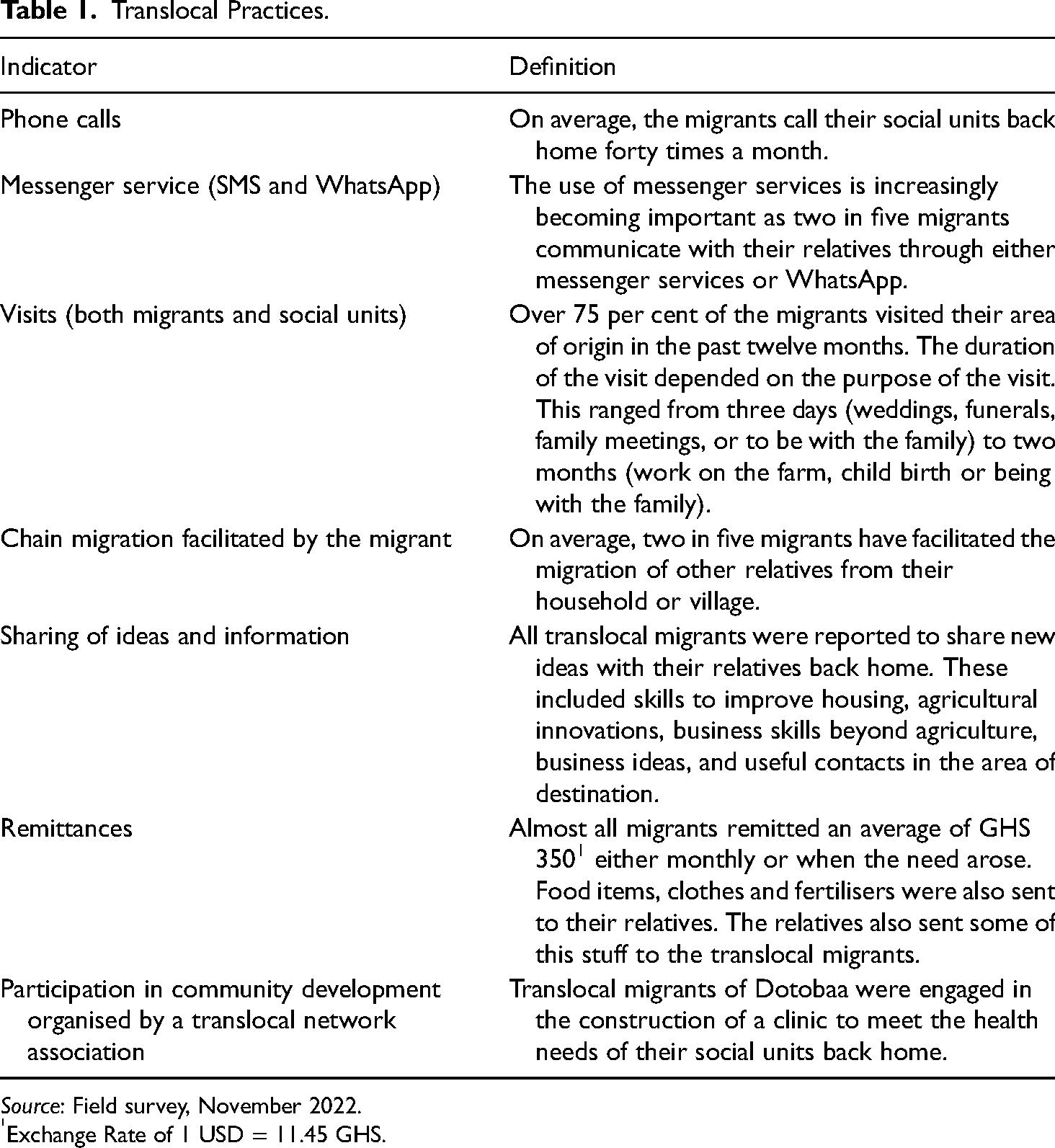
The study shows a high-frequency mobility pattern and sustained socio-economic engagements that constitute the basis for housing decisions. As shown in Table 1, about 75 per cent of the migrants embarked on short trips back home for ceremonies and extended stays up to two months for childbirth or farming in the last twelve months. This frequent movement implies that the residence of a migrant in Kumasi serves not as a permanent place, but instead as a pragmatic base. This incentivises lengthy stays in the informal rental housing market (mostly in compound houses) instead of investing in housing that needs long-term residency and maintenance.
Translocal Practices.
Source: Field survey, November 2022.
Exchange Rate of 1 USD = 11.45 GHS.
In addition, the regular remittance to places of origin had an adverse implication for their saving capacity. An average of GHS 350, food, farm inputs and clothes were remitted by almost all migrants either whenever it was required or monthly. This constituted a proportion of income that could have been saved for housing investment in Kumasi. The need to financially support a migrant's relatives back home influences his/her purchasing power in Kumasi's housing market, which often translates into long stays in single rooms. This might seem like an inability to climb the housing ladder or immobility, but to them, their decisions are strategic; they live in Kumasi but invest their capital in other areas, including the well-being of their families and collective community developments, as evident by their involvement in the building of a clinic in Dotoba.
Housing Options and Pathways of Translocal Migrants
The identified housing pathways were patterned yet diverse, mirroring a negotiation between the translocal commitments and the urban circumstances of the migrants. The migrant's initial housing options were either staying in shared rented accommodation or with relatives. Over time, pathways diverged based on economic conditions (see Figures 1 to 3). For clarity, the respondents were grouped into students/apprentices, informal workers (traders, mechanics, and drivers) and formal workers (teachers, nurses, a legal practitioner, among others).
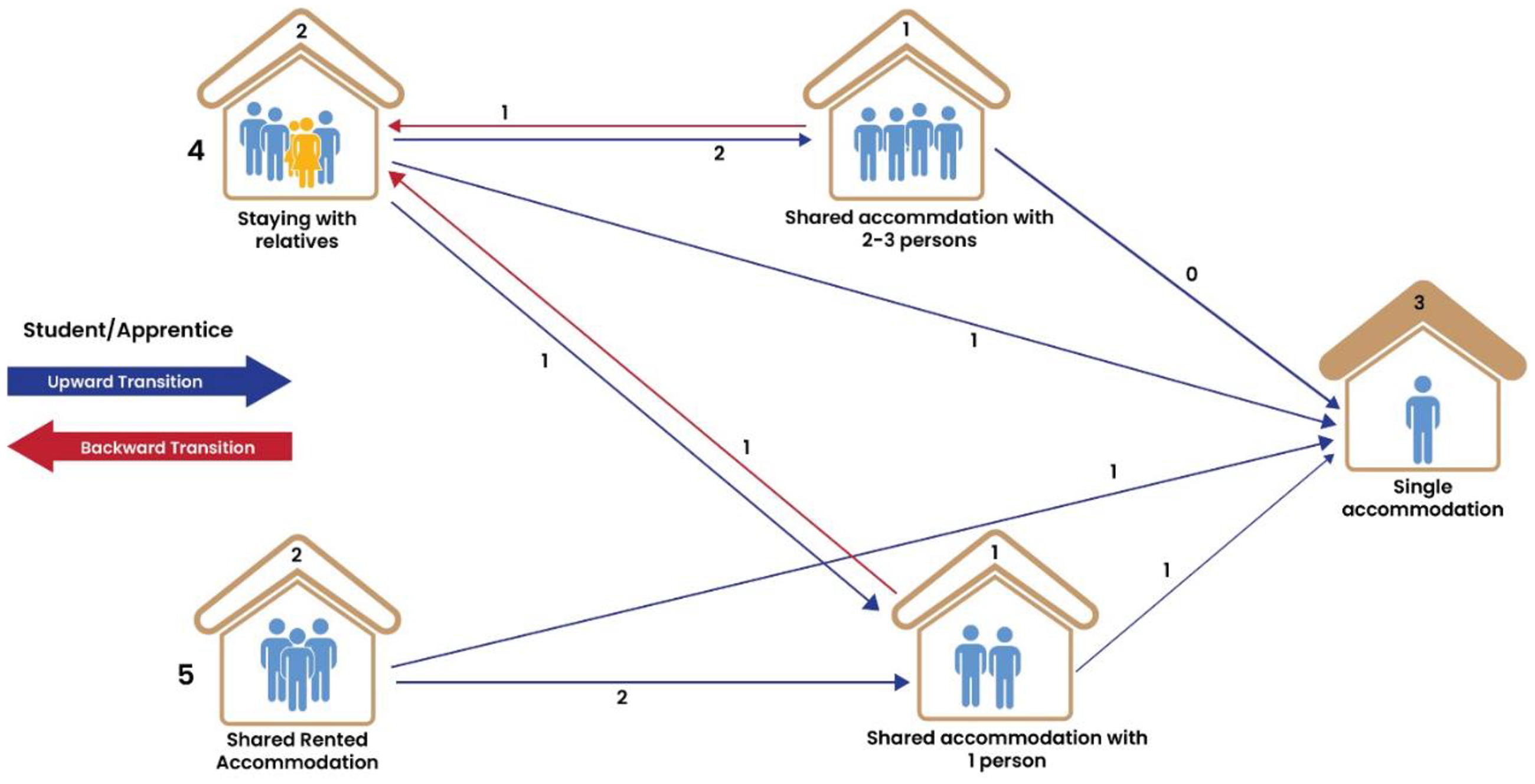
Housing Paths of Students and Apprentices. Source: Authors’ illustration based on field survey (2023).
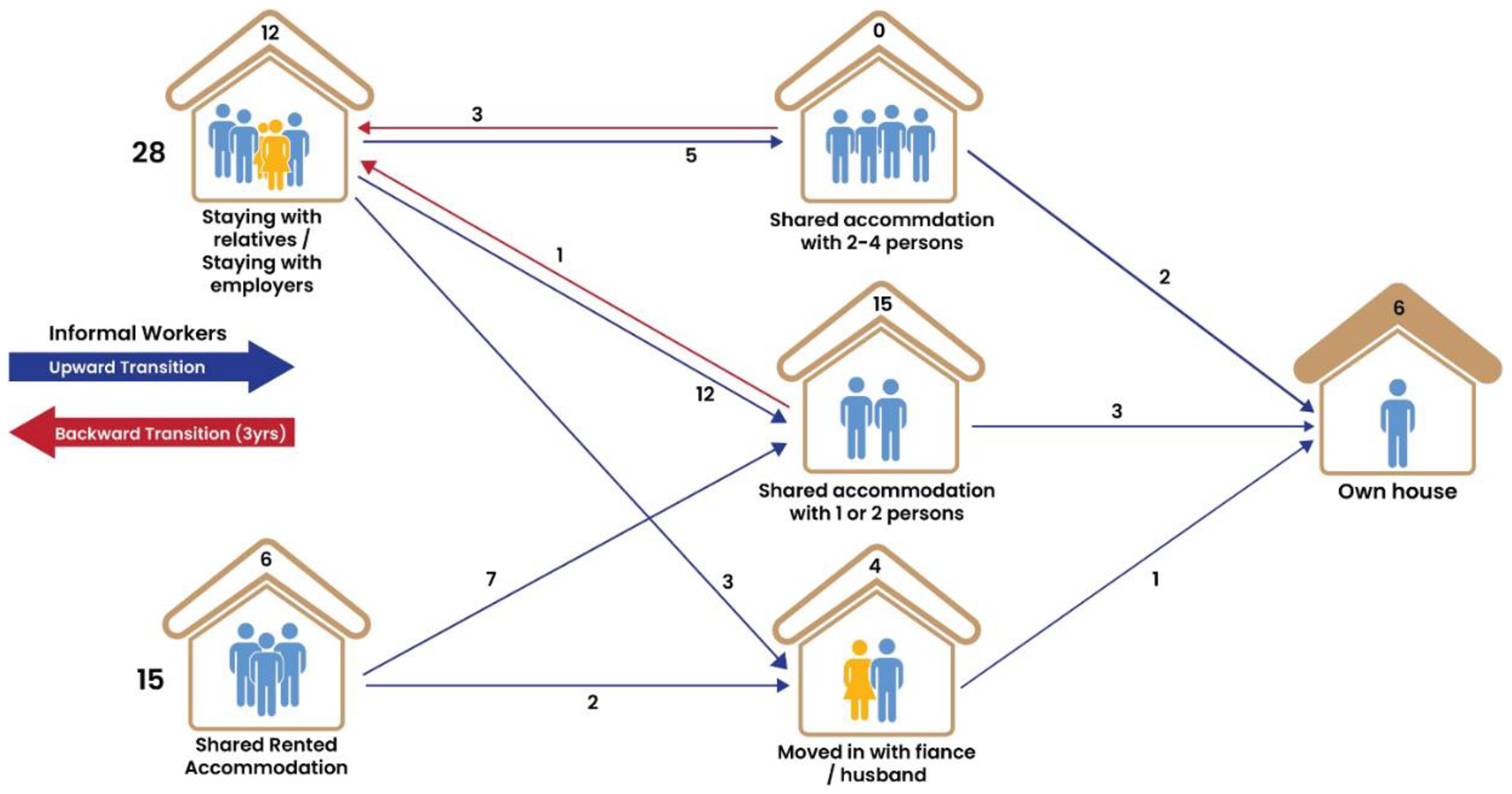
Housing Paths of Informal Translocal Migrants. Source: Authors’ illustration based on field survey (2023).
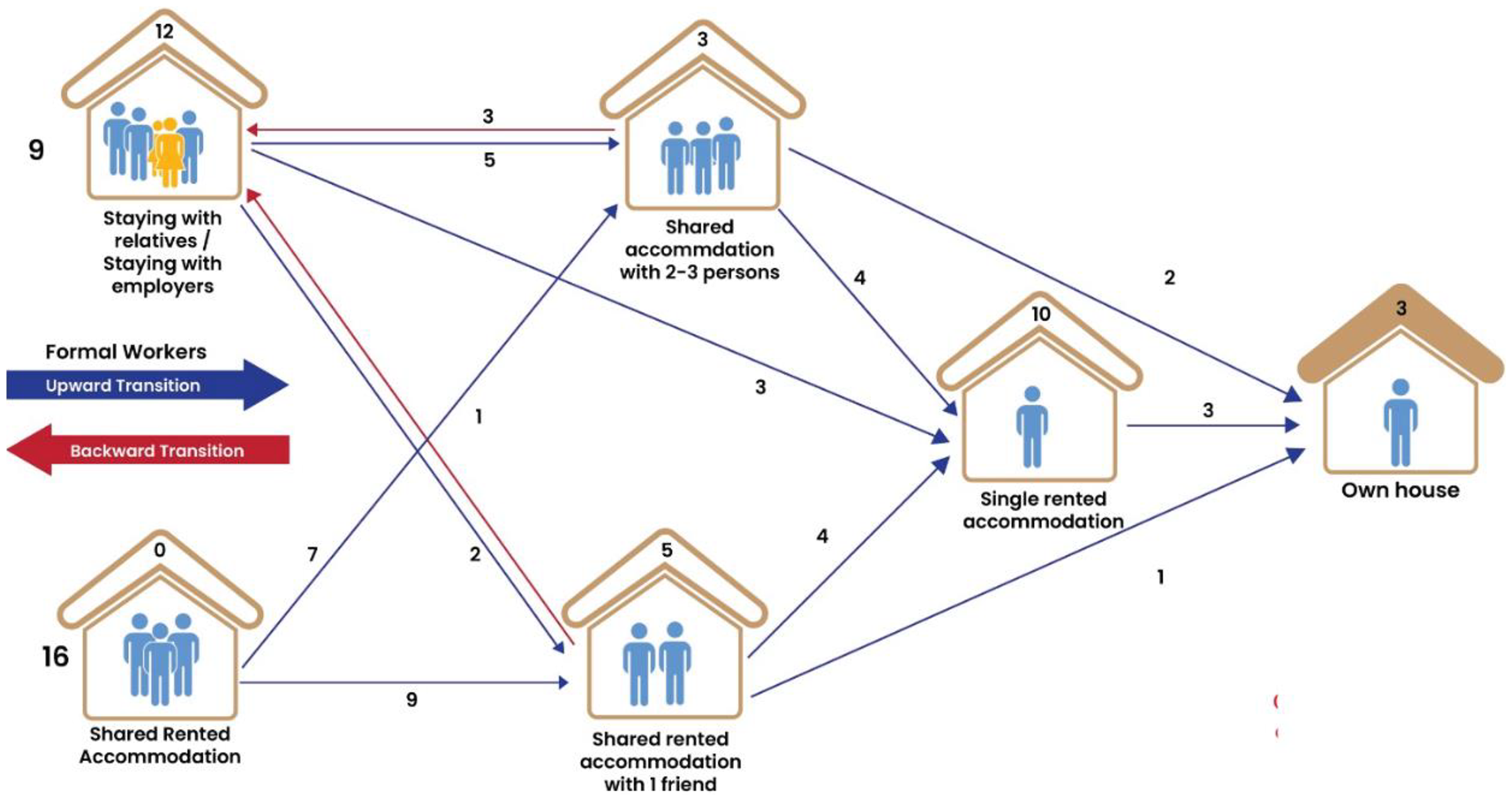
Housing Paths of Formal Workers. Source: Authors’ illustration based on field survey (2023).
Figure 1 illustrates the typical housing pathway of students and apprentices. This pathway is defined by initial reliance on social networks (staying with relatives or in hostels), transitioning to individual or shared renting as they grow or gain financial independence post-training. The red-colored arrows indicate regression (moving back in with relatives, mostly to save cost or be with the family). The numbers on the arrows indicate how many students/apprentices moved to the housing type the arrow points. Upon arrival, four of them stayed with relatives, and five lived in shared rented housing with colleagues. During the survey, three were living alone, four were in shared rented housing (with one or two others), and two still lived with relatives. The amount of time spent in the houses of relatives or shared accommodation varied among apprentices and students. The housing experiences of students varied depending on their educational level upon arrival. For example, high school students often live with their relatives or in boarding/hostels in their schools, while tertiary students stay with their relatives or rent shared rooms in their schools. On average, migrants who arrived as tertiary students took about four years, while apprentices took three years to move from staying with their relatives or shared accommodation to renting their own accommodation.
Figure 2 typifies the housing pathways of the informal sector workers. Informal sector workers (mechanics, retailers of various goods and drivers) arrive in Kumasi to learn a trade (mechanic or driving through conducting), for educational purposes, as shop attendants or house helps. Their initial housing arrangements often involve staying with relatives/employers or shared rented accommodation. The average duration of living with relatives or employers is about five years. Following this period, a typical transition for males is to move into a single-room self-contained unit. This offers more independence. Major life events, including the arrival of relatives or marriage, trigger transitions to larger spaces like chamber and halls or flats. As indicated earlier, the numbers on the arrows indicate how many of the informal sector workers moved to the housing type the arrow points. It emerged that twenty-eight and fifteen of them stayed with relatives and colleagues in a rented house, respectively. At the time of the survey, fifteen were living with another colleague, twelve remained with family or relatives, six were sharing with two colleagues, and six had moved into own homes.
Figure 3 shows that twenty-five migrants identified in the survey worked in the government sector. Nine of them have ever stayed with their relatives in the city at some point. Out of these nine, five moved into shared accommodation with their colleagues while in school. The remaining rented individually. The sixteen who have not stayed with the family shared accommodation with compatriots or friends in school and later transitioned as their income levels improved. The housing tenure of the migrant is determined by the motive behind the first arrival. Those who arrived as students mirrored the pathway in Figure 1. Those who arrived as employed workers mostly bypass the familial stage and rented individually. Their transition shows a relatively faster assimilation into the rental housing market and an obvious potential pathway towards homeownership.
The migrants exhibited a mobile housing trajectory. They changed their housing multiple times, a phenomenon which in some cases followed an upward improvement. Before arrival, arrangements for accommodation were made with existing relations in Kumasi. These existing contacts either accommodated them for sometime or arranged for shared rental housing with two or more roommates, most of whom were from the Nkoranza social network 3 . These arrangements were made for job seekers and apprentices/and students. Over time, the housing options available to the migrants broaden to include renting (single room or flat) on an individual and/or couple basis or moving up the ladder to home ownership. The housing types and tenure arrangements recorded at the time of the interviews are summarised in Tables 2 and 3.
Type of Dwelling Unit.
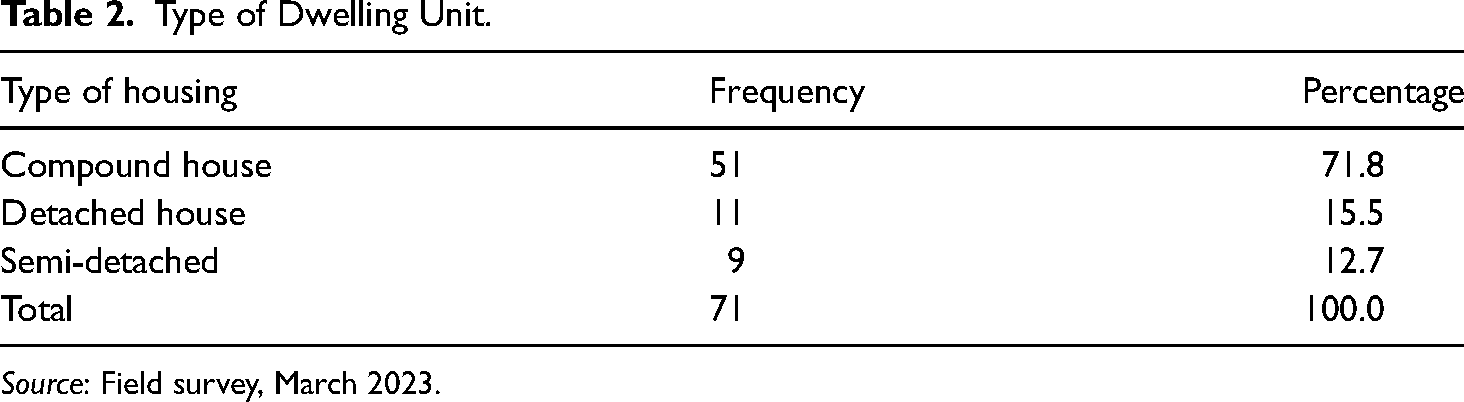
Source: Field survey, March 2023.
Tenure Arrangement.
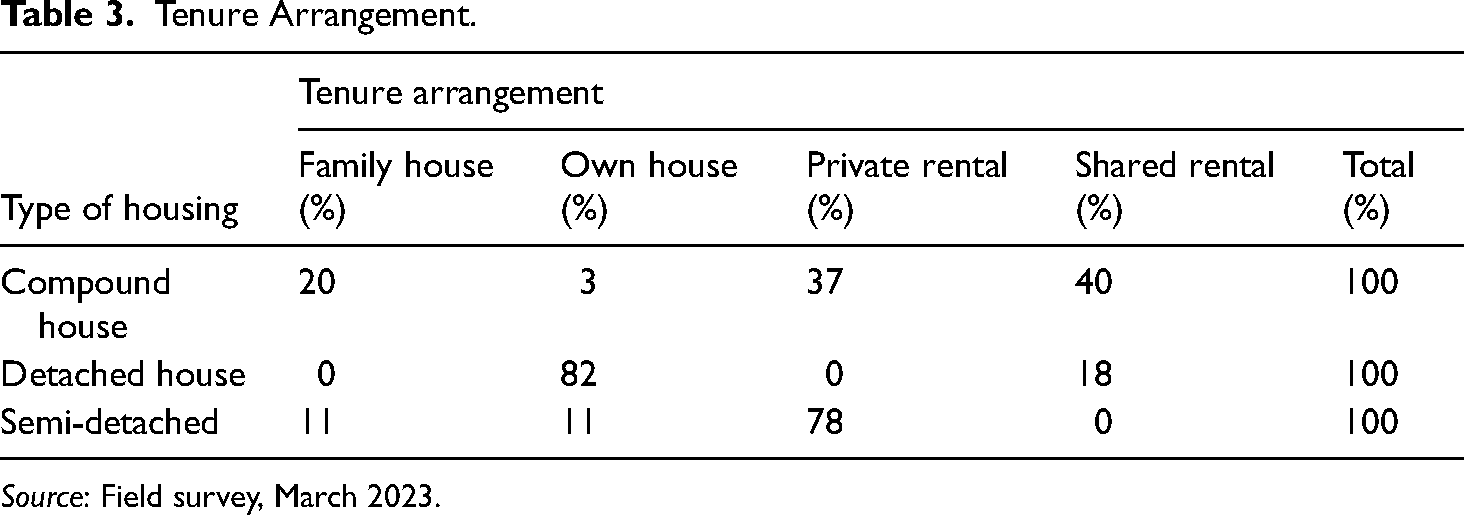
Source: Field survey, March 2023.
The housing experiences and transitions differed among the migrants depending on the marital status, economic status, age and number of years in Kumasi. Established migrants, especially those who had families, leased plots of land and built houses in the peri-urban areas of the city. An interview with Akosua (thirty-seven years), a drinking-spot-owner from Dotobaa who has lived in Kumasi for over a decade, is a classic example of a housing transition that follows a multi-stage pattern: …I stayed in my Aunt's house (compound) when I first arrived in Kumasi in 2007 as a bar attendant. I shared a room with three other cousins…. My sister later joined, and she and I rented a single room after a year … you see, I was then a big girl and needed privacy … and my boyfriend assisted me in renting my own space. A year later, we got married and I moved into my husband's detached house…. (A. Amponsah, personal communication, 2 March 2023) I arrived in Kumasi for university education in 2006 with just a bag. Initially, I was financially constrained … so an Aunt took me in. I shared a small room with three of her children. We competed over the available washroom every morning, but the presence of family members and the enjoyment of food like what I ate at the village made up for the lack of privacy. I felt the shared room was crowded. In addition, the obstinate activity in my Aunt's house began to affect my focus on both taught courses and project work in my final year. I then embarked on my next housing transition. I moved in with a coursemate in a hostel on campus. After school, I landed a job, and that improved my financial situation. My friend and I then pooled resources to rent a three-bedroom apartment. We shared a living room and kitchen as well as cooking responsibilities. Three years later, I needed privacy to accommodate my fiancé. I rented a two-bedroom flat. After our second child, I moved into a rented three-bedroom flat. My siblings and I have managed to improve our family house at Ayerede, and I have acquired a land here in Kumasi. (I. Mensah, personal communication, 28 February 2023)
How Translocal Migrants Obtain and Finance Their Housing
Our respondents received housing information from established migrants. WhatsApp platforms were frequently used to exchange housing-related information. The shared information covered both physical and intangible aspects of housing. This includes neighbourhood specifics like ease of access to essential services, safety, and the sociocultural fabric. This knowledge enabled migrants to make informed housing decisions. The housing information also aids migrants to acclimatise to the new urban environments easily. All the respondents agreed that housing accessed via translocal networks was safe. The information sharing among translocal networks demonstrated the ingenuity of migrants in addressing housing concerns in urban areas.
The study also revealed that the contacts negotiated with landlords on behalf of the migrants to secure affordable and satisfactory housing. The contacts used their social capital in the city to connect with landlords. The trust and familiarity among the contacts and their social capital allowed for negotiations beyond transactional arrangements. This approach resulted in not only affordable housing but also lease flexibility, better housing conditions, and preferential treatment from landlords. The migrants noted that landlords associated with translocal networks were more receptive to their needs and circumstances. The social bonds were recognised as a form of assurance. This approach not only helped migrants overcome housing challenges but also fostered a sense of community support.
Remittances and pre-migration savings were reported as lifelines for the migrants, especially those who had weak social networks in the city. In what follows is an extract from the narration of Mary, a forty-four-year-old hairdresser, on how she funded her initial accommodation through savings and remittances. Before migrating to Kumasi, I worked as a hairdresser in Dotobaa. As you may know, hairdressing business in the village is occasional, which prompted me to relocate to Kumasi for better opportunities. I was aware that the cost of renting a room and a shop in Kumasi would be higher than in the village, so I decided to save money towards this goal. Over a period of two years, I participated in a rotational savings group and managed to save GH₵7200 ($5143) by 2010. We each contributed GH₵200 ($143) per month. Each month, a member received the total amount collected. The social nature of the group ensured accountability, which allowed me to secure a lump sum to finance my move. I was able to rent a room for GH₵350 ($250) and a shop for GH₵1000 ($714) for two and three years, respectively. My journey to Kumasi was one of my plans to improve my family's financial state. After settling in, I continued to save money and this time, something significant. Additionally, I financed my brother's agricultural activities, which allowed him to expand his production levels. In 2016, I managed to acquire a plot of land in Kumasi and started developing it the following year. However, I ran out of funds in 2020 due to a poor market caused by the COVID-19 pandemic. In 2021, my brother sent enough money for me to complete the project. Although I am yet to fully furnish the house, I have moved in. The house we are sitting in now is the one I managed to build through my savings and my brother's support. (M. Owusu, personal communication, 2 March 2023)
Housing Access Strategies among Translocal Migrants.
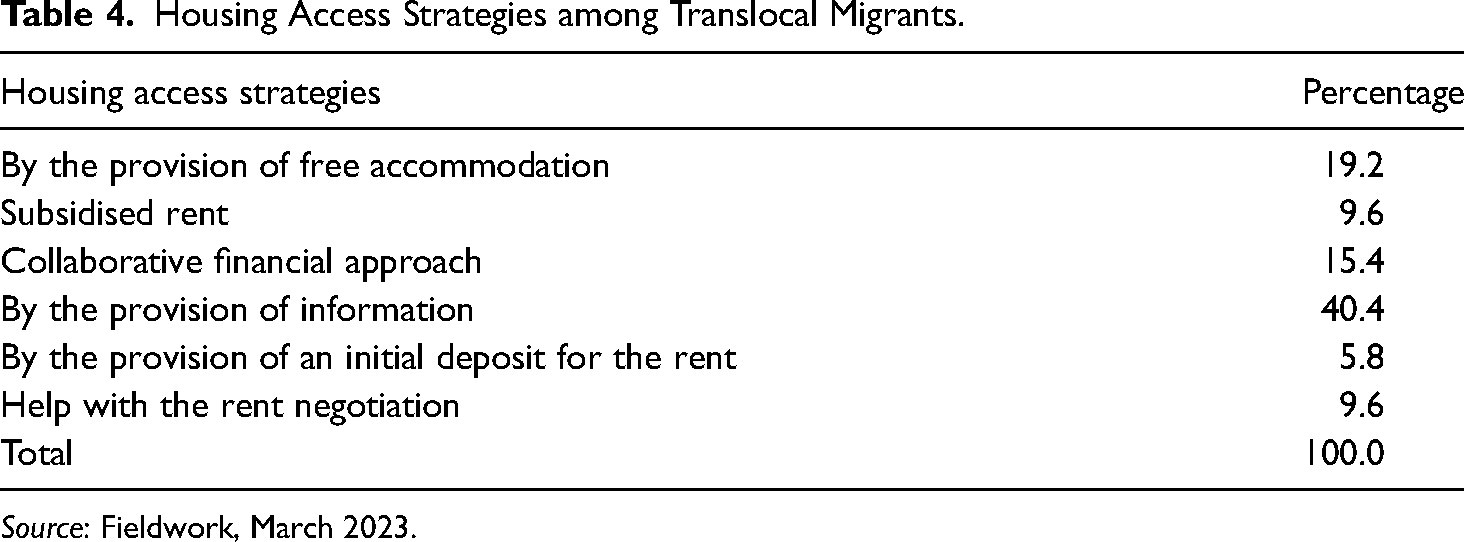
Source: Fieldwork, March 2023.
The above narration highlights the reduction of individual rent burdens and promotes a sense of belonging and community, especially for migrants new to the city. Additionally, the respondents organised themselves into associations. In these associations, the migrants formed savings/welfare groups that allow members to contribute to a shared fund. Members can then use this fund to get loans for a range of requirements, including housing. The groups’ collective nature reduces individual borrowing-associated risk and fosters solidarity and a sense of belonging. This system depends on the social networks and trust that exist within the migrant network. Other respondents resorted to borrowing from family, friends, or money lenders within their communities. While this helped met immediate needs, it comes with significant risks. Informal lenders were reported to often charge exorbitant interest rates, potentially ensnaring migrants in a cycle of debt.
Socio-Cultural Support Systems
The participants relied on a number of social networks to address their housing needs. Translocal social units (relatives and friends from their place of origin) were the major support system the participants employed to find housing in Kumasi. For instance, the Dotobaa association was an ethnic association that provided a sense of belonging and community. Its membership was based on a shared place of origin (being from Dotobaa) and the willingness to contribute to welfare funds. This membership offered access to a strong support system. The association offered, among other things, temporary housing to their compatriots and information about housing. They also assisted with negotiations with landlords for their compatriots. The translocal association connected the participants with landlords who preferred renting to their translocal members. Table 3 summarises the form of housing support migrants received from their ethnic association.
Beyond ethnic relations, the respondents also sourced support from school friends and religious institutions. Like translocal networks, the bridging social capital provided temporary or initial housing, financial assistance, housing information and guidance securing a permanent housing or joining forces to rent a shared accommodation. Employers of home workers provided accommodation for them. For two participants who were live-in domestic workers, their employers provided accommodation within the house. The enduring cultural practice shaping housing decisions was the inclination for staying with compatriots, which offered a familiar support network and a sense of belonging in the initial stages of urban life. The cultural obligation to accommodate relatives or support social units back home was both a compelling driver and limiter of housing transitions in Kumasi.
Discussing the Translocal Logic of Migrants’ Housing Pathways
The paper sought to examine the housing transitions of Nkoranza migrants in Kumasi through a translocal lens. It emerged that the migrants opted for staying with relatives, either shared or unshared rental apartments/flats, single rooms, self-contained (with washrooms and kitchen) or single rooms (without washrooms and kitchen) and own housing. Also, participants who were home workers were housed by their employers. These housing options were obtained in the informal housing market. Agyemang and Morrison (2018) and Boamah (2014) have attributed the reliance on the informal housing market to inadequate formal and affordable housing initiatives in Ghana. Accordingly, staying with relatives or in shared rented housing were the initial options (see Figures 1 to 3). Over time, many transitioned into a more comfortable housing option or tenure arrangement following improvements in income levels and household structure. However, the transition was not smooth for everyone. As shown in Figures 1 to 3, some participants regressed to their previous housing arrangement due to financial hardship.
The study further finds that changes in the structure of the household of a migrant influence their housing transition. In other words, when a younger brother/sister joins or when the migrant gets married, he or she tends to move to a more spacious housing. Marriage is a sign of beginning a new family, and childbirth mirrors the family's growth. The growth of the family can result in limited living space or dissatisfaction with the housing, necessitating housing adjustments and/or transition (Adu-Gyamfi, 2018; Adu-Gyamfi et al., 2020; Gambaro et al., 2017). Particularly, the desire for larger spaces to accommodate growing families is a universal phenomenon. The situation in Ghana, however, presents a unique challenge. Unlike developed countries, where public or subsidised housing plays a role (see Gomez, 2018; Ronald, 2013), in Ghana, individuals often bear the sole responsibility for acquiring and maintaining their homes (Asibey et at., 2025). While the advantages of spacious accommodations are undeniable, the cost can be a significant obstacle, potentially delaying housing transitions. The transition from staying with relatives or shared housing to rented housing towards home ownership was attributed to the observation of a house as a foundation or form of capital that creates a social safety net. As noted by Adu-Gyamfi (2018), in Ghana, transitioning into one's own house or rented flat has a positive impact on the behaviour of their children as it prevents influence and confrontations with other households.
Although the option to stay with relatives, shared rental housing, or non-shared housing served as a cost-saving measure, the lack of privacy led many of the respondents, such as Isaac, to transition to private housing options. In such pathways, the respondents compromised by making adequate savings toward the acquisition of private rented accommodation or housing development in their home villages. These complexities resonate with earlier works (Etzold, 2017; Lohnert and Steinbrink, 2005; Steinbrink, 2009, 2010; Steinbrink and Niedenführ, 2020) that balancing the need to support family back home with saving for their own housing needs creates a constant financial burden on translocal migrants. Nonetheless, the importance the participants attached to housing investment in their villages was considered worthy of their compromises.
As indicated earlier, the migrants obtained housing in the informal housing market. In the current study, the relatives and friends of new migrants engaged in house search, matching, listing, and occasionally negotiated for accommodation. Within these networks, established migrants provided initial housing deposits to 5.8 per cent, subsidised housing to 15.4 per cent, and free housing to 19.2 per cent of their fellow migrants, respectively. This practice was described as more trustworthy and reliable than the informal or formal private sector. It mitigated the risks of exploitative landlords and agents described by Akaabre et al. (2018) and Obeng-Odoom (2016a) and Asante et al. (2022), who required an upfront payment of the equivalent of about 10 US dollars to see a property, often with questionable quality. Translocal networks presented a free, transparent and more reliable approach to acquiring housing, suggesting that translocal networks serve as alternative economic capital. The pooling of resources via savings or welfare groups created collective economic capital upon which members drew financial support, effectively serving as a community-based insurance or mortgage. This finding corroborates but expands scholarly opinion (Etzold, 2016) that beyond being safety nets, these networks are structured and active institutions that promote settlement in host cities on their own conditions.
The study also shows that the participants pooled resources together to finance their housing. The shared housing was in various forms, from friends renting a flat or apartment together to individuals cohabiting with colleagues from school or work. The participants not only shared housing with their compatriots or friends, but they also shared cooking and other household responsibilities. This arrangement reduced the financial burden of the participants. This validates literature (Nasreen, 2023; Wang and Otsuki, 2016), that shared housing emerged as a result of the demand for reasonably priced housing because it allows tenants to split utility and rent costs. For new migrants, shared housing fostered a feeling of belonging and community (Tong et al., 2020). Bricocoli and Sabatinelli (2016) add that shared living has become increasingly common since the 2008 Global Financial Crisis. However, shared housing can undermine the feeling of home as a basis for ontological security (Hartmann, 2014), especially in crowded or volatile environments. Isaac's initial experience embodies what Obeng-Odoom (2013: 112) describes as perching. However, Obeng-Odoom (2013) used the term to describe how students squat with their colleagues in university halls, leading to overcrowding. Such widespread early-stage housing arrangement indicates the shortage of state-run housing and the ensuing opportunities for private investment. As noted by Yeboah (2015), this dynamic led to a rapid expansion of private student housing near the Kwame Nkrumah University of Science and Technology, Kumasi, Ghana.
The results further show that the participants were torn between investing in housing in Kumasi and their home villages, given the obligation to remit for housing improvement in the villages. The regular travels and remittances to the social units back home are not peripheral events. Translocal practices thus emerge as key housing (im)mobility determinants in Kumasi. This echoes broader patterns across cities in Africa, where the informal housing market sharply differs from the Global North context that conventional housing pathway theories/models typically assume. A prolonged housing pathway that seems stalled in a leased compound house in Kumasi can be termed as a rational and viable strategy when perceived through the lens of translocality. This finding necessitates a reconceiving of a successful housing career or pathway. We redefine “success” as the migrant's ability to sustain a stable foothold in host societies while concurrently investing and fulfilling obligations back home. The latter holds stronger symbolic weight for validating social status than homeownership in Kumasi. We term this dynamic “translocal housing fixity” or “strategic immobility.” This finding transcends conventional migrant housing models that presume a progressive housing path towards homeownership and urban integration (Balampanidis, 2020; Murdie, 2003; Teixeira and Drolet, 2018). As we observed earlier, translocal migrants’ housing paths are intentionally negotiated trade-offs between the realities of an informal housing market and the cultural and socio-economic obligation to maintain bi/multi-local livelihood (Blija et al., 2026).
Furthermore, remittance must be discussed as a two-edged sword. While it is a prestige source for migrants and a support for rural households (Andra and Larionescu, 2012; Chen, 2020; Kabki et al., 2004), it also represents an important outflow that constrains capital accumulation for other investments in the city (Steinbrink, 2009; Steinbrink and Niedenführ, 2020). This produces a situation where the act of translocal householding reinforces long stays, slow and often non-linear transitions, illustrated in Figures 1 to 3 in the informal rental housing market of the destination city. Moreover, the place of ethnic associations and social networks echoed earlier findings on social capital ( Poku-Boansi et al., 2024), but they differed in their motive. It is not just about absorption into Kumasi, but also about promoting a lifestyle that meaningfully stretches across two locales.
Conclusion
The article examined the housing options, pathways, financing mechanisms and socio-cultural support systems that shape the housing experiences of translocal migrants in Kumasi. Staying with relatives, shared rented places, and home ownership were the available housing arrangements. These are acquired and financed through translocal networks that offer collective monetary capital, information and negotiation power. Ethnic association emerged as the main socio-cultural support. Our major contribution is the concept of “translocal housing fixity” or “strategic immobility.” The choice of rental options in Kumasi's informal housing market cannot be viewed as an indication of stagnation, but rather a conscious and strategic choice. This urban immobility emerged as a deliberate ploy that helps migrants to perform socio-economic duties back home and sustain multi-local livelihoods, indicating that the housing decisions of this migrant group are inherently connected to a wider translocal existence. We, therefore, argue for a recognition of strategic immobility in housing discourse and posit translocal livelihood as an essential framework for comprehending migrants’ housing decisions.
An important practice (shared financial system) was noted within the migrant networks. They allocated resources across different locales, where urban housing investment was often overshadowed by competing investments at the places of origin. This implies that migrant housing discourse must look beyond the city core. For translocal migrants, the ebbs and flows of life, capital and what is termed as progressive pathway are influenced greatly by the pull of home as by the host city's market. In this regard, we contend that planning and supply of housing, especially in Ghana and similar contexts, should not ignore translocal householding. Recognising, engaging and collaborating with migrant or ethnic associations as partners in city development can be an entry point.
Footnotes
Acknowledgements
This research received funding support from the West African Science Service Centre on Climate Change and Adapted Land Use (WASCAL) on the Migration and Translocality in West Africa (MiTRA-WA) Project, funded by the German Federal Ministry of Education and Research (BMBF Grant 01LG2079A).
Declaration of Conflicting Interests
The authors declared no potential conflicts of interest with respect to the research, authorship, and/or publication of this article.
Funding
The authors disclosed receipt of the following financial support for the research, authorship, and/or publication of this article: This work was supported by the German Federal Ministry of Education and Research (Bundesministerium für Bildung und Forschung) (grant number 01LG2079A).
