






Abstract
This article examines a variety of experiences that trafficked illegal migrants, who had returned to Bangladesh after working in another country, encounter. Using survey research, we document considerable variation across countries of destination in the cost of migration, the amount of bribes paid to facilitators, and the reasons for returning home. Such variation was related to migrants’ assets, age, gender, and education, as well as the nature of the migration contract. A majority of the respondents discovered that their travel documents were fraudulent; three-quarters reported a variety of adverse working conditions in the destination country; and almost all the female migrants had experienced sexual harassment or assault. We believe that carefully conducted survey research such as ours can provide insights into the mechanisms of human trafficking, the risks involved in migration, and reasons that migrants are willing to take such risks.
Most studies of human trafficking explore activities, routes, and trends over time, but few have been based on sizable surveys of the individuals involved in migration and trafficking. This article is based on a survey of migrants who returned to Bangladesh after working outside the country. We considered only those migrants who travelled with legal documents but, when they reached the host country, came to realize that the documents were fraudulent; those migrants who returned due to a violation of their contract with the employer in the host country; or those who mentioned that they had returned voluntarily due to sexual harassment, long working hours without overtime payment, no holidays, low or no payment, payment of a salary that was well below the contracted amount, and a salary that was not paid by the employer for at least six months. Bangladesh is one of the poorest countries in the world, with half the population living on less than US$1.20 a day and almost one-third living below the poverty line. In 2012 about 40 percent of the population was underemployed (Central Intelligence Agency 2012). The lack of employment options, widespread poverty, and a lack of human rights protections push many Bangladeshis to leave the country in search of jobs elsewhere. Between 1976 and 2010, 6.7 million individuals migrated abroad with temporary work permits, to the Middle East, Asia, Africa, and Europe. 1 This is about 13 percent of the country’s entire labor force. While it is difficult to find reliable data, illegal outflows appear to be sizable. According to Wong (2005), the total number of illegal migrants is equal to, if not higher than, the number of legal labor migrants. Among the illegal migrant population, there appears to be a great deal of trafficking (Friebel and Guriev 2006).
Most labor migration from Bangladesh is arranged through the medium of brokers or recruiters, reflecting the insufficiency in legal channels of migration. Most prospective low-skilled migrants hail from villages. Since recruiting agencies are based in the major cities, urban recruiting agents rely heavily on a group of middlemen who are believed to facilitate most illegal migration and human trafficking. They are known locally as dalal (broker) or adam babshahi or adam beapari (human trader). Recruiting agencies only manage the visas and work permits for the prospective migrants, with the middlemen doing the rest. Middlemen are sub-agents [who] assist prospective migrants with a wide range of activities such as paperwork, passports, bank accounts, medical checkups, and transportation to the airport. In addition to facilitating the actual migration process, they sometimes vouch to the traditional moneylenders that their potential clients have already secured jobs in the Gulf and therefore are eligible for credit. They can even act as guarantor for some potential migrants who otherwise could not secure loans for migration, expanding the role of sub-agents beyond the simple matching task. (Rahman 2012, 222)
Other types of migration, or human trafficking, are facilitated by the migrant broker, who makes arrangements for a photocopy of the prospective migrant’s passport, a photograph of the migrant for the passport, and other relevant documents to pass to the potential employer for a work permit visa. Once the work permit is procured, the migrant broker sends the visa to his representative in Bangladesh who generally performs all services—collecting payment from the migrant and overseeing necessary procedures, such as medical check-ups and clearances by the Bureau of Manpower, Employment, and Training (BMET) on behalf of the migrant broker. For one legal work permit visa obtained through these formal channels, the local representative often collects advance fees from numerous prospective migrants and puts them in a queue. Some trafficked individuals pay bribes to the human traffickers to expedite the process by moving up in the queue.
Literature Review
Despite its significance, there is relatively little empirical research on human trafficking. This is generally attributed to the limited amount of quality data on the topic (Zhang 2012). Nevertheless, reports by international agencies provide some background information and statistics. For example, the United Nations’ Office on Drugs and Crime’s (UNODC) report, Trafficking in Persons: Global Patterns, is an often-cited source on human trafficking (UNODC 2006). This report categorized countries according to trafficking flows, both inflows and outflows, on a six-point scale. Bangladesh was characterized as having a high rate of trafficking outflow and a low rate of inflow.
Data from the UNODC (2006) report are the basis of some empirical studies. For instance, Cho (2012) examined variations in the incidence and intensity of human trafficking across countries using a combination of data from the UNODC report (161 countries, 1996–2003), the U.S. Department of State (190 countries, 2001–2010), and the International Labour Organization (74 countries, 1995–2000). Cho found that only six of the possible seventy push factors examined were statistically significant predictors of human trafficking across the three datasets, but when the analysis was confined to the UNODC figures, a greater number of variables were statistically significant. This may suggest that country-level data from different datasets are not fully comparable. But even a single cross-national dataset can be problematic if key definitions across nations are not comparable: The UNODC (2006) itself cautions against using its report to draw national or cross-national conclusions about the number of trafficking victims, emphasizing that its figures are confined to reported cases.
Existing national and cross-national studies typically lack socioeconomic, demographic, or experiential data on trafficked persons and traffickers. Such data will generally not be adequately captured in any nationwide survey that asks respondents whether they have personal victimization experiences; an alternative is to ask a household member about the experiences of other household members. This method was used in a household survey conducted in Belarus, Bulgaria, Moldova, Romania, and Ukraine by the International Organization for Migration (IOM 1994). In their analysis of the IOM data, Omar Mahmoud and Trebesch (2010) found surprisingly few respondents who said that a family member had been trafficked. In Moldova, for instance, only 31 migrants out of 1,127 households (with a migrant member) met the criteria of human trafficking. Of the variables analyzed, only the prevalence of migration in the migrant’s region of residence appeared to be important. In other words, human trafficking was a side effect of international labor flows, which the authors attributed to lower recruitment costs in regions of mass migration. Only a few other studies have used such survey data—Bettio and Nandi (2010), Akee et al. (2010), Della Giusta, Tommaso, and Strøm (2008), and Di Tommaso et al. (2009)—all of which focused on women trafficked for sexual exploitation.
Another source, the IOM’s Counter-Trafficking Module database, has two major limitations for econometric analysis: (1) selection of individuals in the sample comes from IOM field missions, producing samples that are not representative of the population of trafficked individuals, and (2) the frequency of missing values is quite high, over half on some questions (Di Tommaso et al. 2009). The selective nature of the data collection is a problem: it contains only individuals who have self-reported victimization or been referred by the police or by NGOs to one of the IOM’s countertrafficking programs. Nevertheless, these studies demonstrate that some individual-level data can be collected for analysis and tentative conclusions can be made regarding human trafficking.
The Data
The data used in this article comprise trafficked individuals identified in three field surveys—conducted from April 2009 to November 2010—of illegal Bangladeshi migrants who had returned to Bangladesh. The sampling frame was based on information on returned illegal migrants from the Immigration Authority at Hazrat Shahjalal International Airport, Dhaka. Most of the returned illegal migrants were originally from Sylhet, Dhaka, Noakhali, Comilla, and Chittagong. To be cost-effective, we targeted returning migrants from only Dhaka and Sylhet for interviews, and we targeted only migrants who supplied their mobile phone number at the time of their return. Based on these phone numbers, male migrants were contacted directly, and approaches were made to the parents/guardians of female migrants. Being contacted in this way built trust between the migrants and the interviewer, and, because of this trust, the migrants often introduced the interviewer to other returned migrants. When the initial contacts provided names and addresses of other returnees, the names of the latter were checked against information from the Airport Immigration Authority to ensure that they were indeed returnees. A total of 638 individuals were contacted, 518 of whom agreed to participate in an interview; and usable information was obtained from 476 respondents. We believe that our sample broadly represents the main characteristics of returned illegal migrants in Dhaka and Sylhet. 2
The questionnaire was administered in Bangla during face-to-face interviews with either the migrant or, in case of females, the household head, giving appropriate assurances of individual anonymity and confidentiality. 3 Information was obtained concerning the individual’s demographic and socioeconomic status and migration experiences—including education, marital status, gender, household size, cost of migration, financing of the trip, occupation abroad, reasons for returning, and the value of their assets. Information on the payments made to traffickers, processes in which travel documents were obtained, and whether the contract with the trafficker was a shared or a fixed contract, was also collected. A shared contract is a debt contract, where poor migrants with inadequate or no collateral agree to work for the trafficker in the destination country until all the costs of migration are paid (Friebel and Guriev 2006). In the case of a fixed contract, migrants generally pay a lower amount, but the full payment must be made upfront.
While the initial sample included all types of returned illegal migrants, the analyses in this article are restricted to trafficked individuals, as defined by the UN’s Palermo Protocols of 2000. 4 A total of 386 migrants in our sample qualified as “trafficked” because they reported one or more of the following experiences: (1) they believed that they were going abroad with legal documents, but when they reached the host country discovered that the documents were fraudulent; (2) the employer in the host country violated their work contract; or (3) they were subjected to one or more of the following: low or no payment of wages, wages below the contracted amount or unpaid for at least six months, long working hours without overtime pay, no holidays, or sexual harassment or assault. We used the term jouno nipiron in the questionnaire as a proxy measure of sexual harassment, which covers a range of unwanted sexual activities such as rape; being sold to a brothel; or being sexually harassed by a broker, employer, or a member of the employer’s family.
Variables and Models
All prospective migrants pay an up-front fee to a broker or trafficker. 5 Shared contracts or migration-debt contracts—which involve a partial down payment that is made prior to migration, with further payments after arrival in the destination country—may also be used, especially for transporting migrants with little disposable cash. After a down payment is made, the migrant is placed in a queue for passage to the destination country.
To expedite the process of departure, traffickers often demand additional money beyond the contracted price (i.e., bribes). Prospective migrants in the trafficker’s queue may be willing to pay additional money to hedge against the risk of appropriation of their down payment by the broker. The additional money paid to brokers was explored in a theoretical model by the authors (Joarder and Miller 2013). According to this model, factors that determine the trafficker’s level of effort will eventually determine the level and magnitude of the additional money paid. In the current article we examine the determinants of the probability of paying extra amounts and the amounts paid. This will help us to understand which migrants are especially keen to expedite their departure, and the variations in the trafficker’s level of effort according to the characteristics of the migrants and features of the contract between the trafficker and the illegal migrant. In addition, the events that led the trafficked person to return to Bangladesh are documented by country of destination.
We also investigated the main reasons for making payments to the traffickers beyond the contracted price. These reasons are: to bribe an immigration authority; the ex-ante expectation that they could recoup the additional outlay in a short time after arrival in the destination country; because previous migrants had done so to obtain necessary clearances; to obtain a visa with a job contract; and because the migrant felt that he or she had no alternative but to pay the additional amount, as the down payment had been made 8–12 months earlier. This information is disaggregated by country of destination.
Documentation of the reasons that the trafficked persons returned to Bangladesh and the reasons for the payment of additional monies is based on cross-tabulations, and several conventional econometric models are employed to explore the links between the additional money paid to traffickers, the trafficked persons characteristics, and features of the trafficking process. In particular, binary probit and Tobit models are used. Details about these econometric methods can be found in standard texts (e.g., Greene 1993; Wooldridge 2003). In the estimations, the propensity to make additional payments beyond the contracted price is related to various demographic and human capital characteristics; the destination country; the source of funds to cover the costs of migration; contract type; whether any job was offered by the trafficker before receiving the down payment; the value of the down payment; whether any training was provided by the trafficker; the value of the trafficked person’s household assets and endowments, such as livestock and agricultural crops; and a season dummy. The demographic characteristics of the trafficked migrant are age, gender, marital status, and the level of education. Table 1 lists the definitions of the variables used in the empirical models estimated below.
Variable Definitions
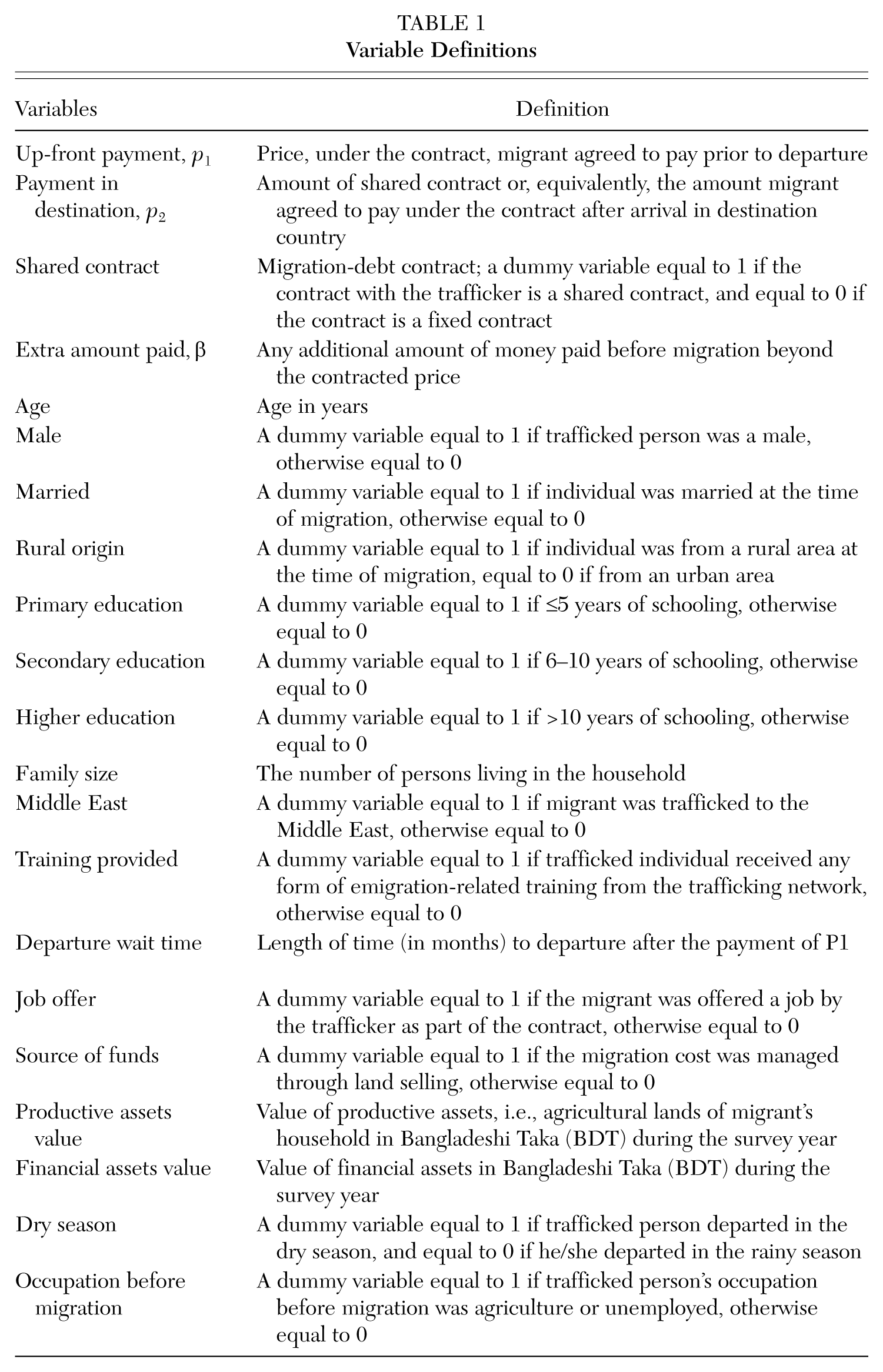
Several types of abuse of labor migrants are included in the current analysis:
–persons who migrated with what they thought were legal documents, but at the destination discovered that the documents were fake;
–persons whose employer engaged in violations—e.g., passport confiscated, salary below contracted amount, a lower-status job than described in the contract, excessive working hours without overtime pay, no holidays, salary not paid for at least six months; and
–persons who experienced sexual harassment, as defined above.
Findings
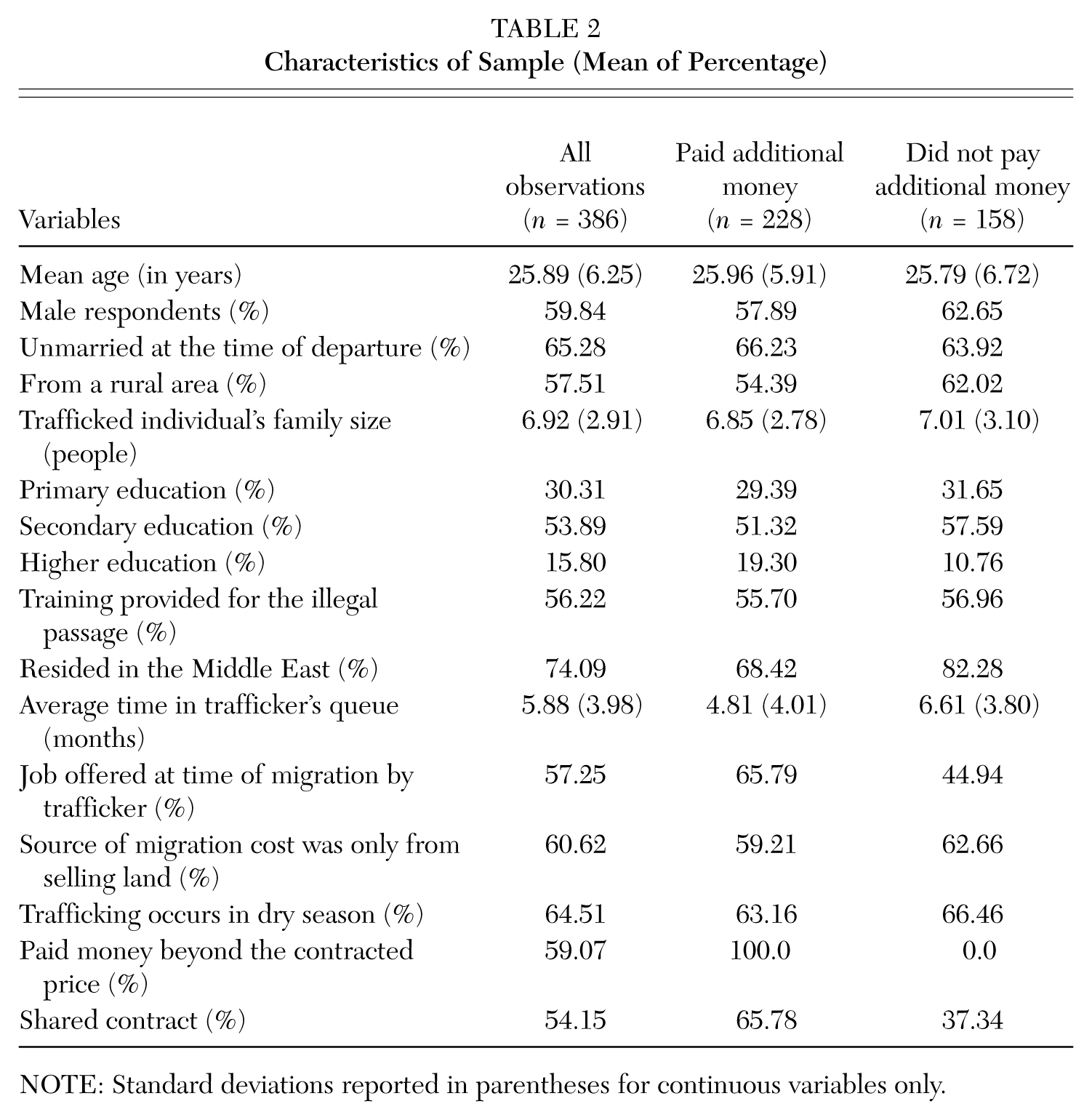
Table 2 contains descriptive statistics on the sample. These data are presented for all trafficked migrants (first column), and separately for the 59 percent of the sample who paid additional money to the traffickers to expedite their passage abroad (second column) and for the remainder who did not make additional payments (third column).
Characteristics of Sample (Mean of Percentage)
NOTE: Standard deviations reported in parentheses for continuous variables only.
The mean age of the trafficked individuals was 26 years, and this is the same for both groups. The samples varied in gender, marital status, rural vs. urban origin, and educational background.
About six in ten were male, which means that our sample was more mixed-gender than that of most other researchers, who focus on females. Two-thirds of the respondents were unmarried at the time of migration, and this percentage does not differ appreciably between the two groups. Fifty-eight percent of the migrants were from rural areas, and the average household size of the trafficked individuals was 6.9 members. The representation for rural migrants was slightly lower in the sample of migrants who paid additional money, and they had a slighter smaller average household size. Regarding skills and education, 30 percent of the trafficked migrants were either illiterate or had completed only primary education (up to fifth grade). A slight majority had some secondary school experience, and 15 percent had more than a secondary education, though most of these had completed only a higher secondary school degree or vocational education. Those who paid and did not pay additional money to the traffickers had similar proportions among the least skilled. However, those who paid additional money were much more likely to have higher education. More than half of the trafficked migrants reported that they received training from the trafficker regarding the route, language, or immigration process, and information about the destination country. The migrants who paid additional money to traffickers were similar to other illegal migrants in this regard. Three-quarters of respondents had been trafficked to Middle Eastern countries. About 17 percent of the total sample (n = 65) traveled to developed countries (primarily the United Kingdom, United States, Italy, France, and Spain). The Middle East was a less frequent destination for migrants who made additional payments to traffickers.
More than 60 percent of the respondents reported that they had funded the migration costs by selling agricultural land; others mentioned loans from relatives; mortgage of houses; savings; remittances; sale of a business, livestock, or agricultural crops; and the use of microcredit from the Grameen Bank. The source of funds to cover the cost of migration did not differ appreciably between migrants who made payments above the contracted price and those who did not.
The trafficked migrants spent an average of 5.9 months waiting to travel to their destination country. As expected, the average queue time was less for migrants who paid additional money to the traffickers: their mean waiting time was 4.8 months, compared to 6.6 months for the migrants who did not make payments beyond the initial contracted price.
An important issue is the cost of migration. To understand more about the nature of trafficking, we asked respondents whether the contract was fixed or shared. Slightly more than half reported that they had a shared contract with their traffickers. In most cases, the trafficker gave them the opportunity to repay the debt through installment payments, but with a higher usury. Migrants who paid additional money to their traffickers were far more likely (66 percent) to have a shared contract than other migrants (37 percent).
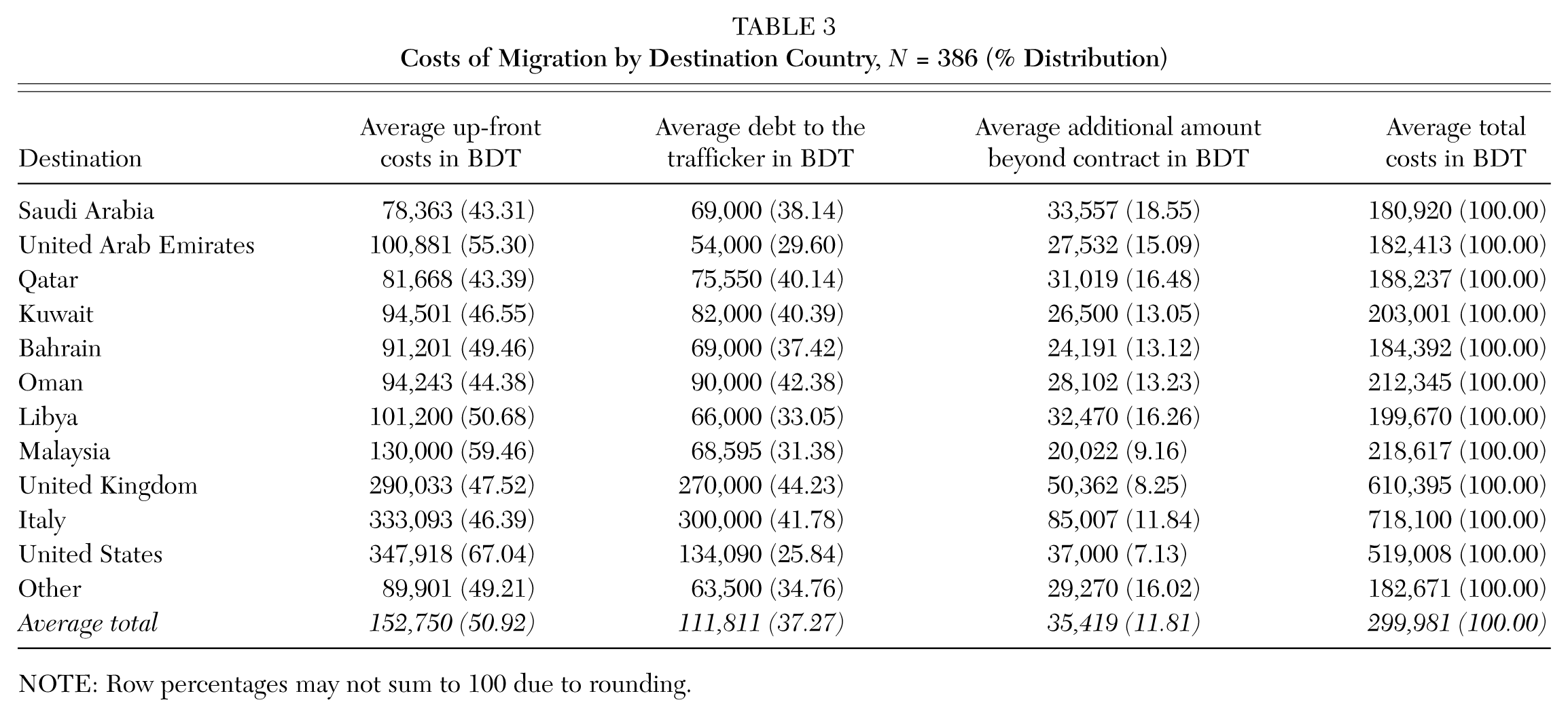
Details on the payments made to facilitators are presented in Table 3. The average total cost for each trafficked migrant was BDT (Bangladeshi Taka) 299,981 (US$3,947). To put this figure in perspective, the per capita GDP in Bangladesh in 2011 was only US$1,700: hence, it is clear that migrants needed considerable financial resources to relocate. Of this amount, BDT 152,750 (or 51 percent) was required to be paid up-front prior to departure. Table 3 shows considerable variation across destination countries in the cost of illegal passage and in the components of the total cost. This is the case even within geographical regions, such as the Middle East.
Costs of Migration by Destination Country, N = 386 (% Distribution)
NOTE: Row percentages may not sum to 100 due to rounding.
There are also differences across destination countries in the reasons that illegal migrants returned home (see Table 4). Multiple reasons for returning were often reported. Among the total sample, violations of working conditions was the most frequent reason for returning to Bangladesh. More than three-quarters of the sample returned because they were required to work excessive hours without appropriate payment for overtime, they were denied holidays, or were inadequately remunerated. Clear regional patterns were found based on reports of trafficking and labor abuses, suggesting significant differences in various legal and political systems with regard to the protection of labor rights and prevention of human trafficking. These violations of working conditions were more prevalent among trafficked migrants who had worked in the Middle East or in Malaysia than elsewhere. For example, fully 86 percent of the trafficked persons who returned from Saudi Arabia reported that they had experienced violations of working conditions, whereas relatively few had experienced this in the United States and the United Kingdom. Problems with salary payment were also an important reason for returning, with 40 percent of the sample indicating that this prompted their return. This reason was again reported more frequently by migrants who had worked in the Middle East and Malaysia than those in developed countries. Close to two-thirds of trafficked migrants indicated that they migrated with what they thought were legal documents, but when they reached the destination the documents were found to be fraudulent.
Reasons for Return, Gender, and Contract Type, by Country of Destination
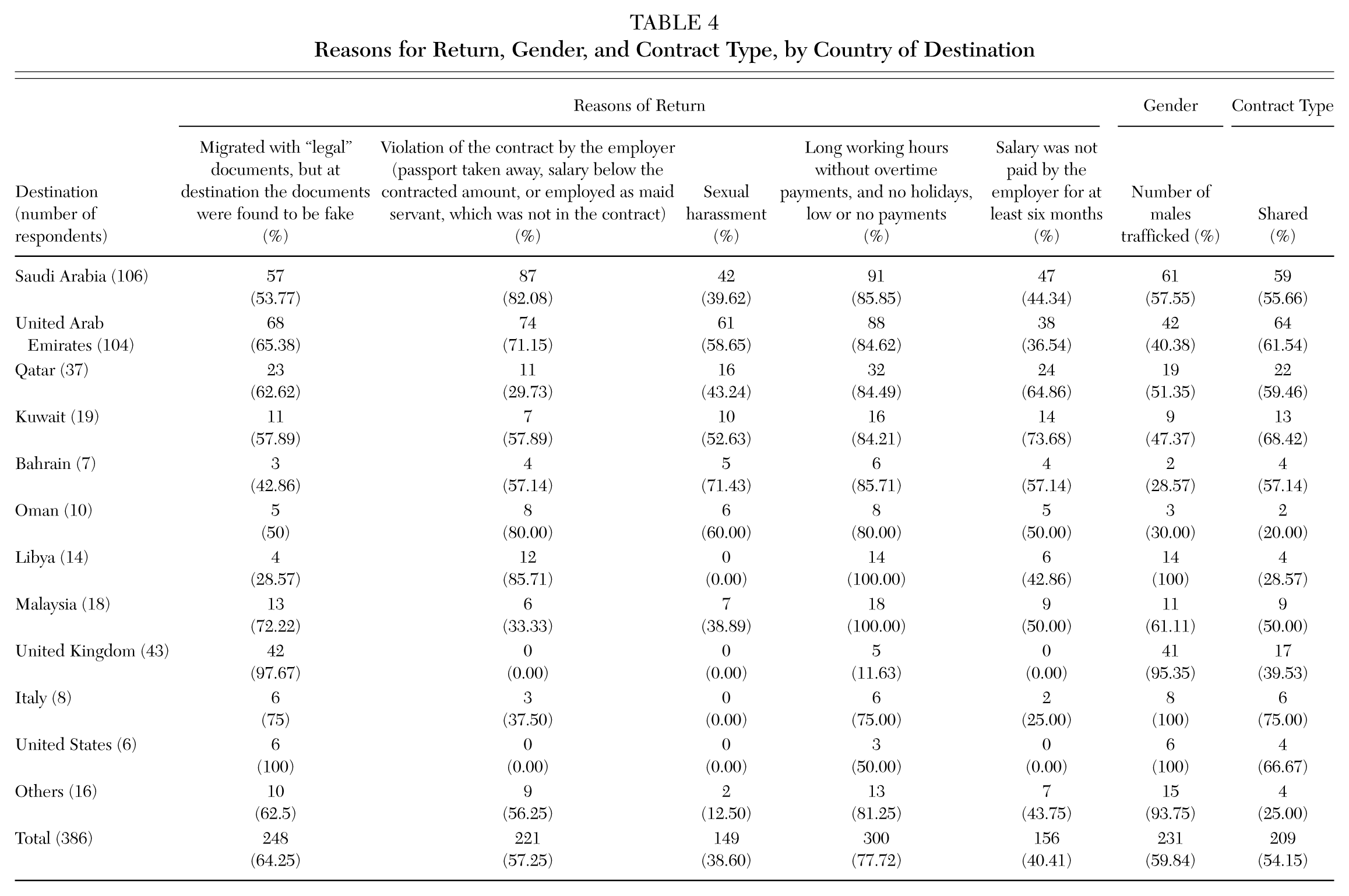
For women, sexual harassment/assault was a major reason for returning to Bangladesh. Fully 96 percent of females reported sexual harassment/assault, whereas no men reported experiencing this. The zero rate of reported sexual harassment for the developed countries is due to the fact that most of these migrants were men.
Issues associated with violations of contracts were most prominent among those who were in Middle Eastern countries. In the Middle East, the employer generally meets the employee at the airport, but many of the migrants in this study were met at the airport by a person who then handed them over to another middleman. Moreover, four-fifths (n = 309) of the trafficked migrants reported that either they had to surrender their passport immediately after arriving in the destination or that their employer later confiscated their passport. While the majority of these individuals (55 percent) had their passport returned prior to their flight home to Bangladesh (this often required a payment to the employee or agent holding the passport), 45 percent (n = 139) reported that their passport was never returned to them: they travelled to Bangladesh using a ticket provided by a relative or arranged through the Bangladesh High Commission.
Table 5 presents information on the reasons for paying money beyond the contracted price to the traffickers, disaggregated by destination country. Multiple reasons for the payment could be provided by respondents and only the most frequent responses are tabulated. Six reasons for such additional payments were measured: (1) to bribe immigration authorities; (2) ex-ante expectations that the money could be recouped within a short time after arrival in the destination country; (3) a perception that the payments were what previous migrants had made; (4) to ensure that the necessary clearances were obtained; (5) to obtain a visa with a job contract; or (6) because the migrant felt that he or she simply had no alternative given the time they had already spent in the trafficker’s queue.
Reasons for Paying Additional Money to Traffickers, by Country of Destination
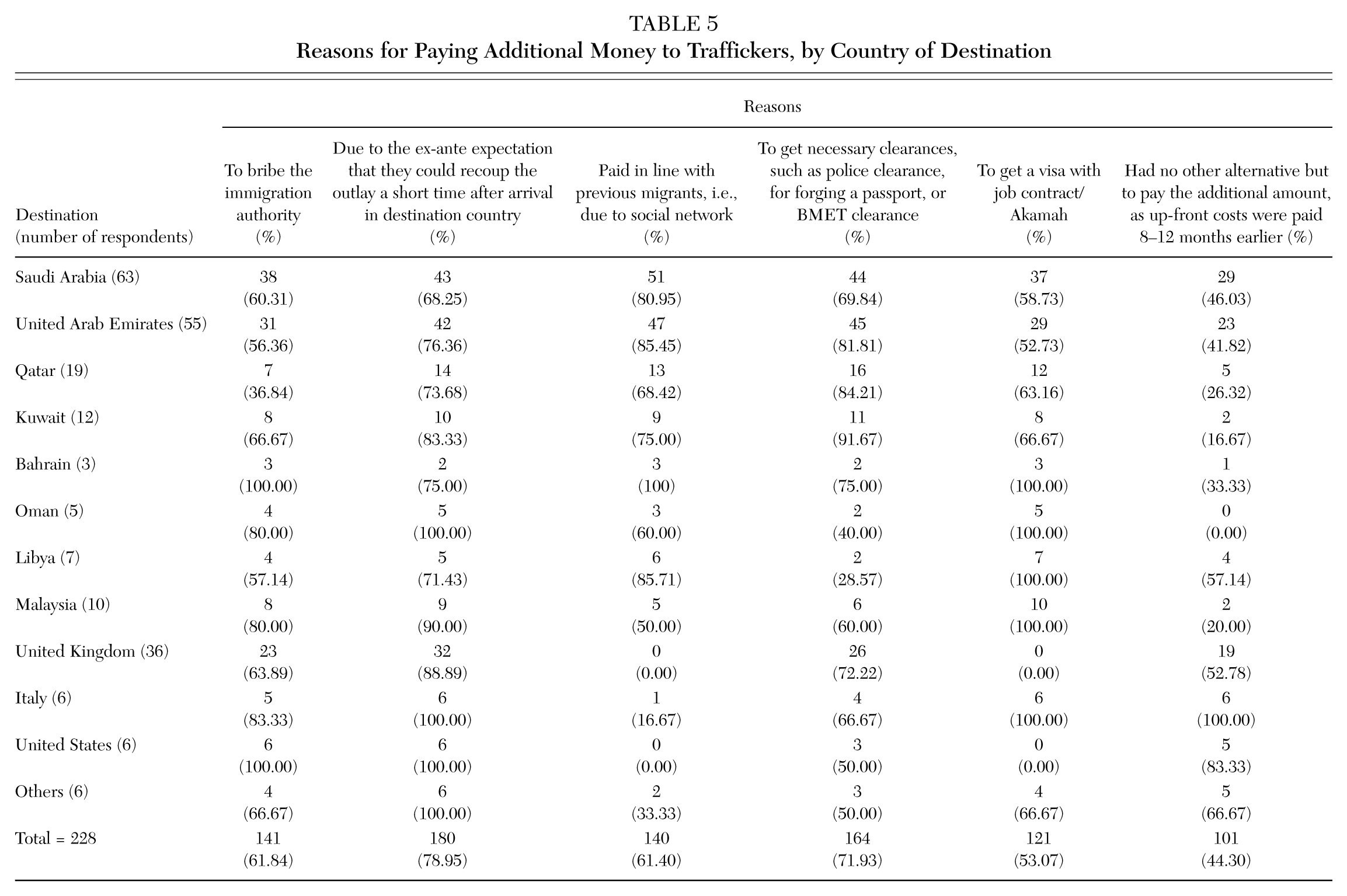
The most frequently cited reason for additional fees was that the payment was made in the expectation that it could be recouped rapidly in the destination country (by 79 percent of the trafficked migrants making such payments). More than 70 percent of the migrants making a payment beyond the contracted price did so to get necessary clearances, while around 60 percent reported that the payment was made to bribe an immigration authority. Slightly less than half of the migrants reported that they had no alternative but to pay additional money owing to the time they had spent in their trafficker’s queue.
The reasons for making additional payments varied across destination countries. The payment being made in anticipation of being able to readily recoup the outlay following arrival in the destination was a more likely reason among migrants who went to developed countries, whereas social network reasons and obtaining necessary clearances were less likely to be reported by these migrants. In comparison, social network reasons and the payment being required to obtain the necessary clearances were more common reasons reported by migrants who had been in many of the Middle East countries.
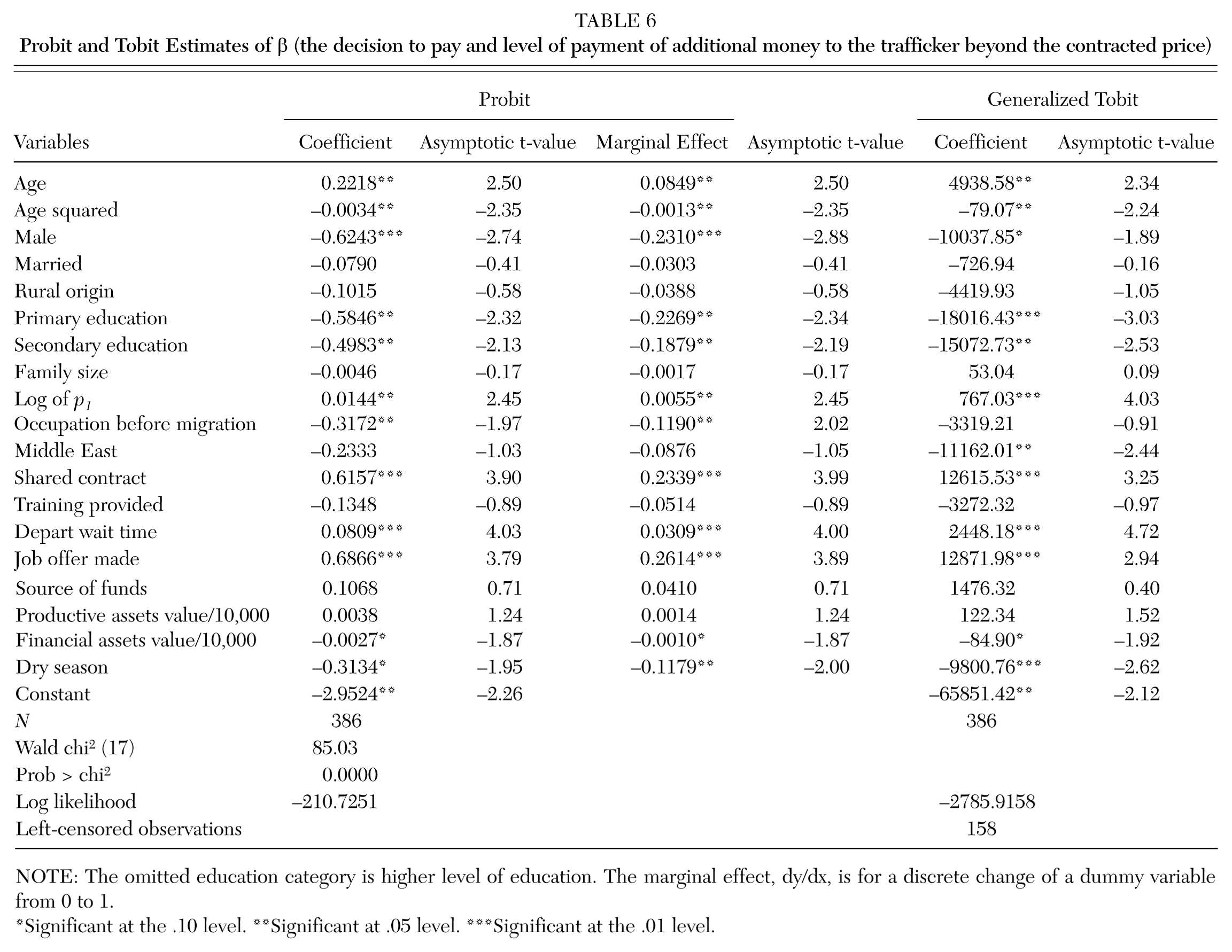
Table 6 presents the empirical results in relation to the multivariate models of the determinants of the decision to pay additional money (β), and of the amount of additional money paid to the trafficker. The first four columns are for the probit model of the binary choice of whether any additional money (bribes) was paid. The final two columns are for the Tobit model analysis of the level of the additional money paid.
Probit and Tobit Estimates of β (the decision to pay and level of payment of additional money to the trafficker beyond the contracted price)
NOTE: The omitted education category is higher level of education. The marginal effect, dy/dx, is for a discrete change of a dummy variable from 0 to 1.
Significant at the .10 level. **Significant at .05 level. ***Significant at the .01 level.
The likelihood ratio tests indicate that each of the models is significant as a whole at the 1 percent level. Twelve of the slope coefficients are statistically significant at a conventional level in each model. The sign of each of the significant coefficients in the probit model is the same as in the Tobit model, which suggests that the restrictions inherent in the Tobit model compared to the more flexible Heckman two-step method are reasonable (Wooldridge 2003).
Age is entered into the model in quadratic form, and each of the age terms is statistically significant. The linear age term has a positive coefficient, whereas the squared term has a negative coefficient. Hence age at the time of migration has an inverse U-shaped impact: a migrant’s inclination to expedite the process of departure rises with age, peaks around 33 years of age, and then declines. On this basis it can be argued that illegal migration and human trafficking are closely linked with age. This is consistent with the general perception that young males are more in demand for forced labor and more profitable when enslaved. Similarly, young female migrants are more valuable to traffickers for placement in the sex business. Because migrants are often deceived with offers of lucrative jobs abroad, the traffickers can easily demand relatively high sums from them for their migration. In addition, sometimes in the case of females, the trafficker assures the guardian that he will accompany the trafficked person to the destination and assist them with settling into the destination country. This not only enhances the trafficker’s credibility but also allows them to demand more money.
Gender (male) has a sizable negative coefficient in each of the models estimated. In Bangladesh, females generally engage in household duties, care for livestock, and in some cases undertake other agricultural tasks. Males take primary responsibility for market earnings and maintaining the household. Since men are the primary income earners for their households, male migrants might be more inclined to make extra payments to expedite their migration process so that they can begin earning money abroad. The fact that the estimates show that females are more likely to make extra payments perhaps reflects the importance of the sex trade. Moreover, for some time Bangladesh prohibited women from emigrating to work in specific areas such as the Middle East. These restrictions on legal movement, without a complementary effort to address illegal migration, may therefore have increased the likelihood of female workers seeking alternative migration routes, and hence being at a higher risk of exploitation by traffickers (Richards 2004). The coefficient of the dummy variable for being married at the time of migration is negative, as expected, but it is statistically insignificant in each of the models estimated.
There are strong relationships between educational attainment and the two dependent variables analyzed in Table 6. The results indicate that primary- and secondary-schooled migrants are less likely to pay an additional sum to a trafficker than their higher-educated counterparts. The better educated will have greater market earnings, and the higher payments they make to traffickers suggest that the traffickers are able to exploit individual situations to their economic advantage. It is noted that the estimated negative impacts associated with the primary schooling variable are not significantly different from the estimated negative coefficients on the respective secondary schooling variable. In other words, the only distinction of note in relation to education is between the higher educated and the less well-educated.
The value of the down payment has a strong, positive effect on both the decision to pay an additional sum (significant at the .05 level) to the trafficker and the amount of the excess payment (significant at the .01 level). As argued above, additional money will often be paid to the trafficker as a hedge against the misappropriation of the down payment. Similar results were obtained when other cost variables were considered, such as the sum of the down payment and the payments made in the destination country.
As shown in Table 6, the nature of the contract also had a strong impact on the decision to pay an additional sum to the trafficker. The intuition behind this finding is that when the contract is shared between the two parties as opposed to fixed, the trafficker will aim to collect as much money as possible from the prospective migrant. In this situation, if the trafficker can delay the migrant’s departure, then he will not only capture further interest payments on the down payment component of the contracted price but will also raise the probability of attracting additional money from the trafficked person.
Another important factor that determines the trafficker’s optimum profit is the length of time between making the down payment and the actual departure from the source country. The impact of this is recorded in the analysis through the variable depart wait time. The coefficient on this variable is positive and significant in each model, indicating that the more the trafficker can prolong the process of departure the higher the probability of appropriating additional money from the trafficked migrant.
The variable Middle East records a major destination region of the trafficked migrants. It has a negative coefficient in each of the models, and while significant at the .05 level in the Tobit model, it is not significant in the probit equation. The negative impact on the level of the additional money paid will reflect the modest earnings in the Middle Eastern countries, and the more limited scope to stay there permanently compared with other countries. Both of these factors would lead the trafficked migrants to choose not to pay any amount (or to pay only a minor sum) beyond their contracted price.
Working in an agricultural occupation before migration also reduces the likelihood of paying additional money to the trafficker. The most likely explanation for this effect is that agricultural workers are typically poorer than those who work in other sectors, and hence have a reduced capacity to pay, similar to the less well-educated. The occupation held before migration does not, however, have a statistically significant impact in the Tobit model where the focus is on the amount of additional money paid to the trafficker beyond the contracted price.
The relationship between the additional payment and an offer of a work permit prior to departure is captured by the job offer variable. This variable enters into the estimating equation with a positive coefficient, and is statistically significant at the .01 level in both models estimated. This positive impact appears to reflect the vulnerability abroad of those without legal status. Thus, where the trafficked person is not offered a job, the process of only placing them in the destination country may be suboptimal, as the trafficked person would know well that illegal migrants are likely to be apprehended and deported from the destination country. Hence where there is certainty regarding the employment opportunity abroad, a potential migrant would be more likely to pay an excess amount.
The variable for family size has a negative coefficient in the probit model, meaning that the number of dependents living in the migrant’s household is a barrier to the payment of any excess amount. This is intuitively reasonable, as a larger family would be associated with greater expenditures on day-to-day needs. However, the coefficient is statistically insignificant. Likewise, the variable for the source of migration cost is, counterintuitively, not a statistically significant determinant of either the decision to pay more money beyond the contracted price or the level of such payments. It was expected that those trafficked migrants who fund the cost of their migration only by selling land would be more inclined to pay an additional amount than those who covered the cost of their migration from other sources, such as loans, savings, and remittances.
The value of the productive assets of the household at the time of migration does not appear to affect whether the trafficked migrants were prepared to pay additional money to the trafficker. In contrast, the value of financial assets at the time of migration has a weak, negative influence on both the decision to make an additional payment and on the amount of the payment. It was, however, expected that those with greater financial wealth would have a greater capacity to pay, and hence financial assets would be associated with a positive coefficient. The negative coefficient could be explained by the notion that those with greater financial wealth are more secure in Bangladesh, and hence the need to migrate was not as urgent as it might be for those with less financial wealth. Those with greater financial wealth may also have a greater understanding of the migration process, and hence be less vulnerable to exploitation. 6 Finally, the agricultural season dummy is associated with a negative coefficient. This suggests that, although physically it is easier to move in the dry season, the lack of disposable cash in that season makes it difficult for the prospective migrant to pay the trafficker additional monies to expedite his or her passage.
In sum, it is clearly evident that the decision to pay additional money to traffickers, and the amount of these payments, is influenced by a wide range of factors. To understand these outcomes requires knowledge of the individual characteristics of the migrants. The exploitation of trafficked individuals is a multidimensional phenomenon, and our survey information is able to capture many of these dimensions.
Conclusion
This article focuses on several aspects of labor trafficking. One aspect is whether a migrant seeking illegal passage paid a trafficker a price higher than they initially agreed to, to move up in the trafficker’s queue. Another relates to the sums of money that migrants actually paid. The results show that the decision to pay additional money to traffickers and the amount of money paid were related to the age, gender, educational attainment, and wealth of the migrant, as well as the nature of the migration contract (shared or up-front payment only), amount of initial down payment, length of time the individual was in the queue, whether the individual was made a job offer prior to departure, the country of destination, and the season of departure. In most cases the factors that affected decisions regarding payment of money beyond the contracted price were easily observed (e.g., gender), anticipated by the trafficker (e.g., age, educational attainment), or known to the trafficker (e.g., nature of the contract, value of down payment).
These findings suggest that the trafficking environment is characterized by many so-called double-edged swords. For example, a job offer during the initial recruitment stage provides the migrant with the promise of enhanced economic security, but it also increases the likelihood of exploitation through various means, including fees being paid to the trafficker beyond the initial contracted amount. Another set of findings, the “single-edged swords,” consist of a range of negative social and economic experiences at the work destination. Around three-quarters of the sample reported adverse working conditions at the destination: they were either not paid or inadequately remunerated, were denied holidays, had their contracts violated, or were required to work additional hours without overtime pay. About two-thirds had migrated with what they thought were legal documents, only to discover that the documents were fake. Almost all the female migrants (96 percent) reported that they had experienced sexual harassment or assault at the destination. Overall, the findings point to a highly exploitative and fairly harsh set of experiences in the migration and labor processes.
The survey research method may, if properly focused, provide a platform for future data collection (see Zhang 2012). But future surveys should aim to capture more of the migration experience, including exploring why money beyond the contracted price was paid, a wider variety of personal experiences (positive and negative) both during transit and at the workplace, the economic and social adjustments that follow return to one’s home country, and migrants’ intentions for future migration. Such information will enable a fuller understanding of the trafficking phenomenon, a greater appreciation of the risks involved, and information about why migrants are willing to take such risks.
Footnotes
NOTE:
The authors thank Ira Gang for helpful comments and acknowledge the staff of the Immigration Authority at Hazrat Shahjalal International Airport, Dhaka, who assisted in the early stage of data collection. Miller acknowledges financial assistance from the Australian Research Council.
Notes
Mohammad Abdul Munim Joarder is an associate professor in the Department of Economics at Shahjalal University of Science & Technology in Bangladesh and a PhD candidate at the School of Economics and Finance at Curtin University, Australia. Joarder’s primary research interest is human trafficking and labor migration and remittances, with a particular focus on Bangladeshi migrants.
Paul W. Miller was a professor of economics at Curtin University, Australia. He was a prolific author and coauthor of papers in labor economics and the economics of education, and received numerous awards for his research. He published in journals such as the American Economic Review, Economic Journal, Journal of Labor Economics, Economic Record, Economica, and Industrial and Labor Relations Review. On November 27, 2013, Professor Miller passed away after a battle with cancer.