






Abstract
Americans who affiliate with both major political parties rapidly formed diverging attitudes about the COVID-19 pandemic. Matters of scientific concern have elicited partisan reactions in the past, but partisan divergence of opinion on those issues occurred over decades rather than months. We review evidence on factors that led to polarization of previous scientific issues in an effort to explain why reactions diverged so quickly this time around. We then use publicly available survey data to reveal that partisan reactions to the pandemic were closely associated with trust in public health institutions, that the association between partisanship and trust increased over time, and that the conflation of trust and partisanship appears to largely explain polarized reactions to COVID-19. We also investigate the hypothesis that conservative media use might explain polarization but find that the hypothesis is not supported by our data.
Shortly after the United States reported its first known COVID-19-related death on February 29, 2020, the country seemed poised to come together to address the impending threat of a global pandemic (Centers for Disease Control and Prevention [CDC] 2020). On March 13, President Trump declared a national public health emergency related to the spreading virus, a move supported by politicians of both parties. Even then, partisan differences existed concerning the virus (Deane, Parker, and Gramlich 2021), but these may have reflected the fact that cases were detected in urban and more Democratic areas before they spread to more Republican and rural areas (cf. Allcott et al. 2020). By mid-April, though, Americans’ opinions regarding the pandemic had diverged not just in terms of general concern, but also in terms of policy preferences—Republican groups challenged Democratic governors on what they considered overly broad emergency orders, organizing large protests in Lansing (MI), Richmond (VA), and St. Paul (MN), which were backed by then-president Trump (Haberman 2020). By June, 76 percent of Democrats said they usually wore masks in stores versus only 53 percent of Republicans (Kramer 2020). And what initially appeared to be a nonpartisan public health issue had morphed into a highly polarized one, affecting partisans’ attitudes and behaviors, as well as their support for various preventative measures and policies. Why did responses toward COVID-19 polarize so quickly? Why did they polarize at all?
To understand what happened, we draw from research on divergence in Americans’ perceptions of other scientific issues that have entered the policy domain. In general, explanations for scientific polarization rely on three basic mechanisms: (1) general differences toward science driven by political elites (e.g., Brulle, Carmichael, and Jenkins 2012), (2) differences in trust toward public health institutions and officials (e.g., Mooney 2005), and (3) differences in the information that different groups receive about scientific issues (e.g., Feldman et al. 2012). Solid evidence bolsters each of these claims with respect to issues like anthropogenic climate change and belief in evolution (Miller, Scott, and Okamoto 2006). And each type of explanation has also been posited to explain diverging partisan reactions to the coronavirus pandemic (Deane, Parker, and Gramlich 2021). In this article, we test how well key expectations from each hold up in explaining partisan reactions to COVID-19.
General Partisan Differences Driven by Political Elites
Although Americans across political parties agree more than they disagree when it comes to significant political issues, party elites often have strong, diverging views on those same issues (Fiorina 2017). For instance, most Americans in both political parties hold nuanced and complex positions on abortion even amid strong polarization around the issue (Jozkowski, Crawford, and Hunt 2018). Despite these shared sentiments, a growing body of work evinces considerable partisan animosity (Iyengar et al. 2019), which frequently results in individuals reflexively adopting positions supported by in-party elites and opposing those offered by out-party elites (Banda and Cluverius 2018). As elites stake out positions on various issues, this results in popular divisions on these same matters (Zaller 1992). Elite-driven attitude formation is often associated with a lack of preexisting policy opinions in the general populace. As opposed to deep, critical thought about an issue, elite positions can be used as a heuristic for individuals determining what their attitudes should be. And since elites’ stances tend to be both extreme and diametrically opposed, this process encourages polarization in people who adopt these attitudes about a given issue.
While this is generally constrained to political issues, research has shown that high levels of affective polarization can lead to the politicization of ostensibly nonpolitical issues, including COVID-19 (Druckman et al. 2020). This, combined with the limited information environment, created a situation where the rapid developments of the coronavirus pandemic led to a display of issue alignment and party bifurcation in real time. The World Health Organization was first made aware of the virus in December 2019, and the first confirmed case of COVID-19 in the United States was reported in January 2020 (CDC 2021). It was, therefore, impossible for Americans to have formed attitudes about it before December, and unlikely that many did so before the disease began to spread nationally in March. The speed with which the coronavirus entered America’s public consciousness meant that Americans had to quickly form opinions in a limited-information environment. As individuals adopted attitudes related to the disease, these necessarily emerged from the messages they encountered, the experiences they had, and whatever preexisting considerations they found salient.
Wearing masks in public quickly became a partisan symbol as Democratic elites promoted mask wearing and Republican elites—most notably President Trump—dismissed it. Later, vaccination intentions followed the same route, with the president and other Republican elites providing at best tepid endorsements (Wise 2021). This was true even though the administration could have taken credit for each of these pandemic-mitigating innovations—the CDC, which recommended masks, was led by Trump appointee Robert Redfield, and the administration also helped to rush the development of a vaccine through Operation Warp Speed. In a study exploring whether elite positions might impact public attitudes, Pink and colleagues (2021) found that when Republicans viewed vaccine endorsements from in-party elites, they were significantly more likely to indicate an intent to be vaccinated; at the same time, Republicans who viewed endorsements from Democratic elites became less inclined. Differing elite positions may partly explain differences in public attitudes and behaviors.
Trust in Public Health Institutions
A second account posits that political parties may differ more generally in acceptance of science, as Mooney contended in his 2005 book, The Republican War on Science (Mooney 2005). Although critics claimed that the book examined scientific issues that were particularly partisan in orientation (Berube 2006), differences in deference to scientific information may nonetheless be real. Indeed, Gauchat’s (2012) study examining broader trends in public trust in science and scientists between 1974 and 2010 confirmed a link between trust and ideology. And Krause and colleagues (2019) reported that trust differences were increasingly associated not just with ideology but also with partisanship. Ironically, evidence exists that Mooney’s argument may have been self-fulfilling, as mentions of a Republican “war on science” can lead conservatives to assert greater distrust in science (Hardy et al. 2019). Because trust in science is an important component of both belief in scientific information and responsiveness to that information, systematic scientific distrust could prove deleterious.
When science policy is subject to political contention, even a scientific consensus can become politicized as individuals feel justified in ignoring it (Bolsen and Druckman 2018). Those who do not trust scientists may feel empowered to assert that scientific findings are likely wrong (Chinn and Pasek 2020) or may be predisposed to rejecting the scientific consensus (cf. Lewandowsky, Gignac, and Oberauer 2013; Pasek 2018). Indeed, scientific rejectionism occurs most prominently when individuals are motivated to do so (because claims conflict with respondents’ identities or beliefs) and when they have little regard for science and scientists (Lewandowsky, Oberauer, and Gignac 2013; Rutjens, Sutton, and van der Lee 2018). These circumstances occur when religious conservatives encounter information about evolution and when Republicans are told about climate change.
Amid the novel coronavirus pandemic, trusting public health institutions and scientists could be profound. Early in the pandemic, scientific information was rapidly changing (Cross 2021) and had to compete with large flows of misinformation, disinformation, and conspiracy theories (Peters and Crynbaum 2020). Concurrently, trust in public health authorities was intertwined with the attitudes Americans had about the pandemic and their behavioral intentions (Jamieson et al. 2021). If Americans in different partisan groups had differing trust in these institutions, they might similarly diverge in their pandemic responses.
Differences in Information Associated with Partisanship
When issues become a source of political contention, individuals in different groups increasingly encounter and process information in ways that can reinforce group differences. A growing body of work in communication has shown that individuals can and do seek information sources that reinforce their political viewpoints (Stroud 2011), even if they typically do not do so exclusively (Garrett and Stroud 2014). Recently, scholars have documented the emergence of a distinct conservative media ecosystem capable of generating and sustaining its own knowledge base rooted in conservative ideology (Jamieson and Cappella 2008). One notable feature of conservative media is that it presents certain scientific issues in a dismissive manner, a phenomenon well documented for anthropogenic climate change (Feldman et al. 2012). Conservative outlets disproportionately presented skeptical or falsely balanced narratives about climate change; correspondingly, heavy conservative media viewers were less certain of global warming than those who consumed this type of media less (Hmielowski et al. 2014) and held more misperceptions about the state of scientific consensus surrounding climate change (Hamilton 2016).
Similar patterns of questionable coverage occurred on conservative media with respect to COVID-19. Conservative media viewers were more likely to distrust pandemic information and to think that COVID-19 health risks were being exaggerated (Motta, Stecula, and Farhart 2020). They were also prone to coronavirus-related conspiracy theories (Romer and Jamieson 2020). Conservative pundits appearing on these outlets often claimed the virus was a fraud or a Chinese plot to harm the U.S. economy and sought to downplay the effects of the pandemic (Peters and Crynbaum 2020). Messages received differed depending on the sources people viewed, but polarized presentations were common across conservative outlets (Chinn, Hart, and Soroka 2020). Hence, exposure to conservative sources might be causally related to concern about coronavirus, mask wearing, and vaccination intentions.
Our Study
In this study, we examine differences in concern about coronavirus, mask wearing, and vaccination intentions by party over time. We then examine how well these gaps can be explained as a function of partisanship, trust in public health institutions, and conservative media use. By understanding the factors most closely associated with the observed differences, we can formulate more relevant strategies for addressing and combating future scientific polarization.
Method
Data
Data for the current study come from a secondary analysis of the Axios/Ipsos Coronavirus Index, a study that interviewed samples of around 1,000 respondents selected from Ipsos KnowledgePanel® most weeks from March 13, 2020, through the time that this article was written. Analyses presented in this article rely on 55,760 responses from waves 1 to 53 of the study (from March 13, 2020, to September 13, 2021). Because questions varied somewhat over time, results of each analysis are only presented across waves where consistent measures were available. More information about the Axios/Ipsos Coronavirus Index is in online Appendix A.
The study based outcome measures on (1) three questions about how concerned respondents were about coronavirus, (2) how often respondents were wearing a mask when they left their homes, and (3) how likely they were to get the first generation COVID-19 vaccine as soon as it was available. We coded all outcomes to range from 0 (for those least concerned, who never wear a mask, or who would not get the vaccine) to 1 (for those most concerned, who always wear a mask, and who would get the vaccine or had already gotten it). We used measures for demographics (age, race, gender, education, urbanicity); partisan self-identification as a Democrat, Republican, or Independent; trust in public health institutions (an index of two questions about trust in the CDC and public health officials); and conservative media use (selecting FOX News or conservative online news as one’s primary source of news) in these models. Full measures can be found in online Appendix B.
Analysis
To assess how partisanship, trust in public health institutions, and conservative media use each related to concern, mask wearing, and vaccination intentions, we generated two sets of models. We designed one group to understand the net correspondence between each predictor and outcome, after we controlled for demographics. We designed a second set of models to understand the unique correspondence between each predictor and the outcomes after controlling for demographics and the other predictors. The study team calculated both values by running regressions within each survey week and determining the difference in variance explained (ΔR2) between models with the target predictor and those that did not include the target predictor. Online Appendix C presents regressions for the individual weeks.
To illustrate how relations between key predictors and outcomes changed over time, generalized additive models (GAM) predicted the value of each week’s explained variance as a smoothed function of time. GAMs allow us to fit spline curves to these trends without overreliance on the differences in survey data from week to week.
Results
Partisan identity was a strong predictor of all outcomes. Compared to Republicans, Democrats and Independents were far more concerned about coronavirus, likely to wear masks, and likely to get vaccinated. In general, these differences grew over time, at least through the 2020 U.S. presidential election. Among Democrats, 73.9 percent said that they were very or extremely concerned about coronavirus in late March 2020 compared to 52.4 percent of Republicans, a difference of 21.5 percentage points; this increased to a maximum of 48.4 percentage points by late October, prior to Election Day. Figure 1A shows trends in partisan concern over time, estimated using GAMs. Similar divergences can be observed in partisan trends for mask wearing (Figure 1B) and vaccination intentions (Figure 1C).
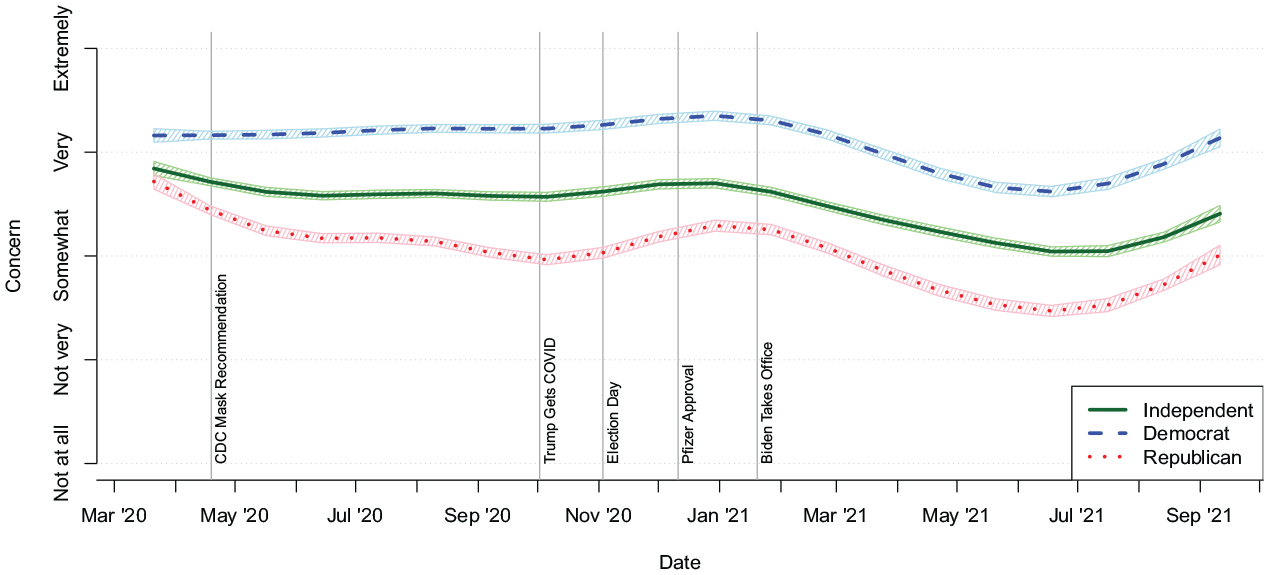
Partisan Differences in Concern about COVID
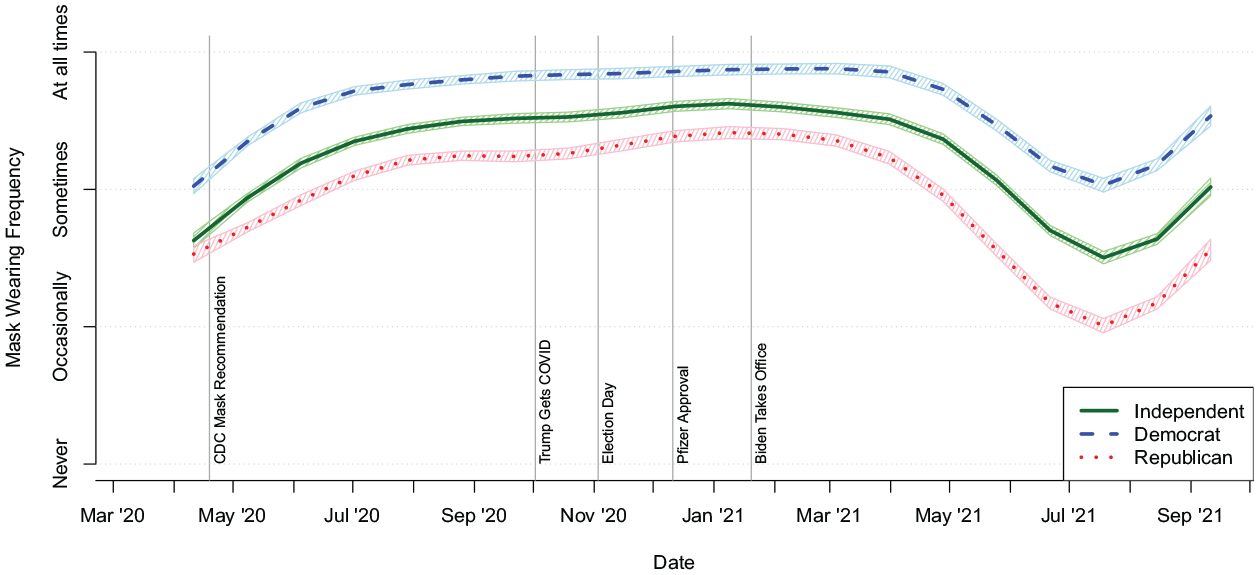
Partisan Differences in Mask Wearing
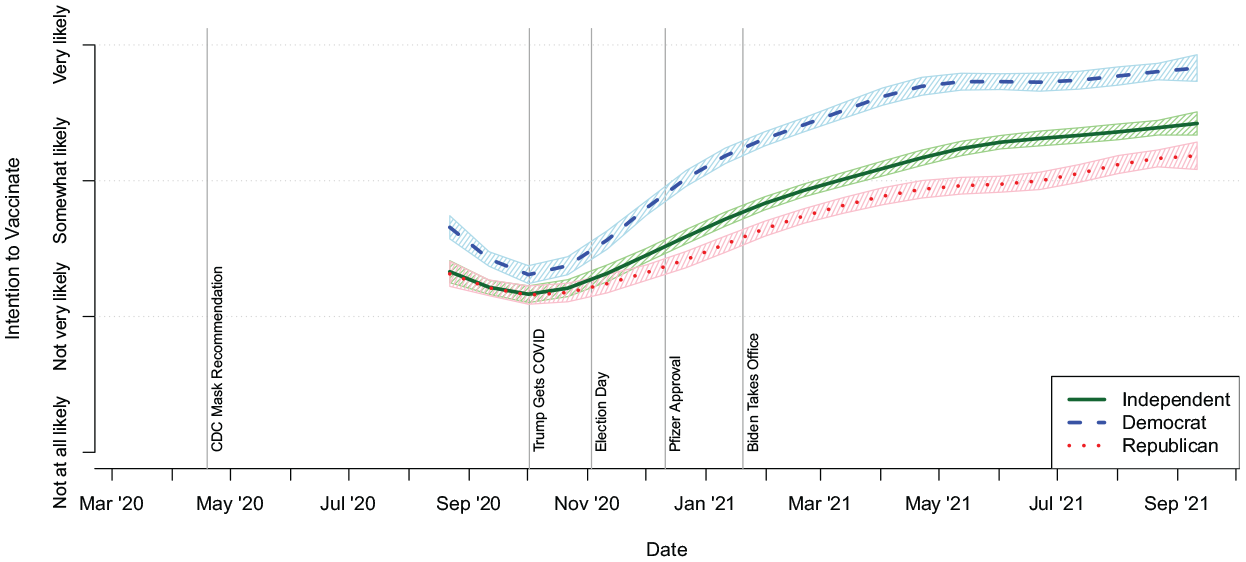
Partisan Differences in Vaccination Intentions
Although these partisan differences are glaringly present, we need a more nuanced understanding of why people adopt the attitudes they do. For instance, some differences between Democrats and Republicans could be due to the different kinds of individuals who join the parties, whereas others are attributable to factors like institutional trust and conservative media use or more directly to the influence of partisan cues. It, therefore, helps to account for differences in demographics and related variables when untangling the “effects” of partisan identities.
Party differences in variance explained
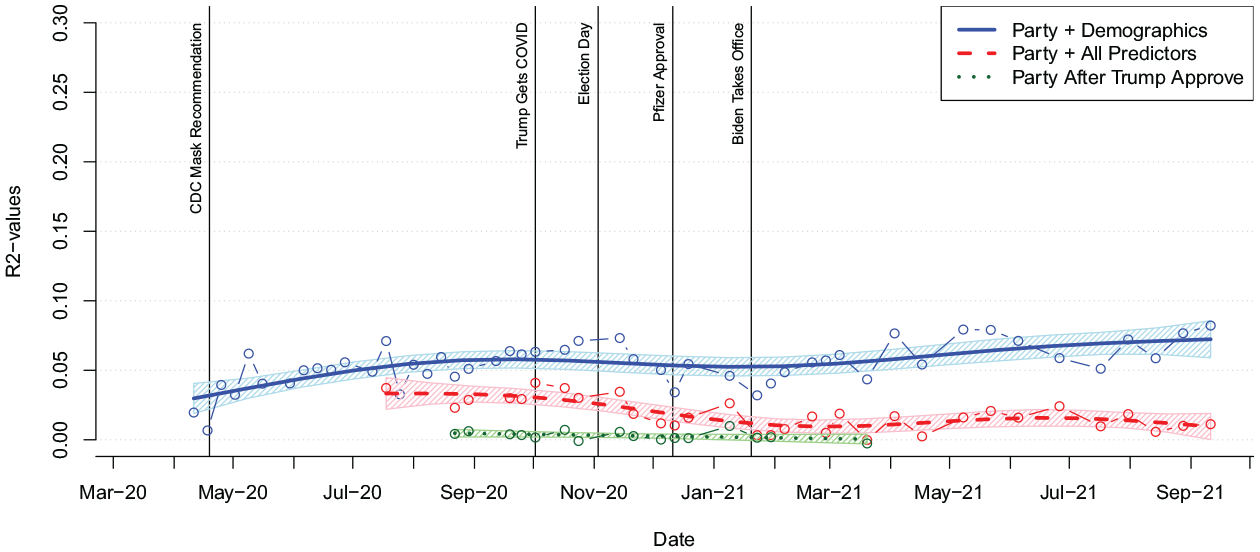
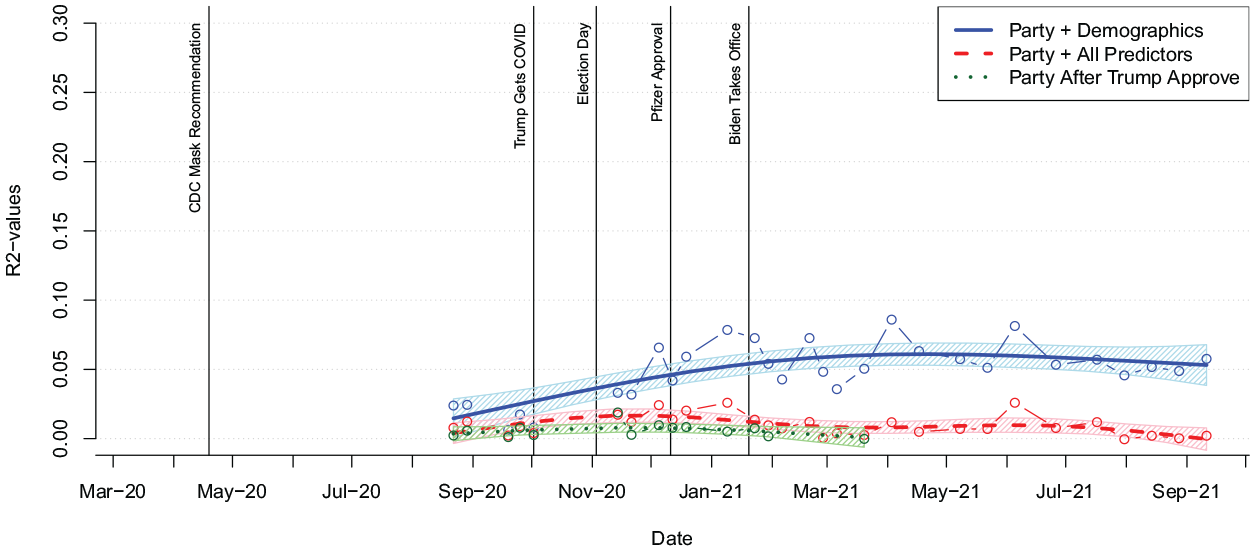
To estimate the influence of partisanship beyond demographic differences and assess whether that influence was independent of other key predictors, we calculated the extent to which partisanship measures improved the fit of regression models predicting each outcome within each wave. This yielded a single parameter that could be plotted over time to see how the influence of various predictors changed. Figure 2 shows that partisan identification became an increasingly important discriminator of attitudes over the course of the campaign for all outcomes.
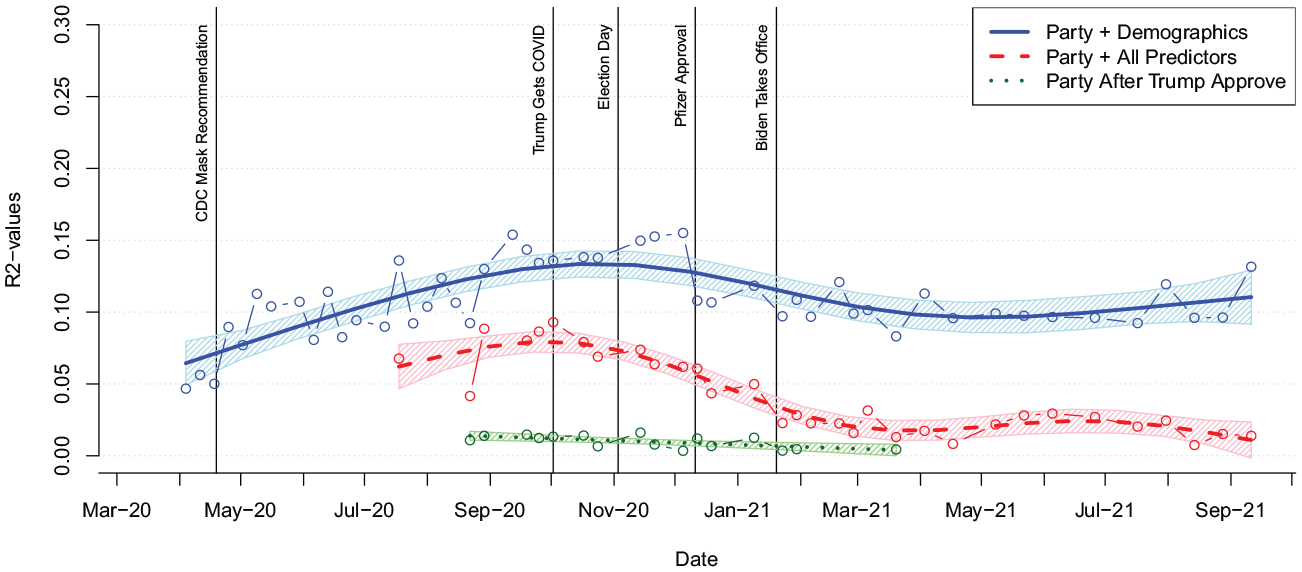
Party-Attributable R2 for Concern Models
Party-Attributable R2 for Maskwear Models
Party-Attributable R2 for Vaccination Models
Predicting concern about coronavirus, we find that a model with just demographics produces R2 values ranging from .05 to .12 depending on the week examined. Models also including partisanship yielded values ranging from .10 to .26. By subtracting the demographics-only estimates of variance explained from the ones including partisanship, we estimate the variance attributable to partisanship (ΔR2) as ranging between .05 and .16 depending on the week, with the smallest attributable variation in early April 2020, the largest gaps in November/December 2020, and a shrinking difference thereafter (see solid line in Figure 2A).
While the total variance explained increased when measures of trust in public health institutions and conservative media use were included (ranging from .27 to .39), the portion attributable to partisanship dropped (to between .01 and .09), suggesting that variance in these other measures overlapped significantly with partisan differences. The partisanship-attributable variance is plotted with the dashed line in Figure 2A. Here it becomes clear that the uniquely partisan component of concern was moderate before Election Day but diminished thereafter.
The difference in variance explained between the solid and dashed lines in Figure 2A reveals the extent to which what initially appeared to be partisan differences could be attributed either to trust in public health institutions or conservative media use. Because the difference between those lines was always sizable and appeared to increase after the election, we can conclude the additional variables captured much of what initially presented as partisan differences (i.e., those variables consistently shared some variance with partisanship), and that the extent to which partisan gaps could be explained by these factors was larger after the election than it had been before (i.e., the shared variance explained more of the partisan difference over time). Hence, while the partisan difference remained, the initial gap was not solely about partisanship. In fact, as we show, the partisan difference was largely explained by differences in institutional trust.
Patterns linking partisanship with variance explained were similar for mask wearing (ΔR2 between .01 and .08). The partisan gap in mask wearing also grew between April and the election and shrunk thereafter. Similarly, variance in mask wearing uniquely attributable to partisanship was much smaller after Election Day than beforehand (ΔR2 between .00 and .04; Figure 2B).
For vaccines, unlike for the other two outcomes, the overall partisan gap increased over time (solid line in Figure 2C). But again, most of this difference was not uniquely explained by partisanship (ΔR2 between .01 and .09). After accounting for institutional trust and conservative media use, the variance uniquely explained by party differences was minimal (ΔR2 betwen .00 and .03).
Differences in variance explained by trust and media use
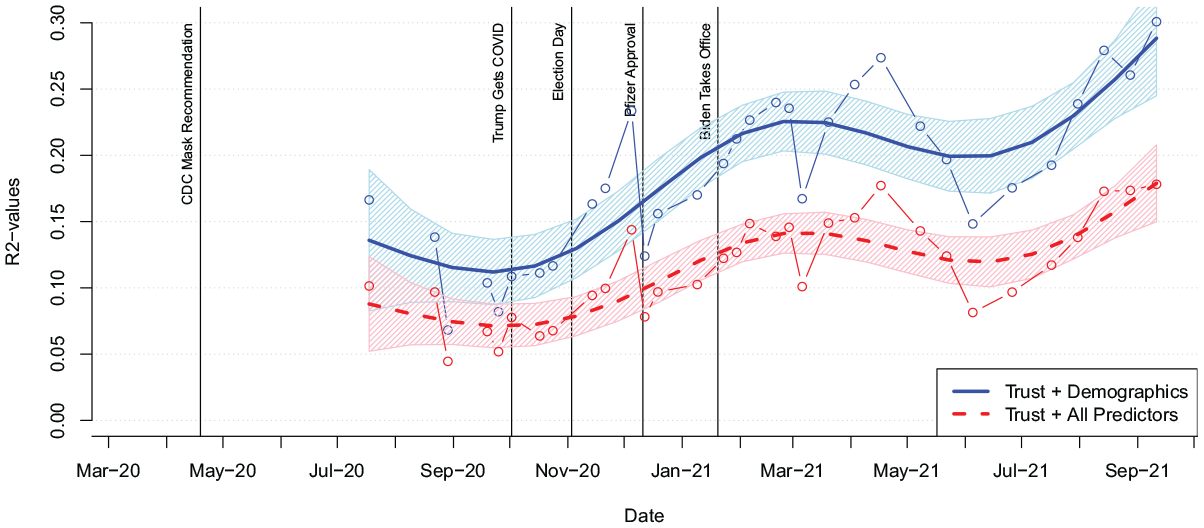
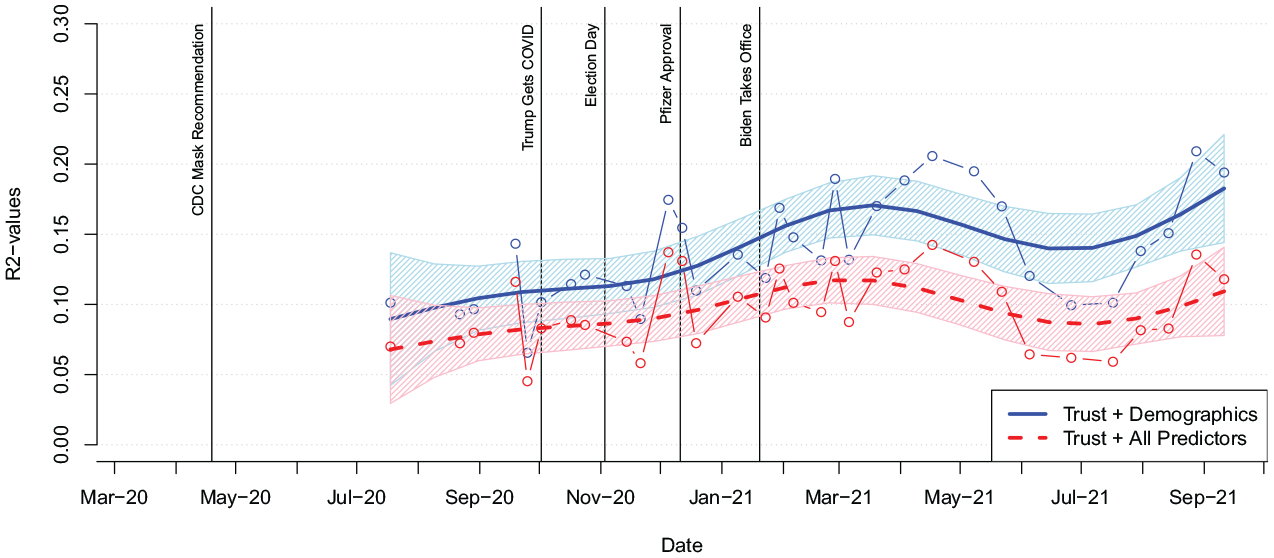
The collective impact of trust in public health institutions was relatively large for all three outcomes (Figure 3A–C). Unsurprisingly, individuals who expressed more trust in these institutions were far more likely to report concern about COVID, wearing masks regularly, and intentions to vaccinate. These patterns persisted even after controlling for partisanship and conservative media use. And the role of trust in public health institutions became increasingly important over time across all three outcomes. While the variance shared between trust in public health institutions and partisanship for each of the outcomes was sizable, this accounted for only a moderate proportion of the overall variance explained by trust, even though it was responsible for most of the variance attributable to partisan identification, at least in the postelection period.
Trust-Attributable R2 for Concern Models
Trust-Attributable R2 for Maskwear Models
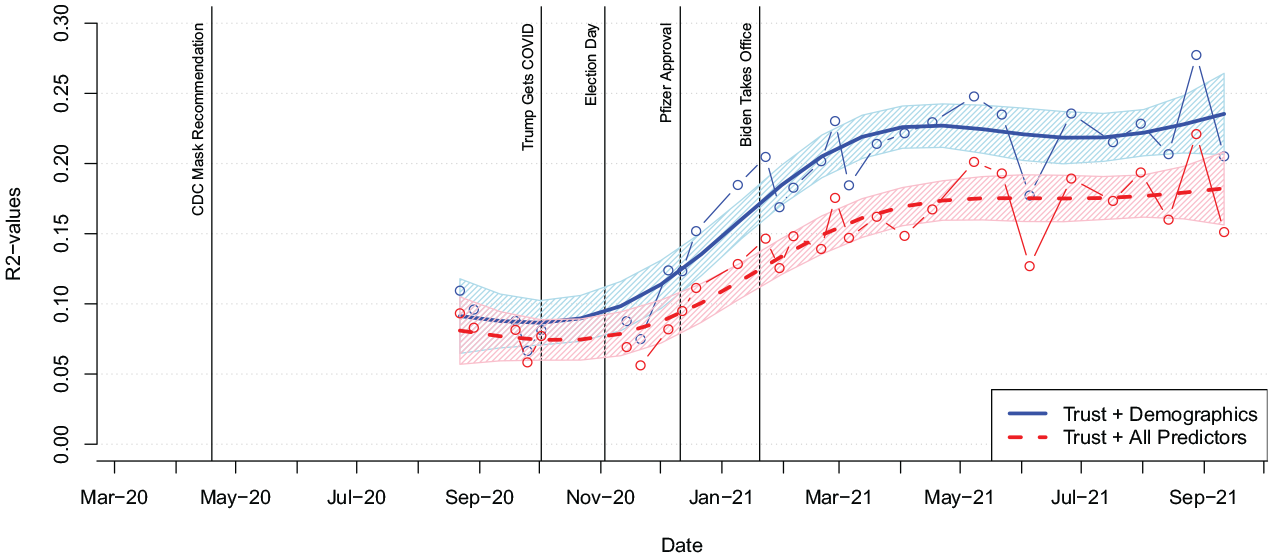
Trust-Attributable R2 for Vaccination Models
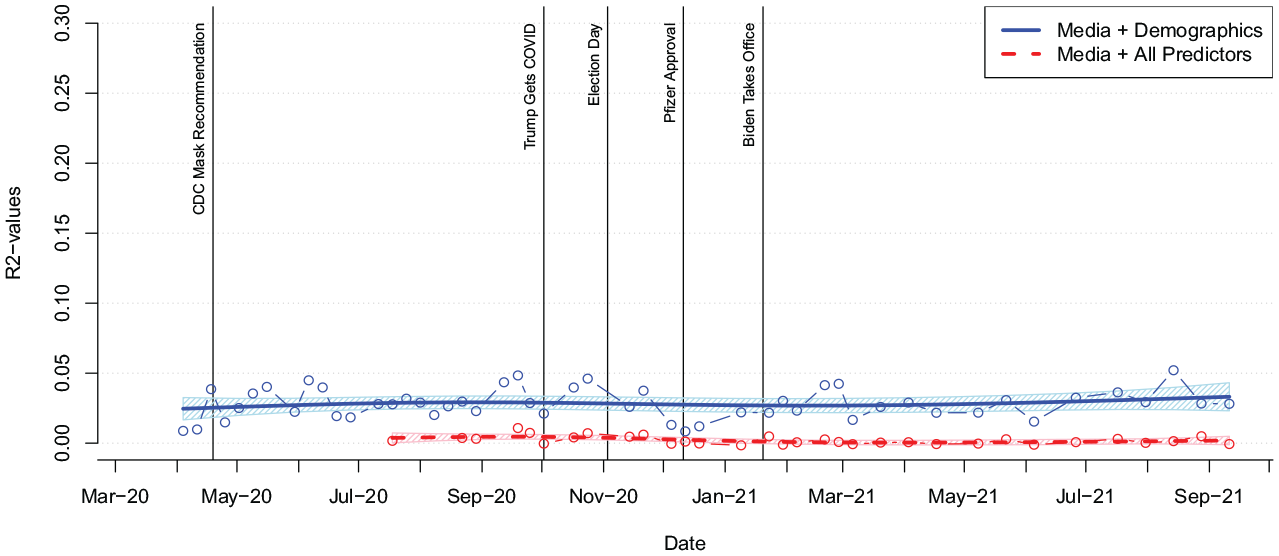
Conservative Media Use–Attributable R2 for Concern Models
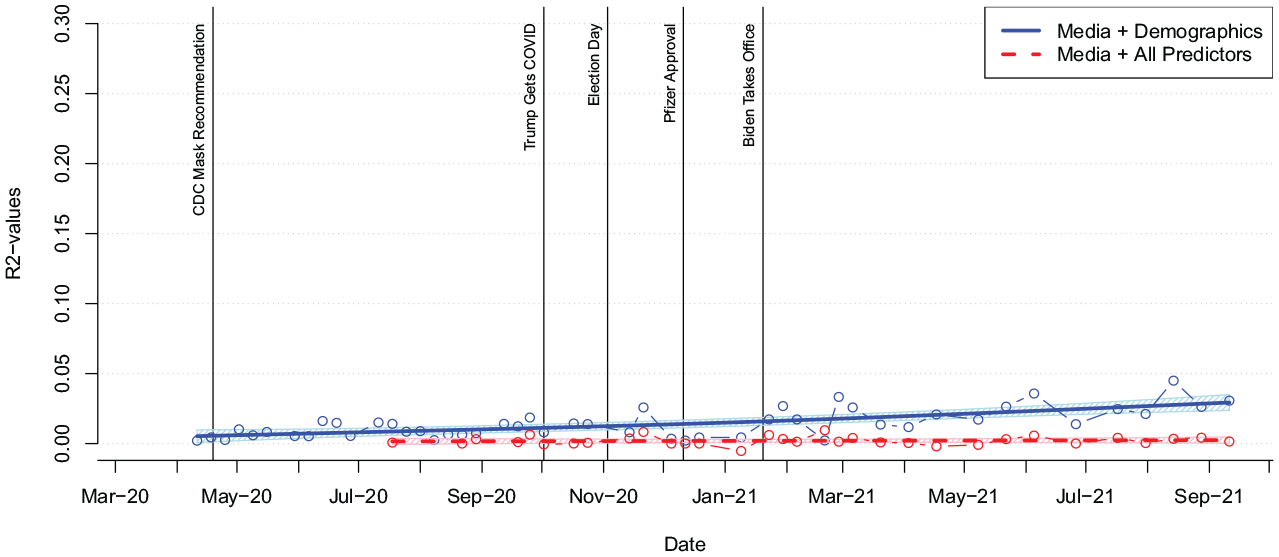
Conservative Media Use–Attributable R2 for Maskwear Models
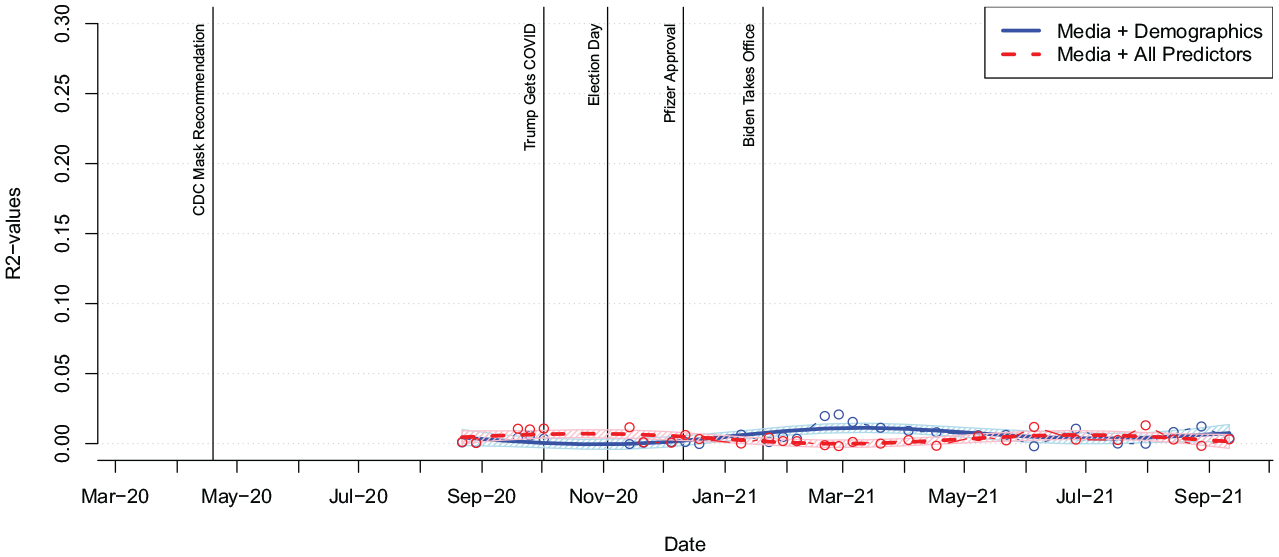
Conservative Media Use–Attributable R2 for Vaccination Models
Reliance on conservative media, in contrast, did relatively little to explain variance beyond demographics for any of the three outcomes and accounted for almost no unique variance when we included partisanship and trust in institutions in the model (Figure 3D–F). These results contraindicate claims that patterns of media use explain why individuals in different parties diverged in their beliefs, attitudes, and behaviors regarding coronavirus.
When comparing the unique variance attributable to each set of predictors, a consistent pattern emerges (Figure 4). Before Election Day, differences in concern and mask wearing across partisan groups were predicted by partisanship and trust in public health authorities. Afterward, these differences were increasingly attributable to trust rather than to party. And differences in vaccination intentions appear to have been less a factor of party than of institutional trust.
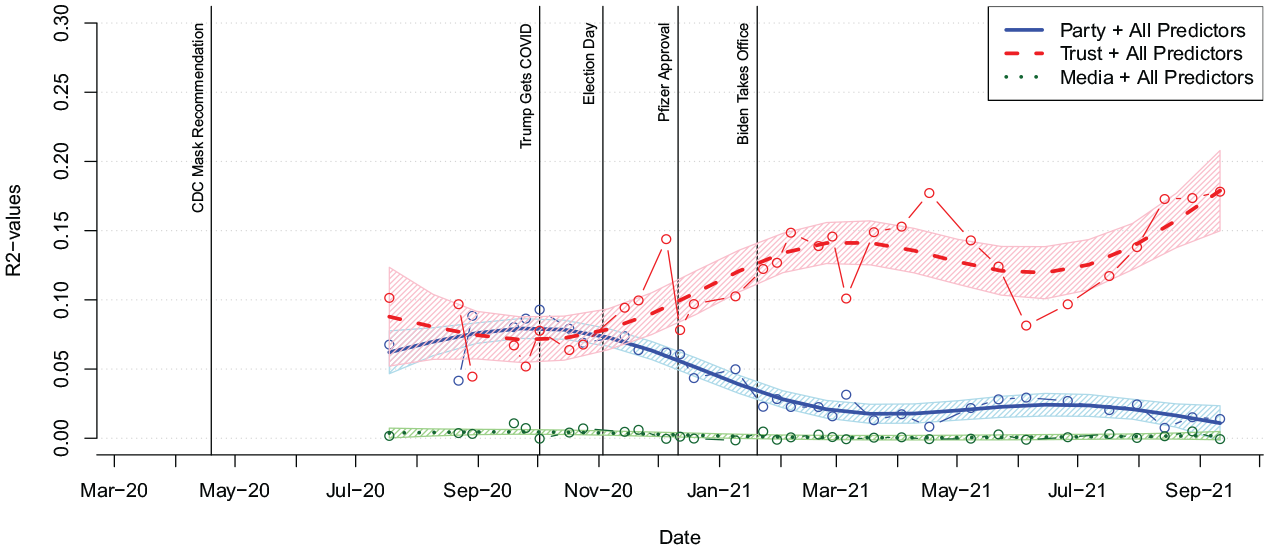
R2 Values for Concern Models on All Predictors
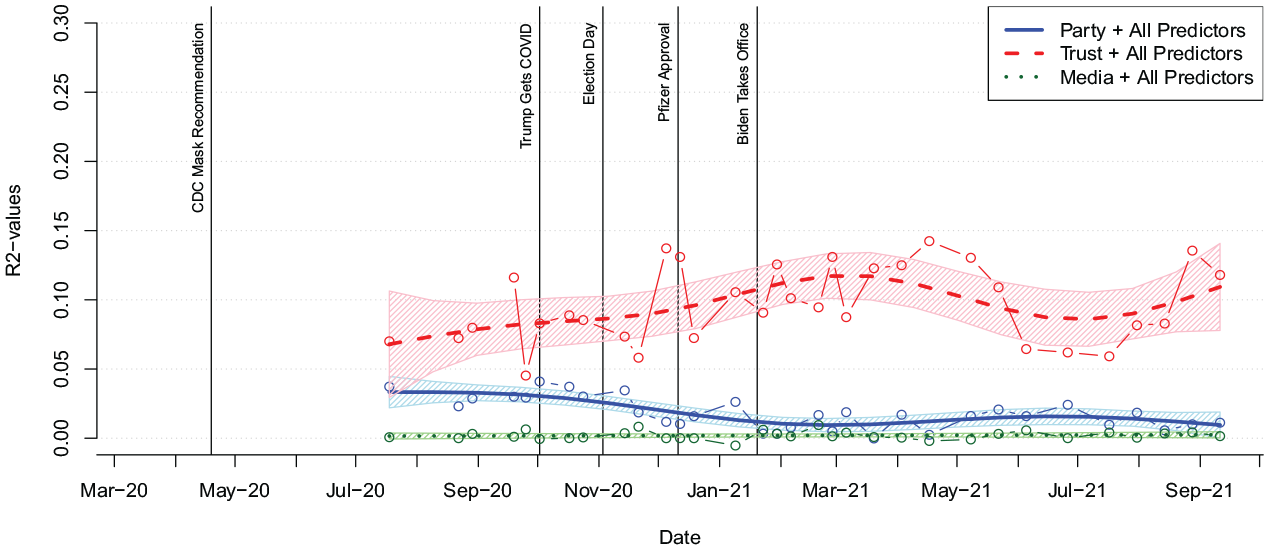
R2 Values for Maskwear Models on All Predictors
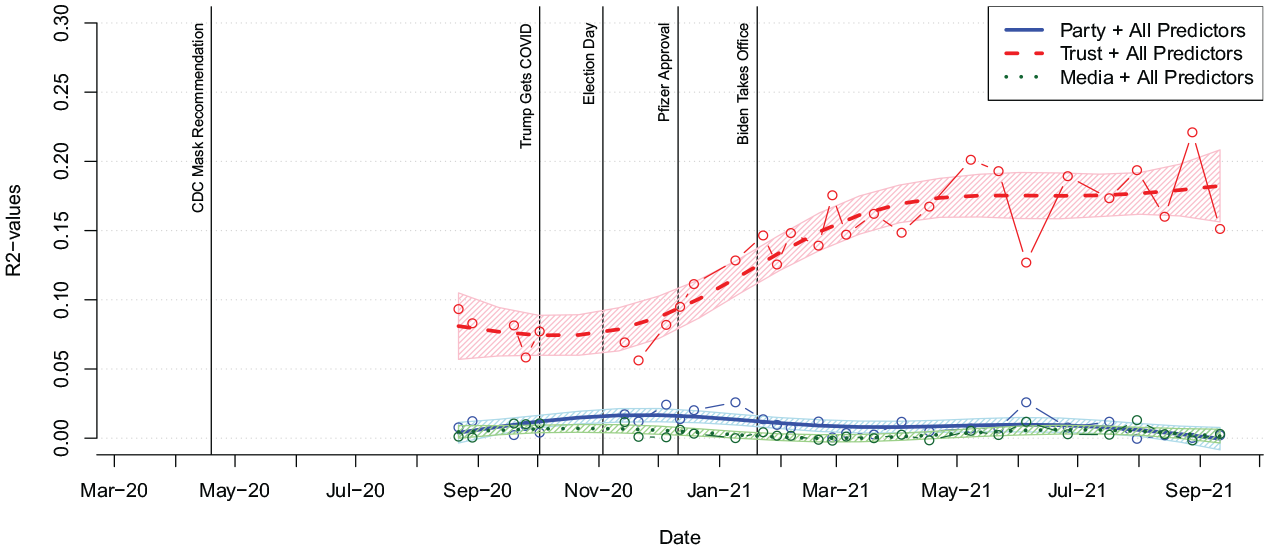
R2 Values for Vaccine Models on All Predictors
Is the partisan difference related to elite cues?
In additional analyses, we tested the possibility that the unique partisan differences that remained might be attributed to elite cues. To assess this, we examined whether partisan identification explained significant differences in outcomes after also controlling for trust in President Trump (see online Appendix A). These results are presented with the dotted lines in Figure 2. In line with the elite cues explanation, the unique influence of partisan identification was nearly eliminated for all three outcomes once this was controlled.
Impact of partisanship on trust?
Although global trust in public health institutions was stable over time, this stability was not present on an individual level. From around when President Trump contracted COVID-19, Republicans and Democrats began to diverge in their trust toward these institutions at roughly an equal magnitude (Figure 5).
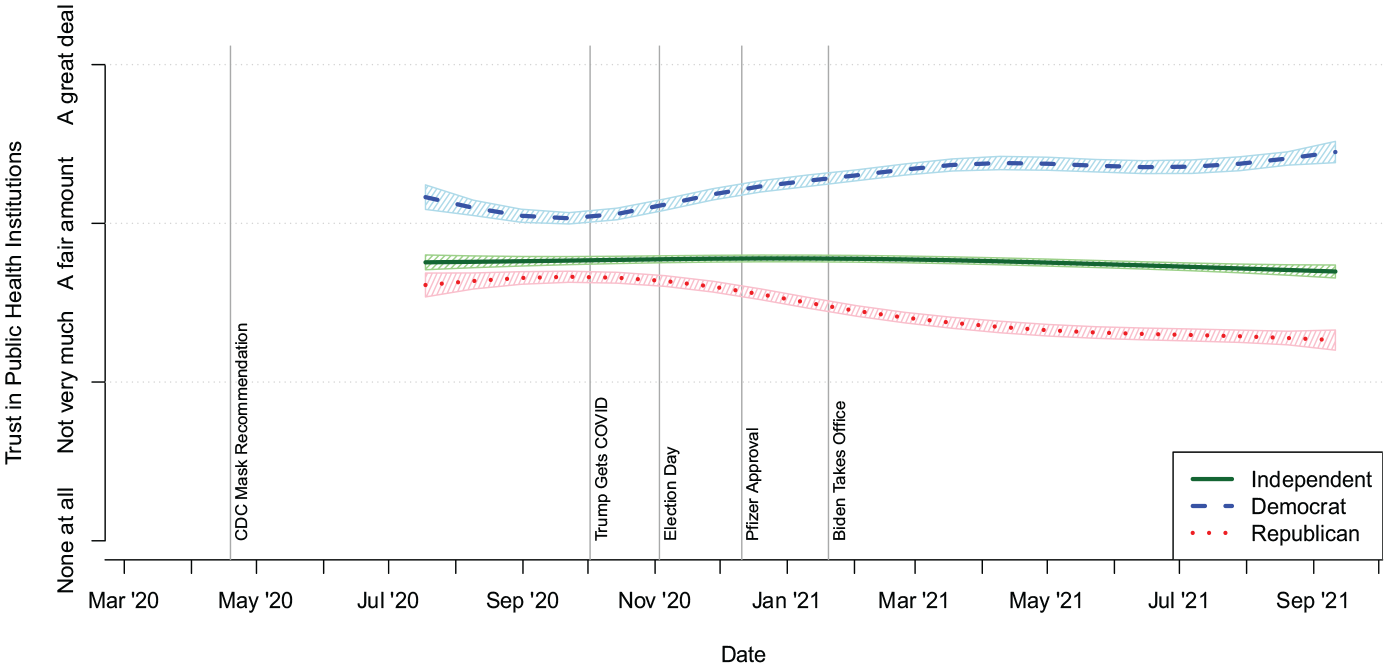
Partisan Differences in Trust in Public Health Institutions
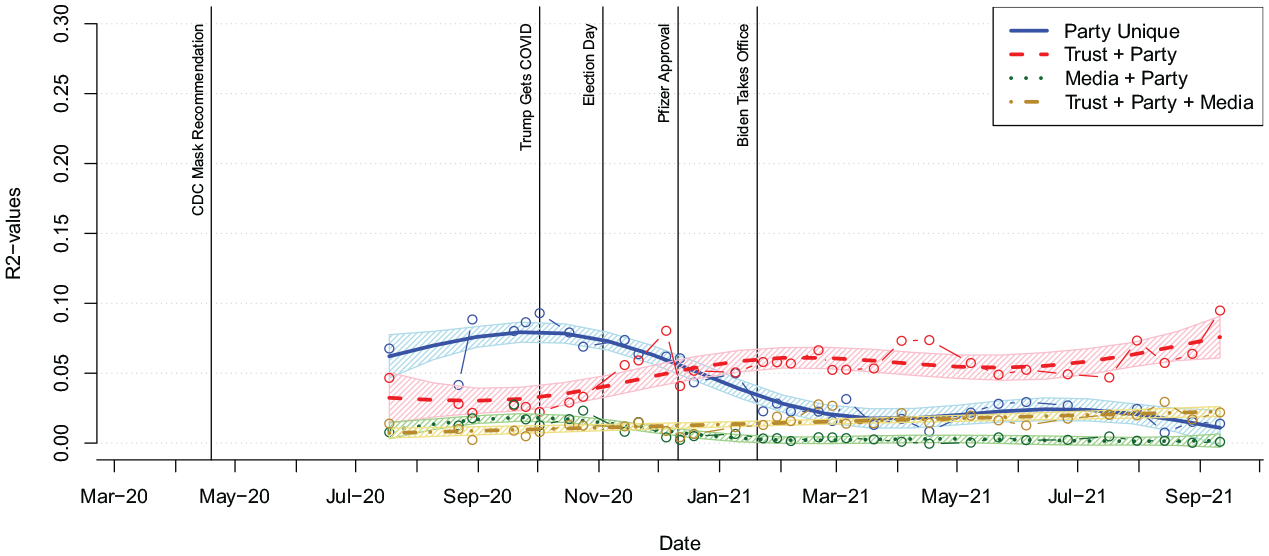
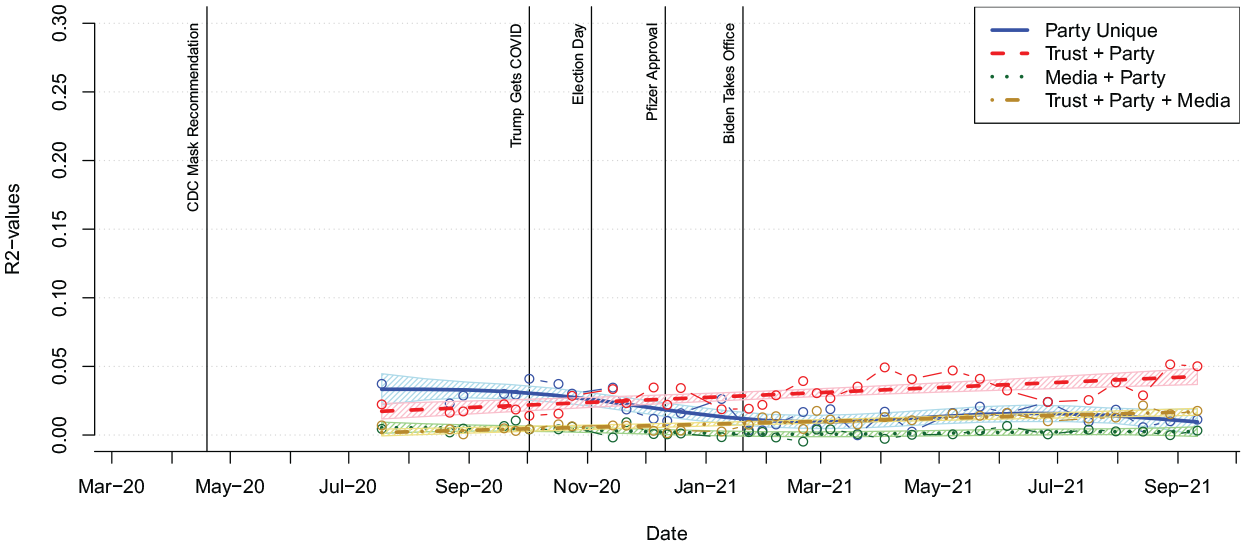
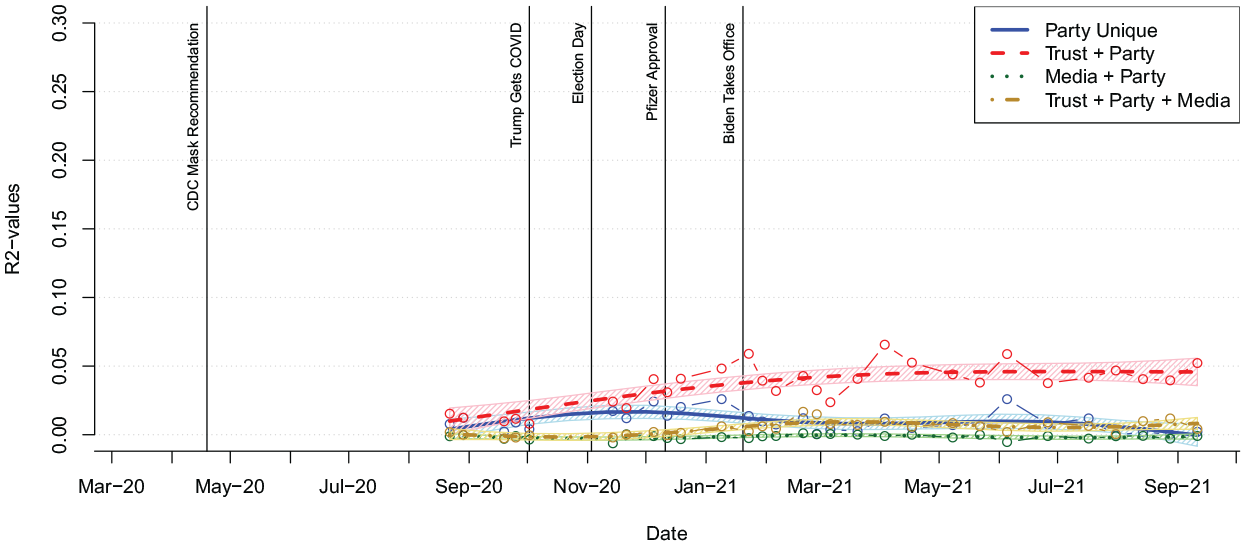
To test whether this relationship accounted for the finding that trust explains more variance than partisanship, we decomposed the variance explained by partisanship into four categories: variance explained only by partisanship, variance explained jointly by partisanship and trust (but not media), variance explained jointly by partisanship and media (but not trust), and variance explained jointly by all three measures (calculations in online Appendix D). Figure 6 shows trends in each over time. For both concern (6A) and mask use (6B), the unique variance attributable to partisanship (solid lines) is the strongest predictor at first. Over time, however, the shared variance between partisanship and trust (dashed lines) became stronger shortly after the election. For vaccination intentions, this shared variance was consistently more predictive than unique partisan variance, though the degree varied over time (Figure 6C). Between when the Pfizer vaccine was approved and when it became available to all adults in April 2021, this shared variance became increasingly predictive, before starting to decline until around July 2021.
Accounting for Party in R2 for Concern Models
Accounting for Party in R2 for Maskwear Models
Accounting for Party in R2 for Vaccination Models
Collectively, while the direct effects of partisanship decreased, trust became increasingly conflated with partisanship after the election. The shared variance between trust and partisanship suggests that some of the variance observed in the former may be driven by the latter, although the independent variance of trust still was more consequential. These results are in line with what we might expect if the influence of partisanship is partially mediated by trust.
Discussion
This study examined how partisanship, trust in public health institutions, and conservative media use related to Americans’ concern about COVID-19, mask use outside of the home, and intentions to get vaccinated over time. For mask use and vaccination intentions, trust in institutions explained the largest proportion of the variance. In the case of concern about COVID-19, trust and partisanship were equally important predictors before the 2020 election, but trust became more important afterward. And in all models, conservative media use exhibited a negligible impact. Notably, the explanatory power of trust in public officials was not consistent over time, but rather increased, particularly after the 2020 election, in conjunction with a corresponding decrease in the influence of partisanship.
But while the story may in part reflect the declining salience of partisanship after the election, party divides did not simply disappear as trust became more important. Instead, starting around the time President Trump revealed his own COVID-19 diagnosis, the correspondence between partisanship and trust itself began to increase, with Republicans expressing less trust and Democrats reporting greater trust. This left the overall level of trust largely unchanged, even though the composition of those who were trusting had shifted notably. Hence, while trust appears to have been the most important reason that individuals were worried about coronavirus, masked up, or intended to vaccinate, the conflation of partisanship and trust over time implies a different mechanism.
The results, then, are compatible with stories about elite polarization as well as with broad differences in trust in science across political groups. The fact that trust and partisanship became more conflated over time may indicate a vicious cycle effect as well, where elite pushback against scientifically motivated policy has not only short-term, but also long-term consequences. While it is likely too late to depolarize COVID-19, interrupting this cycle may be important in addressing future scientific issues.
Evidence that this process was not driven by conservative media is important and interesting, although not particularly conclusive, given the measure employed in these data. Rather than asking for the frequency of media use, respondents were simply asked which source they consult most frequently. Absent data showing the degree of media use, our minimal results are far from definitive.
In addition, we caution that the results presented here are limited in critical ways. Although current literature would suggest that partisanship likely precedes trust in public health institutions, trust in these institutions may impact partisanship, for instance. It is also possible that some other source of attitudes and information, perhaps related to the president, could be accounting for the shared variance observed. Unfortunately, many of the variables we consider already had strong relations before the study began, rendering our effort in disentangling them at best partial. Panel research assessing how individual attitudes change over time would clarify the ordering of causal relations and enable a more formal mediation analysis.
Despite these limitations, the results suggest that polarization around COVID-19 echoes some tropes from earlier cases of scientific polarization and highlights at least one important mechanism that appears to be at play. The increasing correspondence between partisanship and trust is likely to have implications for future issues that rely on public health institutions. To the extent that science is selectively, and not yet broadly, politicized, admittedly an open question, preventing a similar conflation in other arenas may be important.
Supplemental Material
sj-pdf-1-ann-10.1177_00027162221083686 – Supplemental material for A Partisan Pandemic: How COVID-19 Was Primed for Polarization
Supplemental material, sj-pdf-1-ann-10.1177_00027162221083686 for A Partisan Pandemic: How COVID-19 Was Primed for Polarization by James N. Druckman, Austin Hegland, Annie Li Zhang, Brianna Zichettella and Josh Pasek in The ANNALS of the American Academy of Political and Social Science
Footnotes
Austin Hegland is a PhD student in the Department of Communication and Media at the University of Michigan. His research interests center on the way individuals engage in politics and civic life through media, particularly the news media.
Annie Li Zhang is a PhD student in the Department of Communication and Media at the University of Michigan. Her research interests focus on how media influences our understanding of and engagement with scientific issues.
Brianna Zichettella is a PhD student in the Department of Communication and Media at the University of Michigan. Her research focuses on affective polarization and interparty conflict in U.S. politics.
Josh Pasek is an associate professor of communication & media and political science and core faculty at the Michigan Institute for Data Science at the University of Michigan. His research explores how media and psychological processes shape political attitudes, public opinion, and political behaviors; and methods for social measurement.
References
Supplementary Material
Please find the following supplemental material available below.
For Open Access articles published under a Creative Commons License, all supplemental material carries the same license as the article it is associated with.
For non-Open Access articles published, all supplemental material carries a non-exclusive license, and permission requests for re-use of supplemental material or any part of supplemental material shall be sent directly to the copyright owner as specified in the copyright notice associated with the article.
