







Abstract
Traditional and legacy Spanish-language news outlets are shrinking, leaving many communities in the U.S. without news that satisfies their critical information needs. At the same time, news media entrepreneurs are adopting and adapting to technological changes that offer new venues for news delivery. We use a mixed-methods research approach to analyze Latinx digital-native news media organizations that distribute news in Spanish via mobile instant messaging (MIM) apps. Results show that journalists took a bottom-up approach to meeting the information needs of their audiences, choosing MIMs because their readers were already established on those platforms. Our work also reveals that news delivered via MIMs focuses mostly on health, emergencies and public safety, civic information, and economic development.
Keywords
Other articles in this volume detail how and why local journalism is shrinking (Peterson and Dunaway, this volume; Usher et al., this volume). Spanish-language news media are following the same path and dwindling considerably. Prominent Spanish-language dailies and weeklies have closed (e.g., Hoy of the Chicago Tribune, Al Día of The Dallas Morning News, Ahora Sí of the Austin American-Statesman), and others have become online only (e.g., La Opinión, El Diario). In this process, local news outlets serving small Spanish-language communities shrank the most (Retis 2019a). Napoli et al. (2018, 4) found that the larger the Latino population in a community, “the less robust the journalism in that community” was. These trends have an adverse effect on the quantity and quality of information these communities receive from surviving Spanish-language news outlets.
Through this upheaval and along with most news providers, Latinx news media are adopting and adapting to the production and distribution of news via social media (Retis and Cueva Chacón 2021). As a way to fill information gaps, some Latinx news media entrepreneurs are producing social-media-first news to reach Spanish-speaking and immigrant communities in the U.S. through the use of mobile instant messaging apps (MIMs) such as WhatsApp.
This study focuses on six digital Latinx news media that produce and distribute news in Spanish via MIMs, and our analysis seeks to answer some of the key questions laid out by the editors of this volume, namely:
How are these information ecosystems evolving?
Do they meet their communities’ critical information needs (CINs)?
Do the changes in this information economy carry implications for media policy?
We begin with a review of the role that Latinx news media has played in serving Latinx communities, including a discussion of CINs, methods for assessing the media ecosystem, and the role of MIMs in the ecosystem. Then, with a mixed-method approach using case studies, interviews, and content analysis, we observe the rationale and motivations of Latinx news media entrepreneurs for selecting MIMs as the platform for delivering news as well as the CINs these journalists are meeting via their reporting. We conclude with recommendations for journalists, news media researchers, and media policymakers.
Literature Review
Latinx news media serving Latino/a/x 1 communities’ information needs
For more than 200 years, Latino media served their audiences’ needs for information and communication in Spanish, English, or Spanglish (Retis 2019a; Retis and Cueva Chacón 2022; Rodriguez 1999). They evolved in parallel with the various phases of arrival and settlement and, more recently, the subsequent geographical dispersion throughout the country. Historically, Latino/a/x self-representation and information needs have influenced the launch and development of Spanish-language media. They evolved from legacy to new media and, later, to social media. Consequently, they represent a wide range of local, hyperlocal, transborder, transnational, and even translocal Spanish-language enterprises (Retis and Cueva Chacón 2021).
Spanish-language news media have been a part of the American news media landscape since the early 1800s, emerging in response to particular historical, geographical, and cultural drivers (Retis 2019b). Spanish-language digital and social media have been the most recent additions. From the first four-page biweekly newspaper in New Orleans in 1808 to the WhatsApp channels of today, Spanish-language producers identify what is missing from American news offerings and contribute reporting that might not target the larger markets but does serve a relevant portion of the readership (González and Torres 2011; Gutiérrez 1977; Kanellos and Martell 2000).
Spanish-language media took on the key role of maintaining the native language of Latino communities as discriminatory state laws and practices emerged to ban or punish the use of Spanish in public schools and other areas of public life (Montejano 1987; Saldaña 2013). This became particularly relevant to those who turned into foreigners in their own lands after the annexation of Texas and California and, later, to first-generation immigrants from Latin America. In areas dominated by English-only education and ideology, bilingual communities found in Spanish-language media a way to exercise their language skills, maintain their culture, and push for political recognition (Abrajano and Singh 2009; Casillas 2017; Castañeda 2016; Darr et al. 2020).
Latinx communities remain generally marginalized in English-language TV as part of a dynamic of symbolic annihilation by omission (Tuchman 1978) that reinforces cultural and linguistic hierarchies in the U.S. (Beltrán 2017; Chávez 2015). Spanish-language television has served as a cultural forum where Latinx and Latin Americans in the U.S. discover collective identities among the heterogeneity of Latino identities (Valdivia 2010).
Spanish-language media in the U.S. are losing audiences and investors. Important newspapers are halting publication (Tameez 2023), creating news deserts. However, new technological platforms, social networks, and easy access to virtual communication are facilitating the creation of media spaces that reproduce what is being lost in the traditional media landscape (Thussu 2006). Early research suggests that the new digital-native news media emerging from this crisis are intuitively taking advantage of this facilitation (Retis and Cueva Chacón 2021) with promising results regarding Latino civic engagement (Velez 2023). This article is based upon a larger research project that seeks to map the new landscape surrounding digital-native Latinx media outlets. Furthermore, in this study, we seek to examine and understand the offerings and production practices of these new digital media outlets to assess their journalistic roles and their adaptation to the new media landscape.
Critical information needs (CINs)
The identification of communities’ information needs has been a preoccupation of multiple professional and academic fields (Friedland et al. 2012). In the 21st century, organizations focused on public health, human rights, and civic liberties have called attention to the need for a holistic model to assess and satisfy the information needs of communities as a way to secure and support “the critical democratic values of openness, inclusion, participation, empowerment, and the common pursuit of truth and the public interest” (Knight Commission on the Information Needs of Communities in a Democracy 2009, 2). Friedland et al. (2012, v) proposed defining CINs as “forms of information that are necessary for citizens and community members to live safe and healthy lives; have full access to educational, employment, and business opportunities; and to fully participate in the civic and democratic lives of their communities.” Although communities were conceptualized in geospatial and demographic terms, researchers acknowledged that in-group variations—such as income, language, ethnicity, and different abilities—also have an impact on the needs of communities. As such, they proposed the use of eight categories of essential information (see the online appendix).
Amid the decline in the news industry, researchers have used CINs to develop methods for large-scale analysis of the factors that affect the state of local journalism (Napoli et al. 2017) and media ecosystems. They find that local journalism’s distance from large media markets, the presence of universities, and the size of the Latino population affect the robustness of local journalism (Napoli et al. 2018). Robustness in these studies is defined as the combination of some of the following characteristics of news productions: originality, localism, and meeting CINs.
Messaging apps as new forms of Spanish-language news delivery
Smartphone ownership among adults in the U.S. grew from 35 percent in 2011 to 85 percent in 2021. Additionally, 28 percent of U.S. adults ages 18 to 29 are “smartphone-only,” having a smartphone but no home broadband connection. Twenty-five percent of adults who do not have a home broadband connection cited service unavailability as the reason (Perrin 2021). These statistics clearly demonstrate that a growing portion of the U.S. population is moving (or being forced to move) to mobile to access the internet through mobile data. Although research shows that internet access closes the “digital divide”—the inequality in access to digital technology and its resulting disadvantages—for some groups (Gottfried and Shearer 2016), some studies suggest that newspapers offer less in-depth content via mobile (Santana and Dozier 2021) and that the limitations of mobile devices can have a negative impact on audiences’ cognitive access to information (Dunaway and Searles 2022).
Today, more than half (56 percent) of all Americans access news using their smartphones (Newman et al. 2022), and social media (including messaging apps) are becoming the most popular sources of news for U.S. audiences. MIM apps, which were designed to create spaces for interpersonal and group communication in a more private and on-the-go way (Valeriani and Vaccari 2018), are contributing to news exposure and political conversations in unique ways (Boczkowski, Mitchelstein, and Matassi 2018; Karapanos, Teixeira, and Gouveia 2016), albeit with important implications for attention to news and public affairs (Dunaway and Soroka 2021; Dunaway et al. 2018).
WhatsApp is one of the most popular mobile messaging applications for news in Latin American countries (Newman et al. 2022). Although this does not appear to be the case in the U.S., there is evidence that WhatsApp is the top source of misinformation among Latinx communities in the U.S. Since its creation in 2009, WhatsApp has grown to more than two billion users worldwide (WhatsApp 2020), including low-income populations with little to no internet access who are attracted to its ease of use and its low space and data requirements. Users would ask to buy smartphones with the app preinstalled or request installation upon purchase (Mohammed 2016). Since then, journalists have been experimenting with WhatsApp: initially, they used it to reach and interview sources and occasionally capture interview audio (Reid 2016; Viñas and Céspedes 2020); but more recently, WhatsApp has served as a news distribution platform, with journalists developing and distributing WhatsApp newsletters and soliciting feedback from their readers (Ríos 2021).
Research that focused on WhatsApp in Brazil and Chile, where some of the early adopters reside, found that journalists use the app to get information from their audiences in many formats (audio, video, text), especially during breaking news situations. Journalists also reported that the use of WhatsApp made users feel closer to the newsroom (Angeluci, Donato, and Scolari 2017; Dodds 2019). A study of Rwandan journalists (McIntyre and Sobel 2019), which combined the analysis of production, distribution, and feedback via WhatsApp, showed how WhatsApp “facilitates rich interactions with audience members and makes the news process more accessible to the public” (McIntyre and Sobel 2019, 714). Kligler-Vilenchik and Tenenboim (2020) described the case study of an Israeli journalist who uses WhatsApp to discuss evolving political issues with their audience and includes them in the news production process. The study “demonstrate(d) how a continuous conversation between the journalist and her loyal audience members allows the co-construction of journalistic knowledge across the news-production process” (2020, 264). Regarding specific news content distributed via the app, researchers of German newsrooms using WhatsApp (Boczek and Koppers 2020) found that the most frequent topics of news shared via WhatsApp were crime (34.4 percent of all topics), politics (10.6 percent), sports (10.5 percent), transportation (10 percent), entertainment (9 percent), and the economy (5.6 percent). The same study found that most journalists were reluctant to respond to messages from readers via MIM.
Informed by the historical role that Latinx news organizations have played in fulfilling the critical information needs of Spanish-speaking communities in the U.S., and observing how these news organizations are migrating to digital environments, this study seeks to answer the following research questions:
Research Question 1 (RQ1): What is the rationale behind producing and distributing news via mobile instant messaging apps?
RQ2: What critical information needs are being fulfilled by these news organizations?
Methods
For the purpose of this study, we take into consideration Zelizer’s (2004, 2017) criticism of U.S. mainstream media’s exclusion of marginalized groups and approach to new models of content production within the framework of diversity, the interdisciplinary nature of journalism studies, and Usher’s (2019) proposals for new approaches to place and trust in journalism.
To answer the research questions proposed in this study, we used a mixed-methods approach. First, we selected a group of Latinx news media organizations as case studies that meet the criteria explained below. Second, we analyzed interviews with these organizations’ news producers. Finally, we carried out a content analysis of the news content distributed by these news organizations.
We chose qualitative methods to focus on single or collective cases with the intention of digging deeper into news organizations’ core values and intentions (Merriam 2009) by drawing from “naturalistic, holistic, ethnographic, phenomenological, and biographical research methods” (Stake 1995, xi–xii). We conducted in-depth interviews with founders, producers, and journalists because interviews can yield the rationale behind decision-making and provide opportunities for critical reflection (Tracy 2019). Finally, content analysis was selected as the most appropriate method to quantify instances of CINs present in news content (Silverman 2006).
Case studies
As part of our larger project of mapping Latinx digital news media in the U.S., we encountered a growing number of news outlets integrating MIM apps into their news production to different degrees (Retis and Cueva Chacón 2021). Some produced news first for MIMs, and others exclusively for MIMs. The six Latinx news media used as case studies for our research have been selected because they reflect this trend. These news outlets (see Table 1) regularly produce newsletters that they distribute through WhatsApp or SMS (short messaging service). Other outlets were excluded from this study because either they did not produce news on a regular basis, or they included an automated (bot) tool instead of direct interaction with audiences.
Case Studies
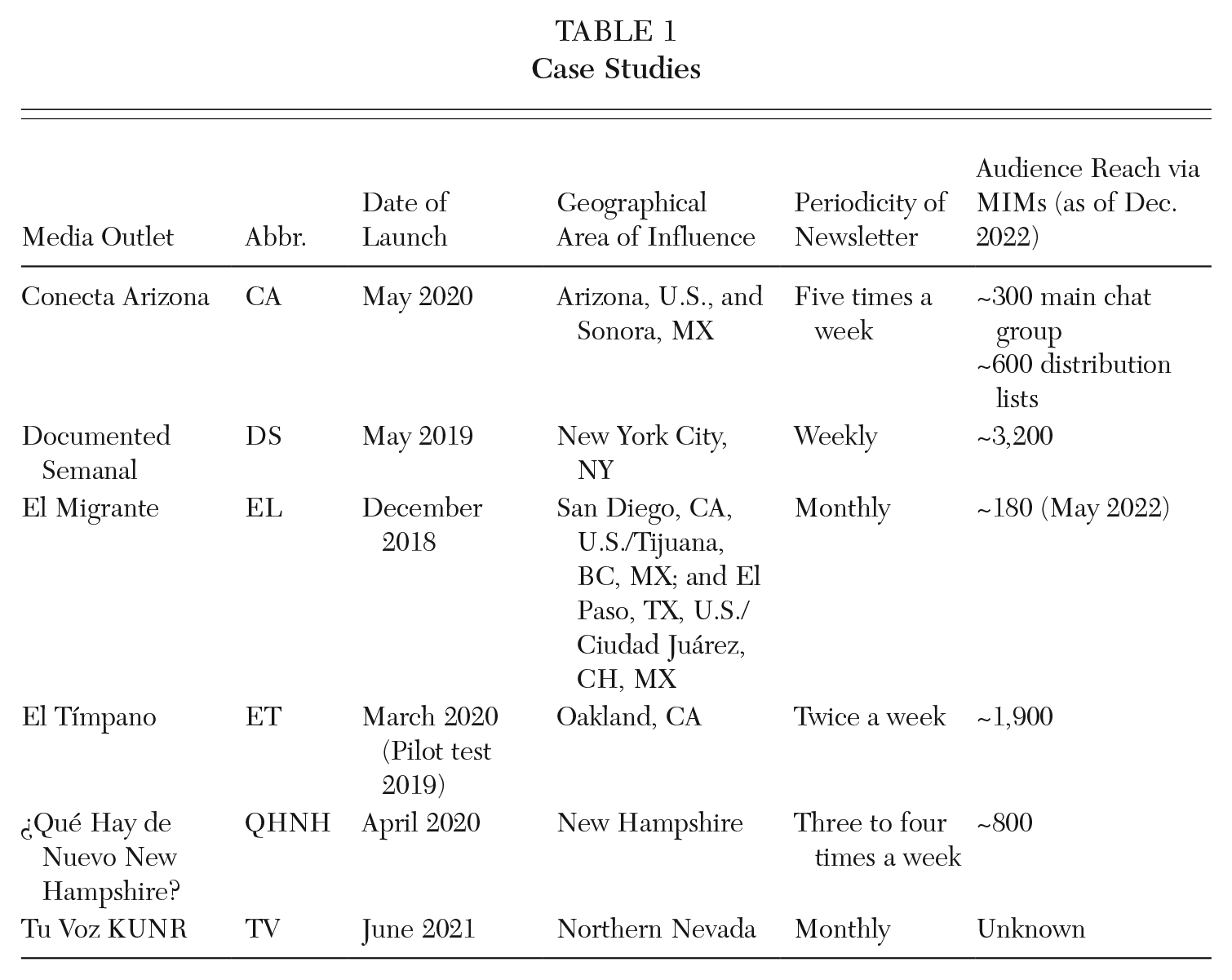
The news outlets analyzed in this study are all nonprofit organizations described as advocacy-style news outlets (Branton and Dunaway 2008; Rodriguez 1999). They market themselves as “committed” to their communities (Conecta Arizona, n.d.), providing “the latest news” (New Hampshire Public Radio 2020) and resources to “fill the information void for migrants” (El Migrante, n.d.) using “approaches to community-centered reporting . . . that [provide] actionable local news and participatory reporting” (El Tímpano, n.d.).
Following, we briefly describe the news outlets, their origins, their use of messaging apps, their date of launch, and information about their journalistic production beyond MIMs.
Conecta Arizona
Founded in May 2020 by Maritza Félix, a Mexican reporter based in Phoenix, Arizona, Conecta Arizona started as a WhatsApp chat group—La Hora del Cafecito (or The Coffee Time)—with a one-hour daily discussion between the host, guest speakers, and a transborder audience (U.S.–Mexico) to discuss “the myth of the day.” Conecta Arizona produces a Monday-through-Friday newsletter distributed to the WhatsApp chat group and several distribution lists.
Documented Semanal
This Spanish-language newsletter is produced by Documented, a nonprofit news site that is “devoted solely to covering New York City’s immigrants and the policies that affect their lives” (Documented, n.d.). The site regularly produces stories in both Spanish and English. The newsletter is disseminated via a WhatsApp distribution list. The WhatsApp newsletter was developed by Chilean and Argentinian reporters Nicolás Ríos and Aldana Vales, respectively, while working on a graduate project at New York University. Since its launch, the news outlet has developed more than a dozen guides in Spanish for immigrants in New York.
El Migrante
This initiative consists of a WhatsApp newsletter and chat group, a print newsletter, and a radio newscast. The project was funded and supported by the international nonprofit news organization Internews. Jesse Hardman, who also leads the Listening Post Collective, launched it with the help of Mexican reporter Karla G. Castillo. The news products are oriented to serve immigrants on the Tijuana–San Diego and Ciudad Juárez–El Paso borders.
El Tímpano
El Tímpano was founded in 2019 by American reporter Madeleine Bair after she conducted an information needs assessment among residents in Oakland, California, a city that is 27 percent Latino. El Tímpano started as a news website with an important component of “listening posts”—kiosks located in key places of the city where Bair would ask residents in person about their information needs. As the pandemic started, Bair (2020) began distributing information about services for residents in need via SMS.
¿Qué Hay de Nuevo New Hampshire?
In 2020, NHPR, the National Public Radio (NPR) affiliate in Concord, New Hampshire, assigned bilingual reporter Daniella Alle to a project that would translate news for the state’s growing Spanish-speaking community. Alle and a team that included another bilingual reporter and a Spanish editor produce an audio newscast and a newsletter distributed via a WhatsApp distribution list.
Tu Voz
This initiative was started in 2021 by KUNR, the NPR affiliate in Reno, Nevada. Journalist Natalie Van Hoozer launched it in partnership with Noticiero Móvil—a bilingual news site produced by journalism students at the University of Nevada, Reno. Van Hoozer produces a monthly newsletter and an audio newscast that are distributed via a WhatsApp distribution list.
Interviews
We conducted interviews to answer RQ1, which sought to understand why founders, producers, and journalists consider MIMs an appropriate news platform. The interviews took place between July 2021 and December 2022. A total of 12 interviews were conducted. Interviews lasted 45 to 60 minutes. We asked journalists to describe their routines in reporting and producing the newsletters, as well as the ways they engage with their audiences. We asked the founders of news outlets about the process of identifying audiences and their information needs, the journey from idea to implementation, and the main obstacles they faced in the process. The interviews were transcribed and analyzed qualitatively using the constant comparative method (Tracy 2019) to identify emerging themes.
Content analysis
To answer RQ2, we collected the newsletters produced by the news organizations selected as case studies. As shown in Table 1, the periodicity or frequency of publication varies so much among the publications that it presented a challenge when trying to identify an appropriate sampling method. In general, for online newspapers, Hester and Dougall’s (2007) method of traditional online media sampling—constructed week sampling—is more efficient than simple random sampling or consecutive-day sampling. However, researchers also have found that for weekly magazines, the “most efficient sampling method for making inference to a year’s issues of a [weekly] news magazine is a monthly stratified sample of twelve issues” (Riffe, Lacy, and Drager 1996, 640).
Using these studies as a reference but also taking into consideration that immigrant and transnational populations change based on immigration waves (e.g., new immigrants arrive in the U.S. more often in the spring than during summer or winter [Gonzalez-Barrera 2020], and border communities cross borders more often during holidays such as Thanksgiving and Christmas to reunite with family or to take advantage of sales), researchers considered that a stratified sampling method following the four seasons (summer and fall 2021 and winter and spring 2022) would be more representative of the information shared by Latinx media. (The online appendix shows the collection dates for each news outlet.) WhatsApp’s chat and MSM’s exporting features were used to collect the newsletters on the selected dates.
A total of 48 newsletters were collected following the sampling method. Commonly, newsletters were composed of brief paragraphs that we identified as news items. A total of 389 news items were identified from the newsletters, comprising the sample for the content analysis (n = 389). The content analysis was conducted at the news item level. (See Figure 1 for an illustration of how the newsletters appeared on a smartphone.)
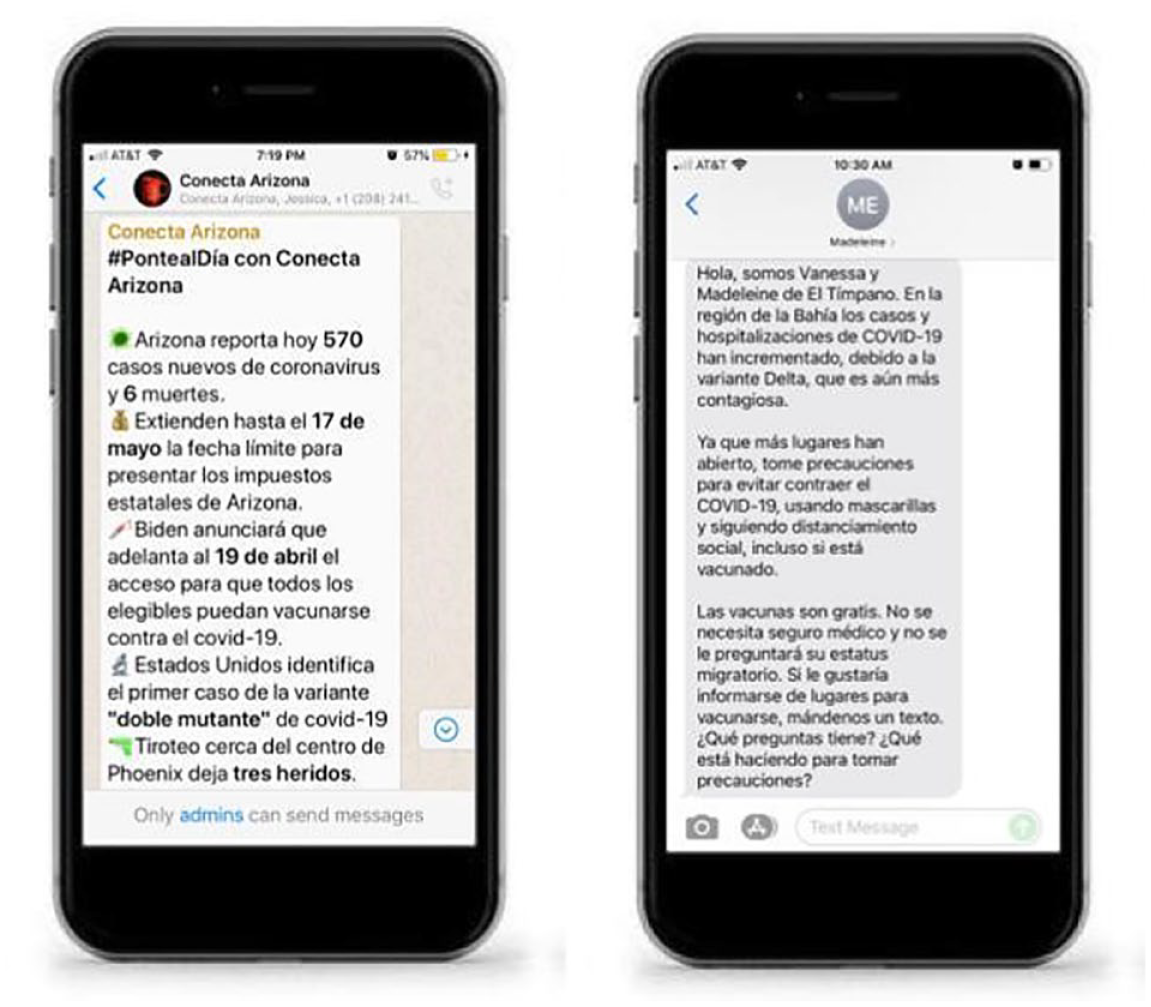
Examples of WhatsApp and SMS Newsletters
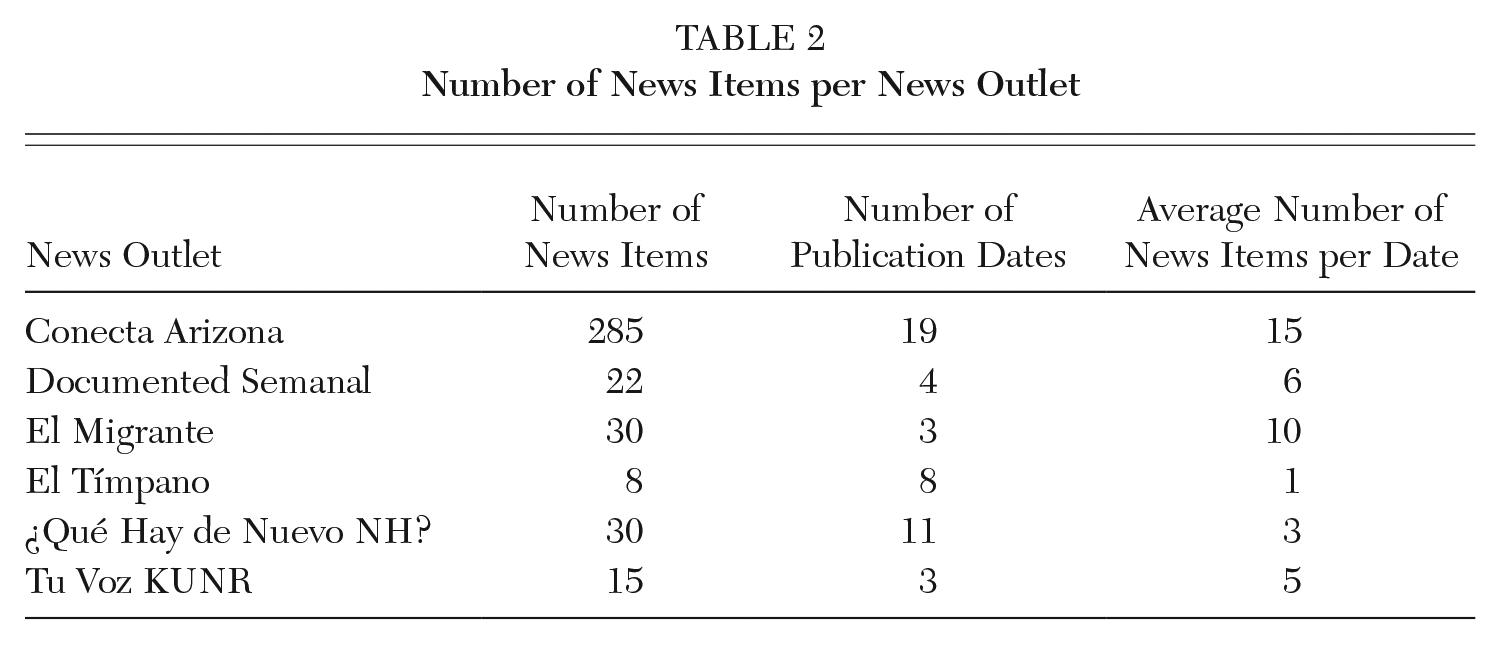
The number of news items per newsletter ranged from one news item to 15 (see Table 2). El Tímpano was the only news outlet to include just one news item per message. On the other end of the spectrum, El Migrante and Conecta Arizona had an average of 10 and 15 news items per newsletter, respectively.
Number of News Items per News Outlet
Modeled following Napoli et al.’s (2018) assessment of local journalism, the content analysis sought to find out whether the information shared in the newsletters (1) was original (produced by the news outlet itself); (2) focused on the local community; and (3) addressed a critical information need, based on the categories established by Friedland et al. (2012). However, after a first round of coding training, 2 the original eight category descriptions provided by Friedland et al. were deemed insufficient to categorize all the issues covered in the news items. As a result, the descriptions were expanded to include topics not clearly identified in the original version. For instance, issues related to immigration policies were incorporated into the Civic Information category. Housing and related issues such as evictions, rent moratoriums, and rent relief support were added to the Environment and Planning category.
Additionally, it was clear that international news played an important role for some communities, as implied by Napoli et al.’s (2018) study. An International Affairs category (coded as 9) was incorporated to capture CINs related to news events that happened abroad. This category included news items such as the evolution of COVID-19 cases in Latin America, asylum and immigration policies adopted by Central American countries, and crime and safety issues faced by immigrants on their travel to the U.S.–Mexico border. Finally, a noncritical information needs category (coded as 10) was created to include news related to entertainment, sports, gossip, and other noncritical information.
Findings and Discussion
Interviews
A total of 12 journalists behind the news outlets were interviewed. The group included eight women and four men. The participants’ ages ranged from 25 to 47 years old. Eight participants identified as Hispanic, Latino/a, or Latin American; three participants identified as white non-Hispanic; and one participant preferred not to disclose their race/ethnicity. All participants had a formal education in journalism, and nine had master’s degrees in journalism or related areas. The journalists’ years of experience in journalism ranged from three to 30 years, with an average of 12 years of experience. Interviews were conducted in the interviewee’s language of preference (English, Spanish, or Spanglish) and were translated accordingly (both authors are bilingual).
From the interviews, it was clear that the journalists share a strong commitment to serving Latinx communities that originated before they embarked on the enterprises analyzed in this study. Additionally, two themes related to the motivations and rationale for selecting MIMs emerged from the interviews: having Latinx audiences’ needs as their guiding compass and meeting their audiences where they are.
Strong commitment to Latinx communities
The journalists who founded the news outlets and messaging services agreed that the COVID-19 pandemic was a big motivation and boost for their enterprises; however, many of them had already been surveying Latinx communities’ information needs. For instance, Madeleine Bair (ET) had worked on assessing Oakland residents’ CINs in 2018 (Bair 2018) and launched a pilot in mid-2019 (Bair 2019) before introducing El Tímpano’s messaging service in March 2020. Similarly, Jesse Hardman of El Migrante conducted an information needs assessment among migrants in Tijuana in the summer of 2018, as requested by the nonprofit news organization Internews, because of a recent increase in migrants trying to cross the border into the U.S. Hardman and Karla G. Castillo Medina launched El Migrante’s WhatsApp newsletter and chat group in December 2018. Likewise, Nicolás Ríos and Aldana Vales conducted research among Latinx communities in New York in the fall of 2018 as part of a partnership between the nonprofit news organization Documented and their graduate program at New York University. With their help, Documented launched the WhatsApp newsletter Documented Semanal in May 2019.
Even the projects that were developed as a response to the pandemic involved journalists who were already committed to serving Spanish-speaking communities. This is the case of Maritza Félix (Conecta Arizona), who had been reporting in Spanish for the Spanish-speaking community in Phoenix, Arizona, since 2009, as well as the case of Natalie Van Hoozer (Tu Voz KUNR), who started reporting in Spanish for Noticiero Móvil as part of her graduate work at the University of Nevada, Reno.
Audiences’ needs as their “compass”
The journalists interviewed here agreed that they had a different approach to their target audiences than traditional journalists. They used varied terminology, but the main idea was about changing the traditional focus of doing journalism about a community to “doing it with the community.” Moreover, Bair (ET) characterized their work as “at the intersection of, quote, unquote, citizen journalism or participatory media and human rights.”
Ríos (DS) said that the Documented partnership request was triggered by the acknowledgment by Documented’s founders that the site’s readers included immigration activists, academics, lawyers, and policymakers, but not their target audience: New York immigrants.
Similarly, Félix (CA) called her work community-oriented journalism that looked to move the limelight from the powerful and give “more echo to the local community voices, the families and people impacted by the news.”
Relative to immigration, Castillo (EM) said that everyone seemed to pay attention to immigration but that “the immigrants’ information needs” had been neglected for a long time, and El Migrante’s goal was “to listen to their needs and have them as their compass.”
Meeting audiences where they are
In order to meet communities where they are and solicit feedback from them, the journalists said, traditional platforms were not enough. In some cases, such as the outlets supported by public radio, “people just don’t know to go to an NPR station for news in Spanish, because that relationship hasn’t been built,” as expressed by Alle (QHDN). So, they had to work on building those relationships and finding the right channels to hold conversations with their target audiences.
For five of the outlets, WhatsApp was the right tool at the time. In the case of Documented Semanal, Ríos and Vales conducted research by interviewing New York Latinx organizations and residents, and they discovered that WhatsApp was immigrants’ primary source for news from their countries of origin. Alle from QHDN said she knew that Latinx leaders in Concord were already on WhatsApp because of her previous reporting on the community. She also based her decision to use WhatsApp on Documented Semanal’s experience and because she found that people appreciated the ability to share multimedia via WhatsApp, making it “more versatile; giving you the possibility of sending something more accessible that people could listen to while doing [chores].”
Félix (CA) based her decision on both rational and emotional reasons. On one hand, using MSM (text messages) could be costly for members of the Arizona–Sonora transborder community who lived on the Mexican side of the border. On the other hand, she communicated daily with her mother who got stuck on the Mexican side when the borders were closed because of the pandemic:
And then, my mom, without planning it, inspired me because she sends me “los piolines con brillitos”
3
every morning, and the prayers in the afternoon, and the memes [via WhatsApp]. But she also used [WhatsApp] to send me fake news about the pandemic. . . . So, I thought, why don’t we do it via WhatsApp? Because that is where people are sharing news. (Félix)
Content analysis
Overall, the top five CINs that emerged were (1) Health, (2) International CINs, (3) Emergency and Public Safety, (4) Civic Information, and (5) Economic Development (see Table 3). Transportation and Education were the least-covered information needs.
Percentage of News Items by CIN
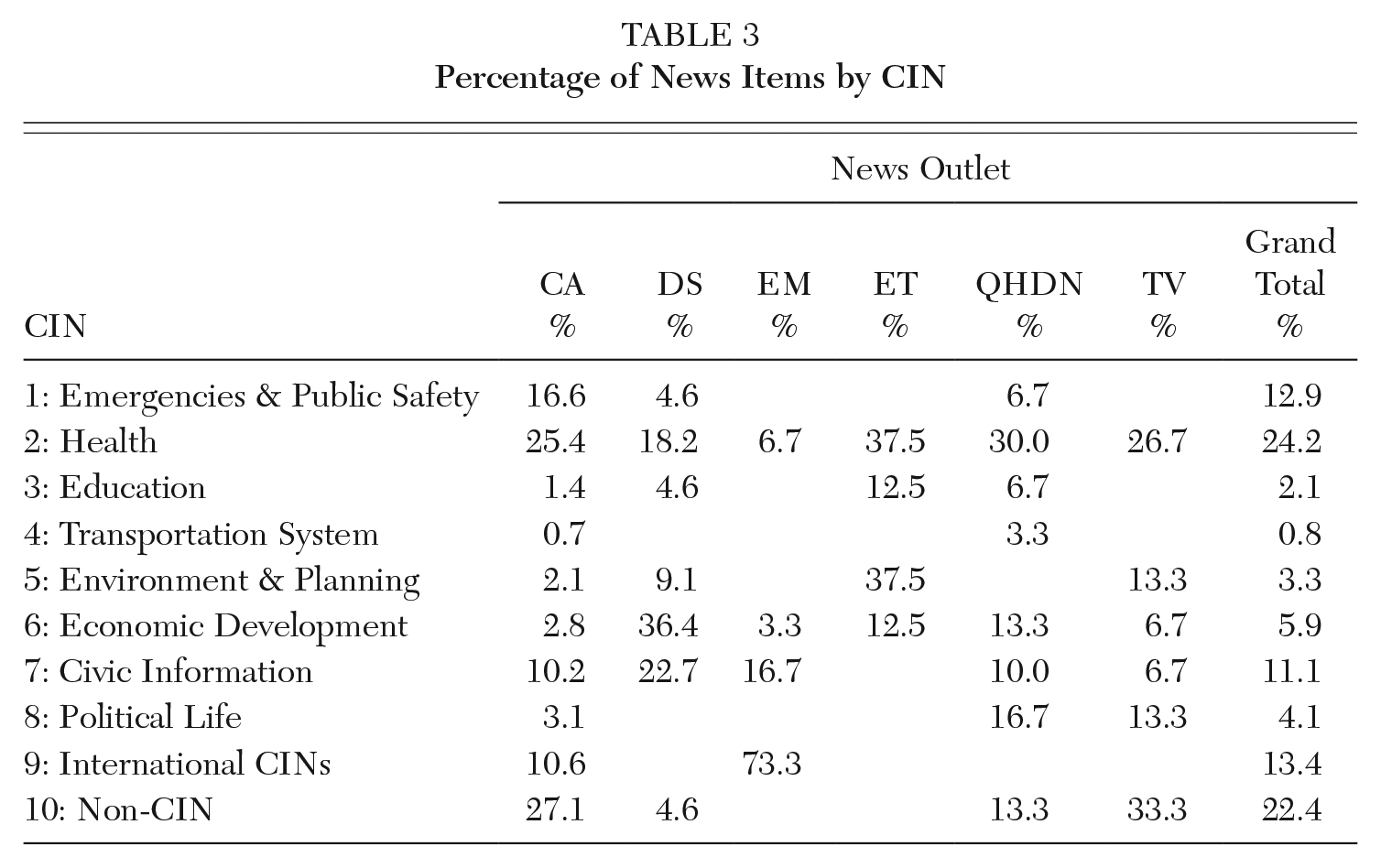
Because the broad range in the number of news items per newsletter and the diversity in the periodicity by publication affected the overall results, the data were also analyzed by news outlets. Clear differences emerged. For instance, only Conecta Arizona and El Migrante published news items related to international CINs. This is consistent with their target audiences, as they both serve transborder communities that are interested in or affected by what happens in their countries of origin (see Table 1 for geographical area of influence).
Health and Economic Development were the only two categories that all news outlets covered, albeit to different degrees. News items coded in the Health category reported mostly on COVID-19 infections and deaths, mask mandates, and vaccination campaigns, but also on mental health issues and reproductive rights and services. This makes sense, as the data were collected from June 2021 through May 2022. News items coded in the Economic Development category focused mostly on federal stimulus checks and tax reporting but also on tax relief, labor rights, and funding for people who lost their jobs because of the pandemic.
Finally, Civic Information was a category covered by most as well (except for El Tímpano). As noted, we expanded this category to include issues related to immigration policies and services, as well as support for immigrants. News items coded under this category focused on asylum proceedings, changes in Title 42 (also called the “Remain in Mexico” policy for asylum seekers), and changes in the Dream Act (Deferred Action for Childhood Arrivals).
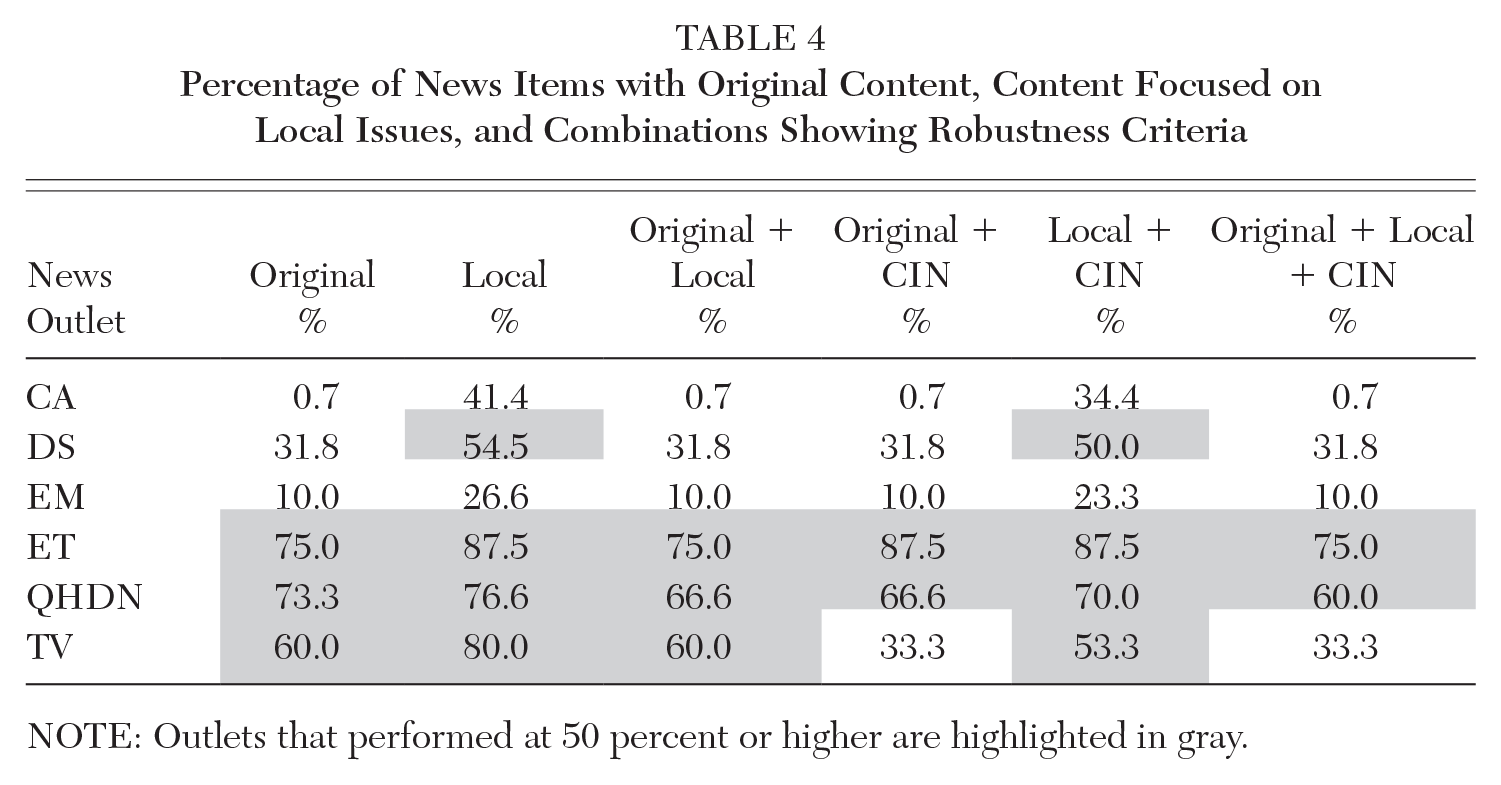
Again, per Napoli et al. (2018), this study used the definition of robustness of journalism to determine whether the news items in the content analysis met critical information needs, were original to the news outlet, and focused on the communities they serve (in other words, were “local” in the context of the communities). Table 4 shows the analysis of different combinations of these variables. For half of the news outlets (ET, QHDN, and TV), 60 percent or more of their news items were original or local, or original and local. Two of them (ET and QHDN) had 60 percent or more news items that were original and local and met CINs.
Percentage of News Items with Original Content, Content Focused on Local Issues, and Combinations Showing Robustness Criteria
NOTE: Outlets that performed at 50 percent or higher are highlighted in gray.
Two of the outlets mentioned above are supported by an NPR station; the third, El Tímpano, has been operating longer than most other outlets in this study and has developed more funding sources that cover more staff. Documented Semanal, with 50 percent of news items that are local and meet CINs, is also supported by its parent site, Documented.
Conecta Arizona and El Migrante, with lower percentages regarding originality, localism, and CINs, are the two outlets that serve border and transborder communities and, therefore, had a higher rate of news items focused on international news. These outlets do serve the information needs of their communities but not according to Friedland’s CIN framework.
Conclusions
This study sought to contribute to the recent and growing interest in how news ecosystems are adapting to changes in the media industry. Our particular emphasis is on Spanish-language media. The contraction of investment in the news industry and the growing number of information deserts, especially among minoritized populations such as Spanish-speaking communities, have motivated resourceful and committed Latinx journalists, such as the ones who participated in this study, to produce news for social media first and to distribute news via mobile platforms.
As our case studies revealed, the journalists behind these news enterprises are experienced and seasoned journalists who are committed to the communities they serve. These journalists did important listening work—interviewing, surveying, and chatting (texting) with their audiences—before starting their WhatsApp or SMS newsletters services. They followed a bottom-up orientation to audiences, declaring that Latinx audiences’ information needs are their compass. They proved to be resilient in adapting to new technologies.
Informed by interactions with their communities, these journalists—all independent and operating as nonprofit organizations—produce news that, as our content analysis revealed, has high levels of originality, is local to their audiences, and focuses chiefly on four CINs: Health, Emergency and Public Safety, Civic Information, and Economic Development. Our content analysis also revealed that the outlets whose main audiences were transborder and transnational produced or aggregated news focused on CINs in their countries of origin, acknowledging their transnational liaisons.
Furthermore, as Friedland et al. (2012) proposed, the critical information needs framework cannot be static, and our study confirmed that the framework must be updated to better reflect the information needs of diverse communities that include transborder, transnational, first-generation, and non-English-speaking communities, among others. The framework should also be adapted to reflect structural and systemic changes in our post-pandemic society. In our study, the framework was effective in reflecting the issues that emerged during the pandemic related to public health, emergencies, and public safety. However, it was less effective in areas related to the housing crisis and changes in border and immigration policies. More research should be done to test the framework and incorporate critical information needs from other minoritized groups, such as the ones analyzed by Posey (this volume).
Regarding the digital platforms chosen to deliver the newsletters, particularly WhatsApp, journalists expressed the need to reach communities on platforms where they have existing interactions with family and other community members. In addition to that, the platform did not appear to place limits on the journalistic practices, as newsletters included one to 15 news items that met CINs and provided entertainment and other non-CIN news items. Future research should address in greater depth how the platform’s affordances influence journalistic routines.
Finally, although these outlets appear successful and have not paused or ended operations, our study did not focus on business models or evaluate their sustainability. Like their mainstream media counterparts, these producers face the challenge of maintaining their offerings in local and translocal settings. Future research should focus on the impact on audiences’ news literacy and political and civic participation, among other factors that can support Spanish-speaking communities’ wellness while strengthening democracy.
Supplemental Material
sj-docx-1-ann-10.1177_00027162231218542 – Supplemental material for ¿Qué pasa with American News Media? How Digital-Native Latinx News Serves Community Information Needs Using Messaging Apps
Supplemental material, sj-docx-1-ann-10.1177_00027162231218542 for ¿Qué pasa with American News Media? How Digital-Native Latinx News Serves Community Information Needs Using Messaging Apps by Lourdes M. Cueva Chac�n and Jessica Retis in The ANNALS of the American Academy of Political and Social Science
Footnotes
NOTE:
The authors thank Nikki Usher, Phil Napoli, Johanna Dunaway, Josh Darr, and Mike Miller for their helpful feedback, along with the other participants at the 2023 SSRC meeting in San Diego. We also thank the journalists who participated in our study. The authors received funding from San Diego State University’s University Grants Program.
Supplemental Material
Supplemental material for this article is available online.
Notes
Lourdes M. Cueva Chacón is an assistant professor in the School of Journalism and Media Studies at San Diego State University. Her research focuses on digital journalism in the Americas and Latino/a/x journalism in the U.S. She is the coeditor of The Routledge Companion to Latino/a/x Journalism (with Jessica Retis; Routledge, forthcoming).
Jessica Retis is the director of the School of Journalism at the University of Arizona. She is the coauthor of Narratives of Migration, Relocation and Belonging: Latin Americans in London (with Patria Román Velásquez; Palgrave 2020), and the coeditor of The Handbook of Diasporas, Media, and Culture (with Roza Tsagarousianou; Wiley 2019).
References
Supplementary Material
Please find the following supplemental material available below.
For Open Access articles published under a Creative Commons License, all supplemental material carries the same license as the article it is associated with.
For non-Open Access articles published, all supplemental material carries a non-exclusive license, and permission requests for re-use of supplemental material or any part of supplemental material shall be sent directly to the copyright owner as specified in the copyright notice associated with the article.
