







Abstract
Male students graduate from high school and enroll in college at lower rates than females. Male participation in the workforce has also declined over the past several decades. We present evidence on changing workforce demand and participation that highlights how opportunities for female-dominated employment have outstripped those for male-dominated occupations. We also show how several of the high-growth occupations that do not require a BA fall under the category of career and technical education (CTE), suggesting that CTE has a role to play in improving outcomes for males. We conclude with four implications for policy and practice: (1) scale successful models, (2) support areas shown to benefit male students, (3) use CTE to connect applied postsecondary education to employment, and (4) use CTE to connect males to occupations with high demand or strong compensation, including jobs in which males are not well represented, like education and health care.
Keywords
Boys are less likely than girls to complete high school or go to college. And, although it is well documented that boys make up a disproportionate number of (the relatively few) STEM graduates in the U.S., they tend to develop fewer skills than female students do during their years of required schooling. In the early twentieth century, these patterns were quite different. Female workforce participation was limited, and many of the available jobs were in manufacturing and other manual, labor-intensive occupations that often required a high school diploma or less. In addition to these structural features, companies also competed for male labor in the years just following World War II. Companies often employed workers for 30 to 40 years, offering benefits and a pension just to hold onto that labor. For three generations, this trend favored the male workforce.
However, the shifts in the economy over the past 50 years, which have accelerated in the past 30 years, have drastically changed this reality. Many jobs and businesses have been offshored or lost to global trade, and employers now demand skills that often require training that exceeds what is typically offered in high schools. Further, the rise of service jobs, and the related decline in manufacturing and other routine manual employment opportunities, have led to less workforce participation and worse employment outcomes for males.
As we confront how best to prepare individuals for the workforce and especially how to improve workforce outcomes for men, educational programs and workforce training have a clear role to play. Career and technical education (CTE), formerly called vocational education or vo-tech, is a segment of secondary and postsecondary education that explicitly focuses on developing skills that can be applied in a specific set of occupations or in a particular industry. In American high schools and in community and technical colleges, CTE includes programs such as culinary arts, automotive repair, construction and skilled trades, IT, early education and care, and health services.
Strong causal evidence now exists suggesting that participating in CTE can improve the outcomes of those who participate (e.g., Brunner et al. 2023, 2026; Dougherty 2018; Kemple and Willner 2008). Yet CTE is a broad moniker for programs that are quite different in their content and skill focus. The evidence demonstrates that, despite all being considered CTE, the potential benefits often depend on the program area in which they participate (Ecton and Dougherty 2023) and on individual characteristics like gender (Bonilla 2020; Brunner et al. 2023), family income (Dougherty 2018), or disability status (Brunner et al. 2026). While some of this evidence has focused on schooling outcomes, much of the work at both the secondary and postsecondary levels reveals that CTE experiences and the skills developed in those programs are rewarded in the labor market (Bishop and Mane 2004; Brunner et al. 2023; Carruthers and Sanford 2018; Stevens et al. 2019). Moreover, the evidence suggests that effects of CTE participation are particularly strong for boys and men (e.g., Brunner et al. 2023; Ecton and Dougherty 2023). This reality, paired with the fact that many of the largest impacts are in programs aligned with occupations that do not necessarily require a college degree (especially in male-dominated fields), CTE may be a strong policy solution to the low rates of achievement and employment for boys and men.
Patterns in Male Workforce Participation
Men have been participating in the U.S. workforce at decreasing rates since their historical peak just after World War II (Figure 1). Over this same period, workforce participation among women has grown, though this increase has plateaued since around the turn of the century. At least some of this decline among males is attributable to the loss of industries and occupations that, in the past, disproportionately employed males. In Figure 2, we present trends in employment volume by occupations that are traditionally male-dominated, female-dominated, and close to balanced in sex composition. Since 1999, the share of employment in occupations that are predominantly male has stagnated or fallen, while those that are more gender balanced have been rising most steadily. Economic shifts away from manufacturing and other jobs that have been classified as manual but routine (Autor et al. 2019) and toward service industries that could not be offshored (e.g., health care) explains much of this change (see Figure 3, Panels 1 and 2).
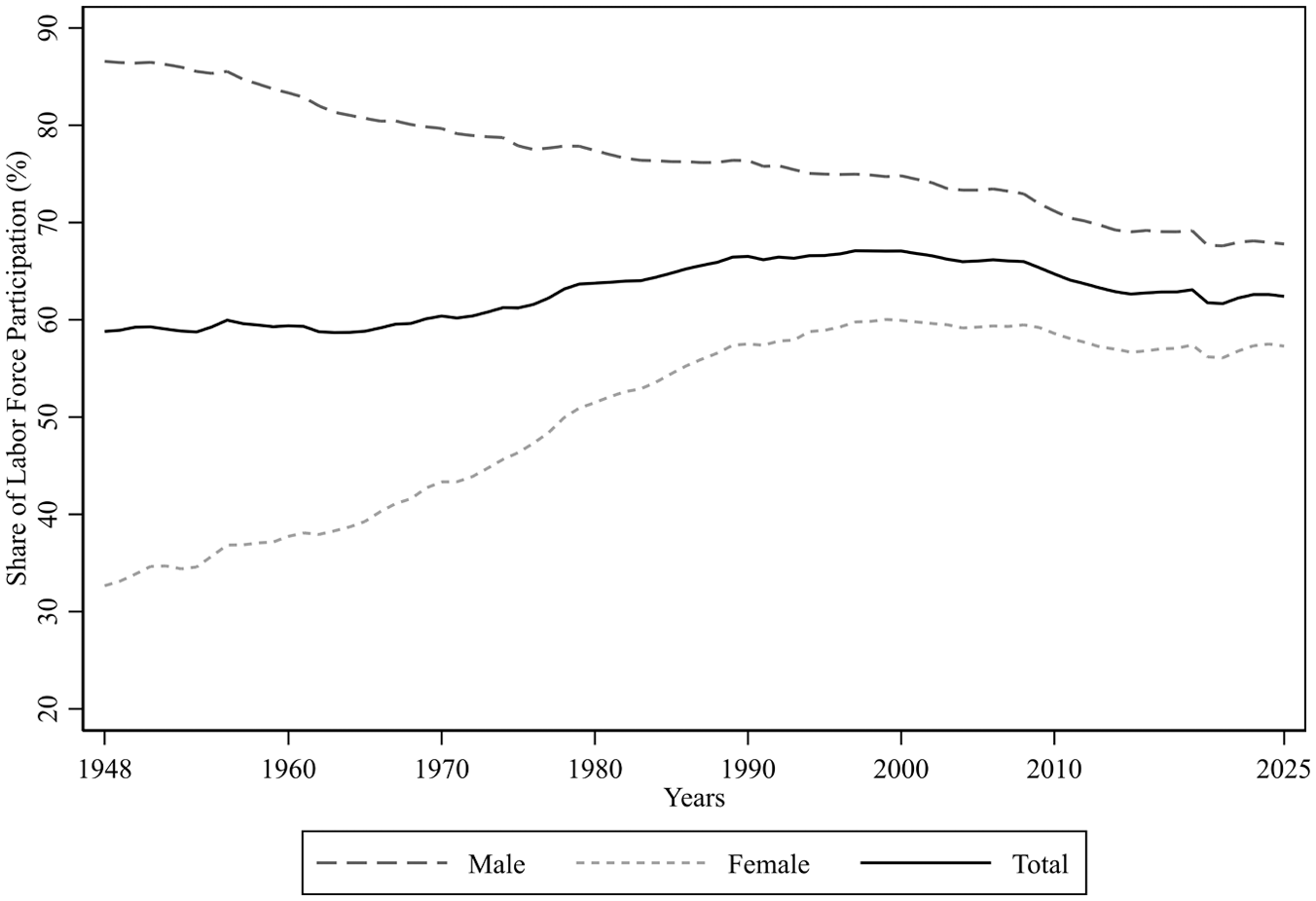
Trends in Labor Force Participation, Overall and by Sex
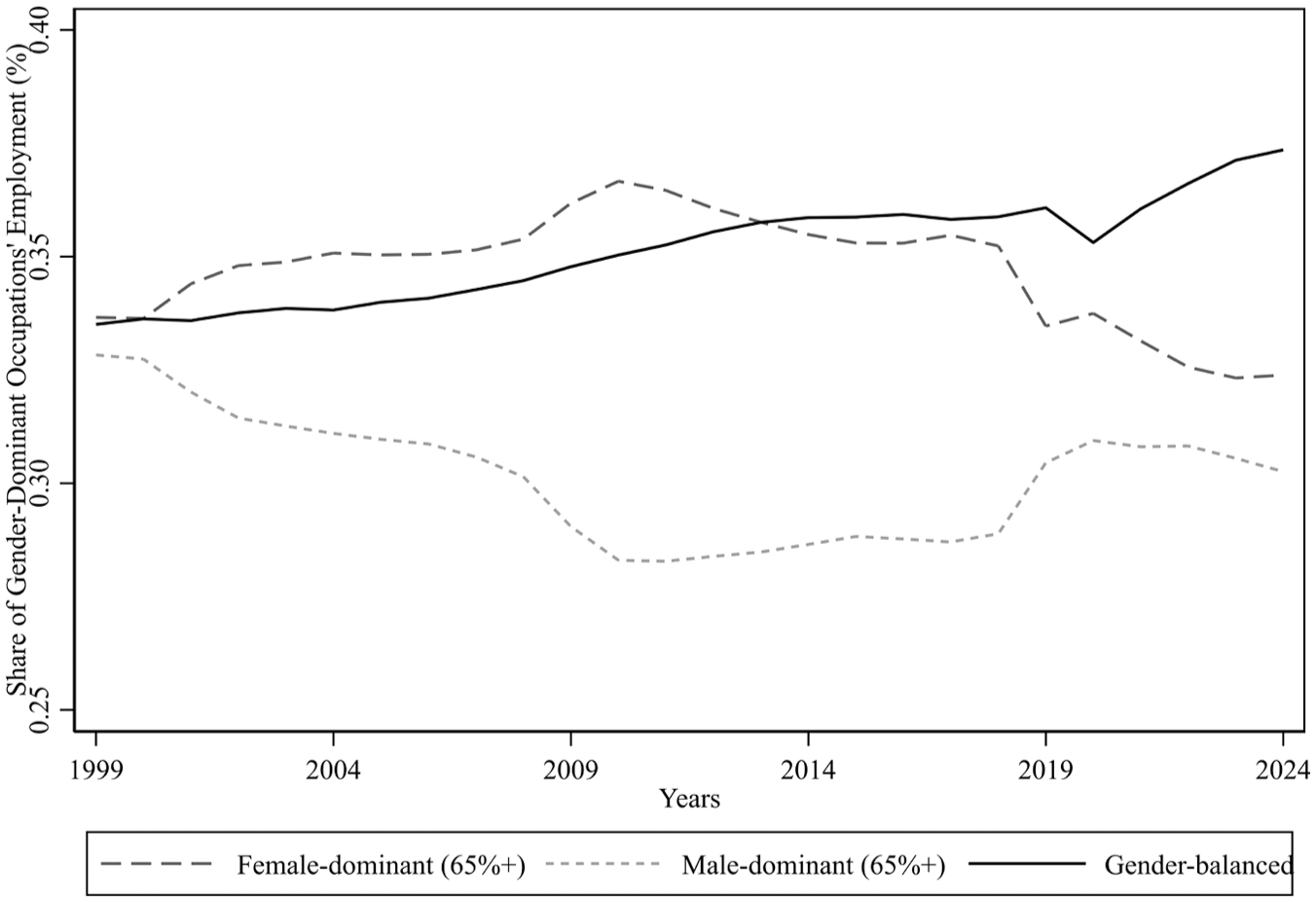
Trends in Labor Force Participation (Share Among Total Workforce Employment), Overall and by Density of Specific Gender
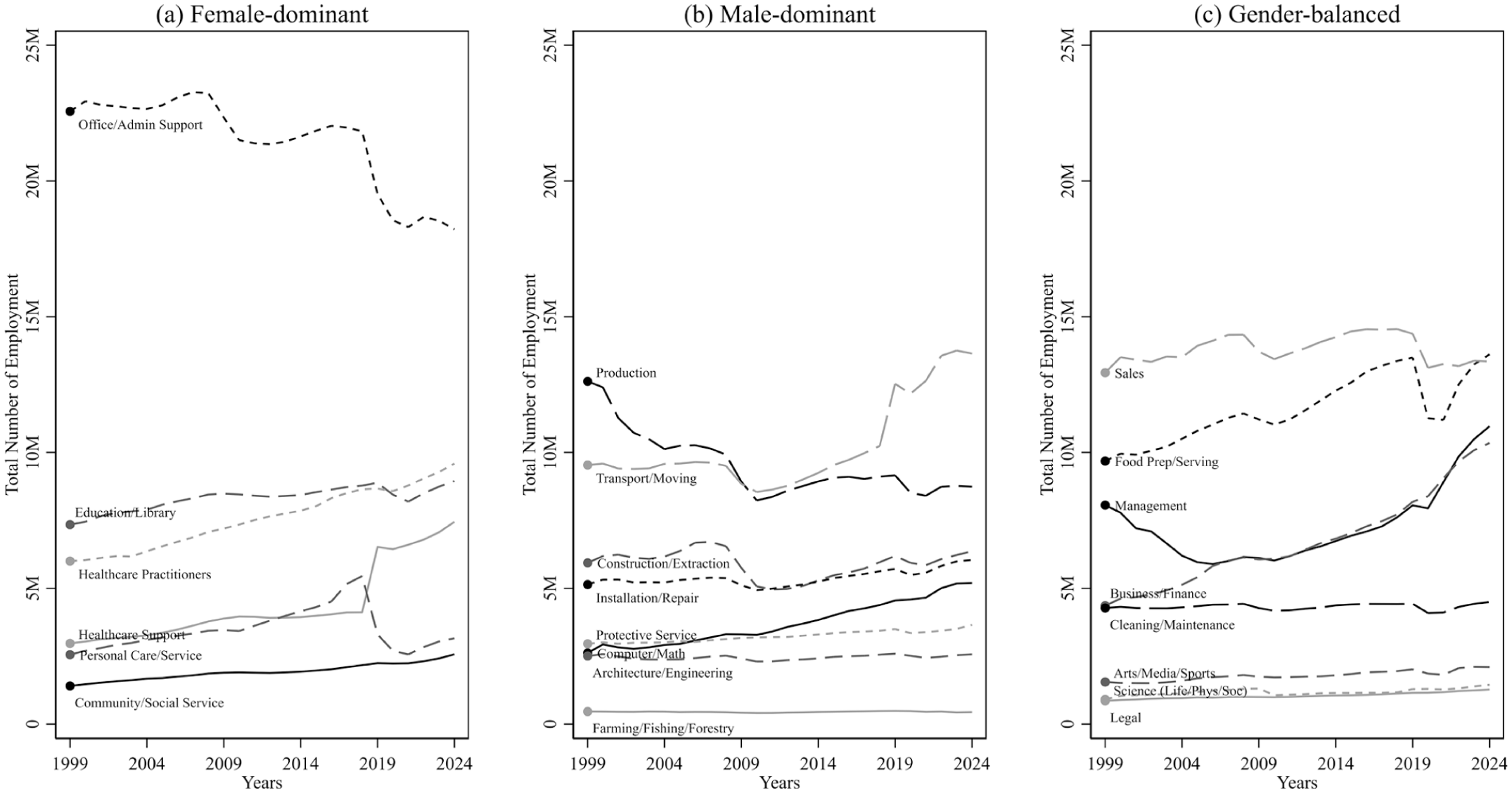
Trends in Labor Force Participation, by Female-Dominated, Male-Dominated, and Gender-Balanced Fields
Among the industries and occupations that have not been offshored or lost through changes in the economic structure, many can be classified as manual but nonroutine jobs in skilled trades. For example, we present in Figure 3, Panel 2, evidence of trends in employment among occupations where males have comprised at least 65 percent of the workforce. Employment trends in these industries and occupations have been somewhat steady over the past 10 years or exhibited slight expansions or a rebound from the losses experienced before the Great Recession. Routine nonmanual jobs that have historically been staffed mostly by females have also seen losses, particularly in office and administrative support. Some of this work has been eliminated through skill-biased technological change (Dillender and Forsythe 2022), while other jobs have been offshored. Since 1999, employment growth in service occupations and nonroutine and nonmanual jobs has been especially strong and has tended to be balanced in the gender composition (see Figure 3).
Many of the occupations in the service industry with the strongest growth, and the best wages, have been in industries that require a bachelor’s degree or higher. For instance, in Figure 4, we array occupational categories by the share of employees with at least a bachelor’s degree (along the y-axis) and the growth in employment in the period from 1999 through 2024 (along the x- axis). Among the highest-growth occupations are those in business/finance and health care and those that have the majority of employees with at least a college degree. Many of the industries that tend to employ males have seen less growth in employment and do not tend to require a college degree.
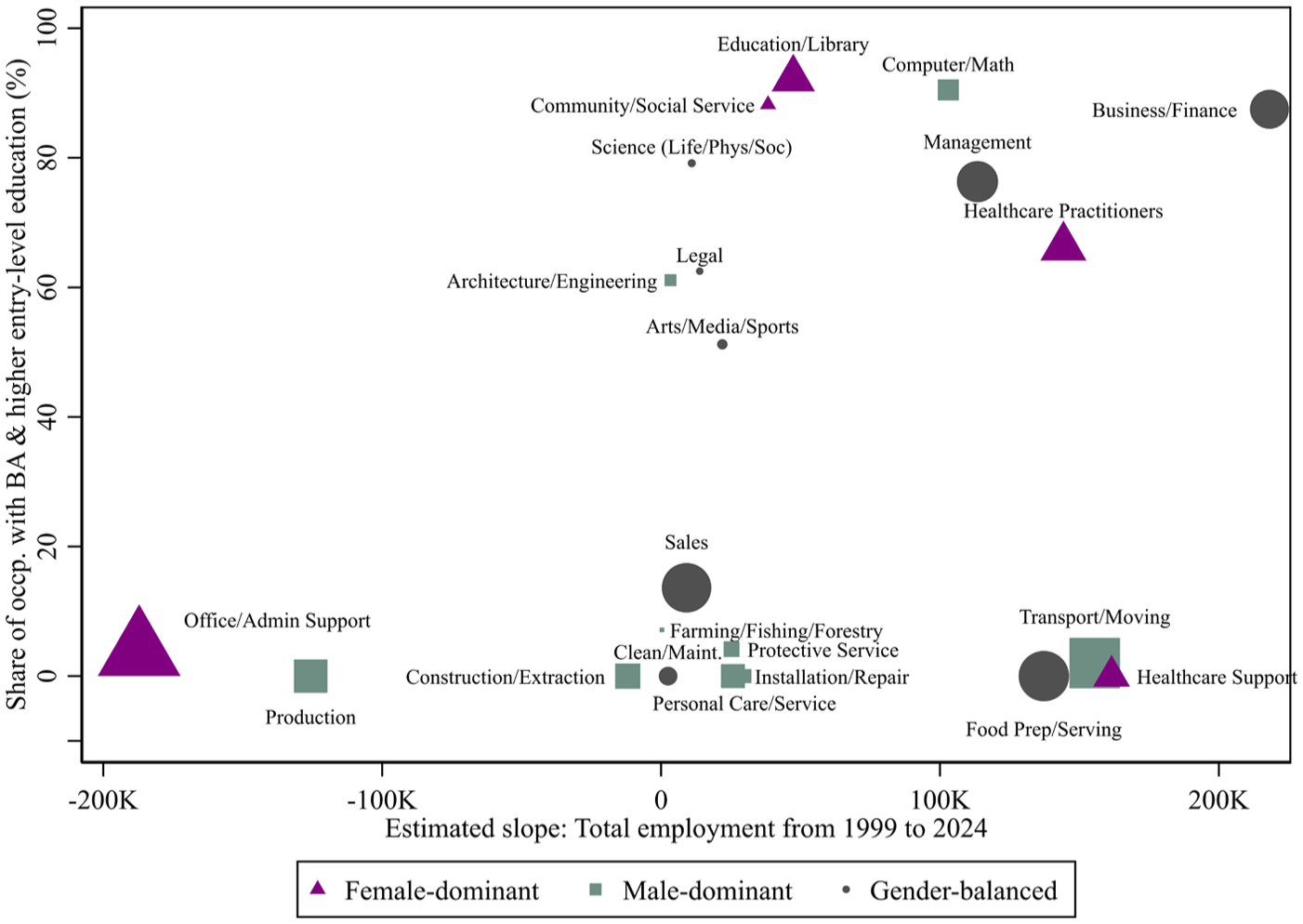
Relationship Between Change in Total Employment and Shares of Occupation with BA, by Industry and Gender Density
The increased educational requirements for employment in the U.S. have been well documented (e.g., Brown 2016; Carnevale et al. 2023). Also well cited is the fact that males, during this same period, account for a minority of total college degrees, particularly bachelor’s degrees (Buchmann et al. 2008; Reeves 2022; Reeves and Secker 2024). The economic shift away from previously male-dominated occupations that require less education is most certainly one of the structural shifts that explains the change in male workforce participation and the declining social outcomes (Case and Deaton 2020) that have been so well documented.
Patterns in CTE Participation by Gender
One bright spot for males has been a resurgence and expansion of CTE (Brunner et al. 2019) in high school and community or technical colleges. In the 1980s and 1990s, technical education was sometimes overshadowed by discoveries that it was being used as an outlet to negatively “track” low-income students and students of color into occupations that were less well compensated. Then, during the increased focus on standards and test-based accountability under No Child Left Behind, CTE lost even more ground. The share of high schools offering CTE fell (Figure 5), and the total number of CTE-related credits earned while in high school declined (Figure 6).
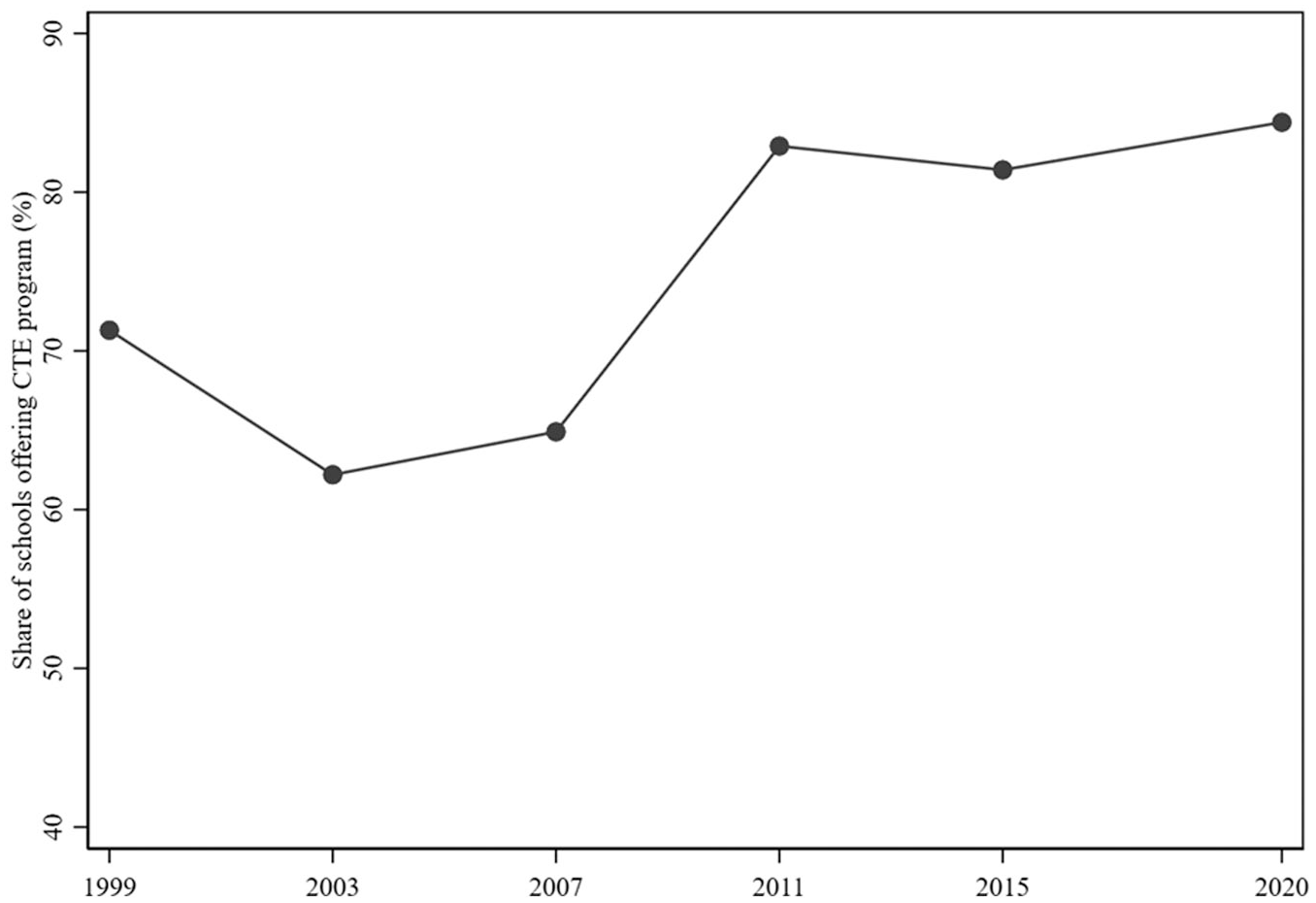
Share of Schools Offering CTE Programs, by Year
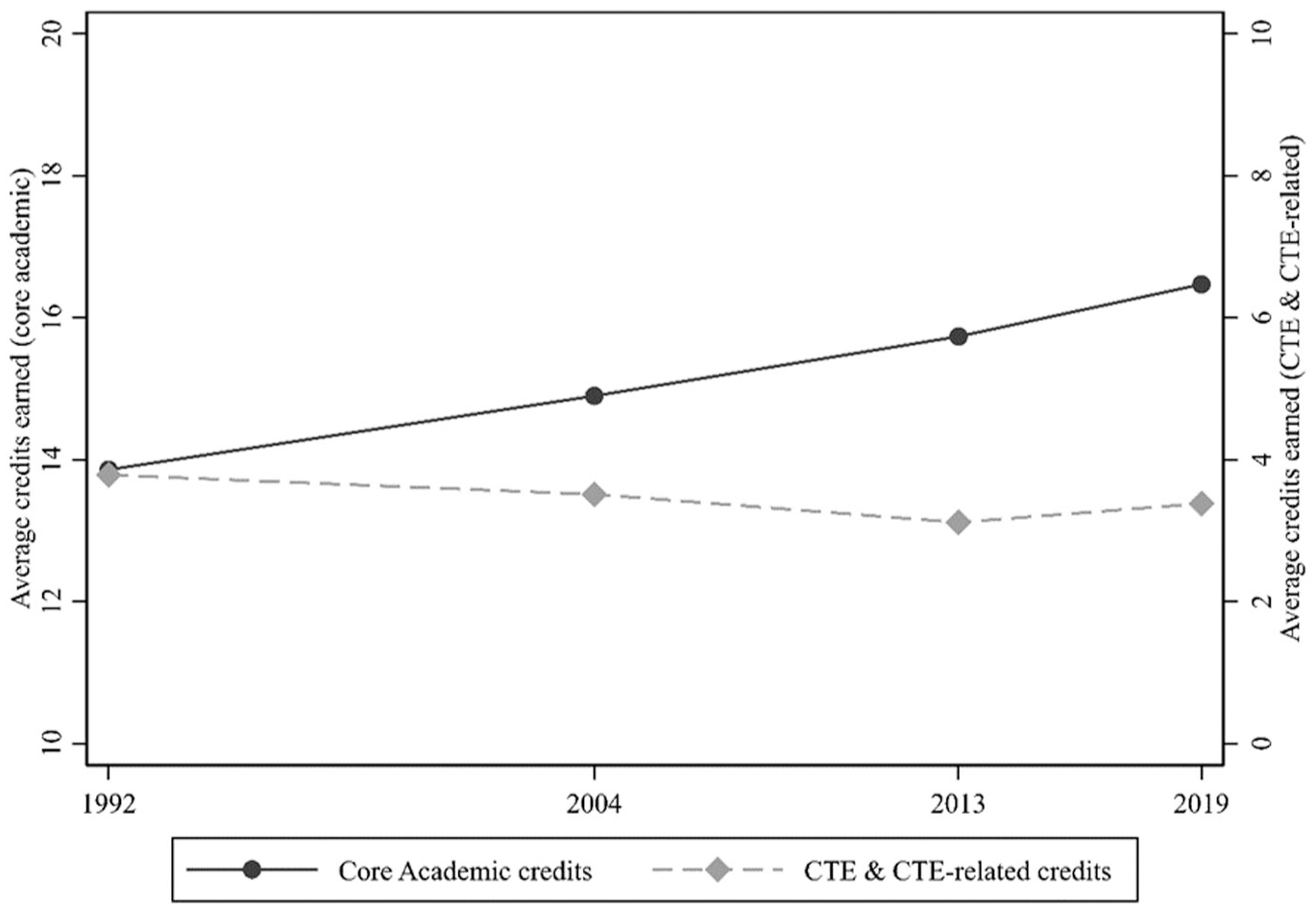
Average Credits Earned in High School over Time, by Core Academic and CTE-Related Credits
However, since the Great Recession, and in the wake of the 2006 passage of the Carl D. Perkins Career and Technical Education Act (Perkins IV), which placed greater emphasis on aligning CTE with areas of economic growth like IT and health care, this share (as well as CTE credits) rebounded, growing to include more than 80 percent of high schools offering CTE programs. With this shift, the vast majority of U.S. students have access to applied educational training that can align with employment immediately after high school. Increased access to applied educational training is beneficial because many of these pathways pay better than a typical entry-level and minimum wage job.
Traditionally, participation in CTE has been particularly high among males. Using the most recent available data, we compared two sources to understand the current state of CTE participation at the national level (Table 1). In each dataset, we see that males participate at slightly higher rates in CTE and that within particular clusters there are much different rates of participation. For example, five times more males participate in architecture and construction than females do, with similar (if smaller-magnitude) differentials in IT, transportation, manufacturing, and engineering. In contrast, females are represented at higher rates in education and health care services. A range of other clusters, many in business, are closer to parity by gender.
CTE Participation at the National Level
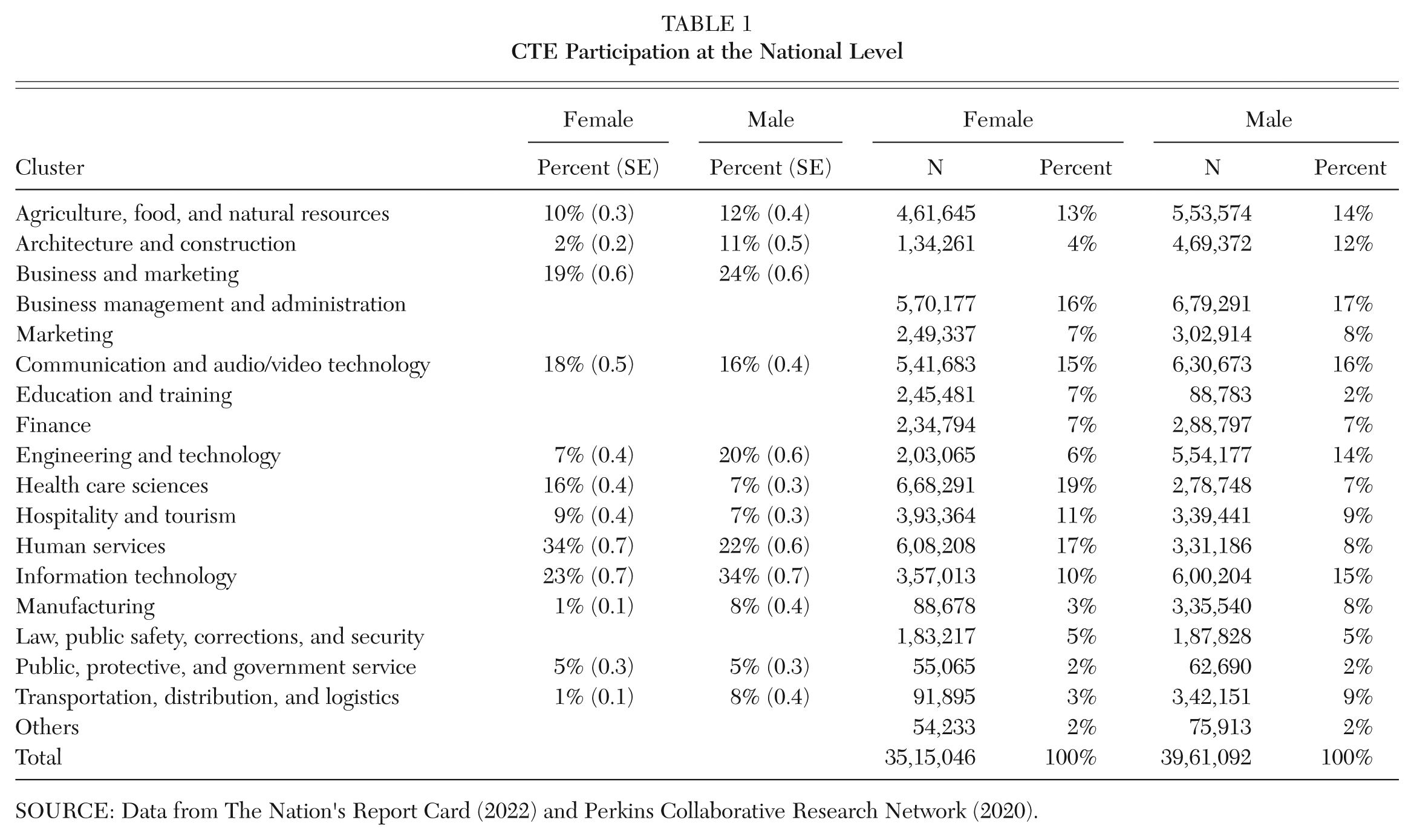
SOURCE: Data from The Nation's Report Card (2022) and Perkins Collaborative Research Network (2020).
The gender composition of CTE participation mirrors what we see in the workforce. However, the clusters where gender balance exists or where females participate at higher levels tend to align with areas of growth or higher demand, whereas the areas with larger male participation are less aligned. A bright spot, perhaps, has been IT, where demand has been growing and pay is generally favorable, even while requirements for college are more muted. While advancements in artificial intelligence (AI) may create more uncertainty in the programming side of this sector, the installation and technician side, which tends to be nonroutine and manual work, is less likely to feel the impact of AI (Autor and Handel 2013).
In Figure 7, we present changes in participation in CTE programs between 1990 and 2019 (the best data mirroring our period of labor market analysis). We demonstrate that most of the 12 clusters that we can document over time have seen an increase in CTE participation over time, even allowing for the dips we saw in the aggregate figures under the proposed College for All Act and test-based accountability. The areas where we see unified (male and female) declines in participation map onto many of the routine, nonmanual office positions that were served by prior business and marketing programs (e.g., those emphasizing typing and spreadsheet management) or onto manufacturing, where there were long-term employment declines during much of this period. Clusters with growth are more common, and expansion among males in IT, health care, and protective services are especially prominent. IT and health care, in particular, represent industries and occupations of high growth (Figure 4) and so demonstrate the potential for CTE to align with workforce needs, particularly among males, whose workforce participation has been weakening. Other areas, like transportation and logistics, where employment growth has been stronger in more recent years, saw an overall decline in CTE participation.
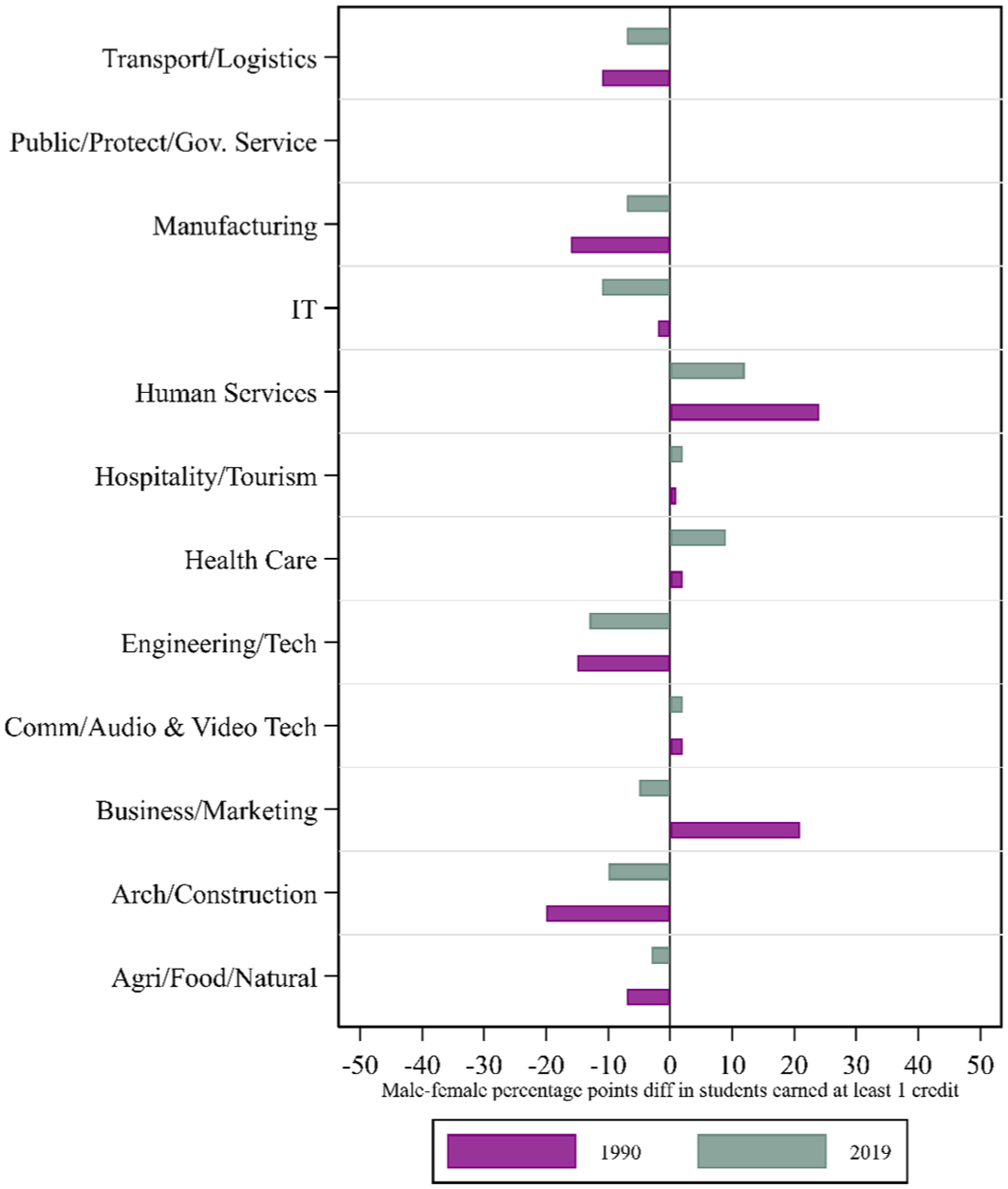
Percentage Point Difference Between Male and Female Students who Earned at Least One Credit, by CTE Area, for 1990 and 2019
The top-line takeaway is that many of the high-growth areas favor females or require a BA and structurally disadvantage males, based on the current education profile and workforce demand. However, a number of the high-growth occupations that do not require a BA fall under CTE, and among those, protective services, installation and repair, and transport/moving tend to favor males, based on their current participation. The analysis in the figure also masks some of the more recent growth in construction, which followed a period of contraction during the Great Recession.
Evidence on the Impacts of CTE for Males
These findings—that many high-growth, male-dominated occupations that do not require a BA align well to CTE clusters—motivated us to undertake a review of the current literature on the effects of CTE for male students. Particularly for that cohort, evidence reveals positive impacts of CTE participation on postsecondary employment and earnings, high school graduation rates and reductions in high school dropout, school attendance, academic performance, and college enrollment and persistence. CTE can be delivered in different settings, including full-time, stand-alone specialized technical high schools and comprehensive high schools where students can take CTE as an elective class.
Despite the fact that a majority of students who take CTE courses do so in the context of comprehensive high schools as an elective, much of the causal evidence that reveals especially large impacts for boys has been undertaken in specialized high schools or career academies (Brunner et al. 2023; Dougherty 2018; Kemple and Willner 2008; Page 2012). In the following review of the literature, we note the CTE delivery method and analytic approach as well as the places where effects have been particularly pronounced for male students.
One of the primary aims of CTE is to prepare students for postsecondary employment. By equipping students with practical skills and connecting them to local employers, CTE can open pathways into secure employment. CTE participation may be particularly beneficial for students for whom college is not the best fit and who otherwise might struggle to find employment. Research consistently suggests that participation in CTE is linked to a higher probability of employment and higher earnings after high school. Descriptive work using both national samples and samples of high school students from individual states suggest that CTE course-taking is associated with higher employment rates and higher wages (Carruthers and Attridge 2019; Ecton and Dougherty 2023; Holzwart and Liu 2020). In Massachusetts, for example, individuals who focused on CTE in high school but not did go to college earned about $6,000 more per year than their peers who also did not attend college but who did not concentrate in CTE (Ecton and Dougherty 2023). The relationship between CTE participation and earnings was particularly strong for males.
Evidence from a causal study of the Connecticut technical high school system further supports both the findings that CTE participation is associated with a higher probability of employment and earnings and that the effects are more pronounced for boys. The study used a regression discontinuity design and found that attending a stand-alone technical high school resulted in male graduates having more reported quarters of employment and 32 percent higher average quarterly earnings (Brunner et al. 2023). Causal research on career academies (CAs), which include smaller learning communities in which students select a CTE-themed pathway within their school, also reveal positive impacts on earnings. CA participants who were randomly assigned to CAs realized 11 percent higher earnings than did their non-CA peers (Kemple and Willner 2008). Consistent with other evidence described here, effects were concentrated among male students.
The evidence suggesting that CTE participation yields positive impacts for men can also be seen outside of the U.S. context and beyond high school as well. For example, using data from Norway, Bertrand et al. (2021) find that males who participated in a vocational education track because of a policy change realized higher wages—a finding that was particularly strong among economically disadvantaged men. Similarly positive impacts were identified in Finland, where Silliman and Virtanen (2022) show large positive impacts on earnings among applicants to oversubscribed technical schools. CTE experiences need take place not only during high school; the positive impacts of postsecondary CTE on subsequent employment and wages have also been found, although postsecondary CTE is particularly impactful for women rather than men, perhaps in part because the highest return programs are in health services (e.g., nursing), which disproportionately enroll women (see, for example, Carruthers and Jepsen 2022). Unfortunately, the current scholarship on postsecondary CTE does not include registered apprenticeships. To date, there is no causal evidence of the impact of these apprenticeships in the U.S., but we do know that the longest-standing models are in the skilled trades, which are mostly male in composition. Findings from a recent synthesis (Gallup 2024) document that registered apprenticeships generally promote favorable outcomes and that the number and types have grown to more than 600,000 since 2010.
Because CTE can also be more engaging for students than core academic coursework, it can lead to positive outcomes while in high school. Gottfried and Plasman (2018) lay out three mechanisms through which CTE might help to increase high school completion:
1) Skill building, in that students learn skills in CTE courses that translate to other courses as well;
2) Engagement, in that CTE courses may be more exciting to students than non-CTE courses and thus promote engagement; and
3) Real-world relevance, in that it helps students to understand the importance of high school content.
Indeed, several studies reveal positive relationships between high school CTE participation and high school completion. Using a nationally representative sample, Gottfried and Plasman (2018) find that taking more CTE courses in high school lowers the chances of dropping out, particularly for those who take courses in 11th and 12th grades. Several causal studies provide further support for this theory, suggesting that students who attend technical high schools are about 10 percentage points more likely to graduate from high school than students who do not (Dougherty 2018; Brunner et al. 2023). In Connecticut, these findings were especially pronounced for males (Brunner et al. 2023). These results emerge not only in technical high school settings but also in CAs, where CA participation and implementation are associated with increased high school graduation rates (Hemelt et al. 2019; Kistler et al. 2025). And, in California, districts that received grants to support CTE saw a 23 percent decrease in high school dropout rates (Bonilla 2020). Taken together, this evidence suggests that CTE can help to facilitate high school completion—an effect that has been seen particularly for boys.
To the extent that CTE is more engaging and helps provide real-world relevance, it may also help to promote high school attendance. Evidence from New York City suggests this is the case: Students who attend CTE schools have higher attendance rates (Jacoby and Dougherty 2016). And, in Massachusetts and Connecticut, research has demonstrated improved ninth-grade attendance among students who attend CTE high schools (Brunner et al. 2023; Dougherty 2018; Dougherty et al. 2019). Because higher attendance is often linked to a variety of positive outcomes, the role of CTE in improving attendance may be a key lever in promoting student success.
Some of the same ways that CTE promotes high school graduation and attendance may also promote academic performance. Both descriptive and causal work in this literature support the notion that CTE participation leads to increased academic performance. Causal evidence from Baltimore (Plasman et al. 2025) suggests that students assigned to CTE-focused high schools score higher on the SAT math test. And, in Connecticut, male students who attended stand-alone technical high schools realized higher state standardized test scores in high school math and English language arts (Brunner et al. 2023). By increasing engagement in school and by helping students to develop skills that apply to academic coursework, CTE can support student learning.
Higher student engagement, attendance, and probability of on-time high school graduation may all contribute to instances of improved college enrollment and persistence observed for high school CTE participants. Ecton and Dougherty (2023) highlight that CTE participation is associated with higher college enrollment, but with notable variation across career clusters. Students who concentrated in health science, IT, and education (career clusters with clear links to postsecondary education) had higher probabilities of enrolling in college than similar non-CTE students. In contrast, students in less college-aligned clusters, such as transportation and architecture/construction, were less likely to attend four-year college than similar non-CTE students.
Further evidence on the connection between CTE and college comes from settings in which dual high school/college enrollment is possible. Dual-enrollment CTE in North Carolina, for example, led to higher enrollment in college, although here the impacts were larger for female students than for male students (Edmunds et al. 2024). New York City P-TECH (Pathways in Technology) school students, who participate in a six-year partnership program between their high school and local colleges, “were 5 percentage points more likely to have completed an associate’s degree” (Rosen et al. 2023, 3). Notably, these results were larger for males. There are also positive impacts evident in work-sector training for disconnected youth, such as YouthBuild and JobCorps (Miller et al. 2018; Schochet et al. 2008). Thus, while the evidence is nuanced about whether and under what conditions high school CTE might improve male college enrollment and completion, it is clear that males in CTE benefit when programs clearly align with college pathways and when high school programs help smooth the transition into college coursework and credit.
CTE appears to benefit males not only in terms of college enrollment, but also in other outcomes, such as wages (Bertrand et al. 2021; Brunner et al. 2023; Ecton and Dougherty 2023; Hemelt et al. 2019; Kemple and Willner 2008). Some of the impacts on wages can be explained by differences in employment clusters: Clusters such as construction, transportation, manufacturing, health care, and technology are associated with higher earnings premiums.
Several of these clusters are predominantly male and yield higher subsequent earnings, and they are also associated with decreased likelihood of college enrollment. In some cases, pursuing postsecondary work in the aligned CTE field represents a trade-off over college enrollment. There are trade-offs of decreased college enrollment for men (a gap that is already quite large, relative to women). On one hand, if CTE were to dissuade male students from attending college and therefore keep them from the benefits of college completion, this may be problematic. However, the alternative to postsecondary work for men is not necessarily college enrollment. For boys who do not participate in CTE, the counterfactual is instead often unemployment or dropout. Brunner et al. (2023), Dougherty (2018), and Hemelt et al. (2019) all find decreases in dropout for males who participate in CTE. And, given the cost of college, especially for noncompleters who may also accumulate debt, pursuing an option that provides male students with the opportunity to begin work at higher wages may be a net positive.
Finally, we note that the positive findings around CTE participation, while stronger for boys, are not necessarily negative for girls. Girls also realize positive benefits as a result of CTE participation. For example, the MDRC P-TECH study, which finds positive effects for boys, finds just null effects for girls (Rosen et al. 2023). Brunner et al. (2026) highlight that girls realize similar earning benefits to boys when they complete the same higher-wage pathways, but that the absence of impacts on earnings may often be explained by the fact that girls disproportionately participate in programs with lower pay, such as early childhood education, cosmetology, and entry-level health professions. Indeed, Bertrand et al. (2021) find that the stronger positive impacts of CTE participation on wages for males are driven in part by their choices of higher-paying fields, in comparison to females who are more likely to choose lower-paying fields. Some of these differences in who benefits from CTE are also driven by the counterfactual outcome for girls versus boys. For example, boys in the counterfactual (non-CTE participants) tend to have lower earnings than their female peers. Thus, the higher counterfactual earnings among females, combined with gendered sorting into lower-paying occupations, may make it harder to generate an effect on earnings. In contrast, low earnings among counterfactual males, combined with the effect of CTE pushing them into higher earning occupations, creates conditions more conducive to identifying effects.
Though we don’t know exactly why CTE appears to have larger impacts for boys and men—beyond the potential relationship with career cluster—there are several hypotheses (Salimi 2024). First, CTE’s hands-on component may be particularly engaging for boys, who often struggle in traditional academic settings where connections to the real world and opportunities to engage in physical work are more limited. CTE also provides opportunities for students to interact with people in ways that they might not typically encounter in a solely academic setting, which may be more engaging. Finally, unlike some college-focused pathways, which emphasize abstract learning across a wide range of subjects, CTE offers clearly articulated pathways, with sequences of courses and skill-focused competencies that may be especially beneficial for boys.
The Evidence on CTE: What Is Still Unknown
Questions remain about how well CTE prepares students for postsecondary education (Dougherty 2023) and the extent to which the positive effects on workforce outcomes persist in the longer term (Ecton and Dougherty 2023). A limitation of much of the work in this space is that data limitations restrict analysis to the first decade after high school (in the best-case scenario) and cannot yet look longer-term (e.g., 20 years out). It is possible that, as for many educational interventions, the effects fade out in the longer term, or that, over a longer time horizon, students who pursued general training only and completed a four-year degree might have net better outcomes. This conclusion was reached, for example, in the Hanushek et al. (2017) study using European data. Hampf and Woessmann (2017) similarly report that the positive relationship between vocational education and employment is stronger among younger people than older ones.
In contrast, Silliman and Virtanen (2022) found that, in Finland, even though earnings trajectories crossed at some point during workers’ lives, the higher earnings in the first 15 years after secondary education meant that the net benefit of these programs across one’s working life still favored individuals in the vocational pathway. Future work should use longer panels to understand the ways that these effects play out for students later in their careers. In Silliman and Virtanen’s article, estimates applied just to those on the margin of being admitted to these programs, but the result provides a helpful contrast with studies using earlier data. Further, while earnings are a compelling measure for gauging the impact of education pathways, other work from Sorkin (2018) demonstrates that workers have preferences for other features of work, in addition to pay, that are worth remembering. Thus, it is not clear that we should interpret a choice to work in a lower-paying occupation that does not, for example, require sitting at a desk all day as a suboptimal choice.
The causal research on CTE also remains a bit of black box; unanswered questions remain about the mechanisms that generate its positive effects, especially for boys and men. For instance, because much of the causal research takes place in specialized technical high schools, it is difficult to know to what extent these findings would transfer to comprehensive high schools. Ecton and Dougherty (2023) find that CTE concentrators in specialized schools realize better outcomes than do those in comprehensive high schools—a finding that suggests the impact of factors such as cohort-based learning, integrated academics, strong employer partnerships, and higher program quality standards. Brunner et al. (2023) also demonstrated that males in oversubscribed technical high schools in Connecticut earned more than their peers who did not enroll in these high schools and that at least 20 percent of those higher earnings could be explained by work-based learning experiences that aligned with their CTE training.
It may be that such benefits may be larger for males in lower-intensity or less specialized settings, but these contexts have not been studied extensively nor have they been subjected to analytic methods that can draw strong conclusions. Future work in this space should focus on understanding the mechanisms that make stand-alone CTE settings particularly successful, especially for males. It would be helpful for comprehensive high schools, for example, to understand how they can implement features of CTE programs and what types of outcomes they might expect from these efforts. In addition, studying the impacts of CTE participation in typical, comprehensive high schools would offer insights into programs that operate at a larger scale and where increasing program availability could provide access to substantially more students.
Understanding the mechanisms by which students select career clusters might help to explain the positive effects of CTE on the outcomes described here, including why the effects are particularly strong for males. It appears that the relationship between gender and the effects of CTE is at least partially due to endogenous influences: Although the clusters that males select into are the same ones that show the highest returns for them, the direction of causation is unclear. Is it that males simply fare better in programs that feed into occupations that employ more males, or is it that males chose those programs that align with well-compensated occupations, particularly so for boys with less formal school-based training?
Implications for Policy and Practice
The evidence is clear that CTE can lead to positive outcomes, particularly for boys, which invites several possible policy solutions. We detail these below.
Scaling successful models
Taken together, the evidence summarized above suggests that stand-alone CTE high schools are particularly effective at promoting positive outcomes for boys and men. Although the best evidence to date cannot isolate the exact components that make stand-alone CTE high schools so effective, we note that clear pathways, sequences of courses that lead to concentrator status, cohort structures, strong partnerships, and opportunities for work-based learning are all present in the most successful CTE models (Kistler and Dougherty 2025). Expanding opportunities for students to participate in these types of high schools, as well as expanding opportunities for students to experience high-quality CTE within comprehensive high schools, can help to promote positive outcomes.
Support known areas of male strength, particularly for occupations where demand should be steady (nonroutine and manual)
The evidence is also clear that high school CTE is currently engaging male students and that programs with high male participation align with areas of steady or growing demand in the workforce. The result is that CTE is preparing males for postsecondary opportunities where skilled workers are needed and wage premiums are high. CTE programs and schools can continue to support known areas of male strength, particularly in the skilled trades. For schools and districts, continuing or beginning to invest in these programs can help to promote positive outcomes for males especially.
However, the picture is not universally a positive one. One challenge is that not all of the occupations that align with CTE and workforce demand are high paying. Whereas many may pay at or slightly above the median wage for someone with no more than a high school diploma, the premium may be much smaller than it was 50 years ago, even adjusting for inflation. Furthermore, this premium may dissipate over time as further changes occur in the economy, and so even these short-term benefits may not be lasting. Still, if the counterfactual for these individuals is unemployment, or if preparation that leads to even short-term premiums can help them to obtain a better-paying job while obtaining further education, then CTE could still provide net positive benefits.
Use CTE to create connections to applied postsecondary education and employment options
Evidence suggests that males who participate in programs in skilled trades, transportation, manufacturing, and IT see especially large benefits. Though demand for these occupations is not infinite, CTE can be a mechanism to help connect males to these programs of known need. CTE can also potentially help connect students with fast-growing or well-paying occupations that they might not otherwise have pursued. In particular, early-college high school models with a CTE focus (such as the P-TECH model and North Carolina’s dual-enrollment program) showed larger benefits on college outcomes for males, suggesting that CTE might be a way to smooth the transition from high school into college pathways for males who otherwise would be less likely to enroll or earn college credits.
CTE may also help connect students to areas of known need by providing role models in these fields. We note that, although not explicitly studied, one potential mechanism by which CTE could promote positive outcomes for boys is the increased opportunities for gender matching. The literature on student–teacher race and gender matching suggests that opportunities to learn from teachers who share their backgrounds can be particularly effective for students (see Suter, this volume). For boys, the opportunity to learn from male teachers is much higher in CTE, where the greater proportion of teachers is male than in the core academic content areas.
Use CTE to connect males to industries and occupations of known high demand or strong compensation but where they are not as well represented—education and health care
Many of the most successful CTE models offer opportunities for students to explore different pathways before committing—a good practice in general but one that may be especially salient for males if current (and projected future) workforce demand does not favor a return to stereotypically male conceptions of work. Early opportunities to explore possible career paths could help facilitate connections with male role models or mentors and introduce males to jobs in predominantly female fields, which they might not otherwise have considered. There is ample opportunity to support higher levels of male participation in the teaching workforce, for example, and CTE is one mechanism to do that, particularly through early childhood education. CTE programs can introduce males to this work and help make connections to the workforce to test-drive these jobs. There have been prior, or perhaps long-standing, efforts to do this in nursing, although with limited success. The male share of registered nurses has increased from 2 percent to 12 percent over a 60-year period, whereas there has been a decline in the proportion of males participating in the K–12 education workforce from 33 percent to 24 percent since 1987 (Ingersoll et al. 2021). Health care and education are less easily automated than many other fields. Thus, encouraging boys to explore these fields may help to ensure CTE participants have steady work opportunities with at least some room for career advancement.
Taken together, our analyses of historical male workforce trends, CTE participation, and the extant literature suggest that there is ample opportunity for CTE to support boys and men in obtaining employment and meeting their full potential. In particular, policies that provide opportunity for more students to participate in high-quality CTE and that support students in making informed choices about CTE programs that are likely to lead to postsecondary employment and/or work in high-demand fields are likely to yield positive outcomes.
At the same time, policy must be carefully crafted to ensure two things. First, that all high-school completers have the skills needed to pursue postsecondary education and training in case individuals need or choose to pursue additional education and training. And second, that policies do not unintentionally pull people who could have benefited from a four-year degree and were likely to complete one without amassing substantial debt.
Footnotes
NOTE: We thank Yerin Yoon for her excellent research assistance. We would also like to thank Marianne Bertrand for her helpful comments and suggestions.

Hannah C. Kistler is an assistant professor at the University at Albany, SUNY. Her research focuses on how educational policies impact teacher supply and student outcomes, with an emphasis on schools in historically underserved communities.
Shaun M. Dougherty is a professor of education and policy at Boston College. His research focuses on the use of quantitative research methods to evaluate the impact of educational policies and programs. He emphasizes understanding how the requirements, incentives, and behaviors that those policies affect human capital development.