







Abstract
The use of international broadcasting, a tool of public diplomacy since World War I, can be divided into two chronological periods. The first, which began during World War I and declined in the post–Cold War era, was characterized by international government-sponsored radio broadcasters. The second began with the emergence of privately owned global news networks (e.g., CNN, Sky News, and MSNBC) in the 1980s and 1990s, which were deemed more credible than government-sponsored stations. Based on an 8-year study of Al-Jazeera’s coverage of Saudi affairs throughout the Qatari–Saudi conflict, which revealed a strong correlation between Al-Jazeera Arabic’s tone toward Saudi affairs and the development of the Qatari–Saudi conflict, the article argues that Qatar invented a new model of public diplomacy by operating Al-Jazeera as a hybrid state-sponsored/private network, effectively transforming the network into a highly potent public diplomacy tool. Accordingly, the article discusses the interplay among news networks, ownership, and use of public diplomacy tactics in contemporary international broadcasting.
Keywords
Public diplomacy is defined as “efforts by the government of one nation to influence public or elite opinion in a second nation for the purpose of turning the foreign policy of the target nation to advantage” (Manheim, 1994, p. 4). In the information age, the ability to execute a successful public diplomacy strategy strongly depends on a government’s ability to plan a successful communication strategy that positions its country as a key player in the current information exchange market. In this marketplace, international actors compete on “selling” relevant information, which includes their preferred framing of events, to a potential global or regional audience. A successful communication strategy often results in the ability to align the regional and sometimes global news agenda with the country’s national interests. This can eventually translate into mobilizing enough pressure to cause nations to revise their policies (Serra, 2000). Accordingly, it is not surprising that international and regional broadcasting has long been a means through which governments implement their public diplomacy strategies.
Chronologically, the role of international broadcasting in public diplomacy can be divided into two periods. The first, which began during the First World War and declined in the post–Cold War era, was characterized by international government-sponsored radio broadcasters who communicated the values and narratives of their sponsoring country to foreign audiences in a form widely known as “propaganda” (Rawnsley, 1996). The second era of public diplomacy via international broadcasting began with the emergence of privately owned global news networks (e.g., CNN, Sky News, and MSNBC) in the 1980s and 1990s. These stations, perceived more credible than state-sponsored stations (El-Nawawy, 2006; Lynch, 2007), largely replaced the latter to become the main hub for audiences during international crises and the main media diplomacy platform today. As governments lost control over the narratives portrayed to global audiences, contemporary mediated public diplomacy goals shifted to “organized attempts by a president and his foreign policy apparatus to exert as much control as possible” over the framing of his country’s policies in international news networks (Entman, 2008, p. 4).
Based on an empirical analysis of Al-Jazeera’s role over an 8-year period that included the Qatari–Saudi conflict, as well as a review of Al-Jazeera’s general modus operandi, this article argues that the Qatar–Al-Jazeera relationship represents a third form of media diplomacy, the hybrid model, that allows the state to regain control over the messages transmitted to global audiences. Under the hybrid model identified here, a state-sponsored station operates independently in routine affairs, which gives it the credibility of a privately owned station, and reverts to state-sponsored-style broadcasting only during a crisis involving the state. The station’s global and/or regional credibility gained during peacetime makes it a highly potent public diplomacy tool, which allows the state to influence public opinion and in turn impose pressure on elite groups in a foreign state to modify the target state’s policies to the state’s advantage. In other words, the article suggests that Qatar reinvented and specifically adapted the state-sponsored broadcasting model to the contemporary media environment, thus allowing its operator to regain control over the narratives transmitted to the world with high impact. The article makes this claim based on findings of a longitudinal empirical analysis that vividly illustrate the interplay between Al-Jazeera’s coverage of Saudi Arabia affairs and Qatari–Saudi relations.
The idea and motivation for the study were triggered by an eagerness to promote theory in this area following the high-profile allegations that appeared in the popular media, claiming that Al-Jazeera had been used as a diplomatic tool throughout the Qatari–Saudi conflict. Although Al-Jazeera is widely recognized as the foremost representative of independent media in the Arab region (Al Jenaibi, 2010; Al-Nsairat, 2010; Ayish, 2002; Lynch, 2006), in 2010 WikiLeaks (http://www.wikileaks.com) exposed a memo sent by the U.S. ambassador to Qatar, in which he called the station “a diplomatic tool for its Qatari sponsors” (Lebron, 2009). In this document, Ambassador Joseph Lebron accused Al-Jazeera of deliberately toning down criticism of Saudi Arabia as part of a September 2007 agreement that ended the 5-year conflict between Qatar and the Saudi Kingdom. Allegations regarding the Qatari–Saudi political deal and Al-Jazeera’s involvement were also voiced by the New York Times (Worth, 2008), which reported that the chairman of Al-Jazeera’s Board of Directors, Sheik Hamad bin Thamer al-Thani, was present at the historic meeting between the leaders of the two countries that brought an end to the conflict. The New York Times article also cited correspondence with an Al-Jazeera employee who stated that Al-Jazeera management used to feed Al-Jazeera reporters with negative articles about Saudi Arabia during the conflict between Qatar and Saudi Arabia and gave an explicit order, following the 2007 resolution with Saudi Arabia, prohibiting coverage of any Saudi issue without first receiving permission from higher management.
In a rare live interview on Al-Jazeera (Al-Jazeera, 2009), the Qatari prime minister vehemently denied these allegations, stating that the station was actually a “source of headaches” for Qatar and had implicated it in rifts with a long list of countries including Algeria, Kuwait, Egypt, Bahrain, Jordan, and the United States. Al-Jazeera itself also released a statement in response to the U.S. ambassador’s allegations, claiming, “This is the US embassy’s assessment, and it is very far from the truth. Despite all the pressure Al Jazeera has been subjected to by regional and international governments, it has never changed its bold editorial policies, which remain guided by the principles of a free press” (Booth, 2010).
This analysis examines, among other things, the allegations that Al-Jazeera was used as a diplomatic tool by Qatar throughout the Saudi–Qatari conflict (from September 2002 to September 2007) using content analysis of Al-Jazeera’s online coverage of Saudi Arabia affairs over an 8-year period (from January 2001 to December 31, 2008) that includes pre- and post-conflict periods. This analysis sheds light on changes in Al-Jazeera’s general coverage and, most important, its tone toward Saudi affairs as Qatari–Saudi relations developed over this period. The study examines both Al-Jazeera Arabic and Al-Jazeera English online news operations. The choice to examine the online rather than the televised operations stems from the fact that the Al-Jazeera English television channel was launched only late in 2006, well into the conflict.
Public Diplomacy Media Platforms: From State-Sponsored to Private Networks
Research focusing on the relationships among media content, public opinion, and foreign policy has long shown that the media play a vital role in determining public opinions on foreign affairs (Entman, 2008; Leonard, 2002) and in establishing the legitimacy or illegitimacy of the reported country (Bar-Tal, 2000). As early as during World War I, England actively manipulated news bound for the United States to generate American public opinion support for entering the war (Cull, 1996). During World War II, governments flew journalists to the war zone to verify the victories that were being reported (Carruthers, 2000; Knightley, 2001) and initiated radio broadcasting in multiple languages to gain control over the war’s narrative (Taylor, 2003). These efforts continued throughout the Cold War, when the main players operated international state-sponsored radio broadcasts—notably the U.S. Voice of America, China’s Radio Peking, the Soviet Union’s Radio Moscow, and the U.K. BBC World News. Nelson (1997) offers evidence that the dominance of the U.S. radio stations played an effective role in the Soviet Union’s decline. State-sponsored stations also operated in the Middle East, where former Egyptian president Gamal Abdel Nasser used regional broadcasting to spread his messages on Arab unity through Egyptian-government-sponsored Voice of the Arabs radio broadcasts, whereas Israel responded with its government-sponsored Kol Israel radio broadcasting. All these efforts, which are widely known as “propaganda” and “messaging,” illustrate the nonreflexive methods used by governments to “explain” their policies to foreign audiences using a one-way communication system designed to induce trust and affect audience beliefs (Fitzpatrick, 2011).
The launch of CNN in 1980 marked the rise of private global television networks, which largely replaced the state-sponsored networks as the main public diplomacy tool after CNN’s success in attracting global audiences throughout the 1991 Gulf War triggered a surge of copycats. To gain the trust of their worldwide viewers, CNN, Sky News, MSNBC, and Fox News all emphasize their adherence to fairness, objectivity, balance, and other norms identified with professional commercial news standards. Concurrently, state-sponsored stations gradually lost their clout, despite repeated attempts to revive state-sponsored international broadcasting in the wake of the “war on terror.” To illustrate, consider that a poll conducted in Jordan, Lebanon, Morocco, Saudi Arabia, and the United Arab Emirates found that only 2% of the population chose Al-Hurra, the chief U.S.-government-sponsored television channel in the Middle East designed to improve the U.S. image in the region, as their primary source of news (Telhami, 2009).
The rise of private global news networks forced governments to adapt to the new circumstances and adopt new strategies to convey desired narratives to a global audience. Scholars agree that the current environment is characterized by competition over access to private international news networks (Gilboa, 2001; Sheafer & Gabai, 2009). The early model of the “CNN Effect” contends that CNN’s broadcasting to global audiences pressures governments to revise foreign and internal policies (Livingston, 1997), and consequently governments and audiences use CNN as a bilateral communication platform (Volkmer, 1999). Similarly, Gilboa (2001) argued that politicians communicate with elites in other countries via global news networks to achieve conflict resolutions. More recently, Entman (2008) identified the complexities involved in governments’ abilities to promote favorable narratives to audiences in targeted nations under the current market environment. Another perspective stems from Sheafer and Gabai’s (2009) work, which described “mediated public diplomacy” as a strategic contest between rival nations over setting the international media’s news agenda. All these ideas illustrate the tremendous challenges faced by governments that seek to communicate a coherent public diplomacy agenda to audiences via the media in the current market conditions.
The following section reviews how Qatar’s operation of Al-Jazeera in the current “mediated public diplomacy” environment has prompted a third form of media diplomacy.
Al-Jazeera and Qatari Politics
Since Al-Jazeera’s inception in 1996, the Qatari government, which sponsors the channel, has publicly asserted the station’s independence from Qatari interests. Although the Qatari emir provided the Al-Jazeera founding team with $137 million to create the channel, he declared that the money was a loan, not a grant, and stipulated that he expected Al-Jazeera to return the loan and move to private hands by 2001. Yet in 2001, when Al-Jazeera failed to generate a profit and covered only 35% to 40% of its costs from advertising (Sharp, 2003), the emir decided to extend the loan indefinitely. According to Forbes magazine, as of 2009 the government of Qatar had invested more than $1 billion in Al-Jazeera English and covered more than $100 million per year in losses for Al-Jazeera Arabic’s operations (Helman, 2009).
Despite the generous funding, the emir persistently asserts that Al-Jazeera’s staff members, who are Western-educated reporters with work experience in major international broadcasters, are trained to adhere to professional norms regardless of the station’s sponsor. The Al-Jazeera management team also stresses that the station adheres to its promise to provide access to “the opinion and the other opinion,” citing its decision to be the first Arab channel to interview Israeli officials (Samuel-Azran, 2010). Al-Jazeera officials have also repeatedly stated that Al-Jazeera actually embroiled Qatar in clashes with Iran and several Arab countries due to the station’s criticism of various regimes, including Tunisia, Jordan, Kuwait, and the Palestinian Authority, and that several scoops that damaged the Muslim world’s image were broadcast on Al-Jazeera in the name of objectivity, such as the early 2001 images of the Taliban destroying the Buddha statues in Afghanistan. Qatari officials vehemently insist that Al-Jazeera’s team of reporters, which comprises individuals of 45 ethnicities and 50 nationalities, is evidence of its international nature. Based on 30 interviews with Al-Jazeera staff, British journalist Hugh Miles (2005) concluded that the Al-Jazeera staff indeed “do not stop to think for a second about the nationality of their station or its financier” (p. 356).
Public opinion surveys in the Arab world have repeatedly indicated that Al-Jazeera has effectively branded itself as an independent and credible media source (Arab Advisors Group, 2004; Auter, Arafa, & Al-Jaber, 2004; Johnson & Fahmy, 2008). Most relevant for this study, a survey conducted by the Arab Advisors Group in 2004, in the midst of the Qatari–Saudi conflict, revealed that Al-Jazeera topped the ranks in brand recognition in the Arab world, including among Saudi viewers, with close to 82% of households watching the station, more than the regional Saudi-funded satellite channel Al-Arabiya (with a viewership of 75%). In terms of credibility, 69% of the Saudis ranked Al-Jazeera as “trustworthy” or “very trustworthy” (vs. 70% for Al-Arabiya), whereas fewer than 3% of the Saudis considered Al-Jazeera as “not trustworthy.”
In stark contrast, critics assert that Al-Jazeera is a political instrument designed to increase Qatar’s international influence. Several scholars have noted that Al-Jazeera criticizes “everybody” but the Qatari government and regularly fails to report on “sensitive” matters involving Qatar, such as violations of foreign workers’ human rights (El-Nawawy & Iskandar, 2003; Zaidi, 2003). According to Da Lage (2005), the emir uses Al-Jazeera as part of Qatar’s “double game” of maintaining diplomatic and economic ties with the United States and Israel, while simultaneously criticizing these countries on Al-Jazeera. It has been argued (El Oifi, 2005; Fandy, 2007; Sakr, 2002; Zayani, 2008) that the real reason for the Qatari emir’s decision to launch Al-Jazeera was to achieve greater leverage against rival Gulf countries, particularly Saudi Arabia.
Al-Jazeera Arabic Versus Al-Jazeera English Online Operations
Because the study draws on a comparison between the Al-Jazeera Arabic and the Al-Jazeera English websites, it is imperative that we discuss the differences and similarities between the two operations. The Al-Jazeera Arabic news website was launched on January 1, 2001, to meet Arab-speaking countries’ demand for online news from the Al-Jazeera brand, whereas the Al-Jazeera English website was launched on the eve of the war in Iraq, on February 16, 2003, to provide English speakers with war-related news from a non-Western perspective. Accordingly, the majority the majority (81.4%) of the English-language website’s users originate from the United States and other Western countries, whereas the great majority of users of the Arabic-language website (98%) are from the Arab world (Fahmy & Al-Emad, 2011).
Most scholars who have compared the English and Arabic websites widely concur that their outputs and broadcasting norms differ substantially. HaLevi (2007) found that Al-Jazeera Arabic is much more aggressive in its reporting of U.S. affairs than the sanitized English version (HaLevi, 2007; cf. Fahmy & Al-Emad, 2011). Youssef (2009) found that the Al-Jazeera Arabic website disseminated propagandist messages regarding Iraqi civilian casualties during the war in Iraq, whereas Al-Jazeera English presented a more balanced version of the same events. Abdul-Mageed and Herring (2008) and Kraidy (2008) explain the differences based on the ambition of Al-Jazeera English to comply with the more critical standards of Western viewers. In contrast, Fahmy and Al-Emad (2011) revealed minor differences between the two websites’ coverage of the U.S./Al-Qaeda conflict.
Context: Qatari–Saudi Roller-Coaster Relations
Qatar, a tiny emirate of 11,437 square kilometers that abuts Saudi Arabia, one of the Arab world’s mightiest countries, maintained stable relations with Saudi Arabia through most of the second half of the 20th century and, in many respects, followed Saudi Arabia’s lead on foreign policy. After Qatar and Saudi Arabia signed a border accord in 1965, which formally defined the borders between the two countries, Qatar followed Saudi Arabia’s policy during the remainder of the Cold War. On several occasions, Saudi Arabia even acted as mediator in territorial disputes between Qatar and Bahrain. In 1981, Qatar and Saudi Arabia became part of the newly formed Gulf Cooperation Council (GCC), a political and economic council of the Arab states bordering on the Persian Gulf. In 1982, Qatar and Saudi Arabia further strengthened their relations by signing a bilateral defense agreement.
Relations became strained, however, in September 1992, when Saudi troops allegedly killed three Qatari soldiers in an exchange of fire on the Qatari side of a border post. In protest, Qatar suspended the 1965 border agreement in October 1992. In early 2001, relations between the Qatar and Saudi Arabia temporarily improved after Saudi Arabia and Qatar settled their border dispute at the International Court in The Hague. However, in early 2002, tensions heightened again in anticipation of the war in Iraq, when Saudi Arabia became angered over the relocation of U.S. forces from Prince Sultan airbase near Riyadh to Al Udaid airbase in Qatar. For the Saudis, the last straw in what they saw as a series of Qatari provocations was criticism of Saudi Arabia by Saudi dissidents on a popular Al-Jazeera talk show in June 2002. Consequently, on September 29, 2002, Saudi Arabia decided to recall its ambassador to Qatar and ban Al-Jazeera correspondents from covering the pilgrimage to Mecca.
The rift between the Qatar and the Saudi Kingdom ended only 5 years later, on September 22, 2007, following a visit of the Qatari emir to Riyadh. Since then, the relationship between the two countries has improved dramatically: Not only did the Saudi Arabian ambassador return to Qatar in December 2007, but Qatar and Saudi Arabia signed a permanent resolution of the border dispute in 2009 and strengthened their financial and diplomatic ties.
Research question: How did the Al-Jazeera Arabic and English websites report Saudi affairs before, throughout, and after the Qatari–Saudi 2002 to 2007 conflict, and do the results mirror the Qatari–Saudi state of affairs?
To address the interplay between Saudi–Qatari relations and Al-Jazeera’s reports over the course of the conflict, we used longitudinal content analysis, which has proved highly useful in past studies in analyzing the link between political turbulences and shifts in media coverage over time (Hallin, 1994; Wolfsfeld, 2004). Specifically, in light of the stormy relationship between the two Gulf countries in the past decade, longitudinal content analysis could serve as a powerful tool for analyzing trends in Al-Jazeera’s reporting of Saudi affairs during periods of ebb and flow in the Saudi–Qatari relationship. As noted above, we decided to examine the Al-Jazeera websites rather than the television station broadcasts due to the timing of the launch of the Al-Jazeera English website on February 16, 2003, only 5 months after the conflict erupted, whereas the Al-Jazeera English television channel was launched on November 15, 2006.
Method
Sampling
The study examined the tone toward Saudi affairs before, during, and after the Saudi–Qatari conflict. The content sampling periods for Al-Jazeera Arabic are (a) from January 1, 2001, the day Al-Jazeera Arabic.net was launched, to September 29, 2002, the day the Saudis evicted the Qatari envoy (preconflict); (b) from September 30, 2002, to September 21, 2007, the date of the historic meeting between Qatari and Saudi leaders to resolve the conflict (conflict); and (c) from September 22, 2007, to December 31, 2008, the end of the year after the resolution (postconflict). For Al-Jazeera English, the analysis began on February 16, 2003, the day the website was launched; subsequent dates are identical to those used for its Arabic counterpart.
Articles were collected using a search for the term “Saudi Arabia” in English (and المملكةالعربيةالسعودية in Arabic) on the search engines of the Al-Jazeera English (http://english.aljazeera.net) and Arabic (http://www.aljazeera.net) websites. Altogether, 969 news items were sampled: 456 from the English website and 513 from the Arabic website. Due to the fact that Saudi Arabia received only minor mention in many of the articles, we limited our analysis to items that focused on Saudi Arabia (see the Measures section below). Consequently, we narrowed down the sample to 285 articles published on the Al-Jazeera Arabic website and 220 articles published on Al-Jazeera English. The unit of analysis was textual news items.
Measures
The news items collected were coded for the following variables to understand the interplay between Al-Jazeera’s output relative to the Qatari–Saudi conflict
Topic: “diplomacy” relates to articles dealing with Saudi Arabian foreign policy; “economy” relates to articles that deal mainly with financial issues, such as oil, GCC meetings, and so on; “security” relates to defense issues and the safeguarding of Saudi borders; “terrorism” relates to articles about the Saudi role in the “war on terror”; “internal” relates to domestic affairs such as new regulations, health affairs, and the death of the Saudi king. “Human rights,” “sport,” and “religion” are self-explanatory. When an article contained reference to more than one topic, coders decided on the article’s main topic.
Tone: An article was defined as having “positive tone” when 75% or more of the body of the article portrays Saudi affairs in a positive light, such as one that covers Saudi Arabia as an attractive site for foreign investments (e.g., “Saudi Arabia is the most attractive state for US investment in the region,” Al-Jazeera Arabic, August 8, 2001). An article was defined as having “negative tone” when 75% or more of the body of the article cast Saudi Arabia in a negative light, such as an article elaborating on Saudi Arabia’s long track record of human rights violations, with minimal or no regard for the Saudi response to the allegations (e.g., “Saudi arrests 5 intellectuals who call for reforms,” Al-Jazeera Arabic, March 16, 2004). All other articles were defined as “neutral.”
Timing: Items were finally coded by conflict period (preconflict, conflict, or postconflict), according to the dates mentioned above.
Procedure
To minimize national bias, two Muslim Palestinian students and two Jewish Israeli students were selected as the study’s coders. Each of the four coders coded all of the Al-Jazeera Arabic and Al-Jazeera English articles and was trained until a sufficient reliability of 90% agreement was achieved on a Scott’s pi intercoder reliability test scale. The intercoder reliability test was conducted on all Al-Jazeera English articles and all Al-Jazeera Arabic articles. The lowest intercoder reliability for the relevant variables was a Scott’s pi of 91% (for the “tone” category on the Al-Jazeera Arabic website).
Results
Differences over time
To understand changes in Al-Jazeera’s coverage of Saudi affairs relative to the conflict period, a chi-square test was conducted, with timing as the independent variable and tone toward Saudi affairs (negative, positive, and neutral) as the dependent variable (see Table 1). The analysis revealed a moderately strong relationship between timing and tone in the case of Al-Jazeera Arabic, χ2(4) = 22.13, Cramer’s V = .28, p < .001, indicating that tone was consistent with Qatari interests in all the periods examined. Indeed, we see a dramatic increase in the rate of articles critical of Saudi affairs, from 13% (n = 5) in the preconflict period to 31% (n = 66) during the conflict, followed by a dramatic decline to a mere 3% (n = 1), which amounts to only one article casting Saudi Arabia in a negative light in the postconflict period. In a similar manner, the rate of items casting Saudi Arabia in a positive light declined dramatically from 31% (n = 12) in the preconflict period to 11% (n = 24) during the conflict, and then rose again to 22% (n = 7) in the postconflict period.
Tone of Al-Jazeera Articles Covering Saudi Affairs by Period.
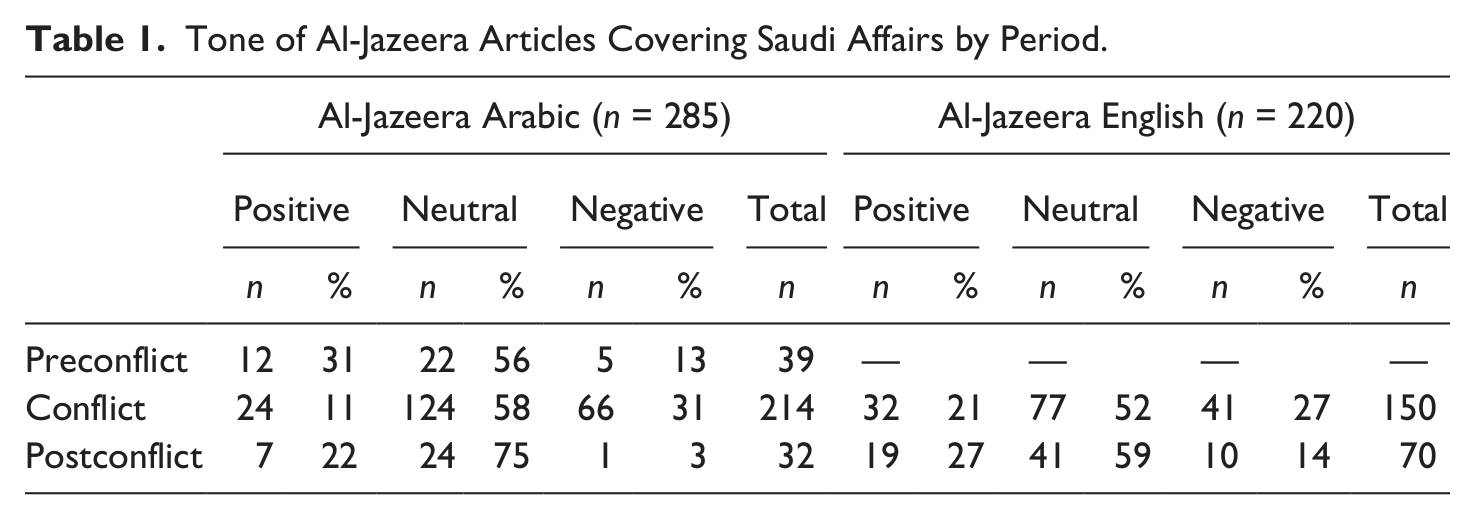
The analysis did not reveal any correlation between tone and timing for the conflict and postconflict periods, χ2(2) = 4.67, ns, on Al-Jazeera English, indicating that that there were no dramatic differences in its tone of coverage of Saudi affairs across the periods of the analysis. Indeed, in contrast to its Arabic counterpart, Al-Jazeera English maintained a balance, with a rate of 21% (n = 32) positive items posted during the conflict and 27% (n = 19) in the postconflict period. The rate of neutral articles increased slightly from 52% (n = 77) during the conflict to 59% (n = 41) in the postconflict period.
Breakdown of Tone by Year
Table 2 examines the tone of Al-Jazeera Arabic and Al-Jazeera reporting on Saudi affairs in the preconflict, conflict, and postconflict periods by year. A chi-square test was conducted with item timing as the independent variable and tone toward Saudi affairs (positive, negative, or neutral) as the dependent variable. In Al-Jazeera Arabic we found a strong relationship between year and tone, χ2(14) = 101.57, Cramer’s V = .42, p < .001. When only the negative articles were analyzed in the conflict and postconflict periods (when both websites were in operation), the relationship between the Al-Jazeera version and year remained significantly strong, χ2(5) = 16.5, Cramer’s V = .39, p < .01.
Tone of Al-Jazeera Articles Covering Saudi Arabia by Year.
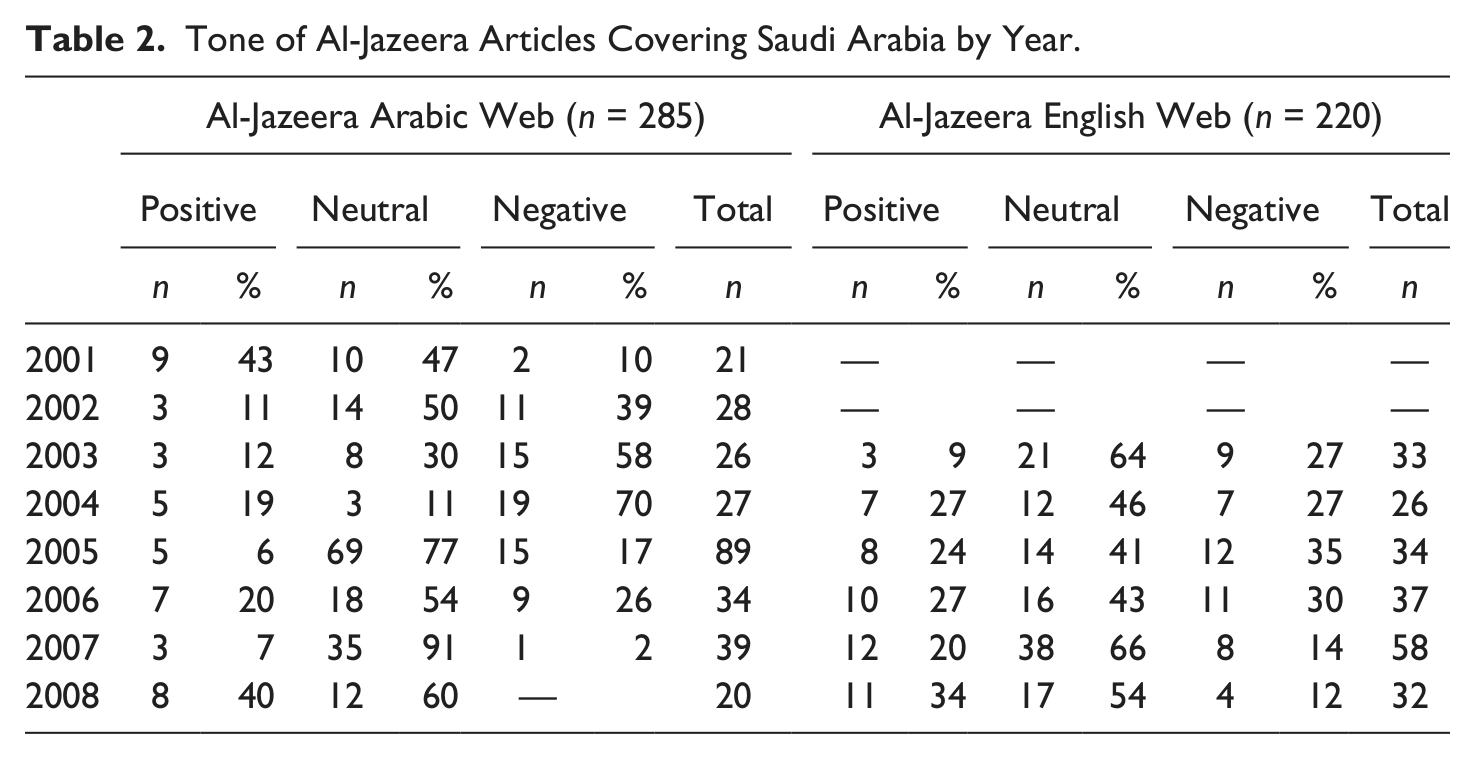
Table 2 highlights the dramatic changes in the tone of coverage of Saudi affairs over time. In 2001, the year that Saudi and Qatar signed an interim border agreement at the International Court in The Hague (in March 2001), only 10% (n = 2) of the articles on Al-Jazeera Arabic were critical toward Saudi affairs, whereas 43% (n = 9) were supportive of Saudi affairs. For example, in August 2001 Al-Jazeera Arabic published the results of a survey that featured Saudi Arabia as “the most attractive country for US investment in the region,” ranking Qatar only fifth in the region (“Saudi Arabia is the most attractive state for US investment in the region,” August 8, 2001). That trend was reversed as the conflict developed: in 2002, 39% (n = 11) of the articles were critical toward Saudi policy versus only 11% (n = 3) that were supportive in tone. The most dramatic transformation took place in the first two years of the conflict—2003 and 2004—when 58% (n = 15) of articles in 2003 and 70% (n = 19) of articles in 2004 were critical in tone toward Saudi affairs.
Specifically, during the conflict, Al-Jazeera emphasized frequent human rights violations by Saudi Arabia, including the intimidation of Saudi intellectuals (e.g., “ Saudi arrests five Saudi intellectuals,” Al-Jazeera Arabic, October 10, 2004; “Saudi arrests 5 intellectuals who call for reforms,” Al-Jazeera Arabic, March 16, 2004; “Saudi authorities in Riyadh and Jeddah prepare for an anti-government demonstration,” Al-Jazeera Arabic, December 17, 2004) as well as human rights organizations’ reports slamming Saudi Arabia for its human rights violations (e.g., “Saudi Arabia tries to overcome the clams of an American Human Rights report,” Al-Jazeera Arabic, October 3, 2004; “Arab human rights organization reports on hundreds of political detainees in Saudi Arabia,” Al-Jazeera Arabic, May 10, 2004). Furthermore, throughout the conflict Al-Jazeera Arabic paid special attention to the U.S. government’s criticism of Saudi Arabia’s human rights record (“Washington will rebuke Saudi Arabia for its human rights breaches,” June 3, 2005; “US Congress passes a resolution for financial aid to Egypt but denies it from Saudi Arabia,” October 4, 2004).
In contrast to Al-Jazeera Arabic, where neutrality was the second dominant category in 2003 and third (last) in 2004, on Al-Jazeera English, neutrality was the most dominant category in all the years examined. Specifically, in 2003-2004 there are no signs of Al-Jazeera English having followed the Arabic version’s trend to criticize Saudi policy. In general, we found no significant relationship between year and tone on Al-Jazeera English, χ2(10) = 16.26, ns.
Differences by Topic
Figures 1 and 2 present the topics and tone of the Saudi-related items on each website. The figures show that on both networks, diplomacy, terrorism, and human rights constituted the three central themes reported regarding Saudi affairs during the conflict, although the networks differed in the proportions and tone regarding each topic. The analysis reveals a moderately strong relationship between the Al-Jazeera versions and topic coverage across the different conflict periods, χ2(7) = 39.62, Cramer’s V = .28, p < .001.
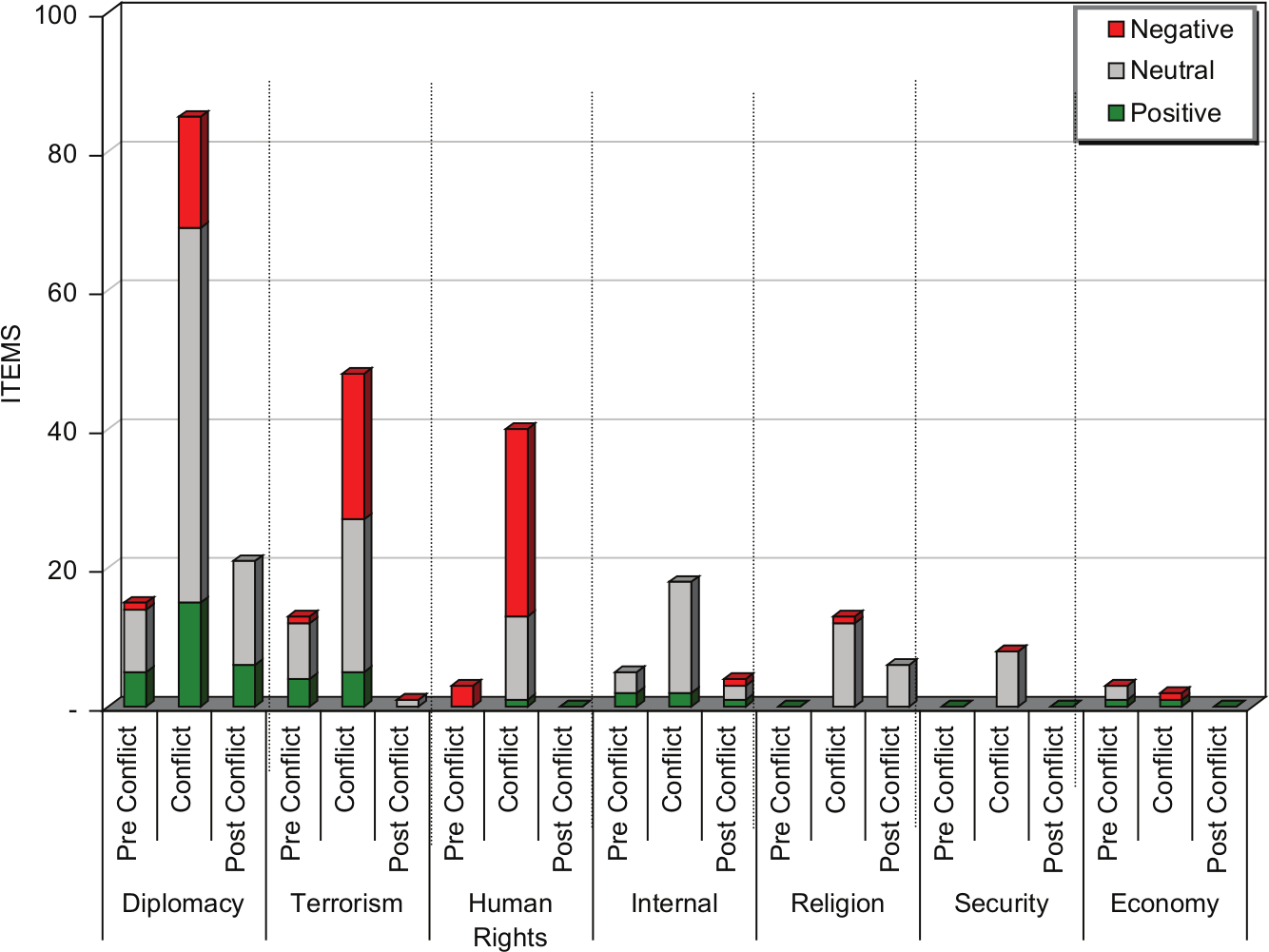
Topics and tone of items concerning Saudi affairs on Al-Jazeera English (n = 220).
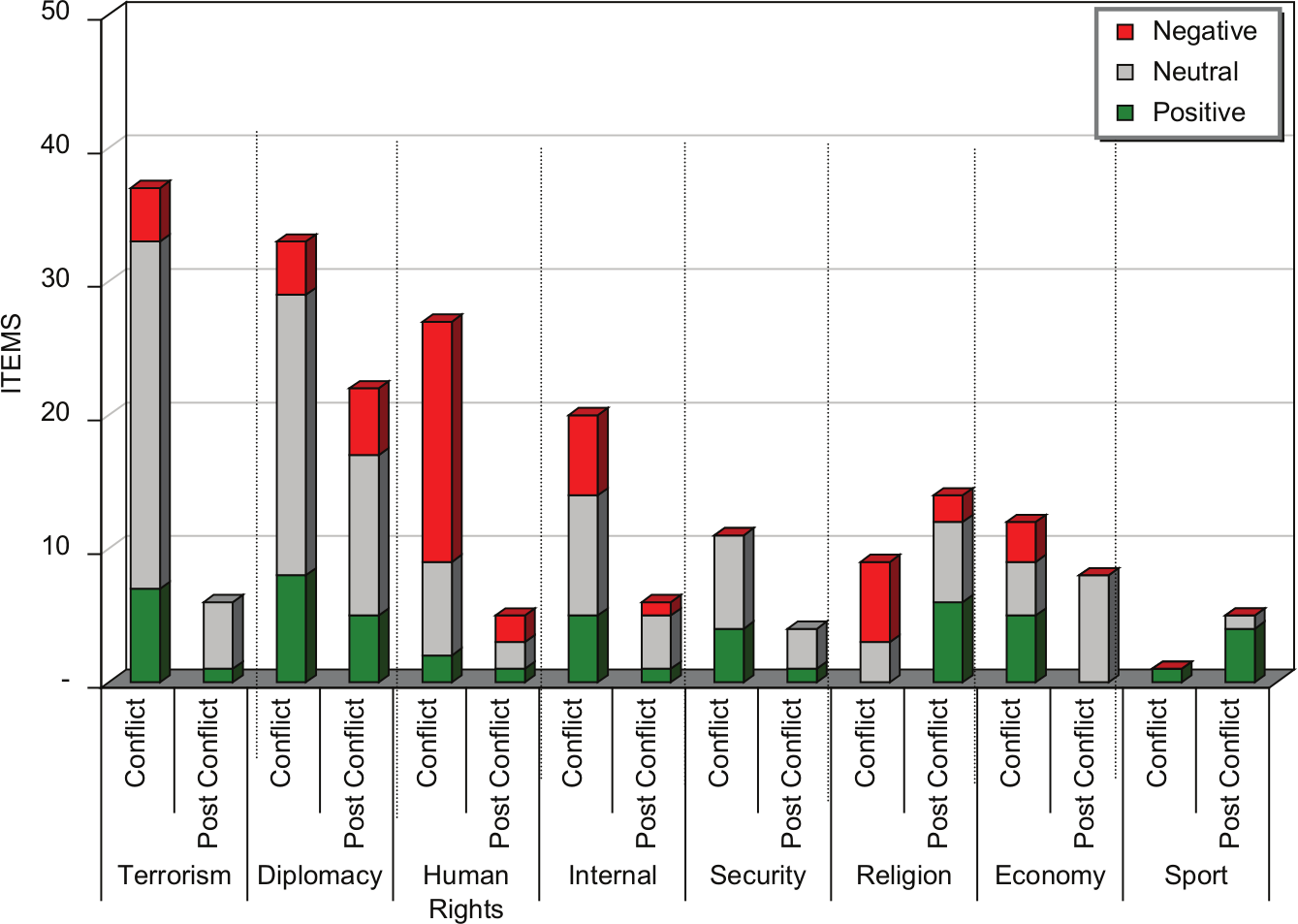
Topics and tone of items concerning Saudi affairs on Al-Jazeera Arabic (n = 285).
Regarding topic coverage, the most important finding is the complete disappearance of articles concerning human rights and terrorism—the two topics that featured most prominently in items criticizing Saudi affairs—from the Al-Jazeera Arabic website in the postconflict period. In the same period, Al-Jazeera English published four Saudi-related articles on human rights affairs and six articles on terrorism.
Concerning the tone, upon analyzing the relationship between articles of negative tone (articles from the conflict and postconflict periods only) across topics and Al-Jazeera versions, we found a strong relationship, χ2(5) = 21.86, Cramer’s V = .45, p < .001. On Al-Jazeera Arabic, the tone toward terrorism and human rights was highly critical during the conflict: 27 of 40 Al-Jazeera Arabic articles on human rights were critical and 21 of the 48 articles on Saudi terror policy were critical. Whereas during the preconflict period Al-Jazeera Arabic mostly focused on Saudi denunciations of 9-11, with only one Al-Jazeera article critical of Saudi terror policies, coverage shifted to a negative tone during the conflict and focused on allegations that Saudi Arabia helped sponsor terror organizations such as Al-Qaeda (“Washington blames Riyadh for hindering support for Al-Qaeda,” Al-Jazeera Arabic, May 2, 2006) and Hamas (“Hamas delegation in Saudi Arabia,” Al-Jazeera Arabic, February 23, 2006).
In stark contrast, during the conflict and postconflict periods, Al-Jazeera English mostly made reference to Saudi Arabia’s opposition to global Jihad. As regards human rights violations, a close textual analysis reveals further differences between the representations of this topic on the two Al-Jazeera versions. Specifically, although Al-Jazeera English typically noted the complete list of countries, including Qatar, criticized for human rights violations in the Human Rights Watch reports, Al-Jazeera Arabic tended to highlight Saudi Arabia and often omitted Qatar from these lists (e.g., “Gulf Arabs dispute US abuse claims,” October 3, 2004).
Post Hoc Analysis
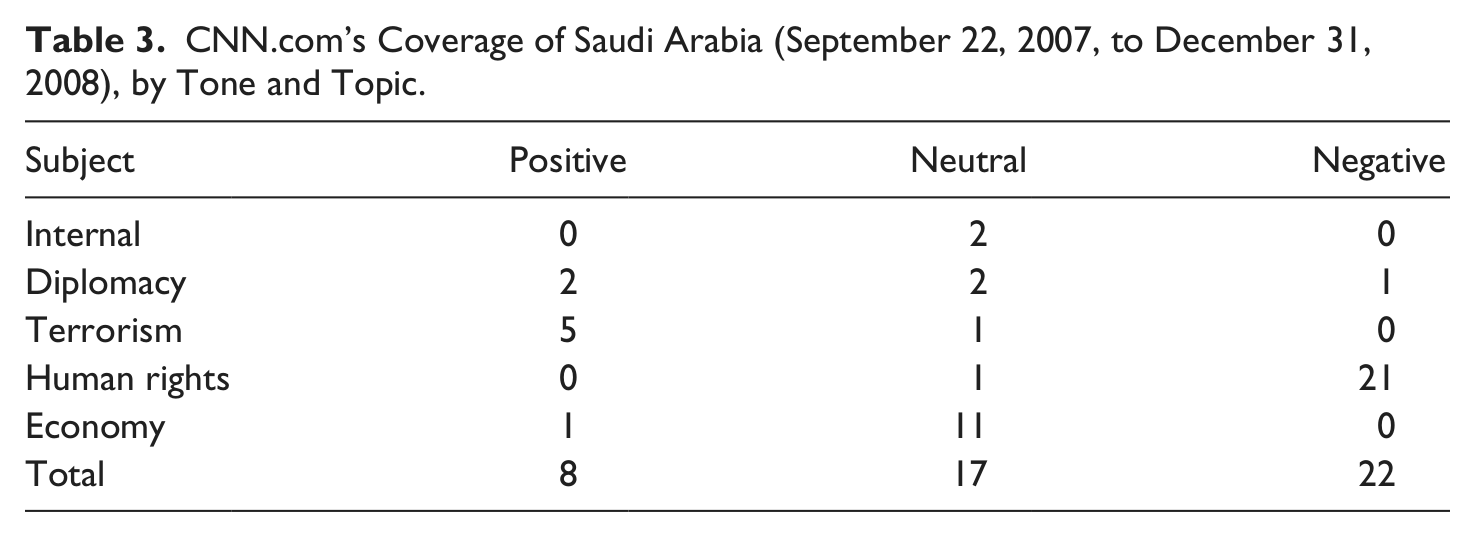
In light of the dramatic decrease of Al-Jazeera items criticizing Saudi affairs in the postconflict period, the analysis was extended and examined CNN.com’s coverage of Saudi affairs in the same period (from September 22, 2007, to December 31, 2008) to gain a broader perspective of international reporting of Saudi affairs in the same period. The analysis examined CNN.com’s coverage of Saudi Arabia affairs using the categories of topic and tone. The lowest intercoder reliability for the relevant variables within the four coders was a Scott’s pi of 92% (for “tone”). The search term used to identify items was again “Saudi Arabia.” Altogether, the search revealed 229 articles; however, Saudi Arabia was the focus of the article in 47 articles and thus the coders coded only these articles. Of these 47 articles, 36% (n = 17) were neutral and dealt mainly with the Saudi economy, 17% (n = 8) were positive in tone, mainly regarding U.S.–Saudi cooperation in the fight against international terrorism, and 47% (n = 22) of the articles were negative in tone. Of the 22 articles with negative tone toward Saudi Arabia, 21 mainly concerned two incidents of human rights violations. The first is the November 2007 Saudi Sharia court decision to harshen the punishment of a woman who had been gang-raped, from 90 to 200 lashes and 6 months in jail due to the fact that she had been seen in public with a man against Sharia law. The incident, which took place during the U.S. presidential race, raised protests from Hillary Clinton, John Edwards, and Joe Biden, who called for reversal of the decision; ultimately the Saudi king pardoned the woman as a result of this pressure. The story was featured in nine different CNN.com’s articles during November and December 2007. The second case that was widely covered is the June 2008 Human Rights Watch report, which censured Saudi Arabia for treating its foreign workers as “virtual slaves.”
Discussion and Conclusions
This article analyzes the relations between Qatari interests and Al-Jazeera’s output during the Qatari–Saudi conflict in light of allegations that Al-Jazeera was used as a public diplomacy tool throughout the conflict. The analysis shows that Al-Jazeera Arabic.net dramatically increased the volume of articles portraying Saudi Arabia in negative light when the conflict erupted and ceased criticism of Saudi affairs altogether in the year following the resolution of the conflict. This, despite several cases of Saudi human rights violations that gained wide coverage in other international media, as illustrated in the post hoc analysis of CNN.com’s coverage of Saudi Arabia in the postconflict period (Table 3). Al-Jazeera’s modus operandi throughout the Saudi–Qatari conflict clearly falls into partisan-style reporting that characterizes controlled news networks. When these findings are combined with an Al-Jazeera reporter’s testimony that Qatar ordered the negative coverage of Saudi Arabia throughout the conflict and the suppression of censorship thereafter, and the reported attendance of Al-Jazeera’s manager in the Saudi–Qatari resolution meeting (Worth, 2008), the notion that Al-Jazeera Arabic.net was used as a bargaining tool to serve Qatar’s public diplomacy goals in and after the Qatari–Saudi conflict is strengthened.
CNN.com’s Coverage of Saudi Arabia (September 22, 2007, to December 31, 2008), by Tone and Topic.
Although the analysis revealed a strong correlation between the tone toward Saudi affairs and Qatari interests on Al-Jazeera Arabic, it did not reveal similar correlations on Al-Jazeera English. These findings are consistent with the findings of several comparative analysis studies of Al-Jazeera Arabic and English (Abdul-Mageed & Herring, 2008; HaLevi, 2007; Youssef, 2009), which attribute these differences to attempts to maintain Al-Jazeera English’s credibility in the eyes of Western viewers while using the Arabic version to promote Qatar’s Middle East interests.
Overall, the article illustrates that Qatar effectively promotes its public diplomacy goals by operating Al-Jazeera as a hybrid network whose independence is limited by the boundaries of Qatar’s crucial interests. Whereas Al-Jazeera operates as a private network on most affairs, even to the extent of implicating Qatar in minor incidents with several Arab countries in the past, as the Qatari prime minister argued, Qatar manages to leverage the network’s credibility for public diplomacy purposes in times of crisis. In this case, the stick and (following the resolution) carrot style reporting functioned as a means by which pressure was put to bear on Saudi officials to resolve the conflict with Qatar.
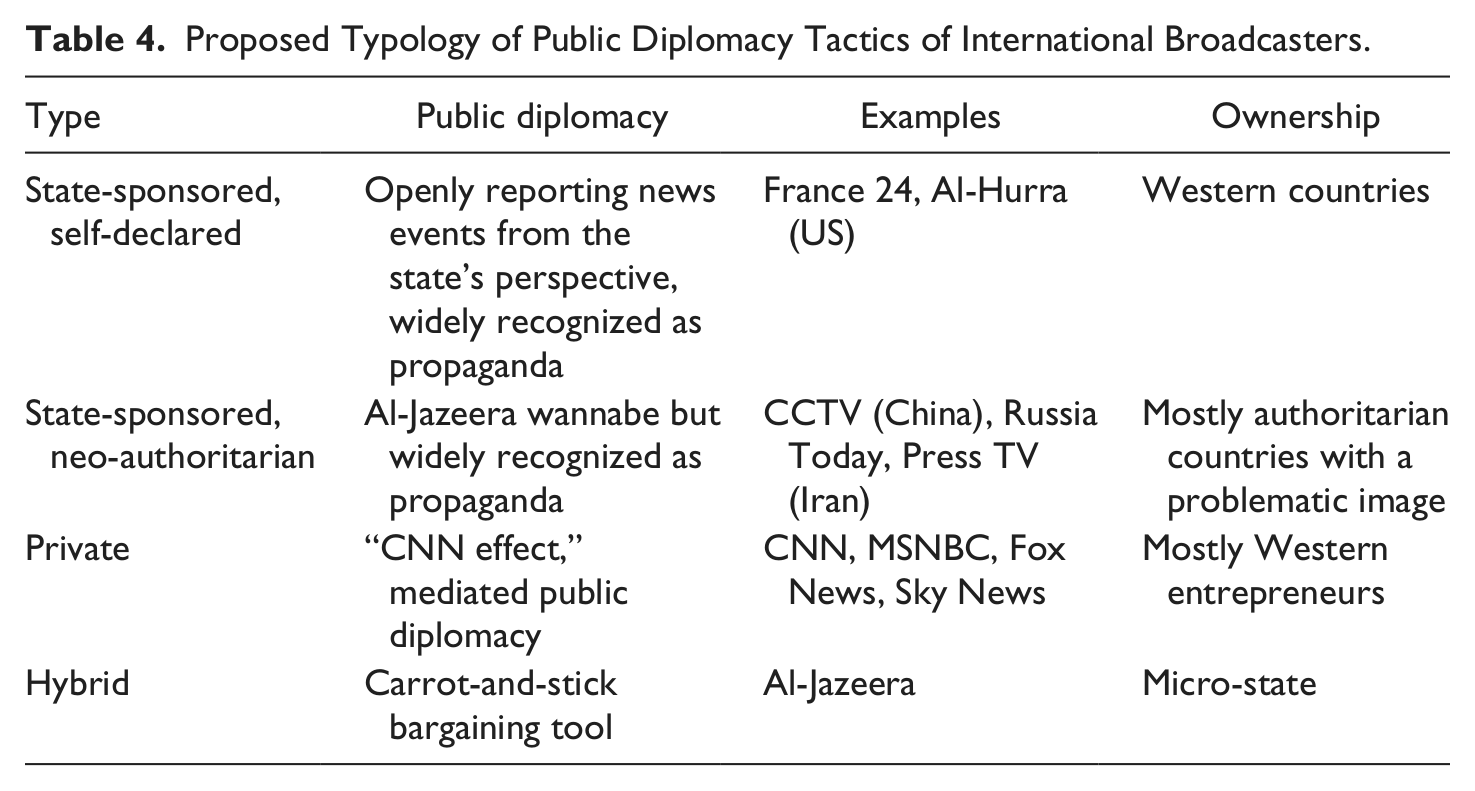
Importantly, Al-Jazeera’s modus operandi does not fall under the classic state-sponsored/private reporting typology, and I suggest it represents a new form of usage of international broadcasting as a public diplomacy tool. Accordingly, I suggest a revised typology of the use of public diplomacy tactics in contemporary international broadcasting. I suggest terming Qatar’s modus operandi as the “hybrid model of international broadcasting.” In the same manner that hybrid is defined in genetics as any offspring resulting from the mating of two genetically distinct individuals, Al-Jazeera is the offspring of the fundamentally distinct state-sponsored and private models.
I suggest that the adoption of the hybrid model as a public diplomacy tool is a challenging option for state players, and that Qatar is an example of the successful employment of this model by a state. This is clearly illustrated by the less successful operation of Al-Jazeera copycats such as Russia Today, the Iranian-backed Press TV, and the Saudi-backed Al-Arabiya, all state-sponsored networks that insist that they are independent operations but have thus failed to gain credibility as such. Becker (2004) termed Russia Today’s model neo-authoritarian based on its consistent submission to Putin’s policies. I adopt this term to describe this group of Al-Jazeera copycats in nondemocratic states with a similar image problem (Table 4).
Proposed Typology of Public Diplomacy Tactics of International Broadcasters.
I suggest that Qatar was successful in inventing and employing the hybrid model of international broadcasting for public diplomacy purposes due to two main reasons. First, Qatar is a micro-state with minimal direct involvement in international conflicts. This means that Qatar is able to successfully disguise its relationship to Al-Jazeera most of the time because it is a peripheral player in international politics and therefore most viewers are indifferent to Qatar’s political affairs or interests. In contrast, networks that originate in major players in the global arena raise strong emotions and immediate suspicion among audiences (Powers, 2009). This at least partially explains the growing suspicion toward Al-Jazeera’s copycats that originated in Russia, China, Saudi Arabia, and Iran.
Importantly, Qatar’s miniature size also offers another advantage in strengthening Al-Jazeera’s credibility while functioning as an instrument of Qatar’s public diplomacy goals, particularly in asymmetrical conflicts. Several analysts contend that due to Qatar’s territorial and military inferiority, Al-Jazeera’s Arab viewers appreciate Al-Jazeera Arabic’s intense criticism of major countries, including its mighty neighbor Saudi Arabia, in the name of fair journalism, which they see as a mark of Al-Jazeera’s credibility (El Oifi, 2005; Powers, 2009).
Second, Qatar has the resources and motivation to continue its investments in Al-Jazeera staff and various world bureaus. According to Powers (2009), the micro-state of Qatar has stronger ambitions than major international states to operate a network that serves as its global voice, and is therefore willing to invest billions to use Al-Jazeera to leverage its political status in the emergent “global network society” atmosphere (Castells, 1996), where a global television network can promote the national interests of the country it originates from in a highly efficient manner. The emir continues his sponsorship of the channel because it functions as an excellent public relations tool for Qatar, as “Al-Jazeera is the only channel more famous than its country of origin” (Samuel-Azran, 2010, p. 31).
To examine the applicability of the hybrid model to additional Qatari foreign affairs and other international news networks, further research will need to be carried out. It should examine, for example, the U.S. ambassador’s cable exposed on WikiLeaks (Lebron, 2009), which alleges that before Mubarak’s fall the Qataris offered him a deal that included cessation of Al-Jazeera’s broadcasts in Egypt in exchange for Mubarak’s increased support of the Palestinians. Another case study should be Abu Dhabi’s attempt to emulate Al-Jazeera with its own state-owned international news network, Abu Dhabi Satellite Channel.
The main weakness of this study’s analysis is the absence of public opinion polls available from Saudi Arabia, which would have allowed us to understand the precise magnitude and impact of Al-Jazeera’s intense criticism of Saudi affairs on Saudi viewers. Such polls would have allowed better evaluation of the pressure on the Saudi family resulting from Al-Jazeera’s intense criticism of its policies in 2003-2004. Here, the analysis relies on the 2004 survey conducted by the Arab Media Group (see above), which identified Al-Jazeera as the most popular station in Saudi Arabia with credibility similar to Saudi media including Al-Arabiya; findings of this survey strengthen the notion that Al-Jazeera was indeed an important factor in Saudi everyday discourse during the conflict. When we combine this insight with findings of previous studies that established the relationships among media content, public opinion, and foreign policy (Bar-Tal, 2000; Leonard, 2002), as well as the knowledge that Al-Jazeera’s criticism of Saudi affairs was actually “the last straw” that triggered the Saudi–Qatari conflict, the notion that Al-Jazeera played a role in the Saudi–Qatari crisis is further strengthened. However, future studies would benefit from linking the interplay among public opinion, media content, and policies to public opinion surveys.
Footnotes
Declaration of Conflicting Interests
The author(s) declared no potential conflicts of interest with respect to the research, authorship, and/or publication of this article.
Funding
The author(s) received no financial support for the research, authorship, and/or publication of this article.