







Abstract
As mosquito-borne diseases like dengue and Zika continue to develop, traditional approaches have not curbed the epidemics, and evidence suggests that community-based programs are an effective alternative. In Paraguay, more than 8,300 cases of dengue were reported in 2019. Recent entomological surveys found that the percentage of houses with Aedes aegypti larvae is as high as 20% in the capital. In this context and based on the experiences of Camino Verde and DengueChat in Nicaragua, we started the TopaDengue project, a community-based intervention, supported by ICTs (information and communication technologies), in one of the most vulnerable territories of the Paraguayan capital, the Bañado Sur of Asunción. To inform our design of the socio-technical ICT platform, our fieldwork in this community explored the dynamic of interaction among researchers, facilitators, volunteers, the extended community, and technologies. Combining both paper and digital technologies with a continuous feedback loop among research, design, and community action, within a citizen science initiative, were key to strengthening the socialization and management processes of a community-based entomological surveillance program.
Introduction
Dengue infections affect between 50 and 100 million people every year in more than 100 countries. 1 In Paraguay, more than 8,300 cases were reported in 2019, and public officials raised the alarm of an impending epidemic spike during 2020, 2 similar to past major outbreaks (i.e., 2000, 2007, 2013). 3 As with other arboviruses, a mosquito, Aedes aegypti, serves as a vector, and the territorial expansion is driven by mobility of people and unplanned urban growth (Sánchez et al., 2008). To limit expansion, preventing and reducing the presence of mosquitoes in local communities is paramount. Community participation has been proven effective in reducing risks for dengue and other arboviruses, specifically by facilitating the elimination or protection of water containers, which are potential breeding sites (Andersson et al., 2015; Jayawardene et al., 2011). The challenge of these programs lies in how to engage residents in participatory action and how to analyze and disseminate data in order to facilitate coordinated action. Properly designed social programs with integrated information and communication technologies (ICTs) can help raise community awareness about its risks and mobilize action. Previous initiatives like the Camino Verde (Andersson et al., 2015) in Nicaragua, and its evolution into DengueChat, 4 have already shown this potential, and TopaDengue (Parra et al., 2019) adapts them for a new territory, seeking to validate the methodology outside its original pilot, contextualizing it to the reality of Bañado Sur 5 and using this experience to inform the design of the supporting socio-technical ecosystem. In practice, we designed a citizen science (CSci) community program, implemented within a controlled experiment to evaluate impact.
Through this research, we learned (1) how fieldwork logistics and coordination along with better socialization mechanisms were the key design challenges for the socio-technical ecosystem; (2) how socializing the evidence, along with the prospect of interacting with technological artifacts, was useful and motivating, especially for younger volunteers; (3) the importance of combining digital and paper-based ICTs for localizing the socio-technical ecosystem; and (4) the importance of the social model and the abilities of facilitators as key drivers of engagement to sustain a CSci project that builds capacity.
The remainder of this article will (1) describe the TopaDengue project and its results, (2) discuss the lessons of our design research within the project, (3) describe and evaluate the design interventions that followed, (4) analyze learnings about motivation and empowerment of volunteers, and (5) finally summarize our work by reflecting on the synergies we observed.
Context: TopaDengue Project
TopaDengue is a research project that implements a community entomology program in which volunteers from the neighborhood visit its houses on a weekly basis, to carry out entomological inspections and document larvae and pupae of Aedes aegypti as they find them, along with the type of containers that bred them. Containers can be active (i.e., containing larvae or pupae), potential (i.e., inactive but unprotected), or protected (i.e., treated so as to not accumulate water). Documentation is done through paper and digital forms on tablets. Depending on the area to visit, volunteers decide when to use paper, and digitize afterward, and when to use both. Paper is always a backup. Breeding containers could be in active use (e.g., clean water barrels), useless (e.g., old home appliances), or part of the environment (e.g., plants with small holes that accumulate water). Infestation levels are socialized with three levels of alert:
Red: Houses with active containers (i.e., breeding sites)
Yellow: Houses with potential containers
Green: Houses without breeding sites or potential containers
The Territory: Bañado Sur of Asunción
Bañado Sur is considered to be one of the most traditional and vulnerable territories in Asunción. Composed of several neighborhoods along the floodplain of the Paraguay river, including 18 informal settlements (Secretaría Nacional de la Vivienda y el Hábitat, 2011), it is home to approximately 16,000 people, most of them very poor and reliant on informal work or in waste picking and sorting at the nearby landfill. Despite risks for frequent flooding, rural migrants began to occupy this land in the 1960s during a wave of internal migration rooted in peasant expulsion from agricultural lands during the Stroessner dictatorship (1954-1989; Monti, 2017; Comisión Verdad y Justicia, 2008). A mix of pride and exclusion drive community identity: Many of our volunteers referred to their communities as having been built by themselves and their parents, despite the unfair exclusion of the city, a reality confirmed by our survey of 264 families; less than 1% had access to sewage, and only 17% had access to formal waste management. Based on our observations, another important aspect of this social setting is how traditional political parties have used residents’ vulnerability to their advantage during elections, resulting in high distrust of authorities, initially complicating the participatory process we were proposing.
The vulnerability, the lack of access to basic sanitation, and the proximity to the municipal landfill make Bañado Sur high risk for dengue, which, together with preexisting relationships in the community by a local nongovernmental organization, proved decisive when selecting the neighborhoods of San Cayetano, Caacupemi, and San Ignacio as the focus of our program.
The Program
The project was implemented in 940 houses in the three selected neighborhoods. Based on community-based participatory research methods, community members both produced and acted on the data about the issue of dengue. Inspections by volunteers, and the resulting aggregated level of community infestation, is a form of local knowledge that makes our program similar to participatory action research in health studies (Minkler, 2000) and an instance of a CSci that is understood as a “knowledge producing capacity of society” that can “empower communities to advocate for their local environments” (Eitzel et al., 2017).
Within this conceptual framework, we designed a social volunteering program that we called the Academy of Amateur Scientists of the Bañado Sur of Asunción with two goals in mind: (1) to demystify science and make it accessible as a community experience and (2) to engage youth volunteers in an educational context. The academy program included a series of science and technology workshops, along with house visits as fieldwork. Visits were coordinated by four facilitators once a week. Approximately 25 teenagers from after-school support at a local organization joined our fieldwork, along with 10 to 15 local women who were already participating in other initiatives with our facilitators. Volunteers visited houses in search of water containers that could represent potential breeding sites, documenting them, and later uploading and visualizing this data in DengueChat. Socialization was done through technology and during visits, with volunteers talking to residents, and sharing their findings, without eliminating breeding sites. The central hypothesis of the program is that community surveillance alone will encourage families to act, thereby reducing infestation levels. Figure 1 shows the basic structure of our program.
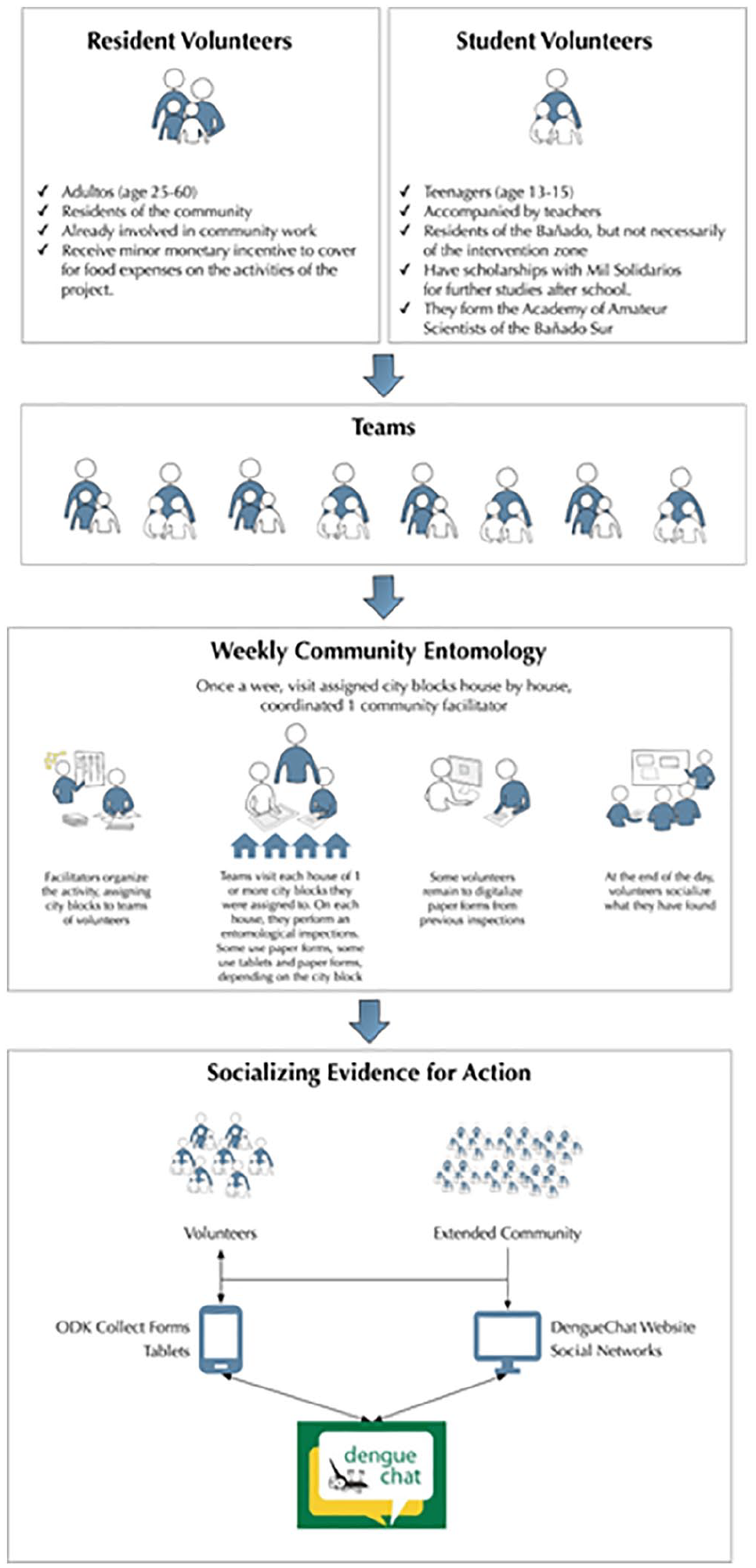
Summary of the key elements of the TopaDengue community volunteering program (Parra et al., 2019).
The Controlled Experiment
To test whether community mobilization reduces infestation levels, we designed a pragmatic controlled trial that used professional entomological surveys that measure infestation levels to establish the baseline and the outcome. We compared results from our selected neighborhoods (the intervention) against other nearby similar counterparts (the control) as shown in Figure 2.
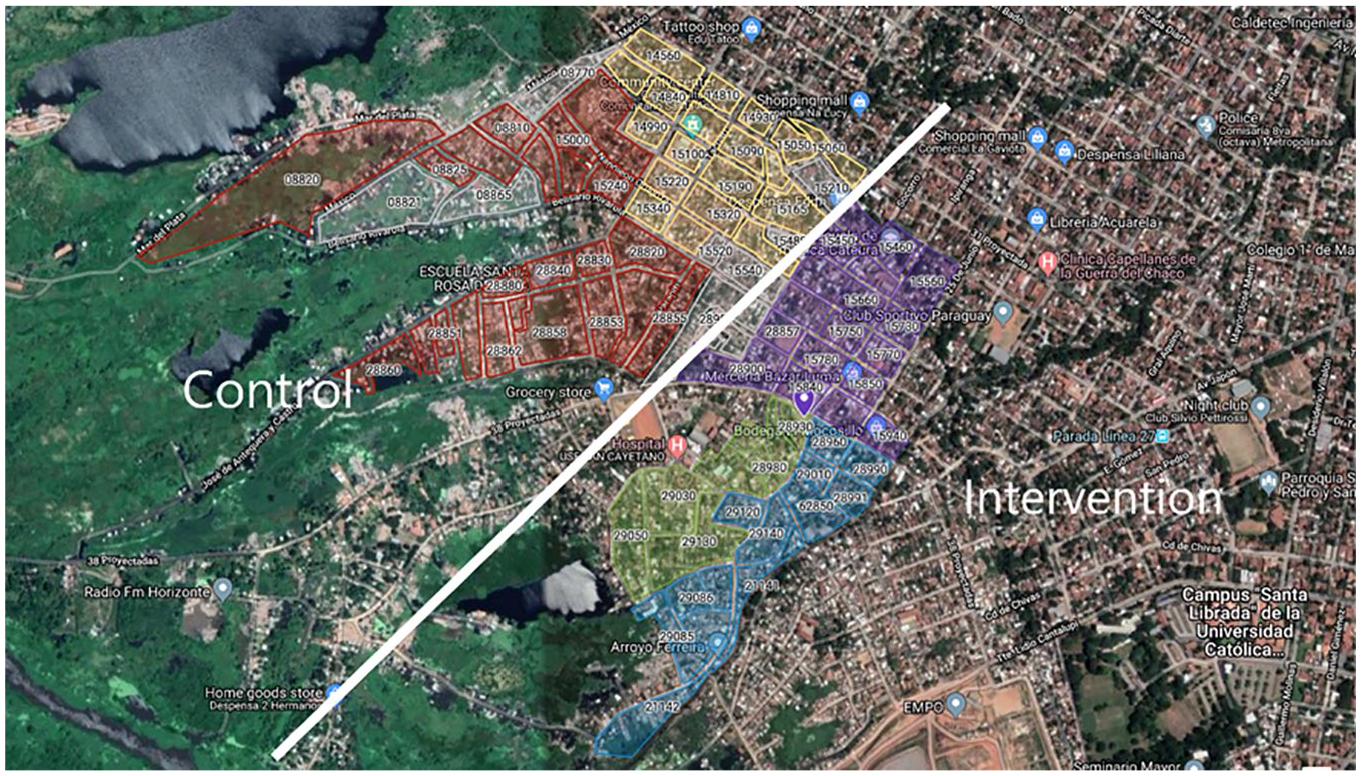
Map of the chosen intervention neighborhoods and their control, where the program was not implemented.
The outcome measure was the house index (percentage of households with larvae or pupae over the total number of examined households). Four external measurements were performed, one before the intervention started, to establish a baseline, in April 2018 (Nintervention = 222, Ncontrol = 218). Then, again, in the dry month of July 2018 (Nintervention = 230, Ncontrol = 223), in April 2019 (Nintervention = 243, Ncontrol = 275), and in May 2019 (Nintervention = 40, Ncontrol = 40).
A series of rains in March led to extensive flooding during April and May of 2019, coinciding with the past measurements. This unexpected event stressed the territory, limited the scope of our external surveys, and intensified conditions that drive infestation. Our results show that the house index in the intervention was much lower after the intervention, or, in case of increase, it was lessened in our neighborhoods, under the same stressful flooding. The house indices in April 2018, the baseline, were at 22.52% (intervention) and 15.59% (control). In July 2018, the biggest decrease was observed in the intervention, with indices at 2.61% (intervention, −19.91%) and 9.87% (control, −5.73%). In April 2019, with half-flooded territories, both increased their house indices, but the increase was lessened in the intervention, at 26.92% (intervention, +4.4%) and 29.03% (control, +13.44%). At this point, volunteers decided to increase their visits. An additional measurement was done in May 2019, after this action, with indices at 17.50% (intervention, −5.02%) and 55% (control, +39.40%). Therefore, considering this experimental design and the external unexpected flood, community mobilization substantially reduced house indices or mitigated their increase.
DengueChat
The platform we have chosen to use as the starting point element of our ICTs ecosystem is DengueChat (Coloma et al., 2016). Developed by the Social Apps Lab at University of California, Berkeley, it has evolved from a website for self-driven monitoring of breeding sites to a socio-technical platform integrated into a customized social model based on Socialising Evidence for Participatory Action and Camino Verde. It consists of two elements: DengueChat Data (shown in Figure 3), for coordinators of the program who access a dashboard to visualize house level data, and DengueChat Community (shown in Figure 4), for volunteers who access a forum to interact and share their experiences as well as for viewing aggregated risk in their communities in terms of green, yellow, and red houses, plus rankings based on points they accumulate as they get more houses to become green.
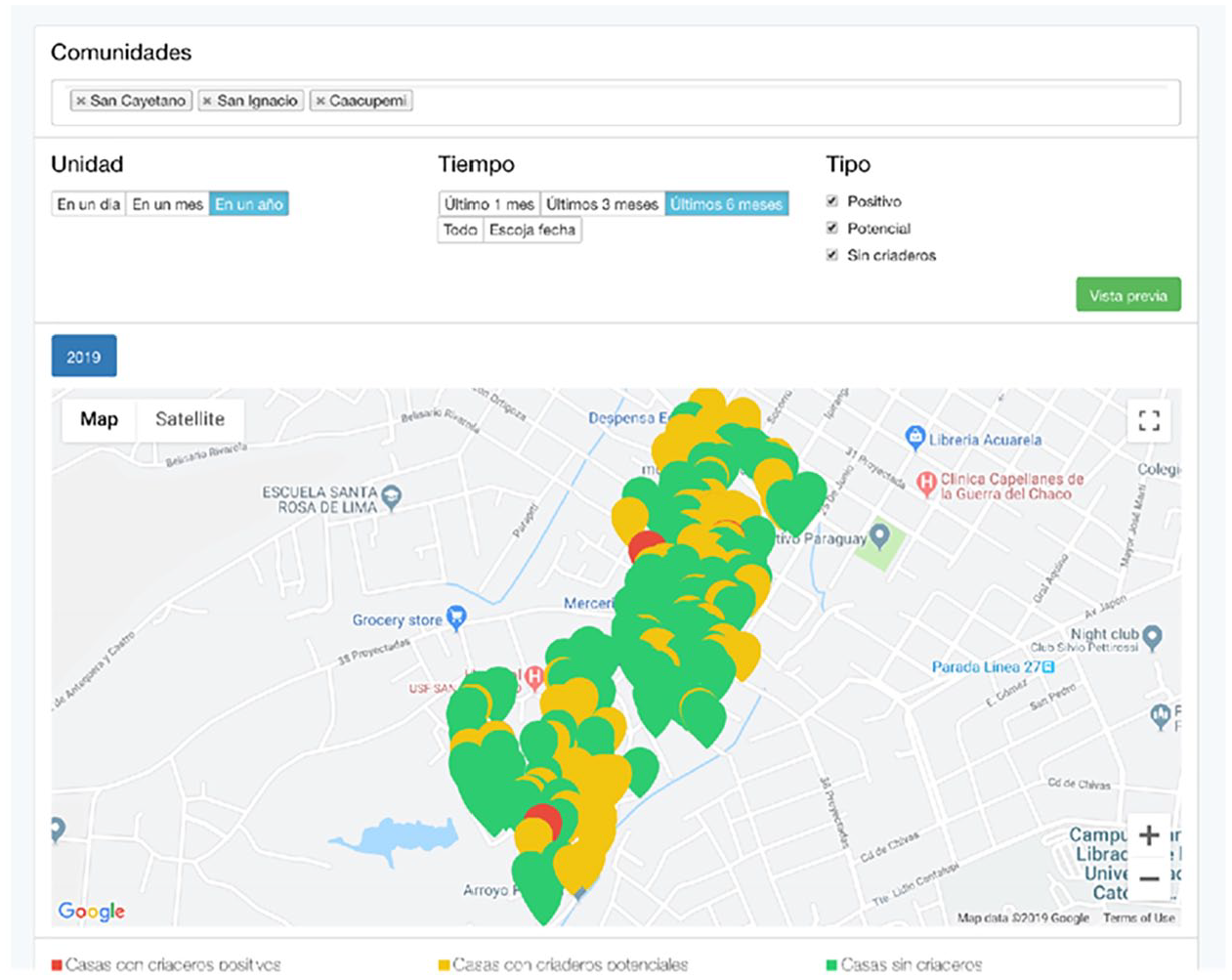
DengueChat Data interface, showing the map with house-level data along with their green, yellow, or red status.
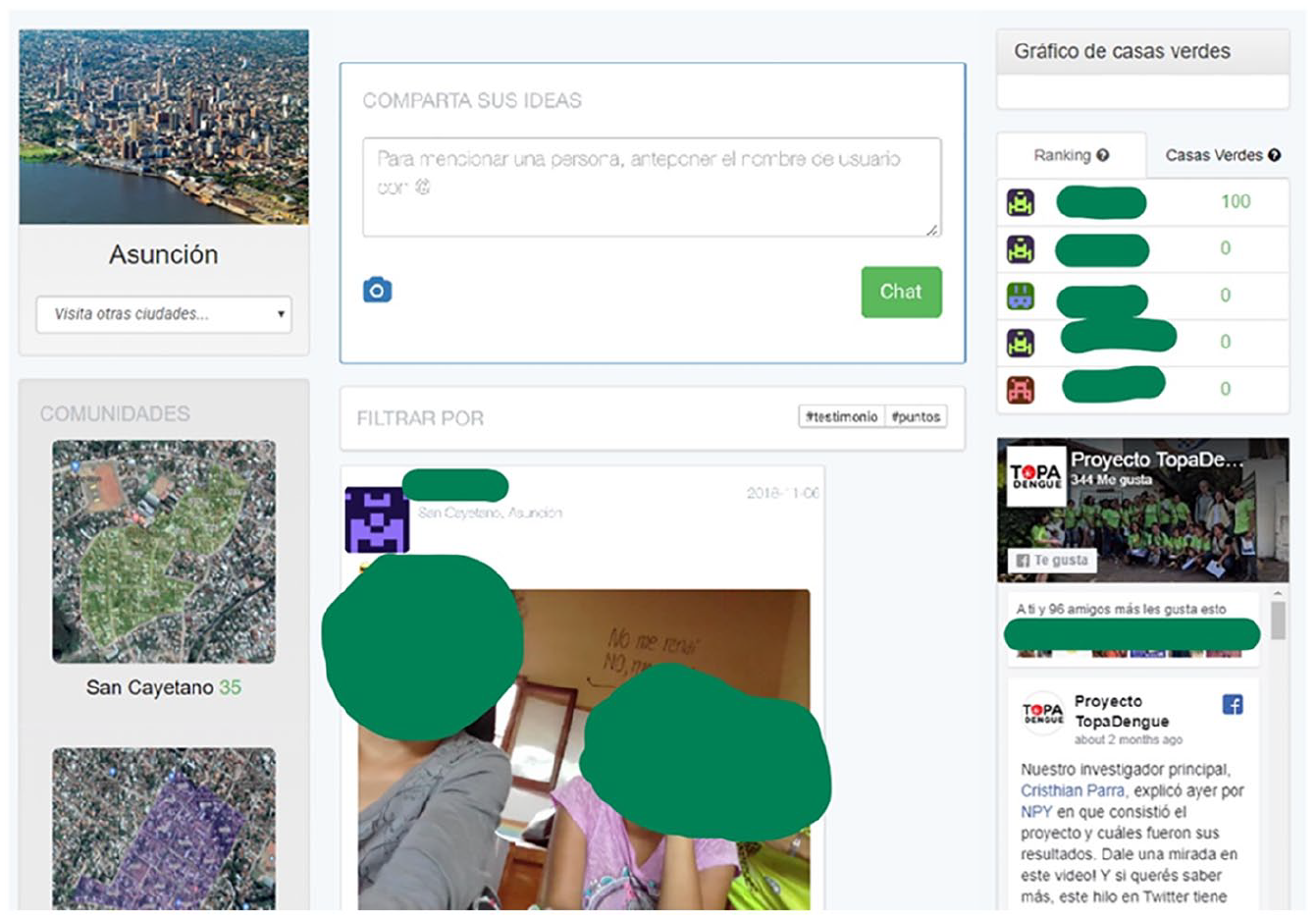
DengueChat Community component, showing the volunteers’ forum and rankings.
Discovering Emerging Needs
Through the lens of design research (Simonsen et al., 2011), our journey to explore the synergies between technology and community started with an open-ended exploration to discover needs, later addressed through the design and focused evaluation of specific interventions in the socio-technical ecosystem, including initial evaluation activities around the ICT tools in use to support the project. Participant observation was carried out by accompanying and helping volunteers and facilitators during their house visits, immersing ourselves in context, and observing and collecting qualitative notes about their experience with both visits and use of ICTs. We also conducted heuristic evaluations (Nielsen & Molich, 1990) of every component of DengueChat, which together with observations culminated in a series of participatory design meetings in which preliminary designs were presented and improved, including new versions of our paper forms and their digital counterparts, as well as standalone prototypes of new features for DengueChat.
Working offline was an important nonfunctional criterion, which the original DengueChat mobile app satisfied, caching data and uploading when connection was available. Based on observations, however, we identified problems of (1) compatibility, installation difficulties or partial functionality (e.g., without camera) of the app on many low-end smartphones, (2) storage needs not met by low-end mobile phones causing volunteers to uninstall the app to make room for personal data, and (3) usability, having all of Nielsen’s heuristics being violated.
Data Collection
Following first observations, the initial problems were how to replace paper forms or facilitate their digitalization when digital collection was not possible on site, replacing the app, and the manual creation of spreadsheets as the only methods to upload data into DengueChat. In four training sessions and one field visit, we observed and evaluated three alternatives: (1) spreadsheet software (Google Spreadsheets) to copy over the paper form or even to collect data onsite, (2) open source form management and data collection (ODK Collect 6 ), and (3) custom Mosquito Habitat Mapper app (Tyson et al., 2018), a popular National Aeronautics and Space Administration–led CSci as a tool project (Eitzel et al., 2017). The resulting best cost-effective alternative was ODK, mainly for its flexibility (custom forms) and openness, rendering unnecessary to maintain code and services associated with our own mobile app. We placed our focus on synchronizing data from ODK into DengueChat, leading to a new architecture of the platform, around the usage of ODK forms and development of synchronization mechanisms. ODK forms also make it easy to use the same UI (unique identification) for onsite data collection and a posteriori digitization of paper forms, unifying the synchronization process. Concurrently, paper form design also needed improvements, which we iteratively introduced with the participation of volunteers.
Design Challenges
In addition to data collection, two challenges emerged: (1) the logistics design challenge followed observations on how complicated and time-consuming it was to organize which city blocks and houses to visit, leading to questions of how might we maximize the number of visits or the weekly city block coverage, and (2) the socialization of data that were limited to the DengueChat website, curtailing the possible actions of volunteers as they did not easily visualize the impact of their work in the increase of green houses, leading to the question of how could we improve the ways in which information was shared with volunteers. Both these questions led our subsequent design efforts and technology interventions.
ICT Synergies and Interventions
To address logistics, we designed a scheduling and volunteer assignment interface for city block visits. A map of the intervention area was integrated in DengueChat, displaying each city block along with its house count, infestation level, green houses amount, date of the last visit, and number of visits in total (see Figure 6). To address socialization, we designed and shared weekly messages via WhatsApp with volunteers and facilitators. Three types of messages were tested: (1) informational messages about the data, (2) educational messages about prevention and breeding site elimination, and (3) active messages with calls to action for participation. Figure 5 shows screenshots of these messages. Gamification features were also changed from an individual point awarding scheme, which attributed points when users uploaded data, to a collective model based on how the group actually worked during visits, distributing points among all the volunteers who visited a city block where a positive change was detected. The risk chart was integrated in the city home page (the one most commonly used) to make it easier for volunteers to see. And finally, based on the desire of volunteers to be better recognized in the platform, audiovisual material was added on the landing page, to make real volunteers more visible, and the social media of the project was integrated into the city page, where photos and other info specifically related to the project was posted regularly.
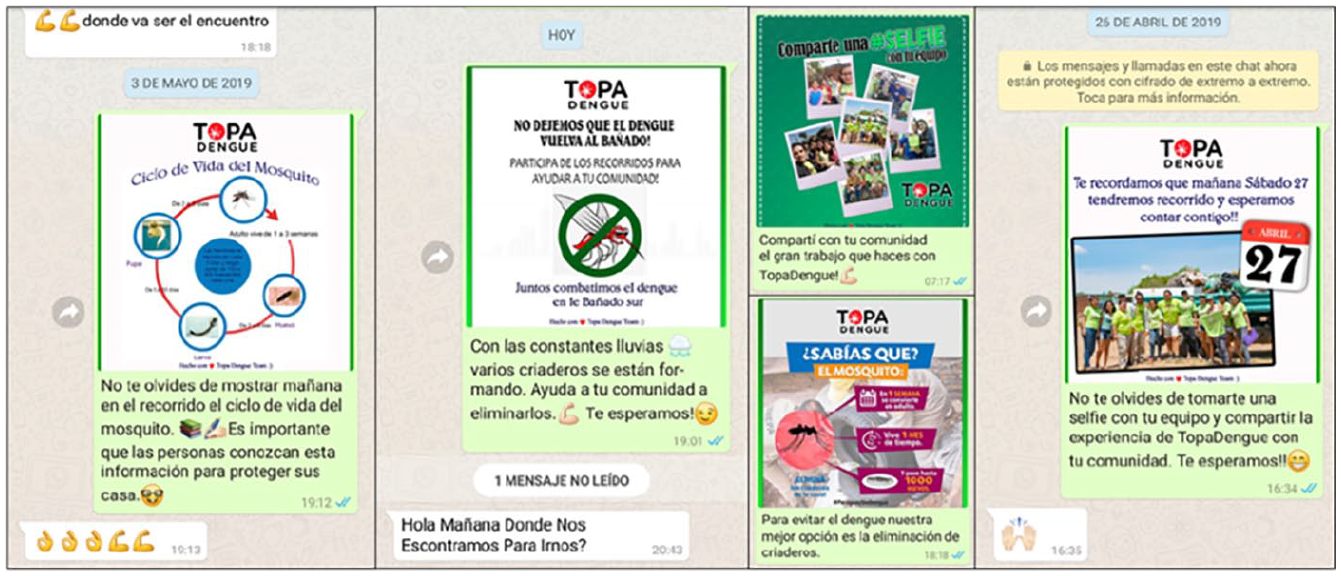
Screenshots of message prototypes sent out during the Wizard of Oz experiment.
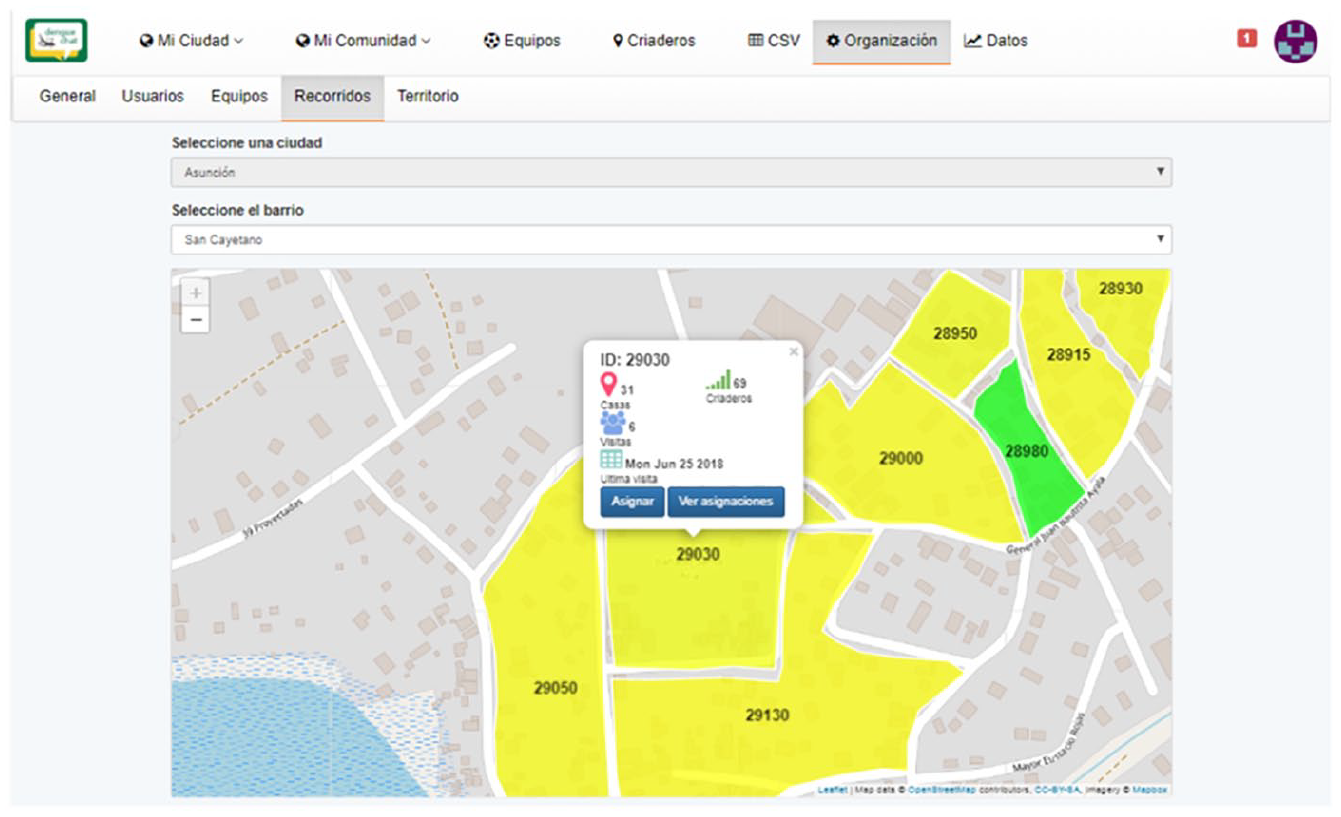
The new logistics module, which follows our fieldwork learnings on emerging needs.
Evaluation
Two separate activities tested the ideas and prototypes we described. The first evaluation is a Wizard of Oz (WOZ) (Lazar et al., 2010) case study, using surveys to assess volunteers’ experience with the WOZ prototype: Messages were sent manually by the team. Questions on this survey were about the perceived usefulness of the solution. We analyzed responses and codified them into categories to understand how they matched our intended purpose with messages. The second evaluation consisted of a series of Think Aloud (Lazar et al., 2010) sessions with eight volunteers and four facilitators, followed by questionnaires on DengueChat usage, exploring the new version of the website in comparison with the old. Questionnaires were used to gather self-reports from users on the experience during the test, which was later contrasted with our own observations and the thoughts expressed out loud by participants during the session. In this way, we were able to uncover mental models about tasks that may be reported one way when asked through a questionnaire but performed differently in reality.
WOZ Results
From March to July of 2019, 48 messages were sent to 32 volunteers. A survey was delivered to 31 volunteers in total, in multiple times throughout the period of this test. The most important results are listed below:
On the usefulness of messages, 71% of volunteers said the messages were useful, with 35% (11) choosing educational messages as the most useful, 35% (11) choosing active, and 32% (10) choosing informative.
About sharing messages outside the group, 50% (19) did so using WhatsApp and 15% (6) using Facebook. Almost a third 29% (11) talked about the project with someone on receiving messages.
Only 12.9% mentioned that they were better informed about the project through WhatsApp; 87.1% did not respond to this question.
We codified the responses to the open-ended question of how exactly messages helped. We found that both informative (11) and educational (11) purposes were common in these responses, whereas active messages did not register. A minority of users reported that the messages motivated them (3).
Think-Aloud Results
We evaluated changes to DengueChat through 12 think-aloud sessions, with four facilitators and eight volunteers. Half the participants tested the original version, and half tested the new. We tested them in different devices, with half of each group completing the tasks on a laptop and the other half doing so on a tablet. Although this was not a controlled experiment, we designed the sessions following a between-groups experimental design to explore different settings of usage. By observing city block assignment, we uncovered implicit strategies. Facilitators and volunteers who used the old version could support their work with paper forms and city block binders containing the historical paper-based record of houses in that block; we observed that to organize a day of fieldwork, facilitators depended on their implicit knowledge of the territory and previous weeks of work. Volunteers who did not have prior experience organizing fieldwork had no strategy to organize the work. In the new version of DengueChat, which offers a map of the territory with functionalities to assign the city block to a volunteer, this dependency on implicit knowledge was not visible. Volunteers without prior experience were able to use the information in the new design and easily organized the work for a day. Also, interestingly, tablets were easier to use and less confusing than laptops, particularly for younger volunteers.
Facilitators who only used paper forms, used a city block assignment strategy that was round-robin, starting on a certain area and then following a path to visit each city block one after the other, until arriving back to the start. On the other hand, facilitators who used the new DengueChat website assigned city blocks based on the number of visits done on each city block. No respondent managed to correctly answer the meaning of green houses. Although everyone understood partially, they missed the temporal aspect—that is, that a green house is only green if it has been larva free for 2 weeks.
About barriers to use DengueChat, the most pressing problem was that most users did not know how to get to the site and had no space where to do it, other than fieldwork days. Therefore, the DengueChat website was not used frequently. From the surveys, it was possible to notice that most volunteers and facilitators (66.7%) are better informed about the project in face-to-face meetings at the beginning and the end of fieldwork days, as a second option, WhatsApp messages and social networks were used. Similarly, 93.8% said that they would share DengueChat web publications on their social networks now that this functionality was available. Considering the number of visits done by volunteers through the project, 45.2% happened from April to July 2018. In the same months of 2019, the percentage was 54.8%. Although counting on fewer volunteers, more visits were performed in 2019, which represents an improvement on the effectiveness of participation in the last part of the project.
Community Empowerment
Key to our goals was to ensure that the project was an opportunity for community development. Based on semistructured interviews with volunteers and facilitators, and a workshop with the whole group, performing activities based on appreciative inquiry methods (Aldred, 2011), we evaluated what motivated volunteers to participate and how they viewed their performance, virtues, and both individual and group commitment progress.
Motivations
Based on five interviews at length with volunteers, we explored their motivations to participate. Some expressed that they were driven by curiosity and a general desire to learn (“I was curious about dengue,” “Learning this was fun and nice”). Learning technology arose in these conversations too (“to learn how to use tablets, how to eliminate hatcheries, and how to fill out spreadsheets and forms”). One of the volunteers referred to something we have observed throughout the year: the development of communication skills (“It serves to remove shyness and talk to people”). At the beginning of the project, facilitators and researchers had to accompany volunteers in their visits because they would often find it difficult to express themselves. After a year of practice, there was a substantial improvement in how each volunteer communicated with both their peers and their community. This pedagogical aspect of the academy was, indeed, one of the key aspects of the motivation of the volunteers. Other volunteers talked about how working in TopaDengue was a fun experience that helped them develop their friendship (“It’s nice to share with all the partners, you feel like you’re with your family later,” “I like to help others, I like to be here”). Acceptance and receptivity from neighbors also came up. Feeling kindness and being welcomed by the adult members in their community was another important factor, especially for the teenagers (“The staff were very friendly,” “We do it over and over again because it’s good, there are people who treat you well, there are also people who treat you badly, but that’s detail”). Ultimately, altruism and the desire to selflessly contribute to the community also came up as a factor (“Eliminating hatcheries helps you and society,” “We feel like we help people and come to their senses”). This is particularly connected to having the possibility of experiencing or at least getting to know the change that is produced by them (“You feel great when you change and clean your patio,” “TopaDengue helped the community quite a lot because there were changes”).
To complement interviews, there are three more relevant observations that we think had an impact on what motivates volunteers to participate, which may be part of good project organization, which is considered key in CSci literature even though they are not addressed in detail in any known publication (West & Pateman, 2016):
The role of facilitators: Personal traits of each facilitator was key to achieve commitment. Their ability to treat volunteers nicely, their insistence, and their charisma were fundamental. Each facilitator played a role: one was constantly communicating, taking the role of lead organizer; another (who worked also as a clown) was key for creating a fun environment; the third was a good listener, and was praised for it by volunteers in the evaluation workshop; and the last one was knowledgeable on dengue.
Strengthening milestones: Two key moments strengthened volunteers’ relationships: (1) the minga (i.e., collective cleaning of the community), performed with other actors in the community and with cooperation by municipal authorities who offered a truck to remove waste, and (2) the camp, organized as a reward for their effort in reducing infestation levels during the first half of the project.
Stressing factors: Although it was not common, volunteers mentioned that rejection from people was the most salient cause for stress. They also mentioned not enjoying the constant changes to forms, but they did value the improvements on the last version.
Performance, Virtues, and Commitment
Through a space for volunteers to have an appraising return on their virtues and performance (see Figure 7), we explored how they viewed their performance, virtues, and commitment. A playful, experiential, and inclusive workshop was designed to afford them this space of self-expression about constructive aspects of their companions—listening and recognizing each other from collective stories. The stories they shared and the descriptions they made of each other reflected an evolution in relation to virtues like discipline, enthusiasm, fraternity, respect, and care of volunteers. Also, crosscutting themes related to the challenges they face in their territory were salient in this activity. They shared experiences of class discrimination, domestic violence, flooding, and other social problems.
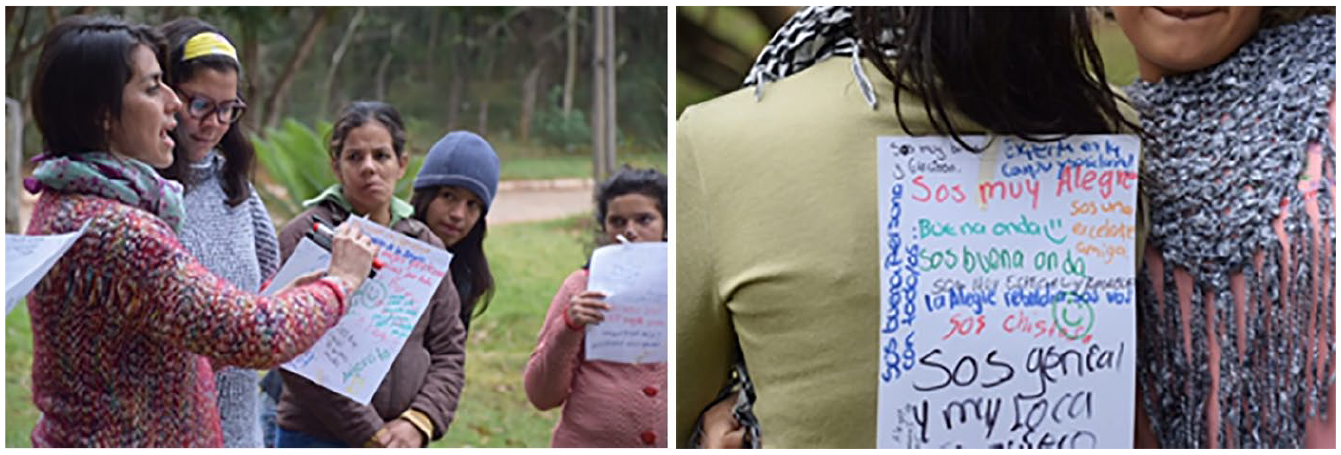
Appreciative inquiry in the evaluation workshop with volunteers.
All volunteers expressed their agreement in that they have significantly experienced growth, feeling proud about what they heard about themselves in this activity, both individual learning and community-level outcomes, which are typically associated with CSci projects (Jordan et al., 2012), are salient in our findings.
Obstacles and Learnings
At the end of the evaluation workshop, volunteers also explored fears that they had at the beginning and key learnings. Volunteers were unanimous in expressing that the main obstacle at the beginning was a fear of being shamed (“We were afraid of rejection,” “I was afraid they’d laugh at me,” “I was ashamed to speak because I was shy”). This gives further support to our own field observation that one of the most important challenges was one of interpersonal communication. The camp that we organized midproject was a turning point for this.
With respect to learning, the first category refers to new information and content that volunteers attained through the project: (1) new knowledge about dengue and (2) new knowledge about ICTs. Regarding information about the mosquito and dengue, volunteers recognized that the most important learning that they attained was understanding the mosquito life cycle and how to manage and eliminate breeding sites. Some of them mentioned learning about the symptoms of dengue and about how to use instruments for sample collection. Regarding ICTs, spreadsheets, tablets, and the use of maps were the most salient learnings that volunteers mentioned (“I learned to locate myself geographically,” “We learned how to complete and use the spreadsheets,” “I learned to use tablets”).
The second category refers to how they enriched (1) new social skills and (2) community habits. Self-expression, how to make friends, solidarity, and companionship were salient (“Learned to make new friends,” “We learned to talk and socialize with people,” “Learned to lose timidity,” “We learned about solidarity and companionship”). With regard to the enrichment of community habits and character for work, the most important mentions had to do with being responsible and how to live together and cooperate in a community (“I learned to live and share,” “I learned to be responsible and punctual,” “We learned to be patient”).
Finally, some volunteers expressed feelings that show us how they let obstacles behind thanks to what they learned. Confidence, less fear of speaking with others, and more independence are some of the key aspects they mentioned (“Now we feel more confident, with more courage,” “We were able to overcome all kinds of fear or shame”).
Discussion
Combining ICT with a community-based public health initiative has given both us researchers and community members a unique opportunity to explore the synergies that arise at the intersection of design, research, and practice.
We started with adjustments to the ecosystem, such as the new architectural arrangement that removed the need of digitizing paper forms using spreadsheets, which were both prone to errors and labor intensive. Often, design and technology improvements can also come at a cost if due attention to community empowerment is not given. This lends support to a commonality of most community informatics (CI) works: The focus is on “community problem-solving,” downplaying the technological angle (Stillman & Linger, 2009). Had we replaced spreadsheets from the get-go, we would have also removed one of the important skill learning opportunities valued by volunteers at the end. CSci projects might benefit from a similar approach, downplaying the science to allow learning to emerge as the community addresses its problems. CI and CSci literature may connect well, therefore, when the latter qualifies as a “knowledge-producing capacity of society” (Eitzel et al., 2017). Here, a good theoretical framework that has been extensively used in CI is the capability approach (Stillman & Denison, 2014), which takes into account the well-being of participants to design interventions, and not only the goals of the project itself. Design, research, and community action must therefore be attentive to one another, listening and observing for opportunities continuously, to introduce, or not remove too soon, elements for experimentation that offer valuable learning opportunities.
Socialization through messages was also an experiment that was welcomed by participants. Interestingly, while volunteers reported that educational and active messages were most useful, analysis of open-ended responses revealed that usefulness of informational messages was on par with educational ones, while active messages did not register. This supports our hypothesis that the key role for ICTs is to socialize evidence to mobilize action. To validate the role of notifications, a controlled experiment is needed. Additionally, it was very interesting to see how educational messages had also a good reception. Similarly, in the social evaluation, a key learning that volunteers took home was a better understanding of dengue. These results invite further explorations of both the content of messages and the strategy to deliver them. Moreover, in the think-aloud sessions, we learned that the best mechanism to be informed about the project was to have the messages sent via WhatsApp, but at the same time it was important to raise the importance of getting information during meetings. This opens a new space for exploration: Finding ways in which ICTs can support face-to-face information sharing and socialization represents an opportunity for design and engineering.
Another interesting result from think-aloud sessions has to do with how the devices affected usage. Tablets were easier and less confusing than laptops, particularly for younger volunteers. The reason might simply be that volunteers and facilitators have more experience with tablet-like devices (i.e., smartphones) than desktop-like devices. Additionally, they mostly used tablets in the project, furthering their training, which as we could evaluate in interviews and workshops, was one of the key learnings for volunteers. Hence, improving responsiveness of DengueChat might be key to its success and sustainability.
A final insight from the think-aloud sessions comes from observing the different strategies to organize the fieldwork. During our preliminary exploration, we observed that the natural strategy for facilitators was basically a round-robin system to decide which city blocks to visit each week. This was also observed both in surveys and video recordings of the sessions. Facilitators who used the new version of DengueChat, with the map in place showing information of previous visits, changed the strategy, starting to use the number of visits by block to decide where to go next. Opportunities for design research in this space therefore abound, having seen how a simple map can already affect behavior and influence fieldwork organization, which can improve by providing the user with a better visualization of their territory, based on the entomological risk at the level of the city blocks or based on the effectiveness of past visits.
One very important insight that comes from observing users organize fieldwork is that without the support of ICTs to visualize the big picture, the organization of fieldwork was heavily dependent on facilitators’ implicit knowledge. Volunteers who did not use the new version of DengueChat had difficulties in understanding how to organize the work, without criteria to systematically reduce the risk of the community. With the new version of DengueChat, tested also with volunteers who had no prior experience organizing fieldwork, we observed how the map facilitated the task for them, making it easy to assign city blocks based on information available on the map (i.e., risk of the block, represented as the level of infestation in each city block). The dependency on implicit knowledge was broken by this design.
With respect to motivation of volunteers, commitment to the project was determined by subjective aspects of self-realization and self-improvement as well as elements related to a positive daily life, full of emotions and fraternal relationships. Four main reasons came up from our evaluation: (1) a general desire of learning and personal growth, (2) attaining fun and friendship with fellow volunteers, (3) feelings of acceptance from neighbors, and (4) solidarity and desire to transform their community. Personal growth around personal development and learning by practice ICT skills was paramount. How volunteers developed communication skills and lost their fears to talk to others was one of the most empowering and fulfilling learning experiences that we observed in this research. Another important note arising from interviews and workshops was that participation of volunteers is mediated to a high degree by facilitators. Their personal traits are fundamental for the dynamics of motivating volunteers and keeping them engaged. To the best of our knowledge, the nuance of these facilitation skills has not been explored in CI or CSci literature. We can see them, however, as an instance of good project organization, a key to recruiting and retaining volunteers in CSci (West & Pateman, 2016).
Finally, although it may be stressful sometimes for volunteers, the constant ethnographic accompaniment and the participatory research–action approach allowed us to quickly learn and properly adjust the components of the platform and the process. Participation and collaboration as a basis for community health programs represent dynamic processes in constant evolution, which need an ethnographic approach to incorporate the observed in the continuous improvement of the program and its instruments.
On a down note, socialization of the evidence and experience with the community remains an open challenge, which lends further support to the emerging need of better socialization that we identified in our own ethnographic observations. Despite this, the ideas we tested give insights about where to go next. It is interesting to address the design space of the physical encounters, to engage facilitators and volunteers in significant conversations around evidence from their own work, and between them with the local community.
Although we have seen how ICTs do have a role to play in solving the challenges we faced in this project, through a continuous feedback loop and a deep trust-building process (Parra et al., 2015) among research, design, and community action, we have observed, and confirmed, the importance of the social container and its facilitation as the key drivers of engagement and sustainability for our CSci project. This holds true especially if the project is aimed to build capacity in participants. In this sense, typical CSci models that consider the project a tool to contribute to science are likely to fail in contexts like the one we have explored. Rather, as DengueChat evolved from an original self-driven and technology-centered platform into an integrated socio-technical approach (Mumford, 2000) to community-based dengue prevention, it is very likely that CSci will need to develop capacity-building approaches for this type of localized community development projects.
Footnotes
Acknowledgements
First and foremost, our project would have not been possible without the pivotal contribution of SENEPA, the national public program in charge of fighting arboviruses like Dengue. Led by Dr. Maria Teresa Baran and Dr. Edgar Sanabria, they provided their human resources, time and facilities to conduct the profesional infestation level measurements that we used to evaluate the impact of our program in the territory. Additionally, we would like to acknowledge and express our deepest gratitude to Gustavo Setrini, PhD, a political scientist and colleague, who volunteered his help in proofreading our work. Special thanks also to Maria Elena Penaranda, PhD, María Patricia Arbeláez Montoya, PhD, and Antonieta Rojas de Arias, PhD, who have all provided valuable insights regarding how to best communicate the results of our work.
Declaration of Conflicting Interests
The author(s) declared no potential conflicts of interest with respect to the research, authorship, and/or publication of this article.
Funding
The author(s) disclosed receipt of the following financial support for the research, authorship, and/or publication of this article: TopaDengue was cofunded by CONACYT, through the PROCIENCIA grant PINV15-188.
