







Abstract
This study examines information exposure as the antecedent of different types of crisis response outcomes as well as the moderating influence of message quality and information overload in the context of the COVID-19 pandemic. Given that the pandemic has impacted the countries worldwide, we conducted a cross-country, two-wave survey in the United States and Taiwan. The results identified three types of media users based on their differential patterns of crisis information exposure—selective users, inclusive users, and cravers. Compared to selective users, inclusive users and cravers were more likely to engage in different types of communicative responses (i.e., information seeking and sharing, and information sharing without verification [ISWV]), which then helped them with support-seeking coping. In addition, information overload was the condition that influenced the extent to which inclusive users engaged in information seeking and sharing, and the subsequent coping. Cross-country differences were found such that information overload and ISWV played important roles in influencing crisis outcomes in the United States and Taiwan, respectively.
Keywords
Research has long revealed that when a crisis happens, individuals rely on different types of media and interpersonal channels and sources to meet various informational, social, and psychological needs, such as gaining knowledge about the crisis, getting updates about social contacts, or maintaining a sense of belonging (e.g., Lev-On, 2012; Seo, 2019). Upon receipt of information, individuals may engage in further information seeking and sharing, which are types of communicative responses that can then motivate protective action taking (Wood et al., 2018). Yet, most of the research on media use for receiving information during crises has examined channels (e.g., social media, newspapers) and sources (e.g., journalists, government) separately or interchangeably (e.g., Lai & Tang, 2021; Sommerfeldt, 2015), without considering these two dimensions of information exposure together, which can result in a biased and limited understanding of the contemporary media environment in which individuals’ crisis communicative responses take place. Most importantly, there is a lack of theorization of the conditions under which receipt of crisis information shapes information seeking and sharing.
Moreover, given the concern about the impact of misinformation in infectious disease outbreaks (Krause et al., 2020), a growing line of research has paid attention to the mechanisms that can motivate individuals to verify information as well as the outcomes of information verification. For example, research has revealed that receiving negative messages encourages information verification (Sharma & Kapoor, 2022), and information verification improves protective action taking during crises (Zhao & Tsang, 2022) Unfortunately, little is known about the conditions that encourage individuals not to verify information before sharing it with others and the consequences of information sharing without verification (ISWV). Relatedly, most of the research considers public outcomes of communicative responses (e.g., information seeking) in the form of protective action taking (Ludolph et al., 2018; Oh et al., 2021), but has not addressed other types of outcomes, such as the ways individuals cope with stress and negative feelings about crises (Jin et al., 2012). Such coping strategies that arise in prolonged public health crises might be an equally important barometer to assess public outcomes.
Overall, there is a lack of theoretical explication and empirical examination of the mechanisms that influence the ways individuals act on the information received from various channels and sources, including information seeking, sharing, and ISWV, and the subsequent coping outcome. To addresses this gap, this study draws on the social-mediated crisis communication (SMCC) model (Liu et al., 2012) to identify the patterns of crisis information exposure involving both channels and sources and the conditions under which information exposure is linked to individuals’ communicative responses and support seeking in coping with the COVID-19 pandemic (see the conceptual model in Figure 1). In doing so, this study offers a more realistic understanding of the media environment in which crisis responses are embedded, and thus can help government agencies and organizations in the voluntary sector to identify how to effectively disseminate crisis information and help individuals better cope with crises. Furthermore, it is important to examine health crisis communication and coping across country borders. Thus this study tests the proposed model through a cross-cultural comparison in the United States and Taiwan. Results reveal country similarities and differences, which address the needed direction for theory development broadly and crisis communication in particular (Manias-Muñoz et al., 2019).
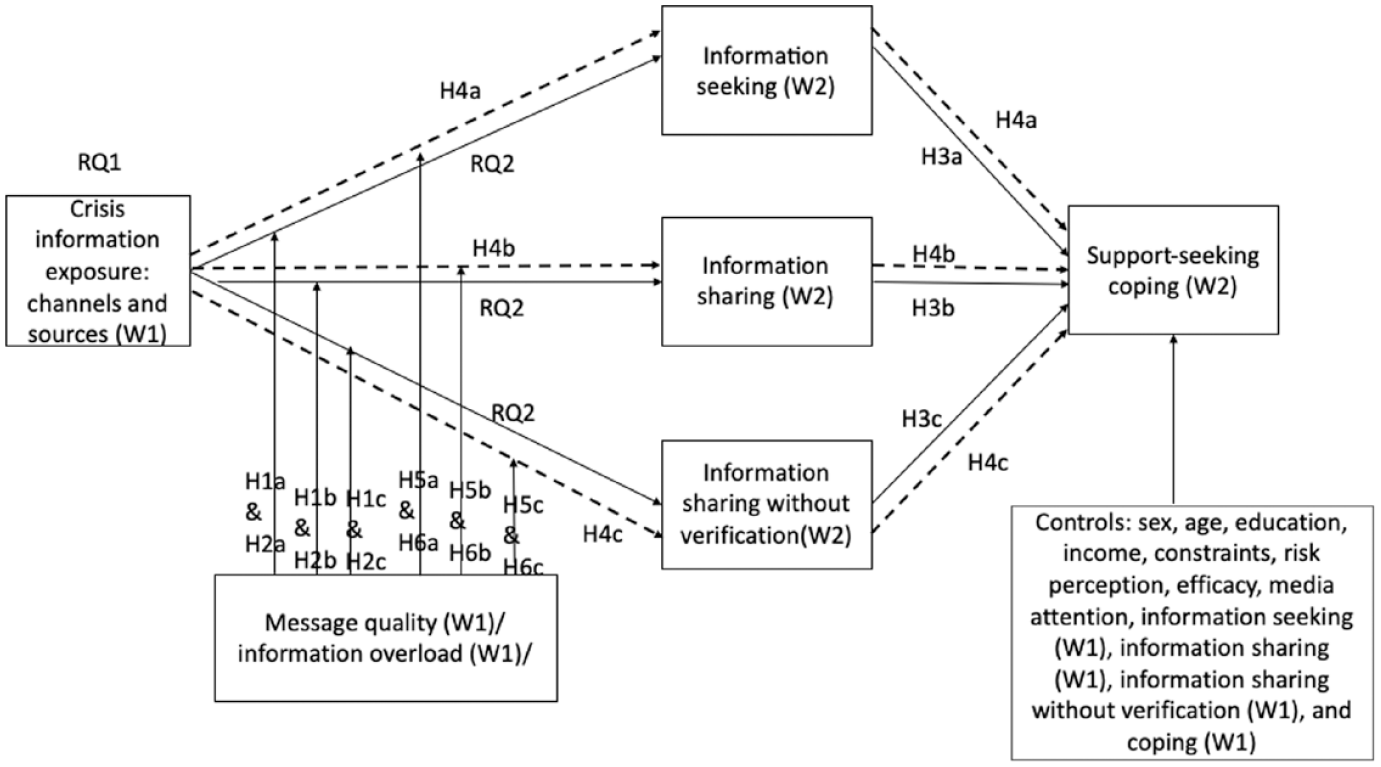
The conceptual model.
Literature Review
The SMCC model proposes that the interaction between different types of publics who create and consume content through different types of channels (forms; e.g., social media, traditional media, and word-of-mouth communication) and information sources (e.g., organization and third parties) influences organizational response options and the public’s response actions (Liu et al., 2012, 2019). During crises, individuals satisfy their information needs (e.g., knowing the current status of family and friends, or asking for instructions) using multiple types of channels from multiple sources (e.g., Rahmi et al., 2019; Sommerfeldt, 2015). Yet research applying the SMCC model has mostly examined the interaction between a limited set of channels and sources involved in receiving crisis information. This might be the reason that this line of work has produced mixed results. For example, Liu et al. (2016) found that while the interaction effect between channels (tweet vs. Facebook post vs. website content) and sources (national government vs. local government vs. national news media vs. local news media) was significantly related to information seeking, it was not related to information sharing or protective action taking. Thus it is necessary to employ a holistic view to examine diverse types of channels and sources used in order to advance understandings of the patterns of crisis information exposure. In light of this, we ask:
In addition to guiding our understandings on how the channels and sources involved in crisis information exposure predict information seeking and sharing (e.g., Austin et al., 2012; Liu et al., 2015, 2016), recent SMCC research has explored different types of communicative responses such as information vetting or verification (e.g., Lu & Jin, 2020; Zhao & Tsang, 2022). Unfortunately, few studies have examined ISWV as a possible communicative response. From the perspective of message processing, ISWV represents a lower level of cognitive information processing (Griffin et al., 1999). During a public health crisis, individuals may not have the cognitive ability or resources to evaluate information they receive before making a decision (e.g., sharing received information with others).
Beyond the SMCC framework, Huang et al.’s (2022) is one of the few exceptions examining ISWV; but they examined the determinants of unverified information sharing on a particular media platform (i.e., WeChat), without considering the broader online environment where information sharing takes place. Filling this gap is critical as ISWV enacted online has implications for the wide spread of misinformation (Ha et al., 2021). Building on the SMCC, we thus pose the following research question.
In addition to the influence of information exposure, the SMCC literature has also explored factors that may affect individuals’ information seeking and sharing. For example, Austin et al. (2012) found that information overload and channel credibility influenced the extent to which individuals used social media and traditional media for crisis information, respectively. But they did not systematically examine how these factors influenced individuals’ information seeking and sharing after initial information exposure. In other words, SMCC research rarely considers the conditions under which individuals, after initial information exposure, are more or less likely to engage in information seeking and sharing.
The literature of cognitive processing suggests that message and source characteristics (e.g., argument quality, source credibility) as well as individual factors (e.g., issue involvement, ability) may determine the extent to which people engage in a low or high level of elaboration of the received information and attitude change (O’Keefe, 2013). In particular, individuals’ assessment of the message received and their lack of cognitive resources due to the presence of distractions (e.g., feeling overloaded) may influence the ways they act on the received information (Cappella et al., 2015). Research has shown that perceived message quality and information overload affect individuals’ responsive behavior as a result of the received information (e.g., Hussain et al., 2018; Park, 2019). As such, we hypothesize:
During crises, individuals often engage in information seeking and sharing as a way to cognitively cope with the crisis situation (Austin et al., 2021). Information seeking and sharing embodies the social motivation to maintain relationships (Cappella et al., 2015). It is also likely that people engage in sharing information with others without verifying the content in order to manage their relationships and obtain social support (Veinot, 2009). Individuals often resort to both instrumental (e.g., asking for advice) and emotional (e.g., sharing feelings with others) support coping strategies when they perceive that the crisis situation is of low controllability (Jin, 2010). Hence, we consider individuals’ seeking of instrumental and emotional support together as support-seeking coping (Carver et al., 1989), and argue that engaging in information seeking and sharing, as well as ISWV, may help individuals figure out where and how to acquire support when needed in the face of a public health crisis.
Building on the SMCC model, we argue that the patterns of crisis information exposure are related to different types of communicative responses (Austin et al., 2012; Liu et al., 2015, 2016), which in turn predict support-seeking coping. We thus hypothesize the indirect relationships between information exposure and support-seeking coping through the three communicative responses.
Given our expectation that perceived message quality (H1) and information overload (H2) moderate the relationships between information exposure and communicative responses and our expectation that information exposure is indirectly related to support-seeking coping through communicative responses (H4), we develop the last two sets of hypotheses:
Method
The data came from a two-wave online survey conducted in the United States and Taiwan. We worked with YouGov, an online panel service provider, which employed a quota sampling approach reflecting the population distribution in terms of age, gender, and geographic regions in both countries. These two countries were selected because of their different cultural traits, media usage, and the COVID-19 pandemic experience (Ferle et al., 2008; Worldometer, n.d.). The first wave (W1) of data collection took place from May 29 to June 5, 2020, in both countries (United States, N = 1,652; Taiwan, N = 1,644). The data collection for the second wave (W2) began almost five months after the first wave, from October 28 to November 6, 2020. The analysis was based on those who completed both waves of data collection, with the sample size of 910 in the United States and 905 in Taiwan. In both countries, more than half of the respondents were female (52% in the United States and 51% in Taiwan). The detailed descriptive statistics and complete measurements of the variables are available in Table 1 and Appendix.
Descriptive Statistics of the Variables in the United States and Taiwan Datasets.
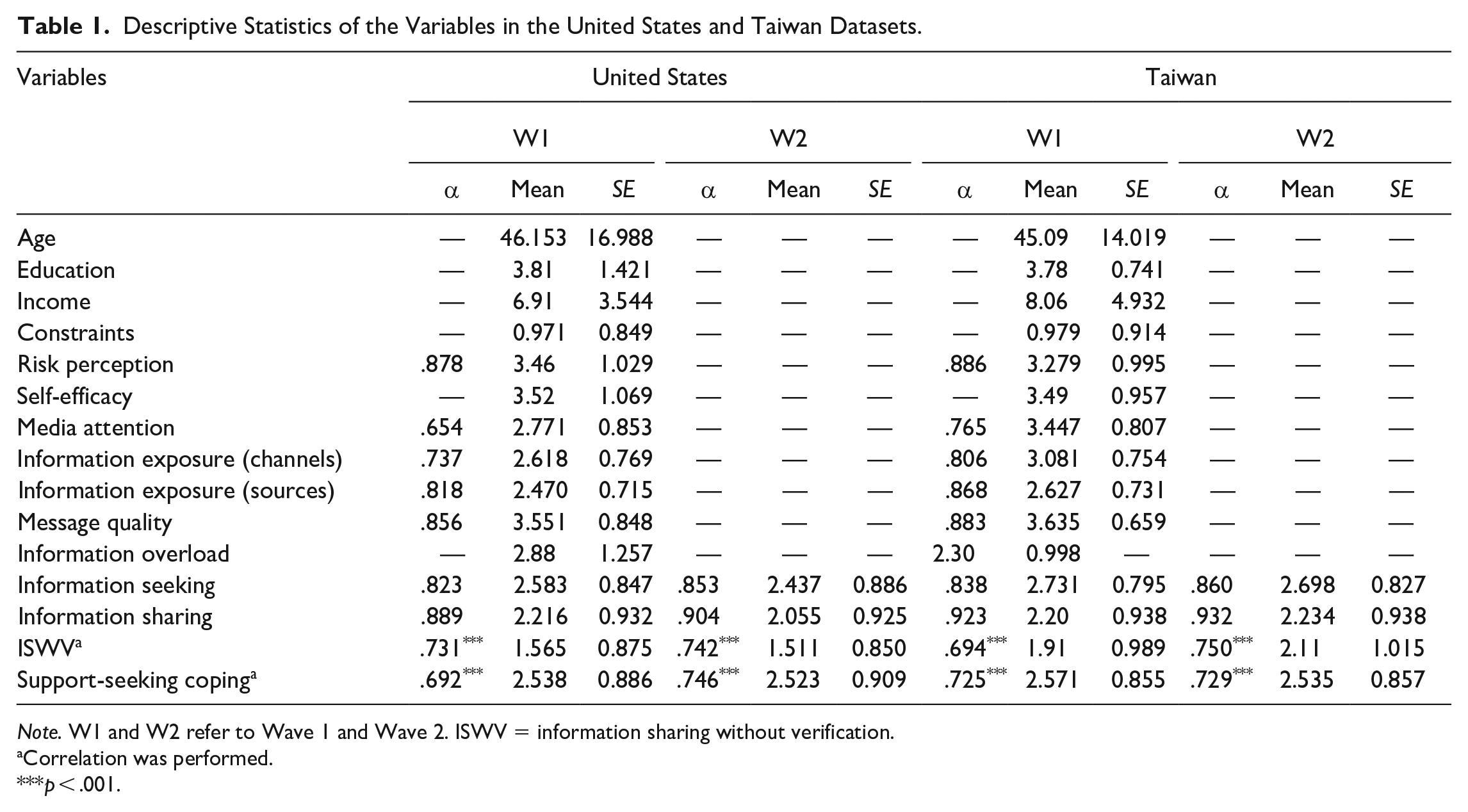
Note. W1 and W2 refer to Wave 1 and Wave 2. ISWV = information sharing without verification.
Correlation was performed.
p < .001.
Measurements
Support-Seeking Coping
Referencing Duhachek (2005), support-seeking coping was measured by seven items representing the dimensions of instrumental (e.g., asking friends or others with similar experiences what they did) and emotional (e.g., seeking out others for comfort) support seeking. Responses to these two dimensions of scales were then averaged to create the index of support-seeking coping.
Communicative Responses
Based on the SMCC literature (Liu et al., 2019), we measured information seeking by asking respondents to report the extent to which they actively looked for information about the pandemic using seven different channels (e.g., local media, online media) and sources (e.g., social contacts). Respondents were also asked to indicate the extent to which they engaged in six activities during the pandemic (e.g., share or repost news and information about the pandemic on social media), which measured information sharing (Liu et al., 2019). Applying the instrument developed by Khan and Idris (2019), we used two items to measure respondents’ ISWV: share or post information online about the pandemic without reading the whole article or watching the whole content; share or post information online about the pandemic that they found out to be false later.
Information Exposure
Building on the literature of SMCC (Liu et al., 2016) as well as crisis media use (Lai & Tang, 2021), we developed a list of questions measuring respondents’ frequency of using seven types of channels (e.g., messaging services, social media) and nine sources (e.g., journalists, family/friends) for receiving news and information about the pandemic.
Perceived Message Quality
We used four items to measure perceived message quality (e.g., whether the received information is specific or correct; Mileti & Fitzpatrick, 1992).
Information Overload
One item was used to measure information overload, which asked respondents whether they feel overloaded with the amount of news and information available related to the pandemic (Holton & Chyi, 2012).
Controls
We used demographics, including age, gender, education, and income, as well as situational constraints (Van Willigen et al., 2002), risk perception (Yang et al., 2014), self-efficacy (Paek et al., 2010), and media attention as controls (see Appendix).
Data Analysis
To answer RQ1, we employed latent class analysis (LCA), which is a model-based approach to identify latent dimensions of concepts based on the maxium likelihood estimation of the underlying probabiliy distributions of the data (Knight & Brinton, 2017). To answer RQ2 and test the hypotheses, we employed a panel lagged and autoregressive design to examine the influence of the lagged effects (e.g., inforamtion exposure at W1→ communicative responses at W2) while controlling for the autoregressive effects (communicative responses at W1 → communicative responses at W2) via Process Macro (Hayes, 2018). Specifically, Process Model 4, including the regression analysis, was performed to test the main effects (RQ2 and H3) and indirect effects (H4) with 5,000 bias-corrected bootstrap samples and 95% confidence interval (CI). Indirect effects are significant when the CI does not contain zero. Process Model 9 was used to test the moderation effects (H1 and H2) and moderated mediation effects (H5 and H6). Given that information sharing (W2) was highly correlated with information seeking (W2; United States: r = .720, p < .001; Taiwan: r = .731, p < .001) and ISWV (W2; United States: r = .667, p < .001; Taiwan: r = .754, p < .001), two models were run, with the first one containing information seeking and ISWV and the second one with information sharing only. Note that because the indepdent variable (information exposure) is a categorical variable, we used the multicategorical function provided in Process, which automacially created multiple dummy variables to examine the relative effects of the indepdenent variable on the mediators (communicative responses) and the dependent variable (support-seeking coping).
Results
The results from the LCA showed that the BIC (Bayesian information criterion) value reduced 7.521% between the 1-class and 2-class solution, and 1.975% between the 2-class and 3-class solutions, but only 1.281% between the 3-class and 4-class solutions for the U.S. data (see Appendix). Moreover, the LMR test became insignificant for the 4-class solution. Together, this means that adding the fourth class did not provide substantial explanatory power for the data. Hence, the 3-class solution was determined as the model that can best describe the U.S. data. Similarly, in the Taiwan data, the BIC value decreased 9.212% between the 1-class and 2-class solutions, 5.176% between the 2-class and 3-class solutions, but only 0.981% between the 3-class and 4-class solutions. As such, the 3-class solution was selected as the final model for the Taiwan data.
Based on the distribution of the response categories reported in Table 2, we labeled three groups of media users accordingly in terms of the patterns of crisis information exposure, which answered RQ1. The first group was labeled as selective users, who resorted to most of the media and interpersonal channels for receiving information about the pandemic, especially traditional media, but only via specific sources, such as journalists, social contacts, governments, and experts (e.g., doctors, scientists). This group of media users did not receive information from institutions (e.g., for-profit and nonprofit organizations) or voluntary groups (local community organizations) other than those in the public sector. We named the second group inclusive users, who used all of the channels and sources for crisis information, but on a moderate level (i.e., occasionally). The third group were cravers. Similar to inclusive users, cravers relied on a diverse set of channels and sources for crisis information; but unlike inclusive users, they used these channels and sources more frequently on a moderate to high level (i.e., occasionally, often, and all the time). This three-group classification of media users was consistent across the two countries, but with slight variation. For example, compared to American cravers, Taiwanese people in this group more frequently used messaging services and relied on interest groups or other individuals on social media for crisis information.
LCA Classification of Three Classes of Media Users.
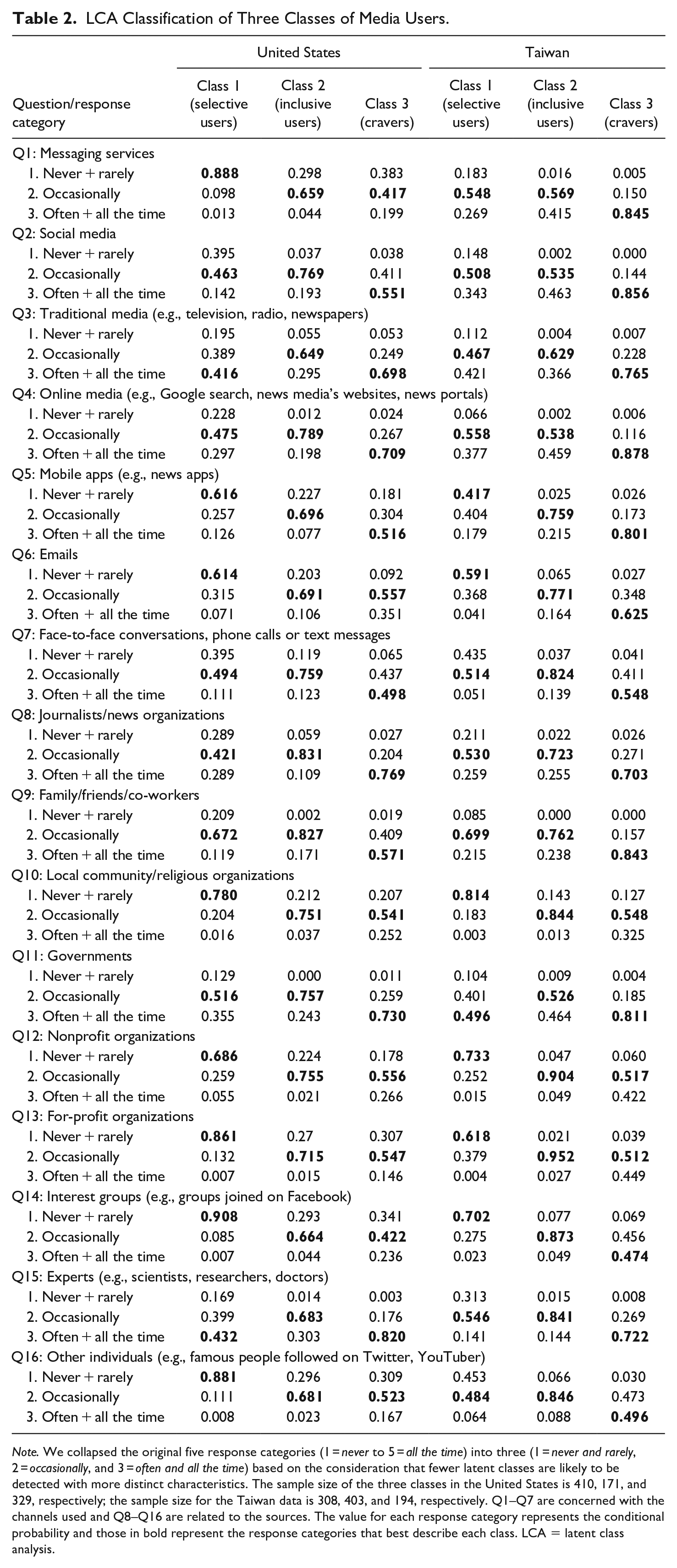
Note. We collapsed the original five response categories (1 = never to 5 = all the time) into three (1 = never and rarely, 2 = occasionally, and 3 = often and all the time) based on the consideration that fewer latent classes are likely to be detected with more distinct characteristics. The sample size of the three classes in the United States is 410, 171, and 329, respectively; the sample size for the Taiwan data is 308, 403, and 194, respectively. Q1–Q7 are concerned with the channels used and Q8–Q16 are related to the sources. The value for each response category represents the conditional probability and those in bold represent the response categories that best describe each class. LCA = latent class analysis.
Figure 2 presents the results of testing the proposed model in both countries. In answering RQ2, results showed that information exposure (W1) predicted information seeking (W2; United States: B = .128, SE = .065, p < .05; B = .209, SE = .068, p < .01; Taiwan: B = .145, SE = .053, p < .01; B = .283, SE = .077, p < .001) in both countries (see Table 3). Compared to selective users, cravers and inclusive users were more likely to engage in information seeking. Information exposure (W1) was also related to information sharing (W2) in both countries (United States: B = .148, SE = .066, p < .05; Taiwan: B = .139, SE = .060, p < .05; B = .292, SE = .089, p < .01). Cravers tended to share information with others more than selective users. Meanwhile, information exposure (W1) was not related to ISWV (W2) in the United States, but predicted ISWV (W2) in Taiwan (B = .174, SE = .070, p < .05; B = .342, SE = .101, p < .001). Cravers and inclusive users in Taiwan tended to engage in ISWV more than selective users.
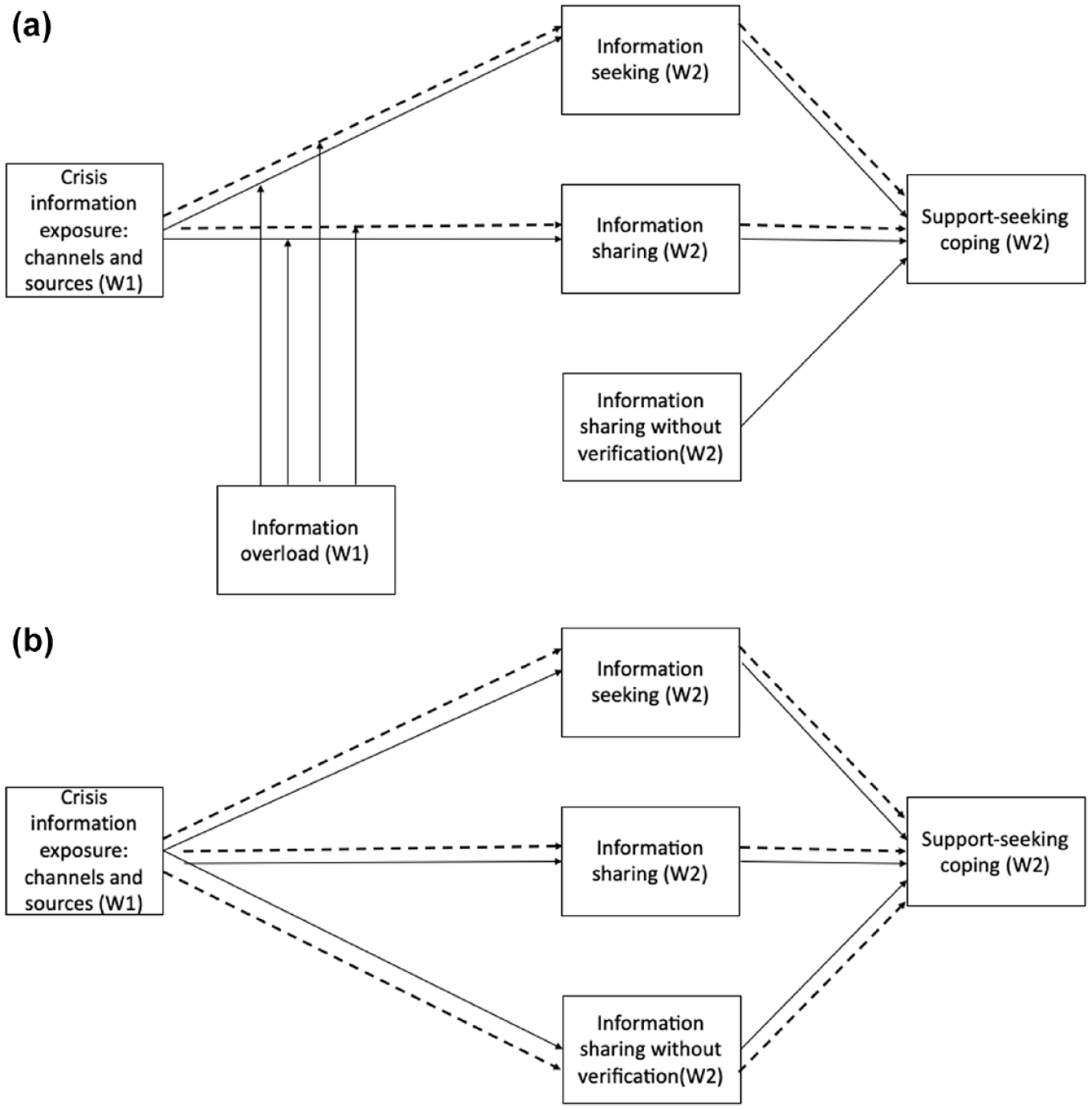
The resulting model. (a) The U.S. data. (b) The Taiwan data.
Results of the Regression Analysis on the Factors Predicting Information Seeking, Sharing, and ISWV.
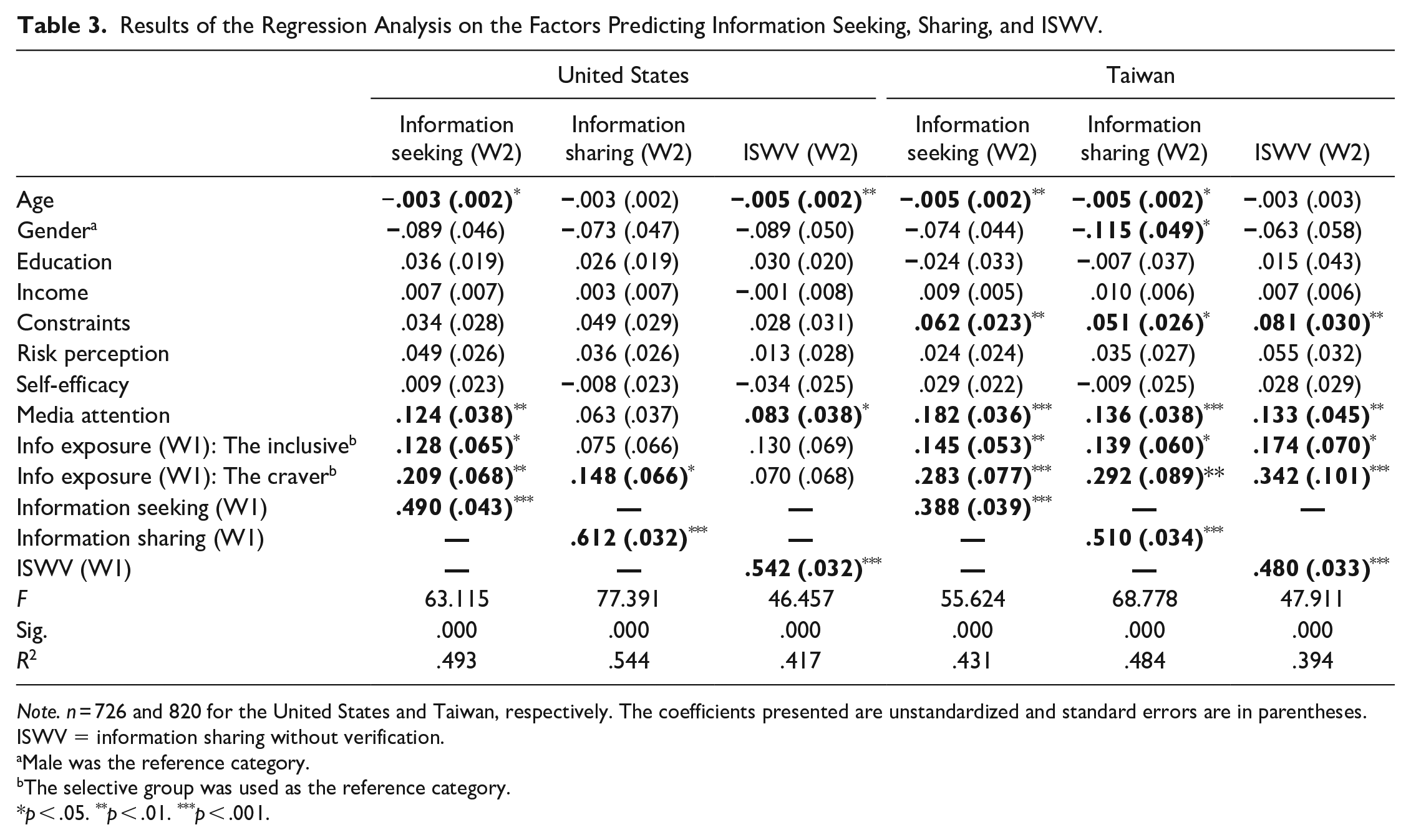
Note. n = 726 and 820 for the United States and Taiwan, respectively. The coefficients presented are unstandardized and standard errors are in parentheses. ISWV = information sharing without verification.
Male was the reference category.
The selective group was used as the reference category.
p < .05. **p < .01. ***p < .001.
Perceived message quality (W1) did not influence the relationships between information exposure (W1) and the three communicative responses (W2; see Table 4). Hence, H1a–H1c were not supported. Information overload (W1) influenced the relationships between information exposure (W1) and communicative responses (information seeking and sharing; W2) in the United States (B = −.124, SE = .056, p < .05; B = −.125, SE = .057, p < .05), but not in Taiwan (see Table 4). H2a and H2b were thus partially supported. As Figure 3 showed, in the United States, when information overload was low, inclusive users were more likely than selective users and cravers to seek and share information. Yet when inclusive users felt overloaded, they were less likely to do so than cravers (see Appendix). Moreover, information overload (W1) did not influence the relationship between information exposure (W1) and ISWV (W2) in either country. Thus, H2c was not supported. Furthermore, in both countries, all three communicative responses (W2) predicted support-seeking coping (W2; United States: B = .249, SE = .039, p < .001; B = .236, SE = .036, p < .001; B = .085, SE = .036, p < .05; Taiwan: B = .261, SE = .038, p < .001; B = .389, SE = .031, p < .001; B = .203, SE = .029, p < .001). H3a–H3c were thus supported.
Results of Moderation Effects by Message Quality and Information Overload.
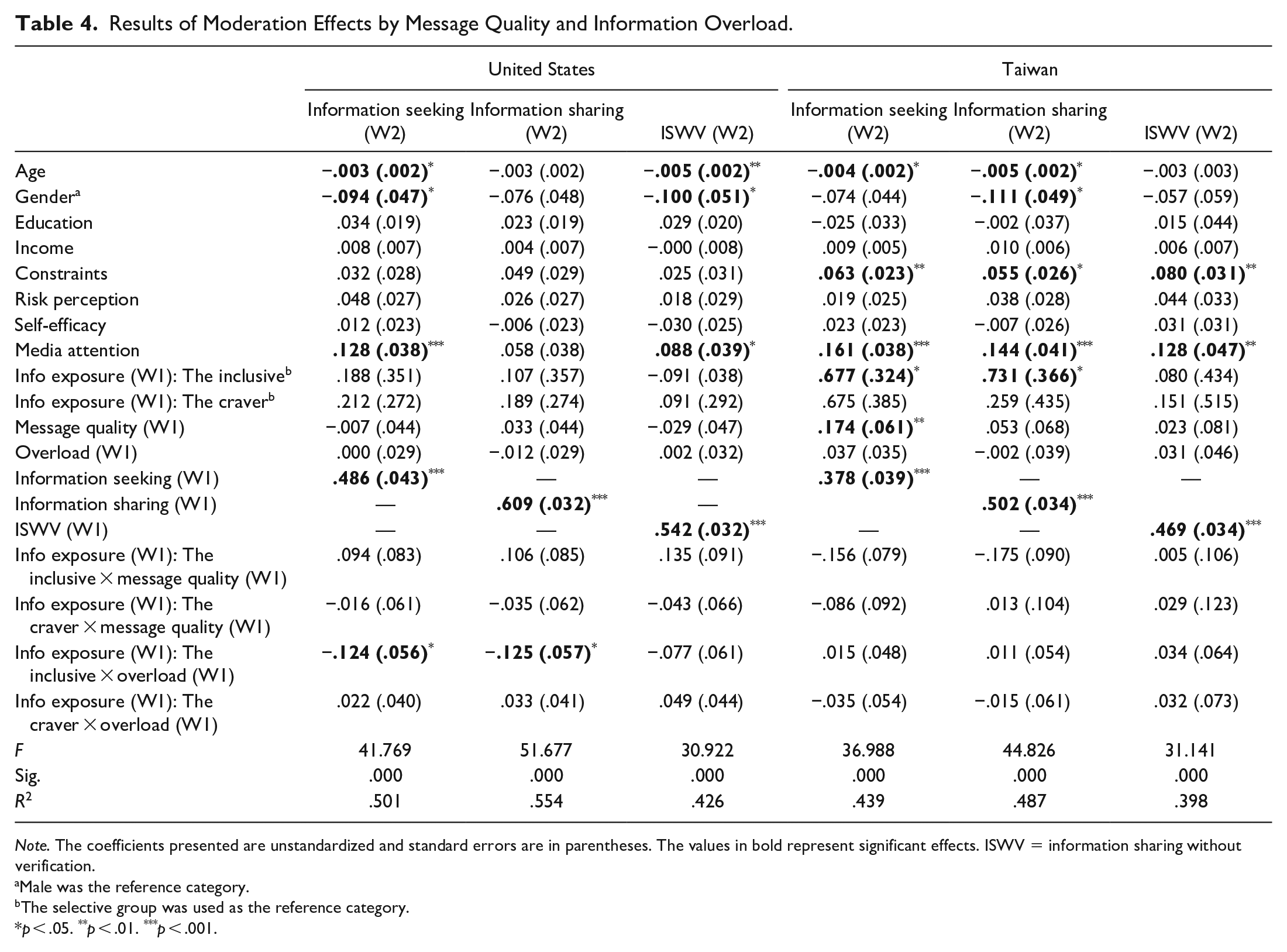
Note. The coefficients presented are unstandardized and standard errors are in parentheses. The values in bold represent significant effects. ISWV = information sharing without verification.
Male was the reference category.
The selective group was used as the reference category.
p < .05. **p < .01. ***p < .001.
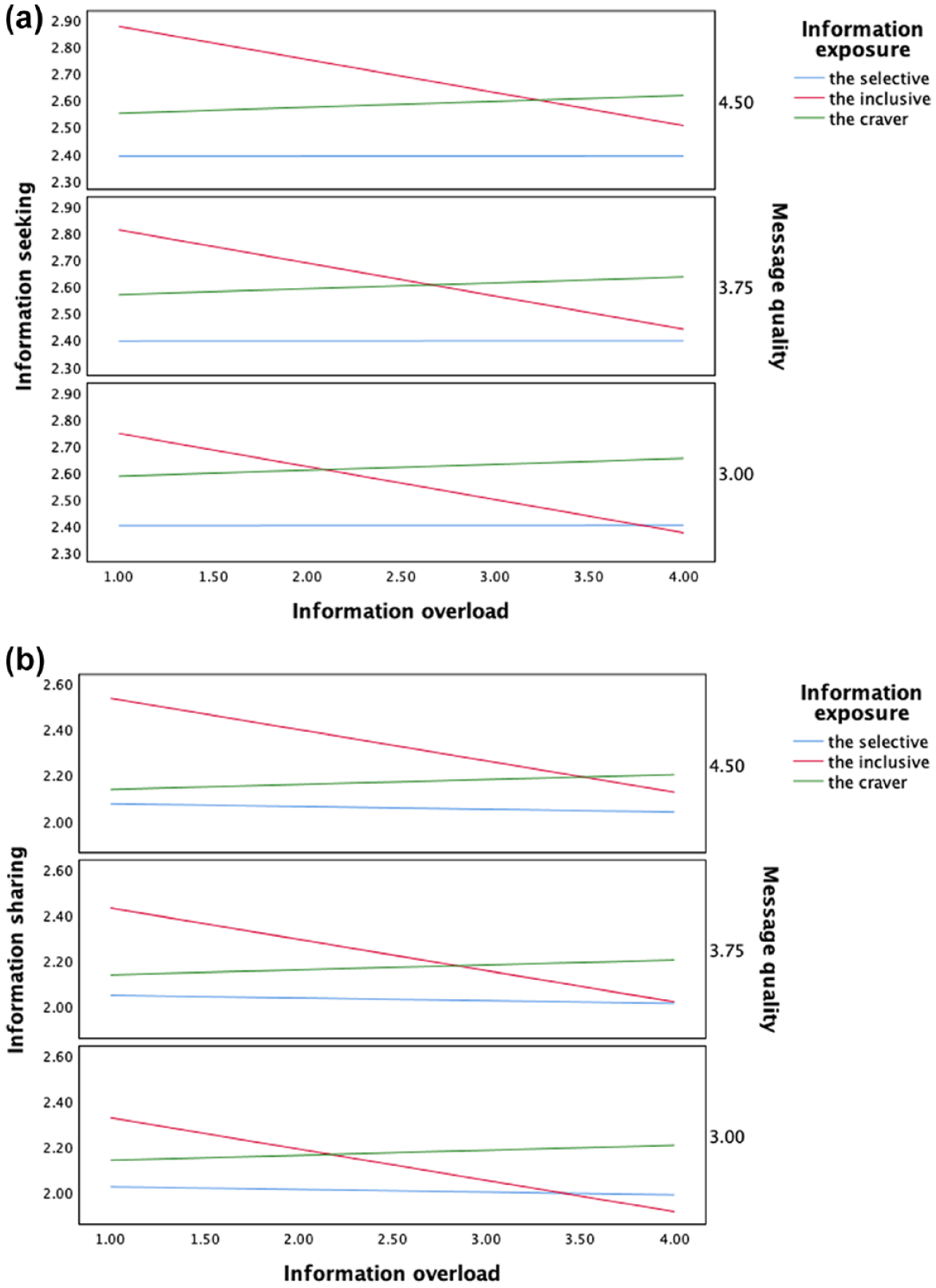
Visualization of the Moderation Effects for the U.S. Data. (a) Moderation effects on information seeking by message quality and information overload.
The results of testing H4 indicated that information exposure predicted support-seeking coping indirectly through information seeking and sharing in both countries, but with differences. In the U.S., the indirect relationship between information exposure (W1) and support-seeking coping (W2) was through both information seeking (W2; Effect = .052, Boot SE = .022, 95%CI = [.014, .101]) and information sharing (W2; Effect = .035, Boot SE = .016, 95%CI = [.005, .069], see Table 5). Cravers in the United States were more likely than selective users to engage in information seeking and sharing, which increased the likelihood of seeking support to cope with the pandemic. In Taiwan, information exposure (W1) also predicted support-seeking coping (W2) indirectly through both information seeking (W2; Effect = .038, Boot SE = .018, 95%CI = [.009, .077]; Effect = .074, Boot SE = .027, 95%CI = [.028, .132]) and information sharing (W2; Effect = .054, Boot SE = .025, 95%CI = [.006, .106]; Effect = .114, Boot SE = .039, 95%CI = [.040, .194]). Both inclusive users and cravers in Taiwan were more likely than selective users to engage in information seeking and sharing, which was associated with the increased likelihood of seeking support to cope with the pandemic.
Results of Indirect Effect Tests.
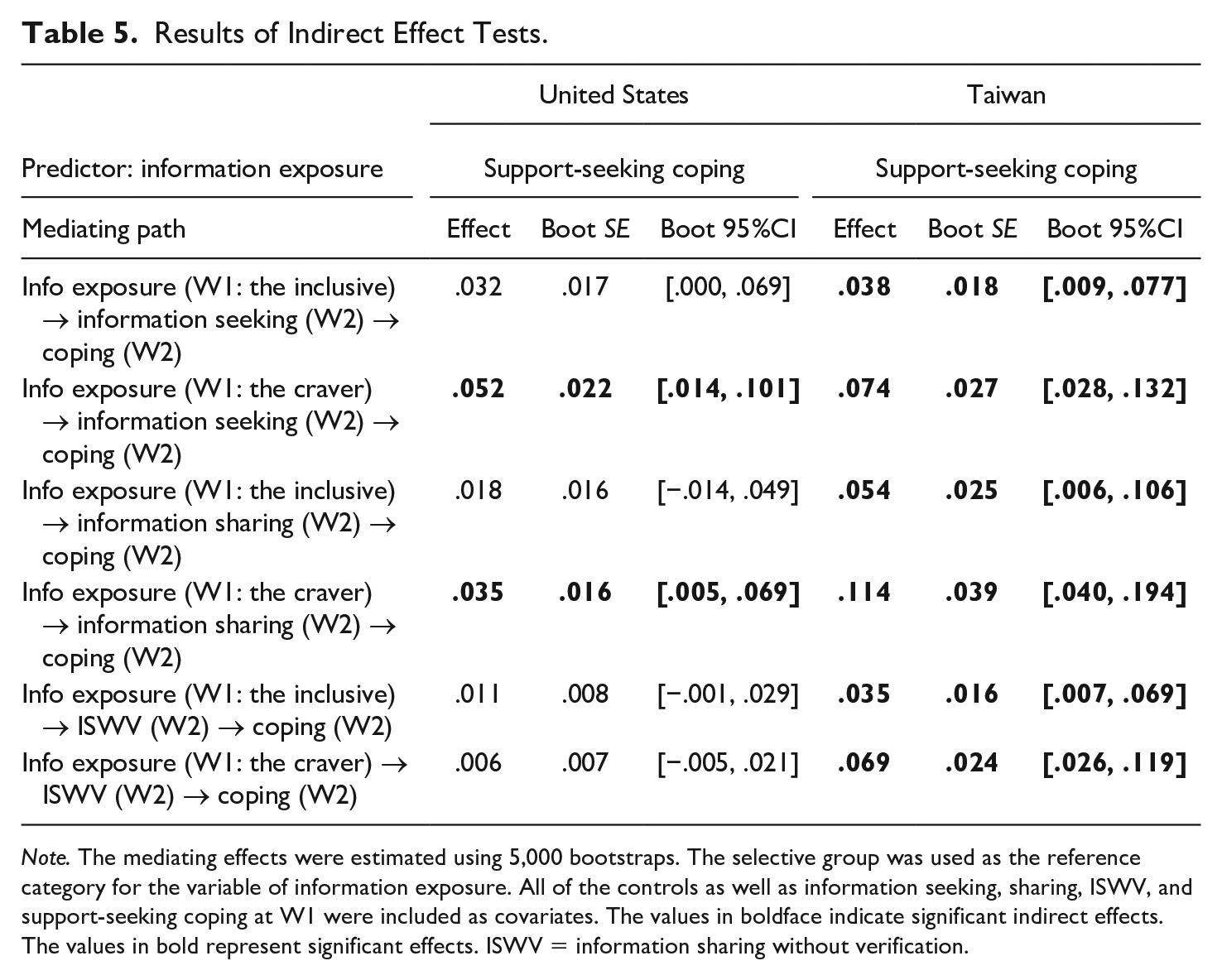
Note. The mediating effects were estimated using 5,000 bootstraps. The selective group was used as the reference category for the variable of information exposure. All of the controls as well as information seeking, sharing, ISWV, and support-seeking coping at W1 were included as covariates. The values in boldface indicate significant indirect effects. The values in bold represent significant effects. ISWV = information sharing without verification.
ISWV (W2) was also a significant mediator between information exposure (W1) and support-seeking coping (W2) in Taiwan (Effect = .035, Boot SE = .016, 95%CI = [.007, .069]; Effect = .069, Boot SE = .024, 95%CI = [.026, .119]). Both inclusive users and cravers in Taiwan tended to engage more in ISWV, which was related to a higher level of support-seeking coping, than selective users. In contrast, ISWV did not play a mediating role in the United States (see Table 5). Together, H4a and H4b were supported and H4c was partially supported.
Perceived message quality (W1) did not moderate the indirect relationship between information exposure (W1) and support-seeking coping through communicative responses (W2) in either country (see Table 6). Hence, H5a, H5b, and H5c were not supported. But information overload (W1) in the United States moderated the indirect relationships between information exposure (W1) and support-seeking coping (W2) through information seeking (W2; Index = −.031, Boot SE = .016, 95%CI = [−.066, −.004] and information sharing (W2; Index = −.029, Boot SE = .017, 95%CI = [−.065, −.0003]). Inclusive users in the U.S. were more likely than selective users and cravers to seek and share information, which motivated support seeking as a coping strategy. This pattern largely occurred when perceived information overloaded was low. In addition, inclusive users in the United States were less likely than cravers to seek and share information, which demotivated support-seeking coping, but this happened only when they felt overloaded (see Appendix). In contrast, these moderated mediation effects were not significant in Taiwan (see Table 6). Hence, H6a and H6b were partially supported. H6c was not supported because information overload (W1) did not influence the indirect relationship between information exposure (W1) and support-seeking coping (W2) through ISWV (W2) in either country (see Table 6).
Results of Moderated Mediation by Message Quality and Information Overload.
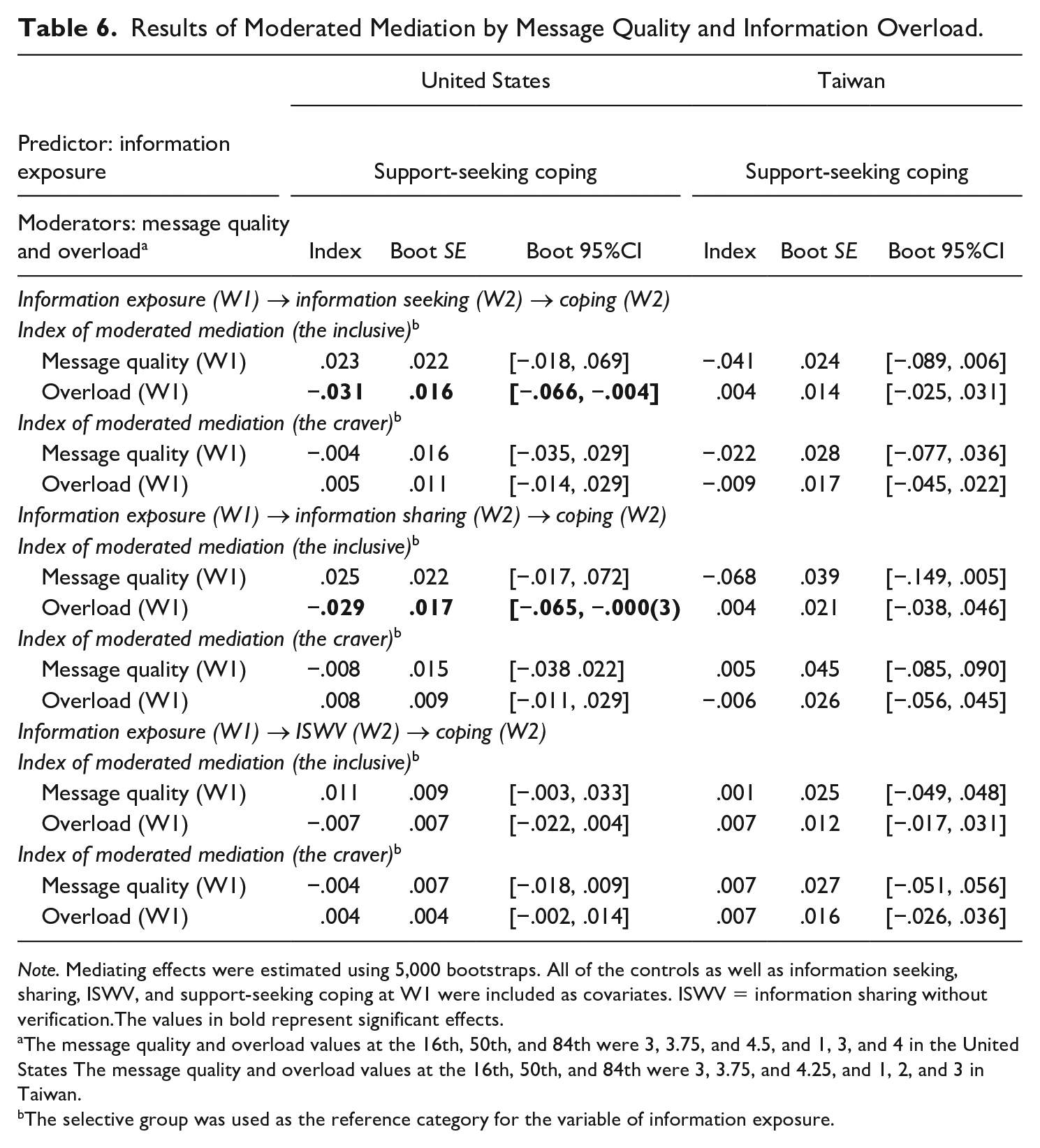
Note. Mediating effects were estimated using 5,000 bootstraps. All of the controls as well as information seeking, sharing, ISWV, and support-seeking coping at W1 were included as covariates. ISWV = information sharing without verification.The values in bold represent significant effects.
The message quality and overload values at the 16th, 50th, and 84th were 3, 3.75, and 4.5, and 1, 3, and 4 in the United States The message quality and overload values at the 16th, 50th, and 84th were 3, 3.75, and 4.25, and 1, 2, and 3 in Taiwan.
The selective group was used as the reference category for the variable of information exposure.
Discussion
Placed in the context of the COVID-19 pandemic, this study unpacks the media usage patterns of crisis information exposure by considering both channels and sources. Findings of this study point out the advantage of using a mix of channels and sources to receive crisis information at least on an occasional basis (i.e., cravers or inclusive users) because it is positively associated with the increased level of information seeking and sharing in both the United States and Taiwan. In other words, it is not merely the use of diverse channels and sources that matters; it also demands a certain level of active use. Accordingly, this study advocates the approach of including the usage of all of the possible channels and sources when examining individuals’ crisis information exposure, which could offer a systematic and realistic understanding of the extent to which individuals act on the information received in response to public health crises.
In addition, the results show that compared to selective users, inclusive users and cravers in Taiwan tend to engage in ISWV. While prior works highlighted the benefits of using multiple channels and sources in crisis responses (e.g., Liu et al., 2015; Sommerfeldt, 2015), our finding calls attention to its potential risk, such as misinformation spreading.
Going beyond the existing research, which often considers protective action taking as the outcome of crisis communicative responses (e.g., Liu et al., 2019), this study examines support-seeking coping and found that cravers or inclusive users’ information exposure is related to support-seeking coping indirectly through information seeking and sharing in both countries, as well as through ISWV in Taiwan. These findings highlight the important role of communicative responses in helping individuals, who are exposed to crisis information through mixed media use at least on an occasional basis, transform the received information and acquire resources accordingly to cope with the crisis.
In addition, this study found a positive relationship between ISWV and support-seeking coping observed in both countries. This may be because maintaining social relationships drives individuals to share information (Cappella et al., 2015; Veinot, 2009). People might do so in haste, without reading information fully before forwarding it to their social contacts. But such sharing, as a cognitive coping strategy, helps pave the way for seeking needed support when they encounter stress or negative feelings during the pandemic. Departing from the existing research that emphasizes the necessity of information verification (e.g., Sharma & Kapoor, 2022; Zhao & Tsang, 2022), findings of this study offer a way to debunk the myth about the negative connotation associated with information non-verification in the context of public health crises.
This study also points out the important role of information overload in crises responses. The results reveal that in the United States, information overload is a significant moderator that influences the relationships between information exposure and information seeking and sharing. Moreover, the indirect relationships between information exposure and support-seeking coping through information seeking and sharing are moderated by information overload in the United States. Compared to selective users and cravers, inclusive users are more susceptible to the influence of their cognitive availability when responding to public health crises, that is, being affected by information overload. Meanwhile, cravers, who frequently use multiple types of channels and sources for crisis information, might be able to overcome cognitive limitations and engage in communicative responses regardless. As a result, findings of this study suggest that information retrieval strategies and information overload jointly influence the way individuals respond to the received information (Park, 2019; Schmitt et al., 2018) during public health crises. Most importantly, this study enhances the existing theorization of crisis coping (Jin, 2010; Jin et al., 2016) by paying attention to the conditions under which different types of media users are more (or less) likely to engage in communicative responses, as these responses will predict their coping outcomes.
The data also reveal country differences such that information overload and ISWV are important drivers of crisis response outcomes in the United States and Taiwan, respectively. These differences may be ascribed to different media usage habits and pandemic situations in these two countries. The pandemic influenced Taiwan’s society and economic development far less than it did the United States’, with fewer than 17,000 confirmed cases in the country between January 2020 and October 2021 (Worldometer, n.d.). Information overload thus might not have had a substantial effect on how media users acted on information in Taiwan. On the other hand, people in the United States have received an overwhelming amount of information from diverse channels and sources during the pandemic; thus information overload might be a more salient factor that may influence their crisis responses. In addition, the high adoption rate of the messaging service LINE in Taiwan (Statista, 2021) may explain why ISWV plays a more important role in predicting coping outcomes in Taiwan than in the United States. Individuals immerse themselves in constant information exchange through LINE on a daily basis and thus become less vigilant about engaging in information verification.
Findings of our study also present practical implications. Public health agencies should consider the outbreak situation and people’s media usage habits in their country when making announcements. If the outbreak has impacted a large proportion of the population, people may easily feel overloaded. Under these circumstances, resorting to different types of channels (e.g., social media, television news) and sources (e.g., experts, nonprofit organizations) to disseminate information about the infectious disease at a moderate frequency might backfire and result in decreased levels of positive communicative responses and crisis coping by the public. On the other hand, if the outbreak situation is under control, government agencies should use different types of channels, especially the ones used most widely by the public, as well as different sources to disseminate disease-related information as often as possible. This approach would encourage people to seek and share information, with or without verification, which would help in their coping with the crisis.
Limitations
This study has several limitations. First, we examined ISWV, but did not explore the practices of verification and non-verification that may include the dimensions of information searching and sharing. Future research should systematically investigate information verification and other potential factors that might determine individuals’ communicative responses during public health crises. Second, we relied on self-reported survey data to classify media users based on a variety of channels and sources involved in crisis information exposure. Relatedly, this study did not consider the content of the information individuals received from various channels and sources. Future research should combine the analysis of survey and online data (e.g., Facebook or Twitter) to explore how communication with different types of media users on social media and beyond is associated with different types of coping outcomes. Lastly, to avoid making the questionnaire unreasonably long, this study did not examine cultural traits, which should be examined in future research.
Conclusion
Despite these limitations, this study is one of the few cross-cultural studies that apply the SMCC model. Findings of this study identify three types of media users based on the patterns of crisis information exposure during a public health crisis. Active use of mixed channels and sources for crisis information predicts different types of communicative responses (information seeking and sharing, and ISWV), which in turn are positively related to support-seeking coping. Information overload is the condition that influences the extent to which active media users engage in information seeking and sharing, and the subsequent coping. As a result, this study provides a useful categorization of media users during a public health crisis and answers the question of when these media users are more or less motivated to communicate about the crisis and obtain support. Moreover, the United States and Taiwan exhibit significant differences in how information overload and ISWV are likely to shape crisis outcomes, respectively, based on which we call for more comparative studies in health crisis communication.
COVID-19 is unlikely to be the last global pandemic. Research such as this that maps the ways people respond to the crisis by adapting to the contemporary media environment, considering the role of different types of individual and message factors in crisis communication, will be a powerful tool in protecting public health.
Supplemental Material
sj-docx-1-abs-10.1177_00027642221132805 – Supplemental material for Information Exposure and Information Overload as Antecedents of Crisis Communicative Responses and Coping: A Cross-Country Comparison
Supplemental material, sj-docx-1-abs-10.1177_00027642221132805 for Information Exposure and Information Overload as Antecedents of Crisis Communicative Responses and Coping: A Cross-Country Comparison by Chih-Hui Lai and Tang Tang in American Behavioral Scientist
Footnotes
Declaration of Conflicting Interests
The author(s) declared no potential conflicts of interest with respect to the research, authorship, and/or publication of this article.
Funding
The authors disclosed receipt of the following financial support for the research, authorship, and/or publication of this article: This project was supported by Taiwan’s National Science and Technology Council (NSTC 109-2420-H-001-008).

Supplemental Material
Supplemental material for this article is available online.
Author Biographies
References
Supplementary Material
Please find the following supplemental material available below.
For Open Access articles published under a Creative Commons License, all supplemental material carries the same license as the article it is associated with.
For non-Open Access articles published, all supplemental material carries a non-exclusive license, and permission requests for re-use of supplemental material or any part of supplemental material shall be sent directly to the copyright owner as specified in the copyright notice associated with the article.
