







Abstract
The COVID-19 pandemic has created a number of business challenges that have highlighted latent business problems. In the search for solutions, academics have produced over 3,000 research articles in the field of business and management research. This research focuses on what we have learned from COVID-19 in business and management and on the future challenges for researchers. To outline the research that has been generated on the impact of COVID-19 on companies, we developed a bibliometric analysis to describe the intellectual structure of the field, identifying the main challenges for companies (Supply Chain, Consumer Behavior, SMEs, Stock Market, Tourism, ICTs, Work Stress, Cyberchondria, Education, Social Challenge, Teleworking); the ways in which scholars are developing solutions to these challenges; the main sources of knowledge in the area; and the future research challenges.
Introduction
Since the World Health Organization officially declared the COVID-19 pandemic on March 11, 2020, the foundations of the world order have been shaken, impacting head on with the economy in general, and business management in particular (Chang et al., 2020). This pandemic triggered a global socioeconomic transformation that has not been unprecedented since the Great Depression of 1929 (Laing, 2020) and with a global impact on households and businesses comparable to World War II (Sneader & Singhal, 2020). The pandemic has not been class blind, although the impact has been even greater on the most vulnerable groups such as the elderly, the immunocompromised, or groups at risk of social exclusion (Donthu & Gustafsson, 2020).
Following the confinements ordered by governments to curb the spread of the virus, people and businesses had to adapt and change their way of operating and interacting, while struggling to maintain their country and households’ economy (Verma & Gustafsson, 2020). Society experienced deteriorating personal and family economic conditions; global trade experienced a supply bottleneck, leading to a change in business management models; an unprecedented digital transformation (Payne et al., 2021); and a new consumption pattern was established (McKinsey, 2020), among other consequences.
In this context, the scientific community became a key pillar for generating solutions, encouraging the dissemination of knowledge, and the creation of interdisciplinary work teams. The academic world came together to address numerous questions related to the impact of the pandemic on health, society, and the economy, triggering a large volume of research in all fields of knowledge (e.g., Chahrour et al., 2020; Hossain, 2020; Park et al., 2020). This was also the case in the field of business and management, motivated by the major problems that companies had to deal with.
To unravel the research that was being generated on the impact of COVID-19 on companies, Verma and Gustafsson (2020) developed an initial bibliometric approach on research generated in the business and management field related to COVID-19. This study was conducted during the first months of the pandemic. The authors identified four main research themes: supply chain management, service industry, technology, and doing business. However, the havoc wreaked by the pandemic continued. Some advances have continued in business practice (e.g., digitalization). Others have led to profound management changes whose repercussions are still unknown (e.g., the great resignation). What is clear is that since the beginning of the pandemic, a great deal of research in the business and management field has been generated, which has revealed latent business problems. The main focus of this research is on what we have learned in business and management from COVID-19 and the future challenges for researchers in this field.
Thus, in this research we conducted a bibliometric study based on co-citation to reveal the intellectual structure of knowledge in business and management related to COVID-19. This research aims to generate new advances by identifying the ways in which academics are developing solutions to the major business challenges generated by COVID-19, the main sources of knowledge in the area, and the challenges for future research.
The article is structured according to the following sections. After the introduction, the methodology is explained, including the bibliometric techniques and concepts used. This is followed by the results section, where 11 main areas of research have been identified. Finally, the results are discussed, and future lines of research are suggested related to behavioral intention, consumer and employee mental health, human resource management, education, and tourism.
Methodology
Bibliometrics is used to identify the intellectual structure of knowledge in business and management related to COVID-19 and future research challenges. Bibliometrics enables the performance of publications to be assessed to reveal the structure and dynamics of scientific fields (Gutiérrez-Salcedo et al., 2018). Figure 1 shows the process followed in this study (Zupic & Cater, 2015). The process is an adaptation of the workflow for making scientific maps by using bibliometric methods proposed by Zupic and Cater (2015) (see Delgado-Alemany et al., 2022).
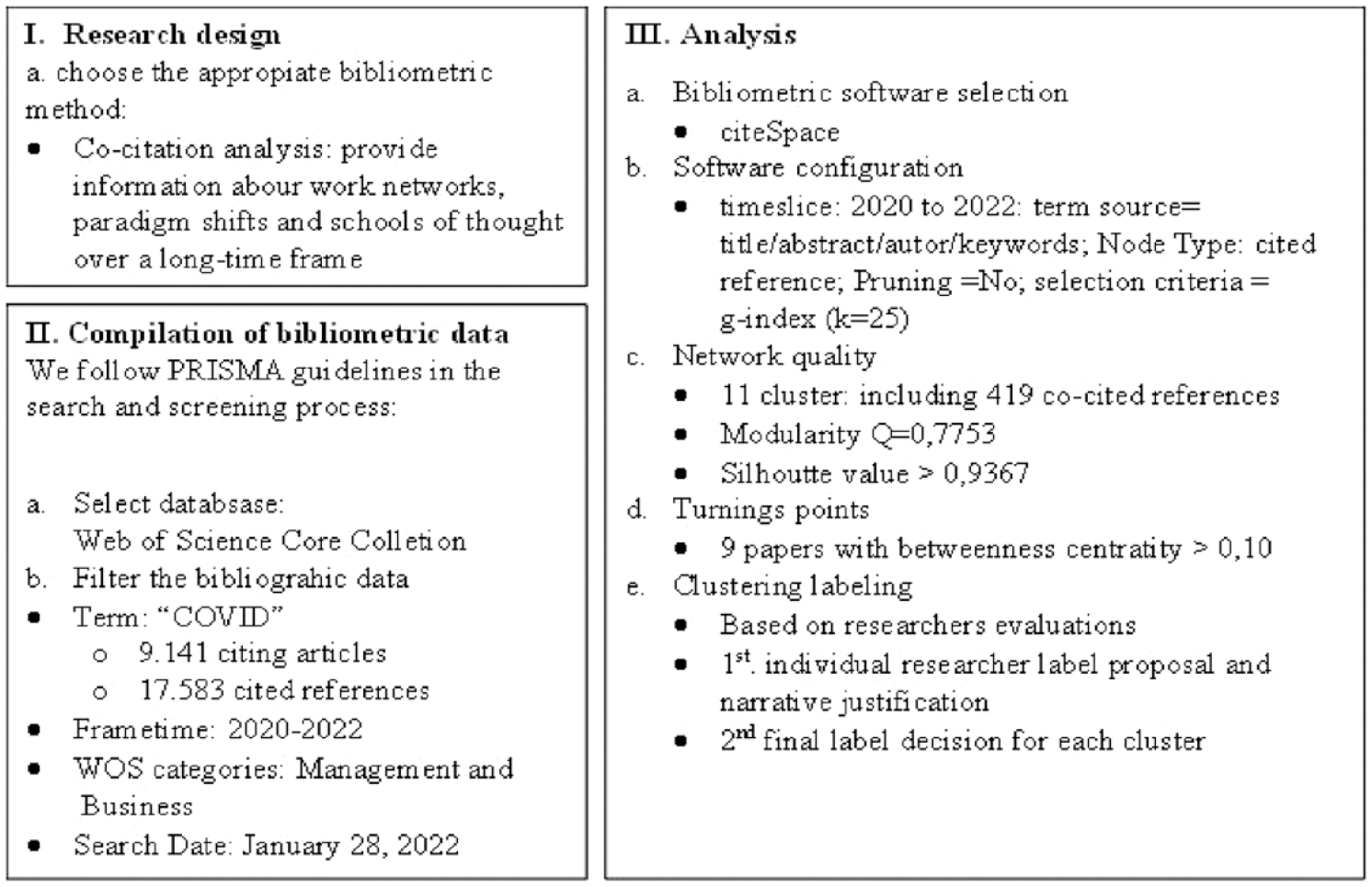
Co-citation analysis workflow through CiteSpace.
The bibliometric method used in this article is co-citation analysis. It is one of the most widely used methods in bibliometric analyses of social science disciplines (Zupic & Čater, 2015). This method is based on the coupling strength of documents, suggesting that when two articles are cited together, they are likely to share similar theories, concepts, or methods. Co-citation analysis is put into operation by analyzing pairs among the references of two articles. Unlike citation counting, which provides information on the relative influence of an article, co-citation analysis provides information on research networks, being able to detect paradigm shifts and schools of thought over a long period of time (Zupic & Cater, 2015).
In the bibliometric data collection phase, PRISMA (Preferred Reporting Items for Systematic Reviews and Meta-Analyses) guidelines (Moher et al., 2009) are used. The Web of Science (WoS) database was selected because it is one of the most widely used databases in social sciences (Díez-Martín et al., 2020), and because it allows to obtain the references of the documents under analysis.
The sample was constructed by selecting articles with the term “COVID-19” in the title, in the abstract or in the keywords, in the research area of business and management. The time period for the study is 2020 to 2022 and the search was conducted on January 28, 2022. The subject category parameters produced 3,100 documents containing 17,583 different cited references.
A sequential process is followed in the analysis phase as detailed below:
• Selection of bibliometric software. There are several software packages designed to perform bibliometric analysis, such as SciMAT, CiteSpace, or VOSviewer. Each of these has its own strengths and limitations (Moral-Munoz et al., 2019). In this study, we used CiteSpace software to perform co-citation analysis. CiteSpace is a Java-based scientific visualization and detection software, which allows us to analyze critical changes occurring in a research field (Chen, 2006; Chen et al., 2010). One of its strengths is that it allows us to establish a temporal division to analyze the evolution of fields of study and to be able to detect articles that have received a large number of citations in specific periods.
• Software configuration. The objective of the configuration of the different software parameters is to generate a cohesive and quality network. The g-index is used as a criterion for node selection. It is the largest number that equals the average number of citations of the most highly cited g publications. This index solves some of the weaknesses of the h-index. This choice allows for better visualization of links and nodes than other selection criteria options (Chen & Song, 2019). We use the following configuration: (a) Time slice from 2020 to 2022; (b) Term source = title/abstract/author keywords; (c) Node type = cited reference; (d) Pruning = No; and (5) Selection criteria = g-index (k = 25).
• Network quality. CiteSpace uses modularity Q to measure network quality. It measures the degree to which a network can be decomposed into multiple components or modules (Chen et al., 2010). Modularity Q ranges from 0 to 1. Low modularity suggests a weakly cohesive network (Chen et al., 2009). The research field in COVID-19 is divided into 11 clusters that are reasonably well coupled to each other (Q Modularity of 0.7753). The silhouette measures the quality of a cluster configuration. Each cluster is composed of several nodes. The silhouette value is a measure of the similarity between nodes (cohesion) compared to nodes in other clusters (separation). According to Chen et al. (2010) an internally homogeneous and externally differentiated cluster should have a silhouette value greater than 0.7 and less than 1. CiteSpace selects those clusters within these parameters. Thus, this network is divided into 11 clusters. The silhouette value of the selected clusters is greater than 0.9367. The 11 clusters comprise 419 co-cited references out of the 17,583 cited references (3,100 WoS articles) in the sample. The above values suggest that the network structure that we have identified is well adapted and of high quality, both externally (modularity) and internally (silhouette) (Chen et al., 2010).
• Turning points. Clusters are composed of publications that address common thematic structures and are represented graphically by a point or node. Nodes connecting different thematic structures can be considered intellectual turning points (Chen et al., 2009). Betweenness centrality can be used to identify the most relevant turning points in a knowledge domain by quantifying the number of times a node acts as a bridge along the path between two other nodes. In this way, a node with high centrality will be an essential connector between two or more clusters (Chen et al., 2009). Therefore, according to Chen et al. (2009), high centrality nodes and connectors between different lines of research are considered to be those whose value is greater than 0.10. In this research, nine publications have been identified with a betweenness centrality greater than 0.10.
• Cluster labeling. Cluster names are based on researchers’ assessments of the research content being analyzed. This is one of the main limitations of bibliometric analysis because it is difficult to differentiate evidence-based findings from those based on researchers’ speculations and heuristics (Zupic & Cater, 2015). To reduce the impact of this limitation and enrich the labeling and description of each group, each researcher independently establishes a label for each group, as well as a narrative justification (this usually included the general objectives or main research question of the group). Finally, all proposed labels are compiled and discrepancies are resolved. This procedure made it possible to summarize the essence of each line of research.
Results
The research results are presented below, grouped into three subsections. The first one identifies the distribution of the most relevant publications on COVID-19, including thematic areas and publication titles. The second section describes the main lines of research and their trends. Finally, a map of the knowledge network on COVID-19 and its evolution is constructed.
Distribution of authors and publications
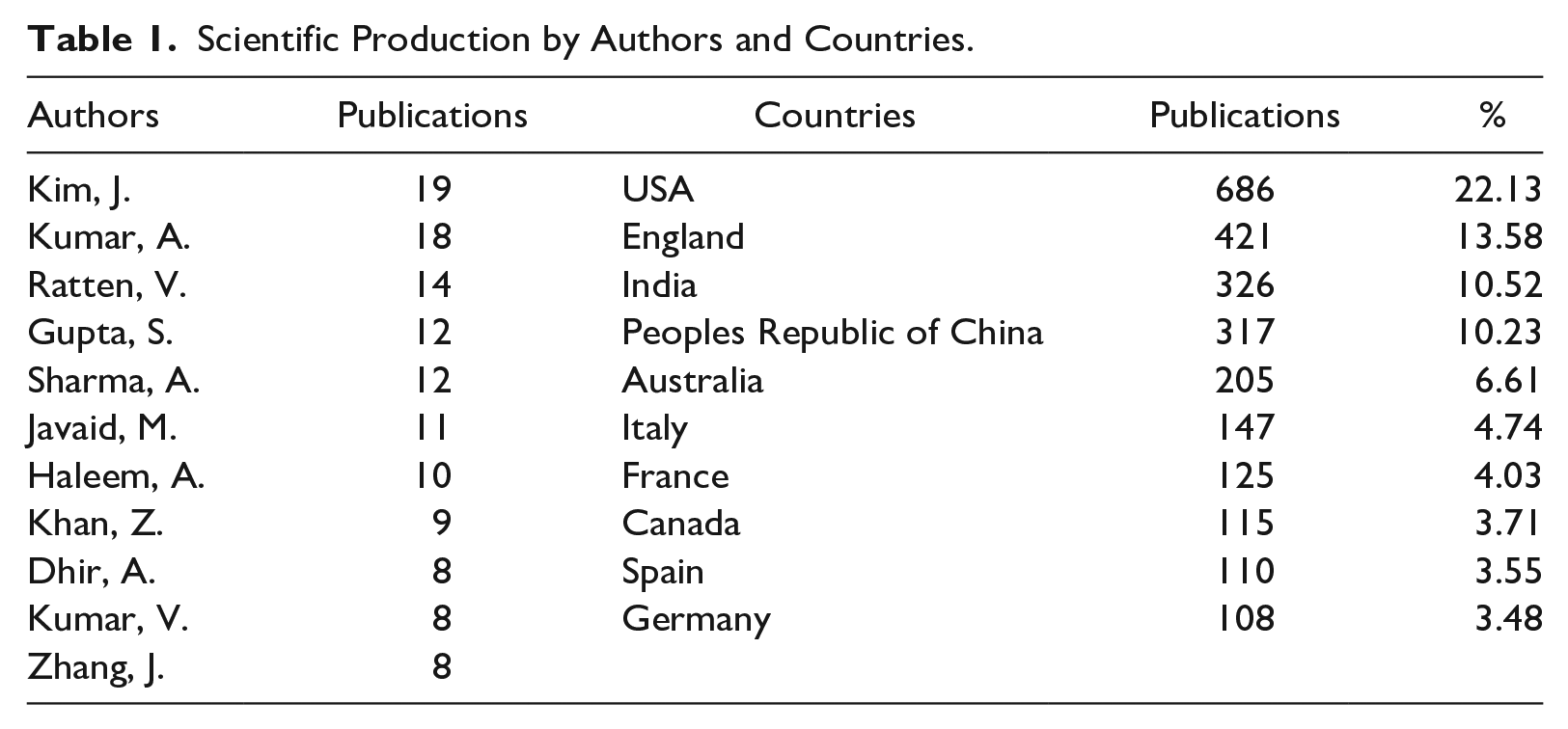
Table 1 shows the authors who have carried out the most studies in business and management related to COVID-19, as well as the countries where most research has been done on this topic. The most productive author was Jungkeun Kim of the Auckland University of Technology (New Zealand) with 19 articles published in WoS. The country with the highest scientific production on COVID-19 is the USA (22.13%), followed by England (13.58%), and India (10.52%).
Scientific Production by Authors and Countries.
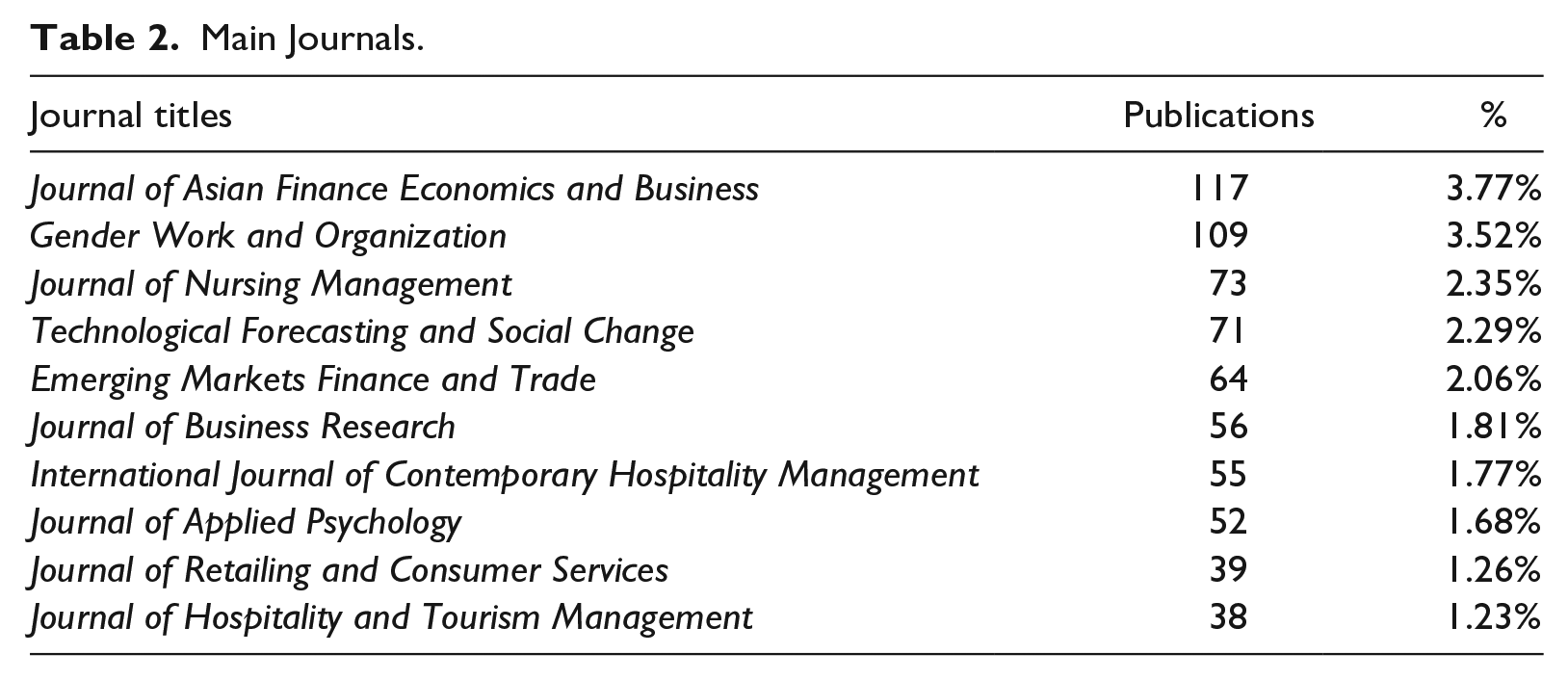
73.71% of the publications were published from the year 2021 onward. The research categories with the highest concentration of articles are Management and Business (56.39%); followed by Economics (7.84%); Hospitality, Leisure, Sport, and Tourism (6.13%); Women’s Studies (4%); Applied Psychology (3.52%); Information and Library Science (2.94%); and Nursing (2.35%). In addition, the journals that publish the most on this subject (Table 2) are: Journal of Asian Finance Economics and Business (3.772%), followed by Gender Work and Organization (3.52%), and Journal of Nursing Management (2.35%).
Main Journals.
Main Research Areas
Table 3 shows the main research areas in COVID-19. The network is divided into 11 main lines of research. Each of these lines reflects the interest of academics in solving one of the challenges posed by the pandemic in the area of business and management.
Research Challenges on Business and Management Related to COVID-19.
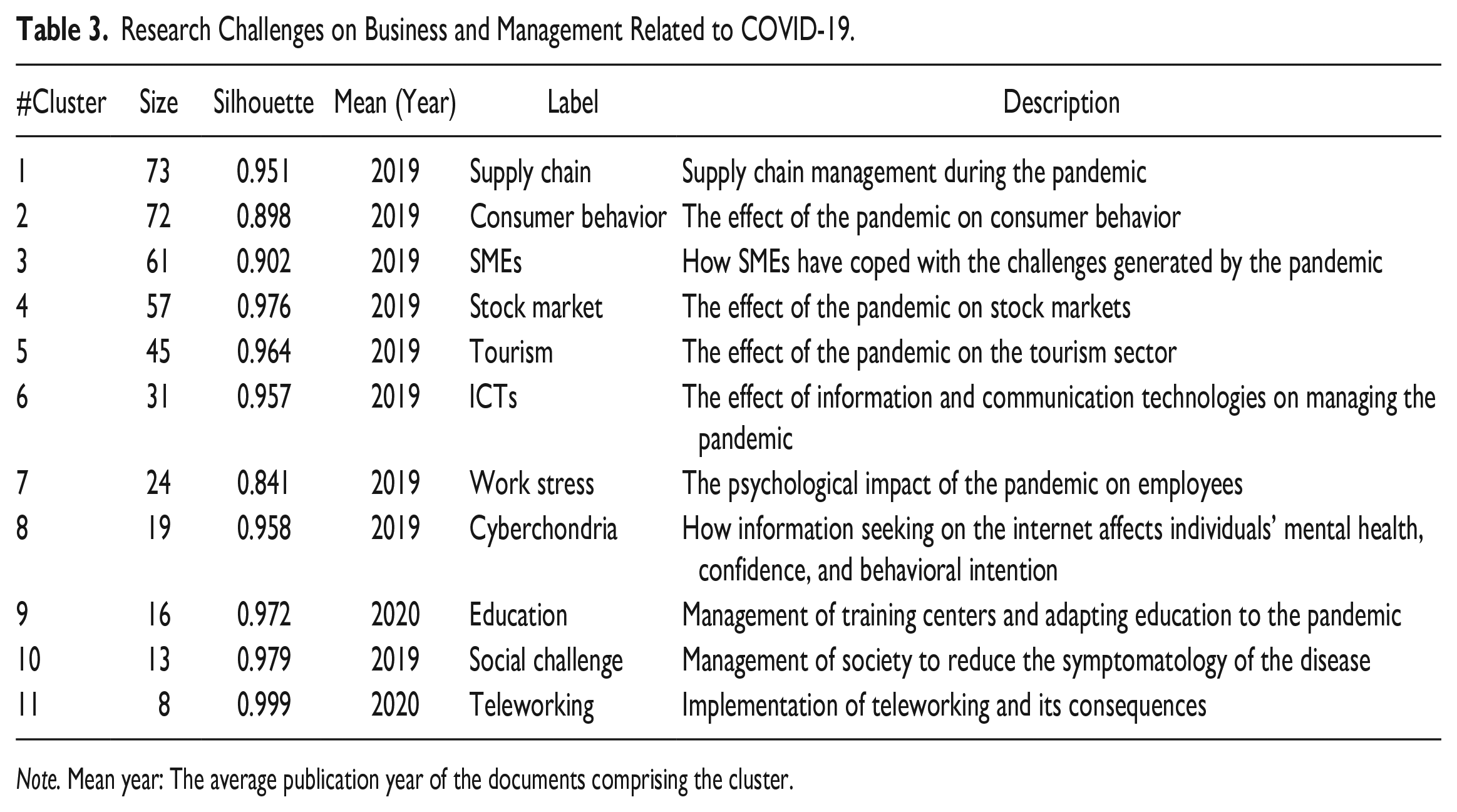
Note. Mean year: The average publication year of the documents comprising the cluster.
Cluster #1, “Supply chain,” is the cluster with the highest number of referenced articles. Researchers in this cluster focus on the impact of COVID-19 on the management of supply chains. This impact is analyzed in terms of resilience, which is understood as the capacity to resist, adapt, and recover (Ivanov, 2020a). The pandemic put supply chains in all areas of the economy to the test, from both a distribution and food handling perspective (Rizou et al., 2020). The main sectors of the economy affected were medical supplies, mainly because production sites were in China and Malaysia (Gereffi, 2020). The impact on the food sector, whose distribution system is based on just-in-time manufacturing and delivery, dominated by large supermarkets, has also been analyzed (Hobbs, 2020). In addition, the sudden increase in demand for commodities and short-term shortages it triggered have also been investigated (Mussell et al., 2020).
Cluster #2, “Consumer behavior,” includes publications that analyze changes in purchasing preferences motivated by the pandemic (Grashuis et al., 2020), the generation of panic buying (Pantano et al., 2020), the effect on consumer evaluation criteria ( Díez-Martín et al., 2022), or the link between consumers and companies that collaborated with governments to mitigate the effects of the pandemic (Payne et al., 2021).
Cluster #3, “SMEs,” includes publications related to the impact of COVID-19 on Small and medium-sized enterprises (SMEs) and entrepreneurship. Research is found that analyzes how family businesses coped with the pandemic (Kraus et al., 2020), how the pandemic has influenced the way entrepreneurs are financed (Brown et al., 2020), or how the gender of entrepreneurs may influence the management of the pandemic (Manolova et al., 2020). In addition, it discusses how factors such as resilience reveal the adaptive capacity of SMEs (Giones et al., 2020; Liu et al., 2020).
Cluster #4, “Stock market,” focuses on investor behavior in response to pandemic-related news, for example, identifying the impact of the number of contagions and deaths on profitability or stock market volatility (Al-Awadhi et al., 2020; Ashraf, 2020). Although panic produced by the media led to higher stock market volatility, investor sentiment and the amount of news produced was not associated with increased price volatility in industrial sectors (Haroon & Rizvi, 2020). According to Onali (2020), although the first 3 months of the pandemic had no impact on market performance in the United States, the increase in the number of deaths in the following months did have a negative impact on Dow Jones. In terms of how the pandemic affects exchange rates, it is observed that COVID-19 increased volatility (Iyke, 2020) and stock returns (Narayan, 2020). In addition, the pandemic caused the liquidity risk of listed companies to increase (De vito & Gómez, 2020) and influenced the evolution of cryptocurrencies. Mnif et al. (2020) identified that COVID-19 had a positive impact on the efficiency of the cryptocurrency market in general, more specifically in the case of Bitcoin.
Cluster #5, “Tourism,” collects research that studies the effect of COVID-19 on the tourism and hospitality sector (Duarte et al., 2020; Lai et al., 2020). Some research has found that there were companies that took the pandemic as an opportunity (Brouder, 2020), and others analyze behavioral changes among travelers (Uğur & Akbiyik, 2020), as well as the risk perception experienced by residents versus tourists (Qiu et al., 2020).
Cluster #6, “ICTs” (Scientific and Technical Infrastructures) groups research that analyzes the impact of new technologies on pandemic management. For example, technologies for symptom detection (Haleem & Javaid, 2020; Hernandez-Orallo et al., 2020), or the manufacture of medical products (Arora et al., 2020; Vaishya et al., 2020). Arora et al. (2020) highlight that the development of 3D printing enabled the manufacture of critical medical products, which in turn required fewer intermediaries in the supply chain. In addition, the digital transformation experienced during the early days of the pandemic favored the development of applications with different objectives. Javaid et al. (2020) identified eight technologies that reduced COVID-19 outbreaks.
Cluster #7, “Work stress,” groups research focused on the stress and anxiety generated by COVID-19 on human resources (Maben & Bridges, 2020). Studies such as those by Lai et al. (2020) identify the factors that impact on employees’ mental health. Likewise, studies such as those by Qiu et al. (2020) highlight that the pandemic has triggered a wide variety of psychological problems. Their findings suggest that it is important to pay attention to the most vulnerable groups, to have a strong public health system, and to have psychological first aid planning available to manage future pandemics.
Cluster #8, “Cyberchondria,” refers to the impact of COVID-19 on people’s well-being, motivated by excessive information seeking on social networks (Vismara et al., 2020). Likewise, it also collects research related to fake news and how it can influence individuals’ trust and behavior (Laato et al., 2020; Talwar et al., 2019).
Cluster #9, “Education,” groups research that analyzes the response of educational institutions to the pandemic situation (Crawford et al., 2020), as well as pandemic risk management in universities (Wang et al., 2020). Educational institutions have been one of the social agents with the highest responsibilities in pandemic management, as they are communities in which numerous social exchanges take place. Along these lines, researchers have analyzed the consequences of COVID-19 on higher education management (Medina López et al., 2021), the dropout intention (del Castillo, 2021; Olmedo-Cifuentes & Martínez-León, 2022), the social gap (Aznar Sánchez & Rodríguez Elizalde, 2021), or students’ perceptions of e-learning (El-Sayed Ebaid, 2020) and hybrid learning (Erdmann et al., 2022; Nicolas-Sans et al., 2022).
Cluster #10, “Social challenge,” represents a line of research related to social management to reduce the impact of disease and its symptoms. For example, it analyzes how virus transmission reduction measures, quarantines, and restrictions, have impacted the reduction of the spread of the virus and the day-to-day management of companies (Qiu et al., 2020). Researchers in this line have as one of their main sources of knowledge the works of George et al. (2016) and Ferraro et al. (2015) on strategies to manage major social challenges.
Finally, Cluster #11, “Teleworking,” shows a line of research that relates the impact of COVID-19 on teleworking (Spurk & Straub, 2020). Research such as that by Chong et al. (2020) points to the effect of telework implementation, derived from the pandemic, on employees’ daily work. In this line, research is developed on the relationship between the delay of tasks, interdependence with other employees or the support received from companies.
Connection between lines of research
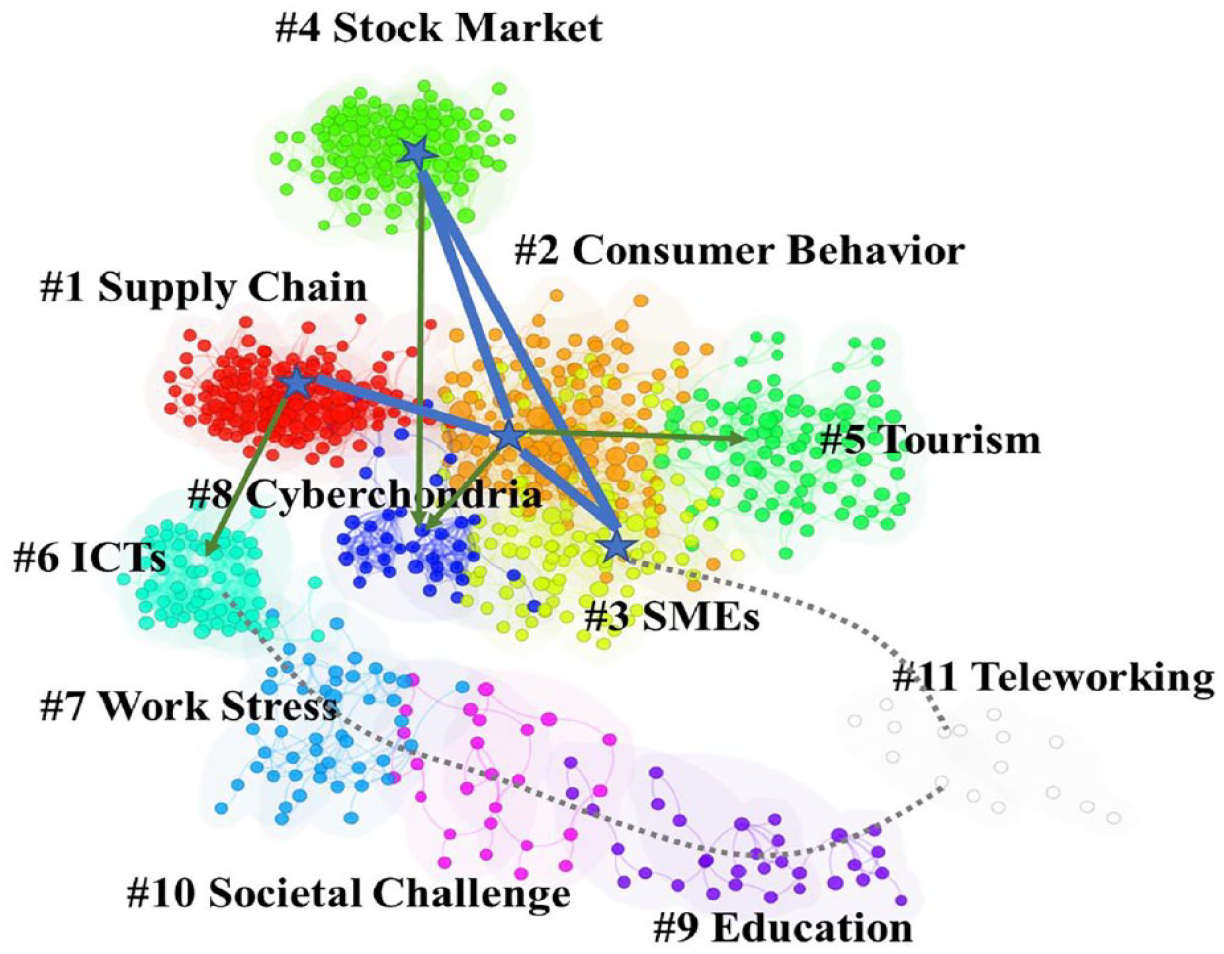
Figure 2 shows how the lines of research in business and management related to COVID-19 are connected, as well as the paths through which knowledge has been disseminated.
Research network and dissemination pathways.
The main cluster used to connect the knowledge that was being generated, as well as to favor the emergence of new lines of research is cluster #2. Although most research in business and management related to COVID-19 has focused on the challenge posed by the global supply chain, the most decisive line of research in the dissemination and creation of new knowledge to meet COVID-19 challenges is that related to consumer behavior (#2). This is the most central cluster in the network, which is composed of five research studies with high intermediate centrality (>0.10) (Table 4). These studies represent crosscutting sources of knowledge between different lines of research. They are even capable of generating new lines of knowledge.
Intellectual Turning Points.
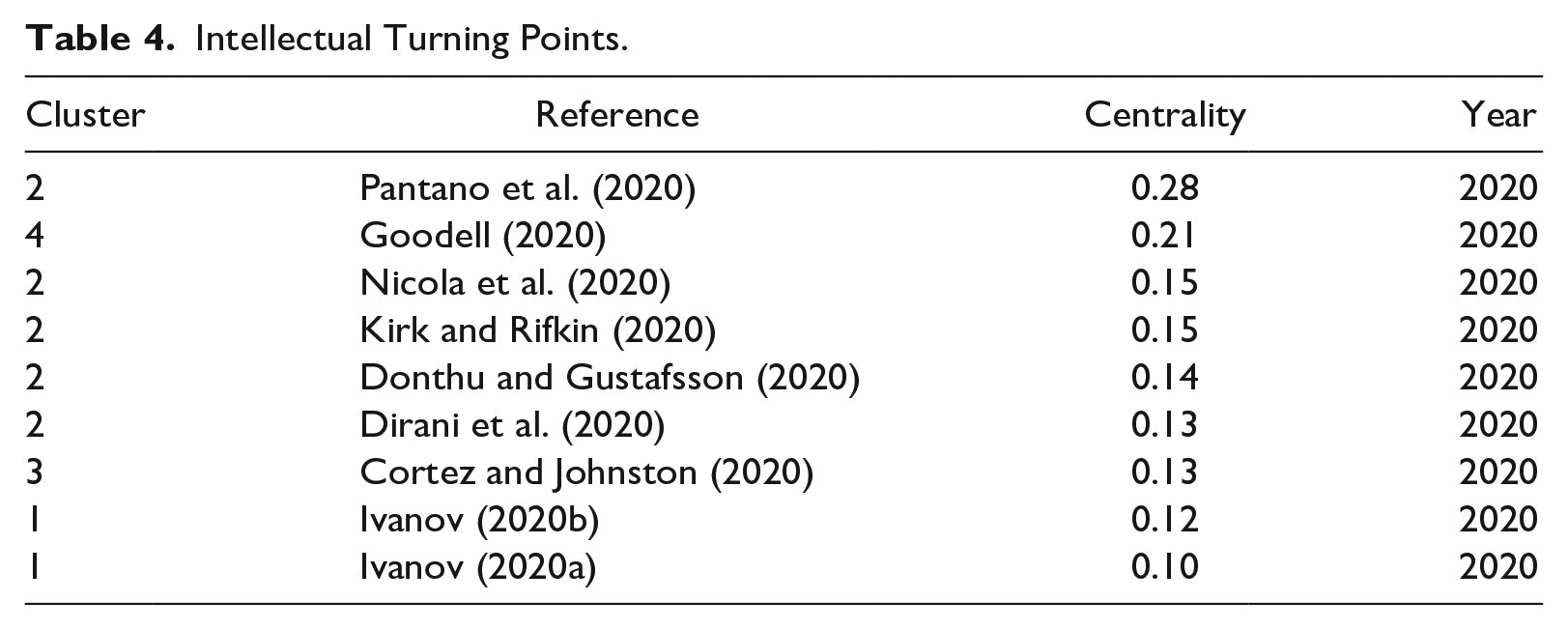
The investigations that have become turning points in cluster #2 are the following: (a) Pantano et al. (2020) point out the main challenges faced by retail companies during the pandemic (connects #2–#1 and #3); (b) Nicola et al. (2020) provide an approach of how the consumer behaves and what the socioeconomic effects of the pandemic in the different sectors of the world economy are (connects #2–#1–#3 and #4); (c) In contrast, Kirk and Rifkin (2020) describe the establishment of consumer behavioral patterns when faced with crisis situations such as the one experienced during the pandemic (connects #2–#3–#5 and #8); (d) Dirani et al. (2020) determine which roles a leader should have in a health crisis situation such as the one experienced with the pandemic (connects #2 with each other); (e) Donthu and Gustafsson (2020) point out the impact of the pandemic among different groups (connects #2 and#3). Based on this research, we know a little better how consumer behavior research connects with other lines of research. In fact, we can observe the existence of strong connections between cluster #2 and clusters #1 supply chain, #4 stock market, and #3 SMEs. At the same time, a direct connection is also observed between cluster #2 and clusters #5 tourism and #8 cyberchondria.
In addition to the turning points of cluster #2, the results also point to four other articles with high centrality: (f) Goodell (2020) analyzes the impact of COVID-19 on financial markets and institutions (connects #4–#2–#3 and #8); (g) Cortez and Johnston (2020) put forward the main differences, in terms of B2B business, between traditional financial crises and the crisis derived from COVID-19, highlighting: digital transformation, decision-making processes, leadership, emotions, and stress (connects #3 and #2); (h) Ivanov (2020a) proposes a feasible supply chain model in which resilience would be the central perspective to ensure supply chain feasibility (connects #1 and #2); (i) Ivanov (2020b) uses software to develop a simulation on the impact of COVID-19 on global supply chains (connects #1–#2 and #6). These turning points reaffirm the strong connections between clusters #1–#2–#3–#4, while pointing to direct connections between clusters #1 and #6 and clusters #4 and #8. The rest of the clusters are connected to the network, but in a weaker way. There is no research with high centrality that connects with clusters #7, #9, #10, and #11. These lines of research represent new developments that have been emerging in line with the new challenges caused by the pandemic.
Discussion and future lines of research
The emergence of COVID-19 in December 2019 in China shook social, economic, and security structures worldwide. The rapid spread of the virus put the entire scientific community on alert to address new challenges. In the business and management field, the pandemic has highlighted many business problems that remained latent to date (e.g., highly centralized global supply chain, poor digitization of companies) and were quickly brought to light (Verma & Gustafsson, 2020). During the period (2020–2022), more than 3,000 publications (WoS) were produced in this field, revealing new challenges and proposals to address them. In this research, we show what we have learned in business and management from COVID-19 and what the future challenges for researchers in this field are. To this end, we developed a bibliometric analysis that allowed us to describe the intellectual structure of the field of business and management related to COVID-19, identifying the main lines of research; turning points; sources of knowledge; and challenges or knowledge gaps that have not yet been sufficiently explored.
The results have revealed that research in business and management related to COVID-19 is mainly focused on 11 thematic challenges: (#1) supply chain, (#2) consumer behavior, (#3) management of SMEs, (#4) stock market behavior, (#5) tourism, (#6) ICT applications, (#7) work stress, (#8) cyberchondria, (#9) education, (#10) social challenge, and (#11) teleworking. These results extend those obtained by previous research during the first months of the pandemic (year 2000). In addition, they show which lines of research are being most developed by academics. In this case, supply chain management (#1) is the challenge of greatest concern to researchers.
However, in addition to the problems associated with supply chain management, service industry, technology, and doing business (see Verma & Gustafsson, 2020), this research shows the new challenges that COVID-19 has generated or aroused in the business and management field. It also shows how these lines of research are interconnected, as well as the most prolific authors and countries.
One of the new challenges identified by this research has been consumer behavior (#2). This line of research has become the second major focus of attention for business and management researchers on COVID-19 management. Despite this, during the first months of the pandemic, new behaviors on shopping preferences (physical vs. online) were evident (Laguna et al., 2020). However, business challenges and the most recent research in this field have evolved toward a deeper study of the antecedents of behavioral intention. Along these lines, the study of emotions and their influence on behavioral intention has become a highly relevant research field. Researchers are analyzing the effects of anxiety, the feeling of risk, self-isolation (Laato et al., 2020), engagement with companies (Payne et al., 2021), or even the context of uncertainty (Díez-Martín et al., 2022) on behavioral intentions. From here, numerous paths for research open up: Will the new behavioral patterns be long-lasting? Should companies begin to establish mental health management measures for their customers? What type of mental health measures favor behavioral intentions? To what extent can emotions influence purchase intentions, beyond the influence caused by the classic variables of proximity, price, and quality? (Díez-Martín et al., 2022; Laato et al., 2020)
In this line, behavioral studies have also extended to other business and management fields. Our research points out that the effect of the pandemic on the stock market (#4) has represented a great challenge for researchers to better understand the high volatility of markets or the rise of the cryptocurrency market. New avenues of research open up here. For example, is the rise of the cryptocurrency market due to the search for new safe haven securities? Is the volatility going to continue, for how long? What is the relationship between market volatility and cryptocurrencies? Are investors prepared for periods with long uncertainty cycles? Which investments have benefited or suffered from the consequences of the pandemic, and how can we prepare for similar contexts?
We also highlight the challenge posed by the impact of COVID-19 on human resource management in companies. While in the early stages of the pandemic, research focused on the impact of job confinements and the generation of higher unemployment (Dey & Loewenstein, 2020), the interest of researchers shifted toward the study of two strong challenges related to the psychological impact of the pandemic on employees (#7), and the implementation of teleworking and its consequences (#11).
Many companies moved from a human resource management model based on face-to-face to a model based on teleworking. It represented a paradigm business shift. Before the pandemic, very few companies were committed to offering telework as a way of reconciling work and family life. The onset of the pandemic meant that employees who teleworked had to balance work with family and household care. While many companies and employees saw the benefits of teleworking, others encountered multiple difficulties due to factors such as burnout, anxiety, lack of interaction with coworkers, and lack of resources. Two years into the pandemic, future research has a long way to go in the field of labor relations. Mental health not only influences consumer behavioral intentions, but also employee performance. COVID-19 has brought about the massive implementation of teleworking, revealing numerous advantages and disadvantages that remained latent. These have led to changes in employee performance, as well as in major work-life decisions (e.g., the great resignation). Human resource management researchers have a new line of research on teleworking and emotion management into which to delve and establish new relationships. Should companies encourage teleworking, face-to-face work, or a hybrid format? What have the implications of the great resignation been? How does the return to normality influence the work environment and the productivity of employees with persistent COVID-19? How does the return to the traditional model influence employee satisfaction? How can companies use strategies for telework to optimize company resources and costs without harming their employees’ mental well-being? How do new employees adapt to companies if they do not come to work in person? Does physical distancing have an influence on creativity reduction?
Another new challenge we have detected in the area of business and management is cyberchondria (#8). Also related to mental health, a number of scholars have analyzed the effects of information seeking on internet on individuals’ mental health, confidence, and behavioral intention. This line of research is an evolution of previous research on the impacts produced by communication, misinformation, trust, and uncertainty during the COVID-19, detected in Verma and Gustafsson (2020). Cyberchondria was a booming pre-COVID-19 line of research. However, the pandemic has generated a research explosion on this topic, within the business and management field, motivated by its impact on mental health. Future research may relate this line of research to social, consumer, and employee behavior.
We have also discovered researchers’ interest in solving the problem of contagion (#10). To this end, researchers have focused on building and measuring the impact of social management models to reduce the spread of COVID-19 symptoms. This is a context composed of a large number of variables whose combination can drastically change the expected results. Future research could compare the measures used for the containment of infection with the economic results achieved across the country. In this regard, it would be of great interest to know how the combination of measures used by states and companies has influenced these results. In some regions, the management of society has been carried out by means of major deprivations of freedom. The health measures required also differed from country to country and region to region. The possibility of developing economic activities, the limitation of prices, the expropriation of companies, and the implementation of displacements have been measures used to face the great social challenge of the pandemic. Establishing which social measures have been more effective and which have been more efficient is essential to improve preparedness for future scenarios.
In relation to the challenge experienced by the service industry, we have observed that the interest of researchers has evolved toward two of the most affected areas by the pandemic: the education sector (#9), and the tourism and hospitality sector (#5). These two lines of research have experienced numerous advances. In these cases, the pandemic has highlighted the great dependence of these sectors on social contact or the great technological deficiencies that can facilitate the management of people. Future researchers have two areas of research, where one of the challenges is to develop the supply side so that it is less dependent on the displacement of people. In this line, Higgins-Desbiolles (2020) points out the need to modify the tourism strategy through social and ecological actions.
The long-term effects of the pandemic, as well as the causes of some short-term social and economic outcomes, remain unexplored. People suffering from persistent COVID-19 appear as a particularly appropriate population group to further advance research on the socioeconomic impact of COVID-19, in a context where health, especially mental health, has become a major focus of attention for academics and businesspeople. To this end, the search for organizational legitimacy can become an exceptional asset for companies to convey trust (Díez-Martín et al., 2021).
Finally, we have also detected that, as with other emerging research fields (e.g., code of ethics, Delgado-Alemany et al., 2022), one of the main limitations of the research analyzed is the lack of studies based on contrasted theories. Behavioral theories and institutional theories can help researchers to propose ways of addressing the new challenges we have encountered.
Footnotes
Acknowledgements
We would like to thank the Camilo Prado Foundation for the courses and workshops which helped us to develop our research. We would also like to thank Luis Tomás Díez and the AEDEM family for the constant feedback we received.
Declaration of Conflicting Interests
The author(s) declared no potential conflicts of interest with respect to the research, authorship, and/or publication of this article.
Funding
The author(s) disclosed receipt of the following financial support for the research, authorship, and/or publication of this article: This research has been financed by the Community of Madrid with European Regional Funds under the project “Evolución, Caracterización Clínica, Molecular y Genética y Tratamiento de los Síntomas post-COVID (COVID Persistente)” ref: A467.
Author Biographies
 ). Her research lines focus on organizational legitimacy, social responsibility and new consumer behaviors.