







Abstract
This study addresses the knowledge and research gaps regarding the “other customer” concept within the consumer–brand identification paradigm, drawing on branding and consumer behavior theories. We consider the “other customer” as the other customers of a brand from the perspective of an individual (focal customer) using or simply assessing the brand. We take into account both how the focal customer is influenced by other customers and how the focal customer perceives those other customers. While the concept is traditionally associated with the service industries, we expand its relevance to product brands. We use Social Identity Theory, Social Comparison Theory, and Other Customer Perception to identify how Gen Z focal consumers construct the image of other consumers of international brands at national level. A mixed-method approach was developed, bringing together MMCA (multimodal content analysis), perceptual mapping regarding brand image, and other customer perceived attributes, as well as a survey addressing (a) focal customer–other customer–brand identification perceived similarity and (b) perceived influence of sustainability on purchase behavior. MMCA was performed on a corpus of 236 other customer profiles of Nike and Adidas, consisting of a visual component and a textual description. The profiles were developed by a convenience sample of 147 Romanian Gen Z young adults. The results show that: (a) The national specificity and history of the brand can lead to diverging, local other customer profiles that might be accepted or rejected based on the desirability and similarity perceived by the focal customer; (b) The other customer is used as a form of self-evaluation carried out by the focal customer (Gen Z consistently evaluates downward some of the other customers as a way to curate self-esteem and avoid identification with profiles they consider undesirable or unsuitable for their own self-image); and (3) The connection perceivable at international level between brand sustainability as a purchase pre-condition and Gen Z customers is not universal and should be re-evaluated based on local realities. At theoretical level, this study contributes to the advancement of the “other customer” concept; at a practical level, it advocates for the inclusion of an “other customer communication strategy” into the marketing communication mix.
Keywords
Introduction
This study addresses the knowledge and research gaps regarding the “other customer” concept outside of the services industry, within the consumer–brand identification paradigm: how the perception regarding other consumers using or interacting with a brand influences the way consumers see the brand and to what extent they identify with it in the context of that perception.
The research on the other customer concept was developed primarily in terms of perception and other customer perception (OCP) effect (Karaosmanoğlu et al., 2011) in the services and hospitality industries: restaurants (Kim & Baker, 2019; Namin & Lee, 2012), hotels (Sreejesh et al., 2018), country clubs (Hwang & Han, 2015), department stores (Sengupta & Sreejesh, 2017), and theme parks (Brocato et al., 2012). It addressed OCP in terms of similarity, physical appearance and behavior suitability. However, while there is extensive literature on customer-to-customer interactions (Heinonen et al., 2018), research on OCP or effect has drawn less attention and the current body of research is lacking in several ways: (a) it focuses primarily on result—the impact on emotional attachment, on brand image favorability, on company-consumer identification as driver of purchase behavior, neglecting the configuration of the actual perception and the dynamic of its dimensions; (b) it rarely takes into account national cultural and social specificity; (c) it overwhelmingly addresses the service and retail industries in brick and mortar settings; (d) it does not address generational specificity; and (e) it tends to look at perceptions formed after immediate or direct interactions, neglecting perceptions that are formed over time and without any contact or interaction between consumers.
We explored, at the intersection of Social Identity Theory, Social Comparison Theory, and OCP, how Gen Z consumers construct the image of other consumers (focusing on demographic profile, physical appearance, personality and lifestyle, purchase behavior, and interest in sustainability) of international brands at national level. We also assess the relation between Gen Z OCP, peer identification, and self-brand identification. Specifically, we look at how Gen Z defines other customers of a product brand, not a service brand. Therefore, we move from the customer-to-customer interactions or direct encounters specific to the service industries, and we address social identities and perceptions related to product brands, looking for national specificity and an organic inclusion of sustainability in the perception of other customer identity.
We developed a multi-stage mixed-methods approach, performing multimodal content analysis (MMCA) (Serafini & Reid, 2019) on a corpus of 236 other customer visual and textual profiles of Nike and Adidas. The profiles were developed by a convenience sample of 147 Gen Z young adults in Romania. The mixed-methods approach also included a perceptual map regarding brand image and other customer perceived attributes, as well as a survey addressing (a) perceived similarity in focal customer–other customer–brand identification, and (b) perceived influence of sustainability on purchase behavior. In this paper, we referred to Gen Z as the focal customer.
The conclusions bring forward potential other customer-related issues in global marketing and underline their relevance to marketing strategy in general and consumer behavior in particular: (a) the relevance of understanding national specificity and intergenerational dynamic in relation to OCP, (b) the essential role played by categorization, identification, and comparison related to the other customer in the self-evaluation process carried out by the focal customer, and (c) the need for a critical approach to the relationship between sustainability and Gen Z as customers, as the connection perceivable at international level might not be relevant at national levels. These nuances showcase the need for an “other customer communication strategy” that goes beyond the traditional consumer–brand dynamic and marketing processes.
The “Other Customer”
The construction of brand personality (Aaker, 1996, pp. 141–142) based on human demographic characteristics, human lifestyle characteristics, and human personality traits transforms the brand into a living person, making it easier for the consumer to interact and identify with it. Aaker (1996, pp. 145–147) proposes two categories of brand personality drivers: product-related characteristics and non-product-related characteristics; among the latter he mentions two (user imagery and country of origin) that are central to the perspective we adopt in this paper (the other customer) and to a dimension we explored (the national perspective related to the customer–other customer–brand identification construct). Typical consumers (people we see using the brand) or idealized ones (as portrayed in marketing communications) are the basis for user imagery. In this paper we addressed only the first category, as it informs the concept of other customer; we call them focal customers, as most marketing communications focuses on them. The country of origin can be used as an attribute that elicits admiration for a product through its association with a particular country, but it can also be used to embolden a patriotic or nationalist purchase behavior (Heiman & Just, 2021). However, in this paper we did not address the country of origin of the brand, but of both the focal customer and the other customer, in order to identify to what extent OCP is defined by national specificity and whether it has a positive or a negative effect on customer–brand identification.
Individuals evaluate brand identities not only based on their direct experiences but also by connecting with other customers who share similarities (Karaosmanoğlu et al., 2011, p. 1434). The influence of these peers, within the social environment, can impact purchasing or repurchasing decisions positively or negatively (Tombs & McColl-Kennedy, 2003). Belk’s (1975, p. 159) situational variables of consumer behavior framework emphasizes the role of “social surroundings” as a key aspect, encompassing factors like “other persons present, their characteristics, their apparent roles, and interpersonal interactions.” This perspective shifts the focus of consumer-to-consumer engagement from traditional word-of-mouth discussions to the idea that consumers, merely by being observed, become integral to a brand’s image. Consequently, their brand-related and unrelated activities shape the behavior of other customers.
Other customer research has developed primarily in the service industry, defining “other customers” as a multidimensional construct consisting of number, age, gender, appearance, attire, and public behavior (Namin & Lee, 2012). From a brand management perspective, this approach represented a necessary deep dive into on-location customer management optimization related to other customer failure (Huang, 2010; Huang & Wang, 2014), other consumers’ public behavior (Kim & Baker, 2019; Martin, 1996), or perceived performance risk (Brack & Benkenstein, 2014). It also constituted a nuanced way to obtain insights into brand image perception and satisfaction, as the customer’s perception of other customers present in a service encounter can largely shape the focal customer’s emotional response toward the service firm (Brocato et al., 2012). From a consumer behavior perspective, other customer research addressed, on the one hand, customer-to-customer interactions or observable oral participations, concerned with how interactions with other customers influence a consumer, and on the other hand, the passive role of other customers, advancing the idea that the mere presence of other customers in a service environment has an indirect, passive effect (Namin & Lee, 2012, p. 27).
Karaosmanoğlu et al. (2011) extend the discussion regarding other customer influence by testing the concept in both a service and a product context, confirming similar results and advancing a conceptual framework for the other customer effect on image formation and customer-company identification. They highlight that not only the organization itself but also the entities in the surrounding network—such as other customers—have an impact on brand image formation, purchase/repurchase intention, behavioral loyalty, and customer extra-role behavior, which is why organizations should engage in activities that enhance their brand attractiveness to future customers by managing their present client portfolio (Karaosmanoğlu et al., 2011, pp. 1431–1432). The management of clients in order to attract other customers can be addressed through compatibility management (Martin, 2016; Martin & Pranter, 1989) advancing the ideas that brands should conduct market segmentation based on customer compatibility and that the latter is achieved mainly through customer homogeneity in terms of sought benefits, prejudicial beliefs, physical characteristics, and/or compatible behaviors. Segment homogeneity is possible because similar people tend to gravitate toward one another—what is called the similarity-attraction paradigm or homophily (Hanks et al., 2017; McPherson et al., 2001); this is relevant because a brand that registers a higher degree of similarity among users is more attractive to consumers (Karaosmanoğlu et al., 2011, p. 1422). However, in order to achieve this other customer effect, similarity among users needs to be perceived as such by the focal customer. Perceived similarity between focal customers and other customers, particularly their peers, as well as between focal customers and brand (Stokburger-Sauer et al., 2012) leads to favorable outcomes at both customer and brand levels (Itani, 2021), underlining the importance of identifying how and what customers perceive in others.
Other Customer Perception
While Social Impact Theory suggests that people are influenced by the mere presence of another person or group of people (Latané, 1981), in order for them to incorporate this presence into the brand image they need to define their individual perception of other customers in terms of more than just similarity: they need to add physical appearance and behavior suitability. These are the dimensions of OCP (Brocato et al., 2012, pp. 386–388), emerging from environmental psychology and the principles of approach and avoidance behaviors and strongly influencing customer satisfaction/dissatisfaction with the brand. While these dimensions have been applied primarily to service industry OCP (Hwang & Han, 2015), their overlap with segmentation variables points to their potential to be employed in order to address OCP in other settings too.
Similarity is defined as the extent to which an individual customer feels that they are similar to and can identify with other customers (Brocato et al., 2012, p. 386), which is consistent with Social Identity Theory (Tajfel & Turner, 1979), as well as with Social Comparison Theory (Festinger, 1954). Both theories refer to innate human drivers: the need to relate to a group and evaluate others based on a categorization/identification/comparison process, thus creating a social identity, social categories, stereotypes, prejudices, and the need to self-evaluate by comparing (upward or downward) our opinions, values, abilities, and performance in order to “develop self-knowledge and make social choices” (Richins, 1995, p. 596). Social Identity Theory and Social Comparison Theory both allow the focal customer to create, develop, and adjust the way they perceive other customers, as well as to evaluate the presence or absence of similarity, oftentimes through stereotypes. Perceived similarity between focal customers and other customers, particularly their peers, as well as between focal customers and the brand is key for a company in developing its consumer base: consumers can be “actively involved in recruiting customers for the company they identify with” (Bhattacharya & Sen, 2003, p. 84), particularly from their in-groups, but resist being recruited themselves for companies and brands they do not identify with or by other customers from their out-groups, generally perceived as not similar.
While similarity covers a broader spectrum of cues, physical appearance and behavioral suitability are quite precise. Consumer judgments using cues such as age, gender, dress, or appearance (Namin & Lee, 2012, p. 28) are specific to the physical appearance dimension, which Brocato et al. (2012, pp. 386–387) base on Inference Theory and the Theory of Affordances, pointing to the fact that other customers in a commercial space as well as the physical environment convey information and inform the customers’ perceptions. It is relevant to mention that various dimensions carry different weight for different segments; for example, for younger consumers, social cues like physical appearance are more significant when they evaluate a certain brand that is used by other customers (p. 394). However, this perspective only takes into account retail and services in brick and mortar establishments, while bypassing online shops. In addition, it takes a short-term approach to the formation of OCP, ignoring the evolution of perception over time and under various influences. In terms of behavioral suitability, the dimension is informed by Role Theory and Behavior Setting Theory (p. 387), proposing that customers’ perceptions of and assessments of specific service businesses can be influenced by social norms or expectations about how other customers are expected to behave in those environments. However, the way we classify compatible and incompatible behaviors is often situation-specific, but the perception of incompatible behaviors is often individual-specific (Martin & Pranter, 1989, p. 12) and, we might add, culturally determined, a dimension lacking from the extant research on OCP or effect.
Gen Z and Brand Sustainability
The connection between Gen Z and sustainability is considered an almost universal dimension of this generation and a social norm (Topic & Mitchell, 2019), with increasingly more research addressing green purchase behavior (Kanchanapibul et al., 2014), collaborative consumption (Ianole-Călin et al., 2021) or comparisons to Gen Y (Brand et al., 2022). Further research (Tanusondjaja et al., 2015) suggests that in emerging markets brand user profiles rarely differ between local and international brands across age, income, and gender, but the local and global brand perceptions should still be explored (Safeer et al., 2022) in order to identify national specificity, if present.
In Romania, previous research showed that “Gen Zers have a favorable attitude toward responsible retailers that conduct themselves according to sustainable principles not only in marketing, but also in producing green products” (Dabija et al., 2020, p. 14). In addition, Gen Z consumers are “the most interested in incorporating sustainability into their activities” (Dabija et al., 2019) when compared to other generations, feeling satisfaction when performing sustainable behavior or engaging in environmental protection practices. However, their sustainable behavior is not correlated with the green marketing practices of organizations or with them being environmentally responsible consumers (Dragolea et al., 2023). This lack of correlation points to green attitudes being global, but green behaviors lagging behind, their presence conditioned by local specificities.
Research Questions
In order to address the knowledge and research gaps we identified and apply the theoretical framework on the selected Romanian Gen Z sample, we developed the following research questions:
RQ1. How do Gen Z customers perceive the demographic profile, physical appearance, personality and lifestyle, purchase behavior of other customers?
RQ2. How do Gen Z customers perceive the focal customer–other customer–brand identification dynamic?
RQ2a. How do the perceptions of other customer identity compare to the perceptions regarding the brand?
RQ2b. How do the perceptions of other customer identity compare to the self-image of Gen Z as customers?
RQ3. What place does sustainability occupy in the representations of Gen Z customers regarding the focal customer–other customer–brand identification dynamic?
Method/Methodology
Terminology
Throughout the paper we use customer and consumer interchangeably as purchase and usage usually overlap in the case we examine. However, while the other customer concept takes into consideration the indirect effect of a direct contact situation, often associated with purchase, specific to service contexts, in this paper we use it to address the indirect effect the social consumption of a brand (like the wearing or use of its products) by other individuals has on the perception of the focal customer. Therefore, when discussing the other customer, we are more interested in their consumer profile, associated with use, not purchase.
We use the term “focal customers” for the customers that form a perception regarding the brand, and the term “other customers” (OC) for the customers that, through their use of the brand, influence the perception of the focal customers regarding that particular brand, therefore influencing the relationship between the brand and the customer.
Sample
In Romania, Gen Z (individuals born between 1997 and 2012) represents 11% of the population, while the 19 to 23 subgroup is 3.7% based on the 2021 to 2022 census (Romanian National Statistics Institute, 2023). A convenience sample of 147 young adults was used, recruited in 2022 from a major university in Bucharest, the capital city of Romania. The participants are homogeneous in terms of age: 2.7% are Zennials, a sub-cohort making the transition between Millennials and Gen Z, while 97.3% are Gen Z, born between 2000 and 2004, with an age average of 19 years at the time of the study. Gender distribution within the sample is not representative for the general population and can be seen as a limit of the study: 86% women and 14% men. In order to obtain further insights into their psychographic profile as focal customers, the participants were asked to fill in the anonymous VALS (Values-Attitudes-Lifestyle) online questionnaire (http://www.strategicbusinessinsights.com/vals/presurvey.shtml) as a less intrusive way of asking them about values, attitudes, and lifestyle in relation to their income and resources; they then reported the results by filling in an online form that registered their primary and secondary VALS types. The resulting VALS profile of this Romanian Gen Z consumer group provides insights into consumer behavior and is recommended as a “first step in [. . .] achieving strategic marketing and communication goals” (Strategic Business Insights, 2020). In addition, it is consistent with the Gen Z international profile (Breman, 2018): 48% Strivers (motivated by Achievement, have low resources), 39% Experiencers (motivated by Self-expression, have high resources), and 8% Innovators (exhibit all three primary motivations in varying degrees, have high resources). Therefore, the individuals in our sample appreciate and respond to social and professional status, as well as to trends, latest fashion, and visual stimulation.
Methods
In order to answer the research questions, we used a combination of several qualitative and quantitative methods, facilitating a more nuanced, unbiased understanding of OCP among Gen Z young adults. The participants went through several rounds of activities, each with its own approach and outputs (Table 1).
Research Procedure.
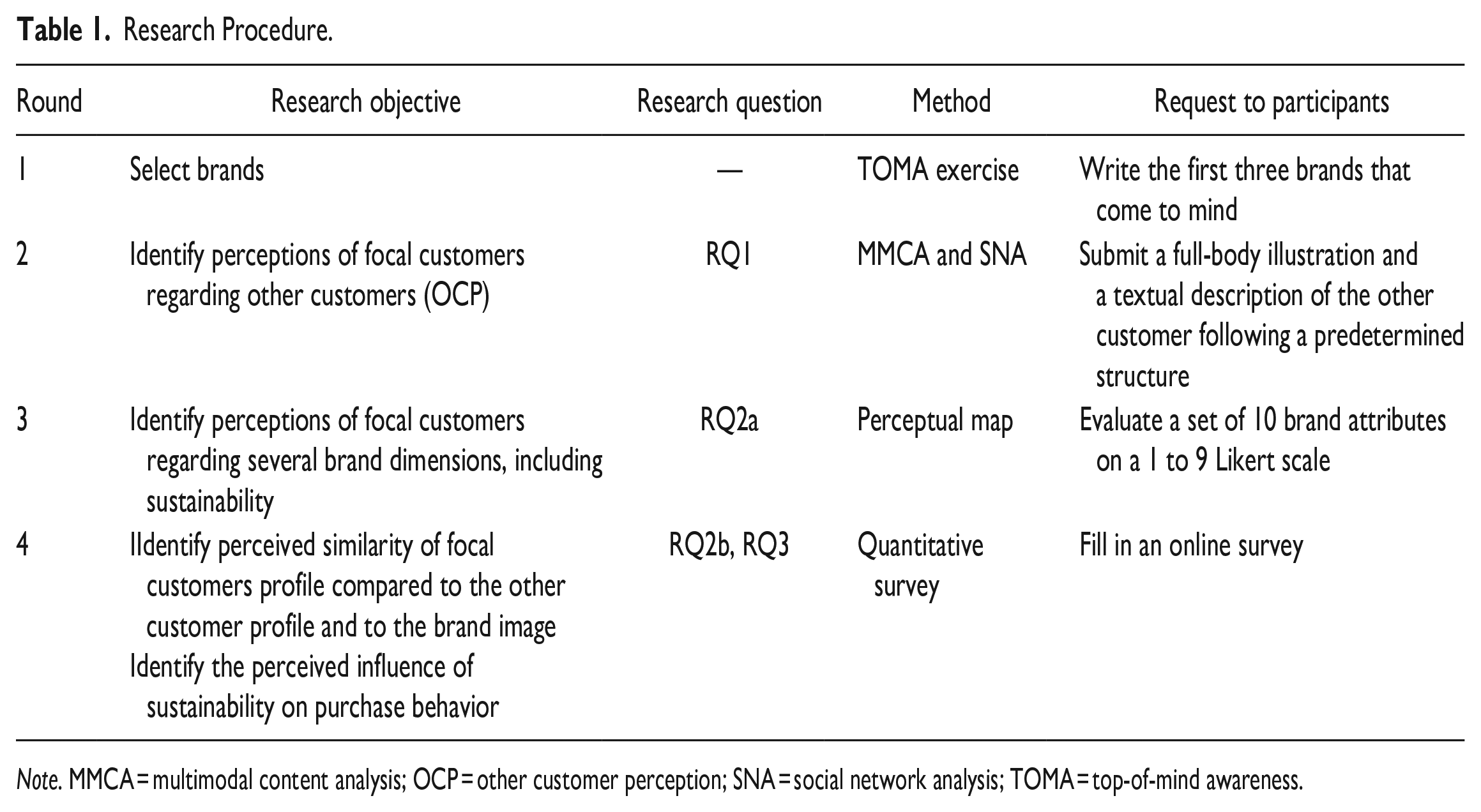
Note. MMCA = multimodal content analysis; OCP = other customer perception; SNA = social network analysis; TOMA = top-of-mind awareness.
Round 1—Top-of-Mind Awareness
In order to analyze OCP, we needed to select the brands that would constitute the context of the analysis. They were selected by asking an initial sample of 254 participants to undergo a top-of-mind awareness (Hakala et al., 2012) exercise and name the first three brands they thought of when prompted to think about brands, generating 762 brand mentions. Nike and Adidas outnumbered all other brands, with a combined 45% of the options; Apple came in third, but only the first two were selected for the next rounds in order to ensure better comparability by addressing two competitor brands from the same industry. Out of the initial sample of 254, only 147 individuals continued to the next rounds, having named either one or both of the selected brands.
Round 2—MMCA and Social Network Analysis
In this phase, the 147 participants were tasked with submitting profiles of Nike and Adidas customers. 236 profiles were submitted: 60.5% of participants submitted profiles for both brands, while 39.5% submitted profiles for just one of the brands, based on whether or not they mentioned those brands in the first round. This ensured the relevance of the brand to the participant (the focal customer).
These profiles comprised a comprehensive presentation featuring both a full-body illustration and a textual description of the other customer. Participants followed a predetermined structure, which included a visual component (a full-body, color drawing of the other customer) and a textual component encompassing details such as first name, life motto, age, gender, place of residence, marital status, number of children (if applicable), job, personality, lifestyle, and social and purchase behavior. This structured approach facilitated the acquisition of nuanced data to address RQ1: “How do Gen Z customers perceive the demographic profile, physical appearance, personality, lifestyle, and purchase behavior of other customers?” (Brocato et al., 2012):
The predetermined structure of the other customer profile was developed based on the standard variables used in market segmentation (geographic, socio-demographic, psychographic, and behavioral) in order to address the three dimensions of OCP:
(1) Similarity—This dimension was only partially addressed in this round. In line with Social Identity Theory, developing the profile enabled the focal customer to create a social identity for the other customer, to put them in social categories, to express stereotypes and prejudices, explicitly or implicitly, through either text or image. The categories used for this dimension were: name, life motto, place of residence (urban/rural), marital status (married/single), number of children (0, 1, 2 . . .), job, personality, lifestyle, and social behavior (evaluated based on text and image and resulting, through MMCA, in a general social identity profile). The Kendall’s tau_b (τb) correlation coefficient was calculated for brand, gender, age, residence, marital status, children, and behavior evaluation in order to identify how these categories associate. Graphs were generated through social network analysis (Erlin et al., 2008; Otte & Rousseau, 2002; Williams & Shepherd, 2017) in order to put in relation the two brands with OC job, OC personality traits, and OC general social identity profile. This enabled to identify specificity and perform comparison between the OCs of each brand. In Round 4 this will become the basis for focal customer–other customer–brand image comparisons, in which the focal customers will self-evaluate their similarity with the identity of the other customers and that of the brand.
(2) Physical appearance—This dimension was explored particularly through MMCA, using both text and image categories, features, and analytical notes, as recommended in the process developed by Brocato et al. (2012, pp. 12–16). For the analysis of the text, two features of the other customer profiles were taken into consideration: age (numerical value) and gender (self-identified as either male or female; the Other option was available, but not selected). For the analysis of the drawings that were submitted as part of the profiles, several features were developed, alongside standardized analytical notes: clothing style (nondescript, casual, block/hood, sport casual, sport athletic, office, trendy, elegant, uniform), physical condition (nondescript, out of shape, regular, fit/athletic, muscular), sexualized body (yes, no), apparent race (Caucasian, other—the Romanian population is highly race-homogeneous, therefore little variation was expected). Physical appearance was taken into consideration when developing the general social identity profile mentioned in the description of the Similarity dimension.
(3) Behavior suitability—We adapted the model, which proposed evaluation as either compatible or incompatible behavior. However, (in)compatibility is relevant in a service setting, but not useful when we evaluate the suitability of other customer behavior in the absence of an immediate purchase context; we therefore propose to evaluate behavior suitability based on general social norms or expectations, not context-specific. Based on the words used by the focal customer regarding the personality, lifestyle, and social behavior categories, the other customer behavior suitability was evaluated as positive, negative, or dual, the latter being a result of the use of both negative and positive evaluations for the same individual. A second approach to behavior suitability was purchase behavior, for which we conducted topic modeling and generated three topics for each of the two brands.
This structured, but playful approach is in line with the Experiencer dimension of Gen Z, identified based on the VALS test. Through visual stimulation, participants were encouraged to not self-censure and portray their evaluations through a creative activity.
Round 3—Perceptual Map
In order to enable comparisons between the perceptions of the focal customer regarding brand image and the other customer, in Round 3 the objective was to identify brand perception. Having identified OCP in Round 2, this enabled us to have the insights necessary to answer RQ2a: “How do the perceptions of other customer identity compare to the perceptions regarding the brand?”
We invited the participants to fill in a perceptual map (Gower et al., 2010) using an online free template (https://www.perceptualmaps.com/). The following 10 attributes were developed by the participants and used as axis labels when evaluating perceptions of Adidas and Nike (on a scale from 1 to 9, where the labels represent the extremities of the axis): low price/high price, low quality/high quality, basic/luxury, traditional/modern, bland/colorful, masculine brand/feminine brand, female consumers/male consumers, young consumers/mature consumers, streetwear/sportswear, sustainable/unsustainable brand. Forty-four perceptual maps were generated and the results enabled a better understanding of customer–brand identification by providing data on the way the focal customer perceives the brand; this information will be put in relation to the OCP in order to evaluate focal customer–other customer–brand image similarity.
This was the first round where participants were explicitly asked to evaluate any aspect regarding sustainability, either of the other customer behavior or of the brand. When they were given the predetermined structure of the other customer profile in Round 2, an explicit mention regarding sustainability or sustainable behavior was not included, in order to identify whether this is a dimension that Gen Z consumers organically associate with a brand, with other consumers or with purchase behavior.
Round 4—Quantitative Survey
In order to assess whether OCP can have an impact on customer–brand identification, it is necessary not just to identify OCP, but also to identify present or absent similarities as they are perceived by the focal customer. In the final round, the 147 participants answered a short online survey addressing (a) perceived similarity in the context of focal customer–other customer–brand identification and (b) perceived influence of sustainability on purchase behavior. All eight questions were answered on a seven-point Likert scale (1 = lowest value, 7 = highest value, depending on the question), as follows (simplified version):
- To what extent does this consumer image overlap with the brand’s image in Romania?
- To what extent does this consumer image overlap with the brand’s international one?
- How frequently do you buy this brand?
- To what extent do you identify with the other consumer profile you described?
- To what extent do you identify with the brand profile if it were a person?
- To what extent is this a sustainable brand?
- To what extent is it important for the Romanian consumer of this brand, in their purchase decision, if the brand is sustainable or not?
- To what extent is it important for you, in your purchase decision, if the brand is sustainable or not?
Results and Discussion
The results correlate data obtained through the mixed-methods approach, addressing the OCP dimensions, identification processes, and sustainability by looking at the demographic profile, the socio-professional or occupational profile, stereotypes and social categories, OC personality perception, OC purchase behavior perception, OC physical appearance, brand image, sustainability perception, and similarity perception.
The Demographic Profile
Based on Kendall’s tau_b (τb) correlation coefficient, there are several differences between the Nike OCP and the Adidas OCP regarding the socio-demographic variables, as well as the OC behavior evaluation (see Table 2):
- OC gender: There is no apparent association between either brand and either OC gender, as reflected by the multimodal profiles; even though the frequency of male OC for both Nike and Adidas is much higher than that of female OC, the correlation coefficient points to no relevant association, something that is confirmed by the perceptual map data: on a 1 to 9 Likert scale evaluating whether other consumers are perceived as female or male, both Nike and Adidas register middle-of-the-road values, 5.3 and 5.2 respectively, pointing to an almost imperceptible male leaning OCP.
- OC age: Adidas OCs are perceived as either older or more mature than the Nike ones; however, the lower value (τb = .292) does not point to a major age difference. This is consistent with the perceptual map data, in which Nike consumers are seen at 3.80 and Adidas consumers at 4.70 on a 1 to 9 Likert scale (1 = young consumers, 9 = mature consumers). The multimodal data provided in the profiles assigns an average age of 21 years to Nike OCs and 27 years to Adidas OCs.
- OC residence: Nike OCs are perceived as more urban (τb = −.384) than Adidas OCs.
- OC marital status and children: Based on a negative brand–OC marital status correlation (τb = −.319) and a positive brand–number of children correlation (τb = .385), we observe that Adidas OCs tend to be married and have (more) children when compared to Nike OCs, who are more likely to be single and not have children. The highest τb values predictably show that an increase in age also increases the chances of being married and having a higher number of children.
- OC behavior evaluation: The data points to a more positive perception of OC behavior when at least one of the following traits are present: the OC is a woman, the OC is more mature (or older, but not necessarily old, just older than the focal customer), and/or the OC is married.
Brand, OC Socio-Demographic Variables, and OC Behavior Evaluation Correlations.
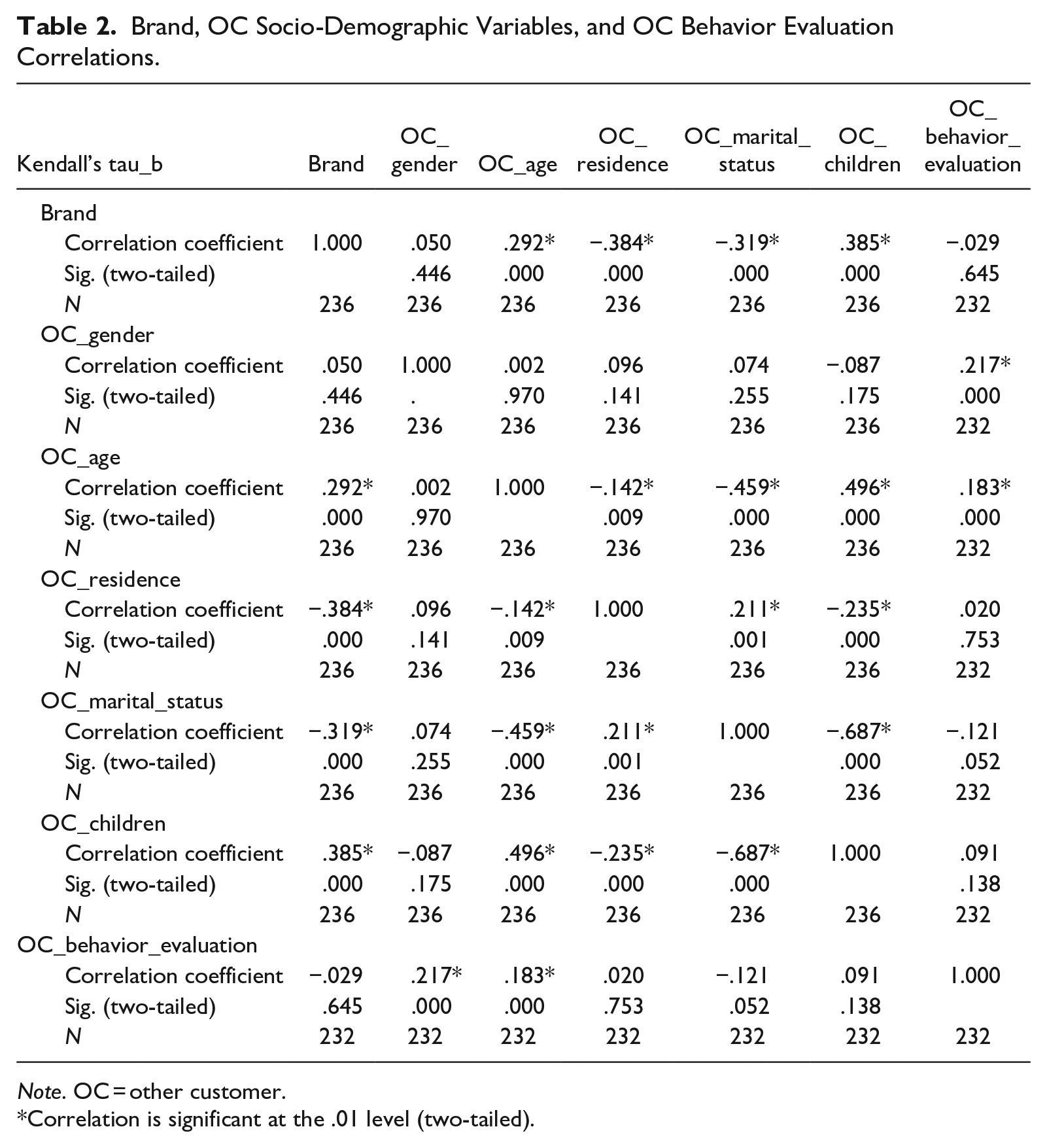
Note. OC = other customer.
Correlation is significant at the .01 level (two-tailed).
The Socio-Professional or Occupational Profile
Looking at the network (undirected, weighted) created by Nike and Adidas and the perceived jobs or occupations of their respective other customers, two socio-professional profiles emerge, also informed by the socio-demographic profiles; they will, in turn, play a role in creating a general OC profile that will constitute the basis for the evaluation of similarity (Figure 1).
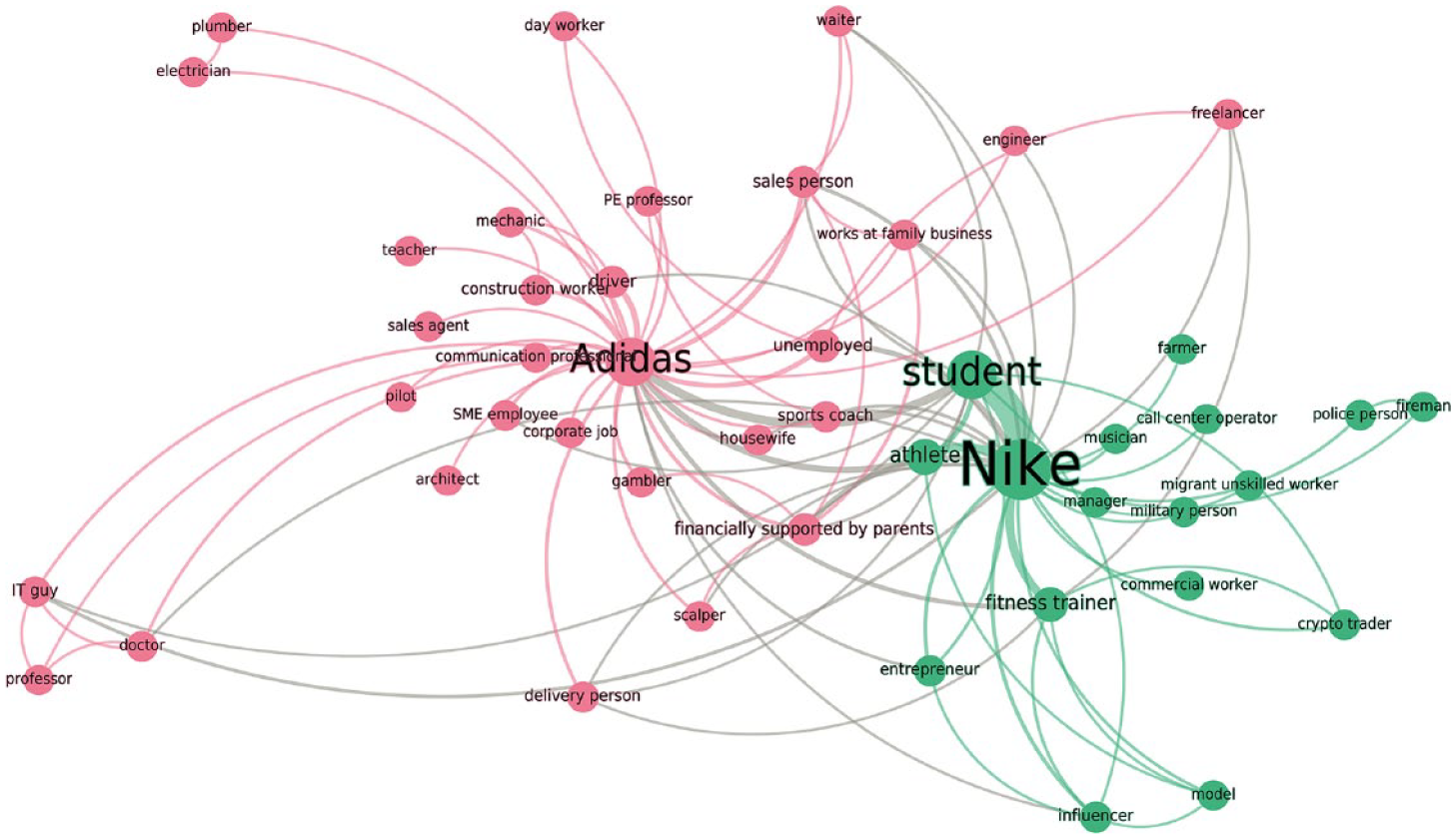
Brand–OC occupation network.
Each brand creates its own cluster within the network (Nike—green, Adidas—pink), drawing in some specific professions and occupations while also sharing others. The socio-professional or occupational profile of Nike OCs is defined by three distinct vertexes: student, athlete, and fitness trainer, as well as by the strong edges not just between the brand (Nike) and student, but also between two relevant vertexes, namely student and athlete. It is worth mentioning that, while fitness trainer is central to its cluster, student and athlete are central to the network; however, even if they are shared by the two brands, they are specific to the Nike OC profile due to vertex proximity and edge thickness. When looking at the other jobs in the Nike cluster, we observe either physical jobs (military person, police person, fireman, commercial worker, and farmer) or white collar/creative occupations (manager, entrepreneur, musician, call center operator, influencer, model, crypto trader). Therefore, while there is variety, the Nike OC is predominantly seen as a young, single (see Table 2) student interested in or practicing a physical activity associated with sports and/or fitness.
This rather homogeneous profile stands in contrast to that of the Adidas OC occupational profile. The latter is defined by the heterogeneity of the Adidas cluster (pink), its strongest characteristic being that it does not have a defining job or occupation; however, there are more unskilled jobs, that do not require a specialized education and are working class: driver is the one that stands out (taxi, bus, Uber), creating a sub-cluster alongside mechanic and construction worker, as well as unemployed or sales person (in shop). Therefore, the Adidas other customer is perceived not only as slightly older than the Nike one, more likely to be married or have kids (see Table 2), but also as employed in a variety of lower paying jobs, with lower social prestige, typical of the working class, and even not having a job (unemployed). Occupational statuses such as gambler, scalper, unemployed, financially supported by parents are more likely to be associated with the Adidas OCs than professor, doctor, or IT guy, which form their own marginal sub-cluster. The social identity of the Adidas other customer is perceived by the focal customer as diffuse, with a lower social status, having less financial resources or professional prospects. In contrast to the Nike OC, sports and physical activity, while present, do not appear to define the Adidas OC profile.
Stereotypes and Social Categories
Social Identity Theory proposes three processes for the evaluation of others, which take place in a particular sequence: categorization, identification, and comparison (Tajfel & Turner, 1979). In order to enable comparison when assessing similarity, we developed several social categories based on class (LC—lower class, WC—working class, MC—middle class), age (YA—young adult, M—mature), focus on self-image (S-I), sports and healthy or unhealthy lifestyle (HLS/UHLS), as well as attitude toward work (driven) and values (traditional, F-O—family-oriented). The categories are developed based on the information provided by the participants through the visual profiles and text regarding lifestyle and social behavior. We correlated visual and textual information in order to identify potential stereotypes associated with OCP. We identified both international and national stereotypes (Figure 2).
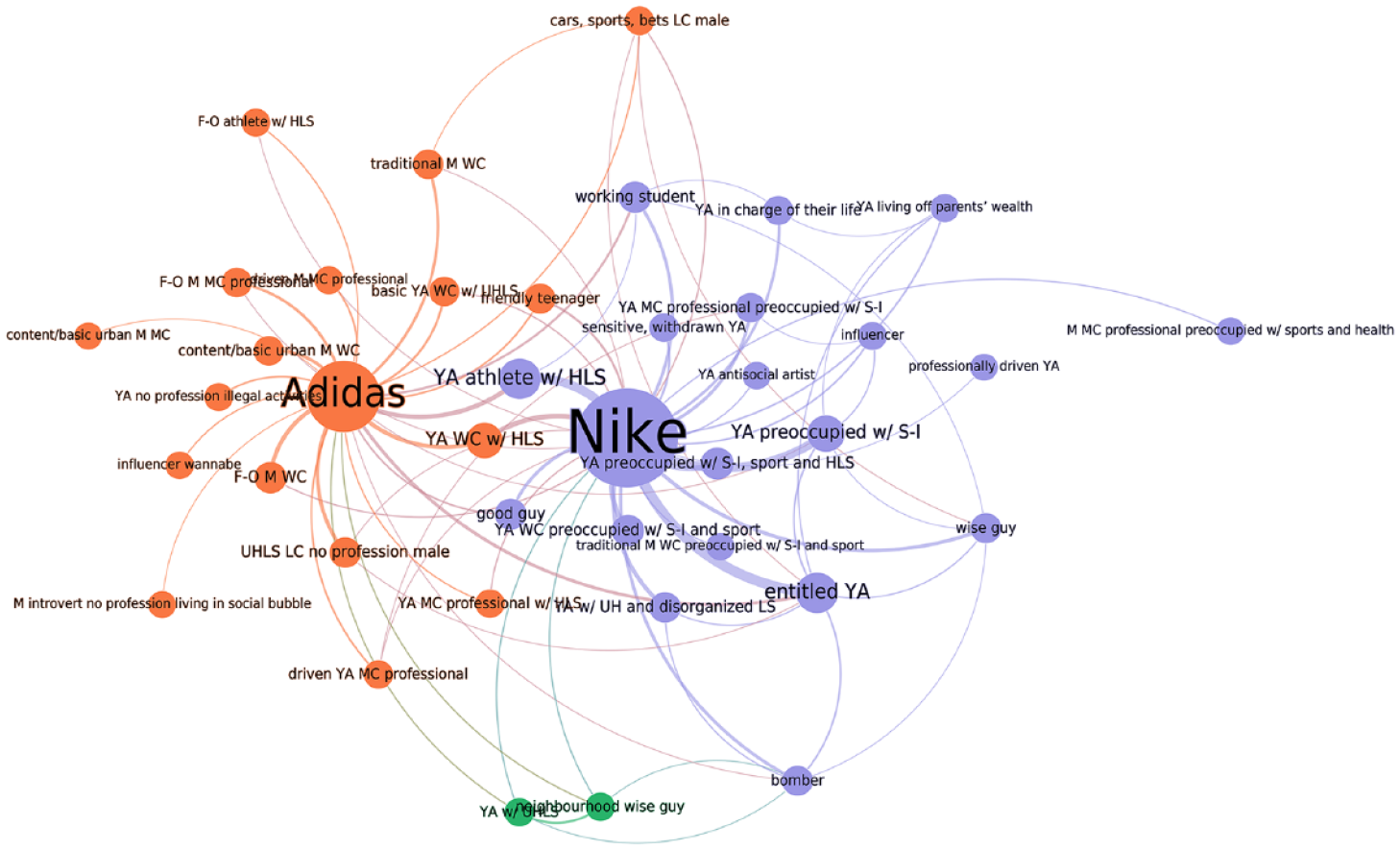
Brand–stereotypes and social categories network.
In line with the results from the previous section, we can observe that the Nike cluster is dominated by young adult profiles, four in particular: entitled young adult, young adult athlete with healthy lifestyle, young adult preoccupied with self-image, and young adult preoccupied with self-image, sport, and healthy lifestyle. The focal customer’s perception of the other Nike customers is that they are young, preoccupied with sports and have an active/healthy lifestyle, but they can also be entitled, superficial, preoccupied with their own image as a distinctive trait. On the other hand, we see that Adidas other customers are still perceived as a heterogeneous amalgamation of typologies. However, there are fewer young adults and more family-oriented, mature, traditional, or basic profiles, pointing to either a sub-evaluation of the Adidas OCs and Adidas itself as a brand in comparison to Nike or to a lack of in-group identification of the focal customer with Adidas. The latter can also be explained by the fact that the focal customer is closer in age (19) to the age average (21) of Nike OCs than to the age average (27) of Adidas OCs. To exemplify, in the first case Nike has the influencer and the professionally driven young adult as OC stereotypes, while Adidas has the wannabe influencer and the young adult no profession illegal activities as OC stereotypes. In the second case, Nike has the young adult athlete with a healthy lifestyle, while Adidas has the family-oriented athlete with a healthy lifestyle; for Gen Z young adults, might not lead to in-group identification, similarity and focal customer–brand identification. This aspect will be further addressed in the results of the Round 4 quantitative survey.
Content analysis revealed some stereotypes that are specific to the Romanian cultural space (although not unique in the Balkans) and that were used to describe the perceived behaviors, attitudes, and physical appearance of OCs: the bomber (ro: “bombardier”), a Romanian version of the U.K. “chav,” the wise guy (Ro: “șmecher”), and the neighborhood wise guy (Ro: “băiețaș de cartier”). These are variations of mostly urban Romanian subcultures defined by music, dress, and social interaction. The tracksuit and other types of apparel, used as streetwear, not sportswear, are defining trait. However, Nike apparel is associated with OC profiles that received positive evaluations, while Adidas (and in particular the Adidas tracksuit) is associated with OCs that are lower class individuals, aggressive and misogynistic working class men, or bland middle class consumers. This can be an effect of the brand interaction with the market (Matei, 2017): Nike was a symbol of the West, prohibited during the Communist regime, aspirational to a point, while Adidas has a longtime presence in the Balkans and in Romania in particular since before the 1989 revolution, not only becoming a sign of financial status, but also entering the actual language: in Romanian, any and all sports shoes are called “adidași,” even Nikes. The way Adidas is consumed as a brand points to two main directions: a low/working class consumption, illustrated by projects like the Squatting Slavs in Tracksuits (https://www.facebook.com/SquattingSlavs), showing a brand worn to show off (even fake) financial power, and a middle class consumption, based on a strong consumer–brand image identification related to sports and a preoccupation with a healthy lifestyle.
OC Personality Perception
The network (Figure 3) depicting the relation between the two brands and the personality attributed to their customers, as perceived by the Gen Z focal customers, further validates the results we saw in the previous sections. The Nike cluster is compact, showing OC personality perception homogeneity, defined by attributes such as funny, extraverted, sociable, arrogant, and merry-maker. The Adidas cluster is composed of several sub-clusters, further confirming that there are several OC profiles that need to be taken into account, as well as whether or not this leads to a fragmentation of the brand image and undermines customer–brand identification. Four Adidas sub-clusters stand out, defined either by a core vertex or by a coherent attribute grouping: the hardworking/perseverant sub-cluster, the family man sub-cluster, the quietly negative sub-cluster (top, left), and the dual sub-cluster, with vertexes around the brand, showcasing both positive and negative traits. Each of these sub-clusters points to a possible type of OC and we can observe that the perception is not consistently positive.
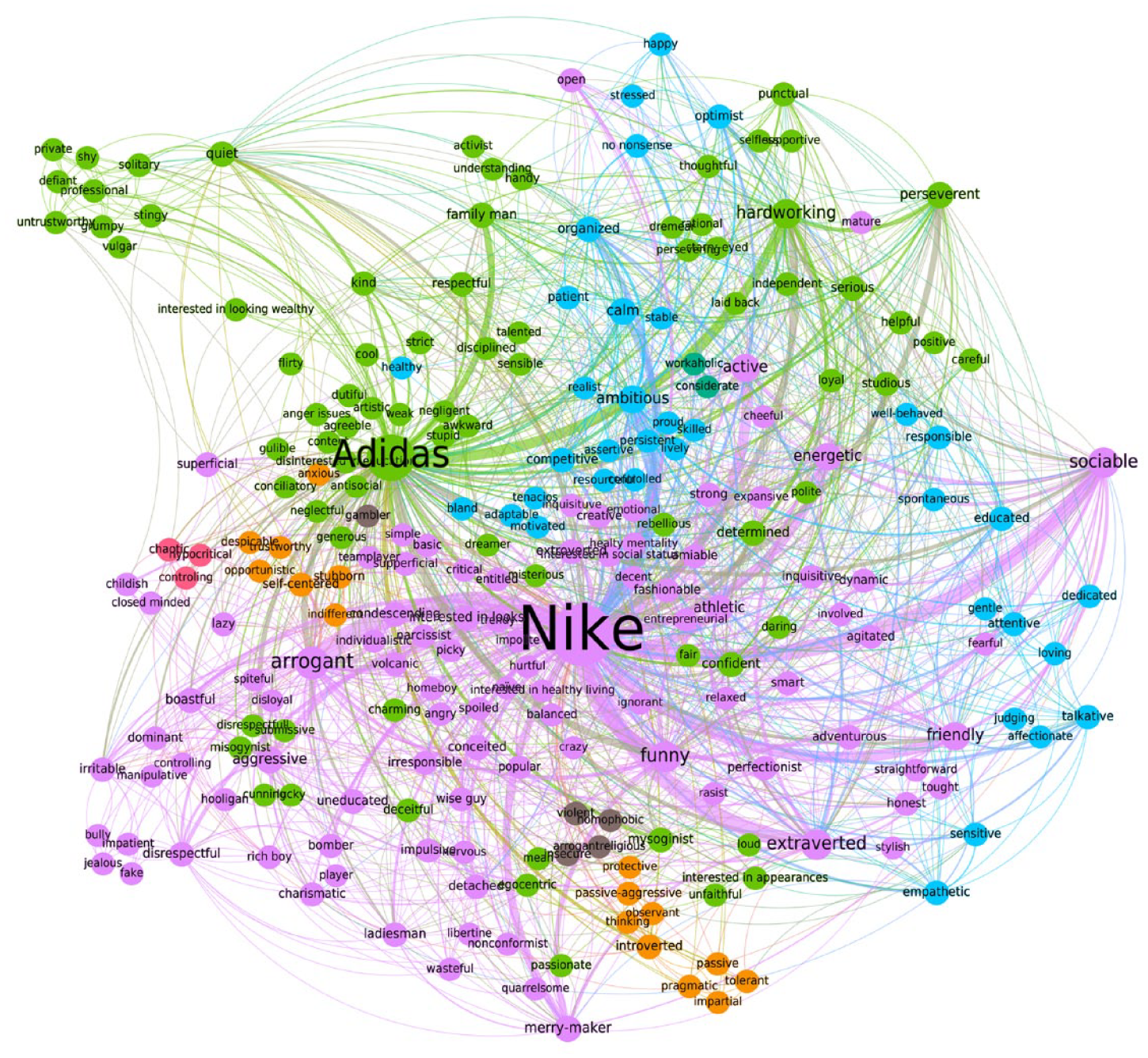
Brand–OC personality traits.
OC Purchase Behavior Perception
Participants were asked to include in the profiles they submitted information on OC purchase behavior. Frequent but uninformative words were removed, the remaining words were lemmatized (reduced to their dictionary form) and the entire data set was processed through an open-access topic modeling online platform. Three topics were identified for each brand in relation to the perceived OC purchase behavior. For Nike OCs, the topics are: (a) when shopping for sports apparel and equipment, the focus is on sneakers and the brand, (b) card payments are preferred, and (c) online shopping is the primary option, ideally for discounted Nike apparel. For Adidas OCs, the topics are: (a) Adidas is an accessible brand, particularly for sneakers, and is integrated into usual shopping trips, (2) in-person, in-store shopping is preferred, particularly when shopping for tracksuits, to try on, and (3) when shopping for sports apparel, both online and offline shopping are viable options. Cigarettes, energy drinks, discounts, and shopping with the parents appeared in at least one topic for each brand, while gym and supplements appeared only in a Nike topic. The results of the topic modeling confirm the results generated through the other methods.
OC Physical Appearance
OC physical appearance was explored, in the case of both brands, through the visual representations submitted by the participants. Through MMCA several characteristics were identified regarding dress/clothing style, physical condition, sexualized image, race, and physical markings.
The other customers are primarily seen wearing the brand, from tracksuits to sneakers to various apparel items, even several accessories such as pouches, all worn by male OCs. The style, as expected, is overwhelmingly sport, over half adopting a sport-casual style and over a third adopting a sport-athletic style, in the case of both brands. Ten percent of the images in each case went a third route: for Nike OCs, it was trendy, while for Adidas OCs it was casual.
This overlap ends in the case of physical condition: Nike OCs are perceived as being in better shape, with the evaluations divided in half between the regular/average shape and fit/athletic shape. Two-thirds of Adidas’ OCs are perceived as being in regular/average shape, a quarter in fit/athletic shape, while the rest are either out of shape or muscular. This adds a new layer to the other customer image formed through the analyses of other OCP dimensions: the Nike OC is younger, more athletic, therefore less likely to be out of shape, while the Adidas OC is older, less athletic, therefore more likely to be out of shape or in an average physical condition (without excluding the fact that the data points to several profiles for the Adidas OC, some of them with a sports dimension). The profile images also point to vices like smoking, drinking, and gambling, present in the case of a quarter of the Adidas OCs compared to 14% in the case of Nike OCs.
The OC image is not necessarily presented in a sexualized way, as a Pareto distribution appears to best describe the corpus. Less than a fifth of all images, in the case of both brands, include an element pointing to a sexualized perspective, such as a limited amount of clothes during workout (or no clothes), skin-tight apparel, or an intentionally provocative position while working out. The same homogeneous approach can be found when it comes to the perceived race of the other customers: 231/236 are presented as Caucasian. While both brands are international, this points to the fact that the majority of focal customers think about the national OCs, as this enables identification, according to Social Identity Theory. In developing a brand marketing strategy, this is essential.
Brand Image
Perceptual mapping allows us to identify focal customer perceptions regarding several brand dimensions. Participants were asked to evaluate several brand attributes on a 1 to 9 scale, including ones referring to OC perception (see Table 3). Each attribute has two extremes, each indicated by either 1 or 9: a lower value points to a preference for the extreme on the left, while a higher value points to a preference for the extreme on the right (see Table 3).
Adidas/Nike Perceptual Map—Brand Attributes’ Values.
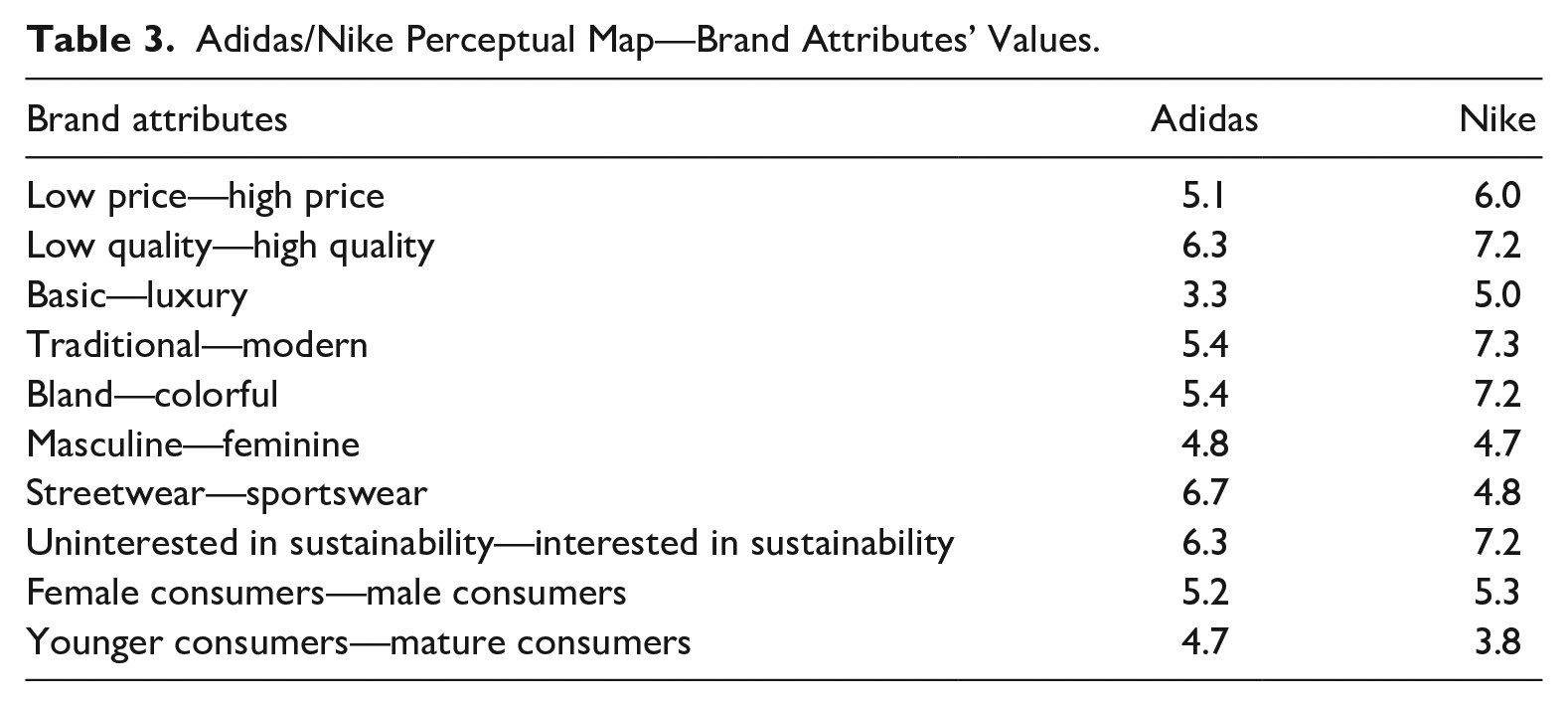
The answers regarding the brand attributes show that the Adidas brand image on the Romanian market, from the Gen Z perspective, is more traditional, bland, and somewhat basic compared to the Nike brand image, while its products are perceived to be cheaper and of lower quality than its competitor. Similar to previous results, the Nike consumers are seen as younger than the Adidas consumers. There is no gender bias regarding either the perceived image of the brand or the OCP.
Adidas is perceived as an accessible and adaptable brand, an optimal combination of traditional and modern, fit for both younger and more mature consumers, well priced at a good, albeit not excellent quality. At the same time, the Nike brand is perceived as more modern, offering higher quality at higher prices, and catering to younger consumers. These brand images are in line with OCPs: Adidas has several, competing OC profiles, from higher and lower social backgrounds, young adults as well as more mature individuals, while Nike has a more homogeneous OC profile defined by young adults with a more modern style. The perceptual map results (see Table 3 and Figure 4) regarding use (streetwear/sportswear) show for the Adidas brand an image perception associated categorically with sports, while Nike is associated with both streetwear and sportswear. This is not necessarily contradictory to the OCP; however, while some of the Adidas customers are associated with sports, the predominant use of the brand by the OCs is associated, by the focal customer, with everyday life, with streetwear, with the casual use of sports apparel, while the Nike OCs are mainly seen as sports-minded or athletic, interested in their image. As the brand image is primarily influenced by direct brand communication (campaigns, advertising, promotions, etc.), while OCP is primarily influenced by interaction (direct or indirect, social or as part of the purchase process) with other customers; this difference can point to a national dimension of the other customer profile, one that should be integrated in strategic marketing processes such as segmentation and positioning.
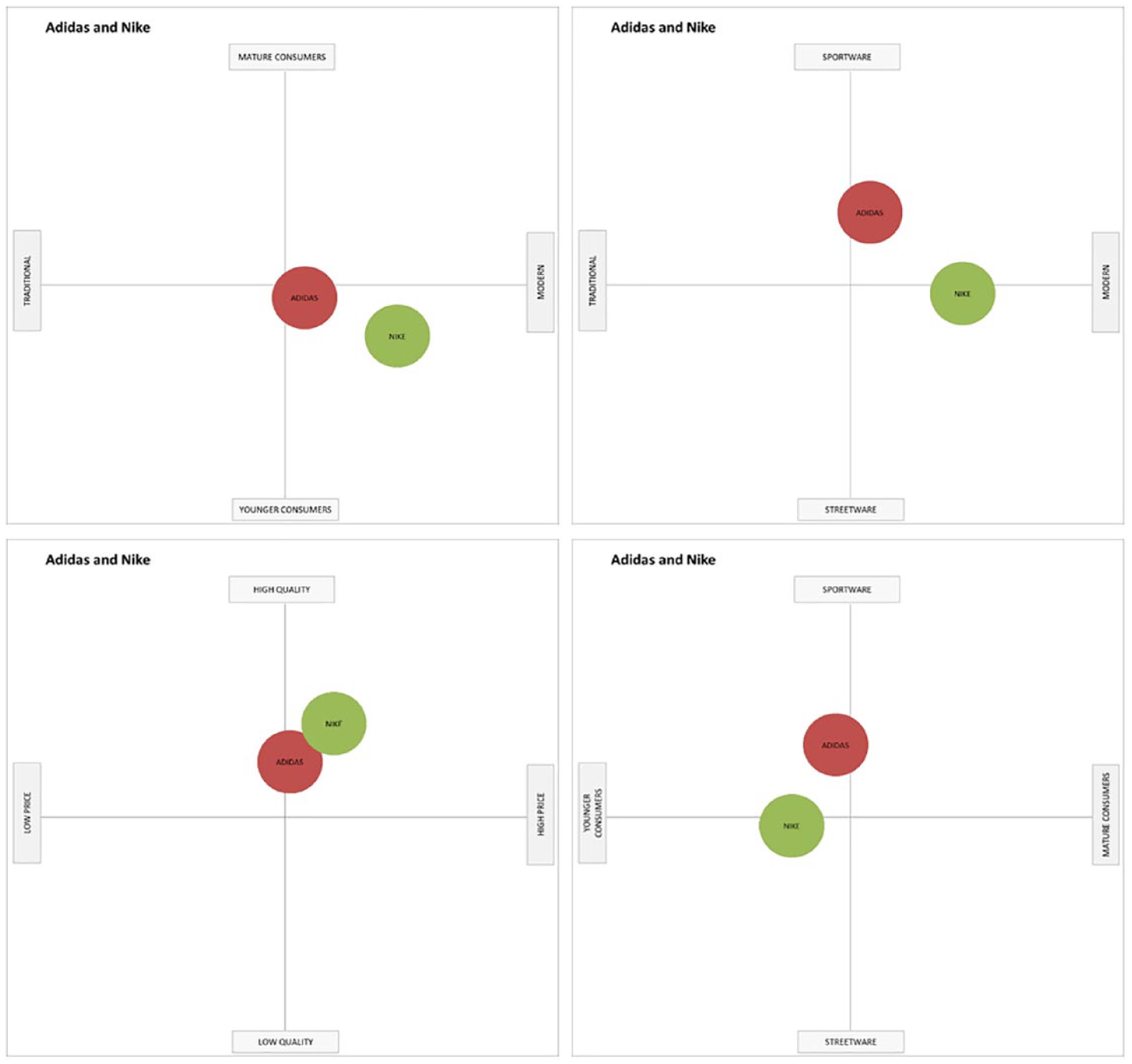
Adidas/Nike perceptual maps.
Sustainability Perception
Participants were given three opportunities to evaluate brand interest/activity regarding sustainability and OC interest in sustainability: the multimodal profile, the perceptual map, and the quantitative survey. In the first case, no explicit request regarding the mention of sustainability in the context of attitudes, social behavior, or purchase behavior was included in order to facilitate a self-prompted mention and not influence the participants. In the other two cases the request was explicit: the perceptual map included the evaluation of interest in sustainability as an attribute, while the survey included three questions inviting the focal customers to reflect on and evaluate (a) brand sustainability, (b) the relevance of sustainability in purchase behavior for Romanian (RO) customers, and (c) the relevance of sustainability for themselves as focal customers.
No mention of brand sustainability was included by the Gen Z focal customers in the multimodal profiles, and only 6 out of the 236 profiles mentioned OC sustainable or responsible behavior, taking the form of green volunteering, recycling, activism, vegan lifestyle (all profiles have a positive/suitable behavior evaluation). The mention of a healthy lifestyle is frequent, but there is no clear connection to a sustainability-related dimension. In the perceptual map round, the evaluation of both brands’ interest in sustainability received positive scores (see Table 3).
When the focal customers were prompted in the survey round for answers regarding sustainability, they had a positive evaluation for the brand and for their own purchase behavior, but a negative evaluation of OCs’ purchase behavior in relation to brand sustainability in comparison with their own (see Table 4). Values improved when only answers coming from those buying each brand were included, pointing to the fact that actual purchase interaction with the brand improves perception, while general interaction with other customers lowers evaluations.
Purchase Behavior-Related Sustainability Perception.
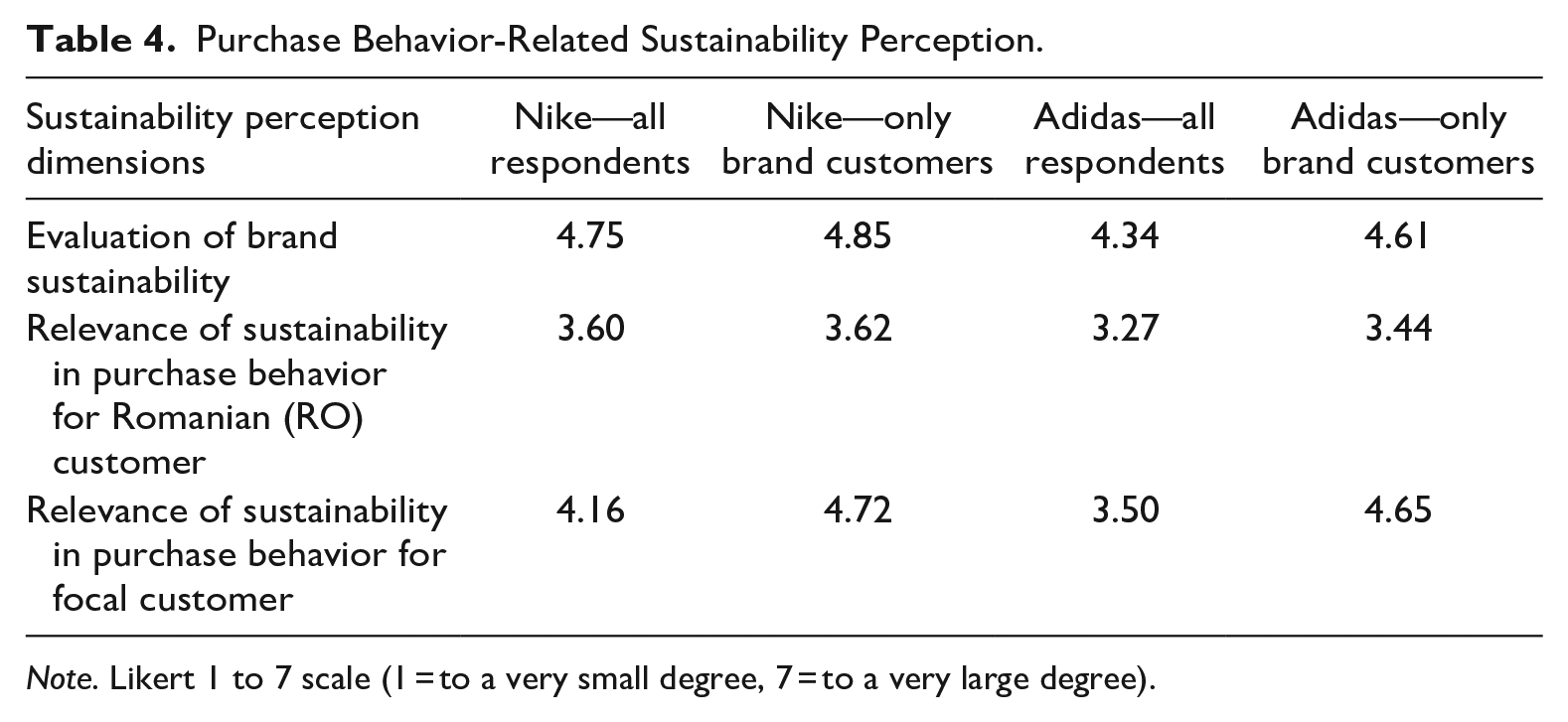
Note. Likert 1 to 7 scale (1 = to a very small degree, 7 = to a very large degree).
Similarity Perception
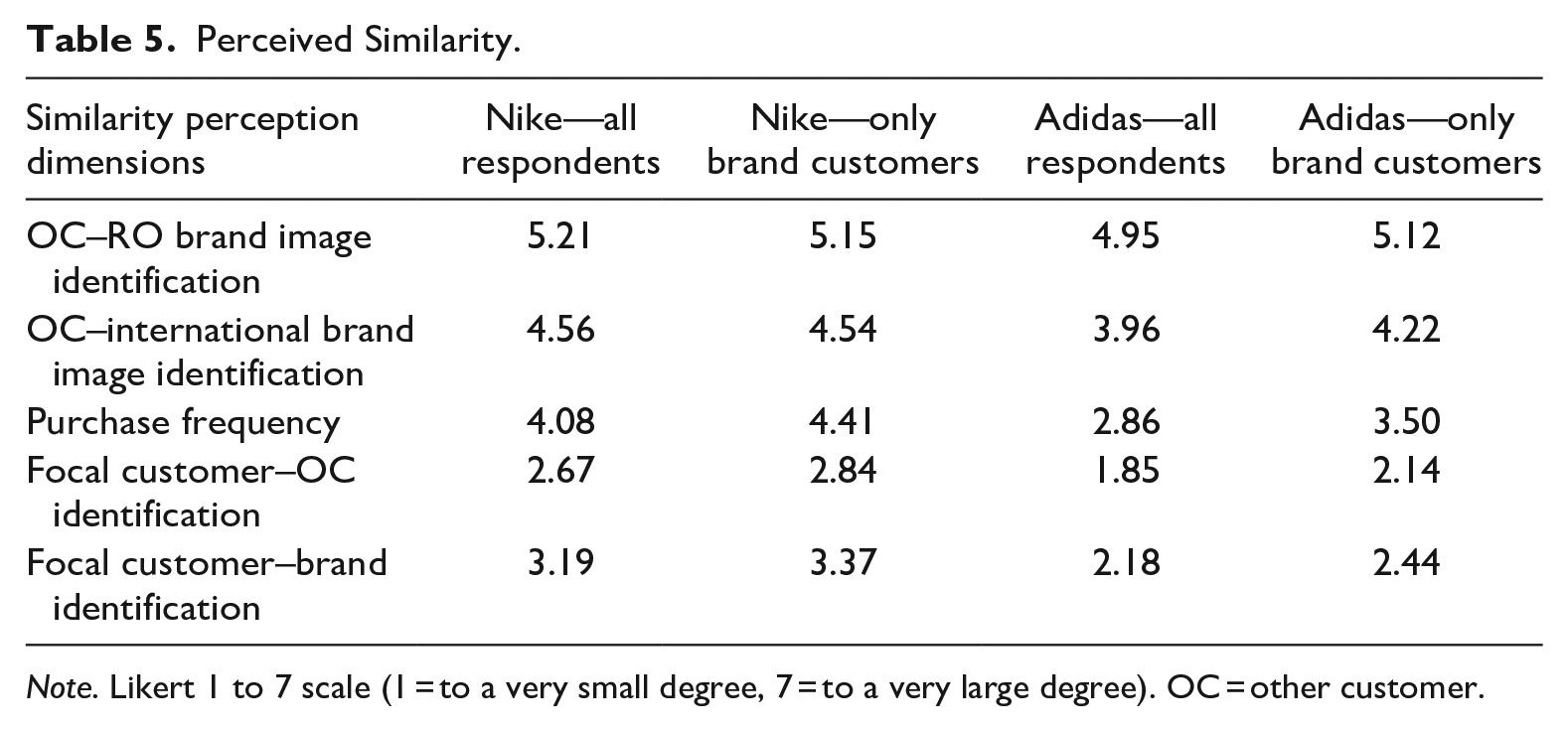
The participants were asked to evaluate the level of similarity between the OC profile and the image of the brand both in Romania and internationally (see Table 5). Two sets of data were obtained for each brand: the perceptions of all participants and the perceptions of those who actually buy the brand (67% of those who submitted Adidas profiles and 93% of those who submitted Nike profiles).
Perceived Similarity.
Note. Likert 1 to 7 scale (1 = to a very small degree, 7 = to a very large degree). OC = other customer.
The data shows that the Gen Z participants are more likely to be a Nike customer than an Adidas one. They perceive the OC profile as more similar to the national brand image than to the international brand image, significantly so in the case of Adidas; however, there is no significant difference in perceived similarity between the general sample and those that actually buy Nike, while the Adidas brand image is perceived as more similar to the OC profile by the ones that actually buy Adidas. This points to the potential of other customers to have a significant negative contribution to brand image perception and purchase behavior in the situation in which the brand does not undergo efforts to create direct focal customer–brand interactions.
Although a substantial amount of the submitted profiles portray Gen Z customers, the focal customers appear to not identify their self-image with that of the OCs or with that of the brand. The values improve when looking at the ones that actually buy the brand, but they are all under the average value. This suggests a default negative-leaning perception regarding the OC, a perception that makes focal customer–other customer identification difficult, thus projecting on the brand a potentially negative perception. Identity Theory states that, after classification, identification is essential in creating in-groups and a sense of belonging based on homogeneity and homophily. However, this lack of perceived similarity can also be a self-image building exercise, reaffirming the uniqueness of the focal customer: in order to be special, one cannot be similar to others that inhabit the same context, which means that similarity is rejected, even if it is a valid (and acknowledged) perception.
Conclusions
In discussing the link between corporate identity and consumer marketing, He and Mukherjee (2009) advance a consumer-based model of corporate identity by applying the social identification concept not to an individual–group setting, but to the consumer–brand relationship, leading to the concept of consumer identification (either with the company or the brand). In this paper we address the concept of social identification (focused on the link between self-identity and the identity of various social categories) and discuss it in relation to consumer identification in the context of OCP. We also shift the focus of the discussion to the brand and consumer marketing arena, adding a new layer to the consumer–brand identification discussion by addressing it as a focal customer–other customer–brand identification construct. We argue that consumer–brand identification is not created only by targeting the focal customer and implementing a personalized marketing plan; in fact, the other customers that use the brand, even if they do not necessarily interact with focal customers, influence their perception of the brand and the way they identify (or not) with the brand, therefore influencing consumer purchase behavior.
In the first rounds of this research, the participants provided insights into their perceptions regarding brands and their other customers, while in the final round, through the survey, similarity perception between the focal customer, other customers, and the brands was explicitly addressed. These evaluations, when combined, allow us to compare (a) the Gen Z focal customers’ perception of selves as consumers with (b) their perception regarding other customers and with (c) their perception regarding the brand. We can evaluate similarity from multiple perspectives, including as one of the dimensions of OCP (alongside physical appearance and behavior suitability).
In order to better understand the OCP influence on purchase behavior, brands need to understand the mechanisms of perceived similarity and whether the identification is desired or not by the focal customer, as it can be a deterrent to customer–brand identification if the similarity to the OC is not desirable. Therefore, in terms of theoretical implications, we identified three potential other customer-related issues that nuance the existing understanding of this concept.
Firstly, a complex, national level, long-term history of the brand in a certain geographic, social, and cultural space (as is the case with Adidas in Romania) can lead to the multiplication of diverging other customer profiles that might be accepted or rejected based on the desirability and similarity perceived by the focal customer. In the case of Gen Z, this connection to the past is reflected in the association of Adidas with certain types of OC (traditional, aggressive, uneducated, limited professional outlook, out of shape, basic, from a different age-group) that are not physically appealing, not evaluated as suitable or desirable behavior and do not lead to perceived similarity. As all three dimensions (similarity, physical appearance, and behavior suitability) of the OCP are negative, the focal customer will not identify with the other customer, which in turn will lower the chances of (focal) customer–brand identification which is so important in terms of initial and repeated purchase behavior. However, these are not the only OC profiles that Gen Z perceives as related to the presence of Adidas in Romania (very similar to the Nike OC profile); young, athletic, and interested in a healthy lifestyle are positive OC attributes that define a different set of Adidas other customer profiles. The challenge for the brand is threading the perceptual line that would allow it to maintain all sets of focal customers, the younger ones as well as the more mature ones, who might, in turn, evaluate the Gen Z specific profiles as negative. This is a core reason why a brand needs to understand national specificity and intergenerational dynamic in relation to OCP in a context defined by the stages of Social Identity Theory: categorization, identification, and comparison.
Secondly, the other customer should not be seen just in terms of its effect on the focal customer, nor just in the way in which its identity is perceived and therefore constructed by the latter. Comparison Theory guides us toward understanding the other customer as a form of self-evaluation performed by the focal customer. This can lead to explicit negative or exaggerated evaluations of OCs as a form of self-validation of the focal customer, although the actual perception influencing purchase behavior may be different. Our results showed that Gen Z Adidas focal customers consistently evaluate downward some of the other customers as a way to curate self-esteem and avoid identification with profiles they consider undesirable or unsuitable for their own self-image. This dynamic, when observed within a geographic area or social context (such as post-Communist, modern Romania), can also point to the local dominance effect (Zell & Alicke, 2010): when performing social comparison, people will more likely compare themselves to local or national aspects rather than international ones, a pattern confirmed by our data and one that needs to be taken into consideration when analyzing consumer behavior.
Thirdly, while sustainability is oftentimes discussed as embedded in the Gen Z profile and is seen as a purchase pre-condition, a social norm (Topic & Mitchell, 2019), when prompted to create a multidimensional, multimodal profile of the other customers of Adidas and Nike, sustainability was not organically included in the descriptions. In addition, when invited to reflect on the relevance of brand sustainability for their own purchase behavior, the participants provided middle-of-the-road evaluations, with even less enthusiastic scores for the relevance of sustainability in the case of other customer purchase behavior. We argue that this international perception regarding the connection between Gen Z and sustainability is not universal and should be re-evaluated based on local realities. This will directly impact brand strategy, consumer strategy, and will condition promotional messaging.
There are several practical recommendations for marketing managers in order to incorporate the other customer concept into their strategies when dealing with a Gen Z customer base:
All customers are other customers and brands should curate not only focal customer–brand identification, but also an OC-mediated customer–brand identification, which is closer to the everyday realities of consumers. While brands develop campaigns to engage with consumers, they appear to neglect just how much the road to the end-user is paved with other customers. Of course, brands develop customer advocacy and brand ambassador programs, but they often address the relationship between the brand and the focal customer, not between customers.
Another customer strategy should become an integral part of the communications plan. This should address perceived dissimilarities and build identification by emphasizing shared values, interests, or lifestyle choices, highlighting positive attributes and opposing stereotypes. For example, if there are stereotypes related to lower social status or unappealing physical appearances, the brand can deploy campaigns that showcase diverse and positive representations of other customers.
A strategy that takes into account the other customer should be one of diversity and inclusivity, showcasing a brand that caters to a diverse customer base. This can be done through simple actions such as diversifying the customer profiles in marketing materials. Normalizing diversity in a brand’s communication strategy will encourage customers to be themselves more accepting and tolerant toward other customers. This process can be particularly difficult, but impactful if successful, in traditional, highly homogeneous societies like the Romanian one.
Fostering positive customer interactions should also be a priority for a brand that incorporates the concept of the other customer into its strategy. By becoming a mediator of a successful interaction rather than one of the actors in it, the brand can benefit from the positive perceptions generated by a positive social engagement facilitated through events, online community management, or various business practices.
Social and social media listening cannot be missing from the strategy in order to monitor the public discourse about the brand and, potentially, identify a risk in time. Marketing audits work particularly well, as social representations and interaction patterns are difficult to evaluate in the short term. Moreover, employing creative methods to gather feedback and insights from the public is preferable to traditional market research approaches.
A geographical specificity must always be incorporated into the strategy, as it might sometimes challenge the international norm. In the case of Romanian Gen Z, sustainability does not appear to influence purchase decision or to be perceived as an influential factor. This does not imply that companies should abandon sustainability programs, as they can provide an educational experience for this demographic. Instead, they should incorporate the financial and environmental pragmatism of this target into their strategy.
This paper utilizes Social Identity Theory, Social Comparison Theory, and OCP to enhance the understanding of the consumer–brand identification paradigm. It specifically examines the role of the “other customer” in the context of product brands, with a particular focus on Gen Z consumers. The primary significance lies in broadening the understanding of how the perception of other consumers utilizing or engaging with a brand impacts consumer perceptions of the brand and their identification with it. Specifically, we discuss the concept of consumer identification within the framework of customer perception, emphasizing the complex connections among focal customers, secondary customers, and the brand.
The findings highlight three crucial factors that brands must take into account when developing their marketing strategy: (a) the influence of national specificity and brand history on the differentiation of customer profiles, (b) the involvement of other customers in the self-assessment of the main customer, and (c) the intricate relationship between sustainability and Gen Z as customers, underscoring the significance of considering local contexts. The study emphasizes the necessity of an “other customer communication strategy” that surpasses conventional consumer–brand interactions, while also promoting the development of the “other customer” concept in consumer behavior research.
Replicating the research in other countries would enable a comparative approach, which can help overcome one of the limitations of the paper, namely it being confined to just one geographical area. In addition, including participants from other generations can enhance this comparative approach. The number of brands that were included in the research represents a third limitation, but one that can be overcome by including other competitors, sub-brands, or different brands from other industries.
Footnotes
Declaration of Conflicting Interests
The author declared no potential conflicts of interest with respect to the research, authorship, and/or publication of this article.
Funding
The author received no financial support for the research, authorship, and/or publication of this article.
