







Abstract
Disinformation in the political arena poses a serious threat to democracy, especially during electoral periods. These are critical moments when citizens are highly engaged with public discourse—and when disinformation tends to surge. By distorting facts and manipulating narratives, such falsehoods can undermine informed decision-making and erode trust in democratic institutions. Our main objective is to analyze the activity of actors involved in electoral disinformation. We distinguish between the actors who spread disinformation (called ‘issuers’) and their targets (called ‘recipients’) to identify their characteristics (typology and political party), their connection to the hoaxes they disseminate, and their relationship. The sample (N = 374) comprises the false information verified by PolitiFact on the 2024 U.S. presidential elections. The results show that issuers openly use disinformation as a deliberate communicative strategy during electoral campaign. However, those who spread disinformation are more readily identifiable than those who receive it. While the dissemination of false messages is not exclusive to any one party, there are significant variations in its intensity—most notably with greater prevalence among Republican actors. Second, disinformation is predominantly used to discredit and undermine political opponents. Innovative uses are also emerging. One of them is the use of falsehoods to bolster support for one’s own candidate, especially in the case of Donald Trump. Finally, there is a statistical relationship between the issuer and the type of channel, topic, and type of disinformation. This research contributes to advancing our understanding of how actors involved in electoral disinformation operate, a topic that has received scarce attention until now.
Introduction
Disinformation, understood as the intentional dissemination of false content to obtain some benefit while simultaneously causing harm (Bennett & Livingston, 2018; Wardle & Derekshan, 2017), is a long-standing phenomenon that has experienced an unprecedented surge in the last decade, largely driven by factors associated with the digital environment (Tandoc et al., 2021). The turning point was in 2016, with the U.S. presidential campaign of Donald Trump, where disinformation was strategically used to influence public opinion through the widespread dissemination of falsehoods (Bastos & Mercea, 2017; Hall Jamieson, 2018).
Since then, its incidence has been notable in diverse matters, and the COVID-19 pandemic served as evidence of its widespread impact (Brennen et al., 2020). There are several initiatives to combat disinformation ranging from verification and literacy (Çömlekçi, 2022) to regulation (Casero-Ripollés et al., 2023). However, the absence of effective control mechanisms, the multiplicity of issuers involved, and the development of artificial intelligence are making it increasingly difficult to ensure the accuracy of information circulating in the public sphere (Aïmeur et al., 2023; Waisbord, 2018)
Disinformation poses a threat to citizens in any context (Sádaba & Salaverría, 2023), but it is particularly critical in the political arena—one of the primary targets of false narratives (Gómez-Calderón et al., 2023). In this domain, disinformation can significantly distort how the public engages with and participates in democracy (Bennett & Livingston, 2018). Therefore, electoral processes are key in relation to disinformation. It is at these moments when citizens pay special attention to public discourse (Kofi Annan Foundation, 2020) and when disinformation grows exponentially (Waisbord, 2018). Overexposure to falsified content increases the vulnerability of citizens and can lead to, among others, an increase in polarization and social divisions, variations in voting behavior and even destabilization of the political system (Broda & Strömbäck, 2024).
The objective of this research is to examine the activity of actors involved in the disinformation that circulated during the U.S. presidential election of 2024. We distinguish between the actors who spread disinformation (called issuers) and those to whom the false information refers (called recipients) to identify their characteristics (typology and political party), their connection to the hoaxes they disseminate, and their relationship. We focus on a country where there are evident antecedents of disinformation in the political campaigns. These antecedents range from the 2016 presidential elections—–with the victory of Trump and the interference of external actors—to the 2020 elections, during which the outgoing president’s allegations of electoral fraud contributed to the assault on the U.S. Capitol by his supporters (Kydd, 2021). This was a polarized environment in which disinformation became widespread, mainly through social media, and where political actors employed it in a deliberate and conscious way (Benaissa-Pedriza, 2021).
Literature Review: Actors Issuing and Protagonists of Disinformation
Elections are one of the highest expressions of democracies, where citizens freely choose their representatives and decide on the future of the country for the coming years (Rubio, 2020). In this process, the electoral campaign period is essential, and communication acquires a crucial role.
The digital environment and the hybridization of political communication have caused profound changes in the development of electoral campaigns (Chadwick, 2017; Jungherr et al., 2020). On the one hand, the communicative space has become dense and complex by reconfiguring the role of social actors and granting them the possibility to create and disseminate content (Sorrentino, 2008). On the other, the influence of political parties and candidates in public debate has grown, thanks to their greater capacity to directly address public opinion without intermediaries (Casero-Ripollés et al., 2022). To these factors must be added disinformation, which has recently increased in prominence in the electoral context (Keller et al., 2020; López-López et al., 2023).
During election periods, disinformation is shared more and, therefore, has a greater impact on the public (Baptista & Gradim, 2020; Canavilhas et al., 2019). This entails serious risks and may even generate democratic dysfunctions. When exposed to distorted information, voters may support candidates who do not genuinely represent their interest (Kofi Annan Foundation, 2020).
The rise of disinformation has been reflected in increasing scientific literature on this phenomenon (Broda & Strömbäck, 2024). Most of these studies focus on aspects related to the characteristics of the content (Casero-Ripollés et al., 2025). However, research focused on election periods is less abundant. Additionally, previous research has paid less attention to the actors involved in disinformation, which is a pending topic.
In the American context, previous U.S. presidential elections have already attracted scholarly attention. Shin et al. (2016) examined ‘political rumors’ from the 2012 election and noted the dynamizing role of anonymous users in their dissemination, as well as a predominance of ‘anti-Obama’ content. Hindman and Barash (2018) focused on the 2016 election, highlighting that 63% of profiles sharing hoaxes on social media were bots or automated accounts generally associated with Republicans. Allcot and Gentzkow (2017), Alieva and Carley (2021) and Eady et al. (2023) explicitly identified and denounced external interference in the campaign by Russia. Wylie (2019) further identified the use of personalized advertising to undermine the influence of Democratic candidate Hillary Clinton.
Meanwhile, Benaissa-Pedriza (2021), based on the study of the 2020 elections, stressed the candidates’ role (40.9%), highlighting Trump (31.9%) versus Biden (9%), and social media users (40.9%) as the main issuers of disinformation. This research reveals that the leaders attacked more than they praised each other, and Trump extolled his figure on more occasions (70%) through disinformation. Even though digital platforms were the preferred communication channel to launch false content, candidates mostly opted for traditional channels, such as news media. Domínguez-García et al. (2023) emphasized the prevalence of falsehoods in Trump’s discourse and his continuous attacks on the electoral system to delegitimize it.
Other research, although with different samples, address similar issues. Regarding the issuer of electoral disinformation, two key results emerge from the literature. First, the relevance of anonymous users in the viralization of false content (Cinelli et al., 2020; Lava-Santos, 2023; Molina & Magallón, 2021; Smith et al., 2021). Second, the conscious and deliberate use of disinformation by political actors as a campaign strategy (Akbar et al., 2022; Casero-Ripollés & Alonso-Muñoz, 2024; Dourado & Salgado, 2021; Ferreras, 2020; Melo et al., 2023; Pimienta et al., 2024; Rodríguez-Hidalgo et al., 2021; Soares & Recuero, 2018). Likewise, some studies allude to the role of pseudo-media and personalized advertising in this context, although they attribute a residual role to them (Cano-Oron et al., 2021; Cinelli et al., 2020; Hernández & Fernández, 2019; Magallón, 2019; Paniagua et al., 2020; Rodríguez-Fernández, 2020).
Previous research also highlights that anonymous users employ social media to disseminate fake content, while, in contrast, candidates and political figures prefer media spaces. Ferreras (2020) concluded that the bulk of false messages came from political statements (53%), generally from interviews, campaign events and debates (48.4%). Casero-Ripollés and Alonso-Muñoz (2024) found that candidates used televised election debates to spread hoaxes directly to the public. With respect to the false content disseminated, politicians frequently emphasize policy aspects, while anonymous users prioritize ideological or personal attacks (Akbar et el., 2022; Lava-Santos, 2023).
The recipients of electoral disinformation are, for the most part, the candidates (Benaissa-Pedriza, 2021; Dourado & Salgado, 2021). Initial results indicate that direct attacks on candidates through hoaxes are not common (Ballesteros-Aguayo et al., 2024; Melo et al., 2023). Nai (2020) observed that in negative campaigns, regardless of ideological alignment, the primary target of criticism and delegitimization is typically the candidate leading in the polls. Additionally, Fenoll et al. (2024) added that disinformation is predominantly emitted by opposition parties (76.4%).
Previous research has found that false content is primarily generated by people associated with right-wing or conservative political actors and the protagonists to whom these messages allude, or the recipients, are usually related to the left-wing or liberal and progressive actors (Baptista et al., 2022; Díez-Garrido et al., 2021; Dourado & Salgado, 2021; Lava-Santos, 2023; Pierri et al., 2020; Pimienta et al., 2024; Sánchez del Vas et al., 2025; Soares & Recuero, 2018). However, when disinformation has positive connotations, it is mostly to praise the conservative camp, especially in the case of the extreme right (Dourado & Salgado, 2018; Lava-Santos, 2023).
Methodology
This study’s specific objectives are to:
1. Identify the actors issuing disinformation about the U.S. presidential election in 2024, according to their character, typology, and political party.
2. Analyze the relationship between the actor issuing false content about the 2024 U.S. presidential election and the topic of the hoax, the dissemination channel, and the type of disinformation.
3. Determine the actors to whom disinformation refers (recipients) in the 2024 U.S. presidential election, responding to their character, typology, and political party.
4. Examine the existing relationship between the issuer of disinformation and the recipients to whom these false messages refer.
As said, in this research, we distinguish between the actors who spread disinformation, whom we call issuers, and the actors to whom the disinformation refers, whom we call recipients. The former are the promoters of false content that subsequently spreads through various channels until it reaches an audience. The latter, on the other hand, are the object of these hoaxes.
Our approach combines descriptive and inferential analysis. We applied a quantitative content analysis technique to examine the false information disseminated during the 2024 U.S. presidential election. On this point, we seek to obtain an objective view of these messages to determine the issuing actors and recipients of the disinformation, as well as their relationship with the characteristics of the disseminated content.
The research focuses on the 2024 U.S. presidential election, held on November 5th. Given the length of the American electoral process and with the intention of encompassing a sufficiently broad period, our analysis covers from January 15, 2024 (which represents start of the caucuses and primaries to choose the candidate of each party) to January 20, 2025 (the inauguration of the president-elect). Thus, we study the disinformation disseminated over a broad period that includes the cycle prior to the elections and the post-election phase.
The false content that comprises our sample was obtained through the fact-checking agency PolitiFact, created in 2007 by the Tampa Bay Times newspaper in Florida and acquired in 2018 by the Poynter Institute. This website analyzes and classifies American political disinformation and dedicates a section specific to electoral processes. The final sample is composed of 374 false messages directly related to the 2024 U.S. presidential election.
The analysis includes a record of false information (date of disinformation, date of verification, title, and link) and 11 variables established on the basis of considerations drawn from the scientific literature and ad hoc sources, to respond to the research objectives. These variables are grouped into three dimensions: general characteristics of the false content (disinformation dissemination channel, subject matter, and type of disinformation), issuers of the disinformation (presence, character, type, and political party), and recipients of the false messages (presence, character, type, and political party).
Regarding the way disinformation is disseminated, we distinguish between (a) social media; (b) alternative media or pseudo-media, platforms disguised as media to disseminate falsified content (Palau-Sampio, 2023); (c) media, both traditional and digital; (d) campaign events; (e) electoral debates; (f) public appearance—press conferences—or press releases; (g) party or candidate website, including electoral ads; and (h) others.
The thematic variable was measured based on:
1. Politics: Political culture, political and democratic system, legislation, religion, radicalism, the Ukrainian War, and the Israel–Gaza War.
2. Public policy: Economy and finance, housing, agriculture, security and defense, energy, health, COVID-19, immigration, employment and labor issues, social affairs, civil rights, crime and terrorism, corruption, foreign policy, climate change and environment, education, agenda 2030, media and digitalization, and others.
3. Campaign: Electoral integrity, campaign organization, electoral surveys and other issues related to the electoral process (e.g., endorsements).
4. Personal: Matters related to the private life of politicians.
According to the type of disinformation, seven categories have been established (Wardle & Derakhshan, 2017): (a) misleading content, referring to the misuse of information (misused statistics, partial quotes, misinterpreted data, etc.); (b) imposter content, when genuine sources are supplanted; (c) fabricated content, predominantly false new material designed to mislead or mislead; (d) false connection, related to headlines, images, captions, or similar, that do not confirm the content; (e) false context, information with erroneous or fabricated context or that does not provide sufficient detail or explanation; (f) manipulated content, alteration of content (text, images, video, or audio) to mislead; and (g) satire or parody, ironic content that is not intended to cause harm but may have this effect.
As for the issuers and recipients, their presence was recorded: (0) no, (1) yes. Subsequently, their type was considered: (0) not identified, (1) individual, and (2) collective. We identified who was issuing or receiving the disinformation, distinguishing between: (0) not identified, (1) candidate, (2) vice-president, (3) national politicians or former politicians, (4) political party, (5) institutions, (6) local or state governments, (7) judiciary, (8) supranational bodies, (9) foreign governments or leaders, (10) celebrities or influencers, (11) anonymous users, (12) social groups, (13) news media, (14) pseudo-media or alternative media, and (15) others. Finally, we identify the political party with which the actor was associated: (0) not identified, (1) Republican party, (2) Democratic party, (3) independents, and (4) other parties. Biden was considered a candidate until July 21, when he announced that he was withdrawing from re-election campaign and became a ‘national politician’. Simultaneously, on the same date, Kamala Harris moved from vice-president to leading candidate.
The data were collected using web scraping and the development of a Python script. Coding combined manual and automatic processes, which extracted information pre-coded by the PolitiFact platform—date of disinformation, date of verification, message, and link. One of the authors coded all the pieces, with an intracoder reliability between 0.9 and 1 (Holsti) in all the model variables.
The data were examined with SPSS statistical software (V29.0, IBM SPSS Statistics), with which descriptive and inferential analyses were performed. To detect associations, since these were nominal variables, the chi-square contrast statistic (χ2) was calculated. If it was significant (p ≤ .05), and corrected typed residuals were evaluated to detect the direction of the association and the effect size. The confidence level was established at 95%.
Results
Issuers of Electoral Disinformation
In 90.9% of the identified ‘disinformation disseminated events’ between January 15, 2024, and January 20, 2025, the issuer behind the falsehood is clearly identified, with most being individuals (82.1%). In 8.8% of the cases, the falsehood is content disseminated by a collective issuer (political parties, associations, social movements, or the media, among others). Only in 9.1% of these messages, it is not possible to identify the issuer. In these cases, it is most likely content spread by Russian bots, as acknowledged by PolitiFact.
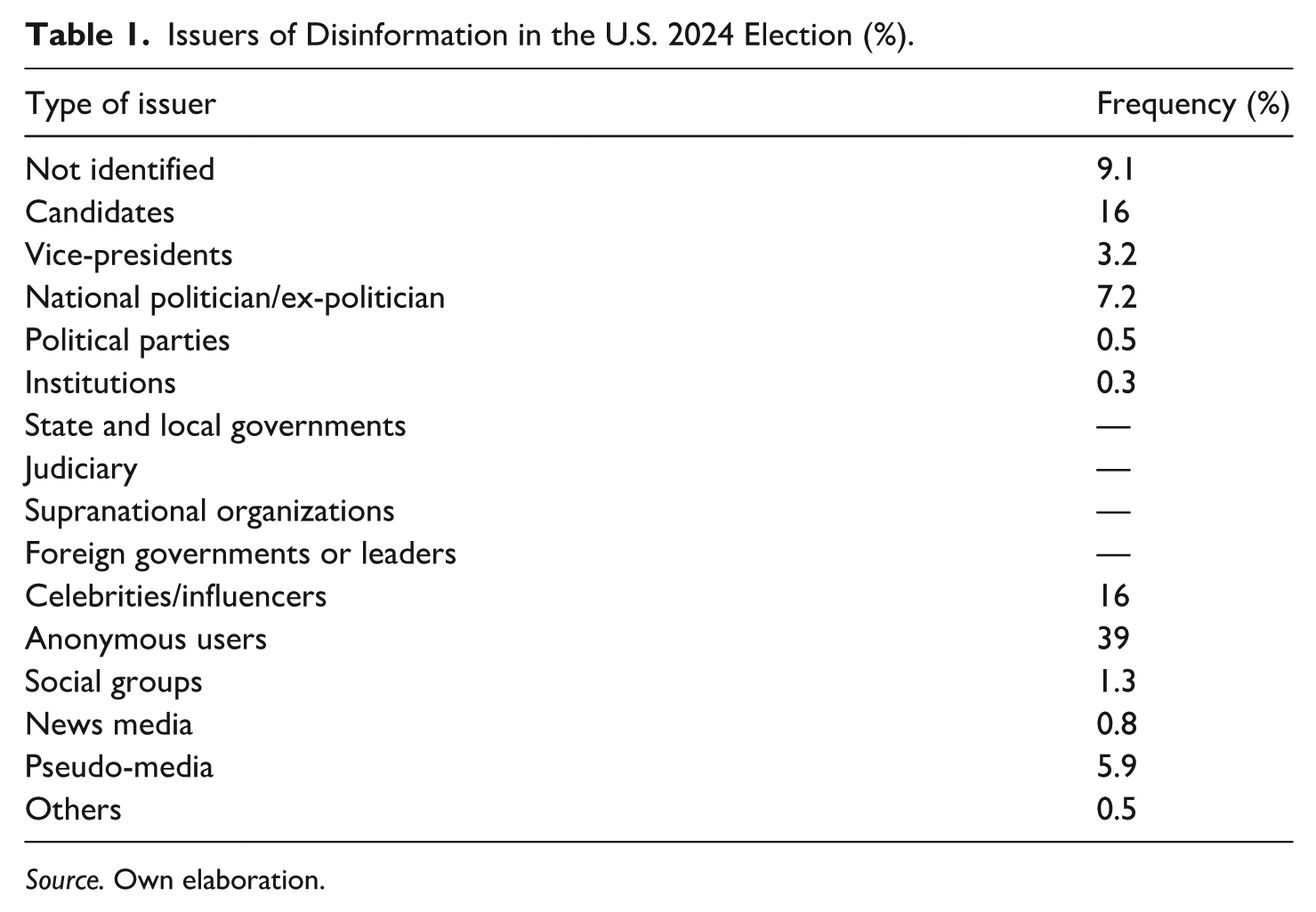
Electoral disinformation mainly emanates from anonymous users (39%) through publications in their social media profiles (Table 1). This is followed by candidates (16%), and celebrities and influencers (16%), including here both well-known personalities and youtubers, instagramers, and tiktokers. Particularly striking is the role of anonymous users and celebrities/influencers in the spreading of false content during the campaign.
Issuers of Disinformation in the U.S. 2024 Election (%).
Source. Own elaboration.
False messages issued by politicians or former national politicians (7.2%), pseudo-media (5.9%), vice-presidents (3.2%), and social groups (1.3%) obtain values below 10% of the total (Table 1). Finally, the news media (0.8%), political parties (0.5%), and institutions occupy a residual role as issuers of disinformation (Table 1). Although the role of the news media as disseminators of falsified content is scarce, it is essential to mention Fox News, which was one of Trump’s main allies in the 2020 presidential election when it came to disseminating and proliferating accusations of electoral fraud (Stelter, 2020).
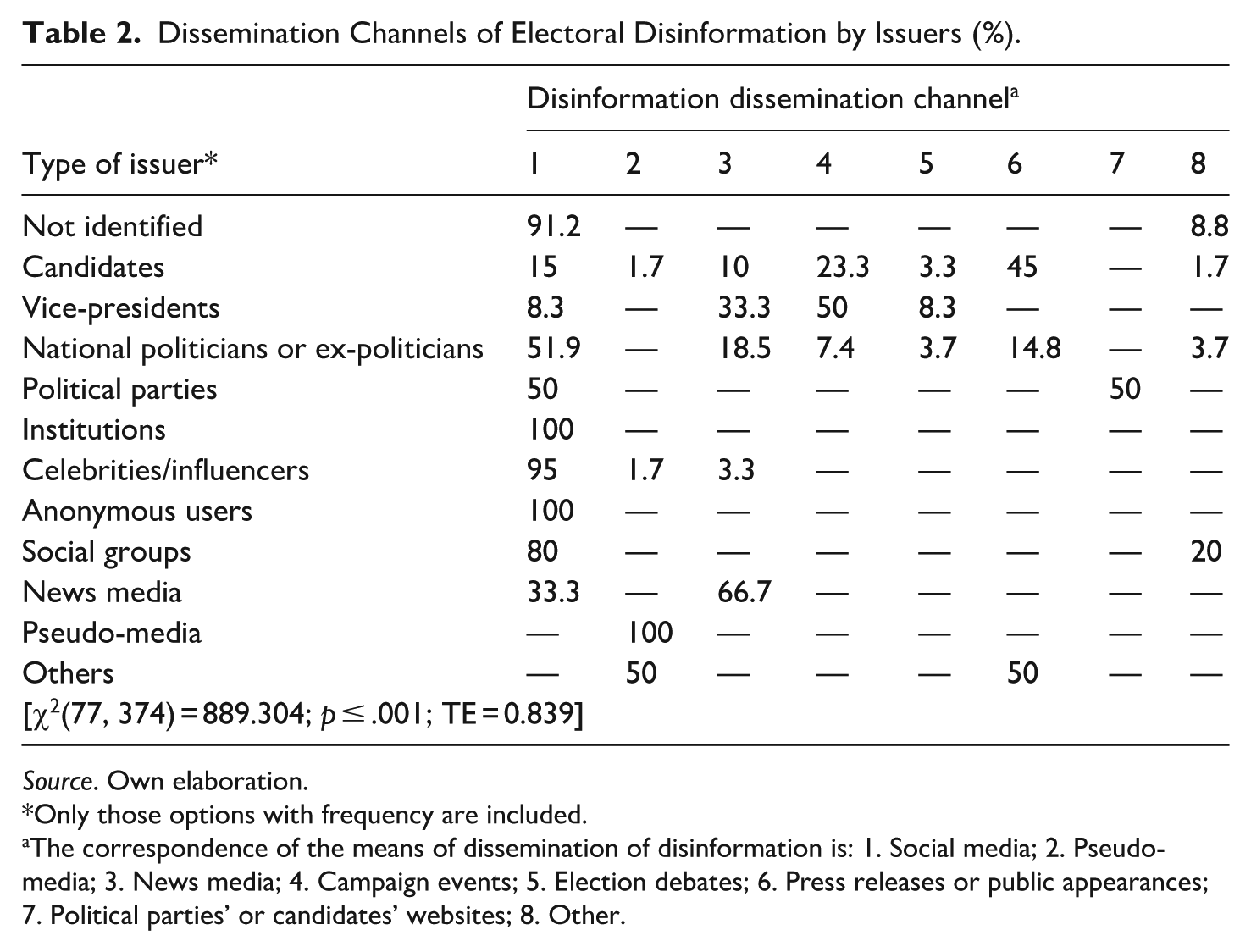
The chi-square contrast statistic allows us to corroborate how the type of issuer strongly conditions the way in which disinformation disseminated (Table 2). Candidates and vice-presidents employed social media to spread false messages much less frequently (15% and 8.3%, respectively). These issuers predominantly use, instead, channels such as the traditional media, campaign events, public appearances, or electoral debates. Examples include Donald Trump’s speeches on January 19 and 20, 2025—prior to the inauguration in Washington and during this event, which included lies to try to belittle the achievements of the Biden presidency and, instead, praise his own proposals. This illustrates that, although the traditional media are not the boosters of disinformation, they can end up being a loudspeaker for false content by giving space in their news to this type of speeches, based on false statements. The opposite occurs with celebrities, influencers, and anonymous users. When acting as issuers, these types of actors are dedicated, practically exclusively, to publishing false content on social media (95% and 100%, respectively), tools that are easy to access and in which any person becomes a creator and disseminator of information. These actors concentrate on a very small number of the channels through which they spread disinformation, while politicians choose to greatly fragment the avenues through which they disseminate this type of content.
Dissemination Channels of Electoral Disinformation by Issuers (%).
Source. Own elaboration.
Only those options with frequency are included.
The correspondence of the means of dissemination of disinformation is: 1. Social media; 2. Pseudo-media; 3. News media; 4. Campaign events; 5. Election debates; 6. Press releases or public appearances; 7. Political parties’ or candidates’ websites; 8. Other.
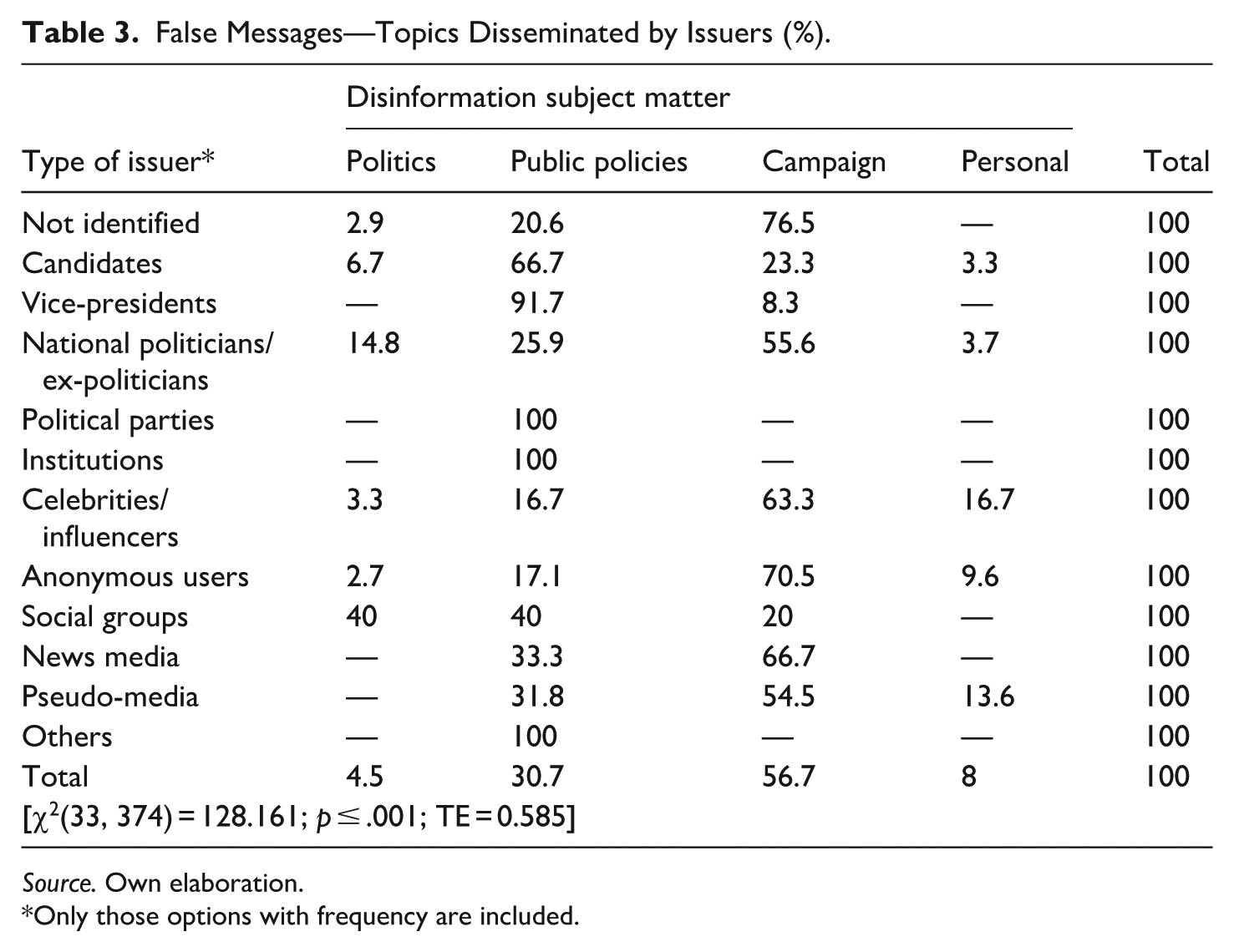
The issuer also has a decisive influence on the electoral disinformation (Table 3). Candidates (66.7%), vice-presidents (91.7%), political parties (100%), and institutions (100%) focus their false messages mostly on public policy topics (most frequently immigration, the economy, and crime). In other words, they do not usually associate disinformation with campaign issues. In contrast, national politicians and ex-politicians (55.6%), celebrities and influencers (63.3%), anonymous users (70.5%), media (66.7%), and pseudo-media (54.5%) concentrate on campaign issues, especially on everything related to voting (organization, electoral integrity, polls, results, and other topics, such as endorsements).
False Messages—Topics Disseminated by Issuers (%).
Source. Own elaboration.
Only those options with frequency are included.
In this regard, false messages concerning politicians’ private lives are more frequently disseminated by celebrities or influencers (16.7%), alternative media (13.6%), and anonymous people (9.6%), and rarely by candidates (3.3%) or vice-presidents (0%) (Table 3). Meanwhile, politicians and national ex-politicians and social groups or collectives (14.8% and 40%, respectively) give greater relevance to political issues in their hoaxes (especially related to political culture and legislation).
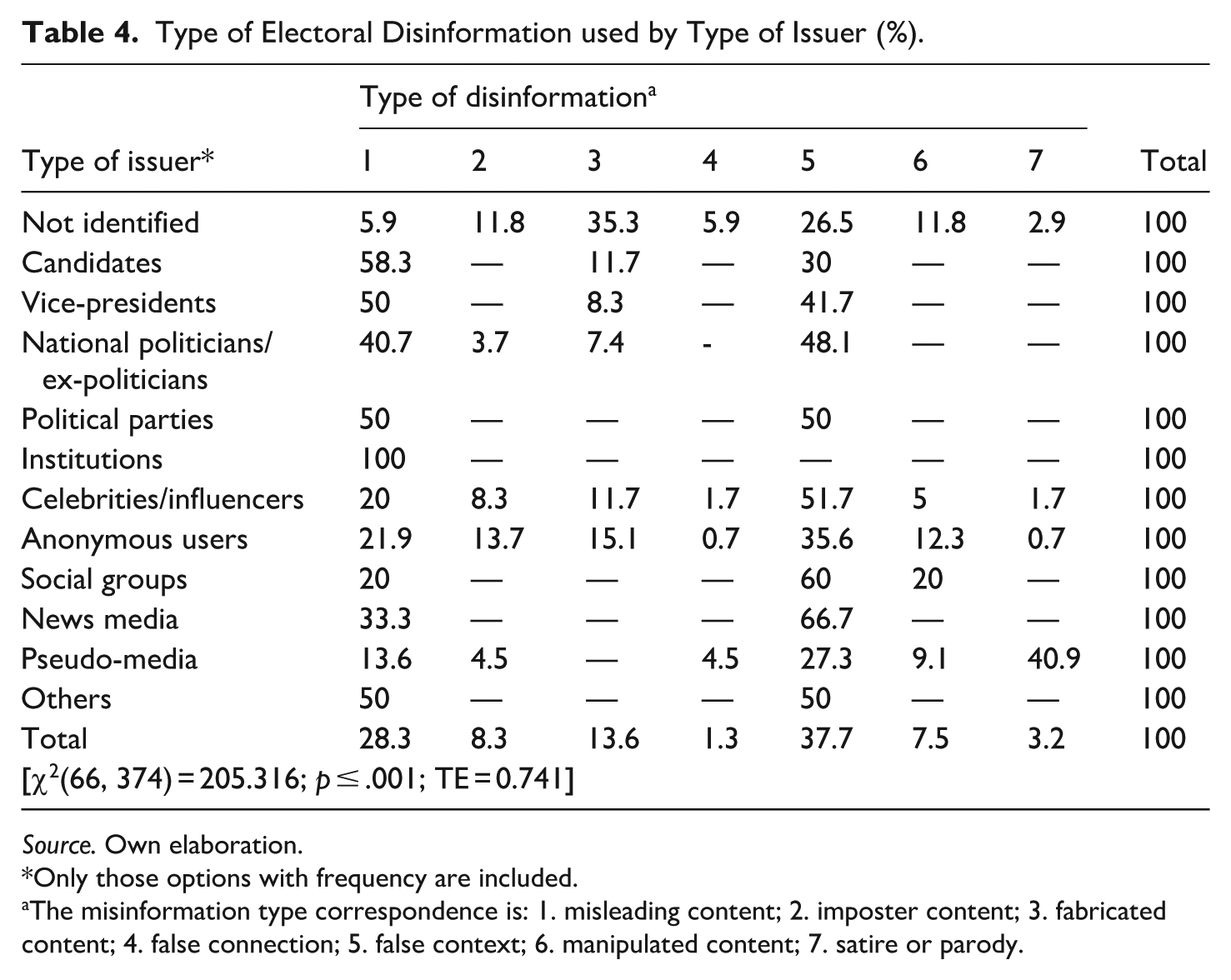
Again, the type of issuer is strongly related to the typology of disinformation used (Table 4). Candidates (58.3%), vice-presidents (50%), political parties (50%), and institutions (100%) regularly use misleading content, by misusing information to damage or praise someone or something. Celebrities and influencers (51.7%), politicians and former national politicians (48.1%), anonymous users (35.6%), social groups and collectives (60%), and media (66.7%) commonly opt for false context. Finally, pseudo-media generally employ satire and parody.
Type of Electoral Disinformation used by Type of Issuer (%).
Source. Own elaboration.
Only those options with frequency are included.
The misinformation type correspondence is: 1. misleading content; 2. imposter content; 3. fabricated content; 4. false connection; 5. false context; 6. manipulated content; 7. satire or parody.
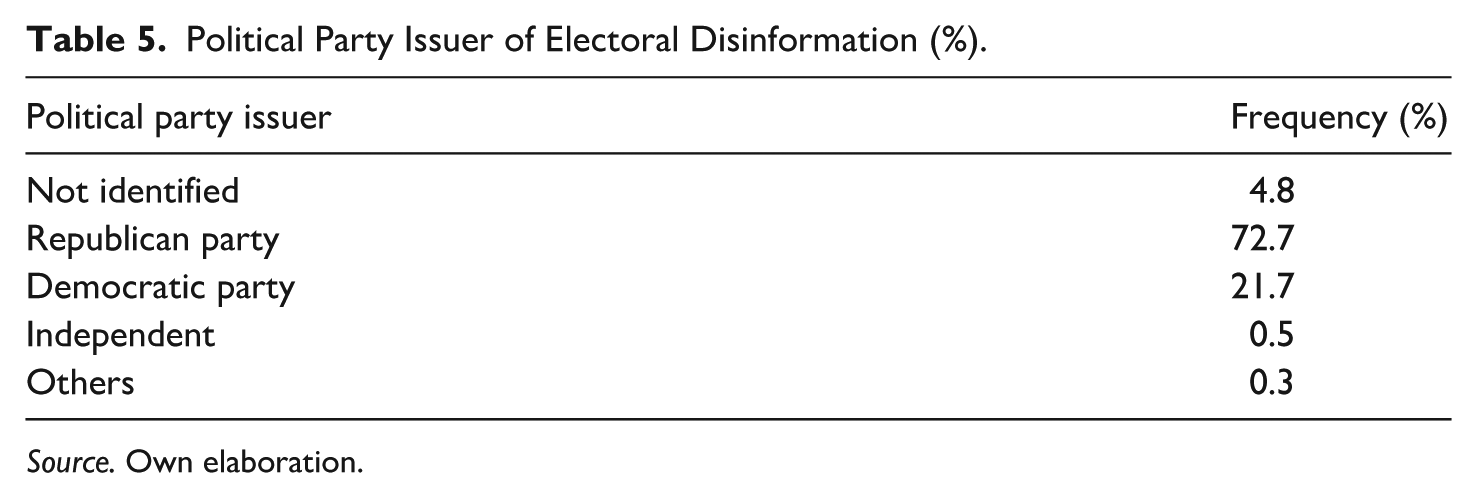
Regarding the political party issuing the electoral disinformation, the false messages come mostly from Republicans (72.7%). Democrats, although they also generate false content, do so in a smaller proportion (21.7%). Meanwhile, independents (0.5%) and other parties (0.3%) barely have any relevance in this aspect (Table 5).
Political Party Issuer of Electoral Disinformation (%).
Source. Own elaboration.
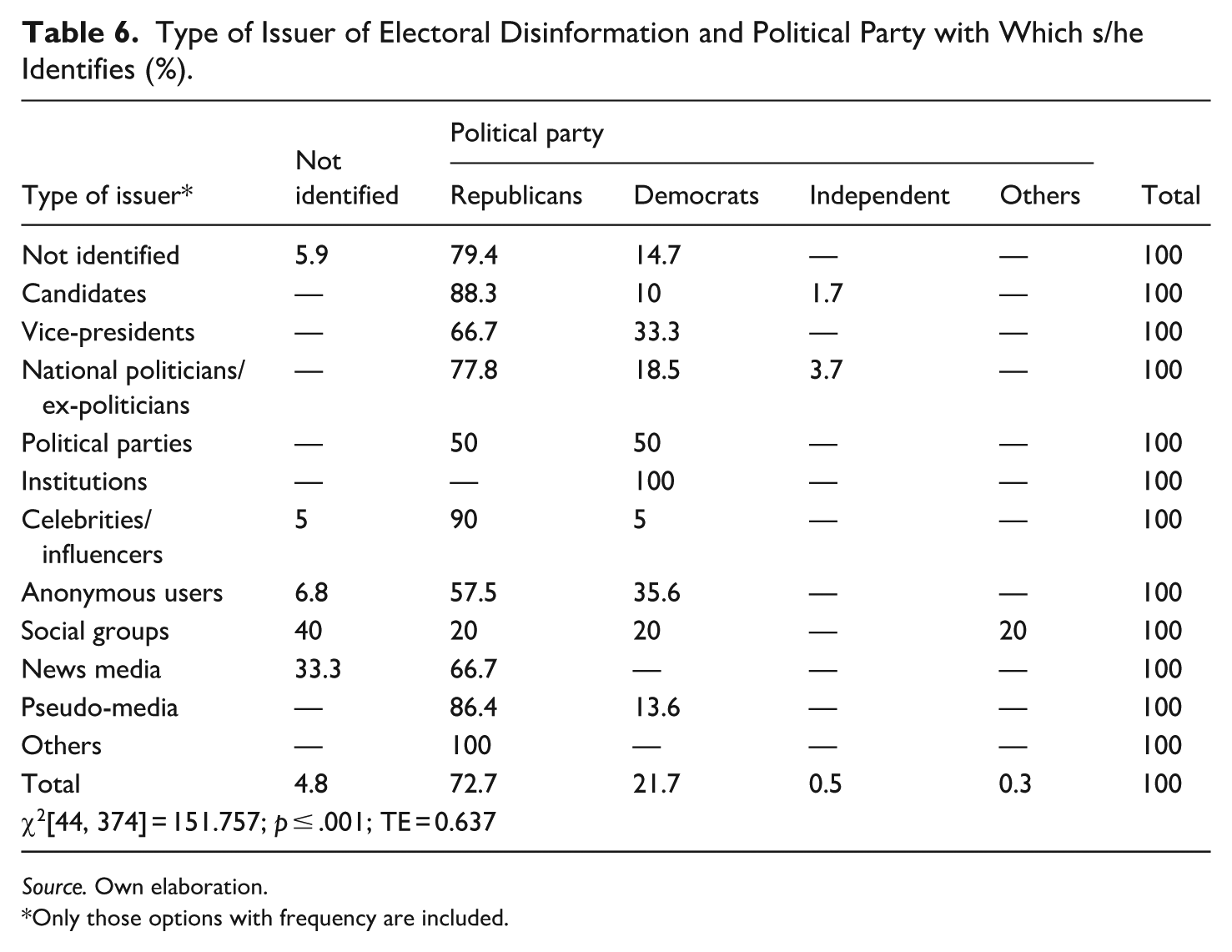
The preponderance in the dissemination of electoral disinformation by Republicans with respect to the rest of political actors is evident when examining the relationship with the type of issuer of false messages (Table 6). Practically, in all the categories, actors stand out from the party led by Trump, although there are exceptions. The misleading content coming from the institutions only originates from the Democrats, who were in government during the campaign. On the other hand, in the falsehoods disseminated by social groups or collectives and political parties, no significant differences are observed between Republicans and Democrats.
Type of Issuer of Electoral Disinformation and Political Party with Which s/he Identifies (%).
Source. Own elaboration.
Only those options with frequency are included.
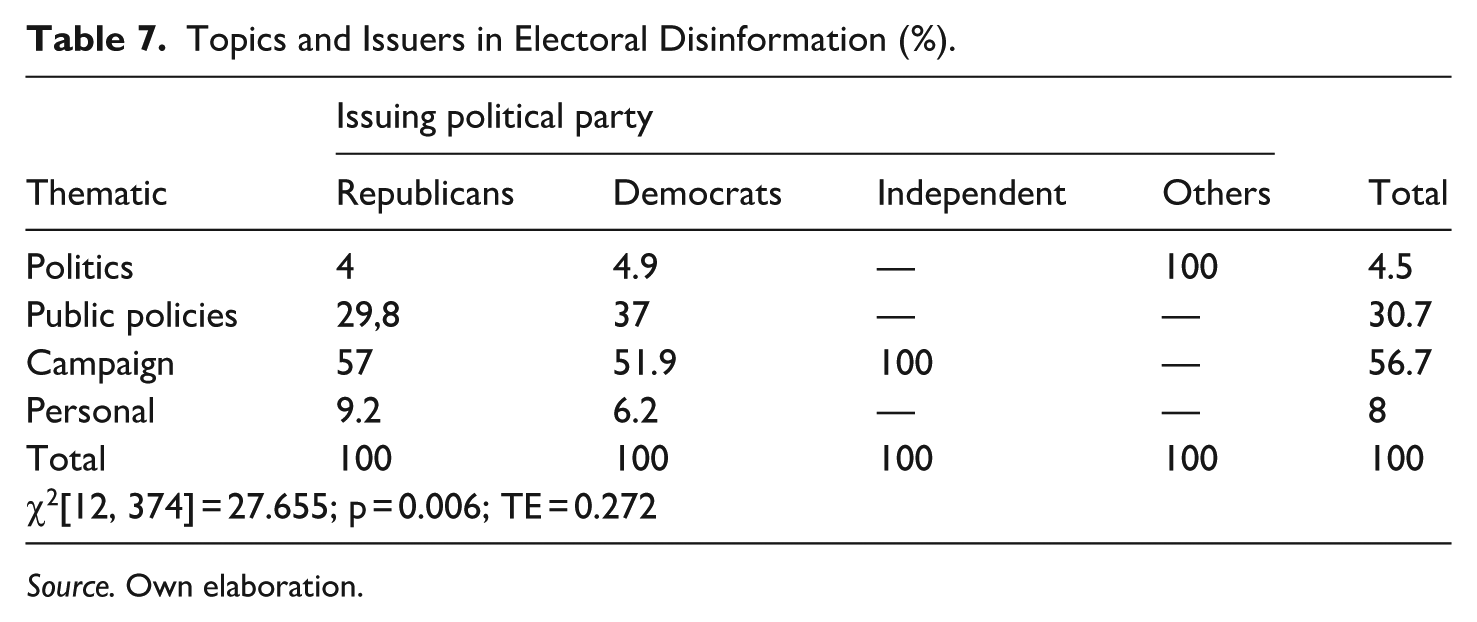
A comparison of the topics in false messages by political party affiliation reveals certain similarities between Republicans and Democrats issuers (Table 7). Both give more prominence in the disseminated falsehoods to campaign issues (57% Republicans and 51.9% Democrats) to the detriment of public policy topics (29.8% Republicans and 37% Democrats) and relegate false content on politician’s private lives (9.2% Republicans and 6.2% Democrats) and political topics to the background (4% Republicans and 4.9% Democrats). The analysis reveals that the main intention of the false messages is to delegitimize political opponents and raise doubts about the electoral process and vote counting.
Topics and Issuers in Electoral Disinformation (%).
Source. Own elaboration.
Recipients of Electoral Disinformation
False messages disseminated during the 2024 U.S. presidential election campaign explicitly identifies the target or recipient of the disinformation (89.8%). Most are individuals (59.6%), about whom falsehoods disseminated are concerning their person, their context, or their political performance, with the intention of weakening or strengthening their political position. On the contrary, the remaining hoaxes (29.9%) have a collective recipient.
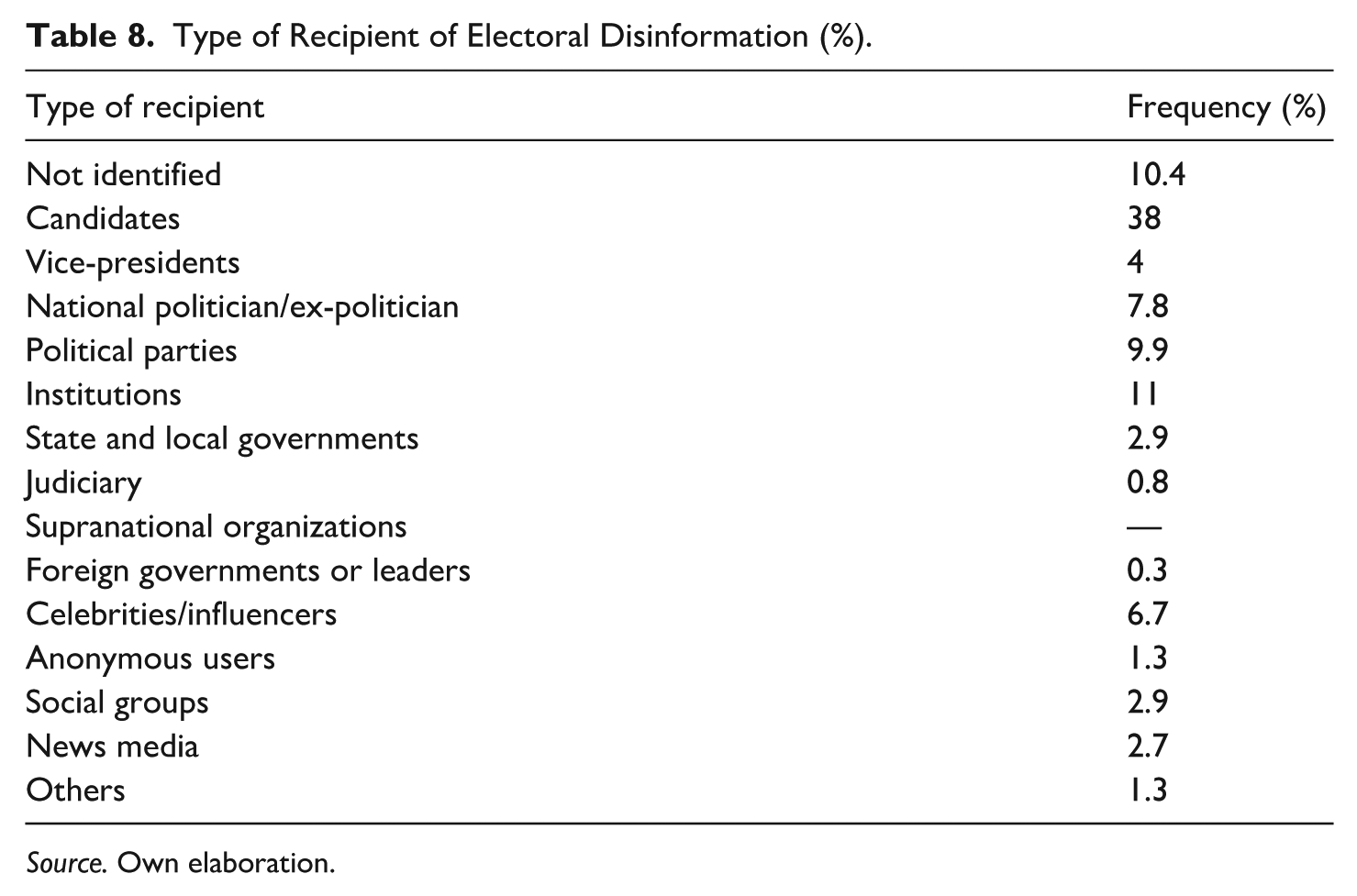
The main recipients of disinformation are the candidates (38%). Joe Biden (until July 21, when he decided to withdraw) and Kamala Harris (from July 21, when she became a candidate) were the recipients of a significant part of the lies disseminated. Next come institutions (11%), especially the Electoral Board, which is accused of fraud, political parties (11%), national politicians and ex-politicians (7.8%), including Biden after the announcement of his retirement, and influencers and celebrities (6.7%), in which the singer Taylor Swift gained prominence, following her explicit statement of support for Kamala Harris (Table 8).
Type of Recipient of Electoral Disinformation (%).
Source. Own elaboration.
In marginal positions, as recipients of disinformation were the vice-presidents (4%), in which those directed at Walz (Democrat) were more frequent than those directed at Vance (Republican), the State and local governments (2.9%), social groups (2.9%), especially immigrants, and the news media (2.7%), who were accused of manipulating information to benefit Harris. On the other hand, disinformation barely affects the anonymous users (1.3%), judiciary (0.3%), and foreign leaders (0.3%).
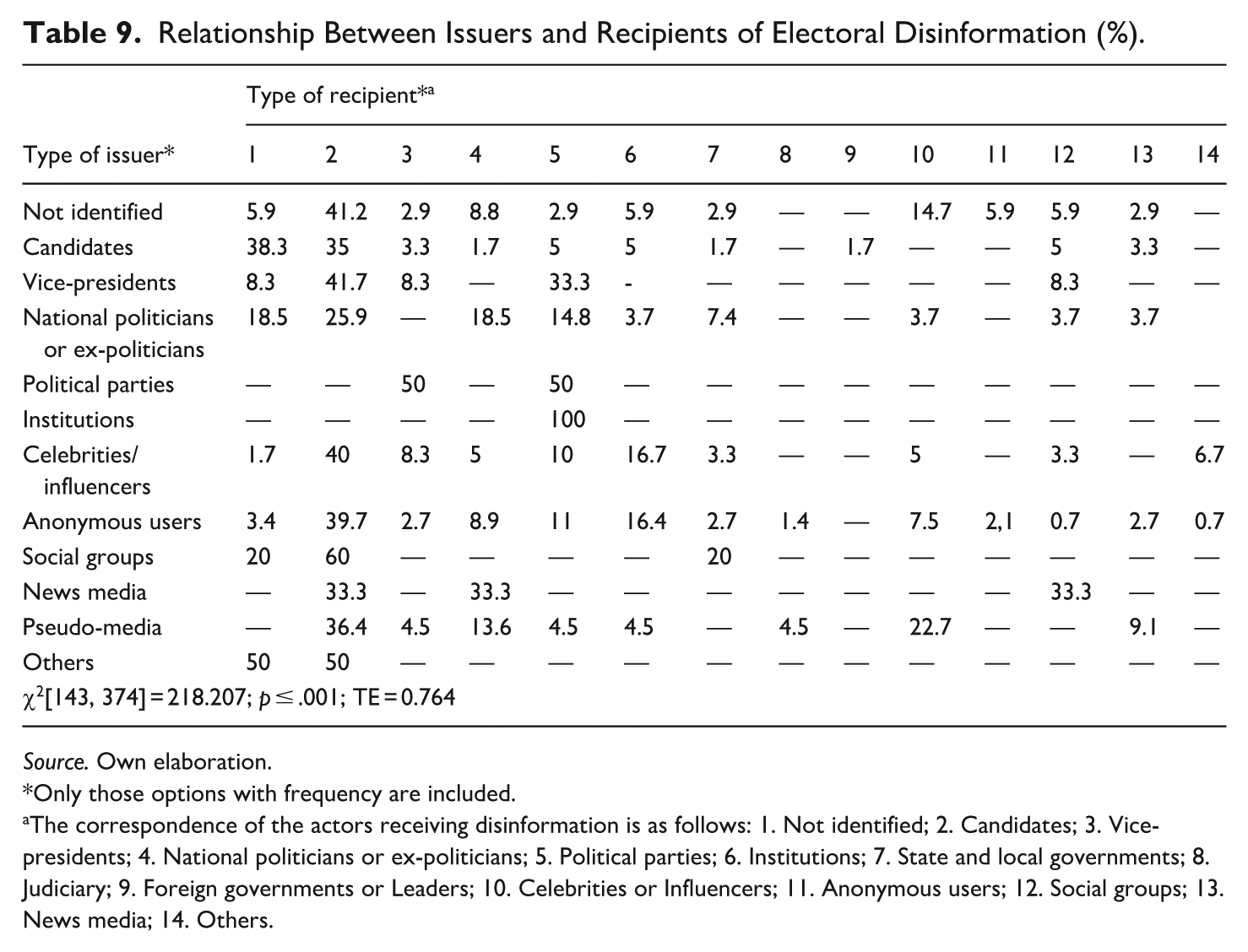
The relationship between issuers and recipients of electoral disinformation shows the preponderance of candidates as the main core of the false messages issued during the electoral campaign (Table 9). Candidates (35%), vice-presidents (41.7%), national politicians and former politicians (25.9%), celebrities and influencers (40%), anonymous users (39.7%), social groups or collectives (60%), and pseudo-media (36.4%) focus their hoaxes on these figures. The falsehoods disseminated by the news media are aimed equally at candidates (33.3%), national politicians and former national politicians (33.3%), and social groups (33.3 %). On the other hand, the false content emanating from the parties is directed to other parties (50%) and to the vice-presidents (50%). Meanwhile, the institutions focus their false messages exclusively on the parties (100%).
Relationship Between Issuers and Recipients of Electoral Disinformation (%).
Source. Own elaboration.
Only those options with frequency are included.
The correspondence of the actors receiving disinformation is as follows: 1. Not identified; 2. Candidates; 3. Vice-presidents; 4. National politicians or ex-politicians; 5. Political parties; 6. Institutions; 7. State and local governments; 8. Judiciary; 9. Foreign governments or Leaders; 10. Celebrities or Influencers; 11. Anonymous users; 12. Social groups; 13. News media; 14. Others.
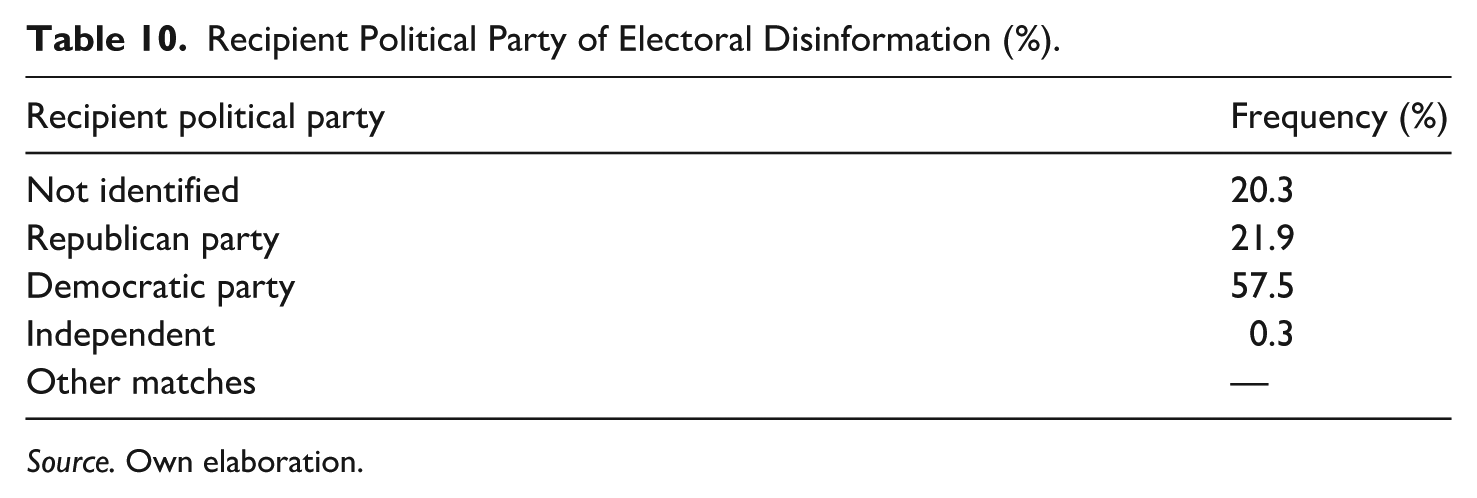
Globally, Democrats are the most affected by electoral disinformation as recipients (57.5%). Republicans are also recipients of such disinformation, but to a much lesser extent (21.9%). In 20.3% of the cases, the party to which the falsehood was directed was not identified (Table 10).
Recipient Political Party of Electoral Disinformation (%).
Source. Own elaboration.
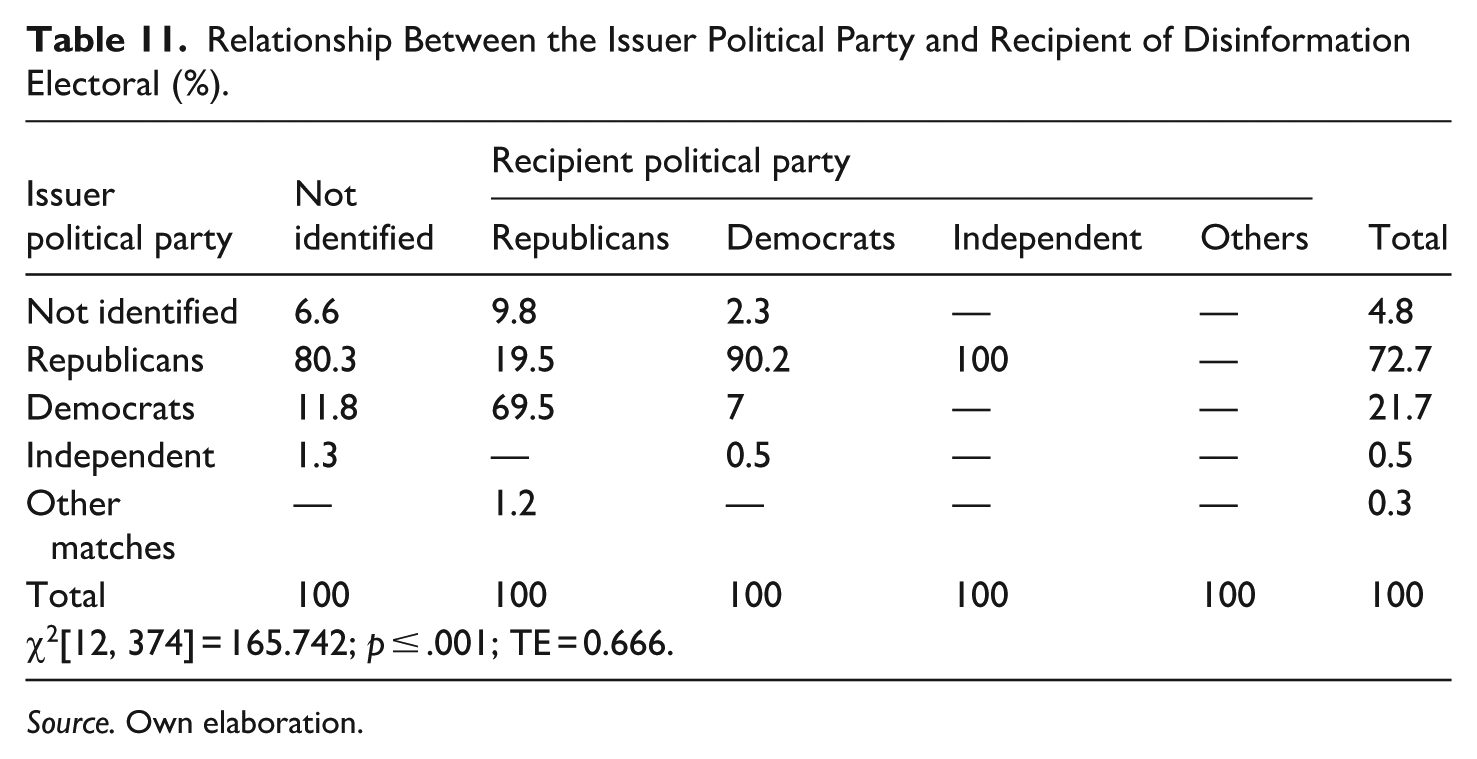
False content disseminated by Republicans is mainly directed toward Democrats (90.2%) and vice-versa (69.5%). However, the analysis allows us to corroborate not only that the Republicans use falsehoods to a greater extent but also use them on more occasions in their favor to try to exalt Trump as a leader (Table 11). A substantial portion of the disinformation Republicans receive comes from within their own party (19.5%). However, this percentage drops to 7% in the case of the Democrats.
Relationship Between the Issuer Political Party and Recipient of Disinformation Electoral (%).
Source. Own elaboration.
Discussion and Conclusions
Electoral disinformation has increased in recent years. This phenomenon is highly relevant in democratic terms as it can alter citizens’ decisions and electoral behavior, generating dysfunctions and unwanted outcomes. Furthermore, it can undermine the validity and legitimacy of elections, an essential instrument of representative democracy. Traditionally, previous research has focused on the content of these false electoral messages (Casero-Ripollés et al., 2025). However, comparatively little attention has been paid to the actors involved in this phenomenon (Broda & Strömbäck, 2024). Our research fills this gap by analyzing the activities of the actors involved in disinformation during the 2024 U.S. presidential elections. We have distinguished between issuers and recipients to understand their characteristics, their connection to the hoaxes they disseminate, and their relationship.
Our findings show that disinformation was openly employed as a communication strategy during the electoral campaign by various actor, without attempts to conceal its use. In 90.9% of the false messages disseminated in the 2024 U.S. presidential elections, the actor behind the falsehood is clearly identified. This has been described a post-truth context (Hannon, 2023; McIntyre, 2018), in which the use of hoaxes in political communication has become widespread and normalized. Far from acting in secrecy, those who disseminate electoral disinformation do so openly and with little apparent restraint. In this sense, it is significant and paradoxical that our results indicate that the issuers (promoters of the spread of false messages) present a higher degree of identification than the recipients who are the target of these falsehoods. It suggests that actors operating in the political arena are losing their fear of being penalized by the electorate for using lies in campaigns.
Our data reveal that individual actors predominate over collective actors in the spread of hoaxes. The results suggest the formation of two large groups of issuers of electoral disinformation, with differing intensity in their use of this resource. The first group comprises three actors leading the dissemination of fake content: anonymous users, candidates, and celebrities/influencers. The prominence of the former is a consequence of the changes introduced by the digital environment in the development of electoral campaigns, where any social actor can create and disseminate messages through social media (Chadwick, 2017; Jungherr et al., 2020). The second group is made up of the remaining actors involved, led by national politicians or former politicians and the pseudo-media. Significantly, only 4 of the 14 types of actors initially considered did not spread false information in the 2024 U.S. presidential elections. This reveals the extent of this phenomenon among the various actors in the political arena.
Additionally, electoral disinformation is not the preserve of a single party, although there are clear differences in the intensity of its use, with the Republicans being particularly prominent. This is consistent with previous studies that attribute a high level of use of hoaxes to Donald Trump (Allcott & Gentzkow, 2017; Benaissa-Pedriza, 2021; Domínguez-García et al., 2023; Guo & Vargo, 2018). However, Democrats also participate in the spread of false messages during the campaign. This suggests that this phenomenon affects all political parties and actors, without exception.
Another relevant finding is the predominance of fake electoral content directed at political rivals. In this sense, the results show that presidential candidates are the main recipients, and the main parties primarily target each other with hoaxes. This is related to the attack function of disinformation, which seeks to weaken and discredit opponents. The intention of false messages in the 2024 U.S. election was to delegitimize the political adversary and raise doubts about the voting process and the counting of ballots, preparing the ground for a possible electoral defeat, especially in the case of Trump. This reveals the predominance of negative use of electoral disinformation. This inserts the use of this resource into the dynamics of negative campaigns (Nai, 2020), where criticism of the political contender takes center stage and highlights its destructive nature, with the potentially harmful consequences for democratic health.
Although the negative approach predominates, we have also detected a significant percentage of false messages directed at the party itself. This is the case of the Republicans, who dedicate 19.5% of their falsehoods to their own members, especially Trump, but it also occurs in the case of the Democrats, although to a lesser extent (7%). This emerging and innovative trend associates hoaxes with positive aspects and aims to improve the image of political leaders and their expectations of electoral success. We can identify a constructive use of electoral disinformation that seeks to make a candidate more desirable and attractive to voters. False content can also be used to better connect a political leader with the electorate and gain citizen endorsement, but based on lies. This highlights that electoral disinformation has a strong strategic nature as an instrument of political communication and that it has an ambivalent dimension, as it can be used both to attack rivals and to generate benefits for allies.
A final original finding is that there is a statistical relationship between the issuer and the type of channel used to spread false content during the election campaign, the topic, and the type of disinformation. Our analysis corroborates that the type of issuer strongly influences the way in which disinformation is disseminated. We detected significant differences in the number of channels used by different issuers. Two dynamics emerge that reveal distinct strategies. Political actors employ many channels to circulate their hoaxes, with a preference for campaign events, press releases, and news media (Benaissa-Pedriza, 2021). This represents a commitment to fragmentation and diversification that seeks to reach the public regardless of the channel employed. Meanwhile, anonymous users and celebrities/influencers almost exclusively use social media (Ferreras, 2020). These actors prefer to concentrate their disinformation efforts on a single channel, which is also the most open and unregulated, likely believing that they will have greater room for maneuver to carry out their activities and will be able to reach specific and segmented targets audiences.
We also identified a statistical relationship between the type of issuer and the topic of the false content disseminated during the campaign. Candidates, vice-presidents, political parties, and institutions focused their disinformation on public policies, highlighting immigration, the economy, and crime. These findings reinforce the results of Akbar et al. (2022) and Lava-Santos (2023). In contrast, the remaining actors associate their false messages with campaign issues such as electoral integrity, campaign organization, or electoral surveys, among others. Political and personal topics have marginal relevance. Additionally, the type of issuer has a decisive influence on the sort of disinformation spread. Political actors, especially candidates, use misleading content with percentages above 50% of the total, except in the case of national politicians and former politicians (40.7%). In contrast, anonymous users and celebrities/influencers more frequently resort to false context. Another significant finding relates to the number of different types of disinformation used by issuers. While political actors use a very limited variety of methods, between three and four, anonymous users and celebrities/influencers use all possible disinformation methods, seven in total, demonstrating a high degree of diversification and sophistication.
This research has limitations, such as the selection of the sample and the comparative dimension of the research. On the one hand, we used PolitiFact to access the sample, considering this website as a proxy for content previously verified as false. This guarantees the inclusion of messages accredited as hoaxes, but we are also aware that it may be biased since it probably does not include all the disinformation content circulated during the electoral campaign. However, the volume of false content that comprises our sample guarantees its robustness. In addition, using fact-checkers is a common solution in studies on disinformation in electoral campaigns (Baptista & Gradim, 2022; Benaissa-Pedriza, 2021; Gutiérrez-Coba & Rodríguez-Pérez, 2023; Lava-Santos, 2023; Molina & Magallón, 2021; Paniagua et al., 2020). A second limitation is the focus of our study on a single campaign. This prevents establishing longitudinal analysis or comparisons with other countries and geographical contexts. However, the importance worldwide of the 2024 U.S. presidential elections provides sufficient scientific relevance to our research.
Despite these limitations, this research presents a solid and original approach to the role played by actors involved in the spread of hoaxes during electoral processes, providing relevant results on a topic that has been under-explored to date. Our findings allow us to understand the dynamics deployed by the different actors and determine their strategic component. This offers a new perspective on the characteristics of electoral disinformation, taking as a reference one of the most influential global campaigns in recent history: the 2024 U.S. presidential elections.
Footnotes
Funding
The authors disclosed receipt of the following financial support for the research, authorship, and/or publication of this article: The authors acknowledge the funding by the following research projects: CIPROM/2023/41, funded by the Conselleria de Innovación, Universidades, Ciencia and Sociedad Digital of the Generalitat Valenciana under the Prometeo program; and Ref: 101126821-JMO-2023-MODULE (DISEDER-EU) funded by the European Education and Culture Executive Agency (EACEA), pertaining to the European Union. Views and opinions expressed are however those of the authors only and do not necessarily reflect those of the Generalitat Valenciana and the European Union or EACEA. Neither the European Union nor the granting authority can be held responsible for them.
Declaration of Conflicting Interests
The authors declared no potential conflicts of interest with respect to the research, authorship, and/or publication of this article.