







Abstract
What drives local decisions to prohibit industrial land uses? This study examines the passage of municipal ordinances prohibiting gas development using hydraulic fracturing (“fracking”) in New York State. I argue that local action against fracking depended on multiple conceptions of the shale gas industry. Matching these alternative conceptions with prevailing spatial models of public response to industrial land uses—“not in my backyard,” “not in anyone’s backyard,” and “please in my backyard”—improves our understanding of where local contention might emerge and how it contributes to policy change. Results from event history and logistic regression analyses show, first, that communities lying above favorable areas of the shale did not pass anti-fracking laws because opposition to fracking was counteracted by significant local support for development. Fracking bans passed primarily in a geographic sweet spot on the periphery of targeted regions, where little or no compelling economic interest in development existed. Second, as fracking became the subject of a highly politicized national debate, local opposition increasingly reflected mobilization by political liberals. This trend is reflected in the increasing rate of ordinance adoption among Democratic-leaning communities outside the geographic sweet spot.
Understanding local responses to industrial projects is of long-standing interest to social scientists (Freudenburg and Pastor 1992; Slovic 1987). Divergent community responses to industrial siting contribute to the unequal distribution of health and environmental hazards (Gaventa 1980; Pais, Crowder, and Downey 2014; Saha and Mohai 2005) and shape the emergence and diffusion of new technologies and industries (Sine and Lee 2009; Walsh, Warland, and Smith 1997).
Prohibiting an industrial siting requires mobilization of a critical mass of local residents, with sufficient resources, who share a common interest in stopping the proposed development. Traditionally, researchers refer to industrial projects as locally unwanted land uses (LULUs) and describe opposition to them as being motivated by “not in my backyard” (NIMBY) attitudes (Freudenburg and Pastor 1992; Schively 2007). Recent scholarship, however, finds significant variation in residents’ perceptions of proposed sitings. Some residents focus on the negative impacts of a proposed siting (Esaiasson 2014), others emphasize its economic benefits (Jerolmack and Walker 2016; Kunreuther and Easterling 1996), and many never develop or express a clear position one way or another (Boudet et al. 2014). These perceptions (and non-perceptions) of risk and benefit, moreover, do not only depend on local opinion about potential impacts, but may also reflect politicized debates about the industry that occur in the broader public sphere (Gamson and Modigliani 1989; Jenkins-Smith et al. 2011; McAdam and Boudet 2012; Michaud, Carlisle, and Smith 2008). Although we know people develop different conceptions of industrial projects, we know little about how these conceptions trigger mobilization and contribute to local decisions to restrict industrial land uses.
I argue that different conceptions of risks and benefits of industrial projects correspond to alternative bases of opposition and support, and delineating these alternative bases is key to explaining why some communities ban industrial land uses and others do not. I highlight two important distinctions in how community residents understand industrial projects. First, risk from an industrial project provides motivation for NIMBY opposition, but in contexts where economic benefits of industrial projects can be credibly framed, some community residents may express support even for risky projects (Boudet et al. 2016; Gravelle and Lachapelle 2015). Successful opposition thus depends on overcoming resistance from industry supporters, which will vary across different community contexts. Second, in addition to perceived local impacts, when an industry is politicized in national debates, ideology or political identity will provide an alternative basis for opposition (Michaud et al. 2008). Reflecting a “not in anyone’s backyard” (NIABY) attitude, opposition based on political identities is less geographically constrained.
I test these arguments in an event history analysis of adoptions of zoning ordinances prohibiting hydraulic fracturing (“fracking”) in New York State. Fracking refers to the process of stimulating oil and gas wells by pumping liquid into the well at high pressure. The liquid, containing water, a mix of chemicals, and sand particles, shatters the rock and helps release the oil or gas locked inside. Technological innovations in horizontal drilling and fluid mechanics have expanded the potential of fracking for developing oil and gas reserves in the United States (Wilber 2012). This new technique is often called high-volume hydraulic fracturing (HVHF), to distinguish it from a technique that has been used in the industry since the 1940s, but on a much smaller scale. Use of HVHF has fueled a veritable energy revolution in the United States (Levi 2013; Wilber 2012). The technology is the main reason why the United States is projected to become a net energy exporter by 2019 for the first time since the 1950s (U.S. Energy Information Administration 2015). But fracking has also provoked intense opposition in some communities (Vasi et al. 2015). The tactic of banning fracking at the municipal level, in particular, counts as a significant threat to the burgeoning oil and gas industry across the United States, with local ban campaigns recently spreading to key oil- and gas-producing states (Healy 2015).
The municipal fracking ban movement is important in its own right, but the setting also provides an ideal opportunity to advance research in environmental sociology and social movement scholarship. First, the sudden emergence of the shale gas industry allows me to examine local responses by hundreds of communities, which were put at varying degrees of risk by their proximity to proposed shale gas development, and whose residents faced different prospects of economic rewards from the development (Jacquet and Stedman 2011; Jerolmack and Walker 2016; Wilber 2012). I find that proximity to proposed gas wells, by structuring where risk and reward could be credibly framed, is a key predictor of whether a community adopted an ordinance. Strikingly, fracking bans rarely passed in regions most likely to see intense development, but they proliferated in a geographic sweet spot on the periphery of potential development regions. In these communities, little or no compelling economic interest in development existed, but residents still perceived potential risk and thus compelled their town boards to pass protective ordinances. By contrast, local fights over fracking were highly divisive in the most favorable shale region, reflecting competing visions of gas development. Primary data on public participation in one town suggest that local support for fracking was significant and concentrated among large landowners.
Second, the setting provides a unique opportunity to examine the effect of an issue’s politicization on social movement mobilization and local policy change (Heaney and Rojas 2015; Kahan, Jenkins-Smith, and Braman 2011). During the period of the local ban movement, shale gas development emerged from a local land use issue to become the subject of intense national debate (Boudet et al. 2014; Mazur 2016; Vasi et al. 2015). I leverage this temporal trend to show that the politicization of fracking led to a compositional change among fracking opponents. Locally perceived threats and benefits continued to be important, but as the issue gained broader public attention, the adoption of ban ordinances increasingly reflected mobilization by Democratic partisans.
Explaining Local Decisions to Prohibit Industrial Projects
Local Sources of Opposition to and Support for Industrial Siting
One important thread in existing research on industrial siting is that the nature of public response reflects residents’ beliefs about local impacts associated with the proposed siting. Perhaps the most influential explanation of opposition to industrial siting is that residents are motivated by their self-interest to oppose projects. This view, embodied in the NIMBY (“not in my backyard”) framework, holds that residents perceive that a siting will adversely affect their quality of life, their health, or their property values, and they mobilize to prevent this from happening (Esaiasson 2014; Kraft and Clary 1991; Schively 2007).
Observing that residents do not always respond with opposition when faced with a risky project, recent scholarship has shifted the analytic focus to include factors that may inhibit the emergence of opposition (e.g., McAdam and Boudet 2012). Researchers have drawn on studies of risk perception under uncertainty (e.g., Slovic 1987) to argue that some elements of community context facilitate perceptions of threat, whereas other elements predispose community members toward inaction (Auyero and Swistun 2008; McAdam and Boudet 2012). For instance, objective conditions, such as economic vulnerability and previous experience with the proposed industry, may decrease the chances that a siting is perceived as a threat (see Wright and Boudet 2012). Similarly, subjective dimensions, such as place attachment (Devine-Wright 2009) and place history (Auyero and Swistun 2008; Molotch, Freudenburg, and Paulsen 2000) influence residents’ responses.
Although scholars have given less attention to local support for industrial projects, there is evidence that residents sometimes develop positive conceptions of a project through emphasizing its (usually economic) benefits (e.g., Boudet et al. 2016; Gravelle and Lachapelle 2015; Jerolmack and Walker 2016). Most directly, compensation to residents near a sited facility can win their acceptance of a project (Kunreuther and Easterling 1996). Other research finds that residents are more likely to support projects that promote local ownership of the facilities (Devine-Wright 2005; Warren and McFadyen 2010). The extensive literature on boomtowns finds that enthusiasm for new development is a common stage experienced by local residents, especially in economically vulnerable communities (Gilmore 1976; Thompson and Blevins 1983). In summary, for both opposition and support, the distribution of perceived local impacts critically shapes the pattern of public response to a proposed industrial project.
Industry Politicization and Ideological Bases of Public Response
Although much existing research focuses on the perceptions of local impacts from industrial projects, scholars have also observed that the siting of many types of industries is amenable to being framed as an issue of broad popular concern (Boudet 2011; Gamson and Modigliani 1989; Michaud et al. 2008; Rootes 2013). Rather than a response to perceived local impacts, opposition may instead be grounded in political identities or ideological commitments and organized by non-local actors (McAdam and Boudet 2012; Michaud et al. 2008; Rootes 2013).
Previous studies show that connecting a siting dispute with more general issues of environmental management may help local opponents enlist a broader set of constituents, spread opposition to a wider geographic area, and ultimately increase the chances of success (Boudet 2011; McAdam and Boudet 2012; Walsh et al. 1997). Research finds that people use partisan identification and ideology as essential lenses to process information about new industries and form opinions about them (Boudet et al. 2014; Davis and Fisk 2014; Gravelle and Lachapelle 2015; Jenkins-Smith et al. 2011; Michaud et al. 2008). In a study that directly compares NIMBY and ideological bases of opposition to industrial siting, Michaud and colleagues (2008) find no evidence that proximity predicts opposition to offshore drilling among California residents, but they do find that negative attitudes are strongly related to several measures of political orientation. They conclude that politicized, national discourse about the oil industry motivated Democratic partisans to oppose the drilling.
Partisan opposition to new industries is part of a broader trend in the contemporary United States toward the increased importance of partisan identities for structuring political opinions and political activism (Feinberg and Willer 2013; Heaney and Rojas 2015; Kahan et al. 2011; McCright and Dunlap 2011). U.S. citizens’ positions on one issue are increasingly predictive not only of their ideology and partisan identity (Baldassarri and Gelman 2008), but also of their lifestyle choices and cultural affinities (DellaPosta, Shi, and Macy 2015). Taking a stand on a politicized issue can be less about the perceived risks and benefits, and more about affirming the kind of person you are (Feinberg and Willer 2013; Kahan et al. 2011). The implication for research on public response to industrial projects is that politicized discourse about an industry helps redefine the perceived stakes of the issue and thereby supplements local perceptions of risk as the basis for opposition.
Alternative Conceptions, Geography, and Local Policy Change
Research has identified different conceptions of industrial projects, but scholars have paid little attention to how these alternative conceptions collectively shape local land use decisions. I emphasize the distinction between opponents and supporters of industrial projects and between local and politicized conceptions of industrial impacts. Combining this with spatial models of public response to industrial siting suggests specific expectations about where opposition emerges and where it leads to local decisions to prohibit industrial land uses.
Scholars conceive of public response to industrial projects in spatial terms but disagree about the key relationship—geographic proximity to the proposed site and opposition. From one major perspective, most evocatively associated with the “not in my backyard” (NIMBY) framework, industrial projects are understood as local grievances, suggesting that opposition should concentrate in the immediate proximity of the proposed project (e.g., Esaiasson 2014). Several studies, however, find evidence of a “please in my backyard” (PIMBY) effect, 1 wherein residents closer to a siting are actually more likely to accept or support it (e.g., Boudet et al. 2016; Gravelle and Lachapelle 2015; Jerolmack and Walker 2016). Still other scholars offer a “not in anyone’s backyard” (NIABY) account, based on research that finds little or no effect of proximity on opposition but a strong effect of political identities (e.g., Michaud et al. 2008).
Findings of these different spatial patterns are often treated as evidence for competing explanations, but perhaps they are better seen as complementary—reflecting the fact that people oppose (and support) industrial projects for different reasons. In particular, political identity and perceived local impacts (positive and negative) may provide alternative bases of opposition or support, which give rise to different types of opponents and supporters. Gould (1995) stresses the theoretical importance of delineating alternative social bases of mobilization, arguing that explaining mobilization requires specifying the social identification that defines a person’s interests within a specific contentious episode and furnishes one with motivation and a sense of obligation to mobilize. A key implication of this theoretical point is that important distinctions can be drawn not only between opponents and supporters, but also among participants on the same side of the conflict. 2 In the context of industrial siting, opponents may, for example, mobilize as members of a bedroom community whose sense of place is incompatible with industrial development (Devine-Wright 2009), or as political liberals who view their opposition as an extension of their environmentalist ideology (Michaud et al. 2008). The researcher’s task is to unpack the alternative social bases that underlie mobilization on either side of a particular siting conflict and show which of the alternative appeals for mobilization can be credibly framed under the local conditions (Walder 2009; Wright and Boudet 2012).
From this perspective, the conflicting findings about the average effect of proximity on public response may conceal important heterogeneity of the effect by type of opponent or supporter. Gravelle and Lachapelle’s (2015) study of public attitudes toward the Keystone XL pipeline illustrates this heterogeneity in the context of a highly politicized industrial project. They find that residents in close proximity to the pipeline’s route tend to favor the project. This result, which is evidence for a PIMBY effect, holds irrespective of political orientation. However, with greater distance from the pipeline route, liberal, but not conservative, respondents’ attitudes turn negative, suggesting the presence of a NIABY-style opposition rooted in a liberal political orientation. Gravelle and Lachapelle suggest that proximate residents’ greater knowledge of localized economic benefits from the pipeline supplanted an ideological response. More generally, we expect people will express and act upon alternative conceptions of industrial projects, and these alternative conceptions have unique geographic signatures: NIMBY, PIMBY, and NIABY.
Geographic proximity is therefore an important variable for understanding public response to industrial projects, but its effect is conditioned by (1) evaluation of localized risks and benefits and (2) broader political debates that legitimize opposition or support as expressions of political identity. To understand where opposition to an industrial project might be successful requires us to consider how these alternative bases of opposition and support intersect within individual communities.
Opposition based on local conceptions is most likely to develop when a project’s risks can be credibly framed in the local context (Wright and Boudet 2012). Similarly, local support should concentrate where a project’s economic benefits are salient. The size of the “backyard” (i.e., the relative geographic scale at which the risks or benefits are perceived) may be different for NIMBY and PIMBY responses, but both responses are a function of proximity to proposed development (Gravelle and Lachapelle 2015; Jacquet 2012). On the other hand, opposition based on politicized conceptions of industries will be less constrained by proximity to an actual project. Instead, in a given community, the strength of this NIABY-style opposition depends, first, on the prevalence of public debate that effectively frames the industry in ways that resonate with salient political identities (Benford and Snow 2000; Jenkins-Smith et al. 2011) and, second, on the volume of local residents who hold the relevant political identity.
New York State and the Shale Gas Revolution
The recent emergence of fracking, or HVHF, technology has unlocked “unconventional” oil and gas reserves, most notably in shale rock formations deep beneath the earth’s surface. Among the sources of natural gas that fracking has made accessible, the Marcellus Shale formation, a massive rock deposit underlying a large area of the American Northeast, is the most impressive (Engelder 2009; Wilber 2012). Pennsylvania, where the geology and regulatory environment were most favorable, became an early leader in producing shale gas from the Marcellus. Buoyed by impressive production reports from Pennsylvania, enthusiasm for Marcellus gas quickly spilled across the border into New York. By 2007, gas companies were aggressively leasing acreage in the state, particularly in the region immediately adjacent to Pennsylvania, known as the Southern Tier (Wilber 2012).
New York’s existing regulations were not favorable to shale gas development, but lawmakers quickly passed a critical bill in 2008 that made it easier to issue permits for shale gas wells. The Governor signed the bill into law but ordered the New York Department of Environmental Conservation (DEC) to review the Generic Environmental Impact Statement governing well permitting guidelines. The review was publicly interpreted as a “cautionary yellow light” in the progress toward full-scale shale gas development in New York (Applebome 2008). Observers believed that fracking in New York was inevitable, and that the review—slated to be completed within a year—would not impede development in a serious way (Wilber 2012). These estimates proved wrong, as the anti-fracking movement grew rapidly under the de facto moratorium. Opponents pressured the agency into multiple rounds of review, until, six years later in December 2014, New York banned the use of fracking in the state (Kaplan 2014). These state-level politics provide essential context for the municipal ban movement. The extended environmental review, in particular, created space for the municipal ban movement to emerge. Between March 2010 and July 2013, 164 towns and cities passed land use ordinances prohibiting fracking within their borders (see Figure 1).
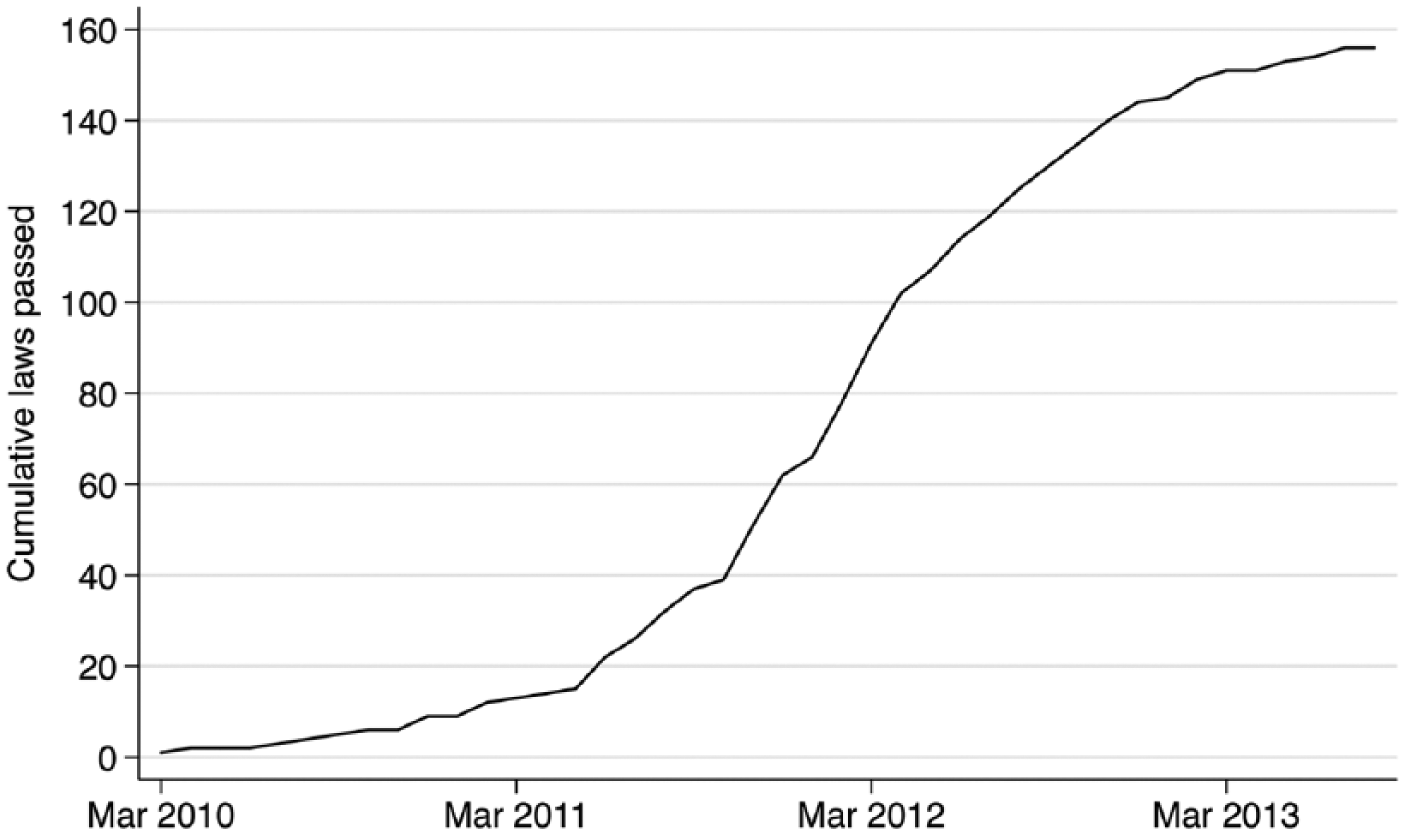
Adoption of Municipal Anti-fracking Ordinances in New York State
Local Politics of Fracking
Understanding how locally perceived risks and benefits shaped the adoption of anti-fracking land use ordinances requires attention to the geography of shale gas development in New York. Although much of upstate New York lies above the Marcellus Shale, and an even larger area lies atop the fossil-fuel-rich Utica Shale, critical geologic factors constrain potential shale gas development in New York to the Southern Tier region along the border with Pennsylvania (Engelder 2009; Wilber 2012). Only in this region is the Marcellus Shale deep enough to permit gas development; geologists estimate that the region of productive Utica Shale largely overlaps with that of the Marcellus (Wilber 2012). The gas well permit record provides further support for these estimates of the distribution of development potential in New York. Figure 2 shows the geographic extent of the Marcellus and Utica Shale and the concentration of HVHF well permits in New York State. Each circle represents a filed well application. Consistent with geologists’ estimates of the fairway regions, applications are limited to seven counties, mostly along the Pennsylvania border. 3
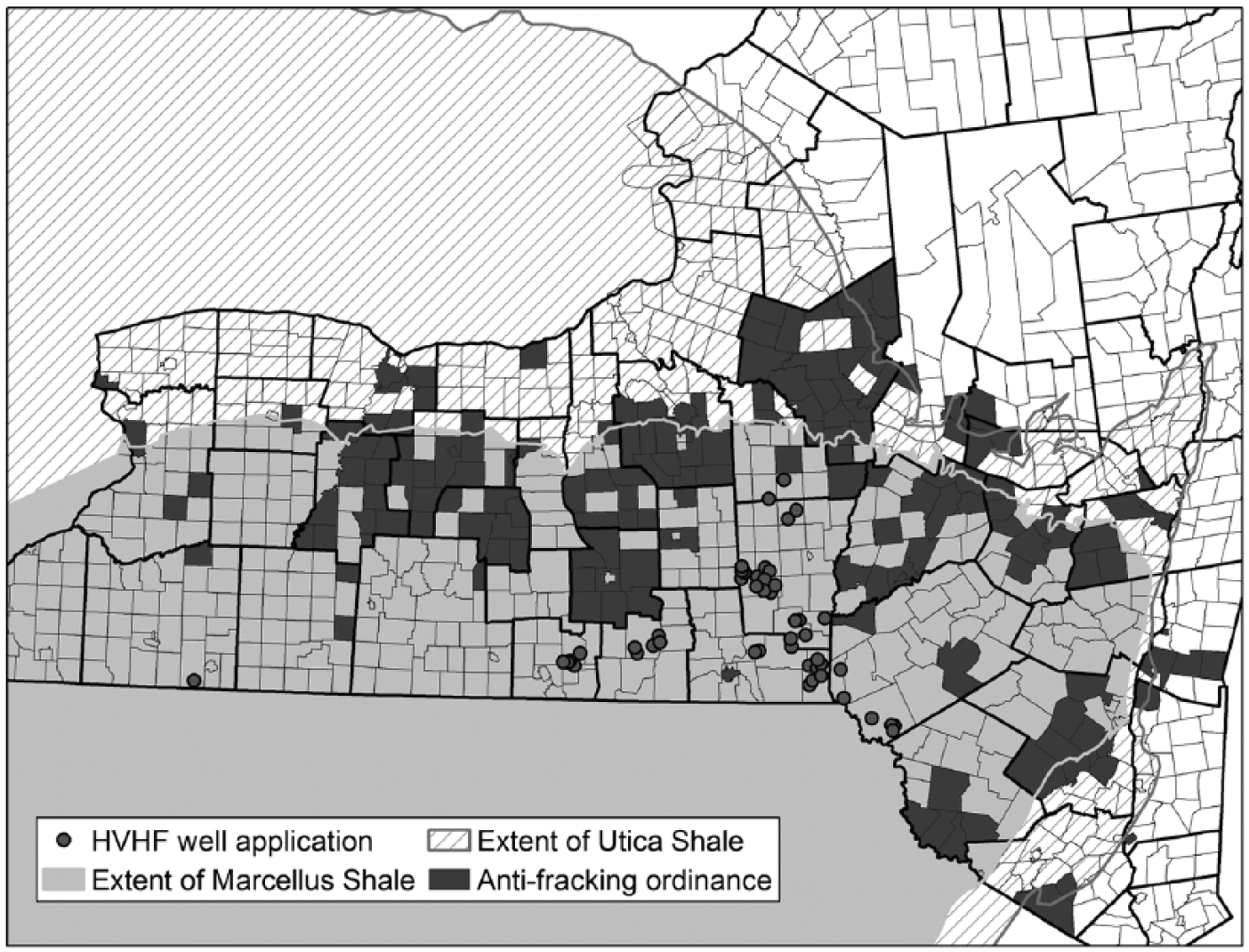
Geographic Diffusion of Anti-fracking Ordinances and the Geology of Shale Gas Development in New York State
NIMBY opposition
Fracking is a heavily industrial process. The drilling process itself, lasting about six weeks for a typical well, proceeds 24-hours a day, causing significant noise and light pollution for proximate residents. Among the biggest local concerns is the massive influx of truck traffic, primarily for transporting water to and from well sites. Development also brings an influx of transient workers, which strains local public services and is associated with elevated crime rates (Jacquet 2014). Aside from these observable disturbances, uncertainty about potential health and environmental impacts provide additional motivation for local opposition (Boudet et al. 2014; Wilber 2012). In this way, fracking resembles the siting of projects involving other complex technologies (McAdam and Boudet 2012; Sherman 2011; Walsh 1991). 4
Disruptions to daily life and health and environmental effects should decrease with distance from proposed well sites, consistent with the idea of NIMBY-style opposition. Note, however, that the geographic scale at which people perceived risk was substantial: the majority of the state’s towns lie above at least one of the two targeted shale formations (Figure 2). Although most parts of the shale are not productive, few in the general public were aware of this. Moreover, the shale gas industry would require additional infrastructure to be built for storing and transporting the gas, which would potentially extend into surrounding communities. This leads us to expect that, although the geographic scale at which risks from fracking could be credibly framed was necessarily limited, NIMBY-style opposition likely extended beyond the immediately targeted communities into surrounding towns, especially towns lying on one or both of the shale formations.
PIMBY support
Gas development was also framed as having positive economic effects, which served as a basis of local support for fracking. Development may provide a new source of tax revenue for local governments and create new employment opportunities with gas companies and in related industries (Jacquet 2014). Perhaps most importantly, development offers substantial cash transfers in the form of lease and royalty payments to local landowners (Jacquet and Stedman 2011; Jerolmack and Walker 2016). 5 Appeals to economic benefits should especially resonate with residents of the economically depressed upstate New York region where development would concentrate (Wright and Boudet 2012). Indeed, research finds that residents of communities targeted for shale gas development sometimes adopted favorable conceptions of fracking. Pennsylvania residents, especially leaseholders, expressed significant support for the gas industry (Jacquet 2012; see also Jerolmack and Walker 2016; Willits, Luloff, and Theodori 2013).
In New York State, political support for the gas industry also accompanied favorable geologic conditions. Notably, landowner coalitions, which were organized during early stages of the gas boom to collectively bargain for better lease terms with gas companies, emerged as strong supporters of gas development in communities lying above the most favorable regions of the shale (Jacquet and Stedman 2011; Wilber 2012). Signs distributed by landowner coalitions quickly spread along country roads across much of the Southern Tier region, identifying property owners as “Friends of Natural Gas.”
These observations lead us to expect that in communities targeted for development, PIMBY supporters of fracking may counter local opposition and decrease a community’s likelihood of adopting an anti-fracking ordinance. PIMBY support, however, operates on a different geographic scale than NIMBY opposition. Whereas risk from fracking was perceived across much of the upstate region, economic benefits of shale gas development could be credibly framed only in communities where the gas industry expressed an interest in leasing acreage. Considering local opposition and support together, anti-fracking ordinances should be most likely to pass in the periphery of a targeted region, where perceptions of threat existed but promises of economic benefits were not credible.
Politicization of Fracking
During the period of the municipal ban movement, fracking evolved from an obscure issue concerning land use in rural upstate New York to become a popular and ideologically polarized issue (Mazur 2016). Fracking was slow to gain media and popular attention and initially lacked ideological salience, as two key facts demonstrate. First, the 2008 regulation enabling shale gas development passed both houses of the New York State Legislature with overwhelming bipartisan support and with little notice by the public at large. The New York Times reported on the law’s passage at the time: “Sometimes big issues coalesce with people barely seeing them” (Applebome 2008). Reflecting the issue’s lack of political salience, this was just the third article ever published by the newspaper to mention “fracking” or “hydraulic fracturing.” Second, there was no consensus about fracking within the environmental community. Some regional environmental groups pressed New York’s governor to slow development (Wilber 2012), but the Sierra Club and other mainstream, national environmental organizations endorsed hydraulic fracturing, seeing natural gas as a potential alternative to the carbon-intensive coal industry (Sheppard 2012).
Public debate about fracking was slow to start, but it grew rapidly. As Figure 3 shows, just 22 articles about fracking appeared in the New York Times before 2010, whereas nearly 40 articles mentioning “fracking” or “hydraulic fracturing” were being published every month in 2012. A measure of Google search volume for the word “fracking” by New Yorkers mirrors the trend in newspaper coverage (bottom panel of Figure 3).
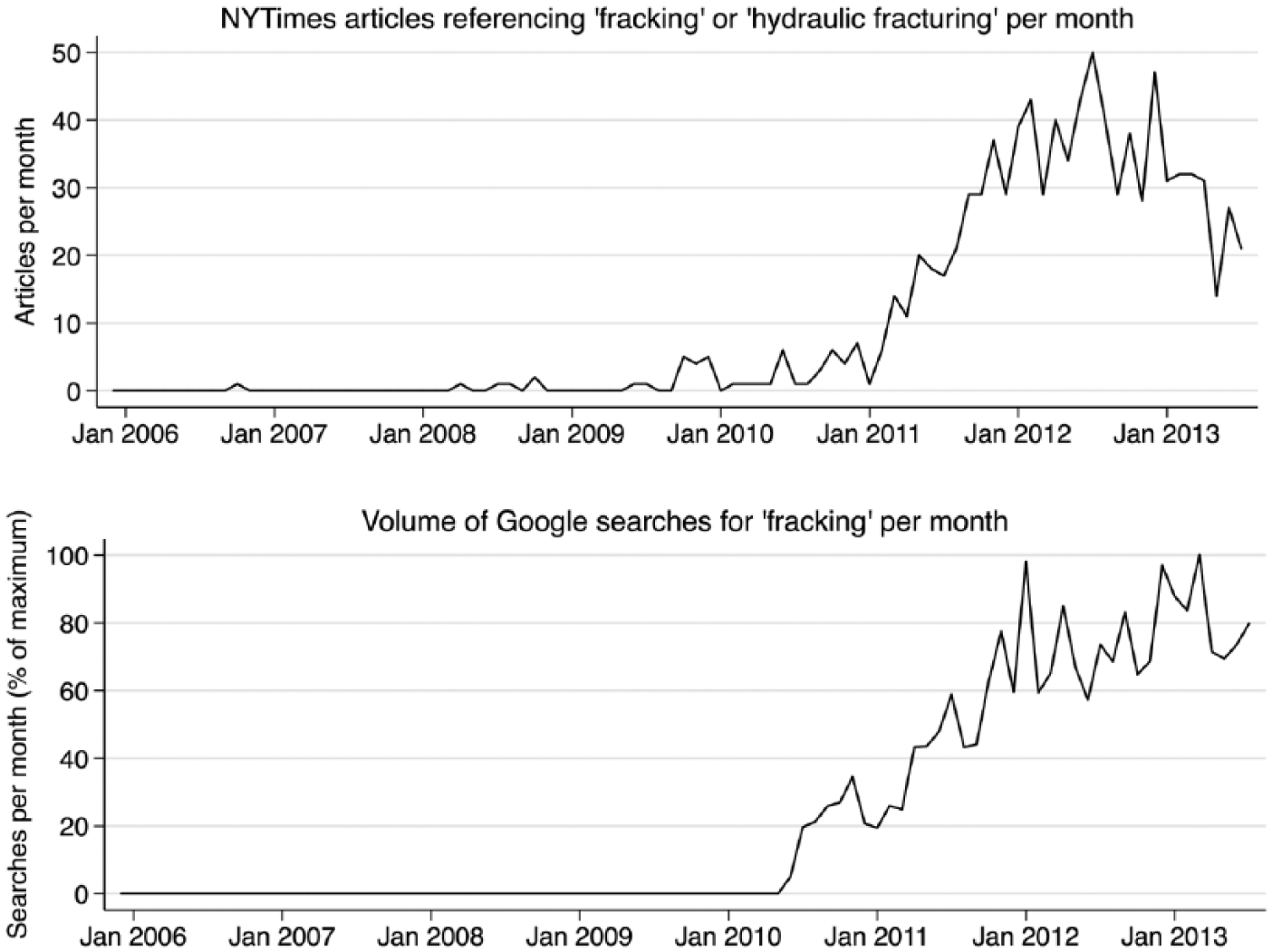
Public Attention to Fracking as Measured by Coverage in the New York Times and Google Search Volume
The biggest environmental argument for developing natural gas—that it was a less carbon-intensive alternative to coal—was being challenged by new research suggesting that the amount of methane that leaks during production may offset the relatively lower carbon dioxide emissions of gas-powered power plants (Howarth, Ingraffea, and Engelder 2011). Popular films, like the documentary Gasland and the fictional Hollywood production Promised Land, contributed to the emerging environmentalist opposition to fracking (Vasi et al. 2015). By 2012, the Sierra Club could no longer sustain its endorsement of shale gas if it hoped to retain legitimacy among its base, and it officially came out against hydraulic fracturing (Sheppard 2012).
As more people learned about fracking, they did so in an increasingly politically polarized information environment. In a study that compares attitudes of Pennsylvania residents between 2009 and 2012, Willits and colleagues (2013) identify a rapid learning process. They document increasing polarization on the issue and an increased emphasis on environmental impacts among opponents. Polls conducted after 2012 show a vast partisan divide on attitudes toward fracking, with liberals opposing the technology and conservatives supporting its use (Boudet et al. 2014; Davis and Fisk 2014). These developments signaled a substantial shift in the public debate surrounding fracking during the period of the local ban movement, 2010 to 2013.
I expect that politicization of fracking led to greater mobilization of political partisans. This shift should increase the likelihood of ordinance adoption among communities with large Democratic constituencies, independent of proximity to proposed development.
Policy Diffusion
Much of the research on opposition to industrial siting looks for explanatory factors within communities, but I expect that activities in surrounding communities might also influence passage of protective ordinances. Previous research finds evidence for spatial policy diffusion in multiple domains and for different units of analysis (Andrews and Seguin 2015; Vasi and Strang 2009). Collective action spreads geographically (Hedström 1994), but local learning processes also influence decision-makers (Tolbert and Zucker 1983). In the context of municipal fracking bans, interaction between town officials was especially important, because zoning ordinances prohibiting fracking were controversial. Town officials learned about the legal rationale behind the ordinances from officials of neighboring towns and could develop a sense of “safety in numbers,” knowing they were not acting alone in the face of lawsuit threats. This is precisely the setting where one would expect endogenous diffusion dynamics.
Data and Methods
In the main analysis, I examine the adoption of anti-fracking ordinances among communities in New York State. I focus on New York for several reasons. New York had the most extensive town ban campaigns, which permits a quantitative analysis of local opposition. At the same time, focusing on a single state enables a more in-depth analysis characteristic of a case study. My analysis draws on field observations and primary documents and secondary sources related to the fracking debate in New York State. Specifically, I collected and reviewed more than 500 documents (including town board minutes and local newspaper articles), and over the course of three years (2011 to 2013), I attended town board hearings on proposed fracking bans in five communities, and I sat in on nine meetings of anti-fracking organizations and two meetings of organizations that supported fracking. In general, this dual-analytic framework responds to recent calls to make studies of social movements more grounded methodologically (McAdam and Boudet 2012). New York’s anti-fracking movement was highly successful, but because my primary outcome of interest is at the community level and includes towns that passed bans as well as those that did not, the analysis avoids the common criticism that social movement studies select cases on the dependent variable.
Event History Data
The population of communities at risk of adopting an anti-fracking law consists of New York’s 994 municipalities—932 towns and 62 cities. 6 The event of interest is the passage of a town or city’s first zoning ordinance prohibiting fracking, either a ban or a moratorium. During the period of analysis (March 2010 to July 2013), 164 municipalities passed an ordinance. 7 The dependent variable is a municipality’s hazard of ordinance adoption—that is, the probability that a particular town in the risk set adopts an ordinance in a particular time period. A town exits the risk set after adopting an ordinance. I used primary and secondary sources to compile data on the adoption of ordinances, referring to lists maintained by two independent organizations—Food and Water Watch, which took an early interest in the local campaign to ban fracking and kept a record of town laws, and Fractracker, which kept close track of New York’s local ban movement. For each town or city thus identified, I obtained a copy of the meeting minutes from the session during which the ordinance was passed and/or an article in a newspaper that referenced the day of the law’s passage. 8
The inclusion in my analysis of all New York municipalities, large and small, distinguishes my research design from most recent studies of policy diffusion. Researchers often omit smaller communities from analysis, due to data limitations, and focus instead on larger political units—states, counties, or large cities (e.g., Tolbert and Zucker 1983; Vasi and Strang 2009). Studying small communities is important for several reasons. First, policy change at higher levels of the federal system is often precipitated by struggles at lower rungs of the system (Andrews and Seguin 2015). Second, exclusion of large amounts of political action that happens in smaller communities may yield biased estimates of diffusion effects. Finally, excluding small, sparsely populated communities is especially problematic in studying the spread of land use policies, because these communities comprise the largest share of the area where industrial projects are sited. According to the 2010 Census, 329 of New York’s 994 municipalities had fewer than 2,000 residents, and nearly two-thirds (628) had fewer than 5,000 residents. These sets of municipalities make up 34 and 68 percent of New York’s entire land area, respectively. The inclusion of small communities is an important contribution of the present study.
Independent Variables
Proximity to development and the strength of NIMBY and PIMBY constituencies
Proximity confounds two latent variables: (1) risk from fracking, which motivates NIMBY opposition and (2) potential economic benefits from fracking, which motivate PIMBY support. My proposed explanation suggests an approximately curvilinear relationship between proximity and the probability of passing a ban (Jenkins-Smith et al. 2011). Probability should be lower in communities most proximate to development, due to PIMBY support for fracking, higher as support subsides toward the periphery of a development region, and then lower again in very distant communities that do not perceive any credible risk from fracking. I measure proximity to development as a community’s distance to the closest proposed gas well. The gas industry filed 92 HVHF well permit applications in New York State. For each community, I calculated the distance to all proposed well locations and chose the shortest distance. I include a quadratic term to test for the proposed curvilinear relationship (several alternative specifications of distance yield consistent results; see note 14 for details).
Although a curvilinear effect would be consistent with the proposed explanation, proximity alone does not permit us to distinguish between the countervailing effects of the two hypothesized mechanisms: support of fracking from people who view it as a benefit, and opposition from those who emphasize its risks. Thus, to test these proposed mechanisms more directly, I include two measures to capture the perception of threat and the perception of economic interest in development separately. Being located on the targeted shale formations, although not a good predictor of actual shale gas development, contributed to residents’ perception of risk. The Marcellus Shale was the primary targeted formation, but the more expansive Utica Shale also featured prominently in debates about fracking. I thus include two dummy variables, indicating a town’s location on each formation.
In terms of economic interest, landowner coalitions represent the presence of a critical mass of local residents interested in developing the resource (Jacquet and Stedman 2011). A typical landowner coalition may include hundreds of members representing tens of thousands of acres. I include a dummy variable indicating the presence of a landowner coalition in a county. 9
Community political profile
I measure a community’s political profile using precinct-level results of the 2010 New York State gubernatorial election, aggregated to the municipal level. 10 I use the vote share for the Green Party candidate, Howie Hawkins, as a measure of the presence of environmentalists in a community. The Green Party of New York was an early opponent of fracking, endorsing a statewide ban in 2010. Its supporters may have been important in bringing attention to the issue early on. I use the vote share for the Democratic candidate, Andrew Cuomo, as a measure of the size of Democratic Party supporters. To test whether the effects of communities’ political profiles changed as the debate over fracking became politicized, I interact both variables with time (see details in the Modeling Strategy section).
Diffusion
To model the diffusion process, I specify all municipalities in a town or city’s county as its relevant set of reference municipalities. In other words, the diffusion variable is the number of other municipalities in the county that adopted an anti-fracking ordinance prior to the present time period. There are several reasons why towns in the same county should form a particularly strong reference group for one another. First, especially in rural counties, the county seat acts as a commercial and cultural center for county residents. Additionally, informal institutions, like councils of governments, tend to be organized at the county level and provide forums for municipal officials to interact, exchange ideas, and develop cooperative relationships. In robustness analyses, I specified the diffusion variable using spatial proximity with different radii (between 10 and 50 miles) and found consistent results.
Community context variables and control variables
Recent research identifies several community-level variables that condition residents’ responses to industrial siting (Wright and Boudet 2012). Specifically, previous research finds that residents of communities with historic experience with an industry tend to have more positive views of it (Molotch et al. 2000; Wright and Boudet 2012), and residents of economically depressed regions and residents in rural areas are more likely to view industrial projects as economic opportunities (Davis and Fisk 2014; Wright and Boudet 2012). I include the unemployment level as a measure of economic hardship. These data come from the 10-year American Community Survey (ACS). More recent estimates would be preferred, but the inclusion of small communities makes data based on such estimates unreliable. 11 I also include a dummy variable designating a town as being located in a rural county in accordance with the USDA’s Rural-Urban Continuum Codes (RUCC). Finally, the historical presence of an industry may imprint a community and predispose residents to view it in a positive light (see Wright and Boudet 2012). New York’s western upstate region has a rich history of oil and gas development, with thousands of oil and gas wells developed in New York since the nineteenth century. Using data from New York State’s Department of Environmental Conservation (DEC) Oil and Gas database, I identified the location of all historic oil and gas wells drilled in New York State. For each municipality, I calculated the number of wells located within a 10-mile radius of the town. I designated any municipality that had at least 500 historic wells within a 10-mile radius as an oil/gas community. 12
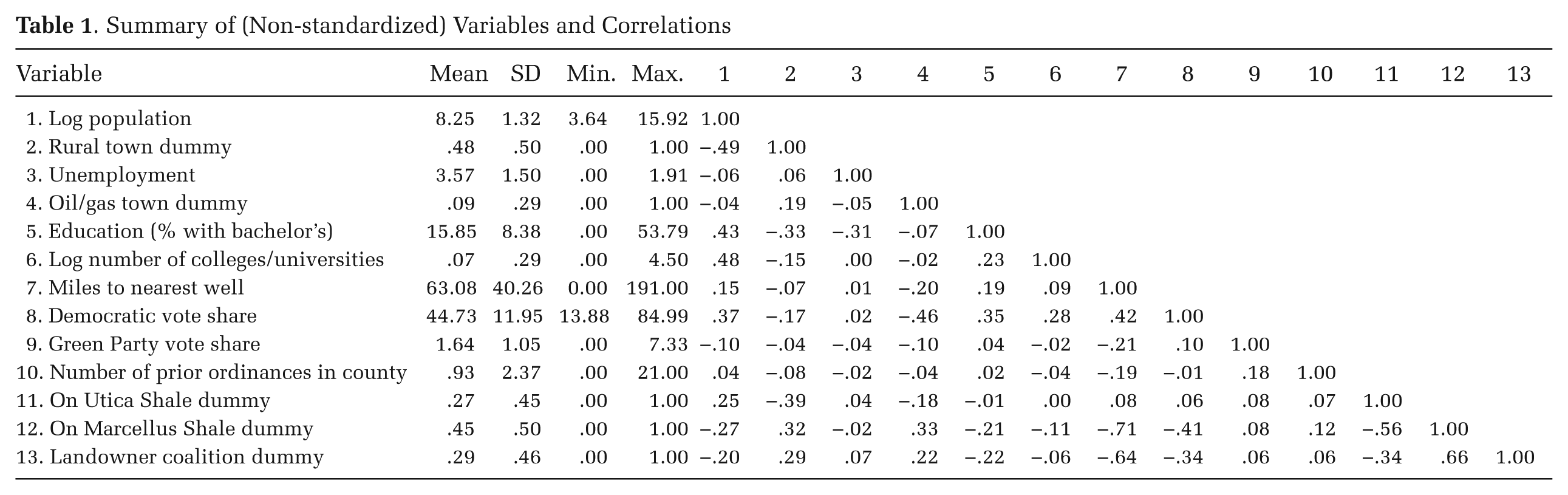
Additionally, I include two standard variables of local capacity for mobilization (McCarthy and Zald 1977). The first variable is a measure of educational attainment, operationalized as the percent of residents in a community with a bachelor’s degree and derived from the 10-year ACS. Second, existing organizations provide useful infrastructure that can be repurposed and mobilized toward a particular goal (McCarthy and Zald 1977). As in other examples of policy change (see, e.g., Vasi and Strang 2009), colleges and universities played an important role in spurring mobilization on the issue of hydraulic fracturing. I obtained data on the location of college and university campuses in New York State from the Integrated Postsecondary Education Data System (IPEDS); the models include a logged number of campuses. Finally, I include logged population size obtained from the 2010 Census. 13 Table 1 presents descriptive statistics and correlations of all variables.
Summary of (Non-standardized) Variables and Correlations
Modeling Strategy
I analyze the adoption of anti-fracking ordinances in an event history framework (Allison 2014). The outcome variable is a town’s hazard of adopting an ordinance. The event history framework is particularly suitable for modeling diffusion processes (Strang and Tuma 1993). Equation 1 specifies the theorized diffusion process,
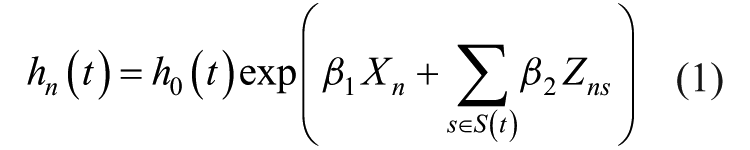
where h0(t) represents the baseline hazard rate at time t, n specifies a focal community that has not passed an ordinance by time t, and S(t) represents the set of communities that passed an ordinance prior to time t. Community-level covariates are entered into vector Xn. In the second term, Zns equals 1 if community s is in community n’s reference group (in our case, in the same county), otherwise Zns equals 0. Therefore, β2 captures the effect that the prior passage of each additional ordinance within a county has on the focal community’s hazard of adoption.
I use the Cox proportional hazards specification to estimate the model. The Cox model requires fewer assumptions than parametric specifications, because it does not restrict the baseline hazard to a particular functional form. However, because the Cox model assumes that effects are invariant over time (i.e., the estimated coefficients represent the average effect of a variable over the entire analysis period), the simple model in Equation 1 cannot be used to test the hypothesis that the effect of a community’s political profile changes over the course of the adoption period. A standard modification that permits estimation of time-dependent effects is to add an interaction term between a variable of interest and (some function of) time (Allison 2014). The final model, including diffusion and time variant effects for ideological variables is represented as follows:
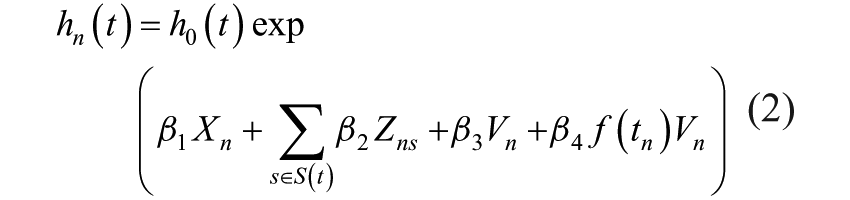
Equation 2 is identical to Equation 1, except we distinguish a vector of covariates, Vn, which we interact with a function of time, f(tn). Therefore, the effect of Vn on the hazard at time t is equal to β3 + β4 f(tn), which reduces to β3 when f(tn) = 0. In our case, vector Vn includes two variables, vote shares for Democratic and Green Party candidates, and I adopt a simple linear function of time. I tested several alternative specifications of time, which yield consistent results (see note 16 for details).
Results
Figure 2 displays the distribution of anti-fracking ordinances in New York State. Towns and cities that passed a zoning ordinance are shaded dark gray. The mismatch between likely location of gas development and the distribution of protective zoning ordinances is striking. Municipalities that passed protective bans and moratoria are concentrated in a belt surrounding the primary development region, with few ordinances passed in the targeted zone near the proposed wells. Some bans are in towns overlying parts of the Marcellus or Utica Shale formations that do not contain recoverable natural gas, and a few are removed from the shale entirely.
Table 2 presents the results of four event history models. The first includes just town-level covariates and does not interact vote shares with time. The second model adds the spatial diffusion component. The third, full model, includes diffusion and time-dependent effects of ideology. The fourth model retains all the variables from the full model, but replaces the distance variables with separate proxies for perception of risk, on the one hand, and concentration of potential economic benefits, on the other. All variables in the models, except dummy variables and miles to closest proposed well, are standardized and mean-centered for ease of interpretation.
Partial Likelihood Estimates of the Passage of Anti-Fracking Ordinances among New York Municipalities, March 2010 to July 2013
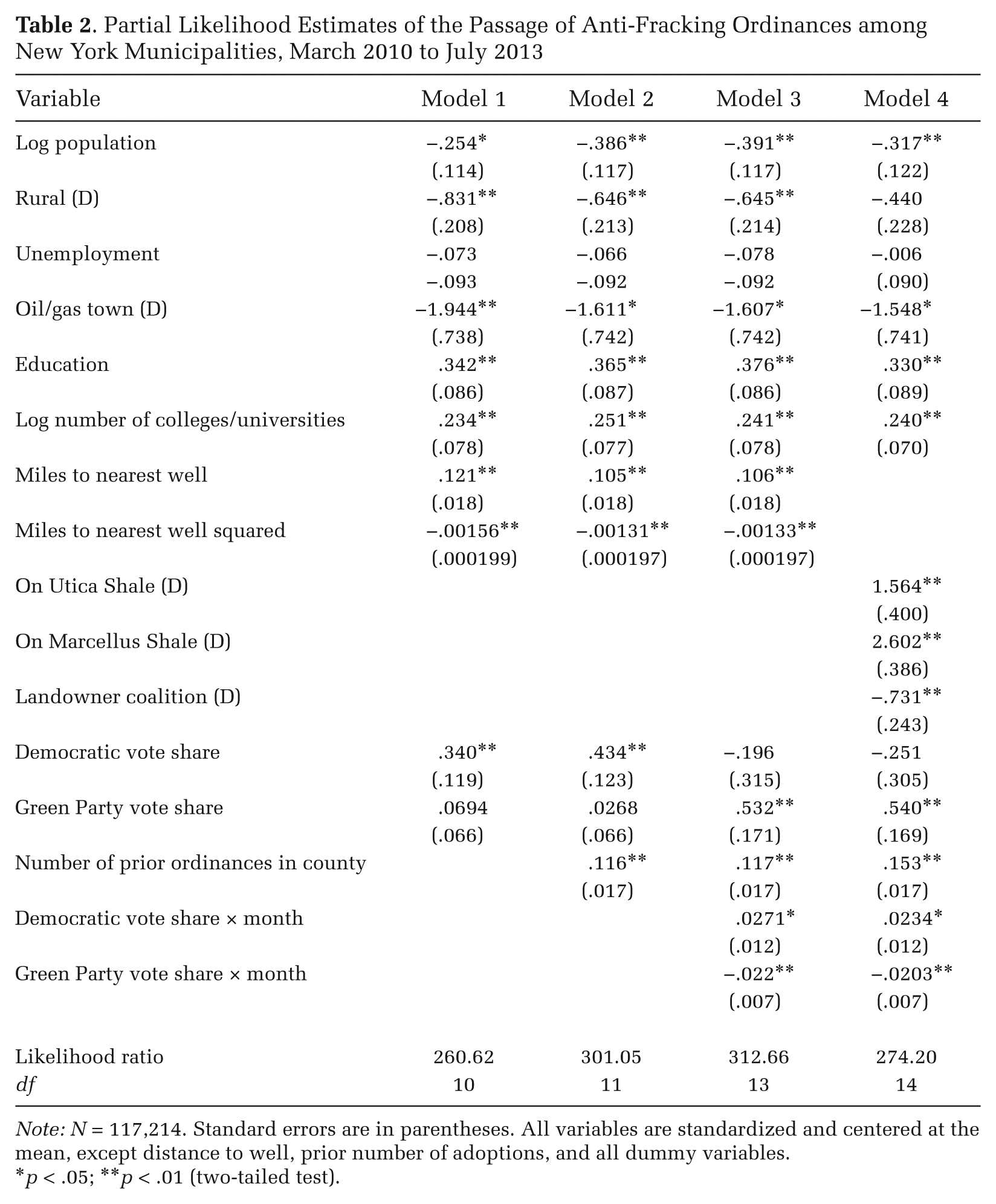
Note: N = 117,214. Standard errors are in parentheses. All variables are standardized and centered at the mean, except distance to well, prior number of adoptions, and all dummy variables.
p < .05; **p < .01 (two-tailed test).
Before turning to the primary effects of interest, I report three results that provide additional support for prior research. First, communities with more resources were more likely to mobilize against fracking. Both education and the presence of university campuses are associated with an increased hazard of ordinance adoption. Second, the results support recent research that identifies community context as important for developing motivation for mobilization (Wright and Boudet 2012). Effects of being in a rural county and having a history of oil and gas development are consistently negative, supporting the idea that residents in these communities were more likely to view gas development as an economic opportunity rather than a threat. Other than the effect of unemployment, which is not a significant predictor in any of the models, the community context effects remain statistically significant as additional variables are added to the model. Third, there is strong evidence for spatial diffusion of municipal ordinances. Adding the diffusion variable dramatically increases the model fit (Model 2 versus Model 1). In the full model (Model 3), for every additional town in the county that passes an ordinance, the remaining towns’ hazard of adoption increases by 12 percent. Successful anti-fracking mobilization spilled from one community to its neighbors, particularly within a county. I now turn to the primary effects of interest.
Proximity effects
Statistically significant coefficients on both linear and quadratic terms indicate a curvilinear relationship between distance to a proposed well and the probability of passing an anti-fracking ordinance. Figure 4 plots the relative hazard of passing a protective ordinance against distance to the closest well from the full model (Model 3). Compared to towns nearest to proposed well sites, the adoption hazard increases with distance from the site, reaching its highest value about 40 miles away, but remaining higher for towns at a distance of up to 80 miles away.
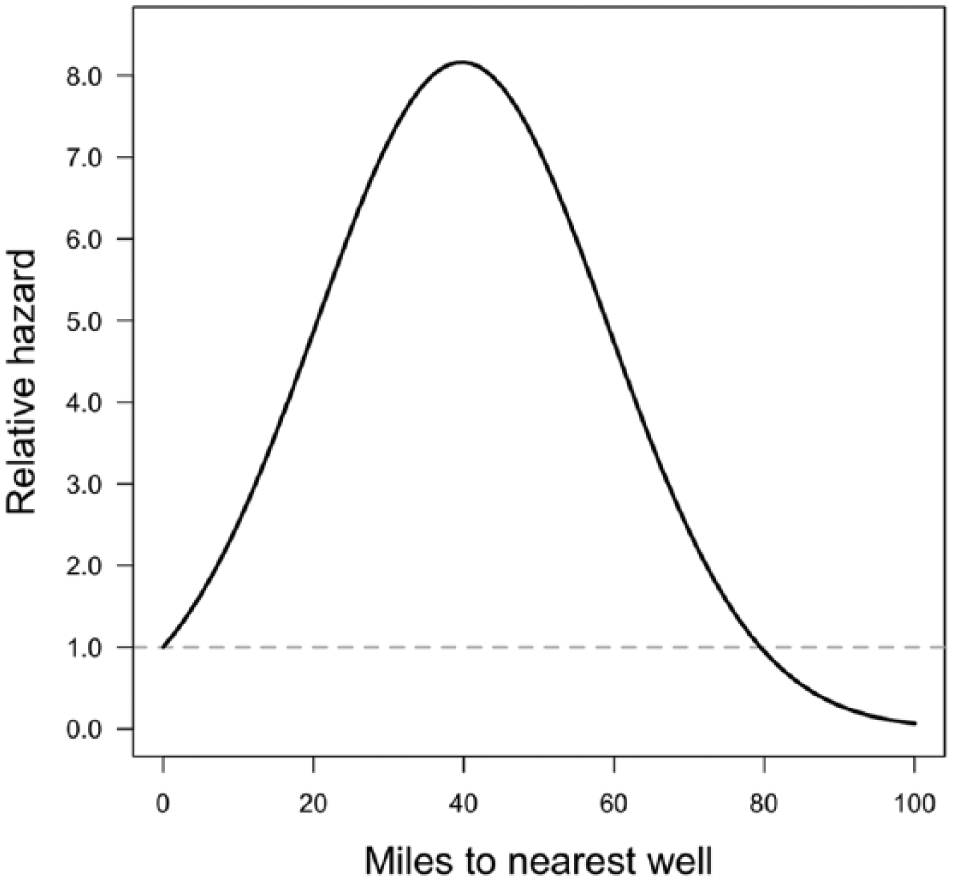
Effect of Distance to Nearest Proposed Well on Hazard of Passing an Anti-fracking Ordinance (Model 3)
First, it is extremely difficult to pass an ordinance in communities closest to development. For instance, of the 65 communities within a 10-mile radius of a proposed well, only three (4.6 percent) have passed an anti-fracking ordinance. In contrast, 16.5 percent of all New York communities have passed an ordinance. Second, despite ordinance adoption in places unlikely to see shale development, results suggest that distance does impose some restrictions on successful mobilization against fracking. The hazard of adoption declines beyond about 40 miles, and communities farther than 80 miles are less likely to pass bans than are the most proximate communities. Nonetheless, the results suggest that in the case of opposition to fracking, the size of the relevant “backyard” is vast. For all but the most remote communities, the hazard of adopting an ordinance is higher than in towns that actually have proposed wells within their borders. Nine towns that did not lie on either the Marcellus or Utica Shale passed anti-fracking ordinances. However, as Figure 4 indicates, bans were most likely to pass in a sweet spot region that was neither too close nor too far from development. 14
The models that use the proximity variable, however, do not directly test the latent processes that are expected to give rise to this geographic pattern. Model 4 attempts to distinguish between the negative effects of landowner (PIMBY) support, on the one hand, and positive effects of local (NIMBY) opposition, on the other hand. The results show, first, that communities lying on top of shale formations were much more likely to pass bans. Compared to communities not lying on any shale, municipalities lying atop both the Marcellus Shale and the Utica Shale are 12.5 times more likely to pass an anti-fracking ordinance, and municipalities that lie above just the Utica Shale are 3.8 times more likely to pass an ordinance. The presence of a landowner coalition, on the other hand, is associated with more than a two-fold decrease in a municipality’s probability of passing an ordinance. Together, these findings support the idea that the geographic sweet spot for passing anti-fracking ordinances emerged from the countervailing effects of landowner support for the industry in favorable shale regions, and a relatively diffuse perception of threat that motivated residents in surrounding communities to mobilize against fracking.
Politicization and the changing effect of a community’s political profile
The distribution of local impacts across communities (i.e., potential risks and benefits) shaped the pattern of ban adoption, but my results suggest that residents’ political orientation also influenced the strength of opposition. In Models 1 and 2, a greater share of votes for the Democratic candidate increases the hazard of adopting an anti-fracking ordinance. Results from these models show no significant effect of the Green Party vote. The more substantial and original findings come from models that consider how the effects of vote share change as the national debate over fracking intensifies (Models 3 and 4). The effect of a community’s political composition is not constant over time. 15 Figure 5 presents the estimated trends over time in the relative hazards associated with a one standard deviation change in the two vote share variables. Green Party vote share has a large and positive effect on the adoption of an anti-fracking ordinance, but the effect is limited to the early part of the episode. In March 2010, a standard deviation increase in the Green Party vote share (1.05 percent) corresponded to a 70 percent increase in the hazard of adoption. The effect decreased and was not statistically distinguishable from zero within the first year of the analysis period. This result is consistent with literature on policy diffusion, which finds that in the earliest adoption stages, the presence of strong advocates is essential (e.g., Tolbert and Zucker 1983).
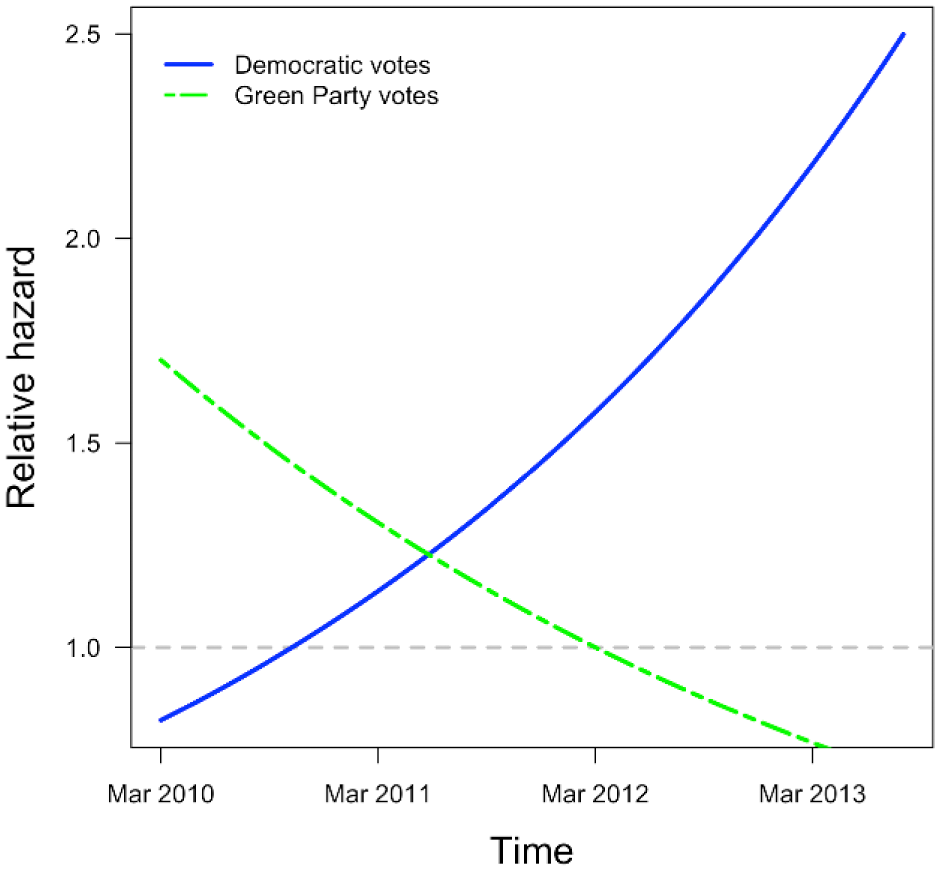
Changing Effect of Vote Share on Hazard of Passing an Anti-fracking Ordinance (Model 3)
The effect of Democratic vote share, by contrast, increased dramatically over the course of the adoption period. At the beginning, communities with more Democratic supporters were not more likely to pass anti-fracking ordinances. But the effect of Democratic vote share increased rapidly as the fracking debate unfolded (Figure 5). By the end of the study period (July 2013), a one standard deviation difference in Democratic vote share (11.78 percent) corresponds with an impressive 143 percent increase in the probability of adopting an anti-fracking ordinance. These results support the idea that composition of the local anti-fracking movement changed over time. Aside from the role that Green Party supporters played in bringing attention to the issue in 2010, early opposition to fracking appears to have been based on local concerns, not partisan identities. As the debate surrounding fracking politicized, however, opponents of fracking found allies among Democrats. This shift corresponds with the acceleration in the diffusion of anti-fracking ordinances observed in Figure 1. 16
A complementary interpretation of the increasing effect of Democratic vote share for ordinance adoption is that Republican-leaning communities became less likely to ban fracking over time. Due to multicollinearity, it is not possible to distinguish these effects statistically. A model that specifies Republican vote share instead of Democratic vote share yields results symmetrical to the ones presented in Table 2. Republican vote share has no effect on adopting an ordinance at the beginning of the episode, but a standard deviation increase in Republican vote share predicts a 64 percent decrease in the probability of adoption by the end of the analysis period (see Table S4 in the online supplement for results of models using Republican vote share).
What effect did the mobilization of political partisans have on the geographic distribution of ban adoptions? If, as I argued, political partisans mobilized on the basis of politicized rather than local conceptions of fracking and its impacts, the distribution of “objective” risks and benefits should have less influence on their mobilization. Communities with large Democratic constituencies should thus be more likely to pass bans outside the geographic sweet spot identified earlier. In distant communities, where industry poses little or no credible threat to residents, partisan mobilization may still provide an impetus for taking symbolic action against fracking. And in proximate communities, sufficient mobilization of partisans may tip the balance in favor of fracking opponents.
To test this idea, I examine the dispersion of town bans around the sweet spot for communities that have different political profiles. Figure 6 presents the geographic distribution of ordinance adoption over time. The scatterplot shows that, as fracking gained broad media attention, the geographic range of ordinance adoption expanded in both directions, but Democratic-leaning communities (circles in Figure 6; defined as having over 50.9 percent [mean plus .5 SDs] Democratic vote share) are overrepresented among the outliers. For simplicity, I split the time period in two. In the first half, ending in November 2011, the standard deviations of proximity to a proposed well were not significantly different between Democratic-leaning communities and other communities that passed bans (SD = 12.2 and SD = 12.1 miles for Democratic and other communities, respectively). In the second half, however, bans passed by Democratic-leaning communities were significantly more dispersed around the sweet spot than were bans passed by other communities (SD = 23.0 and SD = 15.7 miles for Democratic and other communities, respectively). 17 The four closest and seven farthest bans were passed by communities where voters gave absolute majorities to the Democratic candidate.
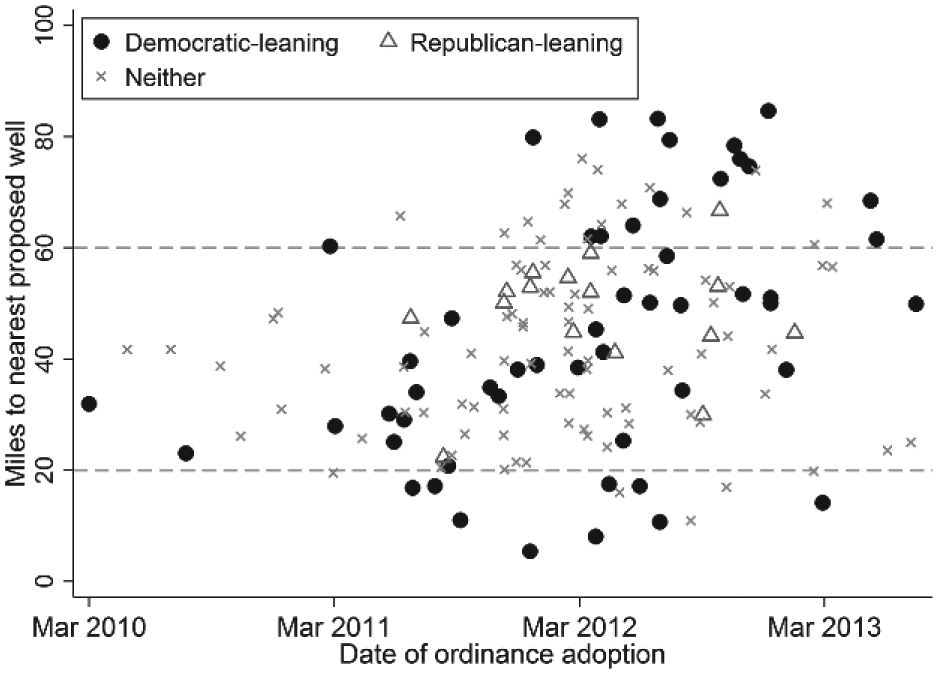
Geographic Distribution of Towns That Passed an Anti-fracking Ordinance over Time
Mobilization of partisans thus played a key role in the spread of anti-fracking laws. The “not in anyone’s backyard” attitude of partisan opponents helps explain the increased geographic dispersion of town bans. The NIABY view strengthened the opposition in proximate communities, and even more strikingly, it enabled the town ban movement to spread to ever more distant communities—communities that would likely not have perceived a stake in the debate over fracking had the issue not become politicized.
Supplementary Analyses
Consistent with the proposed explanation, event history analyses show that ordinances passed in communities where one would expect little support for fracking but significant local opposition—due either to perceived risk or partisan mobilization. However, because the dependent variable in the analyses is adoption of an ordinance (a successful outcome of anti-fracking mobilization), the results cannot distinguish between cases where local opposition mobilized only to be thwarted by counter-mobilization from supporters, and cases where mobilization against fracking never emerged. This distinction is especially important in the region targeted for development, because it implies different interpretations of my results. If local decisions in targeted regions were highly contentious, residents likely mobilized based on competing local conceptions of shale gas development, and geographically concentrated support for development was likely formidable. The alternative, that opposition to fracking never emerged in targeted regions, would suggest that risks were either not perceived or not acted upon.
To rule out this alternative, I examined the emergence of town ban movements, including in towns that ultimately failed to adopt an ordinance. Fractracker kept a record of towns that had an organized movement for a fracking ban, based on whether local residents had actively lobbied the town board for a local ordinance. I used this information to create an indicator variable for a ban movement in a town. As of July 2013, Fractracker documented movements for a ban in 245 New York communities, of which 81 failed to pass an ordinance.
Where did movements emerge but fail to achieve a local ban? Table 3 presents results from logistic regression models predicting a ban movement. Model 1 includes a linear spline with two knots, at 40.6 miles and 72.7 miles, for the proximity variable. These knots are evenly spaced by percentile (33.3 and 66.6 percent of the proximity variable), and the first knot at 40.6 miles represents approximately the middle of the sweet spot for passing an ordinance. If mobilization was equally likely in the targeted area as in the sweet spot, we should observe a flat slope before the first knot. 18 Results confirm that there is no effect of distance to the well on the probability of movement emergence until the first knot at 40.6 miles. The probability of movement emergence then decreases with distance, as indicated by significant negative coefficients on the second and third spline variables. Thus, communities within a 40-mile radius of a proposed well were equally likely to develop movements against fracking (conditional on the other variables), but the more proximate of these were much less likely to succeed. Model 2 replaces the proximity variables with dummies for location on the Marcellus and Utica shale formations and a dummy for the presence of a landowner coalition. Results from this model show that the probability of movement emergence was much higher in communities lying atop one or both shale formations. However, in contrast to models predicting adoption of laws, presence of landowner coalitions did not have a significant deterrent effect on movement emergence. In other words, movements emerged but were defeated.
Logistic Regression Models of Movement toward Anti-Fracking Ordinances among New York Municipalities
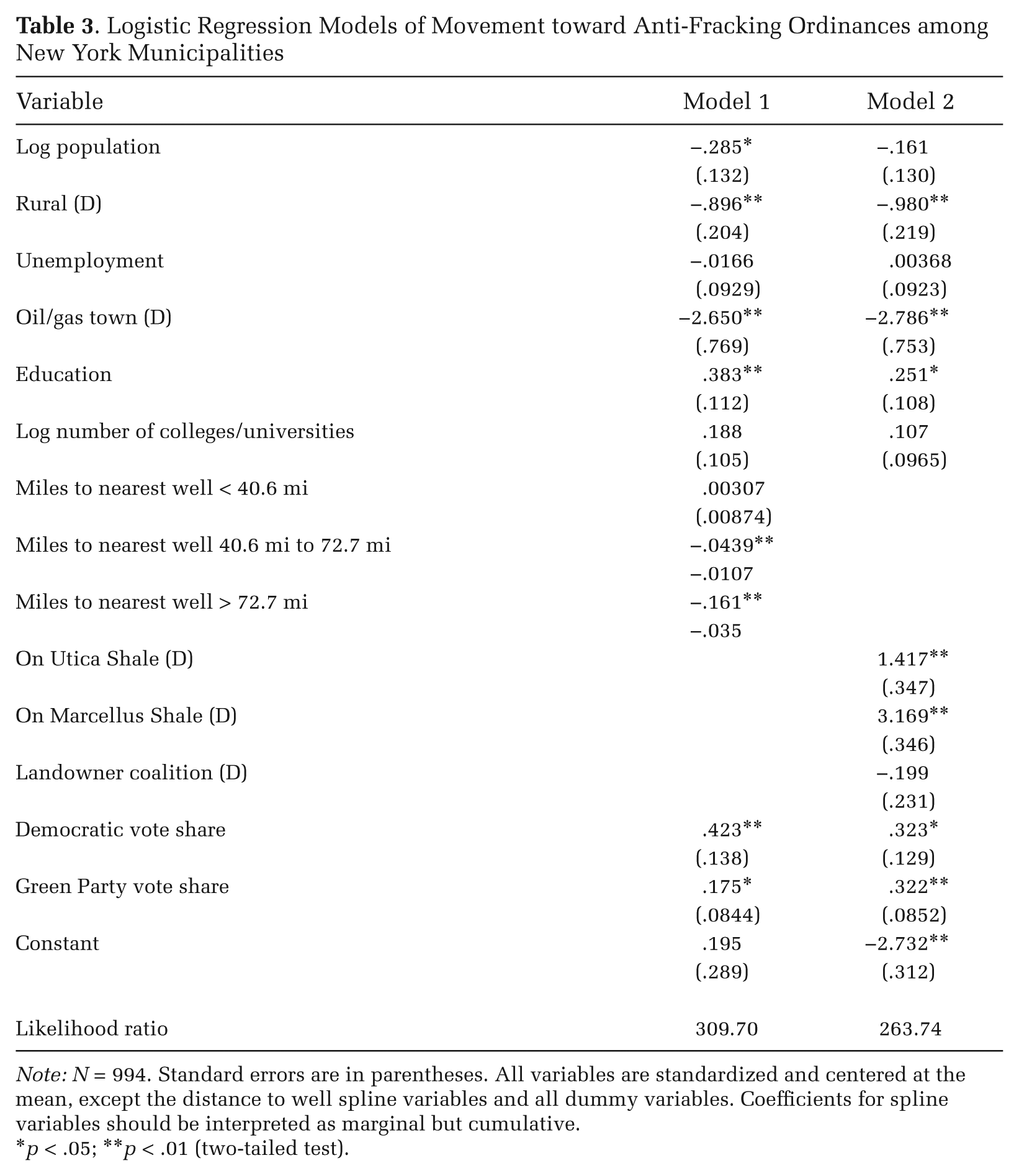
Note: N = 994. Standard errors are in parentheses. All variables are standardized and centered at the mean, except the distance to well spline variables and all dummy variables. Coefficients for spline variables should be interpreted as marginal but cumulative.
p < .05; **p < .01 (two-tailed test).
Examining the other predictors of movement emergence, we find, not surprisingly, that many of the factors important for movement success predict movement emergence. Democratic vote share and Green Party vote share predict the emergence of a movement, and community context (aside from unemployment) and organizational capacity variables are also significant and in the expected direction.
Model results suggest that, in regions closest to proposed wells, anti-fracking mobilization was met with countermobilization by supporters of shale gas development. To assess this contentiousness directly, I examined the roll call votes of town boards that passed anti-fracking laws. Drawing on public documents and newspaper articles about each town that adopted an ordinance, I obtained a record of the roll call vote on the law for 137 of the 164 communities. As expected, communities closer to proposed wells had much higher incidence of contentious town board votes. Of the 12 communities that passed ordinances within 20 miles of a proposed well (and for which roll call data are available), seven included dissenting town board members (58 percent). By contrast, 85 percent of all ordinances were adopted with unanimous town board support.
But what was the nature of local support for fracking in communities targeted for development? In lobbying in favor of shale gas development, landowner coalitions purported to represent the interests of a broad segment of town residents, but classic accounts suggest that development is endorsed by business and political elites. Elites are positioned to capture a larger share of the economic benefits from development and can also better protect themselves and their property from potential adverse impacts (Gaventa 1980). Resolving this issue is beyond the scope of this study, but I offer some preliminary evidence from a community that had over 40 percent of its land under gas company lease—among communities that passed a ban, this town was one of the most proximate to proposed development (15 miles to the nearest well). 19
Town board meetings were contentious affairs in this community. Over the course of four months, the town held four public hearings on the proposed local ban, and 95 residents spoke at least once. Among those, 21 spoke in favor of fracking (and against the proposed ban). Considering that a typical town board hearing draws only a few public comments, this is evidence of a significant level of mobilization. One difference is clear: supporters of fracking tended to be large landowners. In comparison to the median fracking opponent who owned just 2.6 acres of land, the median supporter owned 86.8 acres. 20 This provides some evidence that economic interests were an important source of motivation for supporters of fracking.
However, despite the large number of acres that supporters owned, this should not be taken as clear evidence that fracking supporters were community elites. In the rural economy of upstate New York, many large landowners better fit the profile of “land-rich but cash poor.” So these results may also reflect findings from previous studies (e.g., Wright and Boudet 2012) that experience of economic hardship leads residents to emphasize economic benefits over potential costs of risky projects. Nonetheless, data from this heavily leased community show that support for fracking had a substantial base among local residents, and large landowners were overrepresented among supporters.
Discussion and Conclusions
The municipal anti-fracking movement provides an ideal opportunity to examine why some communities prohibit industrial land uses and others do not. Results from event history analyses of anti-fracking ordinance adoption in New York State demonstrate the importance of delineating alternative bases of opposition and support for industrial projects. People mobilize for different reasons, based on multiple conceptions of the risks and rewards of industrial projects. Explaining local policy change requires attention to the distribution of objective risks and benefits, but also to the nature and scale of politicized debates surrounding the proposed industry.
In the context of the local opposition to fracking in New York, a framework that incorporates risks and rewards as well as politicization permits us to explain a key empirical puzzle: communities that faced the greatest likelihood of seeing shale gas development were unlikely to pass restrictive ordinances, whereas communities on the periphery of development regions were much more successful at banning the industry. Previous research has paid little attention to local support for industrial projects, but I find that support for gas development played a critical role in preventing communities in the targeted region from passing anti-fracking ordinances. What some residents viewed as a locally unwanted land use (LULU), others saw as an economic opportunity (see also Jerolmack and Walker 2016; Wright and Boudet 2012). My results offer several specific insights into the conditions under which a positive conception of fracking prevailed. First, the results support recent findings that elements of local context can lead residents to emphasize economic benefits of proposed industrial projects (e.g., Wright and Boudet 2012). Particular to fracking, a rural economy and historic experience with the oil and gas industry decreased the chances that a community would mobilize for and pass a ban. Second, support for fracking was motivated by a material interest in shale gas development, and thus was strongest in communities where the prospects for development were most favorable. Evidence based on individual-level data from one community further suggests that support concentrated among large landowners who stood to gain financially from leasing their land.
My finding about the emergence of a sweet spot for ordinance adoption on the periphery of the development region reinforces recent calls for greater attention to spatial scale for understanding social processes (Andrews and Seguin 2015; Downey 2006). The sweet spot reflected the divergent geographic scales at which risks and economic benefits of shale gas development could be credibly framed. The inherently regional nature of shale gas development provided a diffuse geographic basis for perceiving risks, but the scale at which risk can be credibly framed may be smaller in other cases (see, e.g., Gravelle and Lachapelle 2015). In general, different distributions of perceived risks and rewards would lead to different spatial patterns of movement emergence and success.
My findings also contribute to recent scholarly debates about the impact of politicized discourse and ideological polarization on contentious politics. Challenging the view that residents put aside their ideological differences in the face of a local industrial threat, my results suggest that partisanship was an essential lens that colored residents’ perceptions and contributed to local land use decisions. By leveraging the temporal variation in politicized public debate about fracking, I identify a shift over time toward Democratic partisans as a major basis of opposition to fracking. Reflecting a “not in anyone’s backyard”-style of mobilization by Democratic partisans, majority-Democrat communities outside the geographic sweet spot—including some communities that did not lie on either of the targeted shale formations—became more likely to pass anti-fracking ordinances. The highly politicized debate about fracking created an environment where the composition of residents’ political orientations emerged as a key factor driving local land use decisions. The state-level ban on fracking recently adopted by Vermont can also be interpreted in this light. Vermont holds no unconventional oil or gas reserves, but, as one of the most liberal states in the country, became the first state to ban the practice—a move that was entirely symbolic.
Whereas my focus has been primarily on the positive effect that the mobilization of Democratic partisans had on ordinance adoption, the increasing negative effect of Republican vote share provides a complementary interpretation. The Town of Covert, a rural community on the periphery of the targeted development region, offers a vivid illustration of the salience of partisan identities in local debates over fracking. In Covert, supporters of shale gas development sent postcards to all town residents that warned, “Liberals are coming to Covert!” The postcards included politically laden images of peace signs and a flower-patterned 1960s Volkswagen Beetle. The campaign urged conservative residents to reject anti-fracking candidates for the town board by suggesting that the fracking ban movement represents the extreme political left.
Several limitations in this study suggest important directions for future research. First, I do not directly measure the different conceptions of fracking behind the alternative bases of opposition and support. Instead, I rely on the variation of underlying risks and benefits across space and the variation in public discourse about fracking over time to argue that different contexts were more or less amenable to particular conceptions. Different conceptions, however, should be observable directly in how residents construct the issue, and future research should seek to measure how such constructions vary across and within communities. Ethnographic approaches, in particular, would help unpack how divergent assessments of the industry emerge (e.g., Auyero and Swistun 2008; Jerolmack and Walker 2016). Additionally, research that elicits open-ended responses (e.g., Boudet et al. 2014) could complement common survey approaches to uncover important heterogeneity in respondents’ conceptions of an industry.
Relatedly, the current study documents the increasing salience of political identities in local contests over shale gas development, but it does not address why popular positions toward the industry became polarized. Previous work suggests some potential explanations. One line of research finds that positions on a controversial issue can become entrenched along partisan lines when intense debates about the issue expose local political divisions (Baldassarri and Bearman 2007; McVeigh, Cunningham, and Farrell 2014). These locally salient divisions then come to represent the broader partisan divide that people perceive. Other recent research suggests that framing efforts by political elites encourage polarization on contested political issues (Farrell 2015; Walker 2014). Future research might examine how the interaction of these two factors contributed to the partisan polarization surrounding fracking, as well as the long-term effects it might have on partisan politics within communities where the battle lines were drawn most starkly. In general, the politically polarized climate in the United States calls for greater attention to how mobilization of partisan identities affects movements’ abilities to build effective coalitions and contribute to policy change (see Heaney and Rojas 2015).
Finally, the current study does not directly examine the mobilizing structures of fracking opponents and supporters. The results do suggest that landowner coalitions were critical to organizing support for gas development. However, to the extent that NIMBY and ideological opponents formed alternative bases of opposition, we might expect that they learned about fracking and mobilized through different organizations and networks (Gould 1995). Recent research suggests that partisans are especially amenable to “supply side” grassroots mobilization, where the supply is a pool of ideologically committed activists who have a history of participation in grassroots campaigns (Brady, Schlozman, and Verba 1999; Walker 2014). This work also identifies the role of multi-issue progressive organizations in targeting and mobilizing these activists (Heaney and Rojas 2015; Karpf 2012). It seems likely that the increased engagement of such organizations may account for the increased role of partisanship. Alongside small neighborhood associations of “concerned residents,” the list of organizational members in the umbrella group “New Yorkers against Fracking” includes organizations previously identified by Heaney and Rojas (2015) as key for mobilizing political partisans in the anti-war movement (e.g., MoveOn.org). It remains an open question, however, whether these organizations disseminated and reinforced alternative conceptions of fracking and what role they played in mobilizing participation across different communities.
Footnotes
Appendix
Acknowledgements
I wish to thank David Strang, Ben Cornwell, Sidney Tarrow, David Meyer, Alicia Eads, Dan Sherman, Roman Galperin, Chan Suh, Amanda Buday, Dan DellaPosta, the anonymous reviewers, and the ASR editors for valuable comments on previous drafts of the article. Early versions of the article were presented and received valuable feedback at the meeting of the American Sociological Association, San Francisco, August 2014; the Young Scholars Conference, University of Notre Dame, May 2015; and the graduate student research seminar at Cornell.
Notes
References
Supplementary Material
Please find the following supplemental material available below.
For Open Access articles published under a Creative Commons License, all supplemental material carries the same license as the article it is associated with.
For non-Open Access articles published, all supplemental material carries a non-exclusive license, and permission requests for re-use of supplemental material or any part of supplemental material shall be sent directly to the copyright owner as specified in the copyright notice associated with the article.
