Burton Beerman, professor of music composition and theory and director of the Analog and Digital Music and Recording Studios at Bowling Green State University, has taken on the duties of director of the Mid-American Center for Contemporary Music at the university.
Carl Fischer has signed composer Martin Bresnick to an exclusive agreement to represent his catalog. Bresnick is professor of composition and coordinator of the composition department at Yale University School of Music. His recent works include Pine Eyes, Bird as Prophet, and Sinfonia,
Dennis Russell Davies, chief conductor of the Vienna Radio Symphony Orchestra and the Stuttgart Chamber Orchestra, will add the posts of chief conductor and music director of the Bruckner Orchester Linz and chief conductor of Linz Opera to his list of duties in 2002. Starting in 2000, Davies will also become conductor laureate of the American Composers Orchestra. He continues as full-time professor of orchestral conducting at the Salzburg Mozarteum.
Maximilian Dimoff assumed his new role as head of the double bass department at the Cleveland Institute of Music last fall. Dimoff has been principal double bass of the Cleveland Orchestra since February 1997. Prior to his appointment with the Cleveland Orchestra, he served as principal bass of the San Antonio Symphony. From 1992 to 1994, Dimoff was a member of Chicago's Grant Park Symphony and, in 1993, became a member of the Seattle Symphony Orchestra.
Lucas Drew, professor of double bass at the University of Miami and principal bass of the Florida Philharmonic, is retiring as artistic director of the Highlands-Cashiers (North Carolina) Chamber Music Festival after eighteen years. William Ransom of Emory University will assume the duties for the year 2000.
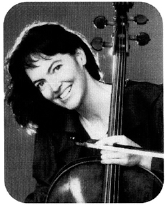
Linda Jennings was appointed assistant professor of music at the Department of Music, University of Alaska in Fairbanks, for the 1999-2000 academic year. She now teaches cello, string bass, and music history and performs in the faculty string trio, the faculty chamber orchestra, and the Fairbanks Symphony Orchestra as its principal cellist. Jennings completed requirements for the DMA degree in cello performance at the University of Texas at Austin in July 1999. She had been interim director of the UT String Project for the past two years.
Composer Jeffrey Mumford is serving as the artist-in-residence for the College of Musical Arts at Bowling Green State University for the 1999-2000 academic year.
Violinist Robin Sharp joins Anna Presler, violin, Anna Kruger, viola, and Andrew Luchansky, cello, to complete the Sun Quartet. The quartet members are artists-in-residence and faculty members at California State University, Sacramento.
Cellist David Soyer, member of the Guarneri String Quartet, has decided to cut back on his travel with the quartet in the 2000-2001 season. He will continue to perform with members John Dalley, Arnold Steinhardt, and Michael Tree on the East Coast, including engagements in New York, Boston, Philadelphia, and Washington, D.C. Soyer's protégé, Peter Wiley, will replace him, however, on the lour of other North American destinations, Europe, China, and Japan.
The Institute for the Arts and Humanistic Studies at Penn State University named Associate Professor of Music Kim Cook as Term Fellow for the period of July 1999 to June 2001. Cook has joined four other Term Fellows as part of the research program at the institute. Over a two-year period they receive a research budget and limited administrative assistance; with the funding provided, Cook will perform a program of piano and cello music from the Americas at the National Gallery in Washington, D.C., and at Wigmore Hall in London.
Kim Cook
University of New Mexico Offers String Pedagogy Program
The University of New Mexico Department of Music is offering a new undergraduate degree program in string pedagogy under the direction of Susan Kempten This degree may be taken alone or combined with studies in performance or music education. Students in the program will teach in the UNM Preparatory Lab School. The program will initially be offered to students of violin and viola; cello and bass will be introduced soon. For more information, contact Susan Kempter, Department of Music, University of New Mexico, Albuquerque, NM 87131; tel. 505-293-5825; fax 505-293-9204.
) The deadline for the 2000 Fischoff National Chamber Music Competition, scheduled for May 12, 13, and 14, 2000 at Indiana University at South Bend, is March 8, 2000. The competition is open to instrumental ensembles of three to six members who may compete in the junior or senior divisions. For more information, contact Fisch off Chamber Music Association, P.O. Box 1303, South Bend, IN 46624-1303; tel. 219-237-4871.
) The Coleman Chamber Ensemble Competition will be held April 29 to 30, 2000 in the Ramo Auditorium at California Institute of Technology. Over $10,000 in awards will be distributed through the Coleman-Barstow Award for Strings, the Coleman Award for Woodwinds or Brass, the Saunderson Award, and the Russell Award, Only non-professional ensembles of three to six players with an average age of less than twenty-six years are eligible. The deadline for application is February 23, 2000. For more information, call 626-793-4191; fax 818-787-1294; email: krfccma@aol.com; or visit http://coleman.caltech.edu.
) The forty-ninth International Music Competition of the ARD Radio is to be held in Munich, Germany, September 5 through 22, 2000. Musicians of all nationalities are eligible to participate in any of five categories: voice, viola, flute, piano duo, and string quartet. Deadline for viola applications is April 20, 2000. Piano duo and string quartet deadline is July 1, 2000. For more information and a complete list of instructions and application, contact Internationaler Musikwettbewerb, Bayerischer Rundfunk, D-80300 Munchen; tel. 0-89-59-00-2471; fax 0-89-59-00-3573; email:ard.conc@br-mail.de; or visit www.ard-musikwettbewerb.de.
) The deadline for applications for the next Virtu Foundation Scholarship Competition is March 15, 2000. Applications and instructions are available on the foundation web site: www.virtufoundation.org/app.html. The Virtu Foundation Scholarship Program, which is directed toward career musicians, awards high-quality, career-altering violins, violas, and cellos based on musical aptitude, which is judged through a competition. The scholarship instruments are placed with the musicians for two years. Through assessments of progress and the suitability of the instrument to the student, the placements may be extended. For more information, visit the foundation's web site or contact Beth Perry, 804-445-9404; email: info@virtufoundation.org.
> VISION 20/20, MENC'S HOUSEWRIGHT SYMPOSIUM IN MUSIC EDUCATION, was held September 23 through 26, 1999 at Florida State University. Member-at-Large Doris Gazda represented ASTA with NSOA at the symposium. Six presentations were given, followed by a participant discussion group, each day of the symposium.
The six presentations were:
“Why is music essential for all humans?” by Bennett Reimer, Northwestern University, with a response by Robert Glidden, president of Ohio University happenings
“Why study music?” by J. Terry Gates of SUNY-Buffalo, with a response by Sam Hope, executive director of NASM
University of Michigan Paul Lehman's “What instructional content will best facilitate teaching the skills and knowledge in the National Standards?” with a response by Jane Walters, commissioner of education in Tennessee
“How can all people be involved in meaningful music participation?” by Judith Jellison, University of Texas, Austin, with a response by Warrick Carter of the Wait Disney Corporation
“What are the societal and technological changes that will influence teaching music?” by Carlesta Spearman, formerly of Keene State College in New Hampshire, with a response by Sandy Feldstein, CEO of Carl Fischer Music Company
“What should be the relationship between schools and other sources of music learning?” by Louisiana State University's Cornelia Yarbrough with a response by Richard Beil, executive director of Young Audiences.
happening
The American Symphony Orchestra League, in cooperation with the Florida West Coast Symphony, Inc., will present the second National Youth Orchestra Festival from June 21 to 28, 2000, in Sarasota, Florida. The festival will bring together approximately 500 of America's promising young musicians to receive training in the art and technique of orchestral playing.
Five youth orchestras were chosen to participate in the festival through a two-part audition process. The year 2000 participants are the American Youth Philharmonic (Virginia), Luis Haza, music director; Atlanta Symphony Youth Orchestra, Jere Flint, conductor; Greater Dallas Youth Orchestra, Richard Giangiulio, music director and conductor; Milwaukee Youth Symphony Orchestra, Margery Deutsch, music director; and Minnesota Youth Symphonies, Claudette and Manny Laureano, music directors.
Seventeen distinguished faculty members from music schools and orchestras across the country will run the festival, including Apo Hsu, artistic director with the Women's Philharmonic and music director of the Springfield (Missouri) Symphony; Benjamin Zander, music director of New England Conservatory Youth Philharmonic and the Boston Philharmonic orchestras; Paul Ellison, professor of double bass at Rice University's Shepherd School of Music; and Michael Webster, artistic director of the Houston Youth Symphony and Ballet.
Sixty-five young bassists from the Midwest and beyond participated in the Sixth Annual Bass Conference held April 2 and 3, 1999 at Edgewood College in Madison, Wisconsin. Master classes, workshops, musicianship classes, warm-ups, and fundamentals were held during the two-day event. Clinicians included Eva Brauninger, Richard Davis, Virginia Dixon, Peter Dominguez, Diana Gannett, Barry Green, Larry Hutchinson, Jerry Jemmott, John Kennedy, Bill Koehler, Meridith Lewis, David Murray, Jackie Pickett, Rufus Reid, and Paul Robinson. The next conference is scheduled for April 21 and 22, 2000.
The Music Teachers National Association (MTNA) 2000 National Convention will take place March 25 to 29, 2000 in Minneapolis. The convention will offer continuing education opportunities for teachers of all instruments. Events include many educational sessions for teachers of piano, strings, voice, percussion, and woodwinds; the MTNA National Student Performance Competition finals; Pedagogy Saturday IV; master classes; poster sessions; concerts; more than 100 exhibit booths; and much more. For more information about the MTNA National Convention or MTNA, please contact MTNA national headquarters at 513-421-1420; email: mmanet@mtna.org; or visit the web site at www.mtna.org
The dates for this year's New Directions Cello Festival are June 16 to 18, 2000 at the University of Connecticut in Storrs. Guest artists will include Dutch improvisational cellist Ernst Reijsiger, rock and electronic cellist Jeffrey McFarland-Johnson, and celtic/fidding cellist Abby Newton. For more information, visit the New Directions Cello Association's new URL; www.newdirectionscello.com
Leonard Slatkin, the National Symphony Orchestra, and the Kennedy Center for the Performing Arts in partnership with the American Symphony Orchestra League have created a National Conducting Institute to be held in the summer of 2000 at the Kennedy Center. The institute is designed to assist conductors of academic, community or part-time orchestras in making the transition to conducting and leading major, full-time professional orchestras. The institute will be divided into three parts held May 15 through 19, May 30 through June 3, and July 2 through 8. Four participants will be selected to work with Maestro Slatkin, although others may be chosen to audit the institute. For more information, contact the National Conducting Institute, Attn. Jamie van der Vink, Director of Operations for Classical Music, Kennedy Center, Washington, D.C. 20566-0001.
The World Cello Congress III announces changes to the original criteria for its newly named International Master Class Audition. The changes are in the form of: revised guidelines, applicant's choice of music, and no application fee. Those chosen from the audition will perform individually in master classes with one of the following master artists-teachers:
Erling Blondal Bengtsson (Denmark/USA), Lluis Claret (Spain), Timodiy Eddy (USA), David Geringas (Lithuania/Germany), Bernard Greenhouse (USA), Natalia Gutman (Russia), Frans Helmerson (Sweden), Gary Hoffman (USA/France), Ko Iwasaki (Japan), Paul Katz (USA), Laurence Lesser (USA), Yo-Yo Ma (USA), Philippe Muller (France), Zara Nelsova (Canada/USA), Arto Noras (Finland), Boris Pergamenschikov (Russia/Germany), Janos Starker (USA), Tsuyoshi Tsutsumi (Japan), Mihaly Virizlay (Hungary/USA), and Uzi Wiesel (Israel).
Those selected to perform will be admitted to all of the sixty-three events free of charge (a savings of $325). The audition is open to all cellists ages twelve through twenty-four.
The extended deadline is March 17. 2000.
For information and brochure
contact: Dr. Helene Breazeale at tel. 410-830-3451, fax 410-830-4012, email: hbreazeale@towson.edu; web sitewww.towson,edu/~breazeal/cello.htm; or by mail to World Cello Congress III, Towson University, 8000 York Road, Baltimore, MD 21252-0001, USA
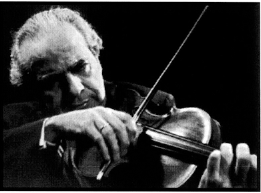
Violinist and chamber musician Felix Galimir, eighty-nine, died November 10, 1999 at his home in Manhattan. Born in Vienna on May 12, 1910, Galimir served on the faculties of the Juilliard School, Mannes College of Music in New York, and the Curtis Institute in Philadelphia. He also worked with pianist Rudolf Serkin at the Marlboro Festival in Vermont, appearing regularly with Musicians Felix Galimir from Marlboro, the touring ensembles that keep the festival's name, Galimir was also a member of the New York Philomusica.
In 1995 he received ASTA's Distinguished Service Award.
Felix Galimir
In Remembrance
In 1929, he formed the Galimir String Quartet, a chamber group drat performed until 1993. Galimir was hired by the Vienna Philharmonic in 1936, but was dismissed from the orchestra the following year because of his Jewish heritage. He soon joined the Israel Philharmonic, however, newly founded by Bronislaw Huberman. In 1938, he immigrated to New York, where he held a recital at Town Hall, did some freelance performing for one of the city's radio stations, and played for Arturo Toscanini's NBC Symphony before becoming involved with the New York Philomusica and Marlboro.
Jacob Glick, violist, teacher, and chamber music coach, died November 1, 1999. He was seventy-three. Glick performed with the Group for Contemporary Chamber Players and was a member of the Penn Contemporary Players at the University of Pennsylvania, as well as the Jennings String Quartet and the Silvermine String Quartet. He studied viola at the New School of Music in Philadelphia, the Peabody Conservatory in Baltimore, and the Yale School of Music. He was a member of the faculty at Bennington College for more than twenty yean and spent a year at the Shanghai Conservatory as visiting professor in the 1980s.
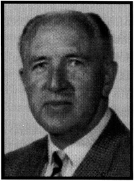
Bruce Tomlinson, born in 1910, died on October 6, 1999 while traveling in Cannes, France just a few days short of his eighty-ninth birthday. Throughout his career he was an activist, promoting music and music education. He was instrumental in founding the Riverside Community Concert Association in 1947 and was a co-founder of the Riverside Symphony in 1960, where he served as principal cellist for twenty-five years. He also played in the Riverside Opera and the Redland Bowl orchestras, and was a member of the Riverside String Trio. He was a dedicated ASTA stalwart from the earliest days of this organization. He edited the California ASTA newsletter for twenty years and presided over the annual ASTA Solo Competition in his community for many years.
Bruce Tomlinson
Tomlinson held a degree in economics from Stanford University and a master's in music from the College of the Pacific. He had a distinguished career as an educator and orchestra instructor, teaching in the Riverside Unified School District for thirty years. He was also a member of tine Los Angeles Violoncello Society.
Under the guidance of Chamber Music America, six chamber ensembles will form season-long Rural Residency Partnerships with host communities. The musicians will devote half their time to community service as music educators and performers in schools, hospitals, formal venues, and community centers, and the other half working on their own professional development. Participating ensembles are:
(Fry Street Quartet) partnered with Hickory, North Carolina;
(Quadre) in residence in Selma, Alabama;
(Huntington Brass Quintet) partnered with Stephenville, Texas;
(Duo Medici) (violin and piano) in Safford, Arizona
(Skyline Brass) in a second year as residents in Huxley, Iowa
(Felici Piano Trio) in a second year in Mammoth Lakes, California.
The Rural Residency program is one of many projects that CMA is funding this year, including thirty residencies, twenty-nine music performance projects, and six commissions totaling nearly $600,000. For more information about all of CMA's programs and services, call 212-242-2022 or visit www.chambermusic.org
String Education
The Juilliard School and The School for Strings, one of the first independent, Suzuki-oriented community music schools, created a teacher training partnership for the 1999-2000 academic year. Last fall, Juilliard graduate students in violin and cello were allowed to register for The School for Strings' long-term teacher training course through Juilliard, receiving Juilliard academic credit for the course. Participating students go to The School for Strings for their classes during the first year; in the following year they will function as apprentice teachers. By establishing this partnership, the two schools hope to address the need for well-trained teachers of stringed instruments.
THE NATIONAL COMPETITION of the American Harp Society took place June 21 through 25, 1999 at the University of Southern California in Los Angeles in conjunction with the AHS Summer Institute. The first place winners of each division are as follows: Taurean Chasse, East Lebanon, Maine (Intermediate I); Kristin Ohlson, Austin, Texas (Intermediate II); Adriana Horne, Los Angeles, California (Advanced); Maria Luisa Rayan, Argentina (Young Professional, Division II Granjany, and Division II Prix Renie); Lisa Spurlock, Louisville, Kentucky (Division I Grandjany Prize); Annabelle Taubl, Derry, New Hampshire (Division I Prix). Philanthropist and arts patron Flora L. Thornton has given the UNIVERSITY OF SOUTHERN CALIFORNIA SCHOOL OF MUSIC $25 million to endow the school. The gift was the largest single donation ever given to a university school of music. In appreciation, the school has been renamed the USC Flora L. Thornton School of Music.
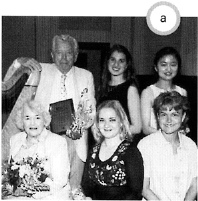
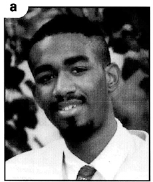
a) Back Row: Burton Adams, Bridget Kibbey, Tomako Sato; Front Row: Anna Adams, Marguerite Lynn Williams. Janet Han-all.
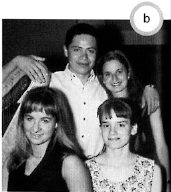
b) Back Row: Baltazar Juarez. Marin Lulu Rayan; Front Row: Lisa Spurlock, Kristin Whithers.
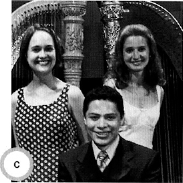
c) Maria Luisa Rayan, Baltazar Juarez, Amey Lay.
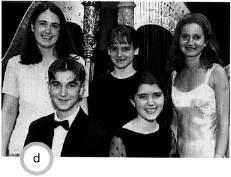
d) Adriana Home, Taurean Chasse, Kristie Whithers, Kristin Ohlson, Marie Luisa Rayan. All photos by Diana Allencraig.
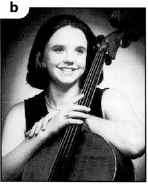
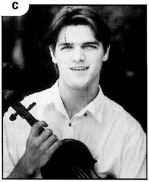
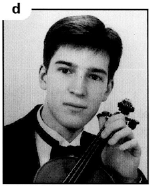
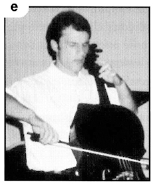
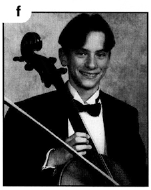
The VIRTU FOUNDATION recently awarded six string students instruments to use in furthering their education. Filip Fenrych, a student at Oberlin College, received a violin made in 1929 by Alfred Vincent, London. Daniel McDonough, a cello student at the Cleveland Institute of Music, now plays a cello made by David Carón, Taos, New Mexico, in 1996. Stephen Miahky, a student at the University of Michigan, received an American violin made by Tschu Ho Lee in 1998. Cellist Emily Taubl, a student in the Juilliard Pre-College Course, was awarded a cello made by Janos Bodor of Philadelphia in 1980, James Maurice Shaw, a student at the Lamont School of Music at the University of Denver, now plays a viola made in 1976 in America by Carleen Hutchins. Sachino Tsinadze, a cello student at Louisiana State University, received a twentieth-century cello made in the Paris workshop of Roger Lanne. Violist Karin Brown (not pictured), a master's degree student at Juilliard, received a David Carón viola on loan from the maker.
a) James Maurice Shaw, violist; Lamont School of Music, University of Denver
b) Emily Taubl, cellist; Julliard
c) Filip Fenrych, violinist; Oberlin College
d) Stephen Miahky, violnist; University of Michigan School of Music
e) Sachini Tsinadze, cellist; Louisiana State University
f) Daniel McDonough, cellist; Cleveland Institute of Music