






Abstract

Making Connections
As a cellist I always knew that string music touches our hearts in a most fundamental way. But little did I suspect that according to a current theory of physics, the universe is really one big stringed instrument! Although this may be somewhat of an overstatement, the Superstring Theory posits that all matter consists of tiny strings vibrating in nine-dimensional space.
Whether or not this is a true description of the cosmos or just a convenient metaphor, strings can connect us to a broader universe. Music helps to connect people and can serve to connect an ever-shrinking world. The suing that ties us together is a common and underlying response to music—and string music in particular. Music is, you will recall, the international language.
The Strings that Tie Us Together
As individuals we all work hard to educate students and promote music in our own ways in our own communities—though often we may feel isolated, struggling against the ignorance and indifference around us. But when we join our resources together we become ASTA WITH NSOA—an important advocate for string/orchestra teachers and performers, and we can begin to influence society. As we connect with each other, we create something larger than any one individual.
Our goal is to increase the number of string teachers, the quality and number of orchestra programs, the number of private studio teachers, and further educate ourselves through our publications, conventions, and journals. If we are to be successful in these endeavors we must combine and increase our financial resources to maximize our impact. Our recent successes—including the $500,000 String Project FIPSE grant and our AST journal's ASAE Gold Circle Award for Best Peer-Reviewed Journal—are a direct result of resources spent to further our goals.
Occasionally it is necessary to increase our individual financial commitment to the organization in order to improve our effectiveness. In other words, periodically we need to raise our dues. The National Executive Board voted for a small dues increase of $5 for professional members effective with renewal dates beginning July 1. Although dues increases generally aren't popular, it has been three years since our last one. That increase in 1998 allowed ASTA WITH NSOA to accomplish all that it has during the past three years. There will be no increase in dues for students or seniors.
During the last several years ASTA WITH NSOA has continually provided more member services, including increased support to the state chapters, and we want to do even more. Here are some of ASTA WITH NSOA's programs and services that benefit members:
Thirty-six national programs and activities include American String Teacher journal, National High School Honors Orchestra, National Solo Competition, insurance programs, national awards (Rolland, Green, Artist Teacher, Rohner), Reading Folders, Special Projects Grants, and Urban Outreach Grants to name a few.
Since 1998 we have added more programs for members: National Studio Teachers Forum, National String Project Consortium, Eastman Symposium, online job posting service, Leader-list, new publications (including reprints of two classics from Paul Rolland, and Getting it Right from the Start), State Leadership Summit in Washington, Alternate Route Certification Task Force, ASTA Across Borders, “Why Strings?” brochure.
More benefits in the future include:
First National stand-alone convention in 2003 at The Ohio State University
Another National Studio Teachers Forum in May 2002
New conference on string teacher training in January 2002
New communications manager position in National Office to promote string teaching
New online membership directory from the president
New online member renewal and online new member registration
Research Committee surveys on school program status
Upgraded and improved Bulletin
Improved web site
Online ASTA WITH NSOA publications ordering
Partnering with IAJE (International Association of Jazz Educators) for a string track at its summer institute
CodaBow program similar to Potter Instrument Awards
Planned-giving program
From the president
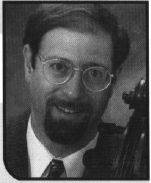
Connecting “tutte le corde”
ASTA WITH NSOA is helping to facilitate connections in all that we do. Through our conferences we help to connect with people. Through the ASTA web site, the ASTA-list and the Leader-list we are connecting, virtually, through the internet. We interact with other similar organizations—ESTA, MENC, MTNA, Suzuki, IAJE—and with string music in other countries. We are becoming more aware than ever of the possibilities for collaborations in jazz, rock, folk music, ethnic music, fiddling, Cajun, bluegrass, klezmer, strolling, spinoffs, crossover. Our connections to each other and to the larger world are increasing yearly.
Individuals are what make ASTA WITH NSOA work. Our members make us what we are: people who volunteer, those who take on leadership roles, members who contribute their expertise, time, energy, and/or money help further the purposes of the group. But our strength as an organization lies in our ability to join together to further our goals. Only in unison, “tutte le corde,” will our voice be heard.
National Office Hires New Staff
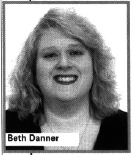
The ASTA WITH NSOA National Office is pleased to announce the addition of the following staff members:
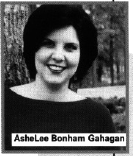
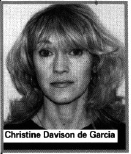
Traugott Rohner Leadership Award Presented at Midwest Conference

ASTA with NSOA Plans 2003 Conference
For the first time in its history, ASTA WITH NSOA will hold a stand-alone conference (independent of any other organization}. To be held at The Ohio State University March 27 through 29, 2003, the gathering will recognize the wealth of our rich traditions as well as offer members new horizons in teaching and performing strings. Conscious of the diverse demographics of its constituency, ASTA WITH NSOA will have clinics and performances that address the needs of private studio teachers, elementary and secondary string and orchestra teachers, university string teachers in both applied and music education areas, string students, Suzuki teachers, professional classical and non-classical performers, non-string performers who teach strings in schools (band directors, choir directors), and administrators.
Sessions will address the following areas: traditional pedagogy, string and full orchestras, classical and alternative styles of performance, university-level training of future string teachers, non-string players who teach strings, use of technology as it applies to playing and teaching strings, and the music industry, A call for session proposals will be announced in Spring 2002.
Those attending the conference will have the pleasure of hearing the National High School Honors Orchestra, an Alternative Styles Performance Contest, solo recitals and chamber music performances by well-known performers or groups, selected elementary through high school string or full orchestras, and selected college or university orchestras. Conferences are a great place to meet old friends and make new ones. Come be inspired by other great teachers and performers and return home with new ideas and renewed enthusiasm. Plan to join string teachers and players from around the nation in the festivities in 2003!
NASM Accepts Changes
Evidence must be shown that as part of music teacher preparation programs students will be expected to:
speak and write clearly and effectively
acquire knowledge from qualified professionals regarding the prevention of performance injuries
promote scheduling patterns that optimize music instruction
maintain positive relationships with individuals of various social and ethnic groups, and be empathetic with students and colleagues of differing backgrounds
develop effective classroom and rehearsal management skills
acquire knowledge of current methods, materials, and repertoires available in all fields and levels of music education
Music education methods courses and field work must be taught or supervised by music education faculty who have had successful experience teaching music in elementary and secondary schools, and who maintain close contact with such schools.
Solo Competition Guidelines Clarified
ASTA WITH NSOA Events Calendar
(Non-string specialist track sponsored by ASTA WITH NSOA) [San Antonio, Texas]
> Send in the registration form you received in the April Bulletin, or visit www.astaweb.com and click on the link for TODA.
[University of South Carolina] Columbia, South Carolina
> National String Project Consortium Summit
> Teaching the College String Methods Course
[Michigan State University] East Lansing, Michigan
Jeffery Solow, National Competition Chair Esther Boyer College of Music, Temple University Philadelphia, Pennsylvania 19122 215-204-8025
> State Solo Competition Chairs must submit tapes of state chapter winners to the National Competition Chair by December 1, 2001. Contact your State Chair for information on your state's competition guidelines. Complete national guidelines may be found in the February 2001 issue of AST or on the ASTA WITH NSOA web site at www.astaweb.com.
(Held in conjunction with the National Solo Competition)
[Michigan State University]
East Lansing, Michigan
> See the Call for Proposals on page 48.
Showcasing the National High School Honors Orchestra
[The Ohio State University] Columbus, Ohio
More than a decade of research, development and field testing have led to the patented design and advanced engineering of the
Eliminate the need for fine tuners with Knilling Perfection Planetary Pegs and get your students in tune with the real mission—learning music.
For more information, visit the Knilling web site www.knilling.com.
New SInC Officer Candidates
Caryn Patterson

Lauren Keiser
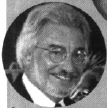
Ken Ellington
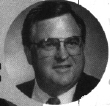
Dalton Potter
ASTA to Sponsor String Track at IAJE
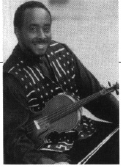
The International Association of Jazz Educators (IAJE) Teacher Training Institute will include a String track sponsored by ASTA WITH NSOA. John Blake will be leading sessions on teaching and learning jazz improvisation, jazz rehearsal techniques for the string orchestra director, and exploring the history of jazz violin and its African-American roots. As well as performing with his quartet and as a soloist, violinist John Blake has appeared with the Duke Ellington Orchestra, the McCoy Tyner Trio, Turtle Island String Quartet, Quartet Indigo, the Steve Turre Sextet, and the Billy Taylor Trio. As a clinician, Blake teaches at jazz string summer programs such as Jazz in July, Berklee's String Fling, and the Mark O'Connor Fiddle Camp. He has co-written, with Suzuki teacher Jody Harmon, the definitive beginning string jazz method book and CD Jazz Improvisation Made Easy. The institute is one of three to be held by IAJE this summer, and will be at the American Jazz Museum in Kansas City, Missouri June 21 through 23, 2001. For a detailed brochure, call the International Association of Jazz Educators at 785-776-8744 or log on to www.iaje.org. With more than 8,000 members in forty countries, IAJE is the leading authority and primary voice for the promotion of jazz through education and outreach.
String Industry Council Grants Awarded
The String Industry Council awarded three grants in November. Grant recipients were the Opus 118 Foundation, Denali Arts Council, and Highland String Ensemble.
The Denali Arts Council, in Talkeetna, Alaska, will use the grant to establish ongoing private music lessons and to create performing ensembles. The funds will also allow them to purchase instruments for a Music Academy that provides private instruction on violin, viola, cello, and bass, with all students participating in a string orchestra or ensemble group.
Opus 118, in New York City, was awarded the grant to provide scholarships for private instruction. It is initiating a new after-school program to offer private instruction on violin and cello to students who are currently enrolled in public school strings classes. Opus 118 was founded by Roberta Guaspari, whose achievements as a string educator were celebrated in the 1999 movie Music of the Heart.
The Highland String Ensemble, in Elkins, West Virginia, will provide group instruction on stringed instruments and classes in music theory and music history. It hopes to make a difference in the community through cultural awareness and involvement in the orchestral performing arts. Ensemble membership will include daily instruction, use of an instrument, and participation in regular performance opportunities.
The deadline for the next round of applications is October 1, 2001. For an application visit www.astaweb.com or call the National Office at 703-476-1316.
New Reading Folders Coordinator Named
To reserve the folders, contact Fear-Bishop at
Chapter-Get-a-Member Campaign Update
Last August the State Chapters of ASTA WITH NSOA began the Chapter-Get-a-Member Campaign (CGM). This contest was designed to help each chapter grow its membership and increase member activities. Many chapters have made remarkable efforts through direct mail letters and telephone calls to accomplish this goal.
State chapters have been divided into three categories, based on chapter member size, with each division competing for a first place prize of $450 and second place prize of $200. Winning Chapters of the CGM contest must use the prize money to fund professional development events or projects that will benefit its chapter such as workshops, master classes, and publishing the state chapter newsletter. In order to participate in the CGM campaign state chapters must send new member applications to the National Office on an official CGM membership application (or you can write “CGM” at the bottom of a regular membership application).
Increased membership in a chapter traditionally means a more active chapter with increased participation, diversity, and perspective. More members in your state chapter also translates into receiving a bigger rebate check from the National Office to help fund your chapter activities.
The Chapter-Get-a-Member campaign runs through the end of May, so there's still time to recruit a few new members and help your chapter receive more money for its programs and activities. Watch for the final results in the next issue!
Publishers and Teachers Grapple with Tough Questions
At a “Publishers and Orchestra Directors Dialogue,” organized by ASTA WITH NSOA's Print Music Task Force, string educators and music publishers came together to confront some difficult issues regarding copyright infringement and availability of music. The meeting was held on Wednesday, December 20, 2000 during the International Midwest Band and Orchestra Clinic in Chicago. Five major issues were discussed.
One)
Most orchestra literature used to be sold in sets A, B, and C. As needs have changed, the A and B sets were phased out, and C sets became the standard. The original concept of the different sets was to allow orchestra directors to decide which part configuration best suited the instrumentation of their particular school/community ensemble. With the recent growth of orchestra programs in the schools, should the C set standard remain, should a new definition of the set system be developed, or should the system be eliminated? What would or could a new configuration look like?
Publishers replied that they would be happy to accommodate teachers' wishes as long as teachers had an industry standard. The educators were concerned that, with their changing instrumentation, a standard set might not meet their needs. The publishers indicated that they could conceive of a new standard set augmented by the ability to purchase separate parts so any configuration would be possible.
Two)
Rental works are often avoided by many youth, school, and community orchestras because of a number of factors, including cost, the rental time period, and the quality of the parts. Sometimes the choral scores are in the public domain but the orchestral music is still rental only. What can be done to bring some of these more accessible and popular rental works into the public sales arena? What happens when pieces were legally purchased in the past, but now are back on the rental list? Can orchestra directors buy replacement parts if they legitimately have a purchased set?
Publishers indicated that it is possible to negotiate terms for the rental period and cost when school or youth groups are involved, but the orchestra director must make those inquiries. Some companies take permanently out-of-print (POP) music and rent it for the sole purpose of keeping it in circulation.
Three)
Is it possible to construct a central information center that can also deal with small issues that occur, such as seeking permission to copy extra flute parts, replacing the harp part, or needing three extra copies of the score for festival? Currently teachers must figure out whom to contact, and every publisher and distributing house has a very different system; so teachers with limited time during the business day simply cannot navigate through all of the red tape to effectively remedy these minor problems. Could the cost of developing and maintaining a centralized system be borne by a small percentage on new purchases? Teachers are bound by the realities of the school budget process and often have little or no flexibility with financial allocations. A more teacher-friendly process is needed to facilitate requests for extra parts, permission to copy, and so forth.
Because each publisher does not have the same system for dealing with many of these issues, a centralized system would be difficult to construct. Often when an educator expresses concerns to a music distributor, these issues are rarely conveyed to the company involved. Educators/conductors must make an effort to communicate directly with the publishers, who said they will make every effort to deal with these issues. Members of the Print Music Task Force can also assist teachers in determining whom to contact at each publishing company. (See next page for contact information.)
Four)
Can teachers negotiate an industry standard that would permit the copying of bowed parts for the express purpose of archival storage of a performance edition, sharing bowings, or interpretation, not as a means to avoid purchase or rental of music? The preparation of a score and the completed bowed parts represent significant effort on the part of the conductor and should be something that can be kept if the piece is to be performed again.
This type of provision already exists within the fair use clause, but because many directors have abused this clause, publishers are getting more concerned about copying for any reason.
Five)
Orchestral conductors are extremely concerned about the number of titles that are permanently out-of-print (POP). Many such POP pieces are considered standard repertoire. Is it reasonable for conductors to expect that publishers actually have archival copies of these works? Would it be possible for these pieces, identified by our profession in a list, to be given a special designation such as “the classic library collection” and made available on a limited basis? If a publishing house chooses not to make a POP piece available, could another publisher or an organization such as ASTA WITH NSOA purchase the rights to the piece to put it back into circulation?
This issue is the most important to educators as availability of these standard pieces defines the educational repertoire. The key issue is that even a reissued piece may have been out of print for so long that it is not known by the majority of the population. Therefore, these reissued pieces have to be marketed as new repertoire. Carl Fischer did in fact try reissuing pieces, which did not sell very well, so they did not continue. Members of ASTA WITH NSOA need to take the initiative here and assist publishers with the development of a list of pieces they define as standard literature. If enough demand is documented, the publishers will try to make these pieces available to string teachers.
If there is an out-of-print piece that you would like to see put back in print, please send an email to Lisa Lantz at
Serving on the “Publishers and Orchestra Directors Dialogue” panel were Lynn Sengstack, Shawnee Press; Bill Heese, Car Fischer, LLC; Frank Lestina, Vernon Hills High School; and Sandra Dackow, Ludwig Music. The Print Music Task Force consists of Kathleen Horvath, assistant professor of string education at the University of Illinois in Urbana-Champaign; Sandy Dackow, composer, arranger, and music director of the Hershey Symphony in Pennsylvania; and Lisa Lantz, assistant professor of music and orchestra director at Alfred University in Alfred, New York.
The Task Force will continue efforts to improve communication between the publishing industry and music educators so that our repertoire is preserved for orchestras both now and in the future.
Teaching Teachers
Two Side-by-Side University Conferences
Anyone who is responsible for teaching college-level string techniques, methods, or pedagogy classes won't want to miss a workshop titled
Sponsored by ASTA WITH NSOA, the National String Project Consortium, and the Collegiate String Education Roundtable, these two conferences will focus on the training of future string teachers. The first will explore the String Project concept: the creation and administration of such programs and pedagogical concepts involved in this service learning idea, including sessions on grant writing, starting a program, and training young teachers. The other part of this dual conference will be for college faculty to help improve the teaching of string methods and techniques classes.
The planning committee for the “String Project Concept” workshop includes: Gail Barnes, chair; Karen Becker, Karrell Johnson, Daniel Mason, and Jim Pryzgocki. The planning committee for the “Teaching the College String Methods Courses” workshop includes: Kathlene Goodrich, chair; Ken Sarch, Bob McCashin, and Gail Barnes.
Watch for registration details in the next issue of AST. For more information, contact Robert Jesselson at the University of South Carolina, 803-777-2033 or email
Add a little excitement to your string program with these new jazz and fiddling books from Alfred!
Jazz Philharmonic
by Randy Sabien and Bob Phillips
String teachers can now introduce the world of jazz to beginning through advanced students with this innovative approach that has been well-tested in public schools and clinics around the world. Jazz Philharmonic contains a collection of original tunes that can be taught equally well in class or private lessons. Each unit contains a tune, written-out solos, backgrounds, bass lines, and parts for piano and percussion. Beginning improvisation is developed through the use of preparatory pages and aural echoes on the CD. Violin, Viola, Cello, Bass—$7.95; CD—$10.95; Teacher's Manual—$12.95
Fiddlers Philharmonic
Introduce your entire string orchestra to the excitement of traditional folk fiddling with this fun and motivating series. Arranged in order of difficulty, each of the 16 cross-cultural fiddle tunes is presented first in the best solo key for each instrument, then in a 3-part “arrangement” using the best key for group performance. Each “arrangement” includes the tune, a variant of the tune called the “break” and backup/bass parts that can be combined in any way you choose for performance. Chord symbols are included for improvisation or use by accompanying instruments. This invaluable resource is perfect for players of any level or age and will motivate your students to practice like never before! Violin, Viola, Cello/Bass—$6.95; CD—$10.95; Teacher's Score—$19.95
Fiddlers Philharmonic Encore!
On a level similar to Fiddlers Philharmonic, the traditions of folk fiddling continue to be made available to the entire orchestra with 18 more cross-cultural fiddle tunes. Presented and arranged in the same unique format as the first book, these tunes provide even more fun for each member of your orchestra. Violin, Viola, Cello/Bass—$7.95; CD—$10.95; Teacher's Score—$21.95
Teachers: Order Free Samples Today!
Jazz Philharmonic, Violin Book 19592
Fiddlers Philharmonic, Violin Book 15546
Fiddlers Philharmonic Encore!, Violin Book 18080