






Abstract

The ASTA Strategic Plan: Envisioning the Future

In my November 2012 column, I discussed the process that the national board used to review ASTA's current programs to develop a strategic plan for the future. The proposed plan was unveiled at the ASTA National Conference in Providence, during the town hall/annual meeting and at a special session led by Steve Benham, president-elect. The town hall/annual meeting was a great success, and we received wonderful feedback from our membership. Everyone contributed a great deal, and it was inspiring to hear some of our great national leaders like Bob Gillespie, Jeffrey Solow, and Doris Gazda speak so eloquently about the future of ASTA.
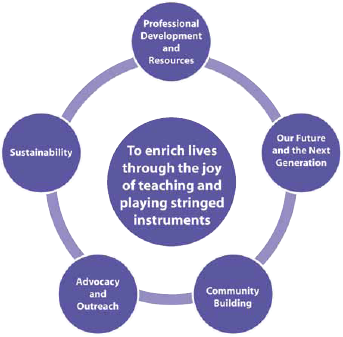
The purpose of the proposed strategic plan is to help guide current and upcoming boards as they make the decisions that affect the future of ASTA. The very nature of nonprofit boards and two-year terms creates challenges with continuity of thought and purpose. Every idea that comes to the national board has merit, but the real question is, “Does it advance string teaching and playing in a significant way?” With these realities in mind, the board is ready to formally adopt our proposed strategic plan in June. We all see this plan as a living and breathing document that will be reviewed, changed, and added to each year. Over time, we hope the plan will help all future boards focus on the issues that affect each of you at the local level—but from a national perspective.
ASTA is one of the most forward looking and proactive arts organizations in the United States. Here are a few examples of our work: compiling the national K-12 curriculum, co-founding the Music Education Policy Roundtable, and incorporating eclectic styles into our conference. The plan will help us continue to look forward. Each future board will continue to refine the plan. Our proposed strategic plan consists of a central mission statement surrounded by five goals. Each goal is broken down into a series of objectives. Each objective has a series of strategies and tactics with target dates for completion. Assessment tools will be developed for each goal, strategy, and tactic.
The point of the plan is to have a tool that helps carry forth the mission of ASTA into the future. The hope of the board is that we continue to look forward, as well as create programs and ideas that serve and help all of you. My personal motivation is to make sure that my grandchildren, and their grandchildren, grow up in a world where string playing is alive and well and is a vibrant part of our culture. How that looks is up to the next generation of leaders, teachers, and players to decide. I can only say, from my point of view, that ASTA's future is very bright.
