







Abstract
The quality movement in 21st century healthcare—quality, patient safety, and the value equation (value equals quality divided by cost)—had their start with Ernest Amory Codman (1869-1940), the quixotic surgeon who started it all a century before. He was on track for prosperity and success, given a Boston Brahmin pedigree and his impeccable credentials from Harvard College, its medical school, and the Massachusetts General Hospital.
In 1910, nearing 40, Codman instead detoured toward a revolutionary idea that he called the End Result system, the seemingly unachievable goal of reaching “perfection” in surgery: complete recovery without death, complications, or lasting disability. He scrutinized any case that fell short, seeking honest explanations and improvements so that his next case would more likely reach a perfect outcome.
The system that was so clear to him was audacious to his colleagues, who summarily rejected it. When Codman suspected greed and self-interest, he was ostracized from the Boston medical community. To apply his concepts, he opened a proprietary hospital called the End Result Hospital that drove him to insolvency.
His career never recovered from the debacle even when he later reached prominence as an authority on bone malignancies and shoulder pathology. When he died, his resting place went unmarked. As quality became central to healthcare at the end of the 20th century, Codman’s prescient End Result system was recognized as a fundamental contribution to medicine.
An Awful Business
The details of Codman’s story (Figure 1) that follow come from monographs by Susan Reverby of Wellesley College, historian of American health care and women’s health, and Avedis Donabedian of the University of Michigan, a leader of the present-day quality movement in health care.1,2 Ernest Amory Codman. Public domain.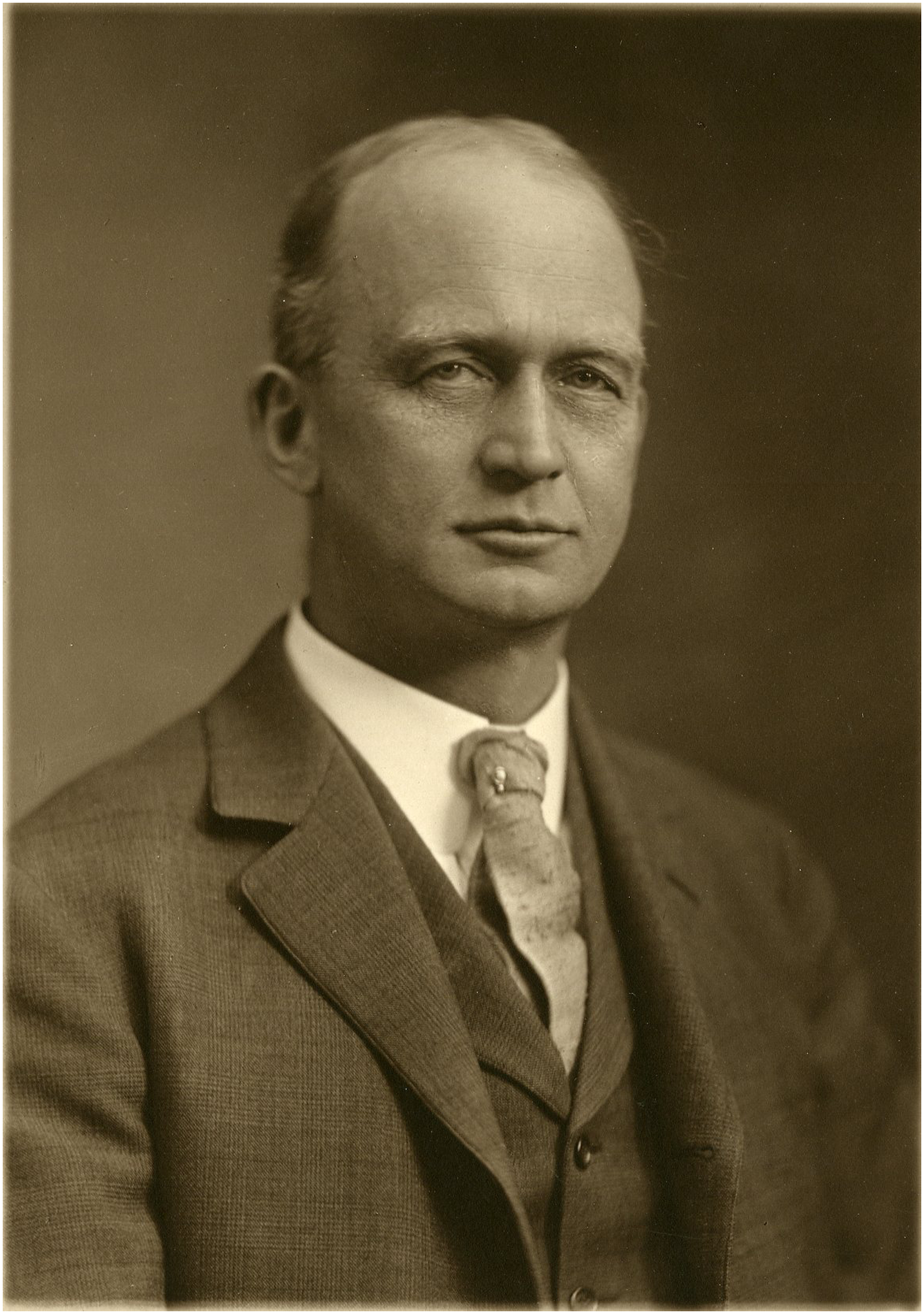
As Harvard medical students, Codman and his classmate Harvey Cushing had the task of delivering ether anesthesia at the Massachusetts General Hospital (MGH). In 1895, Cushing was seated in the surgical amphitheater when he was called to the pit by an orderly to put a patient under anesthesia for an operation. On induction, in Cushing’s words, “there was a sudden gush of fluid from the patient’s mouth, most of which he inhaled, and he died.” 3 “I hesitate to recall,” Cushing later wrote, “what an awful business it was and how many fatalities there were.” 3 Senior surgeons reassured him that anesthetic deaths were unavoidable, but the student nonetheless felt shame and guilt for the patient’s demise.
He and Codman resolved to improve their skills as anesthetists, making a friendly wager of a dinner as to who became better. They kept track of each case on cards that listed the diagnosis, operation, anesthetic management, and outcome. Their great innovation was a graph of the heart and respiratory rates, the origin of the modern anesthetic chart. 3
As Cushing went on to fame as the father of American neurosurgery, Codman’s early career predicted a similar success. Codman was the first surgeon at the MGH to successfully diagnose and treat a case of perforated duodenal ulcer. He was among the first to use X-rays in medical diagnosis, studying the radiological manifestations of orthopedic pathology, especially that involving the shoulder and tumors of the bone. 4 (Codman’s triangle, a radiological sign of aggressive periosteal new bone formation in response to a rapidly growing bone cancer, is named after him). In the first decade of his practice after his internship at the MGH, he was, in his words, “steadfast to my general surgery at the MGH and successful enough to be making a reasonable living in private practice.” 1
End Result Idea
About a decade into his career Codman instead became obsessed with the idea that surgery might be perfected through scientific analysis. His basic tool was a record of every operation, on cards like the ones Cushing and he used as medical students. “Recorded in the briefest possible terms” were the patient’s symptoms, working diagnosis, operative plan, any complications, final diagnosis, and annual follow-up following the procedure. 5
His focus was the outcome of a surgical operation, the “End Result” that gave his approach its name. “Perfection”—Codman’s term—was reached when patients enjoyed complete recovery with restoration of full activity.
1
The corollary was that there was an identifiable reason why a patient died, suffered a complication, or failed to reach full health after surgery. [The] End Result Idea … the common-sense notion that every hospital should follow every patient it treats long enough to determine whether or not the treatment has been successful and then to inquire, ‘if not, why not?’ with a view to preventing similar failures in the future [
Speaking the vocabulary of industrial management, he equated hospital efficiency with therapeutic efficiency. “Efficiency” signified “the best possible application of recorded knowledge to each case.” 5 An efficient procedure that reached perfection became standard practice. Once adopted, all would thus benefit from his approach to surgery.
His Damascene moment came during a trip to London in 1910. Codman already had the habit of recording his cases and outcomes since 1900. Riding a shared hansom cab with Edward Martin, a surgeon from Philadelphia, Codman outlined his End Result system; Martin, his dream of an American College of Surgeons (ACS).
Their ideas intersected: End Result measuring surgical proficiency; the nascent College, verifying competence and standardizing surgical practice shown to be perfect under Codman’s End Result scheme. 2 At 40 “his life became devoted to bringing about nothing less than a hospital and surgical reformation.” 1
Monomania
His End Result idea became, to use his word, a “monomania” that he held with near-religious fervor. 2 Those who did not follow his lead were motivated by greed, nepotism, and politics. 1
Which included nearly the entire Back Bay medical community and the MGH itself, from which he became isolated to a near-irretrievable degree. “In most cases,” Codman wrote to an MGH trustee in 1914, “therapeutic failures are due … in many cases to the inefficiency of the organization not applying the best available skill to the cases where skill is most needed.” 1
His colleagues at the MGH regarded him as a crank. To them, he was deliberately provocative. Codman demanded that he be named surgeon-in-chief because his outcomes were better than those of other surgeons—and he had the data to prove it. At a meeting of the Suffolk District Medical Society in January 1915 he lampooned the staff at the MGH in a now-famous cartoon that portrayed Boston’s Back Bay residents as ostriches burying their heads in the sand while laying golden eggs that were gathered by MGH doctors, its trustees, and the Harvard Medical School. Unable to get his End Results system accepted at the hospital he offered his resignation from the MGH in 1914, which the trustees gladly accepted. 2
Being Ignored
He had anticipated the separation. Three years before, in 1911, he opened a small hospital of 10 to 12 beds that he appropriately christened the “End Result Hospital” where he could test his concepts. 5
He proposed that an “efficiency committee” make a final decision as to why any case failed to attain perfection. 5 Allowing it was a “disagreeable Duty which neither the Staff nor the Board of Trustees nor the Superintendent has the strength to assume alone,” 5 he proposed the committee make the determination, with representation from each group.
Given Codman’s proprietorship of the hospital it was a committee of one: himself. Each week he reviewed the card of each patient and evaluated the outcome. In 1918 he published a detailed accounting of 337 cases managed in his facility from 1911 to 1916. Those that had no flaws were marked “O.K.” Exemplary outcomes earned “a star.” 5
A patient who died, suffered a complication, or failed to reach full recovery, deserved further scrutiny. He developed a nosology of errors that guides hospital Morbidity and Mortality conferences today. 6 They fell into seven broad categories: (1) lack of technical knowledge or skill; (2) lack of judgment; (3) lack of care or equipment; (4) incorrect diagnosis; (5) nature and extent of disease; (6) deaths; and (7) calamities that could not be prevented (for example, pulmonary embolus). 5
Deaths especially distressed Codman. “All necessarily were errors of judgment,” he wrote, “because they resulted in failure 5 ,” the opposite of perfection.
Some hospitals adopted Codman’s End Results system, including the Women’s Hospital in New York City, the New England Hospital for Women and Children in Boston, and the Ohio Valley General Hospital in Wheeling, WV. Even the MGH began a system of End Result cards and an approximation of an efficiency committee. 1
But none adopted it fully enough to satisfy Codman. End Result was brushed aside by easy excuses. Reverby quoted a surgeon in Ocala, FL, who said, “There is nothing difficult about the system except the human nature part.” Another in San Francisco made the candid observation that while “some physicians were willing to attempt the scheme, most were not. … the hospital was simply a boarding house for the patients of these men, and they considered it and had no interest in what the end results were.” 1
Ostracized by his erstwhile colleagues, he drifted to other pursuits. He led Boston medical relief teams to set up emergency surgical hospitals to attend to the thousands of injured in the aftermath of the disastrous explosion when two munition ships collided in Halifax harbor on December 6, 1917, killing and maiming thousands of townspeople on shore. (The makeshift hospital maintained an End Results card for every patient). With the entry of the U.S. into World War I he became senior surgeon to the Harbor Defenses of the Delaware, spending much of the time dealing with influenza outbreaks within his jurisdiction. 2
In his absence the End Result Hospital languished and by June 1919 it was closed. “I returned to my closed hospital,” he wrote, “in debt, with no borrowing capacity, and somewhat disillusioned as to the possibility of altering the ways of human nature by my individual efforts.” 5
He was simply too far ahead of his time. A pariah and insolvent, his deepest pain was the rejection of his concepts. “To enthusiasm,” he wrote, “nothing is so deadening as to be ignored.” 5
The Valedictory
In the 1920s he salvaged his surgical practice, and his professional life began a measure of recovery. He had “a rapprochement to both Harvard Medical School and the MGH” with his appointment to the consulting staff at the hospital in 1929, 2 a position he held until his death 11 years later. 7
His life now settled, his “dormant passions” 2 for outcome analysis rekindled. In 1921 he organized a registry of bone sarcoma under the ACS, the first of the College’s many productive clinical registries that form the backbone of its present quality programs. 8 In 1925 he published the first report from the registry data that he published in the Bulletin of the organization and its journal, Surgery, Gynecology, and Obstetrics, in 1926. 9 Nearing the end of his life, in January 1940 Codman received a gold medal from the American Academy of Orthopaedic Surgery for his work on bone sarcoma. 7
In 1927, at age 58, he began work on his great monograph, The Shoulder (1934). Codman’s biographer, Bill Mallon, editor-in-chief of the Journal of Shoulder and Elbow Surgery and past president of the Society of Shoulder and Elbow Surgeons, wrote that the book was the definitive reference of its time and is recognized today for its many perceptive observations on the joint, its function, pathology, surgical management, and rehabilitation. 7
Aside from its status as a landmark in orthopedics, what set The Shoulder apart was its preface and epilogue where he recounted his struggles with the medical establishment. Looking back as a man at the end of his career in his sixties, he regretted his lifelong isolation from his colleagues yet yearned for their acceptance of his ideas. “All this anguish notwithstanding,” Donabedian wrote, “Codman knew very well the value of his discovery. So he hoped, at times angrily impatient and at other times philosophically resigned, for eventual vindication” 2
The last page of The Shoulder Codman has a cartoon of a hot air balloon with “The Shoulder” printed in large letters. The basket beneath is labeled “Preface” and “Epilogue,” referring to the autobiographical sections in his monograph. A white-haired man in the basket, obviously Codman, smiles as he unfurls a proud banner proclaiming, “The end result idea.” 2 The Shoulder was a technical book of the highest degree, but for Codman it was a valedictory on what he considered his most outstanding contribution to medicine.
Last Years
Mallon chronicled the sad story of Codman’s final years. 7 His practice slowed to occasional consultations on patients with shoulder problems and bone sarcomas. He ran the registry at no fee for the ACS and delivered invited lectures on shoulder pathology.
His last years were difficult. His creditors dunned him for payments on his debts as he slowly succumbed to melanoma. He sold his assets one by one, retreating to a cottage in Ponkapoag southwest of Boston where he lived out his retirement. His wife Katy, a member of the Brahmin Bowdich family, kept their Beacon Street townhouse until her death in 1961.
With time running short Codman planned for his burial. He looked for a gravesite at the Forest Hills Cemetery in Jamaica Plain. His finances, however, were so limited that he asked his wife to not spend money on a plot and headstone and instead store his ashes in the Bowditch family mausoleum in Mount Auburn Cemetery, Codman’s remains going unmarked. 7
A Proper Headstone
Some four decades after his death, as the modern quality movement in surgery and medicine began to take hold in the 1980s, Codman’s concepts were rediscovered. He was justly recognized as a visionary, his contributions and association with the ACS a source of pride for the organization. The rejection of Codman’s ideas by his contemporaries was always part of his tragic life, particularly the shabby details of his interment.
LaMar McGinnis of Atlanta, then president of the ACS, told the Codman’s story to the annual meeting of the West Virginia chapter of the ACS and mentioned his sad ending. E. Phillips Polack, fellow of the College and chapter president, thought it only proper that Codman have a memorial appropriate to his renewed stature in medical history and College lore. He passed a hat among his fellow Mountaineers and collected a nice sum toward the purchase a headstone. At first slow to take off the West Virginia chapter’s project gained momentum as other donors pitched in to fund the project, including the ACS, the MGH, the Joint Commission, and through Mallon, the American Society of Shoulder and Elbow Surgery and its journal.
A headstone of salvaged Quincy granite characteristic of other Mount Auburn memorials was commissioned, along with a handsome bronze facing with Codman’s likeness in bas relief. The memorial was dedicated in a ceremony at the site in July 2014, with McGinnis, Polack, Mallon, and other prominent leaders of American surgery giving testimony to one of the outstanding figures in surgical history. 10
Footnotes
Declaration of Conflicting Interests
The author(s) declared no potential conflicts of interest with respect to the research, authorship, and/or publication of this article.
Funding
The author(s) received no financial support for the research, authorship, and/or publication of this article.