







Abstract
Price fixing cartels do not always involve all members of an industry. To the extent that the nonconspiring industry members set their prices under the price umbrella of the cartel, the customers of the nonconspiring firms suffer overcharges just like customers of the conspiring firms. Similarly, in a buyer cartel, sellers to the nonconspiring buyers would suffer underpayments just like sellers to the conspiring buyers. In the European Union, price fixing is prohibited under Article 101 of the Treaty for the Functioning of the European Union (TFEU). A recent Court of Justice (CJEU) ruling has allowed the opportunity for umbrella plaintiffs to have standing and prove damages. In this article, we review the Kone decision and discuss the economics of umbrella pricing and umbrella damages. We analyze the issue of partial conspiracy among sellers and among buyers. Additionally, we discuss the estimation of damages both theoretically and in practice. We also identify some possible complications that may arise in damage estimation. We find that the CJEU’s economic reasoning is clearly correct and umbrella plaintiffs should have their chance to prove damages but will face the similar hurdles as nonumbrella plaintiffs.
I. Introduction
When price fixing cartels are discovered, it is not uncommon to find that some firms did not participate. The nonparticipants, therefore, would not have violated Article 101 of the Treaty for the Functioning of the European Union (TFEU), which forbids price fixing. Under predictable circumstances, the customers of the nonparticipants will have paid higher prices than they would have paid in the absence of the price fixing cartel. These parties are victims of umbrella pricing since their suppliers are induced to raise their prices under the umbrella created by the cartel (i.e., when these overcharged customers file suit for private damages, they are known as umbrella plaintiffs). 1 Much the same can be said about buyer cartels 2 that do not include all firms. Those who sell to the nonconspirators receive lower prices than they would have received in the absence of the collusion and, therefore, are victimized in the same way that suppliers to the conspirators are victimized. In a recent decision of the Court of Justice of the European Union (CJEU), Kone v. ÖBB-Infrastruktur, 3 umbrella plaintiffs were granted standing to sue the cartel members for the injuries that they had suffered even though they purchased from nonparticipants. As one might expect, the CJEU’s decision was carefully qualified, reflecting a concern for the legitimate victims while warding off specious damage claims.
In this article, we begin with Article 101 of the TFEU (section II) and a brief review of the CJEU’s Kone decision (section III). We then explore the economic foundation of the CJEU’s ruling and extend it to colluding buyers (section IV). We argue that the conduct captured in the economic models is the only economically rational way for the parties to behave, which should reduce any concern that umbrella claims are conjectural. In section V, we turn our attention to the estimation of the damages suffered by all victims of the collusive agreement. From this relatively straightforward econometric approach, we argue that the damages are not inherently speculative. On the contrary, the damages are based on a just and reasonable inference. These inferences are derived from data that must be provided by various parties, which could raise important discovery issues. In section VI, we examine three possible complications including the pre-conspiracy market structure, bid rigging, and product differentiation. In section VII, we consider three additional issues raised by the Kone decision including safe harbors, substitutes, and discovery issues. Finally, we close with some concluding remarks in section VIII.
II. Horizontal Agreements and EU Competition Policy
In the European Union (EU), the legality of horizontal agreements among firms is governed by Article 101 of the TFEU. As a general proposition, Article 101 forbids anticompetitive agreements among ostensible competitors. More specifically, Article 101 provides that: The following shall be prohibited as incompatible with the internal market: all agreements between undertakings, decisions by associations of undertakings and concerted practices which may affect trade between Member States and which have as their object or effect the prevention, restriction or distortion of competition within the internal market, and in particular those which: Directly or indirectly fix purchase or selling prices or any other trading conditions.
The plain language of Article 101 would appear to cover price fixing agreements among buyers as well as agreements among sellers. Both types of collusive activity interfere with the competitive market process and produce similarly objectionable economic results. 4
Firms that participate in a cartel in violation of Article 101 can be punished by heavy fines that can reach 10% of the firm’s total worldwide revenue. In addition, since the EU introduced a right to pursue private damages in 2001, they are vulnerable to private damage actions. 5 As a general principle, the victims of infringements of Article 101 may seek compensation for their injuries. More specifically, victims may sue for actual losses as well as loss of profits plus interest. Member states may incorporate unique characteristics in their damage provisions, but they may not deviate from the EU’s general principles. In particular, member states may not enact legislation that precludes the recovery of private damages by umbrella plaintiffs. 6 The main obstacle to recovery is proving causation. In the U.S., this requirement is contained in the statute that provides a private remedy for injuries suffered “by reason of anything forbidden by the antitrust laws.” 7 This requirement was explained further by the Supreme Court in Brunswick v. Pueblo Bowl-O-Mat. 8 A cognizable injury must “flow from that which makes the defendant’s acts unlawful.” 9 Much the same is required in the EU. In Kone, the CJEU observed that “any person is thus entitled to claim compensation for the harm suffered where there is a causal relationship between the harm and an agreement or practice prohibited under Article 101 TFEU.” For victims of Article 101 infringements, it is useful to consider whether the injury suffered from the infringement flows from the anticompetitive consequences of the conduct. In Kone, the CJEU observed that the plaintiff clearly stated the causal link between the unlawful cartel conduct and its injury: “in the main proceedings, ÖBB-Infrastruktur claims that part of the loss it suffered was caused by the cartel at issue, which made it possible to maintain a market price at such a high level that even competitors not party to the cartel were able to benefit from a market price that was higher than it would otherwise have been if not for the existence of that cartel.…”
III. Umbrella Damage Claims Following Kone
In some instances, the larger firms in an industry may join together in an effort to suppress competition while leaving out a number of small rivals. In such cases, those who purchase from the colluding firms will claim that they should be compensated for the overcharges that they experienced. Those who purchased from the nonconspirators may argue that they suffered a similar fate even though they dealt with the nonconspiring members of the industry. These are umbrella damage claims because the nonconspirators increased their prices under the umbrella provided by the cartel members.
In the United States, umbrella damage claims are controversial. 10 In some jurisdictions, umbrella damage claims have been accepted as a matter of course. In other jurisdictions, however, they have been characterized as conjectural and speculative. 11 In the EU, the CJEU has mandated that umbrella damage claims be considered. In the EU, the CJEU recently ruled that umbrella plaintiffs have standing to pursue damage claims flowing from competition law violations. This, of course, is not a mandate that the courts must accept all such claims. It only means that the member states may not preclude consideration of umbrella claims. The economic logic of umbrella pricing was articulated clearly in the Kone decision. The Kone case resulted from a classic umbrella pricing situation. For decades, Kone AG, Otis GmbH, Schindler Aufzϋge und Fahrtreppen GmbH, Schindler Liegenschaftsverwaltung GmbH, and ThyssenKrupp Aufzϋge GmbH participated in a cartel that divided the market for the installation and maintenance of elevators and escalators for use in railway stations in Belgium, Germany, Luxemburg, and the Netherlands. The purpose of the cartel was, of course, to increase prices above their noncollusive level. In 2007, the European Commission imposed a fine on these five firms that amounted to 992 million euros. This sanction was affirmed by the appellate court.
Following this decision, ÖBB-Infrastruktur, which is a subsidiary of the Austrian federal railway, filed a private damage action in an Austrian court to recover overcharges on its purchases from non–cartel members.
12
ÖBB-Infrastruktur claimed that the prices charged by non–cartel members were higher as a result of the higher prices that were attributable to the unlawful cartel activity of Kone and its fellow collaborators. These claims were rejected by the Austrian court. The Austrian court asked the CJEU for a preliminary ruling on the case, where umbrella claims found a more receptive audience. The CJEU held that: [M]arket price is one of the main factors taken into consideration by an undertaking when it determines the price at which it will offer its goods or services. Where a cartel manages to maintain artificially high prices for particular goods and certain conditions are met, relating, in particular, to the nature of the goods or to the size of the market covered by that cartel, it cannot be ruled out that a competing undertaking, outside the cartel in question, might choose to set the price of its offer at an amount higher than it would have chosen under normal conditions of competition, that is, in the absence of that cartel. Consequently, the victim of umbrella pricing may obtain compensation for the loss caused by the members of a cartel, even if it did not have contractual links with them, where it is established that the cartel at issue was, in the circumstances of the case and, in particular, the specific aspects of the relevant market, liable to have the effect of umbrella pricing being applied by third parties acting independently, and that those circumstances and specific aspects could not be ignored by the members of that cartel.
13
Although this ruling was directed at umbrella damage claims by victims of a price fixing agreement among sellers, the logic applies with equal force to victims of a buyer cartel. In a sense, buyer cartels are the mirror image of seller cartels. In a selling cartel, the colluding sellers restrict their output in an effort to raise the price above the competitive level and thereby earn more profit. In contrast, colluding buyers restrict purchases in order to depress the price that they pay and thereby earn more profit. Both types of cartels result in allocative inefficiency and corresponding social welfare losses. The economic foundation for objecting to price fixing cartels is precisely the same. The major difference lies in the identity of the victims. For seller cartels, the buyers suffer overcharges. For buyer cartels, the sellers experience underpayments. Both groups of victims have suffered an economic injury and both should be able to seek compensation from members of the cartel. Those firms that did not participate in the conspiracy did nothing wrong and, therefore, should not be held responsible for the injuries caused by the cartel members. From an economic perspective, the profit-maximizing behavior of the nonconspirators improves social welfare. If the nonconspirators held their production (or purchases) constant, the cartel price would be higher (lower), which would cause social welfare loss to be greater. 15
IV. The Economic Logic of Umbrella Damage Claims
There are a variety of reasons why cartels may not include all industry members. First, cartels are unlawful and, therefore, some industry members will be reluctant to participate as participation exposes the firms to fines and private damage claims. Second, those firms that remain outside the cartel can earn more than their fair share because they have no obligation to restrict their output (seller cartels) or their purchases (buyer cartels). Third, the price fixing efforts must be clandestine because the activity is unlawful and secrecy is easier with fewer conspirators. Fourth, the relatively large firms may not want to include a large number of small rivals due to the costs of group decision-making. Although the presence of nonconspirators will undermine the cartel’s efforts to raise (or lower) price, the cost of including them may outweigh the benefits. To be sure, the presence of nonconspirators mitigates the influence of the cartel on price and output, but it does not eliminate the adverse effects of collusion. 16 In this section, we define and identify the economic injury suffered by those who deal with the conspirators and those who deal with the nonconspirators.
A. Partial Conspiracy Among Sellers
We begin with a partial conspiracy among sellers of a well-defined homogeneous product to analyze the economic logic of the Kone decision. For this purpose, we employ the cartel variant of the dominant firm model to isolate the overcharges on sales made by the cartel and the overcharges on sales made by nonparticipants. 17 This economic analysis is neither novel nor controversial. Nonetheless, critics may be concerned that the selection of this model is arbitrary and, therefore, the economic results may be conjectural. Such a concern, however, would be misplaced because the economic logic is compelling.
Given the existence of nonparticipants, there is a partial conspiracy. The cartel wants to restrict output in order to boost prices and thereby earn higher profits. But how should the cartel proceed given the presence of the nonparticipants? The nonparticipants cannot simply be ignored. If they were ignored, efforts to fix prices would be undermined to some extent by the profit-maximizing output expansion of the nonparticipants. The cartel could try to squash the nonparticipants, but that would surely be unlawful in the EU under the collective dominance provisions of Article 102 of the TFEU. Thus, a sensible way to proceed is by accommodating the presence of the nonparticipants. This is precisely what the model accomplishes.
When the conspiring firms decide that collusion is profitable, they must account for the expected reaction of the nonconspirators. In essence, the cartel must select a price such that its profits are maximized given the profit-maximizing reactions of the nonconspirators.
To model this behavior, we employ a cartel variant of the dominant firm model, which implicitly assumes that the outputs of the conspirators and nonconspirators are homogeneous.
18
At any price, the cartel will sell the difference between the quantity demanded in the market and the quantity supplied by the nonconspirators:



This is the familiar equality of marginal revenue
The competitive significance of the cartel behavior for all purchasers of the good in question can be depicted graphically. It is useful to start with the preconspiracy competitive outcome as a benchmark. In Figure 1, D represents market demand for the homogeneous product in question. There are three supply curves: SNC is the nonconspirators’ supply, which is the horizontal sum of the nonconspiring firms’ marginal cost curves; SC is the supply of the firms that will subsequently form a cartel; and S is the industry supply, which is the sum of SC and SNC. The competitive price and output are determined by the equality of industry supply (S) and demand (D). Thus, prior to the formation of the cartel, price equals P1 and quantity equals Q1. Note that the nonconspirators produce
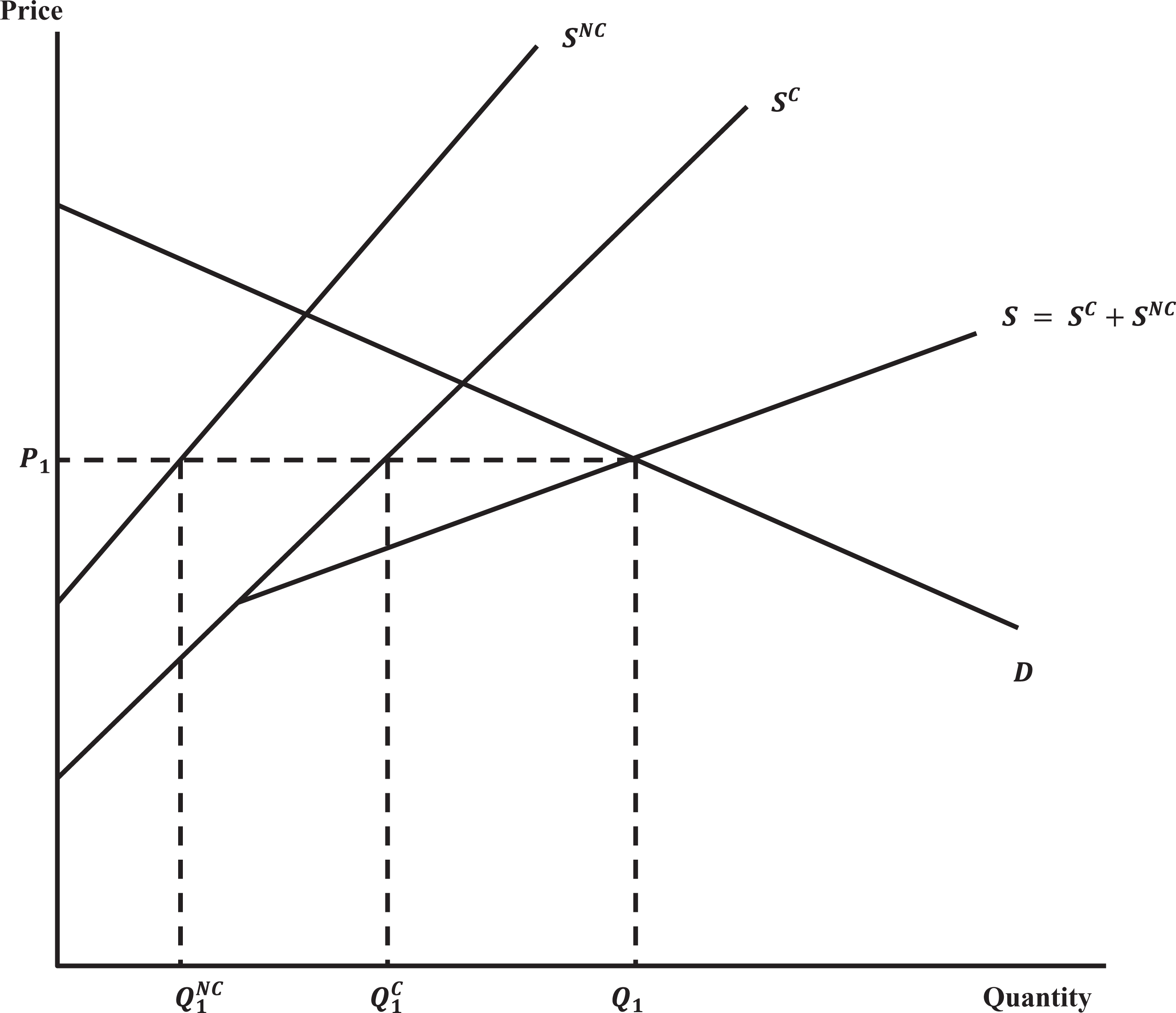
The competitive outcome before the seller cartel conspiracy.
Now let us compare the cartel solution to the competitive outcome. In Figure 2, we have reproduced the market demand (D) and the three supply curves (SNC, SC, and S) of Figure 1. In addition, we have shown the residual demand as d = D − SNC. The marginal revenue curve that is associated with the residual demand is shown as mr. The cartel will produce
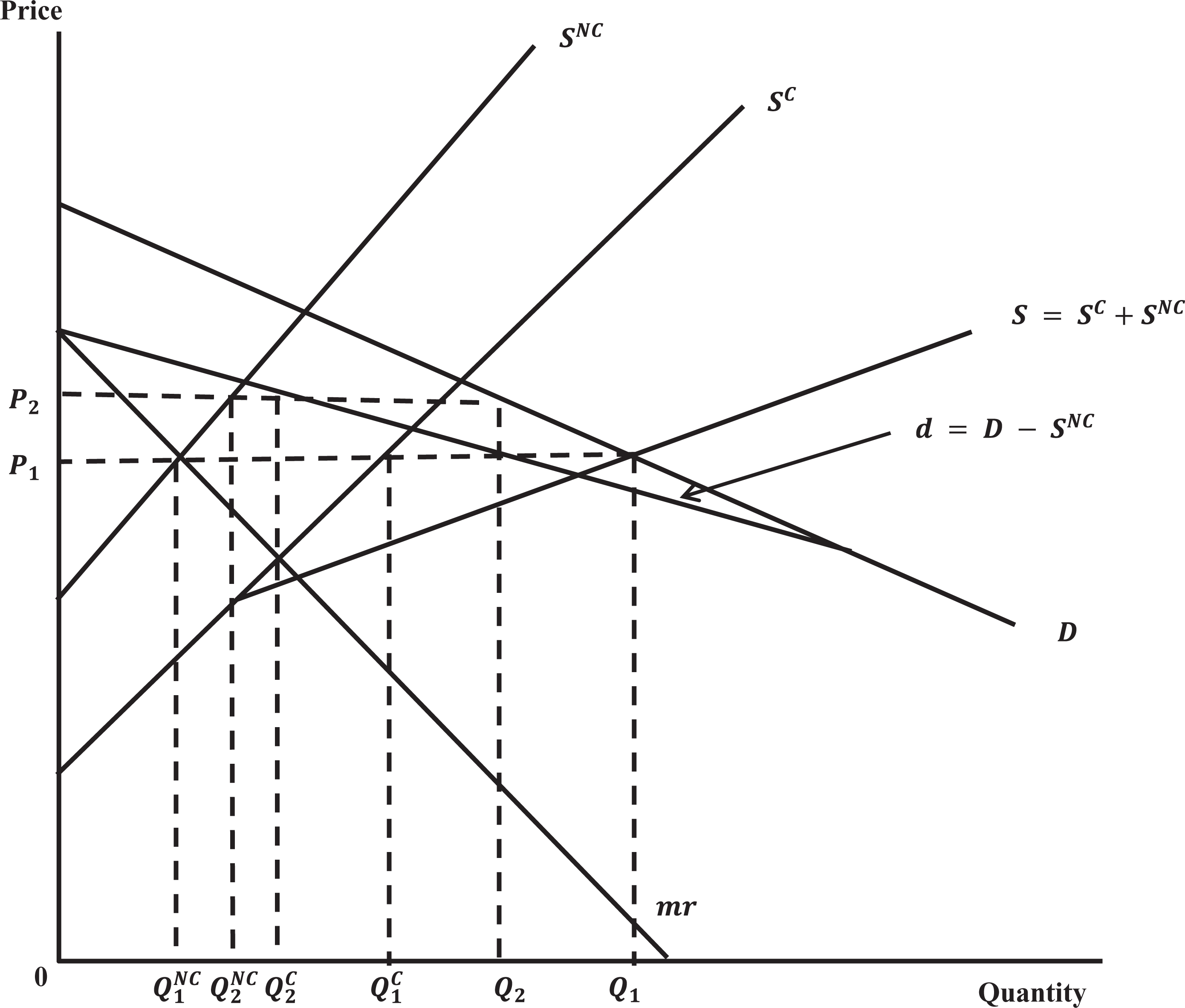
A comparison of the competitive outcome to the seller cartel solution.
B. Implications for Umbrella Damages
The economic analysis of umbrella pricing supports the CJEU’s Kone decision. First, the harm suffered by the umbrella plaintiffs is a foreseeable and economically logical consequence of the cartel’s pricing decisions. A profit-maximizing nonconspirator responds to the higher cartel price as it would to any other price increase. It is induced to raise its price and expand its output. Customers of the nonconspirators are overcharged as a direct consequence of the cartel behavior. It is possible that some (or even all) of the nonparticipants are aware of the conspiracy. Profit maximization will lead them to behave precisely the same way as unaware nonconspirators behave. Some may argue that nonparticipants should be held liable for unlawful overcharges or underpayments if they were aware of the unlawful conduct. This would be a mistake because their profit-maximizing expansion of output mitigates the influence of the cartel. Social welfare is improved by the conduct of the nonconspirators whether they are aware of the conspiracy or not, and therefore, they should not be punished. In either event, their customers have still been overcharged or underpaid as a result of the conspiracy and should still sue the conspirators—not the nonconspirators—for damages.
Second, the damage claims of the umbrella plaintiffs are not duplicative. The total overcharge created by the cartel is equal to the overcharge (o/c) on all units sold:

The fact that a portion of Q2 was sold by nonconspirators does not make the damage claims duplicative. Since the damages must be paid by the cartel members, properly estimated damages will exceed the sums collected by the cartel. This does not make the award duplicative. Instead, it makes the cartel responsible for all of the overcharges that the conspiracy caused.
In Kone, the defendants did not complain that the damage award to umbrella plaintiffs would be duplicative. Instead, they argued that such damages would be punitive on the reasoning that none of the cartel members enjoyed any benefit from the sales of nonmembers. This, however, ignores the fact that the cartel is entirely responsible for the higher prices paid by all customers. The cartel members should be held responsible for all foreseeable overcharges caused by their unlawful conduct. Our simple economic analysis shows that the umbrella damages are clearly foreseeable.
Third, the allocation of the damage awards is straightforward in the umbrella pricing model, there are two groups of buyers who have been injured: (a) those who buy from cartel members and (b) those who buy from nonconspiring rivals of the cartel members. The damages are disjoint.
In Figure 2, the overcharge is equal to the difference between the cartel price and the but- for (i.e., noncollusive) price. Thus, damages (Δ) will be

The actual quantity (Q2) can be disaggregated into QNC, the quantity purchased from the nonconspiring rivals; and QC, the quantity purchased from the cartel members.
Proof of damages is not unique in this case. Plaintiffs have to establish a reasonable estimate of the overcharge and apply this sum to the quantities that they have purchased. The claim form would look the same for both sets of overcharged purchasers.
C. Partial Conspiracies Among Buyers
Buyer cartels may form in an effort to create monopsony power. 21 In that event, the collusion will result in lower prices paid rather than higher prices charged. The resulting allocative inefficiency is analogous to that of monopoly: too few resources are being employed. In the following analysis, we present the effects of a partial conspiracy among buyers. In this case, the nonparticipants behave as price takers while the participants collude on price and quantity.
Consider the market of input x where some firms collude to suppress price. Assume that the downstream market is competitive, that is, assume the firms are price takers in the output market. The total demand for x is

Similar to the seller side, the buyer cartel has a profit function

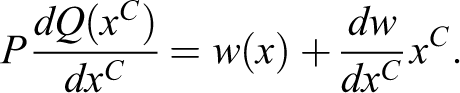
Notice that
This can be illustrated in Figure 3. The value of the marginal product of the buyer cartel is shown as VMPC, while that of the nonconspirators is shown as VMPNC. The supply of x1 is shown as S. The buyer cartel recognizes that the conspirators will purchase the quantity where VMPNC equals the price that it selects. The buyer cartel incorporates this behavior into its decision calculus by subtracting VMPNC from S to obtain the residual supply, which is denoted by Sr in Figure 3. The associated marginal expenditure curve is labeled MEr. Given the presence of the nonconspirators, the buyer cartel acts like a monopsonist. The buyer cartel selects Qc where MEr equals VMPC, which determines the price equal to
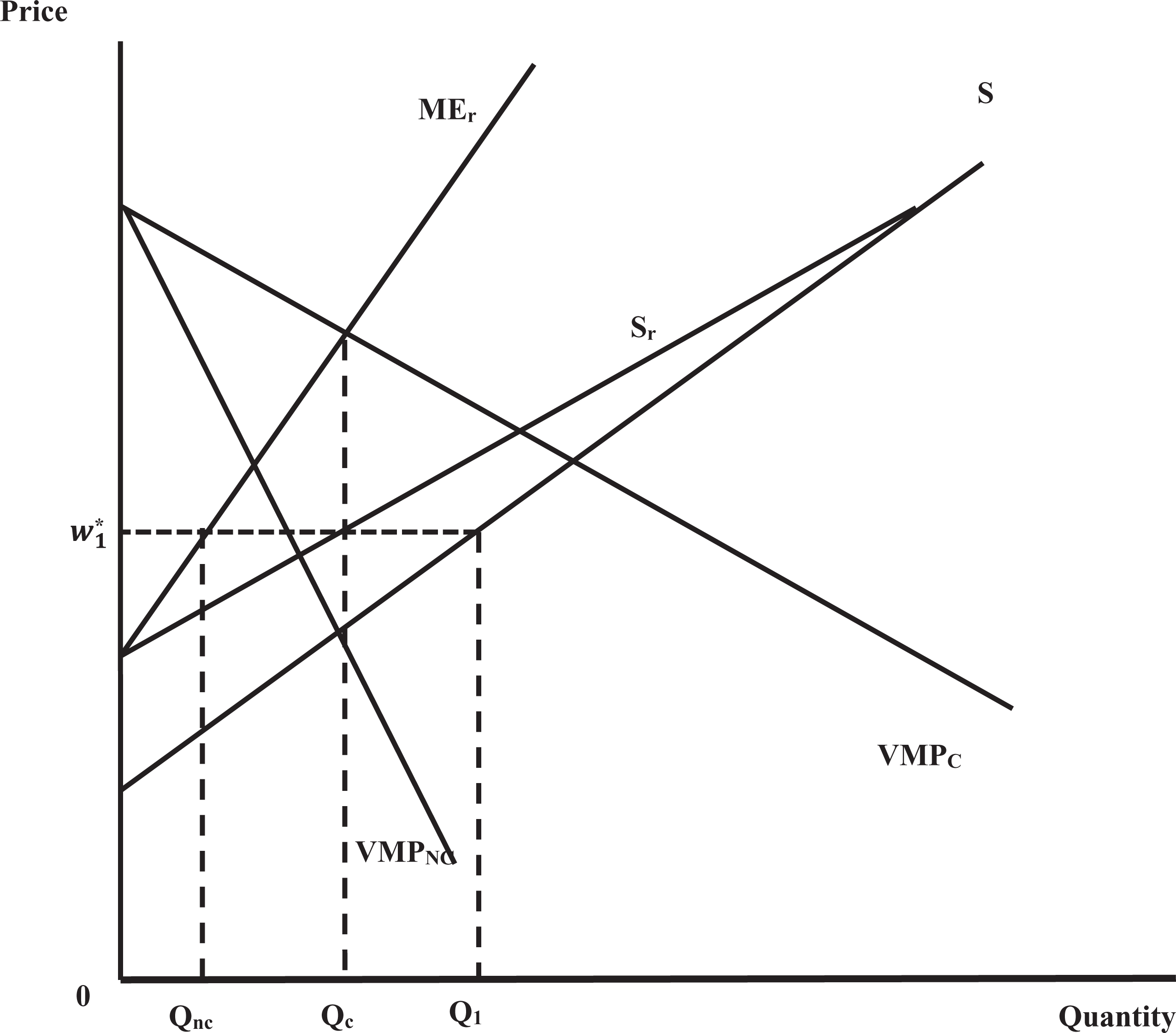
The partial buyer cartel solution.
The profit-maximizing behavior of the buyer cartel leads to the same sort of allocative inefficiency that results from pure monopsony. Since marginal expenditure exceeds price, the value created by employing one more unit would exceed the social cost of doing so. As a consequence, cartel behavior by a subset of the industry leads to a deadweight social welfare loss analogous to that of pure monopsony. The magnitude of the welfare loss will be smaller due to the presence of the nonconspirators. The ability of the buyer cartel to depress price below the competitive level is limited by the nonconspirators’ willingness to expand their purchases when price is reduced. The presence of the nonconspirators, however, only reduces but does not eliminate the social welfare loss.
We can illustrate the impact of the buyer cartel on the sellers in Figure 4. In a competitive market, the producer surplus is equal to area w1bc. The buyer cartel causes price to fall to
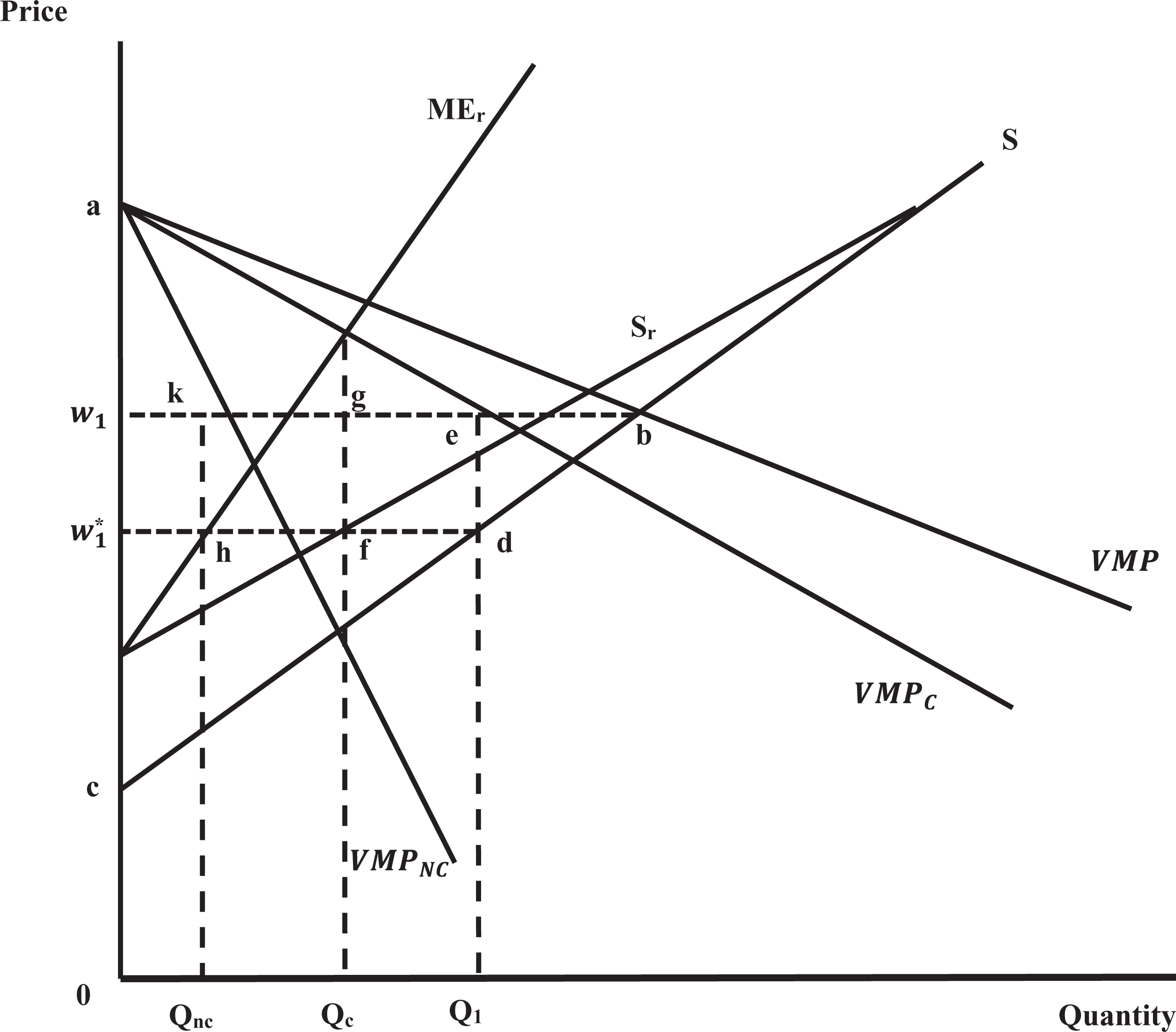
The welfare effect of the partial buyer cartel.
It is important to keep in mind that the lower input prices extracted by the buyer cartel do not result in lower output prices. In fact, just the opposite is the case: output prices will rise. 23
V. Estimating Antitrust Damages
In simple terms, the damages suffered at the hands of a seller cartel equal the overcharges (o/c):


In the preceding section, we have argued that the cartel members should be responsible for all overcharges or underpayments resulting from the cartel activity. But they should not be responsible for price changes caused by other factors, that is, exogenous changes in supply and demand unrelated to the cartel’s conduct. Fortunately, a sound econometric model of price determination can control for other factors and isolate the influence of the cartel on price. One way of accomplishing this is to use a reduced-form price equation that includes a Cartel dummy variable.
In an ideal world, the plaintiffs would have transactional panel data before, during, and after the conspiracy period. 24 In addition, the cartel period would have a clear beginning and a clear end, so the plaintiffs could identify the prices that were untainted by the conspiracy and those that may have been influenced by the cartel.
To avoid charges of speculation, a plaintiff should provide a reasonable estimate of the damages suffered. This requires the collection of data and the application of modern econometric techniques. In this section, we provide a brief discussion of the precision that should be demanded by the courts, the data requirements, and two relatively simple econometric approaches to damage estimation.
A. Required Precision
As a general proposition, the U.S. courts are demanding when it comes to proving the fact of injury but far less so when it comes to estimating the amount of the damage suffered. The logic is fairly straightforward. If one claims to have been injured, he or she will have to prove it. For a defendant to be liable, the preponderance of the evidence must support the plaintiff’s allegation. Once the defendant has been found liable, however, the standard of precision in measuring the damages should be relaxed. In order to estimate damages, the plaintiff must estimate the difference between the actual price and the price but for the conspiracy. While a plaintiff can be expected to present accurate evidence of the cartel price, the “but-for price” is not observable and must be estimated. There is an unavoidable element of uncertainty surrounding such estimates due to data limitations. Consequently, the estimated damages may be somewhat imprecise.
In general terms, the U.S. Supreme Court explained that whenever damages are estimated, there is some unavoidable element of uncertainty involved. In the antitrust arena at least, we have learned to live with uncertainty. Once an antitrust plaintiff has proved the fact of injury with reasonable certainty, the burden of proof in estimating the amount of damages is somewhat relaxed. In Story Parchment, the Supreme Court explained the different standards of proof for the fact of damage and the amount of the damage: “The rule which precludes the recovery of uncertain damages applies to such as are not the certain result of the wrong, not to those damages which are definitely attributable to the wrong and only uncertain in respect of their amount.” 25 Once a plaintiff proves the fact of the damage, “it will be enough if the evidence show the extent of the damages as a matter of just and reasonable inference.” 26
While the jury can rely on reasonable inferences, there is a difference between drawing reasonable inferences and speculation or guesswork. Speculation can be eliminated by the use of modern econometric techniques that should yield reasonable inferences. As we will see below, multiple regression analysis can be used to estimate damages while controlling for other exogenous changes that are not related to the infringement of Article 101.
B. Damage Methodology
There are two commonly used damage methodologies that employ panel data from the relevant market: the “dummy-variable approach,” which directly estimates the impact of a cartel on price; and the “forecasting approach,” which compares the actual prices during the cartel period to the estimated prices had there been no conspiracy. In both methods, the first step involves identifying the beginning and end of the cartel. 27 In our discussion, we assume that the timing of the cartel has been observed. 28 Prices during this period are the actual prices, which are tainted by the collusive conduct. Prices before and/or after the cartel period are then used to draw an inference of the overcharge or underpayment. We assume that demand and supply variables affect prices the same way regardless of the cartel’s presence. Consequently, after controlling for other exogenous demand and supply variables, the cartel is the only factor driving the price difference. Clearly, the plaintiff needs sufficient data so that it can draw a just and reasonable inference.
A common way to estimate the influence of a cartel on price is to estimate a reduced-form price equation in which the market price of a product is estimated as a function of various supply and demand variables.
29
In the dummy variable approach, one estimates the overpayment or underpayment directly by including a cartel indicator variable using the whole sample period: before, during, and after the conspiracy. The coefficient on the cartel indicator provides an estimate of the difference between the average price in the cartel period and the average price in the competitive periods. The cartel variable causes a shift in the price curve. For now, assume that the price fixing conspiracy involved collusion over a homogeneous product. A reduced-form price equation that includes an indicator for the conspiracy period can be utilized to estimate the effect of the conspiracy on price. The plaintiff could estimate the following econometric model using ordinary least squares (OLS):

By using panel data, the model may include fixed effects. Manufacturer fixed effects (θ i ) in equation (1), or indicator variables that represent the individual firms in the model, capture unobserved, time-invariant characteristics of each firm that affect price. We could also include a time trend that captures the pattern of price changes over time. This time trend could be based on year or quarter or month, depending on the availability of the data.
It may be useful to estimate the reduced-form price equation above using the natural logarithm of price instead of the level of price as in equation (1) to incorporate nonlinear relationships between price and other exogenous variables. When using the natural logarithm of price, the coefficient on the Cartel variable can be used to estimate the percentage underpayment or overcharge, i.e. the percentage difference between the actual price and the but-for price, due to the price fixing conspiracy. This can be accomplished by taking the coefficient estimated in the revised regression model on the Cartel variable and using the conversion e⁁(coefficient estimate). For example, if the estimated coefficient on the Cartel variable was given by –0.10, the estimated effect of the cartel underpayment would be approximately e⁁(–0.10) – 1 = –0.095, which indicates that the collusion resulted in prices that were 9.5 percent lower than they otherwise would have been. The percentage underpayment can be converted to a dollar per unit underpayment and then applied to the quantities purchased by the plaintiffs.
In conducting empirical research, we are vitally interested in the signs and statistical significance of the estimated coefficients. Suppose that the coefficient estimate on the cartel dummy has the correct sign—a positive in the case of the seller cartel or negative for a buyer cartel. If the coefficient is not statistically significant at the 0.05 level, we would be inclined to infer that there were no damages attributable to the cartel. In other words, even if we knew that the cartel members unlawfully agreed to distort the competitive process, the data suggest that their efforts failed. Consequently, the defendant could argue that the coefficient on the cartel variable does not provide a “just and reasonable” estimate of the overcharge or the underpayment. As a matter of competition policy, however, we may want to use this estimate for several reasons. First, the estimate is based on sound methodology applied to the data available. It is the best that a plaintiff can do under the circumstances. Second, even though the confidence interval includes zero, our conventional level of significance is a far cry from a preponderance of the evidence standard that applies in such cases.
C. Testing the Umbrella Theory
In what follows, we continue to refer to claims of those who sold to the nonconspirators as umbrella damages and those plaintiffs as umbrella plaintiffs. The process for estimating the effects of a price fixing cartel on price is really no different if umbrella plaintiffs are considered. Ideally, data would be available on both the alleged conspirators as well as any nonconspirators. Similarly, for a buyer cartel, economic theory predicts that the nonconspirators would follow suit by depressing their prices and increasing their purchases of the input in response to the lower prices created by the conspiracy. For a seller cartel, economic theory predicts that the nonconspirators will expand their output and charge a higher price due to the conspiracy. There are at least two ways of confirming this: by descriptive statistics and formal tests. First, the graphical trends in input pricing patterns could be compared between the conspirators and nonconspirators over time to determine if they follow a similar pattern. Additionally, these data could be used to calculate the correlation coefficient between the price series, allowing the plaintiff to establish the degree of correlation between the two price series. Second, the econometric analysis could be modified by including data for all the buyers (or sellers) in the model and coding the cartel indicator as equal to 1 for both conspirators and nonconspirators during the cartel period. The rest of the model would be unaltered. This model would yield an underpayment (or overcharge) coefficient on the Cartel variable that would reflect the total effect of the conspiracy on price and could then be applied to sales made by suppliers who sold to the conspirators or the nonconspirators in the case of a buyer (or seller) cartel.
To test the umbrella model, the same regression equation could be estimated separately for the conspirators and the nonconspirators. The Cartel coefficients could then be compared to see if the price response to the conspiracy period resulted in a similar percentage increase in price. A second test of the model would involve combining conspirator and nonconspirator data and interacting Cartel with an indicator representing the alleged conspirators (e.g., Cartel*Conspirator). This would identify whether the effect of the cartel behavior was statistically different for the nonconspirators relative to the conspirators. A statistically insignificant coefficient on the interaction would reveal that there is insufficient evidence indicating distinguishable behavior between the conspirators and nonconspirators.
VI. Extensions of the Analysis
In Kone, the CJEU did not issue a blanket license to all umbrella plaintiffs. Instead, it held that the member states may not bar umbrella damage claims in all situations. The CJEU recognized the economic logic of umbrella pricing, but did not do so in an unqualified fashion. On the contrary, the CJEU carefully qualified its endorsement of umbrella damage claims. They are only viable when the circumstances of the case are appropriate. In our analysis, we employed the cartel variant of the dominant firm model to illustrate the economic logic of umbrella damage claims. When the assumptions of the dominant firm model are consistent with the circumstances of a particular case, our analysis of umbrella damage claims is compelling. In other instances, the model may be a poor fit and the logic of umbrella claims may be undermined.
In this section, we examine three ways in which the circumstances of a case may be inconsistent with the assumptions of the cartel variant of the dominant firm model. First, we consider the possible significance of the pre-conspiracy market structure. Second, we examine the relevance of our analysis to bidding markets. Finally, we recognize the potential significance of product differentiation.
A. Preconspiracy Market Structure
First, in the cartel variant of the dominant firm model, which we employed above, the preconspiracy market structure implicitly was assumed to be competitive. Relaxing this assumption will alter our results quantitatively, but not necessarily qualitatively. As an example, consider the case of a Cournot oligopoly with four firms facing a demand of P = 10 − Q, where P is the market price and Q is the total quantity supplied by the firms. Suppose each firm has constant marginal cost $2. In the absence of any conspiracy, each firm receives a profit of
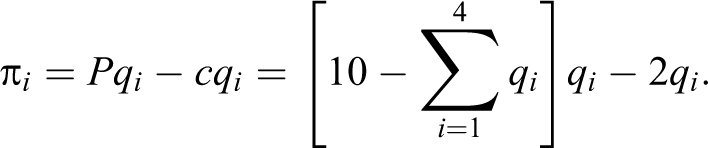
Profit-maximizing behavior would lead each firm to produce qi = 1.6. The equilibrium market price will then be P* = $3.6 and each firm makes a profit of
Now, consider the case where three firms collude to form a partial cartel while the fourth firm does not participate in the cartel. In effect, this change in behavior alters the market structure to one of Stackelberg duopoly. The colluding firms behave like the Stackelberg leader. The partial cartel first chooses an amount to produce. After observing the cartel’s production, the nonconspirator decides on a quantity. In the second stage, the nonconspirator faces a profit

The nonconspirator will optimally choose

Each cartel member will then choose
In this case, umbrella damage claims would fit the Kone logic. Prices for those who purchased from the cartel and those who purchased from nonconspirators exceed the noncollusive price. Estimating the but for price would seem to pose no special problems. This result, however, is not general. For example, if the pre-conspiracy market structure is a Bertrand oligopoly with identical costs, the full participation cartel could result in the monopoly price and quantity. A partial cartel would be useless unless the nonparticipants were capacity constrained.
B. Bid Rigging
Second, in some markets, transactions take place pursuant to bidding. In these circumstances, collusion results in bid rigging. As an example, consider a partial conspiracy among suppliers. 30 The conspirators agree among themselves on who will be the winner, and everyone else will submit bids above that of the designated winner. If nonconspirators have costs similar to those of the cartel members, they will notice that the winning bids are well above cost. The nonparticipants can profitably undercut the cartel, take away their business, and thereby undermine the cartel’s efforts to earn economic profits. In the short run, the nonconspirators may be capacity constrained. If so, the cartel’s efforts to rig bids may still be profitable. If the nonconspirators are less efficient than the cartel members, then the cartel’s ability to raise prices will be somewhat constrained, but not eliminated. In either event, the transaction price may be above the noncollusive price. If so, the buyers will have suffered antitrust injury. It does not matter whether they bought from the cartel members or from the nonconspirators.
C. Product Differentiation
Third, our analysis assumed homogeneous products, but heterogeneity is more likely in real-world markets. It would seem that the logic would survive some degree of product differentiation. For example, gasoline is branded, but all brands are reasonable (albeit imperfect) substitutes. Consequently, branded and unbranded gasoline would be in the same antitrust market. Technically, the dominant firm model does not quite fit the circumstances, but the economic logic of the model still provides useful insights. In contrast, a Ford Fusion is not a good substitute for a S600 Mercedes. At least in some cases, horizontal product differentiation can be accommodated, while vertical product differentiation may be problematic.
In its Kone opinion, the CJEU carefully qualified its endorsement of umbrella damages. These damages are only available where the circumstances of the case are appropriate. If the assumptions underlying the cartel variant of the dominant firm model are consistent with the circumstances of the case, then the analysis of umbrella damage claims is compelling. In other instances, however, the model is a poor fit and the logic of umbrella claims may be undermined. This may also be true when product differentiation is complex or in the extreme case of customized products.
VII. Additional Issues
There are three additional issues that are worth discussing. First, there are some structural safe harbors in the EU enforcement of Article 101 of the TFEU that may preclude private recovery. Second, there is the question of whether to extend the umbrella logic to economic substitutes. Finally, private damage claims require the development of discovery procedures that may not exist currently.
A. Safe Harbors
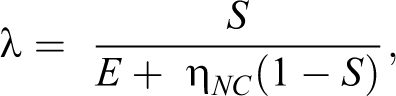
First, safe harbors based on market shares reflect presumptions regarding probable economic effects. They are often useful in weeding out suits that have little potential for improving social welfare. But safe harbors can produce unfortunate results in some circumstances. This may well be the case when it comes to buyer alliances. Buyer alliances or purchasing agreements are presumed to be competitively neutral if they account for less than 15% of the market. There is a presumption that buyer alliances accounting for 15% or less of total purchases in the market are too small to have an adverse economic impact. This presumption, however, is not based on economic theory. It is easy to show that the Lerner Index for buyers is
B. Imperfect Substitutes
Substitutes are defined by their cross-elasticity of demand:
Nonetheless, the language in Kone would seem to extend the umbrella logic to imperfect substitutes such as rice and potatoes, which are usually found in separate antitrust markets. As an economic matter, this is perfectly sensible; but as a practical matter in litigation, it would pose a serious problem of proof. On the basis of introspection, we recognize that bread, pasta, potatoes, and rice are substitute sources of carbohydrates and calories. If the pasta producers collude, the price of pasta will rise, and the demands for bread, potatoes, and rice will shift to the right. If the supply curves for these products are positively sloped, the prices of bread, potatoes, and rice will rise, and consumers of these products will be harmed by the conspiracy in the pasta market. To the extent that part of the price increases are caused by other exogenous variables, the econometric analysis should sort this out. In principle, therefore, the resulting “overcharges” on these products should be recoverable. In practice, however, this may be ill-advised due to the complexity of the ensuing litigation.
In order to avoid unmanageable complexity that the judicial system is ill-equipped to handle, it is desirable to put boundaries on the defendant’s liability for damages. One practical solution is to limit damage claims to the relevant antitrust market. Even this is complicated because relevant antitrust markets often include imperfect substitutes. Consider the problem of identifying reasonably close substitutes in the market for wine. Should we include all red wine and all white wine? Should we include champagne? If we decide that red wine and white wine are in separate markets, then we ask whether burgundy, cabernet sauvignon, and merlot are in the same market. Since an important source of product differentiation is quality, one may reasonably ask whether all merlots belong in the same market. For consumers, it may matter a good deal whether a wine came from France, California, Australia, or Chile. Could a California merlot be a reasonable substitute for one from France? If so, they are in the same market; if not, they are in separate markets. These questions cannot be answered with a priori reasoning. They involve empirical issues and matters of judgment and may be industry specific.
C. Discovery Problems
Third, private plaintiffs may need more robust discovery than currently exists in the EU. Firms in the industry in question may have relevant information and data that would assist private plaintiffs in their efforts to sue for damages. If they are denied access to such information and data, they may be unable to prove either liability or damages. For private actions to provide an adequate remedy, discovery rules are needed to compel the production of documents and testimony. 32
In order to establish liability, the plaintiff may want internal documents from all industry members. These may involve business plans and pricing strategies. Email records may also be useful in distinguishing participants from nonparticipants. Sales records that include prices, quantities, discounts, rebates, and allowances for all transactions will be useful in the estimation process. The records of nonparticipants may be needed to test the applicability of the partial conspiracy. In some cases, this information will not be available, however, and we will observe a pattern of follow-on litigation after the guilt of a firms has been determined.
VIII. Concluding Remarks
In the Kone decision, the CJEU recognized the economic logic of the umbrella damage claims. Its opinion was suitably qualified, but under certain circumstances, umbrella plaintiffs will have an opportunity to pursue private recoveries for infringement of Article 101. In this article, we have presented a cartel variant of the dominant firm model for either seller cartels or buyer cartels. The CJEU’s economic reasoning is clearly correct—at least under some circumstances. In addition, we have explored the econometric estimation of damages that will be necessary for a successful plaintiff.
Umbrella plaintiffs will have to establish the causal link between the overcharge (or underpayment) alleged and the cartel conduct. If economic logic supported by econometric analysis does not satisfy the need for establishing causation, then umbrella plaintiffs will fail in court.
Footnotes
Acknowledgments
Without blaming them for what follows, we thank Einer Elhauge, Damien Geradin, Ariel Ezrachi, and Johannes Paha for useful advice. We also thank Jon Hamilton and Richard Romano for advice on related work and Jeffrey Harrison and Jessica Haynes for past collaboration. Additionally, Georg Goetz, our discussant at the 2015 Southern Economic Association (SEA) conference, provided many valuable insights. Finally, we thank Maarten Pieter Schinkel, our discussant at the 2016 International Industrial Organization Conference, for several excellent suggestions.
Declaration of Conflicting Interests
The author(s) declared no potential conflicts of interest with respect to the research, authorship, and/or publication of this article.
Funding
The author(s) received no financial support for the research, authorship, and/or publication of this article.