






Abstract
This study investigated the influence of microwave (MW) on signal enhancement, shot-to-shot repeatability of emission signals, and parameters of laser-induced plasma (LIP) of soil samples. A neodymium-doped yttrium aluminum garnet (Nd:YAG) laser working at its fundamental wavelength, with energy ranging from 40 to 260 mJ was utilized in conjunction with MW power varying from 400 to 1200 W to generate plasma. The plasma emissions were recorded and analyzed with a spectrometer (LIBS 2500 Plus, Ocean Optics) at varying detector gate delay (DGD) up to 5 µs. At optimized laser energy of 140 mJ and MW power of 1.2 kW, the emission signal intensities and the signal-to-noise ratio (SNR) were enhanced by up to seven-fold and nine-fold, respectively, compared to conventional LIBS. Furthermore, MW coupling with plasma significantly improved LIBS repeatability by reducing the relative standard deviation (RSD) of emission line intensities from 38% to 11% and from 18% to 4%, for Mg and Si, respectively. Additionally, the MW-assisted LIBS also decreased shot-to-shot fluctuations in plasma temperature (Te) from 15% to 6%, and in electron density (Ne) from 14% to 7%. These improvements in sensitivity and stability due to MW-assisted LIBS pave the way for future quantitative analysis and the detection of trace elemental contaminants in soil at low concentration levels (e.g., ppm), which is a critical application in environmental monitoring.
This is a visual representation of the abstract.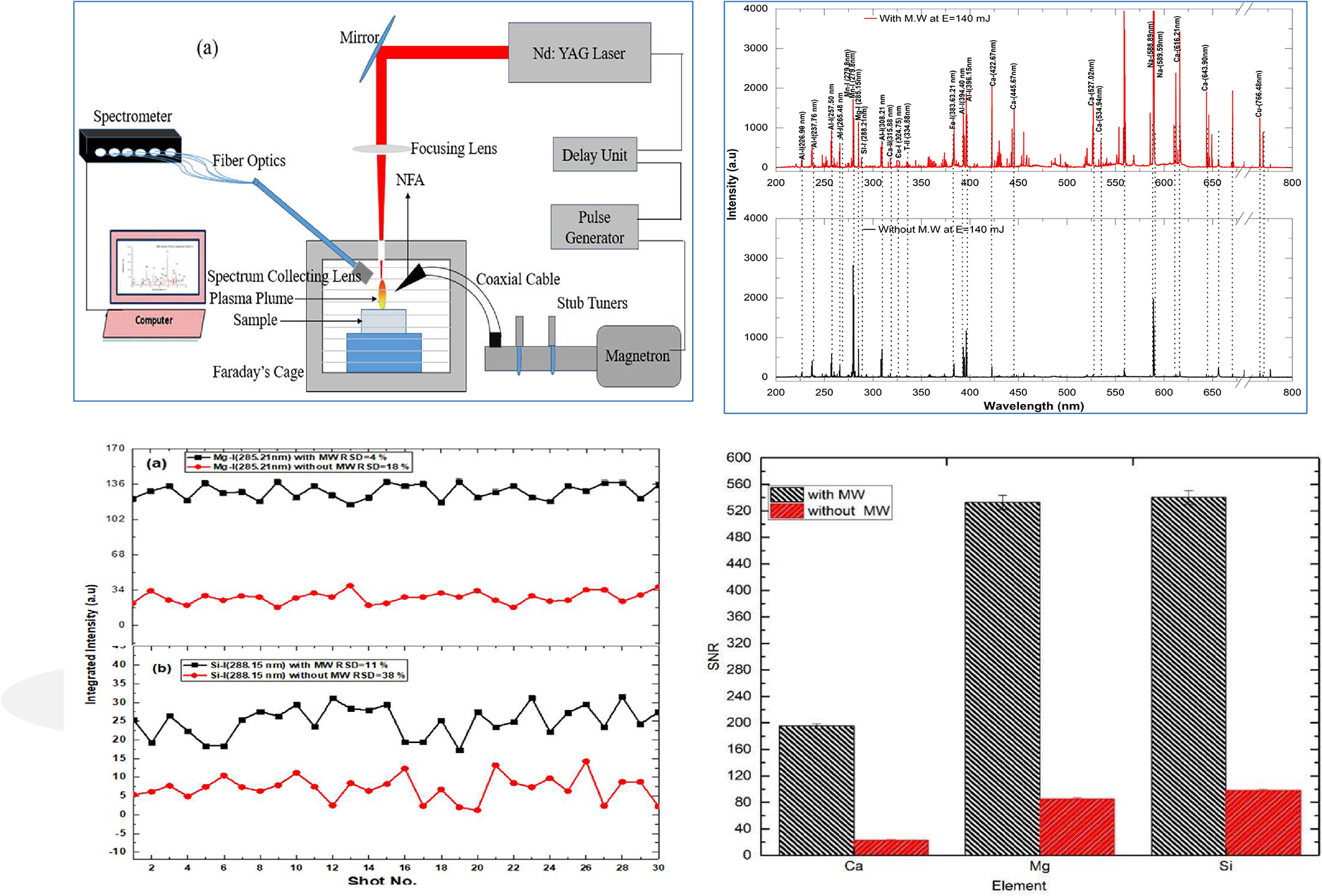
Keywords
Introduction
Laser-induced breakdown spectroscopy (LIBS) is an emission spectroscopic technique that uses an energetic laser pulse to generate a plasma on the surface of the sample. The laser-induced plasma (LIP) emits characteristic radiation, which are the spectral signatures of the elements present in the sample. The radiations are used for qualitative and quantitative study of target samples.1–3 LIBS has remarkable features, including multi-elemental detection, fast operation, portability, minimal or no sample preparation, and standoff and field-deployment capabilities. Despite these advantages, conventional single-pulse LIBS (SP-LIBS) suffers from challenges such as low sensitivity, poor repeatability, matrix effects, plasma inhomogeneity, and laser energy fluctuations, all of which contribute to signal instability. 4 In response, various enhancement strategies have been investigated to improve LIBS’ performance. These include double-pulse LIBS (DP-LIBS), which has demonstrated improvements in signal-to-noise ratio (SNR) and limit of detection (LOD).5,6 Likewise, nanoparticle-enhanced LIBS (NELIBS) has demonstrated promising performance in amplifying spectral signals, particularly for trace-element detection.7,8 Other enhancement techniques included applying transverse magnetic and electric fields, which improve plasma confinement. For instance, when a 0.7 T magnetic field was applied, the emission intensity increased by up to three-fold, 9 while electric-field-assisted LIBS improved sensitivity, yielding an LOD of 1.7 parts per million (ppm) for gold alloys. 10 However, these strategies are complex, and some require additional sample preparation, such as coating the sample surface with a nanoparticle in the case of NELIBS, necessitating alternative methods. Recently, Ashrafkhani et al. 11 used an auto-focusing system, achieving reduced spectral standard deviations for aluminum and human nail samples. Khan et al. 12 reported improved relative standard deviations (RSDs) by depositing Cu nanoparticles on aluminum alloys. A magnetically confined plasma demonstrated significant improvements in RSDs from 23% to 12% and from 12% to 5% at optimized experimental parameters, including a magnetic field of 3 kG, laser energy of 140 mJ, and a detector delay of 0.83 μs, highlighting better plasma stability compared to SP-LIBS. 13 Although these strategies have enhanced LIBS performance, the integration of microwave radiation into laser-induced plasma (LIP) has garnered increasing attention. This is because microwaves extend plasma lifetime, intensify emission signals, and stabilize plasma dynamics without requiring significant modifications to conventional LIBS setups.
When an intense laser pulse is focused on the surface of a soil sample, the associated electric field of the laser rapidly heats the sample surface, causing ionization and breakdown of the sample material. Consequently, plasma is produced on the sample surface containing ions, electrons, excited species, and atoms in the ground state. Initially, it contains very high temperature and electron density. When microwaves are incident on the plasma, the oscillating electric field of the microwaves efficiently interacts with the free electrons of the plasma. The absorption of microwaves by free electrons is known as inverse bremsstrahlung absorption. The microwave energy efficiently couples to plasma when the frequencies of both are comparable. This interaction supports processes of cyclic excitation and recombination. 14 As a result, the free electrons are accelerated and increasing their kinetic energy. These energetic electrons when collide with neutral atoms and ions, they transfer their energy causing excitation of atoms and ionization, additional ionization, localized heating and longer plasma life. 15 Khumaeni et al. 16 investigated this mechanism and found that at 400 W of microwave power, CaO plasma lifetime extended up to 500 µs, with a plume diameter of 15 mm. Ikeda and Soriano 17 heated the laser/spark induced air plasma with microwaves to extend plasma life and sustain the emission to milliseconds. Kearton and Mattley, 18 the Ocean Optics researcher used the same microwave oven magnetron in laser-assisted microwave plasma spectroscopy (LAMPS) and compared LIBS with other techniques for the characterization of metal alloys. Liu et al. 19 used microwave enhanced LIBS to study the signal enhancement of alumina ceramic plasma. At optimized experimental parameters (laser pulse irradiance, microwave duration, ambient environment), 33 times signal enhancement was achieved. It is reported that enhancement was element-dependent and maximum in emission lines with low excitation energy. Ikeda et al. 20 utilized microwave-enhanced spark-induced breakdown spectroscopy, which extended the size and plasma life and obtained more accurate measurements. The spark was produced by a gasoline engine spark plug, and the magnetron of microwave oven at 2:45 GHz was used as a microwave source. As a result, stable, enlarge, and extended plasma was produced at atmospheric pressure and above. Likewise, Ikeda et al. 21 observed significant enhancements in SNRs up to 600 for Al and 200 for Cr when alumina targets were analyzed in a microwave environment. The same group later used a 2.4 GHz microwave source with a helical antenna and reported a considerable enhancement in the emission of Al, Cr, and Pb lines in aluminum oxide (Al2O3). 22 Al Shuaili et al. 23 reported that signal intensity increased almost 92 times, whereas LOD was eight-times reduced for palladium using 2.45 GHz and 750 W microwaves at just 5 mJ laser energy. Slightly improved signal intensity (100-times) but significantly reduced LOD (93-times) was reported by Viljanen et al. 24 by employing pulsed microwaves (2.45 GHz, 1 ms) incident through a near-field applicator (NFA) to plasma generated on Cu/Al2O3 samples. While the literature reports substantial improvements in LIBS sensitivity through the integration of microwave techniques, some groups have addressed repeatability and stability of LIBS using microwaves. Our recent work on microwave-assisted LIBS 25 demonstrated a nearly 7% improvement in RSD for Al alloys using microwave-assisted LIBS, supporting the technique’s potential for enhancing signal repeatability. Ikeda et al. 22 also reported a six-fold signal enhancement with reproducibility improvements in terms of RSD up to 6% and 3% for emission lines and plasma parameters, respectively. Likewise, Saleem et al. 26 used microwave-assisted LIBS with cavity confinement to explore plasma morphology and stability. An enhancement factor of 1.08 was observed, along with reduced RSDs down to 17.12% in Cu-alloy emission signals at 90 mJ laser energy and 400 W microwave power.
The existing LIBS setups such as conventional nanosecond LIBS (ns-LIBS), picosecond LIBS (ps-LIBS) have their own features. Moreover, both calibration based and calibration free strategies are used for the compositional analysis of soil samples. In ns-LIBS, plasma is produced with laser pulse, usually using a neodymium-doped yttrium aluminum garnet (Nd:YAG) laser, having pulse duration up to 100 ns. In this case the same laser pulse produces plasma, as well as interact with the plasma produced by the leading edge of laser pulse, leading to large plasma, boarder spectral lines, higher plasma temperature, and electron number density. Despite higher detection limit, it is widely used for the analysis of soil samples due to simplicity, cost effectiveness, and ability to perform in-situ analysis.27,28 In contrast, ps-LIBS utilizes laser pulses with picosecond duration, significantly shorter than thermal diffusion time of the target material. As a result, localized and efficient ablation occurs causing reduced plasma shielding, more confined plasma, relatively lower plasma temperature, electron number density, and less broadened emission lines. This improves the spectral resolution and do the precise micro-analysis. Although this setup is expensive, creates smaller ablation volume and low emission intensity, people used it for soil analysis, environmental analysis and compared it with ns-LIBS.29–31 When compared with laser ablation inductively coupled plasma mass spectrometry (LA-ICP-MS), the LIBS technique is quite different in analysis and instrumentation. It combines laser ablation of a sample, followed by ionization in an inductively coupled plasma and mass spectrometric detection of ions due to their mass-to-charge ratios. Compared to LIBS, this technique is more precise, sensitive, extremely low limit of detection, however, it is laboratory-based technique, complex instrumentation, much expensive than LIBS, and needs extensive sample preparation, hence not suitable for filed deployment. Their work underscores that while microwave-assisted LIBS has proven effective in enhancing sensitivity and repeatability across various laser energies for metallic samples, its application to improve reproducibility in complex materials such as soil, needs further investigation. Although conventional LIBS29–31 has been applied for the compositional analysis of soil, it has not been successful in the detection of trace elements. The microwave-assisted LIBS, on the other hand, is much more effective in detection below parts per million (ppm) level. Liu et al. 32 reported 23-times improvement in detection sensitivity of copper in soil due to the application of microwaves-assisted LIBS. This sensitivity enabled to detect copper and silver as low as 30 and 23.3 mg/kg, respectively in soil matrix. Similarly, a more sensitive microwave plasma torch and laser ablation setup has been developed by Zeng et al. 33 with limit of detection of Cu, Pb, Cr and Ag down to 0.075, 0.093, 0.068, and 0.009 mg/kg, respectively. However, further investigation on LIBS sensitivity and reproducibility, with microwave assistance, is necessary for several reasons. Soil has intrinsic heterogeneity, variations in composition and moisture levels, which pose unique challenges. Soil has a complex matrix and is rich in a variety of elements, including nutrients (N, P, K, Ca, Mg), contaminants (Pb, Cd, Cr), and carbon. In soil, major, minor, and trace elements are present in a single sample, making it a suitable candidate for studying the effects of microwaves on the sensitivity and repeatability of major and trace elements. Moreover, LIBS of soil have some important applications in environmental monitoring by detecting and quantification heavy/toxic metals such as Pb, Cd, Cr, and As in contaminated soils. This application is useful to assess soil pollution near waste disposal sites and industrial areas. LIBS of soil is also helpful in determining soil fertility by measuring the concentrations of essential nutrients such as K, Ca, Mg, and P.
Considering the findings on microwave-assisted laser-induced plasma, we hypothesize that microwave plasma stabilization, particularly when combined with higher laser energies, can significantly enhance the sensitivity and repeatability of LIBS for heterogeneous samples such as soil. Hence, the main objective of the present study was to evaluate the effects of microwaves on the sensitivity and repeatability of LIBS of soil samples.
Experimental
Figure 1a presents the experimental setup employed in this study, which comprises a laser system, a microwave (MW) source, a spectrometer, a beam delivery, and a plasma emission collection assembly. The LIBS setup was the same as used in our previous works.12,13 Briefly, laser pulses of 1064 nm from a Q-switched Nd:YAG laser were focused with a quartz lens having a 50 mm focal length and incident on the soil pellet. The resulting laser spot size on the sample surface was measured using a microscope and was approximately 300 µm in diameter. The plasma of soil was produced at varying laser energies (40–260 mJ) and MW power levels (0.4, 0.8, and 1.2 kW). The emitted plasma light was collected using a collimator having a lens of 10 mm diameter, 5 mm focal length, and a numerical aperture of 0.4. The collected light was fed into the spectrometer via an optical fiber with a 600 µm core diameter. The collimator was positioned 4 mm from the sample surface and oriented at a 45° angle relative to the laser beam path. The spectrometer (LIBS2500+, Ocean Optics, UAS) was wavelength-calibrated using well defined emission lines from a low-pressure mercury–argon (Hg–Ar) calibration lamp, correlating the observed lines with their corresponding pixel positions. The radiometric calibration was performed using a standard light source (DH-2000-CAL), manufactured by Ocean Optics. The LIBS 2500 + is a seven-channel broadband spectrometer (200–900 nm), comprising a 2048 linear charge-coupled device (CCD) array detector with variable gate delay, fixed gate width of 2.1 ms, and 0.1 nm over all spectral resolution.
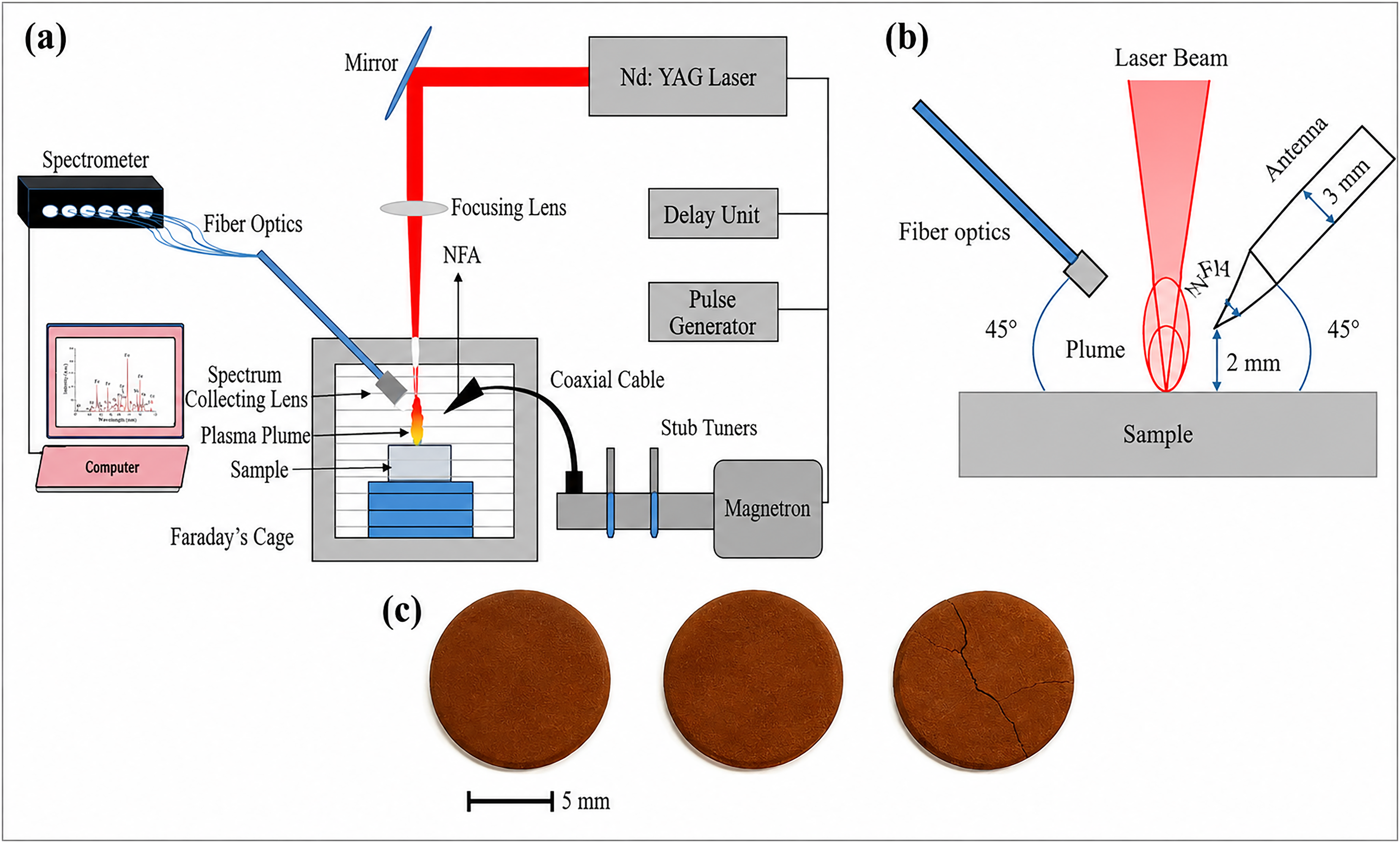
(a) Schematics of the microwave-based LIBS setup. (b) Schematics of laser matter interaction, microwave applicator, and plasma light collection. (c). Soil pallets for uniform and consistent laser.
The microwave source and its components, including the NFA, are described in detail in a previous study. 25 The NFA shown in Figure 1b is a silver-plated copper coaxial structure. It features an inner conductor with a diameter of approximately 1 mm, coated with a Teflon dielectric layer that extends the overall diameter to 3 mm. The tip of the inner conductor is precisely sharpened to 0.4 mm. While maintaining fixed LIBS experimental parameters, the NFA was positioned at various distances and angles to optimize MW coupling. Maximum plasma emission was obtained when the NFA was positioned 2 mm above and 1 mm laterally offset from the sample surface and angled at 45° relative to the laser beam. This configuration ensured maximum MW coupling into the plasma. The MW leakage was controlled using a Faraday cage made from galvanized metallic mesh. The lens to sample distance (LSD) was carefully adjusted to prevent breakdown of ambient air at the interface of air and sample. The continuous microwave source was operated for 5 seconds per laser shot, synchronized with the laser pulse using a relay switch. Under optimized conditions, 140 mJ laser energy, MW power of 1.2 kW, and a DGD of 0.83, µs enhanced and stable plasma emission spectra were observed. For each soil sample, 100 emission spectra were recorded, each from a fresh ablation spot on the sample surface to avoid crater effects and ensure statistical robustness. The sample was moved by using a motorized sample stage. Spectral lines were identified using the NIST Atomic Spectra Database 34 and a Matlab-based matching algorithm, which compares detected spectral line positions with known atomic transitions. The processed spectra were analyzed to determine the level of signal enhancement and the repeatability of emission lines, the plasma temperature, and the electron number density of the laser-induced soil plasma.
Sample Preparation
The soil samples were collected from the Nakyal District, Kotli, Azad Kashmir, Pakistan. Nakyal is a mountainous region where the soil texture is predominantly clay loam or sandy clay loam, with a slightly acidic to neutral pH. The collected soil was brownish and was obtained from the region where local people used it to colour the walls of old or muddy houses. The soil in this region contains moderate to high levels of organic matter, with Ca, Fe, N, Si, K, Cu, Al, and P as micronutrients. To remove moisture, the samples were air-dried at room temperature and at a relative humidity of 30% and then ground to a fine powder. A physical sieving method was employed to ensure homogeneity in particle size distribution. The 500 grams of ground soil were sieved through sieves with mesh sizes ranging from 4.74 mm to 0.07 mm. After 10 minutes of shaking, a fraction retained on the 0.42 mm mesh sieve was selected for pellet preparation to improve the sample's surface homogeneity. The collected fraction was thoroughly homogenized in a clean, dry container to avoid compositional variation. Powder of the same uniformity was compressed into pellets using a hydraulic press. Each pellet was 3 mm thick and 10 mm in diameter, as shown in Figure 1c. A pressure of 250 MPa was applied for 10 minutes to ensure the formation of pellets with flat and consistent surfaces, which are essential for uniform laser ablation during LIBS measurements.
Results and Discussion
Emission Spectrum of Soil Sample
The enhancement of emission signals in LIBS depends on multiple experimental parameters, ambient conditions, and the intrinsic spectroscopic properties of the emitted lines. To maximize signal intensity, key experimental parameters, including laser intensity, microwave power, and DGD, were optimized. In addition, the LSD and plasma emission collection geometry were also adjusted in accordance with the guidelines outlined in Krall and Trivelpiece. 35 Figure 2 displays the emission spectra acquired under optimized conditions: 140 mJ of laser energy, DGD of 0.83 µs, and MW power of 1.2 kW. The qualitative analyses of the recorded emission spectra reveal prominent lines of silicon, calcium, potassium, iron, titanium, and aluminum. Among these, Ca lines exhibited the highest intensity, indicating their significant presence in the soil matrix. The carbon emission line at 247.7 nm, with significant intensity, was observed in the MW-assisted LIBS spectra, whereas in conventional LIBS it is very low, confirming the enhanced excitation capabilities of the MW-assisted plasma. The comparison between conventional and MW-assisted LIBS spectra demonstrates a significant improvement in signal-to-noise ratio (SNR) for almost the entire spectral range. These observations confirm that microwave assistance to LIP substantially affects plasma dynamics, enhances the excitation and emission of atomic species, and improves LIBS performance for soil elemental analysis. However, the MW-assisted spectra exhibited slightly lower SNR in localized regions around 205 nm, 500 nm, and 740–750 nm, particularly within the 520–630 nm range, when compared to conventional LIBS. This uneven enhancement arises from differences in excitation energies, transition probabilities, and plasma dynamics due to microwave coupling.
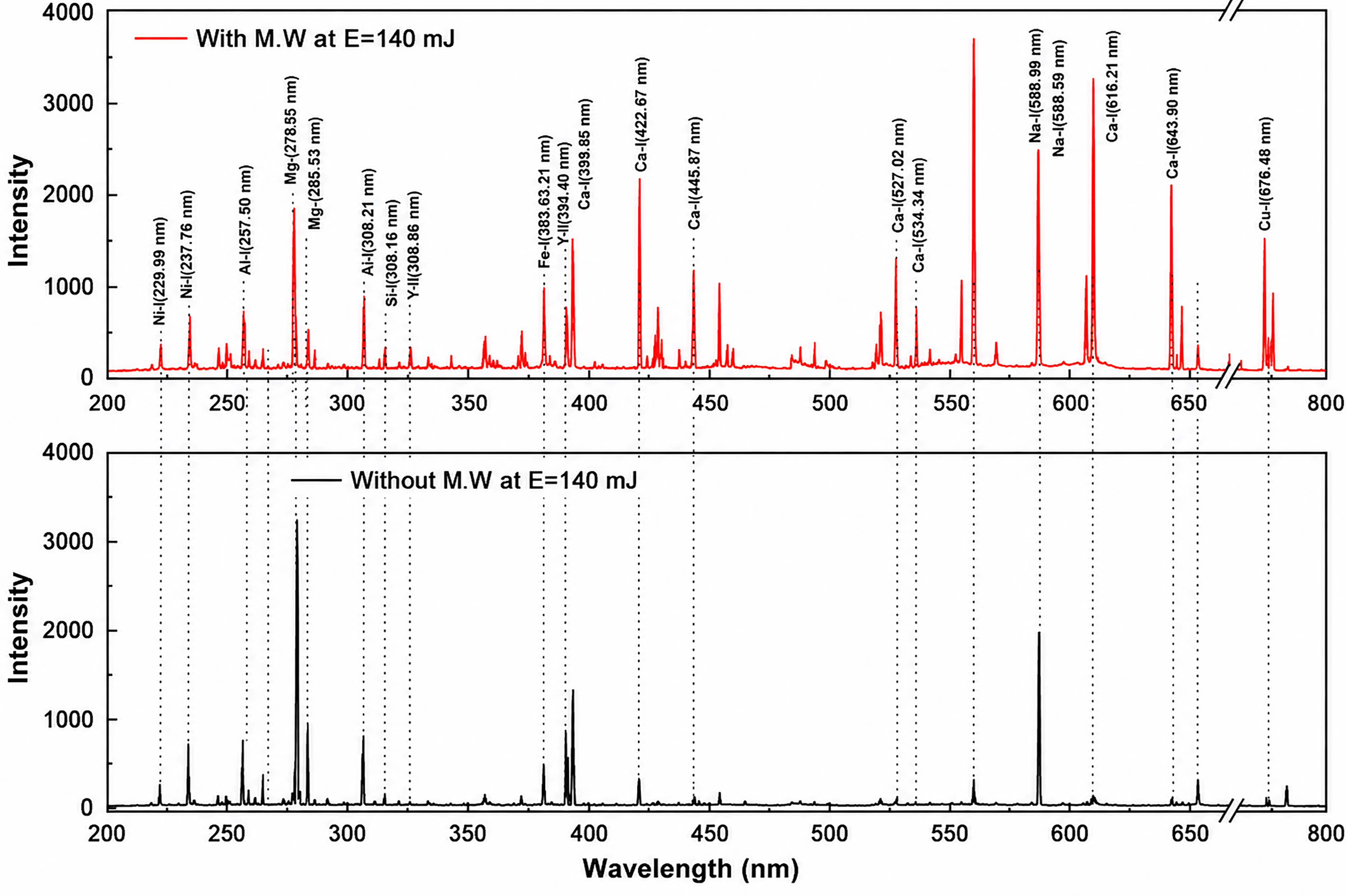
Emission spectra of soil samples, acquired at 140 mJ energy and 1.2 kW microwave power.
Dependence of signal enhancement on the laser energy, microwave power, and DGD
The principle behind microwave-assisted LIBS (MA-LIBS) relies on the coupling of microwave radiation with laser induced plasma. The external microwave field interacts with the plasma, continuously transferring energy to the free electrons as the plasma expands. These energized electrons then cause further excitation and ionization through collisions, effectively reheating the plasma. This process counteracts natural cooling and recombination, thereby prolonging plasma lifetime and maintaining it at a higher temperature for a longer period, resulting in stronger, more stable atomic emissions. When MW radiation interacts with LIP, according to Eq. 1, the free electrons, being lighter particles, strongly respond to this oscillating electromagnetic field.

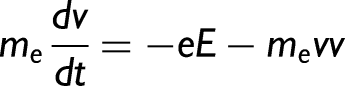




Substituting the value of J, the MW absorption in the plasma is represented by the following expression

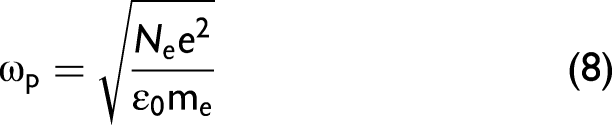
For a typical laser induced plasma, Ne ≈ 1015–1017 cm–3, which corresponds to ω p ≈ 1011–1012 s–1. At the early stage of plasma formation, the MW may reflect, but as the plasma expands with time, the electron number density decreases, allowing the MW to penetrate and efficiently heat the plasma. When MW penetrates, the average energy of electrons increases. These energized electrons then cause further excitation and ionization through collisions, effectively “reheating” the plasma. This process counteracts natural cooling and recombination, thereby prolonging the plasma lifetime and maintaining it at a higher temperature for a longer period, resulting in stronger, more stable atomic emissions. All these phenomena contribute to reducing the recombination rate, extending plasma lifetime, and enhancing emission intensities. Many groups have experimentally investigated different aspects of microwave assisted laser induced plasma, including the improvement of emission intensity and signal to noise ratio (SNR), 21 signal enhancement, 38 and spatial and temporal behavior of laser induced plasma in the presence of microwaves. 22 To investigate the influence of microwaves on signal enhancement (ratio of signal intensity with MW to the signal intensity without MW), the emission lines such as Mg(I) (285.21 nm), Si(I) (288.15 nm), and Ca(II) (317.93 nm) were chosen in the recorded spectra. The selection of Ca, Mg, and Si emission lines is based on their geochemical abundance in soils and their favorable spectroscopic characteristics in LIBS analysis. Silicon is the dominant element in most soil minerals because soils are largely composed of silicate materials, while Ca and Mg are important secondary macronutrients commonly present in soils as carbonates and silicates. From a spectroscopic perspective, the selected lines of these elements exhibit strong emission intensity, good signal-to-noise ratio, and minimal spectral interference, making them reliable for detection and analysis in LIBS measurements. Therefore, these elements were selected for their soil relevance and the stability and clarity of their emission lines within the recorded spectral range. Figures 3a–c shows that the signal intensities of these lines follow a similar trend for each microwave power; the signal enhancement increases sharply beyond 80 mJ of laser energy, attaining a maximum tenfold enhancement at 140 mJ. Thereafter, the enhancement declines at higher energies. The MW coupling with LIP at low laser energies appears more effective, possibly due to low plasma density. The observed increase in emission enhancement with laser energy up to 140 mJ is attributed to improved microwave–plasma coupling as the electron density approaches the critical density. In this regime, efficient microwave absorption via inverse bremsstrahlung leads to enhanced excitation and emission. At higher laser energies, the plasma becomes over dense, resulting in microwave reflection and reduced penetration (skin effect), thereby decreasing the enhancement. Additionally, plasma shielding and self-absorption effects further suppress the emission intensity. At a fixed energy and DGD, enhancement increases with MW power. This increase is comparable for neutral species but nearly twice as much for ionized spectral lines. The oscillating electric field of microwave accelerates free electrons to and from at microwave frequency. As the electrons are lighter and more mobile than ions, they efficiently absorb energy from the microwave field and transfer it through energetic collisions with atoms and ions. These ionic species often have high transition probabilities, leading to intense ionic emission lines compared to those of neutral (excited) species.
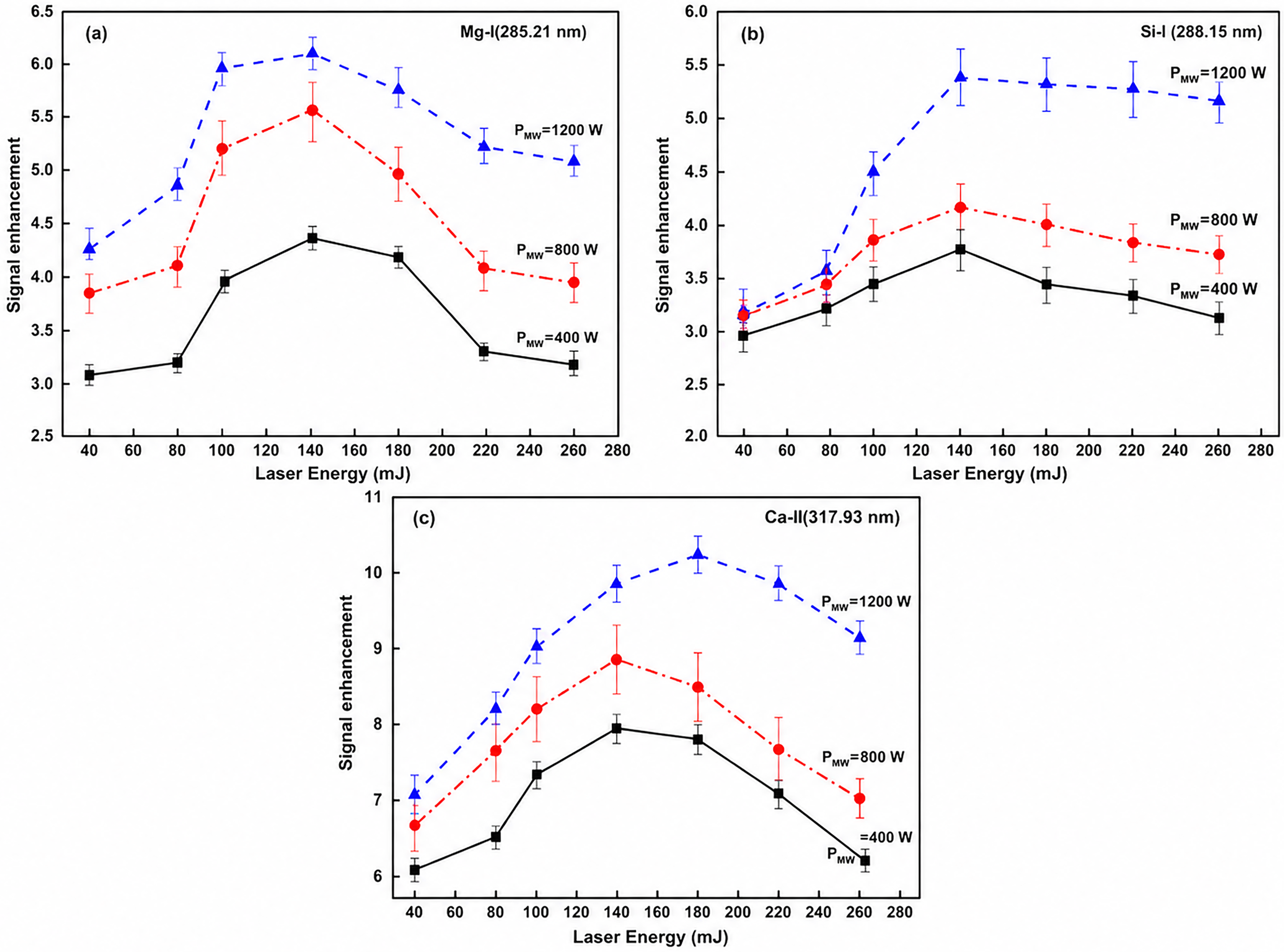
(a, b) Dependence of signal enhancement of excited and (c) ionized lines on the laser energy and MW power.
To determine the optimal value of DGD for MW-assisted LIBS, the intensities of selected excited and ionized species were recorded at varying DGDs and microwave powers, while keeping the laser energy fixed at 140 mJ. As shown in Figures 4a–c, the emission intensities exhibit a clear maximum at a DGD of 0.83 µs for all values of MW power. Beyond this delay, a rapid decrease in signal intensity is observed, possibly due to short-lived plasma. Consequently, the emissions from plasma species diminish quickly as the plasma expands and cools. The results also indicate that a DGD of 0.83 µs represents the optimal trade-off between emission intensity and temporal resolution, capturing plasma emission at peak excitation. This DGD value is particularly critical for MW-assisted LIBS, where the interaction between the MW field and plasma species is transient and highly sensitive to temporal parameters. Just after breakdown, the plasma is dense and highly ionized, which effectively absorbs microwaves due to the presence of enough free electrons. Later, the plasma expands, and electron density decreases below a critical value; consequently, microwave-plasma coupling decreases. This creates a narrow time window in which energy transfer from the MW field to the plasma is most effective.
22
LIBS sensitivity can be assessed by measuring the SNR of emission lines, which can be estimated using the following equation
39

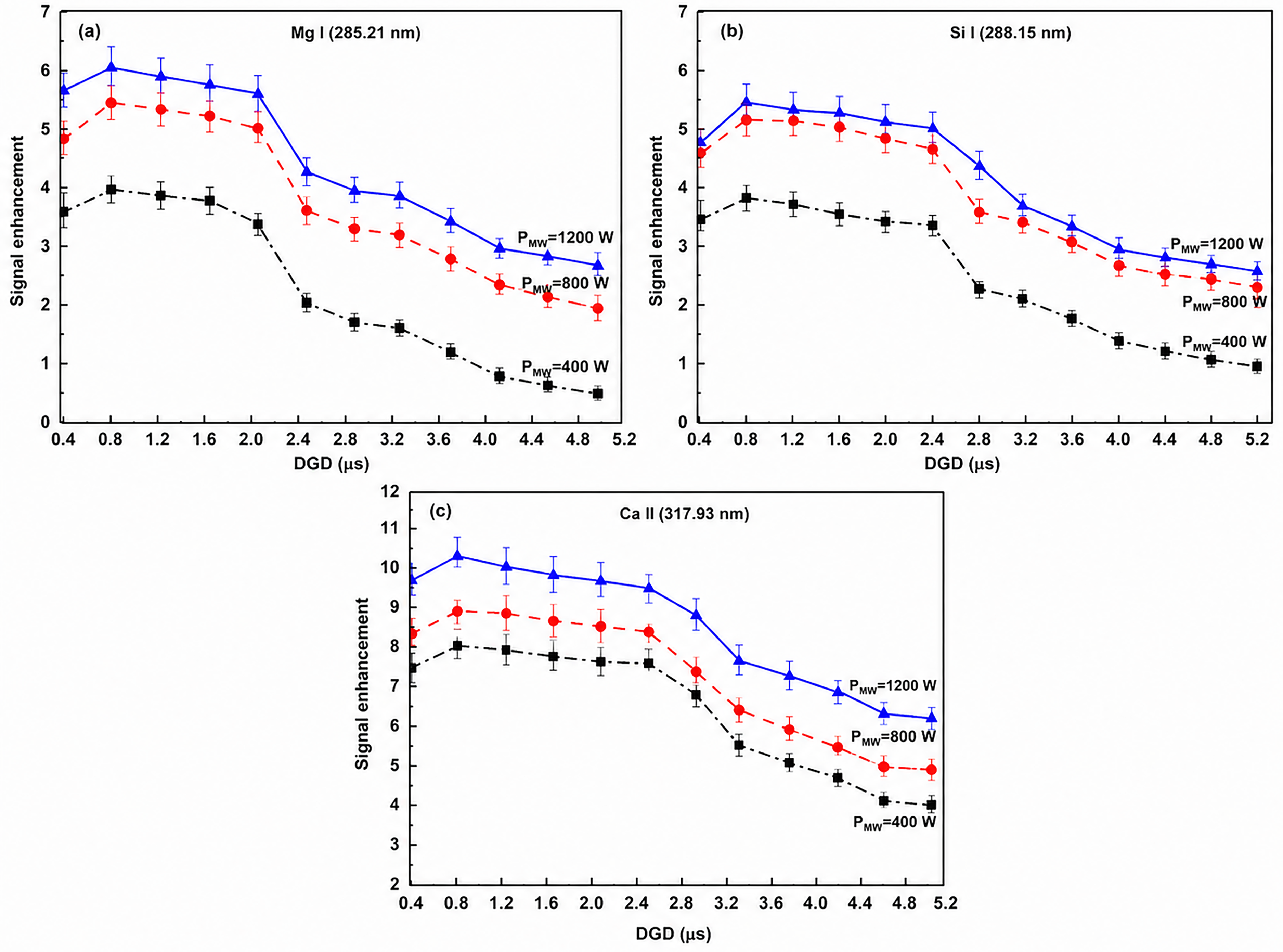
Variation of enhancement of emission lines as a function of microwave power, detector gate delay at 140 mJ laser energy, (a) Mg I, (b) Si I, and (c) Ca II.
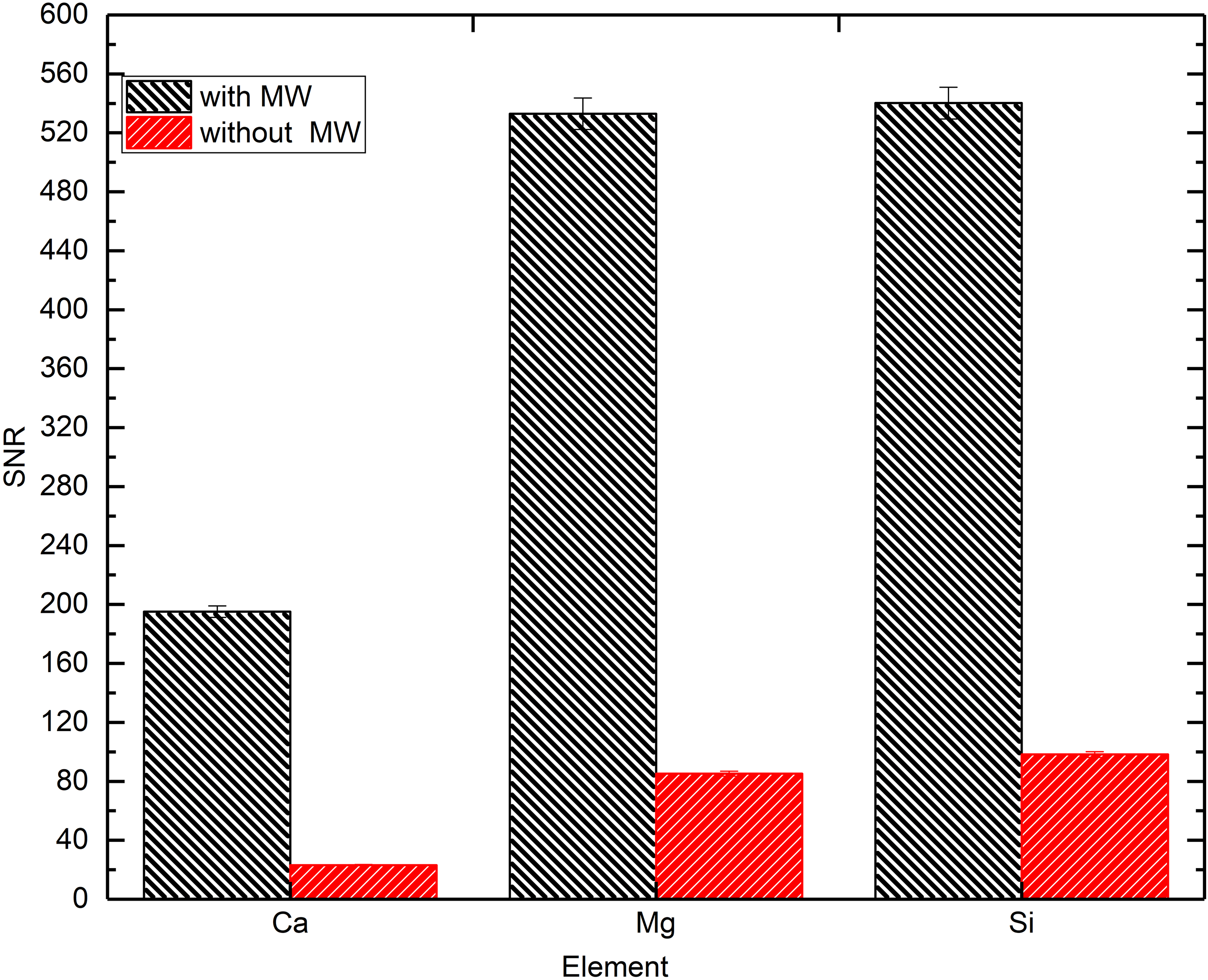
Signal-to-noise ratio of Mg(I) (285.21 nm), Si(I) (288.15 nm), and Ca(II) (317.93 nm) at 140 mJ, DGDs of 0.83 µs, and with MW (1.2 kW) and without MW.
Repeatability in Emission Signals, Intensities, and Plasma Parameters
To make LIBS a reliable and competitive analytical technique, ensuring repeatability and reproducibility in its measurement is essential. Many experimental factors in the LIBS setup, including laser beam characteristics, DGD, ambient conditions, sample homogeneity, and the amount of ablated material/pulse, significantly affect LIBS consistency and repeatability. To assess the dependence of plasma repeatability on laser energy, DGD, and MW power, the RSDs of line intensities and plasma parameters were evaluated. Emission line intensities were recorded at various laser energies, with and without microwave assistance, while maintaining a fixed DGD of 0.83 µs. The shot-to-shot fluctuation (RSD) in laser beam energy was ∼2.5%, whereas the output power of the microwave source was stable with 3% RSD. As illustrated in Figure 6a–d, line intensities exhibit improved repeatability (i.e., lower RSD) with increasing MW power. This is because the MW field continuously transfers energy to the electrons in the expanding plasma. These energized electrons then drive further excitation and ionization via collisions, thereby reheating the plasma. This process counteracts natural cooling and recombination, leading to stronger, more stable atomic emissions. This reheating and delaying recombination increase the plasma lifetime. 16 At constant MW power, the RSD of integrated line intensities for selected emission lines decreased with increasing laser energy up to 140 mJ, after which the RSD increased. On the other hand, without microwave assistance, the RSD values decreased with increasing energy only up to 100–140 mJ, after which they also begin to rise. This trend may be due to increased electron density, leading to stronger self-absorption and shielding. We observed that combining microwaves with high laser energy improves both sensitivity (high enhancement) and repeatability (low RSD), which is likely due to more stable plasma. However, beyond 140 mJ, the RSD increases again, possibly due to phenomena such as self-absorption and strong plasma shielding. These observations suggest that intermediate laser energies (100–140 mJ) offer the most stable signal intensities (i.e., lowest RSD) for a given MW power. Moreover, plasmas produced in the microwave environment exhibit up to four times greater repeatability than those generated by conventional single-pulse LIBS, confirming that when the MW field interacts with electrons in plasma, it energizes them and drives further excitation and ionization, thereby reheating the plasma, which results in stronger and more stable atomic emissions with longer lifetime. Under optimized conditions (laser energy of 100 mJ and MW power of 1.2 kW), a series of 30 emission spectra was recorded, each averaged over 10 laser shots. The RSDs for Mg(I) (285.21 nm) and Si(I) (288.15 nm) emission lines were then calculated. As shown in Figure 7, the RSDs for Mg and Si were 4% and 11% with MW, and 18% and 38% without MW, respectively. This improvement in repeatability indicates that LIP generated with MW assistance is stable, possibly long-lived for up to 500 μs, and uniform, compared to that produced by SP-LIBS. Furthermore, these results reinforce the hypothesis that MW-coupling with LIP not only enhances sensitivity (through SNR enhancement) but also improves consistency (by stabilizing LIP).
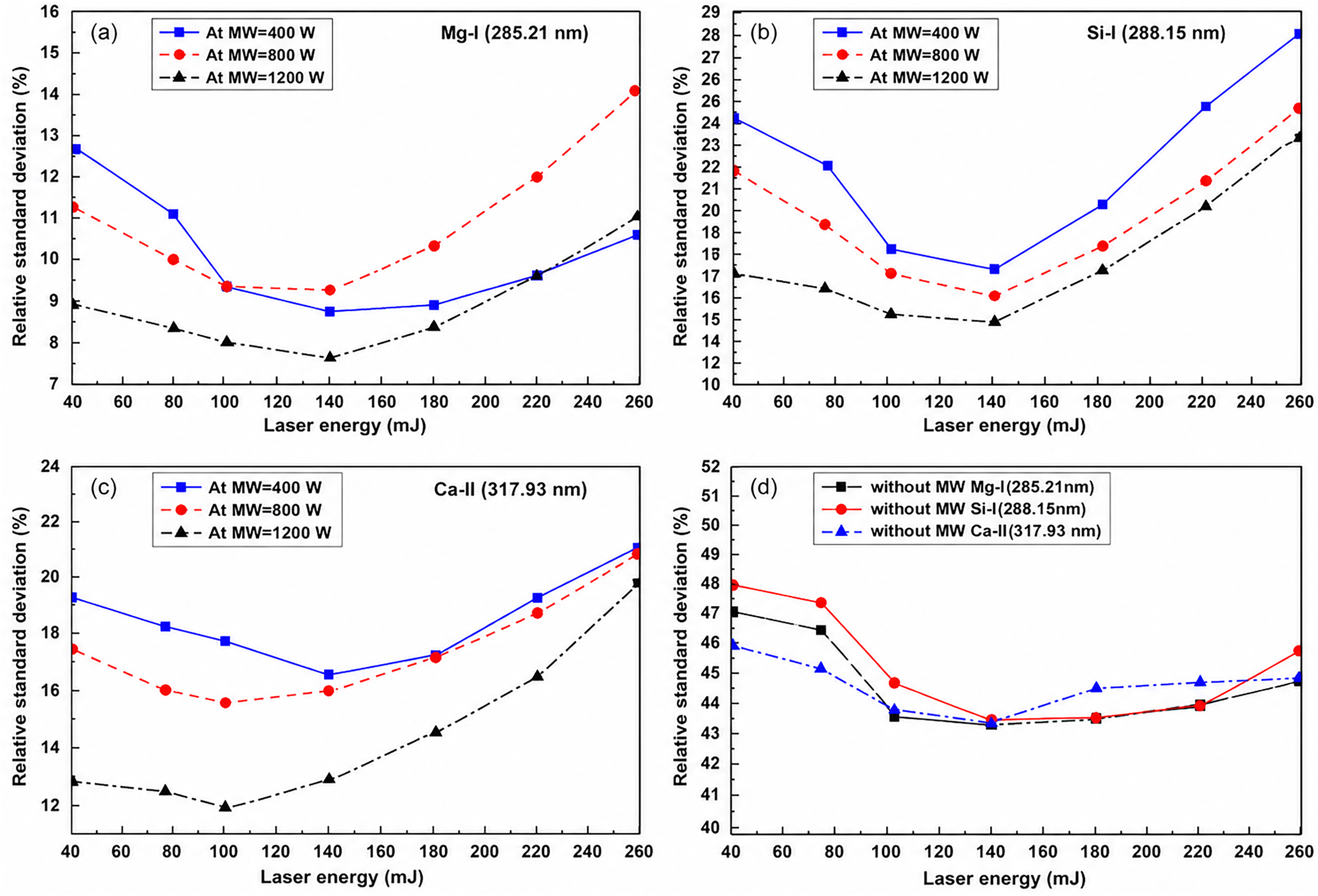
(a–d) Variation in RSD with laser energy and MW.
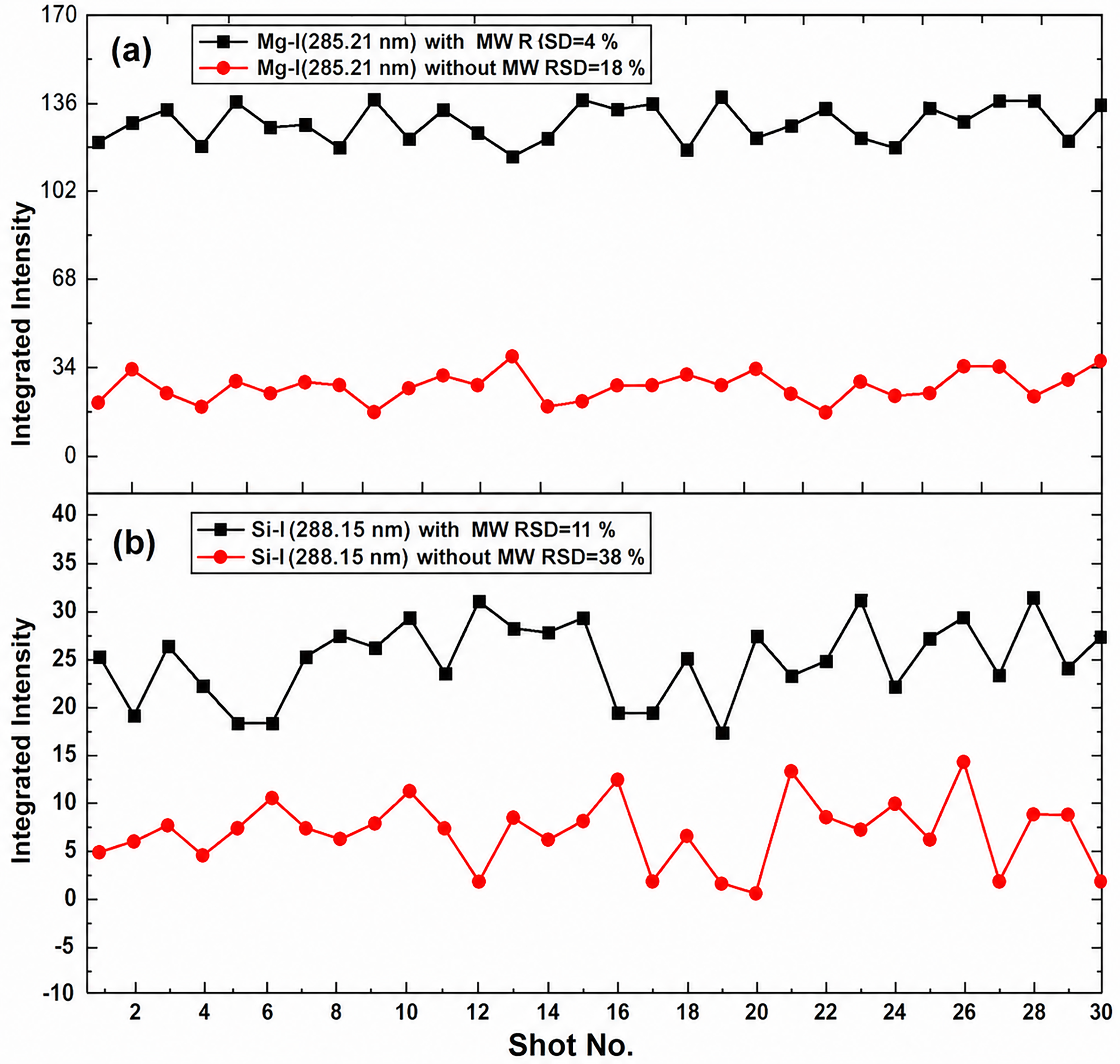
Measurement-to-measurement variations in intensities of Mg(I) (285.21 nm) and Si(I) (288.15 nm) emission lines with MW (black) and without MW (red).
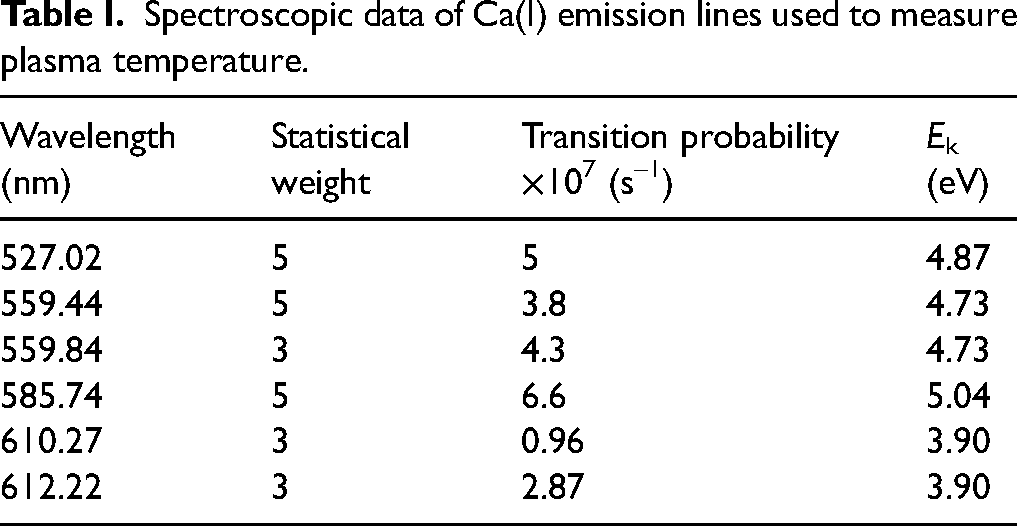
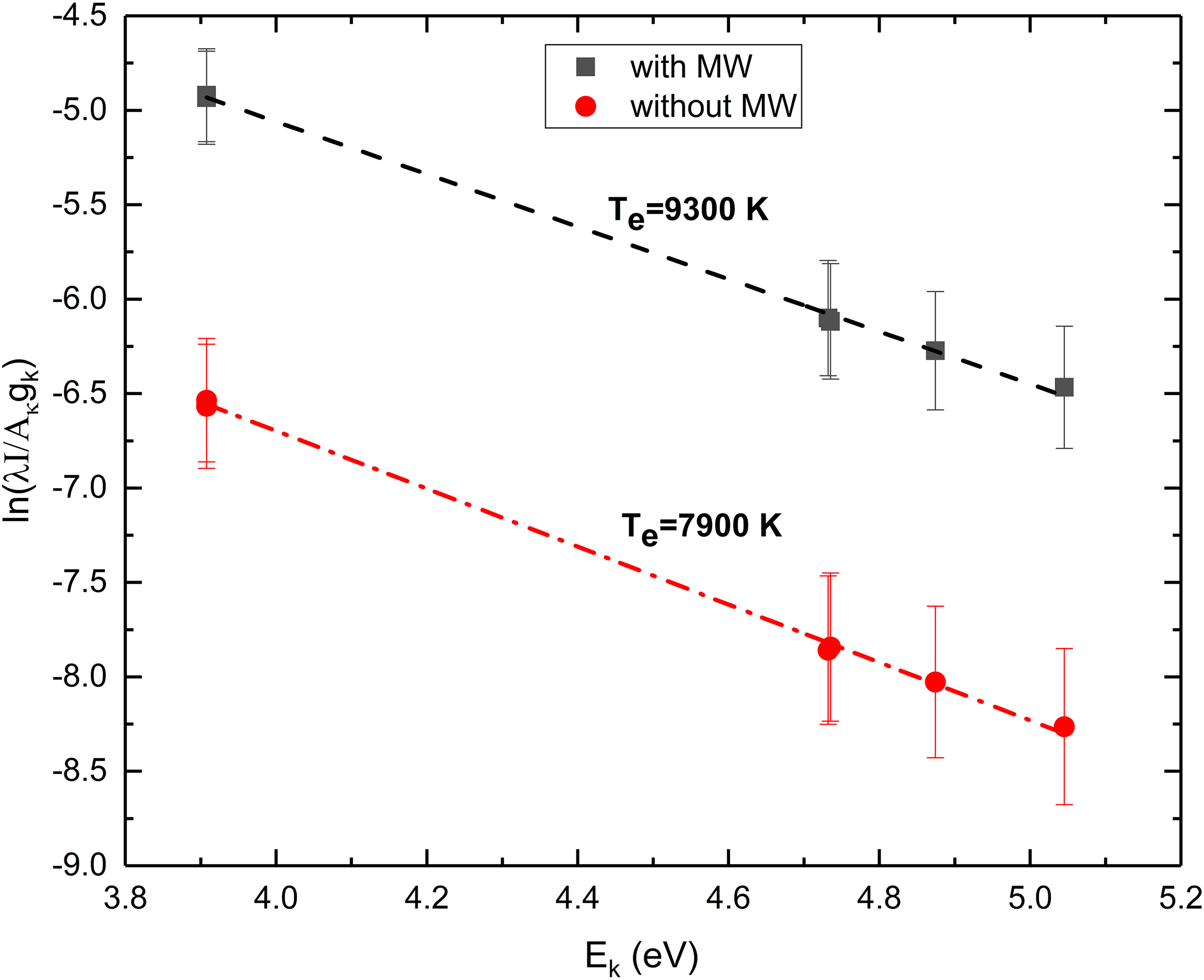
The pulse-to-pulse reproducibility of plasma temperature and electron number density was evaluated using emission spectra obtained with and without microwave assistance. To estimate the plasma temperature, Boltzmann plots were constructed using multiple calcium emission lines in Eq. 2. 41 The corresponding Boltzmann plot is illustrated in Figure S1 (Supplemental Material).

Spectroscopic data of Ca(I) emission lines used to measure plasma temperature.
At optimized experimental conditions, the estimated plasma temperatures were 9300 K and 7900 K for MW-assisted LIBS and conventional LIBS, respectively. The uncertainty in plasma temperature is estimated as 10%, which is due to the uncertainties in transition probabilities, the emission line intensities, and the fitting procedure. The observed increase in plasma temperature in the presence of microwaves is attributed to localized plasma reheating by the electromagnetic field of the microwave radiation, which sustains the plasma for a longer duration and enhances collisional processes. In addition to temperature, the electron number density (Ne) was determined using the Stark broadening of the isolated Ca(I) line at 671.8 nm. The full width at half-maximum (FWHM) of this line was obtained using Voigt profile fitting as shown in Figure S2 (Supplemental Material), and the electron density was calculated using the following relation
41

Pulse-to-pulse variation in plasma temperature (Te), and electron number density (Ne). The experimental conditions were as follows: Elaser = 100 mJ, MW power = 1200 W, and DGD = 0.83 µs.
Conclusion
LIBS is a promising analytical tool for both quantitative and qualitative analysis of samples. Its performance is enhanced when it is coupled with MW. In the present study, the effect of microwave coupling with the LIP of soil samples was investigated. The analytical capability of LIBS, in conjunction with MW, was significantly enhanced for complex-matrix samples such as soil. MW-coupled LIBS subsequently improved SNR, emission signal intensity, and shot-to-shot repeatability of plasma parameters. At optimized values of experimental parameters, such as laser energy, DGD, and MW power, the SNR and signal enhancement were improved by seven-fold and nine-fold, respectively. Similarly, the repeatability of the emission signal and plasma parameters was quantified using RSD and was significantly enhanced when MW was coupled with LIP. The results indicated that MW-wave-assisted LIP became stable and long-lived, showing better consistency in emission signals and plasma parameters. The demonstrated improvements in repeatability and sensitivity make MW-assisted LIBS a more reliable and robust tool for challenging applications, such as the quantitative analysis of pollutants and nutrients in heterogeneous environmental samples like soil.
Supplemental Material
sj-docx-1-asp-10.1177_00037028261455373 - Supplemental material for Improvement in the Sensitivity and Reproducibility of Laser-Induced Soil Plasma Produced in a Microwave Environment
Supplemental material, sj-docx-1-asp-10.1177_00037028261455373 for Improvement in the Sensitivity and Reproducibility of Laser-Induced Soil Plasma Produced in a Microwave Environment by M. Rashad Khan, S. U. Haq, Qamar Abbas, Riaz Khan and Ali Nadeem in Applied Spectroscopy
Footnotes
Acknowledgment
The principal author is grateful to the National Institute of Lasers and Optronics, College of Pakistan Institute of Engineering and Applied Sciences, for providing access to experimental facilities.
Consent for Publication
All authors agree that the manuscript, figures, tables, and data can be published.
CRediT Author Statement
Declaration of Conflicting Interests
The author(s) declared no potential conflicts of interest with respect to the research, authorship, and/or publication of this article.
Funding
The author(s) received no financial support for the research, authorship, and/or publication of this article.

Supplemental Material
All supplemental material mentioned in the text accompanies this paper online.
References
Supplementary Material
Please find the following supplemental material available below.
For Open Access articles published under a Creative Commons License, all supplemental material carries the same license as the article it is associated with.
For non-Open Access articles published, all supplemental material carries a non-exclusive license, and permission requests for re-use of supplemental material or any part of supplemental material shall be sent directly to the copyright owner as specified in the copyright notice associated with the article.
