






Abstract
In continuation of our ongoing exploration of electronically delocalized Bis-chalcone scaffolds as versatile molecular platforms, the previously reported chemosensors 3-(4-(dimethylamino)benzylidene)pentane-2,4-dione (DBPD) and 3-(3-(4-dimethylamino)phenyl)allylidene)pentane-2,4-dione (DPAPD) were revisited to evaluate their metal-responsive properties beyond the initially characterized photophysical behavior. Although their synthesis and fundamental optical characteristics have been well established, systematic investigations into their metal-ion sensing capabilities have remained limited. Given the strong electron-donating nature of the dimethylamino groups conjugated with β-diketone moieties, which facilitate intramolecular charge transfer (ICT) and metal coordination, the present study examines the optical properties of DBPD and DPAPD in response to environmentally relevant metal ions, Cu2+, Co2+, Ni2+, Pb2+, Zn2+, Cd2+, and Fe3+. Distinct visual color changes were observed for Co2+, Cu2+, Ni2+, and Pb2+, whereas Zn2+, Cd2+, and Fe3+ elicited negligible optical response, highlighting the selective interactions of the Bis-chalcones with specific metal ions. The absorption measurements revealed characteristic bands at 455 nm (DBPD) and 474 nm (DPAPD). Upon metal ion addition, Co2+ enhanced the absorbance and induced bathochromic shifts, while Cu2+ and Ni2+ caused decreased absorbance and the emergence of new spectral features, indicative of complex formation and perturbation of the ICT process. Fluorescence studies further corroborated these interactions, showing metal-dependent quenching or enhancement, with DPAPD exhibiting a pronounced hypsochromic shift upon Ni2+ binding. Quantitative analyses using the Benesi–Hildebrand method and Job’s plot confirmed 1:1 stoichiometry for the metal–chemosensor complexes and demonstrated the preferential binding of DBPD to Co2+ and DPAPD to Cu2+. To further probe the structural characteristics, solid-state complexes of DBPD-Co2+ and DPAPD-Cu2+ were isolated and characterized via molar conductance, Fourier transform infrared (FT-IR), thermogravimetric analysis (TGA), and X-ray diffraction (XRD), confirming coordination interactions and complex stability. Reversibility studies revealed that the original optical properties of the chemosensors were fully restored upon addition of the chelating agent ethylenediaminetetraacetic acid disodium salt (EDTA), establishing the dynamic and non-permanent nature of the metal-ligand interactions suitable for reversible sensing applications. These findings establish DBPD and DPAPD as robust, selective, and reversible fluorescent chemosensors, capable of sensitive and cost-effective detection of specific metal ions in environmental and real-sample contexts, while their ICT-active frameworks provide a tunable platform for multifunctional optical applications.
This is a visual representation of the abstract.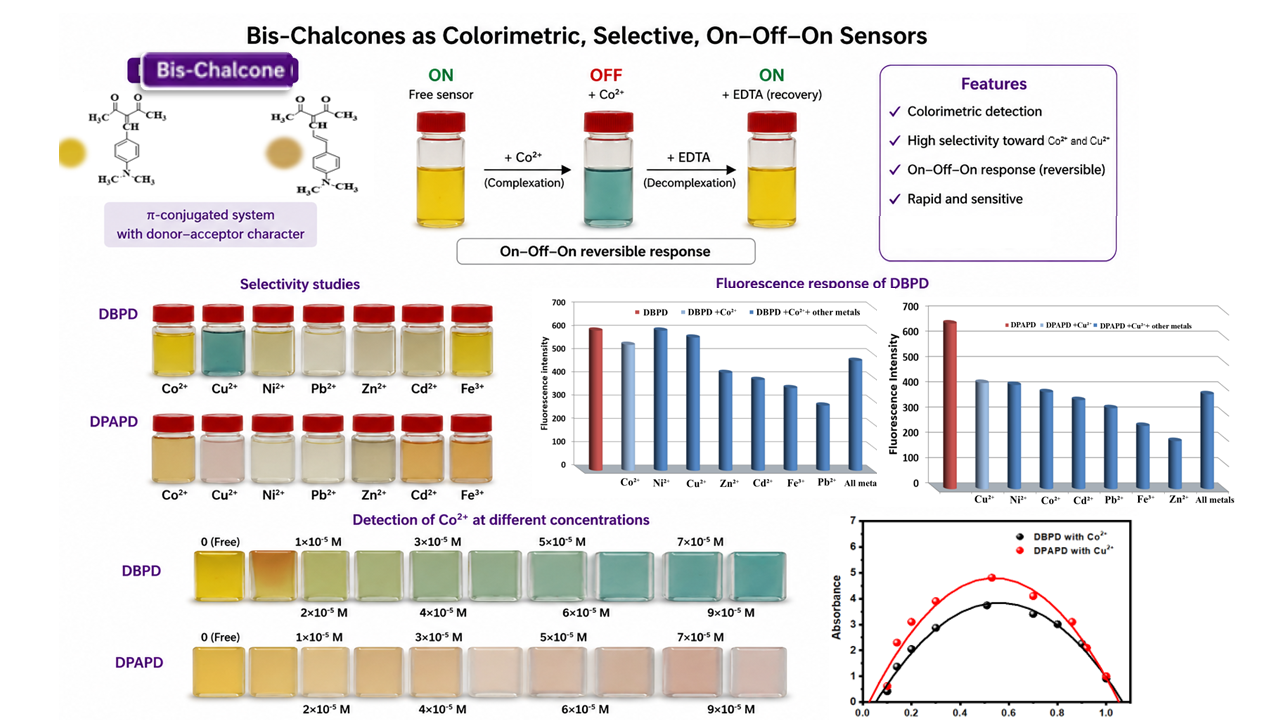
Introduction
Heavy metal ions are widely recognized as hazardous environmental contaminants that can pose significant threats to human health, even when present in minute concentrations. The profound toxicity and enduring nature of heavy metal ions have prompted considerable attention from both the general populace and the scholarly community. Co2+, Ni2+, and Cu2+ ions stand out as highly impactful heavy metal ions exhibit significant toxicity toward environmental and biological systems.1–4 While Fe3+ and Zn2+ ions are not profoundly toxic, they still possess potential dangers at elevated concentrations. 5 In contrast, Cd2+ and Pb2+ ions exhibit substantial toxicity even at low levels,6,7 thereby establishing a clear association with neurological and malignant disorders.8,9 Various analytical techniques, such as surface-enhanced Raman spectroscopy, inductively coupled plasma, inductively coupled plasma mass spectrometry, and electrochemical sensors, enable the identification and quantification of diverse metal elements. However, these methodologies demand considerable time, financial resources, and advanced technology to achieve accurate results. Hence, there is a pressing need for direct, intuitive, and focused approaches to detect toxic metal ions.10,11 Fluorescent probes have emerged as a valuable solution due to their capacity for precise detection, heightened sensitivity, selectivity,12,13 and visual identification with the naked eye. These probes offer simplicity, affordability, superior specificity, low detection thresholds, rapid response times, and technical straightforwardness. Consequently, their popularity has surged in recent times,14,15 as they obviate the necessity for specialized equipment. Furthermore, fluorescent probes serve as effective tools for investigating micropolarity, hydrogen-bonding interactions, and the microenvironmental attributes of biological systems,16,17 owing to their solvatochromic and fluorosolvatochromic attributes. Beyond their academic significance, these probes find practical applications in photopolymer imaging systems and even as laser dyes. 18
Within the realm of fluorescent probes, chalcones have garnered significant attention due to their diverse utility in a range of optical applications. These applications encompass the realms of non-linear optics, 19 wherein they serve as second harmonic generation materials, as well as in photorefractive polymers and holographic recording materials. 20 Moreover, chalcones have found purpose as fluorescent probes for the detection of metal ions21–25 and biological macromolecules, along with their role in exploring the microenvironment within micelles.26–28
In this context, the present study explores the optical behaviors of Bis-chalcones 3-(4-(dimethylamino)benzylidene)pentane-2,4-dione (DBPD) and 3-(3-(4-dimethylamino)phenyl)allylidene)pentane-2,4-dione (DPAPD). Their ability to detect and differentiate heavy metal ions including Cu2+, Co2+, Ni2+, Pb2+, Zn2+, Cd2+, and Fe3+ was systematically evaluated through both colorimetric observations and spectroscopic analyses. The study emphasizes the remarkable sensitivity and selectivity of these Bis-chalcones, enabling naked-eye detection of heavy metals even at low concentrations. Additionally, solid metal complexes of DBPD-Co2+ and DPAP-Cu2+ were synthesized and thoroughly characterized using molar conductance, FT-IR, TGA, and XRD techniques.
Experimental
Materials and Methods
All chemical reagents and solvents were procured from commercial suppliers and employed in their original state without undergoing additional purification steps. Acetylacetone, 4-(N,N-dimethylamino) benzaldehyde, 4-(N,N-dimethylamino) cinnamaldehyde, piperidine, were obtained from Sigma-Aldrich Chemical Co. (USA). The metal salts under investigation encompass cobalt(II) chloride hexahydrate (CoCl2.6H2O), nickel(II) chloride hexahydrate (NiCl2.6H2O), lead(II) acetate trihydrate (Pb(CH3COO)2.3H2O), cadmium chloride (CdCl2), zinc chloride (ZnCl2), ferric chloride (FeCl3.6H2O), and copper chloride dihydrate (CuCl2.2H2O).
Fourier transform infrared (FT-IR) spectra were obtained using a Jasco FT-IR 4100 spectrophotometer with KBr pellets in the range of 4000 to 400 cm−1, and the acquired spectra were processed employing the KBr disc technique. Thermogravimetric (TGA) analysis was executed employing a Shimadzu TGA-50H thermal analyzer, spanning a thermal range of 20 to 800 °C, under a uniform heating regime of 10 °C/min in an atmosphere of nitrogen sustained at a flow rate of 30 mL/min. Small-angle powder X-ray diffraction (XRD) measurements were recorded at room temperature using XRD equipment model a GNR, APD 2000 PRO step scans X-ray diffractometer, with Cu Ka radiation (40 kV, 30 mA), and a scanning range of 5–80 (2θ), with a step of 0.02.
Electronic absorption spectra were measured with an Agilent Cary Eclipse ultraviolet–visible (UV–Vis) scanning spectrophotometer, while emission spectra were recorded using an Agilent Cary Eclipse fluorescence spectrophotometer.
Synthesis of Bis-Chalcones, DBPD and DPAPD
The Bis-chalcones 3-(4-(dimethylamino)benzylidene)pentane-2,4-dione (DBPD) and 3-(3-(4-dimethylamino)phenyl)allylidene)pentane-2,4-dione (DPAPD) were synthesized following the previously reported method, 29 see Scheme S1 (Supplemental Material), involving the condensation of acetylacetone with the corresponding aromatic aldehydes in methanol under piperidine/glacial acetic acid catalysis. The reactions were monitored by thin-layer chromatography (TLC), and the mixtures were poured into ice-cold water, resulting in the formation of a precipitate, which was subsequently filtered and dried to achieve the following: (i) DBPD: reddish brown crystals; yield 85%. Characterization was confirmed by 1H- and 13C-nuclear magnetic resonance, IR spectroscopy, mass spectrometry, and elemental analysis. (ii) DPAPD: Orange-red crystals; yield 89%. Characterization was similarly verified. This approach provided high-yielding, pure Bis-chalcone chemosensors suitable for subsequent optical and metal-sensing studies. These well-characterized Bis-chalcones were thus prepared for systematic evaluation of their optical responses and selective metal-ion sensing capabilities.
Synthesis of the Solid Metal Complexes
The solid complexes were synthesized by refluxing 30 mL of ethanolic DBPD or DPAPD solution (0.001 mol) with 30 mL of hot ethanolic CoCl2.6H2O or CuCl2.2H2O solution (0.002 mol) for 24 h under constant stirring. The precipitate was isolated, washed with distilled water, ethanol, and diethyl ether, and then dried in a vacuum over anhydrous CaCl2.
Colorimetric Detection of Toxic Metal Ions
In ethanol, stock solutions containing the investigated Bis-chalcones at a concentration of 1 × 10⁻³ M have been prepared. Additionally, solutions containing metal ions, Cu2+, Co2+, Ni2+, Pb2+, Zn2+, Cd2+, and Fe3+ were prepared at a concentration of 1 × 10⁻³ M. The solution of the chemosensor was prepared at a concentration of 2 × 10⁻⁴ M and placed within a quartz optical cell with a length of 1 cm. This cell was maintained at room temperature, and both absorption and fluorescence spectra were acquired from it.
To ensure homogeneity and equilibrium before each experimental cycle, a waiting period of 10 minutes was observed following the mixing of solutions. Fluorescent spectra were meticulously collected within the wavelength ranges of 330–800 nm for DBPD and DPAPD. The titration procedure was employed, where in the concentrations of DBPD and DPAPD were held constant while systematically varying the concentration of metal ions.
To determine the stoichiometric ratio, Job’s method was employed. Briefly, a series of solutions was prepared with a constant total concentration of metal ions and chemosensor, while systematically varying their mole fractions. The absorbance at the selected wavelength was plotted against the chemosensor mole fraction (X = CL/(CL] + CM)), and the maximum of the resulting curve was used to determine the stoichiometry, where CL and CM represent the concentrations of the chemosensor (chemosensors) and metal ions, respectively.
Results and Discussion
Response of Metal Ion Sensing
The optical responses of the chemosensors DBPD and DPAPD to metal ions Cu2+, Co2+, Ni2+, Pb2+, Zn2+, Cd2+, and Fe3+ were examined both qualitatively (via naked-eye and colorimetric detection) and quantitatively using steady-state absorption and emission spectroscopy. Each metal ion was added in equimolar concentrations (1 × 10⁻³ M) to ethanol solutions of the chemosensors. These ions were chosen due to their recognized environmental toxicity.
For DBPD, the addition of Co2+, Cu2+, Ni2+, and Pb2+ caused visible color changes from yellow to green, yellow, colorless, and faint yellow, respectively (Scheme 1). No visible change was observed with Zn2+, Cd2+, or Fe3+. Similarly, DPAPD exhibited color shifts from orange to pink, colorless, faint grey, and faint pink upon addition of Co2+, Cu2+, Ni2+, and Pb2+, respectively, while Zn2+, Cd2+, and Fe3+ induced no noticeable color change.
Color changes upon addition of various metal ions to the investigated Bis-chalcones.
Further titration experiments with increasing concentrations of Co2+ (from 1 × 10⁻⁵ to 9 × 10⁻⁵ M) resulted in significant, progressive color changes in both chemosensors, as depicted in Scheme 2. These visual observations were corroborated by corresponding changes in the absorption and emission spectra.
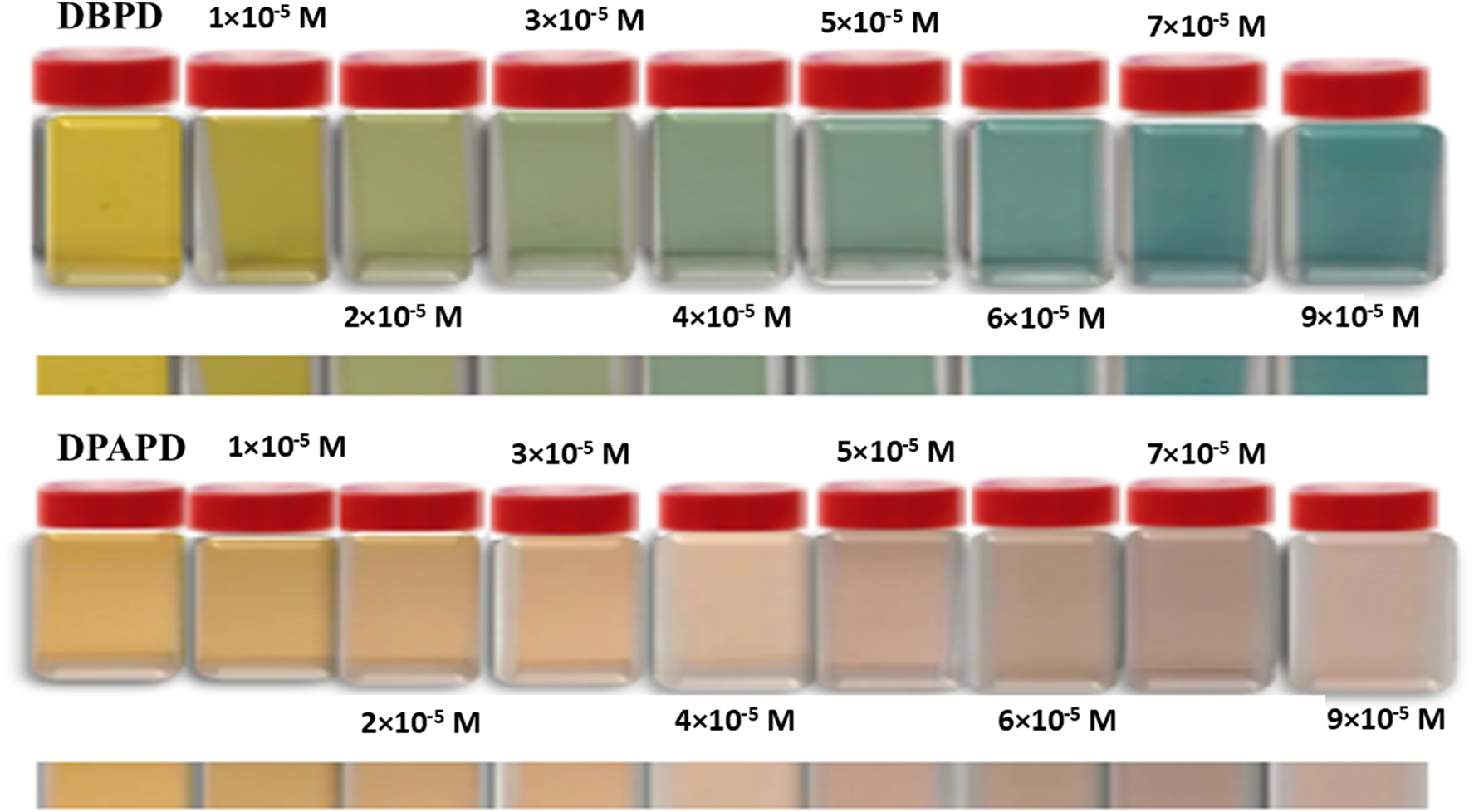
Color changes upon addition of different concentrations from Co2+ ions (1 × 10⁻⁵–9 × 10⁻⁵ M) to the investigated Bis-chalcones.
This study investigated the effect of various metal ions on the absorption behavior of DBPD and DPAPD in ethanol (Figures 1 and 2). The free Bis-chalcones exhibited characteristic absorption peaks at 455 nm and 474 nm, respectively. Upon gradual addition of Co2+ ions to DBPD, a progressive increase in absorbance was observed along with the appearance of a new band at 655 nm and an isosbestic point at 594 nm, indicating equilibrium between two species (Figure 1). Similarly, Co2+ addition to DPAPD resulted in enhanced absorption and a bathochromic shift to 502 nm (Figure 2).
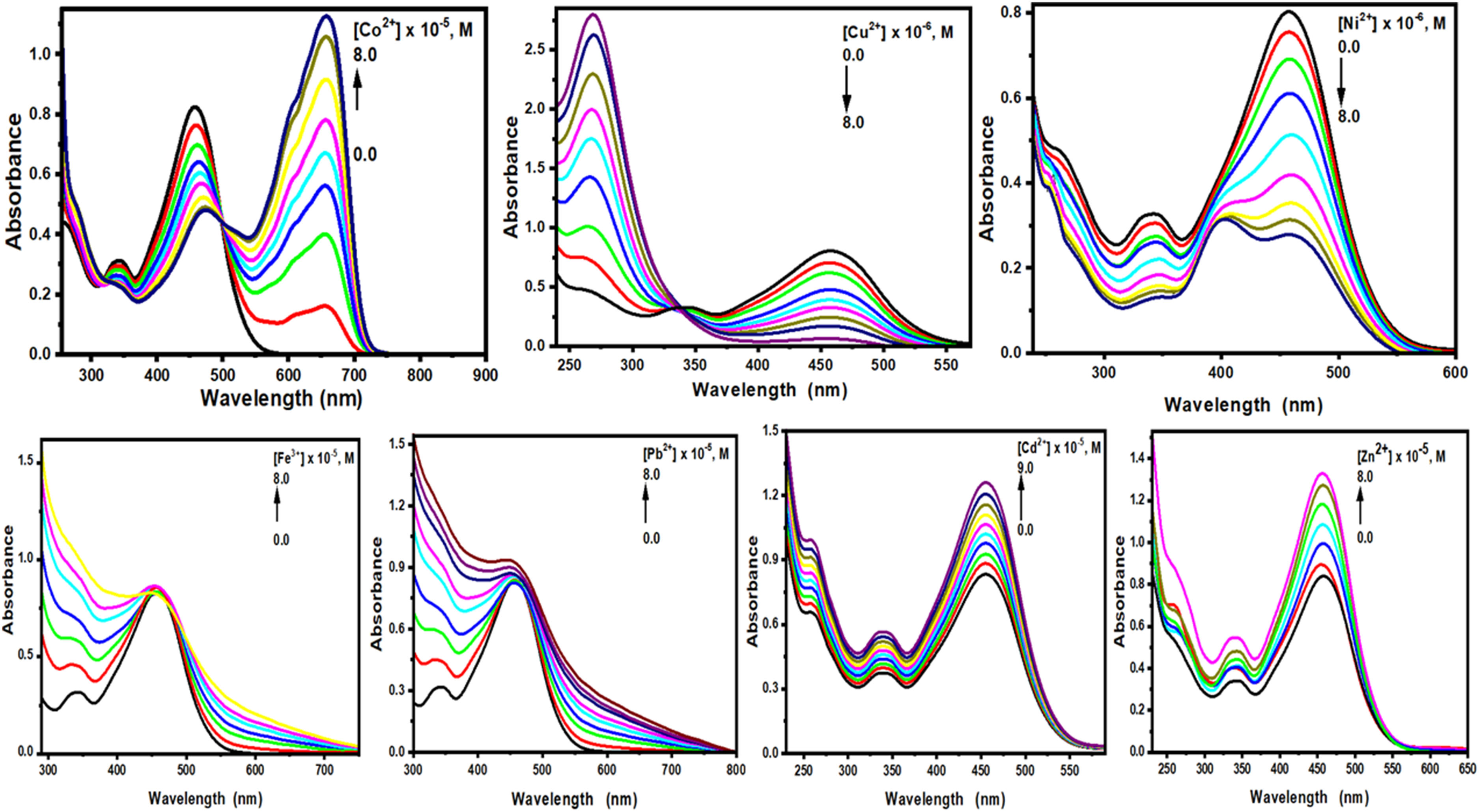
Absorption of spectral changes of DBPD upon addition of different concentrations of metal ions in ethanolic solution.
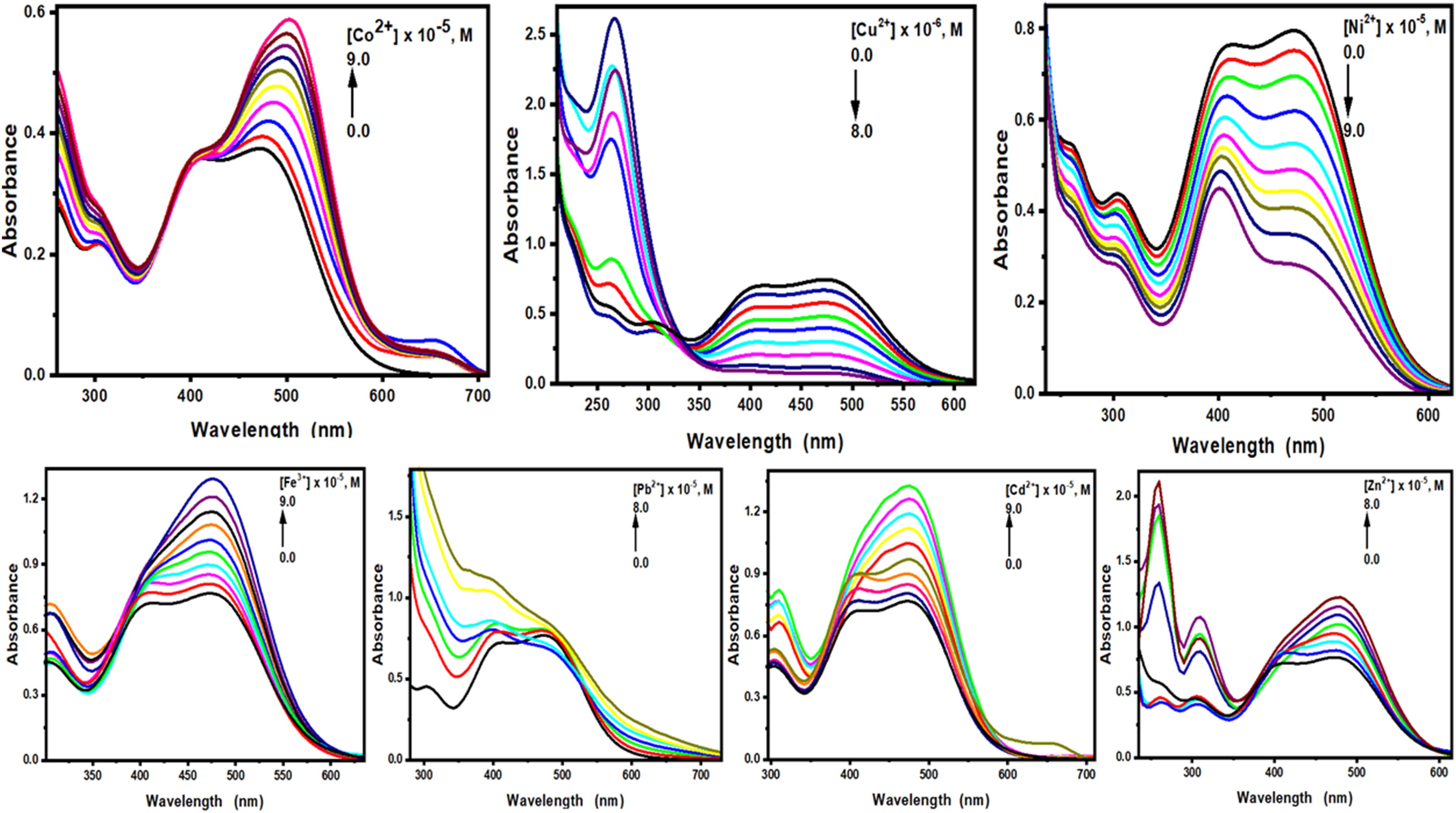
Absorption spectral changes of DPAPD upon addition of different concentrations of metal ions in ethanolic solution.
Furthermore, Cu2+ caused a decrease in absorbance in both chemosensors, accompanied by new band at 275 nm for DBPD and DPAPD, with corresponding isosbestic point at 337 nm and 330 nm, respectively.
These spectral changes indicate ground-state complex formation and enhanced intramolecular charge transfer (ICT) from the dimethylamino group (electron donor) to the carbonyl groups (electron acceptors) through the π-system upon metal binding.
Incremental addition of Ni2+ led to a gradual decrease in absorbance and the emergence of new bands at (402, 457 nm) (DBPD) and (400, 473 nm) (DPAPD) (Figures 1 and 2). Meanwhile, the introduction of Pb2+, Cd2+, Zn2+, and Fe3+ resulted in increased absorbance without a shift in λmax, suggesting complex formation without significant electronic transition alterations. These findings confirm the strong metal–chemosensor interactions in the presence of selected ions, highlighting DBPD and DPAPD as promising candidates for simple, cost-effective, and rapid colorimetric detection of heavy metal ions in environmental or analytical applications.
As a representative example, the stoichiometry of the complexes formed between DBPD and Co2+, and between DPAPD and Cu2+ was determined using continuous variation method. The absorbance versus mole fraction plots (CL / [CL + CM]) shown in Figure 3 display maxima at 0.51 and 0.53, respectively, confirming the formation of 1:1 metal–chemosensor complexes.
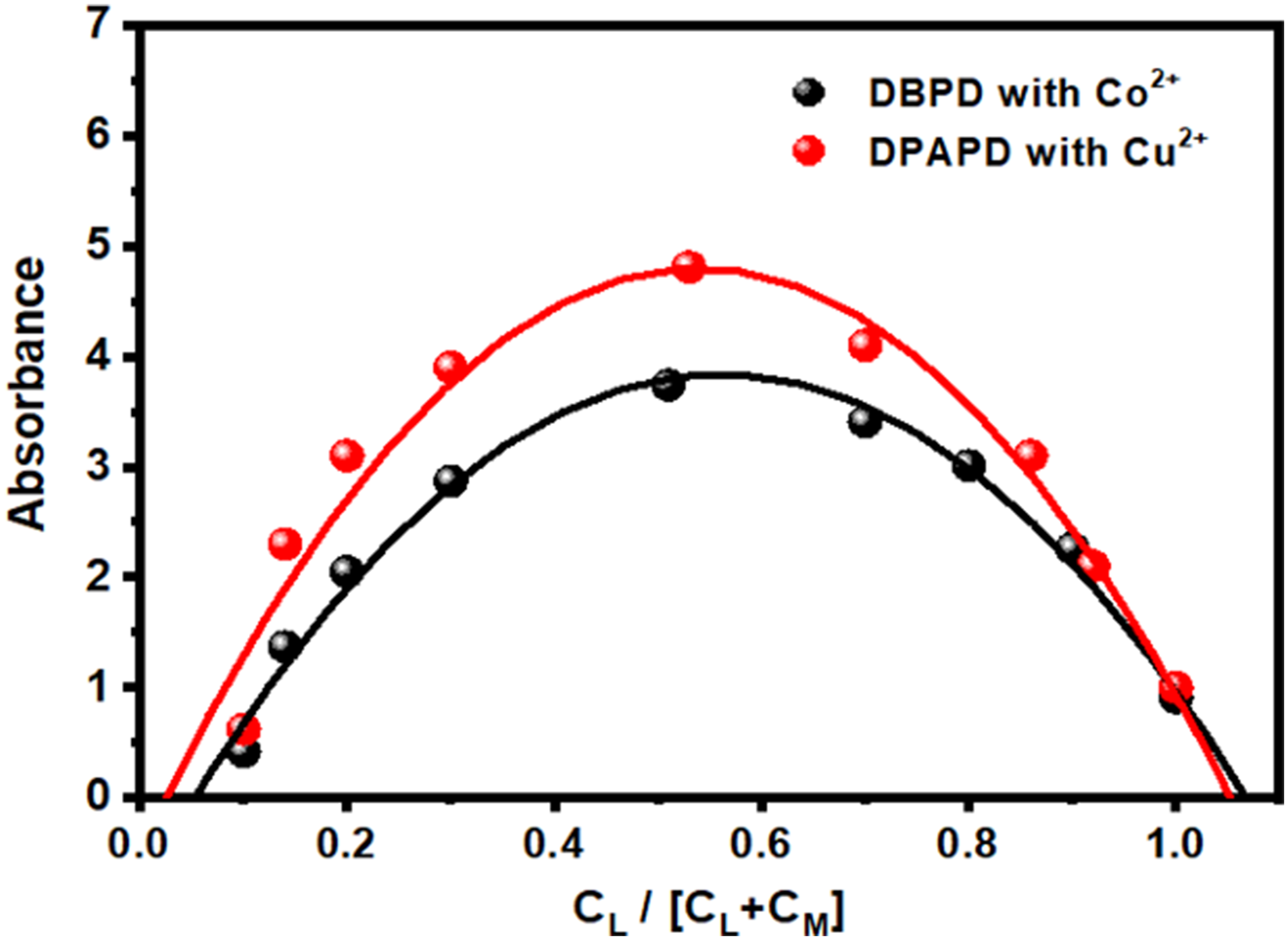
Job's plot DBPD and DPAPD with Co2+ and Cu2+ ions, respectively.
The fluorescence behavior of DBPD and DPAPD in the presence of various metal ions Cu2+, Co2+, Ni2+, Pb2+, Zn2+, Cd2+, and Fe3+was systematically investigated, as illustrated in Figures 4 and 5. In an ethanolic medium, DBPD displayed a characteristic fluorescence emission peak at 603 nm. Upon incremental addition of Cu2+, Co2+, Ni2+, and Pb2+ ions to a 2 × 10⁻⁵ M solution of DBPD, a gradual quenching of fluorescence intensity was observed. Notably, this quenching effect occurred without any discernible shift in the maximum emission, indicating a non-radiative interaction mechanism between DBPD and these metal ions.
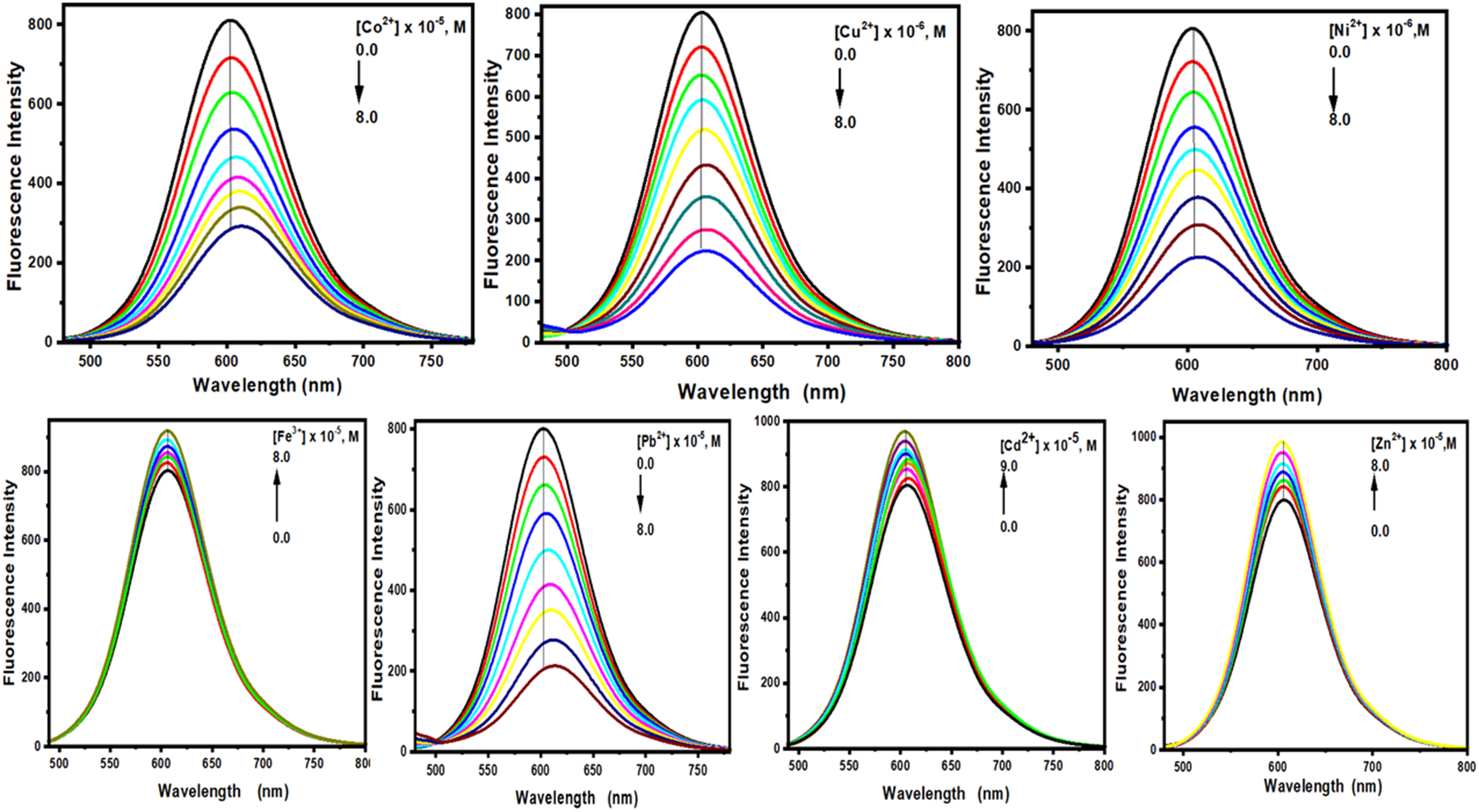
Emission spectra of DBPD upon addition of different concentrations of some selected metal ions in ethanolic solution.
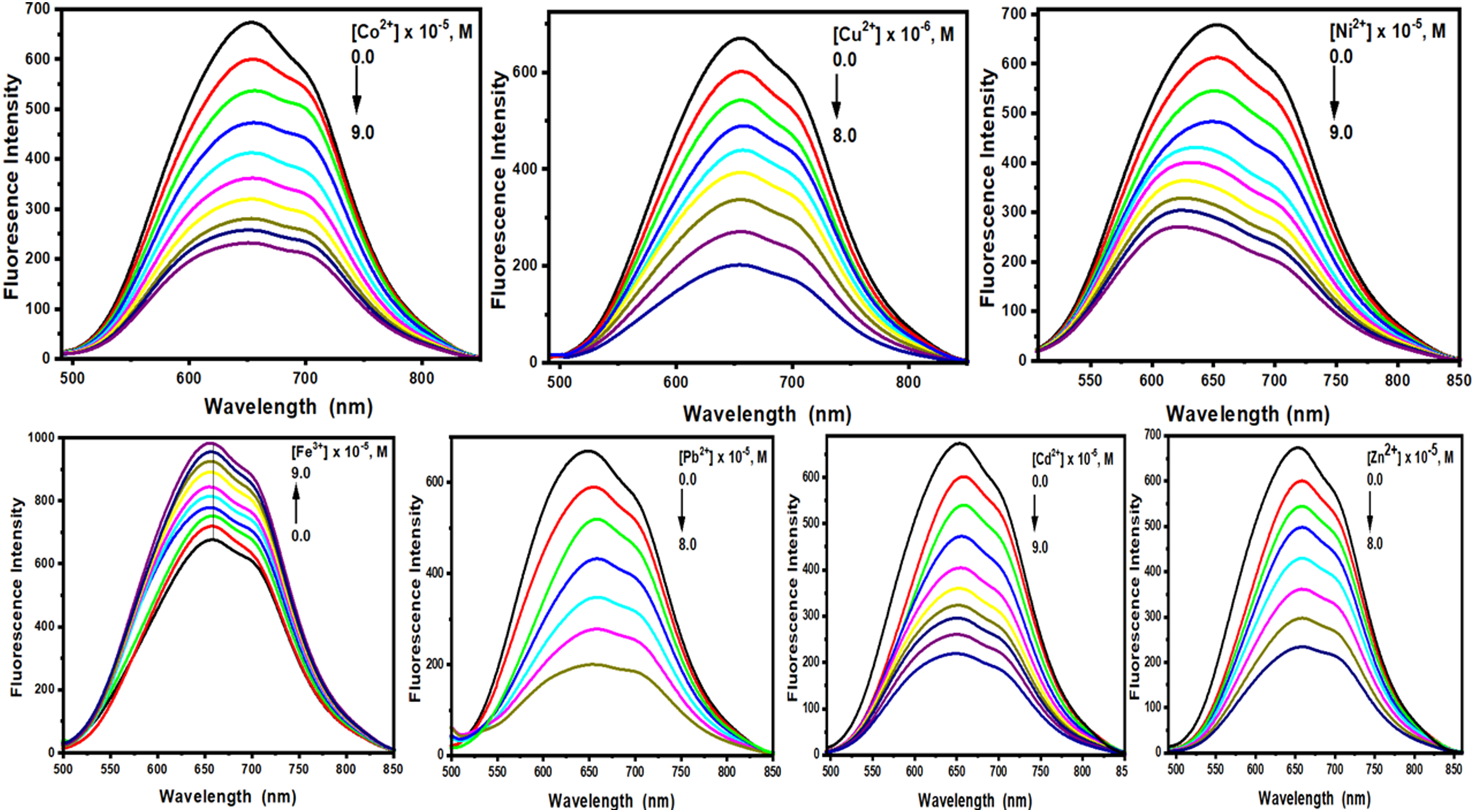
Emission spectra of DPAPD upon addition of different concentrations of some selected metal ions in ethanolic solution.
In contrast, the introduction of Zn2+, Cd2+, and Fe3+ ions into the DBPD solution produced a steady enhancement in fluorescence intensity, again with no significant change in the emission wavelength. This suggests that these metal ions may stabilize the excited state of DBPD, thereby promoting radiative decay pathways (Figure 4).
Similarly, the fluorescence spectrum of DPAPD in ethanol exhibited a well-defined emission band centered at 657 nm. When varying concentrations of Cu2+ and Co2+ions were added to a 2 × 10⁻⁵ M DPAPD solution, a consistent quenching of fluorescence intensity was observed, with the emission maximum remaining unchanged (Figure 5). However, the interaction of DPAPD with Zn2+, Fe3+, Cd2+, Pb2+ and Ni2+ ions resulted in both a gradual decrease in fluorescence intensity and a pronounced hypsochromic shift of 4, 5,6, 11, 41 nm, indicating a change in the electronic environment of the fluorophore upon complex formation.
Collectively, these results demonstrate distinct fluorescence response patterns of DBPD and DPAPD toward different metal ions, indicating their potential utility as selective fluorescent probes for metal ion detection based on quenching or enhancement mechanisms.
The complexation behavior of the Bis-chalcone systems (DBPD and DPAPD) toward the investigated metal ions was systematically quantified through steady-state fluorescence titration. The association constants were derived using a modified Benesi–Hildebrand formalism, which enables reliable estimation of binding parameters from emission intensity variations.
30

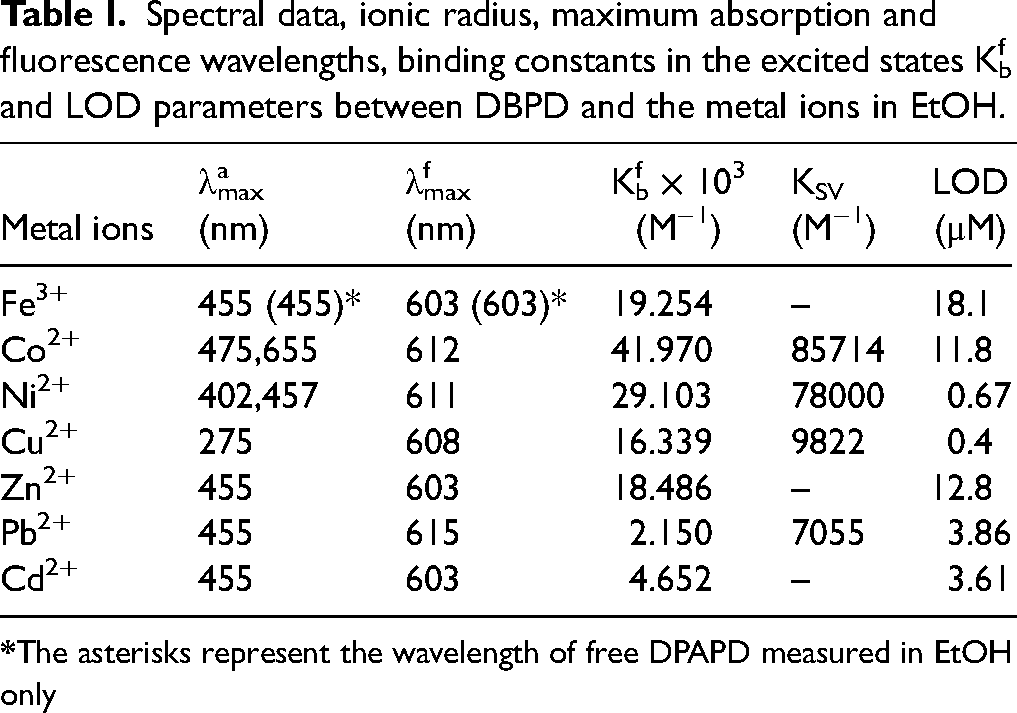
Linear correlations obtained from plotting the reciprocal fluorescence change (1/ΔF) against the inverse metal ion concentration (1/[M]n+) (Figure S1, Supplemental Material) provided access to the binding constants (Kb), which were extracted from the slope to intercept ratios. The resulting Kb values (L·mol−1), summarized in Tables I and II, reveal a pronounced dependence of the binding affinity on both the electronic structure of the ligand and the physicochemical characteristics of the metal ions.
Spectral data, ionic radius, maximum absorption and fluorescence wavelengths, binding constants in the excited states Kfb and LOD parameters between DBPD and the metal ions in EtOH.
Spectral data, ionic radius, maximum absorption and fluorescence wavelengths, binding constants in the excited state Kb and LOD parameters between DPAPD and the metal ions in EtOH.
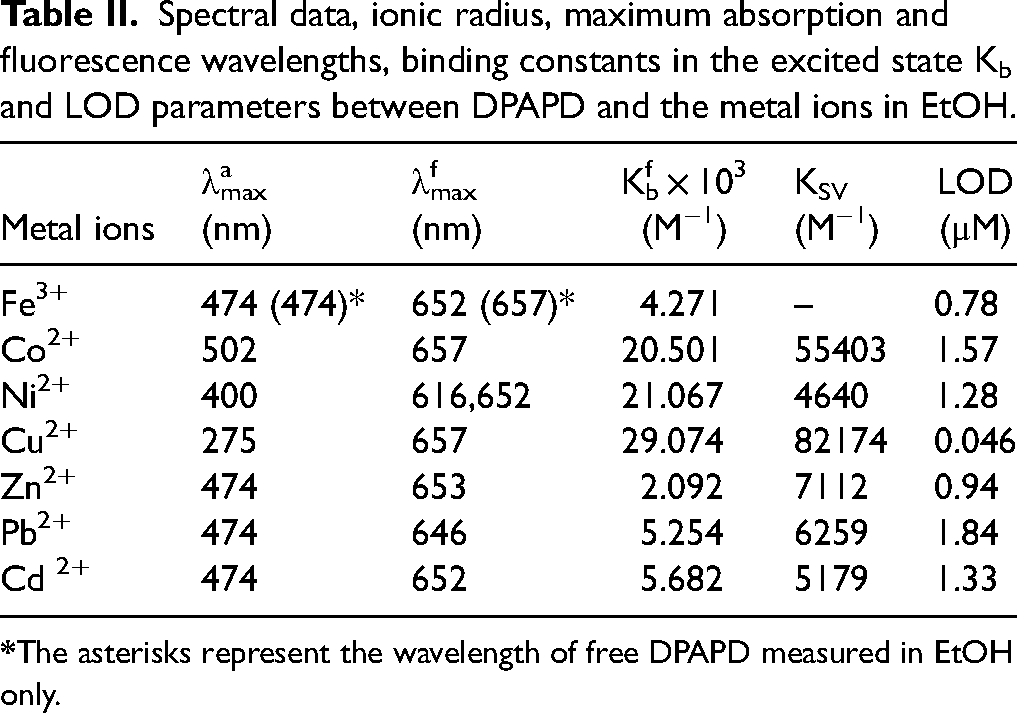
Notably, DBPD exhibits a preferential affinity toward Co2+, whereas DPAPD demonstrates enhanced selectivity for Cu2+ ions. The superior binding performance of Co2+ and Cu2+ relative to the other examined ions can be ascribed to their favorable coordination geometries and strong electronic coupling with the donor-acceptor framework of the Bis-chalcone systems. This interaction is expected to facilitate efficient perturbation of the intramolecular charge-transfer (ICT) process, thereby stabilizing the resulting complexes and amplifying the observed fluorescence response.
The fluorescence quenching behavior of the investigated Bis-chalcone chemosensors in the presence of various metal ions was systematically analyzed using the Stern–Volmer formalism. The relationship between the relative fluorescence intensity and quencher concentration is described by 31

The obtained Stern–Volmer plots (Figure S2, Supplemental Material) exhibit noticeable upward curvature, particularly at elevated metal ion concentrations. Such positive deviations from linearity indicate that the quenching process cannot be adequately described by a purely dynamic (collisional) mechanism. Instead, the observed behavior strongly suggests the coexistence of static quenching, arising from ground-state complex formation between the chemosensors and the metal ions. This implies the formation of non-fluorescent or weakly emissive complexes prior to excitation.
To further elucidate the quenching mechanism, the nonlinear Stern–Volmer data were treated using the modified double-reciprocal model
31

The Stern–Volmer constants were extracted from the intercepts and slopes of these linear plots, and the calculated values are compiled in Tables I and II. The results demonstrate that the studied chemosensors exhibit pronounced sensitivity and selectivity toward specific metal ions, with DBPD showing a preferential response to Co2+ ions, while DPAPD displays enhanced selectivity toward Cu2+ ions. This selective quenching behavior can be attributed to the stronger binding affinity and more efficient electronic interaction of these ions with the donor–acceptor framework of the Bis-chalcone systems, leading to more effective fluorescence suppression.
The reliability of an analytical method is continually assessed based on a range of parameters, prioritized in the following order: recovery, sensitivity, selectivity, analyte stability, analytical simplicity, required expertise, time efficiency, and cost. Among these, a key criterion during method validation is the optical limit of detection (LOD), which represents the lowest concentration of an analyte that can be reliably detected, though not necessarily quantified, by the analytical technique. In this study, the LOD values for the synthesized Bis-chalcones in response to the target metal ions were determined. The calculation of the LOD for the free Bis-chalcones was performed using the following formula
32

The comparative data presented in Table III clearly demonstrate the analytical performance of the previously reported probes in terms of their LOD toward various metal ions. Most of the reported systems exhibit LOD values generally in the micromolar range depending on the metal ion and detection method. Although some systems show relatively improved sensitivity for specific ions (e.g., Co2+ or Fe3+), their performance is often limited either by moderate sensitivity, lack of selectivity, or dependence on dual-mode detection techniques.
Comparative features of selected recently reported metal ion probes.
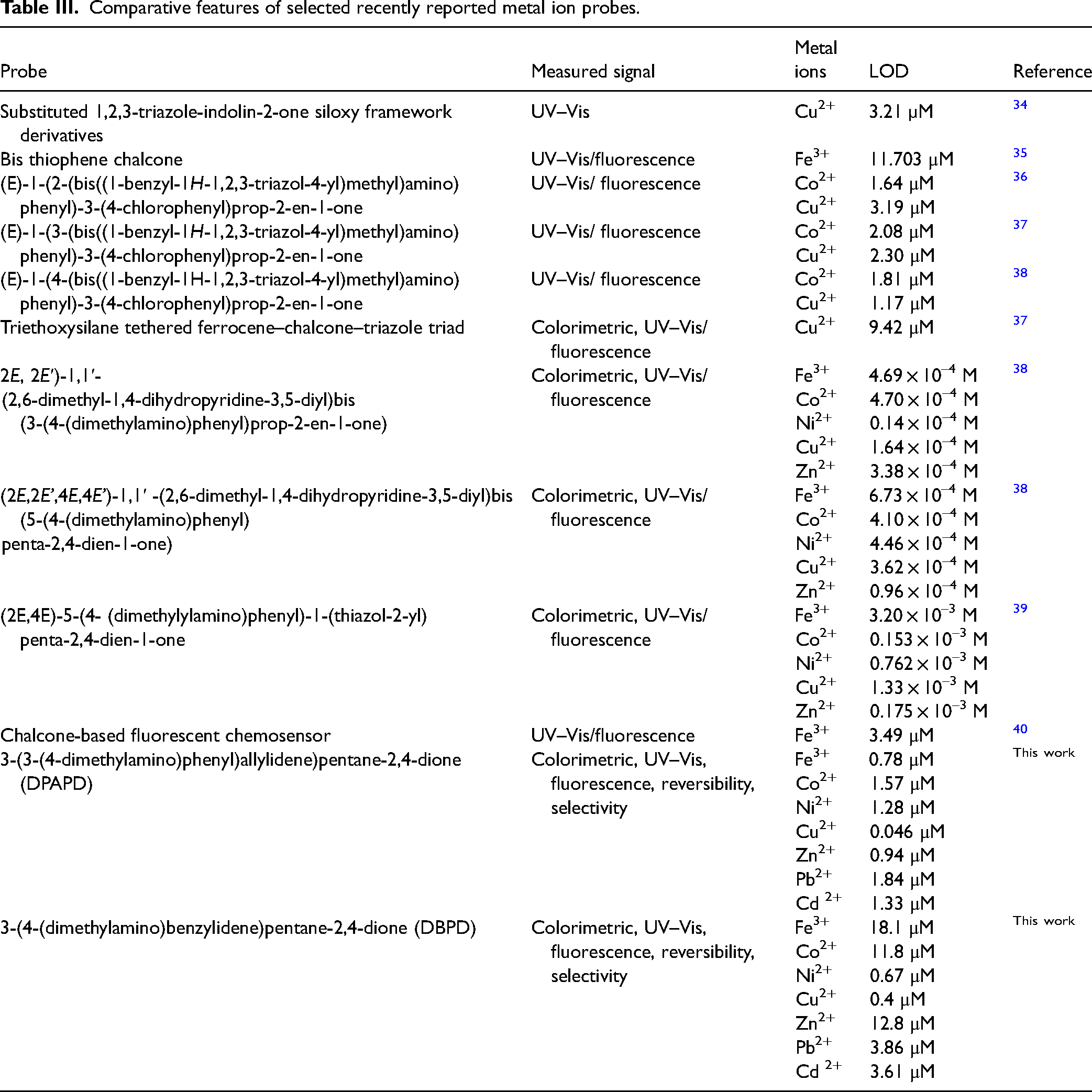
In contrast, our synthesized compounds (DPAPD and DBPD) display significantly enhanced analytical performance, particularly in terms of sensitivity and selectivity. Notably, the LOD values of our probes toward key metal ions such as Fe3+, Co2+, Ni2+, and Cu2+ fall within a markedly lower range, outperforming most of the previously reported systems listed in the table. For example, DPAPD exhibits superior detection limits compared to several literature probes that require higher concentrations for effective sensing. Similarly, DBPD demonstrates remarkable sensitivity, especially toward Fe3+ and Cu2+ ions, with improved reversibility and selectivity.
The enhanced performance of our compounds can be attributed to the strong donor–acceptor electronic framework and efficient charge-transfer interactions, which facilitate more pronounced optical responses upon metal binding. Additionally, the ability of these probes to operate effectively using simple colorimetric and fluorescence techniques further highlights their practical applicability.
This comparison underscores the superiority of our designed sensors over previously reported systems, making them promising candidates for sensitive, selective, and cost-effective detection of metal ions in environmental and analytical applications.
The solid metal complexes formed between the Bis-chalcone chemosensors DBPD and DPAPD with their most strongly binding metal ions, Co2+ and Cu2+ respectively, have been successfully synthesized and characterized using molar conductance, FT-IR, TGA, and XRD techniques.
The molar conductance values of DBPD–Co2+ and DPAPD–Cu2+ complexes determined in DMF (1 mM) solution at room temperature were found to be ΛM = 33.31 and 41.31 Ω−1 cm2 mol−1, respectively. These numbers confirmed the non-electrolytic behavior of DBPD–Co2+ and DPAPD-Cu2+ complexes, proving that all chloride ions were present inside the coordination sphere of the complexes. 41
Figure 6a displays the FT-IR spectra of the free chemosensors DBPD and DPAPD, as well as their corresponding metal complexes. The FT-IR spectrum of free DBPD shows characteristic absorption bands at 1162, 1620, 2906, and 3435 cm−1, corresponding to the stretching vibrations of the C–N bond, carbonyl (C=O) group, aliphatic C–H, and aromatic C–H groups, respectively. Upon coordination with Co2+ ions, the carbonyl stretching band shifts to a higher wavenumber by 36 cm−1, appearing at 1656 cm−1, indicating involvement of the carbonyl oxygen in coordination. Additionally, a broad, intense absorption band appears at 3451 cm−1, attributed to the O–H stretching vibrations of coordinated and hydrated water molecules in the complex. A new absorption band appeared in the infrared spectra of DBPD-Co2+ complex at 529 cm−1 assigned to (Co–O) bond which is absent in the infrared spectrum of free chemosensor, DBPD.
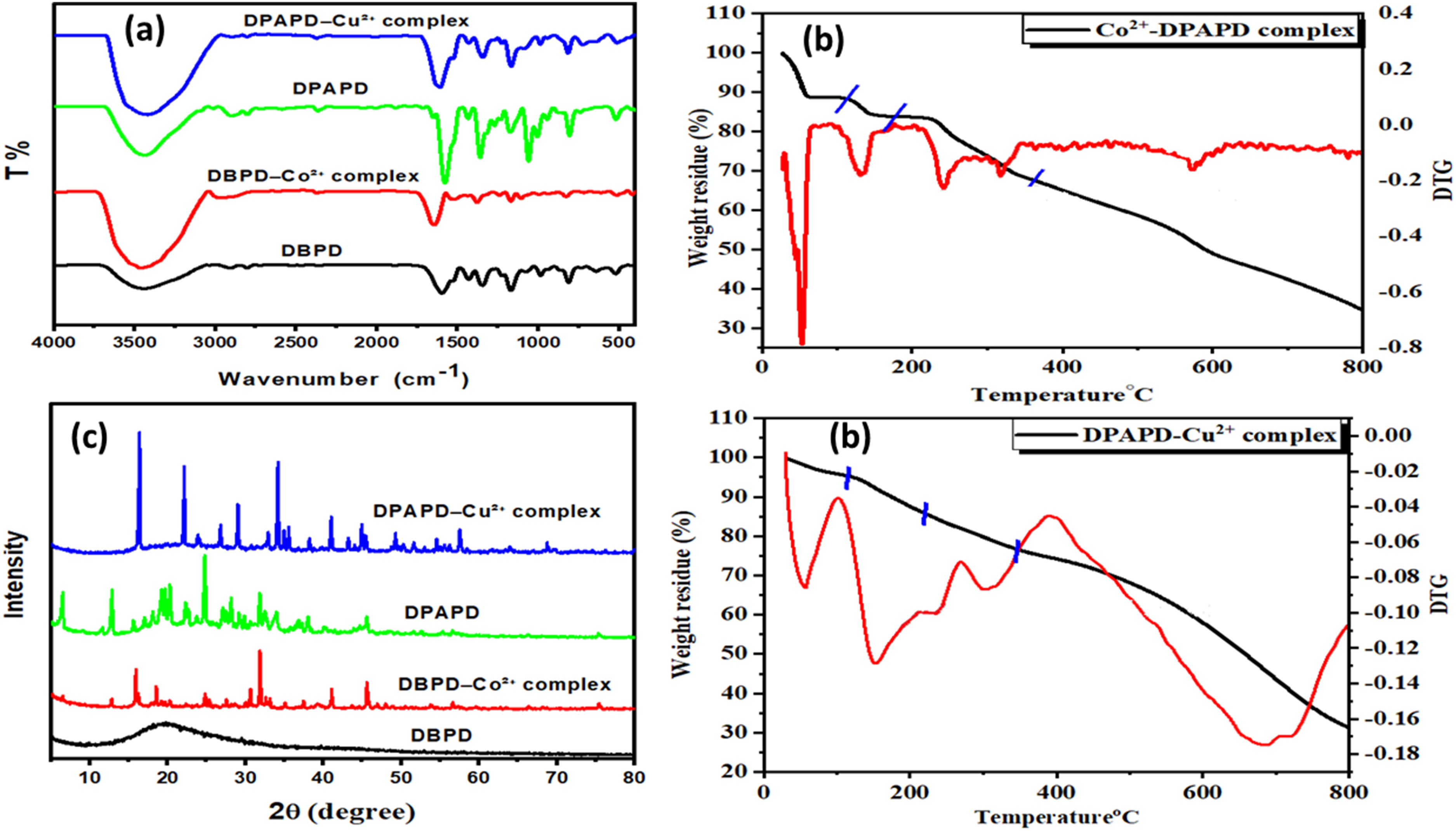
(a) FT-IR, (b) TGA, and (c) XRD of the free Bis-chalcone DBPD and DPAPD and their metal complex with Co2+ and Cu2+, respectively.
Similarly, the FT-IR spectrum of free DPAPD displays absorption bands at 1166, 1583, 2898, and 3442 cm−1, corresponding to C–N, C=O, aliphatic C–H, and aromatic C–H stretching vibrations, respectively. In the FT-IR spectrum of the DPAPD–Cu2+ complex, the carbonyl band shifts to a lower wavenumber by 16 cm−1, appearing at 1611 cm−1, suggesting coordination through the carbonyl oxygen atom. A broad band at 3422 cm−1 is also observed, consistent with the presence of coordinated and lattice water molecules. Additionally, a new absorption band appeared in the infrared spectra of DPAPD–Cu2+ complex at 522 cm−1 assigned to (Cu–O) bond which is absent in the infrared spectrum of free chemosensor, DPAPD.
These spectroscopic shifts confirm that both DBPD and DPAPD chelate Co2+ and Cu2+ ions, respectively, through the oxygen atoms of their carbonyl groups, forming stable metal-chemosensor complexes.
Under specific experimental conditions, heat induces both physical and chemical changes in most substances, including organometallic complexes. These changes, which reflect the intrinsic properties of the substances, can be examined both qualitatively and quantitatively. Thermal analysis is employed to assess the thermal stability of metal complexes, determine whether solvent molecules are located within or outside the coordination sphere, calculate the metal ion content, and outline the general decomposition pathway of the complexes.
The TG and DTG curves of the DBPD-Co2+ and DPAPD-Cu2+ complexes are shown in Figure 6b. The decomposition stages, temperature ranges, DTG peak temperatures, and both experimental and calculated mass loss values are summarized in Table IV.
Thermoanalytical results (TG-DTG) of investigated of DBPD–Co2+ and DPAPD–Cu2+ complexes.
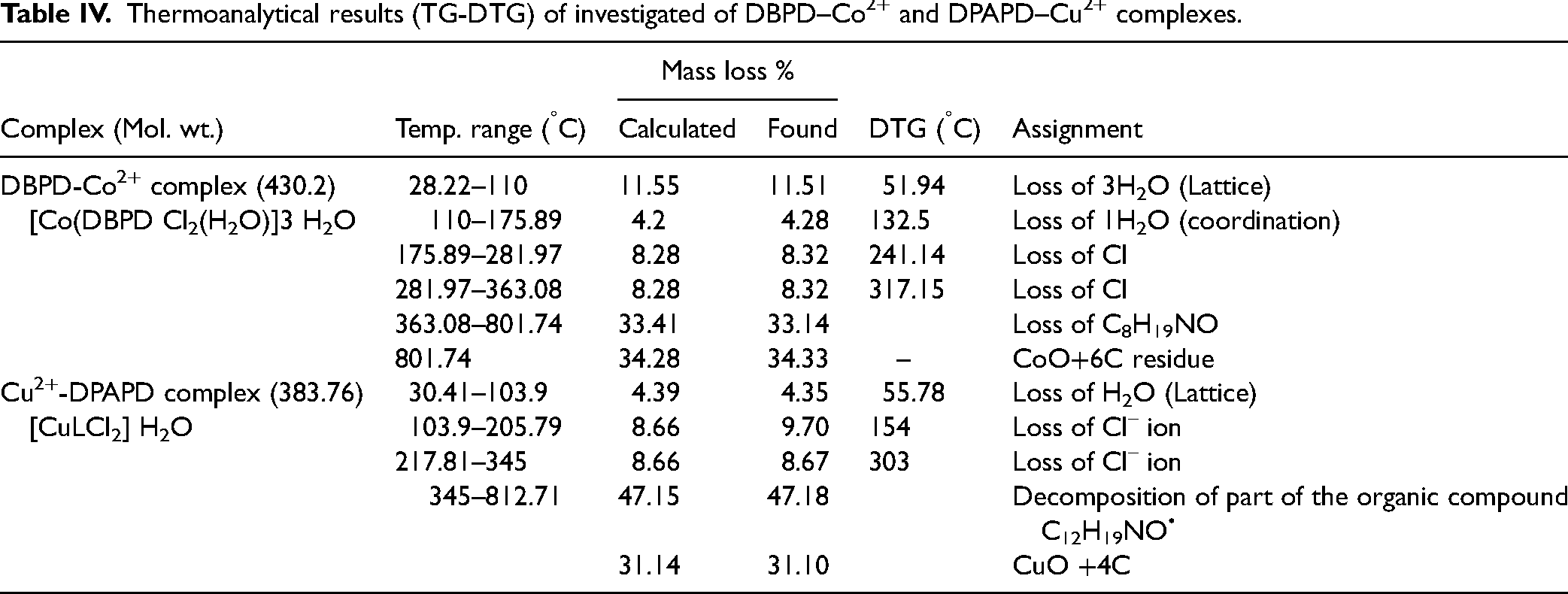
The TG curve of the DBPD-Co2+ complex reveals four distinct thermal decomposition steps: The first step shows a DTG peak at 51.94 °C and a mass loss of 11.51% (calculated: 11.55%), corresponding to the loss of three moles of crystallization water. The second step occurs within the temperature range of 110–175.9 °C, with a DTG peak at 132.5 °C and a mass loss of 4.28% (calculated: 4.2%), attributed to the removal of one mole of coordinated water. The third decomposition stage, from 175.9 °C to 363.1 °C, involves the release of two moles of chloride ions, with a DTG peak at 317.2 °C. The fourth step takes place between 363.1 °C and 801.74 °C, corresponding to the partial decomposition of the organic moiety (C8H19NO), resulting in a mass loss of 33.14% (calculated: 33.41%). Beyond this temperature range, a gradual mass loss continues, reaching a total of 34.33%, which is consistent with the formation of a CoO + 6C residue.
In contrast, the DPAPD-Cu2+ complex undergoes three primary decomposition steps: The first step occurs between 30.41–103.9 °C, with a DTG peak at 55.78 °C and a mass loss of 4.35% (calculated: 4.39%), corresponding to the loss of one lattice water molecule. The second step, between 103.9 °C and 345 °C, is associated with the removal of two moles of chloride ions and features a DTG peak at 303 °C. The third decomposition stage, from 345 °C to 812.71 °C, corresponds to the breakdown of the organic moiety (C12H19NO), with a mass loss of 47.18% (calculated as 47.15%). Following this stage, a gradual further mass loss occurs, leading to a final residue corresponding to CuO + 4C.
Figure 6c illustrates the X-ray diffraction (XRD) patterns of DBPD, DPAPD, and their corresponding metal complexes, DBPD-Co2+ and DPAPD-Cu2+. The XRD pattern of pure DBPD exhibited a broad hump rather than sharp diffraction peaks. This broad scattering feature is characteristic of an amorphous structure, where there is a lack of long-range atomic order. In amorphous materials, the atoms or molecules are arranged in a disordered fashion, leading to diffuse X-ray scattering in all directions rather than discrete Bragg reflection.
In contrast to the free chemosensor DBPD, the XRD pattern of the DBPD-Co2+ complex exhibits well defined crystalline peaks at 2θ values of 15.67°, 31.78°, and 45.75°, confirming its crystalline nature. This crystallinity is attributed to the intrinsic ordered structure imparted by the cobalt(II) metal center. The significant difference in the XRD patterns between the free chemosensor and its metal complex highlights the structural transformation upon complexation. The crystallite size (dXRD) was calculated using Scherrer’s equation42,43
The DPAPD chemosensor, on the other hand, showed a distinctly different XRD profile compared to DBPD. Its pattern exhibited sharp peaks at 6.41°, 12.7°, 24.81°, 28.16°, and 31.64°, suggesting that DPAPD is inherently more crystalline than DBPD. The presence of these defined peaks indicates that DPAPD molecules adopt a more ordered structure even in their uncoordinated state.
Upon complexation with Cu2+, the DPAPD-Cu2+ complex displayed even more intense and numerous diffraction peaks at 16.47°, 22.11°, 26.67°, 29.10°, 34.34°, 41.19°, 44.8°, 49.37°, 51.49°, and 57.57°. This increase in crystallinity is attributed to the formation of a metal–chemosensor coordination framework, which further stabilizes the molecular packing and enhances the long-range order within the material.
These findings confirm that coordination with transition metal ions (Co2+ and Cu2+) significantly enhances the crystallinity of both DBPD and DPAPD chemosensors. While DBPD transitions from an amorphous to a crystalline state upon metal binding, DPAPD already exhibits further structural refinement and increased crystallinity upon complexation.
The optical sensing behavior of DBPD toward Co2+ and DPAPD toward Cu2+ was further examined in terms of reversibility using ethylenediaminetetraacetic acid (EDTA) as a competitive chelating agent. Upon complexation with the target metal ions, the absorption spectra of both systems underwent significant changes; however, the subsequent introduction of EDTA resulted in the complete restoration of the original spectral profiles corresponding to the free ligands (Figure S5, Supplemental Material). This observation confirms the dissociation of the metal–ligand complexes and the regeneration of the pristine chemosensors.
Such reversible behavior indicates that the interaction between the Bis-chalcone frameworks and the metal ions is governed by dynamic, non-covalent coordination rather than irreversible binding. Consequently, the system exhibits the essential characteristics of a reusable optical sensing platform.
In parallel, fluorescence measurements revealed a pronounced recovery of the quenched emission upon EDTA addition to the pre-formed metal–chemosensor complexes (DBPD + 4.0 × 10⁻⁵ M Co2+ and DPAPD + 5.0 × 10⁻⁵ M Cu2+), effectively switching the emission state from “off” back to “on” (Figure S5, Supplemental Material). This fluorescence restoration is attributed to the superior binding affinity of EDTA toward the metal ions, which facilitates competitive sequestration and disrupts the initially formed complexes, thereby releasing the free fluorophore.
Collectively, these results establish a well-defined “on–off–on” fluorescence switching mechanism for both DBPD and DPAPD in response to Co2+ and Cu2+ ions, respectively. The efficient reversibility, coupled with high selectivity, highlights the robustness of these systems as switchable chemosensors. Furthermore, the distinct ion-specific responses exhibited by DBPD and DPAPD emphasize their potential utility in the development of selective sensing platforms capable of discriminating between closely related metal ions in both visual and spectroscopic detection schemes.
The present study delves into the impact of coexisting metal ions on the efficacy of Bis-chalcones, specifically DBPD and DPAPD, in the detection of Co2+ and Cu2+ ions, respectively. This investigation employs competitive complexometric fluorometric titration as a paradigm, considering that selectivity constitutes a pivotal attribute in optical sensor applications. The alteration in fluorescence intensity of DBPD and DPAPD is gauged in the presence of Co2+ and Cu2+ ions, each at a concentration of 4 × 10⁻⁴ M, alongside equivalent concentrations of interfering metal ions. The outcomes demonstrate that the examined interfering metal ions exert a marginal influence on the emission intensity during the Co2+ and Cu2+ ion detection process for DBPD and DPAPD, respectively, as depicted in Figures 7 and 8. These discernments collectively underscore the potential of both DBPD and DPAPD as promising chemosensors, manifesting high selectivity and proficiency in the accurate identification and quantification of Co2+ and Cu2 + ions in real samples.
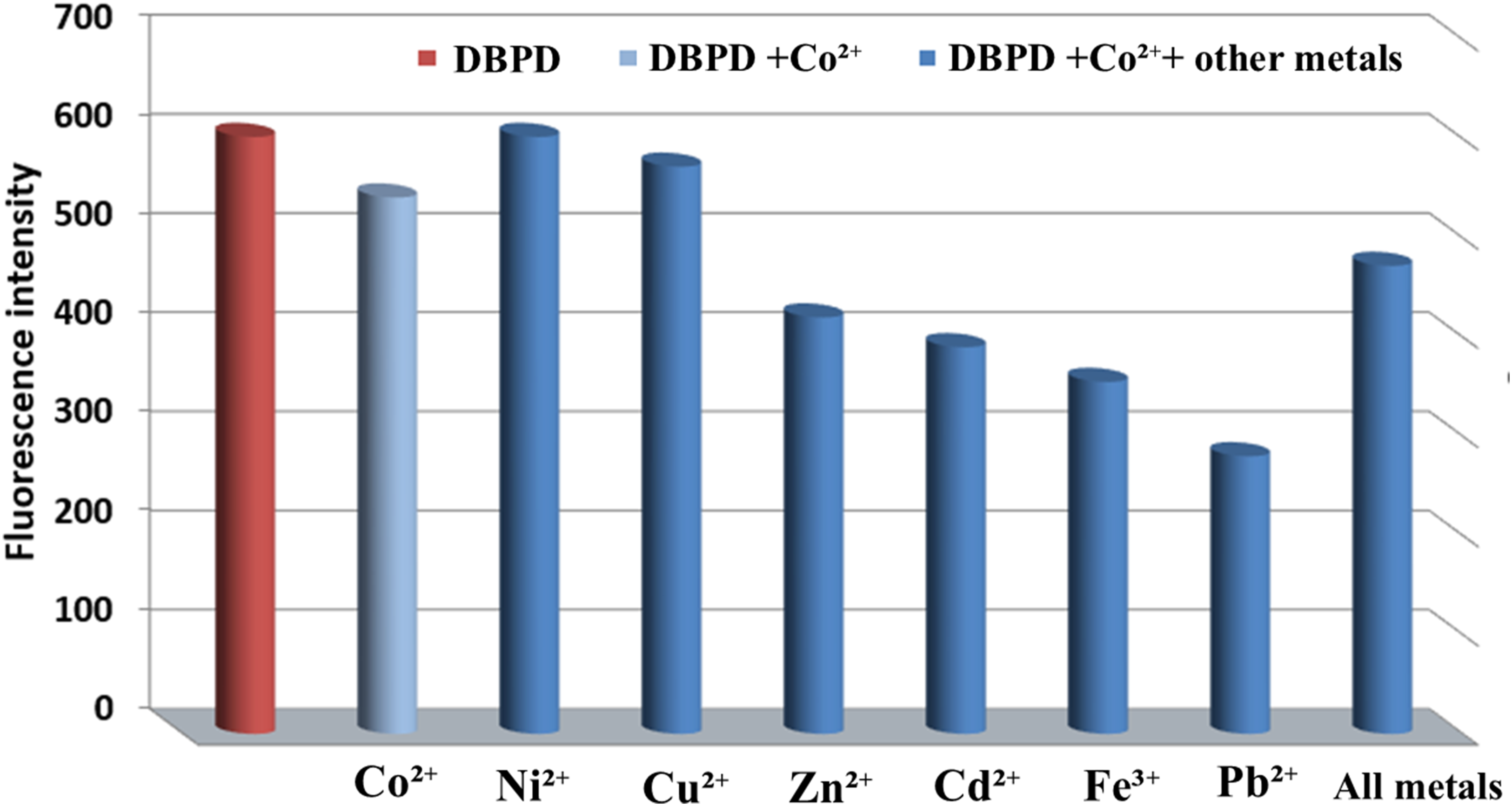
Selectivity of DBPD to Co2+ ions with the different metal ions in ethanolic solution at the same concentration (4 × 10⁻⁴ M).
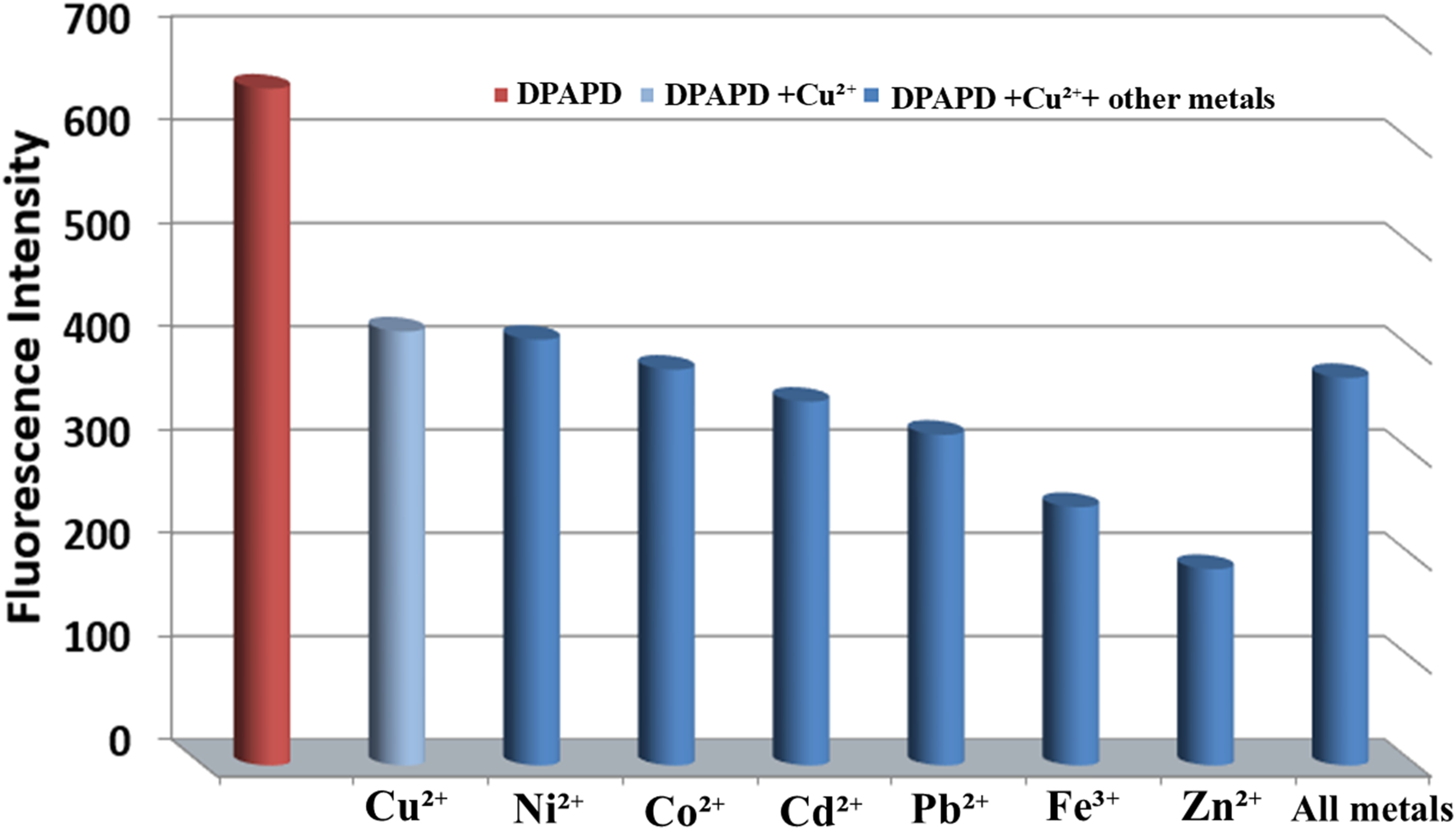
Selectivity of DPAPD to Cu2+ ions with the different metal ions in ethanolic solution at the same concentration (4 × 10⁻⁴ M).
Conclusion
In summary, the previously synthesized Bis-chalcones, DBPD and DPAPD, have been successfully revisited to uncover their unexplored metal-responsive properties. Both chemosensors exhibited distinct and selective optical responses toward Co2+, Cu2+, Ni2+, and Pb2+, while remaining unresponsive to Zn2+, Cd2+, and Fe3+. Spectroscopic analyses revealed clear evidence of complexation and intramolecular charge transfer mechanisms, with 1:1 chemosensor–metal stoichiometry and strong binding affinities for Co2+ and Cu2+. The formation of solid metal complexes, along with reversible optical behavior upon EDTA treatment, demonstrated the dynamic and reusable nature of these interactions. Competitive studies further confirmed minimal interference from other metal ions, highlighting the high selectivity and sensitivity of DBPD and DPAPD. These Bis-chalcones represent versatile, cost-effective, and reliable fluorescent chemosensors with significant potential for environmental monitoring and selective detection of heavy metal ions in practical applications.
Supplemental Material
sj-docx-1-asp-10.1177_00037028261459472 - Supplemental material for Bis-Chalcones as Efficient Optical Chemosensors for Rapid and Visual Detection of Toxic Metal Ions
Supplemental material, sj-docx-1-asp-10.1177_00037028261459472 for Bis-Chalcones as Efficient Optical Chemosensors for Rapid and Visual Detection of Toxic Metal Ions by Basma Hussein, Ahmed A. Noser and Marwa N. El-Nahass in Applied Spectroscopy
Footnotes
Acknowledgments
The authors are grateful to the Scientific Research Fund at Tanta University, Egypt, for funding this work through Research Project Code TU:02-19-03.
Consent for Publication
Not applicable.
CRediT Author Statement
B.H.: methodology, investigation, resources, writing-original draft. A.A.N.: Resources, Supervision M.N.E.: conceptualization, investigation, methodology, writing-original draft, writing-review & editing draft, supervision.
Declaration of Conflicting Interests
The author(s) declared no potential conflicts of interest with respect to the research, authorship, and/or publication of this article.
Funding
The author(s) received no financial support for the research, authorship, and/or publication of this article.

Supplemental Material
All supplemental material mentioned in the text accompanies this paper online.
References
Supplementary Material
Please find the following supplemental material available below.
For Open Access articles published under a Creative Commons License, all supplemental material carries the same license as the article it is associated with.
For non-Open Access articles published, all supplemental material carries a non-exclusive license, and permission requests for re-use of supplemental material or any part of supplemental material shall be sent directly to the copyright owner as specified in the copyright notice associated with the article.
