






Abstract
Surfaced-enhanced Raman spectroscopy (SERS) is an active field of spectrochemical analysis, with numerous applications across academia, government, and industry. No less important, however, is the potential of SERS, and related spectroscopies, for educational and outreach purposes. As science, technology, engineering, and mathematics (STEM) education is increasingly emphasized in primary school curricula, it is essential to develop programs to support student engagement with spectroscopy and the analytical sciences, in general. Not only do these forms of outreach benefit high school and undergraduate students, but they also provide mentorship opportunities for graduate students and early-career professionals. In this Technical Report, we describe the development and implementation of a 10-week plan to introduce high-school students to spectroscopy, nanoparticle synthesis, and SERS as part of our involvement in the ACS Project SEED program. Our program blended a variety of textbook readings, lectures, on-line simulations, in-lab demonstrations, and especially benchtop experiments to provide an enriching and diverse exposure to analytical science and scientific research. We also reflect on the impact of participating in this program on both the student and graduate-student mentors. The benefits to the particular high school student in this program included improved skills and increased confidence with benchtop techniques, and a new appreciation for chemistry and materials science. The graduate student mentors, in turn, gained teaching experience including designing scientific curricula. We believe SERS is an optimal teaching tool, as it draws on a wide variety of scientific concepts and provides ample opportunity for hands-on experience.
This is a visual representation of the abstract.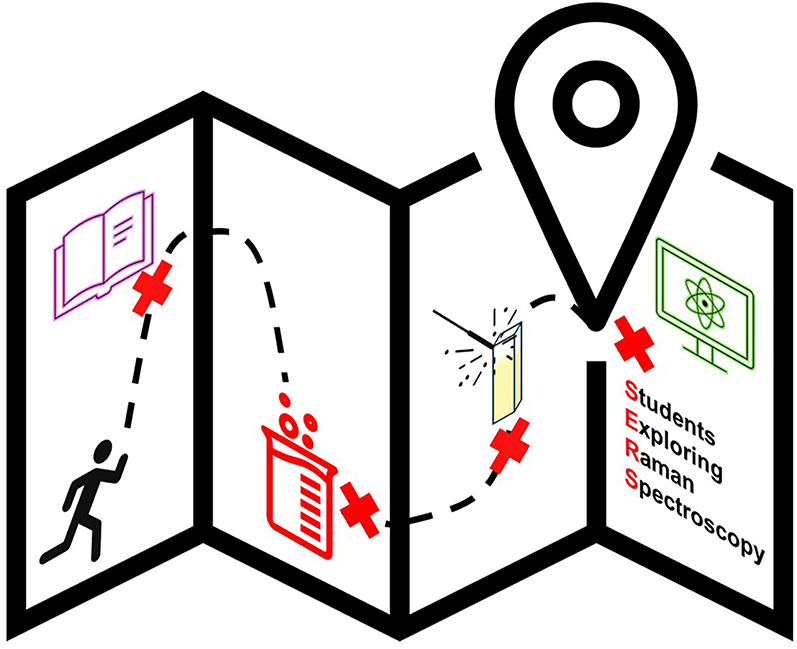
Introduction
Surface enhanced Raman spectroscopy (SERS) is an ideal teaching focus for scientific internship programs for many reasons, such as its contemporary importance and adaptability to participant interests. In the past half century, SERS has grown into a powerful analytical tool with numerous applications in fields such as forensics, security, biomedical imaging, and more.1–5 In this technique, Raman scattering signals of analytes are greatly enhanced through interactions with nanoparticles, which enables detection of trace compounds. Positioned at the intersection of analytical chemistry, inorganic synthesis, spectroscopy, and nanotechnology, SERS involves a unique blend of numerous scientific disciplines and offers exposure to diverse fundamental theories. The combination of studying fundamental principles behind the SERS phenomenon with research activities driven by the individual allows a high degree of flexibility in the program content. As a result, each component can be tailored to suit a variety of knowledge and skill levels. For example, research projects can be focused on different synthetic techniques or on trace analysis applications with SERS, while traditional teaching modules can lean more into spectroscopy theory or nanotechnology development. Regardless of how the program is executed, SERS exposes the participant to a variety of important hands-on laboratory skills and concepts for future educational and professional endeavors.
The development of outreach programs based on science, technology, engineering, and mathematics (STEM) is essential to the interdisciplinary nature of modern research and STEM-related careers. Fostering student interest and engagement with scientific programs is essential to cultivating the next generation of scientists, engineers, and researchers. Additionally, STEM is known to be an important part of student success, regardless of student age and background. 6 It has been shown that students exposed to STEM-enrichment programs outperform the majority of their peers, while they are also more likely to pursue higher education and careers in related disciplines. 7 Access to inter- and multidisciplinary STEM experiences, such as those provided by SERS, prepares students for success in a variety of fields, including chemistry, physics, engineering, materials manufacturing, medicine, and more. Additionally, the skills obtained through hands-on mentorship and practical activities, such as critical thinking and problem solving, are considered to be valuable in other disciplines as well, such as the humanities and social sciences. 6
As STEM education provides a variety of vital skills and opportunities to students of all ages, it is necessary to develop relevant, flexible, and comprehensive curricula that can be easily implemented by educators in a variety of circumstances. Furthermore, students can achieve a high degree of independence in experimental design, laboratory techniques, and data interpretation through a program tailored to their specific interests. Then, these resources can be adapted by mentors to suit the needs and interests of their students while meeting the goals of their specific programs. In this report, we describe a training program centered on SERS through our group’s participation in American Chemical Society’s (ACS’s) Project SEED. Project SEED aims to support qualifying high school students by providing them with paid STEM internships during the summer, to access otherwise unavailable research and laboratory experiences. Our program incorporated aspects of both classroom-based and research-driven activities to provide an enriching and well-rounded experience for the student participant (SP), as well as the graduate student mentors (GSMs).
Results and Discussion: Training and Research Activities
Mentorship Structure
While the goal of ACS Project SEED is to provide new opportunities for SP, there are additional benefits to the mentors who participate as well. Here, graduate students were the primary contacts for the Project SEED student as well as the developers of the SERS teaching program. In general, graduate student mentors (GSMs) divided tasks into two roles: course manager (GSM1) and lab manager (GSM2). The course manager was responsible for curriculum development and resource procurement, leading lectures and discussions, and providing feedback for experimental results and difficulties. The laboratory manager was responsible for executing and supervising the research experiments, as well as supporting lectures and discussions. Additionally, a faculty advisor served as support during the development of the program content, providing feedback to the GSMs on module design and implementation, while also supervising the SP’s progression.
Theory-Based Approaches
To build a strong foundation and enable future research projects, the program incorporated a number of theory- and fundamentals-based activities. The SP participated in Project SEED during the summer between their junior and senior year of high school, having taken an introductory chemistry course with a basic laboratory component. While the student was interested in physics and engineering, he had yet to study these areas formally in school. As SERS is highly interdisciplinary, it was necessary to cover several topics in tandem to prevent building artificial mental barriers (e.g., nanoparticle synthesis is only chemistry, while electromagnetic radiation is purely physics) as well as ensure a comprehensive understanding of the phenomenon (cf. Figure 1). For this approach, the program began by teaching broad concepts (i.e., the electromagnetic spectrum and nanomaterials) before delving into more specialized subject areas, such as spectroscopic techniques and silver-colloid synthesis methods. Each of these teaching units incorporated mini-lectures or discussions led by the GSMs as well as virtual or practical laboratory activities. A complete bibliography of materials used during the theory-based portion of the program is given in the Supplemental Material.
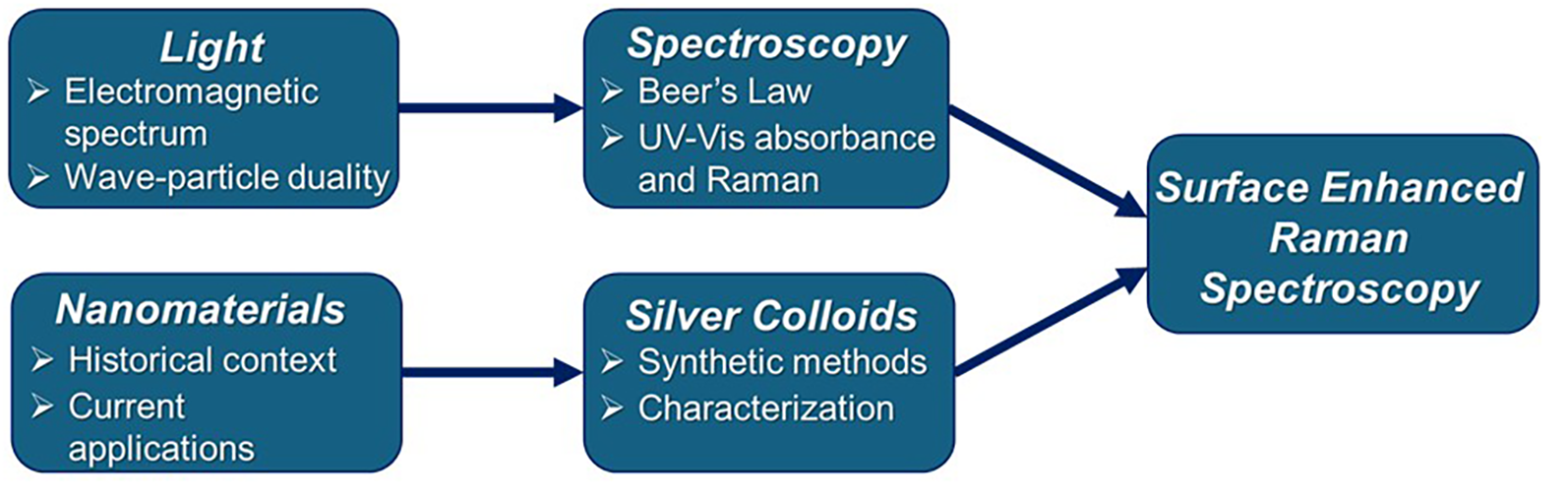
A flow chart of relevant topics which culminated in the SP beginning research activities based around SERS.
The first topics of the spectroscopy track covered light and the electromagnetic spectrum. To begin, the basic properties of waves were introduced with the Waves Intro simulation offered through PhET (originally Physics Education Technology). 8 This simulation uses water, sound, and light to explore the interconnectivity of frequency and wavelength as well as amplitudes of waves. While the SP was encouraged to explore all aspects of the simulation, he primarily operated the virtual lab in light mode. Special care was taken to familiarize him with the electromagnetic spectrum and the relationship among frequency, wavelength, and color. Once the SP was comfortable discussing the wave properties of light, the concept of particle–wave duality was introduced through informal lectures led by the GSMs. Often times, these took place in the form of chalk talks, where the GSMs and SP collaborated on white boards to support active learning and engagement from the SP. Following this discussion, the SP was given textbook readings from a college-level textbook on light 9 and the electromagnetic spectrum9,10 to introduce the concepts through yet another medium. While this textbook was above the educational level of the SP, the choice to use undergraduate materials was made to suit this student’s goals, as he wanted to engage with the more challenging material to prepare himself for university studies. In alternate versions of this program, this part could be easily replaced with different textbooks or reading materials.11,12 Repetition of ideas, as well as incorporation of a variety of academic sources, ensured that the material was comprehensively understood by the SP and prepared him for the subsequent phases of the research program.
Once a firm conceptual grasp of these topics was established, the lectures progressed to cover the interactions of light with physical matter. The Bending Light PhET simulation was used to demonstrate the difference between reflectance and transmittance measurements. 13 This exercise was complemented by a hands-on experiment designed by the GSMs (see Supplemental Material), where the SP used a ultraviolet–visible (UV–Vis) reflectance probe on materials of different textures and colors to make observations regarding the wavelength and intensity of the reflected light. The SP was asked to estimate the maximum reflected wavelength of the color before using the probe. Observation of the measured reflectance spectrum matching the hypothesized maximum wavelengths solidified this aspect of the behavior of light for the SP and provided groundwork for future activities exploring absorption. This experiment also introduced the SP to protocols for keeping proper laboratory notes, reporting scientific data, and testing hypotheses. This segment concluded with the PhET simulation Molecules and Light, which allowed the SP to visualize how a variety of molecules respond to electromagnetic radiation outside of the visible range (i.e., microwave, infrared, visible, and ultraviolet radiation). 14
The discussion of spectroscopy began with a simple demonstration of absorbance. Dilute solutions of several food dyes were prepared in cuvettes for UV–Vis absorption spectroscopy. The SP was asked to guess what wavelength of light he thought would be in the measured absorbance spectrum before the sample was analyzed. After measurement of the different food dyes, the SP and GSMs discussed why the color observed visually did not match with the absorbance determined by the UV–Vis spectrophotometer. A comparison was made between the results of the reflectance experiment, and what the student observed during the absorption demonstration, solidifying comprehension on the basic interactions of light and matter. An active lecture was then given by the GSMs about absorbance and UV–Vis spectroscopy, including an introduction to Beer’s Law. This discussion was followed by the Beer’s Law Lab
15
and Molarity
16
PhET simulations, which introduced quantitative absorption measurements and reviewed equations for calculating molarity, performing dilutions, and calculating concentration based on calibration curves. The effective instruction of this material was supported by the student, as he noted: “I learned about spectroscopy and spectrometry and the difference between them. I found myself fascinated by the fact that you can study matter based on how it behaves in the presence of light.” “Conveying material to a younger student required a lot of flexibility to make it accessible and adapt to their needs. However, it helped me review my understanding of the content and was exciting to see the lightbulb go on when I was successfully communicating complex concepts like absorption or SERS.”
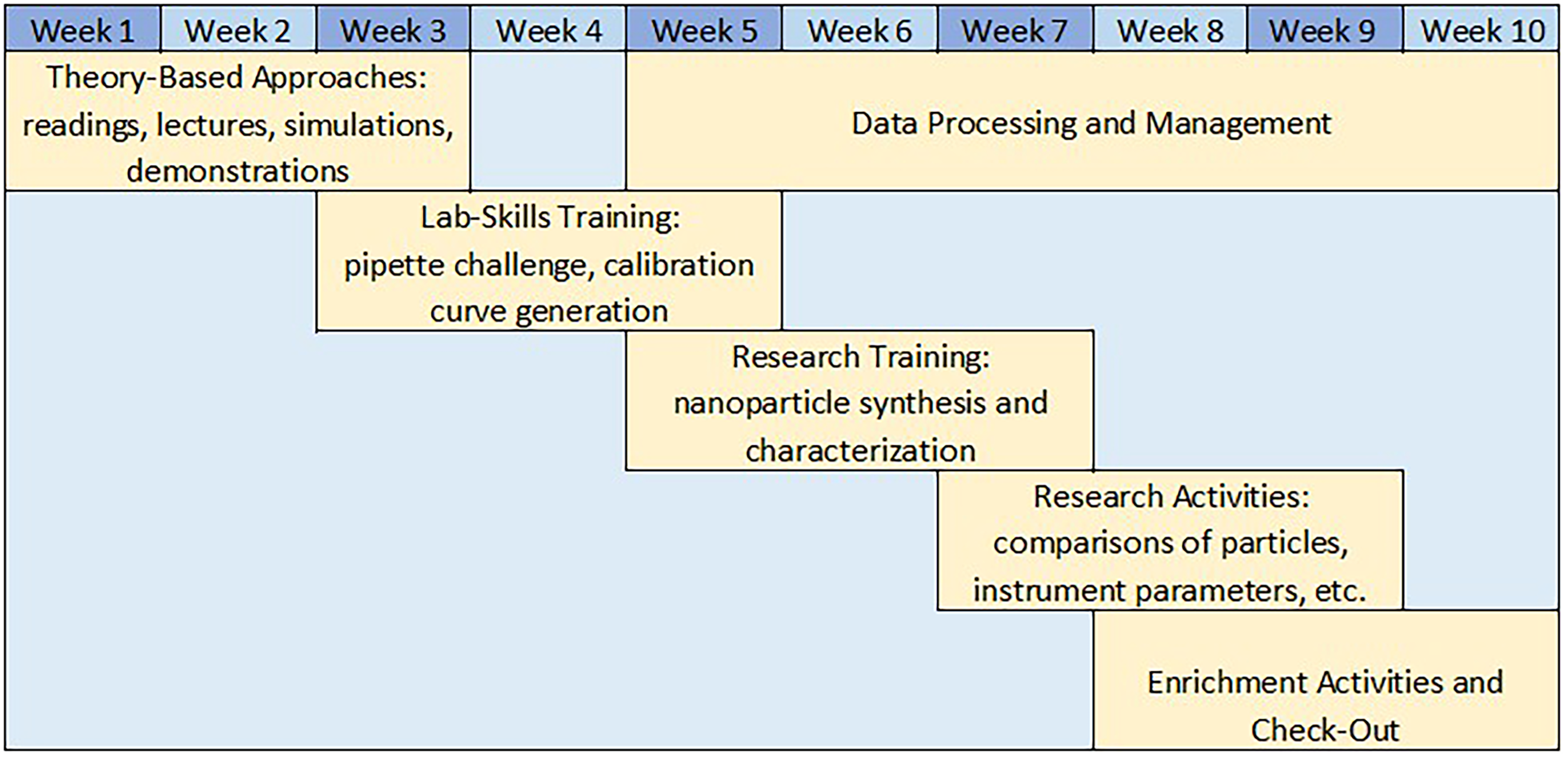
Approximate timeline of different phases of the teaching module developed during Project SEED 2024 participation.
Laboratory-Skills Training
An important part of STEM education programs is to support the training of new scientists in foundational laboratory skills. To familiarize the SP with use of micropipettes, as well as the importance of accuracy and precision, the SP participated in a research-group-wide pipette challenge (see Supplemental Material). Small volumes of water were deposited on a balance with a micropipette and then weighed to assess accuracy and precision of the pipette and each individual’s abilities. Nearly everyone in the research group, including undergraduate students, graduate students, and research scientists, participated, which helped build community, while demonstrating the user-dependent performance of micropipettes. For this experience, it was held as a competition, where the winner was determined by best accuracy and precision. Notably, the SP was in the top three competitors of the lab, reflecting his understanding of proper technique and the importance of careful benchwork during wet-lab experiments.
The laboratory training also emphasized solution-preparation techniques, including serial dilutions. The SP was asked to prepare solutions of copper nitrate to generate a calibration curve with absorption spectroscopy using Beer’s Law. The guidelines given to him were intentionally vague (i.e., total solution volumes, concentrations, reagent amounts, and appropriate laboratory glassware were not listed), both to provide a challenge and to introduce him to experimental design for the research stage of the program (see Supplemental Material). Specifically, the SP was asked to select the volume and concentration of the calibration solutions himself and make judgements about reasonable volumes for stock-solution preparation. After receiving approval from a GSM, the SP prepared the calibration solutions and analyzed them with the UV–Vis spectrophotometer. The GSMs provided the SP with a solution of unknown concentration. Once data collection was finished, the SP was instructed in basic data processing techniques, including calibration curve generation and assessing linearity. The resulting curve had an R 2 of 0.97, and the unknown solution concentration was calculated within 10% of the expected value, again reflecting SP acquired skills in lab techniques towards the overall learning goals.
Research Training
Two different nanoparticle synthesis approaches were selected for the research portion of the program due to the accessible protocols and overall simplicity.26,28,29 Compared to many syntheses,19,22,27 which can use harmful chemicals, technical laboratory procedures, and extended amounts of time, these benchtop methods were inexpensive, safe, and relatively quick (i.e., less than five hours, including incubation). Additionally, the nanoparticles produced lead to sufficient Raman enhancement for the purposes of the teaching module. The first nanoparticle synthesis (NPS1) approach used hydroxylamine-mediated reduction of silver nitrate adapted from an undergraduate laboratory experiment developed by McMillan. 29 This synthesis is known to produce a yellow-gray suspension of rough-surfaced colloids (approximately 25 nm diameter). 29 The second method (NPS2) was adapted from Mahmoud et al., 28 wherein silver nanoparticles were formed by reduction with sodium borohydride and ascorbic acid in the presence of polyvinylpyrrolidone (PVP). Several different sizes of nanodiscs (10 s to 100 s of nm), which yield unique solution colors (e.g., red, blue, yellow), can be generated by varying the amount of ascorbic acid in the reaction. 28 This synthetic method was a key part of the summer, and made a strong impact on the SP. He later commented:
“My favorite experience was the creation of different colored nanoparticle solutions. It was amazing to realize that I could control the color of a solution based on how much ascorbic acid was added. The nanoparticle colors were beautiful.”
The SP quickly realized that there are different colors of solution for the varying reaction conditions, leading to a discussion of how the reducing agent in synthesis influences particle size, and how particle size leads to the overall optical properties of the solutions (cf. Figure 3). Additionally, this conversation was linked to early discussions of absorbance, and the contrast between the wavelengths of light an observer sees and the corresponding absorption spectrum. Through these synthetic techniques, the SP was exposed to basic concepts in nanotechnology, spectroscopic characterization, and iterative research protocols.
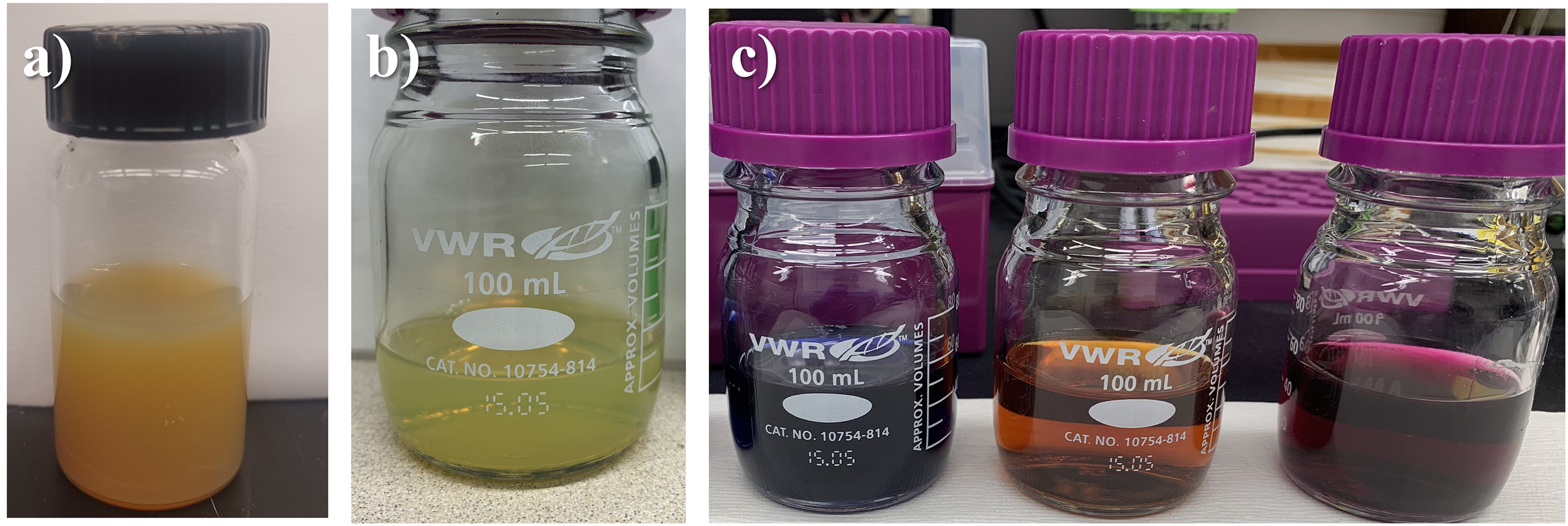
(a) Photograph of SP-produced nanoparticles via NPS1 used for UV–Vis, Raman, and SERS experiments. (b and c) Photographs of nanoparticles produced through NPS2 which showcase difference nanoparticle properties.
Methylene blue was chosen as a test analyte for exploration of the SERS effect, as it is a common test analyte for Raman spectroscopy. For both synthetic methods, the SP completed UV–Vis absorption and Raman characterization of the nanoparticles in the absence and presence of methylene blue, as well as of methylene blue on its own. The impact of methylene blue concentration, instrument parameters (i.e., integration time, laser power, etc.), and nanoparticle aggregation through the dropwise addition of 2 M sodium chloride was compared between the different nanoparticle species. Because of the thorough laboratory-training modules, the SP was able to complete various experiments and effectively guide the direction of his research experience based on which results he found most compelling, which demonstrated an impressive level of laboratory independence over such a short time.
Research Activities
The SP effectively carried out the proposed characterizations and produced data consistent with the original literature.28,29 Examples of SP-generated Raman data are given in Figure 4. During these experiments, the SP was encouraged to repeat trials with different batches of nanoparticles, especially those of different colors, as well as varied instrumental parameters, including laser power, and integration time. Through these activities, he developed troubleshooting skills and was able to experience student-driven academic research. During activities, the SP was asked to develop hypotheses about the experimental outcome for each change to the procedure. In one case, the SP collected Raman spectra of only nanoparticles and only methylene blue. He was asked what was expected to occur after methylene blue addition to NPS1. Upon observing an enhancement in methylene blue signal at a minimum concentration of 8 mM through SERS, GSMs introduced the fundamental mechanisms that lead to SERS. The SP’s work focused mainly on NPS1, as he observed it enhanced the methylene blue signal through SERS more than the products of NPS2. As part of this finding, the SP was encouraged to think about different SERS mechanisms, especially as they relate to particle surface texture. He connected this information to readings he had completed regarding different shapes of nanoparticles to conclude that the roughness of nanoparticle type 1 (NPT1) contributed to its effectiveness.
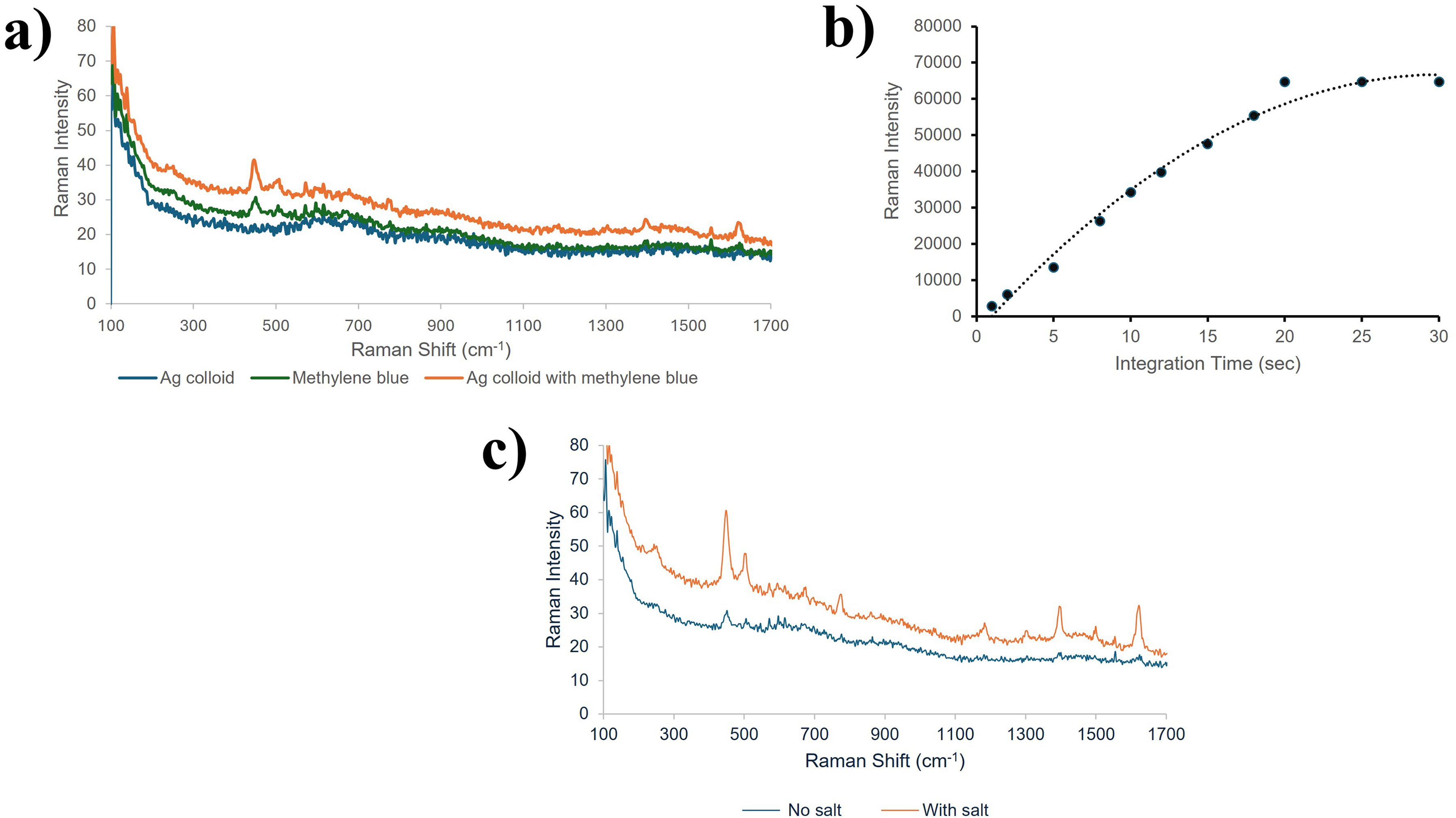
(a) Raman spectra comparison for silver colloids, methylene blue and methylene blue added to the silver colloid solution. (b) Raman intensity for the methylene blue Raman shift with increasing integration time. (c) Raman spectra for the methylene blue solution with the addition of NaCl and without the addition of salt.
To further characterize NPT1, as well as try to improve the SERS-activity of NPT2, the SP optimized the instrumental parameters, as well as tested salt-induced aggregation. The SP initially used two Raman instruments (see Supplemental Material), and chose the benchtop Thermo DXR Raman spectrometer, as he found it provided better signal-to-noise ratios, although the use of the compact B&WTek instrument provided him with exposure to alternate instrumentation and data-collection interfaces. With the benchtop Raman, he performed both automatic and manual focusing, to ensure best sample placement for analysis, and optimized laser power for maximum signal intensity without saturating the detector. Additionally, he observed the correlation between integration time and Raman intensity, demonstrated in Figure 4. These studies were once again most effective for NPT1, although the yellow suspension of particles from NPS2 were also responsive. The student connected the color, and therefore size, of these two species as a possible explanation for their similar SERS properties. He did not observe significant SERS enhancement with the other colors produced, which he also attributed to size or surface properties. He was very interested in aggregation-enhanced SERS, which was able to produce a Raman spectrum of methylene blue for all the synthesized nanoparticles. This finding led to a discussion about aggregation improvement of Raman signals through the clustering of nanoparticles and subsequent production of SERS hot spots.
Throughout this process, the lab manager of the program supported training with different instrumentation and lab techniques for the SP. He noted a mutually beneficial relationship between the mentor and student, as conducting training and instruction required a further development of his own skills: “[I aided] SP in the lab, teaching him how to use lab equipment and instruments. Not only was I able to learn how to teach and work with younger students, but participating in this program also further developed my own knowledge and expertise with a variety of spectroscopic [and analytical] techniques.”
Additional Enrichment Activities
As part of the research experience, the student was able to tour different research facilities, such as the clean rooms used by material scientists, where fabrication methods and instrumentation for nanoscale materials were demonstrated. Additionally, the SP attended research symposia held by a local professional society and by the host institution. Importantly, he presented a poster on his SERS work at the host institution during this symposium. The SP also talked with students and faculty at the host institution not affiliated with his program to learn about the general research activities present there.
Personal Impacts and Outcomes
Student Participant
A large portion of the summer program emphasized the development of technical laboratory skills. While a GSM was always present to provide support if needed, the student was able to prepare analytical solutions independently with micropipettes, appropriate glassware, analytical balances, and other standard laboratory equipment. The student was responsible for determining solution conditions and accurately preparing the desired concentration. Participation in these activities facilitates the development of research skills, such as troubleshooting, as they strive to push their projects forward. For example, when a synthetic method did not yield the expected nanoparticle properties, the SP reviewed the procedures to determine where things went wrong. The student left the program with a greater appreciation for the research process and chemistry, as a whole, as shown by his statement: “The fact that there exist various spectroscopy techniques was interesting. I also learned about the existence of nanoparticles and their use for Surface Enhanced Raman Spectroscopy. Being able to work in the lab significantly increased my knowledge of chemistry and how it applies to the world. I am happy I was able to work in the lab to make nanoparticles of different colors and sizes, it was interactive and nice…Before, I wanted to only study engineering, now I want to study material science and mechanical engineering as a major.”
The student also developed a variety of skills in data analysis and communication. By the conclusion, he was able to collect, process, and interpret data from start to finish, as well as draw informed conclusions to be shared with other scientists. Complex data sets were generated from research-grade instrumentation, which is typically not available in most high-school settings. Additionally, the data was contextualized within a research project, and given added emotional connection as the student had synthesized the samples himself. To successfully interpret spectral data, the SP used multiple databases and resources, such as the NIST WebBook. 31 The SP also developed computer and software skills necessary for the use of a data processing software, such as Excel, to produce calibration curves and annotated spectra which supported his conclusions. Lastly, the student communicated these results through a poster presented at an institute-wide undergraduate student research symposium. This allowed him to showcase the data interpretation and communication skills he had developed over the course of the summer program (see Figures S1–S7, Supplemental Material). Because of the quality of the work presented and his knowledge of the topic, faculty and other attendees were shocked to find out he was a junior in high school, and not an upper-level undergraduate student. He is currently completing his undergraduate degree in mechanical engineering. Ultimately, exposure to a variety of research activities not only helps the SP acquire technical skills that will help ensure future success in undergraduate courses, encourages creative thinking, problem solving and adaptability, and stimulates a curiosity for learning which will be beneficial for STEM and non-STEM students alike.
Graduate Student Mentors
Participation in the program promoted teamwork, which is essential to scientists of all career levels and disciplines. The GSMs worked collaboratively with one another to ensure a positive learning environment for the SP and took turns as the primary contact for the SP throughout the program. Instructional skills were strengthened as the mentors needed to communicate complex scientific concepts to a student with high-school training. Importantly, this included the use of accessible language and mathematical concepts, as well as relating abstract concepts to impactful and relatable examples. Both student mentors experienced increases in their ability to communicate information, confidence as mentors, and a higher interest in participation in outreach: GSM1: “My primary role in this project was to develop lesson plans and oversee the experiments being conducted. Participating [as a mentor] gave me a new appreciation for importance of effective communication… I would like to continue to be involved in planning outreach and educational activities.” GSM2: “I have gained confidence in training inexperienced students and have now become much more interested in helping younger scientists develop their understanding of chemistry.”
Conclusion
This work outlines the development of an accessible, short-term nanochemistry and spectroscopy curriculum that is adaptable to students with different background knowledge, from early high-school students to more senior undergraduates. Through silver nanoparticle syntheses and spectroscopic analysis, the student gained early exposure to experimental chemistry, scientific communication, and laboratory skills typically only encountered in higher levels of education. The project yielded meaningful scientific results and supported the students’ growth in confidence and technical ability. The modules can be easily adapted to have multiple SPs, study different analytes of interest for SERS (i.e., pesticides, explosives, etc.), include alternate nanoparticle syntheses, or focus on more complete nanoparticle characterization, depending on student interests and available equipment. While two GSMs were involved in the project here, it could be consolidated to one or expanded to include several more who specialize in different content areas of each teaching module. Additionally, it could be condensed to a short-term program, such as for a week-long summer camp, by transitioning aspects to demonstrations or providing more supported research activities (i.e., premade solutions, explicit experiment protocols, etc.). Alternatively, the program could be extended into a semester-long project, such as for an undergraduate student, by emphasizing the research portion and having the student complete a more involved project after training. With the foundation laid for this training approach, the next step would be to increase the scale of students trained and incorporate educational assessments to quantify students’ improvement in understanding content, developing laboratory research skills, and confidence in technical ability.
Overall, the experience provided a valuable advantage that will support continued academic development of the SP. Graduate student mentors also benefited, developing leadership, teaching strategies, and communication skills rarely emphasized in traditional graduate programs. Programs which support mentorship and outreach activities, such as ACS Project SEED, enable the next generation of scientists, such as GSM1 and GSM2, to earn qualities necessary for early-career researchers. With thoughtful curriculum design and committed mentorship, high-school student engagement in university research can be impactful and rewarding for all who participate.
Supplemental Material
sj-docx-1-asp-10.1177_00037028261460924 - Supplemental material for Students Exploring Raman Spectroscopy: Developing Outreach Efforts and Training Young Scientists via Absorption and Surface-Enhanced Raman Spectroscopy (SERS)
Supplemental material, sj-docx-1-asp-10.1177_00037028261460924 for Students Exploring Raman Spectroscopy: Developing Outreach Efforts and Training Young Scientists via Absorption and Surface-Enhanced Raman Spectroscopy (SERS) by Julia L. Danischewski, Jared Viggers, Abdulsobur Fagbenro and Jacob T. Shelley in Applied Spectroscopy
Footnotes
Acknowledgements
The authors thank ACS Project SEED and the Bender Scientific Fund from the Community Foundation for the Greater Capital Region for supporting A.F. during the duration of the summer program. We also thank Jane Slezak and the Slezak Fellowship, which helped support J.L.D. and J.V. during this time. We acknowledge the Agilent/ACS Division of Analytical Chemistry Graduate Student Fellowship for support given to J.L.D. We also acknowledge the RPI Department of Chemistry and Chemical Biology and the Office of Graduate Education for support given throughout this work.
Declaration of Conflicting Interests
For full transparency, Jacob Shelley is an Associate Editor of Applied Spectroscopy Practica, which is a sister publication to Applied Spectroscopy. The authors otherwise declare no potential conflicts of interest with respect to the research, authorship, and/or publication of this article.
Funding Statement
The author(s) received no financial support for the research, authorship, and/or publication of this article beyond the support mentioned in the Acknowledgements section above.

Supplemental Material
A complete bibliography of teaching materials and handouts given to the student during teaching experiments can be found in the Supplemental Material online. .
References
Supplementary Material
Please find the following supplemental material available below.
For Open Access articles published under a Creative Commons License, all supplemental material carries the same license as the article it is associated with.
For non-Open Access articles published, all supplemental material carries a non-exclusive license, and permission requests for re-use of supplemental material or any part of supplemental material shall be sent directly to the copyright owner as specified in the copyright notice associated with the article.
