







Abstract
Multinational enterprises are aware of their responsibility to protect human rights now more than ever, but severe human rights violations, including physical integrity abuses (e.g., death, torture, disappearances), continue unabated. To explore this puzzle, we engage theoretically with the means-ends decoupling literature to examine if and when oil and gas firms’ policies and practices prevent severe human rights abuse. Using an original dataset, we identify two pathways to mitigate means-ends decoupling: (a) while human rights policies alone do not reduce human rights abuses, firms with a high-quality human rights policy over the long-term reduce severe human rights abuses; (b) firms that combine preparedness—which we define as a firm’s capabilities, practices, and engagement—with a long-term human rights policy also reduce the likelihood of human rights abuses. Preparedness, we argue, can lead to reinforcement dynamics between long-term policy efforts and additional capabilities that provide a more holistic understanding of firm behavior.
Keywords
Firms struggle to address human rights challenges resulting from “the globalization of markets and business which have brought with it an ever-growing potential for corporate involvement in human rights abuses” (Schrempf-Stirling & Wettstein, 2017, p. 546). The ubiquity of human rights abuses has led to soft law initiatives that shape corporate responses to human rights abuses, such as the United Nations Global Compact (2000), the UN Respect, Protect and Remedy Framework (2008), and the UN Guiding Principles on Business and Human Rights (UNGPs) (2011). Moreover, these initiatives represent an effort to fill the “governance gap” which is especially pronounced in developing countries, where governments are thought to be weak relative to the large multinationals working within their borders. The Framework and UNGPs seek to provide international guidance to firms facing human rights challenges; influencing “public regulation at the level of the OECD, the EU, and nation states” (Buhmann, 2016, p. 711). The UNGPs detail policies, risk-based due diligence, and remedy mechanisms to enable firms to be more responsive to human rights challenges (Buhmann, 2016; Buhmann et al., 2019). As such, in the past decade there have been significant advances in social and legal expectations seeking to ensure business responsibility for human rights; these have manifested in specific requirements for business (Buhmann, 2016). 1
Given this global focus on business and human rights (BHR), a burgeoning management scholarship has developed on a wide range of BHR topics (Schrempf-Stirling & Van Buren, 2020, and Wettstein et al., 2019, provide BHR overviews). Recent empirical work at the firm level explores the diffusion of global norms concerning BHR (Fiaschi, Giulani, Macchi & Perrone 2012; Hamann, Sinha, Kapfudzaruwa, & Schild, 2009; Preuss & Brown, 2012) in which scholars observe increasing corporate policy adoption or “uptake” of BHR policies and initiatives. Scholars are also uncovering the processes and policies that firms put in place to conduct human rights due diligence to identify actual or potential human rights impact (Harrison & Sekala, 2015; McCorquodale et al., 2017). Moreover, there are several qualitative studies (Obara, 2017; Obara & Peattie, 2018) that provide rich, in-depth insights about how firms understand their human rights obligations and the management processes accompanying them, with scholars highlighting the grave shortcomings therein (Chowdhury, 2017). Despite this growing body of research, there is still a lack of empirical analyses about how firms manage their human rights obligations and/or the quality of policies and practices being put into place (Wettstein et al., 2019: cf. Olsen 2021a; Olsen 2021b). Furthermore, even less is known about the societal impact of firms’ human rights policies—are they effective in reducing human rights abuses? Most importantly, do they work to reduce the most severe human rights abuses, which involve physical integrity (e.g., murder, disappearance, illegal detention, torture)?
This study examines these questions by analyzing quantitative, firm-level data in one of the most controversial industries—oil and gas—during a period of increasing momentum to ensure business action on human rights responsibilities. The oil and gas industry, a part of the extractive sector, provides an important context for understanding the development of human rights conduct. Firms in this industry are often singled out for societal and human rights concerns due to their global reach, their work in high-risk locations, extensive supply chains, and the significant negative externalities associated with their operations (Berkowitz & Dumez, 2015; Harrison & Sekala, 2015, p. 939; Janz, 2018; Vadlamannati et al., 2020). Oil firms, in particular, have a long history of human rights abuses (e.g., Royal Dutch Shell and the Ogoni people in Nigeria [Chowdhury et al., 2021]), which continue today. Ongoing abuses in this industry have prompted multiple stakeholders—international organizations, policymakers, civil society activists, governments, local constituents, and even shareholders—to demand that oil and gas companies adopt human rights policies and practices. However, there is a dearth of empirical evidence to understand if, in this controversial industry sector, human rights policies and practices have a tangible impact on the ground. Do they achieve their intended societal outcomes?
We explore the tension between policy efforts, practices, and intended outcomes, by engaging with the decoupling literature to determine what helps to facilitate intended outcomes. Policy-practice decoupling (Meyer & Rowan, 1977), stemming from institutional theory, explains the failure to achieve intended outcomes as an implementation problem, where policies are never (or only poorly) implemented into practice (Graafland & Smid, 2019; Snelson-Powell et al., 2016). However, this classic type of decoupling—exploring policy-practice gaps where firms symbolically adopt policies to maintain legitimacy (Meyer & Rowan, 1977)—becomes less common as firms are increasingly scrutinized for policy-practice compliance (Bromley & Powell, 2012).
More recent developments in this literature suggest that there is another gap: “means-ends decoupling” (Bromley & Powell, 2012; Wijen, 2014), which describes the disconnect between policies and practices (“means”) that have been duly implemented but nevertheless fail to achieve expected outcomes (“ends”). A firm under external pressure seeks legitimacy by enacting a feasible policy and implementing it into practice, regardless of whether the policy/practices are suitable to achieve the ultimate outcome sought by the external pressure. The failure to achieve the stated purpose is best explained by a decoupling between means (the policies and practices) and the ends (the purported outcome) (Bromley & Powell, 2012).
The oil and gas industry provides a salient opportunity for exploring means-ends decoupling—firms adopt human rights policies, develop practices, and deploy resources to do the “right thing,” yet they often fail to eliminate serious human rights abuses (Wettstein, 2020). We pose two research questions that engage with the means-ends decoupling literature to understand how oil and gas firms may reduce human rights abuses. First, are the policies and practices employed by oil and gas firms sufficient to reduce the likelihood of human rights abuse? With respect to this question, we evaluate the variation of oil and gas firms’ human rights policies/practices and the likelihood of human rights abuses. Second, when there is the potential for means-ends decoupling (where policy implementation efforts are not sufficient to prevent human rights abuses), do other firm-level factors and/or firm participation in soft law initiatives reduce the likelihood of means-ends decoupling and human rights abuses?
To answer our second research question, we build upon the means-ends research literature (Bromley & Powell, 2012; Dick & Coule, 2020; Wijen, 2014) to develop the construct of preparedness. Preparedness captures the notion that an ecosystem of related capabilities, practices, and engagement at the firm level facilitates a readiness to address complex issues, like human rights abuses. Unlike corporate social responsibility (CSR), which encompasses a plethora of issues, instruments, and initiatives (den Hond et al., 2014; Wettstein, 2020), preparedness identifies a more specific set of capabilities, practices, and engagement that captures a firm’s ability to combine both global and local community expertise about pressing, dynamic, and complex social issues. Preparedness can also be distinguished from the UNGPs’ explanation of due diligence which stresses “the importance of firms to assess actual and potential human rights impacts, to track and communicate how these impacts are addressed” (Buhmann et al., 2019, p. 395; McCorquodale et al., 2017; Van Buren et al., 2021). Whereas due diligence is an important corporate practice, preparedness emphasizes the broad mechanisms that lay the foundation for “‘constitutionalizing’ concern over human rights in the ‘corporate psyche and culture’” (Fasterling, 2017, p. 243).
This article makes three important theoretical and empirical contributions. First, we contribute to emerging developments in the decoupling literature (Heese et al., 2016; Schembera et al., 2019) and to means-ends decoupling research (Bromley & Powell, 2012; Wijen, 2014) in particular, by conceptually identifying the types of preparedness attributes, beyond policies and practices, that firms need to achieve positive outcomes related to human rights. Building on this recent scholarship on decoupling, and on the framing of BHR (Wettstein, 2020), we further explore the conditions that are necessary for oil and gas firms to make progress in addressing one of their grand challenges—reducing human rights abuses in their operations in developing countries.
Second, while management scholarship on BHR is most often philosophical, conceptual, or qualitative in nature (Schrempf-Stirling & Van Buren, 2020), our work makes a contribution to the growing quantitative BHR scholarship, which helps to systematically discern broader trends and patterns. Some of this scholarship relates to the international political economy literature which assesses the impact of foreign direct investment on human rights abuses at the industry level (Janz, 2018; Vadlamannati et al., 2020). Moving from the industry to the firm level, scant quantitative research has explored the relationship between firms’ human rights policies and practices, and the outcomes of those efforts (exceptions are Cole, 2005; Fiaschi & Giulani, 2012). Our study addresses these gaps by empirically analyzing how firm-level variation in human rights policies and practices within the oil and gas industry impact a firm’s likelihood of human rights abuse in their operations in developing countries. Specifically, this article focuses on physical integrity abuse, the most serious and fundamental type of human rights violation, which includes severe physical harm, murder, torture, and/or arbitrary detention.
Finally, we make an important empirical contribution by employing a unique dataset to explore how firms can eliminate means-ends decoupling. Despite increased attention about decoupling, generally, scholars note that there has been a lack of empirically based analyses of mean-ends decoupling (Dick, 2015; Graafland & Smid, 2016, p. 3). BHR scholars, similarly, lament the lack of empirical data on the topic; this article seeks to fill that gap (Deva et al., 2019; Schrempf-Stirling & Van Buren, 2020; Wettstein et al., 2019). In sum, investigating this phenomenon in a human rights context provides important empirical insights about the impact of a firm’s policies and practices as well as the possible mechanisms that can enhance the societal impact of these efforts.
This article is structured as follows: First, we dive into the theoretical literature on means-ends decoupling and develop the notion of “preparedness” to theorize about how the existing literature and preparedness can help us understand the empirical context. We also develop three hypotheses related to the broader decoupling and BHR literatures. Next, we describe the data and methodology used in the analysis. We then discuss the results and evaluate our findings. Finally, we conclude the article by discussing the contributions of this study and suggestions for future research.
The Decoupling Literature: The Roles of Policy and Preparedness
The literature on policy-practice decoupling (Crilly et al., 2012 Graafland & Smid, 2016) problematizes a disconnect between policy and practice (Meyer & Rowan, 1977); it suggests that firms adopting human rights policies and putting them into practice should make progress in achieving their human rights goals. In contrast, the more recent literature on means-ends decoupling (Bromley & Powell, 2012; Dick & Coule, 2020; Wijen, 2014) challenges this assumption and instead argues that policies and practices may well be insufficient for achieving their intended goal, in this instance, greater respect for human rights. This theoretical perspective is particularly salient in a context where firms’ are increasingly interested in preventing human rights abuses, but progress toward achieving this goal has been slow or nonexistent (Obara & Peattie, 2018; Van Buren et al., 2020).
We build on the decoupling literature by suggesting that there is a broader suite of observable behaviors—which we call preparedness—that enable a firm to go beyond adopting and implementing a policy on human rights to underpin more direct progress in reducing their human rights abuses (Schembera et al., 2019; Wijen, 2014). To mitigate means-ends decoupling, and achieve human rights goals, we explore if and when firms combine their policies and practices with preparedness capabilities and to what end. These ideas and related hypotheses are explored in the three subsections below, which outline the use of human rights policies, a preparedness approach, and, finally, the combination of policy with preparedness.
In mitigating means-ends decoupling through human rights policies and/or preparedness attributes, it is important to recognize the possible impact of structural challenges. First, the lack of host government responsiveness to human rights issues especially in weak institutional contexts, may make it more difficult for firms’ human rights policies and practices to be effective. The “resource curse” literature documents how resource rich countries with weak institutions will experience negative externalities, including clientelism, corruption, violence, and meager economic development. Weak institutions, in turn, are associated with states that do not hold companies accountable, including repressive or corrupt regimes (Janz, 2018; Vadlamanti et al., 2020, p. 5). Moreover, governance voids also stem from host governments that are seeking increased foreign direct investment and, in an effort to be “business friendly,” may be reluctant to pressure oil and gas companies to be attentive to human rights challenges (Giuliani & Macchi, 2014).
Second, Janz (2018, p. 166) argues that oil and gas firms in the extractive industry may be much more inward focused strategically and less likely to make attempts to socially integrate in their host communities. Even when oil and gas firms do make attempts at social initiatives, their efforts may still be perceived as self-serving and backfire among community members (Maher et al., 2019). Although these structural problems inherent in the oil and gas industry may make it difficult for their policies to succeed in curbing human rights abuses, we argue that developing a human rights policy, in specific contexts as we explore below, can lower the likelihood a firm will engage in human rights abuses.
Policies Addressing Human Rights Abuse
Various tragedies and fatalities have occurred around the globe in an effort to secure access to, or operation of, oil and gas extraction. A well-known example which drew global attention on the role of business in human rights violations is the complicity of Royal Dutch Shell in the atrocious killings of leaders of the Ogoni people in Nigeria (Chowdhury et al., 2021; Wettstein et al., 2019). Other lesser-known examples illustrate this point, as well. In Brazil, during Petrobras’ construction of one of its largest investments ever, the Rio de Janeiro Petrochemical Complex (COMPERJ), people from the “Men and Women of the Sea Association” (Homens e Mulheres do Mar Association, AHOMAR) in the Guanabara Bay frequently denounced the ongoing crimes and rights violations the company committed (Akanimo Reports, 2012). On June 22, 2012, two members of AHOMAR, Almir Nogueira de Amorim and João Luiz Telles Penetra, went missing; their bodies were found a few days later tied to their boat, submerged close to the São Lourenço beach in Magé, Rio de Janeiro (Akanimo Reports, 2012). Members of the union at that site continued to receive death threats (AFP, 2012).
Across the Atlantic, in the Democratic Republic of the Congo, a company formally called SOCO International (Pharos Energy, as of October 2019), sought to explore for oil within the Virunga National Park, a protected UNESCO world heritage site that is home to endangered mountain gorillas. In September 2013, Park Warden Rodrigue Katembo Mugaruka refused to allow SOCO International to carry out work inside the park without legal authorization, pursuant to his duties as a law enforcement officer under Congolese law and the national conservation authorities (Wei, 2018). Shortly thereafter, Mr. Katembo Mugaruka was illegally detained and tortured for 17 days (Carrington, 2017).
Examples such as these have increased the pressure, by a wide range of stakeholders, on the extractive industry to engage in human rights issues. Companies, civil society, and states have engaged in multi-stakeholder initiatives (MSIs), such as the Voluntary Principles for Security and Human Rights (established in 2000) and the Extractive Industries Transparency Initiative (established in 2003). More recent efforts focus on practical tools, like due diligence, to facilitate greater awareness of, and respect for human rights. These include the Human Rights Due Diligence Process: A Practical Guide to Implementation for Oil and Gas Companies (IPIECA, 2012); the 2013 OECD Due Diligence Guidance for Responsible Supply Chains of Minerals (OECD, 2013), and the 2016 OECD Due Diligence Guidance for Meaningful Stakeholder Engagement in the Extractive Sector (OECD, 2016). Even so, oil companies and other extractive industries often struggle to obtain and maintain a social license to operate, as local communities and social activists are concerned about the negative externalities of oil extraction (Vadlamannati et al., 2020, p. 4).
While there is ongoing, multi-faceted pressure on oil and gas firms to address human rights, the quality of firms’ policies is an important factor to consider. Previous scholarship has suggested that developing effective policies (measured by the policy’s scope and level of detail) is a critical first step in signaling a firm’s commitment and agenda for addressing a given issue (Graafland & Smid, 2016, p. 4). Unlike general corporate social responsibility policies which vary widely in terms of content and are often perceived as voluntary or “more than the law requires” (Buhmann, 2006, p. 1472, 2011), the scope of a firm’s human rights responsibilities is more specifically delineated (Ramasastry, 2015), with accountability standards for how the policies should be developed and communicated to internal and external stakeholders. Given international- and industry-level pressure, companies have adopted stand-alone human rights policies at an increasing rate, yet company commitment to respecting human rights and the strength of their policies varies (Preuss & Brown, 2012; Schrempf-Stirling & Van Buren, 2020; Schrempf-Stirling & Wettstein, 2017). Drawing from previous CSR research on corporate social policies (Graafland & Smid, 2019), it is probable that firms with higher quality human rights policies should be more effective in shaping firm decisions and practices that prevent human rights abuses.
Alternatively, other scholars suggest that human rights policies—no matter the quality—may be insufficient for determining firm behavior (Fiaschi, et. al., 2012). Although policies may raise awareness of an issue within the firm, firms also need to take additional steps to further integrate the policies into their operations to achieve their societal goals (Graafland & Smid, 2019). For human rights policies, firms may need to take a more comprehensive approach by detailing specific responsibilities for internal and external stakeholders, especially in countries where human rights protections are weak. For example, more substantive human rights policies will explicitly address the role of private security forces, in terms of checking their human rights records and ensuring that security personnel are trained with respect to the firm’s human rights policies (Fasterling, 2017, p. 72). Firm-level policies may be more impactful if they are detailed and explicit; ensuring that firms have processes in place to credibly enforce their policies. Firms that set targets, deadlines, initiate monitoring, and produce reports on their progress should help incentivize compliance with standards (Graafland & Smid, 2019).
Yet, implementing policies is rarely straightforward (Fiss & Zajac, 2006), as it often involves evolving processes and practices (Crilly et al., 2012) that emerge over time (Hallett, 2010). According to the organizational learning scholarship on CSR, it takes time to disseminate principles and practices from corporate headquarters to subsidiary managers (Fiaschi & Giuliani, 2012, p. 11); this is likely true for human rights policies, too. Local actors, in particular, need time to implement organizational policies (Haack et al., 2012). Addressing BHR concerns requires a sustained effort—firms with policies in place for longer, the literature suggests, may be more effective and thus, provide a more robust approach to human rights. Wettstein (2008), for example, argues that developing a stand-alone policy for human rights makes it more difficult for a corporation to diminish the moral arguments supporting human rights (as rights and responsibilities) (p. 252). Even in cases when independent human rights policies are initially adopted reluctantly or reactively, firms may still over time devote corporate resources to implementing the policy and reporting about their human rights practices (McDonnell et al., 2015) to maintain legitimacy (Bromley & Powell, 2012; Schrempf-Stirling & Wettstein, 2017).
In sum, this literature suggests two factors that may shape whether a firm’s commitment is effective: a) policy quality; and b) the maturity, or age, of the policy. We also assess the combination of the two to assess whether mature, high-quality policies will have their intended effect. Thus, we hypothesize:
H1: Firms that have strong and/or enduring human rights policies and practices, relative to those firms with weak human rights policies and practices, are less likely to commit human rights abuses.
Preparedness for Addressing Human Rights Abuse
Given the difficulty of implementing policies across a large, complex organization, we explore the idea that firms employing preparedness attributes can improve their response to challenging situations, such as, reducing human rights abuses. Bromley and Powell (2012) identify a potential risk that policies and practices may be implemented as a “loop-hole” to evade more substantial change. Firms may invest in fulfilling policy commitments for audit purposes or reputation alone, especially when policies may be narrowly defined and practices can be designed for ease of implementation (Bromley & Powell, 2012). The limited goal of adopting feasible policies and practices is to “look good” to stakeholders and observers—especially under increased international- and industry-level pressure—rather than reduce human rights abuses.
Alternatively, we build on the suggestions of Bromley and Powell (2012) to advance a preparedness perspective that may be able to offset means-ends decoupling. This perspective recognizes a broader array of initiatives that firms can engage in to strengthen their attention to social and environmental challenges, which if left unattended may result in human rights concerns. Our notion of preparedness expands upon Wijen’s (2014) call to address key societal issues by combining the need to be locally responsive while also engaging in global conversations. Preparedness, as we develop it here, captures a firm’s universal commitment and stakeholder engagement that enables a firm to be more responsive to social challenges, generally, and human rights challenges, more specifically. Preparedness attributes underscore a firm’s capability to balance adherence to international standards with customizing responses for specific contexts as detailed below. This concept enables us to better understand whether and when an ecosystem of related capabilities, practices and engagement at the firm level generates impact in the field. We define preparedness by drawing from Wijen (2014) to discuss two particular mechanisms that relate to firm-level capabilities and practices—systemic expertise and stimulating internalization. We draw from the global governance literature to discuss the third mechanism—global engagement—that may mitigate means-ends decoupling.
Systemic expertise
To effectively reduce means-ends decoupling, firms need an adaptive approach to their human rights policy—focusing on the spirit, rather than the letter, of the policy. Employees must form a judgment, germane to the local context, as to which criteria to implement in practice (Wijen, 2014). This requires an ability to flexibly integrate a broad set of information, beyond policy alone, to develop creative solutions that are responsive to the local context. Before imposing a ban on child labor which may be well-intentioned, for example, all the consequences of this rule need to be considered (Wijen, 2014). Previous research has noted that such a ban can have unintended side-effects, such as (further) impoverishment of the entire family (Khan et al., 2007, 2010; Wijen, 2014, p. 311). Acknowledging these negative side effects, a better solution (that may reduce negative side effects and be more humane in some contexts) could be reached after considering multiple alternatives and consulting with local community members (such as allowing children to attend school with few work hours; or providing subsidies to families who send their children to school) (Khan et al., 2007, 2010). Systemic techniques that enable firms to consider the wider implications of social issues in opaque environments can help firms identify how their human rights policies and practices can affect other parts of the system, especially when factors that relate to different stakeholders are complex and interdependent (Espinosa et al., 2008). This kind of flexible adaption in the application of rules allows firms to fine-tune their actions and be sensitive to the indirect and/or unintended consequences that may follow.
In addition, Wijen (2014, p. 313) suggests that systemic expertise should involve comparing different policy options, possibly running through scenarios and conducting simulations to discern the best solutions for pressing social issues. With greater community involvement, firms may be able to generate more policy options through their engagement with key stakeholders to understand multiple perspectives (Heinisz, 2014). Of course, it is still possible that firms may put in place community engagement programs, local economic development projects and/or policies for indigenous people, without being committed to really valuing and/or soliciting meaningful input from members of marginalized communities (Chowdhury, 2021a). Maher et al. (2019, p. 1177) find evidence that mining companies have used CSR initiatives to develop good community relations, but these efforts did not always address key issues associated with the mining industry and at times they have been received skeptically by the local community.
Given these concerns about systemic expertise, we argue that more successful outcomes for addressing social issues may occur when firms generate policy options that emphasize developing local capacity (allow local stakeholders to reach their own decisions) to address social problems (Heinisz, 2014, p. 103). Systemic expertise may help oil and gas firms overcome their tendency to ignore the real interests and demands of the people in the community and “bring the perspective of marginalized groups into the strategic decision making of firms,” in this case, to focus on eliminating human rights abuses (Chowdhury, 2021a, p. 17).
Stimulating internalization
Firms may adopt social policies for a variety of external reasons (e.g., to access specific markets or to obtain social legitimacy, as described in the policy approach) or for internal motives (e.g., such as normative convictions). The literature suggests that firms that internalize and/or embed their social goals should be less likely to decouple their policies and practices (Wijen, 2014, p. 313). In addition, goal internalization may enable firms to navigate a weak institutional context more effectively than firms who lack this commitment to internalizing social goals (Wijen, 2014, p. 315). Goal internalization may be achieved when firms consistently take a leadership role with social issues, this leads to firms having more expertise about the processes and mechanisms that are required to embed social goals. A firm’s board commitment, for example, to environmental, social, and governance issues, may be another important indicator that a firm is more likely to embed policies and practices. Corporate boards are tasked with the responsibility of assessing the relative strategic risks and merits of strategic change (Haynes & Hillman, 2010, p. 210), so that boards with ESG committees may be more likely to attain social and environmental goals. Graafland and Smid (2019) argue that firms with board committees that oversee a company’s environmental and social policies sends a strong signal of commitment to both internal and external stakeholders that addressing such goals is a strategic priority (Graafland & Smid, 2019).
Global engagement
Finally, given the important role global institutions play in raising awareness and generating soft law, as noted above, around BHR, a firm’s engagement in those institutions may also shape its commitment to, and respect for, human rights. The global governance literature (Avant et al., 2010) suggests that firms, in addition to other non-state actors, play an increasingly important role in shaping the diffusion of certain norms; corporate ownership of issues (Chowdhury, 2021) can also influence which norms are promoted or adopted over others. Scholars have identified numerous institutions that seek to address issues of common concern in variety of contexts (Rasche, 2012; Tanimoto, 2019) from transnational networks to hybrid governance to public–private partnerships (Raymond & DeNardis, 2015). In evaluating relevant global engagement for the oil and gas sector, it is important that the firms adhere to universal principles dealing with human rights so as to understand the broader adoption of, and challenges to, human rights norms, broadly. To endorse and signal a commitment to universal principles, an increasing number of firms may participate in MSIs to proactively address complex social and environmental challenges. MSIs often develop standards defined in conjunction with third parties, rather than just the firm, to promote socially responsive policies (Behnam & MacLean, 2011, p. 46). As such, MSIs can lead to social norming about best practices and in some situations, can be used to help monitor MNC behavior (Behnam & MacLean, 2011, p. 46).
Building on means-ends decoupling research, we suggest that these separate facets of preparedness may shape how firms address complex societal issues. We explore the independent effects of preparedness attributes to assess their effectiveness in preventing human rights abuses, regardless of whether the firm has made a significant commitment to human rights policies and practices.
H2: Firms with any of the preparedness attributes—systemic mindset, internalization, and global engagement—are less likely to commit human rights abuses relative to a firm that does not possess any of these attributes.
Combining Human Rights Policies With Preparedness Attributes
Our final hypothesis argues that firms need both policy commitment and preparedness to reduce human rights abuses. This hypothesis suggests that strong human rights policies and preparedness may reinforce one another to mitigate means-ends decoupling and eliminate the gaps between practice and impact. Wijen (2014) and Schembera et al. (2019) find that firms facing social issues, such as environmental and corruption challenges, often focus their corporate policies and practices too narrowly, in terms of complying and adhering to international laws and agreements. The end result of compliance-based efforts, especially in opaque environments, is that firms do not achieve a positive societal impact (Wettstein, 2020; Wijen, 2014).
We argue this is also reflective of a firms’ ability to affect their human rights impacts. Each facet of preparedness has the potential to reinforce and strengthen the possible influence of oil and gas firms’ human rights agenda and possibly ensure better societal results. First, oil and gas firms with systemic expertise may have better insights about underlying tensions between their stakeholders and be in a position to fully understand the consequences of their human rights policies. Oil and gas firms operating in host countries with weak institutions should have more knowledge (and receive more input) about the local context through community engagement programs and local community involvement projects which may equip them to address human rights concerns.
Second, a firm that has internalized their environmental and social goals is in a better position to engage in socially responsible practices that would support a human rights policy. Specifically, oil and gas firms that have embraced a CSR leadership role have more experience and knowledge about the processes and mechanisms that are required to embed social goals. A firm’s past CSR experiences and knowledge may also inform firms about how to tackle human rights challenges. Obara and Peattie (2018) find qualitative evidence that a firm’s experience and knowledge of social issues helps to shape their development and management of human rights issues. This expertise can help put a firm’s human rights commitments into practice more effectively (Obara & Peattie, 2018, p. 10). Finally, a firm that participates in MSIs relevant to human rights issues and adheres to global governance initiatives concerning human rights is more aware of best practices and more committed to protecting human rights, generally (Buhmann, 2016; Wettstein, 2020).
Finally, there is also the possibility that firms that have developed more comprehensive human rights policies and practices may strengthen the preparedness approach. Human rights policies and practices can strengthen a firm’s moral foundation and ethical code, which could be critical for the global conduct of oil and gas firms. Wettstein (2020, p. 39) mentions that if firms are committed to human rights, they may be able to augment their CSR practices. Building on this argument, we suggest that human rights policies add an important and essential dimension to preparedness mechanisms by providing more clarity about what is needed to address human rights effectively. According to Wettstein (2020), firms with human rights policies and practices in place can extend public accountability for human rights into the private domain. Firms are more likely to be effective when they combine the elements of preparedness mechanisms alongside a strong, long-standing commitment to human rights policies and procedures (Obara & Peattie, 2018). We suggest that while both policy efforts and preparedness mechanisms are important, it is when they operate together, that they will be particularly effective at addressing the goal of preventing human rights violations. Thus, we develop a hypothesis to assess the cumulative impact of preparedness attributes.
H3: Firms that combine more preparedness attributes (e.g., systemic mindset, internalization, and global engagement) with strong and/or enduring human rights policies are less likely to commit human rights abuses relative to firms that have not combined these efforts.
Figure 1 summarizes the three hypotheses, illustrating our expectations that the goal of preventing human rights abuses when preparedness functions with, and in support of, human rights policies and practices.
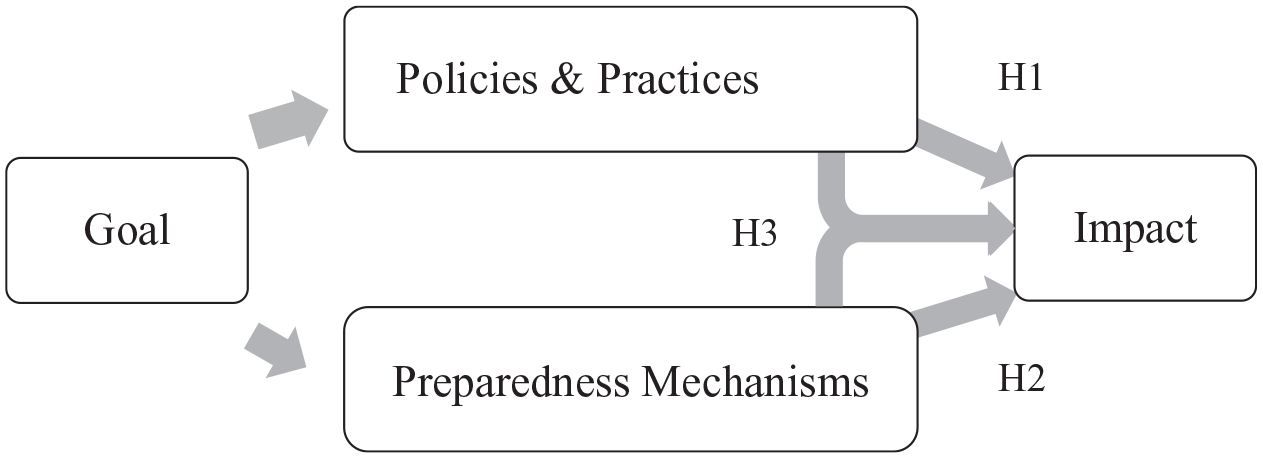
Protecting Human Rights Through Policies and Practices and/or Preparedness Attributes.
Data and Methodological Approach
We have developed a unique data set that examines corporate involvement in human rights violations in the oil and gas industry. With respect to the primary sources of data, we combine Sustainalytics data that captures firm policy and performance with a proprietary dataset of corporate human rights violations, the Global Corporations and Human Rights Database (Olsen, 2021a). We discuss each of these sources in greater depth below.
Sustainalytics is one of the largest socially responsible investment databases, containing almost 4000 global firms listed on the MSCI world index. Sustainalytics rates companies based on their disclosure and performance around environmental, governance and social issues, which makes it possible to compare multiple companies within an industry. We draw on data from Sustainalytics from 2010 to 2013 for the global oil and gas industry. 2 This is a critical period for BHR governance as it follows the adoption of the UN Protect, Respect and Remedy framework (Ruggie, 2008), covers the pre- and post-approval of the UNGPs, as well as the amended OECD Guidelines on corporate human rights responsibilities in 2011.
We combine the Sustainalytics data with the Global Corporations and Human Rights Database (GCHRD), which includes instances of corporate human rights violations by drawing from the most comprehensive and universal collection of such reports, housed at the Business and Human Rights Resource Center (BHRRC) (Wright, 2008). The GCHRD–the most comprehensive database of allegations of corporate human rights abuse–was created using supplementary sources to gather information on over 40 separate measures about each corporate human rights violation (Olsen, 2021a).
One might be concerned that the violations included in the GCHRD are unsubstantiated or false. First, the BHRRC, to avoid libel lawsuits, vets each incident to ensure its validity prior to posting it on their website. BHRRC employees, based around the globe, rely on reputable news sources with high journalistic integrity. If anything, relying on the BHRRC may be a cause of concern about underreporting, due to their rigorous standards. Second, the GCHRD team searched for additional information on each incident, again using only reputable news sources (e.g., LexisNexis Academic), thereby triangulating the violations curated by the BHRRC.
Finally, it is important to underscore that such incidents are not made public without risk—human rights advocates and victims are often quite vulnerable, especially in developing countries. In 2017 alone, more than 300 human rights defenders were murdered (Frontline Defenders, 2018). In Latin America, for example, two winners of the prestigious Goldman environmental prize were murdered—Isidro Baldenegro López, a leader of the Tarahumara community in Mexico and Berta Cáceres, a Honduran indigenous leader—despite their peaceful efforts to raise awareness against illegal mining and the hazards of an internationally-financed hydroelectric dam, respectively (The Guardian, January 18, 2018). Moreover, Reporters Without Borders highlight the seemingly constant threats, some deadly, journalists face across the globe. Those who bring such incidents to light, in other words, often take great risks in doing so. This also suggests that underreporting of incidents is more likely than the reporting of unsubstantiated events. Nevertheless, the BHRRC is recognized as a thorough and valuable source for reports of human rights abuses (Giuliani et al., 2014; Wright, 2008).
The GCHRD includes data on all countries, all sectors, and firms of all sizes. For the purposes of this article, however, we specifically focus on human rights violations by oil and gas firms operating in the developing world (e.g., countries in Central and South America, Africa, and Southeast Asia). The oil and gas industry is an interesting sector to study, as it has faced increased scrutiny around its human rights practices, after iconic cases such as Royal Dutch Shell’s complicity in the murder of Ogoni leaders in Nigeria or, more recent, accusations that security forces for Chevron and Total in Burma murdered locals and forced others to work unpaid (Chowdhury et al., 2021). As our key dependent variable, we aggregate 139 violations from the GCHRD that occurred during the timeframe of interest (2010–2013) into firm-year figures. As with all analyses, our data have certain limitations which we discuss more extensively in the discussion section.
Data Sample
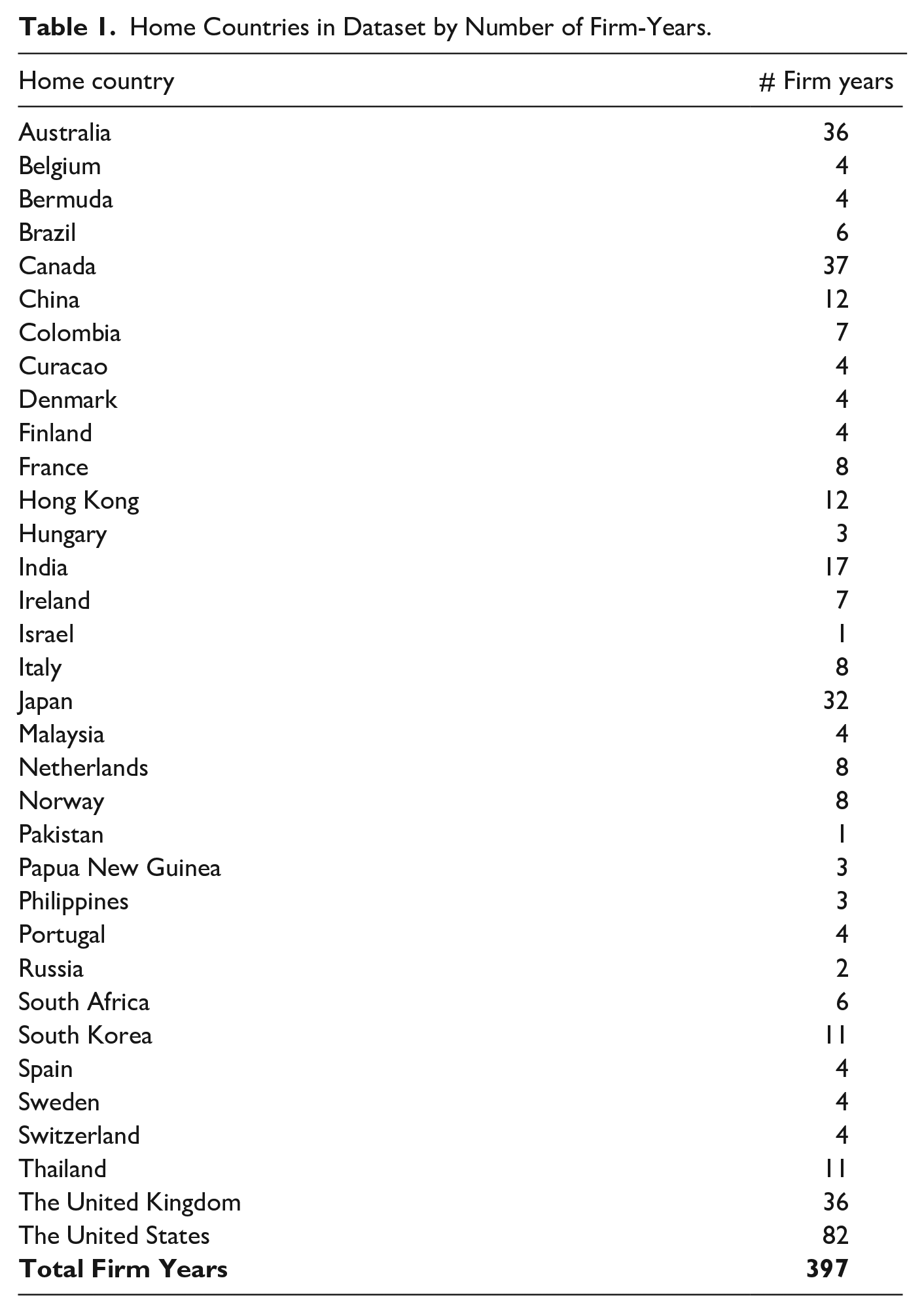
Our sample includes all oil and gas firms with operations in the developing world that have headquarters elsewhere and are included in the Sustainalytics dataset, as described above. Using the Sustainalytics data, we removed firms that only operate domestically as well as those that only operate in developed countries. While we acknowledge that human rights violations also occur in developed countries, we focus on instances of violations in developing countries since this is where the majority of human rights violations occur (Ruggie, 2008) in the oil and gas firms industry. After matching the Sustainalytics and GCHRD, our panel dataset included 121 unique firms and 397 firm-years between 2010 and 2013. This sample includes 139 instances of corporate human rights abuse during the timeframe of interest, which are then aggregated into 67 of the 397 firm-years. 3 The bulk of the firms in the dataset (organized by firm-year) are based in developed countries in North America, Europe, or Asia (Table 1), whereas violations occur throughout the developing world where levels of risk vary substantially (Table 2).
Home Countries in Dataset by Number of Firm-Years.
Host Countries and Number of CAAs in Dataset with OECD Country Risk Rating Range During Data Period.
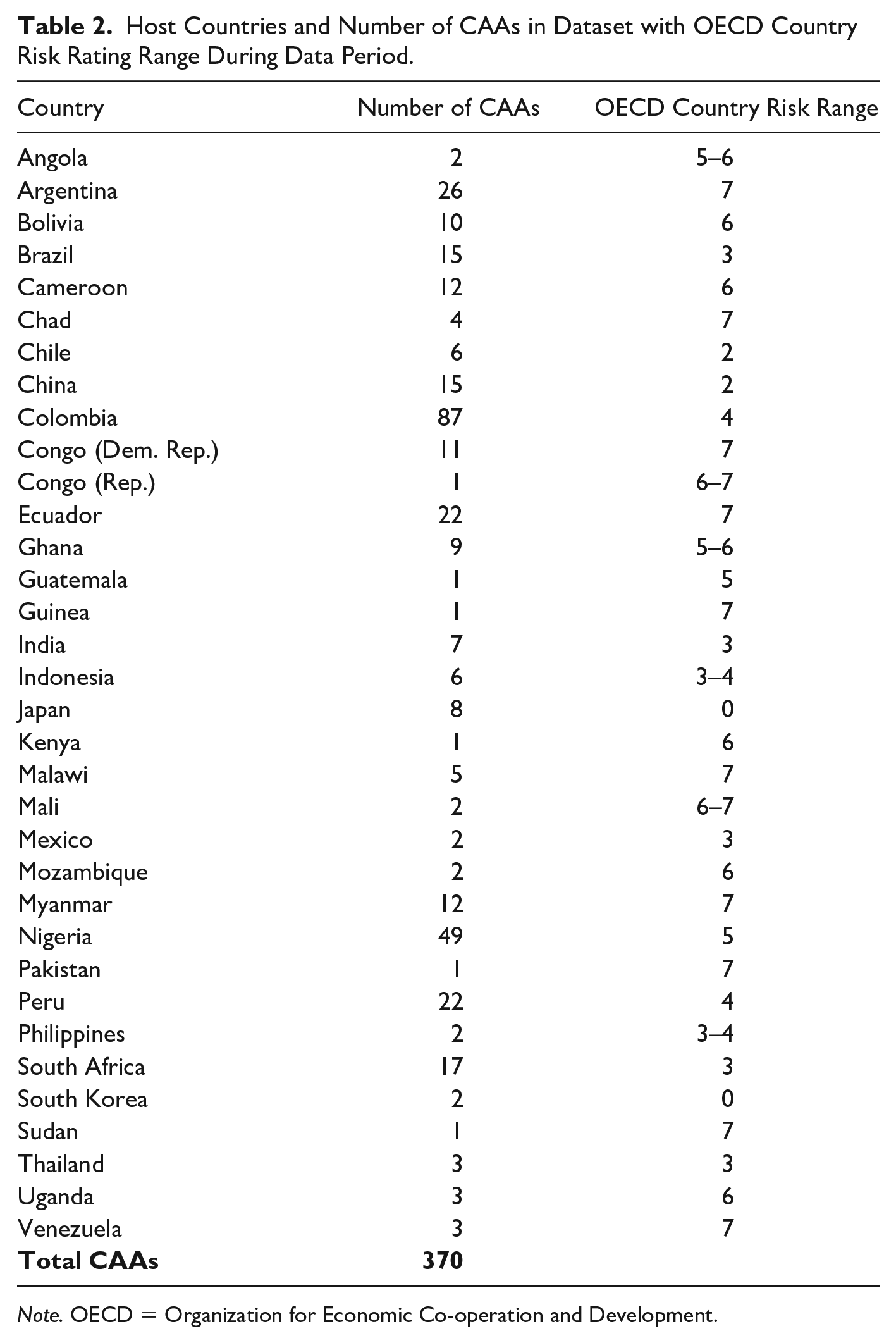
Note. OECD = Organization for Economic Co-operation and Development.
Variable Descriptions
Our dependent variable (Abuse) is an indicator variable that denotes whether a firm was involved in a physical integrity abuse in a specific firm-year. Physical integrity abuses are the most serious forms of human rights violation, including murder, disappearance, illegal detention or torture. 4
Our key independent variables relate directly to the hypotheses outlined above. Tables 3 and 4 include the correlation matrix and summary statistics for the data used in this analysis.
Correlation Table.
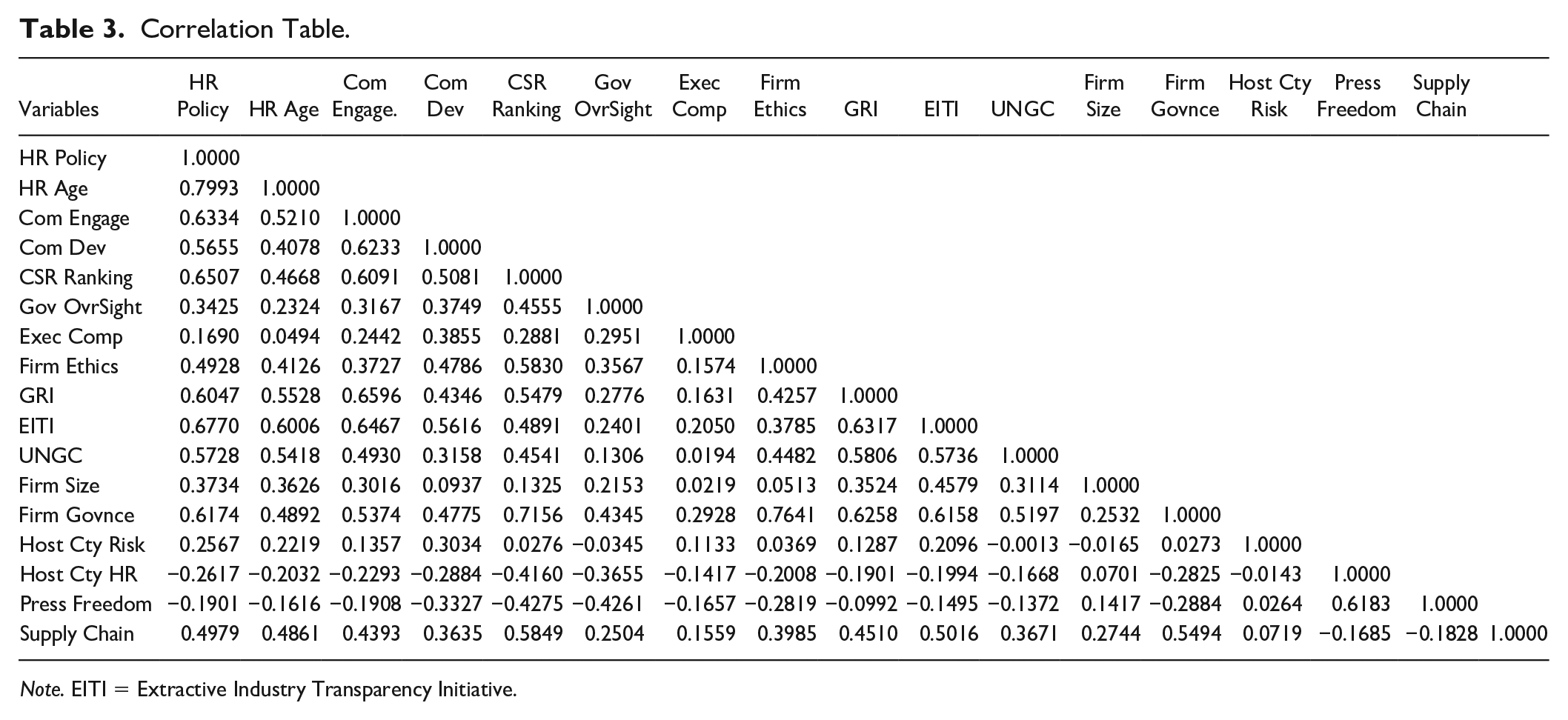
Note. EITI = Extractive Industry Transparency Initiative.
Descriptive Statistics.
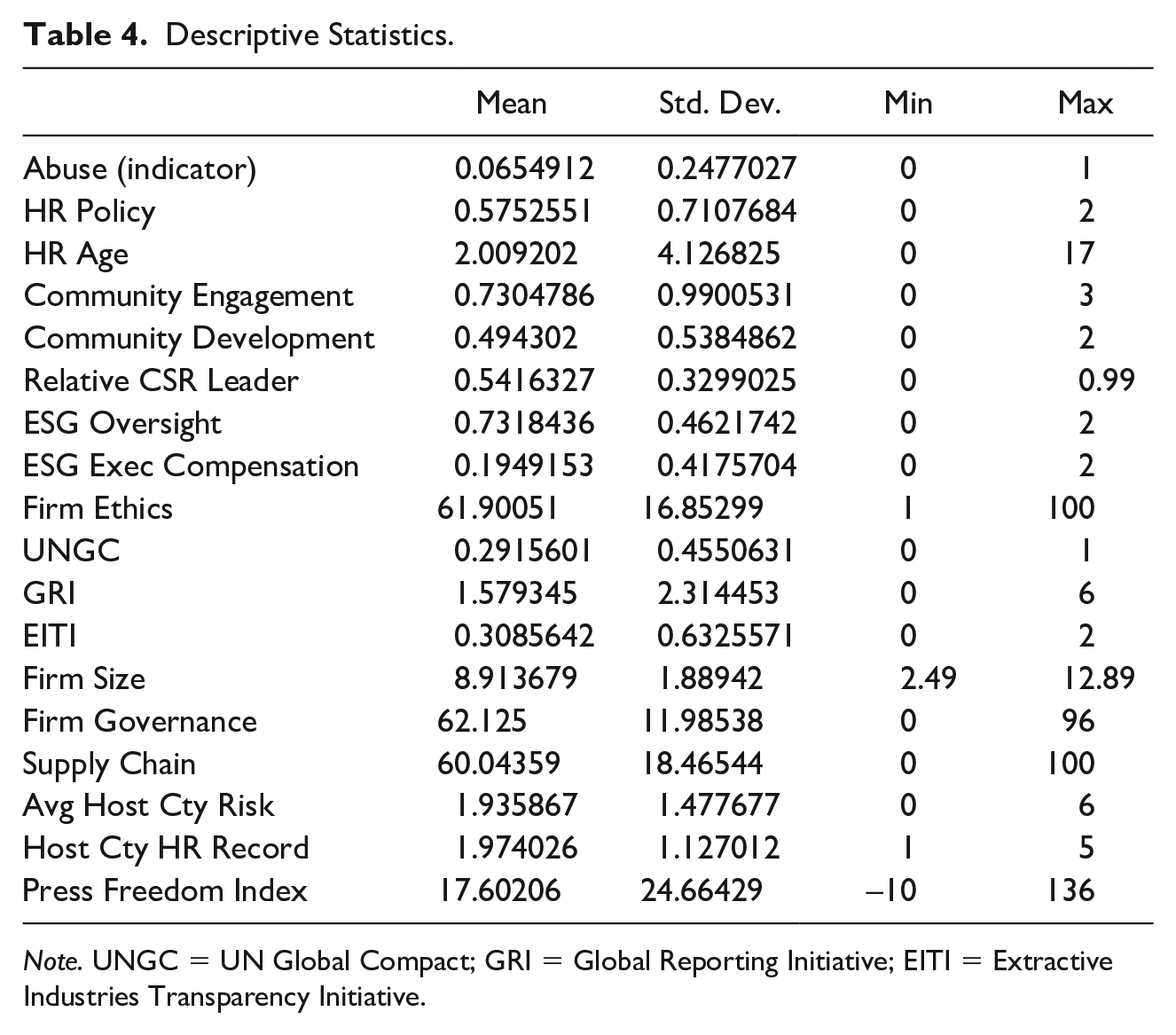
Note. UNGC = UN Global Compact; GRI = Global Reporting Initiative; EITI = Extractive Industries Transparency Initiative.
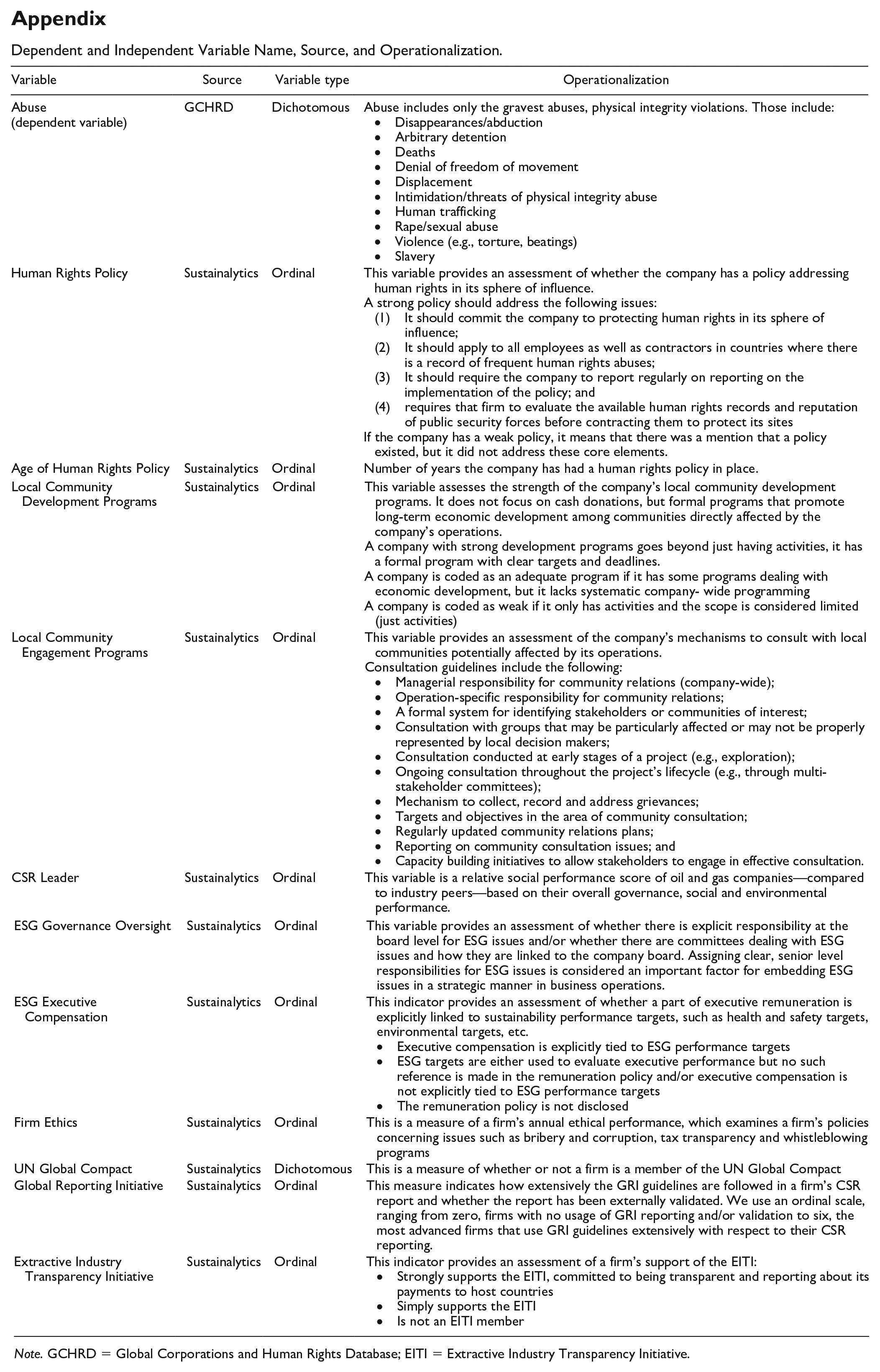
The first set of variables assess a firm’s substantive commitment for adopting policies and practices which should be helpful in curtailing human rights abuses (H1). Previous research suggests that internal social policies and practices will influence corporate behavior, and thus, the likelihood corporations will be involved in human rights violations. Sustainalytics designates a human rights policy (HR Policy) as “strong” or “weak” and notes when the company has no human rights policy. We used this information to create an ordinal variable, accordingly, for each firm-year, in which 0 represents no policy, 1 a weak policy, and 2 a strong policy. To have a strong human rights policy, the policy must: (a) commit the company to protecting human rights in its sphere of influence; (b) apply to all employees as well as contractors in countries where there is a record of frequent human rights abuses; (c) require the company to report regularly on the implementation of the policy; and (d) require the firm to evaluate the available human rights records and reputation of public security forces before contracting them to protect its sites. The company should also communicate its human right policy to security forces and express its desire that security be provided with adequate and effective training on this policy. In addition to the strength of the policy, we also examine how the age of a firm’s human rights policy affects corporate human rights abuses. This variable (HR Policy Age) indicates the number of years that a firm has had a stand-alone human rights policy. We also assess the interaction between enduring and high-quality policy (HR Policy Age × HR Policy).
Our next hypothesis, assesses whether specific mechanisms—systemic mindset, internalization, and global engagement—shape the likelihood firms will commit human rights abuses (H2). To assess the role of a firm’s systemic mindset, we draw from additional data in Sustainalytics and include Community Engagement and Local Community Development. Both variables indicate that when the firm interacts with local stakeholders and community members, it should gain a better understanding of the broader systemic issues that may lead to more severe human rights abuses. This knowledge, in turn, should enhance the firm’s ability to respond to specific human rights challenges in that geographic context. Sustainalytics designates community engagement as strong, adequate, weak, or nonexistent programs. Strong community engagement implies that the firm has detailed community consultation guidelines, consisting of, but not limited to managerial responsibility for community relations, formal systems for identifying stakeholders or communities of interest, early and ongoing consultation, capacity building for stakeholders, and more. For this variable, we used the Sustainalytics data to create an ordinal variable, accordingly, for each firm-year, in which 0 represents no policy, 1 a weak policy, 2 an adequate policy, and 3 a strong policy. Local Community Development Programs evaluates the strength of the company’s local community development programs. It does not focus on cash donations, but formal programs that promote long-term economic development among communities directly affected by the company’s operations. For this variable, we again used Sustainalytics information to create an ordinal variable, accordingly, for each firm-year, in which 0 represents no policy, 1 a weak policy, and 2 a strong policy.
To assess whether the internalization of these practices shape corporate human rights abuses, we include several variables that shed light on the extent to which firms embed broader human rights goals within the firm. We include four independent variables to assess internalization, all of which are from Sustainalytics: CSR Leader, ESG Governance Oversight, ESG Executive Compensation, and Firm Ethics. CSR Leader is a measure of the relative social performance of an oil and gas company—compared to industry peers—based on its overall governance, social and environmental performance. ESG Governance Oversight helps us better understand how corporate governance, as a measure of internalization, shapes means-ends decoupling. This indicator provides an assessment of whether there is explicit responsibility at the board level for ESG issues and/or whether there are committees dealing with ESG issues and how they are linked to the company board. Assigning clear, senior level responsibilities for ESG issues is considered an important factor for embedding ESG issues in a strategic manner in business operations. ESG Executive Compensation is an ordinal variable that indicates whether ESG performance is tied to the firm’s top management. Firms rated most highly, coded as 2, explicitly tie executive compensation to ESG performance targets. When ESG management is tied to compensation, top management should be incentivized to be more responsive to ESG concerns, and thus, engrain a culture of caring about social issues. Firm Ethics, a score ranging from 0 to 100 drawn and from Sustainalytics, assesses a firm’s annual ethical performance by examining a firm’s policies concerning issues such as bribery and corruption, tax transparency, and whistleblowing programs.
Finally, to understand the holistic nature of preparedness, we also seek to understand the role global institutions might play in this process. We use data from Sustainalytics as to whether firms participate in three specific international organizations. Engagement in these organizations is a signal of a firm’s commitment to universal principles concerning human rights and social responsibilities. The UN Global Compact is a dichotomous variable, coded as a 1 if the firm is a member or a 0 if it is not a member of this organization. The Global Reporting Initiative indicates how extensively firms follow the GRI guidelines in their CSR reports and whether their reports have been validated by a third-party. We use an ordinal scale, ranging from 0, for firms with no usage of the GRI indicators and/or any type of CSR reporting, to 6, for the most advanced firms who have sophisticated CSR reporting systems that include external assurance for a firm’s overall capacity and capability in reporting. And, specific to oil and gas, we also include whether firms are members of the Extractive Industry Transparency Initiative (EITI). We use an ordinal scale based on Sustainalytics data to distinguish if a company is not an EITI member (0), simply supports the EITI (1), or if it strongly supports the EITI and is committed to being transparent and reporting about the payments it makes to host countries (2).
For the preparedness construct, we use factor analysis to develop a comprehensive index variable that includes measures that are representative of the systemic mindset, internalization, and global engagement. Factor analysis is a process that captures a latent variable that cannot be directly measured with a single variable (e.g., concepts such as intelligence, or wellbeing would also be measured in this way). We use factor analysis, as opposed to principal component analysis, because our theoretical approach suggests preparedness captures something unique, as opposed to assessing the individual effect of each variable. Factor analysis confirms this as the Kaiser criterion suggests only to retain those factors with eigenvalues equal or higher than 1. This is because the eigenvalue of more than 1 means that the factor explains more variance than the individual variables alone. The eigenvalue for preparedness is 3.834, which includes community engagement, local community development programs, relative CSR industry ranking, EGS governance, executive compensation, Global Reporting Initiative, EITI, and UN Global Compact membership.
The third and final hypothesis (H3) suggests that policy and preparedness, together, will shape the likelihood of human rights abuse. Thus, this hypothesis tests the interactions between a firm’s policy (quality and age) and preparedness measures on its human rights impacts. The correlation matrix and descriptive statistics are included in Tables 3 and 4.
Control Variables and Model Specification
Given the complexity of human rights issues, as referenced throughout the article, other factors besides those identified in our hypotheses are apt to contribute to the likelihood that firms will be involved in human rights violations. For this reason, we control for several factors identified in the prior literature as being relevant to a firm’s human rights orientation. The inclusion of these control variables allows us to better isolate the effect of firm policy or preparedness on involvement in human rights violations.
We include control variables that provide insights about the predisposition of the firm for aligning policy and practice. We also control for basic differences across firms. Firm size, for example, has been shown to impact a company’s CSR activity in a variety of studies (Block & Wagner, 2014; Ioannou & Serafeim, 2012; Strike et al., 2006). We define and calculate the control variable Firm Size as the logged value of a firm’s total employees. These data are drawn from BvD/Orbis, which has the most comprehensive firm-level data on public and private firms around the globe. Further, with regards to firm-characteristics, we also include an indicator on the strength of corporate governance (Firm Governance), which is drawn from Sustainalytics. We also use an indicator of Contractors and Supply Chain provided by Sustainalytics.
The literature recognizes that human rights abuses are more likely to occur in countries with weak institutional settings (Vadlamannati et al., 2020). Thus, we control for the Average Host Country Risk, which the authors created from the OECD Country Risk Classification. Given that the firms in our dataset operate in multiple countries, we created an aggregate score per firm-year, adding the risk from every country in which the firm operates according to the firm’s annual report for a given firm-year from 2009 through 2013. We then averaged the risk score per firm-year by dividing the aggregate risk score by the number of countries in which the firm operated. The OECD Country Risk Classification assesses country risk in terms of force majeure (including war, expropriations, revolution, civil disturbance) and transfer and convertibility risk. We also include the Host Country Human Rights Record, using data from the Political Terror Scale, which measures political violence that a country experiences in a particular year based on a 5-point scale drawn from information provided by Amnesty International. Finally, we know that abuses are less likely to be reported in countries with restricted freedom of the press. Thus, we also include the Press Freedom Index, which reflects the degree of freedom journalists and news organizations have in each country, over time, which is a ranking created by Reporters Without Borders.
We analyze our panel dataset using a time-series logit model (xtlogit in Stata), as our dependent variable (Abuse) is dichotomous. The logit function provides us with the probability that a violation will occur. Note that because of the over-dispersion of the data, a Poisson model did not meet the goodness of fit test and is not appropriate for our data. In addition, we are using a random effects model because some of our control variables do not vary over time. We present the results for each hypothesis below, utilizing the same set of controls.
Results
Our first set of findings assess whether a firm’s substantive commitment to human rights issues shapes its ability to avoid human rights abuses. Our first hypothesis (H1) draws from the decoupling research to suggest that human rights policies, and in particular the age of the policy, should decrease the likelihood firms will commit an abuse. Our results, as illustrated in Figure 2, do not confirm this hypothesis and, instead, show that those firms that have had human rights policies for longer are about 8% more likely to commit a human rights abuse (Table 5, Model 3). While this might be counter-intuitive to those who advocate for firms to adopt human rights policies, this initial finding supports the means-ends decoupling literature. This includes any human rights policy, however, and not necessarily an enduring, high-quality policy. Thus, we also assessed the effect of an enduring, high-quality policy and find that those firms with high-quality policies over the long-term are less likely to commit human rights abuses (Table 5, Model 4). Figure 3 provides an illustration of the marginal effects of an interaction term between the age of a firm’s human rights policy and the quality of that policy. We find that high-quality policies that endure decrease the likelihood of abuse.
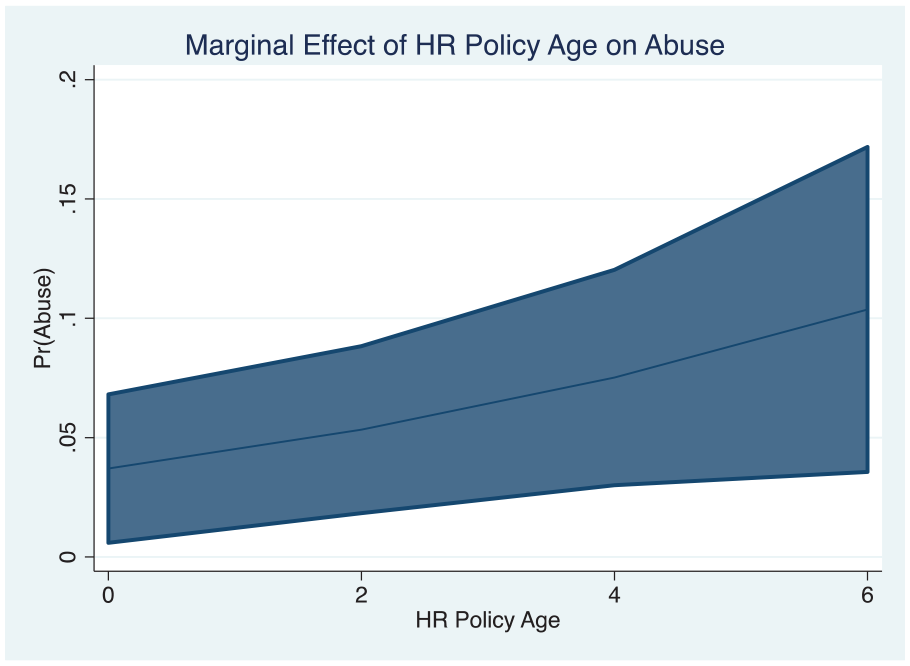
Marginal effect of human rights (HR) policy age on abuse (H1).
Baseline Model and the Policy Approach (H1).
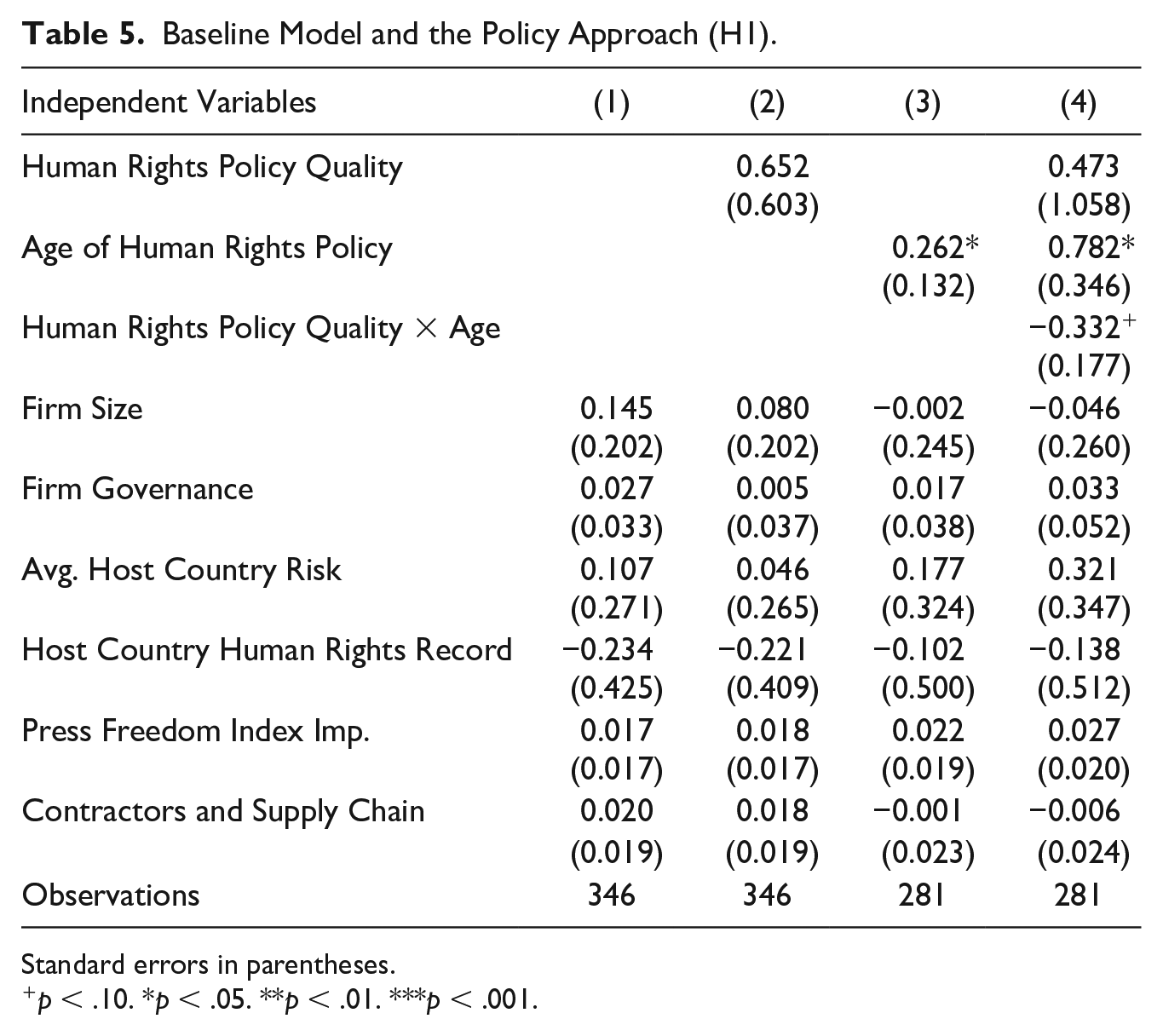
Standard errors in parentheses.
p < .10. *p < .05. **p < .01. ***p < .001.
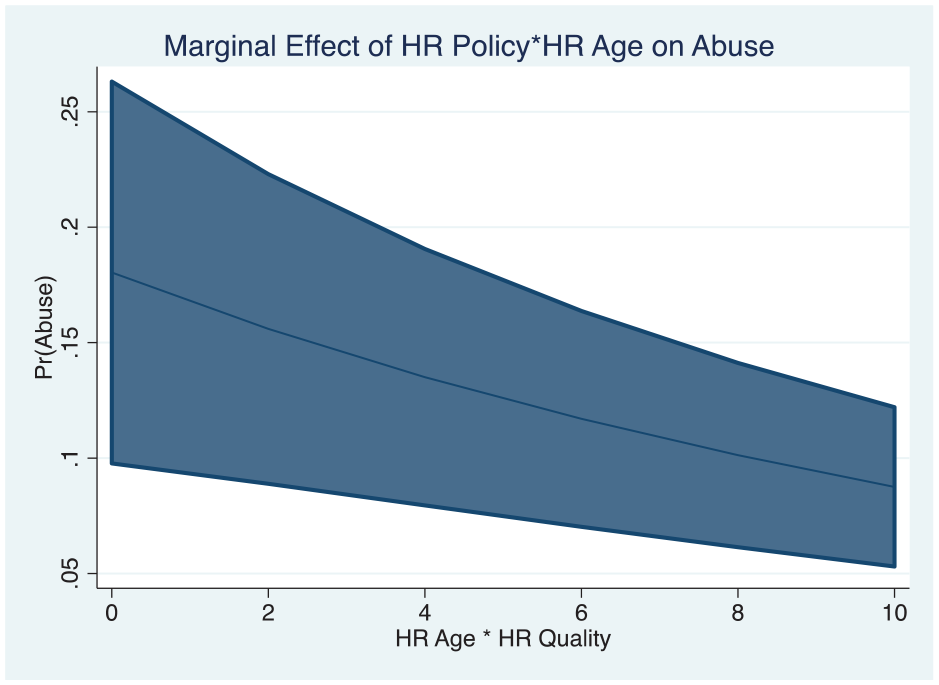
Marginal effect of human rights (HR) Age × HR quality on abuse (H1).
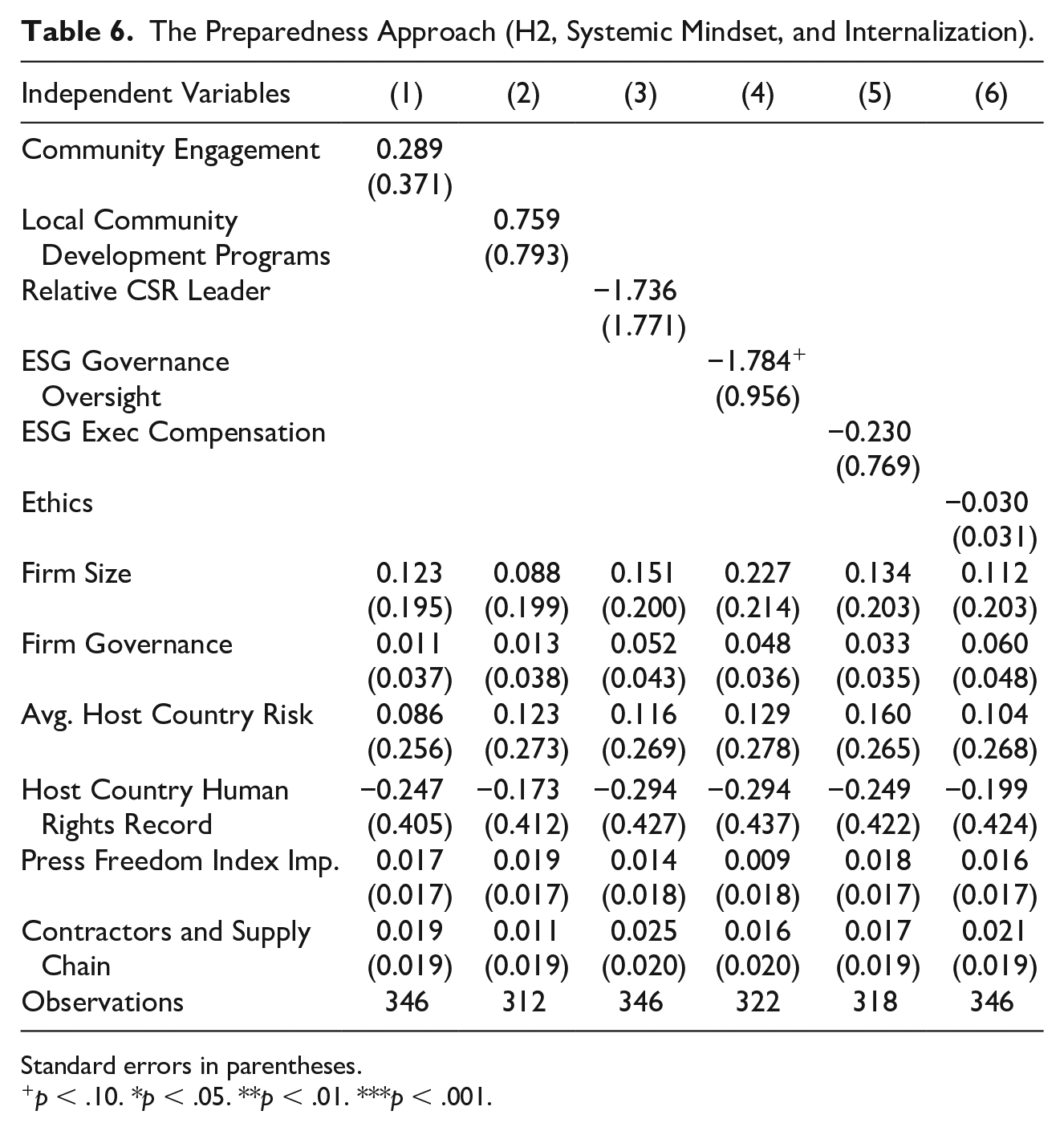
Our second hypothesis suggests that any attribute of preparedness—systemic mindset, internalization, or global engagement—will facilitate a reduction in human rights abuses. We assess each attribute separately, however, our analysis does not confirm this hypothesis. Rather than reducing the likelihood of human rights abuse, these aspects of preparedness—when assessed individually—have no effect or may even increase the likelihood of abuse. In exploring the effect of systemic mindset, we find that a firm’s community engagement and focus on developing local communities do not have any impact on human rights abuses (Table 6, Models 1 and 2). These findings support some of the recent discussions that oil and gas firms do not do a good job socially integrating into their host communities (Janz, 2018).
The Preparedness Approach (H2, Systemic Mindset, and Internalization).
Standard errors in parentheses.
p < .10. *p < .05. **p < .01. ***p < .001.
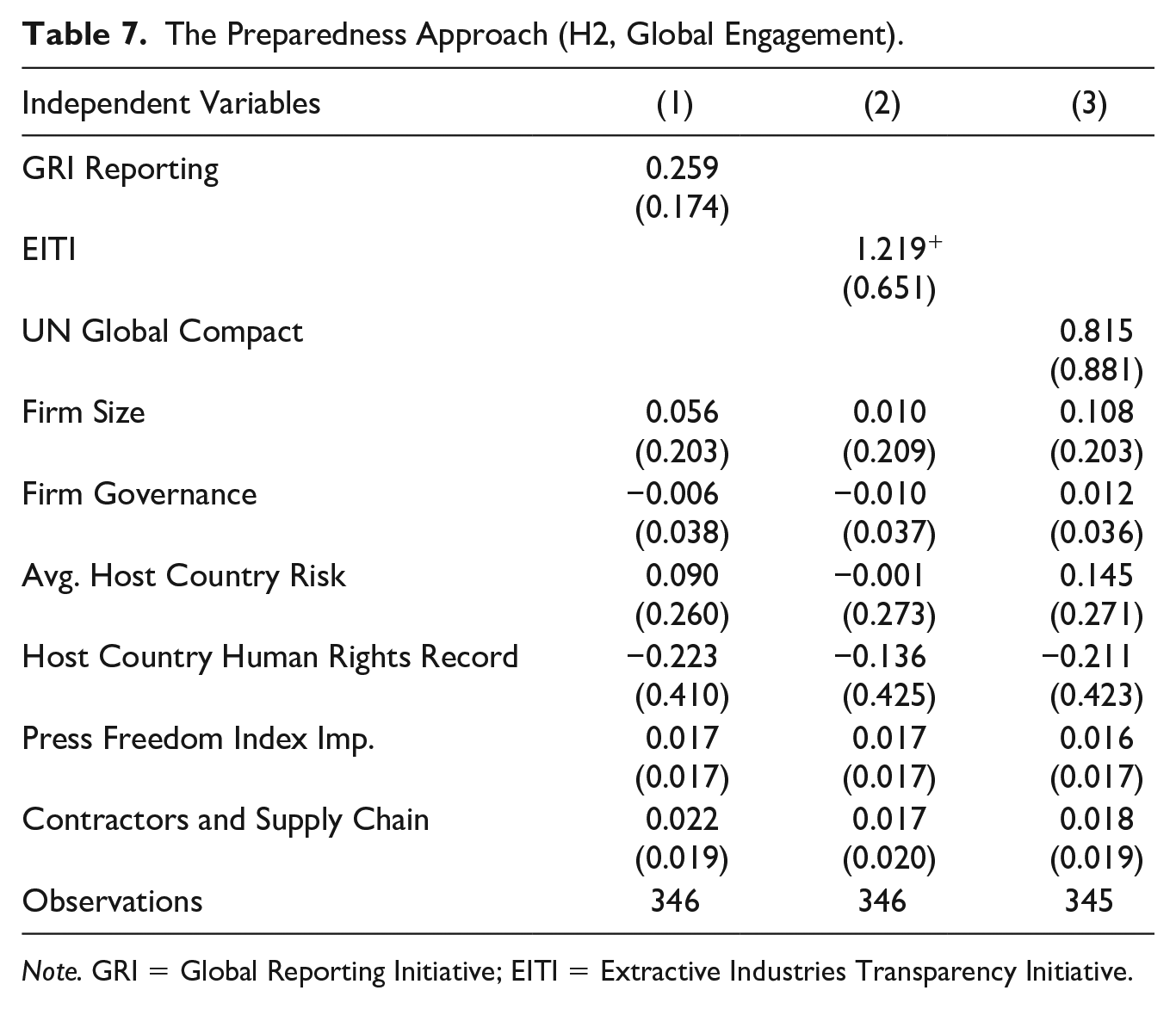
With regard to the internalization mechanism, CSR ranking, executive compensation, and firm ethics have no impact on the likelihood of abuse. The only exception to this finding is ESG Governance, which decreases the likelihood firms will commit a human rights abuse. This is an interesting finding in that it gives credence to the importance of board oversight in reducing means-ends decoupling with respect to human rights (Table 6, Model 4). ESG Governance reduces the likelihood of a human rights abuse by about 13% (Figure 4) suggesting that having corporate governance interested in social issues may help to shape more effective responses to human rights challenges. This hypothesis also suggests that global engagement should help companies improve their human rights record. Our findings, however, show the contrary—those firms that engage with the EITI are more likely to commit a human rights abuse, as illustrated in Figure 5 (Table 7, Model 2). Neither UN Global Compact membership nor adhering to the Global Reporting Initiative had an impact on the likelihood that a firm will commit a physical integrity abuse (Table 7, Models 1 and 3).
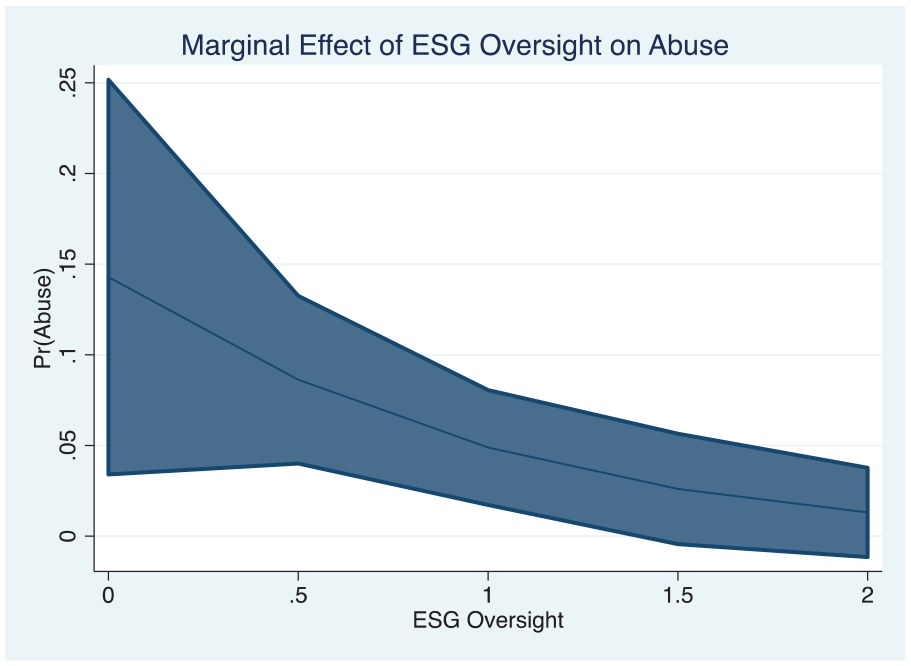
Marginal effect of environment, social, and governance (ESG) board oversight on abuse (H2).
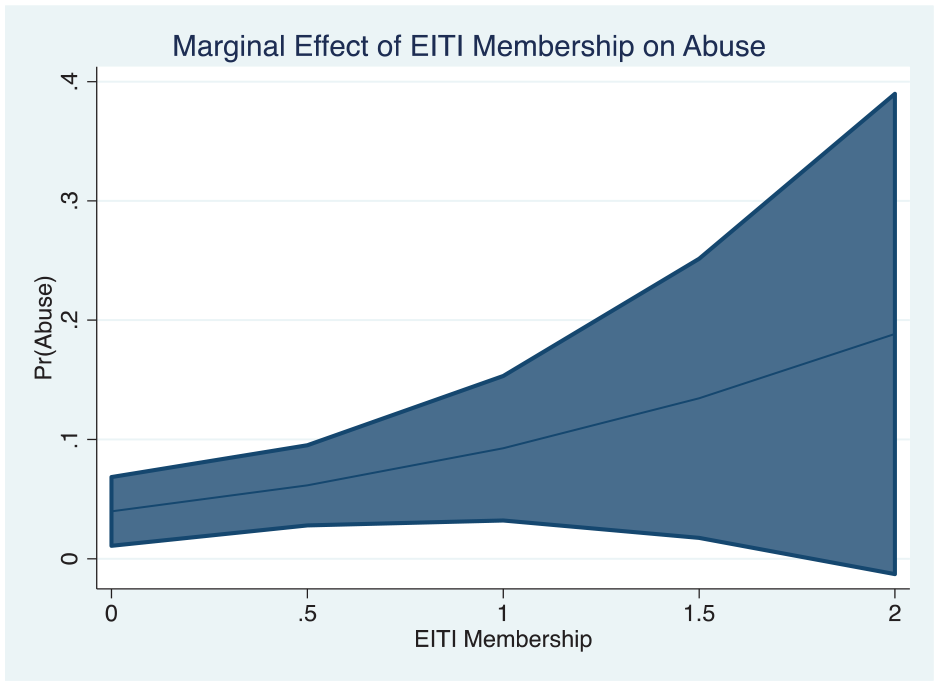
Marginal effect of extractive industry transparency initiative (EITI) membership on abuse (H3).
The Preparedness Approach (H2, Global Engagement).
Note. GRI = Global Reporting Initiative; EITI = Extractive Industries Transparency Initiative.
For our final hypothesis (H3), we suggest that preparedness, in combination with a firm’s human rights policy, is needed to effectively reduce the likelihood of a human rights abuse. For this hypothesis, we analyze the attributes of preparedness in their entirety, rather than separately. Although, systemic mindset, internalization, or global engagement do not independently impact corporate conduct, when they are viewed in their entirety and combined with a human rights policy for a lengthier time period then, together, they are effective. Our final table illustrates that preparedness alone increases the likelihood of a human rights abuse (Table 8, Model 1), and the interaction between preparedness and HR Policy has no effect on the likelihood that a firm will commit human rights abuses (Table 8, Model 2). However, as illustrated in Figure 6, when we take into account the time in which a firm has had to integrate its human rights policy, in combination with preparedness, we find that those firms are able to reduce the likelihood of human rights abuses by approximately 14% (Table 8, Model 3). Thus, our findings support this hypothesis.
Policy and Preparedness (H3).
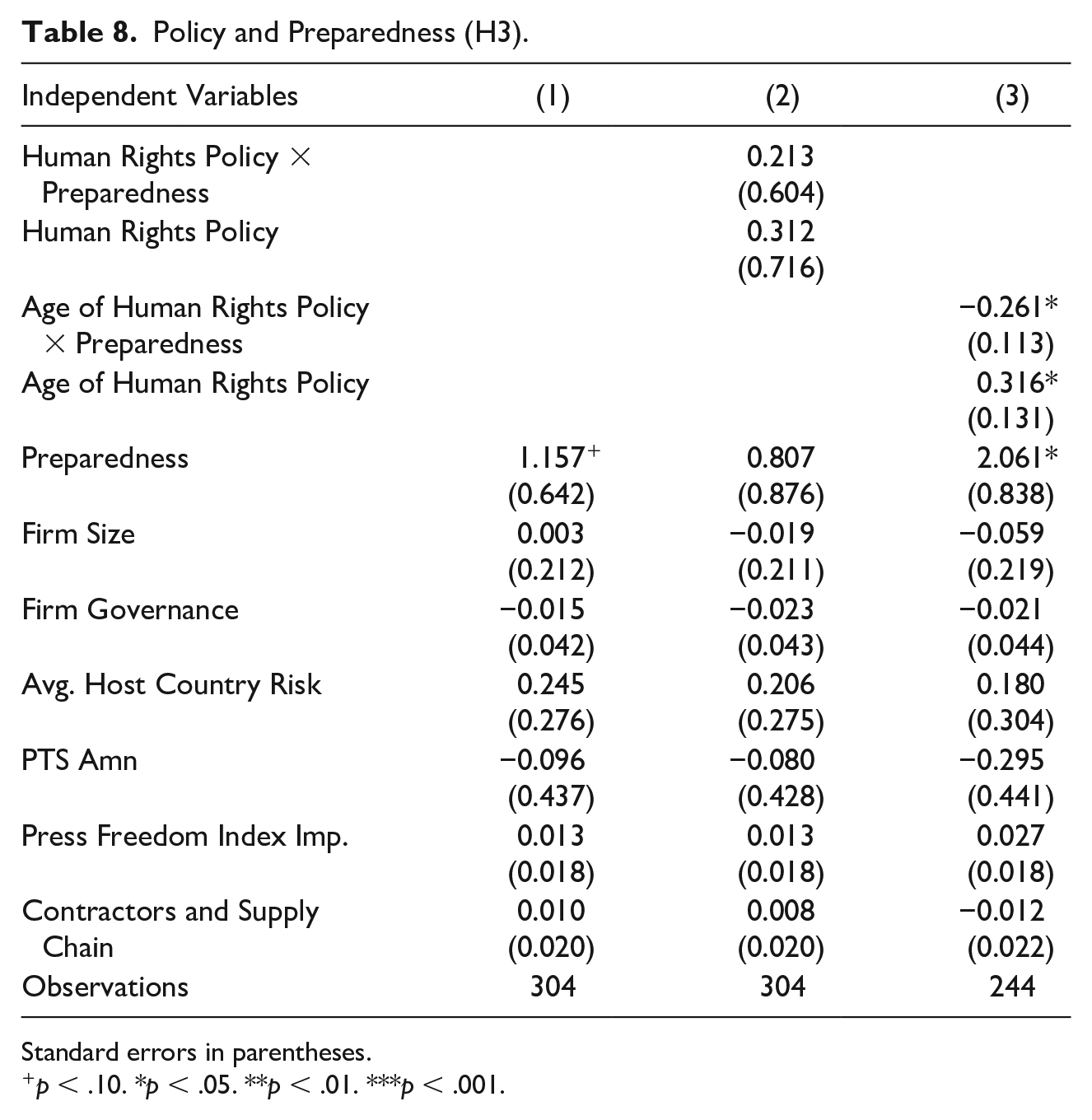
Standard errors in parentheses.
p < .10. *p < .05. **p < .01. ***p < .001.
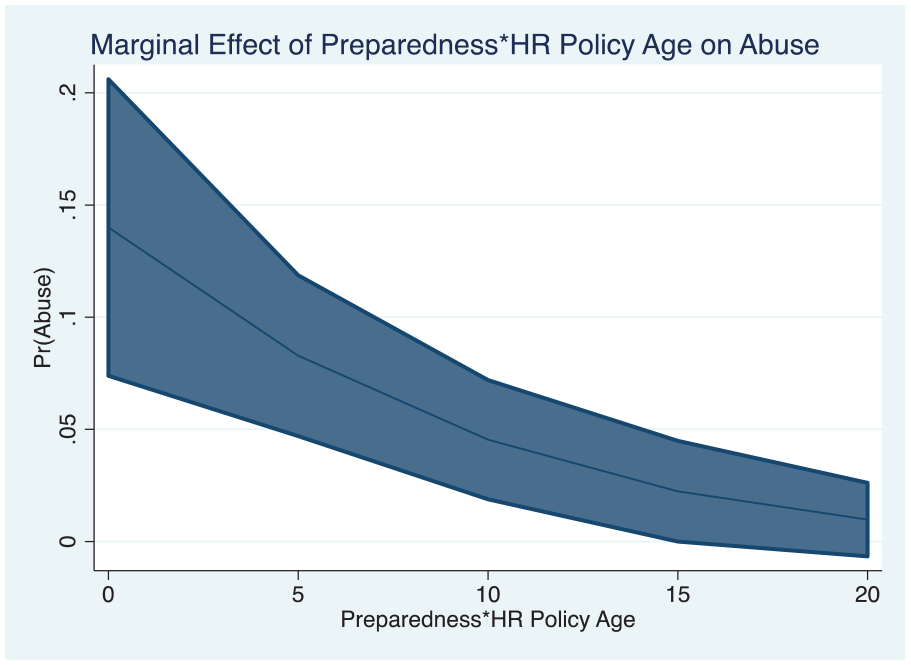
Marginal effect of preparedness and policy age on abuse (H3).
Discussion and Conclusion
Drawing from the decoupling literature, and specifically means-ends decoupling research, this article provides new empirical insights that address the following research questions: do oil and gas firms’ human rights policies achieve the goal of reducing human rights violations? If not, which mechanisms—such as systemic mindset, internalization and global governance—can reduce the gap between a firm’s policy efforts and a reduction in human rights abuses? With respect to the first question, our empirical findings suggest that when firms have high-quality and enduring human rights policies then they are able to mitigate the means-ends decoupling and are less likely to commit human rights abuses. These results convey a dynamic element associated with addressing means-ends decoupling which corresponds with the idea that firms may be muddling through to align their policies with practices, to achieve the intended outcome (Crilly et al., 2012). Firms may have initially implemented their human rights policies for defensive reasons (McDonnell et al., 2015), but overtime policies evolve and more firm resources may be devoted to practices associated with the human rights policies. Given the complexity of human rights issues, it is likely that subsidiary managers may need time to understand the intricacies of the local context, such as the concerns of local stakeholders, community members, and/or local NGOs. After recognizing all the stakeholders involved and their roles, then a firm may be able to reach a more informed consensus about the types of human rights actions that will be the most impactful (Crilly et al., 2012; Hahn et al., 2014).
Next, we examined the attributes of a preparedness approach, defined as a specific firm’s capabilities, practices, and engagement with social issues, that could independently reduce human rights violations. Overall, our empirical evidence indicates that preparedness attributes when analyzed individually, have little to no impact on reducing physical integrity abuses. With respect to systemic mindsets, firms that are extensively involved in the local communities where they are conducting business, either through community engagement and/or economic development, do not reduce the likelihood of physical integrity abuses. We also find that even when firms have more embedded CSR practices (with the exception of ESG governance), there is also no significant impact on human rights efforts. In terms of a global engagement, a firm’s participation in MSIs, which is thought to increase business understanding and adaptation to new norms of conduct (Buhmann, 2019), instead, increases the likelihood of physical integrity abuses. Especially puzzling is the result that firms with EITI membership are associated with a worse human rights record. Firms that are members of the UN Global Compact and adhere to the Global Reporting Initiatives also seem to fall short when it concerns human rights, as firms in these initiatives are no better or worse than non-member competitors. These results imply that, individually, these supposedly helpful corporate behaviors, such as joining human rights initiatives, might be prone to misuse; adopted to signal activity without supporting the crucial aim of human rights protection (Olsen et al., 2020).
In contrast to the second hypothesis about specific preparedness attributes, our next set of empirical results provide a clearer path for firms about how to mitigate the gap that may occur when policies and practices are decoupled from creating a positive societal impact. The empirical analysis shows that firms that have human rights policies over the long-term and have high marks of preparedness are more likely to avoid gross human rights abuses in opaque environments. The results also emphasize the importance of preparedness when the attributes are viewed in their entirety, a conjecture is that systemic mindset, internalization and/or global engagement reinforce one another to make a firm more responsive to human rights challenges. As we stated earlier, it may take time for firms to understand the societal factors that contribute to human rights issues, to surmount the structural problems that exist in the industry, developing meaningful community relationships and productive relationships with the host government (Hahn et al., 2014).
What we can conclude is that this empirical finding helps shed light on the ongoing debate about the relationship between BHR and CSR (Buhmann & Wettstein, 2017; Obara & Peattie, 2018; Ramasastry, 2015 Wettstein, 2012, 2020). A firm cannot sufficiently address human rights challenges by solely relying on policies alone or specific preparedness attributes. Concurring with Wettstein’s (2020, p. 23) recent claim that “BHR should be viewed as a critical response to CSR,” our results suggest that firms can only leverage what we call preparedness-oriented practices when they are combined with human rights policies in the long-term. Wettstein (2020) emphasizes that when firms are seriously committed to protecting human rights, then they can provide more clarity about issues that firms may have been reticent to address with their CSR policies. Human rights policies that draw from widely agreed upon universal principles are needed to move a firm’s CSR practices beyond a business case rationale for human rights challenges which may only establish a minimal standard of expected behavior (Obara & Peattie, 2018).
Furthermore, our empirical findings may also have some important implications for BHR research, in terms of adhering to the UNGPs which are very specific about the types of policies and risk based due diligence steps that firms need to employ (Ramasastry, 2015). According to the recent results of the Corporate Human Rights Benchmark (2019), benchmarked firms are still falling short in terms of meeting these specified standards. In fact, more than half of the benchmarked firms are scoring less than 20% in terms of meeting the UNGP requirements, and a significant number of the benchmarked firms are not improving over time. These results suggest that for firms to further their progress, they may need to look in more depth at the strength of their human rights policies and consider if there are preparedness mechanisms that can help to reduce human rights abuses.
While this article makes contributions to mean-ends decoupling theory by identifying the reinforcing dynamics in the relationship between long-term policy efforts and preparedness capabilities, there are still limitations associated with the study. One limitation is that we only analyze one type of human rights abuse, physical integrity abuse, one of the most egregious types of human rights. Empirically, when firms combine human rights policies with preparedness then they are more likely to avoid committing the most egregious types of abuses. This finding is in line with previous scholarship, which suggests that firms may have more of an incentive to address the most serious types of human rights abuses due to fears of reputational and financial losses (Fiaschi et.al., 2012). In fact, in Fiaschi, Giuliani, Macchi and Perrone’s (2012) analysis, they find that firms are less likely to respond to other types of human rights abuses because the repercussions may be much less severe. Another limitation of the study is the recognition that we are only analyzing first-order effects of physical integrity abuses; we do not consider the enduring trauma or the de-stabilization of community members, that might persist in marginalized communities after these types of violent incidents occur (Chowdhury, 2021a, p. 13).
Finally, our analysis is corporate centric in terms of responses to human rights abuses and does not address the types of remedies that may or may not have occurred. To solve complex human rights issues (wicked problems), more research is needed to analyze effective responses for human rights abuses which are likely to include more systemic and multi-stakeholder approaches, and more input from marginalized communities (Chowdhury, 2021a; Khan et al., 2010). Recent critiques about institutional arrangements at the national and global level (Chowdhury, 2021a; Khoury & Whyte, 2017) suggest that global governance may be a weak guidepost for firms in terms of shaping responses to human rights challenges. Khoury and Whyte (2016) argue that international human rights agreements such as the UN Global Compact and the UN Guiding Principles have tended to prioritize MNC rights over those of community members. Recent research concurs with this viewpoint emphasizing that marginalized members of local communities tend to be dominated by more powerful actors including government agencies, MNCs such as the oil and gas firms as well as Western aid agencies (Chowdhury, 2021b, p. 2). Drawing from this recent research, it may be that even when firms adhere to global governance, they are perpetuating structural inequities, and restricting marginalized groups “from expressing their grievances against injustices” (Chowdhury, 2021b, p. 4).
While this research makes several important contributions, it also raises questions for future research. First, do these findings hold over a longer timeframe? Though our analysis examines the activities of oil and gas firms for four years during an important period of BHR development, a longer window may be necessary to assess how well policies are working to resolve human rights issues in the long-term. Although we capture some temporal variations with respect to the age of a firm’s human rights policy, we are unable to observe whether or how human rights initiatives combined with preparedness mechanisms pay off over an even longer timeframe.
Second, our research questions require our analyses be at the firm-level, so it was beyond the scope of this study to examine the characteristics of each host country in depth. It is important, however, to have a better understanding of the role of the state in overseeing human rights abuses as well as more research about how the oil and gas firms interact with the host governments. Recent research (Maher et al., 2019, p. 1170) emphasizes the “continued importance and relevance of the organized state” indicating a range of roles that host governments may employ in terms of interacting with mining companies and communities. At times, the host government may exercise direct influence through administrative and/or judicial rulings and at other times, play a much more passive role (Maher et al., 2019, p. 1184). Finally, this study examines an industry that has a high number of human rights violations (Ruggie, 2008), so additional research is needed to determine if these empirical findings are generalizable across other industries conducting business in developing countries.
Conclusively, this study identifies that firms can reduce the likelihood of physical integrity abuses by ensuring that human rights policies, over time, are reinforced by preparedness capabilities. While the focus of this study is on reducing human rights violations in the oil and gas sector, some of the methods for reducing means-ends decoupling may be generalizable to other circumstances where human rights challenges are incurred. These findings make an important contribution to the burgeoning research on BHR; they also provide thought-provoking insights for the developing scholarship on means-ends decoupling. Future studies in both of these research streams will help inform whether and how these results transfer to other settings.
Footnotes
Appendix
Dependent and Independent Variable Name, Source, and Operationalization.
| Variable | Source | Variable type | Operationalization |
|---|---|---|---|
| Abuse (dependent variable) |
GCHRD | Dichotomous | Abuse includes only the gravest abuses, physical integrity violations. Those include: • Disappearances/abduction • Arbitrary detention • Deaths • Denial of freedom of movement • Displacement • Intimidation/threats of physical integrity abuse • Human trafficking • Rape/sexual abuse • Violence (e.g., torture, beatings) • Slavery |
| Human Rights Policy | Sustainalytics | Ordinal | This variable provides an assessment of whether the company has a policy addressing human rights in its sphere of influence. A strong policy should address the following issues: (1) It should commit the company to protecting human rights in its sphere of influence; (2) It should apply to all employees as well as contractors in countries where there is a record of frequent human rights abuses; (3) It should require the company to report regularly on reporting on the implementation of the policy; and (4) requires that firm to evaluate the available human rights records and reputation of public security forces before contracting them to protect its sites If the company has a weak policy, it means that there was a mention that a policy existed, but it did not address these core elements. |
| Age of Human Rights Policy | Sustainalytics | Ordinal | Number of years the company has had a human rights policy in place. |
| Local Community Development Programs | Sustainalytics | Ordinal | This variable assesses the strength of the company’s local community development programs. It does not focus on cash donations, but formal programs that promote long-term economic development among communities directly affected by the company’s operations. A company with strong development programs goes beyond just having activities, it has a formal program with clear targets and deadlines. A company is coded as an adequate program if it has some programs dealing with economic development, but it lacks systematic company- wide programming A company is coded as weak if it only has activities and the scope is considered limited (just activities) |
| Local Community Engagement Programs | Sustainalytics | Ordinal | This variable provides an assessment of the company’s mechanisms to consult with local communities potentially affected by its operations. Consultation guidelines include the following: • Managerial responsibility for community relations (company-wide); • Operation-specific responsibility for community relations; • A formal system for identifying stakeholders or communities of interest; • Consultation with groups that may be particularly affected or may not be properly represented by local decision makers; • Consultation conducted at early stages of a project (e.g., exploration); • Ongoing consultation throughout the project’s lifecycle (e.g., through multi-stakeholder committees); • Mechanism to collect, record and address grievances; • Targets and objectives in the area of community consultation; • Regularly updated community relations plans; • Reporting on community consultation issues; and • Capacity building initiatives to allow stakeholders to engage in effective consultation. |
| CSR Leader | Sustainalytics | Ordinal | This variable is a relative social performance score of oil and gas companies—compared to industry peers—based on their overall governance, social and environmental performance. |
| ESG Governance Oversight | Sustainalytics | Ordinal | This variable provides an assessment of whether there is explicit responsibility at the board level for ESG issues and/or whether there are committees dealing with ESG issues and how they are linked to the company board. Assigning clear, senior level responsibilities for ESG issues is considered an important factor for embedding ESG issues in a strategic manner in business operations. |
| ESG Executive Compensation | Sustainalytics | Ordinal | This indicator provides an assessment of whether a part of executive remuneration is explicitly linked to sustainability performance targets, such as health and safety targets, environmental targets, etc. • Executive compensation is explicitly tied to ESG performance targets • ESG targets are either used to evaluate executive performance but no such reference is made in the remuneration policy and/or executive compensation is not explicitly tied to ESG performance targets • The remuneration policy is not disclosed |
| Firm Ethics | Sustainalytics | Ordinal | This is a measure of a firm’s annual ethical performance, which examines a firm’s policies concerning issues such as bribery and corruption, tax transparency and whistleblowing programs |
| UN Global Compact | Sustainalytics | Dichotomous | This is a measure of whether or not a firm is a member of the UN Global Compact |
| Global Reporting Initiative | Sustainalytics | Ordinal | This measure indicates how extensively the GRI guidelines are followed in a firm’s CSR report and whether the report has been externally validated. We use an ordinal scale, ranging from zero, firms with no usage of GRI reporting and/or validation to six, the most advanced firms that use GRI guidelines extensively with respect to their CSR reporting. |
| Extractive Industry Transparency Initiative | Sustainalytics | Ordinal | This indicator provides an assessment of a firm’s support of the EITI: • Strongly supports the EITI, committed to being transparent and reporting about its payments to host countries • Simply supports the EITI • Is not an EITI member |
Note. GCHRD = Global Corporations and Human Rights Database; EITI = Extractive Industry Transparency Initiative.
Author Contribution
All four authors contributed equally to this article.
Declaration of Conflicting Interests
The authors declared no potential conflicts of interest with respect to the research, authorship, and/or publication of this article.
Funding
The authors received no financial support for the research, authorship, and/or publication of this article.
