






Abstract
Background.
The inclusion of spiritual conversations in occupational therapy is congruent with the Canadian Model of Occupational Performance and Engagement, which identifies spirituality as the core of every human being. Research indicates that spirituality can be a resource for mental health recovery.
Purpose.
This manuscript reports on Part 2 of a research study that explored the experience of spiritual conversations for patients (Part 1) and mental health professionals (Part 2) on acute psychiatric units.
Method.
Eight acute-based mental health professionals (MHPs)/participants, representing a variety of disciplines, participated in a focus group or individual interview. Community-based participatory research, appreciative inquiry, and interpretive description provided methodological and analytic guidance.
Findings.
MHP/participants described challenges in setting boundaries related to spirituality conversations and discerning spiritual experience from psychosis. MHPs/participants emphasized the importance in providing an empathetic presence while also engaging in spiritual networking.
Implications.
Therapists can incorporate spiritual conversations with patients in acute psychiatric settings by taking specific actions to enhance their openness and engaging in spiritual networking.
Description.
L’intégration de conversations spirituelles en ergothérapie est conforme au Modèle canadien du rendement occupationnel et de participation, qui identifie la spiritualité comme le fondement de tout être humain. La recherche indique que la spiritualité peut être une ressource pour le rétablissement de la santé mentale.
But.
Cet article présente la Partie 2 d’une étude qui se penchait sur l’expérience vécue par des patients (Partie 1) et des professionnels de la santé (Partie 2) face à des conversations spirituelles dans des unités de soins intensifs psychiatriques.
Méthodologie.
Huit participants/professionnels travaillant dans des unités de soins intensifs en santé mentale et représentant diverses disciplines ont participé à un groupe de discussion ou une entrevue individuelle. Une recherche participative à base communautaire, une méthode d’analyse positive et une description interprétative ont fourni le cadre méthodologique et analytique de l’étude.
Résultats.
Les professionnels en santé mentale/participants ont décrit la difficulté de déterminer les limites des conversations sur la spiritualité et de discerner l’expérience spirituelle de la psychose. Les professionnels en santé mentale/participants ont souligné l’importance d’assurer une présence empathique, tout en participant au réseautage spirituel.
Conséquences.
Les ergothérapeutes peuvent incorporer des conversations spirituelles avec les patients des unités de soins intensifs psychiatriques en entreprenant des actions spécifiques pour favoriser leur ouverture et leur participation au réseautage spirituel.
Keywords
Although spirituality is a core tenet of occupational therapy theoretical models and practice, the meaning of spirituality remains elusive (Wilson, 2010) and is a difficult concept to study (McSherry, Cash, & Ross, 2004), assess (Russinova & Cash, 2007), and address in treatment (Borras et al., 2010). Confusion around understanding spirituality can create barriers to inclusion of spiritual conversations in occupational therapy practice (Morris et al., 2012), and little is known about the types of spiritual conversations that are currently taking place in acute psychiatric settings.
Spirituality can be a resource for mental health recovery (Baetz & Toews, 2009; Koenig, 2009; Wilding, May, & Muir-Cochrane, 2005; Wong-McDonald, 2007) and may be of great importance to patients with mental illness (MacGillivray, Sumsion, & Wicks-Nicholls, 2006; Russinova & Cash, 2007) who may want to have their spiritual needs addressed by professionals (Koslander & Arvidsson, 2007; Wilding et al., 2005). There is strong evidence for the benefits of addressing spiritual needs in improving recovery outcomes, such as quality of life, hope, and social belonging (Corrigan, McCorkle, Schell, & Kidder, 2003). Spirituality may also help patients hospitalized with mental illness regain control and meaning in their lives (Yang, Narayanasamy, & Chang, 2011). Spirituality may be understood broadly as substantive, that is, the object of the belief or the core that defines it, or functional, that is, how it is used in one’s life or what function it serves (Howard & Howard, 1997). This distinction arose from a sociological approach to defining a related concept, religion; our use of the word spirituality in this paper acknowledges those two dimensions.
The inclusion of spirituality dialogue in occupational therapy is congruent with the Canadian Model of Occupational Performance and Engagement, which identifies spirituality as being at the core of every human being (Polatajko, Townsend, & Craik, 2007). Religion has been defined as having a set structure with socially constructed beliefs and traditions and is often accompanied by formal ceremonies and customs (Dein, Cook, Powell, & Eagger, 2010). Consistent with this definition, Koenig, McCullough, and Larson (2001) proposed that spirituality is an individualistic seeking of “answers to ultimate questions about life” (p. 18) that does not necessary lead to the formalized structure of religion. McColl (2000) described spirituality in various ways, among them are how a person makes meaning in his or her life and connects with others. Thus spirituality appears to be a more inclusive concept that may contain religion or religious practices (Dein et al., 2010). McColl (2011) has continued to champion the development of spirituality definitions, and conceptual and practice models for occupational therapy, identifying a need for more ways to understand clients’ experiences than medicine can offer. Despite this, it has been reported that few mental health professionals (MHPs) are directly addressing the spirituality of patients (Borras et al., 2010; Galanter, Glickman, Dermatis, Tracy, & McMahon, 2008), and individuals with mental illness report that the inclusion of spirituality has not been reflected in acute psychiatric settings (Smith & Suto, 2012). MHPs may find the incorporation of spirituality conversations into acute psychiatric units confusing and challenging (Baetz & Toews, 2009; Galanter et al., 2008). Community mental health practitioners and mental health services users within one health authority developed a framework to facilitate spiritual discussions that may offer occupational therapists greater clarity and a foothold into this type of dialogue (Smith, Clark, Grabovac, Inlakesh, & Tailor, 2013).
This study formed part of a larger qualitative inquiry that explored the experiences of spiritual conversations on acute psychiatric units for both patients and MHPs, including spiritual care practitioners. The present study was conducted to help answer the broad research question: What are the experiences of spiritual conversations for mental health professionals on acute psychiatric inpatient hospital units?
The aim of this paper is to present exploratory, qualitative findings from the perspective of front-line MHPs to (a) explore types of spiritual conversations taking place on acute psychiatric units, (b) identify challenges that MHPs experience in speaking about spirituality in these settings, and (c) identify factors that facilitate spiritual conversations for MHPs. The findings are intended to provide occupational therapists with practical ways to incorporate spiritual conversations into mental health practice.
Methodology
Community-based participatory research (CBPR) principles formed the overarching theoretical approach for this study (Minkler, 2004; Minkler & Wallerstein, 2008) and are described fully in the article in this issue for Part 1 of this study (see Smith & Suto, 2014). Following from this, and reflected in community-based participation schematic, the researchers created a hospital-based spirituality advisory committee (SAC) that provided guidance at key junctures throughout the research process (see Figure 1). The SAC members were from spiritual care, occupational therapy, nursing, psychiatry, social work, and psychology; researchers were unable to recruit individuals with lived experience of mental illness to the committee. The epistemological position of the researchers explicitly placed equal value on contributions to knowledge development from the MHPs as described in this study and the patients who were in their care (see Smith & Suto, 2014). In keeping with a constructivist position, the product of knowledge creation produces an intersubjective understanding of spirituality conversations within a specific temporal, geographic, and institutional context. Thus the study participants are referred to as MHPs/participants.
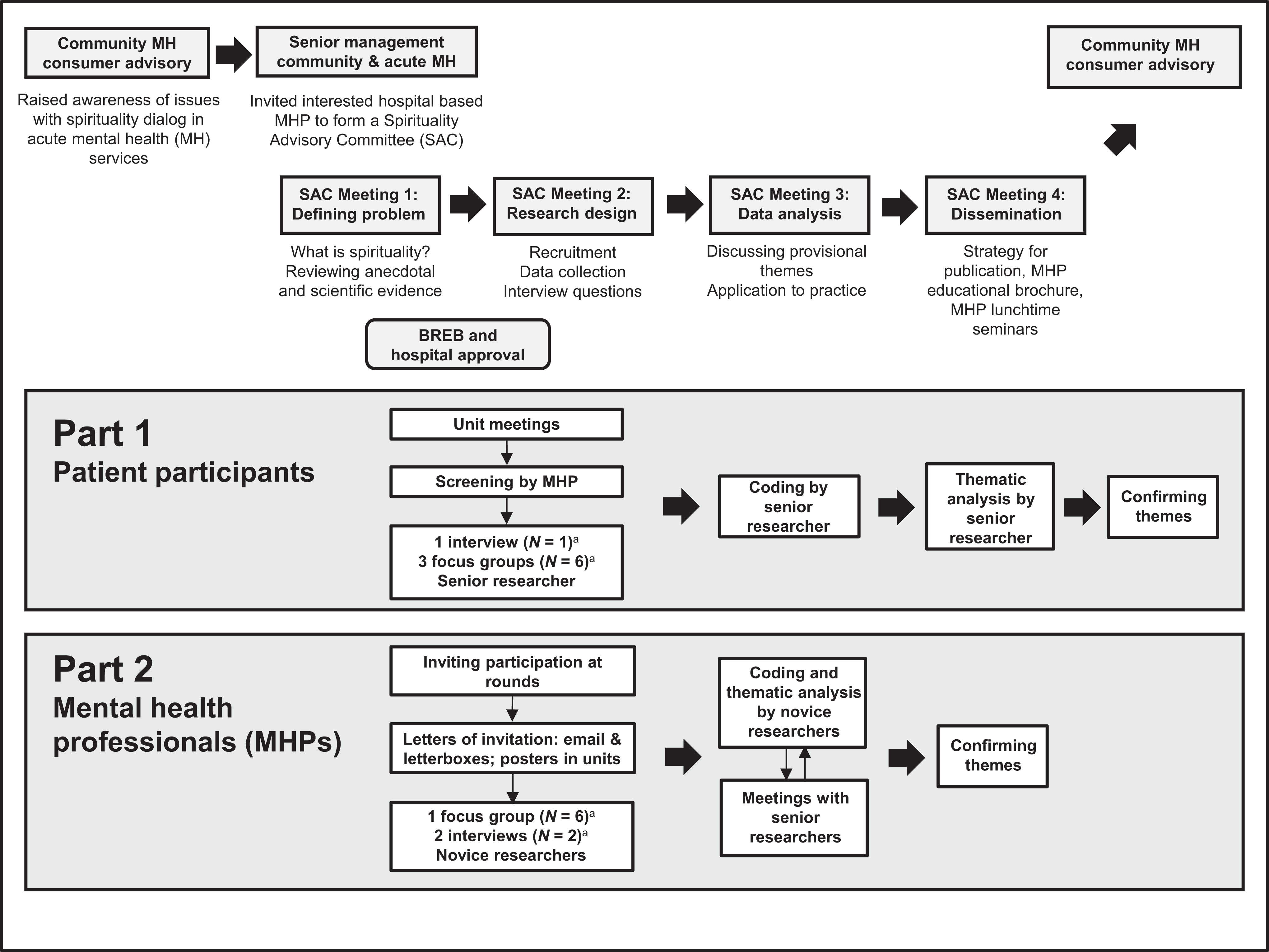
Community-based participation process. aAll interviews and focus groups were 1 hr in length.
The study methods were informed by appreciative inquiry, which seeks to modify a system by building on the ideas and processes within an organization to enact positive change (Richer, Ritchie, & Marchionni, 2010). The research design was informed by the phenomenological principle of lived experience (Todres, 2005), and the data analysis was guided by interpretive description, a qualitative approach used in clinical settings to acquire relevant, practice-based knowledge (Thorne, 2008). Interpretive description de-emphasizes the focus on theorizing and instead encourages researchers to describe and interpret clinical issues, such as the experiences of spiritual conversations on acute psychiatric units, to help develop new knowledge for practice.
Participant Recruitment
The study team (the authors and two novice researchers) recruited MHPs, including spiritual care practitioners, who had direct contact with patients in acute psychiatric units at a major metropolitan hospital. To address difficulties in recruiting optimal numbers of participants, SAC members who expressed interest in the study were included as participants. To participate, MHPs met these criteria: were at least 19 years old, spoke English, were employed at the time of study, and had worked on an inpatient psychiatric unit within the past 6 months. As well, MHPs/participants had direct contact with patients in one of five inpatient psychiatry units at a major metropolitan hospital. There were no exclusion criteria. Research team members distributed written information to potential participants at a rounds meeting and to the mail slots of all staff employed in the units of interest. Potential participants contacted the novice researchers through a research e-mail account.
Data Collection and Analysis
The University of British Columbia Behavioural Research Ethics Board and the hospital ethics review board approved this research. MHPs/participants provided written informed consent before participating in a 60-min focus group or individual interview. These methods were selected due to the sensitive nature of the topic, to offer MHPs/participants a choice, and to accommodate their work schedules. The researchers developed a semi-structured interview guide to explore the MHPs/participants’ experiences of spiritual conversations on acute psychiatric units. Open-ended questions included “Has spirituality ever come up as a topic of conversation with patients at work?” and “What are some of the issues around talking about spirituality in your setting?” MHPs/participants were given a spirituality framework (Smith et al., 2013), which served as a guide to provide language for spiritual conversations (see Figure 2).
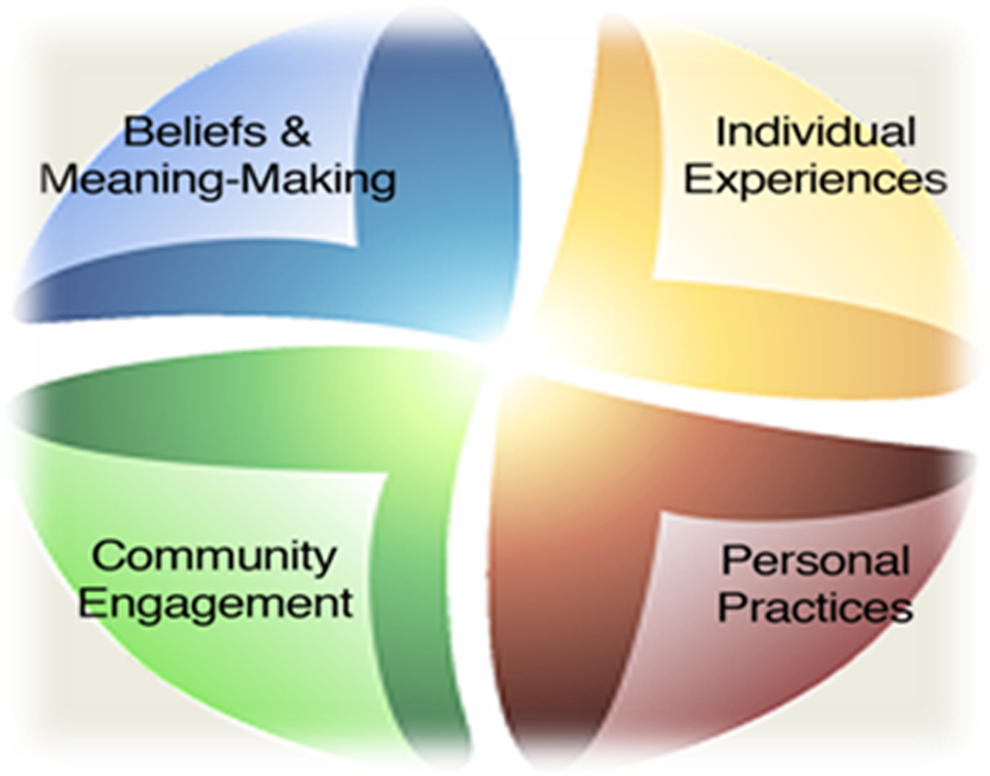
Spirituality framework.
The novice researchers co-facilitated one focus group and one participant interview; one novice researcher also conducted a second participant interview. The focus group and interviews occurred in a private room located on hospital premises, away from the acute psychiatric units of study to ensure confidentiality and minimize distractions. The focus group and interviews were audio-recorded and transcribed verbatim. Field notes were written post-interview and incorporated into the analysis.
Thematic analysis guides researchers in finding and analyzing patterns within data by organizing and describing the data set in rich detail (Braun & Clarke, 2006). The data were analyzed using this approach, and interpretive description guided the analysis to ensure that the findings had practical application for spiritual conversations in acute psychiatric settings. Themes were derived inductively so that the data drove the analysis rather than the researchers’ attempt to fit the data into existing theoretical concepts (Thorne, 2008). The analysis included reading and rereading of transcripts to allow the novice researchers to become familiar with the data and identify illustrative quotes and key messages, coding of data, and combining of codes into provisional categories. To increase rigour through investigator triangulation, the research team came together to discuss codes and categories and to name and develop themes. The SAC members played an active role in the analysis process after the data were coded and blinded (i.e., they viewed the provisional themes and confirmed that the themes resonated with their experiences, which fits with interpretive description). The SAC members also played a critical role in helping the researchers to identify practical implications from the findings for MHPs to use.
To enhance the rigour of the research, the novice researchers engaged in a bracketing interview (Pollio, Henley, & Thompson, 1997) to uncover their preconceptions about spirituality and mental health and explore how their personal experiences could shape the research process. The novice researchers grappled with their own definitions of spirituality, considered if and how it fit within their lives, and recognized the central position it has within Canadian occupational therapy models. They also raised the issue of possibly having to compartmentalize this aspect of themselves, in the interest of patient health especially in psychiatric inpatient units. The novice researchers’ positioning as future practitioners directed their attention to issues of professional boundaries and clinical reasoning, which are reflected in the findings and, importantly, supported by illustrative text. They recorded these and other thoughts, questions, and assumptions regarding the data in reflexive journals and regularly shared these with the research team.
Findings
A purposeful sample of eight individuals from occupational therapy, social work, psychiatry, spiritual care, and psychology participated in this study. To preserve participants’ anonymity, pseudonyms are used, demographic data are omitted, and verbatim quotes and paraphrased descriptions are presented in ways that do not identify the MHPs’/participants’ professional discipline. The diversity in data and their contribution to the findings may be partly attributed to some participants whose roles focused exclusively on spiritual care.
Data analysis indicated two main categories, challenges and facilitating factors, regarding MHPs’/participants’ spiritual conversations with patients on acute psychiatric units. The first challenge concerned the negotiation of boundary lines when participating in spiritual conversations with patients. The second highlighted the complexities of spiritual conversations with patients experiencing spiritual and/or religious delusions. MHPs/participants also described factors that facilitated spiritual conversations, specifically, meeting patients where they were at and engaging in a spiritual networking process. The findings will be presented as four interrelated themes.
Ebb and Flow of Boundary Lines
“And it gets to a point where it is hard to separate out the personal from the professional.”
MHPs/participants described challenges in creating and maintaining boundaries around spiritual conversations with patients on the acute psychiatric units. Decisions were made regarding disclosure of personal beliefs, appropriate timing of conversations, and if MHPs/participants were prepared to explore spirituality. Several MHPs/participants recognized that disclosing their spiritual beliefs/backgrounds could help build a therapeutic alliance with patients. However, they were also wary about imposing their own beliefs on, and possibly causing psychological harm to, acutely ill, vulnerable patients. As Roger explained, “My own personal beliefs, I keep to myself, I don’t put it on them.… It becomes a problem when people try to put their beliefs on other people rather than recognizing that everybody’s unique and everybody’s different.”
MHPs/participants expressed the need to maintain a strong, stable image and objective professional distance from patients. The background, training, professional role, access to resources, and support network of MHPs/participants influenced the ebb and flow of their boundaries and how comfortable they were to talk about spirituality with patients. There was a significant variation in MHPs’/participants’ practice frameworks, theoretical principles, and scopes of practice, and thus individuals’ boundaries reflected a greater/lesser degree of spiritual exploration with patients. For example, Terry did not view spiritual conversations as part of his role: “Being neutral is the best thing to have because, we are not priests, we didn’t sign up to be priests, we are [discipline] first, and that’s a special kind of indoctrination.” In contrast, several MHPs/participants conveyed that in treating the whole person, addressing spirituality was a part of their role and within their scope of practice; they also admitted sometimes feeling uncomfortable having such conversations. Several MHPs/participants described an implicit practice culture expectation that staff should not reveal that a patient’s experience had affected them emotionally. Boundary lines helped staff avoid becoming too involved with a patient’s spiritual struggles by ensuring that spiritual conversations were within their own personal comfort zones and professional scopes.
MHPs/participants also described how systemic constraints on time and staff resources influenced their ability to engage in spiritual conversations. When faced with pragmatic pressures, fluidity in boundary lines allowed MHPs/participants to adapt, modify, and prioritize the care they provided and focus on critical issues, such as keeping patients alive. As Sarah elaborated, “That’s the tricky thing in acute…. We are trying to get them out the door here and not delve too deeply into it.” There was, however, a cost to practitioners for these choices as described by one participant: “Staff can experience moral distress when they wish they could listen more or do more … being with the person and hearing them out.”
MHPs/participants engaged in ongoing reflection to determine their boundary lines with each patient and make decisions about the timing of spiritual conversations with patients. MHPs/participants were challenged to negotiate such decisions within the inherent constraints of the acute mental health care system. A further challenge to their engaging in spiritual conversations involved clinical decision making around the appropriateness of such exploration with patients experiencing psychosis.
Spiritual Experience and Psychosis
“It’s always an evaluation process, you know.”
Many MHPs/participants believed that a close relationship existed between spirituality and psychosis, which highlighted a challenge to engaging in spiritual conversations in acute psychiatric units. They described the types of questions to consider when deciding whether to broach spiritual topics with patients: Are my patient’s beliefs and practices of a spiritual or psychotic nature? Is my patient’s spirituality harming his or her recovery process? Can spirituality be a resource to enhance coping and regain hope? Personal beliefs and professional roles of MHPs/participants influenced their boundary lines and decisions regarding when and how to engage in spiritual conversations with patients.
The spirituality framework that MHPs/participants were given identified religion as one of many ways to express spirituality; however, several MHPs/participants used primarily religious terminology to describe spiritual conversations with colleagues and patients. Terry discussed the interconnectedness of people’s worldviews, religion, and mental illness: “I think religion is such an integral part of cultural belief, why wouldn’t it be part of psychiatric symptomatology? People will say when they get depressed, ‘I am the devil. I need to be exorcised.’”
Other MHPs/participants embraced a broader concept of spirituality that included meaning making, connecting, and helping patients through the challenges of mental illness. Sarah elaborated,
When you look at spirituality as people making meaning of their situation and exploring their belief system … I think that we do treat that, just by sitting and letting people be heard and work through it on their own.
Several MHPs/participants were wary about explicitly addressing patients’ spirituality, especially if a patient was experiencing psychosis. These MHPs/participants conveyed that it may be more appropriate to avoid or defer spiritual conversations with patients experiencing acute illness, to avoid increasing psychotic symptoms. As John stated,
It can be a risky thing, if you go and say to a patient, “Well I don’t necessarily understand what [your belief(s)] means.” If that patient is psychotic, that can just ramp up psychosis even further.… It’s such risky territory.
Trying to Meet Patients Where They’re At
“What we need is an empathetic presence.”
Many MHPs/participants encouraged patients to “be where they were at” during spiritual conversations. MHPs/participants used clinical reasoning skills to determine what was best for each patient while taking into account their patient’s strengths, resources, and individual needs. MHPs/participants described being an empathetic presence, listening without judgment, and acknowledging beliefs, regardless of where an individual was in his or her recovery journey. As Mark stated, “I always try to bring whatever it is that the patient needs or what seems most important to them. So, I start with listening and see where they’re at.”
Some MHPs/participants described how they engaged in empathic listening during spiritual conversations. Mark explained that connecting on an emotional level enabled him to acknowledge a patient’s spiritual struggles: “We didn’t have a lot in common but we talked feelings and experience and it was like an hour and a half of talk and she felt heard and felt like somebody was with her.”
MHPs/participants described that during spiritual conversations, they tried to evaluate whether patients’ beliefs were religious delusions or genuine spiritual beliefs. Some MHPs’/participants’ roles and scopes of practice prioritized diagnosis and symptom treatment, thus making them unlikely to accept patients where they were at during experiences of spiritual conversations. Terry explained his role:
I mean, I think that’s mostly my experience, more of the objective…take on whether or not this is in the delusional realm versus something that is more normal.…I think when you talk to a patient about religious things you find out some of them are truly religious and some of them are just a defense mechanism to protect them during difficult times.
Spiritual Networking
“Connecting to spiritual resources.”
MHPs/participants collaborated with a spiritual network of colleagues and community resources to help meet their patients’ spiritual needs. MHPs/participants accessed these resources when they lacked knowledge about a patient’s beliefs and practices and were unable to acquire information from their patient. They educated themselves by consulting with colleagues and spiritual care specialists or researching Internet resources. MHPs/participants connected with colleagues who had similar beliefs or spiritual practices as a patient or had specialized spiritual knowledge, including aboriginal elders and religious leaders. Sarah explained,
I think we’ve been very good on our team about getting outside opinions from each other, or other staff from different backgrounds being able to inform us, or asking spiritual care, or contacting somebody from the client’s own church or temple to talk with them. If we are not comfortable, where our knowledge stops, we support each other and talk to [colleagues] about the rest.
If MHPs/participants determined that a patient’s spiritual needs were outside their comfort level or beyond their boundaries, they referred to spiritual care providers and spiritually based community groups, such as Alcoholics Anonymous. Bill elaborated, “You don’t claim knowledge you don’t have.… I’m comfortable in my competence. But if somebody is really complex, I will make sure I mention to the team this person needs specialized care.” Spiritual networking allowed MHPs/participants to use a multidisciplinary approach to meeting patients’ spiritual needs within the constraints of acute psychiatric units. This process also helped them avoid becoming overburdened while working within boundary lines.
MHPs/participants described spiritual conversations in an acute mental health setting, including the challenges and factors that facilitated these experiences. They engaged in ongoing reflection to determine boundaries and make decisions about participating in spiritual conversations with patients experiencing psychosis. They described how during spiritual conversations, they wished to be patient-centred and open while recognizing when referring to spiritual resources would be more appropriate.
Discussion
MHPs/participants experienced ebbs and flows of boundaries as they endeavoured to create an authentic therapeutic relationship with patients while maintaining a professional objectivity. They faced decisions regarding the relationship between a patient’s spirituality and psychosis, the appropriateness of self-disclosure, and how to meet patients where they were at in their recovery. This dilemma has been noted elsewhere (see Drinnan & Lavender, 2006; Jackson & Fulford, 2005).
MHPs/participants described an implicit expectation within acute psychiatric units that they maintain a professional front to set boundaries, which may be an obstacle for spiritual conversations. Smith and Suto (2012) reflected that MHPs may take on a protective role and thus avoid engaging in spiritual conversations with psychologically vulnerable patients. Several MHPs/participants in our study were wary about broaching spirituality from substantive or functional perspectives and afraid of imposing beliefs on patients at the risk of causing psychological harm. This is consistent with findings from Morris et al. (2012) and Johnston and Mayers (2005), who reported that fear of projecting beliefs on patients was one of the most commonly cited barriers to incorporating spirituality into occupational therapy practice.
That spirituality and psychosis are related and religion can feature predominantly in patients’ delusions were well understood by MHPs/participants. The result of Drinnan and Lavender’s (2006) work has over time
led to a greater recognition of the complexity, multidimensional nature of delusions, and has been accompanied by an awareness that seemingly unusual beliefs can be understood within the context of the person’s life, circumstances and culture, and their attempts to find meaning in their experience. (p. 318)
Meeting patients where they were at during spiritual conversations was an approach to building therapeutic relationships taken by MHPs/participants that involved being open and listening non-judgmentally as patients expressed their feelings and reflected on spirituality, regardless of the acuity of their mental illness. Bassett, Lloyd, and Tse (2008) proposed that listening to patients and validating their experiences is an essential element of spiritual intervention and a key component in supporting recovery from mental illness. This supports the implicit spirituality that occupational therapy philosophy of practice is based on, highlighted by Egan and Delaat (1997), who emphasized the importance of rapport, empathy, and open communication.
Rapport, empathy, and open communication are crucial elements to building an effective patient–therapist relationship and may increase patient engagement in therapy (Taylor, Lee, Kielhofner, & Ketkar, 2009). The therapeutic use of self may be instrumental in developing therapeutic relationships (Taylor et al., 2009) and could include therapist self-disclosure and transparency of feelings and emotions (Knight, 2012). MHPs/participants in this study recognized the benefits of using the self therapeutically when addressing spirituality with patients and negotiated this process within their own boundary lines to avoid harming their patients or themselves.
MHPs, including occupational therapists, work within systemic constraints on time and resources when meeting patients where they are at during spiritual conversations (Johnston & Mayers, 2005; Morris et al., 2012). It was difficult for MHPs/participants when a patient’s needs were outside of the edges of their boundaries and when they felt they lacked the time, education, skills, and/or background to adequately address spirituality in conversation.
It is challenging for the MHPs whose scope of practice emphasizes diagnosis to simply sit and empathize, accepting whatever spiritual perspectives the patient shares. To meet the diverse and complex spiritual needs of patients more efficiently, MHPs need to share knowledge and collaborate with a spiritual network of colleagues and community resources. The development and awareness of a spiritual network could allow MHPs to make referrals and access resources for their patients. D’Souza (2002) highlighted the need for partnership among MHPs to develop a greater understanding of how each team member can contribute to spiritual aspects of care. Knowledge of one’s own role and that of colleagues, including spiritual care professionals, may help MHPs to better meet the spiritual needs of patients (Johnston & Mayers, 2005).
As MHPs/participants noted, each patient may not want or need to have their spirituality addressed when hospitalized. Occupational therapists may consider the suitability of addressing spirituality with their patients by reflecting on their own ability to adequately address spiritual issues within their scope of practice and when it may be more appropriate to refer to other spiritual resources (Johnston & Mayers, 2005).
Limitations
The limitations of this research involved recruitment challenges, the effect of the short duration of the study on the amount of data collected, the scope of the project, and the quality criteria that have been proposed for CBPR not being fully met. The researchers intended to recruit professionals from a broad range of disciplines; significantly, nurses were absent from this sample, and the reasons for their absence remain unknown. The SAC members who were study participants may have felt uncomfortable voicing anything perceived to be negative, given their a priori interest in spirituality and mental health generally. The short duration of the project prevented second interviews with MHPs/participants that may have revealed the complexity and depth of the phenomenon further. The scope of this exploratory study precluded additional data collection methods that may have produced a deeper understanding of spiritual conversations between MHPs and patients. The context of this research was a large metropolitan teaching hospital, and therefore, readers may feel that the findings are not applicable to dissimilar environments. Bradbury and Reason (2008) have discussed judging CBPR by quality criteria that are consistent with its principles; among those are furthering ways of knowing and research partners acting on the findings. In this study, we relied on the traditional interview form as the primary way of gaining knowledge about spiritual conversations rather than exploring other modes of communication, such as expressive arts, observations, and journaling. Last, although we are hopeful that the spiritual conversation pathway will be used by MHPs, this use of the knowledge developed remains unknown.
Implications for Occupational Therapy
Occupational therapists may be situated to play a key role in initiating conversations with patients about their engagement in meaningful spiritual practices (Smith & Suto, 2012). Occupational therapists working in acute psychiatric units can be open to spiritual conversations with patients and determine if spiritual practices are influencing occupational engagement as well as helping patients cope, find meaning, and move toward recovery.
Patients’ spiritual needs can be met more effectively with a patient-centred approach that respects individual needs, values, and beliefs (Johnston & Mayers, 2005). Smith and Suto (2012) recommend that therapists acknowledge patients’ spiritual needs by being open, listening without judgment, and allowing them the opportunity to be heard. The act of “being open” may begin with developing a better conceptual understanding of spirituality and examining one’s personal views; these were key objectives from an occupational therapy student workshop (Kirsh, Dawson, Antolikova, & Reynolds, 2001). Further, a reflective process of writing answers to questions—such as “What does spirituality mean to me?” “How, if at all, does spirituality manifest in my own life?” and “How do my beliefs influence my openness to patients’ views and uses of spirituality?”—can be enhanced by dialogue with colleagues and mentors. Finally, the act of being open with patients involves empathy, which Peloquin (1995) described as “an experience of being there… a connection with other’s feelings [and]… a power to recover from that connection” (p. 29). This process can aid occupational therapists who choose to explore patients’ spiritual beliefs and practices as part of an initial interview (Borras et al., 2010). As an alternative to conducting interviews primarily to obtain information, the use of carefully crafted interview questions can help occupational therapists to comprehend patients’ perspectives and the meanings they attribute to their experiences (Thompson & MacNeil, 2006). This approach addresses some of the insights that arose from the theme “trying to meet patients where they’re at.”
A spirituality framework, such as the one developed by the Spiritual Advisory Committee of Vancouver Mental Health and Addiction Services, can provide therapists with a starting point and common language for spiritual conversations (Smith et al., 2013). The framework offers guiding questions for recovery-oriented spirituality conversations, such as “What makes life meaningful or significant for you?” and “Do you share activities with others that provide comfort?” Bassett et al. (2008) recommend using a framework for spiritual conversations that includes (a) asking questions about spiritual practices and communities that may be a resource for recovery, (b) inquiring with sensitivity, and (c) building up trust by providing a rationale for inquiring about spirituality.
Guidelines about spirituality, similar to those developed for the U.K. National Institute for Mental Health (Gilbert, Merchant, & Hayes, 2008), could be developed by staff in acute psychiatric units. Such guidelines may increase awareness and understanding of the role of spirituality in mental health recovery by providing examples of questions to ask patients and describing the role of spiritual care professionals (Gilbert et al., 2008). Exploring guidelines as a team may deepen understanding of how to better address spirituality and provide patient-centred, holistic, interdisciplinary care in acute psychiatric units. Establishing such guidelines may also help MHPs to differentiate whether patients’ experiences are linked primarily to psychosis or spiritual issues, an evaluative process that was highlighted in the study findings.
A spirituality conversation pathway (see Figure 3) was created from this study to aid practitioners and could also be used to provide additional guidance for occupational therapists and other MHPs. The spirituality conversation pathway offers a way to apply concepts presented in the spirituality framework, such as exploring personal practices and linking the patient to the community through spiritual networking. Developing this pathway, and sharing it with MHPs as we did, is consistent with the aim of interpretive description, which is to apply knowledge for practice.
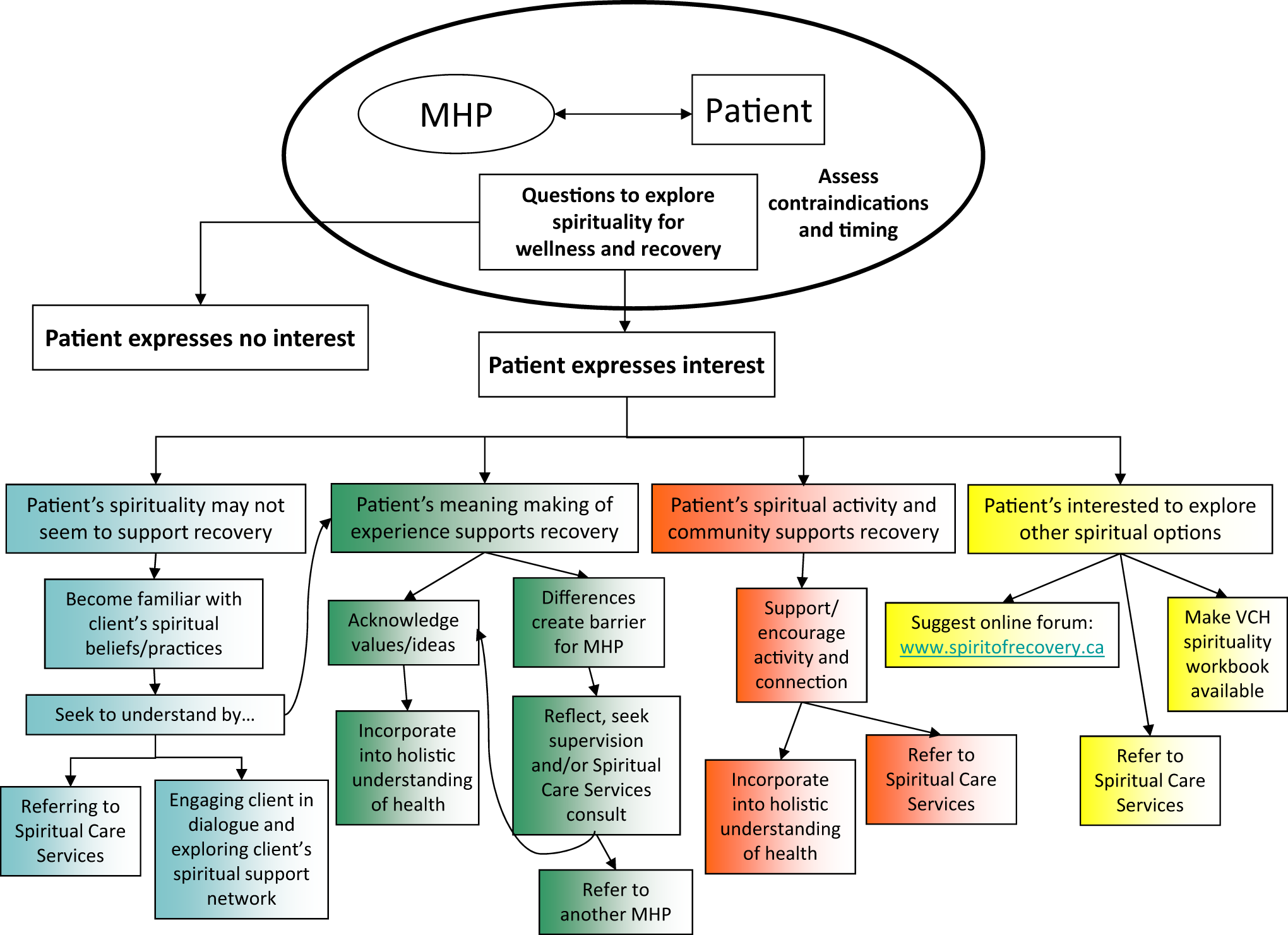
Spirituality conversation pathway.
With greater understanding of the role of each interdisciplinary team member, including spiritual care professionals, occupational therapists can better recognize the unique contributions of each profession to the spiritual dimension of patient care and gain a greater sense of professional boundaries. Boundary clarification may help occupational therapists recognize when a referral to spiritual care professionals would better meet the needs of a patient. While spirituality is proposed to be within the realm of occupational therapy, Johnston and Mayers (2005) and Smith and Suto (2012) emphasize that spiritual counseling is outside occupational therapists’ scope of practice, and it is best to refer patients to spiritual care professionals when they express a need for spiritual therapy. In this study, the SAC recommended providing MHPs with education through in-services, brochures, and training sessions with spiritual care staff to clarify their role, the referral process, and ways to effectively collaborate to meet patient needs. The provision of these types of resources could help to foster awareness of the role of spirituality in the acute mental health setting and increase staff confidence in their ability to provide patients with spiritual resources.
Through further research and education, occupational therapists can develop the confidence to address spirituality with patients (Wilding et al., 2005) and engage in spiritual conversations or spiritual networking to best meet their patients’ needs.
Future Research
Survey research may be used in subsequent studies, and this method has several advantages. Surveys can reach a large number of respondents, their anonymity may encourage candid responses that would be more difficult to obtain using face-to-face data collection methods, and they can be conducted and analyzed more quickly than the processes described in this study. The survey could include questions about attitudes regarding spirituality (both substantive and functional), whether it falls within the scope of practice for MHPs, and the preparation that practitioners originally received in their education or subsequently sought out regarding the broad topic of spirituality. Finally, to bridge academic educational aims and the reality of providing health services, data are needed to guide any potential integration of spiritual care teams and spiritual services within health care.
Conclusion
The qualitative findings and clinical implications from this study were intended to initiate discussion and reflection on how to more effectively incorporate spiritual conversations into occupational therapy practice. The MHPs/participants in this study described challenges in setting boundaries and discriminating spiritual experience from psychosis, and identifying facilitating factors, such as providing an empathetic presence and engaging in spiritual networking to facilitate spiritual conversations. Occupational therapists may meet the spiritual needs of patients more effectively by having clear boundaries and guidelines to follow when engaging in spiritual conversations. By increasing interdisciplinary collaboration through spiritual networking, professionals can effectively work together to address the spiritual needs of patients while staying within their own personal and professional boundaries.
Footnotes
Key Messages
Being open to spiritual conversations may help occupational therapists determine if engagement in spiritual practices can help patients cope with mental illness, find meaning in life, and improve recovery. Using a spirituality framework and/or guidelines may assist practitioners and provide common language for spiritual conversations. Providing education on the role of spiritual care professionals and community spiritual resources may improve interdisciplinary collaboration and support therapists to initiate spiritual conversations with patients.
Acknowledgements
We appreciate the mental health professionals who participated in the research. We acknowledge the contribution of occupational therapists Nicola Mark and Tanya Neuert to the data collection and analysis. Aspects of this paper were presented at the 2012 Canadian Association of Occupational Therapists annual conference.
Funding: We thank the Departments of Psychiatry at The University of British Columbia and the Vancouver General Hospital for funding this project.