







Abstract
This study was designed to screen 6 lysosomal storage diseases (LSDs) in neonates using tandem mass spectrometry (MS/MS), and establish cutoff values for these LSDs with 3000 dried blood spots (DBS) samples. Cutoff values for α-L-iduronidase (IDUA), α-galactosidase (GLA), acid beta glucosidase (ABG), β-galactocerebrosidase (GALC), acid sphingomyelinase (ASM), and acid alpha glucosidase (GAA) were as follows: GLA, > 2.06 μmol/L·h; ABG, > 1.78 μmol/L·h; ASM, > 0.99 μmol/L·h; IDUA, > 1.33 μmol/L·h; GALC, > 0.84 μmol/L·h; and GAA, > 2.06 μmol/L·h. There were 30 positives in initial MS/MS screening test, and 15 samples were still positive with repeat testing. Their parents/guardians were recontacted and DBS samples were collected again for test. Only 1 child showed abnormal GAA enzyme activity after recontacting process, and was diagnosed with Pompe disease after genetic screening. Eventually, cutoff values of 6 specific enzyme activities were established and MS/MS is effective for early LSDs screening.
Introduction
Lysosomes, containing about 50 different hydrolytic enzymes, involve in a variety of cellular processes, such as exocytosis, cell viability, as well as autophagy. 1 In the presence of genetic defects, there would be deactivation of hydrolase enzymes, which results in accumulation of undergraded substances in lysosomes. 2 This may induce interruption of cellular function, leading to disease pathogenesis.
Lysosomal storage diseases (LSDs), a group of over 70 inherited metabolic disorders that is rarely reported, are defined as inborn errors of metabolism characterized by excessive accumulation of substrates due to the defective functioning of lysosomes. 3 Based on accumulated substrates, LSDs mainly consist of mucolipidoses, oligosaccharidoses, mucopolysaccharidoses, Gaucher disease, Pompe disease, Niemann-Pick disorders, Fabry disease, as well as neuronal ceroid lipofuscinoses. 4
Patients with LSDs usually show heterogeneous symptoms affecting multiple systems, ranging from severe intellectual disabilities, cardiac abnormalities, organomegaly and skeletal abnormalities to slowly progressive muscle weakness, skin alterations, as well as respiratory insufficiency. 5 It has been well acknowledged that the symptoms are progressive in LSDs children, which may lead to lifelong disability and even death if not treated properly. Lysosomal storage diseases are individually rare, however, as a group of genetic disorders, they have an established incidence of approximately 1 per 5000 individuals. 6 Therefore, attention should be paid to the neonatal LSD screening to give timely and effective treatment.
Currently, a variety of methods have been adopted in the neonatal screening for LSDs, 7 including gene sequencing, direct measurement of enzyme abundance and LSDs-related biomarker analysis, as well as direct determination of enzymatic activity. Among these methods, more attention has been paid to the direct detection of enzymatic activity, and some large-scale pilot studies have been published up to now. For instance, in a pioneering study, Gelb et al 8 reported that several lysosomal enzymatic activities could be assayed after rehydration of dried blood spots (DBS) punches with aqueous buffers. This technique facilitated easy sample-transportation even at room temperature. Based on DBS analysis, tandem mass spectrometry (MS/MS) has been applied as a diagnostic platform for early LSDs screening due to its merits of high throughput in a single DBS punch, high sensitivity, and excellent accuracy. For example, Chennamaneni et al 9 utilized MS/MS for multiple and quantitative measurements of mucopolysaccharidosis I, II, and VI. In addition, Skrinjar et al 10 developed an MS/MS method based on building block strategy to surmount the limitations of multi-step procedures and limiting versatility. Therefore, MS/MS with a high sensitivity and accuracy is more suitable for the large-scaled screening of LSDs.
Based on MS/MS, this study was designed for the neonatal screening of 6 LSDs including MPS-I, Krabbe, Gaucher, Niemann-Pick, Fabry, and Pompe diseases. Besides, we established the cutoff values for LSDs in our region based on 3000 DBS by detecting 6 specific enzyme activities including α-L-iduronidase (IDUA), α-galactosidase (GLA), the acid beta glucosidase (ABG), β-galactocerebrosidase (GALC), acid sphingomyelinase (ASM), and the acid alpha glucosidase (GAA).
Material and Methods
Subjects
In this study, neonates who underwent neonatal screening in our department between May 2020 and October 2021 were included. The inclusion criteria were as follows: (1) neonates with an age of 3 to 4 days; (2) with no family history of Pompe disease; (3) healthy neonates not admitted to the neonatal intensive care unit (NICU). The following patients were excluded from this study: (1) those with a family history of Pompe disease; (2) those admitted to NICU 3 days after birth; (3) those with an age of less than 3 days; (4) with a gestational age of less than 37 weeks. Written informed consent was obtained from the parents of each subject. The research related to human use complied with all the relevant national regulations, institutional policies, and consistent with the Helsinki Declaration. The study protocols have been approved by the Ethics Committee of our hospital.
Sample Collection
For each neonate, 3 to 4 drops of blood were obtained after heel prick, followed by dropping the blood on the DBS strips to prepare blood spots with a diameter of 3 mm. The generated DBS samples were stored in a dry condition at −20°C, and the test was accomplished within 1 week.
Neonatal LSD Screening
NeoLSD MS/MS Kit (PerkinElmer, Shanghai, China) was utilized for the LSDs screening. The activity of 6 LSDs in neonates (ie, GLA, IDUA, GALC, ASM, ABG, and GAA) was determined using a tandem mass spectrometer (Waters TQD, USA) and incubation shaker (Thermo Shake MB100-4A, USA). The cone voltage and collision energy of 6 enzyme reaction products (P) and corresponding internal standard (IS) compounds were listed in Table 1. For the MS/MS, DBSs were then hole-punched into 96-well plates containing 1 sample per well. In the 96-well plates, we set 88 samples, along with 2 blank wells (BL) and 6 dried blood spot quality controls (C1, C2, C3; twice for each). Then, an aluminum foil microplate sealing membrane was utilized to cover the plates after adding 30-µL reaction mixture with 6 substrates and internal standards (ie, ABG-IS, 20.0 μM; ASM-IS, 15.0 μM; GALC-IS, 10.0 μM; IDUA-IS, 15.0 μM; GLA-IS, 24.0 μM; and GAA-IS, 24.0 μM). Afterward, the mixture was incubated on a 400 r/min shaker at 37°C for approximately 18 hours, followed by cooling down to room temperature. The quencher consisted of methanol/NeoLSD extract (50/50, v/v) was used to terminate the reaction. Subsequently, the mixture was transferred into 96-well plates, and then NeoLSD extract (400 µL) was added to each well. Upon sealing of the aluminum foil microplates, centrifugation was performed at 2500 r/min for 5 minutes. Then supernatant (50 µL) was carefully pipetted into a U-shaped microplate, followed by drying with nitrogen. Upon complete volatilization, we added flow solvent (100 µL) along with attaching the sealing film and shaking for 10 minutes.
MS/MS Parameters of Enzyme Reaction Products (P) and IS Compounds.
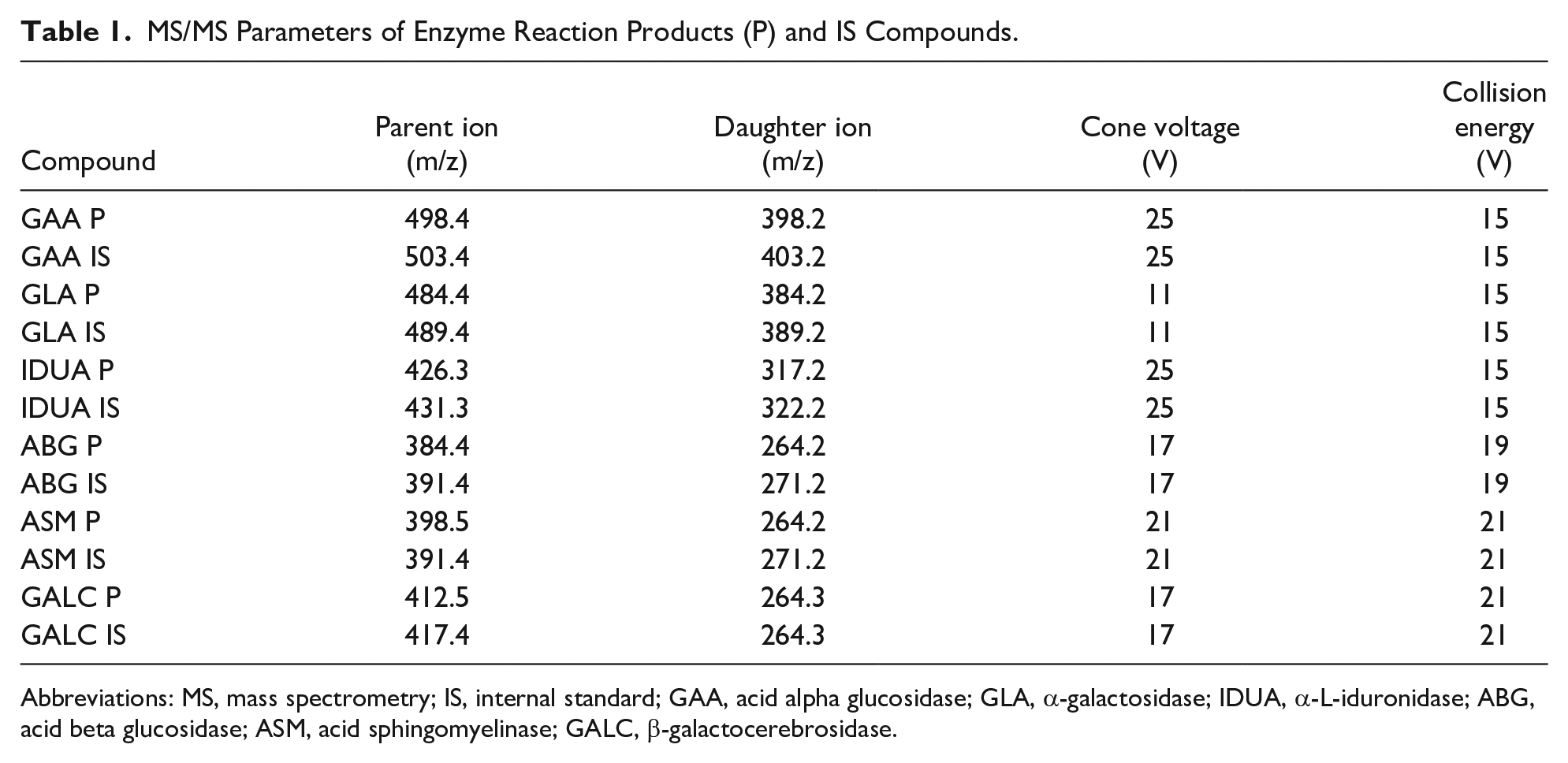
Abbreviations: MS, mass spectrometry; IS, internal standard; GAA, acid alpha glucosidase; GLA, α-galactosidase; IDUA, α-L-iduronidase; ABG, acid beta glucosidase; ASM, acid sphingomyelinase; GALC, β-galactocerebrosidase.
Establishing the Cutoff Values and Recontacting Parents of Positive Neonates
The cutoff values of 6 enzymes in LSDs were selected as described by the previous literature.11,12 According to the previous study, more than 30% of the median activity was adopted as the cutoff value of normal GLA enzyme, and more than 20% of the median was adopted for normal ABG, IDUA, GALC ASM, as well as GAA enzyme activities, respectively. In this study, we utilized the 30% of the median (GLA) and 20% of the median (ABG, IDUA, GALC, ASM, and GAA) for the cutoff values based on 3000 DBS samples, with 6 indices detected for each sample. Those with a concentration of ≤30% median of GLA were confirmed with GLA positivity, and those with a concentration of ≤20% median of the other 5 enzymes were confirmed with ABG, IDUA, GALC, and ASM positivity. In cases of positivity in the first test, 2 more tests were performed with the original DBS samples. In cases of positive tests (at least 2 positive tests among the 3 tests), their parents/guardians can be recontacted. The samples of neonates were recollected by the screening center for the MS/MS again. The parents were recontacted if the MS/MS results were positive. Finally, the parents and neonates were subjected to Sanger sequencing.
Sanger Sequencing
Peripheral blood (1 mL) was collected from the parents and neonates. Primer 5.0 software was used to design the specific primers for the exon 13, 15 and its flanking sequences based on the GAA gene sequence (NM_000152.5) downloaded from the GenBank database (http://www.ncbi.nlm.gov). The primers sequences (5′-CAGTAGCCTCGCCGTCCTCC-3′; 5′-CTTGCTGCCCTTCCCCCTTA-3′) were synthesized by Sangon Biotech (Shanghai, China). Polymerase chain reaction amplification was performed with the following conditions: 94°C for 3 minutes, followed by 35 cycles of 94°C for 30 seconds, 58°C for 30 seconds, and 72°C for 30 seconds. Finally, the generated DNA products were purified and sent to Sangon for the Sanger sequencing.
Statistical Analysis
Statistical analysis was employed to calculate the variation coefficient (CV) of intra-batch, the CV of inter-batch and the total CV. The intra-batch CV was calculated with the formula as follows:
Results
Patient Characteristics
Based on MS/MS using DBSs, we screened 3000 newborns for 6 LSDs. The number of male and female newborns was 1577 and 1423, respectively.
Precision of LSDs Enzyme Activity
Each batch of sample with various concentrations was repeatedly measured for 3 times, and samples of each concentration underwent 15 tests. As the values for the quality control (C1) was 0, the intra-and inter-batch CV and total quality control were not calculated. The inter-batch, intra-batch CV and the total CV of the samples including C2 and C3 were shown in Supplementary Tables 1 to 6. These data indicated the precision of the screening of 6 LSDs.
Rate of Screening Positive and Confirmed Disorder in LSD Newborns
The cutoff values for the activities of 6 enzymes in neonates were preliminarily determined as GLA > 2.06 μmol/L·h, ABG > 1.78 μmol/L·h, ASM > 0.99 μmol/L·h, IDUA > 1.33 μmol/L·h, GALC > 0.84 μmol/L·h, and GAA > 2.06 μmol/L·h. Among these newborns, 30 (1.0%) were positive in the initial LSD screening (Table 2), including Niemann-Pick disease (n = 2), Gaucher disease (n = 6), MPS-I (n = 3), Fabry disease (n = 5), Krabbe disease (n = 1), as well as Pompe disease (n = 13), respectively. Then, all these samples were subjected to retest twice using the previous DBS samples. Fifteen samples were tested positive in the second round of original DBS screening, including 3 cases with MPS-I, 4 cases with Gaucher disease, 5 cases with Pompe disease, and 3 cases with Fabry disease, respectively. Moreover, children who were tested positive in the original DBS reviews were recontacted with their parents and then DBS samples were collected again for test (Table 3).
The Rate of Screening Positive, Review Positive and Confirmed Disorder in Neonatal LSD Screening.
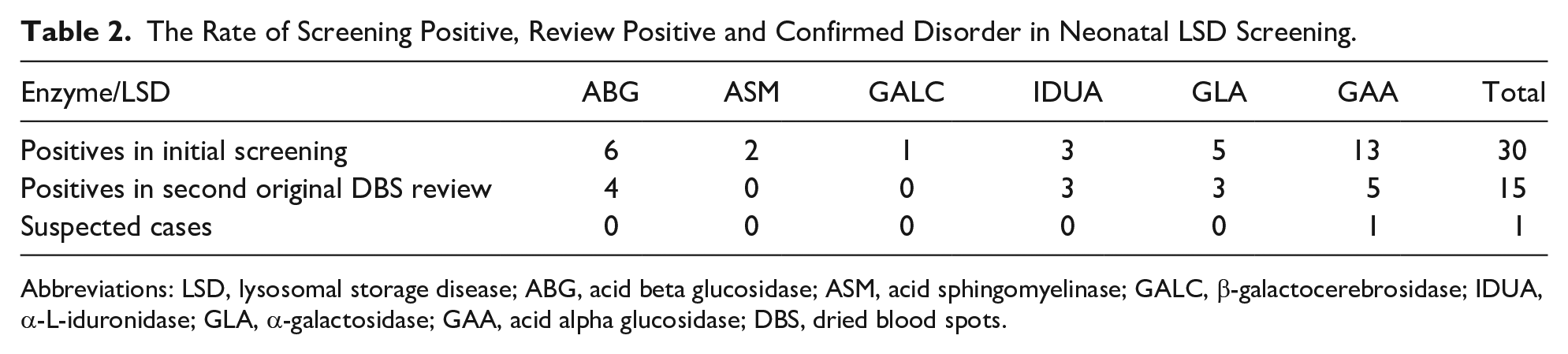
Abbreviations: LSD, lysosomal storage disease; ABG, acid beta glucosidase; ASM, acid sphingomyelinase; GALC, β-galactocerebrosidase; IDUA, α-L-iduronidase; GLA, α-galactosidase; GAA, acid alpha glucosidase; DBS, dried blood spots.
Values for the DBS Retest and Recalling Values for the 30 Samples With Aberrant Screening Results in the First Round.
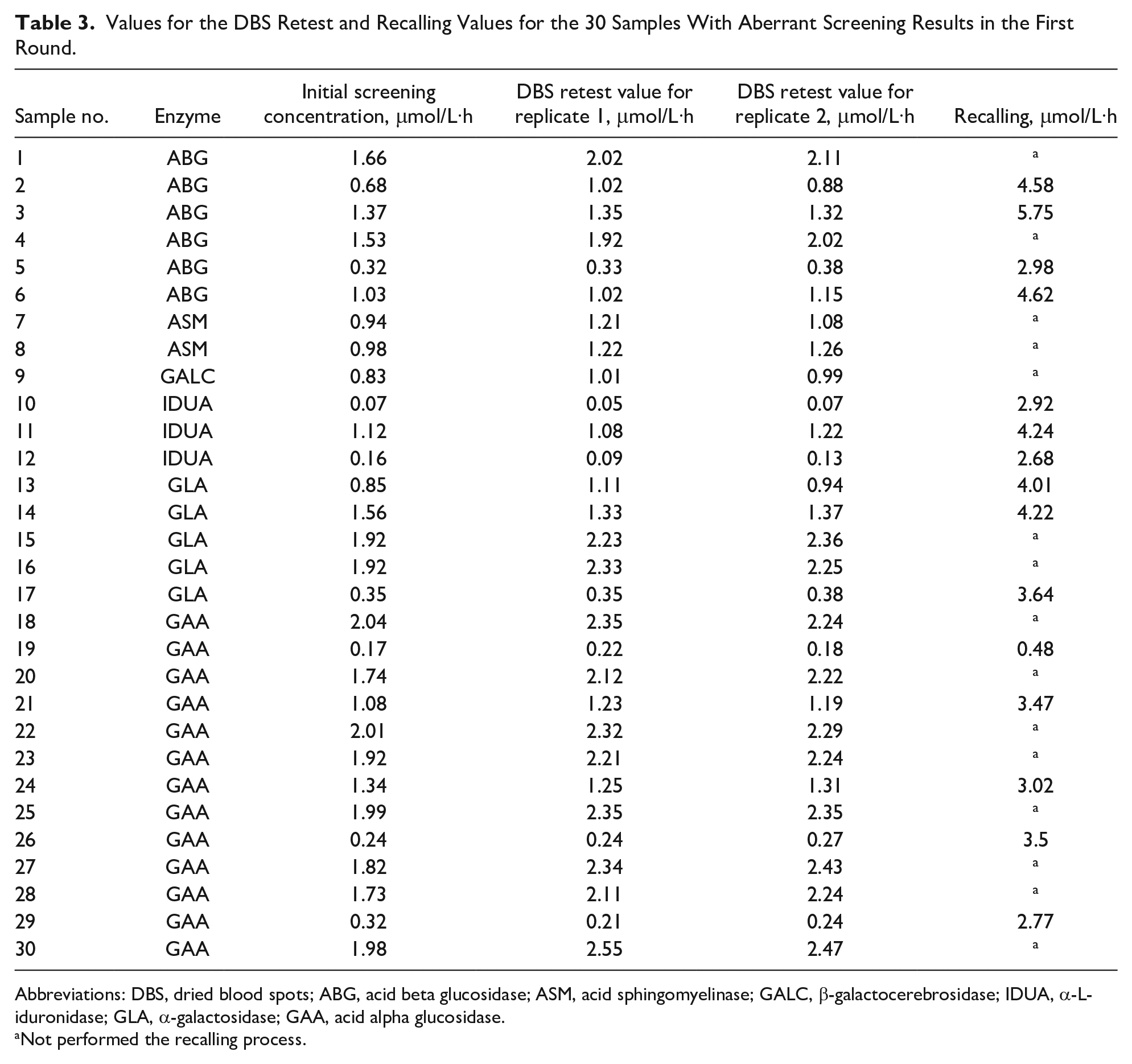
Abbreviations: DBS, dried blood spots; ABG, acid beta glucosidase; ASM, acid sphingomyelinase; GALC, β-galactocerebrosidase; IDUA, α-L-iduronidase; GLA, α-galactosidase; GAA, acid alpha glucosidase.
Not performed the recalling process.
Only 1 male neonate showed abnormal GAA enzyme activity after recontacting, and was confirmed after Sanger sequencing. The male neonate subjected to the first round of screening 4 days after birth, and his parents were recontacted 7 days later. Finally, after genetic screening, he was diagnosed with Pompe disease (Table 4, Figure 1) with homozygous exon14 c.1935C>A in GAA (NM_000152.5), and his parents showed heterozygous c.1935C>A.
Genetic Site Information and Enzyme Activity in the Screening Experiment in Confirmed Case.

Abbreviation; GAA, acid alpha glucosidase.
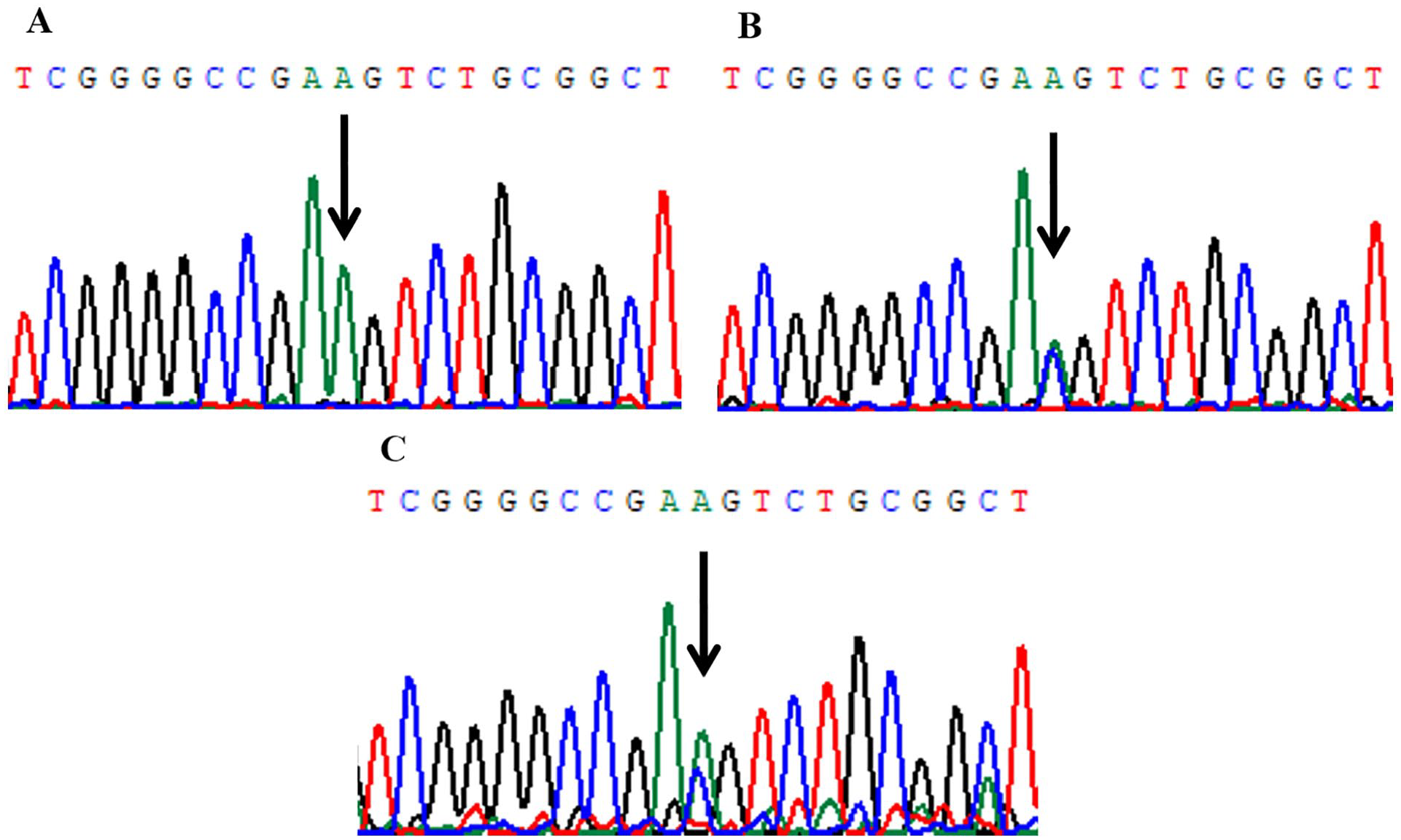
Variant analysis. (A) Sequence analysis of the GAA gene in the patient identified the homozygous c.1935C>A variant (p.D645E). (B) Sequence analysis of GAA gene in the patient’s father identified the heterozygous c.1935C>A variant (p.D645E). (C) Sequence analysis of GAA gene in the patient’s mother identified the heterozygous c.1935C>A variant (p.D645E).
Discussion
Initiation of treatment shortly after birth results in a better outcome among neonates with LSD. 8 Therefore, attempts have been made to establish screening strategies for identification of neonates with LSD, especially enzyme activity analysis using fluorescence, multiple immunoquantification, as well as MS/MS. In the United States, MS/MS was firstly utilized for newborn screen in the 1990s, and was carried out in 2002 in China. 13 In this study, MS/MS approach was applied to establish the cutoff values of IDUA, GLA, ASM, ABG, GALC, and GAA, which were related to the pathogenesis of MPS-I, Fabry, Niemann-Pick, Gaucher, Krabbe, and Pompe diseases, respectively. We established the cutoff values for newborn screening of 6 LSDs in our city, along with evaluating the precision of the CVs.
Different laboratories utilized distinct cutoff values via calculating the corresponding batch of experimental statistics. In a previous study conducted in hospitals in Northeast Italy, using the NeoLSD assay system, Burlina et al screened 44 411 newborns for 4 LSDs, and the generated cutoff values for GLA, ABG, IDUA, and GAA were >2.0 μmol/L·h, >2.2 μmol/L·h, >1.6 μmol/L·h, and >2.4 μmol/L·h, respectively. Besides, an overall consent rate of 74% was reported, among which 69 infants were positive in the LSDs screening. Finally, 23 were confirmed positives after Sanger sequencing, and were predicted to have late-onset phenotypes. 12 In a study performed in Shandong Province in Mainland China involving 38 945 samples that were collected from newborn blood spots in different maternity hospitals of 6 cities, the authors reported 254 positives in the initial screening test. Finally, 11 children including 3 with Fabry disease, 3 with Pompe disease, and 5 with Krabbe disease were finally diagnosed after genetic screening. 14 In the initial screening among the 3000 DBS samples, there were 30 positive. After the second round of test, there were 15 positive. Then, these 15 children were recontacted and the DBSs were collected again, which demonstrated that there was no confirmed case of MPS-I, Fabry, Gaucher, Krabbe, and Niemann-Pick disease. However, 1 child was suspicious with Pompe disease, whose GAA activity was obviously lower than the cutoff value. The gene sequencing data were consistent with the result obtained from MS/MS, which demonstrated the patient was confirmed with GAA. The total incidence of LSDs was reported to be about 1/3000 or 1/6000-7000 in different reviews. 10
For the limitation of this study, the sample size was relatively small. One patient was screened with Pompe disease after MS/MS and then was confirmed after Sanger sequencing. However, this could not be regarded as its virtual incidence.
Conclusions
This study summarized the screening data of 3000 DBS samples through detecting 6 specific enzyme activities using MS/MS. MS/MS can be utilized as an LSDs screening method, and cutoff values of 6 specific enzyme activities were established.
Author Contributions
YC analyzed and interpreted the data and wrote the draft. YY analyzed and interpreted the data and wrote the draft. YZ acquired the data and revised the paper. QL acquired the data and revised the paper. PZ acquired the data and revised the paper. BM acquired the data and revised the paper. XQ acquired the data and revised the paper. TH acquired the data and revised the paper. LX conceived and designed the project and revised the paper. WZ conceived and designed the project and revised the paper. All authors read and approved the final manuscript.
Supplemental Material
sj-docx-1-cpj-10.1177_00099228231219336 – Supplemental material for Newborn Screening of 6 Lysosomal Storage Disorders by Tandem Mass Spectrometry
Supplemental material, sj-docx-1-cpj-10.1177_00099228231219336 for Newborn Screening of 6 Lysosomal Storage Disorders by Tandem Mass Spectrometry by Yao Chen, Yan Yang, Yinglin Zeng, Qingying Lin, Peiran Zhao, Bin Mao, Xiaolong Qiu, Ting Huang, Liangpu Xu and Wenbin Zhu in Clinical Pediatrics
Footnotes
Authors’ Note
The contents of this article do not relate to AI-generated.
Declaration of Conflicting Interests
The author(s) declared no potential conflicts of interest with respect to the research, authorship, and/or publication of this article.
Funding
The author(s) disclosed receipt of the following financial support for the research, authorship, and/or publication of this article: This work was supported by Fujian Provincial Health Technology Project (grant no. 2020GGB042) and Fujian Provincial Health Commission Science and Technology Plan Project (grant no. 2022CXA033).
Ethics Approval Statement
The study protocols were approved by the Ethics Committee of Fujian Maternity and Child Health Hospital (approval no. 2020GGB042).
Patient Consent for Publication Statement
Written informed consent was obtained from the parents of each subject.

Supplemental Material
Supplemental material for this article is available online.
References
Supplementary Material
Please find the following supplemental material available below.
For Open Access articles published under a Creative Commons License, all supplemental material carries the same license as the article it is associated with.
For non-Open Access articles published, all supplemental material carries a non-exclusive license, and permission requests for re-use of supplemental material or any part of supplemental material shall be sent directly to the copyright owner as specified in the copyright notice associated with the article.
