







Abstract
This study purpose was to test the Health Belief Model (HBM) and the Triandis Model of Interpersonal Behavior (TMIB) in predicting COVID-19 vaccine uptake among adolescents and young adults (AYAs). Data from an anonymous online survey were collected. Clusters of risk perceptions of infection were identified using Latent Class Analysis, and predictive values of TMIB and HBM factors were evaluated using logistic regression models. Response rate was 30% (468 participants). There was a combined significant effect of TMIB model components (habitual health behavior, intention, and facilitation conditions) on having received ≥1 dose of COVID-19 vaccine. Having received influenza vaccine in the past 12 months was associated with higher odds of COVID-19 vaccine uptake. Perceived vaccination benefits, and perceived risks of infection were associated with vaccine receipt; however, the HBM model performed inadequately. The HBM is commonly used in vaccine acceptance research; however, the TMIB may be more effective among AYAs.
Keywords
Introduction
Risk perceptions are often placed as core concepts in theories of health behavior, and the literature supports an at-least-modest association between risk perceptions and health behaviors.1,2 As a central role in the Health Belief Model (HBM), risk perception is defined as an individual’s judgments and evaluations of hazards they are or could be exposed to. 3 More specifically, perceived severity and susceptibility of the disease and the perceived benefits and risks of the vaccine relate to vaccine acceptance. The HBM has been used to investigate COVID-19 vaccine hesitancy and COVID-19 vaccine acceptance in adult populations as reported in 2 systematic reviews.4,5 Results from these reviews were similar, indicating moderate support for association between COVID-19-perceived susceptibility and vaccine acceptance. Perceived susceptibility was negatively correlated with COVID-19 vaccine hesitancy in 8 of the 16 studies included in the review, 4 while only 4 of 38 studies reported a positive relationship between perceived COVID-19 infection risk and COVID-19 vaccine willingness. 5 Perceived COVID-19 risks have been substantially reported among adults in the literature; however, it has been scant in studies involving youth population. A cross-sectional study by Tu and Colleagues 6 reported individuals vaccinated against COVID-19 showed higher COVID-19 risk perceptions than those unvaccinated among adolescents between 13 to 17 years of age.
The HBM is limited, as it does not clearly specify how its major components should be measured or how they are correlated, making comparisons of research results difficult. In addition, the model does not consider behaviors that are habitual, and it does not include the emotional components of the behavior 7 or the social acceptability that may affect the decision-making processes, particularly in the context of an emergent health threat or crisis such as a global pandemic where aspects of risk perceptions and behaviors are still formative.
Less familiar in the field of vaccine acceptance research, the Triandis Model of Interpersonal Behavior (TMIB) recognizes the important role of both social factors and emotions in forming intentions and highlights the significance of past behaviors on the decisions to perform the recommended behavior. In the TMIB, the probability of performing a given behavior is a function of previous behavioral habits (H) and intention (I) moderated by facilitating conditions (F).8,9 As indicated by Limbu and colleagues, 4 behavioral habits (history of influenza vaccination) were significantly associated with COVID-19 vaccine uptake. The TMIB has been used as a framework for providing information to guide developing education in the context of vaccination and health promotion programs.10-12 Montano 13 reported the TMIB was useful in predicting intention and the likelihood of getting influenza vaccine in a group of patients at risk for serious influenza complications. The model suggested that the probability of being vaccinated was a function of a past habit (having previously received influenza vaccine) and intention (the probability that a person will vaccinate), both moderated by facilitating conditions (circumstances enabling or prompting the vaccination). Another study on influenza vaccination 14 reported all TMIB variables to be strongly associated with receiving an annual vaccination.
To date, only a limited number of studies with focus on adolescents and young adults (AYAs) populations have assessed factors associated with COVID-19 vaccine acceptance, and none of them have utilized the HBM or TMIB. Among 16 to 21 years old participants of a survey conducted in Canada, only 65% indicated willingness to get a COVID-19 vaccine, and those who identified as Black or Latino and with lower family income had greater hesitancy and reduced confidence. 15 In England, vaccine-hesitant adolescents were more likely to come from disadvantaged socioeconomic backgrounds, with higher rates of home rental, and their school locations were more likely to be in areas of greater deprivation. 16 Research on vaccination intent has also focused on at-risk populations, showing similar findings. 17
Understanding the willingness to receive the COVID-19 vaccine remains a significant area of research considering the surge of new variants and the potential benefits of vaccination, particularly among AYAs where the unique factors associated with vaccine hesitancy have not been well examined, more specifically factors from HBM and TIMB frameworks. A more complete understanding of the vaccine sentiment and potential determinants of AYAs’ behavior is vital for planning effective health communications to encourage uptake and successfully implementing future population immunization, especially as the virus continues to evolve.
Materials and Methods
Participants
Subjects included were AYAs between 16 and 21 years of age who had at least one visit between January and December 2021 at any sites of the hospital where this study was conducted. Adolescents and young adults unable to read English sufficiently to participate were excluded. International Classification of Diseases, 10th Revision (ICD-10) codes were used to identify and exclude potential participants with recorded information on developmental disabilities. We estimated that 30% of respondents would have a high likelihood of being infected with coronavirus if no preventive measures were taken. A total of 1646 survey invitations were mailed at a random selection of participants for this cross-sectional study from a pool of all eligible participants. The questionnaire was piloted to assess its readability.
Invitations letters were mailed with a link to the RedCap survey to selected participants. To enhance participant response, a $5 gift card claim code was sent with the first letter to all participants. The survey design also utilized 2 reminder letters to encourage participation. Survey responses were collected between April and June 2022. Survey participation was anonymous. This study received ethical approval from the Institutional Review Board at the hospital where it was carried out (approval no. 2021-058) on March 23, 2022. A written consent form was furnished to participants prior to starting the online questionnaire in RedCap. Considering the risk of harm is minimal for adolescent participation in this study and that the questionnaire contained questions related to activities where adolescents are legally considered autonomous, active parental consent was waived. Nonetheless, parents of participants aged 16 to 17 years were informed their children were invited to participate.
Questionnaire
The questionnaire was self-administered, comprised of a combination of multiple-choice and Likert scale questions. The survey questionnaire asked about: (1) sociodemographic characteristics of the participants, including age, sex, gender, educational level, parental educational level, and religious affiliation; (2) general health status, long-term disease history, smoking status, and influenza vaccine history; and (3) knowledge of COVID-19 symptoms, COVID-19 vaccine uptake, number of COVID-19 vaccine shots received, and reasons for accepting or not accepting COVID-19 vaccination.
Questions addressing factors from the HBM included: (1) questions addressing risk perception of infection, risk perception of infection compared to peers, and risk perception of infection compared to older people were investigated; (2) perceived severity, assessed by a question asking ’In general, how severe do you think COVID-19 disease is?”; and (3) questions regarding perceived benefits of vaccination, including questions about the comparative risks of unvaccinated and vaccinated persons being infected or spreading the disease, the risks of a fully vaccinated person developing severe COVID-19, and the risks of a fully vaccinated person dying from COVID-19. Since AYAs are users of their parents’ medical insurance; (4) perceived barriers were measured by asking if “parents think that is all right for me to get a COVID-19 vaccine” and feelings regarding receiving COVID-19 vaccine (safe/unsafe, pleasant/unpleasant); and finally (5) having a long-term disease, general health, chances of developing severe COVID-19, loss of someone close to COVID-19, and having someone close to them being tested positive for COVID-19 were used as cues to action.
Triandis Model of Interpersonal Behavior factors were assessed using the following questions: (1) behavioral habit as having receiving influenza vaccine in the past 12 months and (2) vaccine hesitancy was used as a proxy for vaccination intent. Findings of a national longitudinal study among American adults 18 indicate that COVID-19 vaccine hesitancy was associated with lower odds of subsequent vaccine uptake for vaccine refusers (aOR = 0.02; 95% CI: 0.01, 0.03). Finally, (3) facilitating conditions were assessed by asking if “parents think that is all right for me to get a COVID-19 vaccine.”
As survey participation was anonymous, COVID-19 levels in their county of residence were not possible to obtain at the time the survey data were collected. As a proxy, we asked them what their chances of personally encountering someone infected with coronavirus in the next 3 months using a 5-point Likert scale.
Statistical Analysis
Descriptive statistics for continuous variables (mean, standard deviation) and categorical variables (frequency, percentage) are provided. Group comparisons were assessed using univariate analysis (chi-square or Fisher’s exact test for categorical data; Student’s t test or analysis of variance [ANOVA] for continuous data). Risk perception of infection, risk perception of infection compared to peers, and risk perception of infection compared to older people were used to identify clusters of risk perceptions using Latent Class Analysis. Gamma is a measure of association for ordinal variables. A Gamma coefficient of 1.00 reflects a positive perfect relationship between variables. Gamma coefficients between clusters and perceived risk, perceived risk compared to peers, and perceived risk compared to older people were evaluated. Subsequently, binary logistic regression models were developed to investigate the relationship between COVID-19 vaccine acceptance and factors from the TIMB and HBM, adjusting for demographics. Considering model overfitting and multicollinearity, the most insignificant variable was removed one at a time until all remaining variables were significant. Akaike Information Criterion (AIC) and Bayesian Information Criterion (BIC) were used for model performance comparisons. All analyses were performed in SAS 9.4 (Cary, NC, USA) and JMP Pro 14 (SAS Institute Inc., Cary, NC). All tests were 2-sided and P < .05 was considered statistically significant.
Results
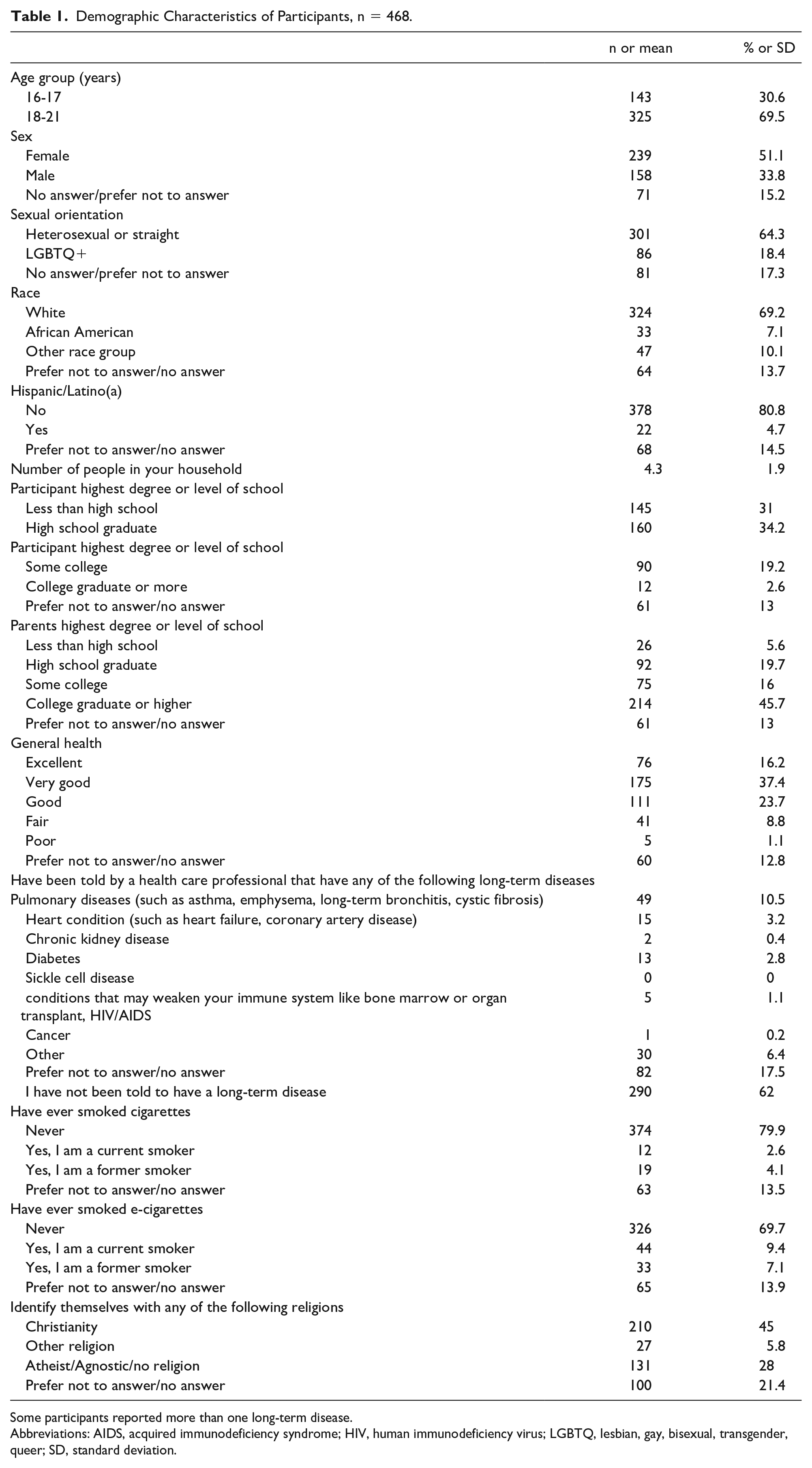
A 30% response rate was achieved. This response rate is consistent with population- and hospital-based patient surveys generally, which typically range between 16% and 80%.19-22 Most respondents were White (69%) and non-Hispanic (81%), and 45% identified themselves as Christians. Fifty-one percent were female, and 18% percent self-identified as LGBTQ+ (Table 1). Twenty percent reported prior diagnosis with a long-term disease, and 16% were former or current e-cigarette smokers.
Demographic Characteristics of Participants, n = 468.
Some participants reported more than one long-term disease.
Abbreviations: AIDS, acquired immunodeficiency syndrome; HIV, human immunodeficiency virus; LGBTQ, lesbian, gay, bisexual, transgender, queer; SD, standard deviation.
COVID-19 Knowledge and Risk Perceptions
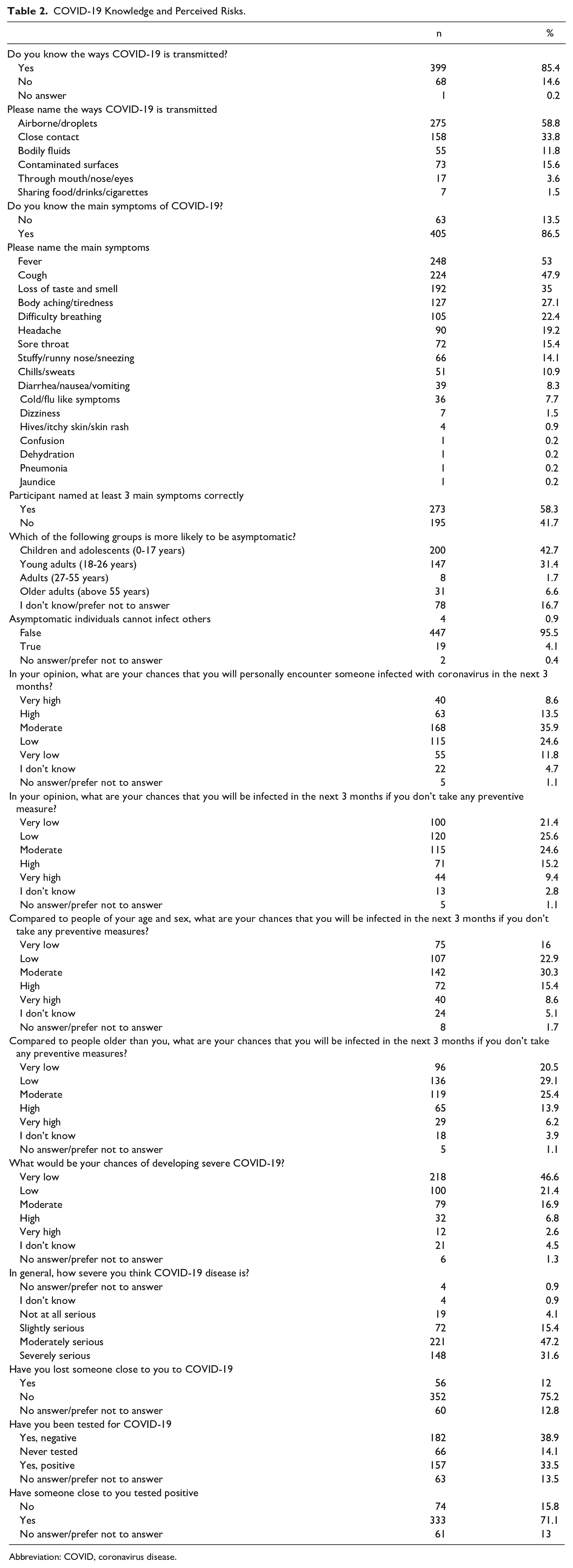
Although 86.5% reported knowing the COVID-19 main symptoms, only 58% correctly named at least 3 of these symptoms (Table 2). When asked what their chances of being infected will be in the next 3 months, if no preventive measure is taken, 47% responded very low or very low.
COVID-19 Knowledge and Perceived Risks.
Abbreviation: COVID, coronavirus disease.
Risk perception of infection, risk perception of infection compared to peers, and risk perception compared to older people were used to identify classes of risk perceptions among participants using Latent Class Analysis. The smallest AIC (2291.8) and smallest BIC (2372.9) were reached, identifying 3 clusters as the optimal number of clusters. Effect sizes of each of the 3 risk perception variables in the original latent class were higher than 0.75, indicating high likelihood of individuals being classified accurately in a latent class. The first cluster was identified as “low perceived risk,” which included 39% of participants; 2 other clusters with 38 and 23% of participants, were identified as moderate and high-risk perception of infection clusters, respectively. Gamma coefficient between clusters and perceived risk, between clusters and perceived risk compared to peers and clusters and between clusters and perceived risk compared to older people were, respectively, 0.83 (95% CI: 0.76, 0.89), 0.93 (95% CI: 0.94, 0.99), and 0.89 (94% CI: 0.85, 0.93).
COVID-19 Vaccine Uptake
Sixty-five percent of participants reported having received ≥1 dose of COVID-19 vaccine (Table 3). Of those, 6.3% received only 1 dose, 30.5% received 2 doses, and 27.7% received an additional booster shot. Seventy-nine percent of those who had not received COVID-19 vaccine reported they will probably not/definitely not be vaccinated. Reported top 5 main reasons for receiving COVID-19 vaccine were “it will keep me from getting COVID-19” (72%), “not passing COVID-19 to family, friends, and others around me” (70%), “be able to visit friends, relatives” (56%), “COVID-19 vaccines are effective” (51%), and “COVID-19 vaccines are safe” (50%). Similarly, those who had not been vaccinated reported their top 5 reasons for not receiving COVID-19 vaccine. They stated they had concerns about long-term side effects (71%), concerns about short-term side effects (43%), planned to “wait and see” if it is safe (42%), distrust in COVID-19 vaccines (40%), and reported vaccination against COVID-19 was “not a priority now” (48%).
COVID-19 Vaccine Acceptance, Knowledge, and Affect Regarding COVID-19 Vaccine, Social Influence, and General Vaccine Hesitancy, n = 468.

Abbreviations: COVID, coronavirus disease; EUA, emergency use authorization; FDA, food and drug administration.
COVID-19 Vaccine Affects, Knowledge, and Hesitancy
Most of participants responded receiving COVID-19 vaccine would be unpleasant/somewhat unpleasant (57%), yet most said it would be safe/somewhat safe (69%) (Table 3). Important to note, 71% and 71.4% believed that fully vaccinated people, compared to unvaccinated people, had insignificant or lower risks of developing severe COVID-19 and dying from COVID-19, respectively.
Sixteen percent reported being very much or completely hesitant (Table 3). When asked if their parents think that is all right for them to received COVID-19 vaccine, 62% responded yes. Fifty-nine percent of participants indicated they would accept vaccination very often or always if recommended by their doctor.
Factors Associated With COVID-19 Acceptance
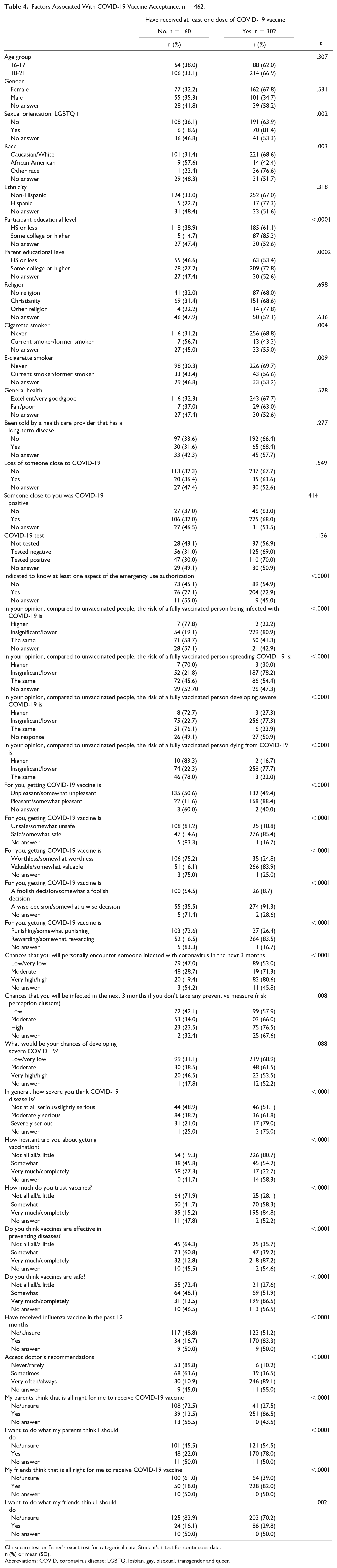
Having received at least one dose of COVID-19 vaccine was associated with participant educational level, parent educational level, race, and sexual orientation (Table 4).
Factors Associated With COVID-19 Vaccine Acceptance, n = 462.
Chi-square test or Fisher’s exact test for categorical data; Student’s t test for continuous data.
n (%) or mean (SD).
Abbreviations: COVID, coronavirus disease; LGBTQ, lesbian, gay, bisexual, transgender and queer.
Significant associations were observed between COVID-19 vaccine receipt and cluster of perceived risk of infection; 76.5% of vaccinated participants were identified in the high-risk perception cluster, compared to 23% of unvaccinated participants. Likewise, more vaccinated AYAs believed COVID-19 is a severely serious disease (79% vs 21%, P < .0001). Perceived benefits of vaccination regarding lowering one’s changes of developing severe COVID-19 and dying from COVID-19 were higher among vaccinated (P < .0001) compared to unvaccinated AYAs. Internal cues to action (general health status, being diagnosed with a long-term disease, chances of developing severe COVID-19) and external cues to action (loss of someone close due to COVID-19, having someone close to them being tested positive for COVID-19) were not associated with vaccination status (P > .05), although parental approval to vaccinate, whether receiving the vaccine is safe and pleasant (perceived barriers) and vaccination status were significantly associated (P < .0001) with receiving COVID-19 vaccine. Finally, vaccinated AYAs reported low levels of vaccine hesitancy (81% vs 19%, P < .0001) and higher influenza vaccination in the past 12 months (83% vs 17%, P < .0001).
TMIB: Logistic Regression Model Results
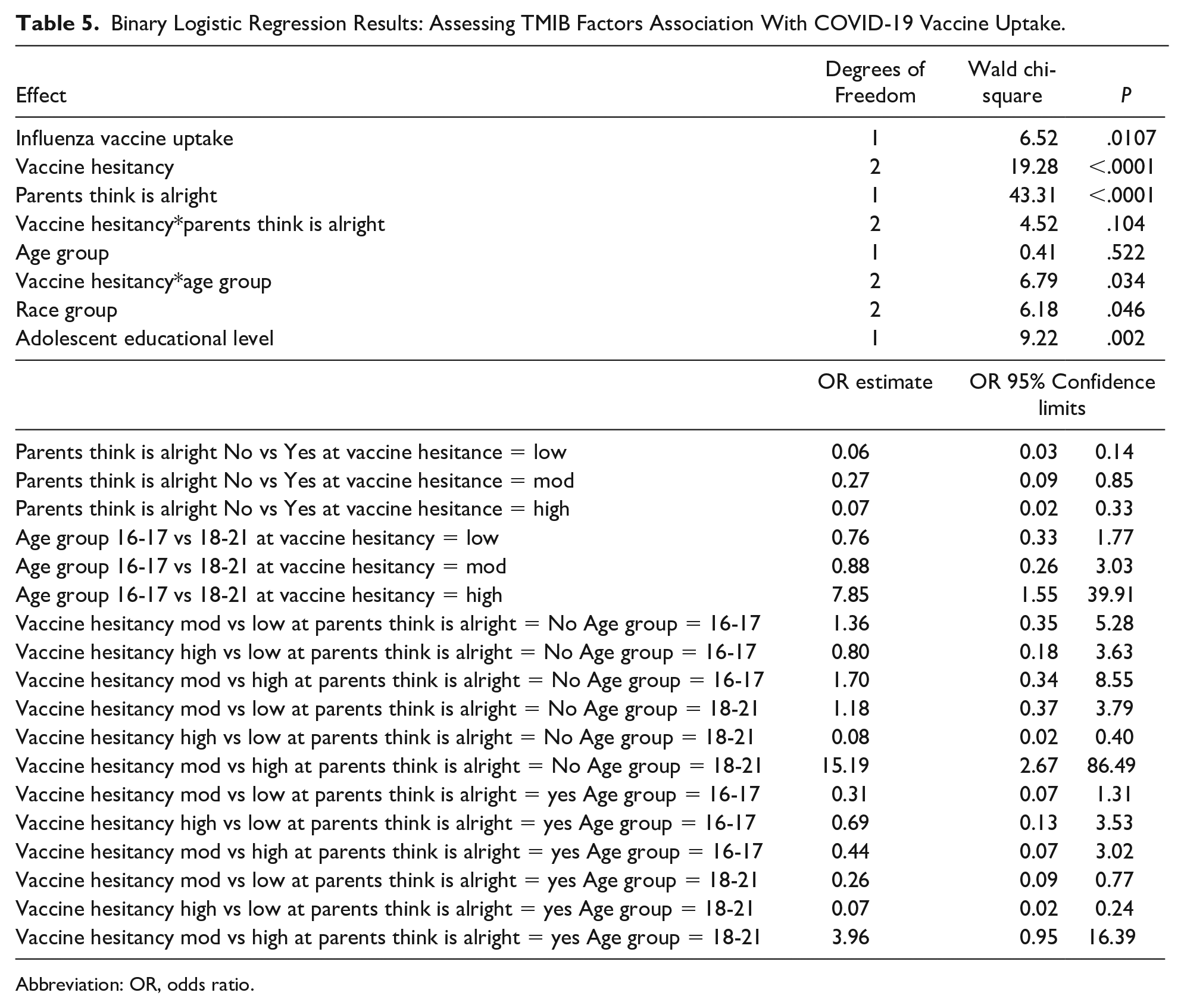
The probability of having received ≥1 dose of COVID-19 vaccine (yes/no) was investigated as a function of previous flu vaccine uptake (yes/no) and vaccine hesitancy, moderated by parental approval to receive COVID-19 vaccine and age group. The model was adjusted for demographic factors with P ≤ 0.2 in the univariate analysis. The model fitting statistics of the final binary logistic regression model indicated good fitting (C: 90%, percent concordant 88.3%, percent discordant 10.3%). The adjusted odds of having received ≥1 dose of COVID-19 vaccine was 2.2 (95% CI: 1.2, 4.2, Table 5) times larger for those who had also received influenza vaccine in the past 12 months than for those who had not.
Binary Logistic Regression Results: Assessing TMIB Factors Association With COVID-19 Vaccine Uptake.
Abbreviation: OR, odds ratio.
Among those with high vaccine hesitancy, the odds of having received ≥1 dose of COVID-19 vaccine was 7.8 (95% CI: 1.5, 39.9) times larger for age group 16 to 17 years than for age group 18 to 21 years. Conversely, among those with high vaccine hesitancy, the odds of having received ≥1 dose of COVID-19 vaccine was 0.07 (95% CI: 0.02, 0.33) times lower for participant with parental disapproval to receive the vaccine than for those with parental approval. Interaction between vaccine hesitancy levels and age group was significant (P = .0336). Although a decrease in the probability of being vaccinated was observed among high vaccine-hesitant AYAs in both groups (with and without parental approval), this decrease was much sharper in the older group (18 to 21 y.o.).
HBM: Logistic Regression Model Results
The significant association observed between risk perceptions of infection in the univariate analysis did not hold in the logistic regression model. The model failed the Hosmer-Lemeshow test for goodness of fit (P < .05). Significant factors in the model were perceived benefits of vaccination regarding lowering one’s chances of developing severe COVID-19, parental approval to vaccinate, whether receiving the vaccine is safe, and whether it is pleasant (P < .0001). Adolescents and young adults with parental approval had higher odds of being vaccinated compared with those whose parents disapproved it (aOR = 5.1, 95% CI: 2.6, 9.9). Similarly, believing that it is safe and pleasant to receive the vaccine and believing that vaccinated individuals are less likely to develop severe COVID-19 compared to unvaccinated individuals, were associated with higher odds of being vaccinated.
Discussion of Study Findings
COVID-19 vaccine coverage was similar to the Ohio State adult population. In our sample, 64.5% had received ≥1 dose and 27.7% had received an additional booster dose. At the time, this survey was sent to participants (April-June 2022), these numbers were 64% and 31% in the Ohio State adult population. 23
The results of this cross-sectional study showed that all TMIB model components, health behavior habit (influenza vaccine receipt), vaccine intention (measured by the proxy variable vaccine hesitancy) and facilitating conditions (measured by the proxy variables parental approval and age group) were significant predictors of probabilities of having received at least one dose of the COVID-19 vaccine, resulting in a strong model that fitted the data well. Conversely, the HBM components did not result in a valid binary logistic regression model. Similar to our findings, most of the studies in a systematic review 5 did not find a significant association between risk perceptions and vaccination status. Influenza vaccination history, however, was a strong predictor of COVID-19 vaccination willingness among adults and in our study sample of AYAs, confirming the strength of this association across populations.
Our findings indicated that perceived risk of infection was associated with vaccine acceptance, but in the presence of other factors in the logistic regression, this association did not hold. Although risk perceptions may act as triggers for precautionary action,23,24,25 engagement in preventive health behaviors, such as vaccination, may not solely be determined by the awareness of one’s own health risks26-28 in the population of AYAs.
This survey contributes to the literature in 3 ways. This study is the first to present findings about COVID-19 vaccine acceptance among AYAs using the TMIB and the HBM as a theoretical framework to examine the utility of its constructs in predicting the receipt of at least one dose of the vaccine among AYAs. Second, our study presents the comparison between the HBM and TMIB regarding their usefulness in predicting vaccine uptake in our study population; and third, our study is the first to report vaccine rates for AYAs by demographic variables such as sexual orientation, and perceived risk of infection, perceived vaccine benefits, vaccine hesitancy, sentiments regarding vaccination, influenza vaccination status in the past 12 months, and by parental approval in receiving the vaccine.
This study has several limitations. At the time of this study data collection, uncertainty remained regarding the protection vaccines may provide against COVID-19 new variants. These uncertainties may have hindered AYAs to form an accurate evaluation of their own perceptions of risk. Moreover, during the 2 years prior to this study, strict precautionary measures were in place, daily incidence of COVID-19 was higher, and pandemic related news coverage with low scientific quality were available. The combination of these factors may have exacerbated the fear of the disease, and therefore, the perception of risk among AYAs may have been higher in the year before our study data were collected. Moreover, it is beyond the scope of this study to address all the potential factors influencing adolescents’ cost/benefit assessments regarding vaccination, although many of the barriers and motivators have been identified in the literature, including perceptions about vaccine safety and efficacy and social influences on behavior.6,29,30 The same can be said about how the various vaccines factor into decisions, although all used to date have shown acceptable risk-benefit profiles, particularly in their protection against severe disease. Adequately updating the public is essential to assist the population in evaluating their own perceived risks for COVID-19, as well as their perceived risk of vaccine side effect and perceived benefits of the vaccine, as new research findings about this virus and its variants, and efficacy of new treatments and vaccines are reported.
Continued research is needed to evaluate shifting attitudes around COVID-19 risk perceptions among AYAs, as new developments about COVID-19, new pharmaceutical treatments and vaccines become available, along with new findings regarding benefits and risks of vaccination. Compared to our study, studies reported in the literature assessed COVID-19 knowledge and perceived risk in unique manners to address their study aims. Measuring general risk perceptions in this population consistently could have facilitated comparisons across populations.
Moreover, our study population included only AYAs who used the hospital services. We acknowledge that individuals sampled from the hospital patient population, who are seeking services, may consent or refuse to participate in research, and their willingness to participate is unlikely to be random. To meliorate that, we included any visit to all hospital sites and departments. Some bias might be also implied due to the low number of participants of minority race groups in this sample.
Conclusions
Our findings indicate that online survey in young population is feasible and may yield reasonable response rate with a small financial incentive, without using parental responses as proxy.
To our knowledge, no other study has used the TMIB as a framework in this study population. Our results indicate that the TMIB significantly predicted COVID-19 vaccine uptake, with a combined significant effect of age, parental approval, vaccine hesitancy, and having received the influenza vaccine (habitual health behavior). Confirming the findings in the adult population reported in the literature, AYAs vaccinated against influenza were more likely to have been vaccinated against COVID-19. As one of the main factors from the HBM, risk perceptions of infection and risk perception of developing severe COVID-19 did not contribute to a valid predictive model.
Further future longitudinal studies may benefit from collecting vaccine intention and uptake and investigating the utility of the TMIB in predicting vaccine uptake. Because this study used a cross-sectional design approach, vaccine hesitancy was used as proxy for intent to receive COVID-19 vaccine. Nevertheless, findings of a national longitudinal study among American adults 18 indicate that COVID-19 vaccine hesitancy was associated with lower odds of subsequent vaccine uptake for vaccine refusers (aOR = 0.02; 95% CI: 0.01, 0.03).
Author Contributions
Footnotes
Acknowledgements
The authors are grateful for the adolescents and young adults who kindly agreed to participate in this study and for the support from the Rebecca D. Considine Institute staff.
Declaration of Conflicting Interests
The author(s) declared no potential conflicts of interest with respect to the research, authorship, and/or publication of this article.
Funding
The author(s) disclosed receipt of the following financial support for the research, authorship, and/or publication of this article: This research project was funded by Akron Children’s Foundation Research Grant (grant no. 4500086).
