







Abstract
The aim of the study was to investigate independent and joint associations of physical activity and sedentary behavior with psychological distress. In this cross-sectional study, all participants underwent a physical examination and questionnaire survey, including physical activity, sedentary behavior, and psychological distress. The rank-sum test was used to compare the distribution of psychological distress status among students with different characteristics, physical activity levels, and sedentary time. Logistic regression models were used to analyze the independent and joint association between physical activity, sedentary behavior, and psychological distress, stratified by age. The results of the rank sum test and logistic regression showed that students with more sedentary behavior and less physical activity were associated with higher psychological distress generally, but physical activity may attenuate the psychological distress relevant to non–screen-based sedentary behavior on weekdays in middle and high school students and screen-based sedentary behavior on weekends in all participants.
Keywords
Introduction
Psychological distress is an important marker of mental health disorders and has been described as a series of symptoms including anxiety, depression, irritability, declining intellectual capacity, tiredness, lack of enthusiasm, problems with sleep, feeling sad or melancholy, and feeling despairing about the future.1,2 In addition, notably, untreated sustained psychological distress may increase the risk of suicidal ideation. For example, a population-based study during 2016 to 2017 indicated that self-reported psychological distress was an important and continuous predictor of suicide death after a suicide attempt within a year. 3 Childhood and adolescence represent periods of rapid growth and development. Thus, it is of interest to identify factors that may affect psychological distress. Physical activity (PA) and sedentary behavior (SB) are the 2 important factors for further investigation, which are believed as low-cost strategies and modifiable behaviors to improve psychological health.4,5 Besides, compared with other behaviors, PA and SB can occupy almost all waking hours in 1 day, so that these 2 factors cannot be ignored. Therefore, it is of great importance to investigate the associations between PA, SB, and psychological distress.
The PA is defined as any bodily movement produced by skeletal muscles that results in energy expenditure. 6 In recent years, the prevalence of insufficient PA among children and adolescents has remained high globally. 7 WHO 2020 guidelines on PA recommended adolescents to take 60 minutes of moderate-to-vigorous PA (MVPA) daily. 8 Only 20.5% of Chinese students aged 9 to 22 years were physically active for an hour at school in 2014. 9 Importantly, physical inactivity among adolescents over decades has been one of the behavioral-level risk factors shown to contribute to anxiety and depression. 10 A cross-sectional study with Australian adolescents indicated that boys with low levels of PA were more prone to depressive symptoms. 11 In addition, a Germany longitudinal research showed that young women (12-26 years), when taking PA longer than usual, felt less depressed in the next morning. 12
Like PA, SB is another important factor that affects psychology, which is not physical inactivity by a different name. 13 The SB, defined as any waking behavior characterized by an energy expenditure ≤1.5 METs (metabolic equivalents) while in a sitting or reclining posture, 14 occurs within the context of our daily life (eg, work, leisure, and transportation) and in different modes (eg, reading and TV time). 15 For children and adolescents, evidence has emerged that their SB is omnipresent. According to the Physical Activity and Fitness in China–The Youth Study (PAFCTYS), a large-population school-based survey, 16 over 34.6% of students aged 7 to 19 years spent more than 2 hours per day engaging in SB measured by self-reported questions in 2017. 17 However, higher levels of SB have been related to negative psychological outcomes, with higher depressive symptoms included. 18 The association of screen time with the mental health of children and adolescents is particularly strong, and importantly, screen time is related to higher psychological distress and lower self-esteem, 19 which is a risk factor for psychological anxiety.
Some existing studies have investigated the joint association between PA and SB in other health outcomes. For example, a study based on a cohort of 60 202 Brazilian adults indicated that the negative effects of high TV viewing on chronic disease can be mitigated by engaging in PA. 20 Similarly, a meta-analysis among 1 million people showed that the increased risk of death due to high sitting time seemed to be eliminated by high levels of moderate-intensity PA. 21 However, inadequate existing evidence of joint effect on mental health showed that undergraduate students with insufficient PA and high SB experienced more distress in a prospective study. 22
While reviewing the literature, studies related to PA and SB in this field focused on physical health outcomes most, such as adiposity and cardiometabolic health, and fewer studies have investigated associations with mental health outcomes relevantly. 23 In terms of mental health outcomes, research works in this field mainly focused on depression, whereas few studies investigated the association between PA and psychological distress. In addition, most previous studies have examined total screen time or total sedentary time, whereas studies that examined non–screen-based sedentary time (studying, etc) were quite few.23,19 Besides, research works conducted in children were relatively few, compared with studies in adolescents, and few existing studies were conducted in subgroup of age. 23 Furthermore, it appears that research works observing the joint effect of PA and SB are scarce and need to be supplemented. 23
Therefore, in order to fill the knowledge gap regarding this issue, the aim of the study was to investigate the prevalence of 3 kinds of SB (including studying, TV viewing, and other screen behaviors), observe the age-stratified independent and joint effects of PA and non–screen-based or screen-based SB on psychological distress, and elaborate whether PA could mitigate psychological distress relevant to SB in a large sample of Chinese students. We hypothesized that high levels of PA and limited SB were negatively associated with psychological distress independently, and it is also hypothesized that PA and SB have a joint effect on psychological distress.
Materials and Methods
Sample and Study Design
This was a cross-sectional study. Data were obtained from the Henan survey part of the 2019 circle of Chinese National Survey on Students’ Constitution and Health (CNSSCH), the largest nationally representative survey of Chinese school-aged children and adolescents, which was designed to investigate their health status every 5 years. 24 The sampling procedures, as previously published in detail, 25 were same in this time. Briefly, students from 3 different socioeconomic status areas were selected, including upper (Zhengzhou city), moderate (Jiyuan city, Xinxiang city), and lower (Zhoukou city) areas. Each city was divided into 2 area groups (urban and rural) according to residential regions and then further divided into sex and age-specific subgroups. The same numbers of participants were selected in each subgroup by stratified cluster sampling from some classes, which were as clusters randomly selected from each grade in each school, and schools were selected from urban and rural areas randomly. This study only included participants of Han ethnicity, which accounts for 92% of the total Chinese population. The subjects were students aged from 9 to 18 years, who were selected from urban or rural areas, including students from the fourth grade of primary school to the third grade of senior high school. The ratio of male/female was approximately equal to 1:1. All participants underwent physical examination and questionnaire survey. The questionnaires were self-reported by the students under the guidance of teachers. The research protocol was approved by the Zhengzhou University Life Science Ethics Committee (ZZUIRB2021-56), and written informed consent was obtained from all participants and their parents. After excluding those missing, biologically implausible, and illogical samples, a total of 10 972 students were included in the final analysis.
Independent Variables
The PA (minutes per day, days per week) was measured by the modified International Physical Activity Questionnaire (IPAQ) (short forms). The IPAQ has been verified for use in various countries. 26 Moreover, the reliability and validity of the Chinese version of the IPAQ have been verified within the Chinese population (the intraclass correlation coefficient was above 0.7 and the correlation coefficient between IPAQ and accelerator was 0.63), 27 and its utilization for assessing PA levels was observed among Chinese children and adolescents. 28 According to the grouping criteria for individual PA level in the questionnaire, the level of PA was divided into 3 categories, including light-intensity PA (LPA), moderate-intensity PA (MPA), and vigorous-intensity PA (VPA). 29 Compared with the original questionnaire, the modified IPAQ was divided into 2 parts, weekdays and weekends, so as to better adapt to the actual situation of students. Individuals were excluded from the analysis if they filled in more than 5 days on weekdays or more than 2 days on weekends for 3 intensities of PA. Besides, individuals were excluded from the analysis if the total cumulative daily time of the 3 intensives of PA exceeded 960 minutes (16 hours). If an individual reported less than 10 minutes of cumulative PA per day for an intensity, the time and corresponding weekly frequency were re-coded as “0,” assuming that at least 10 minutes of continuous PA per session was required to obtain health benefits.29,30
The SB (hours per day) was assessed with questions about the time spent on studying, TV viewing, and other screen behaviors after school. The questions were “Over the past 7 days, what was the average amount of time you spent on the following static activities on a school day?” and “Over the past 7 days, what was the average amount of time you spent on the following static activities per day on weekends?,” whereas the response options were 0 hours, <0.5 hours, 0.5 to 1 hours, 1 to 2 hours, 2 to 3 hours, 3 to 4 hours, 4 to 5 hours, 5 to 6 hours, 6 to 7 hours, and >8 hours. Studying referred to sitting quietly after school (including completing homework in and out of class and attending training classes outside school). Other screen behaviors included playing games, watching videos, or reading e-books on mobile phones, tablets, video game consoles, computers, and so on. Sedentary time was divided into 3 categories: 0 to 2, 2 to 4, and ≥4 hours/d. For analysis purposes, studying was considered as non–screen-based SB, whereas television viewing and other screen behaviors were considered as screen-based SB, and more than 2 hours of each SB were defined as high levels of SB, whereas no more than 2 hours of each SB were defined as low levels.31-33
Outcome Assessment
Psychological distress was measured by Kessler Psychological Distress Scale (K10), a 10-item questionnaire, focusing on anxiety and depression. 34 The Chinese version of K10 has been verified with good reliability and validity in the Chinese population, the Cronbach’s alpha coefficient was 0.8011, split-half reliability was 0.7076, and the kappa coefficient of the test-retest results was 0.703. 35 Besides, it has also been validated in Chinese children and adolescents. 36 Participants were required to recall how they felt during the previous 4 weeks. The overall index was calculated by each question, with higher values indicating poorer mental health. The scale used a 5-value response option for each question (including none of the time, a little of the time, some of the time, most of the time, and all of the time), which were scored from 1 to 5. The maximum score is therefore 50, indicating severe distress, and the minimum score is 10, indicating no distress. 37 Participants were categorized by Chinese cut-offs, where a score of 10 to 15 indicated low psychological distress; 16 to 21, moderate distress; 22 to 29, high distress; and 30 to 50, very high distress.38,39 In order to conduct analyses, K10 was defined as low (score 10-15) and moderate to very high (score 16-50).40,41
Covariates
The covariates included the following sociodemographic variables: age (9-12 years: elementary school students/13-18 years: middle and high school students), sex (male/female), setting (rural/urban), location of school (Jiyuan city/Xinxiang city/Zhengzhou city/Zhoukou city), parents’ education level (junior high school or below/senior high school/university or above), only children (yes/no), and body mass index (BMI). The BMI was calculated as weight (kg)/height 2 (m2). Height and weight were measured by professionals during the physical examination. According to the grouping criteria for overweight and obesity among school-age children and adolescents in China, children of each age group were divided into 3 groups: normal, overweight, and obesity. 42
Statistical Analysis
Analysis was performed using IBM SPSS Statistics software version 21. All variables were categorical variables. Wilcoxon-Mann-Whitney test or Kruskal-Wallis rank-sum test was used to explore differences in psychological distress among participants with different characteristics. Binary logistic regression models were used to examine the associations between PA and SB and psychological distress stratified by age independently, where the first category of each variable was defined as the reference group. In addition, logistic regression analysis was conducted to evaluate the association between different intensities of PA and different types and levels of SB by deriving 4 combined variables (PA and non–screen-based SB on weekdays/PA and screen-based SB on weekdays/PA and non–screen-based SB on weekends/PA and screen-based SB on weekends) with 6 categories (VPA & SB <2 h/d, VPA & SB ≥2 h/d, MPA & SB <2 h/d, MPA & SB ≥2 h/d, LPA & SB <2 h/d, LPA & SB ≥2 h/d) in subgroups of age compared with the reference group (VPA & SB <2 h/d). Odds ratio (OR) and 95% confidence intervals (95% CIs) were estimated and used to demonstrate the effect size for logistic regression models. Statistical tests were 2-sided, and P < .05 was considered statistically significant for all findings.
Results
Characteristics of Participants
A total of 10 972 students completed the survey and were included in the final analysis. As displayed in Table 1, 50.2% of the participants were male. Participants were predominantly non-only children (84.5%). The percentages of the participants’ fathers whose education level was junior high school or below, senior high school, and university or above were 45.1%, 31.9%, and 23.0%, respectively, and these percentages were 47.3%, 31.1%, and 21.6%, respectively, for participants’ mothers. Most participants had a normal weight (74.8%), 15.5% were overweight, and 9.7% were obese. Table 1 showed 12.7% of participants had LPA, 41.4% of participants had MPA, and 45.9% had VPA. Besides, 32.2% and 15.9% of participants reported ≥2 h/d of non–screen-based SB and screen-based SB on weekdays, respectively, and the proportions increased to 44.3% and 41.7% for non–screen-based SB and screen-based SB on weekends, respectively. In the overall sample, 28.7% of participants reported having low psychological distress, 31.4% having moderate distress, 26.6% having high distress, and 13.3% experiencing very high distress.
Characteristics of Participants (n = 10 972).

Changes in Sedentary Time During Weekdays and Weekends
Descriptive statistics for each type of SB after school were presented in Figure 1 and Supplemental Table 1. Students spent the most time studying and the least time watching TV on weekdays, with similar results on weekends. A percentage of 32.2% of students spent more than 2 hours doing homework every day during the weekdays, and this proportion increased to 44.3% on weekends. Students watched more TV on weekends than on weekdays. During weekdays, most students (93.8%) watched less than 2 hours of TV per day, whereas 15.3% watched more than 2 hours on weekends. Students also spent more time on other screen behaviors on weekends than on weekdays. Only 9.9% of students spent more than 2 hours on other screen behaviors on weekdays, whereas this proportion increased to 28.6% on weekends. Compared with weekdays, the time of 3 types of SB all increased on weekends, and the increase of the screen time (especially other screen behaviors) was significantly greater than the time for studying.
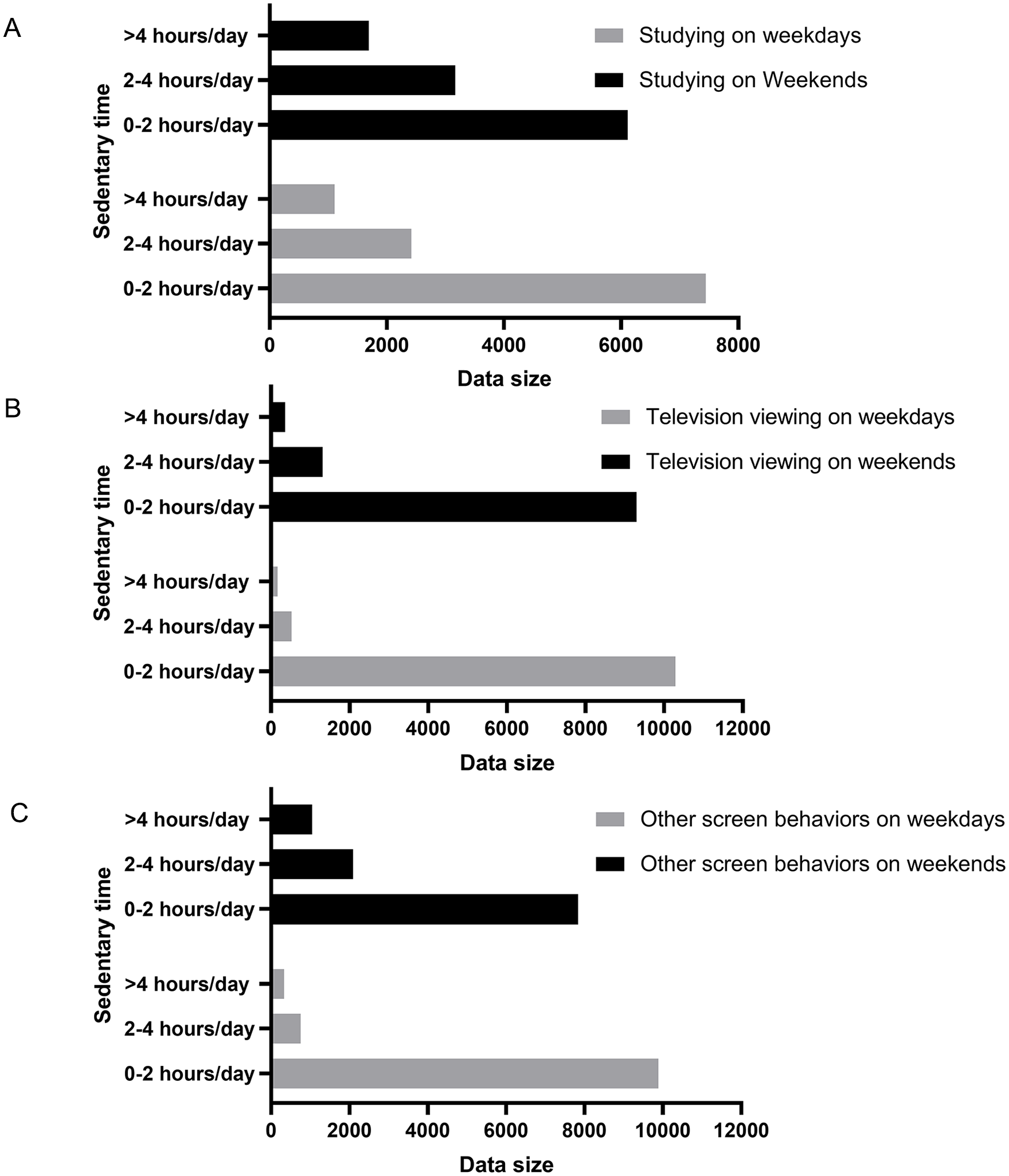
Distribution of sedentary time for studying (A), TV viewing (B), and other screen behaviors (C).
Distribution of Psychological Distress Status Among Students with Different Characteristics, Physical Activity Levels, and Sedentary Time
Table 2 showed the distribution of psychological distress status among students, and the overall distribution of psychological distress differed across groups with different characteristics, PA levels and sedentary time, except for BMI. Compared with female students, male students’ psychological status was better (Z = −2.462, P < .05). Children from urban areas experienced lower psychological distress than rural areas (Z = −2.367, P < .05). Students aged 13 to 18 years (middle and high school students) had significantly higher prevalence of psychological distress than students aged 9 to 12 years (elementary school students) (Z = −27.715, P < .05), and only children had better psychological status (Z = −4.919, P <.05). In addition, the overall distribution of psychological distress was not the same in students with different parents’ education levels and from different locations of school (P < .05). Compared to participants with VPA, students who took less PA were more likely to experience psychological distress (P < .05). In addition, the degree of psychological distress increased with the increase in the time of non–screen-based SB and screen-based SB (all P < .05), except for non–screen-based behavior on weekends.
Difference of Psychological Distress Status Among Children and Adolescents with Different Characteristics, Physical Activity Levels, and Sedentary Time (n = 10 972).
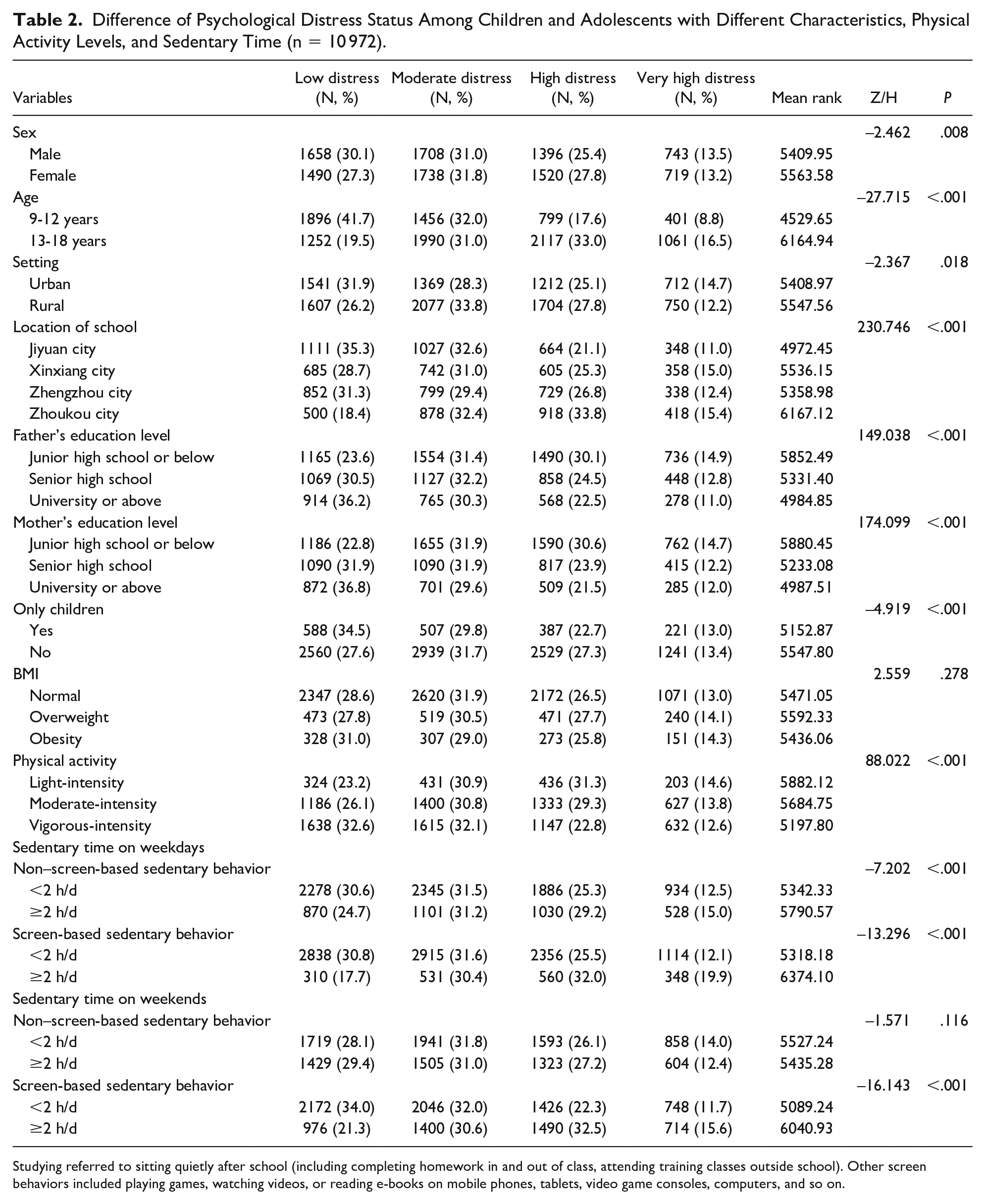
Studying referred to sitting quietly after school (including completing homework in and out of class, attending training classes outside school). Other screen behaviors included playing games, watching videos, or reading e-books on mobile phones, tablets, video game consoles, computers, and so on.
Associations of Physical Activity and Sedentary Behavior with Psychological Distress
As presented in Figure 2 and Supplementary Table 2, the odds of psychological distress decreased with the increase in PA intensities in both elementary school students (Figure 2A) and middle and high school students (Figure 2B), although insignificant in elementary school students. Middle and high school students with VPA were associated with a lower risk of psychological distress significantly (OR = 0.706, 95% CI = 0.562-0.885). Except for non–screen-based SB on weekends, other types of SB ≥2 h/d were all associated with higher risks of psychological distress in both elementary school students and middle and high school students significantly. Besides, non–screen-based SB ≥2 h/d on weekends was presented as lower odds for psychological distress significantly in elementary school students (OR = 0.711, 95% CI = 0.615-0.822).
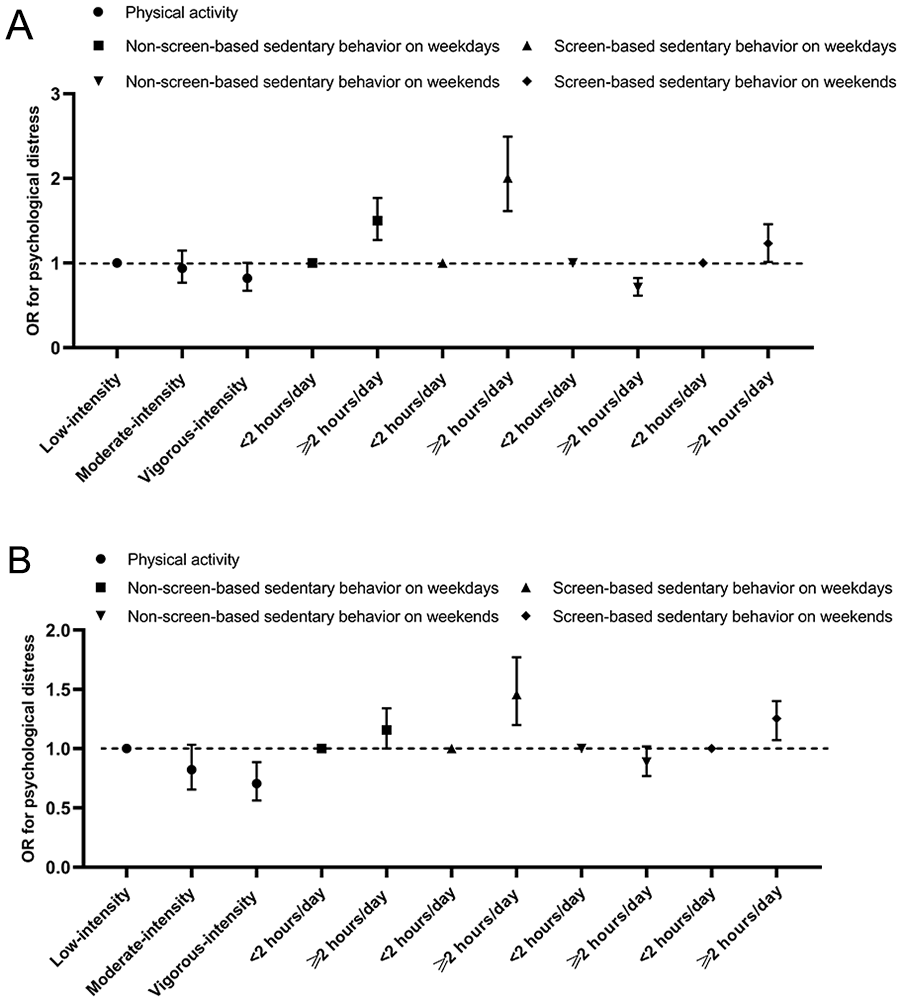
Associations between physical activity, sedentary behavior, and psychological distress for elementary school students (A) and middle and high school students (B).
Joint Associations Between Physical Activity, Sedentary Behavior, and Psychological Distress
Figure 3 and Supplemental Table 3 provided ORs for psychological distress by joint PA levels and sedentary time in elementary school students. Higher odds of psychological distress were observed in all joint groups on weekdays significantly compared with the reference group (VPA & SB <2 h/d), except for MPA & SB <2 h/d of screen-based SB. For non–screen-based SB on weekends, elementary school students who were classified as VPA & SB ≥2 h/d had lower odds of psychological distress (OR = 0.813, 95% CI = 0.681-0.970) significantly. Compared to participants with VPA and <2 h/d of screen-based SB levels, subjects with ≥2 h/d of screen-based SB levels on weekends showed statistically significant higher risks for psychological distress, whereas odds increased with the decrease in PA levels (for VPA: OR = 1.330, 95% CI = 1.086-1.629; for MPA: OR = 1.841, 95% CI = 1.455-2.330; for LPA: OR = 2.164, 95% CI = 1.462-3.205).
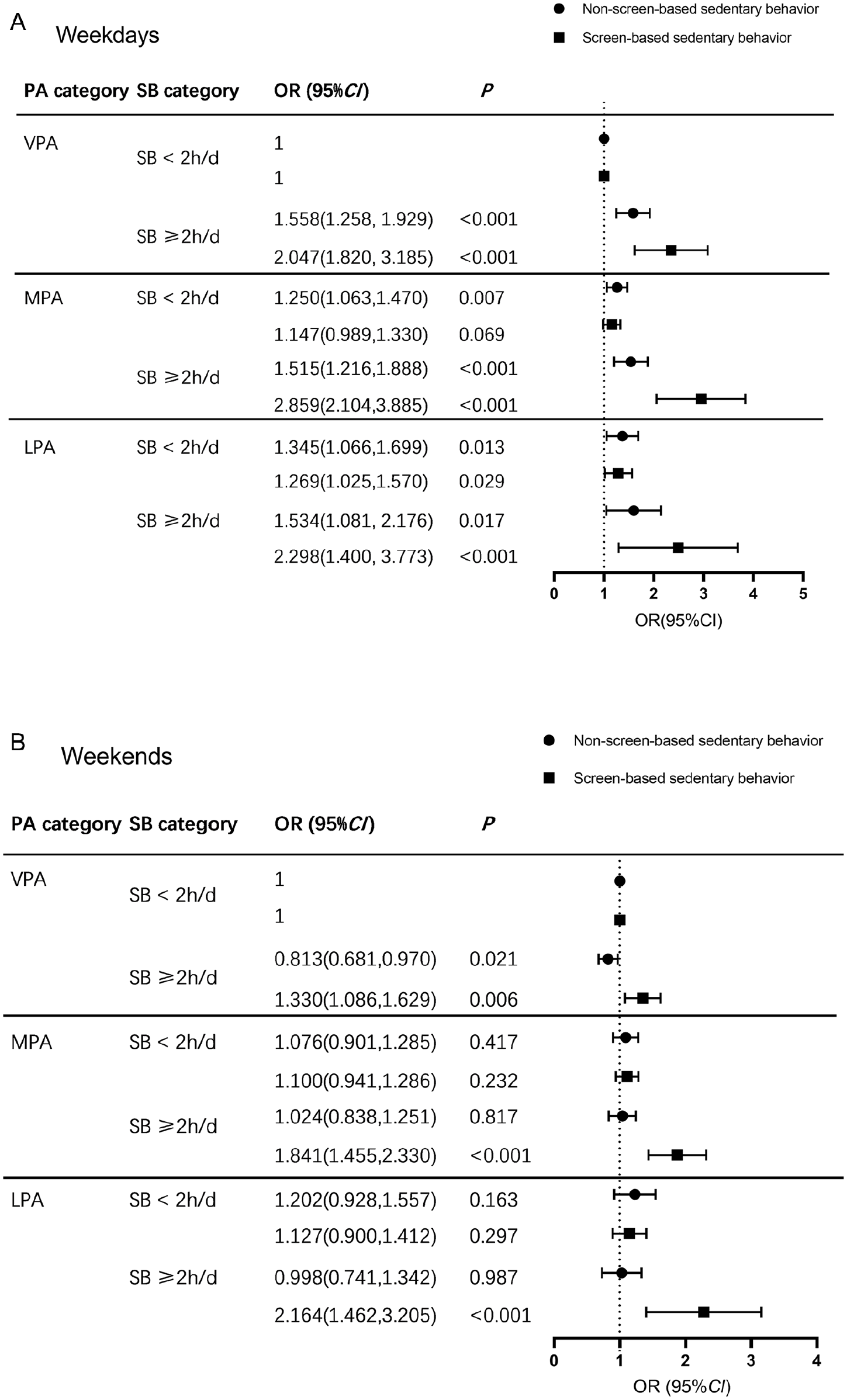
Joint effects of physical activity levels and sedentary behaviors on psychological distress for elementary school students on weekdays (A) and weekends (B).
Figure 4 and Supplemental Table 4 provided ORs for psychological distress by joint PA levels and sedentary time in middle and high school students. Students with non–screen-based SB ≥2 h/d on weekdays showed statistically higher risks for psychological distress compared with VPA & SB <2 h/d, while odds increased with the decrease in PA levels, although insignificant for VPA (for VPA: OR = 1.088, 95% CI = 0.897-1.319; for MPA: OR = 1.329, 95% CI = 1.088-1.625; for LPA: OR = 1.626, 95% CI = 1.128-2.343), which indicated that VPA might counteract the psychological distress associated with high levels of SB. For screen-based SB on weekdays, higher odds of psychological distress were observed in other joint groups significantly compared with the reference group (VPA & SB <2 h/d), except for LPA & SB ≥2 h/d. For non–screen-based SB on weekends, LPA & SB <2 h/d increased the odds of psychological distress significantly (OR = 1.464, 95% CI = 1.079-1.987). Compared to participants with VPA and <2 h/d of screen-based SB, subjects with ≥2 h/d screen-based SB on weekends showed statistically significant higher risks for psychological distress, whereas odds increased with the decrease in PA levels (for VPA: OR = 1.374, 95% CI = 1.144-1.651; for MPA: OR = 1.636, 95% CI = 1.345-1.990; for LPA: OR = 1.674, 95% CI = 1.216-2.302).
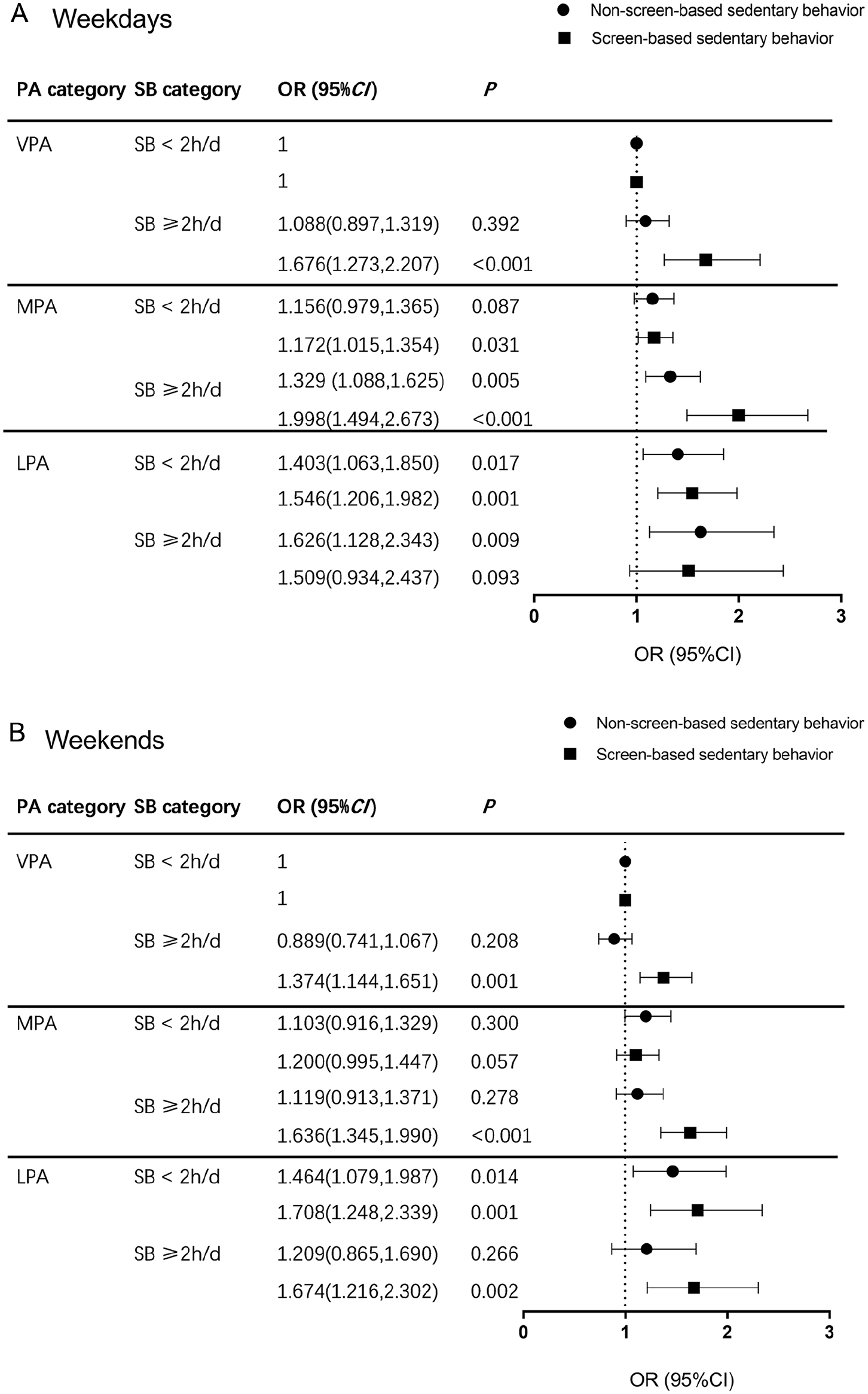
Joint effects of physical activity levels and sedentary behaviors on psychological distress for middle and·high school students on weekdays (A) and weekends (B).
Discussion
We observed the prevalence of 3 different types of SB and investigated the age stratified associations between PA, non–screen-based/screen-based SB and psychological distress independently and jointly with a large sample of Chinese children and adolescents. This study showed that long sedentary time was common among children and adolescents, especially on weekends. The time of the 3 SBs after school all increased on weekends. Our findings indicated that more SB and less PA were associated with higher psychological distress generally, but PA may attenuate the psychological distress relevant to non–screen-based SB on weekdays in middle and high school students and screen-based SB on weekends in all participants.
Our study indicated that sedentary time after school increased on weekends compared with weekdays for studying, TV viewing and other screen behaviors. Among the 3 behaviors above, students spent the most time studying no matter on weekdays or weekends, which may possibly be due to the heavy study burden of Chinese students. Furthermore, in order to reduce the screen time of adolescents, it is recommended by the American Academy of Pediatrics (AAP) 43 and Canadian 24-Hour Movement Guidelines 44 that screen time for children and adolescents were no more than 2 hours. Our study also found the proportion of students exceeding the recommended screen time was higher on weekends than weekdays, which was consistent with previous studies.45,46 According to the UK Millennium Cohort Study, about 76.9% of UK adolescents did not meet the screen time recommendation in the Canadian 24-Hour Movement Guidelines. 47
Our study found that PA was inversely associated with the symptoms of psychological distress generally, and middle and high school students with VPA were less likely to experience psychological distress significantly, which was consistent with previous findings. According to a prospective cohort (2004-2010), conducted in Denmark, girls with no more than 3 hours for PA in leisure time at 14/15 years had an increased risk of 60% for mental health problems at 20/21 years, compared with those with more than 4 hours for PA in leisure time (including 4 hours). 48 The results of this study were also in line with an epidemiological study conducted in Brazil, which showed a higher occurrence of common psychological distress in the population that did not practice sports. 49 In addition, a systematic review of prospective studies, involving children, adolescents, and adults (1988-2012), suggested any level of PA to prevent depression. 50 Moreover, a survey conducted in China revealed a positive correlation between physical inactivity and anxiety and depression among adolescents. 51 Furthermore, research has shown that engaging in VPA for 1 to 2 days per week had a protective effect against depressive symptoms in Chinese girls, whereas MPA for 1 to 2 days per week was found to be protective in boys. 52
Several hypotheses have been proposed to explain the associations between PA and psychological distress. First, the antidepressant effect of PA can be explained by biological mechanisms, such as the increased serotonin levels and the reduction of cortisol secretion. 53 Besides, it seems that participating in PA might enhance mental health via the release of endorphins, increase in brain-derived neurotrophic factor 54 and growth of new capillaries, 55 which in turn might enhance the structural and functional composition of the brain. 56 Moreover, it has been found that PA can reduce depression-like behaviors in several animal studies, which is associated with increased interleukin (IL)-10 levels and reduced proinflammatory myokines in the hippocampus.57,58 Second, PA is an opportunity to increase social communication and develop social skills. Thus, joining clubs and increasing PA can reduce depression. 59 In addition, Wagnsson et al demonstrated that perceived sport competence plays an important mediating role in the relationship between sport participation and self-esteem. 60
In this study, students with SB ≥2 h/d exhibited higher risks of psychological distress significantly, except for those with non–screen-based SB (studying) ≥2 h/d on weekends who had lower risks for psychological distress. Similarly, a previous study showed that participating in TV and computer/video games indicated greater risks for poor mental health and suicidal behaviors among adolescents. 61 Furthermore, according to a study from rural China, adolescents who exceeded 2 hours of screen time per day were 3% more prone to experience higher levels of behavioral difficulties, indicating a correlation between excessive screen time and poorer mental health. 62 Besides, screen time was positively associated with mental health problems in preschoolers from southwest China. 63 A study of American high school students showed that, female and male students who played video or computer games or used a computer more than 2 hours per day were 42% and 58%, respectively, more likely to have seriously considered suicide, compared with those who spent no more than 2 hours on screen time. 64 In addition, a higher level of screen-based SB was associated with lower self-esteem, physical self-concept as well as general self-efficacy among girls, whereas it was not observed in non–screen-based behavior. 65 According to a British cohort study, spending more time on homework at age 16 was inversely associated with psychological distress in adulthood independently, 66 which may be due to the academic performance from doing homework, thus improving well-being.
There were some mechanisms explaining the association between SB and psychological distress. First, SB could reduce social interaction and lead to loneliness, 67 especially screen-based behaviors, 68 thus impacting mental health negatively, which is similar to physical inactivity. A study investigating the relationship between obesity and depression also found that long-term participation in sedentary life will increase the sense of social exclusion and loneliness, which is related to suicidal thoughts and behaviors. 69 Specially, messages transmitted from media can generate cyberbullying, invite social comparison, and thus contribute to dissatisfaction with oneself. 70 Second, the process of body inflammation may also be a potential link between SB and mental disorders. 71 A European youth study found that sitting for a long time increases inflammation in young people like IL-6. 72 A sedentary intervention study also indicated that a systemic inflammatory process may underlie the association of sedentary time with mood 73 and found that the passive emotion or stress caused by the experimental method after long-term stay was associated with inflammation.
In comparison with VPA & SB<2 h/d, most other joint groups were correlated to higher risks of psychological distress in our study. With the increase of PA levels, the risks of psychological distress due to screen-based behavior ≥2 h/d on weekends decreased in elementary school students, which might indicate that increased PA levels appeared to mitigate the psychological distress associated with screen-based behavior in elementary school students. Similar results can be drawn in middle and high school students for non–screen-based behavior on weekdays and screen-based behavior on weekends. However, previous studies about the joint effects of PA and SB on psychological distress were inadequate; scarce existing literature demonstrated that the highest prevalence of psychological distress was presented in students with low PA combined with more screen time in Iranian children and adolescents aged 6 to 18 years, 74 and meeting recommended levels of PA along with ≤5 h/d of SB was associated with the lowest risks of psychological distress in Singapore adults. 75 In addition, some studies found the joint effects of PA and SB on mortality. For example, a meta-analysis found that PA lower than the current recommendations (60 minutes per day) reduced the mortality risk if combined with low levels of sedentary time. 76
Some limitations may exist in the study. First, owing to the cross-sectional study design, causal inference is not possible for the observed associations. More prospective studies are needed to determine whether there is a bidirectional relationship between SB or PA and psychological distress. Second, PA and SB were self-reported; therefore, recall response bias may exist. In particular, SB was assessed using self-reported questions, which had not been validated as a tested questionnaire, thus lacking any assessment of validity or reliability. Further research needs to use objective measurement methods (such as accelerators). In addition, associations of mentally active and mentally passive SB with psychological distress were not shown in this study. Recent research works have indicated that mentally active SB (such as homework, reading, and playing electronic games) may have a beneficial impact on depression, while mentally passive SB (such as TV viewing) may increase the risk of depression. 77 In addition, residual confounding due to unmeasured variables (such as parental mental health status or parenting distress) always exists in the analysis. Finally, complex survey features were not adjusted in our study. It demands careful consideration to make our findings be generalized to the whole population.
This study also has several strengths. One is the large sample size of 10 972 Henan children and adolescents aged 9 to 18 years. Furthermore, we assessed the prevalence of 3 kinds of SB after school (including studying, TV viewing, and other screen behaviors) to demonstrate the current situation of long sedentary time among Chinese students. In addition, on one hand, we investigated the association of non–screen-based SB and screen-based SB with psychological distress instead of the total daily SB to explore the differences of the effects for different types of SB. On the other hand, we investigated the associations of 3 levels of PA with mental health; it has been found that different intensities of PA could differentially impact mental health outcomes in students.78,79 Finally, joint effects of PA and SB on psychological distress were observed, and we investigated whether PA can mitigate psychological distress associated with different types of SB.
Conclusion
Students have more SB for studying out of school due to the pressure of schoolwork on average. Limited PA and prolonged sitting time, especially screen-based SB, were associated with higher psychological distress in general. In addition, it was worth noting that PA may attenuate the psychological distress relevant to non–screen-based SB on weekdays in middle and high school students and screen-based SB on weekends in all participants. Therefore, more PA and less SB should be recommended because they are feasible and helpful forms of long-term psychological support. Furthermore, active PA is needed to attenuate the risk of psychological distress associated with SB if SB is unavoidable. In the future, more longitudinal and follow-up studies need to be conducted to study the associations between PA, SB, and psychological distress with more objective measurement methods at different times all over the year.
Author Contributions
Supplemental Material
sj-docx-1-cpj-10.1177_00099228241273420 – Supplemental material for Physical activity may attenuate psychological distress associated with different types of sedentary behaviors: a cross-sectional study of 10972 Chinese students
Supplemental material, sj-docx-1-cpj-10.1177_00099228241273420 for Physical activity may attenuate psychological distress associated with different types of sedentary behaviors: a cross-sectional study of 10972 Chinese students by Jing Sheng, Hao Zhang, Yalin Song, Hao Lou, Cuiping Wu, Changfu Hao, Ran Li, Genli Gao, Xiaomin Lou and Xian Wang in Clinical Pediatrics
Footnotes
Acknowledgements
The authors want to express their sincere gratitude to all the participants, and the authors also gratefully thank the medical staffs and school staffs for their extensive assistance in data collection.
Declaration of Conflicting Interests
The author(s) declared no potential conflicts of interest with respect to the research, authorship, and/or publication of this article.
Funding
The author(s) disclosed receipt of the following financial support for the research, authorship, and/or publication of this article: This work was supported by the National Natural Science Foundation of China (grant no. 82003478) and the Scientific and Technological Project in Henan Province (grant no. 242102310031).
Ethics Approval and Consent to Participate
The research protocol conformed to the guidelines of the Declaration of Helsinki and was approved by the Zhengzhou University Life Science Ethics Committee (ZZUIRB2021-56), and written informed consent was obtained from all participants and their parents.
Availability of Data and Materials
The data sets used and/or analyzed during this study are confidential. The data are not publicly available due to privacy or ethical restrictions.
Code Availability
Not applicable.

Supplemental Material
Supplemental material for this article is available online.
References
Supplementary Material
Please find the following supplemental material available below.
For Open Access articles published under a Creative Commons License, all supplemental material carries the same license as the article it is associated with.
For non-Open Access articles published, all supplemental material carries a non-exclusive license, and permission requests for re-use of supplemental material or any part of supplemental material shall be sent directly to the copyright owner as specified in the copyright notice associated with the article.
