







Abstract
What are the consequences of the militarization of public safety? Governments increasingly rely on militaries for policing, but the systematic study of this phenomenon’s consequences for human rights has been neglected. NGO and journalistic accounts point to widespread violations by the military, but these snapshots do not necessarily present evidence of systematic abuse. Based on unique data on military deployments and human rights complaints in Mexico, we conduct a systematic, country-wide study of the consequences of constabularization for human rights. Following matching and difference-in-difference strategies, we find that it leads to a 150% increase in complaints against federal security forces. We also leverage deployments for disaster-relief operations and complaints against non-security institutions to show that the increase is not due to underlying conditions or higher reporting in the military’s presence. The findings have important implications for our understanding of quality of democracy and the democratic ideals of civilian policing.
The militarization of law enforcement is increasingly prevalent across the world. It has taken the form of police becoming like the armed forces in their tactics, weapons, and organization, as well as militaries taking on domestic policing. There is a growing body of research focusing on the consequences of this policy. In particular, several studies focusing on the United States suggest that the militarization of police has failed to reduce crime or improve officer safety (Gunderson et al., 2021; Lowande, 2021; Mummolo, 2018), but others point to favorable outcomes (Bove & Gavrilova, 2017; Harris et al., 2017). In the developing world, some studies suggest that the policy is counterproductive for counter-insurgency outcomes (De Bruin, 2021) and in countries where the armed forces have been constabularized, 1 as in Latin America (Blair & Weintraub, 2021; Flores-Macías, 2018; Flores-Macías & Zarkin, 2021b; Gan, 2020; Magaloni & Rodríguez, 2020; Osorio, 2015). In the context of the so-called drug wars against organized crime, which have claimed more than 300,000 lives and 73,000 disappeared in Mexico alone, this research has pointed to greater levels of violence, obstacles to police reform, and lower tax collection as consequences of militarization.
Although existing research has made important strides to understand the effects of constabularization, its consequences for human rights remain understudied. This gap is problematic primarily for two reasons. First, NGO reports suggest that the military routinely engage in human rights violations in Latin America (e.g., Human Rights Watch, 2019), but these accounts have yet to systematically evaluate the armed forces’ performance. Second, this security policy is highly popular among Latin American publics (Flores-Macías & Zarkin, 2021a). Thus, if constabularization does increase abuses by the state, then this security strategy poses a considerable paradox for democracy in the region. One of the fundamental principles of democracy is state responsiveness (Dahl, 1972). However, responsiveness in this arena through constabularization might entail negating another essential aspect: protecting human rights.
To examine the consequences of the constabularization of the armed forces for the protection of human rights, we rely on subnational evidence from Mexico, where the armed forces have been constabularized in large swaths of the national territory since the end of 2006. We obtained data—after winning several appeals to the government’s denial of right-to-information requests through the National Institute for Transparency, Access to Information, and Personal Data Protection (INAI)—on both military deployments and human rights complaints at the municipal level.
Based on matching and difference-in-difference strategies for time-series cross-sectional data (Imai et al., 2021) that compare the rate of human rights complaints in geographical units where constabularization took place with similar units without constabularization, we find that constabularization leads to a higher prevalence of human rights abuse complaints. 2 By estimating the Average Treatment on the Treated (ATT), we find that the rate (per 100,000) of serious human rights abuse complaints against federal security agencies in constabularized municipalities is .42 higher in the first year and between .43 and .61 in three subsequent years of military involvement in domestic policing, compared to non-constabularized municipalities. These effects represent yearly increases of between 150% and 218%.
Additionally, we leverage data from the armed forces’ disaster-relief missions to show that human rights complaints increase as a result of the military’s role in law enforcement, but not when the military is deployed for other purposes. 3 Municipalities in which the armed forces were deployed to provide natural disaster relief did not register differences in the rate of complaints compared to municipalities without military presence. We also leverage complaints filed against the Mexican Social Security Institute (IMSS)—the non-security sector federal agency with the most complaints—as a placebo test to show that the increase in abuse complaints against federal security forces is a function of constabularization and not due to municipality-specific underlying trends or characteristics, such as civil society’s ability to report.
These findings make important contributions to the literatures on the politics of policing, in general, and the militarization of public safety, in particular. They also have broad implications for public policy and the protection of human rights. The results highlight the pitfalls related to the blurring of the line between the police and the military for law enforcement and raise concerns regarding politicians’ dismissal of the democratic ideals of civilian policing in pursuit of expedient, yet ineffective solutions to rising crime in Latin America. Lastly, they highlight the importance of police reform and productive police-citizen interactions.
The Military’s Respect for Human Rights
The literature on militaries’ domestic human rights violations has focused on civil-military relations during authoritarian rule and counter-insurgency operations. In the first case, the emphasis has been on civil society’s struggles to bring militaries to justice (Loveman, 1998; Pion-Berlin and Arceneaux, 1998) and the role that truth and reconciliation commissions played in transitions to democracy (Heinz and Frühling, 1999; Hunter, 1996; Pion-Berlin, 1994). In the second case, attention has focused on the armed forces’ atrocities during civil wars and campaigns against guerrilla groups in the developing world (e.g., Cornell & Roberts, 1990; Mayka, 2016).
Although existing research has made important contributions to our understanding of the nexus between militaries and human rights in those contexts, the consequences of constabularized militaries for human rights in domestic policing remain largely unexplored. This may be because militaries tended not to be constabularized for domestic public safety purposes in democratic contexts since the third wave of democratization. This situation has changed considerably, with many democratic regimes increasingly relying on the armed forces for internal security. In Latin America, for example, the armed forces have been constabularized to different extents in a majority of countries, including Bolivia, Brazil, Ecuador, El Salvador, Guatemala, Honduras, Mexico, Nicaragua, Paraguay, and Peru (Flores-Macías & Zarkin, 2021b).
A common reason that militaries are called on to conduct law enforcement tasks is because of civilian police’s inability to address public safety concerns. In Latin America, not only have violent crime rates increased considerably in the last decades, but the police have been notorious for corruption, incompetence, and abuse (González, 2022). Because the police are often poorly trained, poorly funded, and even complicit with organized crime, they frequently engage in human rights violations (Basombrío, 1999). Not surprisingly, the police enjoy much lower public support than the military across the region (Latinobarómetro, 2018).
A frequently cited logic behind constabularization is that, because of their better training and discipline, militaries will be more respectful of human rights during domestic policing operations. For example, soldiers often adhere to stricter rules of engagement than police officers (Wood, 2015). Soldiers’ training is considerably lengthier and more comprehensive than police training at the academy (Doss, 2018). Accordingly, den Heyer (2013) characterizes the militarization of police as part of a “natural progression in the evolution and professionalization of policing.” This perspective is perhaps best summarized by Tecott and Plana’s (2016) suggestion that “maybe police aren’t militarized enough.”
An alternative view suggests that soldiers will be more prone to committing human rights abuses because of the combined nature of their weapons, training, organizational structure, and deployment strategies, coupled with institutional protection (Flores-Macías & Zarkin, 2021b; Gan, 2020; Gaussens & Jasso González, 2020; Kyle & Reiter, 2012). First, whereas non-militarized police are more likely to be trained to defuse conflict situations, hold productive interactions with citizens, and exercise restraint on the use of force, 4 the armed forces’ training and destructive capacity can make them more prone to react violently and treat suspects as a threat to their survival (Dunn, 2001). For example, soldiers commonly refer to the lack of technical and psychological training for policing to explain unnecessary use of force and inadequate treatment of citizens during policing missions in Brazil (Harig, 2020) and Mexico (Rea & Ferri, 2019). Even when they receive human rights training, soldiers’ mindsets remain focused on defeating the enemy, and troops can easily fall back on military-role understandings when facing difficult policing situations (Kold, 2013; Rea & Ferri, 2019).
Second, a more centralized and hierarchical organizational structure typical of the military leaves more room for abuse (Willits & Nowacki, 2014). Policing requires a higher level of discretion for soldiers, who are trained to follow orders in low-discretion contexts (Moloeznik & Suárez de Garay, 2012). When soldiers are assigned to policing tasks, judgments about appropriate levels of force become secondary to strategies of saturation patrols and aggressive intimidation (Campbell & Campbell, 2010, 342).
Third, soldiers can also take advantage of greater institutional protections often afforded to them compared to police (Gaussens & Jasso González, 2020; Passos, 2021). Even when soldiers and police operate under the same prevailing criminal code, the armed forces are often subject to de facto protections from prosecution (Kyle & Reiter, 2012). This differential treatment leads to greater difficulty in bringing soldiers to justice, which in turn promotes soldiers’ permissiveness with abuse while policing. As explained by a human rights lawyer,
“Soldiers commit human rights violations because they know it [the abuse] goes unpunished […] The civilian authorities protect them. And they protect them not because it is their duty but because they do not want to get involved in those cases [due to fear]… Civilian checks and balances are very limited.”
5
To summarize this view, it is not that civilian police are always respectful of human rights (police forces in countries as diverse as Brazil, Chile, Colombia, and Mexico have been criticized for using excessive force against civilians), but that constabularized soldiers’ greater disruptive capacity, lack of training for policing missions, and greater impunity together likely result in a comparatively higher prevalence of abuses in the context of domestic policing. As the director of a Mexican human rights organization succinctly summarized, “what soldiers say is that committing an abuse is a mix of following orders, organizational culture, and the idea that there won’t be consequences.” 6
There is qualitative evidence that militaries commit human rights violations in policing operations. Reports of torture and excessive use of force perpetrated by members of the armed forces are widespread in Colombia, Guatemala, Honduras, Mexico, and Venezuela (Human Rights Watch, 2019). For example, as shown in the National Survey of Population Deprived of Liberty (ENPOL), 74% of people detained by soldiers in Mexico reported suffering some form of physical violence, almost 15 percentage points higher than those detained by civilians (Ortega, 2018).
While this evidence is suggestive that the prevalence of militaries’ human rights abuses can be high, these reports are merely snapshots in time and do not necessarily present evidence of systematic abuse. Whereas reports of soldiers’ abuse can be widespread, so are reports of abuse perpetrated by the civilian police (Costa, 2011; Cruz, 2016).
Recent research has taken important steps toward systematically understanding how constabularization might affect human rights abuses. For example, Magaloni and Rodriguez (2020) find that respondents of surveys among Mexico’s inmate population reported a greater incidence of torture after the armed forces became involved in anti-drug operations in 2006. Durán-Martínez and Soifer (2021) compare military and police violence against civilians in drug-producing regions in Peru and similarly find that state violence increased as a result of assigning the military to anti-narcotics law enforcement. Conversely, Blair and Weintraub (2021) find no evidence of increased human rights abuses by the military during a 2018 operation in Cali, Colombia, and instead suggest that police abuse may have increased. Our research builds on these studies by evaluating the consequences of the constabularization of the military for human rights. To do so, we turn to subnational evidence from Mexico.
Background on Mexico’s Constabularization
In Mexico’s federal system, policing responsibilities are distributed between the federal, state, and local governments. During the period of interest (2000–2016), civilian-led ministries controlled the Federal Police, 7 a civilian force tasked with maintaining order and preventing federal crimes, including drug trafficking and organized crime, more generally. 8 State police forces, controlled by state governors, typically focused on enforcing non-federal crimes, such as property theft. Municipal police forces, controlled by local executives, typically focused on traffic violations, administrative offenses, and preventing petty crime.
As with many Latin American countries, Mexico has experienced rampant violent crime related to criminal organizations vying to control illicit markets (Bergman, 2018). Demand for illegal drugs in the United States, crackdowns in Colombia, and the dramatic influx of high-caliber weapons from the United States have contributed to drug-related violence in Mexico (Dube et al., 2013). Further, political alternation at the local and federal levels undermined informal networks of cartel protection during authoritarian rule (Snyder & Durán-Martínez, 2009; Trejo & Ley, 2020). In 2006, president Felipe Calderón (2006–2012) declared an all-out war against organized crime to respond to these security challenges through widespread military deployments (Ley, 2018). 9
The disruptive effect of law enforcement resulted in an escalation of inter-cartel violence (Durán-Martínez, 2018; Lessing, 2017; Osorio, 2015), often driven by the government’s policy of decapitating drug trafficking organizations (Calderón et al., 2015; Phillips, 2015). Since 2006, more than 300,000 people have been killed, and over 73,000 have gone missing in Mexico. The militarized approach against drug trafficking continued under Calderón’s successors, Enrique Peña Nieto (2012–2018), and Andrés Manuel López Obrador (2018-present).
Just as violence escalated as Mexico’s war on crime intensified, so did grave violations of human rights, including arbitrary detentions, torture, and extrajudicial killings (Brewer, 2009). Reports received by the National Human Rights Commission (CNDH) alleging human rights violations increased by 236% points against soldiers and 113 percentage points against the federal police between 2007 and 2008 alone. Illustrative examples of complaints against soldiers include the 2007 killing of a family of five at a military checkpoint in La Joya, Sinaloa, and the arbitrary detention and coerced confession of 34 individuals prosecuted for the 43 students’ disappearance in Ayotzinapa, Guerrero, in 2014.
The case of Mexico provides useful analytical leverage as follows. First, there was a sudden shift in policy regarding the country’s constabularization of the military, which allows for a clear sense of when military operations took place. Although the military had played a supporting role in drug-crop eradication since the 1960s, beginning in December 2006, president Felipe Calderón made the military the lead institution in anti-crime operations following a logic of territorial control. Second, since militarization did not take place simultaneously throughout the country, this spatial and temporal variation can be leveraged to compare parts of the country that are most similar except for whether they experienced constabularization. Third, although the government considered information about military deployments as not for public view, we were able to obtain unique information after winning a series of appeals before the INAI. We also obtained data regarding human rights complaints against federal agencies from CNDH, a de-centralized, independent agency before which complaints for human rights abuses are filed. Finally, since the government has not declared a state of emergency since constabularization began, the armed forces conduct domestic law enforcement under the same prevailing criminal code (as opposed to International Humanitarian Law regulating soldiers during armed conflict) as civilian police (Ríos-Figueroa, 2016, 5).
Human Rights Abuse Complaints
As with most illicit activities, measuring human rights violations is difficult. Because of their clandestine nature, they tend to go unobserved, and it is up to the victim or witnesses—if they exist—to report the violation. Therefore, we rely on complaints for human rights abuses filed before the CNDH as a proxy for human rights violations.
As with studies of homicides and other forms of crime, complaints only partially reflect the extent to which human rights abuses take place. There are several reasons why a victim of a human rights violation may not report it, including the lack of awareness of what constitutes a human right, fear of retaliation, and lack of interest or resources. Although not every abuse will be reported, the CNDH’s statistics are the best existing indicator of the extent to which human rights abuses take place in the country. This is because 84% of Mexicans report in surveys to have an understanding of human rights, and 86% identify the CNDH as the place to report the abuse. Further, the CNDH is consistently among the institutions that Mexicans trust most (González, 2006, 217).
For these reasons, the CNDH is the agency individuals turn to in order to file complaints for human rights abuses against federal agencies. Its jurisdiction includes complaints regarding alleged human rights abuses—whether actions or omissions—against all federal authorities except for matters related to the judiciary, electoral authorities, and private disputes. Any individual, regardless of nationality or residence, can file a complaint about alleged human rights abuses before the CNDH and can do so directly or through a representative. Complainants have up to a year to file a complaint from the time the alleged violation took place or became known. However, complaints regarding serious violations do not have this restriction.
Further, filing a complaint is straightforward. 10 It is free, and no attorney is required. Complaints can be filed 24/7 via telephone, fax, or online through the CNDH’s Web site. They can also be filed in person during regular business hours at the CNDH’s offices and each state’s commission for human rights. When filing a complaint, complainants are asked to provide a brief description of events, location, federal agency and name of the individual deemed to have engaged in the violation, and contact information. Due to the sensitive nature of the complaints, the complainant can request that personal information be kept confidential.
The fact that the CNDH is an independent institution helps us address potential concerns regarding differences in individuals’ reporting barriers and agencies’ institutional capacity to facilitate, obstruct, or pursue these reports. These sources of bias could be problematic if we relied on different agencies’ administrative records, such as complaints filed before the police and the armed forces. However, neither of these sources of bias is an issue with our data because all reports are filed before the same institution, the CNDH, regardless of the agency that allegedly committed the violation, and the CNDH is independent from the executive branch.
In short, Mexicans express high levels of trust in the CNDH and clearly identify it as the agency to turn to in order to file a complaint about human rights violations against all federal authorities, from the federal police to the armed forces. Similar to studies that rely on homicides and other crime statistics, complaints regarding serious violations can represent a useful estimate and best available indicator of this phenomenon.
To evaluate the effect of constabularized militaries on human rights violations, we obtained data from the CNDH on human rights violations complaints against all federal security agencies—the federal police (POLFED), the Ministry of Defense (SEDENA), and the Ministry of the Navy (SEMAR) 11 —by case filed between 2000 and 2016. Obtaining this information entailed submitting six different right-to-information requests to the CNDH requiring the micro-level data on abuse complaints, cleaning the yearly reports, adding municipality codes, and merging the data. This time series includes roughly 6 years before constabularization began in some parts of the country (in December 2006) and about a decade of constabularization, which allows us to gain analytical leverage based on comparing pre- and post-treatment trajectories as well as spatial variation.
During this period, 18,504 complaints were filed before the CNDH against federal security agencies. 12 Out of the 18,504 total complaints, 12,437 involved allegations of serious abuse. 13 Serious abuses include arbitrary detention, arbitrary use of force, cruel and inhumane treatment, disappearance, extrajudicial killing, false allegation of a crime, homicide, intimidation, illegal retention, sexual violence, and torture, as opposed to less serious complaints such as not following protocol during seizures or misfiling medical questionnaires. 14 Following the cross-national literature’s classification of human rights violations, we focus exclusively on serious abuse complaints throughout the remainder of the article. Also, as is customary in research on illicit activities, we calculate the rate per 100,000 people by dividing the number of complaints by the total population in the municipality to account for differences across geographic units and over time.
Based on a first approximation relying on descriptive statistics, two patterns are noteworthy. First, the left panel of Figure 1 shows the rate of serious human rights complaints by security agency over time. It shows that the rate of human rights complaints against federal security agencies was relatively flat until constabularization began in December 2006. Starting in 2007, the rate of human rights complaints involving the military increased considerably and at a greater pace compared to that of POLFED. By 2014, the rate across federal agencies returned to comparable levels. Although the trendlines likely understate the extent of serious human rights violations in Mexico during this period, taken together, they are suggestive that the armed forces engaged in widespread abuses. Rate of serious HR abuse complaints (per 100,000 pop) over time and type of serious complaints by agency.Note: “Inhumane treatment” abuse complaints include arbitrary use of force and cruel and inhumane treatment. “Other” abuse complaints include homicide, sexual violence, and extrajudicial killing.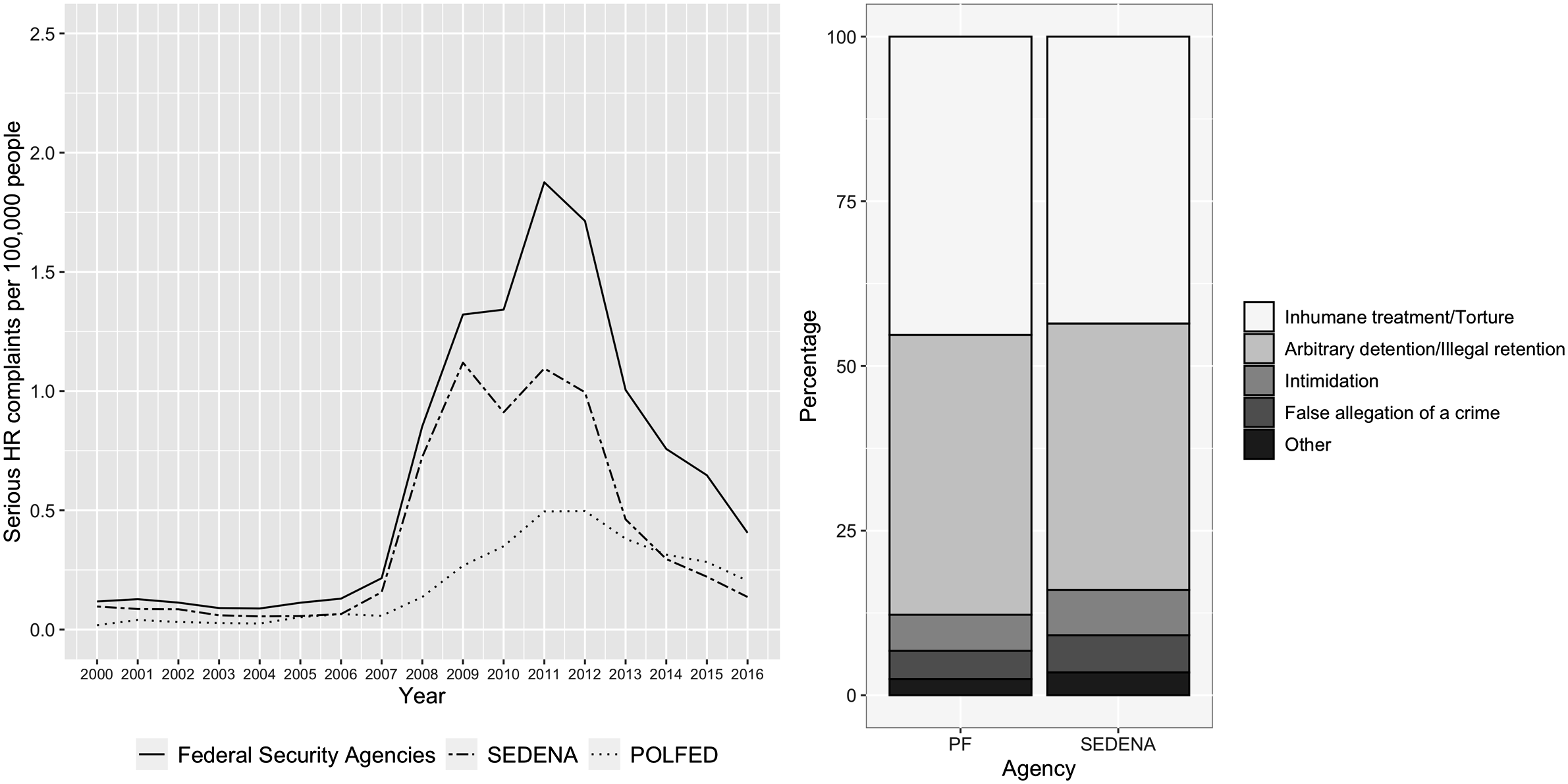
Second, the right panel of Figure 1 shows violations by type as a share of each agency’s total serious violations. It shows that the prevalence of the different types of abuse by POLFED and SEDENA is very similar. Both agencies engaged primarily in abuses related to inhumane treatment/torture, which corresponded to about 45% of the total. That the types of abuses are similar across agencies provides supportive evidence that soldiers face similar law enforcement challenges and incentives as the federal police when conducting domestic policing. 15 In the following section, we examine the consequences of constabularization more closely.
Estimating the Effect of Constabularization on HR Abuse Complaints
We follow a matching strategy to compare municipalities that are similar in relevant characteristics except for whether SEDENA was deployed for policing. Before constabularization, the law enforcement landscape in Mexico’s federal system involved a mix of civilian municipal, state, and federal police—with the Federal Police in charge of addressing federal offenses such as drug trafficking and organized crime. We consider a municipality/year as treated if SEDENA was deployed to participate in law enforcement operations at any point between January 1 and December 31, including patrols, checkpoints, and detentions. Municipalities in the control pool are those in which SEDENA was not deployed.
We follow Imai et al. (2021) matching methods for time-series cross-sectional data because, as seen in Figure 2, some municipalities (units) experience military deployments (treatment) multiple times, and the timing of deployments differs across municipalities.
16
This method first matches each treated observation with control observations from other units in the same period with an identical pre-treatment history up to a specified number of lags—either both units have never received the treatment up to t0, or they have moved in and out of treatment in tandem.
17
Units by treatment and control.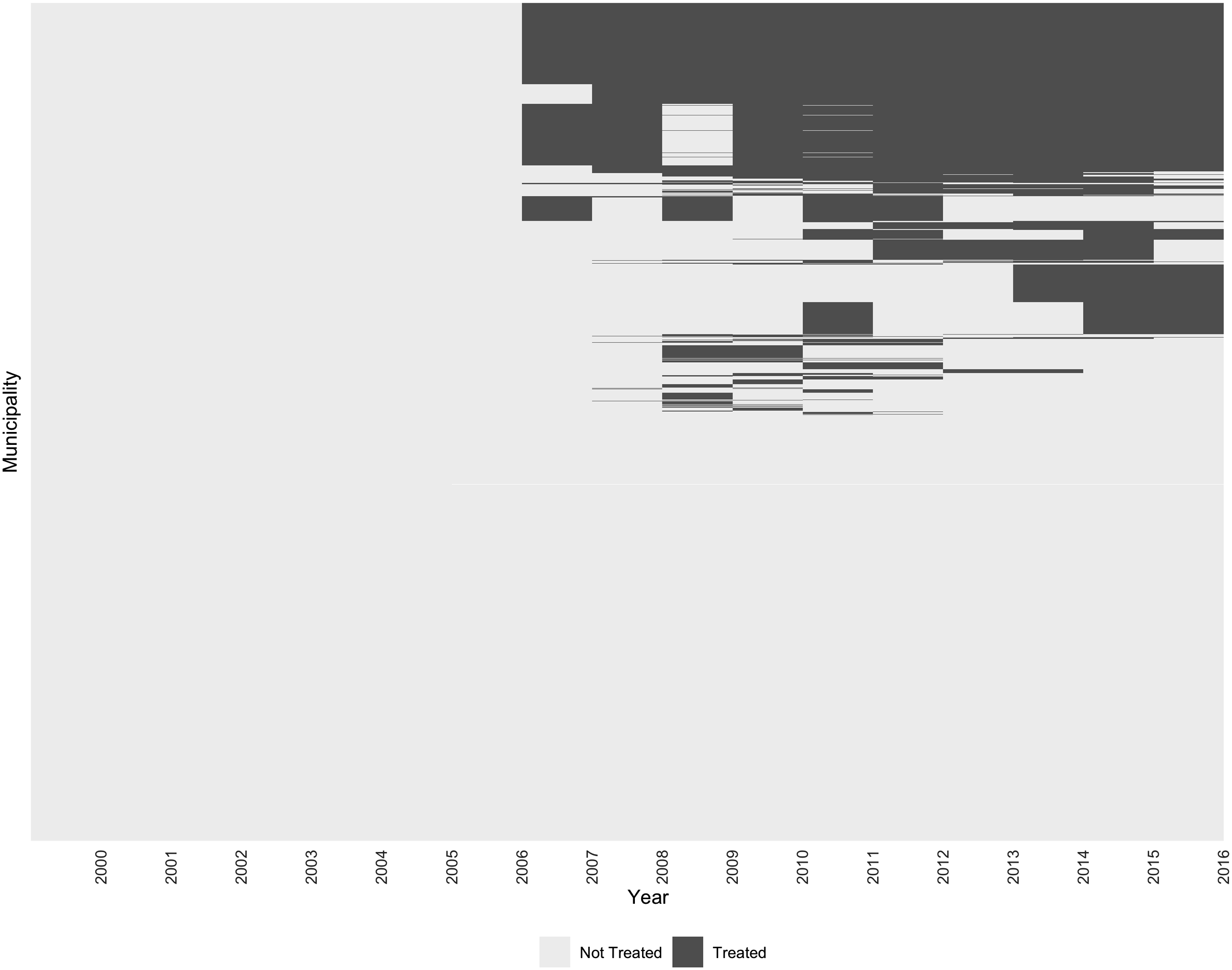
The method further uses standard matching and weighting to improve the matched set to ensure that the treated observations have outcome and covariate histories similar to their matched controls. Finally, it estimates short-term and medium-term effects—key for this analysis given that victims of abuses might not necessarily file a complaint the year it occurred—using a difference-in-difference estimator.
Model Specification
Taking into consideration the relatively short panel and the need to ensure that the parallel trends assumption holds, we estimate the ATT conditioned on 3 years of treatment, outcome, and covariate history and measure the effect up to 3 years after the military’s initial involvement in domestic security. 18 We started with 1714 treatment units with a potential match set of control units. 19 That is, municipalities for which at time t the treatment (constabularization) had been applied, but at time t-1 the treatment was not. Some municipalities, such as Saltillo, Coahuila, appear more than once in the treated set, given that they move in and out of treatment over the 17-year period. Once we condition on 3 years of treatment history, we lose 177 treated units for which no other municipalities have identical pre-treatment histories.
A key challenge to inference when studying the consequences of constabularization is that the armed forces are not randomly assigned to municipalities to perform law enforcement tasks. Rather, they are often deployed to the most dangerous parts of the country—precisely those areas where the police may be thought to be unfit to address organized crime. Municipalities with higher levels of violent crime might present greater difficulty for law enforcement compared to more peaceful ones because security agencies might face greater challenges, including more violent, better-armed suspects.
In order to compare most similar units in terms of difficulty, we account for the following time-variant and time-invariant covariates. First, we include several measures that reflect the level of difficulty and have been associated with a higher prevalence of human rights violations among security personnel (Cruz, 2009). We use the municipality’s lagged homicide rate to proxy for the difficulty encountered by security personnel. Higher homicide rates reflect a more difficult environment, where policing would be more challenging and upholding civil liberties would therefore be harder. Further, to account for spikes in violence related to organized crime, we also consider the prevalence of turf wars between drug cartels in a municipality prior to military deployment. We follow Jarillo et al. (2016, 138) in coding a turf war as occurring in a municipality when the yearly increase in homicide with a firearm rate surpasses three standard deviations compared to its historical mean. 20
We also include the type of setting (urban vs. rural) since research by Pion-Berlin (2017) has pointed to differences in security forces’ ability to operate without resorting to human rights violations depending on the setting. Further, we include a measure of municipalities’ level of development, since policing may be more challenging in less affluent communities due to budgetary and organizational quality constraints. In addition to these measures of difficulty, we also account for political factors potentially affecting where constabularization has taken place (Trejo & Ley, 2020). In particular, since some military deployments have followed agreements with state governments, we include a variable of political affinity that captures whether the president and the governor belong to the same party. Finally, we include the lagged outcome (serious abuse complaints rate) as a covariate to account for pre-treatment trends. 21
To refine the matched sets, we use propensity score (PS) weights, PS matching (with up to five and 10 matches), covariate balancing propensity score (CBPS) weights, CBPS matching (with five and 10 matches), and Mahalanobis distance matching to compare the performance of each refinement method. As seen in Figure 3, PS weights and CBPS weights substantially improve the covariate balance—the other refinement methods perform worse. The standardized mean difference between treatment and control units is close to zero using these two methods, and, importantly, the standardized mean difference for the lagged outcome stays constant over the pre-treatment period suggesting that the assumption of parallel trends holds.
22
Considering that PS and CBPS weights substantially outperformed the other refinement methods, in the next sections we present results using these two matching tools. Covariate balance by refinement method.Notes: Each plot shows the standardized mean difference in serious human rights abuse complaints per 100,000 people, homicides per 100,000 people, turf war, copartisan governor, and log of population, between treated observations and their matched controls for the 3 years prior to military deployment for public security. The first plot shows covariate balance without using a refinement method and the remaining plots show covariate balance after applying different methods.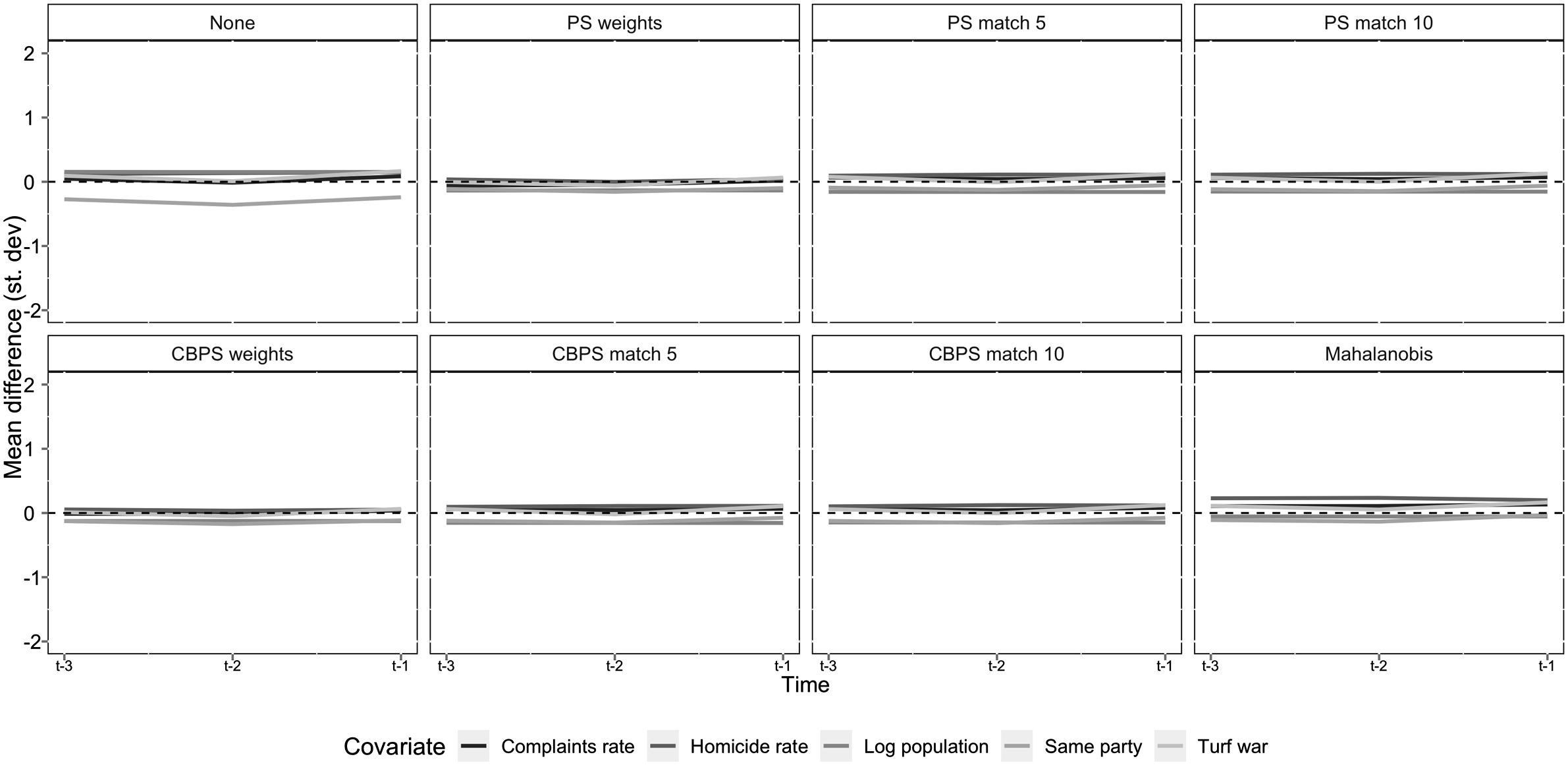
Results
We test for short and medium-term effects (up to 3 years after the treatment year) of constabularization on human right abuse complaints in the 1460 treated units with a matched set of control units with identical pre-treatment histories that remain after refinement. The solid circles in Figure 4 represent point estimates of the ATT measured as serious complaints per 100,000 people, and the bars represent 95% confidence intervals based on 1000 bootstrap replicates. Estimated average effects of constabularization on the rate of serious HR abuse complaints against federal security agencies. Notes: ATT estimates are based on the refinement method that conditions on covariates (homicide rate, log of population, copartisan governor, turf war, urbanism, and development), treatment, and outcome histories during 3 years prior to constabularization. The estimates are shown for 3 years after military involvement in public security, with 95% bootstrap confidence intervals as vertical bars.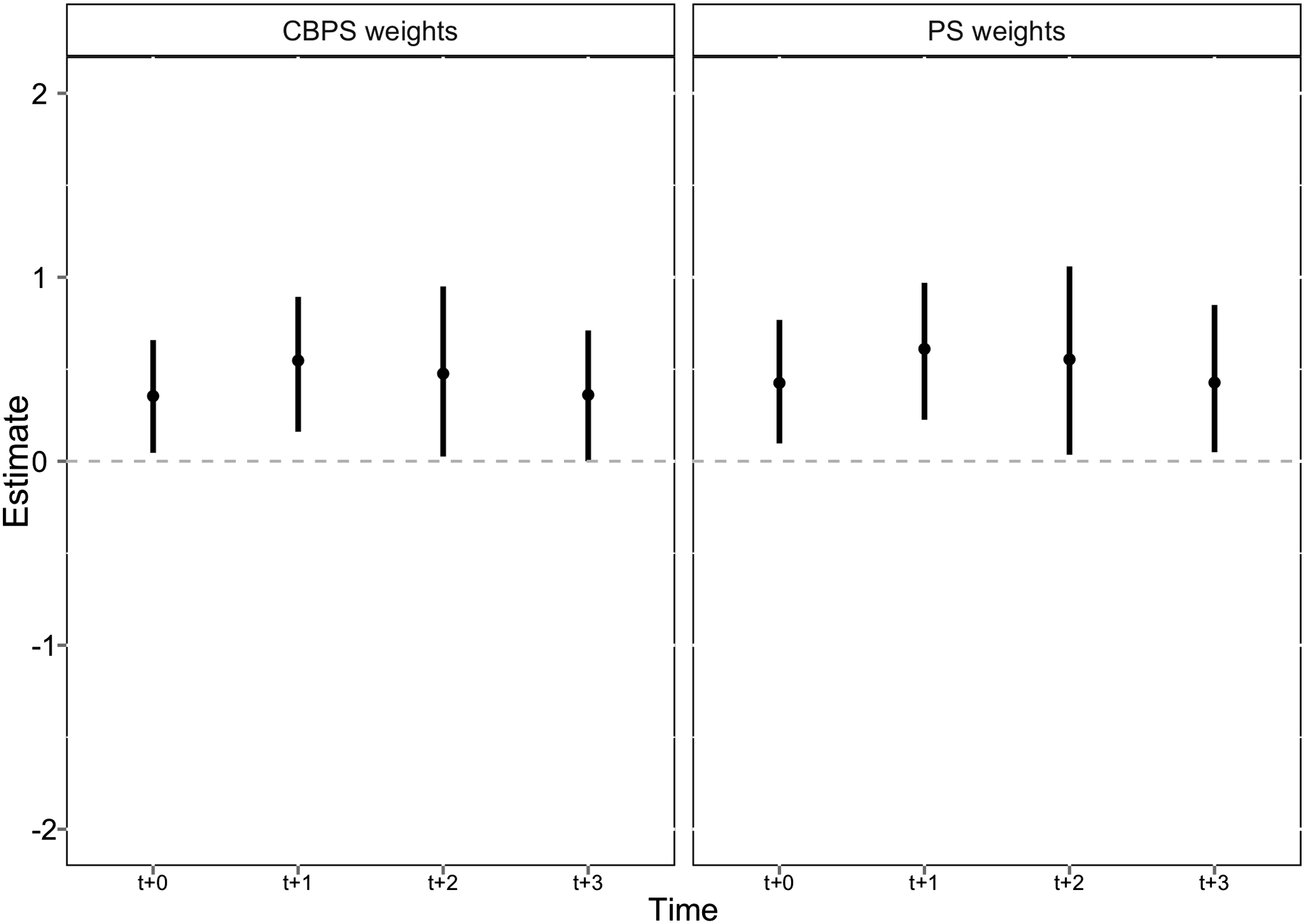
Overall, we find that serious abuse complaints against federal security agencies increase by .42 per 100,000 people in the first year of military deployment and between .43 and .61 in subsequent years. Considering that the median rate of serious complaints in non-treated municipalities is zero and the mean .28, the effect of constabularization is both precisely estimated (p < .05) and substantial—between 150% and 218% depending on the year.
To further illustrate the significance of military deployments on human rights, Figure 5 shows the trajectories over time of the average serious human rights complaints against federal security agencies by treatment status and weighted by population. The solid line represents municipalities with at least 1 year of military presence. The dashed line represents municipalities in the control group. Whereas the rate of serious human rights complaints was comparable in the treated and control groups before 2007, once constabularization began the rate became consistently higher in constabularized municipalities. The spread between the two groups was highest in 2011 and 2012, when the rate in treated municipalities was twice as high as in the control group. Although the distance between treatment and control groups narrows after 2012, the difference remains over time. Maps showing differences in the spatial distribution over time are shown in the Online appendix. Average serious HR abuse complaints against federal security agencies by treatment status. Note: Group averages are weighted by population. Municipalities are classified as constabularized if they had at least 1 year of military presence.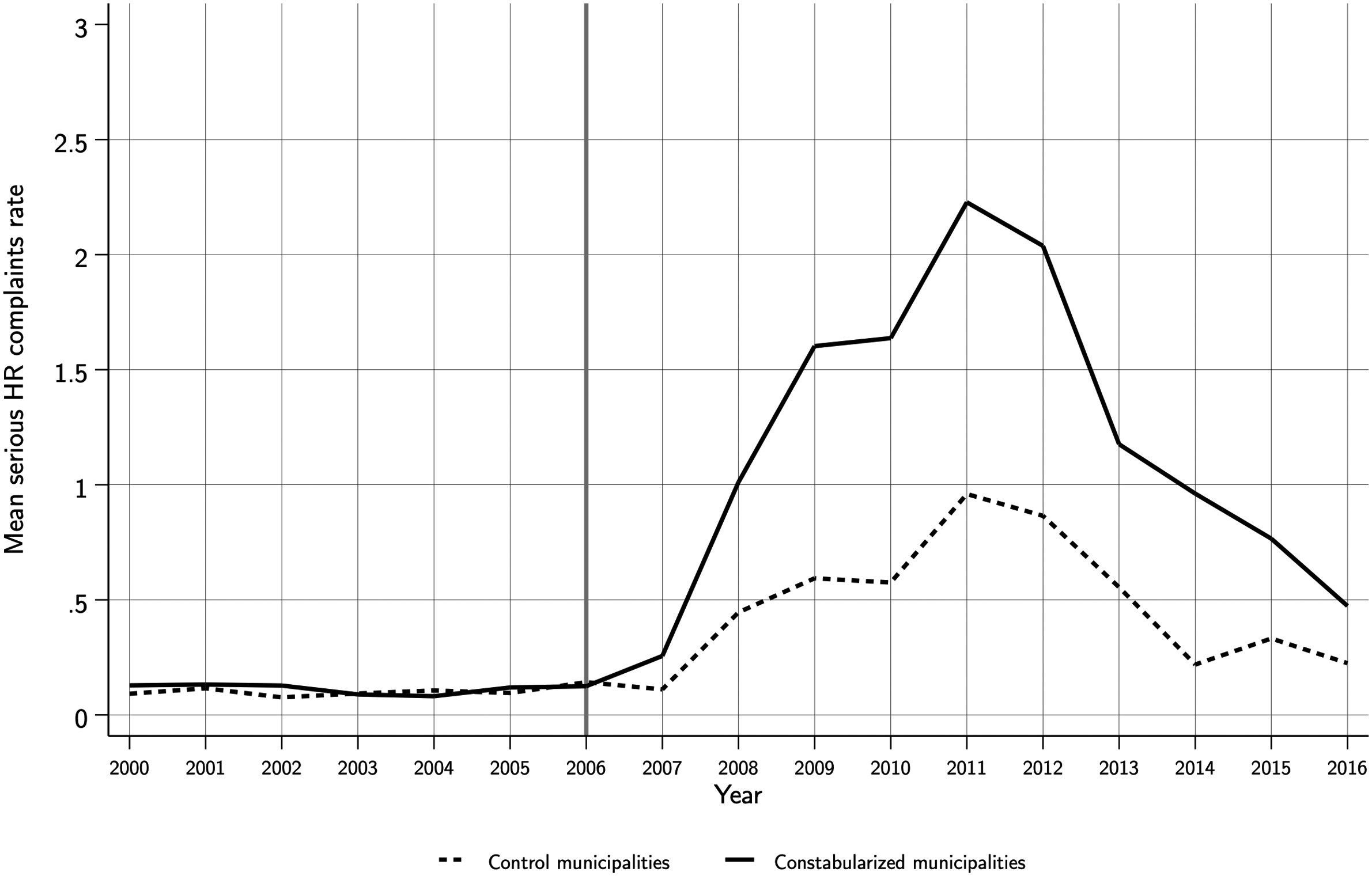
Increase due to More Personnel?
In this section, we address the possibility that the increase in the rate of human rights complaints is due not to the training, organization, weapons, impunity, and operation of the armed forces—as proposed by Flores-Macías and Zarkin (2021b)—but to the number of soldiers deployed in law enforcement operations. The higher rate of complaints in constabularized municipalities may be due to more personnel being deployed, rather than how they operate.
To address this possibility, after getting a public information request denied and winning an appeal before the INAI, we obtained state-level data on the number of soldiers and federal police officers deployed between 2006 and 2012—the last year for which SEDENA reported the number of constabularized personnel in each state. We used this data to compare rates of complaints against SEDENA per 1000 soldiers and against POLFED per 1000 police in states that conducted joint SEDENA-POLFED operations.
Starting in 2006, the Mexican government conducted state-wide joint operations in which police and the armed forces operated side by side in the states of Baja California, Chihuahua, Durango, Guerrero, Michoacán, Nuevo León, Sinaloa, Tamaulipas, and Veracruz. Soldiers are visibly distinguishable from the federal police. The former wear a green camouflage uniform with the words “SEDENA” or “EJÉRCITO”; the latter a dark blue uniform with the words “POLICÍA FEDERAL” (see the Online appendix for examples). Their joint participation helps us to account both for varying levels of difficulty in the type of operation—since both participated in the same mission at the same time—and the number of personnel involved.
Figure 6 shows the average yearly rate of serious human rights complaints against SEDENA and POLFED per 1000 personnel in each state before and after the start of the joint operation. It shows that, prior to the start of the joint operations, rates across cases were higher for POLFED in every state. During the period of joint operations, however, the rate against both POLFED and SEDENA rose in all cases, suggesting that constabularization might also affect civilian police officers’ behavior—a point to which we return in the concluding remarks. Importantly, the average rate during the joint operations is higher for SEDENA in all cases, except for Chihuahua state, where POLFED’s rate was higher.
23
In several states, as in Baja California, Durango, Michoacán, and Sinaloa, SEDENA’s rate of human rights abuses per 1000 personnel is more than twice the rate of POLFED during the joint operations. On average, the yearly rates of human rights abuses during joint operations across the nine states were 35.7 for SEDENA and 19 for POLFED—16.6 points (p < .03) or 87.9% higher against SEDENA. This difference provides additional evidence that the positive effect found responds to the nature of constabularization more so than the number of personnel involved alone. Serious HR complaints rate per 1000 personnel in states with joint operations.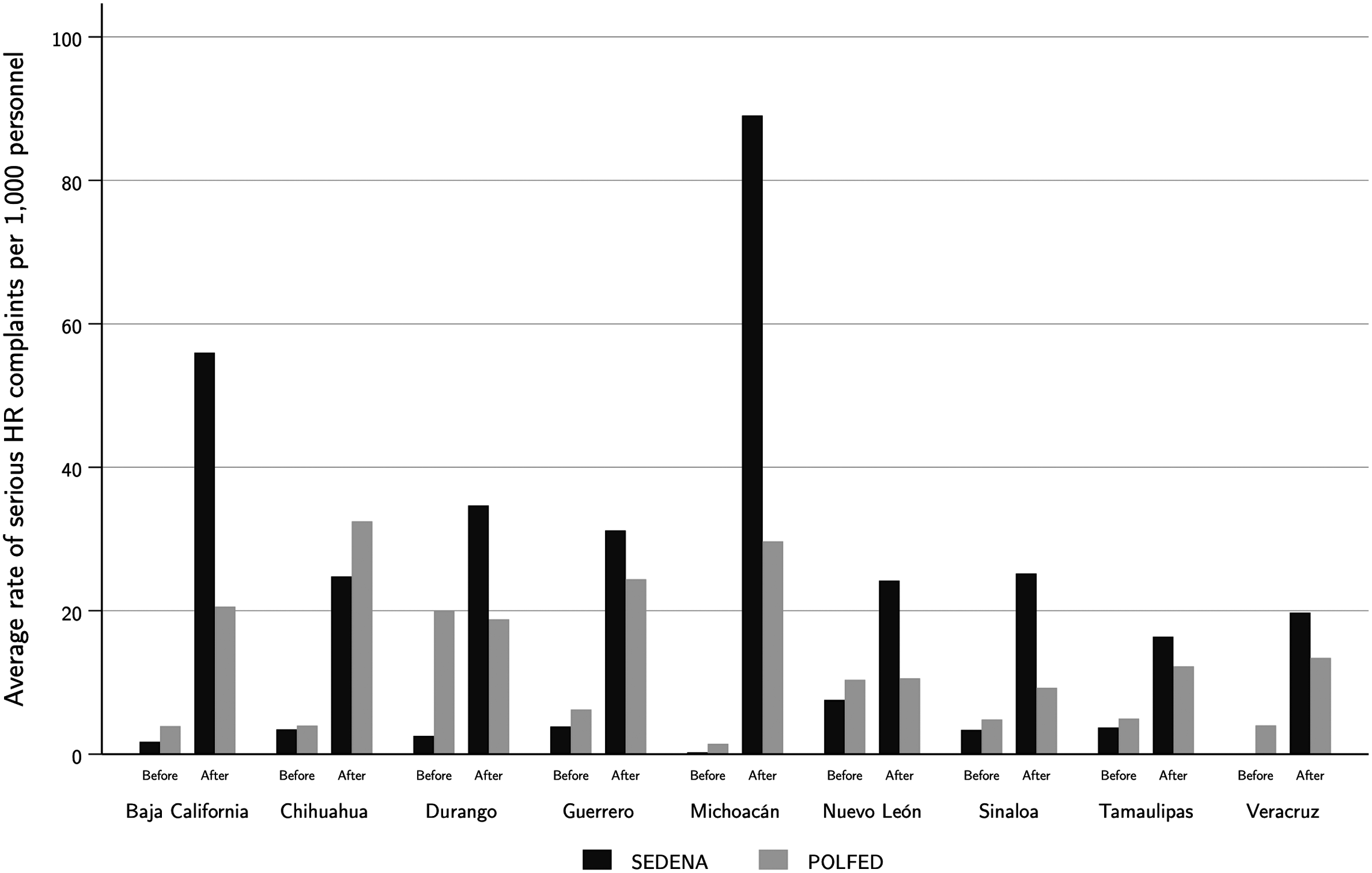
Does Reporting Increase because of Military Presence?
Another concern is that the rate of human rights complaints might go up, not because of the military’s participation in policing activities, but because of features inherent to the armed forces themselves. For example, complaints may increase if the armed forces are more noticed, people dislike their presence (regardless of their mission), or people feel more comfortable reporting violations when the military is present because of higher levels of trust.
However, NGO reports suggest that, to the extent that reporting bias may be present, it would run counter to our findings because victims can be less likely to complain against the military (Meyer, 2010). As the director of a human rights organization characterized the mentality prevalent among victims, “Communities have this social imaginary that the military is untouchable and that there might be reprisals [for reporting the abuse].” This view was corroborated by two human rights attorneys. One expressed that “abuse victims report that the process is intimidating because victims have to interact with soldiers—often heavily armed—as they follow the legal proceedings. For victims, this is a signal that it’s best to leave it there.” In the words of a second attorney, “compared to the police, there are fewer incentives to report abuse against the military.” 24
To further probe whether results are spurious, we carry out two placebo tests, one using disaster-relief missions and the other relying on human rights complaints against another federal agency. First, we leverage information on military deployments to natural disaster-stricken areas. One of the Mexican military’s main missions is to participate in disaster-relief operations, known as National Defense Plan III (DN-III). First adopted in 1965, the plan has been put in place regularly to provide assistance with the consequences of natural disasters, such as floods, forest fires, and earthquakes. Most military personnel participating in these domestic deployments are the same troops called on for drug-crop eradication missions and patrolling. When necessary, a specialized unit comprised of search and rescue personnel, engineers, and medics also participates in the disaster-relief mission alongside regular troops (Secretaría de la Defensa Nacional, 2012b).
We obtained data on SEDENA’s disaster-relief operations through a right-to-information request. 25 Although data for the entire period would have been ideal, we could only obtain data for 2010–2016. If policing itself is responsible for the increase in violations, we should observe no difference in the rate of abuse complaints between municipalities with and without disaster-relief operations. Conversely, if greater visibility of soldiers is driving results, we would expect a higher rate of HR abuse complaints in municipalities where soldiers were deployed as part of the DN-III.
As before, we constructed a matched set for each treated municipality, adjusting for 2-year lags and using different methods to refine the set—adjusting for outcome history, log population, urbanization, and development. 26 All refinement methods considerably reduce the imbalance in covariates and, again, PS and CBPS weights perform best—see the Online appendix. Moreover, the standardized mean difference for the lagged rate of human rights abuse complaints remains constant throughout the pre-treatment period in support of the assumption of parallel trends.
We start with 251 treatment units with a control match set, of which 119 remain after running the refinement methods and specifying a 2-year lead in outcome measurement.
27
As Figure 7 shows, we find no evidence that military presence for disaster-relief increases abuse complaints against security agencies. The ATT is indistinguishable from zero and robust to lag-lead and covariate specification (see the Online appendix). Estimated average effects of military deployment for disaster-relief on serious HR abuse complaints against federal security agencies. Note: ATT estimates are based on the refinement method that conditions on covariates (log of population, urbanism, and development), treatment, and outcome histories during 2 years prior to disaster-relief missions. The estimates are shown for 2 years after military involvement in disaster-relief with 95% bootstrap confidence intervals as vertical bars.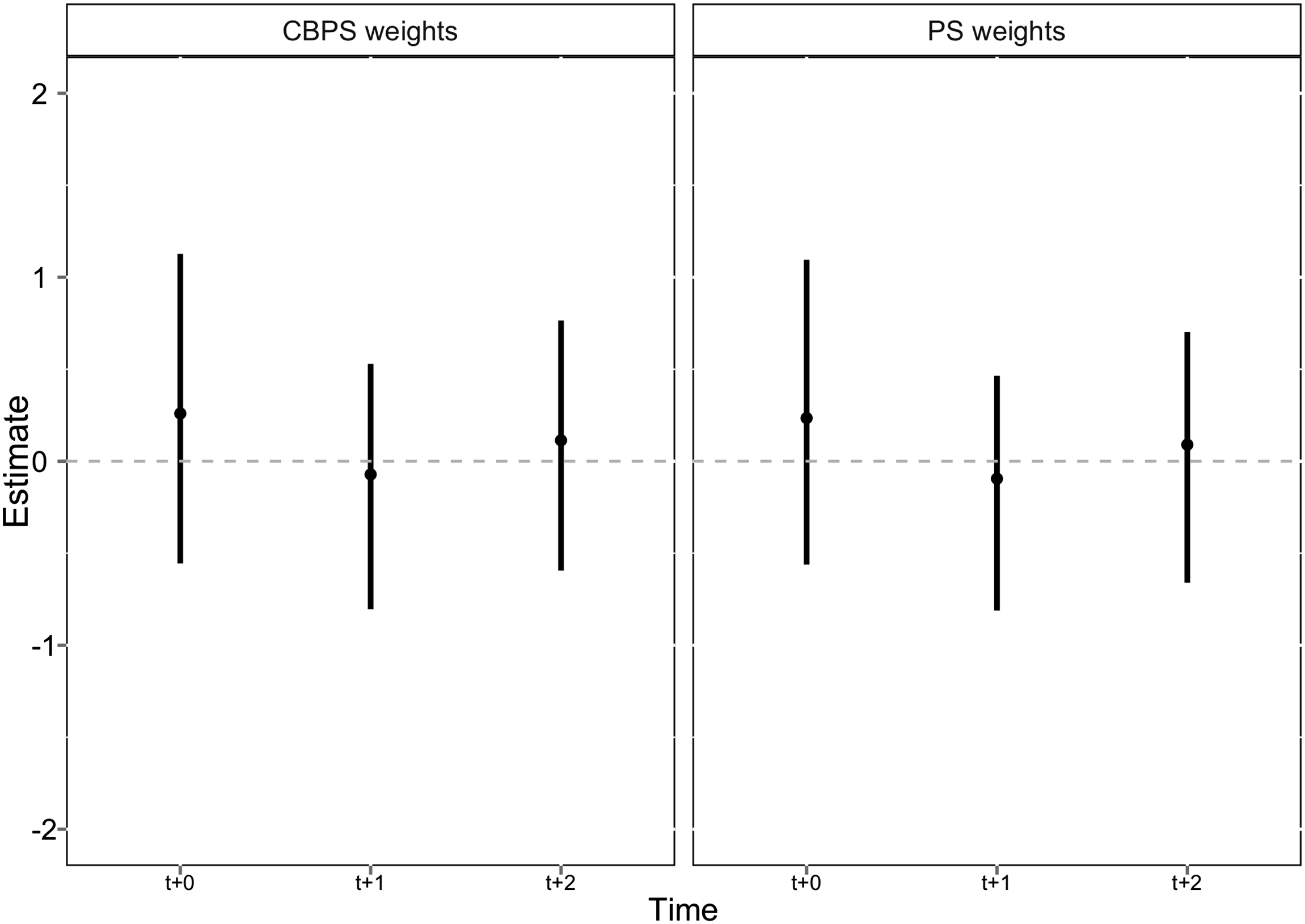
Second, based on data we obtained through a right-to-information request, we replicate the analysis estimating the effect of constabularization on human rights complaints against the federal agency with the most complaints registered before the CNDH: the Mexican Social Security Institute (IMSS). Between 2000 and 2016, 23,450 human rights abuse complaints were filed against IMSS. Most are related to acts of omission, including failing to provide medical services and medical negligence. If unobserved, underlying municipal characteristics—for example, civil society strength—were responsible for the effect attributed to constabularization, we would find a similar effect for complaints against IMSS.
As seen in Figure 8, we find no evidence that human rights abuse complaints against IMSS increased because of constabularization. The ATT is indistinguishable from zero, with very small point estimates. This result further suggests that the effect we find is not the result of some incident or policy change that happened to coincide with constabularization. It also suggests that the municipalities where constabularization took place are not inherently more likely to report abuse due to ease of reporting or levels of civil society engagement. Estimated average effect of constabularization on the rate of HR abuse complaints filed against IMSS. Note: ATT estimates are based on the refinement method that conditions on covariates (homicide rate, log of population, copartisan governor, turf war, urbanism, and development), treatment, and outcome histories during 3 years prior to constabularization. The estimates are shown for 3 years after military involvement in public security, with 95% bootstrap confidence intervals as vertical bars.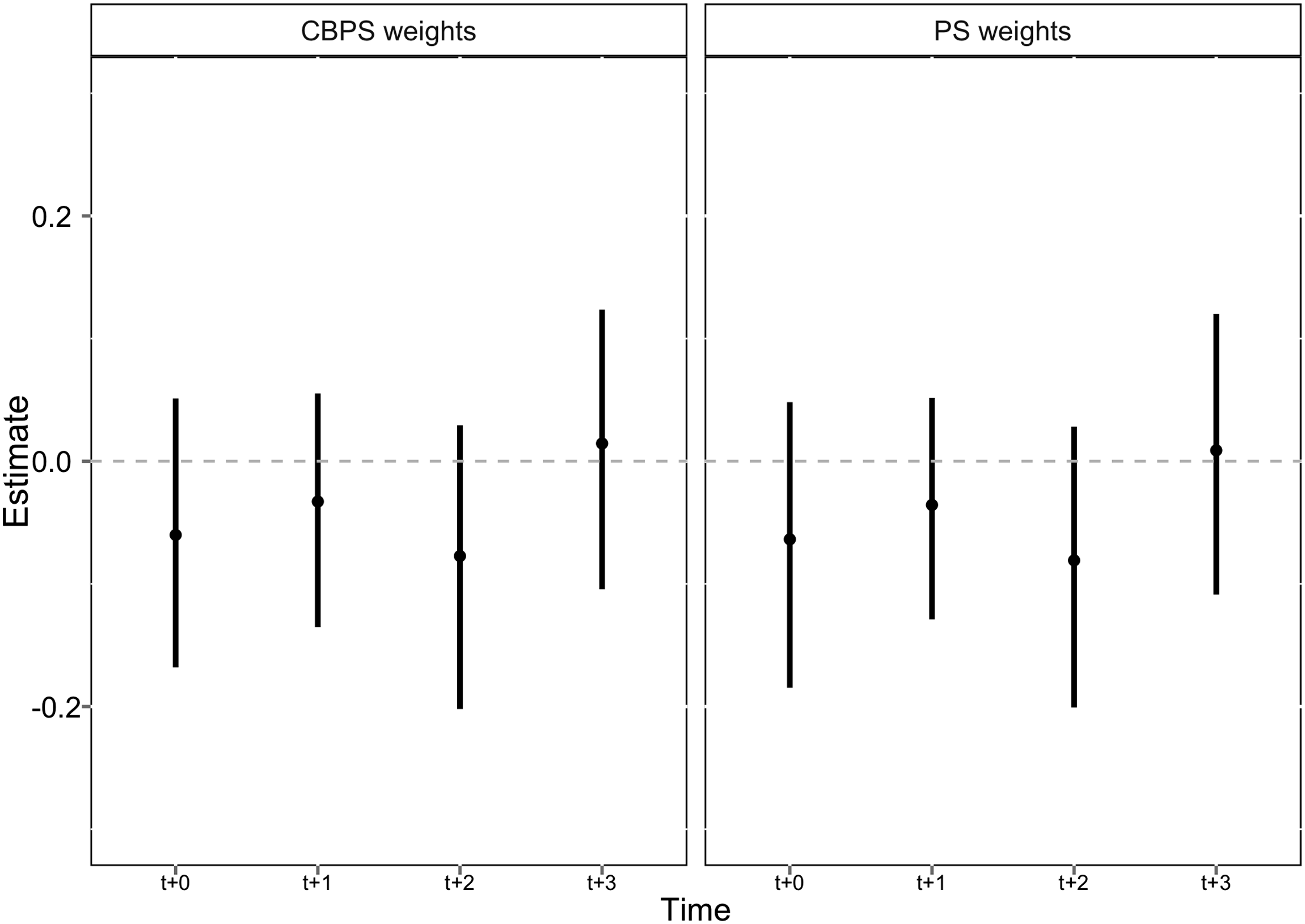
In sum, our analysis suggests that constabularization resulted in increased complaints filed for serious human rights abuses in Mexico in the immediate years after the policy was implemented. However, this effect is not due to military presence per se, since we do not observe increases in abuse complaints when the military participates in non-policing operations, such as disaster-relief. Instead, as the DN-III and IMSS placebos suggest, the increase in the rate of complaints against federal security agencies can be attributed to the direct involvement of the military in domestic policing.
Do the Armed Forces Become More Respectful of Human Rights over Time?
A final consideration is whether constabularized militaries become better at respecting human rights. In other words, does learning take place the longer militaries stay engaged in domestic policing? To answer this question, we estimated the effect of constabularization over time for municipalities where SEDENA maintained uninterrupted operations. 28 If the military as an institution were to improve in its respect for human rights over time, we would expect the effect on complaints for serious human rights violations against federal security agencies to reach levels comparable to those of non-constabularized municipalities the longer the operation is conducted in the same municipality.
As Figure 9 shows, the effect of militarization on complaints for serious human rights violations is positive throughout the period under study; it remains positive regardless of whether the military operated for three or 9 years in that municipality. Further, Figure 9 shows a wave-like pattern, with the magnitude of the effect declining after the first 6 years. This pattern suggests that, although the abuse rate remained higher in municipalities with continuous constabularization, the size of the difference decreased after 2011—as did overall abuse complaints against SEDENA (as illustrated in Figure 1). Although the CNDH data do not allow us to answer this question with the desired degree of certainty, there is evidence that pressure from civil society groups and improved human rights training have contributed to this decline.
29
Estimated average effects of constabularization over time in municipalities with uninterrupted military presence. Note: ATT estimates are based on the refinement method that conditions on covariates (homicide rate, log of population, urbanism, turf war, copartisan governor, and development), treatment, and outcome histories during 3 years prior to constabularization. The estimates are shown for 9 years after military involvement in public security, with 95% bootstrap confidence intervals as vertical bars.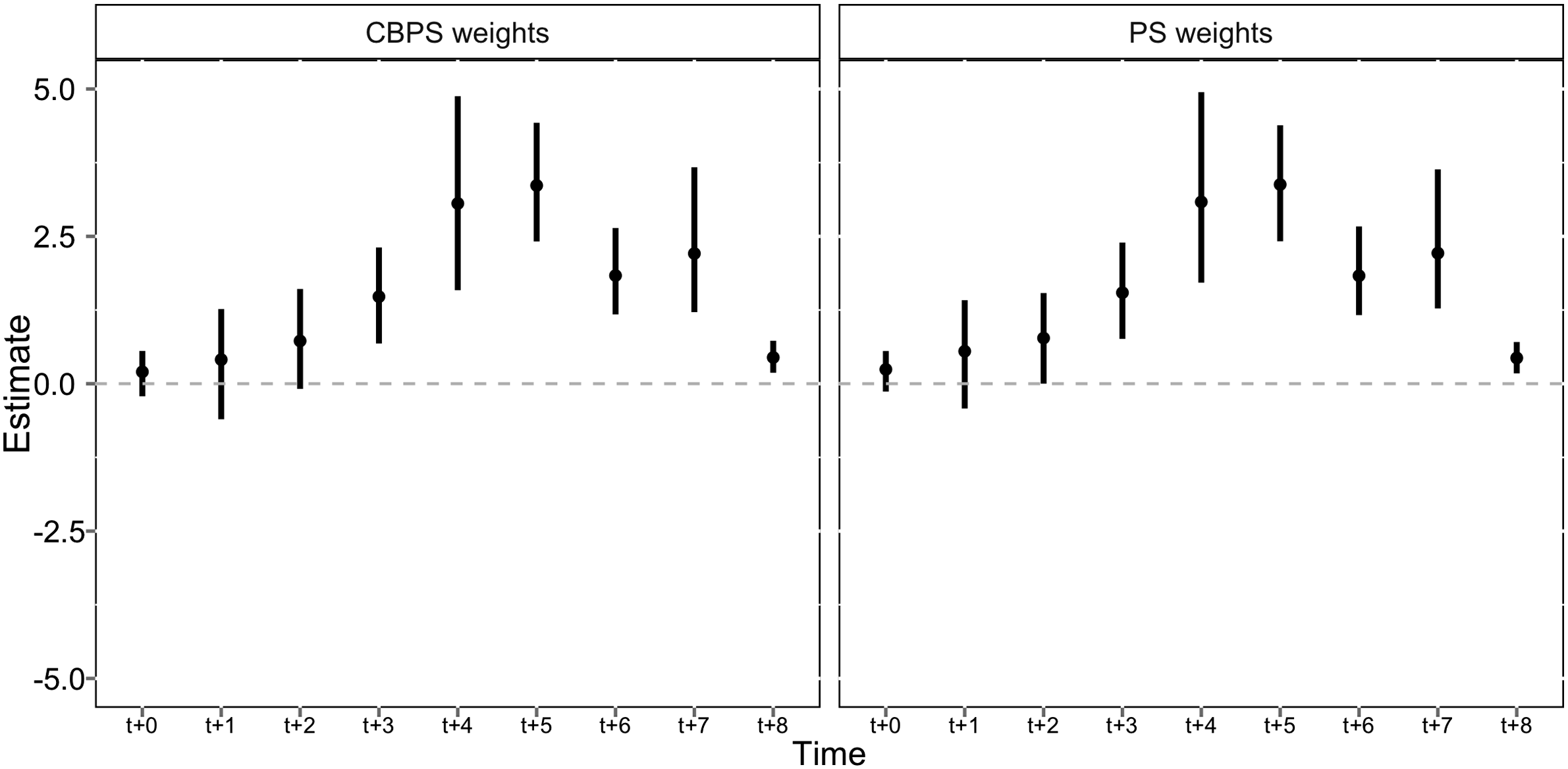
First, increased activism by civil society members and national and international organizations—including the Miguel Agustín Pro Juárez Human Rights Center A.C (Centro Prodh), the Foundation for Justice, the Fray Juan de Larios Human Rights Center, the Washington Office on Latin America (WOLA), Amnesty International, and Human Rights Watch— helped to hold the Mexican federal security forces accountable for their actions. For example, in 2010, WOLA and the Centro Prodh published a joint statement on human rights abuses committed in Ciudad Juárez in the context of joint operation Chihuahua (Meyer, 2010). The increased activism after the first few years of constabularization pressured the Mexican government to respond to accusations and re-examine its practices.
Second, human rights training modules for soldiers involved in policing during the Calderón administration focused more on international law than on holding procedurally just interactions, limiting its effectiveness (Secretaría de la Defensa Nacional, 2012a). In subsequent years, however, military members began receiving training on citizen safety during routine police operations, including modules on “human rights during detentions” and “violations of the right to personal integrity and security” (Jiménez, 2020). In short, although the effect of constabularization on human rights abuse complaints remained positive throughout the period of study, there is some indication that the size of the effect decreased after 2011.
Conclusion
We find that the rate of human rights abuse complaints against federal security agencies is greater in municipalities where the military became involved in public safety compared to municipalities without constabularization. On average, we observe an increase of between 150% and 218% in serious abuse complaints against federal security agencies per 100,000 people depending on the year. These findings suggest that fewer complaints for human rights violations would have taken place in the absence of constabularization.
The effect of constabularization does not appear to be driven by the number of personnel or the difficulty of the mission, as explored in the state-level analysis of joint operations. Conversely, we found no effect when the military participated in disaster-relief missions, which suggests that the effect of constabularization on human rights abuses is not an artifact of higher reporting due to the visibility of the armed forces, but rather their engagement in law enforcement. Similarly, we found no effect of constabularization when using complaints against the IMSS as a placebo, adding to our confidence that results are not a statistical artifact or consequence of municipal characteristics, such as a stronger civil society that might be more inclined to report.
These estimates are conservative in several respects. First, they rely on several lags to generate the weights from the covariates for the matching exercise. While this strategy is more demanding to find units that serve as appropriate controls since it requires matches with a shared history, it also contributes to support the parallel trends assumption. Second, there is likely underreporting of human rights violations committed by federal security forces. For example, the military’s greater destructive power and institutional protections can generate fear of reporting among the population (Meyer, 2010).
Third, the effect of constabularization is likely larger because some municipalities in the control group may have received the constabularization treatment through navy (SEMAR) presence for law enforcement purposes. While our requests to SEMAR to provide deployment data comparable to that of SEDENA were denied, SEMAR’s policing operations have been much more limited. Compared to the more than 50,000 SEDENA soldiers participating in domestic law enforcement missions per year, only about 7000 navy personnel engaged in such missions, and only one in nine arrests by the armed forces was conducted by SEMAR between 2006 and 2016 (Storr and López Portillo, 2019). 30 The presence of SEMAR personnel in some control group municipalities likely biases results against our findings because of higher levels of human rights complaints than would have been observed in the absence of constabularization. 31
Although the findings presented here speak to the case of Mexico and further research is necessary to determine whether they apply to other countries, these results are concerning because governments across the ideological spectrum increasingly rely on the military for domestic policing operations, especially in countries with high levels of violent crime (Blair & Weintraub, 2021; Dammert et al., 2006; Flores-Macías & Zarkin, 2021b). Durán-Martínez and Soifer (2021), for instance, find evidence consistent with this study in the Peruvian context. Beyond Latin America, there is a global trend toward the constabularization of the armed forces. For example, in Indonesia, Turkey, and the Philippines, militaries actively participate in the country’s efforts against crime (Genç Yilmaz, 2022; Moore, 2017; Sinaga, 2017).
Another reason for concern relates to the effect of constabularization on the likelihood that civilian police adopt the military’s mindset of defeating an enemy. The joint operations comparison shows that complaints against POLFED also increased due to constabularization. This result is consistent with findings by Magaloni and Rodríguez (2020) and Blair and Weintraub (2021) that constabularization incentivizes civilian police to engage in unnecessary use of force.
As Flores-Macías and Zarkin (2021a), Harig (2022), Pion-Berlin and Carreras (2017), and Rosen (2021) suggest, one of the reasons behind the increasing turn toward militarized law enforcement has been citizen demand. However, the evidence presented here indicates that the deployment of soldiers for policing operations indeed poses a paradox for democracy in Latin America. To the extent that the combination of military tactics, weapons, training, and levels of impunity are responsible for higher levels of human rights abuse complaints, politicians will continue facing a tradeoff between responding to the public’s preferences—despite their potential deleterious consequences for civil liberties—or ignoring citizen demands in policing—likely reinforcing generalized patterns of distrust in the region.
This is not to say that the armed forces should never aid in addressing crime. The use of the armed forces may be warranted in at certain policing tasks, such as with High-Value Targeting Operations that resemble more the tasks that the armed forces are trained for (Pion-Berlin, 2019). Therefore, the military’s participation in security operations should be limited both geographically and temporally, and always while simultaneously strengthening local police forces and the judiciary.
Among governments’ top priorities should be police reform. Research has shown that the police’s organizational structure and institutional capacity are intimately linked to their performance; therefore, governments should build more effective and trusted police forces (González, 2020; Moncada, 2009). This means strengthening managerial processes and investing in training, career development, and talent management, all while guaranteeing procedurally just and productive interactions with citizens.
Supplemental Material
Supplemental Material - The Consequences of Militarized Policing for Human Rights: Evidence from Mexico
Supplemental Material for The Consequences of Militarized Policing for Human Rights: Evidence from Mexico by Gustavo Flores-Macías and Jessica Zarkin in Comparative Political Studies
Footnotes
Acknowledgements
We received helpful feedback from presentations at Columbia University’s Comparative Politics Seminar Series, Cornell University’s Comparative Politics Workshop, Harvard University’s Mexico Study Group, UCSD Center for US-Mexican Studies, US Department of State Bureau of International Narcotics and Law Enforcement Affairs, and the annual meetings of the International Studies Association, Latin American Studies Association, and Red para el Estudio de la Economía Política de América Latina. We are especially grateful to Juan Albarracín, Rob Blair, Centro de Derechos Humanos Miguel Agustín Pro Juárez, Eduardo Clark, Chelsea Estancona, Tom Pepinsky, Oscar Pocasangre, Richard and Maritza Williamson, as well as anonymous reviewers for their comments.
Declaration of Conflicting Interests
The author(s) declared no potential conflicts of interest with respect to the research, authorship, and/or publication of this article.
Funding
The author(s) received no financial support for the research, authorship, and/or publication of this article.

Supplemental Material
Supplemental material for this article is available online.
Notes
Author Biographies
References
Supplementary Material
Please find the following supplemental material available below.
For Open Access articles published under a Creative Commons License, all supplemental material carries the same license as the article it is associated with.
For non-Open Access articles published, all supplemental material carries a non-exclusive license, and permission requests for re-use of supplemental material or any part of supplemental material shall be sent directly to the copyright owner as specified in the copyright notice associated with the article.
