







Abstract
Anti-immigration rhetoric has consistently impacted the lives of immigrant young adults who are Deferred Action for Childhood Arrivals (DACA) recipients. This qualitative study sheds light on the lived psychological experiences of 21 Latinx DACA recipients who were impacted by the political debates during the Trump administration. Content analysis revealed four main psychological impacts resulting from the DACA political debates: stress, fear, anxiety, and depressive symptomatology). Through these experiences, individuals who perceived being impacted by these political debates described three main strengths (i.e., luchando adelante, positive outlook, and DACA+ethnic pride) that assisted them. Finally, participants noted three main strategies (i.e., social and family support, religiosity/spirituality, and social advocacy) that also served them during the DACA political debates. These findings provide implications for practices and policies that foster healing from ethno-racial trauma in Latinx immigrant communities.
Significance of the Scholarship to the Public
These qualitative findings shed light on Deferred Action for Childhood Arrivals (DACA) recipients’ psychological impact, strengths, and coping during uncertain tensions around anti-immigration policies. These findings allow for institutional systems to better support DACA recipients by promoting stress reduction during uncertainty and political unrest around anti-immigration policies.
Since the early 2000s, immigration policies in the United States have become significantly more restrictive, resulting in an influx of undocumented Latinx populations with no pathway to legal status (Martinez, 2014). As a result of these changes, many Latinx immigrant young adults are growing up without legal residency status (Passel & Lopez, 2012). Moreover, several state-level (Dondero & Altman, 2020; Hirota, 2020) and federal-level (Gonzales et al., 2014; Hardina, 2014; Nguyen & Kebede, 2017) immigration policies continue to be the center of debate. For instance, in 2001, the DREAM Act was introduced with the overarching aim of providing a pathway to citizenship for individuals who immigrated when they were children (Hardina, 2014). Unfortunately, the DREAM Act was never passed into law, despite having broad support from the public. The term Dreamer has been used to describe young undocumented immigrants who were brought to the United States as children and who have lived and gone to school here. Instead of the DREAM Act, the Deferred Action for Childhood Arrivals (DACA) came into effect in 2012 as an executive order by President Obama (Jones, 2020), protecting undocumented immigrant young adults, many of whom were students, from deportation (Gonzales et al., 2014; Nguyen & Kebede, 2017).
Despite the success of the DACA program (Gonzales et al., 2014), the Trump administration used explicit and implicit anti-immigrant and anti-Latinx rhetoric (Wray-Lake et al., 2018). This has ultimately threatened the health, safety, and psychological well-being of the Latinx community, especially Latinx immigrant young adults (Wray-Lake et al., 2018). As early as Trump’s announcement to join the 2016 presidential race, his campaign promoted rescinding DACA, fueling racism, xenophobia, hate crimes, hostile school environments, negative academic outcomes, and negative socio-emotional outcomes for the Latinx community (Gleeson & Sampat, 2018; Gomez & Perez Huber, 2019). Indeed, recent research has found that in the year following the attempt to rescind DACA, undocumented college students exhibited higher anxiety, depression, and discrimination, as well as lower positive mental health, compared to their peers who had permanent legal status or held international visas (Cadenas & Nienhusser, 2020).
Latinx immigrant young adults, especially those who are undocumented, have been criminalized for decades. Within the last five years, the sociopolitical climate has suggested that the nation is in decline due to these perceived invaders (Huber, 2016). This rhetoric has criminalized immigrant communities, especially those that are often undocumented, regardless of their actual national origin (Huber, 2016). By demonizing, criminalizing, and scape-goating immigrants, hate and anxiety surrounding stereotypes and rhetoric about Latinx immigrants have been exploited, further expanding ethno-racial division in the United States (Bobo, 2017). Furthermore, federal immigration laws have had health-related consequences for undocumented immigrants throughout the United States (Raymond-Flesch, 2018; Venkataramani et al., 2017). Deferred-action initiatives, such as DACA or Temporary Protected Status (TPS) have offered a temporary reprieve from deportation (Kline & Castañeda, 2020). Since its inception, DACA has faced a variety of critiques from proponents of more strict immigration control (Kline & Castañeda, 2020). DACA’s future is uncertain and constantly changing at state and federal levels. As seen through the attempt by the administration of then-president Donald J. Trump to rescind DACA, short-term, limited deportation deferments are highly uncertain, demonstrating how deferred-action initiatives are insufficient responses to otherwise long-term immigration plans and policies (Gonzales et al., 2014; Kline & Castañeda, 2020).
Programs like DACA offer many positives, but also force those who rely on it to live in as much uncertainty as the initiative itself (Menjívar, 2006). Further, the protection from deportation does not entirely counteract the negative consequences of harsh immigration laws and policies that individuals with DACA may encounter throughout their lives (Suárez-Orozco et al., 2015; Teranishi et al., 2015). Most interestingly, lifelong, cumulative effects of undocumented status tend to emerge later in the life course, as people move into midlife and older age, as demonstrated through higher rates of depression, heart disease, and diabetes (Suárez-Orozco et al., 2011). Given that the sociopolitical climate of the Trump administration further increased hostility towards immigrant communities, the psychological experience of Latinx immigrant DACA recipients remains understudied. Specifically, since the Trump administration’s efforts to terminate DACA began, recipients have been more uncertain about their future status. This study, therefore, aims to shed light on the lived psychological experiences of Latinx immigrant young adults who are DACA recipients, during the 2017–2019 DACA political debates.
An Overview of Lived Experiences
A growing body of research has sought to understand the environments and experiences of Latinx immigrant young adults who arrived in the United States as children and have been affected by policies like DACA (Gonzales et al., 2014; Nguyen & Kebede, 2017). Even though DACA was a federal executive order, the states delegated this policy (Cebulko & Silver, 2016). For example, in certain states, DACA has allowed recipients to obtain a driver’s license, be eligible for in-state tuition, be authorized to work, and be protected from deportation for two years at a time (Siemons et al., 2017). Cebulko and Silver (2016) suggested that such benefits on a state-level provided inclusion, whereas the national-level policies provided DACA recipients a sense of exclusion. The authors also argue that the simultaneous sense of inclusion and exclusion complicates DACA recipients’ lived experiences. A 2017 study on the physical and mental health effects of DACA suggested that by eliminating the risk for deportation, DACA recipients experience reduced psychosocial stress (Venkataramani et al., 2017). This directly improves mental health and indirectly improves physical health (Venkataramani et al., 2017). Research on the short-term benefits of the program, before its attempted rescission, suggests that DACA was beneficial for undocumented young adults to become more upwardly mobile economically and socially; these effects were felt more strongly by those with higher education and community support (Gonzales et al., 2014). However, more studies are needed to examine the effects of ongoing DACA political uncertainties on the lived experiences, strengths, mental health, and academic achievements of affected individuals.
DACA and Health Outcomes
Latinx immigrant young adults, especially undocumented students, have reported living in constant fear of their status being disclosed, ostracized, and stigmatized (Bjorklund, 2018). Because of the visibility of the DACA political debates and the implications for their conclusion, DACA recipients have also experienced various psychological and social difficulties on campus (Bjorklund, 2018). Not only have undocumented students reportedly experienced shame and feelings of powerlessness, but they have also internalized feelings of stigma and embarrassment about their status (Bjorklund, 2018). More specifically, some DACA recipients have discussed feelings of isolation, stress, and suicidal ideation due to the restrictions of their legal status and experiences of perceived racism (Siemons et al., 2017). DACA students have also reported isolation due to barriers associated with a lack of community and limited institutional support (Suárez-Orozco et al., 2015).
Researchers have found significant effects of discrimination on mental and physical health problems (Bjorklund, 2018; Cariello et al., 2020; Hagiwara et al., 2020; Potochnick & Perreira, 2010), including stress, anxiety, depression, paranoia, and psychoticism (Bjorklund, 2018; Finch et al., 2001; Potochnick & Perreira, 2010). For example, Cadenas and Nienhusser (2020), using data from Healthy Minds, found that a stastically significant amount of immigrant young adults with abject immigration status experienced more discrimination and worse psychosocial well-being than other young adults. Researchers have also linked higher experiences with everyday racial/ethnic-based discrimination to increases in anxiety among undocumented college students (Cadenas & Nienhusser, 2020).
Researchers have reported that DACA recipients experience stress due to job insecurity, perceptions of discrimination, living in mixed-status families, and their liminal legality (Patler et al., 2019; Roth, 2019). This stress often manifests itself emotionally, but can also cause physical health problems (Gámez et al., 2017). A study by Gonzales et al. (2013) found that long periods of stress can decrease cognitive performance, short term and working memory, and impulse control. Despite these challenges, the immigrant paradox demonstrates that immigrants typically exhibit better health and mortality outcomes than native-born individuals (Moreno & Cardemil, 2018b; Ruiz et al., 2016). Gomez and Perez Huber (2019) found that Latinx immigrant young adults, including DACA recipients, maintained a sense of hope despite their experiences with racist nativist and anti-immigrant rhetoric on campus and in public. However, as the divisive anti-immigrant state of the 2000s remains intact as of this writing, it is evident that more research is needed to examine protective factors and/or coping mechanisms in immigrant populations living in the United States.
Current Study
Anti-immigration rhetoric has consistently impacted the lives of young adult DACA recipients. Given that limited studies have examined the effects of immigration policies and rhetoric on immigrant populations, this study sheds light on the psychological impact, strengths, and coping mechanisms of Latinx individuals in the context of reacting to uncertainty and increased anti-Latinx immigrant rhetoric. This study, therefore, explores (a) the reported psychological impacts of the DACA political debates of 2017–2019 on undocumented Latinx young adult DACA recipients, (b) the perceived strengths they embody during the DACA political debates, and (c) the ways they are handling the uncertainties surrounding DACA. Although emerging literature has examined the well-being of DACA recipients, more qualitative approaches are needed to allow for more open-ended responses and richer description of their experiences, psychological impacts, strengths, and coping mechanisms. Therefore, we chose a qualitative approach.
Method
Participants
This original study used semistructured interviews that elicited responses on early life migration, DACA, coping mechanisms, and psychological well-being of Latinx immigrant young adults. Of thirty participants that were interviewed in the overarching study, 21 (70%) were DACA recipients, 4 (13%) were U.S. citizens, 2 (6%) were TPS recipients, 2 (6%) permanent residents, and 1 (3%) was a green card holder. Given this specific study’s aims to capture the lived experiences of DACA recipients, only the 21 participants who were DACA recipients were used for this study. Out of the 21 DACA recipients, 6 (29%) were male, and 15 (71%) were female. Participants were born in Bolivia, El Salvador, Guatemala, Honduras, Mexico, Peru, Uruguay, and Venezuela. The average age was 22.35 years of age (SD = 3.59) and average years of age at the time of early life migration was 6.33 years (SD = 3.94). All participants were pursuing higher education. See Table 1 for additional demographic data.
Demographic Characteristics of DACA Recipients
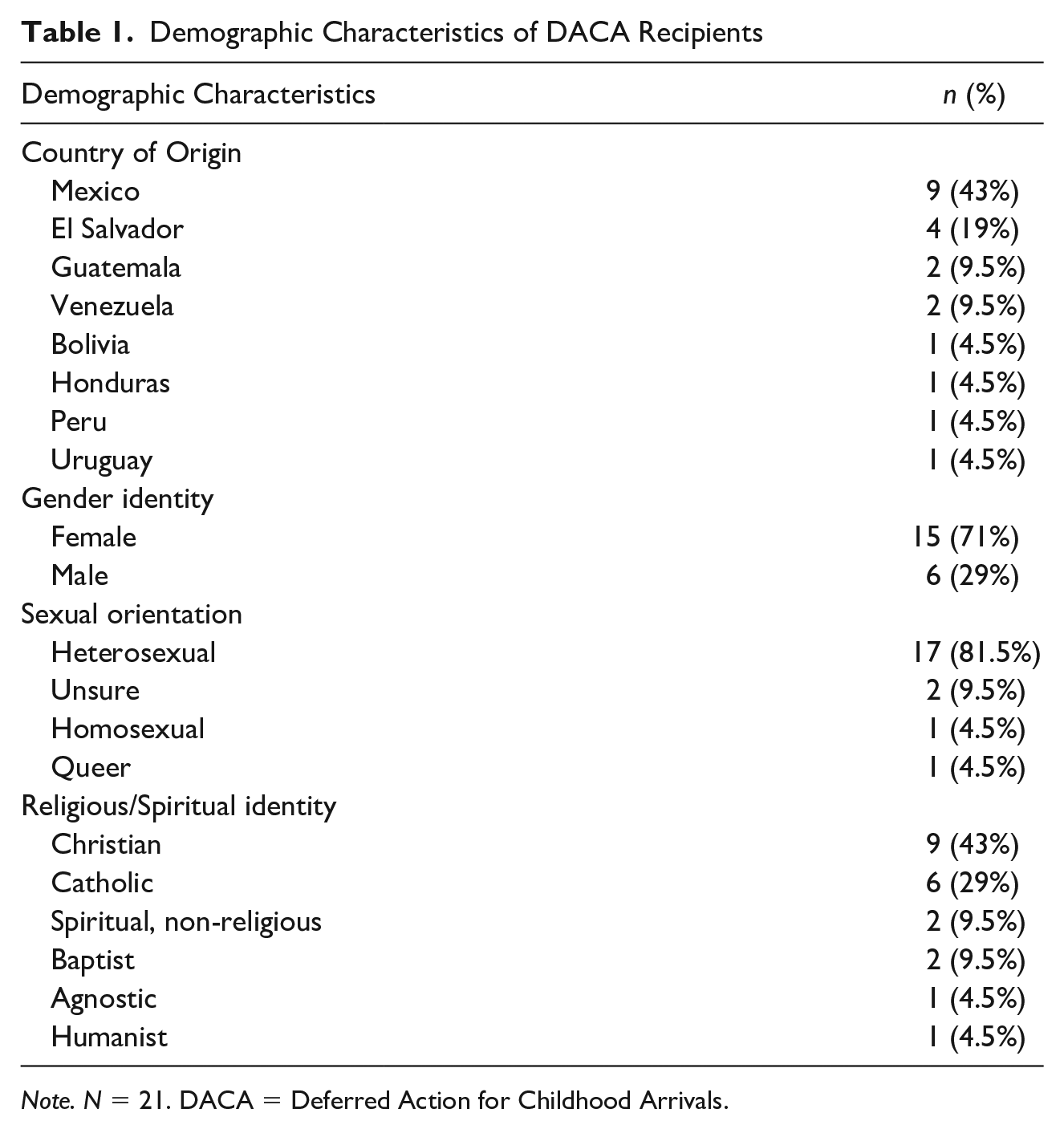
Note. N = 21. DACA = Deferred Action for Childhood Arrivals.
Procedures
Participants were recruited via snowball sampling at a large southeastern public university during a visible DACA political debate. Participants were recruited from 2017–2019 when the Trump administration was making explicit efforts to rescind DACA. Flyers were distributed on a college campus and announcements were made in Latinx organizations on campus. The semistructured interviews ranged from 60–90 min. All interviews were conducted by the first and second authors, who identify as bilingual Latinxs with both Spanish and English literacy and fluency (Spanish being their first language). Participants had the option to have the interview in English or Spanish and all interviews were digitally recorded. Only one interview was conducted entirely in Spanish, while the rest were conducted in English or a combination of both (i.e., “Spanglish”). After giving consent to participate in the study, participants completed the semistructured interview. Efforts were made to not (re)traumatize interviewees with their lived experiences, and so frequent reminders were given to not answer questions seen as uncomfortable. Additionally, mental health referrals at the university and/or community mental health centers were provided after the interview. Participants received a $20 gift card for participating in the study.
Measures
Interviewers began by asking questions about demographics, including acculturation. Questions were then asked about the participant’s experiences with immigration and immigration policies, their reaction to debates surrounding DACA, and its effects on their future aspirations, and coping mechanisms. The interview guide covered topics that included descriptions of migration, U.S. lived experiences with certain policies like DACA, coping, and psychological well-being. Although our questions centered around experiences and reactions, we were intentional in identifying categories that were indicative of the psychological impact, strength, and coping of participants. The questions were as follows: I’d like to talk to you about the ongoing political debate around DACA and the government’s efforts to terminate it: 1) How did you react? 2) What were you thinking? 3) What were you feeling? 4) How did you behave? 5) Who was there to assist you during this time? 6) How did you seek support? 7) What did your community do about this? 8) What will happen even if you (or someone you know) are not granted DACA again?
Data Analysis
Digital recordings were transcribed and coded by a trained bilingual Latinx research team. The research team was trained in transcription, coding, and overall analysis. The five team members first transcribed the audio files word-by-word to written transcripts using Transana software 3.32 (Rush, 2014). Once each transcript was completed by a bilingual team member, the transcript was then back transcribed by another team member to determine their accuracy. Once all transcripts were completed, the bilingual Latinx team then engaged in the coding phase in the original language of the interview.
Given our interest in identifying key concepts and ideas that undocumented Latinx immigrant young adult’s experience, content analysis was chosen over other qualitative approaches. Content analysis has been used in other studies with Latinx DACA youth in school’s K–12 as well as higher education (Allen-Handy & Farinde-Wu, 2018; Andrade & Lundberg, 2020). One of these studies highlighted familial support and how it contributed to educational success (Allen-Handy & Farinde-Wu, 2018). Another study (Andrade & Lundberg, 2020) used content analysis to identify the discourse of DACA on college campuses, and others have used content analysis to examine strength, resilience (Luna & Montoya, 2019), and activism (Rodriguez et al., 2019) in the face of the negative sociopolitical climate. Specifically, content analysis describes written text by categorizing key contents into ideas rather than events (Elo & Kyngäs, 2008). The analytic procedures entailed line-by-line open coding of the entire transcriptions. During this process, the research team members then engaged as independent coders. During this stage, coders formulated initial content codes, grouped them by ideas, categorized the groups, and developed a codebook (Elo & Kyngäs, 2008). Once the codebook was finalized, it served as a guide for coding responses and provided definitions of codes and themes for all transcripts. Weekly meetings entailed discussion around independent content categories, groupings, and categorization. Any disagreements in each of these phases were discussed at these weekly meetings via an auditor—the first author (Hsieh & Shannon, 2005). Agreements and disagreements were also determined at these weekly coding meetings with the auditor until 100% agreement was reached.
Positionality
Each member of the research team identified as a first-generation college student and were children of immigrant Latinx parents. One team member identified as a DACA recipient. Throughout the entire data analysis team members reflected on their positionality, especially as it related to the coding phase. Specifically, consistent conversations were held around their positionalities with or without DACA, as well as reflections that involved their status and how this may affect potential researcher bias. This ongoing reflection was vital to ensure that the interpretation of the data was not biased nor was it impacted by the coder’s dominant and nondominant identities (e.g., gender, immigration status, Latinxs, and experience with DACA; Milner, 2007; Moreno & Corona, 2020).
Results
Qualitative analysis provided important insights into the undocumented Latinx immigrant young adult’s experience as a result of ongoing DACA political uncertainties. We first describe four content categories (i.e., stress, fear, anxiety, and depression) surrounding the Latinx immigrant young adult experience as a result of uncertainty surrounding DACA. We then describe three content categories (i.e., luchando adelante, positive outlook, and DACA+Ethnic Pride) around strengths and three coping strategies (i.e., family-social support, religious/spirituality, and social advocacy) that Latinxs immigrant young adults use during these ongoing political debates.
Reported Psychological Impact During the DACA Political Debates
Content analysis revealed that participants described being affected by the DACA political uncertainties. Latinx DACA young adults described consistent stress, fear, as well as anxiety, and depressive symptomatology.
Stress
All participants (100%) described some experience of stress while witnessing the DACA debates of 2017–2019, especially when witnessing explicit and implicit anti-immigrant and anti-DACA rhetoric. To many, this rhetoric around DACA created many uncertainties in regard to their academic and occupational goals, legal and financial status, as well as their overall lived experience. These stressors include financial stress, immigration stress, mixed-status family stress, and academic stress. Some participants also highlighted having to save more and spend less, in an effort to prepare for any unwanted federal decision around DACA, a burden most traditional college student do not have to experience. Participants also described additional stressors around life without stability or protective status. Karla, a 21-year-old immigrant from Colombia, stated: I feel a little disadvantaged in some of these spaces. In college, even though I worked really, really, really hard I’m still making it to some level, like, you know, some citizen students are privileged and have a lot of money. So, that has made me like sad sometimes because I’m here having two jobs and still I have straight A’s but like I can’t get an internship because I can’t, you know, have a job for free like I can’t work for free um because if not. . . Okay, uh, so I feel like I can’t afford to do a lot of the things a lot my peers do like go to spring break, have fun, or have these internships, have these opportunities just because I don’t have the money, have more stressors.
For Karla, her lived experience as a DACA recipient provided some stability, however, it was still a challenge during the anti-immigrant political climate. She described having a high academic record, yet found herself needing to work multiple jobs to financially prepare in case DACA was terminated. These lived experiences do not allow students like Karla to maximize their higher education experience and especially limit their experiential training through internships and other academic experiences, which in turn, hinder additional academic and occupational opportunities.
Fear
Nineteen participants (90%) experienced fear of not knowing what the future held. Others described this fear as attributed to thinking they would be deported back to a country that they did not see as home and had little knowledge of. Since they were brought to this country at such a young age, they had no idea what they were going to do nor where they were going to go if DACA was terminated. These uncertain thoughts, therefore, invoked unwanted emotions, such as fear. Erica, a 19-year-old Mexican-born college student who was brought to the United States at age 3, stated: [When hearing that DACA may be terminated], I was just scared of getting deported. I was just terrified of what could happen. I couldn’t rely on my parents, because if I was going to get deported, we’d all get deported. We all had that same fear.
For many participants like Erica, their fear was innate. DACA brought security to higher education, status-quo, and her overall identity as belonging in this country. The uncertainty around DACA, especially as the visibility of the Trump administration’s intent to terminate it invoked additional fear.
Anxiety Symptomatology
Fifteen participants (71%) also described symptoms of anxiety due to uncertainty about the future. These participants described that with DACA being uncertain, they had become worried and anxious because their personal information (name, date of birth, address) was now in a large database that could be accessed by government departments like the Department of Homeland Security (DHS). Specifically, they were worried that they would be easily accessed by DHS if needed. For some, their immigrant experience and undocumented status was reported as highly stressful. Even upon obtaining DACA, participants described their symptoms of anxiety still existed for several reasons. For example, although DACA is deferred action from deportation that makes participants eligible for work permits in the United States, it also needs to be renewed after a two-year period, leaving participants to worry the program will be terminated and their futures drastically changed. Jose, a 19-year-old who immigrated from El Salvador at age 4 with his family, stated: Being a first-generation immigrant and having to deal with a lot of this disenfranchisement by the state that happens to affect undocumented immigrants is stressful. I faced a lot of anxiety issues. I have experienced a lot of anxiety lately.
Although the content categories of stress and fear were already described above, participants also described additional symptomatology outside of stress and fear. Like Jose, many Latinx immigrant young adults described anxiety-related symptoms that were both physical somatizations (e.g., sleeping problems, lack of appetite, heart palpitation) and cognitive (e.g., frequent worrying, inability to concentrate) in nature. Therefore, the political debate and national conversation around potentially terminating DACA was associated with these physical and cognitive experiences that further impacted their lived experiences around relationships, academics, and their occupation.
Depressive Symptomatology
Seven participants (33%) also described symptoms of depression as a result of uncertainty surrounding policy changes. Many described feeling helpless, hopeless, and especially feelings of sadness at the thought of DACA being rescinded. Thoughts of losing their sense of belonging, lifestyle, and not being able to fulfill the “American dream” with an “American career” further invoked depressive symptoms. Amado, a 21-year-old who immigrated from Venezuela at the age of 5 with his parents, stated: I feel sad. I’ve worked hard all this time and I have to be sent back. Like, even though, I know the rest of the family is there [in Mexico], I know I am not going to live the same lifestyle that I lived here. I feel sad—even depressed—just by thinking of all of the stuff that will change from living there.
Overall, Latinx immigrant young adults reported a continued psychological impact from the federal uncertainty of DACA. Although DACA provides short term stability, the Trump administration’s emphasis on termination, and the uncertainty that awaits Latinx immigrant young adults, continued to add consistent stress, fear, anxiety, and depressive symptomatology to students as they strived to pursue their higher education and/or begin their lifelong career.
Perceived Strengths During the DACA Political Debates
Through these experiences, Latinx immigrant young adults further shed light on their strengths as they continued to strive forward despite the social–political immigration debates. Also, participants reported a strong sense of pride in who they were and where they came from. Specifically, they mentioned that their DACA identity and ethnic pride increased as a result of these immigration policies.
‘Luchando Adelante’ (Striving Forward)
Fourteen participants (67%) shared that one perceived strength during the uncertainty around DACA was continuing to strive forward (luchando adelante) even when all odds seemed against them. On days when participants felt down, they would cognitively push themselves for strength and the motivation to keep going. For several of these participants, this entailed being mindful of their thought processes and striving to get up and continue living their day-to-day lives without focusing on the stressors of uncertainty. Isela, a 22-year-old from Honduras who immigrated with her parents at the age of 5, explained: [When I heard that DACA might be terminated], I was agitated and sad, but at the same time, I was hopeful that something better would come. They can’t just leave us like that, hanging. I always say, things happen for a reason, so maybe if this happens, something better will come up, but that’s what kept me motivated, like it’s okay, it’s going to be okay. Something better might come, but if not that’s what I have planned, maybe I will have to go back and try to apply to go somewhere else.
Many Latinx immigrant young adults like Isela reported that the uncertainty surrounding DACA turned into personal resilience to luchando adelante. Many highlighted a sense of obtaining control of their reactions in a time when they felt out of control of the decision surrounding their status quo. Therefore, luchando adelante was a common categorical group that described one of the Latinx immigrant young adults’ strengths.
Positive Outlook
Like the previous theme, five participants (24%) described having a positive outlook towards life in a time that did not seem positive. This served as a strength during the DACA political debates. Other participants also outlined how having positive cognitive schemas, along with mindfulness (i.e., focusing on the present moment), like focusing on family and schoolwork, allowed them to concentrate more on things they could control and less on things they could not. These strengths assisted in reducing the risks associated with the uncertain future of DACA. Luis, a 20-year-old who immigrated from Mexico with his mother and brother at the age of 4 stated: We were taught to think positively. Every time they say something about DACA—that they’re going to pause it or terminate it, I don’t get into it. I don’t think hard about it because that will just stress me out more. I rather think positive and just live in the now—like worry about the things that are in the present such as school, work, assignments; things like that.
Living in the present moment highlighted positive cognitive schemas (e.g., thoughts that focused on their values to family, peers, academics), rather than focusing on the future (e.g., not knowing what the future of DACA awaited). This ability to focus on the now allowed for a positive outlook towards life, a key strength for Latinx immigrant young adults.
DACA+Ethnic Pride
All participants (100%) described an overwhelming amount of pride around the intersectionality of their DACA identity, immigration status identity, and ethnic pride. The intersectionality of these identities and pride served as a strength of their overall obstacles and difficult experiences. Many participants reported feeling like they had accomplished their goals and that their accomplishments would serve to impact the community (i.e., for other DACA and immigrant students in similar situations). Other participants mentioned that they felt grateful for their intersectional identities, given they came from challenging situations, and that they continue to be lifelong learners of navigating these challenging situations. For many, being a first-generation young immigrant with DACA has made them proud to have been given such a novel perspective. Lucia, a 32-year-old who immigrated to the United States from Mexico with her parents when she was 15, stated: So I’m proud of that, um, that being first-generation has made us grateful, like if we come across challenging situations we don’t, um, what’s the word? Like, we don’t get knocked down by them, we know how to get through challenging situations. So, I think that being a first-generation young immigrant has given us that perspective.
Lucia and many other Latinx immigrant young adults highlighted how proud they were of their intersecting identities that included being recipients of DACA. Three participants in particular, emphasized how the intersection of their identities with their DACA status created pathways for resilience. Joselyn, a 28-year-old who immigrated to the United States from Guatemala with her father when she was 5, stated: I am [proud], I know that. I am the daughter of immigrants. People who were trying hard to better their life. You know, there does come that like, sense of pride that you’re part of this whole generation that’s just trying to, you know, get a footing—get their footing in the United States. And like, yeah, we’re, we’re worthy just as anybody else to be here, we’re going to show you how great we are and how far we can go, um, even with all the struggles, we’re going to succeed regardless. I think that’s pretty much the mentality, um, that we have.
For many, the debates around DACA only heightened their pride surrounding these identities. This highlights how pride has been a strength and source of resilience during political turmoil, shaping participants’ views of self and others in times of uncertainty. Overall, luchando adelante, a positive outlook towards life, and DACA+ethnic pride all work together to shape how Latinx immigrant young adults embody strength during these uncertain times.
Reported Strategies to Handle Adversity During the Ongoing DACA Political Debate
Although participants described how changes in anti-immigration policies negatively impacted their lives, they also gave insight on how they handled these adversities Many participants described social and family support, religiosity/spirituality, and social advocacy as ways to handle these uncertain times around DACA. Each is described next.
Social and Family Support
Social and family support was broken up into three domains in the literature: instrumental, appraisal, and informational support (House, 1981). Across the narratives, four participants reported instrumental support, one reported appraisal support, and one reported informational support. Seventeen participants (81%) described having strong networks that provided different types of social support in times of emotional and academic need. Of those 17 participants, 11 (52%) reported having strong emotional support networks, which included feeling listened to and cared for. Of the participants who reported social support, four (12%) reported instrumental support from their social network, describing tangible ways in which their peers or family members offered to help in their day-to-day tasks, including work or academic course load. One participant described informational support in which a teacher assisted in finding scholarships that were explicitly for undocumented youth, and one participant reported appraisal support where they engaged in self-evaluation. All 17 participants described their networks as knowing about their situation with DACA. When they were feeling down or unsure, they described that these supports allowed for more emotional security in their lives. Another form of social support included strong familial support. For some, familial and peer networks were aware of the problematic experiences around these policies, and so they were aware when participants were upset, down, or stressed. Maria, a 19-year-old from Mexico who immigrated to the United States at age 5, stated: Mostly my mom, but also my friends that knew about what was going on or knew my situation. And, usually, my friends can tell when I am upset, so they asked me about my situation, of course, I spoke to them and they helped me a lot because being able to speak about issues like these, I think, is very important.
Maria and other Latinx immigrant young adults shared that their supporting relationships allowed for a strong means of handling adversity. This community support highlights how Latinx immigrant young adults, who traditionally come from more collectivistic backgrounds, used their support systems in uncertain times with DACA.
Religiosity/Spirituality
Nineteen participants (90%) also identified aspects of religiosity/spirituality as a means of coping. Participants mentioned that their faith assisted them in ways where they can rely on a higher power, and they can depend on their faith community. Several participants described their common spiritual practices as praying, reading faith-based content, and/or going to faith-based events. The majority of these participants mentioned that religiosity/spirituality primarily assisted them during the legislative decisions when the outcomes of immigration policies were at stake. Ricardo, a 21-year-old from Mexico who immigrated at age 5 with his family, stated the following: When I would feel really bad about myself or when I wanted to be a part of this country, I would just pray and sit down and talk to God about my struggles. I felt like I was kind of lost. I couldn’t find myself. That helped me a lot—just like praying, meditating, and stuff like that.
Ricardo also described how the potential termination of DACA made him experience negative feelings about himself and his life experiences. However, Ricardo also highlighted how prayer and meditation allowed him to be more centered and less dysregulated about the future of DACA. Given that many participants described being socialized in religious and/or spiritual families, this coping mechanism was notable for Latinx immigrant young adults during these uncertain times.
Social Advocacy
Finally, seven participants (33%) described handling these adversities by advocating for DACA by educating community members, family, and state representatives about their life experiences and the overall impact that these legislative decisions have on their lives. Interestingly, our female participants described a stronger need to bring visibility to these issues and take action. The few male participants (n = 6, 29%) did not explicitly describe the need to advocate, however, one male (5%) reported engaging some advocacy after being probed by the interviewer. As many participants found their personal lives, sense of belonging, and career goals being impacted, they found themselves advocating as recipients of these policies. Others described that they had siblings who were born in the United States that did not feel the need to advocate like they did. Karla, a 20-year-old from Mexico who immigrated with her parents at age 2, stated: My goal was to try to give visibility to these issues and also just take action, even in the legislature here in the state. We went to the general assembly as well and talked to representatives and staff about these issues.
Overall, participants provided insight into their methods of handling adversities during the ongoing political debate, including social and family support, advocacy, religiosity/spirituality, and social advocacy.
Discussion
This qualitative study explored the psychological impact of political turmoil and uncertainty around DACA on Latinx young adult DACA recipients. Content analysis revealed that all participants (100%) described being affected by the federal immigration debates of 2017–2019, specifically after the attempt to revoke DACA. Many participants described constant feelings of worry, anxiety, and stress that stemmed from legal uncertainty that DACA cannot provide a solution for. Our findings are consistent with literature describing DACA recipients living in “legal limbo” (Gonzales, 2016). Consistent with the literature, participants described receiving many benefits from DACA, although still lacking long-term stability. The extant literature, coupled with our findings, further emphasize the need for a legal path to citizenship for DACA recipients. Participants demonstrated that although DACA recipients may have more privilege than other undocumented non-DACA recipients (e.g., documentation to work), they continue to remain vulnerable (e.g., uncertainty around academics, occupation, lifestyle, social security, overall quality of life) if DACA was terminated (Gonzales et al., 2018). This highlights the long-term need for immigration policies that address the instability and uncertainty that Dreamers face in their everyday lives.
After several attempts to revoke and terminate DACA, affected recipients reported consistent and increased symptoms of anxiety and depression due to systemic discrimination. Participants also reported increased stress due to the DACA debates. Part of this stress included financial stress, such as the need to compensate for their ineligibility to receive financial aid to pay for college by working more hours. Our findings support the overall literature on the psychological health of Latinx immigrant young adults. For example, Garcini et al. (2017) suggested that a large portion of Latinxs between 18–25 years met the criteria for major depressive disorder, panic disorder, generalized anxiety disorder, and substance use disorder. Although the immigrant health paradox describes immigrants as having better health than those Latinxs born in the United States (Moreno & Cardemil, 2018b; Ruiz et al., 2016), consistent data shows that immigrant health, primarily with Latinx immigrant young adults, has worsened, perhaps as a result of changing immigration policies since 2015 (Becerra et al., 2020; Siemons et al., 2017). Our findings, however, highlight how the ongoing DACA political debate and constant visibility around efforts to terminate DACA create additional stressors for these already vulnerable communities. These results are consistent with new research highlighting that immigrant students who do not hold permanent protections in their immigration statuses exhibit higher symptoms of psychological distress compared to their peers who hold permanent protections (Cadenas & Nienhusser, 2020). Future research can examine how these ongoing stressors can impact academic performance and have long-term effects on the well-being of Latinx immigrant young adults.
Additionally, participants further described their efforts to luchando adelante (strive forward) and retain a positive outlook, as the social–political immigration debate continued. These findings also highlight their resilience, even when systemic and political pressures were impeding their efforts and goals. Although the Latinx cultural saying of echale ganas (give it your all; Jabbar et al., 2019) has been highlighted in the Latinx literature, our findings highlight another similar cultural saying: lucha adelante. Our findings highlight how, although these two cultural sayings are similar, for DACA recipients it may not be sufficient to give it their all, they have to strive to move forward. This may support cultural resilience and overall collective mobility in advocacy as a means of voicing their experiences and strengthening alliances (Gleeson & Sampat, 2018; Hope & Jagers, 2014). Hope et al. (2015) suggest that social advocacy through civic engagement is related to many positive development outcomes including, but not limited to, increased critical analysis, problem-solving skills, sense of self, and positive identity formation. Research is also highlighting that developing critical consciousness of social advocacy and self advocacy supports undocumented students in maintaining intentions to persist in college and in coping with discrimination (Cadenas & Nienhusser, 2020). Although critical consciousness did not come up in our data, this topic may require further investigation. Participants also reported a strong sense of pride in who they are and where they came from. Specifically, their DACA identity and ethnic pride increased as a result of the DACA political debates. Our findings highlight how these debates, coupled with a sense of advocacy, may allow for an inner sense of security about their current stressors and life experiences of being a Latinx immigrant young adult (Sue & Sue, 2012).
Implications for Practice, Advocacy, Education/Training, and Research
Our findings shed light on the importance of increasing awareness of the needs of undocumented Latinx young adults in order to improve training for mental health professionals, faculty/staff in higher education institutions, and community workers. Although DACA recipients receive certain temporary benefits from this policy, it also comes with unique challenges that make this population vulnerable and uncertain about the future. Findings suggest that it may be important for professionals to include some aspects of religiosity/spirituality (as demonstrated with the general communities of Latinx immigrant groups; Moreno & Cardemil, 2018a; Moreno et al., 2020) and social advocacy to help support this population in coping with their DACA status (Cadenas et al., 2020). Higher education professionals, as well as mental health professionals, may find it useful to cultivate culturally infused coping skills like the ones mentioned above. A recent guide to providing mental health services to DACA recipients (Cadenas et al., 2020) provides several examples for how to do this in a way that exhibits cultural competency, including centering the narratives of undocumented immigrants, examining implicit bias, challenging myths about immigration, staying updated with immigration policy, fostering the resilience and strengths displayed by undocumented immigrants, facilitating connections with community resources, and engaging in advocacy to address systemic barriers to care.
Overall, our findings have many practical and theoretical implications for supporting the educational success and overall psychological well-being of undocumented Latinx immigrant young adults, especially DACA recipients. As highlighted by Teranishi et al. (2015), several factors make systems less welcoming and friendly towards undocumented individuals. Our findings also elucidate how the national, state, and local communities, as well as campus ecologies outlined by Suárez-Orozco et al. (2015), interact and intersect to further complicate the educational and psychological experiences of undocumented Latinx immigrants. University/college educators, mental health providers, community service members, and policy advocates may use our findings to inform the ways that they support these communities. Although trauma did not come up in our data, it is a related topic within immigrant communities in general (Chavez-Dueñas et al., 2019). Educational institutions and community mental health organizations can further support this population by adopting practices and policies that foster healing from ethno-racial trauma in immigrant communities (Chavez-Dueñas et al., 2019). Based on the framework developed by Chavez-Dueñas et al. (2019), healing from trauma fostered by the current political stressors can be accomplished by (a) establishing sanctuary programs for undocumented immigrants, for which the case has been convincingly made by legal scholars; (b) acknowledging and reprocessing the psychological impact, such as the stress, fear, anxiety, and depression evidenced in this study; (c) affirming community strengths, such as luchando adelante, positive outlook, and DACA+ethnic pride; and (d) engaging in liberation and resistance, such as providing social support, spiritual support, and social advocacy. These efforts may assist in providing healing from political stressors. Finally, given that 19% of the sampled participants identified as a sexual minority, it is important to mention the intersecting nondominant identities of immigrant, Latinx, and LGBTQ+, especially how these intersecting nondominant identities represent even more vulnerable communities that require the attention of mental health practitioners, researchers, higher education personnel, and community-based organizations.
At the time of this study, DACA’s future was uncertain after multiple attempts by the DHS, under the Trump administration, to rescind the program starting in 2017. However, in 2020, the U.S. Supreme Court blocked the Trump administration’s plan to dismantle the Obama-era program. Although this was a landmark decision by the Supreme Court, there has been no extension of the DACA program yet, including no path to citizenship for Dreamers. DACA offers many benefits, including paving the way for its recipients to enroll in post-secondary degree programs, be homeowners, and minimize fear of deportation, yet, it is limited. Much more work is left to be done.
Limitations and Strengths
This study has several limitations. First, the Latinx participant sample cannot be generalized to immigrants of different ethnic backgrounds. However, these findings provide implications, if and when, working with first-generation DACA recipients during high-stress political climates that impact their legal status. Second, we conducted interviews in the southeast region of the country, a newer and growing location where immigrants are living (Budiman, 2020; Corona et al., 2009). This may have limited the sample and recruitment efforts. Lastly, our approach to recruiting this population was biased towards the recruitment of students and college-educated young adults. This limits the study’s generalizability to broader undocumented, or liminal immigrant populations.
Despite these limitations, qualitative methods and a semistructured approach allowed for an in-depth exploration of the ongoing experiences with the DACA political debates. Unlike quantitative methods, open-ended questions allowed for more informative responses that provided a clear picture of participants experiences. Our findings also point to how Latinx immigrant young adults cope with living with a liminal status and suggest the need for culturally competent and accessible community-based support for DACA-eligible young adults. Overall, this study offers a unique insight into the impact of constant policy changes surrounding DACA, therefore future research should continue to view policy, specifically immigration policy, as a social determinant of health to further the discussion on how policy impacts well-being.
Conclusion
Given that undocumented Latinx DACA recipients did not report having colleagues or school personnel as a support system, this does not negate the fact that higher education personnel can assist in their overall experience as the DACA political debates continue. As highlighted in the literature, Latinx immigrant young adults, and especially DACA recipients, face additional barriers that may prevent them from establishing networks in college (Garcia & Tierney, 2011; Negrón-Gonzales, 2013). Similarly, they may also face difficulty establishing networks and support systems in educational settings, as they may have a hard time trusting peers and school staff and therefore make less meaningful connections (Garcia & Tierney, 2011; Gonzales et al., 2013; Suárez-Orozco et al., 2015). To foster relationships that are beneficial to Latinx immigrant young adults who are impacted by DACA, it would be valuable for research to continue to focus on how community institutions can better support these students. This is especially true for systems that are located in newer locations where immigrants are now residing. Continuing to explore access and ways of building a community for DACA recipients may help reduce stressors. These efforts are intended to provide better quality care for Latinx young adults who are DACA recipients, in an uncertain political time surrounding their status.
Footnotes
Declaration of Conflicting Interests
The author(s) declared no potential conflicts of interest with respect to the research, authorship, and/or publication of this article.
Funding
The author(s) received no financial support for the research, authorship, and/or publication of this article.
