







Abstract

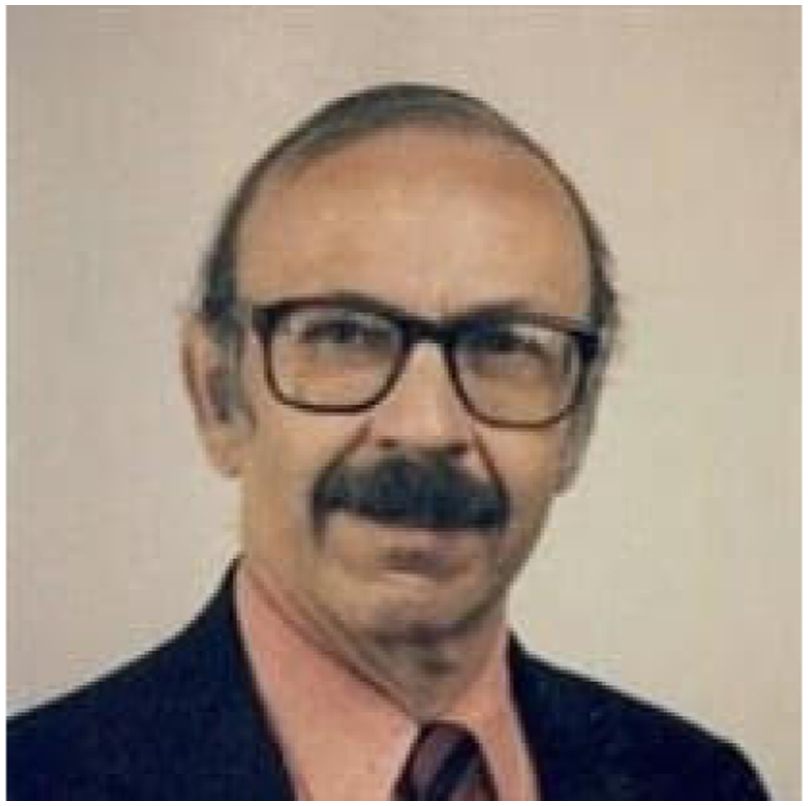
Samuel Herman Osipow passed away in Columbus, Ohio on May 23, 2023, at 89. He was born in April 1934 in Allentown, Pennsylvania, and had lived in Columbus since 1967. He lost his beloved wife, Sondra, after 59 years of marriage; he also lost two adult children, Jay and Reva. He was a loving father to his two living children, Randall and David, and a proud and loving grandfather to Alexis, Justin, and Cassidy. Osipow graduated from the Valley Forge Military Academy in 1951. He earned his BA from Lafayette College in 1954, MA from Columbia University in 1955, and PhD from Syracuse University in 1959. He then served 2 years active duty as a 1st lieutenant in the U.S. Army and 6 months as a Captain in the Army Reserve.
In 1961, Osipow began what would be a stellar academic career. After 6 years as assistant professor at Pennsylvania State University, including a visiting Lectureship at Harvard, he joined the faculty in the Department of Psychology at The Ohio State University (OSU) in 1967. He was promoted to Full Professor in 1969 and retired as Professor Emeritus in 1998. He served as Chair of the OSU Psychology Department from 1972–1985. During these years, he also held visiting faculty appointments at Tel Aviv University, the University of Maryland, and the University of Canterbury in New Zealand. During his tenure at OSU, he advised more than 40 PhD students.
Osipow was one of those unusual academics whose contributions spanned all aspects of academic endeavor. He was, first, one of the most prolific and influential scholars in the fields of vocational and counseling psychology. His research on career decision making (Osipow, Carney, & Barak, 1976) and occupational stress, strain, and coping (Osipow & Spokane, 1983) led to the development of measures of these constructs still widely used in research both nationally and internationally. His books and monographs provided reviews and syntheses of vocational and career development theory and research. These syntheses include The Emerging Woman (Osipow, 1975), a review of research up to that point on the career development of women. Osipow went on to publish several major volumes with W. Bruce Walsh: Handbook of Vocational Psychology (Walsh & Osipow, 1995), Advances in Vocational Psychology (Walsh & Osipow, 1986), Career Counseling (Walsh & Ospiow, 1990), Career Counseling for Women (Walsh & Osipow, 1994), and Handbook of Vocational Psychology (Walsh & Osipow, 2nd ed., 1995). All told, he was the author, co-author, editor, or co-editor of 19 books and monographs—these books were the staple of graduate level courses in vocational and counseling psychology for many years. Perhaps the most influential in graduate courses was Theories of Career Development with Louise F. Fitzgerald (Osipow & Fitzgerald, 1996), now in its fourth edition and translated into Spanish and Chinese, among others. Overall, Osipow is credited with over 100 professional publications.
In 1971, he founded and was first Editor of the Journal of Vocational Behavior (JVB). Vocational psychology was, at that time, a relatively new and small field of scientific inquiry, and the existence of a new journal focusing on publishing research in the field had an immeasurable impact on the growth and visibility of the field. To commemorate the 50th birthday of the journal in 2021, the Editor at that time, Nadya Fouad, commissioned a special issue (Fouad, 2021), including major articles covering a range of research topics. The wide visibility and impact of the journal can be gauged by its publication of over 3,300 articles since 1971 and an editorial board of 140–160 scholars from all over the world. In addition, Osipow also served as Editor of the Journal of Counseling Psychology and Applied and Preventive Psychology.
In addition to his major contributions in both scholarship and editorial work, Osipow was a leader in both university and national service. He was the Chair of the Psychology Department at OSU for 14 years. Nationally, he served as Chair of the National Register of Health Service Providers in Psychology, as a member of the Board of Directors of the American Psychological Association (APA), and President of the Division of Counseling Psychology of the APA. He received many significant honors over the course of his career. He was listed in Who's Who in America since 1980 and Who's Who in the World since 2015. He won the Leona Tyler Award in 1989 for contributions to the field of counseling psychology and the Eminent Career Award in 2000 from the National Career Development Association. Probably most significantly, upon his retirement, a group of nationally recognized scholars consisting of Sam’s colleagues and/or collaborators contributed to a series of invited articles, a festschrift, commemorating his career. This volume was published as Contemporary Models in Vocational Psychology: A Volume in Honor of Samuel H. Osipow, edited by Frederick Leong and Azy Barak (Osipow et al., 2001).
As impressive as Sam’s scholarship, editorial work, and professional leadership accomplishments, he was equally accomplished as a teacher and mentor. Osipow was a significant contributor to the teaching program at OSU’s counseling psychology program and a dedicated adviser and mentor. His former students, now PhD’s, speak of the impact his support and advice had on their careers and their personal development.
But before I provide comments from his former students and colleague, I will discuss his impact on my own career. I was 26 years old when I joined the faculty in psychology at OSU. The faculty in the department were immensely supportive of me from the beginning, but Sam and Bruce Walsh, the two major scholars in vocational psychology and career development, immediately began to involve me in their work, becoming major collaborators and supporters. In addition to including me as a chapter co-author, Sam nominated me to take over as Editor of JVB in 1984. This was an incredible honor for me—to carry on Sam’s work with this journal was an honor I cannot overstate. Incidentally, as an indicator of Sam’s continuing efforts to support and advance the careers of women scholars in psychology, he had asked Lenore Harmon to take over JVB in 1977 when he retired from the position. Thus, the two editors following Sam were both women. In addition, when Sam was department chair, he strongly supported the hiring of women faculty, which were badly under-represented in our department. Sam was a wonderful colleague and friend.
Several of Osipow’s former students and a colleague submitted their thoughts regarding the impact he had on them. From Dr. Azy Barak, Professor Emeritus, University of Haifa, Israel: I first met Dr. Osipow as a master’s student in a course he taught as a Visiting Professor at Tel Aviv University in the Fall of 1972. As primarily Hebrew-speaking Israeli students, we were amazed by Dr. Osipow’s patience, effort, and dedication in conveying his immense knowledge while making sure his language was clear to us. Dr. Osipow’s outstanding professional merit, as well as his charming personality, led me to pursue PhD studies at Ohio State, fortunately supervised by him. For me, Dr. Osipow was much more than a teacher. In our ongoing and intensive contacts and numerous talks, I learned from him much more than what a student may learn in typical academic lectures. He helped me develop skills one cannot acquire from books or lectures: Asking questions, doubting, and developing critical thinking. In addition to large quantities of knowledge, Dr. Osipow taught me how to learn, how to think, how to analyze information. In pursuing this approach, Dr. Osipow’s teaching emphasized an exceptional combination of high expectations for and demands from students, together with unusual care and concern, providing an optimal learning environment. As my supervisor, Dr. Osipow continuously gave me the feeling that he could count on and believe in me, while candidly and constructively criticizing my work. His attitudes toward me profoundly affected both my PhD studies and my future academic functioning in teaching, supervising students, and research conduct. While being a PhD student, I also had the opportunity to work with Dr. Osipow as his research assistant. For 3 years, I was intensively involved with his research, book and paper writings, and editorial activities. In this capacity, too, Dr. Osipow modeled an exceptional scholar in his striving for excellence and perfection. Finally, Dr. Osipow was a sincere, highly committed, kind, and likeable person who maintained close and enduring social relationships. It has been rewarding to occasionally exchange letters and emails with him for over 45 years. In sum, Dr. Osipow became a dominant model in my academic career in his striving for perfection and investing hard work in desired missions, while maintaining a strong and loving family and active social circle.
From Dr. Arnold Spokane, Professor Emeritus Lehigh University: Sam taught the career course at OSU in such a compelling way that I was hooked! In 1983, Sam spent his sabbatical leave in Washington D.C., collaborating with colleagues at APA and the University of Maryland. When he suggested that we work together on something, I jumped at the prospect. We had a common interest in work environments—Sam from a social role perspective and I from a more person-environment interaction point of view, a perspective learned from my academic advisor, Bruce Walsh. Sam had worked out a model that served as a template for the development of three independent but interlocking instruments to measure occupationally induced stressors, personal strains, and personal resources. Within a year, we had a preliminary version of what would become the Occupational Environment Scales (Osipow & Spokane, 1983). As he always did, Sam shared authorship credit, time, and wisdom with a former student and young colleague in a gracious manner. There was never doubt, however, about who was responsible for the impetus or the quality of the thinking in the product. It was Sam—a most generative and supportive mentor.
From Dr. Lisa Amoroso-Johnson, Akron, Ohio: Sam inherited me as his advisee when my assigned advisor left Ohio State for another university. In hindsight, I see that taking me on as his student created hundreds of hours of extra work, but Sam never made me feel like a burden. His message was always, “Let’s get you through this so you can go and do what you’re passionate about.” I know that I’m not the only advisee Sam supported with affirmation and messages of empowerment. There’s a group of us who share about how he cared for us and took a deep interest in our personhood both when we were in our program and throughout the decades after we graduated. On May 23, 2023, Sam’s advisees lost our mentor, champion, and friend. But we know that he’s with us as we guide clients through pain towards healing. He’s a part of every treatment plan enacted, report written, and presentation made. He’s there when we teach classes, publish papers, and step into professional leadership positions. He’s alive in our actions and we’ll continue to carry his legacy forward. I’m told that in Judaism, when someone dies it’s customary to state their name and add, “May their memory be a blessing.” And I know that for those whose lives Samuel H. Osipow impacted, we will remember his name and know that we truly were blessed.
Another of Sam’s students, Dr. Suzanne Zilber of Cleveland, Ohio, had this to say: I was honored to be assigned Dr. Osipow as my major professor. As a recent college graduate who had read his career textbook, I could not quite bring myself to call the department chair “Sam,” even though he promoted an egalitarian approach. I eventually got comfortable calling him Dr. O! He supported my interest in women's career development research and supported my development as a female psychologist by proactively offering professional development opportunities, such as book chapters, scholarships, and conferences. He offered patience and compassion with my struggles as I grew into adulthood and into my profession. He advocated that I receive my doctorate as scheduled even though I could not quickly rerun some data suggested by a committee member, as(Osipow et al., 1976) my apartment had burned down on July 4th, the day after my dissertation text was approved by the committee. He was most interested in students learning, not earning credentials. He responded to my annual letters up until his final year with warmth and pride. At our recent visit, he was pleased to learn how many OSU graduates had gone on to become counseling center training directors and directors and leaders in the Society of Counseling Psychology.
From Bruce Walsh, Professor Emeritus, The Ohio State University: Sam was a good friend and colleague. He had a profound impact on vocational psychology with the theories book, the Journal of Vocational Behavior, and his relevant research. Among many other things, he was an excellent department chair, always keeping an eye on faculty quality, diversity, and inclusion. He was a good person who cared about other people. I miss him. Sam spent much of his spare time and retirement helping others, whether in community programs devoted to the less fortunate, or in service to Tifereth Israel Synagogue in Columbus. While they were at Penn State, he and Sondra were instrumental in starting a new synagogue in State College. He and Sondra traveled widely, visiting 13 countries and 49 of the 50 states. Sam loved Baroque music and could often be found listening to his favorite composers. After time with his family and friends, what he probably treasured most were his frequent contacts with his former students. He was as devoted to them as they were to him. And his impact on the field of vocational psychology and career development is impossible to overstate.