







Abstract
Black women thrive and experience psychological well-being despite facing gendered racism and microaggressions. Although research highlights the negative impact of microaggressions on mental health, the connection to flourishing remains underexplored. This study utilized the intersectional biopsychosocial model of gendered racism, focusing on associations between gendered racial microaggressions, womanist attitudes, engagement coping strategies (resistance and education/advocacy), and flourishing among 238 Black women (Mage = 37.8, SD = 13.1). Results indicated that experiencing a greater frequency of gendered racial microaggressions was linked to decreased flourishing, with education/advocacy coping partially mediating this association. In addition, womanist attitudes did not moderate the indirect association between gendered racial microaggressions, engagement coping strategies, and flourishing. Findings underscore the potential role of education/advocacy as an adaptive coping strategy, highlighting the importance of strengths-based approaches in promoting positive well-being for Black women facing gendered racism.
Black women experience positive psychological well-being despite facing racism and sexism in their everyday lives. This study explored the association between gendered racial microaggressions, womanist attitudes, coping via resistance and education/advocacy, and flourishing among Black women. This study found that experiencing a greater frequency of gendered racial microaggressions was associated with decreased flourishing, but coping through engaging in education/advocacy helped to explain this link. Findings underscore the potential role of education/advocacy as an adaptive coping mechanism, highlighting the importance of strengths-based approaches in promoting flourishing for Black women facing gendered racism.Significance of the Scholarship to the Public
Black women thrive and experience positive psychological well-being despite facing intersectional discrimination, such as gendered racial microaggressions (i.e., subtle everyday racism and sexism; Lewis & Neville, 2015). Although existing research highlights the negative impact of gendered racial microaggressions on mental health (Erving et al., 2022; Lewis et al., 2017), there remains a gap in understanding how these experiences are tied to psychological well-being for Black women. Specifically, one aspect of psychological well-being that has been understudied in the literature is flourishing. Flourishing is defined as the process of finding fulfillment in one’s life, accomplishing meaningful and worthwhile tasks, and connecting with others (Seligman, 2011). In addition, it is important to consider how protective factors, such as a womanist identity and positive coping strategies contribute to the flourishing of Black women. The current study applies a positive psychology lens to test the intersectional biopsychosocial model of gendered racism (Lewis, 2023) by exploring the associations between gendered racial microaggressions, womanist attitudes, engagement coping strategies (i.e., resistance and education/advocacy), and flourishing among Black women.
It is important to integrate positive psychology and multiculturalism into the existing body of research on microaggressions given that much of this work has been focused on the negative impact of racial microaggressions on the mental health and well-being of people of color (Lewis et al., 2021; Sue, 2010; Torino et al., 2018). However, given that racial microaggressions are a ubiquitous aspect of the everyday lives of people of color broadly, and Black women, in particular, it is important to better understand how Black women survive and thrive in the face of microaggressions. Integrating positive psychology with a focus on multiculturalism offers a rich and more contextual understanding of the psychological well-being of Black women. It is important to consider the cultural, historical, and sociopolitical contexts that shape Black women’s lived experiences to better understand how Black women use personal and collective strengths to mitigate oppression and flourish (Mattis, 2002). Thus, more research is needed to integrate positive psychology and multiculturalism in microaggressions research in counseling psychology.
Some researchers have highlighted the dearth of multicultural perspectives in positive psychology (e.g., Caldwell-Colbert et al., 2009; Yakushko, 2018). We assert that counseling psychologists need to do more than integrate multiculturalism into positive psychology. Specifically, the field of counseling psychology needs to draw on contributions of Black psychology given the long-standing focus on psychological liberation from oppression, the strengths of African Americans, and strengths-based aspects of mental health, such as resilience, hope, optimism, spirituality, and culture within Black communities (Caldwell-Colbert et al., 2009; Myers, 1993; White, 1984). Historically, many Black psychologists have conducted research on positive psychology constructs, such as strengths-based counseling (Smith, 2006), racial identity development (Helms & Cook, 1999), resilience (Caldwell-Colbert et al., 2009), spirituality (Mattis, 2002), optimal functioning (Myers, 1993), and the strengths of Black families (Boyd-Franklin, 2003). Thus, it is important to integrate a positive Black psychology lens to better understand Black women’s everyday experiences with gendered racial microaggressions and how cultural forms of coping and identity can contribute to greater flourishing. This approach addresses a critical gap in the literature regarding how Black women thrive and flourish despite facing intersectional discrimination, such as gendered racism.
Intersectional Biopsychosocial Model of Gendered Racism
Drawing on foundational models of racism and intersectionality theory, Lewis (2023) developed the intersectional biopsychosocial model of gendered racism to conceptualize the role of gendered racism on the health and well-being of women of color. This model applies intersectionality theory (Cole, 2009; Crenshaw, 1989) to Clark et al.’s (1999) biopsychosocial model of racism to focus on the impact of the intersection of racism and sexism (i.e., gendered racism; Essed, 1991) on women of color's health. This model posits that gendered racism can have both direct effects on mental and physical health and indirect effects through various factors, such as coping strategies and stress processes. In addition, factors such as gendered racial identity and womanist attitudes can influence the strength of these effects.
Gendered racism can manifest at the interpersonal level as gendered racial microaggressions. Originally coined by Lewis et al. (2013), gendered racial microaggressions refer to “subtle and everyday verbal, behavioral, and environmental expressions of oppression based on the intersection of race and gender” (p. 51). These microaggressions manifest in various ways in Black women’s lives, such as being treated as invisible or hypervisible, facing stereotypical assumptions, and enduring exoticization and objectification. In a qualitative study, Lewis et al. (2016) found that Black women reported experiencing others treating them as stereotypes (e.g., the angry Black woman, the hypersexualized “Jezebel”, the strong Black woman); being silenced and marginalized in the workplace, school, or other professional settings; and facing assumptions about their speech or negative comments about their natural hair, skin tone, and facial features. Gendered racial microaggressions are pervasive and insidious, contributing to a climate of chronic stress and invalidation for Black women (Lewis et al., 2016; Lewis & Neville, 2015).
Much of the extant literature on gendered racial microaggressions among Black women has found that gendered racial microaggressions have a negative impact on Black women’s health, including greater symptoms of traumatic stress (Moody et al., 2023), depression (Williams & Lewis, 2019), anxiety (Burke et al., 2023; Wright & Lewis, 2020), poor sleep quality (Erving et al., 2023), and maladaptive eating (Volpe et al., 2024). These findings highlight the pervasive nature of these microaggressions and their ability to impact psychological well-being. However, despite a growing body of evidence on the link between gendered racial microaggressions and negative mental health outcomes, this is the first study to apply a positive psychology lens to focus on the link to positive mental health outcomes, such as flourishing.
Flourishing
Focusing on flourishing shifts the focus away from a negative mental health outcome and toward a positive mental health outcome. Flourishing represents a state of optimal well-being where individuals experience positive relationships, feelings of competence and mastery, a sense of meaning and purpose in life, and an overall sense of well-being and life satisfaction (Diener et al., 2010). In contextualizing the experiences of Black women, flourishing can serve as an important indicator of resilience and overall well-being despite experiencing racism and sexism (Myers, 2013). For the purposes of this study, flourishing is a positive mental health outcome being tested within the biopsychosocial model of gendered racism (Lewis, 2023) and serves as a key indicator of Black women’s psychological well-being. In addition, flourishing and thriving are conceptualized as synonymous, given both describe the experience of sustained well-being and positive functioning (Carver, 1998). Research indicates that flourishing is associated with various positive outcomes, including better physical health, higher life satisfaction, and lower levels of psychological distress (Keyes, 2009). However, very little research has specifically explored the construct of flourishing among Black women. This gap in the literature leaves a critical void in understanding the unique factors that contribute to thriving within this community (Mattis et al., 2019; Shorter-Gooden, 2004). Understanding the factors that contribute to flourishing despite the presence of gendered racial microaggressions is crucial given that Black women experience gendered racism at the institutional, interpersonal, and cultural levels in society (Lewis, 2023). Protective factors, such as engagement coping strategies and womanist attitudes may play a significant role in mitigating the adverse effects of gendered racism.
Engagement Coping as a Mediator
The intersectional biopsychosocial model of gendered racism (Lewis, 2023) posits that both adaptive and maladaptive coping strategies can affect the psychological and physiological effects of gendered racism. Research indicates that Black women employ a variety of coping strategies in response to gendered racism, with these strategies differing based on the context and their appraisal of the stressor (Lewis et al., 2013; Thomas et al., 2008). Some strategies prove to be more effective than others in coping with discrimination. For example, the first qualitative study to explore how Black women cope with gendered racial microaggressions (Lewis et al., 2013) revealed that Black women cope with gendered racial microaggressions through active or resistance strategies (e.g., confronting the perpetrator), collective strategies (e.g., seeking social support), and self-protective strategies (e.g., disengaging from the stressor, avoidance).
Researchers have shown that different coping strategies, such as engagement (e.g., directly confronting the stressor, problem-focused coping) have varying impacts on Black women’s health depending on the context of the stressor (Lewis et al., 2017; Szymanski & Lewis, 2016; West et al., 2010). Moody et al. (2023) found that engagement coping via education/advocacy (i.e., educating others to increase awareness of discrimination) and resistance (i.e., directly confronting or challenging the perpetrator of discrimination) did not mediate the relationship between gendered racial microaggressions and traumatic stress among Black women. However, other studies have demonstrated that engagement coping strategies such as problem-focused coping are adaptive for Black women (e.g., Shorter-Gooden, 2004). Some studies have indicated that for Black women, using engagement coping strategies in response to racism is linked to lower levels of depression, whereas greater use of disengagement coping strategies is linked to higher levels of depression (West et al., 2010). Given these mixed findings, further research is necessary to understand how effective engagement strategies are in promoting positive well-being among Black women facing gendered racism. In addition to coping strategies, it is possible that aspects of identity may contribute to the ways that Black women cope with gendered racism.
Womanist Attitudes as a Moderator
According to Alice Walker (1983), the term womanism refers to “a Black feminist or feminist of color committed to the survival and wholeness of entire people, male and female. Not a separatist, except periodically for health” (p. xi). Some Black women choose to identify as womanists rather than feminists to separate themselves from second wave White feminists who often excluded women of color in the fight against sexism and patriarchy (Bryant-Davis & Comas-Díaz, 2016; Lewis & Williams, 2023). Womanist psychology refers to the influence of women of color feminism in psychological research and practice with a focus on self-definition, healing, surviving, and thriving in the face of intersecting forms of oppression (Bryant-Davis, 2023; Bryant-Davis & Comas-Díaz, 2016). Early empirical research on womanist identity focused on a stage-like process where women of all races become more aware of sexism and internalize their own meaning of identity as a feminist or womanist (see Ossana et al., 1992). However, womanist attitudes reflect a critical aspect of womanist identity, which includes an individual’s heightened awareness (i.e., critical consciousness) of how intersecting systems of oppression uniquely affect women of color, in contrast to White women.
Empirical research suggests that womanist attitudes have a protective effect on women of color across various outcomes, including psychological distress (Chadwick & DeBlaere, 2019; DeBlaere & Bertsch, 2013; Velez et al., 2018). For example, Chadwick and DeBlaere (2019) found that womanist attitudes moderated the relationship between racist events, sexist events, and psychological distress, but only for women of color who endorsed low levels of womanist attitudes. Additionally, prior studies have shown that womanist attitudes are linked to increased active and engagement coping among Black women (Moody et al., 2023). Black women with stronger womanist attitudes may be more inclined to use engagement coping strategies, as they are more likely to externalize experiences of gendered racial microaggressions. By situating these experiences within a systemic context, Black women may cope in ways that foster solidarity with others who share similar experiences (e.g., through education/advocacy) and resist internalizing discriminatory experiences. However, Moody et al. (2023) did not find a significant moderating effect of womanist attitudes between gendered racial microaggressions, coping with discrimination, and traumatic stress. Thus, given these equivocal findings, more research is needed to explore the complexity of womanist attitudes as a protective factor in the context of gendered racial microaggressions, engagement coping, and flourishing.
Current Study
This study tests the intersectional biopsychosocial model of gendered racism (Lewis, 2023) using a positive Black psychology lens by exploring the associations between gendered racial microaggressions, womanist attitudes, engagement coping strategies (i.e., education/advocacy and resistance), and flourishing among Black women. By highlighting strengths and resilience, this research aims to demonstrate how positive coping strategies and identity attitudes have the potential to promote well-being and thriving in the face of gendered racial microaggressions. We hypothesized that: a. Gendered racial microaggressions would be directly associated with flourishing, such that increases in gendered racial microaggressions would be associated with lower levels of flourishing. b. Engagement coping strategies would mediate the negative association between gendered racial microaggressions and flourishing. Specifically, we expected that gendered racial microaggressions would be positively associated with higher levels of education/advocacy and resistance, which would be related to higher levels of flourishing. c. Womanist attitudes would be positively associated with engagement coping and moderate (buffer) the direct association between gendered racial microaggressions and flourishing, such that the negative association would be weaker at higher levels of womanist attitudes and stronger at lower levels of womanist attitudes. d. Womanist attitudes would moderate the direct association between gendered racial microaggressions and engagement coping strategies, such that the positive association between gendered racial microaggressions and engagement coping would be stronger at higher levels of womanist attitudes and weaker at lower levels of womanist attitudes. e. Womanist attitudes would moderate the indirect association between gendered racial microaggressions and flourishing as mediated by engagement coping strategies, such that the positive association between gendered racial microaggressions and engagement coping would be stronger at higher levels of womanist attitudes, which would relate to higher levels of flourishing (see Figure 1).
Method
Participants and Procedure
Participants who were eligible for the study (i.e., self-identified as Black or African American women over the age of 18 years old and living in the United States) completed an online survey as a part of a larger study on gendered racism and stress among Black women. The initial sample consisted of 241 participants. After data cleaning, three cases were removed due to missing data, resulting in a final analytic sample of 238. Participants represented Black women in the United States who ranged in age from 19 to 72 years (M = 37.82 years; SD = 13.1). Most participants identified as Black/African American (91.6%), whereas others identified as biracial or multiracial Black women (7.6%), and as Latina/Hispanic Black women (0.4%). Participants were 79.8% heterosexual, and 20.2% sexual minority (lesbian, bisexual, pansexual, asexual, queer, or questioning). In terms of social class, over half of the sample identified as middle class (65.1%), with smaller portions of the sample identifying as upper middle class (18.5%), working class (13.9%), poor (2.1%), and wealthy (0.4%). Conceptual moderated mediation model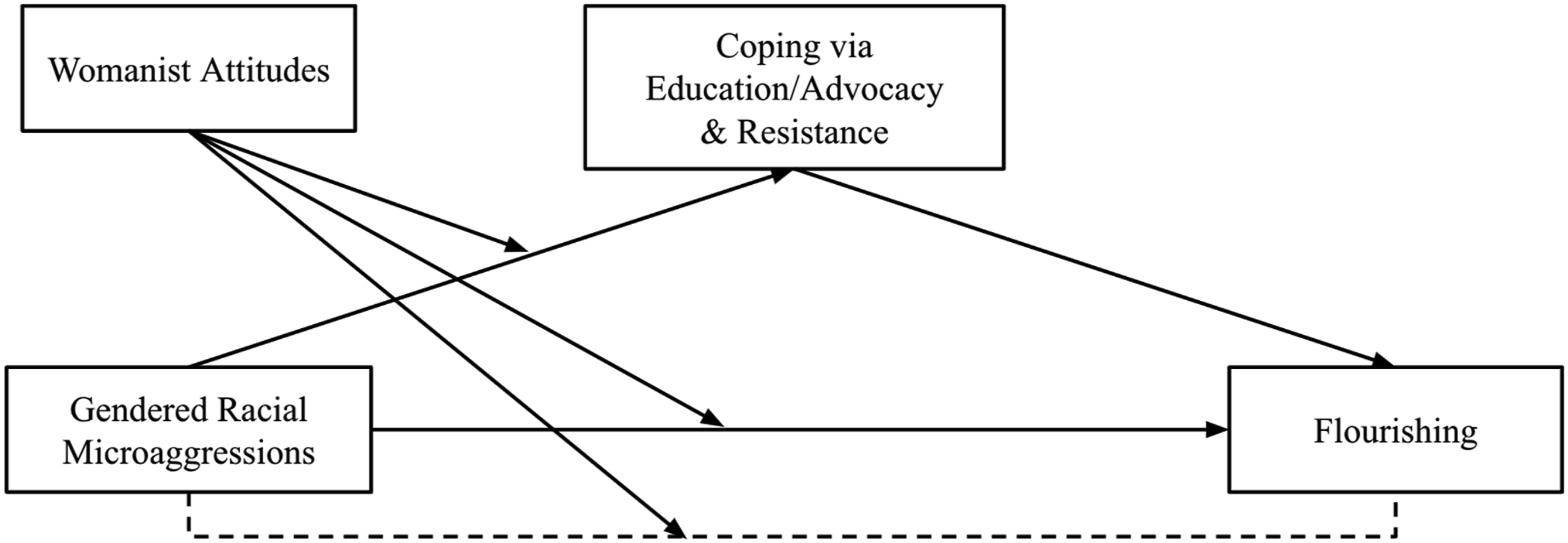
The study was conducted using a Qualtrics survey approved by the Institutional Review Board. Participant recruitment involved strategies to increase diversity of demographics (e.g., age, education, socioeconomic status). For example, the recruitment process involved posting study information in social media forums geared towards Black women and contacting local and national community organizations to distribute information through their social networks. Additionally, the researchers contacted individuals via email who either met the eligibility criteria or had access to potential participants due to their status (e.g., the moderator of a closed Black women-focused social media group). After providing informed consent, participants completed the survey within 30–45 minutes, and then received a debriefing form and were sent a $10 electronic gift card if they opted to share their contact information. Multiple validity checks were completed to ensure the integrity of the data (e.g., using anti-ballot box stuffing features by Qualtrics, which flags suspicious responses, excluding participants who did not meet the inclusion criteria etc.) Participants who completed the survey but had missing data on variables of interest were removed from data analysis.
Measures
Gendered Racial Microaggressions
Subtle, everyday gendered racism was measured using the 26-item Gendered Racial Microaggressions Scale for Black women (GRMS; Lewis & Neville, 2015). The GRMS measures the frequency and stress appraisal of nonverbal, verbal, and behavioral racial and gendered slights experienced by Black women and consists of four subscales including: Assumptions of Beauty and Sexual Objectification, Silence and Marginalized, Strong Black Woman Stereotype, and Angry Black Woman Stereotype. For the purpose of this study, we utilized the frequency scale, which included 23 items. Responses are provided on a 6-point Likert-type scale ranging from 0 (never) to 5 (once a week or more). An example item includes “I have received negative comments about my hair when I wear it in a natural hairstyle.” All items were summed and averaged to create a total mean frequency score, with higher scores indicating higher frequency of gendered racial microaggression experiences. The GRMS has demonstrated high internal consistency and reliability and has been validated for use with community-based samples of Black women (Lewis & Neville, 2015; Moody et al., 2023). In the current sample, Cronbach’s α reliability estimate for the GRMS was 0.92.
Coping Strategies
Coping strategies were measured using the 25-item Coping with Discrimination Scale (CDS; Wei et al., 2010), which measures various strategies used to cope with discrimination. The five subscales include: Education/Advocacy, Internalization, Drug and Alcohol Use, Resistance, and Detachment. The 5-item Education/Advocacy subscale and the 5-item Resistance subscale were used in this study to capture engagement coping strategies. Education/Advocacy items reflected individuals’ efforts to deal with individual and societal discrimination through educational or advocacy efforts (e.g., “I educate myself to be better prepared to deal with discrimination”). Resistance items reflected individuals challenging or confronting discriminatory behavior directly (e.g., “I directly challenge the person who offended me”; Wei et al., 2010). Participants rated how much each strategy described how they generally cope with discrimination with responses on a 6-point Likert-type scale ranging from 1 (never like me) to 6 (always like me). A mean score for each subscale was calculated, with higher scores indicating greater use of a particular coping strategy. The CDS has demonstrated good internal consistency and reliability in studies focusing on Black adult women (Moody et al., 2023; Szymanski & Lewis, 2016). In the current sample, Cronbach’s α reliability estimates for Education/Advocacy and Resistance were 0.86 and 0.73, respectively.
Womanist Attitudes
Womanist attitudes were measured using the 10-item Women of Color Feminism/Womanism subscale of the 60-item Feminist Perspectives Scale (Henley et al., 1998). The Feminist Perspectives Scale measures an individuals’ degree of adherence to different feminist theoretical perspectives. The Women of Color subscale has been extensively used in research examining womanist attitudes among diverse groups of women of color, capturing participants’ beliefs and understanding of the intersectionality of racism and sexism. This conceptualization explicitly encompasses what is often termed “womanist identity attitudes” or “womanist consciousness,” distinguishing it from traditional views of feminist or womanist identity that typically extend these beliefs to self-perceptions (e.g., Moradi & Subich, 2002). Participants rate their level of agreement with each item on a 7-point Likert-type scale ranging from 1 (strongly agree) to 7 (strongly disagree). An example item includes, “Racism and sexism make double the oppression for women of color in the work environment.” Items were averaged to create a total subscale score, with higher scores indicating a greater endorsement of womanist attitudes. The Women of Color subscale has demonstrated reliability estimates ranging from α = 0.75 to 0.92 (Chadwick & DeBlaere, 2019; Velez et al., 2018). In the current sample, Cronbach’s α reliability estimate for the Women of Color subscale was 0.79.
Flourishing
Psychological well-being was measured using the 8-item Flourishing Scale (Diener et al., 2010). The Flourishing Scale captures self-perceived success in important areas such as relationships, self-esteem, purpose, and optimism. Responses are provided on a 7-point Likert-type scale ranging from 1 (strongly disagree) to 7 (strongly agree) to rate the degree to which participants agreed with each statement (e.g., “I lead a purposeful and meaningful life”). The scale provides a total psychological well-being score by summing all eight items to create a total score, with higher scores indicating greater flourishing. This scale has demonstrated good internal consistency and reliability (α = 0.87) and has been used in studies including Black adult women (Diener et al., 2010; Quick et al., 2023). In the current sample, Cronbach’s α reliability estimate for the scale was 0.86.
Data Analysis
We tested Hypothesis 1 and 2 using Model 4 for parallel mediators of Hayes’ PROCESS macro for SPSS 31 v5 (Hayes, 2022). We tested Hypotheses 3 through 5 using Model 8 of Hayes’ (2022) PROCESS macro to examine whether engagement coping (education/advocacy and resistance) mediated the association between gendered racial microaggressions and flourishing and is moderated by womanist attitudes. PROCESS uses a boot-strapping method with bias-corrected and accelerated samples to adjust standard errors and derive more conservative estimates of the model. In this study, we used 10,000 bias-corrected samples and mean-centered predictor variables involved in the construction of interactions. Descriptive statistics were derived to determine levels of gendered racial microaggressions, engagement coping, womanist attitudes, and flourishing among Black women.
Results
Preliminary Analysis
Analysis of missing data revealed minimal missing data of 0.4% on variables of interest including engagement coping, sexual orientation, and class. Little’s (1988) Missing Completely at Random analysis yielded a nonsignificant chi-square statistic, χ2(46) = 32.74, p = .93, indicating that the data were missing completely at random. Given the very low missing data rate, listwise deletion was employed in three cases, which resulted in a final sample of 238. Assumptions of univariate normality, multicollinearity, and outliers (Kelley & Bolin, 2013) were tested and confirmed. Data met assumptions of univariate normality (skewness < 3, kurtosis < 10; Weston & Gore, 2006). There were no spurious outliers, and all variables of interest were on a continuous scale. According to Fritz and MacKinnon’s (2007) bias-corrected bootstrap resampling procedure, a minimum sample size of 116 is needed to detect a medium effect size with a power of .80 for a mediation analysis. According to sample size recommendations for moderated mediation analysis based on simulations using bias-corrected bootstrap resampling analytic procedures conducted by Preacher et al. (2007), a sample size of at least 200 is needed to detect a medium effect size with a power of .80. Thus, our sample size of 238 and estimated parameters surpassed the minimum sample size recommendations needed to have adequate power to detect moderate effect sizes for both mediation and moderated mediation analyses.
Intercorrelations, Means, Standard Deviations, and Cronbach's α for Study Variables
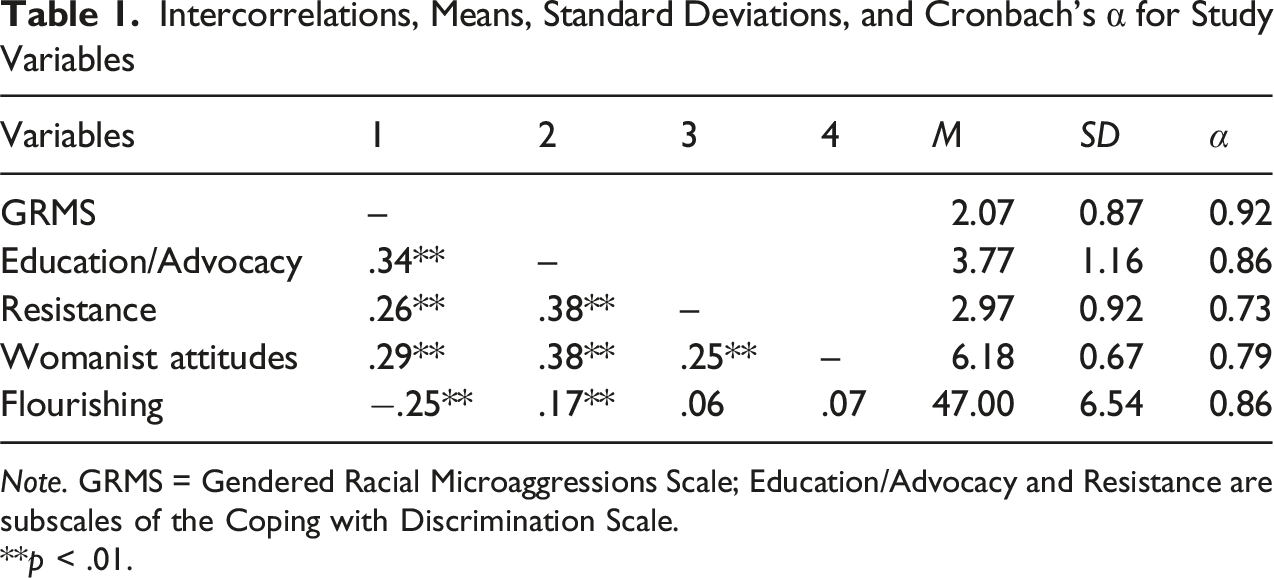
Note. GRMS = Gendered Racial Microaggressions Scale; Education/Advocacy and Resistance are subscales of the Coping with Discrimination Scale.
**p < .01.
Mediation Analysis
We hypothesized that gendered racial microaggressions would be directly associated with flourishing and engagement coping (i.e., education/advocacy and resistance) would mediate the association (Hypothesis 1–2). Age and sexual orientation were entered as covariates in the model. A significant finding is reflected by a confidence interval that does not contain 0. For the direct effect, we found that gendered racial microaggressions were significantly associated with flourishing, such that higher levels of gendered racial microaggressions were related to lower levels of flourishing (B = −2.22, SE = 0.51, 95% CI [−3.23, −1.22], p < .001), supporting Hypothesis 1. In addition, a parallel mediation analysis indicated a significant indirect effect of gendered racial microaggressions on flourishing through education/advocacy (B = 1.50, SE = 0.38, 95% CI [0.75, 2.25], p < .001; see Figure 2), partially supporting Hypothesis 2. Specifically, education/advocacy coping partially mediated the relationship between gendered racial microaggressions and flourishing, such that increases in gendered racial microaggressions were associated with greater coping via education/advocacy, which, in turn, was associated with greater flourishing. However, results indicated that resistance did not mediate the association between gendered racial microaggressions and flourishing (B = 0.37, SE = 0.46, 95% CI [−0.55, 1.30]; See Figure 2). Age and sexual orientation were not significantly associated with engagement coping or flourishing. Further, age and sexual orientation were not significant in the total effect model. Therefore, these variables were not included in the moderated mediation analyses. Results of mediation analyses highlighting direct and indirect relations of gendered racial microaggressions with flourishing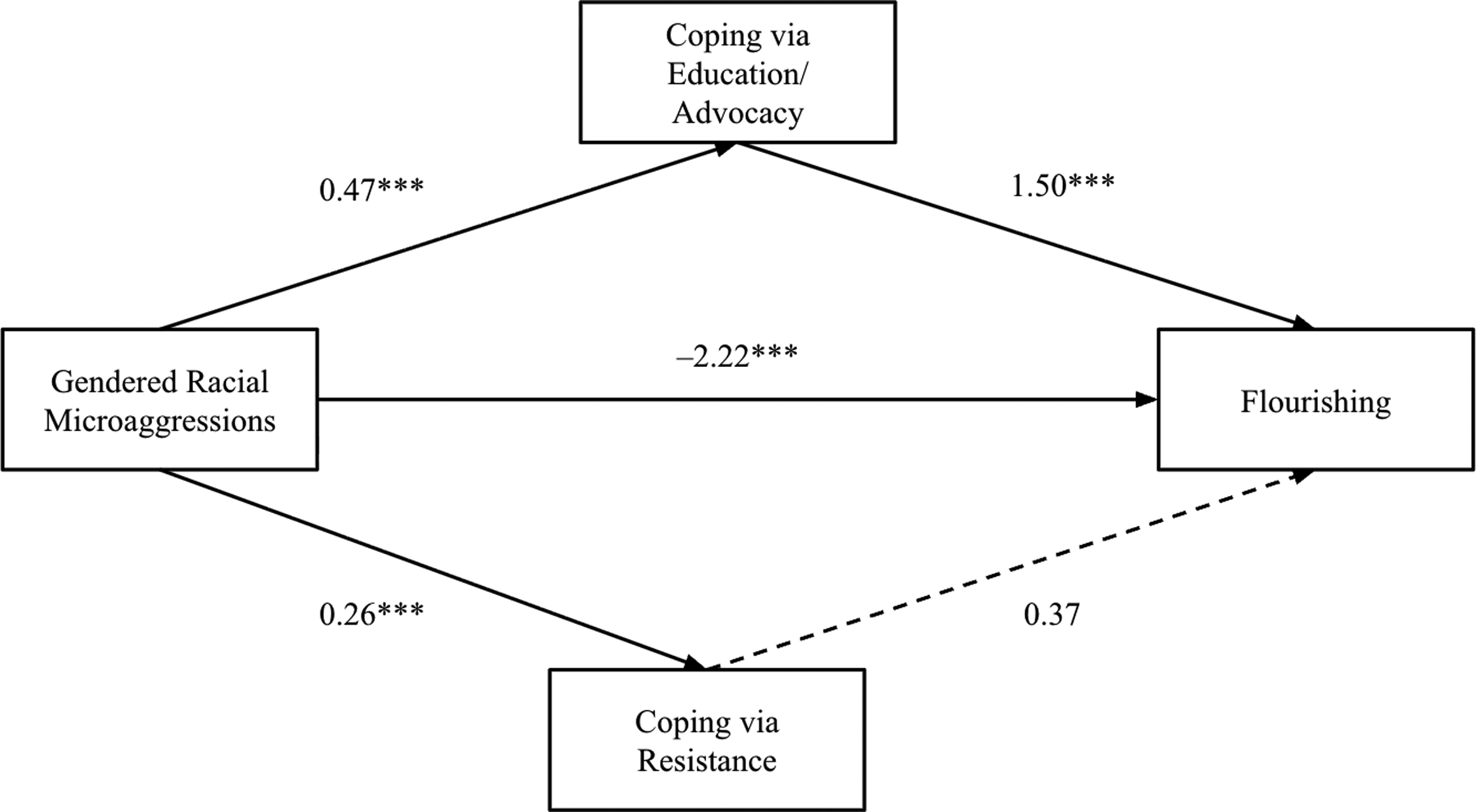
Moderation and Moderated Mediation Analyses
Results of the Moderated Mediation Analysis for the Gendered Racial Microaggressions Scale, Engagement Coping, and Flourishing
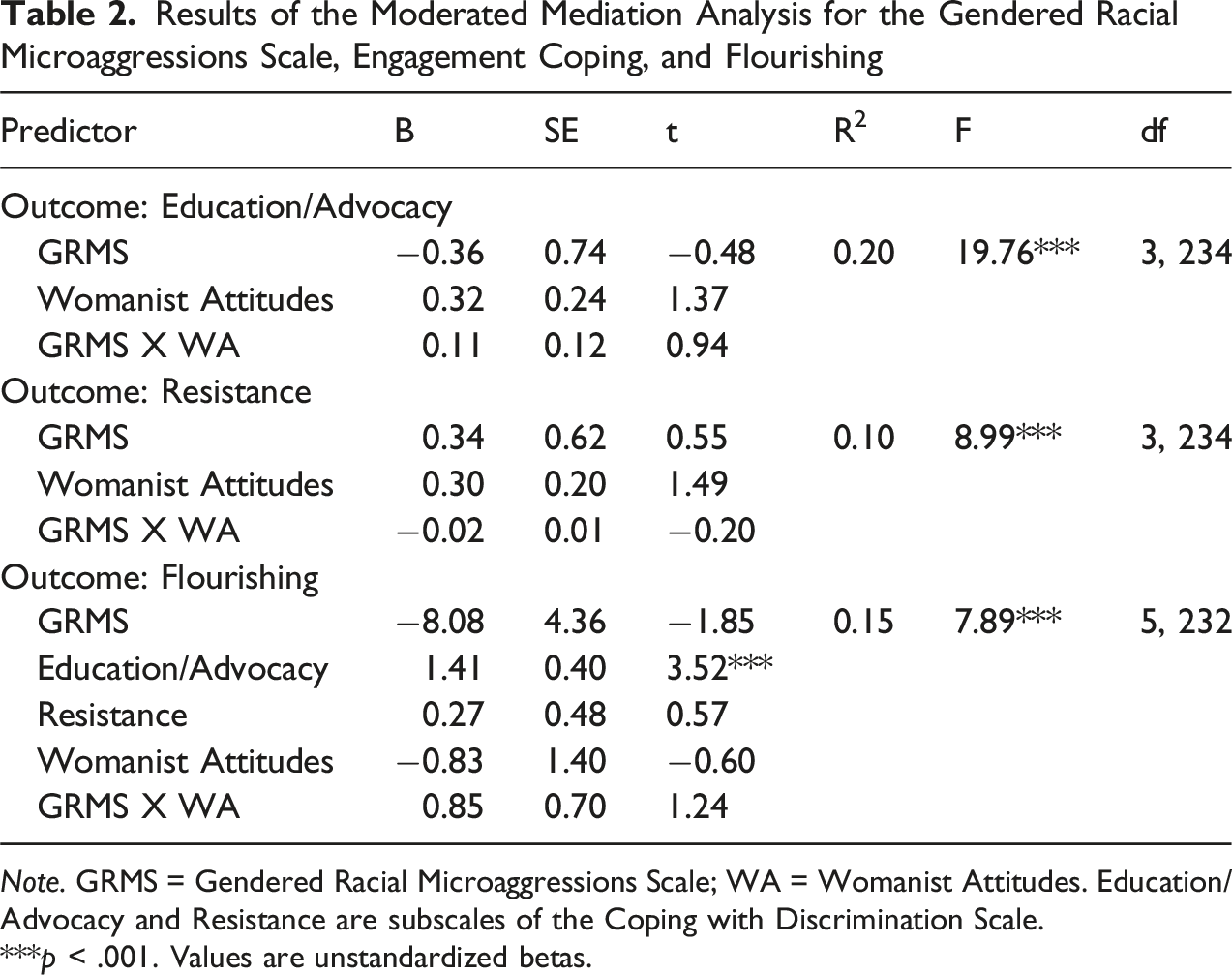
Note. GRMS = Gendered Racial Microaggressions Scale; WA = Womanist Attitudes. Education/Advocacy and Resistance are subscales of the Coping with Discrimination Scale.
***p < .001. Values are unstandardized betas.
Discussion
This study underscores the importance of exploring psychological well-being and positive health outcomes in the context of gendered racism and Black women’s mental health. By testing the intersectional biopsychosocial model of gendered racism (Lewis, 2023), this research extends previous findings by investigating the association between gendered racial microaggressions, womanist attitudes, engagement coping strategies (i.e., resistance and education/advocacy), and flourishing through a positive Black psychology lens. By centering Black women’s experiences with gendered racial microaggressions, we aimed to identify protective factors associated with flourishing despite these challenges.
Our first hypothesis was supported, revealing a direct negative association between gendered racial microaggressions and flourishing. Specifically, increased experiences of gendered racial microaggressions were linked to lower levels of flourishing. This finding is consistent with prior research that has identified a negative impact of gendered racial microaggressions on mental health outcomes (Erving et al., 2022; Lewis et al., 2017; Martins et al., 2020; Watson & Henderson, 2022; Williams & Lewis, 2019; Wright & Lewis, 2020). Black women may find it challenging to flourish when they frequently encounter gendered racial microaggressions in their daily lives. Our findings reinforce the existing body of literature, underscoring the pervasive and harmful impact of gendered racial microaggressions on the mental health and well-being of Black women.
The second research hypothesis, exploring whether engagement coping strategies mediated the association between gendered racial microaggressions and flourishing, was partially supported. A greater frequency of gendered racial microaggressions was associated with greater use of education/advocacy coping, which in turn was associated with greater flourishing. These findings contrast with recent studies that found that efforts to cope with individual and structural discrimination through education or advocacy did not mediate the link between gendered racism and mental health outcomes for Black women (Moody et al., 2023; Szymanski & Lewis, 2016). This may be, in part, because the effectiveness of engaging in education/advocacy as coping strategies likely depends on contextual and environmental factors. For example, in supportive environments, these efforts can enhance psychological empowerment and flourishing, whereas in hostile contexts, they may not yield positive outcomes (Mattis et al., 2016). Nonetheless, Black women who engage in education/advocacy coping strategies may develop a stronger sense of agency and empowerment. Studies focusing on Black women have shown that advocacy and activism can foster psychological empowerment and improve mental health (Lewis et al., 2013; Shorter-Gooden, 2004). Advocacy and activism not only enable Black women to confront systemic injustices but also help build community and social support, further enhancing their overall well-being (shodiya-zeumault et al., 2022).
The second part of Hypothesis 2 was not supported; resistance coping did not significantly mediate the link between gendered racial microaggressions and flourishing. This finding aligns with previous studies indicating that resistance coping is not a significant mediator in the association between gendered racism and mental health outcomes for Black women (Moody et al., 2023; Szymanski & Lewis, 2016). It is possible that discrimination is such a significant stressor that resistance coping alone is insufficient to counteract its negative effects. The present study measured resistance coping as directly confronting those who enact discriminatory actions (Wei et al., 2010), which may lead to racial battle fatigue—a state of psychological and physiological exhaustion resulting from continuous exposure to racism and microaggressions (Hargons et al., 2017). This fatigue can deplete the energy needed for flourishing. Furthermore, resistance coping can introduce risks of interpersonal conflict, thereby increasing the burden Black women endure (Hyers, 2007; Szymanski & Lewis, 2016). These conflicts may exacerbate stress rather than alleviate it, highlighting the potential drawbacks of resistance coping strategies in managing the experience of gendered racial microaggressions.
Hypotheses 3–5, which explored the potential moderating role of womanist attitudes in the association between gendered racial microaggressions, engagement coping, and flourishing were not supported. Womanist attitudes did not moderate the direct association between gendered racial microaggressions and flourishing or the association between gendered racial microaggressions and engagement coping strategies. However, at the bivariate level, greater endorsement of womanist attitudes was significantly correlated with greater use of education/advocacy and resistance coping strategies. These findings indicate that Black women who contextualize their experiences through an understanding of the intersectionality of racism and sexism may also engage in coping strategies that allow them to externalize discrimination (e.g., education/advocacy) and stand up for themselves (i.e., resistance) rather than internalize these experiences (Lewis et al., 2013; Moody et al., 2023). Nonetheless, womanist attitudes did not moderate the indirect association between gendered racial microaggressions and flourishing through education/advocacy or resistance coping. These findings are consistent with previous studies, indicating that womanist attitudes did not moderate associations between gendered racism and negative mental health outcomes (Moody et al., 2023; Szymanski & Lewis, 2016). It is possible that due to the pervasive and insidious nature of gendered racial microaggressions, Black women’s womanist consciousness alone could not promote flourishing or mitigate the negative effects of gendered racial microaggressions. This underscores the psychological burden that gendered racial microaggressions place on Black women, suggesting that additional support mechanisms may be necessary to buffer these effects.
Limitations
Although this study contributes to the multiculturalism and positive psychology literature by adopting an intersectional perspective, several limitations should be acknowledged. First, the cross-sectional nature of this study prevents us from drawing causal interpretations. Additionally, our sample consisted of predominantly Black heterosexual and middle-class women, which limits the generalizability of the findings to Black women of other sexual orientations and social classes. In addition, it is possible that there were limitations to some of the measures used, particularly the measures that weren’t designed from an intersectional lens. For example, the CDS (Wei et al., 2010) measures coping with discrimination broadly rather than gendered racism or Black women’s experiences, specifically. Previous studies have shown that Black women often use prayer, self-care, self-improvement (Everett et al., 2010), and collective and self-protective strategies (Lewis et al., 2013), which are not fully represented in the CDS. Thus, this scale may not fully capture the specific coping mechanisms Black women employ when facing gendered racial microaggressions. It is critical to employ measurement tools specifically designed to capture the unique experiences of Black women. Additionally, although the measure of womanist attitudes employed in this study assessed participants’ critical awareness of racism and sexism, it may not have fully captured the complexities and meaning attributed to Black women’s intersectional identity. Previous research has shown that gendered racial identity can be protective against gendered racism (Lewis et al., 2017; Williams & Lewis, 2021). Therefore, the current study’s focus on womanist attitudes rather than gendered racial identity more broadly may have contributed to some of the nonsignificant findings, highlighting the need for future research to examine gendered racial identity as a potential protective factor.
Future Directions
Future research should consider longitudinal designs to explore how coping strategies and protective factors enhance flourishing over time. Additionally, future research should utilize rigorous analytical approaches (e.g., structural equation modeling) to further examine the complex relationships between gendered racism, protective factors, and flourishing among diverse samples of Black women. It is essential for research to adopt an intersectional approach that centers the experiences of diverse Black women across various identities, including social class, sexual orientation, and ability status. Given the lack of positive psychology research focusing on Black women, future studies should also highlight outcomes that contribute to positive well-being, such as measuring gratitude, optimism, and radical hope. Developing effective interventions that promote psychological well-being and flourishing among Black women is crucial. By integrating positive psychology with insights from Black psychology and intersectionality theory (Mattis et al., 2016; Yakushko, 2018), future research can gain a better understanding of how Black women leverage personal, cultural, and community strengths to mitigate discrimination and barriers to flourishing. This integrative approach transcends a deficit perspective, emphasizing the significance of resistance and empowerment for Black women facing systemic gendered racism. Furthermore, future research should develop and utilize instruments tailored to the gendered racial experiences of Black women and culturally relevant coping strategies. Future studies should also consider developing more nuanced quantitative measures of womanist identity to better understand how gendered racial identity may moderate the relationship between discrimination and well-being for Black women.
Implications for Practice, Training, and Advocacy
Findings suggest that experiencing a greater frequency of gendered racial microaggressions in one’s everyday life is associated with decreased flourishing. Additionally, our study showed that engaging in coping via education/advocacy was linked to greater flourishing, indicating its potential as a powerful tool for psychological empowerment and well-being. Clinicians can support Black women by encouraging their participation in advocacy and educational activities, which can help externalize discrimination experiences and transform them into opportunities for growth. Creating supportive environments where Black women can share their advocacy experiences and strategies can further reinforce these positive effects. Additionally, therapeutic groups focused on advocacy and education can provide collective support, essential for promoting well-being (Lewis & Williams, 2023). These groups offer a platform for sharing experiences, strategies, and successes, fostering a sense of community and mutual support.
Incorporating social justice-oriented and liberatory frameworks into clinical practice, such as the psychology of radical healing framework (Adames et al., 2023; French et al., 2020), can also be beneficial in emphasizing critical consciousness and collective healing to address racial trauma. For example, Adames and colleagues (2023) developed a clinical approach that articulates how to work with clients of color to cultivate the five components of radical healing including: critical consciousness, strength and resistance, collectivism, cultural authenticity and self-knowledge, and radical hope. Clinicians should help Black women develop critical consciousness to recognize and challenge systemic gendered racism as well as envision possibilities and radical hope for the future. Additionally, integrating positive psychology principles and interventions in clinical practice can enhance life satisfaction for Black women by emphasizing strength and resilience (Janevic et al., 2022; Sanders et al., 2021). Clinicians should consider using these interventions to help Black women develop strategies to thrive despite facing gendered racial microaggressions. In addition, clinicians must work to develop their own critical consciousness on structural, institutional, and interpersonal gendered racism and how it impacts Black women (Lewis & Williams, 2023). This involves engaging in a lifelong commitment to learning and actively seeking out opportunities for personal growth to ensure that their work authentically centers Black women.
It is also important for counseling psychologists to engage in systems-level interventions, social action, and public policy to dismantle gendered racism in society (Lewis, 2023). For example, findings from this study can assist counseling psychologists in advocating for increased federal funding devoted to ameliorating gendered racial health disparities that have a disproportionately negative impact on Black women. In addition, counseling psychologists should advocate for laws and policies that address social determinants of health (e.g., employment, housing, education, reproductive healthcare, child welfare) to promote greater protections and support the flourishing of Black women in society.
Conclusion
This study applied the intersectional biopsychosocial model of gendered racism (Lewis, 2023) to explore Black women’s experiences with gendered racial microaggressions and flourishing through a positive Black psychology lens. The findings highlight that while gendered racial microaggressions were negatively associated with flourishing, education/advocacy coping partially mediated this relationship, suggesting that engagement coping strategies may serve a key role in promoting Black women’s flourishing in the face of gendered racial microaggressions. However, womanist attitudes did not moderate these associations, indicating that gendered racial ideologies alone may not be sufficient to buffer the effects of gendered racism. This study underscores the importance of intersectional and strengths-based approaches in understanding Black women’s well-being.
Footnotes
Funding
The authors received no financial support for the research, authorship, and/or publication of this article.
Declaration of conflicting interests
The authors declared no potential conflicts of interest with respect to the research, authorship, and/or publication of this article.
