







Abstract
Adolescents with juvenile justice system experience may be enrolled into alternative schools to increase academic success or to reduce delinquency. This study used longitudinal data on a racially/ethnically diverse sample of 1,216 male, first-time adolescent offenders to examine how youthful offenders’ school experiences were associated with academic outcomes, school attitudes, and delinquency. Effects varied by domain in important ways. Youth who attended alternative schools generally fared better academically than youth who attended traditional schools. However, importantly, youth who attended alternative schools subsequently engaged in more delinquency and violent reoffending than youth in traditional schools. The findings indicate that disrupting normative schooling appears to be the most detrimental to youth outcomes across domains.
Keywords
The school-to-prison pipeline is a well-documented phenomenon in which an adolescent’s negative school experiences contribute to delinquency risk (Curtis, 2013; Kim, Losen, & Hewitt, 2010; Skiba et al., 2011). Unfortunately, the pathway also works in reverse. Justice system contact significantly reduces youth’s odds of completing high school or enrolling in college (Bernburg & Krohn, 2003; Hjalmarsson, 2008; Kirk & Sampson, 2013; Sweeten, 2006). As a means to keep youth in school, to increase academic success, or to increase school safety (Cox, 1999; Tobin & Sprague, 2000), youthful offenders may be enrolled into alternative schools, which are designed for youth who have difficulty conforming to the expectations of traditional schools. Alternative schools incorporate different educational practices and services to meet the educational, behavioral, and personal needs of their students. These include practices such as enrolling fewer students, providing more opportunities for self-paced instruction, and often offering crisis/behavioral interventions (Kleiner, Porch, Farris, & Greene, 2002). There is a great deal of variability in the objectives, structure, programming, and funding between alternative schools (Foley & Pang, 2006), and the efficacy of alternative schooling is likely affected by the quality of program implementation (Lipsey, 2006). The same heterogeneity in quality is, of course, true of traditional schools.
Unfortunately, school instability, or transitioning youth between schools, is often associated with poorer school performance (Grigg, 2012; Kleiner, Porch & Farris, 2002; South, Haynie, & Bose, 2007) and more problem behavior (Herbers, Reynolds, & Chen, 2013; Vanderhaar, Petrosko, & Muñoz, 2014). Such questions, however, have yet to be analyzed within a sample of adolescents who have come into contact with the justice system—precisely the youth who are at greatest risk of entering the school-to-prison pipeline. This study examines how both legal and school experiences during youthful offenders’ first 6 months of juvenile justice system involvement may not only hinder their academic achievement and attitudes toward school, but may also perpetuate their justice system involvement.
Researchers agree that students enrolled in alternative schools fare better than youth not attending school (American Academy of Pediatrics, 2003; Christle, Jolivette, & Nelson, 2005; Morrison et al., 2001). Indeed, meta-analytic evidence suggests that alternative schooling has a positive effect on school performance (Cox, Davidson, & Bynum, 1995). When youth in alternative schools feel that their teachers are fair, flexible, caring, and respectful, they engage in fewer antisocial behaviors and report educational expectations similar to youth in traditional schools (Quinn, Poirier, Faller, Gable, & Tonelson, 2006).
One may conclude that justice-system-involved youth should be transferred to alternative schools because they may fare better. However, several studies of community youth enrolled in alternative schools suggest that these youth often feel ostracized and resentful for being removed from their traditional schools (Brown, 2007; Seyaki, 2001), receive poor grades (Kleiner et al., 2002), do not regularly attend school (Brown, 2007; Kleiner et al., 2002), and are more likely to experience juvenile detention (Vanderhaar et al., 2014). Moving youth to new schools may, therefore, foster academic and behavioral difficulties. Various studies provide evidence that school instability, or movement between schools, is associated with decreased academic performance (Grigg, 2012; Kerbow, 1996; South et al., 2007), increased probability of high school dropout (Ou & Reynolds, 2008; Rumberger & Larson, 1998; South et al., 2007), higher truancy and suspension rates (Simpson & Fowler, 1994), more problem behaviors (Herbers et al., 2013; Wood, Halfon, Scarlata, Newacheck, & Nessim, 1993), delinquency (Gasper, DeLuca, & Estacion, 2010), and increased likelihood of adult arrest (Herbers et al., 2013). Studies have yet to examine such processes, however, with youth who have come into contact with the juvenile justice system for the first time. In light of knowledge on the negative effects of juvenile justice system involvement on schooling, as well as the literature on the effects of alternative schooling and school instability on youth development, the question remains: What type of educational experience best sets up justice-system-involved youth for academic achievement, positive attitudes about school, and behavioral success?
The present study extended previous work in several ways. First, we used a sample of first-time, adolescent offenders. It is essential to examine these processes using a sample of youth who have come into contact with the justice system for the first time. Second, we examined both the type of school (i.e., traditional or alternative) and the number of school transitions as key predictors of outcomes across two integral domains: schooling (both academic outcomes and attitudes regarding school) and offending (both self-reported reoffending and rearrest). For instance, beyond the traditional metrics of academic outcomes, we examine youth’s attitudes because youth who feel less supported tend to be less engaged in the classroom (Patrick, Ryan, & Kaplan, 2007) and exhibit higher levels of school misconduct (Wang & Eccles, 2012), and youth who feel less safe in school tend to have lower reading scores (Ripski & Gregory, 2009) as well as an elevated drop-out rate (Rumberger & Palardy, 2005). Because the study was longitudinal in design, we were able to examine how outcomes in each domain changed over time, holding constant baseline values. The study expands the current understanding of how youth’s educational experiences may hinder academic achievement and perpetuate justice system involvement.
Method
Participants
The sample included 1,216 male juvenile offenders, aged 13 to 17 (M = 15.3, SD = 1.3), from the Crossroads Study. Crossroads follows male adolescent offenders after their first official contact with the juvenile justice system. The youth had each been arrested for a range of low-level offenses, with the most frequent charges including vandalism (17.5%) and theft (16.7%). To be eligible for the study, youth had to have received either an informal or formal disposition in the jurisdiction. Youth were sampled from three sites: Philadelphia, Pennsylvania (n = 533); Jefferson Parish, Louisiana (n = 151); and Orange County, California (n = 532). Of the initial 1,216 youth enrolled in the study, approximately 96% completed the 6-month interview. Of those, approximately 0.9% were omitted from analyses because either they were not enrolled in school at the time of their disposition or the school type at disposition could not be determined (e.g., school had been shut down, and no information about the school was available). Consistent with the overrepresentation of racial/ethnic minority youth in the juvenile justice system, the sample was ethnically/racially diverse: Latino (46%), Black (37%), White (15%), and Other race (2%).
Procedures
Signed parental consent and youth assent were obtained for all participants before interviews were conducted with research staff. Participants were informed of the nature of the study, and were told that there was no penalty for not participating. The Institutional Review Board (IRB) at all three institutions (Crossroads: Formal vs. Informal Processing in the Juvenile Justice System; University of California, Irvine; Temple University; University of New Orleans) approved the study procedures. Upon obtaining consent, youth completed an interview a maximum of 6 weeks after the disposition hearing for their first arrest and a follow-up interview approximately 6 months after their initial interview. Face-to-face interviews with the youth ranged from 2 to 3 hr and were documented using a secure, computer-administered program. A Privacy Certificate issued by the Department of Justice protects participants’ privacy by exempting their responses and identity from subpoenas, court orders, or other types of involuntary disclosures. Participants were given a detailed explanation of the Certificate before beginning the interview and were reminded again before sensitive questions were asked.
Measures
Covariates
Demographic information
Youth self-reported general demographic information, including age (M = 15.28, SD = 1.29) and race. Youth also reported on the highest level of education that either of their parents had received, which was used as a proxy for socioeconomic status (SES; Galobardes, Lynch, & Smith, 2007; Lynch & Kaplan, 2000). Using this assessment strategy, adolescents in this age group produce accurate estimates of their parents’ SES (see Lien, Friestad, & Klepp, 2001). Approximately 26.9% of the sample did not have a parent who had graduated from high school, 34.6% had at least one parent who had completed high school, and 38.5% of the sample had at least one parent who had completed some schooling above high school.
IQ
The Wechsler Abbreviated Scale of Intelligence (WASI; Wechsler, 1999) was administered to assess each participant’s IQ (Table 1). The WASI offers a brief and reliable measure of general intelligence that has been normed across the life span (Ryan et al., 2003). A full-scale IQ estimate was created by combining scores from the verbal ability scale (Vocabulary) and the performance ability scale (Matrix Reasoning). Studies have illustrated that the WASI yields strong psychometric properties. Convergent validity of the scale has been demonstrated using a sample of adolescents (Canivez, Konold, Collins, & Wilson, 2009). Given the focus of this article on school outcomes and because intelligence has been associated with delinquency (Lynam, Moffitt, & Stouthamer-Loeber, 1993), the full-scale IQ estimate was used as a covariate in all analyses (M = 88.49, SD = 11.59).
Sample Descriptive Statistics.
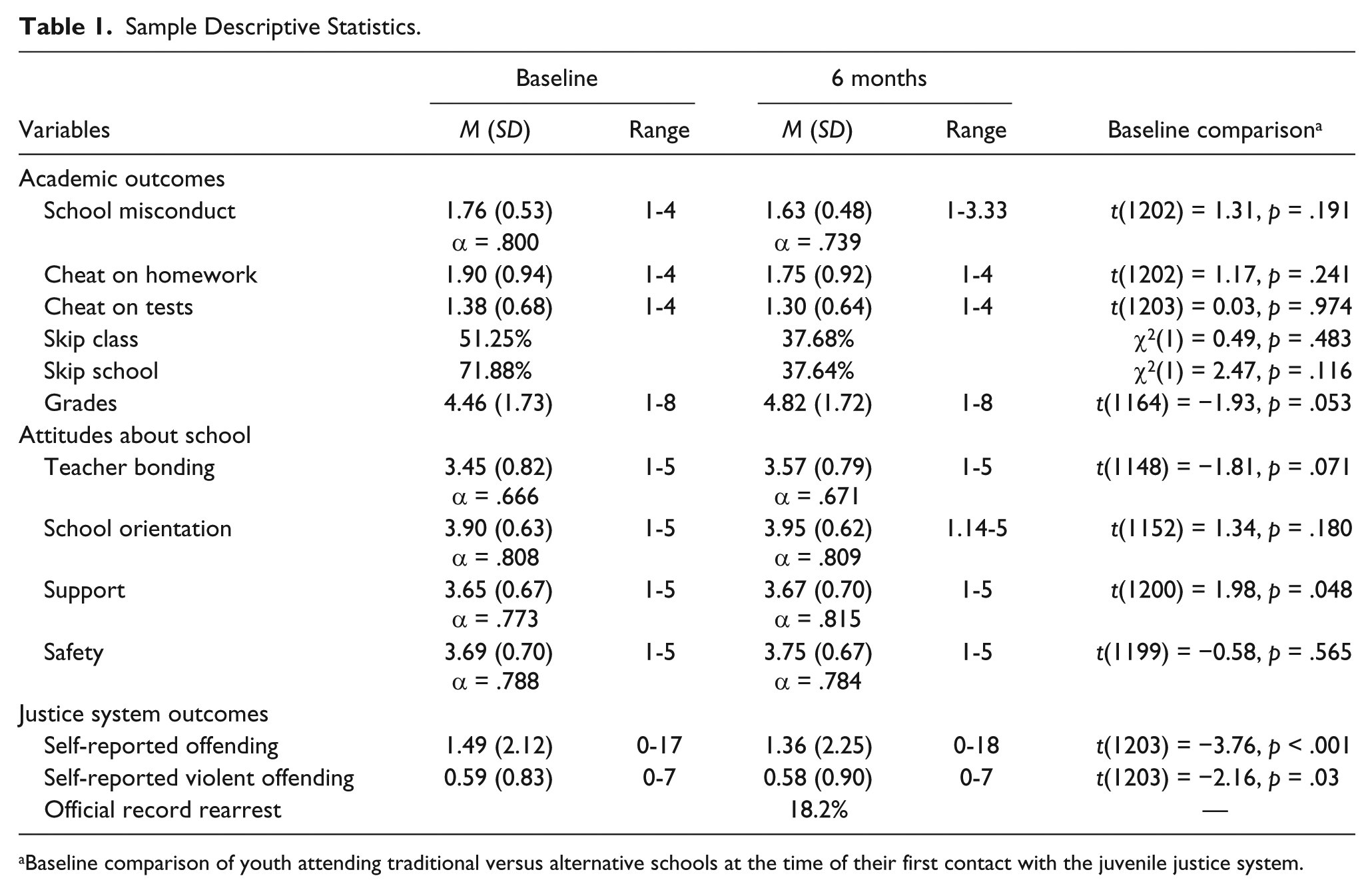
Baseline comparison of youth attending traditional versus alternative schools at the time of their first contact with the juvenile justice system.
Justice system experience
Following a juvenile’s arrest for a low-level crime, the juvenile justice system may process the youth formally or informally. Informal processing entails the diversion of the youth from the juvenile court or assignment to an intermediate “wait and see” status, in which the youth is expected to abide by a set of expectations (e.g., no contact with co-offenders). An informally processed case is thus a case that has not been dismissed but for which a delinquency petition is not filed. Furthermore, youth processed informally do not appear before a judge. In contrast, a formally processed case is one for which a delinquency petition is filed, meaning that the case is brought before the juvenile court for an adjudicatory hearing and is handled by the court. A dichotomous coding scheme is used to differentiate cases that were processed formally (55.02%) or informally (44.98%). We utilize processing as a covariate to account for the youth’s level of justice system exposure, which may affect his academic or offending outcomes.
Predictors
School experiences
To measure school type, youth completed a life calendar where they self-reported the names of the schools they attended for each month. As previous research suggests that retrospective data gathered using life calendar methods improve accuracy (Freedman, Thornton, Camburn, Alwin, & Young-Demarco, 1988) and that the data structure of the life calendar fits the structure of respondents’ autobiographical memories well (Belli, 1998), we were able to track school movement at a nuanced level. Schools were classified into either traditional or alternative based on information posted on their websites, information gleaned from educators in the jurisdiction, or communication with administration or staff at each school. The types of schools that youth attended at the time of their first justice system contact and during the first 6 months of their justice system experience were coded into one of three categories: traditional only (n = 660), alternative only (n = 200), or attended both types of schools (n = 263). It is important to note that within the group of youth who attended both types of schools, youth had many different types of experiences. For instance, among youth who started in traditional school, some simply moved to an alternative school, whereas many moved to an alterantive school and then moved back to a traditional school. Similarly, among youth who began in alternative school, some made a single move to traditional school, whereas many moved several times between types of schools.
Number of school transitions
The number of times youth changed schools during the follow-up period was calculated using the schools listed on the life calendar. Normative transitions (e.g., moving from middle school to high school) were not included in this calculation. The index assessed the number of times youth transitioned schools, with a modal response of 0 transitions during the 6-month period (M = 0.55, SD = 0.74, range = 0-6).
Academic outcomes
School misconduct
The nine-item measure of School Misconduct is based on established self-report measures assessing misbehavior in school (Cernkovich & Giordano, 1992; Eccles, Wigfield, & Schiefele, 1998). Questions ask youth to state the frequency (1 = not at all, 2 = once or twice, 3 = several times, 4 = often/many times) with which they have engaged in nine various types of school-related misconduct (e.g., getting kicked out of class, getting in trouble for disturbing the class) during the last 6 months. Responses were mean-scored to arrive at an overall index of school misconduct.
Cheat on homework or tests
At the baseline and 6-month interviews, youth were asked how many times during the preceding 6 months they had cheated on their homework or tests (1 = not at all, 2 = once or twice, 3 = several times, 4 = often/many times).
Skip class or school
At the baseline and 6-month follow-up interviews, youth retrospectively reported on whether they had skipped class without permission during the last 6 months. Youth also reported on whether they had skipped school during each 6-month period.
Grades
At the baseline and 6-month interviews, youth reported on their grades during the preceding 6 months (1 = mostly below Ds, 2 = mostly Ds, 3 = about half Cs and half Ds, 4 = mostly Cs, 5 = about half Cs and half Bs, 6 = mostly Bs, 7 = about half As and half Bs, 8 = mostly As).
Attitudes regarding school
School orientation
The school orientation measure is taken from the work of Cernkovich and Giordano (1992). A total of seven items are used to evaluate the adolescent’s orientation to school (e.g., “Schoolwork is very important to me”; “I try hard at school”), using a 5-point Likert-type scale ranging from “Strongly Disagree” to “Strongly Agree,” at both baseline and 6 months.
Safety and support
This scale, which is derived from Gibbs (1991) but was developed for the Crossroads study, assesses two domains: youth’s perceptions of support at school and youth’s perceptions of safety at school. Each measure was administered at baseline and at 6 months. Support was the mean of six items (e.g., “I feel close to people there”; reverse-scored: “The grown-ups there don’t really care about me”). Safety was the mean of five items (e.g., “When I’m there, I feel safe”; “I feel like the grown-ups there will protect me”). Higher scores on the support and safety indices referred to feeling more supported at or safer at school, respectively.
Offending outcomes
Self-reported offending
Delinquent behavior was assessed for the 6-month period preceding the initial interview and for the 6-month period following the initial interview using the Self-Report of Offending (SRO; Huizinga, Esbensen, & Weiher, 1991) scale. This self-report scale assesses 24 various criminal acts ranging from selling drugs to homicide. The number of different types of offenses the youth had committed since the previous assessment was summed to create an overall offending variety score. This methodology provides a consistent and valid estimate of involvement in illegal activity over a given recall period (Osgood, McMorris, & Potenza, 2002). These variety scores are the preferred method for summarizing individual criminality because they assess heterogeneity in crime types, giving more weight to more serious behaviors that may be discounted if they occur less frequently than less serious behaviors (Sweeten, 2012). A measure of violent offending was computed by summing the total number of violent offenses that the youth engaged in (e.g., assault, fighting, shot at someone, robbery) with higher scores indicative of more violent offending behavior.
Rearrest
Data from official records were obtained to indicate whether youth had been rearrested during the 6-month follow-up period.
Plan of Analysis
The first set of models analyzed the association between school type, number of school transitions, and academic outcomes in the following 6 months. All models accounted for age, race, site, IQ, SES, justice system processing, and the baseline value of the dependent variable. Site was used as a covariate because three groups are too few to adequately cluster the data (Maas & Hox, 2005). Ordinary least squares regressions were used to examine differences in the level of school misconduct. Ordered logistic regressions were used to examine differences in cheating on homework or on tests. Logistic regressions were used to examine skipping class and skipping school without permission, and an ordered logistic regression was used to examine academic grades.
The second set of models utilized ordinary least squares regressions to examine the associations between school type, number of school transitions, and attitudes regarding school (school orientation; school support; and school safety) during the following 6 months. All models control for age, race, site, IQ, SES, justice system processing, and the corresponding baseline value of the dependent variable (e.g., school orientation in the preceding 6 months).
The final set of models examined whether type of school or number of school transitions was associated with offending outcomes in the following 6 months. Considering self-reported offending was an overdispersed count variable, a negative binomial regression was conducted accounting for age, race, site, IQ, SES, justice system processing, and prior 6-month offending variety. The model was reanalyzed using an index of only violent offenses (e.g., assault, fighting, shot at someone, robbery). To assess rearrest, a logistic regression was conducted accounting for age, race, site, IQ, SES, justice system processing, and offending variety during the 6-month period.
Results
Descriptive statistics for all study variables are provided in Table 1. Zero-order correlations are provided in Table 2. Comparisons were made between youth attending alternative schools and youth attending traditional schools on the baseline values of all outcomes (Table 1). Results indicate that youth in alternative schools at the time of their first contact with the justice system and youth in traditional schools did not vary on any academic variable at baseline (school misconduct, cheating on homework, cheating on tests, skipping class, skipping school, or grades). They were also generally similar on attitudes about school (bonding, orientation, support). Finally, there were baseline differences in self-reported offending, such that youth in alternative schools reported committing more offenses and more violent offenses than youth in traditional schools. In all subsequent analyses, we accounted for the baseline value of the corresponding variable. For instance, when assessing reoffending, we accounted for baseline offending.
Zero-Order Correlations Between Outcomes in the Following 6 Months.
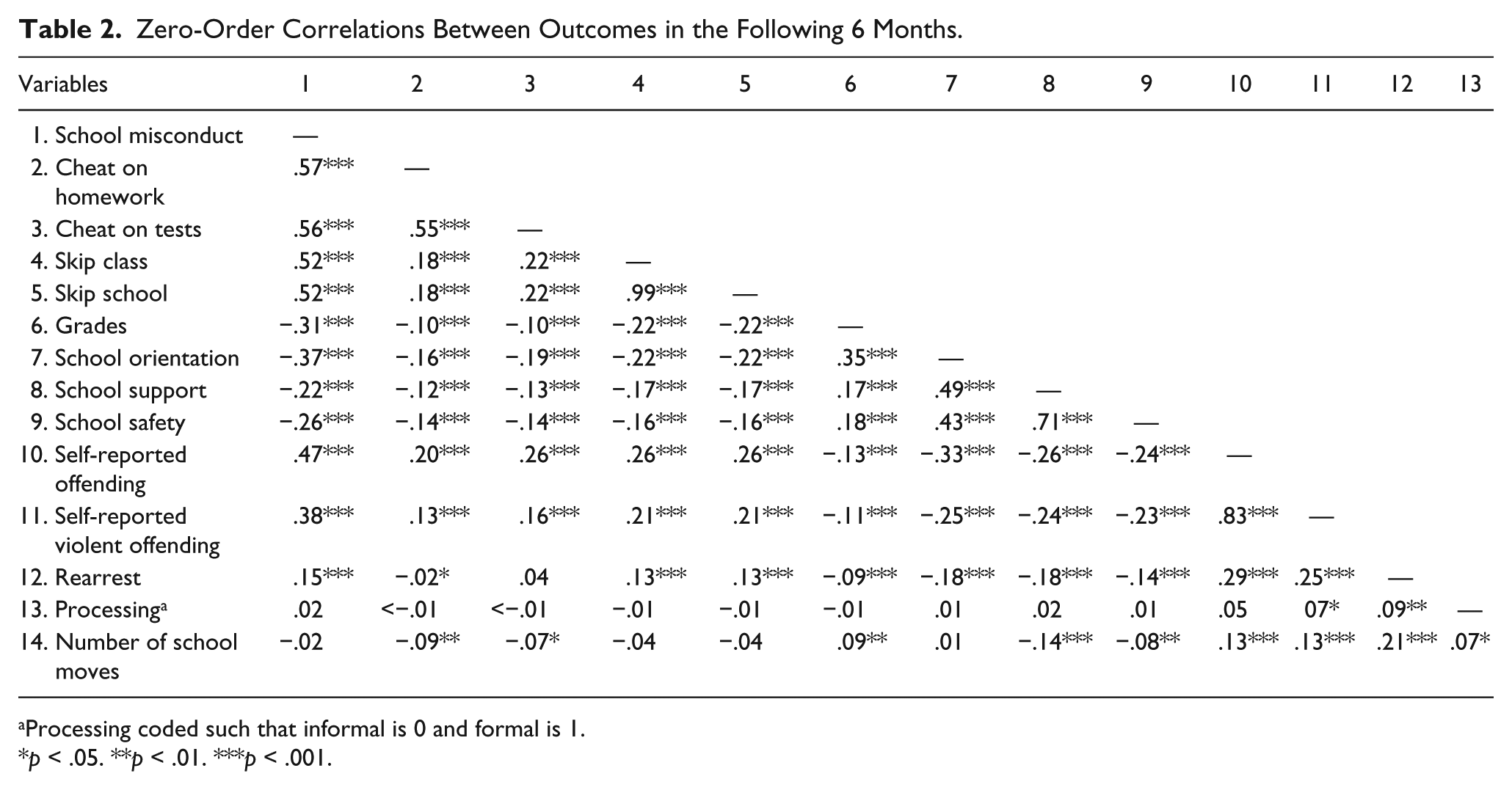
Processing coded such that informal is 0 and formal is 1.
p < .05. **p < .01. ***p < .001.
Academic Outcomes
Binary and ordered logistic regressions were used to examine whether type of school, school transitions, or justice system processing were associated with school misconduct, cheating on homework, cheating on tests, skipping class, skipping school, or worse grades (Table 3). The results indicated that youth in traditional schools generally reported more negative academic outcomes (e.g., more school misconduct, cheated more on homework, cheated more on tests, skipped class or school more, and received worse grades) compared with youth in either alternative schools or who attended both types of schools. The number of school moves, however, was generally unrelated to academic outcomes.
Regression Analyses for Predicting Academic Outcomes in the Following 6 Months.
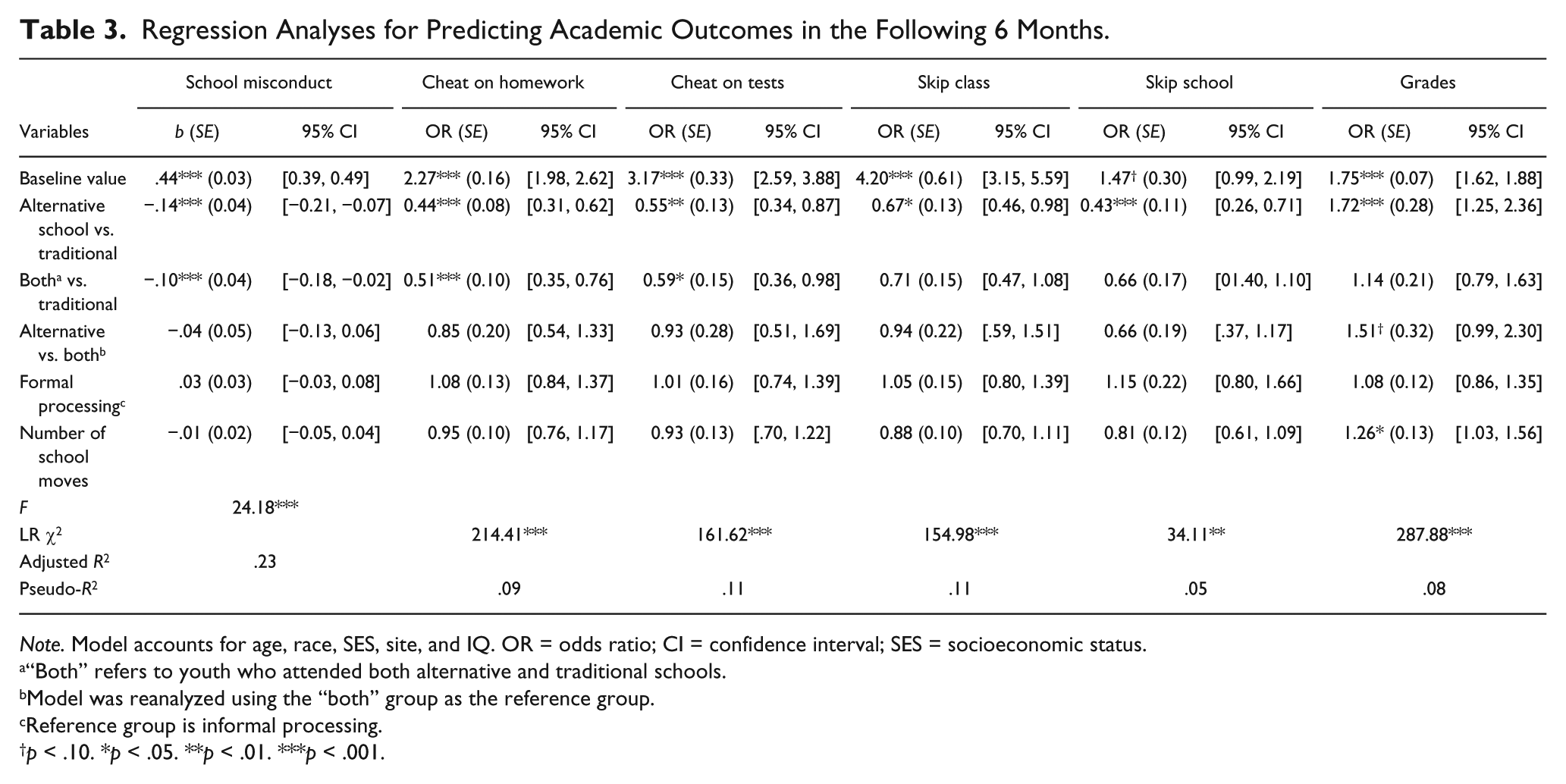
Note. Model accounts for age, race, SES, site, and IQ. OR = odds ratio; CI = confidence interval; SES = socioeconomic status.
“Both” refers to youth who attended both alternative and traditional schools.
Model was reanalyzed using the “both” group as the reference group.
Reference group is informal processing.
p < .10. *p < .05. **p < .01. ***p < .001.
Attitudes About School
A series of ordinary least squares regressions were estimated to analyze the association between school type, school instability, and youth’s attitudes about school (school orientation, school support, and school safety). The results indicated that youth in alternative schools reported similar feelings of school orientation, support, and safety to youth in traditional schools (Table 4). Youth in alternative schools reported more support but similar safety to youth who experienced both types of schools. Youth who experienced both types of schools, however, reported feeling less supported and less safe than youth in traditional schools. The number of school moves, however, was unrelated to these academic outcomes.
Regression Analyses for Predicting Attitudes Regarding School in the Following 6 Months.
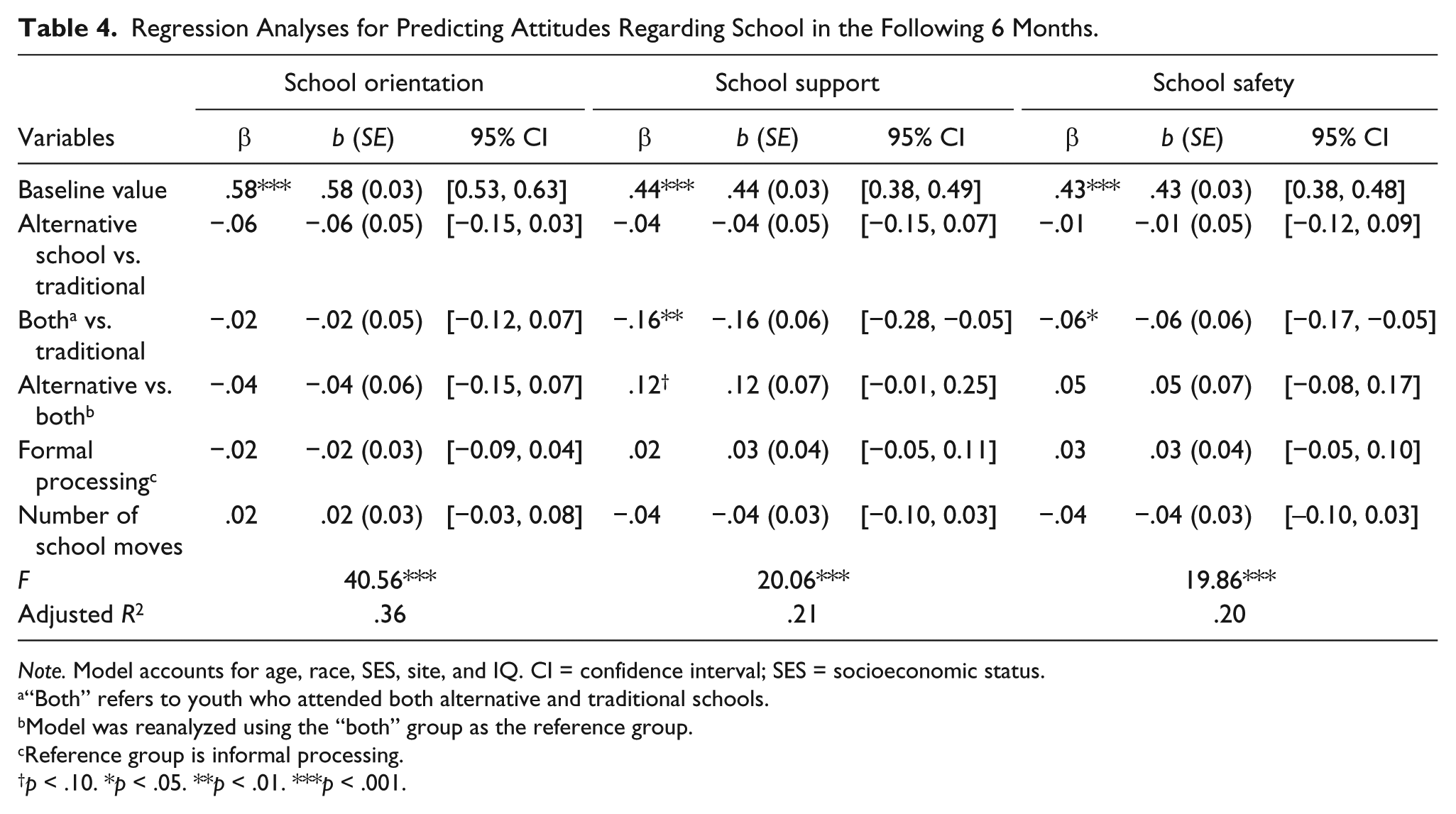
Note. Model accounts for age, race, SES, site, and IQ. CI = confidence interval; SES = socioeconomic status.
“Both” refers to youth who attended both alternative and traditional schools.
Model was reanalyzed using the “both” group as the reference group.
Reference group is informal processing.
p < .10. *p < .05. **p < .01. ***p < .001.
Offending Outcomes
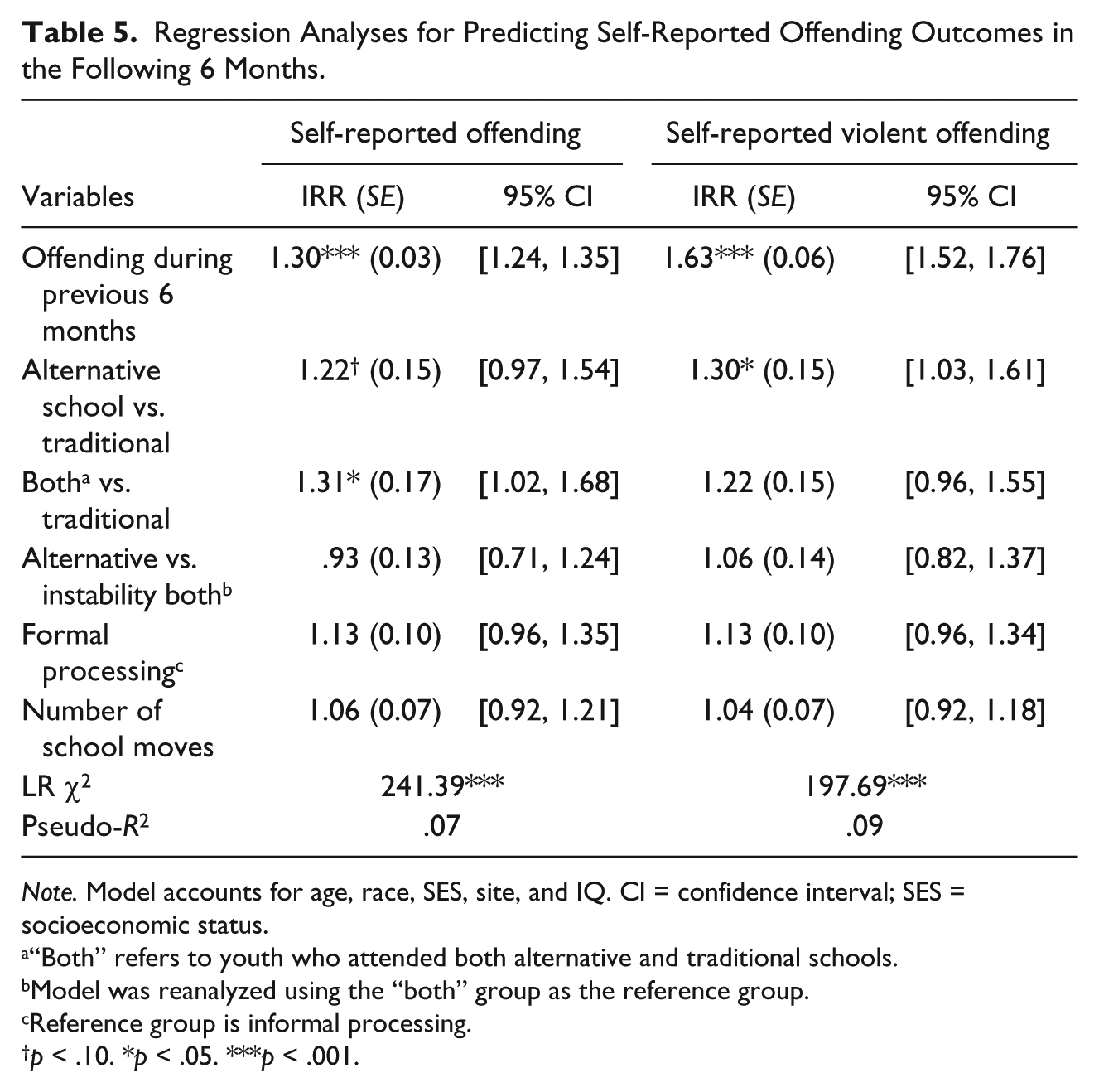
A negative binomial regression was conducted to examine whether type of school or school instability was associated with self-reported reoffending, accounting for offending during the preceding 6 months (Table 5). As expected, prior offending was associated with subsequent offending. Even after accounting for previous offending, youth in alternative schools (p = .090) and youth who experienced both types of schools (p = .036) reoffended more than youth in traditional schools. The number of school moves was not associated with reoffending.
Regression Analyses for Predicting Self-Reported Offending Outcomes in the Following 6 Months.
Note. Model accounts for age, race, SES, site, and IQ. CI = confidence interval; SES = socioeconomic status.
“Both” refers to youth who attended both alternative and traditional schools.
Model was reanalyzed using the “both” group as the reference group.
Reference group is informal processing.
p < .10. *p < .05. ***p < .001.
Models were reanalyzed using violent self-reported reoffending. Consistent with the former models, youth in alternative schools engaged in more violent reoffending (p = .025) than did youth in traditional schools. The number of school moves was not associated with violent reoffending.
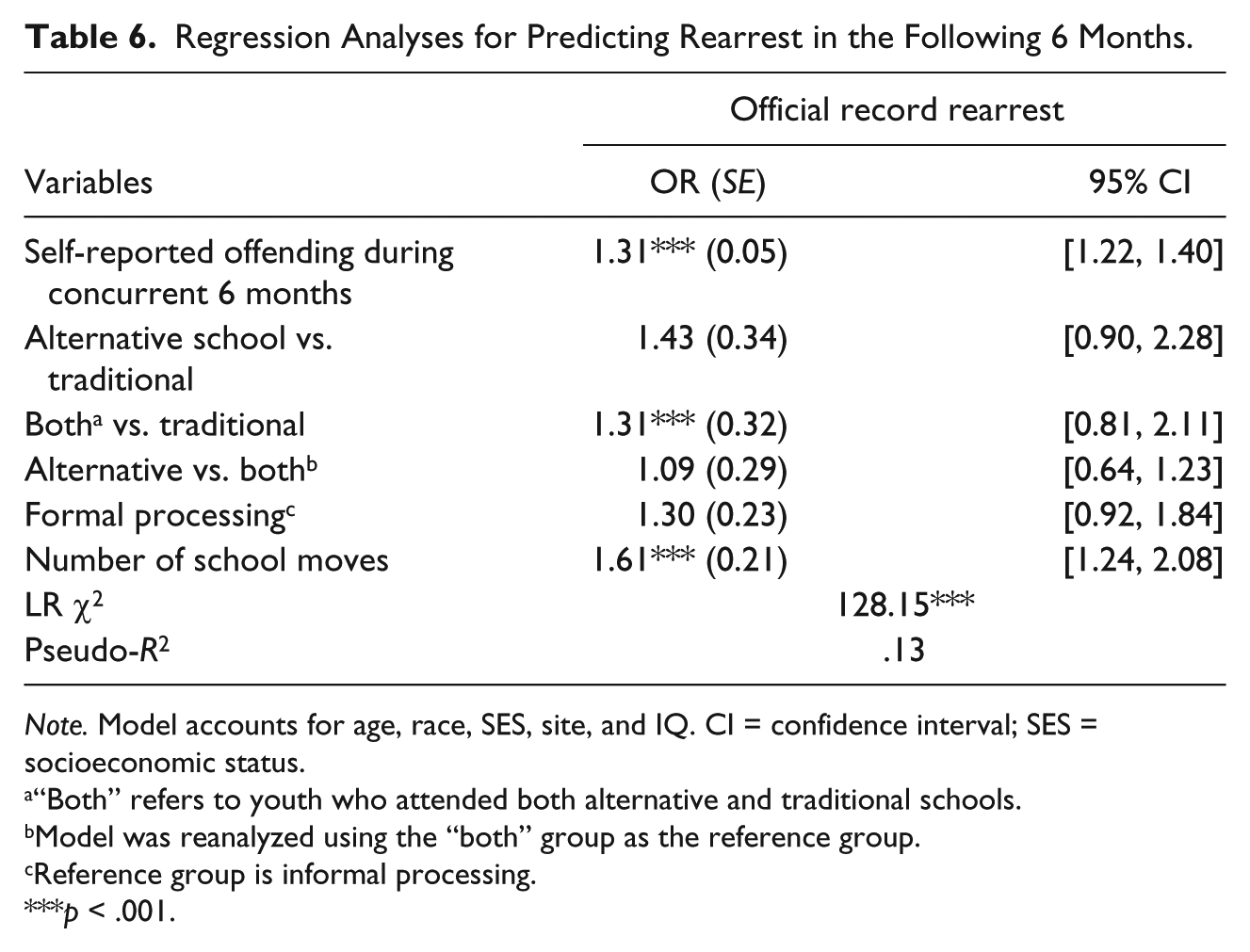
Finally, logistic regression was used to examine whether school type was associated with the likelihood of being rearrested, accounting for age, race, site, IQ, SES, and offending variety during the 6 months (Table 6). Results indicate that, as expected, youth who self-reported engaging in a wider variety of crimes were more likely to be rearrested. Youth in alternative schools were rearrested at the same rate as youth in traditional schools. However, even after accounting for self-reported reoffending, youth who experienced both types of schools were more likely than youth in traditional schools to be rearrested. Importantly, the number of school moves was also associated with rearrest.
Regression Analyses for Predicting Rearrest in the Following 6 Months.
Note. Model accounts for age, race, SES, site, and IQ. CI = confidence interval; SES = socioeconomic status.
“Both” refers to youth who attended both alternative and traditional schools.
Model was reanalyzed using the “both” group as the reference group.
Reference group is informal processing.
p < .001.
Discussion
Schools can protect against delinquency by providing opportunities to develop positive social relationships or by setting high academic and social expectations for youth (Christle et al., 2005; Furlong & Morrison, 2000). However, there is debate about what types of school experiences are best for promoting positive development, especially among justice-system-involved youth. The current results suggest that the answer to these questions may depend on the outcome of interest. That is, our analyses indicated that youth in alternative schools generally fared better academically than youth in traditional schools. These findings align with previous research that shows enrollment in alternative schools often positively affects school performance (Cox, 1999; Cox et al., 1995; Kemple & Snipes, 2000). Considering justice-system-involved youth may be more likely to experience alternative schooling than community youth, this study makes a significant contribution to the literature by indicating that enrollment in alternative schools may be advantageous for justice-system-involved youth if we are judging based solely on these metrics of academic performance.
These results also indicate that the type of school a youth attended was associated with the youth’s attitudes about school. Interestingly, youth in alternative schools reported feeling just as oriented to school and just as supported and safe in school as youth in traditional schools. However, youth who experienced both types of schools generally felt the least supported and the least safe. This finding is particularly troublesome considering that youth who feel less supported tend to be less engaged in the classroom and engage in more school misconduct. Furthermore, prior research suggests that youth who feel less safe in school tend to be less engaged in school and to have lower reading scores (Ripski & Gregory, 2009) as well as an elevated drop-out rate (Rumberger & Palardy, 2005). In line with labeling theory (Becker, 1963), the “criminal” label acquired through justice system contact may change the way individuals view youthful offenders. Teachers may view such youth differently when they are enrolled into their schools, or may take more time to develop relationships with them. Either way, these findings indicate that disrupting schooling by transitioning youth between types of schools may be more harmful than keeping youth in their schools.
In spite of the encouraging academic and attitude findings for youth in alternative schools, the present study provides evidence that enrollment in alternative schools is associated with more recidivism. In particular, youth in alternative schools engaged in more violent reoffending. The school system utilizes alternative schools to educate challenging students, often so that they can ensure a safe and productive school environment for all students (Van Acker, 2007). It is possible, in line with deviancy training, that youth in alternative schools may become more violent if grouped with more violent peers (Dishion, Spracklen, Andrews, & Patterson, 1996; Dishion, Véronneau, & Myers, 2010). However, several studies have found disconfirming evidence for deviancy training among high-risk youth (see Dishion & Tipsord, 2011, for review), and studies have highlighted the importance of identifying group- and individual-level factors that may moderate the influence of delinquent peers, such as the ratio of delinquent to nondelinquent youth (Mathys, Hyde, Shaw, & Born, 2013) or the level of delinquency exhibited by the target youth in relation to that of the group (Boxer, Guerra, Huessman, & Morales, 2005). Yet, there is evidence that compared with noninvolved youth, youth are more likely to associate with delinquent peers following juvenile justice intervention (Bernburg, Krohn & Rivera, 2006). Furthermore, the stigmatizing experience of being placed in alternative school can be detrimental (see McNulty & Roseboro, 2009). These processes may help explain why youth in alternative schools may engage in more violent crime than youth in traditional schools. Although further parsing the mechanisms through which alternative schooling might influence reoffending and rearrest risk is important for future research, the present results indicate that youth in traditional schools fare better on recidivism outcomes than youth in alternative schools or youth who experience school instability.
Perhaps the most important finding, however, is that even after accounting for their previous offending, youth who experienced both types of schools reoffended more than youth in traditional schools. Problematically, even after accounting for differences in reoffending rates, youth who experienced both types of schools were particularly likely to be rearrested. Similarly, the number of school transitions was positively associated with rearrest rates, although this association must be interpreted cautiously. These findings suggest that the most detrimental practice might be disrupting a justice-system-involved youth’s schooling experience by moving the youth to a different school. Moving justice-system-involved youth out of their current schools may raise their potential to continue committing crime through a variety of processes, including deviancy training, labeling theory, and the stigmatizing experience. These findings suggest that instead, providing extra support and resources for the youth in their current environment may be the most effective method of reducing youth’s propensity to engage in delinquency and stemming justice system involvement early on.
This study had several important strengths. First, the geographically diverse sample incorporated data from youth living in three different regions of the United States. By including youth exposed to different regional policies and the practices of separate justice departments, we are more certain that results are not limited to the practices of a single locale. An additional strength is the inclusion of several important controls. For instance, school misconduct may increase the likelihood that youth will be enrolled in alternative school (Cox, 1999; Tobin & Sprague, 2000). Adjusting for this factor gives us more confidence that school type is associated with such academic, attitude, and recidivism outcomes over and above the adolescent’s behavior. Furthermore, we were able to assess both the types of schools youth experience and the number of transitions. This nuanced analysis enabled us to examine these processes independently. Finally, the longitudinal design using both self-report and official records enabled us to rigorously examine school experiences and offending during youth’s first 6 months of juvenile justice system contact.
Despite these strengths, this study has several noteworthy limitations. First, the employed sample included only male offenders. Previous research suggests that females are treated by the justice system differently than males (MacDonald & Chesney-Lind, 2001; Mallicoat, 2007) and are less likely to experience academic failure (Heckman & LaFontaine, 2010). Second, previous research suggests that youth in alternative school programs are more likely to drop out of school (Kelly, 1993). As fewer than 2% of participants dropped out of school during the study period, dropout was not investigated. Furthermore, it is critical to note that the study largely relied on self-reported assessments for most measures, with the exception of rearrests. Accordingly, it is possible that there could be some amount of common method variance inflating the correlations between the measures. Unfortunately, collateral reports are not available for the variety of academic and behavioral outcomes analyzed in the present study. It is crucial, therefore, that future examinations replicate this study using collateral reports (e.g., family report; teacher report; standardized testing). This would ensure that these novel findings are not merely method artifacts. In particular, considering some of the known limitations of self-reported grades (Kuncel, Credé, & Thomas, 2005; Schwartz & Beaver, 2015), future research should use a variety of assessments of academic achievement to determine if the results replicate across different types of measures (see Hirschfield, 2009).
Finally, it is important to note that we were unable to assess the quality, structure, systems, and policies of each school. Structural and policy differences between school districts and the schools within them increase the difficulty of making comparisons about the behaviors of youth attending traditional and alternative schools. For instance, some schools may simply require less attendance, less homework, and fewer interactions with teachers. The demands of these schools may differ to accommodate the needs of their students (Foley & Pang, 2006). Furthermore, considering classroom composition may affect antisocial behavior (Müller, Hofmann, Fleischli, & Studer, 2016), assessing classroom composition is clearly necessary for future research. It is also known that heterogeneity in school quality exists among both traditional and alternative schools. Relatedly, the category of “traditional” schools includes both charter and public schools, both of which are heterogeneous categories that likely vary widely in classroom experiences. It is possible that justice-system-involved youth in high-quality alternative schools may fare better than those in low-quality traditional schools, or that the amount of post-justice-system-involvement support may vary based on the school.
In summary, the present study suggests that educational experiences are associated with the outcomes of youthful offenders in several important ways. The findings indicate that compared with youth who attended traditional schools, youth who attended alternative schools fared better academically. Yet, the takeaway is not that all first-time offenders should be transferred to alternative schools. In fact, switching schools may be more disruptive, leading to more problematic behavior, as evidenced through reoffending, and to sustained justice system involvement, as evidenced by rearrest rates. Furthermore, it is imperative that researchers and practitioners note that the effects of school experiences may vary based on the domain researchers choose to examine. School instability appears to be the most detrimental for youth’s attitudes about school as well as for reoffending outcomes that have the largest impact on keeping youthful offenders in the juvenile justice system.
Footnotes
Acknowledgements
We are grateful to the many individuals responsible for the data collection and preparation.
Declaration of Conflicting Interests
The author(s) declared no potential conflicts of interest with respect to the research, authorship, and/or publication of this article.
Funding
The author(s) disclosed receipt of the following financial support for the research, authorship, and/or publication of this article: The Crossroads Study is supported by grants from the John D. and Catherine T. MacArthur Foundation and the Office of Juvenile Justice and Delinquency Prevention.
