







Abstract
The purpose was to examine gender differences (a) in the sentencing severity for parent-to-child violence (PCV); and (b) in severity of PCV patterns. We analyzed 99 verdict cases in Israel. Two models, a logistic regression model and a generalized ordered logistic regression model, were applied. The findings of the first model indicated that being a woman reduced the odds of imprisonment by .106; furthermore, being tried after implementation of the 2012 reform in judicial discretion in sentencing significantly increased the odds of sentence severity by 2.85. The second model indicated that women had lower odds of being involved in severe violent offenses against their minor children compared with men (OR = 0.31). The findings highlight the source of sentencing differentials.
Introduction
One of the predominant myths about families is that they are loving and caring groups of related people. In fact, violence is a part of children’s experience in the family context. Moreover, most people first experience a violent episode in the family unit (Straus et al., 2006), and the most common offense is physical assault (Durose et al., 2005; Hines & Malley-Morrison, 2005). Family violence includes various forms, including intimate partner violence (IPV), parent-to-child violence (PCV), child-to-parent violence, and sibling violence. Most studies on family violence have focused on child abuse (CA); PCV incidents are an under-researched area of study (Schut et al., 2020).
Previous research has identified fathers as the most common offenders in PCV (Finkelhor & Ormrod, 2001). However, gender differences in PCV remain a matter of debate. Some studies indicate that fathers are more likely to perpetrate violence against children (VAC) than mothers (Finkelhor & Ormrod, 2001; Margolin et al., 2003), but others have found that most PCV incidents involve physical violence perpetrated by mothers toward their own children (Schut et al., 2020; Winstok, 2015). Furthermore, although, there has been a steady increase in the number of women being convicted for committing VAC, gender differences have been observed in the punishment of women perpetrators, who are treated more leniently than men are (Curry et al., 2004; Jeffries et al., 2003). However, research into this area is still scarce (de Vogel & de Spa, 2019; Jeffries et al., 2003).
In light of the above, the primary goal of the current study was to examine gender differences in the sentencing severity for PCV. The second goal was to examine gender differences in severity of PCV patterns.
Parent-to-Child Violence
Parental violence is purposeful use of force by a parent that has the potential to injure a child; it includes acts ranging from minor forms of violence, such as corporal punishment, to more severe forms known as CA. While PCV consists of minor violence (e.g., spanking, slapping, shoving, pushing, throwing something), CA is frequent and repetitive violent behavior by a parent against a child, consisting of severe acts of violence (e.g., hitting, kicking, beating up, choking, burning) (Straus, 1979; Straus & Gelles, 1990).
General population surveys indicate that family violence is very common; between 10% and 20% of children are exposed to IPV, between 4% and 16% of children are physically abused, between 1.5% and 16% are victims of child maltreatment, and between 20% and 77.9% of parental physical violence (Catani et al., 2009; Gilbert, Kemp et al., 2009; Gilbert, Widom et al., 2009; Jakobsen et al., 2014). Several studies have provided strong evidence of the cooccurrence of various forms of family violence (Dong et al., 2004; Herrenkohl et al., 2008). The cooccurrence of family violence can be explained by the “spillover hypothesis,” which posits that negative emotion experienced in a marital relationship spills over into parent–child relationships and ultimately accounts for adverse child outcomes, such as child maltreatment (Engfer, 1988). However, estimates of family violence are very difficult. They vary by the forms of family violence and types of behaviors or acts that are included in measurement, as well as the choice of measures used, which can affect rates, interpretations, and even implications of family violence (Tolan et al., 2006).
Some research findings have identified fathers as the most common offenders in PCV. Fathers have been shown more likely than mothers to be abusers (O’Keefe, 1995) and appear to be a high-risk group for child maltreatment (Margolin et al., 2003). However, the results of research on gender differences in PCV have been mixed and remain a matter of debate. Some studies indicate that fathers are more likely to perpetrate violence against children than mothers are (Finkelhor & Ormrod, 2001; Margolin et al., 2003); others have found that PCV incidents are perpetrated mostly by mothers (Schut et al., 2020; Winstok, 2015).
When considering gender differences in parental violence, several key facts should be addressed. First, research has indicated that women, driven by relational frustration, are more likely to use violence against their partners, children, or family members, and men are more likely to use violence against acquaintances and strangers (Häkkänen-Nyholm et al., 2009; Reisig et al., 2006). Furthermore, studies have indicated a steady increase in the number of women being convicted for committing offenses, especially violent offenses (Chen, 2020; Heilbrun et al., 2008). A possible explanation for these findings is that the women had experienced higher rates of various forms of CA, particularly physical and sexual abuse, compared with men (Chen, 2016). Childhood history of physical abuse predisposes individuals to violent offending in later years, and therefore reinforces the cycle of violence (Widom, 1989).
In a similar vein, feminist theorists argue that the etiology of female offending is unique, including life histories plagued with abuse and history of trauma (Chesney-Lind, 1989). Consistent with feminist theories, the general strain theory (GST) (Broidy & Agnew, 1997) holds that men and women share many of the same types of strain, but they differ in their emotional responses to strain. In other words, men and women react differently in general stress situations, such as CA and exposure to interparental violence, and this could lead later to different behavioral problems, such as women using violence against family members and men against strangers (Reisig et al., 2006).
Second, research has shown that women who step outside their gender role or whose crimes are associated with masculinity, such as violent offenses, may receive longer custodial sentences compared with women whose crimes are seen to conform to the female gender role (Mann et al., 2014; Spohn, 2002). In general, there seems to be a tendency to treat female offenders more leniently than male offenders, leading to shorter prison sentences, treatment instead of punishment, and to more insanity defenses (Crocker et al., 2002; Jeffries et al., 2003). Moreover, women have received non-custodial sentences more often, whether or not they had mental illness (Flynn et al., 2011), and where the victim was a child or other relative, the courts were more lenient with women than men (Flynn et al., 2011; Mann, 1996).
Parent-to-Child Violence in Israel
General population surveys in Israel indicate that in 2014, there were 3,895 open cases of offenses committed against minor children in the family; approximately 92.0% were offenses against body and approximately 10.0% were sex offenses (mutually exclusive) (Israel National Council for the Child, 2015). According to the Haruv Institute, a training and research center on child abuse and neglect (CAN) in Israel, of the 345,000 children at-risk in Israel in 2020, 14% were victims of CAN. The most common reports of CAN include neglect (33%), physical abuse (25%), and sexual abuse (13%); 53% were boys and 47% were girls; and 51% of parental violence was directed against children aged 6 to 13 (Haruv Institute, 2020).
On the one hand, Israel is a modern society with a western orientation; on the other hand, it is characterized by values and principles that represent traditional culture and paternalism (Halperin-Kaddari & Yadgar, 2010). Moreover, Israeli society is family-oriented, and familism stresses the centrality of the normative family for the individual and society. In this context, woman is constructed as a wife and mother: her primary obligations are to give birth to children and care for her family members. Thus, the motherhood role, which has been defined as crucial to the identity and morality of Israeli women, is strongly influenced by the good-mother myth of women’s instinctive ability and desire to care for and to sacrifice their own needs for those of their children (Hacker, 2005). This identity calls for utter devotion to one’s children and family, and shapes both how most Israeli mothers conduct themselves in the public domain and social attitudes toward them (Soffer & Ajzenstadt, 2010).
Furthermore, in the Israeli penal system, women who commit violent offenses receive longer custodial sentences compared with women convicted of traditional crimes that conform to gender roles (Rimalt, 2001). In light of the lenient approach toward female offenders, the question arises whether this approach also exists toward women who harm their children, and whether there are gender differences in PCV sentencing. Compared with the rest of the world, to the best of our knowledge, little systematic research on gender and criminal court sanctioning has been conducted in Israel.
The present study sought to answer two central questions: (a) Are there gender differences in the sentencing severity for PCV?, and (b) Are there gender differences in severity of PCV patterns?
Method
Participants
The research questions were examined on the basis of the trial files and the judicial verdicts issued by the Israeli Magistrates’ Courts from August 7, 2001 to March 31, 2020, which were published in the Nevo database of verdicts. The sample included 99 verdict cases (60 men and 39 women) who were tried for assaulting their minor children. The mean age of the men was 45.2 years (SD = 8.02), and the mean age of the women was 39.3 years (SD = 7.23) (see Table 1).
Participants’ Background Characteristics.
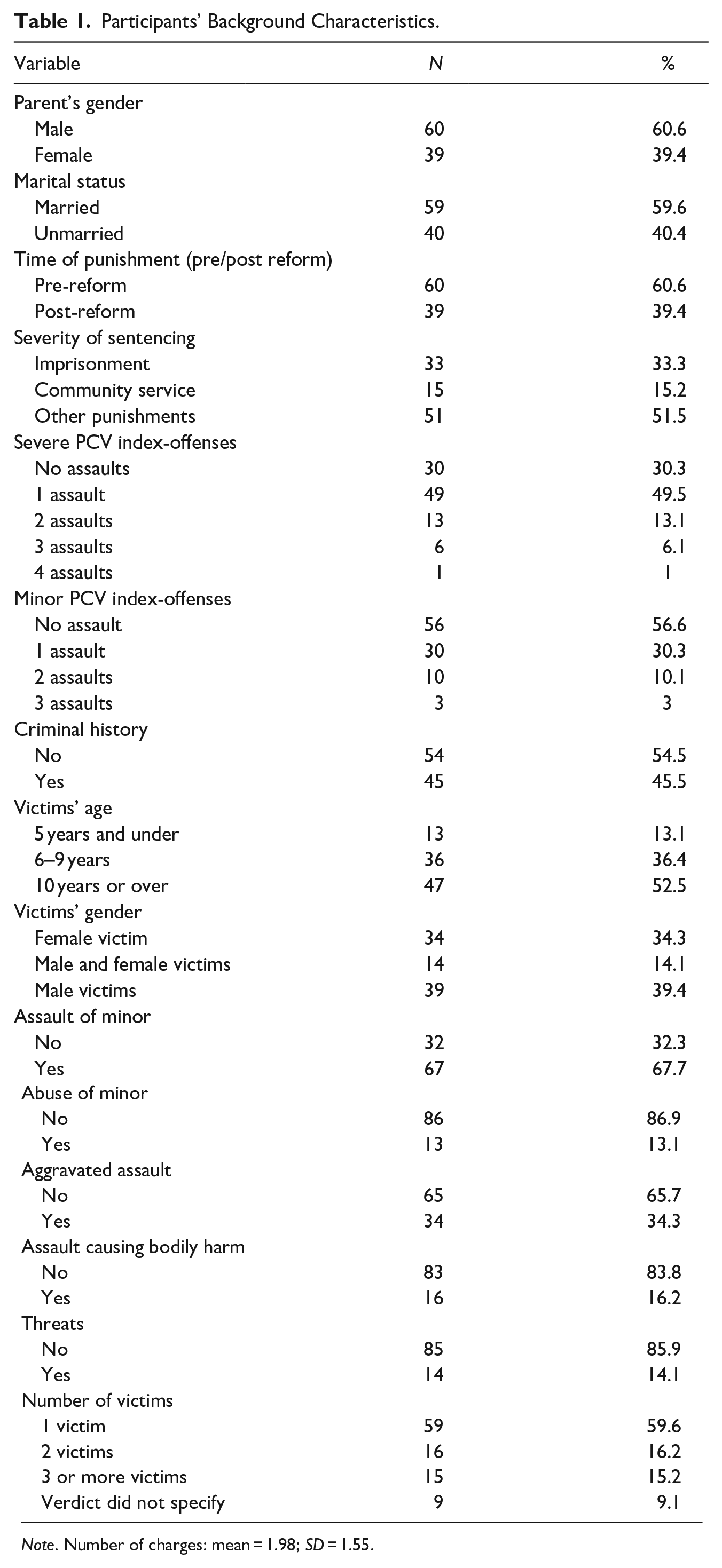
Note. Number of charges: mean = 1.98; SD = 1.55.
Procedure
The present study focused on analyzing verdicts by the magistrates’ Courts in cases of PCV.
The analyses did not include: (a) assault that led to the hospitalization of minors, due to the small number of cases that were handled by district courts and not magistrates’ courts, and the fact that this group represented only two women; (b) assault against both children and partners, because the court consider all types of violence perpetrated in its sentencing; or (c) verdicts with joint indictments, in order to ensure uniformity of the cases, and avoid the inclusion of cases in which the court pronounced similar punishment for men and women who perpetrated violence against their children together.
The verdicts found in the Nevo database included a large number of men, compared with only 30 cases of women. Therefore, all the women sentenced for VAC were included, whereas in the cases of men, the examination was stopped when the 30th consecutive case was reached.
The search words included: judicial instance: Magistrates’ Court; Verdict; phrase: assault of minor and/or abuse of minor and/or physical harm only to minor; Sentencing date. (See Figure 1).
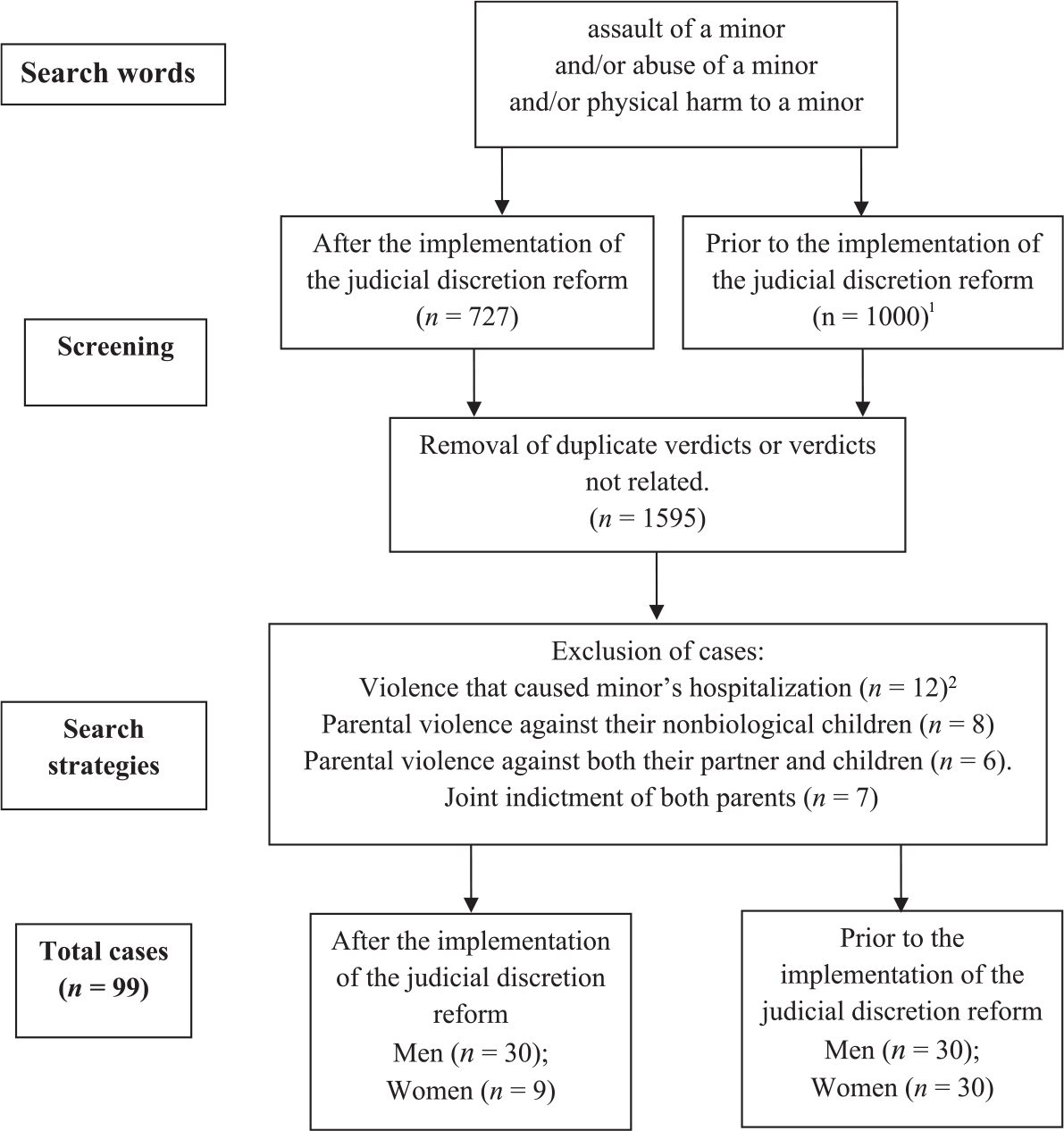
Flow chart of research procedure.
Data analysis
The present study examined two separate research questions (RQ). RQ1: Were there gender differences in the sentencing severity for PCV? RQ2: Were there gender differences in severity of PCV patterns? Two separate models, (a) a logistic regression model, and (b) a generalized ordered logistic regression model, were applied to answer these questions. In both models, Stata 16 was used to analyze the data.
It should be noted that no multicollinearity was found in either model. In the logistic regression, the VIF values ranged from 1.13 to 2.6 (mean = 1.56) and tolerance values from .38 to .89. In the generalized ordered logistic regression model, the VIF values ranged from 1.1 to 1.35 (mean = 1.54) and tolerance values from .43 to .91.
Results
(RQ1) Were There Gender Differences in the Sentencing Severity for PCV?
To address RQ1, a logistic regression model was applied, because the dependent variable, sentence severity, is a nominal variable consisting of two options (0–1) (see Table 2).
Description of Independent and Dependent Variables.
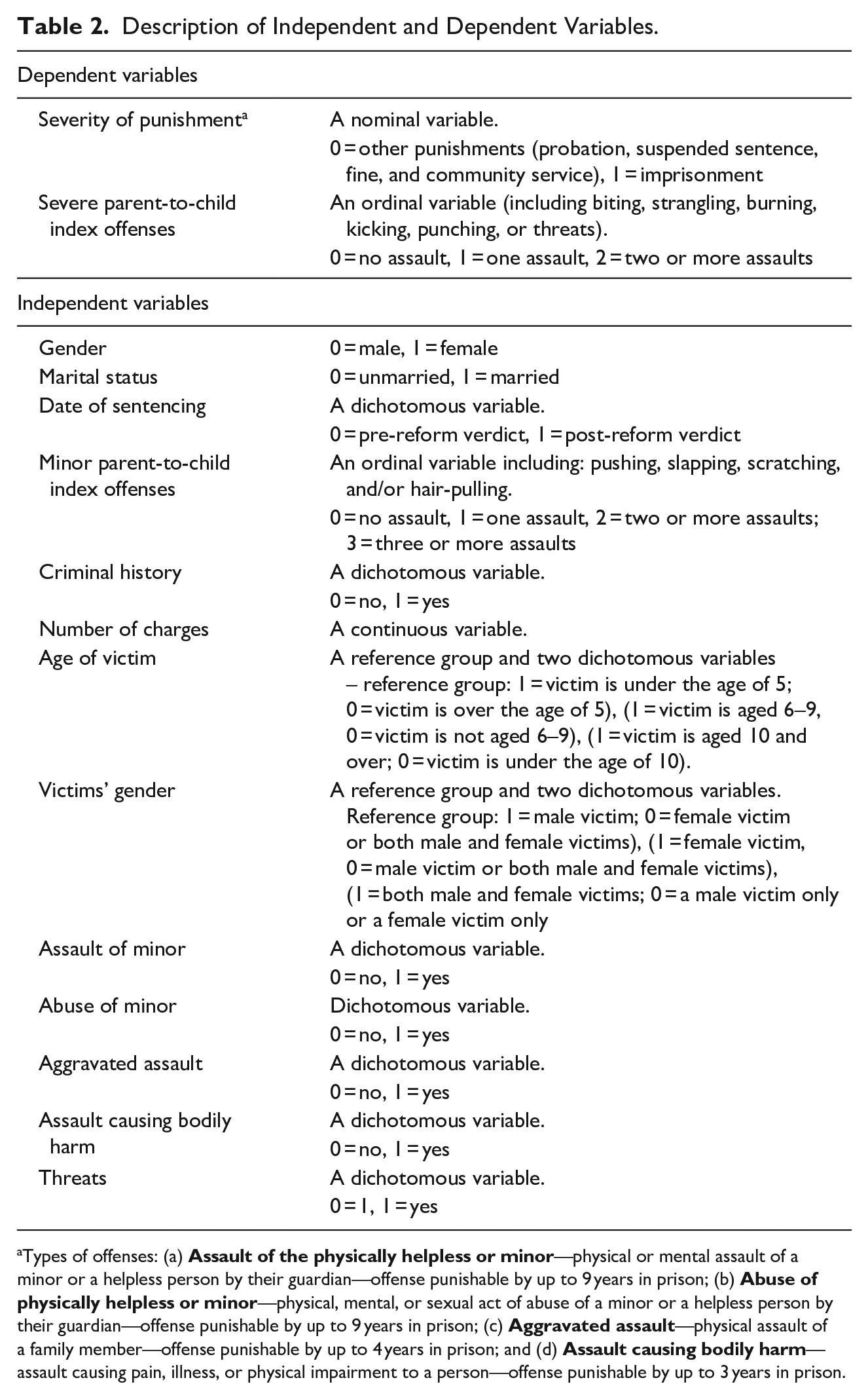
Types of offenses: (a)
The following variables were entered as control variables: parent’s gender, number of charges, time of sentencing, minor PCV index-offenses, severe PCV index-offenses, criminal history, assault of the physically helpless or minor, abuse of physically helpless or minor, aggravated assault, assault causing bodily harm, and threats (see Table 3).
Logistic Regression: Prediction of Punishment Severity by Relevant Sentencing Variables.
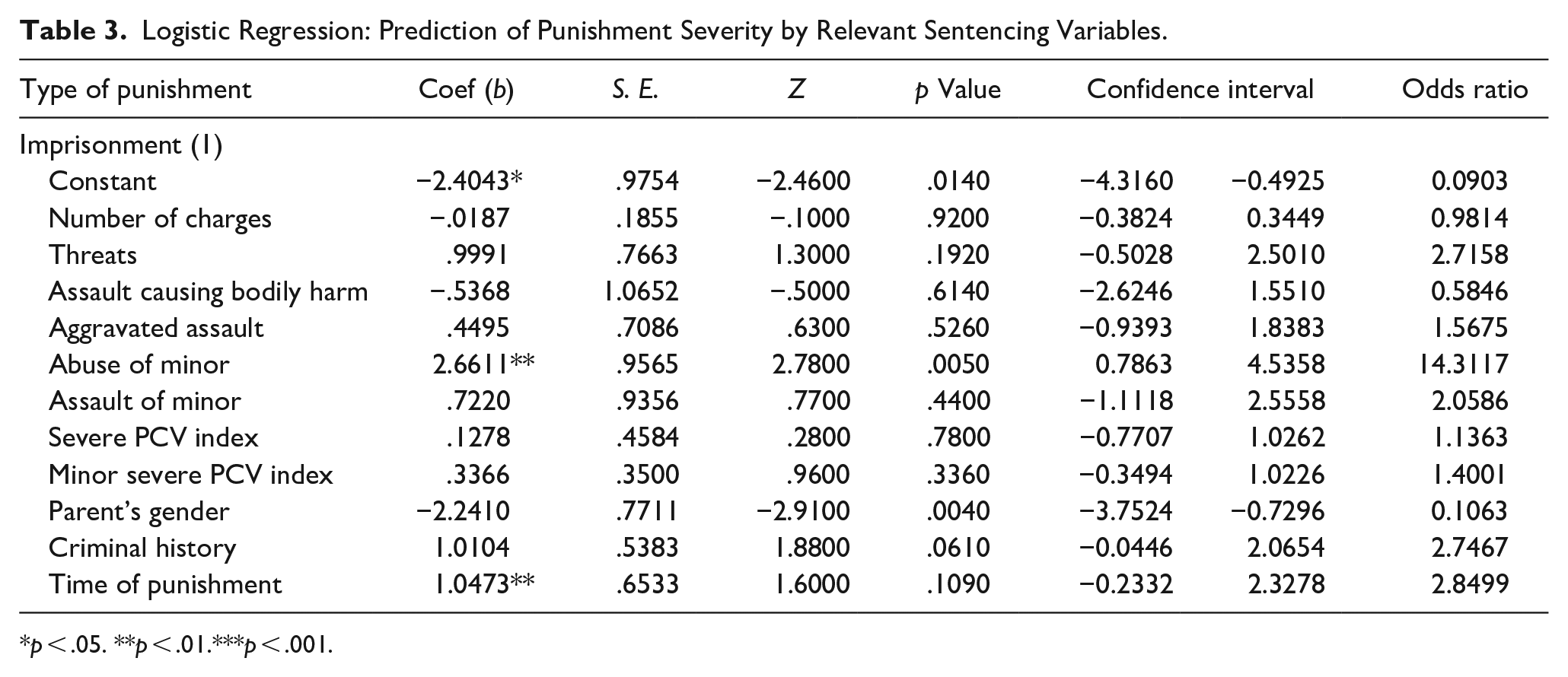
p < .05. **p < .01.***p < .001.
The regression model was found to be statistically significant (χ2(11) = 35.09, p < .000), explaining 41.4% of the sentence severity variance according to Nagelkerke R2 (Nagelkerke, 1991) Index, which is commonly used in logistic regressions, or 29.8% according to the more conservative Cox and Snell’s (1989) R2 Index.
Parent’s gender
Given the other variables held constant in this model, being a woman reduced the odds of imprisonment versus the odds of other punishment by .106; that is, women were 89.4% less likely to be incarcerated compared with men.
Abuse of minors
Given the other variables held constant in this model, abuse of a minor increased the odds of imprisonment versus the odds of other punishment by 14.31; that is, offenders who abused minors were 1,331% more likely to be sentenced to incarceration compared with those who did not.
Criminal history
Given the other variables held constant in this model, criminal history increased the odds of imprisonment versus the odds of other sentencing by 2.74; that is, offenders with a criminal history were 174% more likely to be sentenced to incarceration compared with offenders with no criminal history (marginal significance—a = .06).
Time of sentencing (pre/post-reform)
Given the other variables held constant in this model, being tried after the reform increased the odds of imprisonment versus the odds of other sentencing by 2.85; that is, an offender who was tried after the reform was 185% more likely to be sentenced to incarceration than an offender who was tried before the reform (a marginal significance in the case of a one-tailed hypothesis—a = .054).
(RQ2) Were There Gender Differences in Severity of PCV Patterns?
To address RQ2, a generalized ordered logistic regression model was applied, because the dependent variable, severe PCV index-offenses, is an ordinal variable consisting of three options (0–2) (see Table 2). The ordered logistic regression model has restrictive assumptions that are often violated by some of the variables included. To overcome this limitation, a generalized ordered logistic regression model is commonly employed. In the present model, the parallel lines assumption was examined for each of the explanatory variables included. The model selectively relaxes the ordinal logistic regression model assumptions when necessary. In the present research, the assumption was only violated by the explanatory variable criminal history; therefore the assumption was only relaxed for this. The regression model was applied while controlling for the variables of parent’s gender, marital status, number of charges, criminal history, age of victim, and victim’ gender (see Table 4).
Generalized Ordinal Logistic Regression: Prediction of Severe PCV Index by Relevant Sentencing Variables.
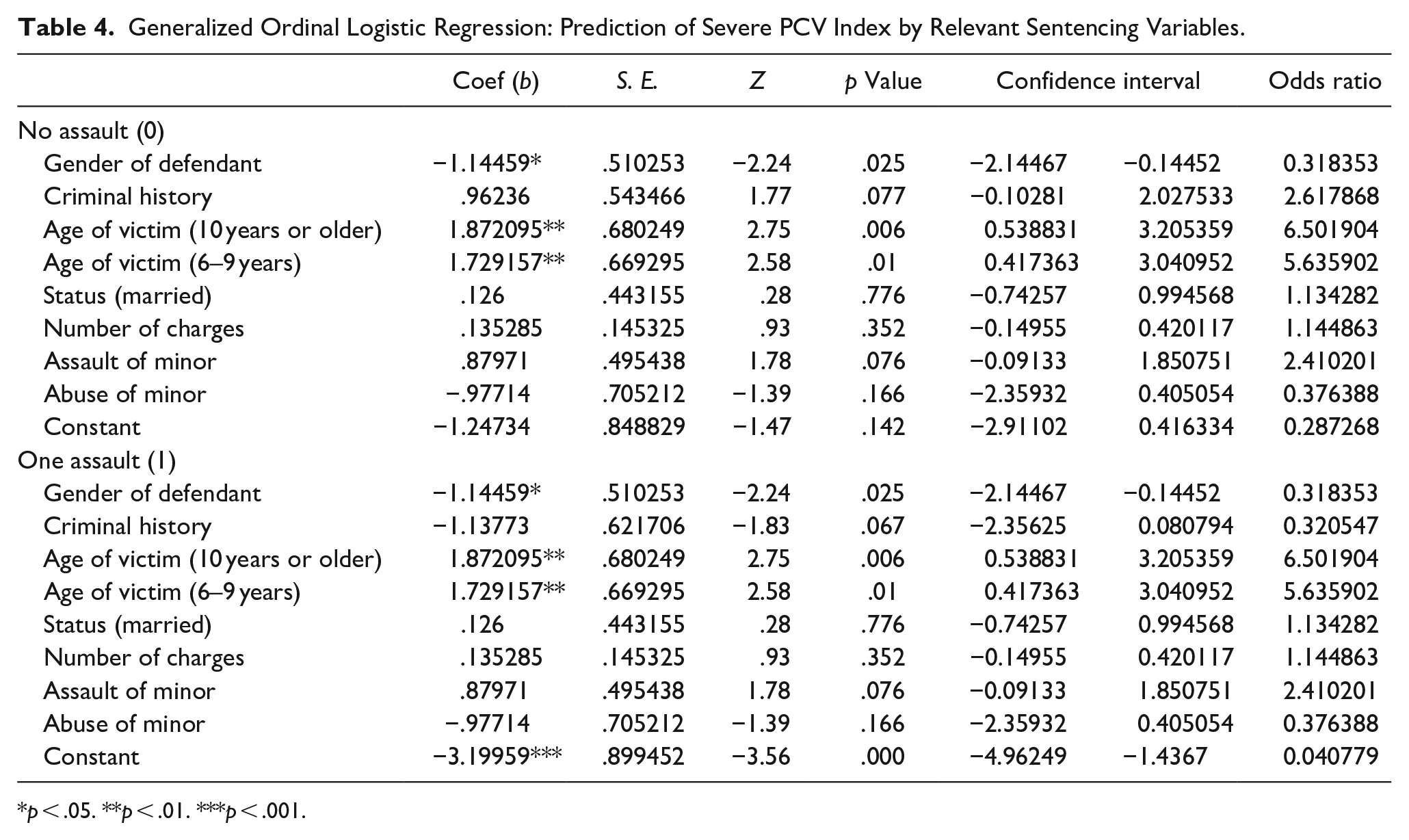
p < .05. **p < .01. ***p < .001.
The regression model was found to be statistically significant (χ2(10) = 36.09, p < .000), explaining 30.6% of sentence severity variance according to the Cox and Snell (1989) R2 Index or 17.6% according to the McFadden Index commonly used in multinomial or ordered logistic regressions (or, following adjustment, McFadden Adjusted R2 = 5.9%) (McFadden, 1974).
The findings show that women had lower odds than men of being involved in severe violent offenses against their minor children (OR = 0.31). In addition, victims aged 6 to 9 years (OR = 5.63) and victims aged 10 years or older had higher odds (OR = 6.5) of being victims of severe PCV compared with victims aged 5 years and under (OR = 10.02).
Discussion
The main findings of the research are discussed as they pertain to (a) gender differences in the sentence severity for PCV; and (b) gender differences in the severity of PCV patterns.
Gender Differences in the Severity of Sentences Regarding PCV
The present findings show that being a woman significantly reduced the odds of a severe sentence (imprisonment) versus the odds of other sentences (probation, fine, service work, community service, or suspended sentence). These results support those of previous research that found female offenders less likely to receive imprisonment sentences compared with male offenders (Crocker et al., 2002; Flynn et al., 2011; Mustard, 2001). For example, Spohn (2002) reported that the probability of receiving a prison sentence was 2.5 times greater for male offenders than for female offenders after controlling for legally relevant factors. In general, there seems to be a tendency to treat female offenders more leniently than their male counterparts, leading to treatment versus punishment, shorter prison sentences, and to more psychiatric defenses and evidence of victimization (Curry et al., 2004; Jeffries et al., 2003). Furthermore, previous literature has shown that female offenders tend to be treated more leniently than male offenders, due to a combination of physical and emotional characteristics of women and the stereotypical social roles that women are expected to fulfill (Doerner & Demuth, 2014). According to Curry et al. (2004), several theories, such as the chivalry thesis, paternalistic attitudes, bounded rationality (Albonetti, 1991), or blameworthiness attribution (Baumer et al., 2000) can explain the favorable attitudes toward women compared with men in sentencing. For example, according to the chivalry thesis, cultural stereotypes about gender lead to preferential treatment of female delinquents (Crew, 1991; Daly, 1987). Specifically, regarding sentencing, the chivalry thesis posits that the passivity, weakness, and dependence associated with women indicates their need for protection rather than sentencing by the criminal justice system. The other theories mentioned are based on many of the same arguments and stereotypical views of gender roles and relationships as those incorporated in the chivalry thesis. These stereotypical views of gender are thought to reduce sentence severity for female offenders relative to their male counterparts. However, the validity of the chivalry hypothesis is clearly in doubt; most other findings do not support chivalry or paternalism in the form of more leniency for women (Jeffries, 2002; Kempf-Leonard & Sample, 2001). Another alternative explanation of why female defendants are less likely than male defendants to receive imprisonment sentences is related to the responsibility of women, especially those with dependent children, for caring for their family, and children. Motherhood and family obligations make judges reluctant to sentence female defendants as harshly as male defendants (de Vogel & de Spa, 2019; Doerner & Demuth, 2014).
Gender differences in other key sentencing determinants might explain why men’s judicial outcomes are harsher than those for women. In particular, gender differences in legal variables, such as criminal history or seriousness of crimes, may account for these differences.
Another key finding of the present study indicates that being tried after the 2012 implementation of the judicial discretion in sentencing reform significantly increased the odds of a severe sentence versus other sentences. This reform is based on the penal philosophy of retributivism, which promotes proportionate sentencing. Courts are directed to construct an individualized proportionate sentencing range appropriate to the case and the degree of the offender’s culpability. Once this is established, the court then follows additional directions regarding factors and principles related to the sentencing. Similar to many sentencing reforms in other countries, this reform was intended to promote consistency, uniformity, and equality in sentencing. However, during its enactment, many jurists expressed concern that the amendment would lead to harsher, and particularly longer prison sentence. Such results had already materialized in jurisdictions that had adopted similar policies in other countries (Gazal-Ayal & Lowenstein Lazar, 2011). For example, a preliminary examination of the effect of the law on illegal entry into Israel indicated that the proportionality principle has been used to justify an increase in the severity of sentences (Roberts & Gazal-Ayal, 2013). In a similar vein, Klein (2016) noted that the in the United States, discretion in sentencing (The Sentencing Reform Act of 1984 (led not only to significantly harsher federal sentencing compared with state sentencing, but also increased sentencing disparity between Blacks and Whites. Contrary to popular perceptions, severe sentences rarely contribute to deterrence and are thus unlikely to reduce crime rates. Moreover, harsher sentences do not promote consistency, uniformity, and equity in sentencing (Gazal-Ayal & Lowenstein Lazar, 2011). In this content, Kleck (1981) argued that “the legitimacy of the legal systems of modern democracies depends heavily on the degree to which the systems operate in a manner consistent with their own stated procedural standards of justice” (p. 783). Judicial sentencing disparity may be reduced but, at the same time, the prosecution’s power in sentencing will grow, and this is likely to increase inconsistency and disparity in sentencing (Gazal-Ayal & Lowenstein Lazar, 2011). When citizens perceive inequality of distributive justice, proportionality, and consistency in outcomes, a legitimacy crisis may ensue (Fagan, 2008; Tyler & Huo, 2002).
Gender Differences in Severity of PCV Patterns
As mentioned, our findings show that being women significantly reduced the odds of sentence severity compared with men. In addition, our findings showed that women had significantly lower odds of being involved in severe violent offenses against their minor children compared with men. These results support those of previous research. Research in forensic populations has shown that the nature, severity, frequency, and victims of violent offenses committed by women are significantly different from those committed by men (Nicholls et al., 2009; Robbins et al., 2003). Furthermore, violence by women less often results in serious injuries and is less visible, in IPV, CA, and violence against relatives (Odgers et al., 2005). Women compared with men are more likely to use personal weapons, such as hands and teeth when they commit violence (Koons-Witt & Schram, 2003).
Interestingly, these findings may explain the favorable attitudes toward women in the criminal justice system. Several studies have shown that judges viewed female offenders as less blameworthy and less dangerous than male offenders due to their motherhood role and family obligations, which neutralized their perception as dangerous (Crew, 1991; Daly, 1987). In this context, Naffine (1987, p. 2) argued that chivalry in the form of more leniency extends to minor crimes and more harshness to serious crimes committed by women. Thus, research has shown that women whose crimes are associated with masculinity may receive longer custodial sentences compared with women whose crimes are seen to conform with traditional gender roles (Mann et al., 2014). In a similar vein, it was found that in the Israeli penal system, women who committed violent offenses also received longer custodial sentences compared with women convicted of traditional crimes that conform to gender roles (Rimalt, 2001).
Another possible explanation of the severity of sentences that are meted out to men in comparison with women is related to criminal history. Our findings indicate that criminal history significantly increases the odds of an imprisonment sentence versus other sentences. Previous studies of criminal history found that female offenders compared with male offenders were less often previously convicted, had a lower number of previous convictions, and were older at the time of their first offense (Moffit et al., 2001; Rebecca Block et al., 2010). Similarly, Jeffries et al. (2003) found that one reason that women were less likely than men to be imprisoned was that they had less serious offending histories. The finding that female offenders have less serious and extensive criminal histories compared with their male counterparts may explain why men are given more severe sentences than women. However, previous studies (and the present research) that have controlled legal variables such as criminal history and crime seriousness still found that women received more lenient sentencing outcomes than men. In other words, men were meted out more severe sentences than women even under seemingly similar legal circumstances (Jeffries, 2002). These findings might be explained by the harsh attitudes toward men in courts. Judges attribute greater levels of blame and have a more negative perception toward male offenders, perhaps because of the greater overall participation of men in crime and violence against women and children. Against this background, punitive sanctions may seem more appropriate in the case of men, who are seen as endangering the social order. Such attributions and less favorable attitudes may lead to harsher sentencing outcomes for male offenders, as found in the present study (Curry et al., 2004; Jeffries, 2002).
Finally, our findings show that minor children aged 6 and older had significantly higher odds of being victims of severe PCV compared with victims aged 5 years and under. Results of studies on parental violence across ages have been mixed and inconsistent. Some have shown that parents’ violence was directed most frequently toward older children, especially adolescents (Tajima, 2002); others indicated that violence is highest against younger children (Hines & Malley-Morrison, 2005). Another study indicated that very young children and adolescents are most likely to experience PCV (Straus et al., 2006). There is broad agreement that expressions of parental violence limit children’s personal growth and negatively affect their short- and long-term wellbeing. Moreover, previous studies found that those who experience PCV have an earlier onset for criminal behavior, a longer continuation of such behavior, commit offenses more frequently, and are more likely to become chronic or life-course persistent offenders than those not victimized (Widom, 1995; Widom & Maxfield, 2001). In addition, research has found that experiencing PCV while growing up increases the risk of later IPV (Straus et al., 2006; Whitfield et al., 2003). Interestingly, research has found that PCV in adolescence may be a better predictor of offending than PCV earlier in life is (Benda & Corwyn, 2002; Straus et al., 2006; Thornberry et al., 2001). Whereas victimized children are at increased risk of offending at some point in their lives compared with their counterparts, victimized adolescents have been found to have a higher risk of offending (Thornberry et al., 2001) and are at risk for offending over longer periods of time (Benda & Corwyn, 2002), including adolescence, the transition period to adulthood, and early adulthood (Fagan, 2005).
To conclude, although key sentencing determinants, such as criminal history, number of charges, and crime seriousness were controlled in the present study, men’s judicial outcomes were still different and harsher than women’s. Based on our results, it can be concluded that male offenders received harsher sentencing than women because of less favorable attitudes toward men in the criminal justice system.
One of the strengths of the present study is that we did not only consider parental violence in general, but also distinguished between minor and severe PCV offense patterns. This distinction enabled us not only to examine the proportionate severity of the offenses and the sentence imposed, but also, by controlling for the seriousness of the offenses, to understand whether the criminal courts treated men and women differently. Thus, an investigation seeking to establish whether men and women are treated differently by the criminal courts based purely on gender should take into account not only gender differences, but also the relative severity of the offenses as key sentencing determinants. Another strength is that we also controlled for many legal variables that might affect sentencing decisions, such as prior records, crime seriousness, age of victim, and number of charges. Moreover, the results presented here are important, and raise salient questions about policy and law, and the treatment of women and men in criminal justice system.
Limitations
The information in this study was based on the Nevo database, which provides the main information regarding judicial sentencing. However, some limitations and caveats should be noted. First, this database includes the majority of judicial verdicts in Israeli courts with the exception of special cases that are handled behind closed doors, which were not published and are unavailable (Section 8 (b) of the Courts Law (combined version), 1984). Second, this research was based on relatively small sample of female offenders. Nevertheless, the small sample size can be explained by a biased tendency of the prosecution toward women or by underreporting and under-indictment of women’s offenses. In addition, because our study is based on verdict case data, relevant demographic data such as ethnicity or race are not available. Moreover, the small sample size did not enable us to include all possible variables; therefore, the most relevant ones were chosen to avoid possible biases. Thus, it is recommended that future studies examine these variables. Last, it could be argued that the results presented in this paper are specific to the Israel context. However, some of our results replicated findings from other countries, such as the United States. This may suggest that gender bias in the Israeli penal system operates in similar ways to other western countries.
Implications and Future Directions
In summary, our findings highlight the source of sentencing differentials and highlight the importance and relevance of offender gender to theory and research on the effects of extralegal variables on sentencing outcomes. In addition, parental violence against children is a worldwide problem that results in serious harm across the life course and can prevent children from reaching their full potential (World Health Organization, 2016). Violence against children is neither inevitable nor acceptable and there is an urgent need for intensive programing of prevention and intervention of parents’ violence against their children in order to stop the harm inflicted and the adversities to the defenseless. Early intervention with violent families may produce increased positive outcomes for both parents and children, especially in breaking the intergenerational transmission of violence (Kwong et al., 2003; Pears & Capaldi, 2001).
Future research into predictors of sentences is needed, preferably in large samples and with multivariate analyses that consider variables such as psychopathology, type of offenses, and crime seriousness.
Footnotes
Declaration of Conflicting Interests
The author(s) declared no potential conflicts of interest with respect to the research, authorship, and/or publication of this article.
Funding
The author(s) received no financial support for the research, authorship, and/or publication of this article.
