







Abstract
Grasmick et al.’s Low Self-Control Scale (LSCS) is considered the gold-standard of self-control measures due to the frequency of its use in criminology. The aim of the present study is to examine the psychometric properties of the LSCS from a more modern psychometric perspective and develop a shorter version. Our sample consisted of young adults (N = 610, M = 21.33 years, SD = 3.09) from Portugal. The six-factor intercorrelated model of the LSCS showed an adequate fit, but models that would legitimate using a total score could not be confirmed. The subscales’ intercorrelations revealed some low non-significant correlations. The six subscales showed distinctive correlates with other measures, with three subscales presenting some problematic correlations. Confirmatory factor analysis was subsequently used to develop a three-factor shorter version with strong cross-gender measurement invariance and good reliability. Findings have implications for the validity of the general theory of crime specifically which components of self-control have the greatest empirical linkages to conduct problems and related deviance.
Introduction
Gottfredson and Hirschi’s (1990) self-control construct is likely the most studied criminological construct of the past three decades. According to their theory, parental socialization inculcates self-control in children, and when that parental socialization is ineffective (e.g., low monitoring, low supervision, and low sanctioning of conduct problems), the result is that children exhibit low self-control. Gottfredson and Hirschi’s low self-control construct includes six components: impulsivity, preference for simple tasks, risk seeking, preference for physical activities, self-centeredness, and temper. Although each of these constructs has associations with deviant and imprudent behavior, they coalesce into a unidimensional self-control construct. Since its inception, scores of studies employing various research designs and data sources, diverse participants, and multiple analytical approaches support the general notion that low self-control is significantly associated with greater conduct problems, externalizing features, antisocial behavior, crime, and violence. Several meta-analyses, books, and review articles substantiate self-control’s empirical status (de Ridder et al., 2012; Gottfredson & Hirschi, 2016; Hay & Meldrum, 2015; Pratt & Cullen, 2000; Tehrani & Yamini, 2020; Vazsonyi et al., 2017; Walters, 2016).
If self-control theory is among the most studied criminological constructs, commensurately one of the most utilized measures is the Grasmick et al. (1993) low self-control scale (LSCS). The original Grasmick LSCS contains 24 items that corresponded explicitly to the six dimensions of self-control in Gottfredson and Hirschi’s theory. The authors reported that in general they could not find strong evidence that combinations of items into subgroups produced readily interpretable multidimensionality, and concluded that the six components identified by them according to Gottfredson and Hirschi’s definition of low self-control appeared to coalesce into a single unidimensional personality trait. Nonetheless, the scale is widely used. For example, Pratt and Cullen’s (2000) meta-analysis indicated that 50% of studies of self-control that employed an attitudinal measure used the Grasmick et al. scale. A more recent and larger meta-analysis indicated that 46% of cross-sectional effects and 26.3% of longitudinal effects on the association between self-control and antisocial behavioral outcomes derived from the Grasmick et al. scale (Vazsonyi et al., 2017). Thus, the Grasmick LSCS is a popular and influential measure of a dominant criminological construct (DeLisi, 2011; Gibson, 2014; Moffitt et al., 2011; Piquero, 2008).
Nevertheless, psychometric studies provided mixed findings on the dimensionality, construct validity, and reliability of the Grasmick LSCS (Gibson, 2014; Piquero, 2008; Ren et al., 2018). For instance, studies employing item response theory Rasch modeling found that participants score differently on the Grasmick scale depending on their score on the self-control continuum, which challenges the unidimensionality of the scale (Piquero et al., 2000). Additional research using Rasch modeling similarly found that several items in the Grasmick scale function differently for males and females (Gibson et al., 2010; Higgins, 2007; Rocque et al., 2013). Another limitation is that attitudinal scales such as the Grasmick LSCS are weaker than behavioral measures of self-control for understanding antisocial outcomes (cf., Walters, 2016; Ward et al., 2010). Still other studies also questioned the dimensionality of the scale (DeLisi et al., 2003; Higgins, 2007; Marcus, 2003; Piquero & Rosay, 1998), the degree that subcomponents of self-control have differential predictive validity to various forms of crime (Conner et al., 2009), its measurement overlap with psychopathy (Armstrong et al., 2020), and whether it performs significantly worse among female as opposed to male participants (Gibson et al., 2010; Longshore et al., 1998; Piquero & Rosay, 1998; Rocque et al., 2013). Based on these discrepant findings, some studies asserted that the Grasmick LSCS has poor internal construct validity (see, Higgins, 2007; Marcus, 2003, 2004; Walters, 2016).
Despite the ubiquity with which self-control is studied with the Grasmick LSCS, there remain several lingering questions about not only its psychometric properties, but also its universality. Gottfredson and Hirschi (1990) emphasized that self-control was a universal construct that would explain imprudent and antisocial behaviors across cultures, and indeed, numerous studies support the validity of self-control theory cross-nationally. These studies include Japan (Vazsonyi et al., 2004), the Netherlands (de Vries & van Gelder, 2013), Ukraine (Antonaccio & Tittle, 2008), China (Ren et al., 2018; Weng & Chui, 2018), the Macau region of China (Chui & Chan, 2013), South Korea (Jennings et al., 2011), New Zealand (Williams et al., 2007), and Hungary, the Netherlands, Switzerland, Japan, and the United States (Vazsonyi & Belliston, 2007; Vazsonyi et al., 2001). To date, the Grasmick LSCS has not been validated in a Portuguese southern-European context.
Validation is crucial for understanding the universality of the theory. To illustrate, Ward et al. (2018) examined a bifactor MIMIC model among data from 2,414 men and women residing in 14 of the largest jails in Florida. Their study examined the performance of the Grasmick LSCS across sex, race, age, education, and language differentials. Ward et al. (2018, pp. 38–39) found that responses to scale items were most affected by race and language, and advised, “scale developers interested in measuring self-control may need to pay careful attention to how item meaning gets translated across language and how items and how items are interpreted across racial groups and cultures.” The current study follows their advice.
Although validation is important in its own right for measurement purposes, there is additional importance to granular study of the Grasmick LSCS, which was developed to closely align with a particular general theory (Gottfredson & Hirschi, 1990). Additional research can identify if some features of self-control are more important than others for understanding criminal offending. For example, risk-seeking, impulsivity, and self-centeredness are consistently associated with conduct problems, externalizing features, and behavioral disorders independent of the general theory of crime (American Psychiatric Association, 2013; Hay & Meldrum, 2015; Loeber et al., 1998; Moffitt et al., 2011), and potentially are the most important subcomponents of the self-control construct. In contrast, the face validity for physical activities and preference for simple tasks is weaker. Once we know what features of self-control matter most, that knowledge can inform correctional interventions (e.g., cognitive behavioral training that targets impulsive decision-making) that are used in the criminal justice system. Thus, the statistical minutiae of validation studies denotes broader implications for theoretical development and criminal justice system processing.
Current Study
Following recent research (Ward et al., 2018), the goal of this study is to examine the LSCS from a more modern psychometric perspective including second-order models, measurement invariance and a better estimation of reliability, while conducting a cross-cultural translation and validation process of this measure into Portuguese. We expect that the LSCS will show an adequate six-factor latent structure using confirmatory factor analysis, that the six subscales will be moderately intercorrelated, will show adequate reliability, demonstrate convergent/discriminant with other measures (e.g., low self-control, suppression of aggression, anxiety), and criterion validity with other variables (e.g., delinquency acts, substance abuse). We also expect that males score significantly higher than females on the six subscales, and that cross-gender measurement invariance will be demonstrated.
Method
Participants
Our sample of 610 university students (M = 21.33 years, SD = 3.09, range = 18–37) participated voluntarily. It was composed of females (n = 392, M = 21.21 years, SD = 3.08, range = 18–37) and males (n = 218, M = 21.55 years, SD = 3.10, range = 18–37 years). No significant differences between the mean ages of the two groups were found (F = 1.708, p = .19). This convenience sample was collected from the University of Minho at Braga (Gualtar campus), a state university from the northern region of Portugal. These university students were mostly Portuguese (97.1%) and Brazilian nationals (2.1%).
Measures
Low Self-Control Scale (LSCS; Grasmick et al., 1993). This instrument is a self-report measure of low self-control. It encompasses six factors (total of 23 items), namely: Impulsivity, Simple Tasks, Risk Seeking, Physical Activities, Self-Centered, and Temper. Grasmick et al. (1993) deleted one item from the Physical Activities factor (i.e., “I seem to have more energy and a greater need for activity than most other people my age”) of the original 24 item-scale because it did not contribute well to the overall reliability and validity. All LSCS items in the current study were formatted as 4-point Likert scales with anchors 1 (= Strongly disagree) and 4 (= Strongly agree). Factor scores are attained by summing the respective items, and a total score can also be attained. An elevated prevalence of low self-control is reflected in higher scores. Reliability for this study is reported below in the Results section.
Psychopathy—Short Dark Tetrad (SD4; Paulhus et al., 2020). This is a self-report subscale of the Short Dark Tetrad measure of personality that encompasses four factors with seven items each (total of 28 items), namely: Psychopathy (e.g., “People often say I’m out of control”), Narcissism, Machiavellianism and Sadism. All SD4 items in the current study were formatted as 5-point Likert scales with anchors 1 (= Strongly disagree) and 5 (= Strongly agree). Factor scores are attained by summing the respective items, and the use of a total score is not recommended. An elevated prevalence of psychopathic dark traits is reflected in higher scores. The SD4 Portuguese version was employed in the current study (Pechorro, Karandikar et al., in press). Reliability for this study was α = .87.
Suppression of Aggression—Weinberger Adjustment Inventory (SOA-WAI; Weinberger, 1991). This is a subscale of the Restraint scale of the WAI, an inventory measure of social-emotional adjustment. The SOA subscale short form (three items; e.g., “People who get me angry better watch out”) measures suppression of aggression. All WAI items in the current study were formatted as 5-point Likert scales with anchors 1 (= False or mostly false) and 5 (= True or mostly true). Subscale scores are attained by summing the respective items. The WAI-Short Form Portuguese version was employed in the current study (Pechorro, DeLisi et al., in press). Reliability for this study was α = .71.
Impulse Control—Weinberger Adjustment Inventory (IMC-WAI; Weinberger, 1991). This is a subscale of the Restraint scale of the WAI. The IMC subscale short form (three items; e.g., “I do things without giving them enough thought”) measures impulse control. All WAI items in the current study were formatted as 5-point Likert scales with anchors 1 (= False or mostly false) and 5 (= True or mostly true). Subscale scores are attained by summing the respective items. The WAI-Short Form Portuguese version was employed in the current study (Pechorro, DeLisi et al., in press). Reliability for this study was α = .72.
Consideration of Others—Weinberger Adjustment Inventory (COO-WAI; Weinberger, 1991). This is a subscale of the Restraint scale of the WAI. The COO subscale short form (three items; e.g., “Before I do something, I think about how it will affect the people around me”) measures consideration of others. All WAI items in the current study were formatted as 5-point Likert scales with anchors 1 (= False or mostly false) and 5 (= True or mostly true). Subscale scores are attained by summing the respective items. The WAI-Short Form Portuguese version was employed in the current study (Pechorro, DeLisi et al., in press). Reliability for this study was α = .72.
Responsibility—Weinberger Adjustment Inventory (RES-WAI; Weinberger, 1991). This is a subscale of the Restraint scale of the WAI. The RES subscale short form (three items; e.g., “When I have the chance, I take things I want that don’t really belong to me”) measures responsibility. All WAI items in the current study were formatted as 5-point Likert scales with anchors 1 (= False or mostly false) and 5 (= True or mostly true). Subscale scores are attained by summing the respective items. The WAI-Short Form Portuguese version was employed in the current study (Pechorro, DeLisi et al., in press). Reliability for this study was α = .65.
Anxiety—Weinberger Adjustment Inventory (ANX-WAI; Weinberger, 1991). This is a subscale of the Distress scale of the WAI. The ANX subscale short form (three items; e.g., “I worry too much about things that aren’t important”) measures anxiety. All WAI items in the current study were formatted as 5-point Likert scales with anchors 1 (= False or mostly false) and 5 (= True or mostly true). Subscale scores are attained by summing the respective items. The WAI-Short Form Portuguese version was employed in the current study (Pechorro, DeLisi et al., in press). Reliability for this study was α = .72.
A version of the General Delinquency Seriousness Classification (GDSC; Loeber et al., 1998) with a self-report format adapted to the Portuguese reality was employed to classify criminal behaviors reported by participants. The GDSC ranges from 0 (= no delinquency acts reported) to 5 (= two or more acts of serious delinquency reported—e.g., breaking and entering, assault, rape, attempted murder).
A set of questions about substance use, namely alcohol, tobacco, cannabis, and heroin/cocaine, during the last 12 months were also included. These questions ere formatted as 5-point Likert scales with anchors 0 (= Almost never/Never) and 4 (= Almost always/Always).
A self-report questionnaire designed to measure sociodemographic variables (e.g., nationality, sex) was also employed to complement the psychometric measures described above.
Procedures
In the initial phase of the cross-cultural translation and validation process of the LSCS, the authors of the present study followed the translation/back-translation procedure (American Educational Research Association, 2014; van Widenfelt et al., 2005). The translation into the European Portuguese language spoken in Portugal was done by first and third authors, taking into consideration potential semantic discrepancies that included linguistic/conceptual issues. The back-translation that followed was independently done by a native English speaker translator fluent in Portuguese with considerable experience in translating psychometric instruments. The original LSCS and back-translated LSCS were then compared and adjusted in terms of equivalence by consensus among the two authors and the translator. A small pilot study was then conducted to ensure that the participants could easily comprehend the all the items. This pilot study revealed that some small additional adjustments were necessary. This concluded the final version of the Portuguese (Pt-Pt) version of the LSCS (available upon request).
The Ethics committee of the University of Minho authorized the online assessment of the participants. After learning about the present study, participants were asked to voluntarily and anonymously complete questionnaires. Mandatory informed consents were obtained from the participants. No financial compensation or other form of compensation was given for participating.
Analyses
A series of Confirmatory Factor Analysis (CFA) were conducted using the EQS v6.4 software with correlation matrixes and Maximum Likelihood (ML Robust) methods (Bentler & Wu, 2018). The following criteria were considered for an adequate fit: Comparative Fit Index (CFI) and Incremental Fit Index (IFI) > .90, Root Mean Square Error of Approximation (RMSEA 90% CI) <.08, and lowest Akaike Information Criterion (AIC); and for a good fit: CFI and IFI > .95, RMSEA 90% CI <.06, and lowest AIC. Satorra-Bentler scaling correction chi-square/degrees of freedom (SBχ2/df) was also provided. The size of our sample was in line with the recommendations of at least a ratio of 10:1 (number of participants per number of items) when conducting CFA (Kline, 2015). The adopted cut-off for the potential exclusion of items was a standardized loading below .40 (Brown, 2015). Several different models were examined: a model where all the items loaded on one factor; a model with intercorrelated factors where items loaded onto the six factors (Impulsivity, Simple Tasks, Risk Seeking, Physical Activities, Self-Centered, and Temper); and a model with first-order factors where items loaded onto the six factors (Impulsivity, Simple Tasks, Risk Seeking, Physical Activities, Self-Centered, and Temper) and onto a second-order higher factor. No modification indices were used to improve the fit of the different models. Measurement invariance (weak and strong) were examined using ΔSBχ2(df), CFI, and RMSEA (90% CI).
SPSS Statistics v27 (IBM Corp, 2020) was used to conduct the additional psychometric analysis procedures, such as descriptive statistics, ANOVAs with effect size (partial Eta squared – η p 2), Pearson correlations (low if <.20, high if >.50, and moderate if in between), and reliability (Ferguson, 2009). Reliability was examined using item-total correlations (ITC; adequate if >.20), mean item intercorrelations (MII; adequate if in the range .15–.50), and Cronbach’s alpha and omega coefficients (marginal if >.60, adequate if >.70, good if >.80; Maroco, 2021; Simms & Watson, 2007). The routine use of omega is advised because it is considered a better estimator of true reliability than alpha (Goodboy & Martin, 2020; Hayes & Coutts, 2020).
Results
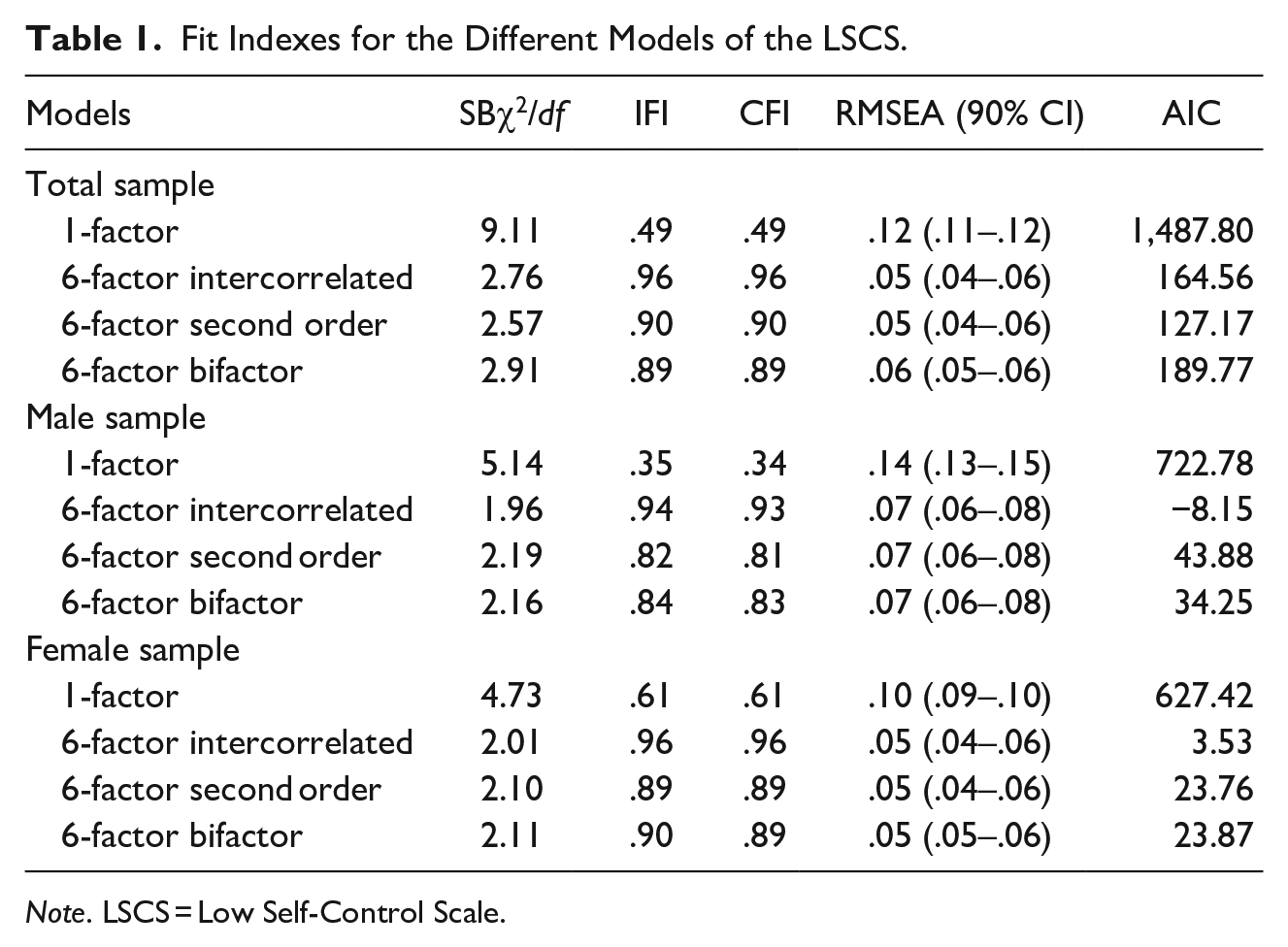
We initiated our validation of the LSCS by examining its latent factor structure. The Mardia normalized estimate was higher than the cutoff value of 5 (indicating non-normality) robust statistics were used (Bentler & Wu, 2018). Table 1 presents the different goodness of fit indices obtained with regard to the CFA models. The six-factor intercorrelated model obtained the best fit across the total combined sample and the male and female samples. The 6-factor second order model obtained an adequate fit across the total combined sample, but not across the male and female samples. The one-factor and the six-factor bifactor models did not present adequate fits. Additionally, we also examined an Item Response Theory (IRT) one-factor Graded Response Model (GRM) because some previous studies (e.g., Higgins, 2007; Piquero et al., 2000) analyzed the LSCS from an IRT perspective. However, all indices indicated a poor fit: M2 = 3098.82; df = 230; p = 0; RMSEA = .14; RMSEA_5 = .13; RMSEA_95 = .14; SRMSR = .11; TLI = .64; CFI = .67 (see Supplemental Tables A and B).
Fit Indexes for the Different Models of the LSCS.
Note. LSCS = Low Self-Control Scale.
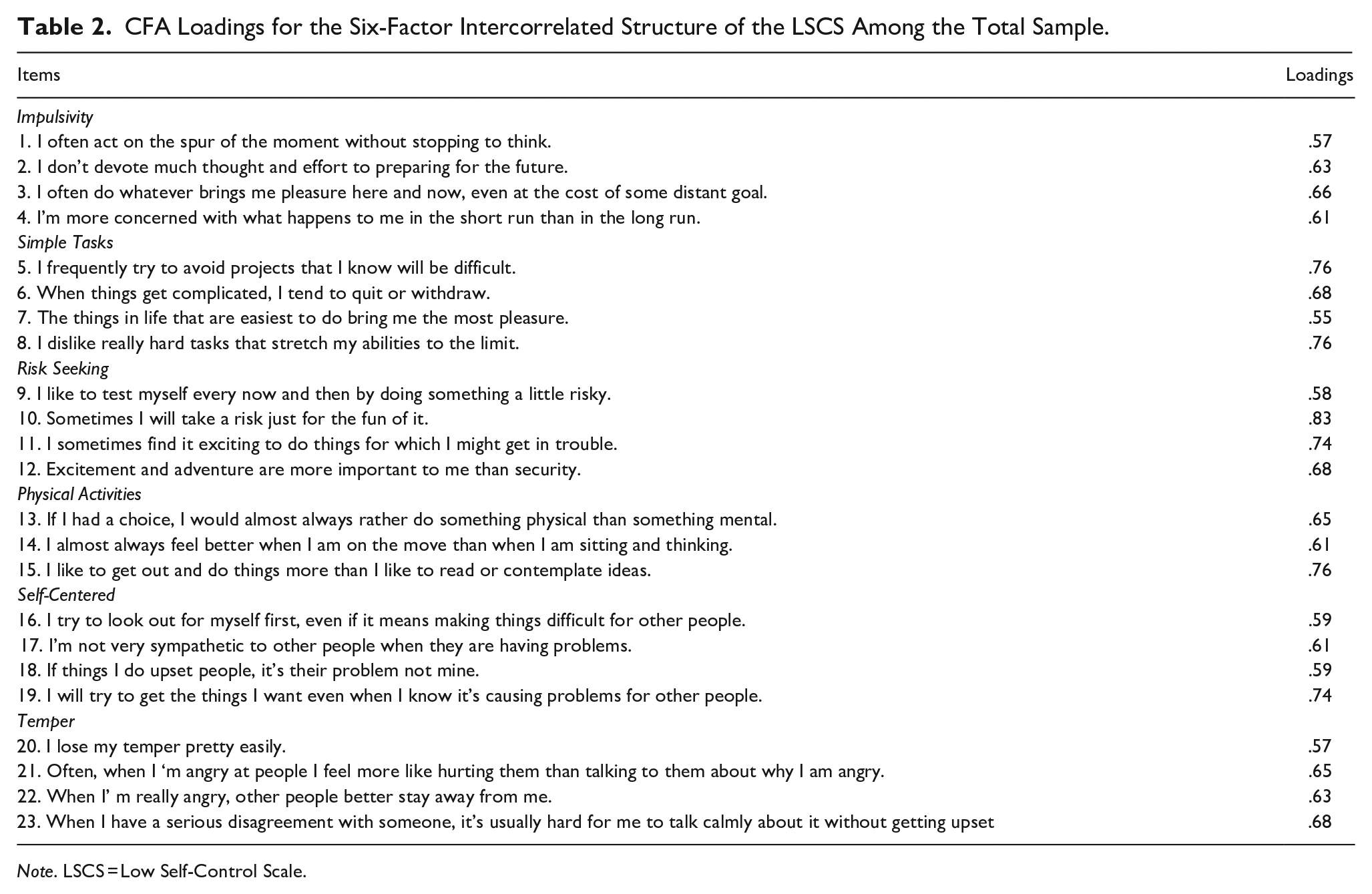
Table 2 displays the CFA item loadings for the six-factor intercorrelated model of the LSCS. All items loaded above the .40 recommended cutoff.
CFA Loadings for the Six-Factor Intercorrelated Structure of the LSCS Among the Total Sample.
Note. LSCS = Low Self-Control Scale.
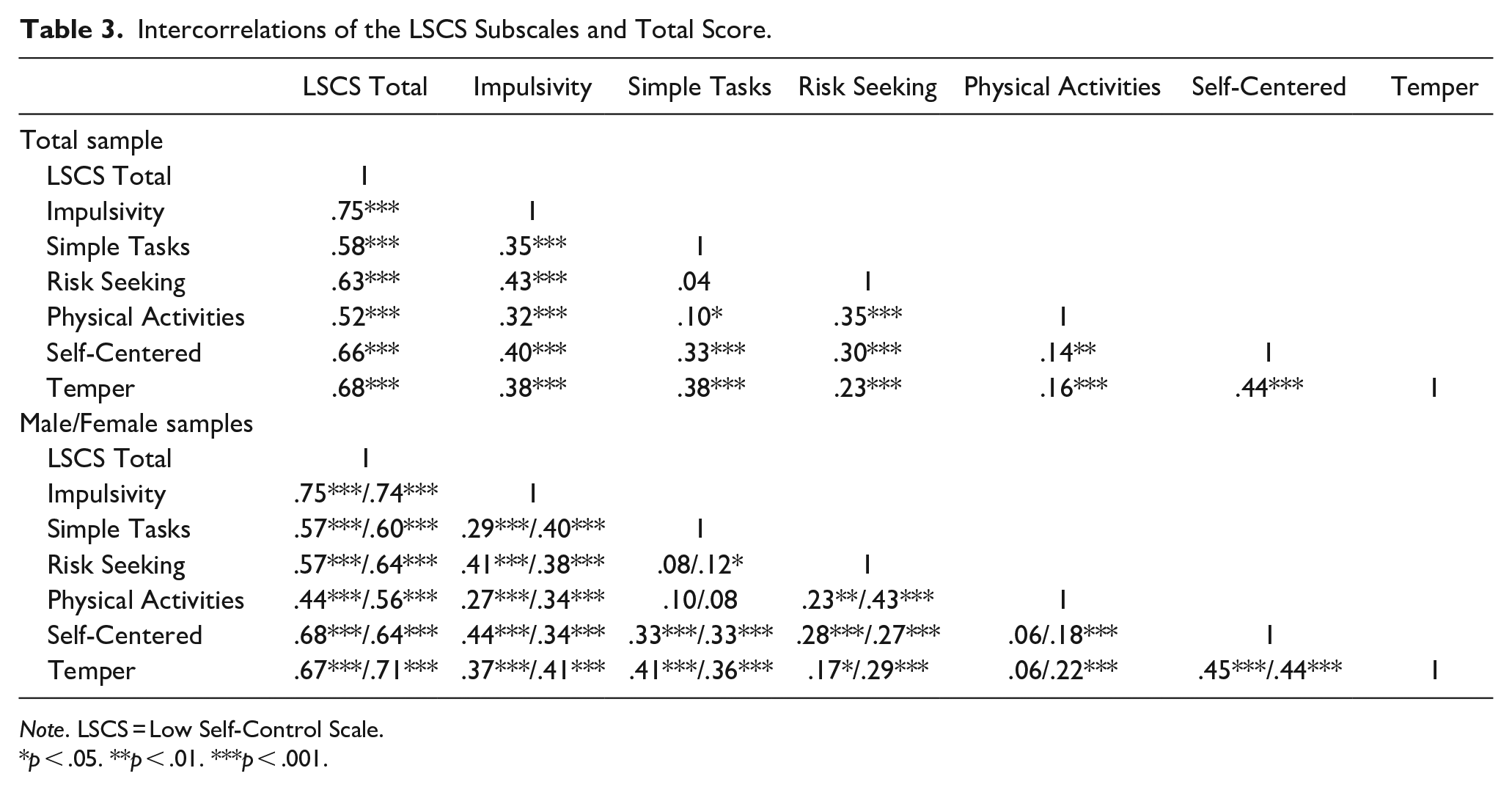
Table 3 shows the intercorrelations of LSCS subscales across the total combined sample and the male and female samples. The intercorrelations were mostly positive moderate to strong and statistically significant. However, some problematic low non-significant correlations emerged regarding the Simple Tasks and Physical Activities factors.
Intercorrelations of the LSCS Subscales and Total Score.
Note. LSCS = Low Self-Control Scale.
p < .05. **p < .01. ***p < .001.
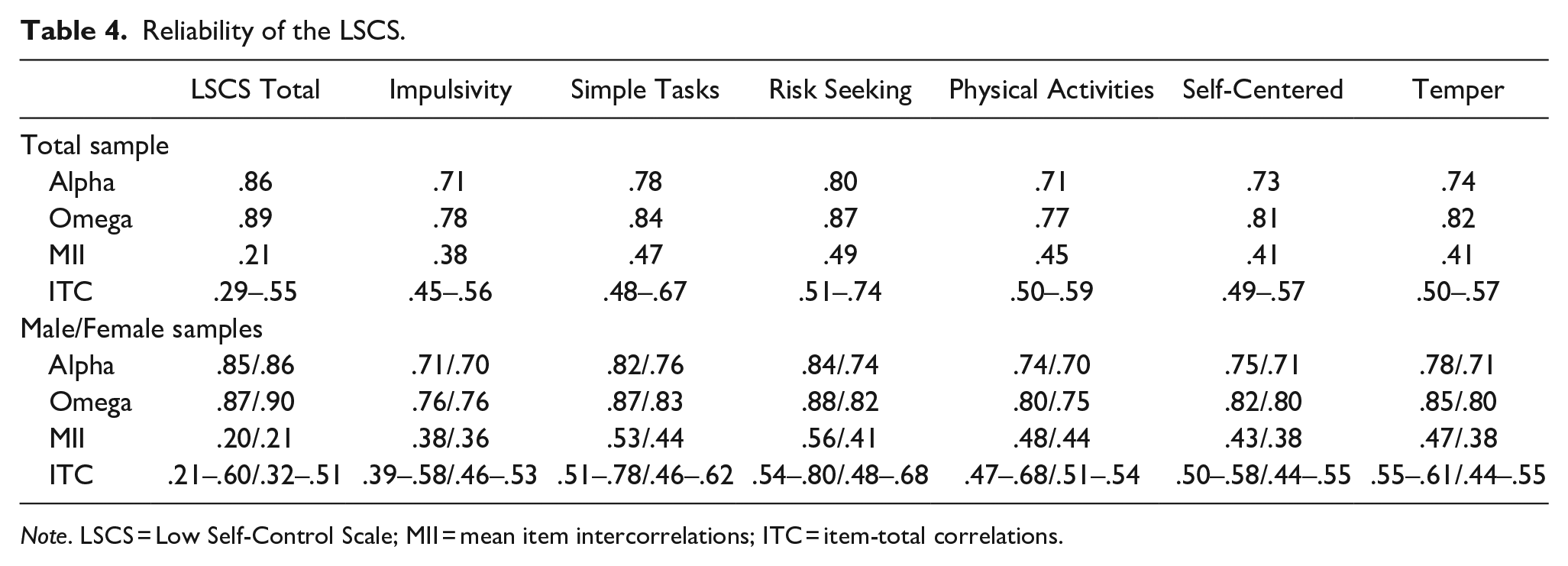
Table 4 presents reliability values across the total combined sample and the male and female samples. These values can be mostly considered adequate to good.
Reliability of the LSCS.
Note. LSCS = Low Self-Control Scale; MII = mean item intercorrelations; ITC = item-total correlations.
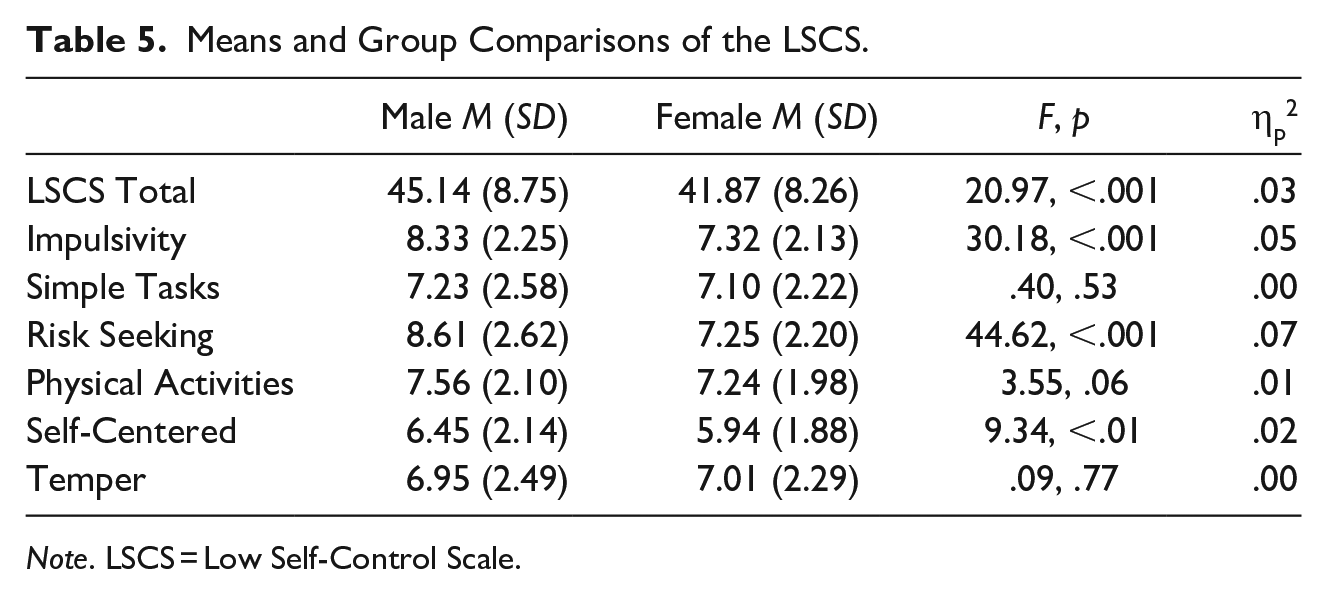
Table 5 displays the subscale means of the LSCS and the comparisons of the male and female samples using ANOVAs with effect sizes included. Significant differences were detected between the samples regarding the LSCS Total, Impulsivity, Risk Seeking, and Self-Centered factors, but none were detected regarding the Simple Tasks, Physical Activities, and Temper factors.
Means and Group Comparisons of the LSCS.
Note. LSCS = Low Self-Control Scale.
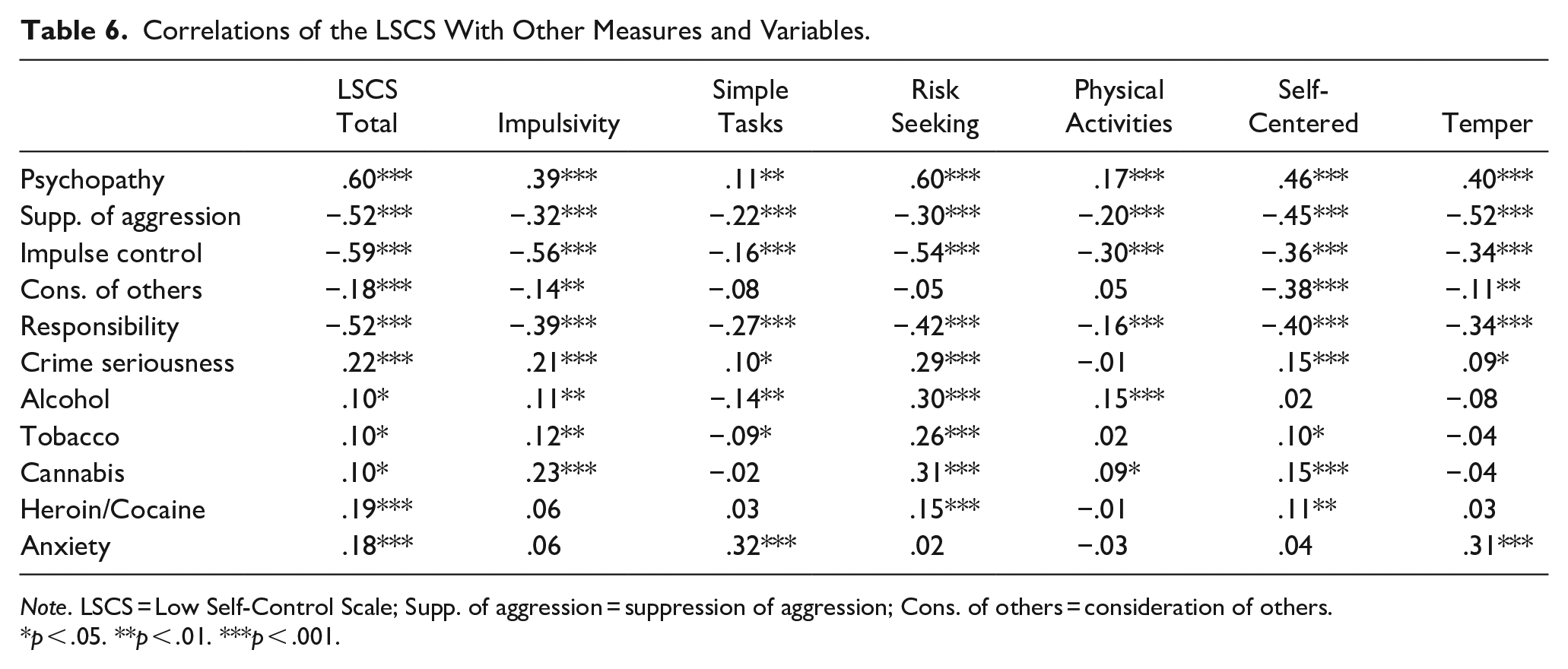
Table 6 shows the correlations of LSCS with other measures and variables used to establish external validity. The convergent validity patterns were examined with the measures of psychopathy, suppression of aggression, impulse control, consideration of others, and responsibility. The criterion-related validity patterns were examined with the delinquency seriousness and substance abuse variables. Finally, the discriminant validity patterns were examined with the measure of anxiety. The Simple Tasks, Physical Activities, and Temper subscales presented problematic associations in terms of criterion-related validity and/or discriminant validity.
Correlations of the LSCS With Other Measures and Variables.
Note. LSCS = Low Self-Control Scale; Supp. of aggression = suppression of aggression; Cons. of others = consideration of others.
p < .05. **p < .01. ***p < .001.
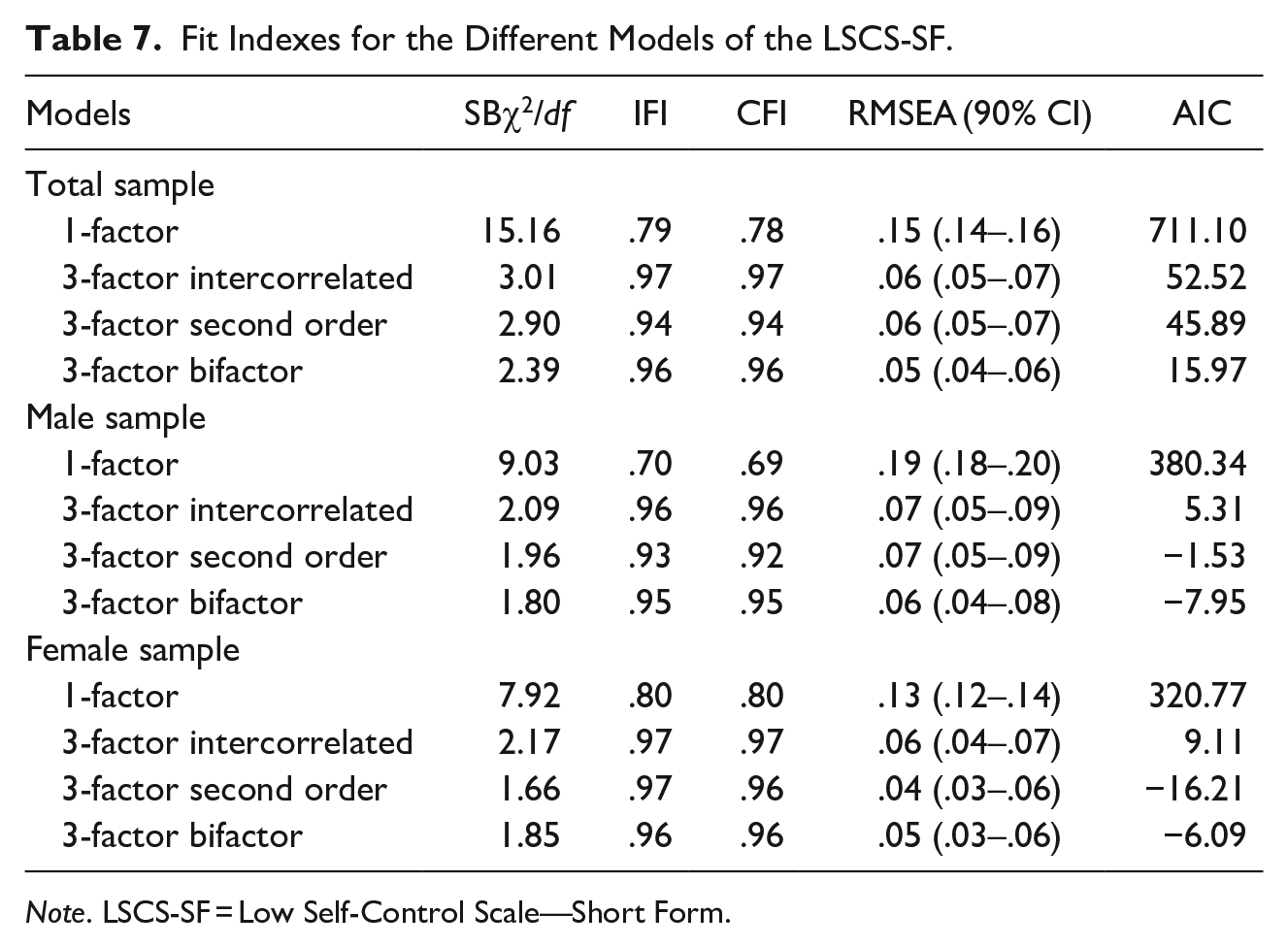
Due to the problems detected with the Simple Tasks, Physical Activities, and Temper subscales, we decided to use CFA to examine a shorter version of the LSCS that includes only the Impulsivity, Risk Seeking, and Self-Centered subscales. Presented in Table 7 are the goodness of fit indices obtained regarding the different CFA models of the LSCS-SF. The three-factor intercorrelated, the three-factor second order, and the three-factor bifactor models presented the best fits across the samples. However, some of the standardized item loadings of the three-factor bifactor model were below the recommended .40 cutoff (e.g., items 1, 4, 9, and 17 among the male sample; items 1, 2, 4, 9, 11, 12, 16, and 18 among the female sample). The fits for the one-factor model were clearly below the acceptance levels. The reliability for the LSCS-SF total score was: alpha = .82, omega = .85, MII = .27, and ITC = .38–.60.
Fit Indexes for the Different Models of the LSCS-SF.
Note. LSCS-SF = Low Self-Control Scale—Short Form.
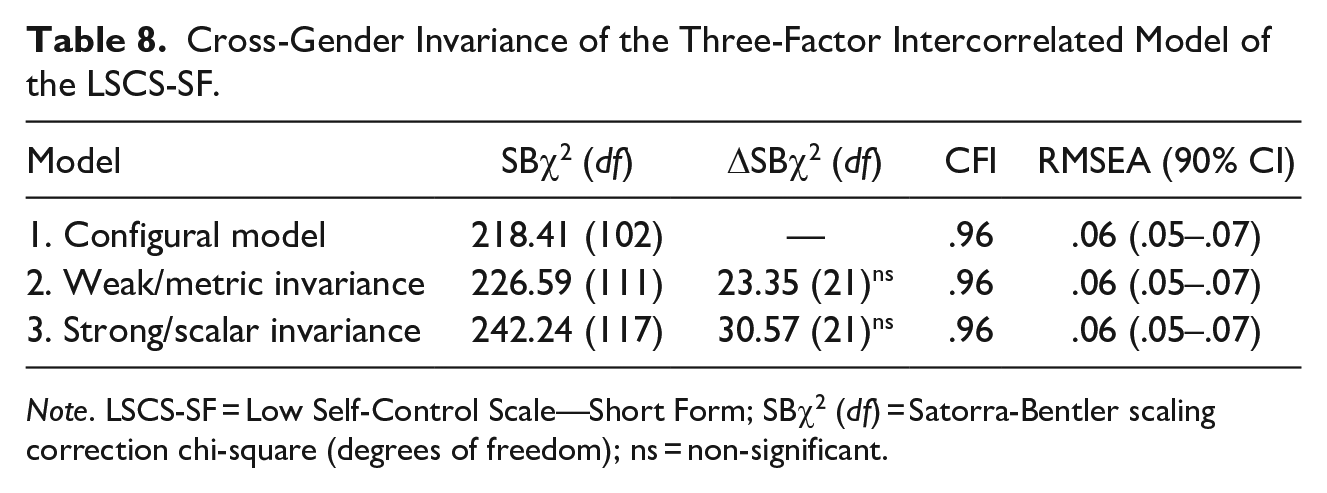
Finally, we examined the cross-gender invariance of the LSCS-SF (Table 8). Results revealed the presence of both weak and strong measurement invariance, legitimating male and female group comparisons.
Cross-Gender Invariance of the Three-Factor Intercorrelated Model of the LSCS-SF.
Note. LSCS-SF = Low Self-Control Scale—Short Form; SBχ2 (df) = Satorra-Bentler scaling correction chi-square (degrees of freedom); ns = non-significant.
Discussion
The present investigation was the first to examine the LSCS among male and female young adults from Portugal. CFAs showed that the six-factor first-order model presented the best fit when compared to the other models we tested. Previous psychometric studies also obtained support for a six-factor intercorrelated model based on culturally distinct samples (e.g., Vazsonyi et al., 2001). The one-factor model and the six-factor second order did not obtain acceptable fits among the male and female samples. Our results do not support previous studies suggesting that the LCSC can conform to a one-factor solution (e.g., Grasmick et al., 1993; Piquero & Rosay, 1998), a six-factor second order structure (e.g., Arneklev et al., 1999) or a six-factor bifactor structure (Ward et al., 2015). Because of that, the use a total score is not recommended.
The correlations between the six factors the LSCS among the two samples mostly ranged from low to strong statistically significant positive associations. However, some low non-significant problematic correlations emerged especially regarding the Simple Tasks and Physical Activities factors that were especially evident among the male sample. Among the female sample only one problematic non-significant correlation emerged, namely again regarding the Simple Tasks and Physical Activities factors. This suggests construct validity problems with internal structure of the LSCS. In any multidimensional scale (i.e., any measure with subscales) the factors should be significantly correlated (Clark & Watson, 2019).
The reliability values for the LSCS indicated adequate to good reliability in both the male and female samples, with the values being slightly lower for the female sample. The Cronbach’s alphas of our study were higher for the Risk Seeking factor among the male sample, and lower for the Impulsivity and Physical Activities factors among the female sample. These values are generally higher that the values reported by previous studies (e.g., Longshore et al., 1996; Vazsonyi et al., 2001). The omega coefficient values, considered a better estimator of true reliability, were higher than Cronbach’s alpha values, as expected. The item-total correlations and the mean item intercorrelations were mostly within the recommended ranges, indicating the presence of adequate item homogeneity (Clark & Watson, 2019).
The known-groups validity comparing the male and female samples revealed significant differences with regard to the LSCS Total and the Impulsivity, Risk Seeking, and Self-Centered factors. No differences were found regarding the Simple Tasks, Physical Activities, and Temper factors. These findings are only in part consistent with the results of previous investigations that provided empirical support for the notion that low self-control differed between males and females, with males demonstrating higher levels of low self-control (e.g., Gibson et al., 2010; LaGrange & Silverman, 1999). That is, the Simple Tasks, Physical Activities, and Temper factors are not performing in line with previous findings.
The external validity was examined in terms of the convergent, discriminant and criterion validities with other measures and variables. The convergent validity with psychopathy and the restraint dimensions consisting of suppression of aggression, impulse control, consideration of others, and responsibility mostly revealed the expected moderate to strong significant correlations in line with previous research (e.g., Connolly et al., 2017; DeLisi et al., 2018). However, in terms of criterion-related validity and discriminant validity with delinquency seriousness, substance abuse variables and with the measure of anxiety, the Simple Tasks, Physical Activities, and Temper subscales presented problematic associations. That is, these subscales mostly did not present the expected positive significant correlations with the delinquency seriousness and substance abuse variables, and presented unexpected positive significant correlations with anxiety.
Considering the problems described above with the Simple Tasks, Physical Activities, and Temper subscales, the decision to develop a shorter more valid and reliable version of the LSCS that included only the Impulsivity, Risk Seeking, and Self-Centered subscales and the total score emerged as a good option. The three-factor intercorrelated model, the three-factor second order model, and the three-factor bifactor model obtained adequate to good fits. However, some of the item loadings of the three-factor bifactor model were problematic. Importantly, the fit of the three-factor second order model legitimates the use of a total low self-control score. Strong cross-gender measurement invariance was demonstrated, suggesting that the differences between males and females are factual, and not caused by measurement problems.
Our most interesting finding is the reduced short form of the LSCS comprised by Impulsivity, Risk Seeking, and Self-Centered had adequate to good fit and strong cross-gender measurement invariance, but also suggests these three components form the core of Gottfredson and Hirschi’s (1990) self-control concept. This specific trio of features is consistent with other criminological profiles in the psychopathy literature, such as the Disinhibition component of the Triarchic psychopathy model (Patrick et al., 2009) and thus makes conceptual sense for its relation to antisocial conduct. Two of the other features of Gottfredson and Hirschi’s concept, Simple Tasks and Physical Activities, have less straightforward associations with deviance. Simple Tasks is effectively a measure of indolence or low tenacity. Physical Activities is effectively an indicator of a non-intellectual preference with some elements of hyperactivity. We were surprised that Temper presented problematic correlations. For example, prior research with prisoner data found that Temper was the best predictor of criminal outcomes in the Grasmick LSCS (DeLisi et al., 2003), but those authors suggested the salience of Temper could be a sample selection issue where serious correctional clients have behavioral histories where poor emotional regulation and use of aggression, that is, temper, is more common. Given that our sample included young adults in a university context, clinically meaningful deficits in Temper seems less salient.
The analyses pose challenges to Gottfredson and Hirschi’s (1990) theory in the sense that Impulsivity, Risk Seeking, and Self-Centered form the core of the construct whereas the other features are superfluous or extraneous. Gottfredson and Hirschi stridently denied that their self-control construct had any resemblance to cognate constructs in psychology, such as the personality feature Conscientiousness. Perhaps a renewed focus on Impulsivity, Risk Seeking, and Self-Centered and new measures of these features will propel the theory forward and empirically connect it to related psychological constructs.
Limitations
We must point out some limitations of our study. Our sample was a convenience sample of college students that cannot be considered representative of the whole Portuguese population. Because our sample originated from a college it may not include very high-risk youth (e.g., at risk of delinquency, at risk of drug addiction youth) and our findings may not generalize to such populations. We relied exclusively on self-report methodology, which can cause common method bias and affect the ability and openness of the participants to respond honestly. Another limitation was due to the fact we had to remove some items/factors of the original LSCS that were not functioning properly in our Portuguese sample, although this problem was also present in other psychometric examinations of this measure.
Conclusions
We conclude that the LSCS-SF version presents good psychometric properties in terms of validity and reliability among our sample of male and female college students, including cross-gender invariance. The availability of a brief, easy-to-use measure of self-control can be important in terms of identifying and intervening among delinquent and maladaptive risk-taking youth. However, the Portuguese validation of this important instrument is still ongoing, and further psychometric validation procedures (e.g., test-retest reliability, cross-validation) should be conducted in the near future. We hope the present work catalyzes future studies on self-control using the LSCS-SF.
Supplemental Material
sj-docx-1-cad-10.1177_00111287211073674 – Supplemental material for Examination of Grasmick et al.’s Low Self-Control Scale and of a Short Version With Cross-Gender Measurement Invariance
Supplemental material, sj-docx-1-cad-10.1177_00111287211073674 for Examination of Grasmick et al.’s Low Self-Control Scale and of a Short Version With Cross-Gender Measurement Invariance by Pedro Pechorro, Matt DeLisi, Catarina Pacheco, Rui Abrunhosa Gonçalves, João Maroco and Jorge Quintas in Crime & Delinquency
Footnotes
Declaration of Conflicting Interests
The author(s) declared no potential conflicts of interest with respect to the research, authorship, and/or publication of this article.
Funding
The author(s) disclosed receipt of the following financial support for the research, authorship, and/or publication of this article: This study was partially conducted at the Psychology Research Centre (CIPsi/UM PSI/01662) School of Psychology, University of Minho, and the first author was partially funded by the Portuguese Foundation for Science and Technology (FCT) and the Portuguese Ministry of Science, Technology and Higher Education (UID/PSI/01662/2019) through the Portuguese State budget (UIDB/01662/2020).
Ethical Statement
All procedures performed in studies involving human participants were in accordance with the ethical standards of the institutional and/or national research committee and with the 1964 Helsinki Declaration and its later amendments or comparable ethical standards. The study was approved by the Ethics Committee of the University of Minho, Portugal.
Informed Consent
Informed consent was obtained from all individual participants included in the study.

Data Availability
The dataset analyzed during the current study are available from the corresponding author on reasonable request.
Supplemental Material
Supplemental material for this article is available online.
Author Biographies
References
Supplementary Material
Please find the following supplemental material available below.
For Open Access articles published under a Creative Commons License, all supplemental material carries the same license as the article it is associated with.
For non-Open Access articles published, all supplemental material carries a non-exclusive license, and permission requests for re-use of supplemental material or any part of supplemental material shall be sent directly to the copyright owner as specified in the copyright notice associated with the article.
