







Abstract
Policy disagreements have been overlooked as a driver of departure in state sentencing guideline systems. The current study uses the relaxation of Michigan’s sentencing guidelines as a case study for investigating how increases in sentencing discretion affect the use of departures. The analysis focuses on sentencing for the highest crime classes as potential sites of policy disagreement. Results reveal a significant increase in the monthly rate of downward departure and growing variability in departure usage under advisory guidelines. Elevated downward departure rates and differences in the likelihood of downward departure by offense type point to judicial disagreement with guideline sentencing recommendations. Patterns in departure are a valuable source of feedback on guidelines that should inform routine modifications.
Sentencing guidelines, which provide courts with sentencing recommendations, have been likened to a dialogue between sentencing policymakers and practitioners (Chanenson & Arty, 2022). The policies communicated to judges via the enactment and enforcement of sentencing guidelines and the degree to which these policies accomplish their goals are the subject of considerable study (see Frase, 2019 for a summary). Far less is known about the other side of the conversation. To varying extents, every guideline scheme permits deviations from guideline recommendations (i.e., departure sentences; Robina Institute, 2022b). Through their decisions to comply with or depart from these recommendations, judges offer responses to prevailing sentencing policy that could highlight shortcomings in guidelines and inform improvements (Chanenson & Arty, 2022; Ulmer, 2014).
To date, research on policy disagreement as a driver of departures is limited. The few studies of state guideline systems that have discussed this phenomenon do so in an anecdotal manner, recounting instances in which patterns in departures evinced disagreement with specific sentencing policies (Kramer & Ulmer, 2009; Stolzenberg & D’Alessio, 1994). Research on departures as a manifestation of policy disagreement is dominated by studies of sentencing in federal courts (Kaiser & Spohn, 2014, 2018). The applicability of this research to state guideline systems is questionable given the status of the federal guidelines as an extreme outlier among guideline systems in the United States (U.S.; Knapp & Hauptly, 1991; Stith, 2008). More research is needed to understand how policy disagreements come about and, most relevant to the present study, how they manifest as patterns in departures at the state level.
Shifts in the status of sentencing guidelines from “presumptive” to “advisory” (referred to as “guideline relaxation”) that increase discretion to depart provide an opportunity to examine departures as an indicator of judicial disagreement with the sentencing policies embedded in guidelines. Presumptive guidelines that severely restrict sentencing discretion and limit departures have been rendered advisory in several jurisdictions, but research on these shifts almost exclusively concerns sentencing in federal courts (Frase, 2019). The federal experience of guideline relaxation indicates that granting judges greater discretion to depart in a system in which there are strong objections to sentencing policy can dramatically increase departure usage (Ulmer et al., 2011; United States Sentencing Commission [USSC], 2006, 2012). Disagreement may become more strongly expressed through sentencing decisions following these shifts. Whether the same can be expected in state sentencing guideline systems remains unknown.
The current study uses guideline relaxation in Michigan as a case study for investigating how increases in sentencing discretion affect the use of departures in state guideline systems. The analysis focuses on sentencing for the two highest crime classes defined by Michigan’s guidelines as common sites of departure that could signal disagreement. Results shed light on the effects of guideline relaxation, contribute to current knowledge of the forces driving departures, and point to patterns in departure usage as a valuable source of feedback that can inform routine adjustments to sentencing guidelines.
Literature Review
Departures From Sentencing Guidelines
Sentencing guidelines, which currently operate in 17 states as well as the Federal Judiciary and the District of Columbia (Robina Institute, 2022a), vary widely in their structure and status (Frase, 2019). A key attribute of guidelines is the degree to which they are legally binding. On one end of the spectrum, presumptive guidelines restrict judicial discretion through detailed sentencing prescriptions and measures limiting departures to exceptional circumstances. These measures can include narrow departure criteria, onerous standards of review, and close monitoring by appellate courts. On the other end of the spectrum, advisory guidelines offer sentence recommendations and permit judicial actors substantial discretion to depart.
Departures are an important aspect of sentencing within guideline systems that can offer valuable insight into judicial perceptions of sentencing policies (Ulmer, 2014). In federal courts, judges can cite disagreement with a sentencing policy as the rationale for a departure (Kimbrough v. U.S., 2007). In state guideline systems where this is not permitted, policy disagreements may manifest in elevated rates and/or patterned use of departure. The intent behind departures in these settings is to provide for discretion in unusual cases where guideline recommendations are considered ill-suited to the case. Guidelines are formulated with the “typical” circumstances of offenses in mind and cannot fully account for natural variation in offending. On its own, a departure signals the presence of mitigating or aggravating circumstances that are seen as warranting an individualized sentence. Considered in the aggregate, departure use could reflect the degree of alignment between judicial sentencing preferences and the sentencing policies embedded in guidelines. If sentencing recommendations for a particular offense are often considered ill-suited and departures are frequent, this may reflect the widespread perception among judges that guidelines recommendations for this offense are too narrow, too punitive, or not punitive enough.
Though the adoption of sentencing guidelines was, in part, motivated by concerns over judges’ unfettered discretion to impose harsh sentences (Frankel, 1972), these systems were not immune to the prevailing political climate. Many guidelines were devised during the “tough on crime” era, a period during which punitive views of crime took hold among policy makers (Travis et al., 2014) and guidelines faced competition from more restrictive sentencing schemes (e.g., mandatory minimums; Kramer & Ulmer, 2009). While the commissions tasked with formulating guidelines have always included judges, the balance of power has, in some cases, leaned in favor of legislative and executive actors (Frase, 2019), creating conditions ripe for disagreement between sentencing judges and commissions. Developed under these circumstances, guideline recommendations might exceed judicially preferred sentencing ranges or might group offenses in ways that produce “unwarranted similarity in the sentences imposed on defendants convicted of dissimilar conduct” (Kaiser & Spohn, 2014, p. 244).
Disagreements with sentencing policy are an allowable and common rationale for departures in federal courts (Kaiser & Spohn, 2018; Kimbrough v. U.S., 2007), but have been overlooked as a driver of departures in state guideline systems. While state guidelines generally grant judges greater discretion, this does not preclude disagreements between the sentencing preferences of guideline architects and users and there is evidence to suggest that they have manifested in departure patterns. In an early time series analysis of Minnesota’s guidelines, the authors surmise that judges used downward departures to circumvent the guidelines’ prescription of harsher punishments for first-time violent offenders compared with nonviolent repeat offenders (Stolzenberg & D’Alessio, 1994). More recently, Kramer and Ulmer (2009) recounted an instance in which elevated downward departure rates for the most serious offenses signaled a failure by Pennsylvania’s guidelines to adequately distinguish between different types of offenses (p. 45). Notably, both of these cases point to disagreements with the sentencing of more serious offenses, suggesting that this is a common area of contention.
A second perspective on the use of departures emerges in research on the patterning of sentencing by context. In courts facing high caseloads, departures can be a mechanism through which defendants are punished for taking their case to trial (i.e., trial tax) or rewarded for pleading guilty (Ulmer et al., 2010; Ulmer & Kramer, 1998). Some research suggests that concerns over organizational efficiency factor into departure decisions. A number of studies have found that, controlling for case-related factors, downward departures are more often granted in courts with high caseload pressure (Johnson, 2005; Johnson et al., 2008). Whereas downward departures are more likely in cases resolved by plea versus bench or jury trial (Johnson et al., 2008; Kramer & Ulmer, 2002), upward departures occur more often in jury trials (Johnson, 2005). In studying the forces driving departures, it is important to consider the potential for departures to serve case processing goals.
Shifts From Presumptive to Advisory Sentencing Guidelines
Changes to guideline systems that grant judges greater sentencing discretion present valuable opportunities to study the role of policy disagreement in departure sentencing. One such change that has been understudied is the relaxation of guidelines. In the early 2000s, presumptive sentencing guidelines faced a series of legal challenges (Blakely v. Washington, 2004; United States v. Booker, 2005; Alleyne v. United States, 2013) that prompted several jurisdictions to render their formerly presumptive guidelines advisory (Frase, 2019). The federal guidelines were made advisory in 2005 (United States v. Booker, 2005). On the basis of this and earlier rulings, Ohio and Tennessee relaxed their presumptive guidelines in 2006 (State v. Foster, 2006; Robina Institute, 2018), with Michigan following suit in 2015 (People v. Lockridge, 2015). In the wake of these shifts, judges have greater discretion to deviate from guideline recommendations, offering a window into the degree of alignment between local and state sentencing preferences.
Yet, the effects of guideline relaxation on sentencing practices have seldom been studied in state guideline systems. To date, there are no published studies of the impact of Ohio’s shift to advisory guidelines. In Tennessee, research is limited by the fact that guideline relaxation coincided with additional changes in sentencing policy and was more tempered than in other jurisdictions (Robina Institute, 2018). Only one study addresses guideline relaxation in Michigan. A year after the shift, researchers interviewed 20 circuit court judges about their experiences under the newly advisory guidelines (Smith & Smith, 2019). While judges anticipated that some on the bench would depart more often, they emphasized the normative nature of the guidelines and predicted that the shift would have little effect. Research has not yet assessed whether these expectations have been borne out.
Most extant research on guideline relaxation concerns the federal guidelines, which are considered to be an extreme outlier (Knapp & Hauptly, 1991). Prior to the Booker ruling that rendered them advisory, the federal guidelines were the most strict, harsh, and complicated guideline system in the U.S. (Stith, 2008) and were widely criticized by judges and legal commentators (Tonry 1993). In their presumptive form, they severely limited sentencing discretion and left judges with very few opportunities to depart (Frase, 2019). Unsurprisingly, federal judges made use of their widened discretion to depart under advisory guidelines (Ulmer et al., 2011; USSC, 2006, 2012). In the years following United States v. Booker (2005) and Gall v. United States (2007), which further reinforced discretion to depart, the rate of departure for non-immigration offenses rose from 29.3% to 45.8% (Ulmer et al., 2011). Upward departures remained infrequent across these time periods while downward departures unrelated to assistance the defendant provided to law enforcement rose dramatically from 8.7% of sentences pre-Booker, to 25.2% post-Gall (Ulmer et al., 2011).
The federal experience of guideline relaxation suggests that in a guideline system that is widely unpopular, a shift from presumptive to advisory status can produce dramatic increases in departures that are, to some degree, reflective of policy disagreements and that could inform improvements to sentencing policy. Whether the relaxation of presumptive guidelines in state sentencing systems has impacted departure usage and what these changes indicate about perceptions of state sentencing policy remains unknown.
Current Study
Study Setting
The current study responds to calls for longitudinal research on judicial decision making across variations in sentencing schemes (Engen, 2009; Frase, 2019; Ulmer, 2012) and on the forces driving departures in state guideline systems (Ulmer, 2019). The relaxation of Michigan’s sentencing guidelines in 2015 is an ideal setting in which to pursue these topics.
First, there is evidence of judicial disagreement with aspects of Michigan’s legislative sentencing guidelines, which were developed in the midst of the “tough on crime” era and reflect this ethos (Smith & Smith, 2019). The legislative guidelines supplanted an advisory guideline system developed by the state judiciary (Levine et al., 2021) and made substantial changes to sentencing policy. Unlike the judicial guidelines, the legislative guidelines were initially presumptive and required that judges sentence within the recommended ranges unless they could provide a “substantial and compelling” reason for a departure (Michigan Judicial Institute [MJI], 2023). They also took a different approach to grouping offenses. Whereas the judicial guidelines grouped offenses similar in nature, the legislative guidelines created crime classes based on statutory maximum sentences (Levine et al., 2021). Second degree murder was given its own class (M2) and all other life-maximum offenses were placed in class A. Class A thus includes a variety of crimes, from assault with intent to murder and armed robbery to first degree criminal sexual conduct (MJI, 2022). The recommended sentencing ranges for offenses such as assault with intent to murder and armed robbery and the lower ends of the ranges for second degree murder increased substantially under the legislative scheme (Levine et al., 2021).
Classes M2 and A offenses have consistently seen high rates of departure compared with lower crime classes, despite having the widest recommended sentencing ranges. In 2004, nearly 35% and 40% of sentences for classes M2 and A offenses were downward departures and about 8% and 4% were upward departures (Ostrom et al., 2008). A more recent report found similarly high rates of downward departures for M2 and A offenses for which individuals were not charged as habitual offenders, particularly for armed robbery (40%), assault with intent to murder (38%), and second degree murder (32%; Levine et al., 2021). Upward departures were less common, ranging from 5% to 12% (Levine et al., 2021). To put these figures into perspective, rates of upward and downward departures under the legislative guidelines were expected to be just 12% and 15% for M2 offenses and 5% and 15% for A offenses (Michigan Sentencing Commission, 1997). These findings have led researchers to speculate that judges view the legislative guidelines' enhanced sentencing ranges for classes M2 and A offenses as disproportionately high (Levine et al., 2021; Ostrom et al., 2008). They might also signal disagreement with the grouping of class A offenses. That departures were so frequent under the presumptive form of the guidelines when they could subject judges to scrutiny and be overturned on appeal would suggest that disagreements with guideline recommendations are nontrivial.
Second, the relaxation of Michigan’s guidelines took place in a manner that facilitates empirical analysis. The decision to render the legislative guidelines advisory was made by the Michigan Supreme Court (People v. Lockridge, 2015) and was prompted by developments at the federal level (Alleyne v. United States, 2013; United States v. Booker, 2005). Shocks to sentencing schemes brought about by court rulings lend themselves to research (Hofer, 2007). Moreover, the Lockridge ruling went into effect on the date it was decided and applied to any case sentenced on or after that date, creating a clear point of intervention. Finally, the relaxation of Michigan’s guidelines was not confounded by other changes in sentencing policy, as was the case in Tennessee (Robina Institute, 2018) and in the Federal Judiciary (Hofer, 2007). The Lockridge ruling explicitly sought to minimize disruption to sentencing and revision of statute (2015). The only changes it made were to render the guideline recommendations nonbinding (i.e., advisory) and to loosen the standard for departure (MJI, 2023). In the years before and after Lockridge, few changes have been made to the guidelines.
Hypotheses
In the wake of Michigan’s shift to advisory guidelines, downward departures for M2 and A offenses could become more frequent, reflecting potential disagreement with recommended sentencing ranges and/or the grouping of class A offenses. With this possibility in mind, the current study employs an interrupted time series analysis to investigate the following hypothesis: H1. The Lockridge ruling will predict a significant increase in monthly rates of downward departure. The study then examines whether there is any significant change in departure usage at the sentence-level by offense class and offense type. Logistic regression is used to test two hypotheses: H2. the likelihood of a downward departure will increase significantly for both class M2 and class A offenses following the Lockridge ruling; H3. controlling for relevant factors, the likelihood of a downward departure for class A offenses will differ significantly by offense type.
Methodology
Data
Data used in this study are from the Basic Information Report (BIR) database managed by the Michigan Department of Corrections (MDOC). MDOC provided the author with BIR exports that contain information about felony convictions sentenced between January 1, 2013 and December 31, 2018. For those offenses scored on the guidelines, the exports include scoring information. A single case can involve multiple offenses that are scored separately. While sentencing studies commonly focus on the most severe offense in a case, applying that approach here would exclude offenses that are scored because they are eligible to be imposed as consecutive sentences. These offenses can receive departures and departure sentences that arise from the same case are considered independent for the purposes of appellate review (MJI, 2023). For these reasons, all offenses scored on the M2 and A guidelines are included in the analysis.
In all, there were 8,363 sentences for offenses scored on the M2 and A sentencing grids during the study period. While these grids recommend prison, there were a small number of less severe sentences (e.g., jail, probation; N = 153). Because the author was unable to determine whether these sentences constituted departures, they were excluded from the sample. The present analysis therefore concerns departures from recommended sentence ranges (i.e., durational departures), but uses the broader term “departure” for simplicity. Sentences for offenses to which mandatory minimums applied (N = 499) were also excluded because mandatory minimums trump the guidelines and set a floor for prison sentences that may or may not fall within the guidelines range (MJI, 2022). Discretionary life sentences (N = 73) are included because they are instances in which a court opted to impose a prison sentence and could have chosen one that departed in length from guideline prescriptions. Life sentences that are imposed against guideline recommendations are considered departures but are not coded as such here because they are served differently from other indeterminate prison sentences.
In cleaning the data, some minor coding inconsistencies were identified. Sentences that were marked as being both a prison sentence of a specific length and a life sentence for the same offense (N = 44), an outcome which is not possible, and sentences for which the upper end of the recommended sentencing range and the habitual offender status that was entered did not correspond (N = 59) were removed from the sample. The final sample consisted of 7,608 prison sentences for offenses scored on the M2 and A grids that were imposed between 2013 and 2018.
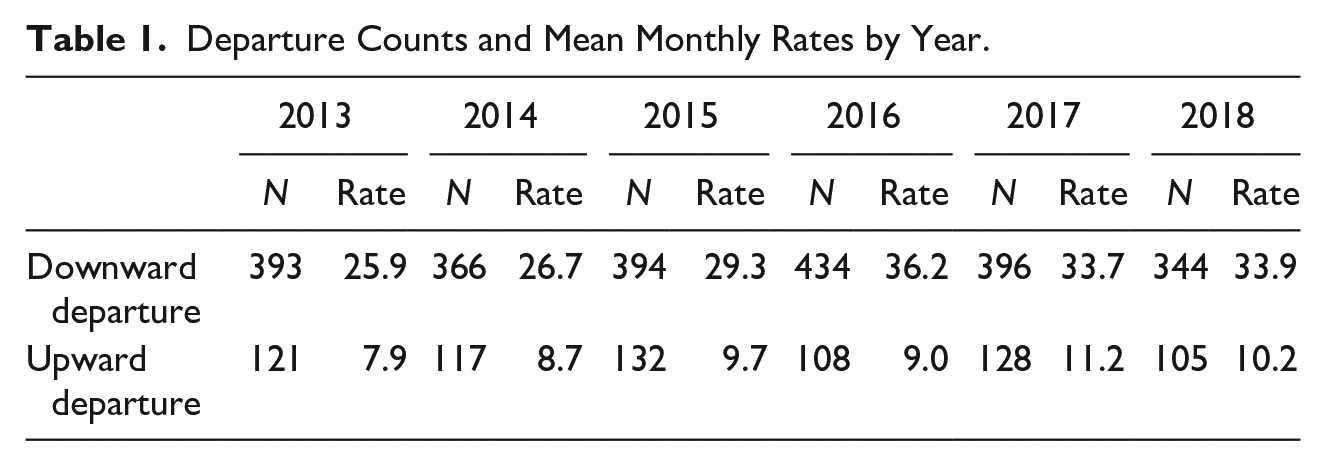
Prison sentences were classified as departures based on where they fell in relation to the guidelines-recommended sentencing range. Sentences below the lower end of the recommended range constitute downward departures and sentences above the upper end of the range constitute upward departures. Counts of departures were compiled by month and used to calculate monthly rates. Table 1 displays yearly counts and mean monthly rates of upward and downward departure. While upward departures were not analyzed in this study, they are included in Table 1 for context. The dependent variable for the interrupted time series analysis is the monthly rate of downward departure. Monthly plea rate, that is, the monthly rate at which the convictions associated with these sentences were reached by plea, is included in the analysis as a covariate. In the logistic regression analyses the unit of analysis is the prison sentence and the dependent variable is the likelihood of a downward departure.
Departure Counts and Mean Monthly Rates by Year.
Analytic Approach
To determine whether monthly rates of downward departures for classes M2 and A offenses changed following the Lockridge ruling (H1), an interrupted times series analysis (ITSA) was conducted. While time series analysis has been identified as a valuable approach in guideline research (Hofer, 2007), it has seldom been used (see, e.g., Stolzenberg & D’Alessio, 1994). Regression models were constructed for the ITSA to estimate potential changes in the level and slope of departure rates following Lockridge. Whereas level changes indicate an immediate shock to departure rates the month after Lockridge, slope changes capture changes in the overall trajectory of departure rates post-Lockridge. The ITSA regression models were estimated using ordinary-least squares (OLS) and model departure rates for a 72-month period. The Lockridge ruling went into effect on July 29, 2015. Rounding up to the nearest month, the ruling was coded as having occurred in August 2015, with the pre-Lockridge period covering the 31 months from January 2013 through July 2015 and the post-Lockridge period covering the 41 months from August 2015 through December 2018.
The ITSA proceeded in three stages. First, t-tests were performed to compare monthly rates of downward departure before and after Lockridge. This provided a baseline understanding of change in departure usage. Second, the robustness of the observed increase in downward departure rates was assessed by fitting an OLS regression model (Model 1). Nonstationarity, seasonality, and autocorrelation are common methodological issues that must be addressed in an ITSA (Bernal et al., 2017; Jandoc et al., 2015). To determine the stationarity of the time series, an Augmented Dickey-Fuller test (Dickey & Fuller, 1979) was performed. Results indicated that the series is stationary (p = .042) and can be predicted effectively.
Seasonality and autocorrelation were addressed in several ways. First, a set of month dummy variables (i.e., monthly fixed effects) were added to the model (Model 2). To assess the extent to which departure rates were correlated with prior months’ departure rates, autocorrelation, and partial autocorrelation functions were inspected. Results revealed a moderate degree of autocorrelation at lower lag values, which was indicative of an autoregressive process. Two strategies were employed to address autocorrelation. First, a 1-month lag of the departure rate was added to the model as a predictor (Model 3). Incorporating a lag of the outcome variable accounts for the dynamic data generating processes (DGP) in the data (De Boef & Keele, 2008). However, if the DGP is static, then the model will be biased. Accordingly, the second approach involved estimating the model using OLS with Newey-West standard errors (Models 4, 5, and 6). The Newey-West estimator adjusts standard errors to account for heteroskedasticity and autocorrelation (Turner et al., 2021). Results for Models 1 to 3 are reported with Huber-White standard errors to control for heteroskedasticity and are compared using nested F-tests.
In the third stage of the ITSA, the source of the post-Lockridge increase in downward departure rates was explored by assessing its potential responsiveness to variation in monthly plea rates. A t-test found that monthly plea rates were significantly different before and after Lockridge. Monthly plea rate was then added to the OLS model (Model 6).
To determine which offenses saw significant increases in the likelihood of downward departure post-Lockridge (H2) and whether the likelihood of downward departure for class A offenses differs significantly by offense type (H3) logistic regression analyses were performed. Logistic regression models were estimated for class M2 offenses, class A offenses, and each major offense type present in class A. Models include controls for the defendant’s prior record and the offense’s severity, as scored by the guidelines, as well as whether the defendant was charged as a habitual offender. The mode of conviction (i.e., plea, bench trial, or jury trial) is also included as a control. Model significance is assessed with likelihood ratio tests. Results offer insight into the nature of potential policy disagreements.
Results
Interrupted Time Series Analysis
A two-sample t-test was used to determine whether the mean rate of downward departure differed before and after Lockridge. A one-tailed Welch’s t-test found that monthly rates of downward departures were significantly higher after Lockridge (M = 34.5, SD = 7.1) than they were before (M = 26.2, SD = 4.1), (t(65.795) = 6.256, p < .05). Figure 1 displays the time series of downward departure rates for the time period under study, with a solid line delineating Lockridge and dashed lines depicting the mean monthly rates before and after the ruling. Before Lockridge, monthly rates of downward departures range in value from 18.6% to 36.4% and are relatively stable over time. After Lockridge, these rates became more variable, ranging from a low of 18.6% to a high of 50.0%. The standard deviation of monthly downward departure rates is 4.1 in the 31 months before the ruling and 7.0 in the first 31 months after the ruling.
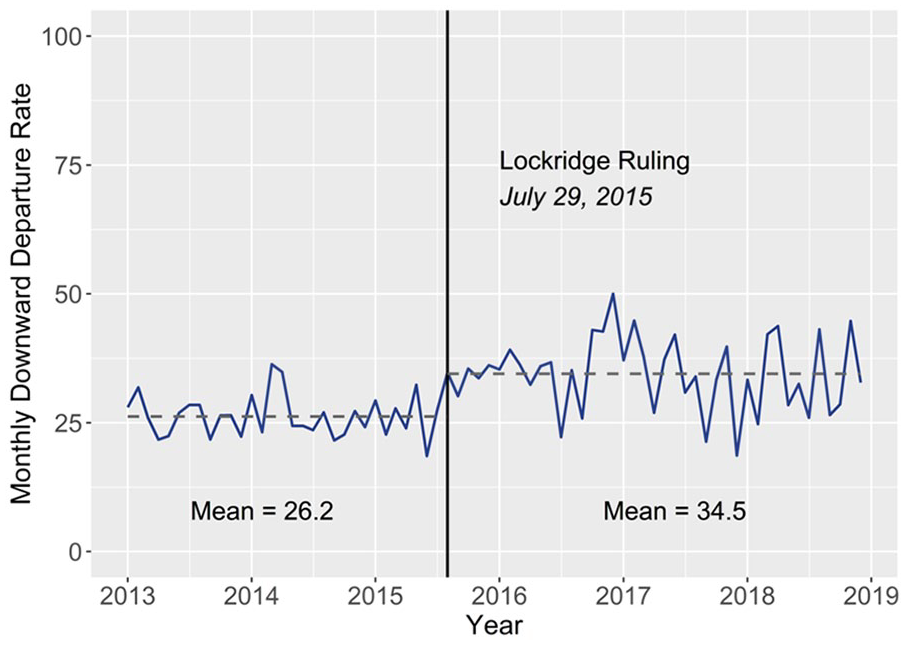
Time Series of Downward Departure Rates, 2013 - 2018
Table 2 presents the regression models estimated for the downward departure series.
ITSA of Downward Departure Rates.
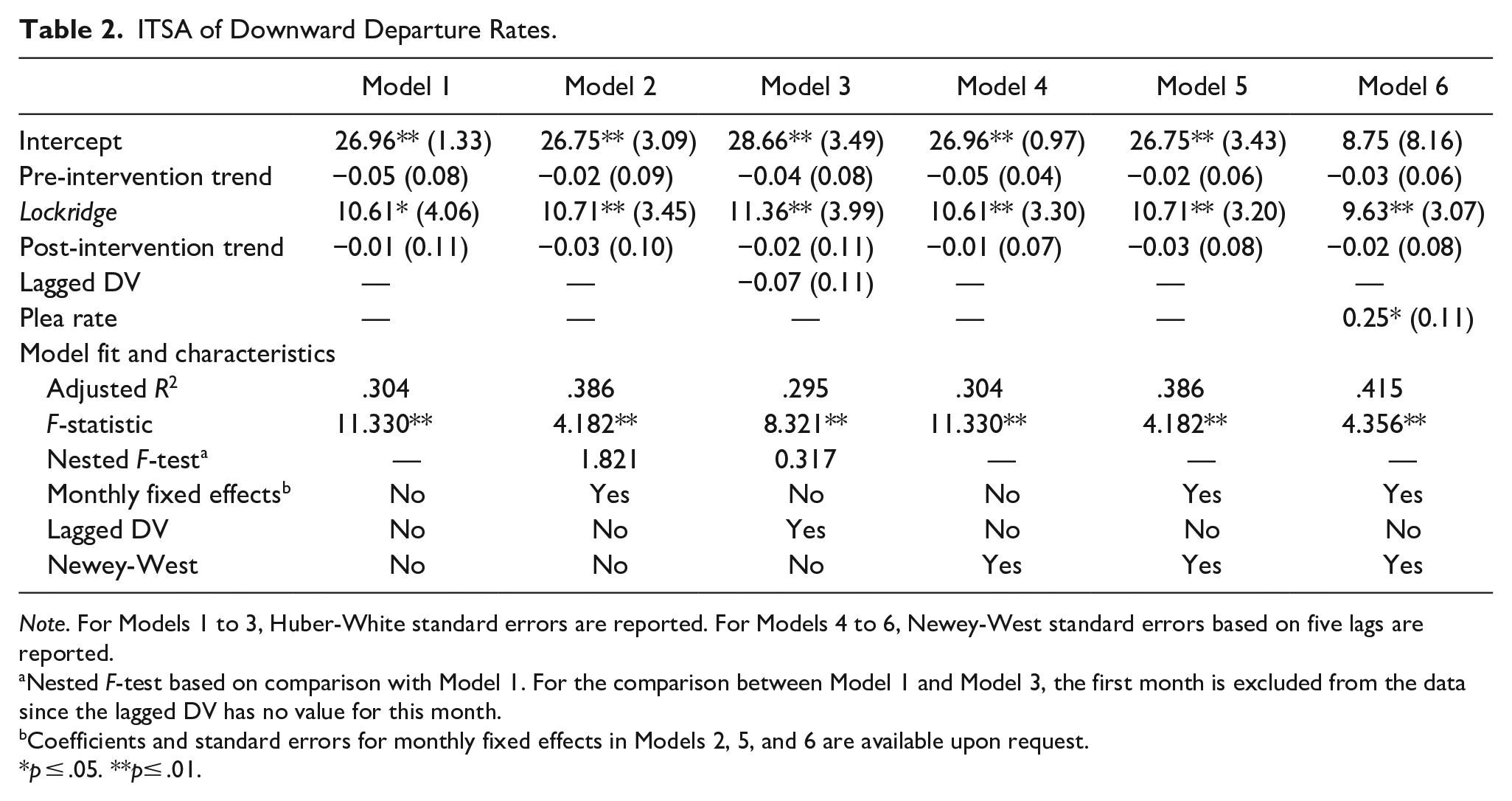
Note. For Models 1 to 3, Huber-White standard errors are reported. For Models 4 to 6, Newey-West standard errors based on five lags are reported.
Nested F-test based on comparison with Model 1. For the comparison between Model 1 and Model 3, the first month is excluded from the data since the lagged DV has no value for this month.
Coefficients and standard errors for monthly fixed effects in Models 2, 5, and 6 are available upon request.
p ≤ .05. **p≤ .01.
Nested F-tests determined that the addition of monthly fixed effects in Model 2 and, separately, the addition of a 1-month lag in Model 3 did not significantly change model fit. The intervention coefficient is stable and remains significant across Models 1 to 5. Results are first discussed for Model 5, which controls for seasonality and adjusts for heteroskedasticity and autocorrelation. The pre-intervention trend coefficient representing the slope of the time series before Lockridge is not significant, indicating a degree of stability in downward departure rates under the presumptive guidelines. The post-intervention trend coefficient is also nonsignificant, meaning that there was no statistically significant change in the trend post-Lockridge. The variable representing Lockridge is statistically significant, suggesting that the ruling did impact the use of downward departures. Monthly downward departure rates are predicted to be more than 10 percentage points higher under advisory guidelines than under presumptive guidelines.
In light of research indicating that downward departures may be used as a case processing strategy, monthly plea rates were also examined. A two-sample two-tailed Student’s t-test determined that monthly plea rates were significantly different before and after Lockridge (M = 74.0, SD = 5.0; M = 78.7, SD = 6.4; t(70) = 3.362, p < .01). Plea rate was then added to the model (Model 6). As shown in Table 2, the plea rate coefficient is significant. Each 1 percentage point increase in the plea rate is associated with a 0.25 percentage point increase in the monthly rate of downward departures. Controlling for plea rate, the Lockridge coefficient drops slightly in value from 10.71 to 9.63 but remains significant. As in prior models, the pre-intervention and post-intervention trend variables are not significant.
Logistic Regression Analysis
Table 3 presents a series of logistic regressions that model the likelihood of a downward departure separately for each major offense type falling under crime classes M2 and A. Likelihood ratio tests confirmed that models were significant for all offense types except first degree child abuse. Results for assault with intent to rob, controlled substances and first degree child abuse should be interpreted with caution as maximum likelihood estimation overestimates odds ratios for small sample sizes (Nemes et al., 2009). Controlling for prior record, offense severity, habitual offender status, and mode of conviction, the status of the guidelines was a significant predictor of the likelihood of downward departure for some but not all offense types. Under advisory guidelines, the odds of a downward departure for armed robbery, assault with intent to murder, and first degree criminal sexual conduct increased substantially by 64%, 71%, and 70%, respectively. A downward departure for carjacking was more than twice as likely under advisory guidelines as it was under presumptive guidelines. Downward departures for assault with intent to rob were estimated to be three times more likely post-Lockridge, though the small sample size in this model would have biased the odds ratio upward, casting some uncertainty on the magnitude of the effect. By comparison, the status of the guidelines was not a significant predictor of downward departures for second degree murder, controlled substance-related offenses or other class A offenses.
Logistic Regression of Downward Departure for Different Offense Types.
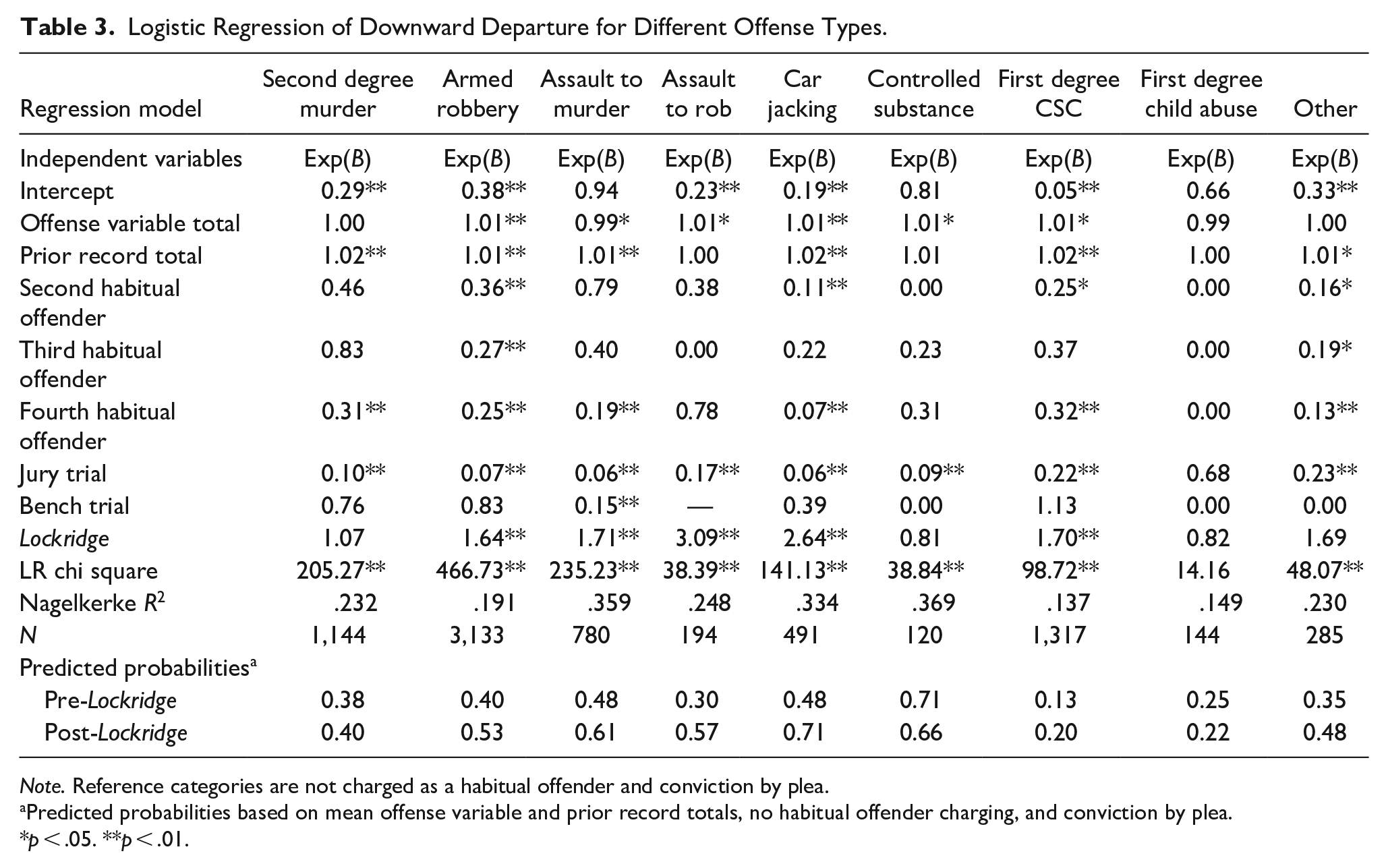
Note. Reference categories are not charged as a habitual offender and conviction by plea.
Predicted probabilities based on mean offense variable and prior record totals, no habitual offender charging, and conviction by plea.
p < .05. **p < .01.
To give context to these figures, predicted probabilities of downward departure under advisory and presumptive guidelines were calculated for each model (Table 3). These probabilities were based on the typical scenario in which the defendant is not charged as a habitual offender and is convicted by plea. Prior record and offense scores are set equal to their mean values for each offense type. As can be seen in Figure 2, the predicted probability of downward departure in these typical scenarios rises above the fifty percent mark post-Lockridge for armed robbery, assault with intent to murder, assault with intent to rob, and most dramatically carjacking. The predicted probability of downward departure for first degree criminal sexual conduct, which is much lower to begin with, increases to 20%.
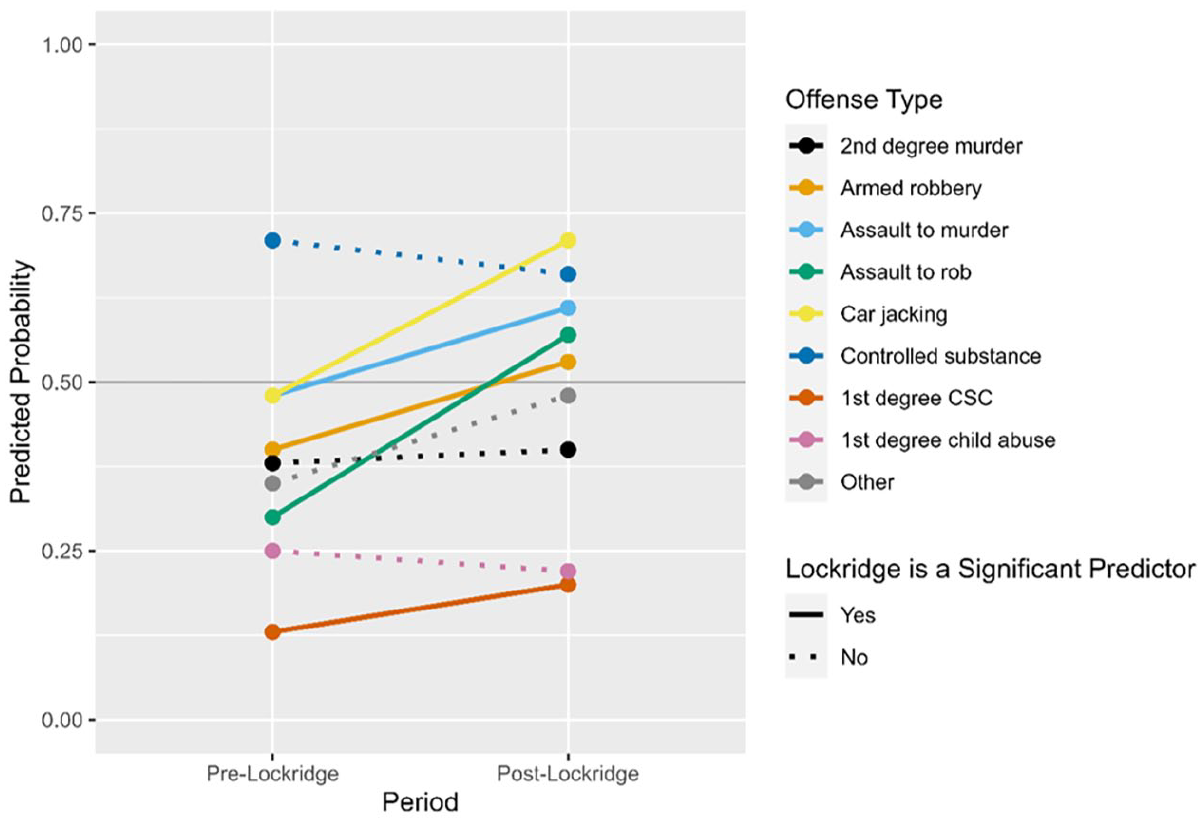
Predicted Probability of Downward Departure Under Presumptive and Advisory Guidelines by Offense Type.
The wide range of predicted probabilities for class A offenses suggests that the likelihood of departure varies not just by the status of the guidelines but also by the type of offense. To test this possibility, an additional logistic regression modeling the likelihood of downward departure for class A offenses was generated (Table 4). This model includes the same controls as the earlier ones as well as a variable representing the Lockridge ruling and a series of dummy variables for offense type. Consistent with the above findings, advisory guidelines are associated with a 68% increase in the odds of a downward departure for class A offenses. Results confirm that the likelihood of downward departure does differ by offense type. Compared with armed robbery, the odds of a downward departure are significantly higher for carjacking and controlled substance-related offenses (49% and 111%, respectively), and significantly lower for first degree child abuse and first degree criminal sexual conduct (50% and 76%, respectively).
Logistic Regression of Downward Departure for Class A Offenses.
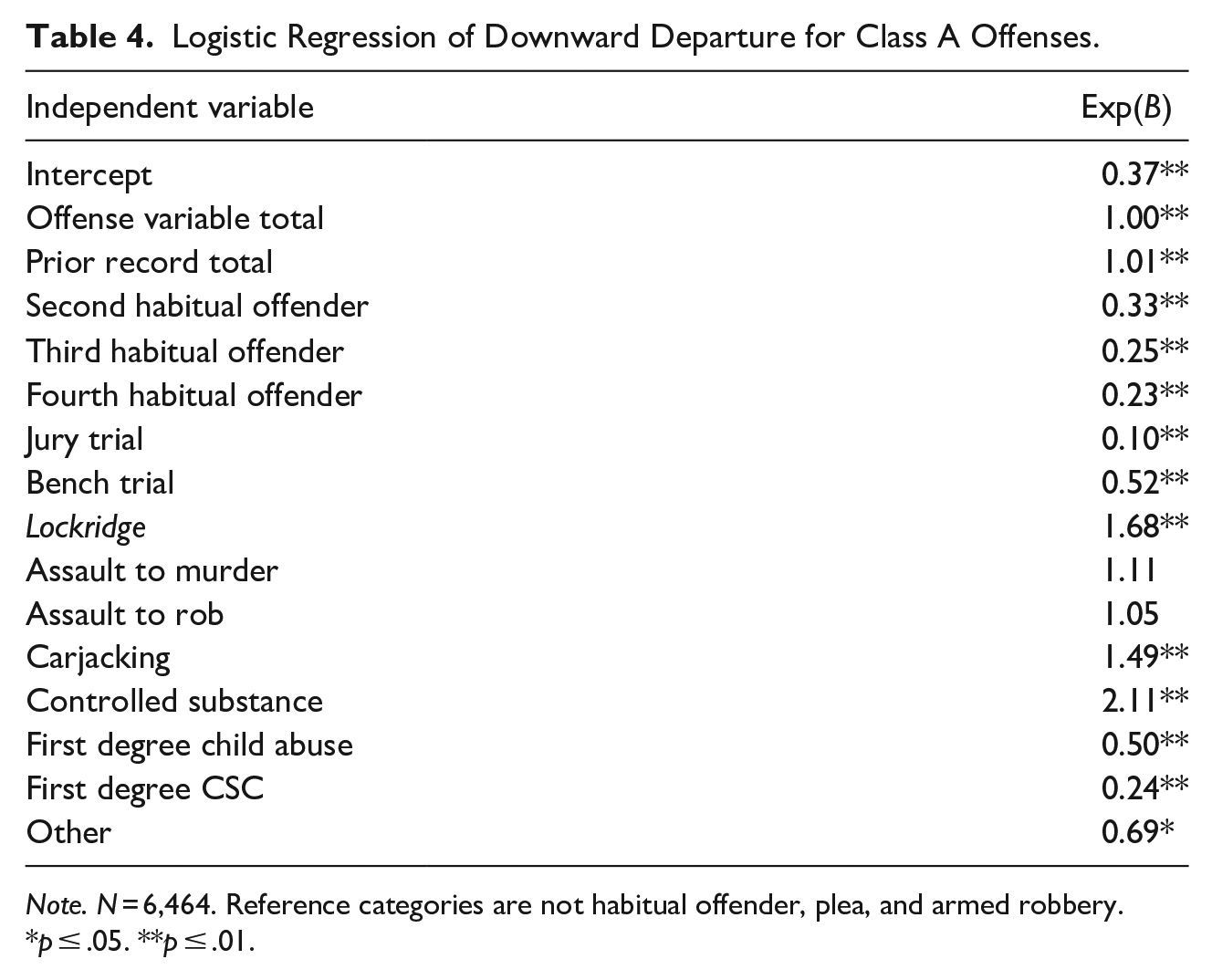
Note. N = 6,464. Reference categories are not habitual offender, plea, and armed robbery.
p ≤ .05. **p ≤ .01.
Discussion
Judicial disagreement with sentencing policy has been overlooked as a potential driver of departures from state sentencing guidelines, despite the fact that many guideline systems were developed during the “tough on crime” era (Travis et al., 2014) and may reflect sentencing preferences that are not widely held by judges. The present study used Michigan’s shift from presumptive to advisory guidelines as a case study for investigating how increases in sentencing discretion affect the use of departures in state guideline systems and exploring how policy disagreements might manifest as patterns in departures. Elevated rates of downward departure for the two highest crime classes defined by Michigan’s guidelines (M2 and A) could indicate that judges view the guideline-recommended sentencing ranges as disproportionately high or disagree with the grouping of class A offenses (Levine et al., 2021; Ostrom et al., 2008).
Results provide support for H1. As expected, the mean monthly rate of downward departures increased significantly post-Lockridge, from 26.2% to 34.5%. The fact that under advisory guidelines downward departures accounted for, on average, over a third of indeterminate prison sentences for classes M2 and A offenses each month is striking, given how broad the recommended sentencing ranges are to begin with. Controlling for plea rate, advisory guidelines predicted a sizable 9.63 percentage point increase in the downward departure rate, representing a 37% increase from the mean monthly rate under presumptive guidelines. Judges may be using the discretion granted by advisory guidelines to more often circumvent sentencing ranges they view as disproportionately high for some offenses.
That plea rate was a significant predictor of the downward departure rate could point to some reliance on downward departures as a plea-bargaining tool. The fact that controlling for plea rate slightly lessened the effect of Lockridge might indicate that this reliance has increased under advisory guidelines. Courts facing high caseload pressure may have leveraged expanded sentencing discretion to offer more plea rewards in the form of downward departures, leading to an increase in the plea rate. However, there are other plausible explanations. Under advisory guidelines, defense attorneys may have more strongly urged their clients to plead guilty, anticipating greater use of upward departures at trial. Future research should explore the role of departures in charge and plea negotiations.
Contrary to H2, the effect of Lockridge on the likelihood of downward departure was limited to a subset of class A offenses. Under advisory guidelines, the odds of downward departure for armed robbery, assault with intent to murder, assault with intent to rob, carjacking, and first degree criminal sexual conduct increased significantly. By contrast, the status of the guidelines had no effect on the odds of a downward departure for second degree murder, controlled substance offenses, or first degree child abuse. The increase in downward departure rates post-Lockridge appears to be driven by greater use of downward departures for certain class A offenses.
Narrowing in on class A offenses, analyses provide support for H3. Controlling for the factors that would render a class A offense indistinguishable in the eyes of the guidelines and accounting for other relevant factors (mode of conviction and status of the guidelines), offense type was a significant predictor of downward departure. Carjacking and controlled-substance related offenses have significantly higher odds of downward departure than armed robbery offenses, whereas first degree criminal sexual conduct and first degree child abuse have significantly lower odds of downward departure compared with armed robbery. These differences appear to be substantial. Post-Lockridge and in the “typical” case where a defendant is not charged as a habitual offender and is convicted by plea, a downward departure is predicted for one in five first degree criminal sexual conduct and first degree child abuse offenses compared with a striking two in three carjacking and controlled substance-related offenses. These findings lend support to the notion that there is judicial disagreement with the legislative guidelines’ grouping of class A offenses. In their decisions to depart downward, judges appear to be making distinctions between the offenses placed in class A that the guidelines do not.
An unexpected finding in this analysis was the marked increase in the variance of monthly downward departure rates post-Lockridge (see Figure 1). Downward departure usage has become considerably harder to predict under advisory guidelines. This could indicate greater divergence in guidelines conformity across judges and courts. Departure behaviors have been found to differ by court actors (Spohn & Fornango, 2009) and communities (Johnson, 2005; Ulmer & Johnson, 2017). Further study is needed to identify the sources of these variations and their consequences for the goals of fairness and consistency in sentencing.
Avenues for Future Research
This study has some limitations that present avenues for future research. While ITSA is a strong quasi-experimental design, it cannot establish causality. It is possible that the observed increase in downward departures is explained by other events coinciding with Lockridge, though this is unlikely. The convening of a new sentencing commission in June 2015 would not pose a threat as the commission did not make recommendations concerning the guidelines until 2019. Turnover among judges is also an improbable explanation, as the turnover rate was relatively low in 2015 (Michigan Department of State, 2016). More research is needed on the normative nature of sentencing guidelines and the extent to which turnover drives change in sentencing practices (see Ulmer & Johnson, 2017). Changes in prosecution or defense are also worth considering. The creation of a state indigent defense commission in 2013 may have brought about improvements in the quality of defense resulting in more favorable plea deals. The election of progressive prosecutors might have had a similar effect. Future research should further investigate courtroom workgroup dynamics with regard to departures. Finally, it is possible that the offenses examined here became less severe over time, prompting greater use of downward departures. However, it would seem improbable that such incremental changes would produce a marked increase in downward departures coinciding with the Lockridge ruling.
In terms of measurement, the departure rates calculated here are likely undercounts. There are numerous ways in which courts can circumvent guideline recommendations without departing, including guidelines scoring negotiation and charge or fact bargaining (Johnson 2005; Johnson et al. 2008). Research is needed to better understand these hidden departures. In addition, this study could not address locational departures (e.g., the imposition of a more or less severe type of sanction than what is recommended; jail instead of prison) and did not examine the influence of other sentence types in a case on sentencing. In cases where a defendant is facing a mandatory determinate penalty or a sentence that must be served consecutively, downward departures in indeterminate prison sentences might be used to express disagreement with other sentencing policies that limit judicial discretion.
Finally, it is important to note that this study did not directly measure judicial perceptions of the appropriateness of guideline recommendations and thus cannot confirm whether policy disagreements are behind the elevated and patterned use of departures. There may be other explanations for the findings. For instance, it is possible that high rates of downward departure reflect judicial disagreement with prosecutorial charging decisions rather than with guideline recommendations. Judges who perceive that these decisions result in higher recommended sentencing ranges than are warranted could be using downward departures to dispute them. Though this is possible, such a pronounced degree of disagreement between judges and prosecutors in the charging of serious offenses would seem unlikely. There is a pressing need for qualitative research on the experiences, perceptions, and interactions of judicial actors whose work takes place within sentencing guidelines schemes that undergo changes over time.
Policy Implications
These results strengthen the finding in prior work (Ulmer et al., 2011, USSC, 2012) that relaxing presumptive sentencing guidelines can have a marked impact on departure usage. It is not surprising that the relaxation of the federal guidelines led to a dramatic rise in downward departure, given that in their presumptive form the federal guidelines were extremely severe and greatly limited judicial discretion (Stith, 2008). This study’s findings suggest that even in state guideline systems that have less restrictive guidelines, a shift in guideline status from presumptive to advisory can affect sentencing outcomes. The broadness of guideline-prescribed sentencing ranges does not preclude policy disagreements nor does it prevent the leveraging of departures for organizational ends. Sentencing commissions should consider departure patterns as valuable feedback that can inform guideline modifications (Ulmer, 2014). Moreover, policymakers should carefully consider the potential consequences of changes to the status of sentencing guidelines.
Narrowing in on Michigan, this study has important policy implications. First, the legislative sentencing guidelines appear to be loosely coupled to sentencing practices for classes M2 and A offenses. In line with prior studies (Levine et al., 2021; Ostrom et al., 2008), this analysis found elevated rates of downward departure for these offense classes. In 2018, the average monthly rates of downward and upward departures in prison sentence length for these offense classes were 33.9% and 10.2%. On average, only a little over half (55.9%) of indeterminate prison sentences for M2 and A offenses fell within guideline-recommended ranges in 2018. These rates of departure far exceed those expected by the legislative guidelines’ architects (Michigan Sentencing Commission, 1997) and may signal policy disagreements. Specifically, high rates of downward departures suggest that the recommended sentencing ranges for second degree murder are viewed as disproportionately high and that there is disagreement with the grouping of class A offenses. Results point to the need for adjustments to the legislative sentencing guidelines.
While some may view guideline adjustments as unnecessary because advisory guidelines allow judges to depart to what they deem appropriate sentences, the implications of failing to update the guidelines are concerning. First, there is evidence to suggest that judges are susceptible to the “anchoring effect”, a cognitive bias that causes decision makers to subconsciously anchor judgements to a given reference point, whether or not it is relevant or reliable (Bennett, 2014). Scholars have argued that sentencing guidelines anchor sentences, even when they are advisory and there is widespread disagreement with their recommendations (Bennett, 2014; Stein & Drouin, 2017). In Michigan, the anchoring effect could push sentence lengths for M2 and A offenses up in spite of the widely held belief that recommended sentencing ranges are too high. Second, leaving the guidelines unchanged permits sentences for ostensibly similar offenses to vary widely. This could result in diverging sentencing practices across court actors, workgroups, and communities, threatening sentencing consistency. Loose coupling might also allow for legally impermissible factors (e.g., race, ethnicity, and gender) to influence sentencing decisions (Ulmer, 2019). Research indicates that departures can facilitate the kinds of unwarranted disparities that guidelines were intended to reduce (Kramer & Ulmer, 1996; Johnson, 2003; Mustard, 2001). Finally, alignment between sentencing guidelines and practice matters from a legal standpoint. Sentences that fall within the legislative guidelines’ recommended sentencing ranges are, for the purposes of appellate review, presumed to be proportionate (People v. Odom, 2019). Assuming no errors in guidelines scoring, guideline-conforming sentences cannot be challenged on appeal as disproportionate.
Results from this study also point to the pressing need for a permanent state sentencing commission that can closely examine the patterns in departures identified here and determine what kinds of adjustments to the guidelines they might warrant. This kind of discourse between guidelines architects and users enables guidelines to be refined over time (Chanenson & Arty, 2022). The commission that drafted Michigan’s legislative guidelines in the 1990s was tasked with monitoring their use and recommending improvements but was abruptly disbanded in 2002 (Levine et al., 2021). Its successor was again disbanded a few years into its work in 2019. Sentencing commissions are widely considered to be a necessary component of a well-functioning guideline system (Frase, 2019). Of the 19 jurisdictions with sentencing guidelines, just three–Florida, Tennessee, and Michigan–operate these systems without the direction of a sentencing commission (Robina Institute, 2022b).
Changes to sentencing guidelines that grant judges greater discretion are consequential for judicial decision making. Findings here indicate that guideline relaxation can dramatically impact the use of departures, even when guidelines are broad and rates of departure are high to begin with. Policy disagreements have been overlooked as a potential driver of departures in state guideline systems, where these disagreements more than likely exist but have not been formally recognized as an acceptable grounds for departure. While research on sentencing guidelines has declined in recent years, guideline systems have continued to evolve. Variations in the structure and status of these systems offer valuable opportunities to learn about how sentencing policies influence practice and, importantly, how practice might inform policy.
Footnotes
Acknowledgements
The author is grateful to the Michigan Department of Corrections, Office of Research and Planning for sharing the data used in this article. She would also like to thank Barbara Levine, Dr. Anne Mahar, Grady Bridges, Dr. Merry Morash, Dr. Joseph Hamm, and Dr. Rhys Hester for their support of this work. Thanks as well to Travis Carter for his guidance on the use of interrupted time series analysis and to the anonymous reviewers whose feedback made for a stronger paper.
Declaration of Conflicting Interests
The author declared no potential conflicts of interest with respect to the research, authorship, and/or publication of this article.
Funding
The author received no financial support for the research, authorship, and/or publication of this article.
