







Abstract
This study investigated the relationship between empathy and felony recidivism among juvenile offenders, with a focus on sex differences. Utilizing a sample of 4,372 incarcerated juveniles, we analyzed four empathy measures derived from the PACT assessment. Our findings revealed that male violent offenders exhibited higher levels of empathy and responsibility acceptance compared to their female counterparts. Notably, male sex offenders who respected authority demonstrated significantly lower recidivism rates, while female violent offenders who respected others’ property were also less likely to recidivate. No other empathy measures were related to male or female recidivism. These results enhance our understanding of empathy’s role in juvenile recidivism, offering valuable implications for research and practice in the juvenile justice system.
Introduction
Empathy, or an individual’s ability to experience another’s emotions, would on its face appear to be an important protective factor for committing crime. The main premise is that being sensitive to or being able to imagine the pain arising from a criminal victimization could be sufficient in preventing someone from engaging in those acts. Additionally, it may be that an individual considers the emotions they caused after they engaged in a criminal act, and experiencing or feeling a part of the emotional pain they perpetrated on their victim prevents them from recidivating. Regardless of the temporal ordering, there is important theoretical and empirical evidence to suggest those with more empathy are less likely to offend and, among offenders, they are also less likely to re-offend (Jolliffe & Farrington, 2004; C. Narvey et al., 2021; van Langen, Wissink, et al., 2014).
However, the degree to which this relationship is dependent upon offender type is not yet known. While some researchers have examined the effect of empathy on sex offending specifically and violent offending more broadly (Jolliffe & Farrington, 2004), the evidence on the empathy-offending relationship is mixed. Further, some scholars have examined whether empathy can explain sex differences in offending behavior. The majority of this research has found that not only do females have more empathy, but empathy tends to be more protective of their offending than for males (Broidy et al., 2003; C. S. Narvey et al., 2023; O’Neill 2020). Despite these important prior research efforts, no study to-date has examined how the empathy-offending relationship may be conditioned by sex and offense type subgroups. This is the gap the current study seeks to fill. Prior to turning to the results of this analysis, we first review the prior literature on this topic.
The Relationship Between Empathy and Offending
While there is a debate regarding how to measure empathy (see Jolliffe & Farrington, 2004), most scholars agree that it is sharing the emotions of another (Eisenberg & Strayer, 1987). It is also generally agreed that it consists of two components: (1) affective empathy and (2) cognitive empathy. 1 Affective empathy is experiencing the same emotions as another person (Feshback, 1975). Hoffman (1977) defined cognitive empathy as understanding another’s emotions, potentially via simple associations or the more complex process of perspective-taking.
Given the harm enacted during criminal activities, it is not surprising that several scholars have examined the connection between empathy and offending, particularly for sexual and other violent offenses. In one early meta-analysis, Miller and Eisenberg (1988) found that empathy was negatively related to aggression and other antisocial behaviors among adolescents and adults. However, they also found that the strength of this relationship varied based upon the way empathy was measured. Moreover, they did not consider how the effects of the two empathy components on offending may differ. In their meta-analysis, Jolliffe and Farrington (2004) reported low cognitive empathy was strongly related to offending, but low affective empathy only had a weak impact on offending. These findings were confirmed in a more recent meta-analysis of 38 studies by van Langen, Wissink, et al. (2014). Specifically, cognitive empathy was found to have a substantively stronger association with offending (d = 0.43) than affective empathy (d = 0.19) among their analysis of 60 independent effect sizes. It is also worth noting that both meta-analyses considered studies that analyzed youth and adult samples; empathy was found to have stronger effects on the younger participants relative to the older ones.
Along with examining the impact of empathy on offending more broadly, some researchers focus on offense-specific effects, particularly sexual offending. Burke (2001) examined the levels of empathy between juvenile sex offenders (n = 23) and non-offenders (n = 23). Among this all-male sample, sex offenders were found to have lower levels of empathy than non-offenders. While Lindsey et al. (2001) reported similar results among their juvenile sample, Fernandez and Marshall (2003) found conflicting results. Specifically, these scholars presented their incarcerated sample of adult male sexual offenders and non-sexual offenders with several empathy scales. The first measured the level of empathy toward women in general, the second measured the level of empathy toward female sexual assault victims, and the third measured the level of empathy toward their female victim specifically (this one was only given to the sexual offenders). Their results indicated that the sexual offenders scored higher on levels of empathy toward women in general and demonstrated equal empathy toward female sexual assault victims but exhibited an empathy deficit toward their victims. The researchers speculated that perhaps these sexual offenders experienced some form of cognitive distortion toward their victims; in a way to avoid experiencing guilt and shame, they may believe their victim was distinct from another sexual assault victims (for a similar argument, see Barnett & Mann, 2013).
In their 2004 meta-analysis, Jolliffe and Farrington reported that the evidence regarding the connection between empathy and sexual offending specifically is quite weak. More recent systematic reviews have found similar results (Baly & Butler, 2017; Mann & Barnett, 2012). However, the broader concept of violence has been found to have a stronger association with empathy. In the same meta-analysis, Jolliffe and Farrington (2004) reported that cognitive empathy in particular was a strong predictor of violent offending. Among their German sample of juvenile and young adult incarcerated males, Bock and Hosser (2014) found violent offenders scored lower on a global empathy scale than the non-violent offenders. Chambers et al. (2009) conducted a qualitative study on violent offenders, suggesting that their violent behavior stems from a lifelong lack of empathy development. This deficiency, rooted in childhood, results in inadequate self-regulation and moral understanding. This finding provides empirical support for the theoretical link between empathy and violence (for a review of others, see Day et al., 2010).
More recently, C.Narvey et al. (2021) analyzed a sample of more than 11,000 long-term residential juvenile offenders from Florida. Using PACT assessment data, they found that those with more empathy were less likely to recidivate within 1-year post-release. Importantly, the researchers also reported that the recidivism-promoting effects of trauma on those who experienced a large growth in empathy throughout their time in the residential program were buffered. This highlights the important role of empathy in acting as a protective factor under situations of risk, particularly among serious juvenile offenders. However, this study did not examine how the impact of empathy may differ based on offense type—a point the prior work has indicated plays a substantive role in the empathy-offending relationship.
Empathy and Offending: Sex Differences
On average, females tend to be more empathetic than males, so scholars have examined whether these differences may help to explain sex differences in offending (Broidy et al., 2003; Jolliffe & Farrington, 2006; C. S. Narvey et al., 2023; O’Neill, 2020). In a seminal piece, Broidy et al. (2003) compared two samples: (1) a convenience sample of high school students and (2) an incarcerated sample of youth from the California Youth Authority. Important differences emerged among the sex-specific analyses. For instance, the incarcerated female sample had lower emotional empathy, but not behavioral empathy, than the high school female sample. However, the incarcerated male sample had lower emotional and behavioral empathy than their high school counterparts. An additional study, using a female-only sample from the Netherlands, reported that females with higher cognitive empathy were more likely to offend than those with lower cognitive empathy (van Langen, Stams, et al., 2014). This finding contradicted the authors’ expectations, and they speculated that perhaps these females used their increased cognitive empathy to manipulate others to suit their own self-interests.
More recently, C. S. Narvey et al. (2023) used the same sample of more than 11,000 residentially-placed juvenile offenders in Florida to examine the impact of empathy on recidivism by sex. The scholars found that those with more empathy were less likely to recidivate. However, this effect was substantively stronger for females than males. C. S. Narvey et al. (2003) speculated this may reflect typical female socialization that places an emphasis on interpersonal relationships and taking care of others. In other words, empathy is valued as a more important characteristic for females than males, so their ability to engage in empathy may be stronger. Using the Denver Youth Study, O’Neill (2020) made a similar argument regarding socialization of females and males. Specifically, as girls are more likely to be socialized into empathic roles, this increases their ability to empathize relative to boys, thus leading to lower offending rates. Her analyses offered support for these arguments. While these studies highlight the importance of considering sex-specific differences, none of them considered how these impacts may differ based on offense type.
Current Study
The current study sought to address previously mentioned gaps in the literature by examining the impact of empathy on the recidivism outcomes of a cohort of serious juvenile offenders, by offender type and sex. These analyses carry important theoretical and policy implications. First, this study’s focus on offense types, particularly violent and sexual offenses, is informed by theoretical perspectives suggesting that individuals who engage in such behaviors may lack necessary self-regulatory mechanisms and empathic abilities (Chambers et al., 2009). This study aims to shed light on how empathy deficits may contribute to specific patterns of offending behavior. This approach could enhance our understanding of the role of empathy in various forms of delinquency and potentially inform targeted intervention strategies.
Moreover, the results may better the field’s understanding of sex differences in offending. The extent to which empathy differentially predicts recidivism among serious male and female delinquents could point to different developmental and personality pathways for offending for each sex (C. S. Narvey et al., 2023). This approach is grounded in theories of gender socialization, which suggest that the sex gap in delinquency may be partially attributed to empathy’s strong association with femininity and its negative correlation with masculinity. Exploring these relationships by sex may reveal how gender-specific socialization processes interact with empathy development to influence offending patterns.
Methods
Sample
The sample for the current study is comprised of 4,613 delinquent offenders adjudicated for a felony and then incarcerated in a Texas Juvenile Justice Department (TJJD) correctional facility between 2009 and 2013 and had completed a full Residential Positive Achievement Change Tool (R-PACT) risk/need assessment. Upon intake, each youth was interviewed by a trained caseworker who completed a variety of assessments including the R-PACT assessment. The key variables of interest in this study were derived from the R-PACT assessment. 2 Other information regarding the youths’ delinquent history, demographics, family and social backgrounds, and institutional behavior were also provided by TJJD. Among our sample, the majority (92%, n = 4,007) were male while the remainder were female (n = 365).
Measures
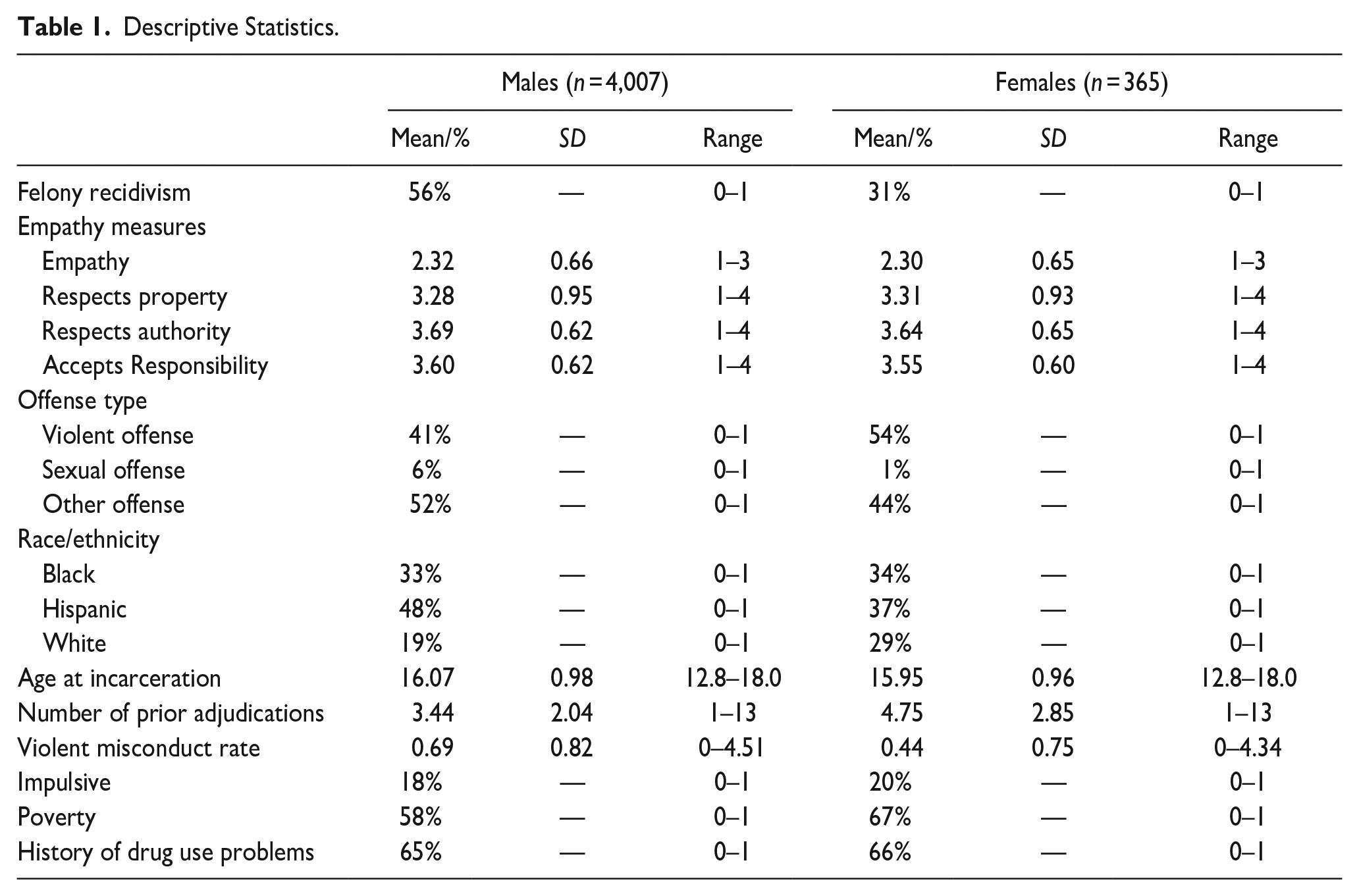
The outcome of interest was felony rearrest within 3 years post-release. 3 As offenders had varying follow-up times as a result of their unique incarceration release dates, we constrained recidivism to a standard 3-year of follow-up for each offender. The recidivism data were originally provided by the Texas Department of Public Safety (DPS), who maintains arrest information in the state. These arrest records were matched to the youthful offenders in our sample. As the data tracked the offenders into adulthood, the data is not right-censored on account of the youth-to-adult transition. All youth who were arrested for at least one felony within 3-year post-release were considered recidivists. Overall, 56% of the males and 31% of the females in the sample recidivated within the 3-year follow-up period (see Table 1).
Descriptive Statistics.
Our primary independent variables of interest centered on four measures of empathy, all derived from the PACT Assessment. As C. Narvey et al. (2021; C. S. Narvey et al., 2023) also used PACT data in their analysis of residentially-placed youth, we adopted the four items they used in their empathy scale. However, to examine whether these items operate independently on future recidivism, we examined their separate effects. Beyond the ability to examine the independent effects of these measures on recidivism, another reason for separating these constructs, instead of using an omnibus scale score, links to their conceptualization. For example, while one measure directly addresses empathy, others may be tapping constructs less direct to empathy (e.g., respect for authority figures). Indeed, while the alpha for these measures was good (α = .78), the correlations of these measures were modest, ranging from r = .40 to .50. As a result, we believed examining these items separately would allow a clearer picture of what specifically relates to recidivism on a more granular level. In as much as C. Narvey et al. (2021; C. S. Narvey et al., 2023) speculated that the empathy-recidivism relationship for females was stronger than for males due to socialization differences, separating these constructs also allows an individual examination of their impact on recidivism, particularly comparing the measure most specific to empathy, versus the other measures which examine issues such as respect and acceptance of responsibility for antisocial behavior. 4
The first independent variable indicated the degree to which the youth has empathy, remorse, sympathy, or feelings for the victims. This measure was scored as the youth does not have empathy for victims (scored as “1”), they have some empathy for victims (“2”) or they have empathy for victims (“3”). The second measure denoted whether the youth had respect for property of others where “1” indicated they have no respect for others’ property, “2” indicated they have conditional respect for others’ personal property, “3” indicated they have respect for others’ personal property but not public property, and “4” indicated they respected others’ property. The third measure indicated if the youth had respect for authority figures where “1” indicated the youth is hostile or defies most authority figures, “2” indicated the youth resents most authority, “3” indicated the youth does not respect authority figures and may resent some, and “4” denotes the youth respects most authority figures. The fourth variable measured if the youth accepted responsibility for their antisocial behavior where “1” denotes the youth is proud of their antisocial behavior, “2” indicated the youth accepts their antisocial behavior as okay, “3” indicated the youth minimizes or justifies their antisocial behavior, and “4” indicated the youth accepts responsibility for their antisocial behavior. Among the males in the current sample, the mean empathy score was 2.32 (standard deviation [SD] = 0.66, range = 1–3), the mean respecting property score was 3.28 (SD = 0.95, range = 1–4), the mean respecting authority score was 3.69 (SD = 0.62, range = 1–4) and the mean accepts responsibility score was 3.60 (SD = 0.62, range = 1–4). For the females, the mean empathy score was 2.30 (SD = 0.65, range = 1–3), the mean respecting property score was 3.31 (SD = 0.93, range = 1–4), the mean respecting authority score was 3.64 (SD = 0.65, range = 1–4) and the mean accepts responsibility score was 3.55 (SD = 0.60, range = 1–4).
To distinguish the delinquents by offense type, we created three distinct offender types. These included those adjudicated of (1) violent offenses, (2) sexual offenses, and (3) other offenses. 5 As there is mixed evidence regarding the impact of empathy on violent and sexual offending (Bock & Hosser, 2014; Jolliffe & Farrington, 2004), we sought to examine this relationship with our sample. The final group, those adjudicated of other offense types, were included to serve as a comparison to the first two groups and is an approach taken by other analyses (ex. Fernandez & Marshall, 2003). Among the males in our sample, 41% were adjudicated of a violent offense, 6% of a sexual offense, and 52% of another type of offense. For the females, 54% were adjudicated of a violent offense, 1% for a sexual offense, and 44% for another offense type.
In order to control for potentially spurious variables, several additional measures were included in the models. 6 First, the youth’s demographic information was included. With respect to race/ethnicity Whites were coded as “1,” Hispanics were coded as “2,” and Blacks were coded as “3.” For the males in our sample, 33% of the sample was Black, 48% were Hispanic and 19% were White. Among the females, 34% were Black, 37% were Hispanic, and 29% were White. The youth’s age at the time they were incarcerated for the current offense was also included. The mean age among males was 16.07 (SD = 0.98, range = 12.8–18 years of age) and the mean age for females was 15.95 (SD = 0.96, range = 12.8–18 years of age).
We also included several important justice-related factors, such as the number of prior adjudications. The mean number of prior adjudications among males was 3.44 (SD = 2.04, range = 1–13) and among females was 4.75 (SD = 2.85, range = 1–13). As violent institutional misconduct has been found to predict recidivism, we also included the rate of the number of violent misconduct incidents the youth engaged in based upon the number of days they were incarcerated (Cochran et al., 2014). Utilizing the rate allows us to account for the youths’ exposure time for misconduct. The mean misconduct rate for males was .67 (SD = 0.81, range = 0–4.51) and for females was .44 (SD = 0.75, range = 0–4.34).
Due to their empirical importance in the relationship between empathy and recidivism (Jolliffe & Farrington, 2004; C. S. Narvey et al., 2023), we also included measures of impulsivity, socioeconomic status (SES), and history of drug use. For the measure of impulsivity, we used the PACT measure that indicated whether the youth acts before thinking. This was coded dichotomously where “0” indicated they either exhibited self-control and usually thinks before acting or exhibits some self-control and sometimes thinks before acting while “1” indicated they were impulsive or highly impulsive and typically acts before thinking. Approximately 18% of the males and 20% of females in the sample were noted as being impulsive. For the SES measure, we included a PACT indicator that noted whether the youth’s family combined income was below the poverty level. Over half (58%) of the males and 67% of the females in the sample were found to be living in poverty. Finally, a measure indicating whether the youth had a history of drug use problems was included. The majority (65% males and 66% females) of the sample was found to have a history of problems associated with their drug use.
Analysis
We first assessed the data for missing cases and outliers. Missing data were not found to be an issue as less than 1% of data were missing. Several univariate outliers were identified; specifically n = 39 cases (less than 1%) were dropped as they scored extremely high on the misconduct rate control variable. An assessment indicated about 5% of the sample were multivariate outliers. While these cases were dropped to improve model fit, the models’ results were substantively similar and available upon request. Heteroscedasticity and multicollinearity were found to not be issues in the current analyses. 7 Next, we calculated the prevalence of each of the empathy measures among the male and female youth separately by their offense type. Next, as our outcome variable was coded dichotomously, we estimated several sets of logistic regression models. The first estimated the effect of the empathy variables as well as the control variables on felony recidivism among males by offense type and the second replicated these models among females.
Results
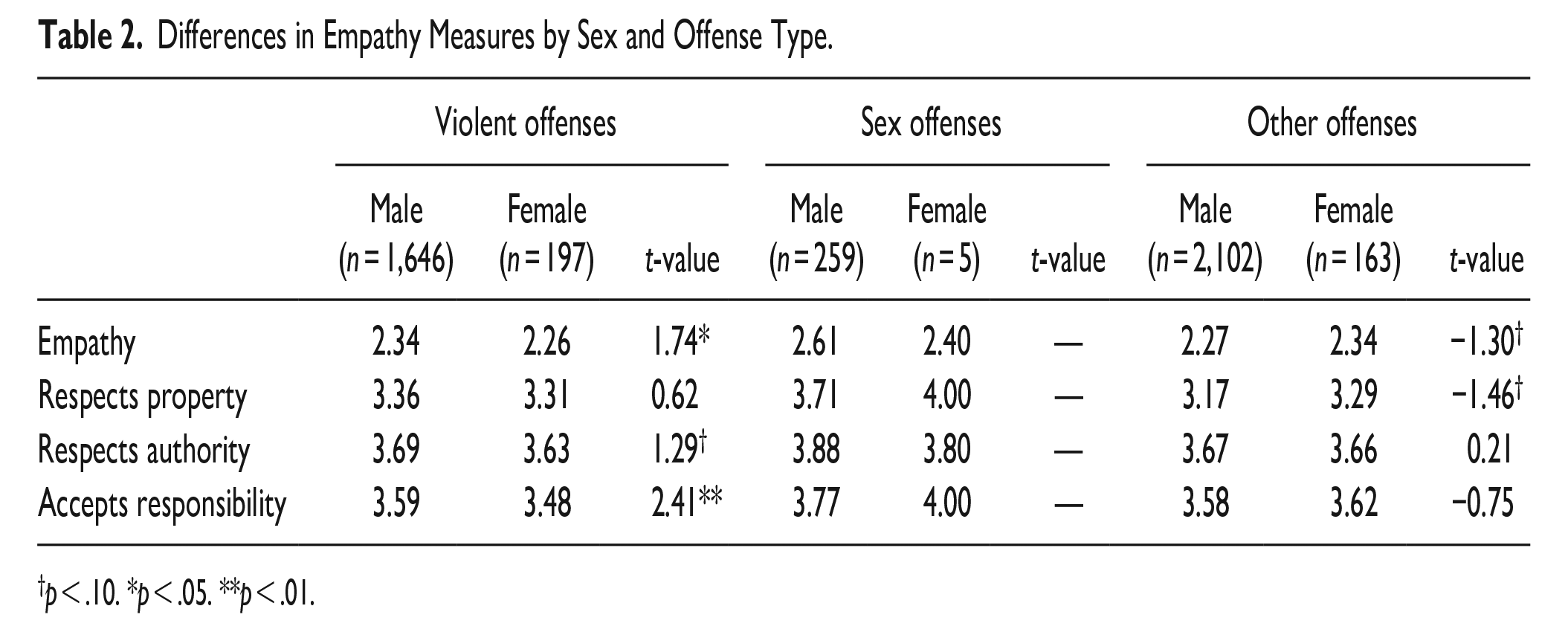
We next turn to the results of several t-tests that examined the differences between males and females on the four measures of empathy by offense type (see Table 2). Among those adjudicated of violent offenses, males had significantly higher empathy scores than females (t = 1.74, p < .05). Males were more likely to accept responsibility for their antisocial behavior (t = 2.41, p < .01).
Differences in Empathy Measures by Sex and Offense Type.
p < .10. *p < .05. **p < .01.
We presented the mean scores of the four empathy measures for male and female sex offenders. However, as there were only 5 female sex offenders we were unable to conduct t-tests to examine if these were significantly different.
The final column depicts the empathy measures’ mean scores among the males and females adjudicated with another form of offense. While the females’ mean scores for empathy and respecting property were marginally higher than their male counterparts, these differences did not attain conventional statistical significance (t = -1.30, p < .10; t = -1.46, p < .10, respectively). The mean differences for respecting authority and accepting responsibility were not significantly, or substantively, different.
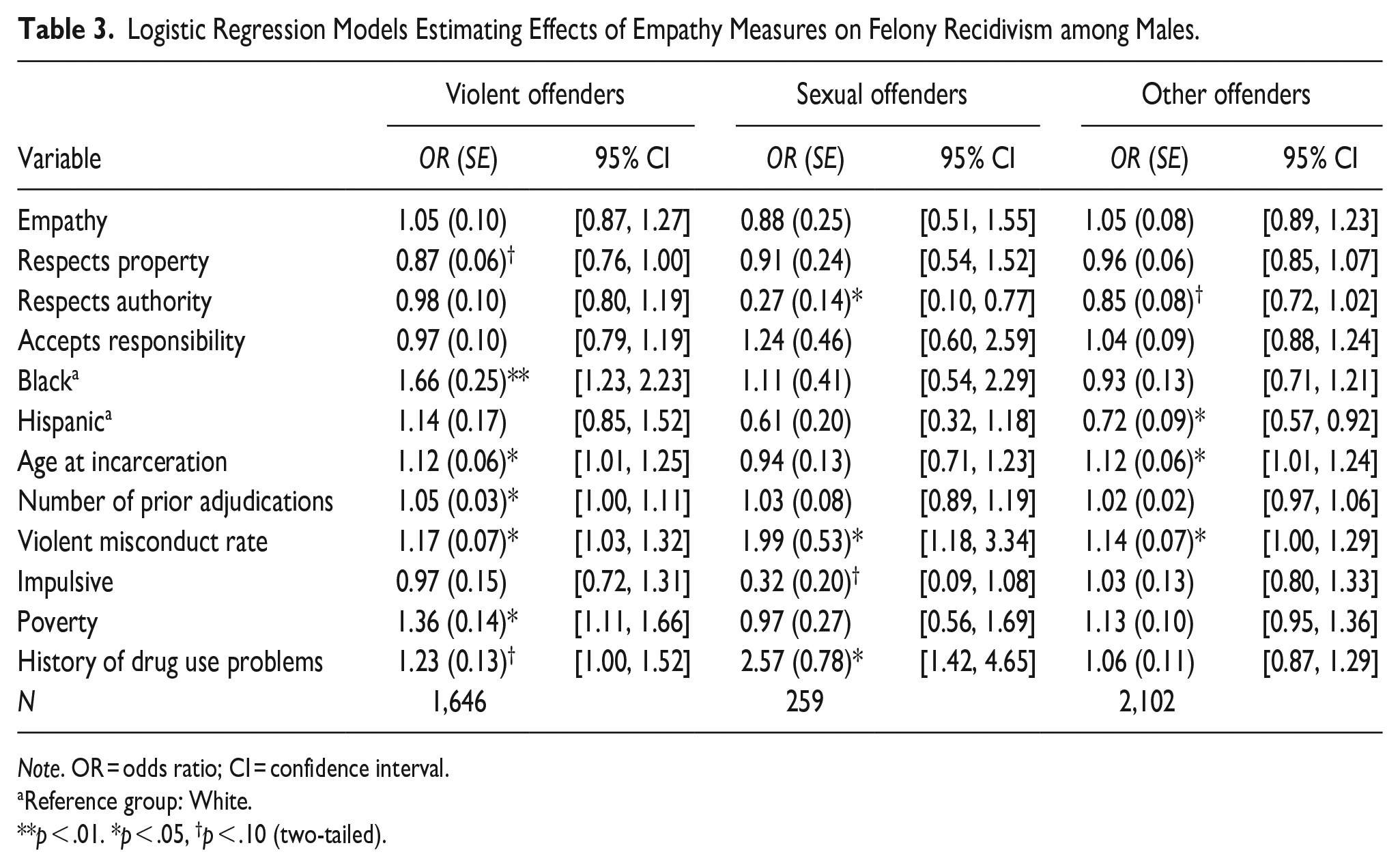
We next turn to the first set of logistic regression models that estimated the impact of the four separate empathy measures on felony recidivism among males. The first set of models in Table 3 depict these results among violent offenders. None of the four empathy measures significantly predicted recidivism among male violent offenders. Several of the control variables had significant effects on recidivism. For instance, Blacks were more likely to recidivate than Whites (OR = 1.66, p < .01), as were those that were older at incarceration (OR = 1.12, p < .05) and with a higher number of prior adjudications (OR = 1.05, p < .05). Those with a higher violent misconduct rate (OR = 1.17, p < .05) and who came from an impoverished household (OR = 1.36, p < .05) were also more likely to recidivate.
Logistic Regression Models Estimating Effects of Empathy Measures on Felony Recidivism among Males.
Note. OR = odds ratio; CI = confidence interval.
Reference group: White.
**p < .01. *p < .05, †p < .10 (two-tailed).
The next model presents the logistic regression estimates among male sex offenders. Empathy, respecting property, and accepting responsibility all failed to have significant impacts on future recidivism among these males. However, those who demonstrated a higher respect for authority were significantly less likely to recidivate (OR = 0.27, p < .05). Specifically, the predicted probability of recidivism was 33.3% lower for those with the highest level of respect for authority compared to those with the lowest level. Those with a higher rate of violent misconduct (OR = 1.99, p < .05) and with a history of drug use problems (OR = 2.57, p < .01) were more likely to recidivate.
The results of the effects of the four empathy measures on males adjudicated of another type of offense are in the last column of Table 3. None of the four empathy measures emerged as significant predictors of recidivism among this subsample. Hispanics, relative to Whites (OR = 0.72, p < .01) were significantly less likely to recidivate. Those that were older at incarceration (OR = 1.12, p < .05) and those with a higher violent misconduct rate (OR = 1.14, p < .05) were more likely to recidivate.
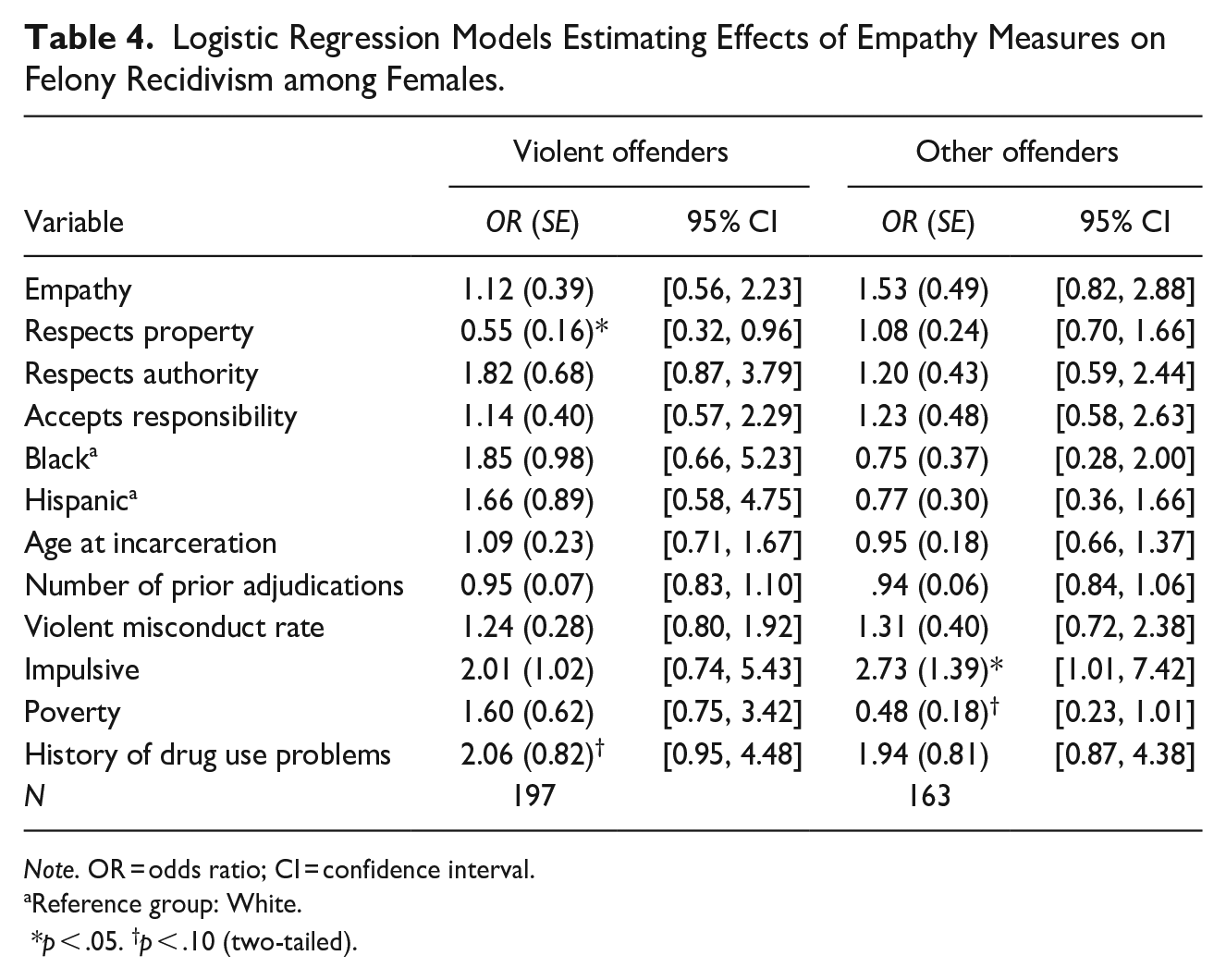
Finally, we turn to the logistic regression model estimates of the effects of the four empathy measures on recidivism among females. Recall there were only five females adjudicated of sex offense, so we only examined females adjudicated of a violent (non-sexual) offense and those adjudicated of other offenses. As can be seen in Table 4, females that had higher degrees of respect for others’ property were significantly less likely to recidivate than their counterparts (OR = 0.55, p < .05). Among the females, the predicted probability of recidivism was 57.5% lower for those with the highest levels of respecting others’ property compared to those with the lowest level. The other measures of empathy, respecting authority, and accepting responsibility failed to have significant effects on recidivism. None of the control variables emerged as significant predictors of recidivism among this subsample.
Logistic Regression Models Estimating Effects of Empathy Measures on Felony Recidivism among Females.
Note. OR = odds ratio; CI = confidence interval.
Reference group: White.
p < .05. †p < .10 (two-tailed).
Among females adjudicated of another offense type, the four measures failed to have a significant effect on recidivism. The only significant predictor of recidivism among this subgroup was impulsivity, where those that were more impulsive were more likely to be re-arrested for a felony within 3 years post-release (OR = 2.73, p < .05).
Discussion and Conclusion
Prior studies and meta-analyses have established that empathy plays an important role in criminal behavior (Jolliffe & Farrington, 2004; van Langen, Wissink, et al., 2014). Particularly, those with higher cognitive empathy are less likely to engage in antisocial behavior as they can take the perspective of another and understand their emotions. To understand the nuances of this relationship, some scholars have focused on specific offense types, namely sexual and violent offending, and reported mixed evidence regarding the role of empathy on offending (Baly & Butler, 2017; Jolliffe & Farrington, 2004; Mann & Barnett, 2012). Moreover, as females tend to be more empathetic than males, others have examined whether empathy can help explain sex differences in offending (Broidy et al., 2003; C. S. Narvey et al., 2023; O’Neill, 2020). However, few have examined how empathy has unique effects on sex-specific offender groups, or how individuals measure of empathy compare when addressing sex-specific outcomes.
In order to address this gap in the literature, we utilized a sample of serious juvenile delinquents incarcerated in one southern state to assess how various measures of empathy predicted recidivism by sex and offense type subgroups. First, we found that, on average, males adjudicated of a violent (non-sexual) offense tended to demonstrate more empathy than females (see Table 3). This finding was significant for two of the four empathy measures and goes against the bulk of prior research (ex. Broidy et al., 2003). In contrast, males adjudicated of other types of offenses tended to have lower empathy than females, at least on three of the measures, though these differences were not statistically significant.
Sex differences in levels of empathy measured in this study were unexpected. As previously noted, most research indicates not only that females have more empathy, but that empathy tends to have a stronger impact on females (Jolliffe & Farrington, 2006; C. S. Narvey et al., 2023). One exception is a study conducted by van Langen, Stams, et al. (2014) that examined a female-only sample and found cognitive empathy increased the likelihood of offending. It is worth noting that their offense scale consisted of a variety of minor and more serious offenses. While these authors suggested these females may use their stronger empathy skills to manipulate others, this may not apply to violent acts. Further, as justice-involved girls are more likely to have experienced trauma such as sexual abuse (Smith et al., 2006), it is possible that this increased trauma exposure may be linked to decreased empathy. However, to the best of our knowledge this was the first study that examined how empathy differed by sex and offense types, highlighting the importance of considering these smaller subgroups.
Turning to the results of our logistic regression models, our findings demonstrated that only some of the measures predicted recidivism and that these differed by offense type and offender sex. Specifically, among male violent offenders, respecting property emerged as only marginally protective of felony recidivism. Among male sexual offenders, those who respected authority were significantly less likely to recidivate. Finally, this same measure of respecting the authority of others was marginally protective of recidivism among those adjudicated of another offense type. It is particularly noteworthy that the empathy-specific measure failed to have a significant effect on recidivism among any of these three offender groups. Further, the direction of the relationship was opposite of what was expected among violent offenders and other offenders (OR = 1.05 for both). This contrasted with the results presented by Jolliffe and Farrington (2004) as their meta-analysis indicated cognitive empathy was a strong predictor of violent offending.
While we were unable to examine how empathy predicted recidivism among female sex offenders due to the small subsample size, we did find that female violent offenders who respected others’ property were significantly less likely to recidivate than their counterparts. No other empathy measure predicted recidivism among this subgroup, nor did any predict recidivism among females adjudicated of other offense types. Further, all of the other effects were in the opposite direction, suggesting those with more empathy were more likely to recidivate.
These findings are in contrast to those by C. S. Narvey et al. (2023) who examined a large sample of residentially-placed youth to assess the impact of empathy on recidivism. Their findings revealed that greater levels of empathy were related to a reduction in recidivism, and this effect was stronger for females than males. However, while both the current study and the C. S. Narvey et al. (2023) study utilized PACT data among a sample of serious juvenile delinquents, there were several important methodological differences that may explain these differences. First, the C. S. Narvey et al. (2023) study constructed a scale with the four measures as opposed to considering their separate effects. Second, the prior study also operationalized recidivism more broadly as any arrest for a new offense, while we used a more stringent measure of felony rearrest. This point is particularly relevant as Bock and Hosser (2014) found empathy failed to predict violent recidivism. As they noted, “low empathy may be characteristic of those involved in violent offending but not a risk factor for violent recidivism” (Bock & Hosser, 2014, p. 112). As most felonies encompass violent acts, this may help explain the contrasting results. Third, we examined how the empathy-recidivism relationship differed among offender types, so it is possible that C. S. Narvey et al. (2023) may have found offense-specific differences. Fourth, the C. S. Narvey et al. (2023) analyses were able to use a much larger sample of over 11,000 youth while our overall sample was approximately 4,500 youth; while overall our sample size was large, some of our subsamples were substantially smaller, thus potentially limiting our statistical power.
The contrasting results between this study and previous research may be attributed to methodological differences. However, a more nuanced explanation emerges when examining empathy items individually rather than as part of a scale. This study’s findings raise an important question: Are factors more closely related to legitimacy, rather than empathy, more significant determinants of recidivism in our sample? Recall the two measures that showed significance in relation to recidivism were “respects others’ property” and “respects authority.” These items may be more closely aligned with Tyler’s (2000) concept of legitimacy than with empathy. This interpretation is supported by the fact that the specific measure of empathy for the victim failed to significantly affect recidivism and, in some cases, appeared to increase the likelihood of rearrest.
A growing body of research consistently demonstrates that individuals who perceive authority figures as legitimate are less likely to offend (Walters & Bolger, 2019). Numerous studies examining legitimacy and/or procedural justice in juvenile justice outcomes have found that legitimacy plays a crucial role (e.g., Fagan & Piquero, 2007; Fine et al., 2019; Kolivoski et al., 2016; McLean et al., 2019; Penner et al., 2014; Tisak & Goldstein, 2023; Zhao et al., 2020). The current study’s findings suggest that, particularly among males, legitimacy perceptions, rather than empathy, serve as a protective factor against felony rearrest. In other words, those with stronger legitimacy perceptions are less likely to be rearrested for a new felony upon release from a juvenile correctional facility, regardless of their level of empathy.
Tyler (2000) argues that people are more likely to abide by the law when “they think that legal authorities are legitimate and ought to be obeyed” (p. 985). This assertion is supported by a meta-analysis conducted by Walters and Bolger (2019), which found strong evidence for the impact of legitimacy beliefs on law-abiding behavior. One PACT measure in this study assessed the extent to which youth respect authority figures. This measure can be seen as a prerequisite for believing in the legitimacy of those authority members and is consistent with other legitimacy measures in existing literature (e.g., Alward et al., 2021; Fine et al., 2019; Fagan & Piquero, 2007; Zhao et al., 2020). Another PACT measure evaluated whether youth respect others’ property, including personal and public property. While respecting others’ property may evoke empathy for potential victims, it could also be argued that those who disrespect others’ property (particularly public property) may not view the government or legal authorities as legitimate.
While the analyses by C. Narvey et al. (2021; C. S. Narvey et al., 2023) indicated that these measures, along with two additional empathy measures, had a negative relationship to recidivism as theoretically expected, the extent to which they independently predict recidivism had not been examined until now. This study provides new insights into the relative importance of legitimacy and empathy in predicting recidivism among juvenile offenders.
In light of this last point, we believe an important policy implication should be considered. The findings highlight the potential role that treatment and programming which emphasize respect for authority, personal property, and laws, and more broadly “legitimacy” of authority as encapsulated in these areas, may be an important component for residential programs which strive to enhance the re-entry outcomes (e.g., recidivism reduction) of juvenile offenders when they exit juvenile correctional facilities or related sanctions. Such programs could become normalized in much the same way as traditional treatment modalities, such as substance abuse treatment and mental health treatment, have long been staples in institutional and non-institutional programming for offenders who demonstrate these issues. Interestingly, even the well-known Capital and Serious and Violent Offender Treatment Program (formerly the Capital Offenders Program) in Texas emphasizes factors such as enhancing empathy for victims, promoting the expression and evaluation of feelings, and promoting internal control and assuming responsibility, but this innovative treatment program does not focus on issues pertaining to legitimacy (Trulson et al., 2016).
This practical implication seems even more important in light of the fact that while there is a growing and diverse literature that focuses on procedural justice, legitimacy of law/authority, and the relation of these concepts to a number of justice and non-justice based outcomes for adults with regard to policing or court behavior (see, e.g., Alward, 2024; Alward et al., 2021; McCarthy & Brunton-Smith, 2018; van Hall et al., 2023; Wallace et al., 2016; Walters, 2017) as mentioned, there is a dearth of information in this area concerning how these factors may relate to juvenile recidivism or analogous behavior. In short, the results of this study lean toward the potential protective effects emanating from respect for authority and respect for property. And, in much the same way that previous research has advocated for the inclusion of empathy-based approaches in juvenile programming (C. S. Narvey et al., 2023), the results herein suggest that including factors indicative of respect for authority, others property, and more broadly, legitimacy, may provide important dividends in reducing juvenile recidivism following release from correctional institutions.
Related to the previous discussion, the results of this study also implicate a number of areas for future research. First, we believe this study highlights the need for further research on disaggregated measures of empathy to more fully understand which parts subsumed under the umbrella of empathy may matter most. In this study, those measures most impactful to recidivism had to do with respect for property and authority instead of more specific measures assessing empathy for victims or accepting responsibility for antisocial behavior. This is an interesting finding that is consistent with research in areas of procedural justice and legitimacy beliefs. Yet again, there is a gap in this type of research involving juvenile offenders, and in particular, research on the types of serious and violent offenders like the cohort of focus in this study.
There were also additional findings in this study which we believe provide important areas for future research specific to the empathy and legitimacy measures utilized in this study. First, male offenders adjudicated of a violent offense demonstrated more empathy than females in this study. While this finding is contrary to other studies examining empathy levels between males and females, it does create an avenue for future research examining sex differences between delinquent offenders regarding aspects of empathy. Further, while we did not test the mean differences within the two sexes, an examination of the empathy and legitimacy measures’ means revealed an interesting pattern. Specifically, those adjudicated of a sex offense had higher scores across all four measures than their counterparts adjudicated for violent and other types of serious offenses. For instance, male sex offenders’ mean empathy score was 2.61 compared to 2.34 for male violent offenders and 2.27 for males adjudicated of other offenses.
Finally, we believe an additional area worthy of inquiry would be to examine empathy and legitimacy levels, regardless of how measured, across different populations of juvenile offenders. For example, it would be useful to understand levels of empathy among more garden-variety state institutionalized juvenile offenders, compared to more serious and violent offenders. Indeed, some of the findings of this study contradict previous literature and it is possible that this relates to the types of offenders examined. It would also be fruitful to examine changes in empathy and legitimacy levels over time incarcerated, and how these factors measured at different time periods of incarceration may help explain certain outcomes, for example, involvement in institutional misconduct or recidivism upon release.
It is important to consider our findings in light of the limitations of the study. First, as we relied upon secondary data collected for the purpose of a risk assessment, we were unable to use validated empathy measures such as the BES which include separate measures of cognitive and affective empathy (Jolliffe & Farrington, 2006). While the PACT measures have been used in prior research to indicate empathy predicted offending (C.Narvey et al., 2021; C. S. Narvey et al., 2023), they are still based upon the social worker’s assessment and interview of the youth as opposed to the youth responding to a personality assessment. 8 As several meta-analyses have demonstrated that the strength of the relationship between empathy and offending is, in part, contingent on the type of instrument used (van Lengen et al., 2014), it is important to replicate this study with validated empathy measures. Second, our sample consists of incarcerated juveniles from the state of Texas, so the extent to which the results can be generalized to other populations is not known. As prior research has found empathy tends to exhibit stronger effects among youthful offenders, how these results would compare to adult offenders in particular represents an important direction for future work.
Third, our outcome variable of felony rearrest only includes 3 years of follow-up and does not include those who were convicted so the results may differ with longer follow-ups and more stringent definitions of recidivism. Fourth, due to sample size restrictions (particularly among females), we were unable to consider the differences among more offense types. For instance, it is possible that the impact of empathy or legitimacy may differ between property and drug-related offenses. Fifth, we did not have multiple administrations of the PACT to assess empathy and legitimacy over time and consistent with our future research implication, whether these factors change, and if so, how these changes look and how they might be predictive of both institutional and non-institutional based behaviors. Sixth, we were not able to consider if the youth reoffended with the same offense type of their original adjudication. It is possible that an individual’s empathy may change and could lead to a different offense type. Finally, and related to the prior limitation, while the juveniles were incarcerated at a variety of TJJD facilities, we did not have facility-specific information. As the facilities may vary in their overall treatment effectiveness, we do not know the impact this may have on these results. These limitations, if remedied, may have provided more insight into the empathy-recidivism relationship but at the same time these limitations do highlight areas future research should seek to address.
This research examined the relationship of measures of empathy to post-release recidivism among a cohort of serious juvenile offenders, by offense type and sex. Among all findings, perhaps the key insight to emerge from this study is that measures of respect for property and respect for authority emerged as more influential determinants of recidivism than did traditional measures of empathy, such as empathy for victims or accepting responsibility for antisocial behavior. We believe this finding provides an important call for those who study juvenile offending behavior to set their sights on how these concepts—which seems to more closely fit within the larger umbrella of procedural justice and legitimacy—may be useful avenues to explore in understanding the factors related to offending persistence or desistance among serious juvenile offenders.
Supplemental Material
sj-docx-1-cad-10.1177_00111287241290511 – Supplemental material for Examining the Impact of Empathy on the Recidivism of Serious Juvenile Offenders
Supplemental material, sj-docx-1-cad-10.1177_00111287241290511 for Examining the Impact of Empathy on the Recidivism of Serious Juvenile Offenders by Jessica M. Craig and Chad R. Trulson in Crime & Delinquency
Footnotes
Declaration of Conflicting Interests
The author(s) declared no potential conflicts of interest with respect to the research, authorship, and/or publication of this article.
Funding
The author(s) received no financial support for the research, authorship, and/or publication of this article.

Supplemental Material
Supplemental material for this article is available online.
Notes
Author Biographies
References
Supplementary Material
Please find the following supplemental material available below.
For Open Access articles published under a Creative Commons License, all supplemental material carries the same license as the article it is associated with.
For non-Open Access articles published, all supplemental material carries a non-exclusive license, and permission requests for re-use of supplemental material or any part of supplemental material shall be sent directly to the copyright owner as specified in the copyright notice associated with the article.
