







Abstract
While victims may seek help from victim service agencies, it remains unclear how accessible these services are to persons with disabilities. The study examines websites from victim service providers across four states (n = 795) to identify the prevalence of disability-related content, accessibility features, and the readability of the website. Findings suggest that a large portion of websites did not discuss disability and lacked accommodations, but that prevalence of these themes varied across states. Further, content of websites, on average, required some college education to comprehend. Findings highlight the need to ensure victim service agency websites are accessible by redesigning websites collaboratively with the disability community.
Individuals with disabilities, compared to those without disabilities, are more likely to be victims of violent crime (Harrell, 2021), including forms of gender-based violence (e.g., intimate partner violence and sexual assault; Basile et al., 2016; Breiding & Armour, 2015; Brownridge, 2006; Brownridge et al., 2022; Casteel et al., 2008; Plummer & Findley, 2012; Shapiro, 2018). When considering type of disability, individuals with cognitive disabilities have the greatest risk of victimization, which is almost four times higher than those without a disability (Harrell, 2021; Reyns & Scherer, 2018). In the aftermath of a victimization, individuals may reach out to both informal (e.g., family and friends) and formal sources of support such as police and victim service agencies—local, state, or federally funded agencies that offer services like counseling, legal advocacy, and crisis intervention. Despite this need for post-victimization support, research has found that victims with disabilities, especially those with cognitive disabilities, are less likely to report their experience to law enforcement (Powers & Hayes, 2024). However, other research suggests victims with disabilities are reaching out to other formal sources of support (Son et al., 2020; Youstin & Siddique, 2019). Given that multiple agencies serve victims of violent crime (e.g., medical institutions and victim service providers), and victims with disabilities are making decisions between these agencies when seeking justice and services after victimization, it is important to consider the accessibility of these agencies in the reporting process.
Scholars have begun to recognize the challenges individuals with disabilities, and particularly those with intellectual and developmental disabilities (IDD), 1 face when reporting a victimization experience or when otherwise seeking help following victimization (Child et al., 2011; Fraser-Barbour, 2018; Lumsden & Black, 2022; Petersilia, 2001). In their systematic review, for example, McGilloway et al. (2020) identified communication barriers and lack of community-specific training and education as primary barriers to reporting victimization to law enforcement. Likewise, Petersilia (2001) highlights how police behaviors might seem intimidating to individuals with specific diagnoses. For example, repeated questioning—a common practice when interviewing a victim—may be seen as confusing or threatening behavior to those with Down syndrome. This perception is important because individuals with Down syndrome or similar diagnoses may try to appease the officer, providing answers they think the officer wants to hear. Despite this progress in understanding the barriers to justice faced by victims with disabilities, much of this work has focused on reporting to law enforcement rather than other forms of formal help-seeking, like victim service agencies.
A notable barrier to accessing these agencies among the disability community is first knowing victim agencies exist and that they have rights as a victim of crime (Franklin et al., 2019; Sims et al., 2005; Zaykowski, 2017). While the existence of law enforcement and their available services are publicly known, the same public knowledge is not afforded to victim service agencies. In addition, the accessibility of these agencies for individuals with IDD is largely absent from empirical research. Agency websites provide a helpful starting point for an individual to learn about an agency and the services they provide (Department of Justice, 2024). These websites can be an especially critical gatekeeper and barrier to help for individuals with IDD who may use communication supports; many of these websites are composed of text-heavy pages, have complex navigation interfaces, and embed tasks which require time-sensitive responses like Completely Automated Public Turing test to tell Computers and Humans Apart (CAPTCHA) tests.
To gain a better understanding of what victim service agencies are to victims and how accessible their services are, the current study examines the websites for the population of victim service agencies in four states drawn from four regions of the United States—Ohio, New Jersey, Florida, and Arizona (N = 881). First, we identify if the agency’s website mentions disability in any capacity. This is a first step in determining how these agencies do or do not interface with the disability community. We also explore if agencies’ websites mention autism—a type of IDD that not only is associated with victimization risk but also tends to receive the most attention in media and policy. In light of the US Department of Justice’s final rule in 2024 which strengthened and clarified website accessibility requirements for government websites (Department of Justice, 2024), we then examine the accessibility features of the website, inclusive of accessibility options for vision (e.g., enlarged text), ADHD accessibility (i.e., accessibility settings which reduce distraction by highlighting only areas of the screen near one’s cursor), or accessibility profile settings for cognitive disabilities (e.g., highlighting links, enlarging text). 2 We also consider the presence of other ways to contact the agency (i.e., text and chat features) that might offer enhanced communication access for individuals with IDD. Finally, we examine the average readability scores of the website’s content. Doing so provides a gauge for an agency’s use of plain language, which would enhance accessibility (US General Services Administration, 2025). Overall, identification of disability in public-facing materials (or lack thereof) and analysis of these websites along multiple domains related to accessibility provides insight into the recognition and inclusion of the disability community within these agencies and what accommodations may be available to victims who seek these services.
Disability and Victimization
Roughly one in four U.S. adults live with a disability (Okoro et al., 2018). When defining disability, the CDC (2020) largely recognizes four dimensions, inclusive of disabilities that affect cognitive functioning (e.g., autism spectrum disorder, fetal alcohol spectrum disorder, i.e., IDD), mobility challenges or the ability to care for oneself independently (e.g., cerebral palsy, limb loss), and vision and hearing difficulties. While they are presented as distinct, many disabilities overlap. For example, an individual with cerebral palsy may also have an IDD. When considering the prevalence of cognitive disabilities, 11% of persons with a disability have a cognitive disability that is characterized by serious difficulty concentrating, remembering, or making decisions (Centers for Disease Control and Prevention, 2020).
As noted, individuals with disabilities, but especially women with disabilities, experience higher rates of victimization compared to those without disabilities (Basile et al., 2016; Breiding & Armour, 2015; Brownridge, 2006; Casteel et al., 2008; Plummer & Findley, 2012). Among women with disabilities, women with IDD or cognitive disabilities are more likely to experience gender-based violence compared to the general population, as well as among persons with disabilities (Ledingham et al., 2022; Mailhot Amborski et al., 2022). While there are situational circumstances and theoretical correlates associated with gender-based violence that affect the risk of victimization among persons with IDD (B. E. Hayes et al., 2024), such factors likely also affect access to justice. For example, if a perpetrator provides daily support or caregiving for their victim, it may be difficult for the victim to navigate formal help-seeking processes either through isolation, fear, or dependence on the perpetrator (Petersilia, 2001).
Communication challenges are a unique hurdle to help-seeking among victims with IDD (Burrow et al., 2021). For example, law enforcement who speak rapidly during an interview may find it difficult to garner responses from individuals with IDD. Likewise, officers and victim service providers may use legal jargon or other offense-specific vocabulary that is not accessible to those with cognitive disabilities (Child et al., 2011). That is, victims with IDD who seek help after a victimization experience might not have the vocabulary to report the abuse due to limited understanding of what is being asked and/or ability to express such information (Petersilia, 2001). Even with support and patience, communication can be affected by trauma and stress, which likely co-occurs with a victimization experience (Communication FIRST, 2024). Communication, however, goes beyond spoken language and often includes written language and the use of augmentative and alternative communication (AAC) supports for the disability community. These supports (e.g., communication boards, pictures supports, written words of importance) can be used to help clarify understanding of information (i.e., receptive understanding) and provide modalities to communicate information (i.e., expressive communication). Integrating communication supports in formal help-seeking organizations can aid in the justice process, including accommodating alternative methods of reporting victimization and providing testimony in court (O’Neill et al., 2018). Websites, where individuals may go to access information about agencies, can be an important first point of contact and alert the individual to the type of supports available from the agency. In the following section, we discuss the role of victim service agencies in the help-seeking process.
Victim Service Agencies
Victim service agencies play a critical role in supporting crime victims by providing a wide range of services aimed at addressing both immediate and long-term needs for a wide range of populations (Hollenshead et al., 2006; Martin et al., 2023). Some agencies provide specific services, like crisis intervention and safety planning, while others offer wrap-around solutions, which may also include emotional support and connecting victims with shelters and medical care teams (Oudekerk et al., 2019). Unlike law enforcement, victim service agencies act as intermediaries by helping victims understand their rights and collaborating with law enforcement and legal professionals (Bouffard et al., 2017). These agencies also tend to the human side of victimization by providing or connecting victims with counseling services and support groups to cope with trauma and manage emotional responses (Newmark, 2004). Indeed, the goal of victim service agencies is to provide any type of support a victim may need to recover from their victimization.
Despite the range of resources which victim service agencies may provide, many victims do not seek help from victim service agencies. Help-seeking research suggests when crimes cause heightened psychological or emotional distress, people are more likely to turn to their friends and family for support (Campagna & Zaykowski, 2020; Youstin & Siddique, 2019). This pattern is especially true for female victims of gender-based violence (Kaukinen et al., 2013). While there are barriers to reporting to law enforcement (e.g., shame, embarrassment; McCart et al., 2010), such barriers may not apply to the same extent with victim service agencies. Crime victims may be more likely to seek help with victim service agencies relative to law enforcement when the offender is known (Wengloski & Cleary, 2024) and when the crime is particularly intimate or violent (Sims et al., 2005). These agencies therefore provide critical victim support to address the wide range of consequences for victims in the wake of victimization. In the following section, we consider how disability may intersect with formal help-seeking from victim service agencies.
Disability and Help-Seeking
Crime victims, in general, are more likely to seek help from informal sources rather than formal sources (Coker et al., 2000; McCart et al., 2010; Newmark, 2004; Ullman, 2007), but the opposite seems to be true for crime victims with disabilities. This population relies more on formal sources like law enforcement, service agencies, medical professionals, and counselors than informal sources of support (Son et al., 2020; Youstin & Siddique, 2019), though the evidence around reporting to law enforcement specifically is equivocal (Powers & Hayes, 2024). While not all crime victims first seek help with law enforcement, they often end up filing police reports with the help of victim service agencies. That is, working with victim service agencies is a strong predictor of working with law enforcement (Youstin & Siddique, 2019), and this relationship indicates victim service agencies or hotlines are an important first point of contact for many victims to begin the justice process. Indeed, among victims with disabilities who seek help, a majority favor victim service agencies over law enforcement (Son et al., 2020). Yet, Youstin and Siddique (2019) found that having a disability was not related to having contact with a victim service agency—a key determinant in accessing justice through the criminal legal system. Despite the important role such agencies play, the prevalence of victim service agency use among crime victims in 2021 was only 9% (Thompson, 2024). While national rates for the disability community are not available, it is likely they face barriers even if they prefer to access formals help-seeking.
The overwhelming reason for this low service use by the disability community is a lack of available and accessible services. In their study of two national focus groups including Deaf and hard of hearing participants and those with physical and sensory disabilities, Lightfoot and Williams (2009) identified that a lack of accessible services, such as restricted social support personnel, limited communication interpreters, and cumbersome administrative procedures, was the most widespread theme among focus group participants. These barriers are commonly reported by this population (e.g., Findley et al., 2016; Hassouneh-Phillips & McNeff, 2005; Milberger et al., 2003; Son et al., 2020). Barriers to victim service agencies for crime victims with disabilities not only prevent this population from participating in medical and psychological healing from their experience but may also preclude them from accessing justice from the criminal justice system if victim service agencies are an important point in starting that process.
Broader examinations of disability barriers indicate that accessibility is systemic. For example, Fitzsimons (2016) highlights the fragmentation of services provided by agencies; their responses are often uncoordinated or inconsistent, which can make the process more arduous for victims with disabilities. Similarly, issues of transportation, communication, and intake procedures often dissuade victims with disabilities from seeking help or acquiring services (Zaykowski, 2017). That is, if the services available are even known to those who need it. Victims with disabilities face a general lack of knowledge for available services, which leads to inadequate support and few services tailored to their needs (Lewin, 2007).
Accessibility of victim services extends beyond the knowledge of their services; it also requires content to be understandable to a broad audience, including individuals with varying literacy levels. Indeed, an often-overlooked barrier to accessing victim service providers is the readability of information on agency websites—often the first point of contact for a victim seeking help and an important starting point in the digital age. For many crime victims, especially those with IDD, accessing and comprehending information is crucial to seeking help and reducing further harm.
Readability of a victim service agency’s website is indicative of “meaningful access,” a concept popularized in policies in corrections settings, like the Prison Rape Elimination Act (PREA; Krienert & Walsh, 2023). Formal regulation of meaningful access to this policy’s information oversees the readability standards, including word count and length, sentence length, use of complex or compound sentences, and use of jargon and abbreviations. Until recently however (Department of Justice, 2024), no formal regulations or oversight was afforded to victim service agency information in the online space, making this access not enforceable. Even still, the new rule on web content accessibility applies only to organizations who contract with local, state, and federal government entities, and enforcement and penalty efforts remain unclear. This disparity between webpage readability and reading comprehension level for all users is not only a compliance issue but also a matter of equitable access to justice. Implementing readability strategies like plain language and clear headings provides accessible information to those who may otherwise depend on someone to understand the information provided, and this may be especially harmful if this person is causing harm to the one seeking help.
Summary and Current Study
Individuals with disabilities are at a higher risk of experiencing crime victimization than those without disabilities (Harrell, 2021). This is especially salient for those with IDD experiencing gender-based violence (e.g., Brownridge et al., 2022). Despite the higher prevalence of victimization among this population, research indicates crime victims with disabilities are more likely to turn to formal sources of help than informal sources of help (Son et al., 2020)—a pattern divergent from crime victims without disabilities (McCart et al., 2010). A dismaying pattern, however, is the low prevalence of victim service agency use (Thompson, 2024). While there is some work that examines the physical barriers and lack of appropriate accommodation options within the agencies that may explain this pattern (Child et al., 2011; Edwards, 2013; Edwards et al., 2015), there is next to no information on the accessibility of agency websites that provide information tailored toward the disability community on services offered, policies and procedures, and a path forward for crime victims seeking help. A notable exception is research that analyzed social service agency websites, finding that most did not meet accessible reading comprehension levels—a common benchmark for evaluating disability accessibility (Friedmeyer-Trainor et al., 2012; Vernon & Lynch, 2003).
With these gaps in mind, the current study’s goals are three-fold. First, we seek to assess the general inclusion of disability among victim service agencies by identifying if disability and if autism, a specific type of IDD, is mentioned on agency websites across four regions of the United States. Second, we examine the programs and accommodations available as stated on the agency’s website. Finally, we estimate the readability of the agency’s website to understand the accessibility of the website’s information.
Methods
The current study considers victim service agencies’ websites from four states as they relate to disability and accessibility. Information regarding agency websites was collected via open-source data collection techniques. To ensure data were representative of several areas across the United States and their corresponding populations, we selected one state located in the Midwest region (Ohio), one in the South region (Florida), one in the North region (New Jersey), and one in the West region (Arizona). Once the states were selected, victim service agencies for each state were identified through a multi-step process. First, we reviewed the data collection process associated with the 2017 National Census of Victim Service Providers (NCVSP), the latest and most comprehensive effort to identify and measure key factors for victim service provider agencies across the United States (Oudekerk et al., 2019). Within the NCVSP codebook, an appended list of victim service directories—or networked lists of victim service agencies—was included. These directories were originally used within the NCVSP to identify a comprehensive list of active victim service agencies in the United States. 3 For each state, several directories of networked victim service agencies—such as the Ohio Domestic Violence Network Directory—were included, which contained lists of victim service agencies within the directory’s broader network. 4 These directory lists of victim service agencies were combined for each of the four states above to form a comprehensive list of victim service agencies for each state. In so doing, duplicate agency listings were deleted. This resulted in a list of 881 victim service agencies across four states, excluding duplicates.
Following the identification of individual victim service agencies, data collection from the websites spanned January to December 2024. Over this period, we identified whether a website existed for each agency by searching for the verbatim name listed within the directories in an online search engine, as well as the state in which the victim service agency was located.
Once we identified an agency’s website, we closed-coded a number of themes discussed below, including disability and autism. Beyond this, we coded for several webpage characteristics, including the presence of a notice of nondiscrimination, the presence of various online accessibility tools, or if the agency allows individuals to contact them via text or a chat feature. 5 By collecting data relating to these unique characteristics of victim service agency’s websites that might be helpful to an individual with an IDD, this database provides a snapshot of victim service agencies across the United States, especially as it relates to disability.
Coded Measures
We developed a codebook to quantitively extract key features of these policies. To begin, we closed coded for the mention of disability in any capacity on the website. We then considered if the website mentioned autism spectrum disorder in any capacity and the content when the term was used. We elected to focus on autism spectrum disorder because it is a ubiquitous form of IDD that is associated with victimization risk across many contexts (Brown-Lavoie et al., 2014; B. E. Hayes et al., 2024; Libster et al., 2022; Weiss & Fardella, 2018), tends to receive media and policy attention, and thus may be relevant to consider among victim service agencies.
Next, we examined the website for accessibility features. If the website had accessibility features, we considered the specific types of accessibility options available within the webpage. Specifically, we considered if there were accessibility options for vision (e.g., enlarged text), ADHD accessibility (i.e., accessibility settings which reduce distraction by highlighting only areas of the screen near one’s cursor), or accessibility profile settings for cognitive disabilities. Accessibility features for users with cognitive disabilities include highlighting links, enlarging text, or adjusting the webpage in other ways which may facilitate users’ focus. For communication accessibility and other options for how to contact the agency, we coded for an option allowing users to text helplines (rather than call) and if there was an online chat function.
We also considered the readability of websites. Specifically, we extracted the “About Us” text of the webpage and analyzed the readability score. If the website did not have an “About Us” section, we looked for text that related to the goals/aim of the organization or a mission/values statement located on a different page of the website, such as the home page. Once this text was extracted, we calculated the Flesch-Kincaid grade-level score in Microsoft Word. Originally developed for use within the United States Navy to ensure the readability of training manuals, Flesch-Kincaid grade-level scores consider the number of words, syllables, and sentences in each passage of text to provide an overall score (Flesch, 1948). While Flesch-Kincaid readability analyses can produce a number of scores to quantify the readability of a passage of text, the Flesch-Kincaid grade level score corresponds to the grade level that is expected to read and comprehend the text (Engle & Nedelec, 2024; Flesch, 1948). In this sense, a passage of text with a Flesch-Kincaid grade-level score of 12 would indicate that readers would likely need 12 years of formal education (i.e., a high school diploma) to comprehend the text. While the use of Microsoft Word to calculate readability scores is an imperfect indicator of readability compared to a dedicated readability program, it is an available tool when compared to for purchase programs that specifically calculate these numbers. We provide average readability scores as well as examples at both the high and low end of readability to contextualize the accessibility of this information.
Analysis
Following the completion of initial coding, inter-rater reliability (IRR) scores were calculated for each state by examining a random selection of 10% of victim service agencies. Findings from IRR analyses suggested a high degree of reliability for each state (>80%) and were reconciled through consensus between original and IRR coders. After the completion of IRR coding, team members involved in the coding process resolved any discrepancies in coding through consensus, resulting in the data presented here. Below we present descriptive statistics of the total sample and within states, and we include qualitative examples to provide context.
Results
Overall, there were 881 victim service agencies identified by the sources. Of these 881 agencies, 795 (90.24%) had a website that could be coded. This is a potential first breakdown in accessing victim service agencies—9.76% did not have a dedicated website or they relied on a social media page that would only be accessible to subscribers of that social media channel (n = 86). Among those which did not maintain a website, 46 (53.49%) agencies maintained a social media profile associated with the organization, while 40 (46.51%) did not.
Of the 795 agencies with a website, 57.11% (n = 454) mentioned disability in some capacity. This ranged from 25.19% of agency websites in Ohio (n = 65) to 79.73% of websites in Florida (n = 232). Distributions of these items across all four states are provided in Table 1. When considering the context around the term disability on victim service agency’s websites, findings suggested that discussion of disability varied in terms of utility for victims. For example, some victim service agencies’ websites only mentioned disability within notices of nondiscrimination (e.g., “The [county redacted] Prosecutor’s Office and its Crime Victims Services Unit do not discriminate on the basis of race, color, national origin, religion, sex, disability, or age in the delivery of services or in employment practices.”). Other agencies’ discussion of disabilities highlighted accommodation services available to clients and provided instructions to access these accommodations (e.g., “When necessary or requested, a Behavior Support Specialist will complete an assessment and develop strategies, which will be detailed in the Individual Service Plan [ISP].”).
Descriptive Statistics of Victim Service Agencies’ Websites.
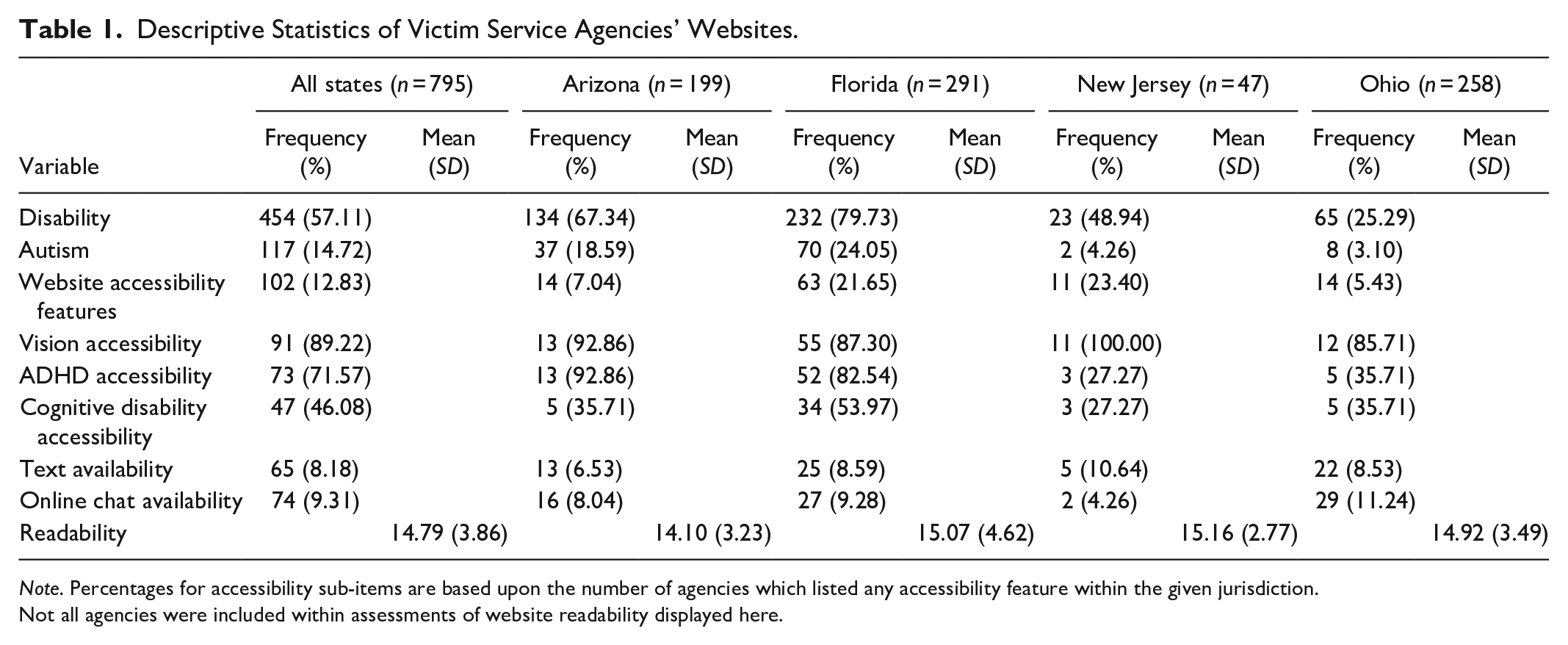
Note. Percentages for accessibility sub-items are based upon the number of agencies which listed any accessibility feature within the given jurisdiction.
Not all agencies were included within assessments of website readability displayed here.
We then explored if the website mentioned autism specifically given the substantial body of research suggesting autistic individuals are vulnerable to victimization, as well as recent high-profile victimization experiences involving autistic individuals (Libster et al., 2022; Weiss & Fardella, 2018). Findings suggest that discussion of autism was less prevalent among victim service agencies compared to disabilities more generally. In total, autism was mentioned on 14.72% (n = 117) of agency websites (Range = 3.10% of agencies in Ohio to 24.05% of agencies in Florida). For example, some victim service agencies discuss autism in the context of specialized programs developed to help families with autistic children navigate education systems. Within other agencies, this discussion related to specialized therapy and speech-language therapy for autistic individuals. In comparison to the search term disability, autism as a search term provided a more specific context of available services to potential clients of the agency.
Next, we examined accessibility features that are integrated into these websites. Only 12.83% (n = 102) of agency websites had accessibility features. Such features were most common for agencies in New Jersey (23.40%; n = 11) and Florida (21.65%; n = 63). They were rare for agency websites in Arizona (7.04%; n = 14) and Ohio (5.43%; n = 14).
Within agency websites that had accessibility features, we examined whether they were designed for vision accessibility, ADHD accessibility, or accessibility for individuals with cognitive disabilities. Vision accessibility features were overwhelmingly the most common feature. Across the four states, 89.22% of websites that had accessibility features had vision accessibility features (n = 91), referring to options that enlarge text or provide high-contrast color schemes. Nevertheless, when considering all 795 agency websites across the four states, only 11.45% had vision accessibility features. There was quite a bit of variability regarding if agency websites had features for ADHD accessibility (71.57%; Range = 27.27% in New Jersey to 92.86% in Arizona). Examples of ADHD accessibility included webpage features which allowed users to only see portions of the webpage where their cursor was located. It was incredibly rare for agency websites to include accessibility features for cognitive disabilities specifically. Out of the 795 agency websites, 5.91% included this feature (n = 47), equating to 46.08% of the 102 agency websites with any accessibility features. Such features were most common on Florida’s victim service agency’s websites (53.97%) and could be found in roughly every one to three websites across Arizona (35.71%), New Jersey (27.27%), and Ohio (35.71%). When these accessibility features for cognitive disabilities were included, accessibility involved specialized accessibility profiles which enlarged text and images and enclosed all links within visible boxes to identify them to users. 6 Figure 1 depicts a webpage with cognitive disability accessibility functions when these functions are not enabled, while figure 2 depicts the same webpage when these features are activated to demonstrate how these accommodations manifest.
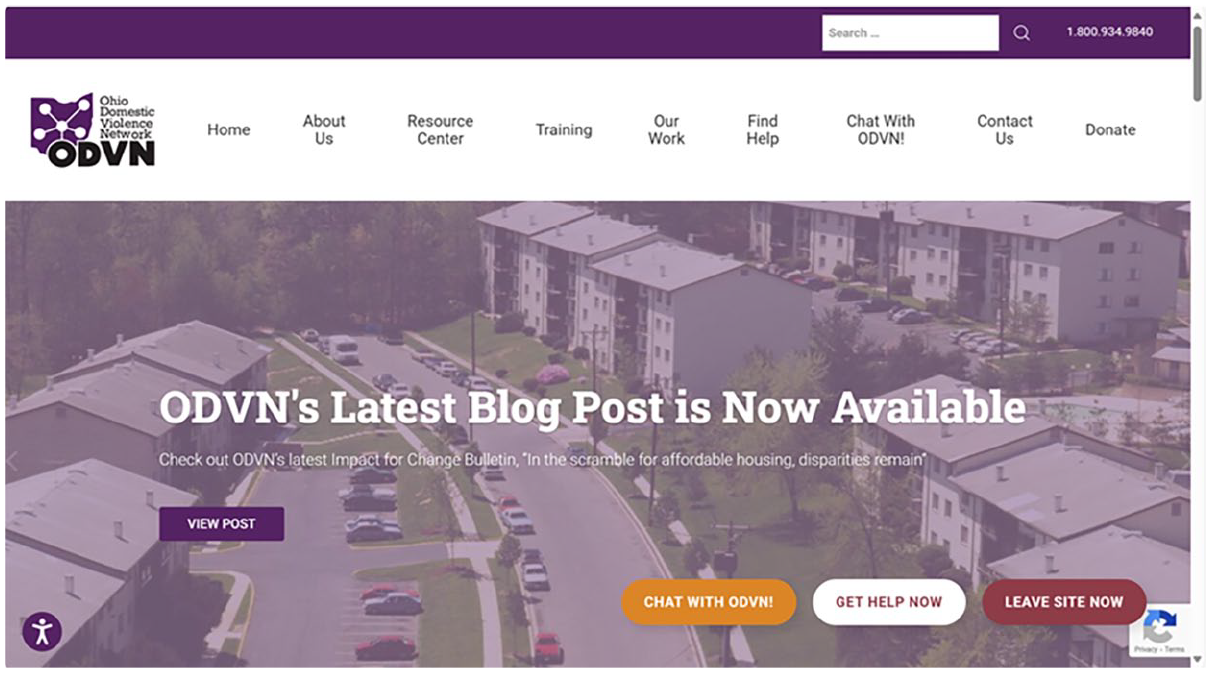
Victim service agency website with cognitive disability accessibility options when not enabled.
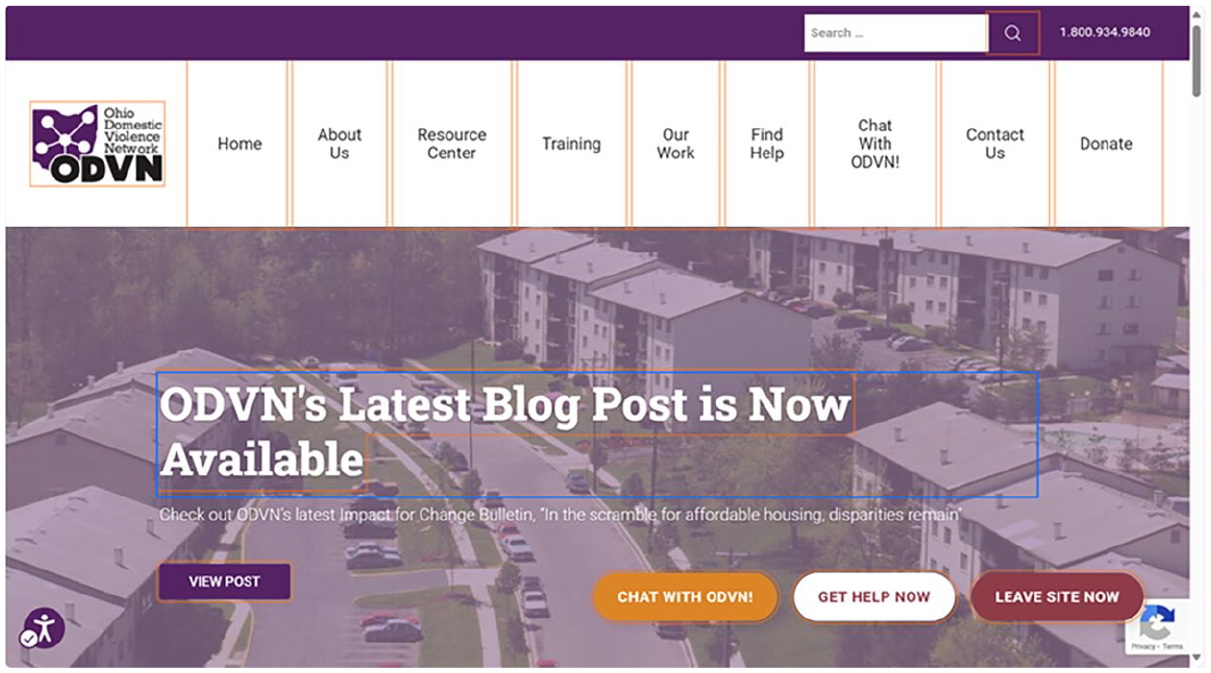
Victim service agency website with cognitive disability accessibility options when enabled.
We also considered if the website had the option to text the helpline phone number listed or if the number was only accessible via traditional calling, as well as whether websites had an online chat function to communicate directly with a provider through the website itself. Overall, over 90% of agencies did not provide the option to text the helpline phone number (n = 730) or the option to chat online with the agency (n = 721).
Finally, we estimated the readability of agency websites’ “About Us” section, their goals/aims, or mission/values statement. In total, 708 agency websites had information that could be used to calculate a readability estimate. On average, across all four states, the readability score was 14.79 (SD = 3.86) and ranged from 14.10 in Arizona (SD = 3.23) to 15.16 in New Jersey (SD = 2.77). Therefore, on average, at least some college education is needed to understand the agency, their mission, or their goals (Table 2).
Contingency Table of Agencies With Cognitive Disability Accommodations and Autism-related Content (n = 102).
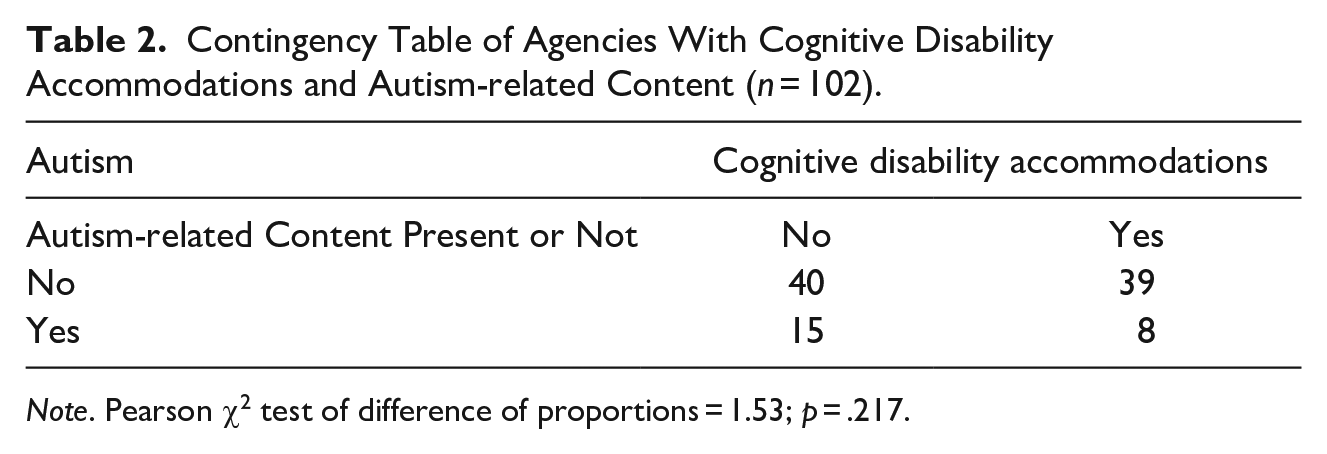
Note. Pearson χ2 test of difference of proportions = 1.53; p = .217.
To supplement the findings presented above, independent samples t-tests examining the mean readability score of websites both with (n = 608) and without (n = 100) mentions of autism were conducted, and whether there existed a difference in the readability of websites based on this criterion. We selected autism rather than disability writ large to narrow our focus to IDD which may be linked to average levels of readability. Findings from two-tailed t-tests suggested that there were not statistically significant differences in the mean reading level of websites with and without mentions of autism (t = -0.45; p = .650). This suggests that agencies’ posted content may not necessarily align with their stated goals in terms of clientele served, a theme discussed at greater length below.
Discussion
Overall, there was variability across the four states in whether their victim service agency’s websites mentioned disability. As we narrowed our focus to specific types of IDD and accessibility options, the occurrence across the four states became even more rare. The limited mention of general and specific disabilities has important implications for individuals accessing these websites as a starting point to getting help and potentially beginning the justice process. Accordingly, there are four primary issues that warrant further discussion.
To begin, there was tremendous variability in whether websites mentioned disability. The high prevalence in Florida suggests there may be movement within the state to require this information. Nevertheless, the utility of this information for victims is questionable. For some victim service agencies’ websites, the only mention of disability was featured within notices of nondiscrimination. As such, this does not suggest an organizational capacity to provide tailored accommodations to individuals with IDD but is reflective of guidelines. Conversely, some agencies highlighted accommodation services available to clients and provided instructions to access these accommodations. This was more evident when we narrowed our focus to autism. While mentioning autism was much less common, it was in relation to specialized programs developed to help families with autistic children navigate education systems or for specialized therapies when it was discussed. For parents accessing these supports who likely already face tremendous system barriers for their child with a disability (S. A. Hayes & Watson, 2013), the mention of services for their children may be a crucial aspect of their decision to engage with the agency. Understanding how parents of children with disabilities choose to engage or not engage with these providers, based on the needs of their children, remains a needed avenue for future research. Future work should examine parental perceptions of availability and accessibility of services for children with disabilities and how these perceptions shape the decision to engage with the legal system—especially in contexts where victimization and caregiver responsibilities overlap.
Second, we considered the accessibility features within websites. While victim service agencies tend to be non-profit and not government based, in 2024, the US Department of Justice issued guidelines that strengthened and clarified the need for government web content and mobile applications to be accessible for individuals with disabilities (Department of Justice, 2024). This is an important signal for inclusion. Inaccessible websites may make it difficult or impossible for individuals with disabilities to access services. Given victim service agencies are critical onramps for many victims to engage with other parts of the justice system (Youstin & Siddique, 2019), this signals a breakdown in the process. When considering all 795 websites, such features were rare and most common for vision accessibility. Screen readers, an accommodation for individuals with vision difficulties, are a common feature integrated into many websites and programs. The inclusion of accessibility features for ADHD or cognitive disabilities were much less common and likely requires a different website design, such as narrowing the focus of the page or enclosing links in select boxes. As technology advances, it is crucial that agencies (re)design their websites and mobile applications in line with the American Disabilities Act.
Third, the accessibility options examined above are imperfect indicators for accommodations. Communication is complex, thus we examined alternative ways individuals may engage with victim service agencies (e.g., orthographic communication needed for individuals with limited speech), inclusive of texting or chatting with the agency. Over 90% of agencies did not provide the option to text the helpline phone number or the option to chat online with the agency. While integrating chat systems into websites could be a costly endeavor for agencies already struggling with funding, there are many free programs that allow multiple users to access an account. While such an approach would require training and buy-in from providers, it is one potential low-cost way to enhance accessibility and is consistent with the evolving nature of technology in the digital age. Nevertheless, while the integration of text and chat features may provide another way for individuals to connect with the organization, it does not tell us the content of these messages. Future research should examine if the answers provided in the chat or text feature are appropriate and sufficient for individuals with IDD. Specifically, the accuracy, clarity, and helpfulness of responses within these methods of communication should be assessed in future research to understand if they meet the unique needs of this community.
Fourth, we considered the readability of agencies’ “About Us” sections. Overall, these sections were written in such a way that at least some college education would be needed to understand the agency, their mission, or their goals. This is not a problem unique to victim service agencies and has also been noted in the readability level of criminal justice policies (Krienert et al., 2024). The average reading level in the United States is between sixth and eighth grade (National Literacy Institute, 2024), indicating the average American, regardless of disability status, does not have the reading comprehension for the information provided by the agencies in this study. When considering universal design, if “About Me” sections were written for fifth grade reading levels, in line with plain language recommendations, they would be accessible to everyone—not only individuals with IDD (Gray et al., 2019). The explosion of generative AI provides a potential way for agencies to modify the readability levels of their content without losing important context. We also recommend working with the disability community to develop websites that are accessible and appropriate (Kennedy et al., 2011). There is a large network of self-advocates that can bring lived expertise to inform these websites and ensure that all victims have access to services and justice. These folks should be employed alongside website designers.
We also explored the association between the mean reading level of the digital consent and if the agency mentioned autism—a signal that they are committed to serving the IDD community. Findings suggested that agencies that mention autism did not significantly vary from agencies which did not discuss autism in terms of mean reading levels of webpage material. This suggests that despite acknowledging autism, webpage content and readability do not necessarily align with this. This implies a potential need for support persons to assist victims with IDD in navigating victim service agency websites and obtaining support. Given research suggesting that persons with disabilities are often victimized by those close to them such as family members, romantic partners, or caretakers (Harrell, 2021), the need for external support in navigating victim service agency websites may undermine victims’ attempts to seek support after their experiences if the offender is known or victims fear reprisal. In order to ensure that all victims are capable of navigating websites and obtaining support, it would be beneficial for victim service agencies to interrogate their websites to ensure readability of content, so that all victims are comfortable seeking help following their experiences.
Although implementing long-term infrastructure and policy reforms are essential, there are immediate steps that agencies can take to improve service accessibility for victims with disabilities. First, education efforts are critical so victims understand that services are available to them, how the services can support them, and how to obtain those services. Many individuals may not know these services exist, and increasing public awareness can empower this community to advocate for themselves—an imperfect, though attainable, starting point. Second, victim agencies can partner with local disability organizations to review and revise their websites ensuring they are accessible, including adding chat and text functions, plain language, color contrast adjustments, speech-to-text capabilities, and intuitive navigation layouts. Making these changes signals to a community that their victim service agencies are committed to supporting the disability community. Finally, law enforcement and victim services can engage in cross-agency training and shared protocols to enhance the quality and continuity of services for crime victims.
While this study provides a meaningful contribution in understanding accessibility for victim services providers, there are limitations that merit mention. We focused on the broad mention of disability. And while we focused on the accessibility for victims with IDD, individuals may be accessing services as a caregiver for an individual with IDD. For instance, someone may be searching a website as a victim, but who is also a parent of a child with IDD. While research has shown barriers for women trying to access shelter services with older male children (Côté et al., 2018), it remains to be seen the additional barriers faced by parents with children with IDD in accessing such services. The different roles individuals play when accessing this information remains an important area for future research.
Second, the agencies in this study only represent four states. While this allowed for in-depth analysis and manageable comparisons, it restricts the generalizability of our findings. States vary in their political climates, disability policies, funding sources for victim services, and digital infrastructures. So, the patterns we found across the included states likely do not reflect national patterns, and experiences of victims with disabilities may be different in other states of the country. This geographic constraint may also skew interpretations of accessibility as states with varied commitments to disability rights may be over or underrepresented. To address this limitation, future research should not only expand the sample but do so with close attention paid to regional diversity and variation in victim service funding and disability supports. Doing so will provide a more comprehensive understanding of accessibility gaps and ensure that policy recommendations are applicable among broader contexts.
Next, it is relevant to note that the agencies represented within this analysis were derived from directory lists used within the 2017 NCVSP and thus may not reflect the contemporary landscape of agencies, especially in the wake of the COVID-19 pandemic. While the directories used by the NCVSP were employed directly rather than a list of agencies from the NCVSP—and thus may be updated with agencies that have emerged in the intervening years—it is possible that new agencies have emerged since the collection of this data which have yet to be included in the directories used to identify victim service agencies. It is further possible that victim service agencies founded after the 2017 NCVSP may possess more online resources than those included here, particularly as several behaviors changed in the wake of stay-at-home orders following the COVID-19 pandemic. For instance, the Bureau of Justice Statistics has announced that data collection and processing data for the 2023 NCVSP is underway. While this data was unavailable at the time of the analyses conducted here, subsequent works may consider this source of data to better understand contemporary trends relating to these themes among victim service agencies. Capitalizing on this data would allow future work to track developments in service accessibility post-COVID and examine whether newer agencies, or agencies with updated technology following a global shift to online spaces, are more likely to comply with digital inclusion and accessibility standards.
Finally, victim service agencies’ websites—as with any online content—may be removed or replaced as web domains expire or agencies themselves cease functioning. While the impermanent nature of online content and the potential for organizational turnover poses a challenge in collecting data relating to victim service agencies and may bias the findings presented here, it is important to acknowledge the challenge this may also pose to victims—particularly victims with IDD—in obtaining assistance after victimization. If victim service agencies are no longer in operation or if web domains no longer align with those in frequently used victim service directories, victims may face additional barriers to seeking help. Accordingly, inactive websites may compound the many challenges already faced by victims with IDD in seeking assistance (Kirkner et al., 2022). Moreover, in cases of “domain hijacking,” where a malicious actor operates a web domain without the authorization of its rightful owner (Alowaisheq et al., 2020), attempts to obtain support may result in further victimization—a particularly consequential outcome given the risk that persons with disabilities face of certain cyber-enabled crimes such as identity theft (Maher et al., 2025).
Conclusion
Victim service providers can be primary intermediaries to support individuals with IDD in the wake of a crime committed against them; however, current policies and resources (e.g., websites) may not support access to such services. This research considers 795 websites across four states to examine the presence of disability-related content, accessibility features, and readability. Results indicate that most websites lacked specific mention of disability, did not offer accommodations for cognitive and communication needs, and were written at reading levels that exceed the national average. These barriers likely limit victims’ ability to understand or use available services, particularly if they do not have external support to access these inaccessible services. The variability observed across states suggests that policy and state-level funding structures may shape digital accessibility to victim services. To address these gaps, agencies should implement plain language practices, integrate accessibility features (e.g., chat/text function), and partner with local disability organizations to design and implement inclusive content. From a broader perspective, policymakers should establish national accessibility benchmarks for communication, ensuring equitable digital access to all crime victims, regardless of disability status.
Footnotes
Acknowledgements
The authors would like to thank the following persons for their assistance with the collection of data related to this project: Clara Manning, Elizabeth Liming, Kaitlyn Knific, Kristonn Stubbs, Linh Dieu, and Paige Heimbrock. The authors would also like to thank the Ohio Domestic Violence Network for their permission to feature their webpage within the publication.
Declaration of Conflicting Interests
The author(s) declared no potential conflicts of interest with respect to the research, authorship, and/or publication of this article.
Funding
The author(s) disclosed receipt of the following financial support for the research, authorship, and/or publication of this article: This project is funded by the Office of Violence Against Women (O-OVW-2023-171728). The opinions, findings, conclusions, and recommendations expressed in this publication are those of the authors and not necessarily the views of the Department of Justice or the Office of Violence Against Women.
