







Abstract
Numerous studies have explored domestic violence from a broad perspective, examining factors such as mental health, alcohol, and substance abuse. However, limited research has focused on the lethality of domestic violence incidents. This research aims to investigate the impact of relationship dissolution on domestic violence outcomes, particularly when firearms are involved. Analyzing more than 300 domestic homicide cases using multiple analytical approaches, the study found that relationship dissolution has no significant association with domestic violence outcomes, but the type of weapon used shows an important relationship. It was also observed that mental health plays no mediating role in the relationship between relationship dissolution and DH outcomes. Our findings inform the development of effective policies to prevent domestic homicides.
Introduction
Domestic violence is a widespread issue in the United States, involving any aggressive behavior within households or among family members. It can occur between spouses, siblings, parents, children, or extended relatives. Approximately 16% of all homicides in the U.S. are domestic homicides, usually involving a family member or a current or former intimate partner of the victim (Federal Bureau of Investigation, 2024). Lynch and Logan (2015) indicate that domestic violence can escalate to a point where one individual seeks to control the other, sometimes leading to the use of firearms for intimidation, which can ultimately result in severe outcomes like death and injury. Additionally, Tobin-Tyler (2023) highlighted that the presence of firearms significantly increases the risk of domestic violence incidents, with victims being five times more likely to die when their partner has access to a gun. From 2014 to 2020, there was also a 58% rise in gun-related domestic homicides (Gollan, 2021). These alarming statistics highlight a major societal issue regarding the link between firearms and domestic violence homicides.
Although the U.S. may have high rates of domestic violence incidents that involve the use of firearms, the problem is a global issue facing many countries. For example, Krüsselmann et al. (2023) investigated the prevalence and characteristics of firearm homicides in five European countries: Denmark, Finland, the Netherlands, Sweden, and Switzerland between 2002 and 2016. They found that in Finland and Switzerland, firearms are predominantly used in domestic homicides, with females being the primary victims. Due to the significant role of firearms in domestic violence incidents globally, some states in the United States have attempted to ban perpetrators of domestic violence from owning guns by adopting and implementing stricter laws and policies (Frattaroli & Teret, 2006). A notable example is the Maryland Gun Violence Act of 1996, which established a mandatory 7-day waiting period for the purchase of firearms.
This study utilizes General Strain Theory (GST) as its foundational framework. The strain and frustration that often arise during relationship breakdowns can reach a level where they contribute to mental health issues, propelling individuals toward deviant actions, including domestic violence and homicides. GST suggests that when individuals face unfair treatment, they become agitated and may respond with aggressive or deviant behavior. According to Agnew (1992), experiencing negative relationships or unfair treatment is seen as a form of strain. This strain pressure can lead individuals to act impulsively or engage in deviant behavior. Consistent with Agnew’s (1992) GST, the end of relationships and interpersonal conflicts can act as stressors, potentially resulting in criminal behavior, particularly domestic violence.
The main purpose of this study is to investigate the factors affecting domestic violence outcomes in the U.S. It specifically looks at how relationship dissolution and various other factors influence both fatal and non-fatal domestic violence outcomes. Additionally, this research will explore the role of mental health as a mediator between relationship dissolution and incidents of domestic violence. The insights gained from this study will aid in crafting effective policies aimed at preventing domestic homicides. Furthermore, prior research in the U.S. has had shortcomings, notably failing to adequately consider the mental health conditions involved in domestic violence perpetration. Many studies that utilized General Strain Theory (GST) to analyze domestic violence have concentrated on different types of strain, including occupational strain (Gibson et al., 2001) and racial discrimination (Steele et al., 2022), as well as past instances of abuse (Steele et al., 2022). In contrast, this study will specifically address the strain arising from relationship dissolution.
Theoretical Framework
In contrast to classical theories of strain that primarily focus on one of the three types of strain encompassed within General Strain Theory (GST; Akers et al., 2020), Agnew’s (1992) GST offers a comprehensive conceptualization of strain, categorizing it into three ideal types: strain as the actual or anticipated failure to achieve positively valued goals, strain as the actual or anticipated removal of positively valued stimuli from the individual, and strain as the actual or expected presentation of negative stimuli (Agnew, 1992; Akers et al., 2020). In essence, the principal assertion of GST is that individuals are likely to experience strain due to the loss of something they value, negative treatment, or an inability to attain positively valued goals. Strains are defined as events or situations that induce frustration and are typically perceived unfavorably by the individuals who experience them.
According to Agnew (1992), these strains trigger negative emotional responses such as anger, fear, or depression. In turn, these affective states increase the likelihood that individuals will seek ways to cope with or eliminate the source of their strain. These coping strategies may be cognitive, emotional, or behavioral, and in some cases, they can involve deviant or criminal behavior. Contemporary research has consistently supported GST, showing that strain is linked to increases in various forms of deviant and criminal activity (Broidy & Santoro, 2018; Gibson et al., 2001; Higgins et al., 2011; Leal et al., 2024).
Numerous studies have utilized General Strain Theory (GST) to gain insight into domestic violence (see Eriksson & Mazerolle, 2013; Steele et al., 2022). For example, Eriksson and Mazerolle (2013) identified that individuals encounter various types of strain that may result in domestic homicides. Specifically, men often face strains associated with a loss of control and relationship difficulties, whereas women tend to experience strains such as limited freedom and exposure to abusive situations. This observation indicates that the negative emotions linked to these strains vary by gender. Men’s emotional reactions may include feelings of anger and resentment, in contrast to women who may experience anxiety and depression as a result of their strains. Furthermore, the study conducted by Steele et al. (2022) explored how GST can elucidate the patterns of alcohol consumption and intimate partner violence perpetration among Black women. Their findings indicated that factors such as racial discrimination, prior instances of intimate partner violence (IPV), sexual victimization, and victimization of family members all contribute to feelings of frustration and strain, which in turn lead to increased alcohol consumption and IPV perpetration. This further emphasizes how strains can introduce negative stimuli, such as relationship dissolution, that may ultimately result in domestic homicide (Eriksson & Mazerolle, 2013; Johnson & Hotton, 2003).
Utilizing a Canadian sample, Johnson and Hotton (2003) determined that separation serves as a significant predictor of intimate partner homicide involving female partners. Moreover, the authors noted that ex-partners account for approximately 31% of all intimate partner homicides perpetrated against women. Consequently, domestic violence arises as an outcome resulting from the frustrations associated with a breakup, divorce, or separation. The frustrations originating from instances of domestic violence (negative stimuli) further contribute to the prevalence of domestic homicides. As Agnew (2006) has posited, any form of marital conflict, including separation or dissolution, represents a potential source of strain that may compel individuals to seek alternative coping mechanisms. To mitigate maladaptive behaviors within marriage, scholars have underscored the importance of cultivating high-quality romantic or marital relationships (King et al., 2007; Sampson et al., 2006; Simons et al., 2002). Notwithstanding, limited research has explicitly examined the nexus between relationship-based strains and deviant coping strategies, despite the accumulating evidence supporting this association (Iratzoqui & Watts, 2019).
Understanding the Concept of Domestic Violence
The concept of domestic violence was adopted by traditional feminists to highlight the danger women face within their own family and household settings (Kelly & Johnson, 2008). Similarly, most literature on domestic violence and domestic homicides often focuses on female partner victims. According to the Centers for Diseases Control (2024), a current or former male intimate partner kills nearly half of female victims. Also, intimate partner violence (IPV) was a contributing factor in more than half of female homicides for which the circumstances were known (Petrosky, 2017). However, this notion of domestic violence can be said not to be exhaustive because domestic violence encompasses different forms of abuse that involve not only women but also other genders. Past research has broadly defined domestic homicides to include IPV, infanticide (the killing of a child less than 1 year old), neonaticide (the killing of a child within a day they were born), filicide (the killing of a child that is over a year old), parricide (the killing of one’s parents), and siblicide—the killing of one’s sibling (Kim & Merlo, 2023; Truong et al., 2023). Similarly, Websdale (1999) defined domestic homicide as the most extreme form of domestic violence that involves any killing that occurs within the home or a family setting.
More than half of these homicide victims are murdered by a current or previous male intimate partner (Kivisto & Porter, 2020), and 5% to 11% of female domestic homicides are perpetrated by other family members (Oram et al., 2013). This makes domestic homicide one of the top causes of death for women under the age of 44 years (Petrosky, 2017). Conversely, according to Kivisto and Porter (2020), 2% to 6% of male homicide victims are killed by their current or previous partners, whereas 3% to 5% are killed by family members. In essence, domestic homicides, comprising killings committed by an intimate partner or a family member, make up over 25% of all homicides.
Kelly and Johnson (2008) attempt to explore the various dimensions of domestic violence and its implications for interventions in family court cases. The study found that domestic violence is not a unitary phenomenon but rather consists of different types of negative behaviors ranging from verbal abuse to emotional abuse, which ultimately leads to physical abuse among intimate partners. This is like the Centers for Disease Control and Prevention (2014) classification of IPV: physical violence, sexual violence, stalking, and psychological violence. The limitation of Kelly and Johnson (2008), however, is that they confined domestic violence to just intimate partner violence. The incidence of stalking, emotional abuse, and all forms of negative behavior that were associated with IPV in the study are present in general domestic violence situations.
Meanwhile, evidence suggests that although both men and women tend to commit violent acts, the lethality of domestic violence is believed to be different. For example, it is believed that women only resort to domestic violence for self-defense, and men are generally more violent (Stueve & O’Donnell, 2008). As a result, research that differentiates between several forms of domestic violence victimization and perpetration is crucial for comprehending the circumstances surrounding the act of domestic violence, as well as its associations and outcomes. Furthermore, economic challenges, such as the ongoing stress of residing in neighborhoods with high levels of disorder and underemployment, and socioeconomic status, have been linked to domestic violence (e.g., Hill et al., 2007; Stueve & O’Donnell, 2008). Most past studies often focus on the broad aspect, thereby overlooking that these neighborhood factors did not arise independently but resulted from strains that are the ultimate cause of this act.
Domestic Homicides and Use of Firearms
There have been instances of domestic violence where firearms have been used. When firearms are involved, tragic results often follow. One of the strongest risk factors for domestic homicide is the presence of a firearm in the home, which has been shown to increase the fatality risk in domestic violence cases by up to five times (Díez et al., 2017). Since firearms are the most commonly used weapon for domestic homicides in the US, they significantly influence domestic homicide rates (Lynch & Logan, 2018). This indicates that the likelihood of a partner being killed increases even further when a firearm is present in abusive situations.
Utilizing the FBI Supplementary Homicide Reports (SHR), Kivisto and Porter (2020) investigated how firearm use affects the count of additional victims in both domestic and non-domestic homicides. Their findings indicated that firearms were involved in 54.1% of domestic homicides in the United States, with 4.6% of these cases having at least one extra victim, whereas this figure was 3.3% for non-domestic cases. This issue extends beyond the U.S.; firearms in domestic homicides are a worldwide concern (Zeoli et al., 2020). For example, Zeoli and his team noted that countries, including Turkey and Antalya, reported around 59% of domestic homicide incidents involving firearms. The probability of extra victims in domestic homicides stayed consistent for female offenders across different victim-offender relationships, irrespective of whether firearms were used (Kivisto & Porter, 2020). This contrasts with the general trend in domestic homicides, which indicates that male perpetrators are more likely to cause fatal outcomes compared to their female counterparts.
These findings explain why several U.S. states are attempting to pass legislation to prevent firearms from being used in domestic violence events and to combat lethal outcomes. For example, the Maryland Gun Violence Act of 1996 gave the police the authority to seize firearms in response to incidents of domestic abuse. Similarly, 17 other states have laws that expressly allow police to seize firearms from residences when they receive accusations of domestic abuse (Frattaroli & Teret, 2006). The passage of these laws has largely been effective in reducing domestic violence-related homicides (Díez et al., 2017). These authors observed that state laws prohibiting individuals subject to domestic violence-related restraining orders from owning firearms and mandating their surrender were associated with a 14% decrease in domestic homicide rates and about a 10% decrease in the overall rate of domestic homicide compared to states without such laws. Moreover, states with higher firearm ownership had a 64.6% increased incidence rate of domestic firearm homicide compared to states with lower ownership rates (Kivisto et al., 2019).
Research on nonfatal domestic violence outcomes has been limited. However, the few available studies have argued that intimate partner gun use that does not result in death is comparatively uncommon and have observed estimates ranging from 8% to 36% (Sorenson & Schut, 2018). The lack of research in this area calls for more studies to examine the issue.
Mental Health and Domestic Homicides
Mental health issues constitute a significant concern in the United States, with established effects on domestic homicides. Various studies have revealed a link between mental health, suicide, and different forms of homicide (e.g., Carretta et al., 2015). One notable study is Kivisto’s (2015) systematic review, which seeks to create a typology for categorizing male domestic homicide offenders. The findings indicated a notable prevalence of mental health disorders, including psychosis and personality disorders, among these perpetrators. Specifically, Kivisto found that 25% of male intimate partner homicide (IPH) offenders had experienced child abuse, and nearly 10% had a history of psychosis. In certain instances, the rate of psychosis among these offenders rose to approximately 33%.
In contrast, mood disorders were less consistently reported, with prevalent estimates ranging from 17% to 51%. Furthermore, it was noted that individuals who committed homicides against family members other than intimate partners displayed higher rates of mental health disorders. For instance, the rate of schizophrenia among those who killed other family members was 28%, compared to 16% for IPV offenders. Likewise, family-member homicide perpetrators exhibited a 34% prevalence of both psychosis and depressive symptoms, compared to 20% within the IPH group. However, IPV offenders demonstrated higher lifetime rates of affective disorders, with 17% compared to 8% among those who killed other family members.
The study characterized perpetrators of domestic homicide to be antisocial, narcissistic, and having a borderline personality disorder. Furthermore, the study categorized the perpetrators of domestic homicides into four types: the mentally ill, the under-controlled, the chronic batterer, and the over-controlled subtype. The mentally ill usually display symptoms of severe mental problems at the time of the crime and usually have little history of IPV before the homicide. This finding highlights the significant role of mental illness in domestic homicides.
A quite different pattern is seen in Debowska et al.’s (2015) study, in which they found that mothers who committed filicide often exhibit mental health problems such as psychosis and psychotic depression, whereas fathers who kill their child are usually influenced by factors such as jealousy and alcohol abuse. However, among fathers, there is usually borderline personality disorder, concurring with Kivisto’s (2015) observation. This suggests that while both genders may struggle with mental health issues, the nature and manifestation of these issues can differ significantly between mothers and fathers. Also, according to Tanaka et al. (2017), women with a history of depression or personality disorders have become more prominent in the statistics of neonaticide in socially developed countries.
Furthermore, Oram et al. (2013) analyzed a series of domestic homicide perpetrators in England and Wales from 1997 to 2008. The results of the study showed that 1,180 individuals were convicted of intimate partner homicide, while 251 were convicted of homicide against an adult family member. In the year leading up to these acts, 14% of intimate partner homicide perpetrators and 23% of adult family homicide perpetrators had contacted mental health services. Additionally, 20% of intimate partner homicide perpetrators and 34% of adult family homicide perpetrators had symptoms of mental illness.
Similarly, Chantler et al. (2020), in their review of domestic homicides in England and Wales, found that 49% of perpetrators were diagnosed with mental health issues. Also, Bourget et al. (2010) examined 27 cases of homicides among individuals aged 65 years and above in Quebec, Canada and revealed that a large proportion of victims had pre-existing medical conditions (90%) and mental disorders (44%), and nearly all the perpetrators had a psychiatric illness at the time of the offense, with depression being prominent among perpetrators of homicide and suicide. Additionally, Bracewell et al. (2022) study on adult domestic homicide revealed that domestic violence abusers were frequently diagnosed with mental health problems, particularly psychosis and mood disorders. These findings imply that mental health plays a significant role in domestic homicides, underscoring the need for further research in this area.
Current Study
Most of the existing literature explores how the use of firearms increases the likelihood of fatal outcomes in domestic violence cases. However, there is a significant gap in understanding the events preceding the use of guns that led to these deadly incidents. Consequently, there is a pressing need for research to examine the relationship between strains resulting from relationship dissolution and the lethality of domestic violence. For instance, Karlsson et al. (2021) identified relationship problems and mental health problems as risk factors of domestic homicides. The authors suggest that relationship problems are often a precursor to domestic homicides. Many offenders experience significant difficulties in their intimate relationships, which can escalate violent outcomes.
This suggests that strained relationships may contribute to the risk of committing homicides. Moreover, studies have found that a high percentage of domestic homicide offenders exhibit mental health issues, including depression, psychosis, and personality disorders (Karlsson et al., 2021; Kivisto, 2015; Tanaka et al., 2017). This current study seeks to investigate the impact of relationship dissolution and mental health on domestic violence outcomes. Specifically, the study aims to answer the following research questions: (a) What is the association between relationship dissolution and other factors on domestic violence outcomes, especially fatal and non-fatal outcomes? (b) Does mental health mediate the relationship between relationship dissolution and domestic violence outcomes?
Data and Method
The data analyzed were collected in 2022. The data was originally gathered to analyze the characteristics and trends of mass shootings and other gun-related incidents in the U.S. from 1980 to 2018. More specifically, the data includes information on domestic homicide incidents, both fatal and non-fatal, that occurred during this period, including those that took place in private settings involving family members. The information obtained includes the location of the shooting, whether it occurred in a public or private setting, the nature of the crime, offender demographics, victim-related information, the number and type of firearms used, the shooters’ legal and medical history, and media coverage of each incident. This range of variables makes the dataset suitable for addressing the research question of the current study.
The original researchers collected the data from multiple sources, including open-source reports and existing databases related to homicides, gun violence, and mass shootings. Additionally, a thorough review of official records was conducted, utilizing resources such as law libraries, law enforcement agencies, court records, legal databases, and civil court proceedings. Additionally, systematic internet searches were conducted to review relevant journalistic sources. Overall, the data contained a total of 719 cases, including cases related to domestic homicide shootings. Because this study was about domestic violence homicide (DVH—murders that involve the killing of one’s partner, relative, or family member), we analyzed a subsample of the original dataset. This subsample included 309 DVH cases.
Measures
Dependent Variable
The first dependent variable in this study is fatal outcome, which assesses the number of victims who died because of gun violence incidents. The second dependent variable, non-fatal outcome, measures the number of victims who were shot and injured but did not die.
Mediating Variable
The mediating variable is mental health issues. A single item was used to gauge whether perpetrators had mental issues: “One or more shooters have documented mental health problems.” The item was coded as 0 (no) and 1 (yes).
Independent Variable
The study utilized several independent variables. The first independent variable is relationship dissolution, which was measured by the question, “Did one or more shooters experience divorce, breakup, or separation before the shooting?” Responses to this question were coded as 0 for “no” and 1 for “yes.” Another independent variable is the type of weapon used, with the response categories as follows: 1 = Handgun, 2 = Shotgun, 3 = Rifle, 4 = Assault Weapon, 5 = Defensive Weapon, and 6 = Other weapon. Additionally, the use of multiple guns in the shooting is assessed, with responses coded as 0 = no and 1 = yes.
Covariates
To minimize spuriousness in the analysis, several variables are controlled for. These include the demographic indicators of the shooters, such as gender (0 = male and 1 = female), race (0 = non-White and 1 = White), and the age of the shooters (0 = <18 years and 1 = 18 years and above). Violence History was also controlled for (0 = no and 1 = yes) to account for prior violent behavior. Another key control variable is “partner shooter,” which captures incidents where the shooter and the victim were in a romantic relationship (0 = no, indicating the shooting did not involve a romantic partner, and 1 = yes, indicating it did).
Furthermore, we included a variable for “child shooter,” which measures incidents where the shooter was the victim’s child (0 = no if the shooter was not a child of the victim, and 1 = yes if the shooter was). Similarly, we control for “extended shooter,” which identifies cases where the shooter was an extended family member of the victim (i.e., not an intimate partner, parent, or child). This is also coded as 0 = no and 1 = yes.
Analysis Plan
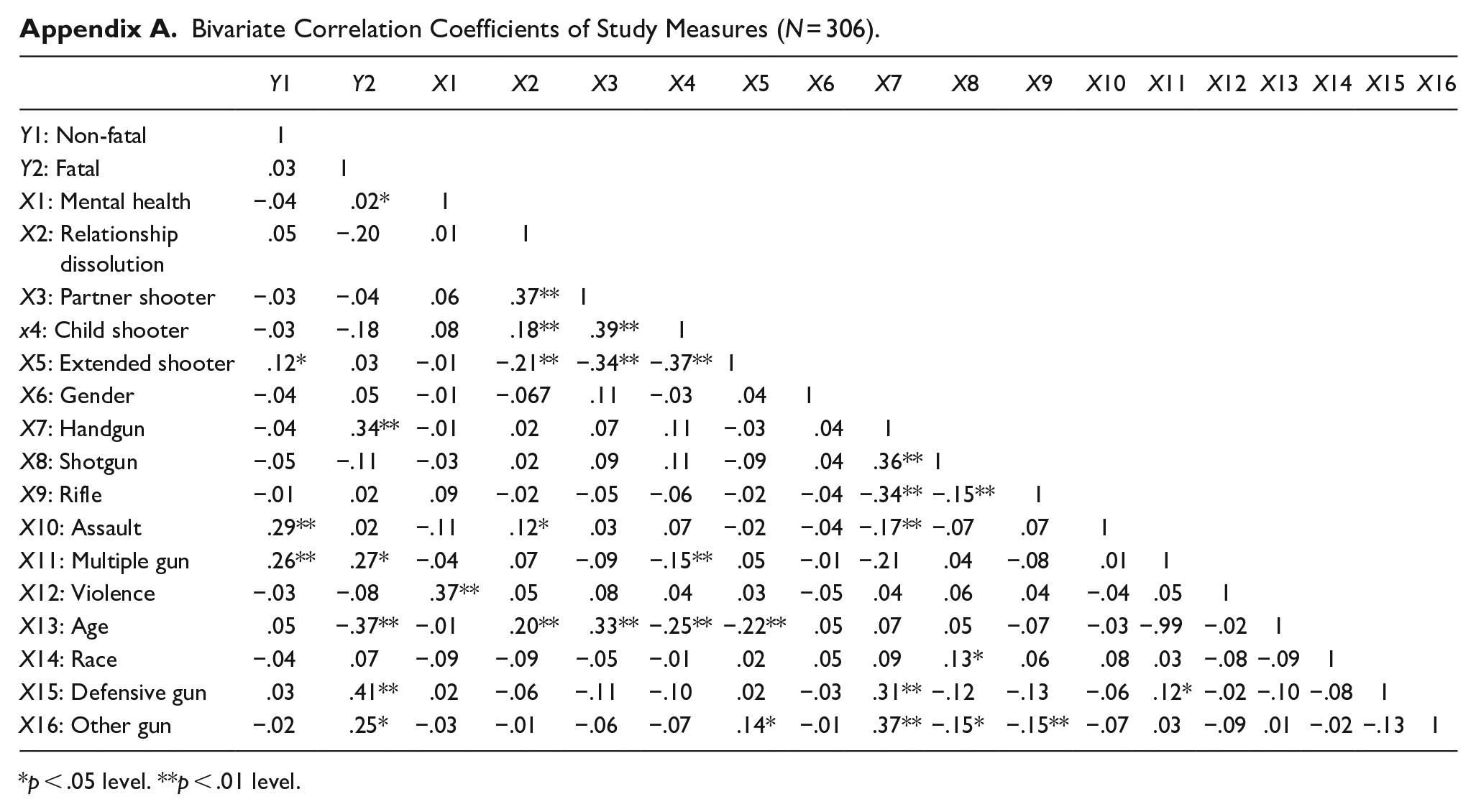
The analyses proceeded in several stages to address the research questions. First, descriptive statistics were conducted to provide an overview of the characteristics of the cases before addressing the main research questions. A correlation analysis was used to assess the presence of multicollinearity in the data (Appendix A). The results indicate no issues with multicollinearity, further supported by the Variance Inflation Factor (VIF) statistics included in Tables 2 and 3. Though the two dependent variables were count variables, we were not able to use any of the count models to examine the impact of our predicting variables. This is because none of the count models, including the Poisson distribution and the Negative Binomial, provided a good fitting-model. Therefore, we used Ordinary Least Squares (OLS) regression after we transformed the count variable into a linear variable using the log10 transformation procedure. To determine the mediation effect, the analysis was conducted using RStudio, and both Bootstrap and the Sobel test methods were used to assess mediation.
Table 1 presents the descriptive statistics. Most of the shooters (94%) were over the age of 18 years, while the remaining 6% were under 18 years. In terms of gender, 95% of the shooters were males, while 5% were females. About 58% were Whites, while 42% were non-whites. Approximately 42% had documented mental health problems, and 39% experienced relationship issues. About 63% of the shooters were intimate partners of the victims, 49% were children of the victims, and 57% were extended family members. Regarding the type of weapon used, 48% used a handgun, 13% used a shotgun, 14% used a rifle, 3% used an assault weapon, 10% used a defensive weapon, and 13% used other types of weapons.
Descriptive Statistics of Study Variables (N = 306).
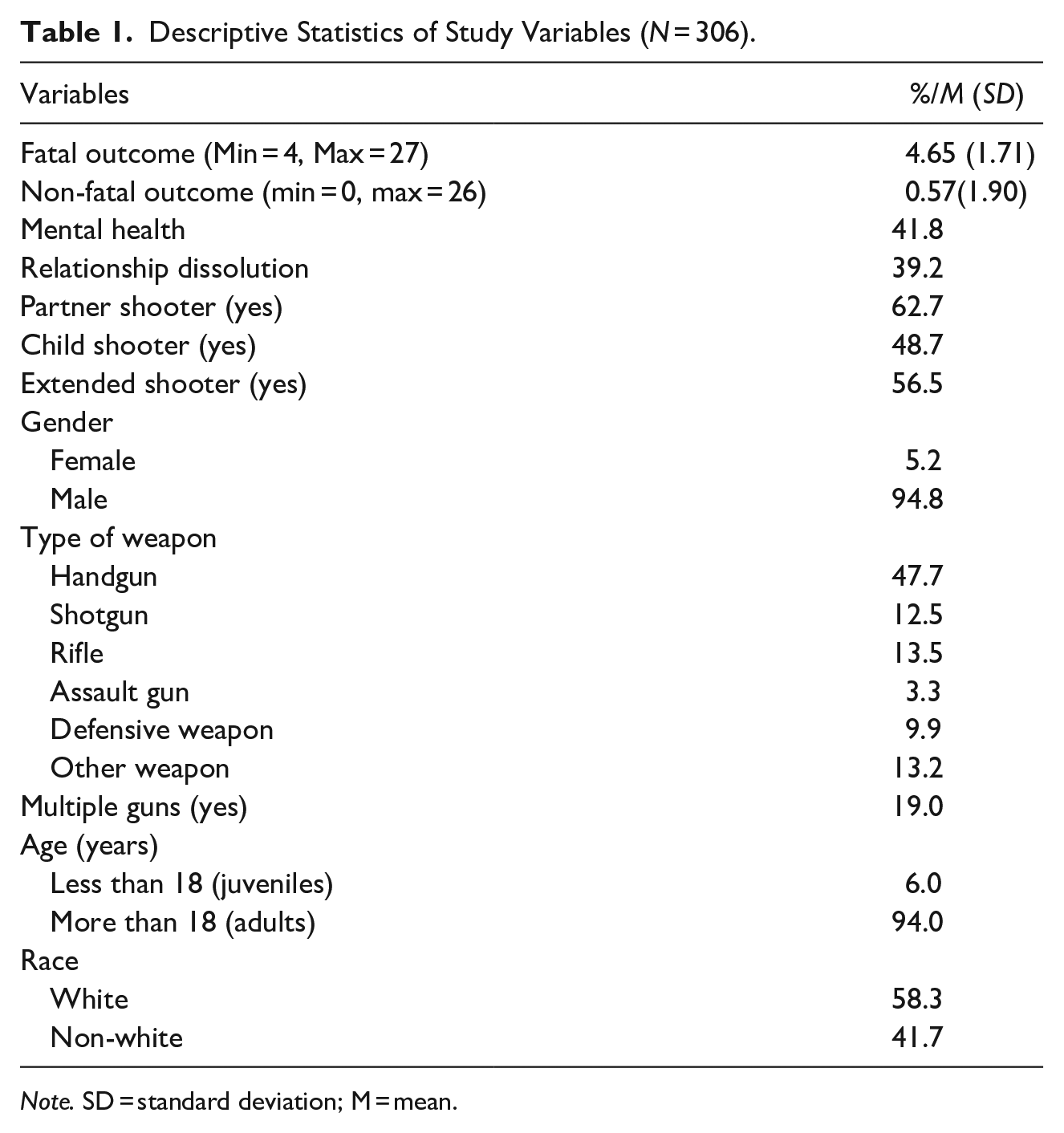
Note. SD = standard deviation; M = mean.
Results
Effects on Fatal Domestic Violence Outcome
An ordinary least squares regression was conducted to investigate the potential effect of relationship dissolution, type of weapon, and the use of multiple guns on domestic violence incidents that led to fatal outcomes. The results of the analysis are presented in Table 2. The overall model fit was significant, F (15, 275) = 3.907, p < .001, and the model explained 18% of the variance in fatal domestic outcomes. There is a significant relationship between the type of gun used—use of assault weapons, and the outcome of fatal domestic violence (t = 4.70, p < .001). Specifically, the use of assault weapons is associated with a higher likelihood of fatal domestic violence outcomes compared to the use of handguns. When multiple guns are used, the likelihood of domestic violence incidents being fatal increases. The table shows that the relationship between the use of multiple guns and fatal domestic outcomes is positive and significant (t = 3.87, p < .001). There is also a significant relationship between extended shooters and fatal domestic violence outcomes (t = 2.21, p < .05). This implies that when the shooter is an extended family member and not an immediate family member, the likelihood of a fatal outcome increases.
Regression Analysis Estimating the Effects on Fatal Domestic Violence Outcome (N = 306).
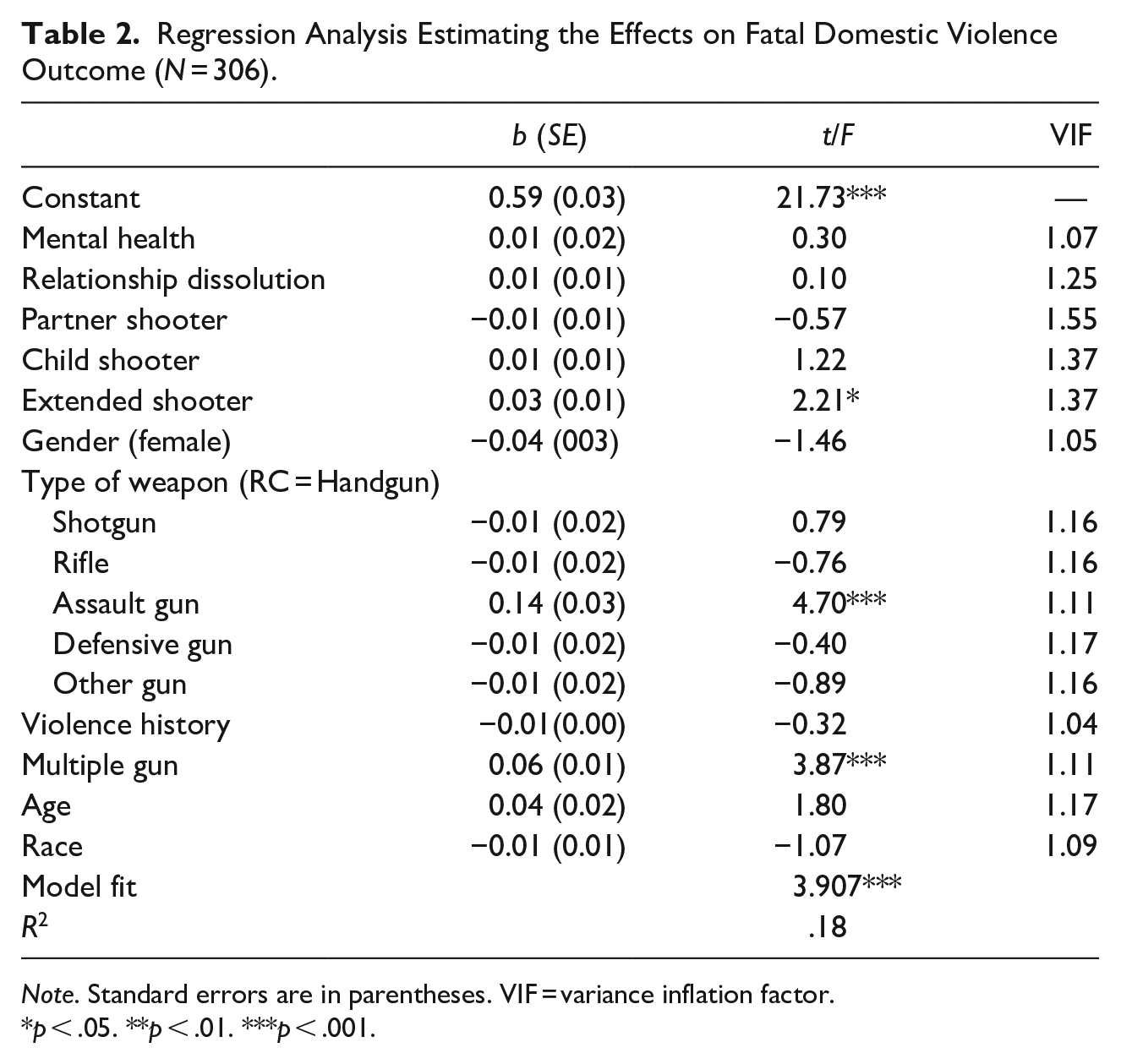
Note. Standard errors are in parentheses. VIF = variance inflation factor.
p < .05. **p < .01. ***p < .001.
Effects on Non-Fatal Domestic Outcomes
An ordinary least squares (OLS) regression was performed to examine the potential impact of relationship dissolution, weapon type, and the use of multiple guns on domestic violence incidents resulting in non-fatal outcomes. The results of the analysis are presented in Table 3. The overall model fit was significant, F (15, 55) = 2.885, p < .01, and the model explained 44% of the variance in non-fatal domestic outcomes. The result also indicates that the relationship between the use of defensive weapons and non-fatal domestic violence outcomes is positive and significant (t = 2.42, p < .05). The coefficient of .31 suggests that, compared to handguns, the more defensive guns are present and utilized, the more likely the domestic violence incident will result in a non-fatal outcome. Similarly, the use of other types of weapons aside from guns was also positive and significant (t = 3.23, p < .01). This also indicates that when weapons are used other than guns, the likelihood of domestic violence encounters leading to death is low.
Regression Analysis Estimating the Effects on Non-Fatal Domestic Violence Outcomes (N = 306).
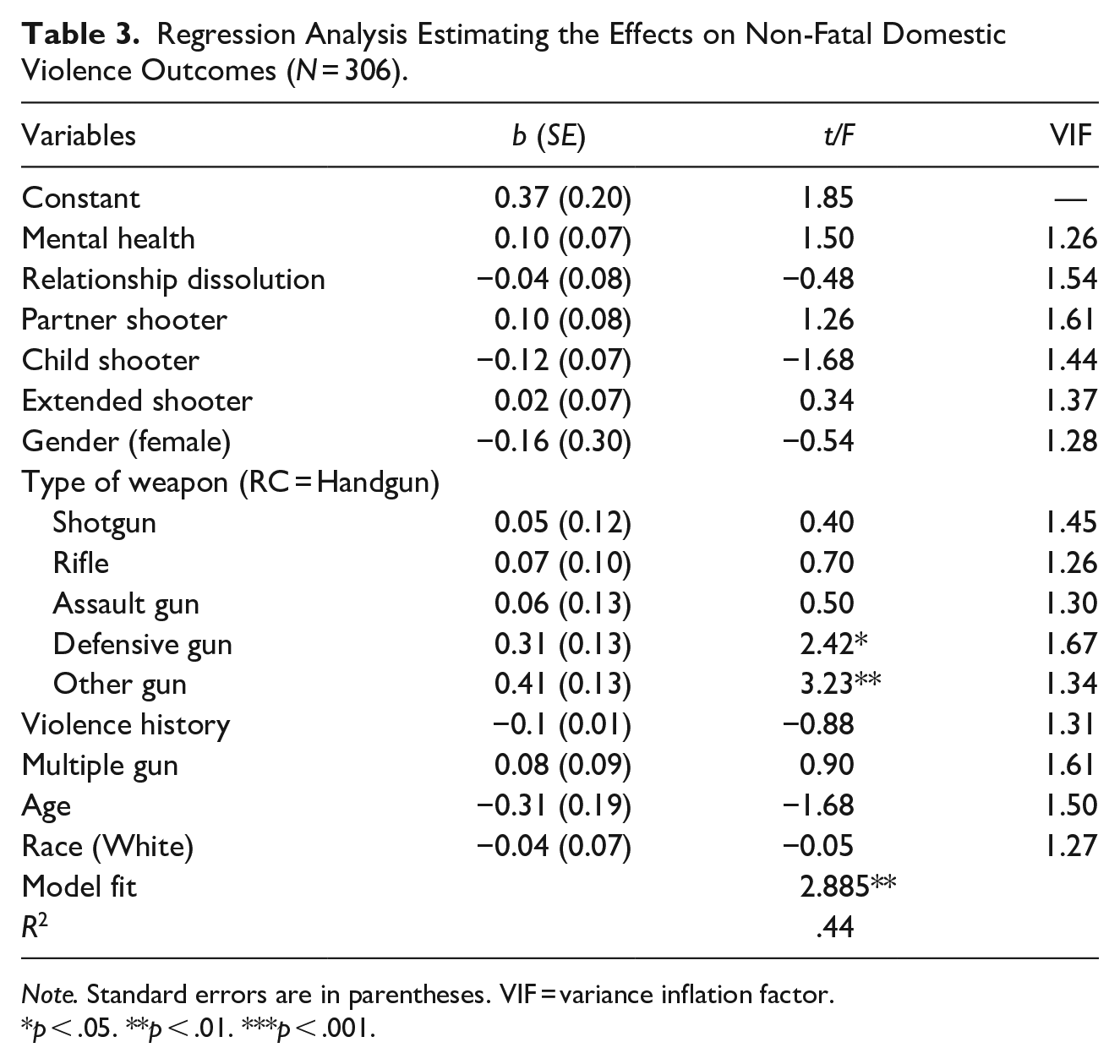
Note. Standard errors are in parentheses. VIF = variance inflation factor.
p < .05. **p < .01. ***p < .001.
The Mediating Effect of Mental Health on the Relationship Between Relationship Dissolution and Fatal Domestic Violence Outcome
The mediation model in Figures 1 and 2 shows that there is no significant mediating effect of mental health on the relationship between relationship dissolution and domestic outcomes. Specifically, there was no indirect effect for fatal outcome (b = −0.001, BCI [−0.004, 0.00]) showing that mental health does not have a mediating effect on the relationship between relationship dissolution and fatal domestic violence outcomes. This was further confirmed by the Sobel test, which showed no significant indirect effect (b = −0.89, p = .37). Similarly, there was no indirect effect for the non-fatal outcome (b = 0.007, BCI [−0.055, 0.06]), showing no mediating effect of mental health on the relationship between relationship dissolution and non-fatal outcome. It was also confirmed by the Sobel test (b = −0.17, p = .87). Hence, based on these two tests, the result shows no mediating effect of mental health on relationship dissolution and fatal domestic violence outcomes.
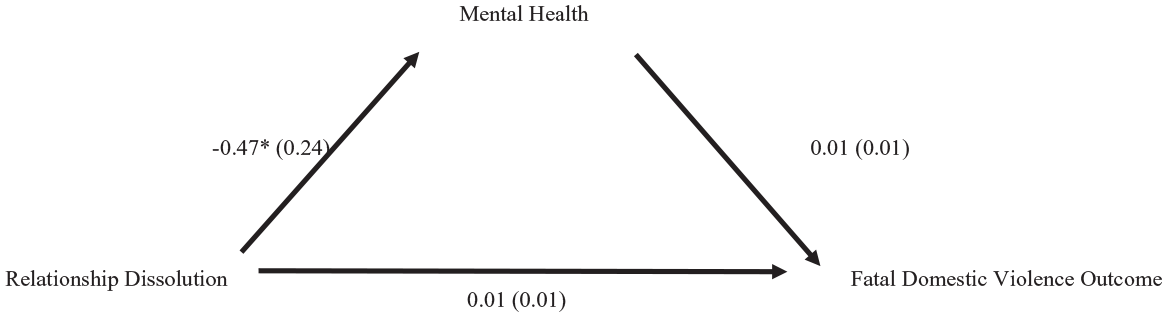
Mediating effect of mental health on relationship dissolution and fatal domestic violence outcomes.
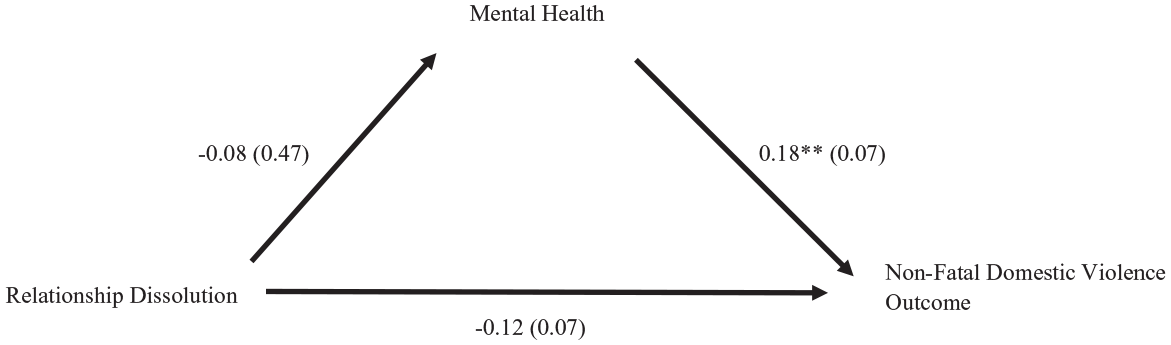
Mediating effect of mental health on relationship dissolution and non-fatal domestic violence outcomes.
Discussion
The objective of the study is to compare the effects of relationship dissolution, type of weapon, and the use of multiple weapons on domestic violence outcomes, and to test the mediating effect of mental health on relationship dissolution and fatal domestic violence outcomes. The findings from this study show a non-significant association between relationship dissolution and domestic violence outcomes. For the fatal domestic violence outcome, the relationship between relationship dissolution and fatal domestic violence outcome was positive but not significant. This suggests that while relationship dissolution might lead to domestic violence, it does not always lead to fatal outcomes. The non-significant result indicates the need for further research to investigate other factors that could influence the effect of relationship dissolution on fatal domestic violence outcomes, such as the reason for separation or other external stressors.
Similarly, the findings also report a non-significant (although negative) relationship between relationship dissolution and non-fatal outcomes. Just like in the fatal outcome, the implication of this finding suggests that relationship dissolution is not the sole factor in determining the severity of domestic violence encounters. For example, while data has shown that both men and women commit violent acts, it is believed that men are more likely than women to resort to fatal outcomes, while women would only resort to fatal outcomes in case of self-defense (Stueve & O’Donnell, 2008). Furthermore, domestic violence is a multifaceted phenomenon that encompasses different types of negative behavior ranging from verbal abuse, emotional abuse, and ultimately physical abuse (Kelly & Johnson, 2008). While relationship dissolution might not solely be a predictor of the physical severity of domestic violence outcomes, it could be a sole predictor of other domestic violence outcomes, like verbal and emotional abuse. Hence, there is a need for future research in this direction.
When comparing fatal outcomes and non-fatal outcomes, the weapon used appears to be one of the most significant factors influencing the differences between the outcomes. The use of assault guns has a positive and significant effect on fatal outcomes. This suggests the lethality of assault weapons compared to handguns and other types of firearms. Studies have found a positive relationship between the presence of firearms and the lethality of domestic violence outcomes (Díez et al., 2017; Kivisto & Porter, 2020; Lynch & Logan, 2018). This current finding suggests that the lethality would increase even more when an assault weapon is used. This is consistent with most studies on gun violence, which usually indicate the destructive nature of assault weapons. In essence, the presence of assault weapons in domestic violence incidents poses a greater risk to all parties involved. As a result, a policy implication of this study is a call for stricter regulation of assault weapons.
In the non-fatal domestic violence outcome, the findings revealed a significant positive effect of defensive weapons on non-fatal outcomes. This suggests that when one of the parties involved has a firearm to protect themselves from, the incident may not always lead to a fatal outcome. This could be that the presence of the defensive firearm de-escalates the violent situation from escalating to death. However, this finding also raises questions about the presence of these defensive firearms in domestic violence incidents. This is because studies have found that the presence of a firearm in these incidents increases the chance of fatal outcomes (Kivisto & Porter, 2020; Lynch & Logan, 2018). A policy implication of this is that while a defensive weapon is utilized to protect oneself from a fatal domestic outcome, it also increases the chance of a lethal outcome. As a result, there should be considerations for intervention programs that aim to promote non-lethal conflict resolution strategies rather than the promotion of defensive weapons.
The study also found that the use of other weapons (aside from guns) was significantly associated with non-fatal outcomes. This suggests that when non-firearm weapons such as knives, bats, etc. are used or present, the likelihood of a fatal outcome is low. This further emphasizes the role that firearms, especially assault guns, play in increasing the fatality rates of domestic violence outcomes. This current finding is consistent with Sorenson and Schut’s (2018) study, which found a disproportionate role that firearm plays in domestic violence outcomes. The use of multiple weapons has a positive and significant effect on fatal domestic violence outcomes. This suggests that the presence of multiple firearms increases the lethality of domestic violence incidents.
Another major observation made in this study was the lack of mediating effect of mental health on the association between relationship dissolution and domestic violence outcomes. This observation is surprising and fails to support our stated hypothesis. The mediation hypothesis was derived from assumptions of the general strain theory, which posits that the removal of positively valued stimuli, such as divorce, breakup, or separation, can introduce negative stimuli, such as mental health issues, leading to domestic violence outcomes. This observation calls for further examination of the effects of mental health on domestic violence. Moreover, future research should explore alternative mediators or moderators, such as social support, substance use, and economic pressures, to gain a more nuanced understanding of the pathways leading from relationship dissolution to DV outcomes.
Study Limitations
This study has some limitations, one of which is generalizability. The data used only includes domestic violence incidents involving firearms, so the findings may not be generalizable to all domestic violence cases. Consequently, further research is needed to explore other aspects of domestic violence incidents. Additionally, the measure used to capture the mental health variable—“One or more shooters have documented mental health problems”—may not fully capture all shooters with mental health issues. Some may have mental health problems that are undocumented or unrecorded. This lack of comprehensive mental health data could explain why the study did not find a mediating effect of mental health on the relationship between dissolution and domestic violence outcomes. According to General Strain Theory (GST), relationship dissolution can lead to frustration, potentially manifesting as mental health issues, which could, in turn, contribute to the perpetration of domestic homicides. Therefore, future studies should consider methods to measure mental health more accurately, including individuals who may not have documented mental health issues
Policy Implications
From a policy perspective, the findings highlight the need for a comprehensive approach to domestic violence prevention that extends beyond mental health interventions. In addition, the findings of this study have several key implications aimed at reducing fatal domestic violence outcomes. The positive and significant association between the use of assault weapons and fatal domestic violence outcomes highlights the need for more stringent gun regulations. Policymakers should consider enacting laws that include mandatory background checks and restrictions for individuals with a history of domestic abuse or restraining orders.
Moreover, there should be a mandatory seizure of firearms by law enforcement when responding to domestic violence calls, ensuring that those who are at risk do not have access to lethal weapons. Lastly, while the study shows that the presence of defensive firearms is associated with a lower likelihood of fatal domestic violence outcomes, other research has found that the presence of firearms in domestic violence situations increases the likelihood of fatal outcomes by up to 5%. As a result, policies should focus on raising public awareness of the risks associated with certain types of firearms, particularly assault weapons. Additionally, non-firearm-based solutions, such as domestic violence counseling, shelter programs, and conflict resolution initiatives, should be promoted and encouraged.
Conclusion
This study highlights the critical role of weapon type and the use of multiple guns in determining the likelihood of fatal versus non-fatal domestic violence outcomes. While relationship dissolution did not emerge as a significant predictor, the presence of assault weapons and multiple firearms significantly increased the likelihood of fatal domestic violent outcomes. These findings point to the importance of targeted policy interventions that focus on reducing access to lethal firearms in domestic settings to prevent fatal domestic violence incidents.
Footnotes
Appendix
Bivariate Correlation Coefficients of Study Measures (N = 306).
| Y1 | Y2 | X1 | X2 | X3 | X4 | X5 | X6 | X7 | X8 | X9 | X10 | X11 | X12 | X13 | X14 | X15 | X16 | |
|---|---|---|---|---|---|---|---|---|---|---|---|---|---|---|---|---|---|---|
| Y1: Non-fatal | 1 | |||||||||||||||||
| Y2: Fatal | .03 | 1 | ||||||||||||||||
| X1: Mental health | −.04 | .02* | 1 | |||||||||||||||
| X2: Relationship dissolution | .05 | −.20 | .01 | 1 | ||||||||||||||
| X3: Partner shooter | −.03 | −.04 | .06 | .37** | 1 | |||||||||||||
| x4: Child shooter | −.03 | −.18 | .08 | .18** | .39** | 1 | ||||||||||||
| X5: Extended shooter | .12* | .03 | −.01 | −.21** | −.34** | −.37** | 1 | |||||||||||
| X6: Gender | −.04 | .05 | −.01 | −.067 | .11 | −.03 | .04 | 1 | ||||||||||
| X7: Handgun | −.04 | .34** | −.01 | .02 | .07 | .11 | −.03 | .04 | 1 | |||||||||
| X8: Shotgun | −.05 | −.11 | −.03 | .02 | .09 | .11 | −.09 | .04 | .36** | 1 | ||||||||
| X9: Rifle | −.01 | .02 | .09 | −.02 | −.05 | −.06 | −.02 | −.04 | −.34** | −.15** | 1 | |||||||
| X10: Assault | .29** | .02 | −.11 | .12* | .03 | .07 | −.02 | −.04 | −.17** | −.07 | .07 | 1 | ||||||
| X11: Multiple gun | .26** | .27* | −.04 | .07 | −.09 | −.15** | .05 | −.01 | −.21 | .04 | −.08 | .01 | 1 | |||||
| X12: Violence | −.03 | −.08 | .37** | .05 | .08 | .04 | .03 | −.05 | .04 | .06 | .04 | −.04 | .05 | 1 | ||||
| X13: Age | .05 | −.37** | −.01 | .20** | .33** | −.25** | −.22** | .05 | .07 | .05 | −.07 | −.03 | −.99 | −.02 | 1 | |||
| X14: Race | −.04 | .07 | −.09 | −.09 | −.05 | −.01 | .02 | .05 | .09 | .13* | .06 | .08 | .03 | −.08 | −.09 | 1 | ||
| X15: Defensive gun | .03 | .41** | .02 | −.06 | −.11 | −.10 | .02 | −.03 | .31** | −.12 | −.13 | −.06 | .12* | −.02 | −.10 | −.08 | 1 | |
| X16: Other gun | −.02 | .25* | −.03 | −.01 | −.06 | −.07 | .14* | −.01 | .37** | −.15* | −.15** | −.07 | .03 | −.09 | .01 | −.02 | −.13 | 1 |
p < .05 level. **p < .01 level.
Declaration of Conflicting Interests
The authors declared no potential conflicts of interest with respect to the research, authorship, and/or publication of this article.
Funding
The authors received no financial support for the research, authorship, and/or publication of this article.
