







Abstract
Recently, much attention has emphasized understanding the negative health outcomes of working in corrections; however, understanding correctional staff victimization has largely been neglected. Therefore, we aim to address this gap in the literature by using target congruence theory to better understand risk of physical assault and verbal and sexual harassment of institutional correctional staff. Using data from a statewide random sample of correctional staff, analyses reveal that target vulnerability is the most useful in understanding correctional staff assault and harassment. These findings indicate that mental health, specifically anxiety and depression, place correctional staff at a higher risk for victimization and staff who engaged in hostile behavior were at a higher risk for harassment.
Introduction
Violent victimization has been shown to lead to a host of short- and long-term negative effects on physical and mental health as well as social functioning (Macmillan, 2001; Norris & Kaniasty, 1994; Semenza et al., 2021). Semenza et al. (2021) specifically identified post-traumatic stress disorder (PTSD) and depression as likely outcomes of violent victimization experienced in adolescence and adulthood (see also Ellison & Jaegers, 2022). While research on violent victimization is important, namely for the purpose of identifying ways to prevent it, there is one population uniquely at risk for violent victimization on a daily basis: correctional officers (see Ferraresso & Elling Peterson, 2025).
Correctional officers have been identified as having one of the highest rates of non-fatal violent incidents in the workplace (Bureau of Labor Statistics [BLS], 2020; Finn, 2000; Konda et al., 2013). Correctional employees experience intentional injury by another person at a rate of 84.8 per 10,000—compared to only 2.1 per 10,000 across all private industry occupations (BLS, 2020). Violence by incarcerated people (actual and threatened) has been identified by correctional officers as a top source of stress and anxiety (Finn, 2000). The effects of violent victimization for correctional officers go beyond physical health issues to include burnout, substance abuse, and damage to social relationships due to chronic stress from the constant threat of violence they face (Butler et al., 2019; Ferdik & Smith, 2017; Finn, 2000; Isenhardt & Hostettler, 2020; Lambert et al., 2020; Ricciardelli & Power, 2020; Steiner & Wooldredge, 2015). It has also been found that correctional officers are at an increased risk for PTSD and depression (Denhoff & Spinaris, 2016; Regehr et al., 2021; Spinaris et al., 2012).
Though a growing body of research has examined the negative mental and physical health outcomes of working in corrections, additional empirical research is needed to help understand or predict correctional officer victimization in the workplace. Therefore, the current study aims to address this gap by using target congruence theory in the institutional setting to better understand physical assault risk for correctional staff. By doing so, we hope to provide information that can aid in making progress toward minimizing violent victimization and thereby improving correctional officers’ physical and mental health, job performance, and social functioning. Understanding the risk factors for violent victimization would allow for informed precautions and changes in policy and practice that could effectively reduce violent victimization in the workplace for correctional officers.
Beyond violent victimization by incarcerated people, correctional agencies recognize other concerning behavior that employees are often subjected to, including verbal abuse and harassment and exposure to sexual behavior, which may also be linked to increased stress and burnout (Burdett et al., 2018; Choi et al., 2020; Spinaris, 2014). Cathcart and Jones (2019) noted that 65% of female employees and 30% of male employees reported frequently being exposed to sexual harassment or sexual exhibitionism by incarcerated people, while Choi et al. (2020) found that nearly 89% had experienced verbal harassment. According to Choi et al. (2020), verbal violence was more strongly related to aspects of job burnout than was physical violence. Unfortunately, few studies have examined these experiences or the characteristics that might predict them. Therefore, we also contribute to the literature on correctional employees’ experiences by extending target congruence theory to verbal and sexual harassment victimization by incarcerated people.
Theoretical Framework
Finkelhor and Asdigian (1996) first proposed target congruence theory to better understand why some people are more likely than others to experience violent victimization. They explained that specific attributes draw offenders to the victim. The theory purports that certain victim characteristics—such as physical weakness, gender, or homosexuality—make a person more likely to be victimized as a result of some congruence with the needs, motives, or reactivities of offenders. In particular, they argued that target congruence increases the risk for victimization through three mechanisms: vulnerability, gratifiability, or antagonism. The first mechanism, target vulnerability, purports that some characteristics increase risk because they limit a person’s ability to resist or deter victimization, thereby making the victim an easier target for the offender. Characteristics that reflect vulnerability may include psychological problems, emotional deprivation, and physical weakness. For example, an individual displaying signs of depression or mental health problems may be victimized by an offender given that their current state may limit their ability to deter victimization (Finkelhor & Asdigian, 1996).
Second, target gratifiability purports that certain victim characteristics increase risk as a result of some particular quality or valuable possession, skill, or attribute that an offender wants to obtain, use, have access to, or manipulate. Violence against the victim is one way that an offender can obtain that quality, skill, or attribute of the victim (Finkelhor & Asdigian, 1996). Risk factors might include female gender in relation to sexual assault crimes by male offenders. Third, target antagonism explains that the victim is at an increased risk for victimization because they possess qualities, skills, or attributes that arouse anger, jealousy, or destructive impulses of the offender. For example, being homosexual can increase the likelihood of experiencing school bullying and hate crime because it coincides with the offender’s particular biases. For parental crime, characteristics associated with target antagonism include disability or some form of disobedience, which can antagonize the parent due to the burden of dealing with these issues.
Target congruence theory was first tested by Finkelhor and Asdigian (1996) using data from the National Youth Victimization Prevention Survey to examine three types of victimization which include nonfamily, sexual, and parental assaults. Measures of target vulnerability included physical stature, psychological distress, physical limitations, age, and social competence, while respondent’s sex was used to measure target gratifiability. These measures were both significantly related to nonfamily and sexual assaults. Variables used to measure target antagonism included disobedience and acting out, which significantly predicted parental assault. Additional studies have also connected target congruence to youth victimization. For example, Augustine et al. (2002) examined data from 40 different middle and high schools in the state of Kentucky and found that target vulnerability (sex and age) and target antagonism (impulsive personality and ethnicity) modestly predicted violent and property victimization. Popp (2012) found support for these two mechanisms of the theory as well when examining the risk of being bullied.
Target congruence has also been used to understand specific types of victimization among adults. For example, the theory has been applied to hate crime. Waldner and Berg (2008) tested two elements of the theory (target vulnerability and target antagonism) to help explain antigay violence toward a sample of gay, lesbian, and bisexual respondents with findings in support of the theory. Similarly, McNeeley and Overstreet (2018) used target congruence as a framework to examine racially biased hate crime. The results indicated that members of particular racial groups, those who were more highly educated, and those who were involved in activities that increased their visibility as a member of a minority group were more likely to be targeted for hate crime, likely due to target antagonism.
In addition, target congruence has been linked to risk for intimate partner violence (IPV) and stalking. Zavala (2020) applied target congruence to intimate partner violence among police officers. For target vulnerability, proxy measures were used such as depression, witnessing parental violence, and experiencing past physical child maltreatment. Wanting to have the final say was used as a measure of target gratifiability. Finally, police officers’ level of anger was used as a measure of target antagonism. Zavala (2020) found support for target vulnerability and gratifiability, while partial support was found for target antagonism. Sween and Reyns (2017) also examined IPV using data from the Canadian General Social Survey. Their findings were similar to those of Zavala (2020), supporting the notion that target vulnerability and target gratifiability are significant in predicting IPV victimization, while target antagonism was not a significant predictor. Finally, Elvey and McNeeley (2019) found several indicators of target vulnerability (e.g., psychological distress, GPA, and physical limitations) were related to IPV victimization among college students, and one indicator of target antagonism (sexual orientation) was related to IPV victimization among women. Similarly, Elvey et al. (2018) found that all three mechanisms of target congruence were related to stalking victimization among college students. Overall, research supports target congruence theory and its ability to explain a wide range of victimization types.
Target Congruence and Assaults on Correctional Staff
To date, two studies have considered target congruence while examining assaults on correctional employees. First, Steiner and Wooldredge (2017) tested whether two aspects of the theory—target vulnerability and target antagonism—explained assault victimization and threats experienced by correctional staff. They determined that younger prison staff, those who have been employed for shorter time periods, and those with less training are more vulnerable to assaults (see also Kratcoski, 1988; Liebling et al., 2011; Lombardo, 1989; Sparks et al., 1996). They considered race an indicator of target antagonism. As racial and ethnic minorities are disproportionately represented in correctional facilities (Western, 2006), and many incarcerated person-on-staff assaults are interracial (Sorensen et al., 2011), White officers may be at greater risk of assault (see also Gordon et al., 2003; Taxman & Gordon, 2009). Second, using target congruence as a framework, McNeeley (2021) examined several employee-level factors when examining whether an encounter between incarcerated people and employees would result in incarcerated person-on-staff assault. However, no employee characteristics were related to assault victimization when controlling for situational characteristics.
No such studies have yet examined measures of target gratifiability. While Steiner and Wooldredge (2017) considered gender as an indicator of target vulnerability among correctional staff, past studies using target congruence to examine other types of victimization outside of correctional settings (such as sexual assault, IPV, and stalking) have considered gender an indicator of target gratifiability. As men make up the majority of the incarcerated population, women working in prisons may be at higher risk due to target gratifiability (see Liebling et al., 2011). However, other past studies have found that female staff members are less likely to be assaulted (Kratcoski, 1988; Sorensen et al., 2011; Steiner & Wooldredge, 2017).
In addition, while Steiner and Wooldredge (2017) considered job level a measure of target antagonism—as higher-ranking employees are typically involved in discipline and other important decisions, which can spark antagonism and lead to assaults—job level could also operate through target gratifiability. Those who attack higher-ranking employees or administrators may earn more respect and status from their incarcerated peers (Anderson, 1999)—making a high-ranking employee a more gratifiable target and thus more likely to be assaulted (see also Liebling et al., 2011; Light, 1991; Lombardo, 1989; Sparks et al., 1996).
Research Methods
Data and Sample
The current study uses data from a larger project aimed at understanding the prison work environment and how it impacts correctional staff’s mental health, relationships with family and friends, and overall quality of life. The target population included all correctional staff working in all 12 of Kentucky’s adult correctional institutions. At the time of data collection, 11 of the 12 institutions housed males; one of these also housed minimum security females in two units outside the fence. The female institution housed females at all levels of security. Of the remaining 11 male institutions, the security levels included: two minimum institutions, each with a population of approximately 310; three medium/minimum institutions, with populations ranging from about 980 to 1,900; three medium security institutions, with populations ranging from approximately 690 to 1,200; two medium/maximum institutions, with populations of approximately 975 and 1,200; and one maximum institution that houses approximately 850 incarcerated persons. Each prison provided the Principal Investigator with a roster of all eligible staff. Every third person on the roster was selected and invited to participate in the survey. If they agreed and provided informed consent, they were included; if they were unavailable due to work tasks, the sampling interval was repeated until a 33% sample was obtained (which meant continuing from the top of the list after reaching the end, but without replacement of names already removed due to agreeing or refusing to participate).
Cross-sectional surveys were completed by 800 correctional staff members between February 2016 and December 2016. This resulted in a sample that included one-third of all eligible staff. Of the 800 surveys completed, 25 were removed because they were considered invalid. Surveys were considered “invalid” if fewer than 50% of the survey items were completed, raising questions about content validity.
A majority of participants were male (63.9%). Whites made up the majority of the sample (92.4%), while African Americans were the second largest racial category (4.1%). This is representative of the target population; at the time of the survey, Kentucky Department of Corrections staff was 64% male and 7.6% non-white. The participants ranged in age from 21 to 73 years, with an average age of about 40. About a third of the sample (34.2%) had a high school degree or less, while 30.1% had attended college, 26.5% had a college degree, and 9.3% had either attended graduate school or completed a graduate degree. Approximately 16% of employees had worked in their current facility for a year or less, while about 72% had worked in the facility for 2 years or more.
Dependent Variables
First, we included two measures of physical assault victimization: a binary variable indicating whether the employee had been assaulted during the past 2 years, and a count variable that shows the number of times the employee had been assaulted during those 2 years. These two dependent variables come from a section of the survey that asked the employee about their exposure to a variety of violent and traumatic events while working in corrections. Respondents were asked how many times over the past 2 years they had experienced 15 different types of violent or traumatic events while on the job, with one of the events being how many times they had been physically assaulted by incarcerated people. It is from that item that the two physical assault dependent variables were created.
Next, participants were asked how often incarcerated people sexually harassed them. Responses ranged from 1 (never) to 5 (daily). Because the variable was highly skewed, we recoded this to a binary variable in which those who responded “never” were given a value of 0 while those who responded “occasionally,” “monthly,” “weekly,” or “daily” were given a value of 1. Finally, respondents were asked how often incarcerated people verbally harassed them based on their race, religion, national origin, education, and gender. The responses ranged from 1 (never) to 5 (daily). We averaged the five items (Cronbach’s α = .682) to create a scale of overall harassment experienced by correctional staff. 1
Independent Variables
Our measures of target congruence were largely based on those used by Finkelhor and Asdigian (1996) in their original work introducing the concept. Three target antagonism measures were included. First, race was a dichotomous variable indicating whether the participant was White (0) or a minority (1). Second, education was a dichotomous variable indicating whether the participant had a college degree or higher (1) or less than a college degree (0). We considered education an indicator of target antagonism based on the premise that higher educational attainment may signal elevated status, authority, or perceived superiority within the institutional hierarchy. While incarcerated people may not directly know a staff member’s education level, such distinctions may be inferred through communication style, decision making, or role responsibilities—which may provoke resentment.
The third measure captured the degree to which correctional staff endorsed engaging in hostile interactions with incarcerated people. Participants were asked how much they agreed with the following four statements regarding interactions with incarcerated people: (1) My coworkers respect me when I use violence to settle a dispute with an inmate; (2) It is acceptable for another officer to use violence when an inmate verbally disrespects the officer; (3) I feel that I treat some inmates as if they were impersonal objects; and (4) The vast majority of time at work, I treat all inmates and staff with respect (reverse coded). The first two items were measured on a 4-point Likert scale ranging from strongly disagree to strongly agree. The second two items were measured on a 5-point Likert scale ranging from strongly disagree to strongly agree. The four items were standardized and then entered into a principal components analysis (PCA). The items converged on one factor with an eigenvalue of 1.501 and factor loadings above 0.45, which is considered a fair cutoff (Comrey & Lee, 1992; Stevens, 1992; Tabachnick & Fidell, 2007), especially when the sample size is large, as it is here (Hair et al., 1998).
Two target gratifiability measures were included. First, because incarcerated people may derive more social benefit from assaulting a highly ranked employee than from assaulting a rank-and-file employee (Liebling et al., 2011; Light, 1991; Lombardo, 1989; Sparks et al., 1996), we included a dichotomous variable indicating whether the participant was a higher-ranked employee or administrator—such as a warden, deputy warden, captain, lieutenant, sergeant, unit director, or unit administrator (1)—or was line staff (0). Second, in line with the original conceptualization (Finkelhor & Asdigian, 1996) and prior research on target congruence (Elvey et al., 2018; Elvey & McNeeley, 2019; Zavala & Whitney, 2019), we included gender (male = 0, female = 1) as a measure of target gratifiability.
We examined four measures of target vulnerability. Because Finkelhor and Asdigian (1996) noted psychological distress as a marker of vulnerability and other research has confirmed its importance in creating victimization risk (Elvey et al., 2018; Elvey & McNeeley, 2019), we included two measures to capture psychological vulnerability. The measures of depression and anxiety are derived from the Trauma Symptom Inventory-2 (TSI-2). The TSI-2 is comprised of 136 items measuring anxiety, depression, PTSD, and suicidality symptomology over the past 6 months (Briere, 2011). The scale ranges from 0 (Never) to 3 (Often). First, depression is a summed measure of the 10 depression items from TSI-2. Some of the depression items include feeling hopelessness, feeling worthless, and not enjoying things that other people enjoy because you were too depressed. Second, anxiety is a summed measure of the seven items included in the anxious arousal-anxiety (AA-A) scale from the TSI-2. This subscale focuses on measuring worrying, irrational fears, nervousness, and fears surrounding death or injury. Third, we included a continuous measure of the total time (in years) the participant had been employed in corrections. Finally, we included age in years at the time of the survey.
We also included three control variables. First was a binary variable indicating whether the employees’ work assignment was in security/custody, as those work routines likely result in greater exposure to motivated offenders. Second is the average number of serious assaults on staff per month in the facility in which the individual worked; working in a facility where more assaults take place increases risk of victimization by placing one in proximity to violence. Third, because victimization risk is related to one’s level of self-control (Schreck, 1999), we included a measure of self-control in the analyses. The self-control variable is a summed measure of the 24 items capturing the six main components of self-control, which include impulsivity, preference for simple tasks, risk-seeking, physical activity, self-centeredness, and temper (Grasmick et al., 1993). Respondents were asked how much they agreed with each statement, and the scale ranged from 1 (strongly disagree) to 4 (strongly agree).
Data Analysis
Analyses were conducted in Stata 18. We conducted two analyses of physical assault victimization. First, we analyzed the binary measure of physical assault victimization using logistic regression. Second, the count measure of physical assault victimization was examined using negative binomial regression models, due to its measurement as count-level data and its overdispersion (α = 607.36, p < .001). The physical victimization variables measured assault that occurred over the past 2 years which may be, in part, a function of the amount of time employed. Over a quarter (28.4%) of the employees who participated in the survey had been working for less than 2 years. To account for these issues, in the negative binomial models, we used the exposure command in Stata to account for the number of months in the 24-month follow-up period that participants had been employed. While the exposure option is not available for logistic regression, we applied analytic weights based on employment duration to account for differential exposure time in the logistic regression analysis.
Next, to examine employees’ experience of biased harassment by incarcerated people, which was measured using a continuous scale that was highly skewed, we used generalized linear models (GLM) with a gamma distribution and a log link. Finally, experiences of sexual harassment were examined using binary logistic regression.
In all analyses, we used the cluster option to account for differences across facilities. Missing data were handled using listwise deletion. Checks for multicollinearity were conducted and no problems were found; the lowest tolerance value was 0.493 (VIF = 2.030; see Allison, 1999).
Results
Univariate and Bivariate Results
Table 1 presents descriptive statistics for all study variables. First, according to Table 1, 17% of the sample had been physically assaulted at least once in the 2-year period. The distribution of physical assaults was highly skewed; they ranged from 0 to 100, with an average of 0.53. Second, biased verbal harassment was not frequent among this sample; responses measured the frequency with which biased verbal harassment occurred and ranged from 1 (never) to 5 (daily). The average observed here was 1.13. Third, 17% of the sample reported experiencing sexual harassment at least occasionally.
Descriptive Statistics.
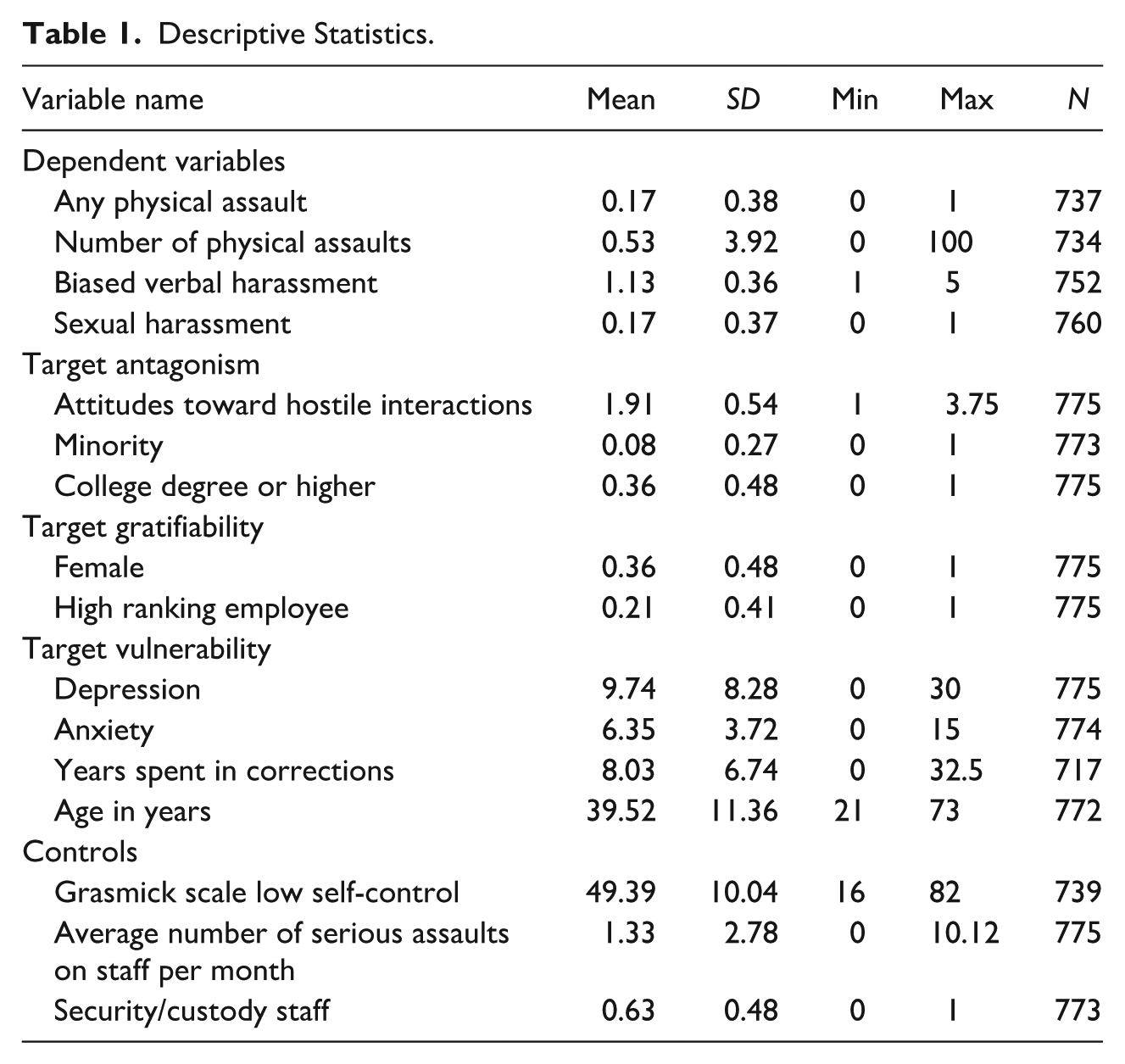
Table 2 presents bivariate correlations between the dependent variables and all independent variables. The first two columns display the results for the variables capturing any physical assault and the number of physical assaults. In terms of target antagonism, as expected, staff who exhibited hostility toward incarcerated people experienced a greater number of physical assaults (r = .191, p < .01); however, they were no more or less likely to be assaulted when examining a binary measure of assault (r = .009, p > .05). Staff with more education experienced fewer physical assaults (r = −.080, p < .05), but were no more or less likely to experience assault at all (r = −.058, p > .05). Both measures of target gratifiability were related to physical assault. As expected, highly ranked employees experienced more physical assaults than line staff (r = .122, p < .01). However, in contrast to our hypotheses, female employees experienced significantly fewer physical assaults (r = −.134, p < .01). Two measures of target vulnerability were related to physical assault. Those who had been physically assaulted by incarcerated people reported higher levels of depression (r = .131, p < .01) and anxiety (r = .116, p < .01). Further, depression (r = .175, p < .01) and anxiety (r = .162, p < .01) were positively related to the number of assaults.
Bivariate Pearson Correlations between Independent and Dependent Variables.
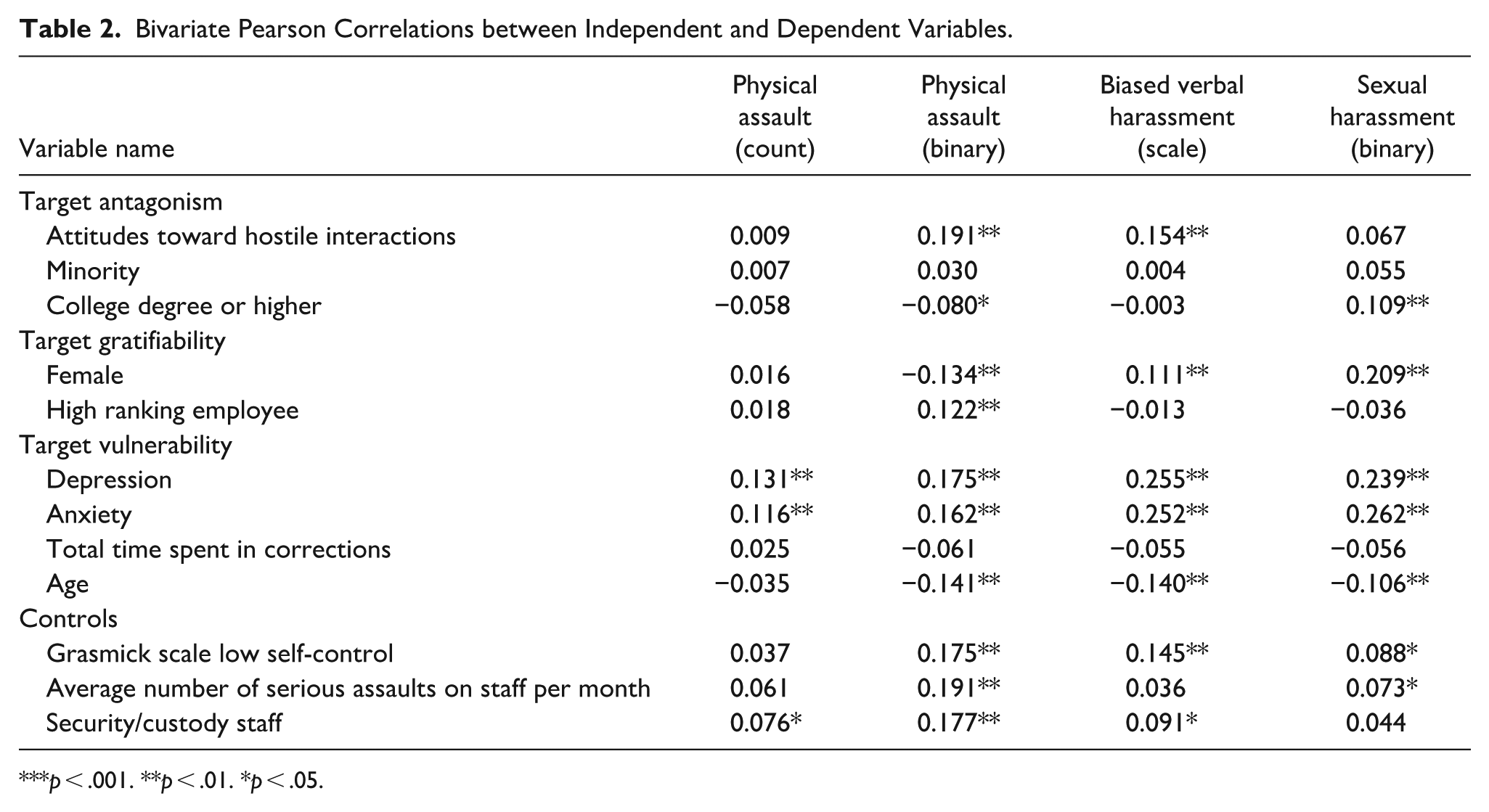
p < .001. **p < .01. *p < .05.
All the control variables were related to at least one of the physical assault variables. Security staff were more likely to be assaulted (r = .076, p < .05), as well as to experience greater numbers of assaults (r = .177, p < .01). Employees with low self-control (r = .175, p < .01) and those who worked in facilities with more frequent assaults (r = .191, p < .01) reported more frequent physical assaults, while older employees reported fewer assaults (r = −.141, p < .01).
The next column displays bivariate correlations between the independent variables and verbal or sexual harassment by incarcerated people. Hostility toward incarcerated people was positively related to harassment (r = .154, p < .01). Contrary to the results for physical assault, female employees experienced harassment more frequently (r = .111, p < .01), in line with the concept of target gratifiability. Staff who reported symptoms of depression (r = .255, p < .01) or anxiety (r = .252, p < .01) experienced harassment more frequently, in line with the concept of target vulnerability. Regarding the control variables, harassment was positively related to low self-control (r = .145, p < .01) and negatively related to age (r = −.140, p < .01), while security staff experienced harassment more frequently (r = .091, p < .05).
The rightmost column displays the bivariate correlations with sexual harassment. Sexual harassment was more common among those with college degrees (r = .109, p < .01) and women (r = .209, p < .01). Sexual harassment was positively associated with depression (r = .239, p < .01), anxiety (r = .262, p < .01), low self-control (r = .088, p < .05), and the average number of assaults at one’s work facility (r = .073, p < .05), while it was negatively associated with age (r = −.106, p < .01).
Multivariate Results
Table 3 presents the results of the models predicting physical assault. The columns on the left display the results for the binary logistic model predicting any experience of physical assault. Employees who reported higher levels of anxiety were more likely to report any assault (p = .015); the odds of assault increased by 10% for each additional anxiety symptom. Those working in facilities with more serious assaults on staff were more likely to report being assaulted (p < .001); the odds of being assaulted increased by 21% for each increase in the average monthly number of assaults at the facility. Security staff were approximately two times more likely than other employees to have been assaulted, although this result was not statistically significant (p = .087).
Logistic and Negative Binomial Models Predicting Physical Assault Victimization.
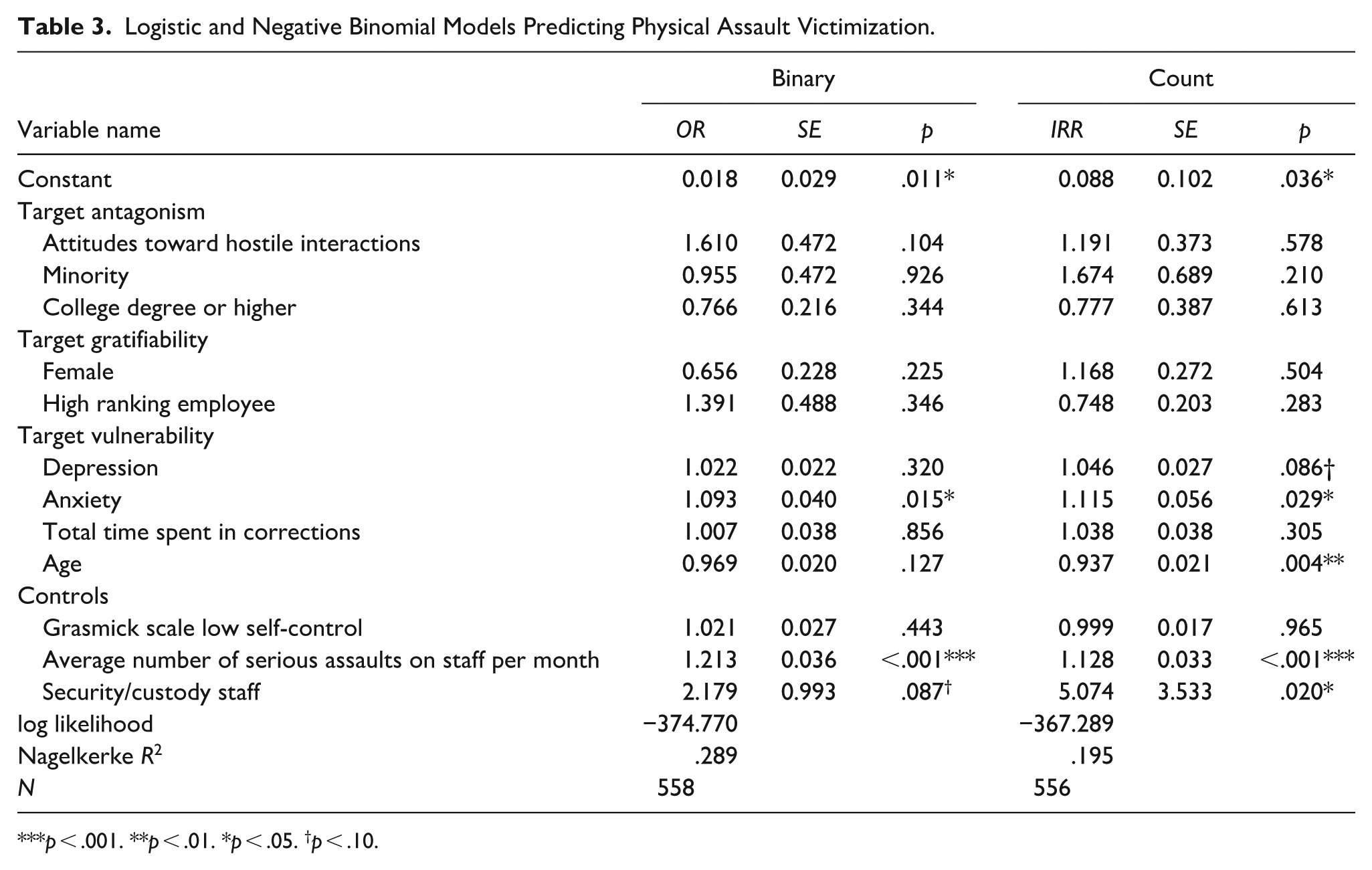
p < .001. **p < .01. *p < .05. †p < .10.
The columns on the right side of Table 3 display the negative binomial models predicting the number of physical assaults. Two target congruence measures were related to the number of assaults reported by staff. Employees with higher levels of anxiety experienced more assaults (p = .029); the incidence rate of assault victimization increased by about 12% for each additional anxiety symptom. Older employees experienced fewer assaults ( p = .004); the incidence rate decreased by 6% for each 1-year increase in age. In addition, depression was marginally associated with the number of victimization incidents (p = .086). Two control variables were related to the frequency of assault. Assaults were more frequent when employees worked in more dangerous facilities (p < .001); the incidence rate increased by 13% when the average number of assaults at a facility increased by one. Finally, security staff reported approximately five times higher incidence rates for assault than did other employees (p < .001).
Table 4 presents the results of the OLS regression model predicting biased verbal harassment by incarcerated people. First, those who reported higher levels of hostility toward incarcerated people experienced more frequent biased verbal harassment (b = 0.069, p = .017). Second, in terms of target gratifiability, female employees experienced more frequent biased harassment (b = 0.081, p = .004). Third, as for target vulnerability, employees experiencing greater levels of depression (b = 0.005, p = .002) experienced more frequent biased harassment and older employees received less frequent biased harassment than younger employees (b = −0.003, p = .031). Finally, employees who were members of racial minority groups experienced marginally less frequent biased harassment (b = −0.032, p = .085).
GLM Regression Model Predicting Biased Verbal Harassment.
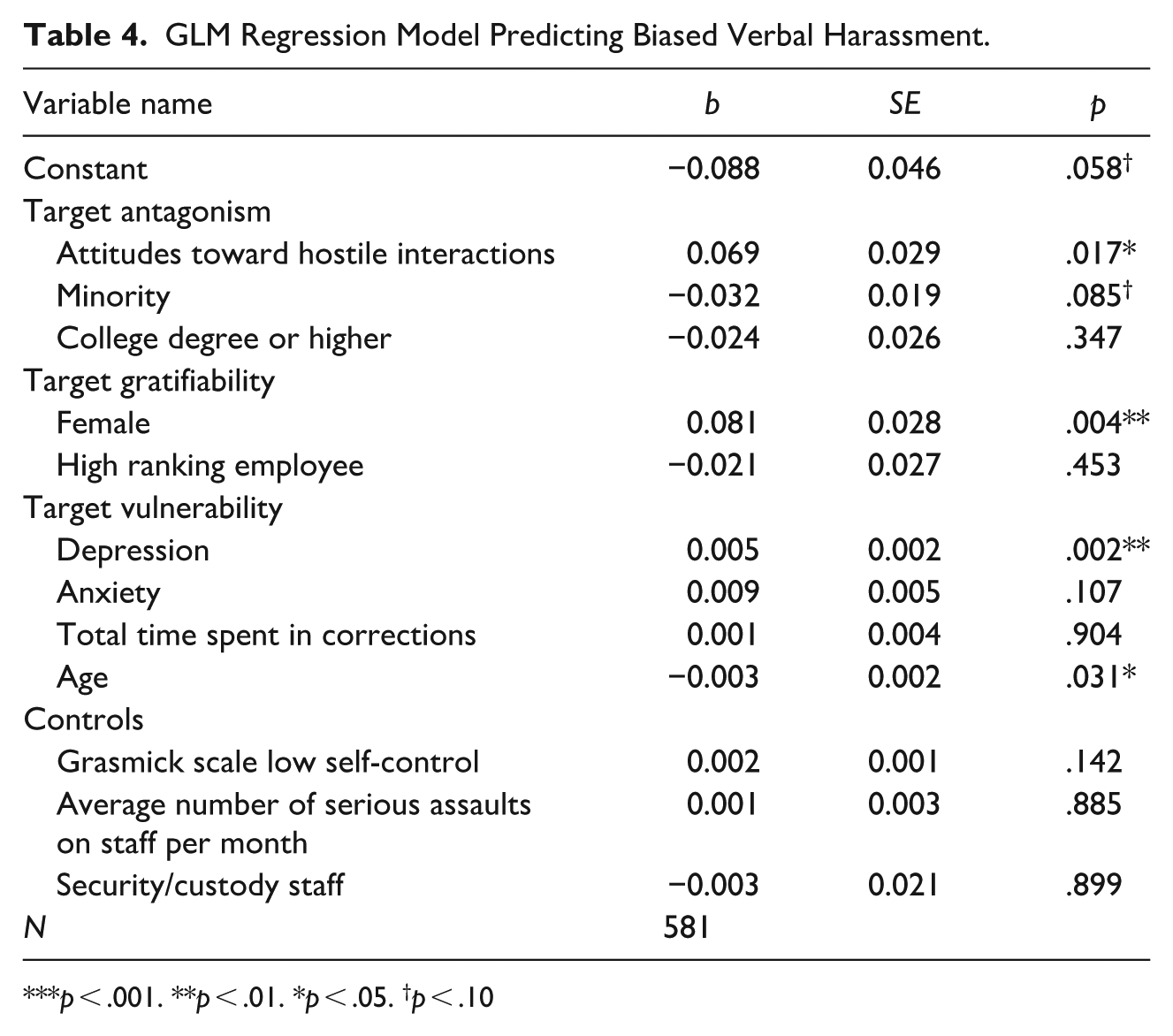
p < .001. **p < .01. *p < .05. †p < .10
Table 5 shows the results of the binary logistic regression model predicting sexual harassment. First, women were about four times more likely to experience sexual harassment (p < .001). Second, sexual harassment was positively associated with both depression (p < .001) and anxiety (p = .021). Finally, sexual harassment was more commonly reported among employees of more dangerous facilities (p = .005); the odds of sexual harassment increased by about 8% for each increase in the average number of serious assaults per month.
Binary Logistic Regression Model Predicting Sexual Harassment.
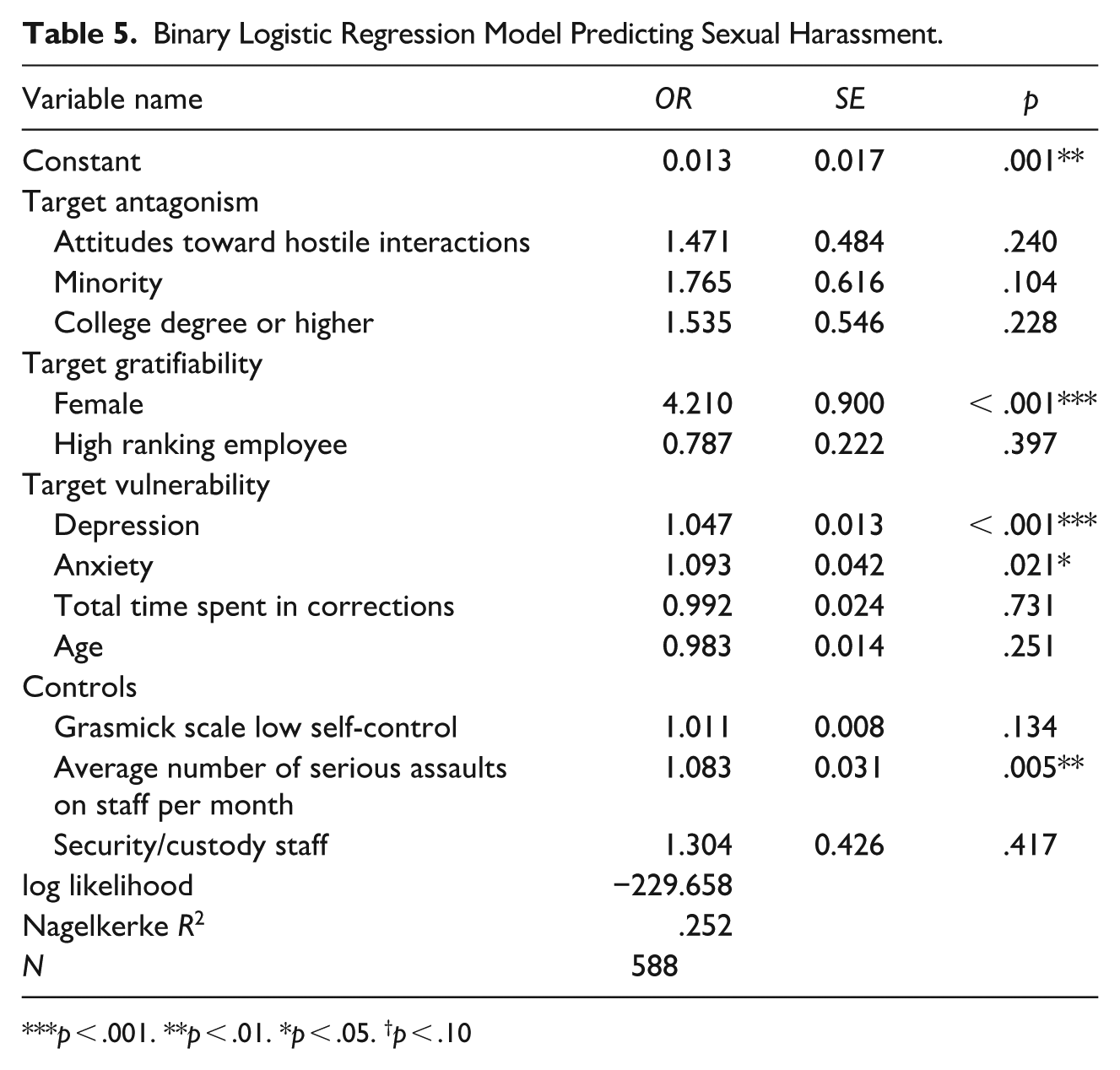
p < .001. **p < .01. *p < .05. †p < .10
Discussion
The current study sought to assess the ability of Finkelhor and Asdigian’s (1996) target congruence theory to explain physical assault and harassment of correctional officers by incarcerated people. Guided by the existing literature, target vulnerability was represented by measures of participants’ depression, anxiety, and tenure; target gratifiability was represented by rank and gender; and target antagonism was represented by race, education, and antagonizing behavior that the participant engaged in. Overall, the results suggest that one mechanism of target congruence theory, target vulnerability, is most consistently related to physical assaults and harassment of correctional officers, but there is some evidence that the other two mechanisms are also associated with those outcomes.
First, target vulnerability was most consistently related to correctional officer victimization. Anxiety level was significantly related to the occurrence and frequency of physical assaults, and both depression and anxiety levels were significantly related to biased verbal harassment. However, because the data are cross-sectional, we cannot determine temporal order or establish causality. Mental health symptoms may be a result of victimization as well as a cause. It is possible that symptoms emerged following victimization, or that pre-existing symptoms contributed to increased vulnerability.
However, prior research supports the idea that mental health can serve as an indicator of target vulnerability. In Zavala’s (2020) study on IPV victimization among police officers, depression remained a significant predictor for IPV victimization even when controlling for measures of target gratifiability and target antagonism. Zavala and Whitney (2019) found depression and anxiety to be significant predictors for youth violent victimization, but only anxiety remained significant when the measures for target gratifiability and target antagonism were included in the analyses. These studies suggest that psychological vulnerability may play a role in victimization risk, even if the mechanisms are complex and bidirectional.
Future longitudinal research should examine the interrelationships between mental health and victimization to better understand how to prevent and respond to violence against correctional staff. Despite this limitation, the observed associations between anxiety, depression, and victimization underscore the importance of mental health as a relevant factor in staff safety. Programs and initiatives to address the mental health needs of correctional staff are available in certain jurisdictions. For instance, some correctional agencies may provide trauma services and counseling programs that will treat general mental health concerns; however it is difficult for facilities to locate treatment providers who are adequately trained to address mental health concerns specifically related to corrections (Brower, 2013). Further, while some prisons offer stress management programs for COs, this is quite rare, oftentimes requiring many COs in need of such services to seek private counseling organizations (Finn, 2000). Though growing measures are in place to improve the mental health and well-being among correctional workers, barriers to treatment persist (Brower, 2013; Ricciardelli et al., 2018). [SO1]
It may be beneficial for correctional institutions to prioritize providing quality mental health resources for all staff. This is especially important for security personnel who are regularly in direct contact with incarcerated people while working, thus increasing their risk of victimization. Programs should also address other forms of job related stress such as poor opportunities for advancement, lack of support and positive recognition for work performance, low salaries, and safety concerns while on the job (Brower, 2013; Ferdik & Smith, 2017). Importantly, correctional agencies should offer resources such as wellness programs designed for individuals who experience unique forms of direct and vicarious trauma on the job and in turn may adopt unhealthy coping strategies such as substance use (Ferdik et al., 2024; Ferdik & Smith, 2017).
Second, despite fear of victimization being higher among female correctional officers in previous research (e.g., Gordon et al., 2013), we found women were not more likely to experience physical assaults than men. However, women were more likely to be sexually harassed and verbally harassed than men. These results lend insight into how gender might operate as a risk factor for victimization. In particular, a characteristic can have several implications about a person’s risk of victimization according to lifestyle-routine activities and target congruence theories. Some traits, such as gender, can indicate several aspects of target congruence. Women being more likely to be sexually and verbally harassed supports gender as a measure of gratifiability and/or vulnerability, as harassing a woman may be more gratifying, and they may seem more vulnerable than men. However, gender being null for physical assault suggests male gender could be an antagonistic factor that may negate the vulnerability and/or gratifiability of physically assaulting women. Some incarcerated people may be less likely to assault women because such behavior could be seen as weak and therefore damage rather than boost their reputation (see Mullins et al., 2004). Even though these findings are in opposition to the effect that gender had on correctional officer victimization in other studies (see Steiner & Wooldredge, 2017), they are important because they reveal the complexity of the effect that a single factor can have on victimization. More research—especially qualitative work—exploring the relationship between target congruence factors and correctional officer victimization that includes reasons why the officer was victimized would be useful in identifying the complexities of certain factors, including gender.
Based on our findings that women are more likely to experience sexual and biased verbal harassment but not more likely to be physically assaulted, we suggest the following policy recommendations. First, agencies should ensure verbal harassment is taken seriously, with clear reporting procedures and support services in place for those who experience verbal harassment. Support services should be designed to consider the unique needs of female staff. Second, correctional officer training should include information on gender dynamics and strategies to prevent harassment. Third, staff deployment strategies should be designed to reduce isolation and increase visibility for female staff.
Third, attitudes about hostility toward incarcerated people was the only variable in the target antagonism category that was associated with any of our outcomes. In particular, attitudes favorable toward hostility were significantly related to biased verbal harassment but not to the occurrence or frequency of physical assault or sexual harassment. This finding is consistent with past studies: Ellison and Gainey (2020) found that correctional officers who engage in coercive control, such as using write-ups to maintain control, are more likely to experience threats, but not assault. It is important to note that the responses to the questions used in the current study might have been hypothetical or measuring institutional culture rather than directly reflecting how hostile the employees actually behaved. Still, it is unclear why attitudes toward hostility would increase the likelihood of threatening or verbally aggressive behavior but not physical violence. Since few studies have examined hostility by correctional staff or its relationship with victimization, more research is needed, especially considering that a subset of correctional officers choose the occupation in part to engage in such behavior (Burton et al., 2023). Further research will help us understand how and why correctional employees engage in hostility as well as to explore the relationship between openly hostile behavior and physical versus verbal victimization.
Few programs exist for correctional personnel that address the role of interpersonal skills and teamwork building. Janoka and Scheckenbach (1978) designed an extensive, forty-hour interpersonal skills training program among COs that emphasized the role of developing empathy and empathic responses. Similarly, Groeneveld and Gerrard (1985) implemented a brief interpersonal skills training workshop for correctional personnel that improved group members’ empathy scores from pre-test to post-test.
Given the findings regarding hostile behavior, as well as prior research showing that use of force can increase assaults against correctional staff (McNeeley, 2021), we strongly recommend improved and increased training dedicated to avoiding engaging in antagonistic behavior as well as improving interpersonal skills and teamwork, building de-escalation skills, and developing non-punitive methods to reduce risk of victimization (Liebling et al., 2011; Miller et al., 2023). For example, crisis intervention team (CIT) training—which informs employees about mental illnesses and how to deescalate situations with people in mental health crisis—has been shown to aid in gaining compliance from incarcerated people (McNeeley & Donley, 2021). This training may be important because mental health problems among incarcerated people and escalation of minor incidents have been linked to work-related injuries for correctional officers (Goulette et al., 2022). Younger officers may benefit the most from this type of training as the findings indicate that older officers were significantly less likely to be physically or verbally victimized (see also Steiner & Wooldredge, 2017).
Finally, prior research shows that facility and situational characteristics are important in understanding incarcerated person-on-staff assault (McNeeley, 2021; Steiner & Wooldredge, 2017), and we found that staff working in facilities with more incarcerated person-on-staff assaults were victimized more frequently. Therefore, it is important for correctional agencies to implement situational and facility-level crime prevention measures (see French & Gendreau, 2006; McNeeley, 2021; Steiner & Wooldredge, 2017; Wortley, 2002) to reduce employees’ exposure to violence. In addition, support from other staff members can be an important predictor in job stress (Walters, 2022); therefore, we recommend implementing programs that strengthen staff support, both as a preventative measure and as a way to help employees cope with stress after experiencing verbal or physical violence.
As with all research, this study has limitations that affect our interpretations of the findings. First, the measure of verbal harassment is limited in that respondents were only asked to report harassment when they could identify a perceived basis such as race or religion. This may exclude instances of verbal harassment not motivated by bias or when the motivation was unclear or ambiguous. Future research should consider more inclusive measures that capture general verbal harassment. Second, sexual assault was not measured with its own survey question. It is possible that respondents included experiences of sexual assault within broader categories such as physical assault, obscuring the specific prevalence and nature of this form of victimization. Scholars should incorporate targeted measures to capture the scope and impact of sexual assault among correctional staff. Third is the age of the data, which was collected in 2016. Recent developments may have altered the correctional landscape in ways that could influence our findings. For example, the COVID-19 pandemic introduced new stressors and operational challenges, including staffing shortages, increased unrest, and heightened health risks, all of which may have impacted violence. Additionally, growing national attention to criminal justice reform and workplace mental health may have led to changes in institutional culture, reporting practices, and support systems for correctional staff. More research is needed to determine whether and how these evolving conditions have reshaped the experiences of staff victimization.
Despite these limitations, this study still provides important insights into staff victimization during that time. Overall, our findings support target congruence theory—particularly the concept of target vulnerability—and align with past studies of target vulnerability and violent victimization (e.g., Zavala, 2020; Zavala & Whitney, 2019). Target congruence is a viable framework to begin understanding which individual-level factors contribute to correctional officer victimization. Our findings suggest there is a relationship between correctional officers’ mental health and their experiences of victimization by incarcerated individuals. However, longitudinal studies are needed to clarify the temporal order to establish whether being victimized while working is the result of mental health symptoms or vice versa. Our results further illustrate that hostile behavior, gender, and rank are associated with some forms of correctional officer victimization. Future research should continue exploring correctional officer victimization using all components of target congruence theory as well as the components of lifestyle-routine activities theory to help guide the research.
Footnotes
Authors’ Note
The contents of this article reflect the views of the authors and do not necessarily reflect the views or policies of the Kentucky Department of Corrections or the Minnesota Department of Corrections.
Declaration of Conflicting Interests
The authors declared no potential conflicts of interest with respect to the research, authorship, and/or publication of this article.
Funding
The authors disclosed receipt of the following financial support for the research, authorship, and/or publication of this article: The data used in this study were collected as part of a project funded by the Kentucky Department of Corrections.
