







Abstract
Fraud results in billions of losses each year. While research has examined fraud victimization risk, it is less clear how online routine activities are associated with fraud risk, and how gender differentially influences risk. Using a sample of Michigan-based respondents (n = 1,203), and subsamples of men (n = 570) and women (n = 633), the study assessed the association between routine activities and fraud victimization. Results suggested that online behaviors relating to gaming and social media usage were associated with risk of fraud victimization, and that the correlates of risk varied by gender. Online platforms related to these behaviors can provide education about present threats and security practices which can provide further guardianship to victimization.
Fraud refers to a broad range of activities characterized by deception and misrepresentation of the truth for the purposes of either securing an advantage or disadvantaging others. Fraud is one of the most widespread forms of crime in the United States, with recent estimates from the National Crime Victimization Survey Supplemental Fraud Survey (NCVSSFS) suggesting that approximately 3 million adults experienced fraud in the United States in 2017, resulting in approximately $3.2 billion in losses.
These likely reflect conservative estimates, given that a substantial portion of fraud victims fail to recognize their experiences as a crime (Button & Cross, 2017; Maher, 2025), while others avoid disclosing their experiences due to the stigma or shame associated with fraud victimization (Cross, 2015). Beyond financial costs, fraud victimization carries a range of nonfinancial consequences for victims, including emotional and physiological consequences such as a lack of sleep, decline in trust, and health problems (Golladay & Holtfreter, 2017). Moreover, some forms of fraud lead victims to experience the “double hit” of victimization, in that they often must contend with the loss of what they perceived to be a real emotional relationship in addition to other harms, as with romance fraud (Cross et al., 2016), some cryptocurrency-based fraud schemes (Holt & Cross, 2024), and other forms of advanced fee fraud schemes (Button & Cross, 2017).
Research examining fraud has proliferated in recent years to better understand the factors associated with victimization risk (e.g., Cross & Holt, 2021; Holt & Cross, 2024; van Wilsem, 2013). While research has highlighted the utility of understanding how routine activities influence risks of other forms of fraud, such as phishing scams (Leukfeldt & Yar, 2016; Ngo & Paternoster, 2011) and identity theft (Reyns, 2013; Xin et al., 2024), it remains less clear how these routines influence risk of other forms of fraud. Moreover, while research has suggested that routine activities that may influence risk of victimization more generally are highly gendered (e.g., Savard et al., 2020), it remains less clear how gendered differences in routines influence fraud risk. It may be the case that variation in routines with respect to device usage, shopping behaviors, and other online routines such as online dating behaviors differentially influence risk across men and women. Correspondingly, evidence-based policies which fail to take these gendered differences into account may fail to meaningfully reduce fraud victimization risk across men and women, resulting in meaningful gender disparities with respect to the consequences of fraud victimization.
To address this gap in the literature, the current study employs a lifestyle-routine activity framework (cf. Cohen & Felson, 1979; Cohen et al., 1981) to examine the correlates of risk of fraud among a Michigan-based sample (n = 1,203), as well as among men (n = 570) and women (n = 633) separately. In so doing, the study aims to clarify understandings of how daily activities and lifestyles influence risk of this common and consequential form of crime, and how these risks vary by gender to better inform evidence-based fraud prevention policies.
Lifestyle-Routine Activity Theory and Fraud Victimization
Research examining fraud victimization in online contexts has proliferated in recent years (Maher & Holt, 2025; Morgan, 2021). Though fraud schemes can take various forms, they all involve the use of deception so that the offender can gain a financial advantage (Button & Cross, 2017). To that end, contemporary research has explored various fraud schemes, including consumer investment fraud, consumer products and services-related fraud, charity fraud, prize or grant fraud, employment fraud, relationship or trust (i.e., romance) fraud, and phantom debt collection (Button & Cross, 2017). Some unique forms of fraud have emerged, combining romance and investment-based frauds with the use of cryptocurrencies in order to deceive victims into putting funds into fake investment schemes (Holt & Cross, 2024). Similarly, offenders utilize smishing methods, where SMS text messages are sent with web links and coercive language to draw potential victims into providing sensitive information and money (Howell et al., 2025).
Recent research has also examined platform-specific fraud trends across dating and gaming platforms where fraud is common, as well as platform-specific mechanisms potentially underlying these trends (A. Jensen et al., 2025; Kristiansen & Jensen, 2023; Suarez-Tangil et al., 2019). Kristiansen and Jensen (2023), for instance, found that more than one-third of their sample who engaged in game-related trading experienced a trade scam over the preceding 12 months. The authors noted that this was a function of proximity to motivated offenders, as in-game trading groups may place suitable targets into closer contact with potential fraudsters. Similarly, research suggests that dating platforms offer unique opportunities to perpetrate these frauds due to the potential for users to modify their appearance or gender or showcase fictitious interests or experience to entice potential victims (Anesa, 2020; Lazarus et al., 2023). In short, fraud structures and opportunities vary across platforms and contexts, potentially influencing the role that one’s routine activities play in shaping fraud risk. Regardless of the scheme type, research has highlighted the role that lifestyles and routine activities, particularly those activities taking place in online contexts, may play in shaping risk of fraud and identity theft victimization (Leukfeldt & Yar, 2016; Reyns, 2013). These studies integrate aspects of both Hindelang and colleagues’ (1978) lifestyle-exposure theory and Cohen and Felson’s (1979) routine activities theory. The integrated lifestyle-routine activities theory (hereafter LRAT) was developed by Cohen et al. (1981) to better understand factors rooted in one’s daily life which influence victimization risk.
This theory argues that crime is a function of opportunity, and that for a crime to occur, several factors must converge in both time and space. Specifically, there are five factors associated with risk: (a) exposure, the physical visibility and access of potential targets to offenders; (b) proximity, the physical distance between potential targets and offenders; (c) guardianship, persons or objects that prevent an offense from occurring either through their presence alone or some form of intervention; (d) target attractiveness, the material or symbolic desirability of a given target for victimization; and (e) definitional properties of specific crimes, referring to features of specific settings or acts which constrain actions or otherwise shape individual behaviors.
While LRAT was developed prior to the widespread use of the Internet, it has been adapted to account for the unique nature of online environments where spatiotemporal convergence does not occur (Reyns & Henson, 2016; Reyns et al., 2011; Yar, 2005). Scholars have recognized that within the digital realm, offenders and victims can converge within virtual networks rather than physical spaces, expanding traditional notions of proximity in the context of cybercrime (Eck & Clarke, 2003; Yar, 2005). Moreover, Reyns et al. (2011)further emphasize that online convergence can be temporally lagged, meaning interactions between offenders and victims need not occur simultaneously to lead to cybervictimization.
Research examining fraud victimization has used this framework to understand how daily activities on and offline may influence the risk of various forms of online fraud victimization (Akdemir & Yenal, 2020; Cross & Holt, 2025; Lin et al., 2025; Parti, 2022). These studies highlight the role of various online activities in different forms of fraud, such as time spent engaging in online activities in general studies of fraud victimization (Parti, 2022). Other studies noted the role of specific online activities, such as time spent in shopping sites or dating apps for the risk of phishing victimization (Suzuki et al., 2025), and making purchases online for consumer and financial-based frauds (Akdemir & Yenal, 2020; Leukfeldt & Yar, 2016; van Wilsem, 2013). There are, however, mixed findings for certain online behaviors, like shopping or social media use and the risk of online activities with respect to fraud victimization (Leukfeldt & Yar, 2016; Ngo & Paternoster, 2011; Song et al., 2025; Suzuki et al., 2025). As a result, the literature on fraud indicates that individuals’ exposure to fraud provides a significant, but inconsistent set of risk factors for victimization.
The literature is also mixed with respect to guardianship factors and the risk of different forms of fraud. The use of technical guardians like complex passwords was found to be negatively associated with the risk of financial fraud victimization in a UK sample, while using unique passwords for one’s online account was associated with an increased risk (Akdemir & Yenal, 2020). Knowledge of online frauds was also found to reduce the risk of consumer fraud victimization in a Dutch sample (Leukfeldt & Yar, 2016), while the use of camera covers and identity theft monitoring services were associated with an increased risk of various forms of fraud in a study of US adults (Parti, 2022). However, other studies have found no relationship between guardianship factors and online fraud victimization risks (Lin et al., 2025).
Research examining demographic variables have found extremely mixed findings with respect to fraud victimization risk. Studies of phishing victimization suggest that demographic variables like gender are non-significant as offenders simply target every person they possibly can (Ngo & Paternoster, 2011). Studies of consumer-related fraud have found contradictory evidence, as some find women face greater risk of internet-related fraud (van Wilsem, 2013), while others find gender to be non-significant (Leukfeldt & Yar, 2016). The romance fraud literature is particularly mixed, as some find women to have a higher level of risk while others find no gendered relationship to be present (Kassem & Carter, 2024; Lazarus et al., 2023). LRAT provides a useful framework for exploring gender differences in victimization, as gender can shape daily routines and, subsequently, exposure to risk (G. F. Jensen & Brownfield, 1986; Mustaine, 1997). Examining the gendered dimensions of routine activities and their association with online fraud victimization should be inherently valuable to improve our understanding of risk (Savard et al., 2020), which may have variable structures dependent on gendered online activities like the use of dating applications (Cross & Holt, 2025; Kassem & Carter, 2024).
The Present Study
Given the research highlighted above, this study sought to examine the risk factors associated with online fraud victimization in a general population sample. This analysis focused on testing three key hypotheses derived from LRAT:
Methods
Data
The study uses primary data of a Michigan-based sample collected through an online survey administered via a large-scale panel survey provider. The decision to employ a Michigan-based sample was undertaken for two reasons. First, research shows that there is persistent spatial clustering of how individuals access and use the internet (Pick et al., 2019) as well as patterns of fraud victimization (Song et al., 2025). By analyzing the associations between online activities and fraud among a sample situated within the same state, we avoid any differences that may emerge in these relationships because of unmeasured, geographically-organized internet behavior patterns. Second, sampling residents from a single state means that all respondents are pursuant to the same state-level broadband policies, digital-equity initiatives, and consumer protection policies.
The current study used an online, opt-in surveying platform. Several online opt-in online surveying platforms that have emerged in recent years, including Amazon MTurk, Cint, YouGov, Prolific, and others (Thompson & Pickett, 2020). Over the past several years, opt-in surveying platforms more generally have emerged as a cost-effective means of conducting research on social science topics and examining emerging research questions not adequately measured in conventional datasets (Graham et al., 2021). While research has suggested that certain online opt-in data collection platforms may be characterized by limited generalizability relative to other, more representative sampling techniques (Graham et al., 2021; Thompson & Pickett, 2020), it should be noted that recent scholarly works have highlighted the quality of data and comparability of findings from such sources to data collected via other means (Belliveau et al., 2022).
Data were collected in March 2025 following institutional review board approval. To be eligible to complete the survey, respondents had to be 18 or older and identify as residents of Michigan. An embedded attention check survey item was used to ensure response quality by discontinuing the survey for those who answered incorrectly. 1 The initial sample size with completed responses and correctly answered attention checks was 1,315. In line with best practices for opt-in samples (Zhang & Conrad, 2014), additional data quality checks were undertaken. First, observations with duplicate IP addresses were omitted from the sample (n = 20). Next, the researchers determined four minutes (the bottom fifth percentile of completion times among respondents) as the minimum survey duration for a human respondent to accurately complete the survey, and determined that responses completed faster than this threshold posed potential threats of automated responses or limited comprehension of survey items. Accordingly, responses completed in less than 4 min were omitted from the sample (n = 64). Lastly, responses were examined for evidence of straightlining (i.e., responding to multiple consecutive survey items with the same value, particularly those in matrices) resulting in the removal of one case from the sample. 2 An analytic sample of 1,203 participants was identified via complete case analysis. 3 For stratified analyses, the sample was divided into men (n = 570) and women (n = 633).
Measures
Dependent Variable: Fraud Victimization
The outcome variable for the present study is Fraud victimization. Respondents were presented with the following question: In the past six months, have you been a victim of the following form of crime: sending money to an individual who defrauded you online, whether through a romantic relationship or some other means. Responses were coded dichotomously (fraud victimization: 0 = No; 1 = Yes). 4 This measure was designed to capture various forms of online fraud, specifically mentioning romantic connections due to the widespread use of emotional relationships as a lure across fraud types (Cross & Holt, 2021; Holt & Cross, 2024) while also mentioning ‘other means’ to signal respondents to recall any fraud they may have experienced.
Independent Variables: Lifestyle-Routine Activities
In line with research suggesting that individuals’ online routine activities play an important role in shaping risk (Maher et al., 2026; Reyns, 2013), the study considers several measures of online routines. First, to examine the association between proximity to motivated offenders, the study considers four measures relating to the devices individuals use to access the Internet. Specifically, respondents were asked how often they used the following devices to access the internet: (a) mobile/smart phone (mobile phone); (b) laptop computer (laptop); (c) tablet device (iPad, Kindle Fire, etc.; tablet; and (d) gaming consoles (PlayStation, Xbox, Switch; gaming console). For each measure, responses were coded ordinally (0 = Never; 1 = Monthly; 2 = Once a week; 3 = 2-3 Times a week; 4 = 4–6 Times a week; 5 = Daily).
Additionally, a series of six survey items relating to technology use patterns were used to measure proximity, visibility and accessibility of victims to offenders online (Leukfeldt & Yar, 2016). Respondents were asked: On average over the past six months, how many hours have you spent each week performing the following activities while online or using a piece of technology. Please include time spent in both your personal and professional activities, with measures relating to the following four activities: (a) communicating with others (online communication); (b) research and information searches (research); (c) banking and finance (banking); (d) social media usage (social media); (e) online shopping (shopping); and (f) using online dating platforms (dating). Each measure was coded ordinally (0 = None; 1 = 1-5 hr; 2 = 6-10 hr; 3 = 11–15 hr; 4 = 16–20 hr).
In light of prior research suggesting an association between perceived self-efficacy and online victimization risk (Musharraf et al., 2019), the current study considers a measure of subjects’ confidence using computers as an indicator of online guardianship against fraud. Respondents were asked: How comfortable are you in using a computer or other related device in your daily activities? A five-item response was used (comfort: 0 = Extremely uncomfortable; 1 = Somewhat uncomfortable; 2 = Neither comfortable nor uncomfortable; 3 = Somewhat comfortable; 4 = Extremely comfortable).
Six items were used to measure guardianship performed using precautionary behaviors undertaken by respondents. Respondents were asked For each of the following items, indicate on a scale of 1 (never) to 5 (always) how often do you engage in the following behaviors: (a) assessing the authenticity of social media friend/information requests (friend request), (b) knowing who you are connected to on social media (know connections), (c) reassessing social media friends and connections (reassess friends), (d) checking an incoming email’s header (check email header), (e) checking a sender’s email domain name (check email domain), and (f) checking to see if email requests have grammatical or typographical errors (check email spelling). Five response options were given (0 = Never; 1 = Sometimes; 2 = About half the time; 3 = Most of the time; 4 = Always).
Several demographic variables were included to explore one’s target suitability for fraud. First, Age was measured in years. Next, in light of research suggesting that English proficiency may influence cybersecurity practices and potentially influence risk of victimization (Ngo et al., 2024), the study considers whether respondents reported speaking a language other than English within their homes. Responses were coded dichotomously (0 = No; 1 = Yes). Next, education was measured through the following item: What is the highest level of education that you have completed? Responses were coded as follows: (0 = some high school or less; 1 = high school diploma or general educational development [GED]; 2 = some college, but no degree; 3 = associates or technical degree; 4 = Bachelor’s degree; 5 = graduate or professional degree [e.g., MA, MS, MBA, PhD, JD]; 6 = prefer not to say). 5 Income was measured through the following item: What was your total household income before taxes or other deductions during the past 12 months with a seven-item response (0 = less than $25,000; 1 = $25,000 - $49,999; 2 = $50,000–$74,999; 3=$75,000–$99,999; 4 = $100,000 - $149,999; 5 = $150,000 or more; 6 = prefer not to say). 6 Race was measured via the following question: Which of the following races best describes you? With a seven-item response: (1 = White or Caucasian; 2 = Black or African American; 3 = American Indian/Native American or Alaska Native; 4 = Asian; 5 = Native Hawaiian or Other Pacific Islander; 6 = Other; 7 = prefer not to say). The measure was collapsed into a binary item (0 = White; 1 = Person of color). 7 Finally, respondents were asked Which of the following best describes your gender? with a three-option response (1 = Male; 2 = Female; 3 = prefer not to say), and was recoded to a binary measure for gender (0 = Male; 1 = Female). 8
Analytic Strategy
First, univariate descriptive statistics were calculated for all variables featured within the analyses, as well as for gender-stratified samples. Further, bivariate χ2and independent samples t-tests were calculated across gender-stratified samples. Binary logistic regression model was estimated using Stata version 19 software to test the association between routine activities and fraud victimization. The variables were entered in four blocks to test aspects of routine activities theory in keeping with prior research (Reyns, 2013): (a) online routine behaviors, (b) personal guardianship factors, (c) target suitability factors, and 4) all variables simultaneously. To test H4, gender stratified models were estimated separately for men and women. The highest mean Variance Inflation Factor (VIF) was 1.96, suggesting low multicollinearity.
Results
Univariate statistics are provided in Table 1. Briefly, findings suggest that roughly 9% of the Michigan-based sample experienced fraud victimization in the six months prior to surveying (n = 110). This exceeds other victimization estimates such as those from the NCVS-SFS, which found that approximately 1.25% of American adults were victims of financial fraud in the 12 months prior to surveying (Morgan, 2021). Univariate findings relating to gender-stratified samples, as well as bivariate tests across samples are presented in Table 2. Findings indicated that about 11% of men experienced fraud victimization (n = 64) relative to about 7% of women (n = 46), a statistically significant difference in proportions across samples (χ2 = 5.66; p = .017).
Univariate Descriptive Statistics (n = 1,203).
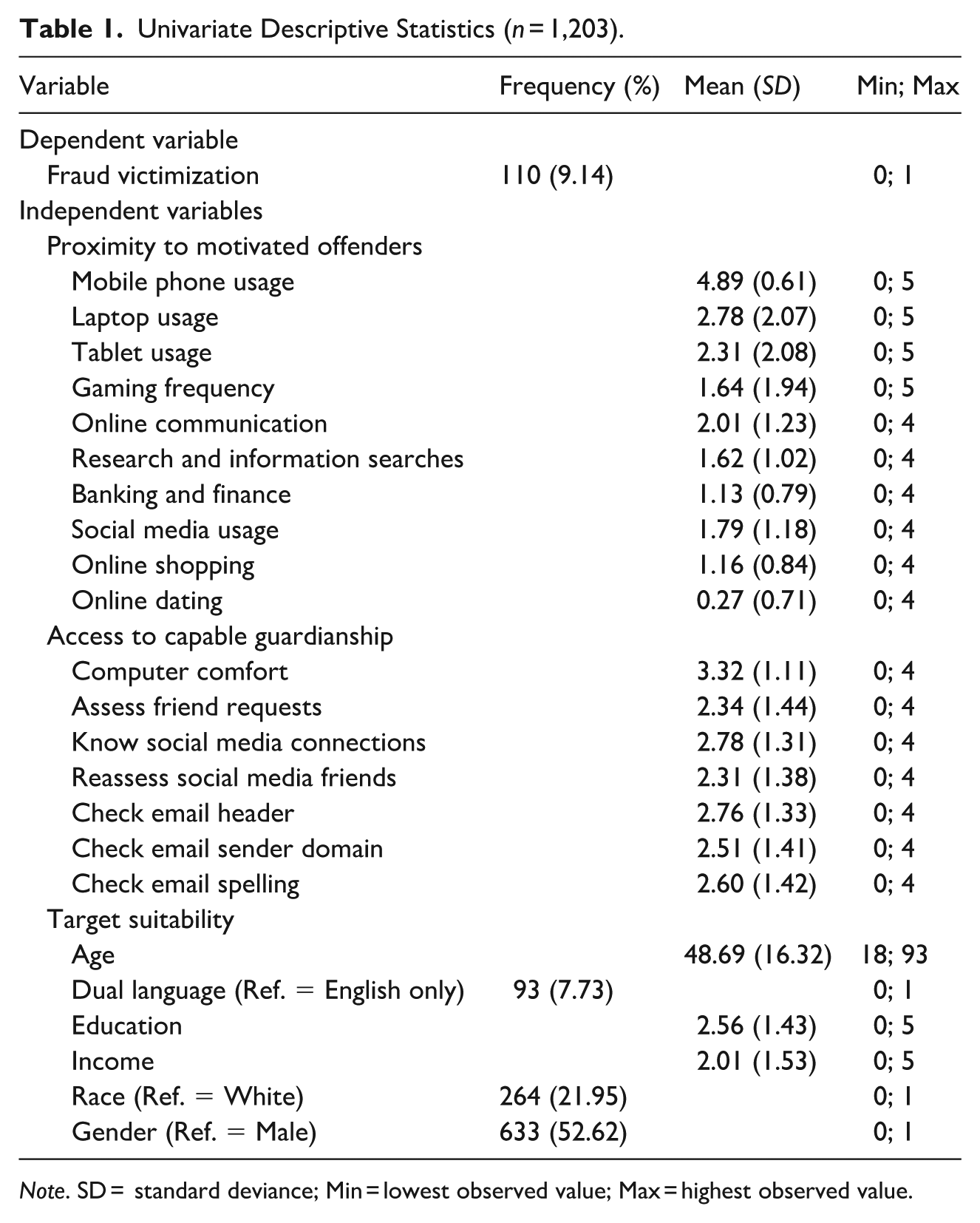
Note. SD = standard deviance; Min = lowest observed value; Max = highest observed value.
Univariate Descriptive Statistics for Male (n = 570) and Female (n = 633) Samples.
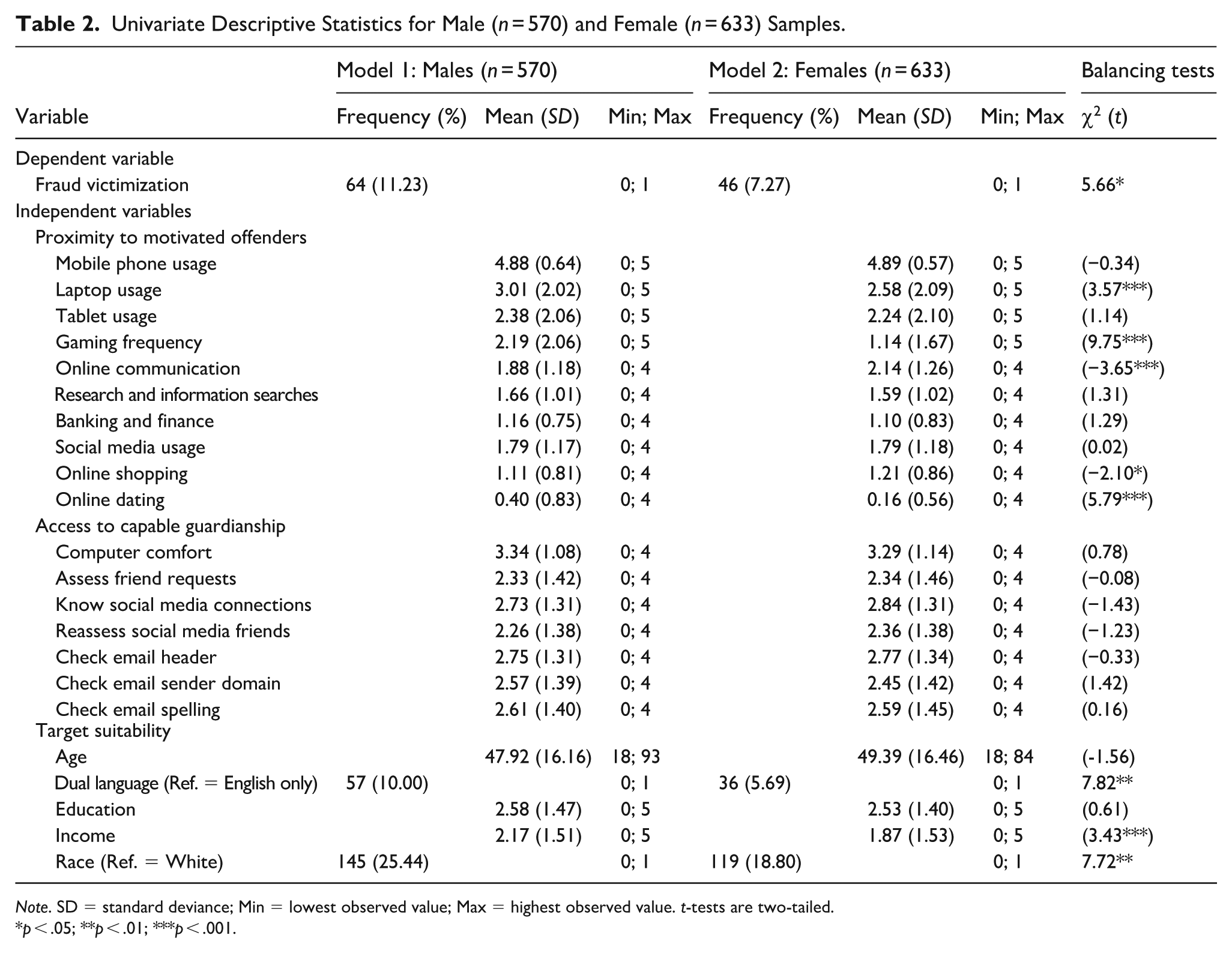
Note. SD = standard deviance; Min = lowest observed value; Max = highest observed value. t-tests are two-tailed.
p < .05; **p < .01; ***p < .001.
Multivariate findings relating to H1–H3 are presented in Table 3. First, Model 1 presented the associations between measures of exposure and proximity to motivated offenders and fraud victimization. Gaming console usage was positively associated with odds of fraud victimization (odds ratio [OR] = 1.25; p < .001). Additionally, the amount of time participants reported using social media was also positively associated with odds of fraud victimization (OR = 1.31; p = .009). Finally, findings from Model 1 suggest that time spent using online dating platforms was positively associated with odds of victimization (OR = 1.54; p < .001).
Binary Logistic Regression of Fraud Victimization Risk (n = 1,203).
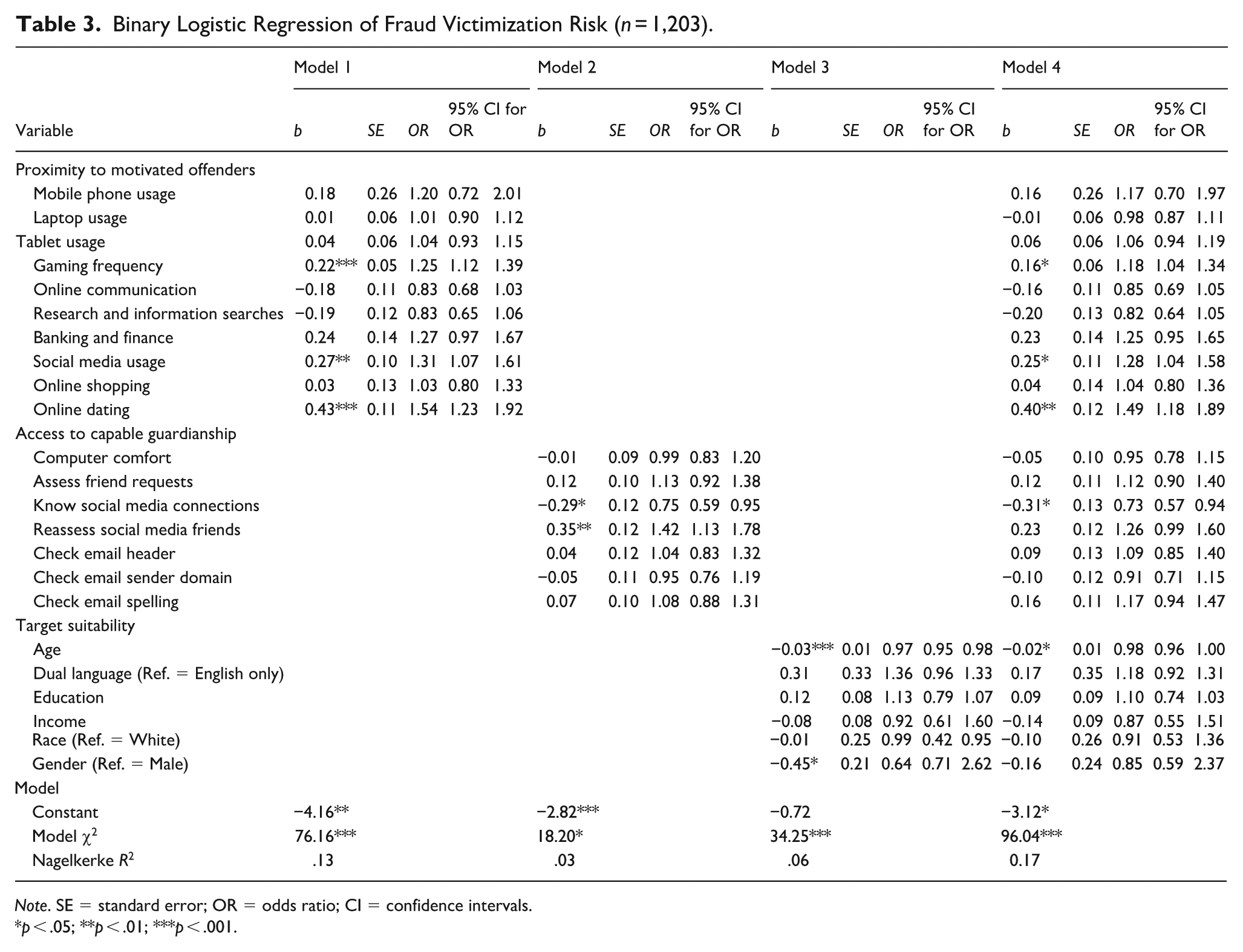
Note. SE = standard error; OR = odds ratio; CI = confidence intervals.
p < .05; **p < .01; ***p < .001.
Model 2 of Table 3 presented the findings relating to online guardianship and fraud victimization risk. The frequency with which respondents reported checked their social media connections to identify if they knew their online friends was negatively associated with odds of experiencing fraud victimization (OR = 0.75; p = .018). The frequency with which respondents reported reassessing their social media friend lists was positively associated with odds of experiencing fraud victimization, counter to expectations (OR = 1.42; p = .003). Next, Model 3 of Table 3 introduces indicators of target suitability for fraud, where age was negatively associated with fraud victimization risk (OR = 0.97; p < .001), while females were associated with lower odds of victimization relative to males (OR = 0.64; p = .029). Finally, Model 4 presented findings from the full model controlling for all LRAT variables simultaneously. The results indicated that all prior proximity and accessibility variables remained significant (gaming: OR = 1.18; p = .010; social media: OR = 1.28; p = .022; dating: OR = 1.49; p = .001). Only one guardianship factor remained significant, specifically knowing one’s social media connections was negatively associated with odds of experiencing fraud (OR = 0.73; p = .015). Finally, age remained negatively associated with odds of financial fraud victimization (OR = 0.98; p = .029).
To explore the relationships between gender and fraud victimization risk, gender-stratified binary logistic regression models were estimated (see Table 4). 9 Model 1 of Table 4 presents findings relating to male respondents (n = 570), illustrating that increased time spent using gaming consoles (OR = 1.26; p = .012), social media (OR = 1.41; p = .022), and dating app use (OR = 1.79; p < .001) were associated with fraud victimization among men. Model 2 of Table 4 relates to female respondents (n=633), and noted that the frequency with which women reported checking the sender domain of emails was negatively associated with fraud victimization risk (OR = 0.71; p = .044). Age was also negatively associated with victimization risk (OR = 0.97; p = .025). 10
Binary Logistic Regression Analyses of Fraud Victimization Risk Stratified by Gender.
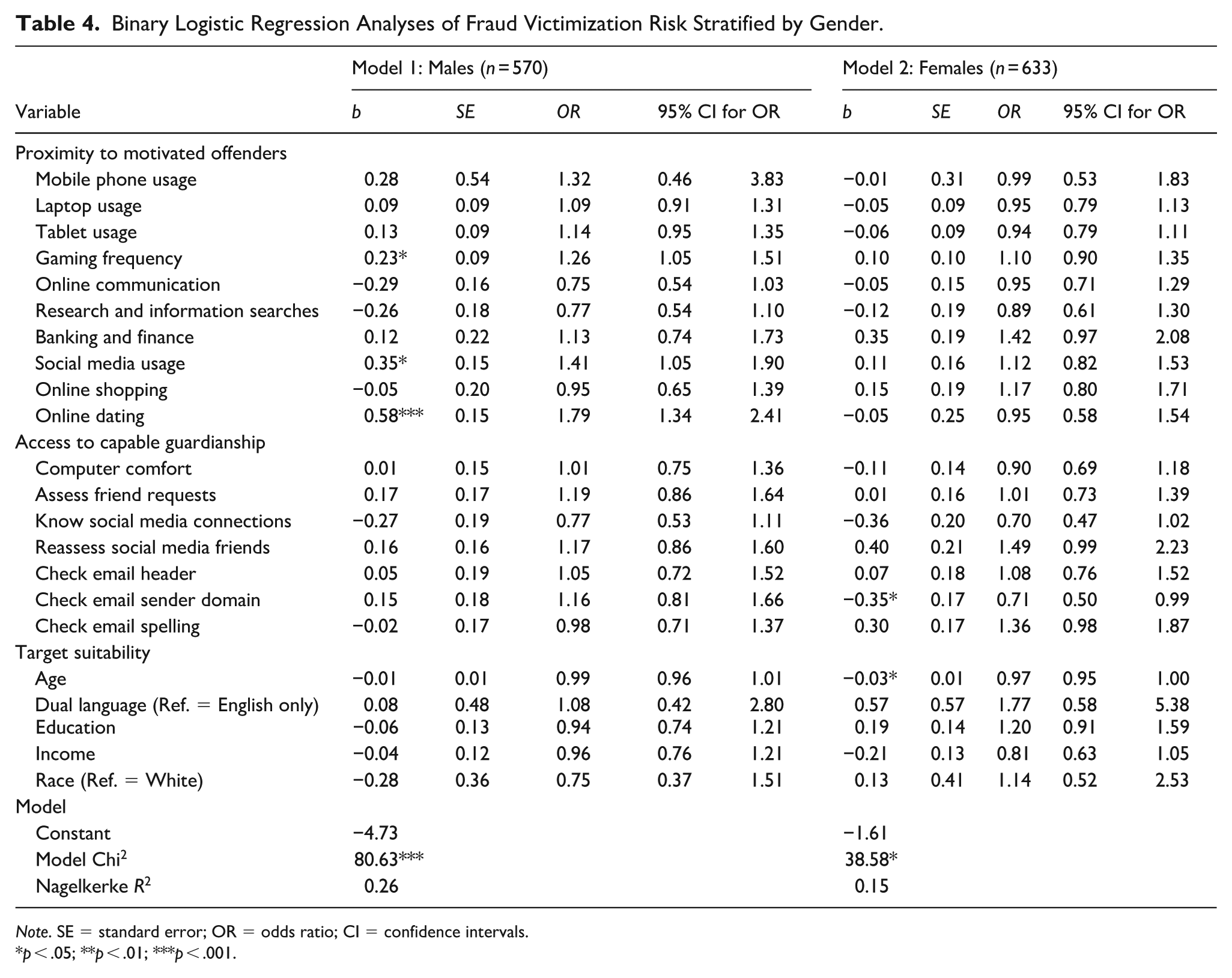
Note. SE = standard error; OR = odds ratio; CI = confidence intervals.
p < .05; **p < .01; ***p < .001.
Discussion
The current study examined the association between online routine activities and fraud victimization risk among a sample of Michigan-based residents, and the role that gender played in shaping these associations. The dependent variable used captured general financial fraud victimization, leading to the need to cautiously interpret the findings. Several online routines such as the use of gaming consoles, online dating, and social media were associated with victimization risk. Additionally, patterns in internet use were differentially associated with fraud victimization risk across men and women, with gaming and dating-based behaviors usage associated with risk only among men, and social email surveillance behaviors associated with risk only among women. In light of the observed findings, there are several themes which warrant further discussion.
First, the regression models supported elements of LRAT, as individual risk was associated with increased time spent using certain internet-capable devices and engaging in specific activities that increased one’s exposure and proximity to offenders were associated with fraud victimization risk. The significant relationship between social media, dating app use, and fraud risk mirrors the larger literature on romance fraud (see Kassem & Carter, 2024) and cryptocurrency-based fraud schemes (Holt & Cross, 2024).
In addition, using online gaming consoles was positively associated with fraud risk, while laptops, tablets, and mobile phones were not significant. It may be that online gaming platforms reflect an emerging opportunity for fraud in the United States. Prior research has identified online gaming as a context where fraud is prevalent, particularly as it relates to trading of in-game virtual items and currency (Kristiansen & Jensen, 2023). Future research is needed examining how specific online gaming behaviors influence the risk of various forms of online fraud victimization. For instance, it may be that fraud is concentrated within certain games or contexts within games, such as virtual item trading platforms. Alternatively, certain in-game group affiliations may disproportionately influence fraud victimization risk in-game.
This study found partial support for guardianship factors in shaping individuals’ risk of fraud victimization, in keeping with LRAT generally (Cohen & Felson, 1979; Reyns, 2013). Knowing social media connections was negatively associated with odds of fraud victimization. Only knowing social media connections was significantly associated with fraud risk in the anticipated direction in the full model. Individuals with greater awareness of their online relationships may more carefully curate their social network, which may reduce the risk of contact with unknown fraudulent accounts. A counterintuitive finding emerged in Model 2 of Table 3, in that those who frequently reassessed social media relationships were paradoxically associated with greater risk of fraud victimization. This may stem from users engaging in high-risk interactions online which both increase one’s risk of fraud while simultaneously increasing the need to assess one’s contacts. Alternatively, this may be due to the time-ordering of these variables, suggesting that individuals undertook such precautions only after fraud victimization. It may thus be beneficial for subsequent research to consider examining fraud risk using longitudinal data or other data sources that preserve the time-ordering of online routine activities and fraud. Research examining a more robust range of social-media-related behaviors that may serve as precursors to assessments of social media relationships is also needed. Such behaviors may include the platforms individuals report using, whether individuals add accounts as friends without knowing the account holder’s identity, or regularly remove unfamiliar accounts from their friends lists.
Gendered analyses found meaningful gender differences in how routine activities influence risk. Among male participants, indicators of exposure and proximity to motivated offenders through use of gaming platforms, social media, and online dating applications were associated with fraud risk. These factors may be a function of gendered differences in the use of these platforms, such as gaming genre preference and frequency of gaming (Chang et al., 2016). Relating to online dating behaviors, it may be the case that this association stems from a greater willingness to engage in risky dating-related behaviors among men due to feelings of loneliness. Prior research has highlighted the associations between loneliness and risky sexual behaviors (Skakoon-Sparling et al., 2023), as well as loneliness and fraud victimization risk (Cross, 2016). Given growing national attention regarding the ‘male loneliness epidemic,’ referring to feelings of isolation felt among young men (Orchard, 2025), future research is needed to examine the role of loneliness in facilitating fraud risk.
For women, checking email sender domains as a form of online guardianship was associated with reduced odds of fraud victimization. It may be the case that men and women differ with respect to the nature of their online security practices. For instance, women’s use of search practices for cues relating to fraud may be more deliberate in nature or characterized by a greater level of attention relative to men. Prior research has demonstrated that gender plays an important role in shaping cybersecurity self-efficacy practices (Anwar et al., 2017). Accordingly, future research should extend beyond the routine activity approach employed in the current study and consider more nuanced measures of the overall efficacy of cybersecurity practices consistent with guardianship, rather than the frequency with which respondents report engaging in such behaviors.
Research and Policy Implications
These findings provide several future directions for research and victimization prevention. This study supports the value of an LRAT to examine fraud victimization, though more empirical testing is needed with general population samples to understand its applicability (Cross & Holt, 2025). The preliminary support for LRAT in understanding fraud risk also illustrates the need to move beyond baseline conceptualizations of opportunity and consider with greater levels of specificity the means by which online behaviors influence risk in keeping with evidence from the broader fraud risk literature (Lin et al., 2025; Suzuki et al., 2025; Xin et al., 2024). Future studies should go beyond measuring the frequency of general online behaviors such as shopping, banking, social media, and gaming to consider specific behaviors within each of these domains, including specific games, types of online shopping undertaken, and behaviors within specific apps.
Additionally, precautionary behaviors related to online social connections should be further tested as guardianship in the LRAT context. In this sense, stakeholders within social media platforms may periodically encourage regular users to verify longstanding friendships with accounts, to ensure that connections that may facilitate fraud are quickly detected and removed from users friend lists. Research by Parti (2022) supports this, finding that non-technical precautionary behaviors were protective against online victimization. Given the significance of online dating platforms and digital gaming environments to higher fraud risk, stakeholders may mitigate harm to users by incorporating context-specific warnings. Prior research on security and behavioral intentions suggests that “just-in-time” alerts embedded in interfaces can prod users to identify potential risk, although additional empirical support is needed to establish the degree of the warnings’ efficacy (Akhawe & Felt, 2013).
The findings also highlight that one’s comfort using computers may not translate to particular behaviors that can protect against forms of fraud. Educational initiatives should thus emphasize assisting internet users in fostering cyber hygiene behaviors in addition to general computer education. Our findings also suggest that individuals should be encouraged to maintain awareness of the social connections they make online (Lazarus et al., 2023). There may be benefit in developing gendered prevention messaging for fraud risks, as the results of this analysis support prior evidence on differences between men and women in terms victimization (Kassem & Carter, 2024). Ensuring that men and women both understand how specific online activities may increase their exposure to fraud may lead to increased awareness and recognition of scam cues online.
Limitations
The current study has several limitations that should be considered. First, data were collected via an online, opt-in sampling platform which produced a generally representative population of Michigan residents. At the same time, the findings may not necessarily be generalizable to the broader population, as research has suggested that online opt-in survey samples may lack generalizability (Thompson & Pickett, 2020). Additionally, they often include fraudulent responses due to financial incentives associated with surveying (Bell & Gift, 2023). While sample demographic characteristics roughly mirror those at the state-level (United States Census Bureau, n.d..) and the authors undertook rigorous data quality checks to ensure the quality of responses, subsequent works may nonetheless seek to replicate these findings.
It is also likely that given the online nature of the sample that "digital natives," those who grew up alongside emerging forms of technology, are overrepresented within the sample (Prensky, 2001). This may explain the findings relating to certain online behaviors, particularly gaming and fraud risk, given increased access and exposure to these tools. Subsequent research should compare larger population studies to identify generalizability across U.S. state populations given research suggesting that age plays a role in shaping online routines and fraud risk (Maher et al., 2026). Additionally, the cross-sectional nature of the data precluded the temporal ordering needed to assess causal inference between the concepts of interest. This may contribute to unanticipated findings relating to guardianship and fraud victimization, given that individuals may have adopted such behaviors only after victimization to reduce risk of recurrent fraud victimization. Subsequent research is needed employing longitudinal data or better accounting for time-ordering to assess these themes.
Next, the six variables measuring proximity to offenders via time spent online daily were capped with the highest available response category indicating 16 to 20 hr of usage per day. This may truncate usage patterns and may bias findings among heavy internet users. Finally, the outcome variable did not fully disentangle specific fraud types, though the question was phrased around romance-oriented fraud generally (see also Buil-Gil & Zeng, 2022). Respondents may have included other forms of fraud, such as investment schemes and shopping scams, which may limit the application of routine activities to specific forms of fraud risks (Holt & Cross, 2024). Prior research suggests that fraud occurring within dating applications is often romance fraud (Button & Cross, 2017), while fraud in gaming-related contexts is often product-or service-based (Kristiansen & Jensen, 2023). In light of the differences in common fraud types across contexts, it is possible that the findings from gendered models relate to distinct phenomena given the nature of the outcome variable wording potentially capturing both romance and consumer fraud. As such, the findings should be interpreted with caution, particularly the gendered models, until subsequent works can determine the robustness of these findings.
Conclusion
Fraud is a persistent problem internationally, generating substantial financial and nonfinancial harms (Button & Cross, 2017). Using an LRAT framework, this study examined the correlates of fraud in a Michigan-based sample, assessing how online routines were associated with victimization risk and whether these associations varied by gender. Results indicated that online gaming, social media, and dating activities were linked to fraud risk, with gendered patterns observed: gaming- and dating-related behaviors were associated with victimization among men, whereas email-related behaviors were associated with risk among women. The findings highlight the need for detailed examinations of platform-based routines, including those tied to gaming, banking, dating, and online shopping, to better understand fraud risk.
Footnotes
Appendix
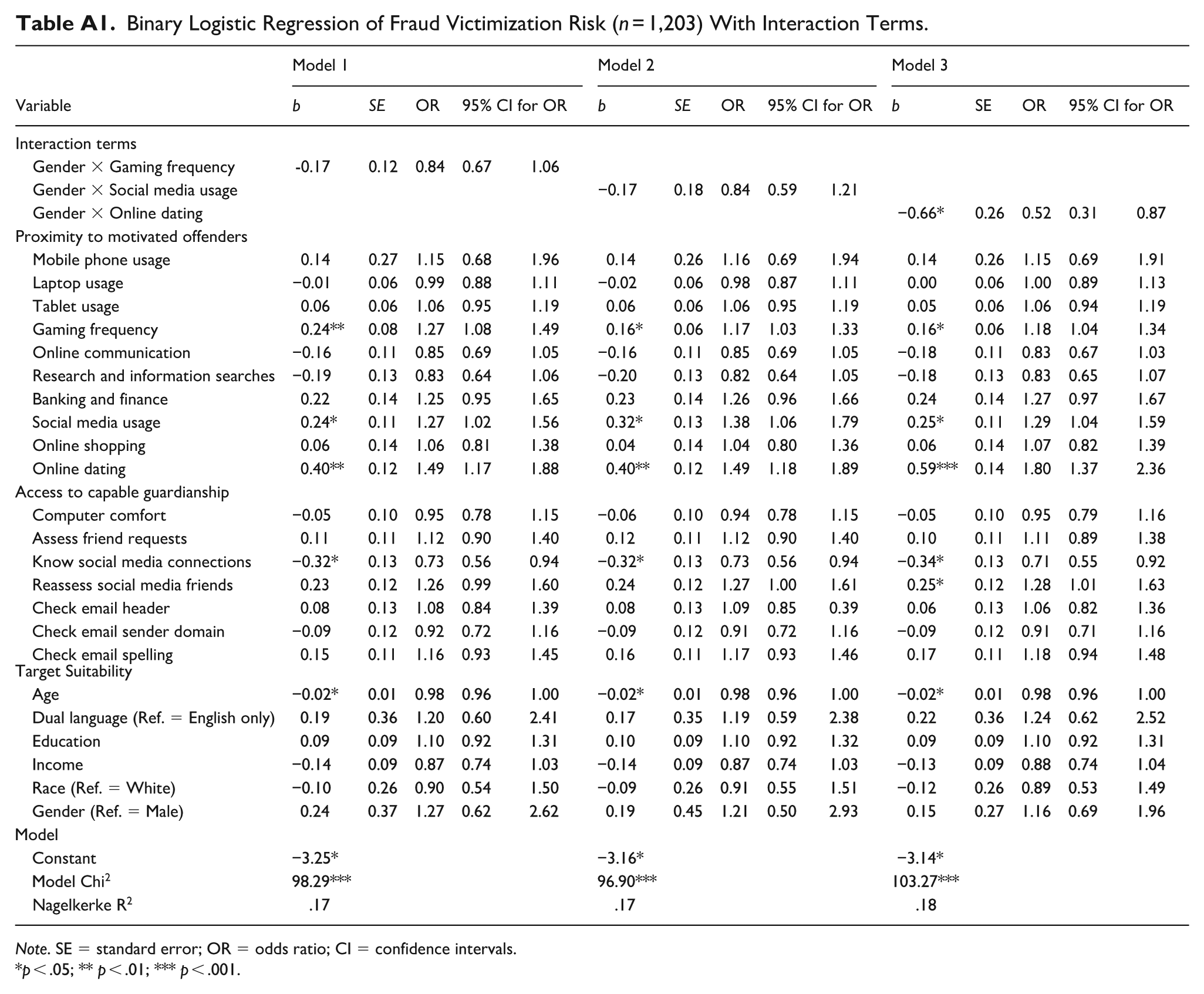
Binary Logistic Regression of Fraud Victimization Risk (n = 1,203) With Interaction Terms.
| Model 1 | Model 2 | Model 3 | |||||||||||||
|---|---|---|---|---|---|---|---|---|---|---|---|---|---|---|---|
| Variable | b | SE | OR | 95% CI for OR | b | SE | OR | 95% CI for OR | b | SE | OR | 95% CI for OR | |||
| Interaction terms | |||||||||||||||
| Gender |
-0.17 | 0.12 | 0.84 | 0.67 | 1.06 | ||||||||||
| Gender |
−0.17 | 0.18 | 0.84 | 0.59 | 1.21 | ||||||||||
| Gender |
−0.66* | 0.26 | 0.52 | 0.31 | 0.87 | ||||||||||
| Proximity to motivated offenders | |||||||||||||||
| Mobile phone usage | 0.14 | 0.27 | 1.15 | 0.68 | 1.96 | 0.14 | 0.26 | 1.16 | 0.69 | 1.94 | 0.14 | 0.26 | 1.15 | 0.69 | 1.91 |
| Laptop usage | −0.01 | 0.06 | 0.99 | 0.88 | 1.11 | −0.02 | 0.06 | 0.98 | 0.87 | 1.11 | 0.00 | 0.06 | 1.00 | 0.89 | 1.13 |
| Tablet usage | 0.06 | 0.06 | 1.06 | 0.95 | 1.19 | 0.06 | 0.06 | 1.06 | 0.95 | 1.19 | 0.05 | 0.06 | 1.06 | 0.94 | 1.19 |
| Gaming frequency | 0.24** | 0.08 | 1.27 | 1.08 | 1.49 | 0.16* | 0.06 | 1.17 | 1.03 | 1.33 | 0.16* | 0.06 | 1.18 | 1.04 | 1.34 |
| Online communication | −0.16 | 0.11 | 0.85 | 0.69 | 1.05 | −0.16 | 0.11 | 0.85 | 0.69 | 1.05 | −0.18 | 0.11 | 0.83 | 0.67 | 1.03 |
| Research and information searches | −0.19 | 0.13 | 0.83 | 0.64 | 1.06 | −0.20 | 0.13 | 0.82 | 0.64 | 1.05 | −0.18 | 0.13 | 0.83 | 0.65 | 1.07 |
| Banking and finance | 0.22 | 0.14 | 1.25 | 0.95 | 1.65 | 0.23 | 0.14 | 1.26 | 0.96 | 1.66 | 0.24 | 0.14 | 1.27 | 0.97 | 1.67 |
| Social media usage | 0.24* | 0.11 | 1.27 | 1.02 | 1.56 | 0.32* | 0.13 | 1.38 | 1.06 | 1.79 | 0.25* | 0.11 | 1.29 | 1.04 | 1.59 |
| Online shopping | 0.06 | 0.14 | 1.06 | 0.81 | 1.38 | 0.04 | 0.14 | 1.04 | 0.80 | 1.36 | 0.06 | 0.14 | 1.07 | 0.82 | 1.39 |
| Online dating | 0.40** | 0.12 | 1.49 | 1.17 | 1.88 | 0.40** | 0.12 | 1.49 | 1.18 | 1.89 | 0.59*** | 0.14 | 1.80 | 1.37 | 2.36 |
| Access to capable guardianship | |||||||||||||||
| Computer comfort | −0.05 | 0.10 | 0.95 | 0.78 | 1.15 | −0.06 | 0.10 | 0.94 | 0.78 | 1.15 | −0.05 | 0.10 | 0.95 | 0.79 | 1.16 |
| Assess friend requests | 0.11 | 0.11 | 1.12 | 0.90 | 1.40 | 0.12 | 0.11 | 1.12 | 0.90 | 1.40 | 0.10 | 0.11 | 1.11 | 0.89 | 1.38 |
| Know social media connections | −0.32* | 0.13 | 0.73 | 0.56 | 0.94 | −0.32* | 0.13 | 0.73 | 0.56 | 0.94 | −0.34* | 0.13 | 0.71 | 0.55 | 0.92 |
| Reassess social media friends | 0.23 | 0.12 | 1.26 | 0.99 | 1.60 | 0.24 | 0.12 | 1.27 | 1.00 | 1.61 | 0.25* | 0.12 | 1.28 | 1.01 | 1.63 |
| Check email header | 0.08 | 0.13 | 1.08 | 0.84 | 1.39 | 0.08 | 0.13 | 1.09 | 0.85 | 0.39 | 0.06 | 0.13 | 1.06 | 0.82 | 1.36 |
| Check email sender domain | −0.09 | 0.12 | 0.92 | 0.72 | 1.16 | −0.09 | 0.12 | 0.91 | 0.72 | 1.16 | −0.09 | 0.12 | 0.91 | 0.71 | 1.16 |
| Check email spelling | 0.15 | 0.11 | 1.16 | 0.93 | 1.45 | 0.16 | 0.11 | 1.17 | 0.93 | 1.46 | 0.17 | 0.11 | 1.18 | 0.94 | 1.48 |
| Target Suitability | |||||||||||||||
| Age | −0.02* | 0.01 | 0.98 | 0.96 | 1.00 | −0.02* | 0.01 | 0.98 | 0.96 | 1.00 | −0.02* | 0.01 | 0.98 | 0.96 | 1.00 |
| Dual language (Ref. = English only) | 0.19 | 0.36 | 1.20 | 0.60 | 2.41 | 0.17 | 0.35 | 1.19 | 0.59 | 2.38 | 0.22 | 0.36 | 1.24 | 0.62 | 2.52 |
| Education | 0.09 | 0.09 | 1.10 | 0.92 | 1.31 | 0.10 | 0.09 | 1.10 | 0.92 | 1.32 | 0.09 | 0.09 | 1.10 | 0.92 | 1.31 |
| Income | −0.14 | 0.09 | 0.87 | 0.74 | 1.03 | −0.14 | 0.09 | 0.87 | 0.74 | 1.03 | −0.13 | 0.09 | 0.88 | 0.74 | 1.04 |
| Race (Ref. = White) | −0.10 | 0.26 | 0.90 | 0.54 | 1.50 | −0.09 | 0.26 | 0.91 | 0.55 | 1.51 | −0.12 | 0.26 | 0.89 | 0.53 | 1.49 |
| Gender (Ref. = Male) | 0.24 | 0.37 | 1.27 | 0.62 | 2.62 | 0.19 | 0.45 | 1.21 | 0.50 | 2.93 | 0.15 | 0.27 | 1.16 | 0.69 | 1.96 |
| Model | |||||||||||||||
| Constant | −3.25* | −3.16* | −3.14* | ||||||||||||
| Model Chi2 | 98.29*** | 96.90*** | 103.27*** | ||||||||||||
| Nagelkerke R2 | .17 | .17 | .18 | ||||||||||||
Note. SE = standard error; OR = odds ratio; CI = confidence intervals.
p < .05; ** p < .01; *** p < .001.

Funding
The authors disclosed receipt of the following financial support for the research, authorship, and/or publication of this article: The current study is supported by the Michigan State University (MSU) Center for Cybercrime Investigation and Training, funded by the United States Department of Education (Grant #P116Z240018). Points of view in this document are those of the author(s) and do not necessarily represent the official position of polices of the U.S. Department of Education.
Declaration of Conflicting Interests
The authors declared no potential conflicts of interest with respect to the research, authorship, and/or publication of this article.