







Abstract
In this manuscript, we highlight the virtual Future Ready Lab as one example of an innovative internship concept designed to increase the quantity of meaningful paid internship experiences available for students to participate in, prepare for further education, and be able to compete in the 21st Century workforce. The Lab’s premise is to provide access to student populations (e.g., economically disadvantaged, Black, and Latinx students) who oftentimes are not afforded the opportunity to hone their 21st Century skills in a high-impact internship experience. The virtual nature of the Future Ready Labs provided opportunities for high school students to participate, despite transportation limitations, social distancing, emerging safety precautions, and requirements based on the COVID-19 pandemic. In this manuscript, we help fill gaps in existing literature concerning how schools support students’ work-based learning experiences during times of crisis, particularly for diverse and economically disadvantaged learners. We conclude with recommendations for practice, and a broader work-based learning framework for how partnerships can be forged and sustained in high schools across the nation, as well as implications for educational policy, practice, and research.
To increase participation in STEM related programs and careers, education stakeholders have explored new avenues to establish a pipeline of students interested in pursuing STEM pathways at the high school level. The focus of these initiatives has been on the reconfiguration of high schools into STEM theme-based small learning communities, with objectives to enhance student motivation and engagement (Fletcher et al., 2020). To that end, one major initiative is the development of high school career academies. Career academies are programs found within high schools featuring a college-preparatory curriculum with an embedded career theme requiring partnerships with employers and postsecondary institutions, and the integration of academic and technical content to increase rigor and relevance to students’ career interests (Castellano et al., 2017). Researchers have identified the career academy as one of the most promising models for enhancing student engagement and facilitating career pursuits (Fletcher et al., 2020; Hernandez-Gantes & Fletcher, 2013). Findings from experimental studies indicate that participation in career academies results in increased student engagement, attendance, graduation rates, academic achievement, and long-term employment earnings (Kemple & Snipes, 2000).
Given the documented benefits of participation, the number of career academies in the nation grew to approximately 8,000, serving over one million students (Lanford & Maruco, 2018; National Career Academy Coalition, 2019). However, with the growing popularity of the career academy concept, the quality of implementation has varied greatly. Hence, there have been efforts to inform related implementation with the development of standards of practice by school networks such as NAF—formerly known as the National Academy Foundation (Stern et al., 2010). NAF is a non-profit network of high school career academies across the nation. They provide schools with professional development, technical assistance, and STEM related curricula. Since 1982, NAF has supported a national network of high school career academies in five career themes, including Finance, Engineering, Health Sciences, Hospitality and Tourism, and Information Technology (NAF, 2014). Currently, NAF has 619 academies serving 117,550 students from 392 high schools across the nation. The student demographics of the academies are 47% female and 53% male. NAF academy students are ethnically and racially diverse, with 43% Latinx, 27% Black, 20% White, and 6% Asian. Sixty percent of NAF academy students qualify for free and/or reduced lunch. In 2016, only 17% of the students completed internships, and 92% (of 97% of seniors who graduated) were college-bound. In terms of student outcomes, based on the 2012–2013 NAF status report, 97% of NAF seniors graduated high school and planned to pursue college or technical studies, while 52% of NAF graduates earned baccalaureate degrees in 4 years—compared with 32% nationally. Further, 85% of 5- and 10-year alumni are working in a professional field (NAF, 2013). NAF academy schools are in urban areas with highly diverse student populations in terms of ethnic and racial backgrounds, socio-economic status, and dis(ability) status.
The NAF model features four components. The academy development and structure component focuses on smaller learning communities using student cohorts, career-themed and sequenced coursework, common teacher planning, career-themed guidance, and ongoing professional development. The integrated curriculum and instruction component is designed to promote career and academic learning around a relevant theme (e.g., Engineering and IT) through project-based activities, work-based learning experiences, and internships. In turn, the advisory board component includes members representing community stakeholder groups to ensure that academies are locally relevant and supported. Finally, the work-based learning component includes career awareness and exploration activities in 9th (e.g., work site tours) and 10th (e.g., job shadowing) grades, and experiential opportunities (e.g., industry certifications, paid internships) in 11th and 12th grades.
The internship experience is typically seen as the most memorable and transformational work-based learning activity for students. In an effort to increase the quantity of paid internship experiences for high school students from traditionally underserved, economically disadvantaged communities, NAF brought together corporations, school districts, and local business and community partners to create a group internship experience called the NAF Future Ready Lab. However, we identified challenges in the internship experience for ethnically and racially diverse students as well as those that come from economically disadvantaged families. We found cultural mismatching between interns and employers during the in person Future Ready Lab. Stated differently, in one of the Future Ready Labs, Black students who came from economically disadvantaged backgrounds were placed with all White facilitators (within a company that lacked diversity). The interns within this particular location had racialized experiences because the facilitators were not familiar with their backgrounds and were culturally incompetent. For example, the facilitators took issue with the students because of their attire. Many of the interns wore Air Jordan shoes, and the facilitators believed it was inappropriate attire for the corporate environment. The facilitators also took issue with the young women interns because they did not wear dresses and skirts. Fletcher and Hernandez-Gantes (2021) described the racialized experiences of these interns in their study, and recommended that schools provide training on the needs of diverse youth as well as select companies that are more culturally diverse.
The NAF Future Ready Lab
The NAF Future Ready Lab model was first established in the summer of 2017 and since then has served nearly 700 high school interns throughout the county. The NAF Future Ready Lab internship model differs from a traditional internship model in that it implements a group internship experience hosted by one or more employer partners. Prior to 2020, in this group internship setting 20 to 30 students worked in-person and onsite over a period of 4 to 6 weeks to complete projects to ultimately provide value to the hosting corporate employers and/or local communities. While working together on a project of value, students also participated in professional skill-building workshops provided by their host company/companies, real-world working environments, and networking opportunities with professionals from diverse backgrounds who serve as mentors and content experts throughout the experience. The NAF Future Ready Lab concept was developed to expose high school students to the kinds of self-directed, fluid, interdisciplinary team projects that are common in the 21st century workspace.
The development and implementation of the NAF Future Ready Lab program is a collective effort that involves coordinated partnerships between NAF, the host employer companies, academies, school districts, and local community organizations. The typical planning period for a single NAF Future Ready Lab can be up to 6 months or more, as there are many facets that require collaboration across multiple entities. A few of the challenges NAF, schools, and the host employer companies addressed included: lab conceptualization, partner engagement, recruitment of key participants (e.g., interns, mentors, lab facilitators, logistics coordinators), processing of necessary paperwork allowing minors to intern, and the design and development of internship projects. Thus, coordination between external and internal stakeholders was crucial to the NAF Future Ready Lab model to provide meaningful internship experiences for students.
The Pandemic
With the outbreak of the COVID-19 pandemic in the Spring of 2020, the NAF Future Ready Lab design had to quickly pivot to address and incorporate the rapidly changing workplace health guidelines being implemented at that time. While some companies were unable to accommodate their original commitments to this program due to shifting workplace environments and staff uncertainty, seven Future Ready Labs continued across the country and adopted a completely virtual experience for the 2020 interns. In addition to the logistical challenges of organizing the NAF Future Ready Lab program mentioned previously, an additional, unique challenge presented by the COVID-19 pandemic was to ensure that interns had the technology to fully participate in a completely virtual experience. Since the NAF Future Ready Lab program specifically seeks to serve students from traditionally underserved, economically disadvantaged communities, it became clear early in the planning process that many employer partners would need to provide laptop and mobile hotspot technologies for their interns if this pivot was to be successful. Ultimately, laptops and mobile hotspots were made available to all interns participating in the NAF Future Ready Lab.
Another contributing factor in the pivot to a virtual Future Ready Lab model was to scale up efforts and provide internship opportunities for a large number of underrepresented, ethnically diverse students. Each individual Future Ready Lab is built on a collaboration between NAF and business partners (e.g., Capital One, KPMG, Optum, Verizon, AT&T, Mastercard, and World Wide Technology) who have a desire to provide access and opportunity to students from traditionally underfunded communities. As alluded to previously, this model allows academy, district, and employer stakeholders to offer a scalable group internship experience for 25 to 30 students that is quite different from the typical individual internship format in that it centers around a group project of value. This provides a ready-made, scalable design for underserved students working in collaboration with local business partners because the Future Ready Lab model supports high-quality and high-impact paid internships for cohorts of students from the same community through a multi-week experience. When considering the group internship model of the Future Ready Lab and contrasting it with traditional, individual internships, it becomes clear that many limiting factors related to access and equity in quality work-based learning experiences are alleviated for underserved high school students. Put differently, in comparison to the Future Ready Lab model, individual internships can be too limiting in their availability and access for underserved, ethnically diverse high school students because they are an ineffective means to serve a large number of high school students across the nation (Alfeld et al., 2013). Thus, the Future Ready Lab model, which made the pivot to a completely virtual model in 2020, provided many more high school students the opportunity to put their education into practice in a unique work environment with support from local business partners compared to the traditional internship model.
High-quality internships are essentially high impact practices that enable students to authentically understand and assess the realities of the STEM work environment. But, many students who participate in STEM NAF academies do not have opportunities to participate in internships, given the difficulties and challenges of providing these high impact experiences to numerous students. The development of virtual Future Ready Labs made it possible to scale up these efforts and provided students who would typically not have access to them opportunities to participate, particularly as the COVID-19 pandemic unfolded.
Equity Concerns With Internships
Since internships promote deeper understanding of students’ career potential, students who participate in internships could have better opportunities to overcome their socioeconomic origins and move up the social ladder. They also have opportunities to build their 21st Century skills (e.g., collaboration, critical thinking, problem solving, and technological development) which are critical to compete in today’s knowledge-based technological economy, particularly within STEM fields. However, we know from social stratification theory that education reproduces existing social inequities (Gamoran & Weinstein, 1998) and thus high school internships could be a part of the problem rather than a solution. Therefore, it is critical that we develop strategies to ensure equal access to opportunities for underrepresented students in high school, as we know this is the foundation for long-term college and career success.
Demographics of the Virtual Future Ready Lab Participants
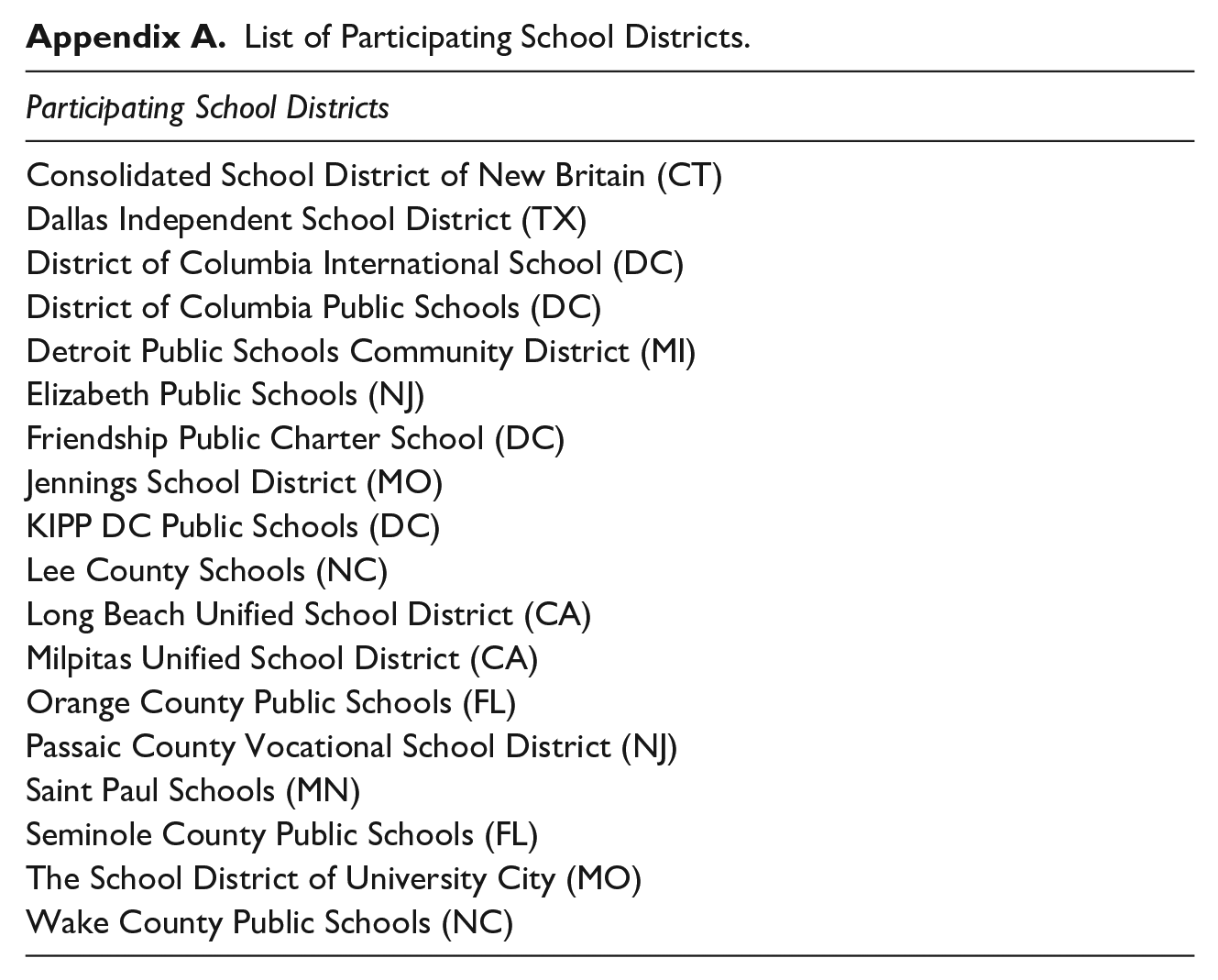
There were 200 interns that participated across seven unique labs during the 2020 NAF Future Ready Lab program. The number of contact hours between the interns and members of the host company/companies ranged from 91 to 147 hours per lab. The 18 school districts represented by the NAF Future Ready Lab interns were varied and geographically dispersed, including Dallas Independent School District, St. Louis area public schools, and Detroit Public Schools Community District. A full list of the school districts that participated in the 2020 NAF Future Ready Lab program is available in Appendix A.
The interns themselves represented a diverse group of learners, with the gender composition across the seven labs totaling 46% male and 54% female. The largest ethnic group to be represented by the student interns was Latinx (n = 71, 36%) and the second largest was Black (n = 62, 31%). Students identifying as Asian (n = 30, 15%), White (n = 27, 14%), Other/Multiracial (n = 6, 3%) and Pacific Islander (n = 2, 1%) comprised the remaining 33% of students. The academy theme that students participated in was also varied, with Information Technology being the largest career cluster represented (n = 69, 35%) and Engineering (n = 48, 24%) as the second. In addition, 72% percent of interns indicated that the NAF Future Ready Lab program was their first internship experience. Prior to the NAF Future Ready Lab experience, the two work-based learning activities that interns had the most experience with were hearing from guest speakers (22%) and participating in mock interviews (18%).
Lessons Learned
In spring 2020, when the decision to move forward with virtual internships was made, there was some concern amongst the employer partners about how effective the programs might be in a virtual environment. These concerns stemmed from both the characteristics of the students selected, who had minimal experience with a virtual setting, and the state of the world at large, which was undergoing a traumatic and unprecedented event on a global scale. Despite these hesitations, the virtual NAF Future Ready Lab internship program proved to be quite successful on many levels.
At the conclusion of each Future Ready Lab, interns were invited to participate in an optional intern survey that was used to gather formative feedback on their perceptions and experiences regarding the lab, the work, and the employer partners hosting each lab. Intern responses were anonymous, analyzed, and shared with NAF program staff and members of each Future Ready Lab host company for continuous improvement purposes. An intern response rate of 84% (n = 167) was achieved. Survey responses provided by the interns showed that 96% of interns were satisfied or very satisfied with the virtual/remote format of this internship program; to date this is the highest level of satisfaction indicated by any NAF Future Ready Lab cohort. Furthermore, interns indicated that this experience helped them feel prepared to enter the workforce (99%), explore potential careers (92%), and develop positive work habits and attitudes (98%). Further examples of the benefits interns experienced as a result of participation in the Future Ready Lab are described in the following sections.
Unique Benefits of a Virtual Internship
With many employers operating in a purely virtual environment due to the pandemic, many internship hosts recruited employees from across multiple geographic areas to serve as content experts and mentors, allowing for a larger and more diverse pool of candidates than in previous years. All interns worked with internship host employees across multiple geographies and time zones across the country, which accurately reflected the modern work environment of the time. Interns reported that their ability to work with peers and personnel across the country was a highlight of this opportunity. Drawing from previous years of best practices, Future Ready Lab host companies intentionally sourced mentors and content experts from diverse backgrounds, ethnicities (54% identified as an ethnic minority), and age groups, to work with the interns—increasing the relatability between interns and company employees. This led to high satisfaction by the interns themselves, 100% of which reported being satisfied with their mentors.
Many of the corporations participating in the Future Ready Lab program have offices that are headquartered long distances from students’ homes, often resulting in 30-minute to 1-hour commute times each way. In previous years, Future Ready Lab interns were provided with free transportation, including mass transit passes or bus transportation. This helped eliminate an internship participation barrier, particularly for those who come from economically disadvantaged backgrounds. Although these opportunities had been appreciated by interns in the past, the commute time has historically been a deterring factor for some interns who had other part-time jobs and responsibilities. In 2020, the virtual nature of the program eliminated the need for this commute and reduced the time interns allocated to unpaid, work-related travel. All programs instituted a 4 day work week for 4 to 6 weeks, but the length of the virtual work day varied from host to host, with interns working between 4 to 7 hours per day, with internships lasting between 90 to 150 hours.
Skill Building Opportunities
Employees from across the world felt the strain of transitioning to a remote workplace, and these interns were no exception. To successfully complete their internship, interns were required to gain new skills and adapt to working in a completely remote environment. Interns reported that their internship experiences provided them with opportunities to increase their skill development in many areas such as collaboration and teamwork skills (89%), communication skills (87%), critical thinking and problem-solving skills (85%), and working remotely with others (89%). In addition, providing interns with authentic projects which had value to the internship hosts led to increased intern satisfaction and skill development. In 2020, interns in the Future Ready Lab program worked on projects associated with the main business functions of the employer partners, such as recruitment and retention, coding business operations, and creating department-specific solutions. All programs required interns to present their projects at the end of the experience. To this end, 88% of interns reported that they believed the work they performed was of value to the company.
Need for Strong Partnerships
The quick pivot to a completely virtual environment reinforced the need for strong partnerships between schools and employer partners wanting to implement internship programs for high school students. In previous years, Future Ready Lab employers have typically recruited students in March and April for a summer internship experience. With many schools and businesses shutting down or transitioning to virtual platforms during this time, there were new obstacles to overcome. Some schools were not able to provide technology and internet access to their students and were relying on students to have cell phone access to participate in school-related activities. Schools had to experiment with numerous strategies to reach students about the internship opportunities as well as quickly transition their interview processes to create accessible pathways for students and employers to be involved. This was done in ways that aligned with newly implemented safety and security protocols and policies for online interactions.
NAF worked with the schools and employers involved in the Future Ready Lab program to make sure that all personnel had gone through the appropriate background checks and were aware of online safety protocols for the interns across multiple school districts, each of which had unique parameters. Meetings were held every week, often multiple times per week, leading up to program implementation. These virtual meetings with school district and employer stakeholders created opportunities to align planning and communication for intern recruitment, interviews, and selection.
Ensuring Equitable Participation
While it is important to identify potential challenges and potential accommodations for a program’s intended participants, this is especially important during times of crisis when challenges may be more acute. In the spring of 2020, the internship recruitment cycle coincided with the beginning of the pandemic which caused much fear and uncertainty across the globe. During this time, students were navigating and potentially mourning the loss of loved ones, grappling with food/home insecurity, health concerns, as well as the transition to a remote school day. Navigating a novel internship opportunity in addition to the aforementioned challenges added an extra stressor for many youth that was quite challenging, resulting in lower than expected interest by many school districts promoting the NAF Future Ready Lab. Recruitment was conducted virtually, with many interns hearing about this opportunity via personal outreach from their teachers. In addition, interviews were conducted virtually and worked best when the school district implemented a unified process for all internships.
Employers worked with school districts to provide laptops, webcams, headsets, and internet hot spots as appropriate to ensure all interns were ready to begin their internships. Resources, such as laptops, were scarce due to global shutdowns, and distribution of these materials to individual students required multiple steps to ensure access and safety protocols, making this aspect challenging for all parties involved. Further, internet bandwidth was an issue in many of the communities because of reduced coverage and increased global usage. This, sometimes, resulted in connectivity and productivity issues. Moreover, shorter work days were intentionally planned to accommodate students, ensuring they were able to focus for a few hours each day. To that end, most virtual Future Ready Labs implemented a 4-day work week with hours ranging from 20 to 30 hours per week.
Virtual Workplace
Interns in the 2020 Future Ready Labs often had to navigate challenges regarding their physical workspace while working remotely. Limited space within the home had some interns working from their beds or in closets, while others had to work part of the day in a parking lot to get enough internet access for streaming video conferences. Supervisors and mentors were advised to provide reassurance to the interns that many employees were experiencing similar issues. NAF worked with the internship hosts to create co-branded virtual backgrounds for the interns to use to provide more privacy of their workspace and home life. The employers also sent each intern office supplies and polo shirts to help the interns set up their workspaces and feel more connected to their employer, despite not being in a physical office. Interns indicated that they felt supported by their mentor’s efforts to help them navigate the challenging work-from-home environment that was common because of the pandemic. Additionally, many of the NAF Future Ready Lab mentors connected personally with their interns by sharing examples of the common challenges they themselves were facing when working from home. This simple, empathizing activity was reported to have enhanced the mentor/intern relationship by humanizing both parties and began to set a precedent of tackling issues in a collaborative manner.
Interns who were hired directly by their internship hosts were provided with laptops with preloaded productivity software and had work-connected email accounts. Despite an initial learning curve, this proved to be quite important in ensuring interns had access to tools their mentors and supervisors could help them navigate, such as project management tools and calendar scheduling functionality. One best practice suggested after the lab’s completion by a number of host employers was that it would be beneficial for interns to receive basic training on the preloaded productivity software prior to future internships, even if this training was a simple introduction and orientation to the software. Other interns who were hired through a separate third-party employer, often had to use online versions of collaborative productivity tools (such as Google Docs) which they had prior experience using in school. However, many of these free, collaborative productivity tools are not easily accessible to internship hosts due to company firewall protocols. This is an important consideration for virtual internships moving forward.
Communication and Connections
Team building activities were often the focus of the first week within the virtual Future Ready Labs; this enabled interns to acclimate to their new work environment and get started on their projects. Facilitators worked with their interns to set norms for being on camera and being responsive in synchronous work tasks. Facilitators and mentors made regular check-ins with the interns and attempted to quickly address any challenges. Additionally, staff reported interactivity was keenly important in keeping interns attentive during workshops, and that it was most beneficial when the workshop’s content was delivered concomitantly with group interactivity in the workplace.
The collaborative relationships that were forged between interns and other employees led to an increase in networking opportunities and social capital. Within that context, 96% of interns reported that their internship experiences helped them broaden their professional network. Internship hosts set up collaborative time for intern groups to meet with their mentors and other employees with jobs in which interns indicated interest. Some mentors invited the interns to be part of other organizational meetings they were involved in to give them exposure to their corporate culture and other workflows. Many of the interns participated in networking sessions and were given access to meet with executive leaders within the organization on a variety of topics. These activities may have led interns to feel a sense of belonging within the organization through the shared scheduling of events and common planning time.
Recommendations for Practice
As we reflect on the interns’ experiences in the virtual Future Ready Labs, we have recommendations for school personnel in delivering effective internships for diverse youth. We recommend that school personnel address equity concerns when facilitating internships, either in-person or virtual. These considerations should include transportation, stipends to compensate interns for their efforts, technology accommodations, and internet access. Further, school personnel should consider the cultural competencies and the racial and ethnic backgrounds of their internship facilitators and attempt to align them with the students participating in the internships. Even more, it is important for school personnel to provide sufficient training and to educate the internship facilitators on their unique student populations and cultural sensitivities. We also recommend that school personnel and employers establish opportunities to stay connected to their interns beyond the duration of the internship.
Recommendations for Further Research
There remains a dearth of research about the quality, access, and equity related to internships, particularly at the high school level (Alfeld et al., 2013). Particularly, we have yet to study how high school internships influence student postsecondary outcomes, particularly for underserved students of color. We also know little about how internships impact student outcomes, what the most effective programmatic designs and curricula are to ensure positive student and employer outcomes, or how access to internships can most effectively be provided to underserved student populations. Further, there is even less known about how virtual internships affect student experiences and related outcomes. As the county and the world adjust to a post-COVID environment, examining effective virtual internships and workplace environments will only increase in importance.
Recommendations for Policy
We also believe the implementation of the NAF Future Ready Lab model has legislative implications, particularly for the 2018 Strengthening Career and Technical Education for the 21st Century Act (known as Perkins V). This particular legislation provides $1.3 billion of funding for career and technical education programs at the middle, secondary, and postsecondary levels. The goals of the legislation coincide with those for career academies as it relates to building and implementing programs of study (career pathways) for the purposes of improving students’ academic and technical achievements, forging connections between secondary and postsecondary educational institutions, and enhancing the accountability of career and technical education programs (Advance CTE, 2020). Based on its legislative provisions, we recommend that school personnel establish programs of study or career pathways for students aligned with various work-based learning experiences, which include internships. In addition, we recommend school personnel develop opportunities for students to acquire postsecondary credentials through accelerated coursework initiatives (e.g., AP, dual enrollment). The intended outcomes of the legislation is to ensure that students have access and engage in rigorous academic courses as well as gain occupational knowledge and skills needed for high-skill, high-wage, and high-demand careers of interest—such as careers in engineering and information technology (Strengthening Career and Technical Education for the 21st Century Act, 2018). We recommend that policymakers—when and if the legislation is reauthorized—delineate and further emphasize the importance of factors contributing to quality internships that maximize students’ learning experiences and actively facilitate college and career readiness. We also believe that participation rate targets or metrics are needed in the legislation to ensure that all students have access to internships, and that diverse learners in particular, are provided with these high-impact opportunities in an equitable fashion.
Conclusion
In conclusion, we believe that the NAF virtual Future Ready Lab is an innovative strategy to provide access to a large number of student populations (e.g., economically disadvantaged, Black, and Latinx students) who oftentimes are not afforded the opportunity to hone their 21st Century skills in a high-impact internship experience. The virtual nature of the NAF Future Ready Labs offered in 2020 overcame many obstacles students faced at the onset of the COVID-19 pandemic, which included but was not limited to: a lack of transportation, social distancing, emerging safety precautions, and other constantly changing local and federal COVID-19 health requirements. Despite these difficulties, the virtual 2020 NAF Future Ready Lab model was still able to provide quality internship opportunities for 200 underserved high school students of color. Nonetheless, it is critical that school personnel remain ever vigilant and combat equity issues facing their students to ensure all young people have access to these high quality learning experiences.
Footnotes
Appendix
List of Participating School Districts.
| Participating School Districts |
|---|
| Consolidated School District of New Britain (CT) |
| Dallas Independent School District (TX) |
| District of Columbia International School (DC) |
| District of Columbia Public Schools (DC) |
| Detroit Public Schools Community District (MI) |
| Elizabeth Public Schools (NJ) |
| Friendship Public Charter School (DC) |
| Jennings School District (MO) |
| KIPP DC Public Schools (DC) |
| Lee County Schools (NC) |
| Long Beach Unified School District (CA) |
| Milpitas Unified School District (CA) |
| Orange County Public Schools (FL) |
| Passaic County Vocational School District (NJ) |
| Saint Paul Schools (MN) |
| Seminole County Public Schools (FL) |
| The School District of University City (MO) |
| Wake County Public Schools (NC) |
Declaration of Conflicting Interests
The author(s) declared no potential conflicts of interest with respect to the research, authorship, and/or publication of this article.
Funding
The author(s) disclosed receipt of the following financial support for the research, authorship, and/or publication of this article: This research was supported by grants from the National Science Foundation’s ITEST and EHR Core Research programs (Award # 1614707, 2016580, & 2000472).
