






Abstract
This study uses a combination of qualitative and quantitative methods to study the understanding of China’s university teachers (hereinafter referred to as teachers) on the preparation period of entrepreneurship. Through questionnaire survey, factor analysis and fuzzy evaluation, we get the classification of the factors of entrepreneurship by teachers, including education factors, social factors, and policy factors.Teachers believe that the most important primary influencing factors of entrepreneurship formation is founders’ fundamentals, the most important secondary influencing factors is social factors. In addition, the main impact of teacher entrepreneurship awareness on entrepreneurship education is as follows: in the competition and practice of entrepreneurial projects, on-campus entrepreneurial teachers mainly participate as assistants and they are quite passive. It may be because that their participation motivation is departed from the purpose of entrepreneurship. Off-campus entrepreneurship tutors focus more on the ability of the social entrepreneurial team to marketize the products or services.
Introduction
Compared with the teacher promotion mechanism in Europe and the United States, the main driving factor of Chinese teachers is the promotion of professional titles. With the development of entrepreneurship education in China for 20 years, the promotion assessment in many colleges and universities has gradually tilted toward the entrepreneurship field under the influences of policies of mass entrepreneurship and innovation. The assessment content has also gradually accepted various forms such as competition honor and transformation of innovation achievements. Although this is conducive to the cultivation of entrepreneurship education and entrepreneurial talents, teachers still maintain the concept of “professional title first” in their participation of entrepreneurship education. This will directly affect the involvement and role orientation of teachers in teaching, competition, and practice of entrepreneurship education.
With the improvement of living standards brought about by the economic development and the awakening of the public welfare awareness brought about by social activities, the role of the third sector in the public sphere has received more and more attention. Since the concept of social entrepreneurship was proposed, along with the unemployment (Kobia & Sikalieh, 2010) and the reduction of government expenditure in the public sector (Roper & Cheney, 2005) brought by the economic crisis, the resulting public welfare gap has proposed new requirements for the transformation of the form and subject of public welfare undertakings (Haugh, 2005). In many public welfare practice activities, a group of social entrepreneurs aiming at solving social issues and creating social values have attempted to use commercial skills to realize the creation of public welfare values and the sustainable development of public welfare undertakings in the form of corporate social groups. This is in line with today’s rising demand for quality and quantity of public welfare and the growing lack of support for public welfare in the charity market (Porter, 1999). During the transformation from the blood transfusion model to the hematopoietic model, many researchers have implemented a large number of studies in the definition (Peredo & McClean, 2006; Sullivan Mort et al., 2003), organization form, background, development factors and decision-making models (Witkamp et al., 2011) of social entrepreneurship. These efforts have led to fierce collisions between public welfare undertakings, the institutional environment and traditional concepts (Dorado & Ventresca, 2013), which have also provided a more comprehensive understanding of social changes for many researchers in the related fields and social reformers.
As the Chinese educational circle pays more and more attention to the social entrepreneurship, many colleges and universities have opened public social entrepreneurship education courses. During the social entrepreneurship practice collaborating with many parties, these colleges and universities have established a variety of joint training system, such as school-enterprise, school-government, and government-enterprise with great practical results (Brock & Steiner, 2009). Based on the existing research results on entrepreneurship education in colleges and universities, scholars have mainly carried out studies in terms of teachers’ source, abilities and teaching methods of entrepreneurship education (Brock & Kim, 2008). Studies on formative causes of entrepreneurship, social entrepreneurship, and impacts on entrepreneurship education from teachers’ perspective are still insufficient.
This paper mainly investigates teachers’ understandings of entrepreneurship formative causes and social entrepreneurship. It also analyzes the main influences of teachers’ entrepreneurial awareness on entrepreneurship education in combination with the actual situations of Chinese colleges and universities.
Influencing Factors of Entrepreneurship
From the macro environment, the wave of entrepreneurship generates from the improvement of the economic development level (Dollinger, 2003). This can be explained by the industry life cycle theory (ILC). During the initial stage of the market development (economic system transformation and industrial development), the opening of the economic system has led to the release of the productive force. With the rapid development of the market size and level, the market economy entered a stable period. The bottleneck effect of technology and philosophy slowed down the market development. The fierce and even vicious competition made the market gradually enter a recession. In order to break through the bottleneck of decline, the market hopes to bring a new growth through ideas or technological innovations. That is to say, the demand from innovation provides spiritual preparation for the emergence of entrepreneurship. In addition, the limited resources and the infinite demands, as well as the social changes brought about by technologies in the information age, have made the whole society pay more and more attention to the innovation of the social development (which mainly refers to technology, materials, markets, ways, thinking, and other aspects). The usage of limited and scarce resources to maximize the value creation is also a common feature of start-up entrepreneurs and social entrepreneurs (Shaw & Carter, 2007). It will be the huge change brought about by entrepreneurship to creatively use new methods or technologies to achieve the resource integration, inject impetus into the social development and solve social issues.
From a micro perspective, researchers have investigated the sociodemographic variables, life experiences (Corner & Ho, 2010; London, 2010), personality traits (Van Ryzin et al., 2009), and motivation (Sullivan Mort et al., 2003) of entrepreneurs. It is found that men have greater entrepreneurial intentions (Espíritu-Olmos & Sastre-Castillo, 2012), older people have lower possibilities to start a business and people with higher education levels are more likely to start a business (Van Ryzin et al., 2009). Many theories have been used to study the entrepreneurial motivations (Gartner, 2008, 2010; Locke, et al. 1988), such as the motivation theory and the driving theory. For entrepreneurs, the demand-pull driving factor is usually to seize opportunities, work independently and have more control over the work (Carsrud & Brännback, 2010; Robichaud et al., 2010), while the cost-push driving factors are the avoidance factors such as frustration in work and hopelessness for promotion (Yitshaki & Kropp, 2015).
Influencing Factors of Social Entrepreneurship
On the basis of foreign classical definitions, China Social Entrepreneurship Research Center puts forward the definition of Chinese social entrepreneurship: social entrepreneurship refers to individuals or social organizations that pursue innovations, efficiency, and social effects under the stimulation of social missions. It is a kind of social activities that establish new organizations to provide products or services to the public to meet the social needs. In general, it can be categorized into narrow and broad types. In a narrow sense, the social entrepreneurship refers to the innovation and entrepreneurship activities within the scope of charitable public welfare; in a broad sense, the social entrepreneurship refers to all innovation and entrepreneurial activities involving the public interest.
Compared with the development of social entrepreneurship (SE) in developed countries (England and America) and developing countries (China), the beginning of the social entrepreneurship features a bottom-up process. Taking the opportunity of realizing social values and solving social issues, public welfare undertakings started from the private voluntary behaviors. In order to obtain more resources and social support, the establishment of the non-profit organization (NFO) has enabled the development of public welfare understandings to obtain a stable charitable donation and a suitable legal environment (Andrew, 2006). On one hand, with the expansion of the public welfare scale and the deepening of the public welfare level, the realization of public welfare undertakings faces greater pressure of rights and responsibilities of recipients, legal supervision, relevant groups, and the sustainable development. This means that the development of public welfare undertakings under the market economic system will inevitably face the choices of the market and the environment. Only by actively participating in market competitions can non-profit organizations obtain more social resources to expand social changes. On the other hand, the awakening of public welfare awareness has also contributed to the development of social entrepreneurship. This change is reflected not only in people’s support for the public welfare undertakings, but also in people’s choice of buyers in the market. The change of Corporate Social Responsibility Theory (CSR) in the understanding of corporate social responsibilities (from the cost increase to product differentiation development strategy) also reflects corporations’ understanding of the great value (good corporate image) brought by the realization of social responsibilities (Walsh & Beatty, 2007). Studies have shown that the philanthropy and social responsibility of commercial enterprises may become important indicators for enterprises’ admission and exit (elimination) in regional markets. That is to say, the market chooses the public welfare undertakings and the public welfare undertakings also choose the market. Companies that do not value social responsibilities will be at a disadvantage in market competitions and vice versa (Steiner, 1971). From the perspective of personality traits of social entrepreneurs, women have a greater tendency to start the social entrepreneurship (Cukier et al., 2011; Witkamp et al., 2011). In addition, benevolent and open people are more likely to start the social entrepreneurship. Other studies have shown that choosing the social entrepreneurship is related to the life experience of individuals.
Research Results
Research Purposes
Comprehend teachers’ understandings and evaluations of formative causes of entrepreneurship and influencing factors of social entrepreneurship.
Research Methods
Firstly, the paper obtains the formative factors of entrepreneurship through literature analysis. The literature screening criteria include: (1) literature has been included in China National Knowledge Infrastructure within the past 5 years; (2) the article is included in dual-core journals; (3) the download volume is greater than 500 or the reference amount is greater than 20; (4) master thesis and PhD thesis are included. The questionnaire on formative factors of entrepreneurship (test version) is prepared. Then, the paper uses the extreme value method and related analysis to carry out the project analysis and screen the results. Finally, it uses the factor analysis method to reduce the dimension of the formative factors so as to obtain the secondary dimension and the factor structure of the formative factors.
Research Results
After searching and screening with the keyword “college entrepreneurship” on China National Knowledge Infrastructure, 127 references meeting the standard were obtained, including 27 references whose titles contain entrepreneurship, public welfare, charity, and public funding. After the literature analysis and consultations with experts in the field of entrepreneurship, a total of 12 formative factors of entrepreneurship were obtained, as shown in Table 1:
Formative Factors of Start-up Enterprises.
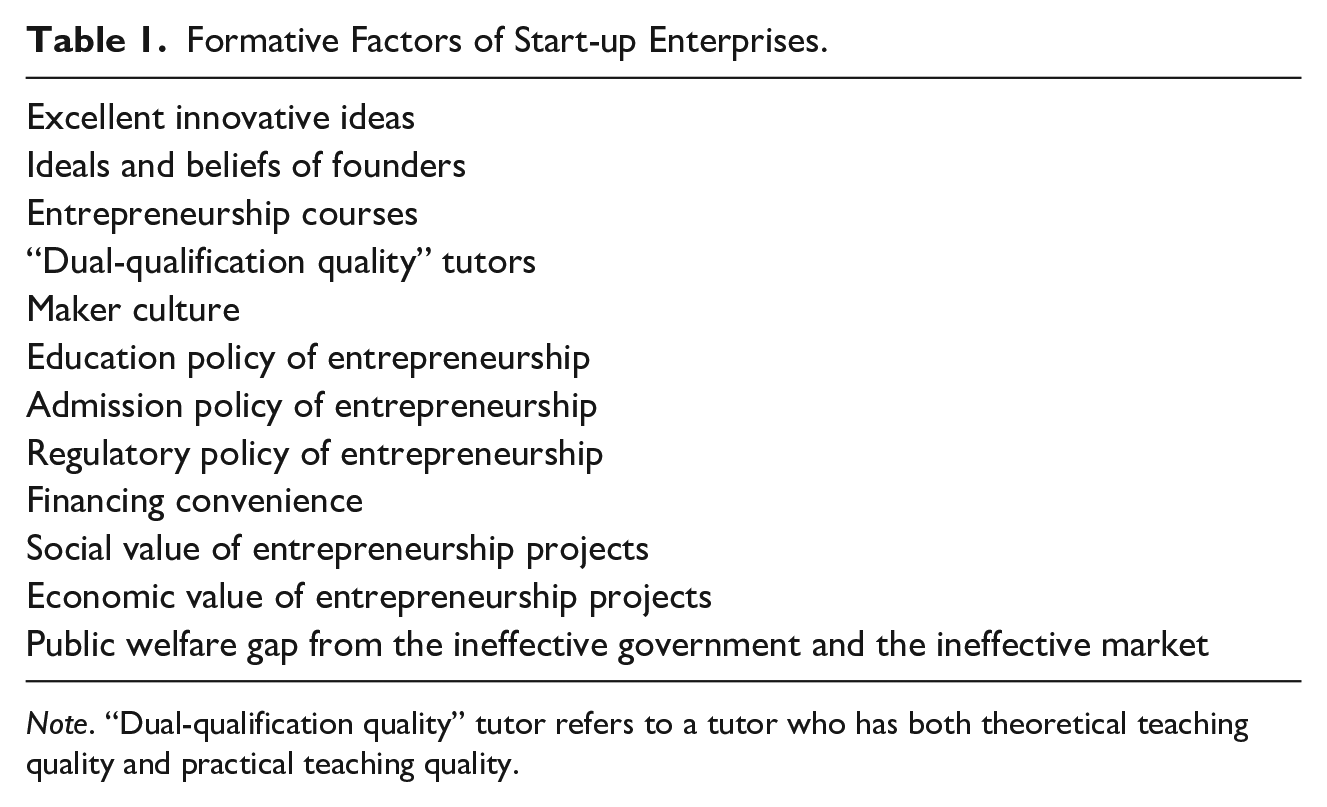
Note. “Dual-qualification quality” tutor refers to a tutor who has both theoretical teaching quality and practical teaching quality.
The Formative Factors of Start-up Enterprises (Test) Questionnaire is formulated with the combination of factors above based on the previous entrepreneurship questionnaires, as shown in Table 2:
Formative Factors of Start-up Enterprises (Test) Questionnaire.
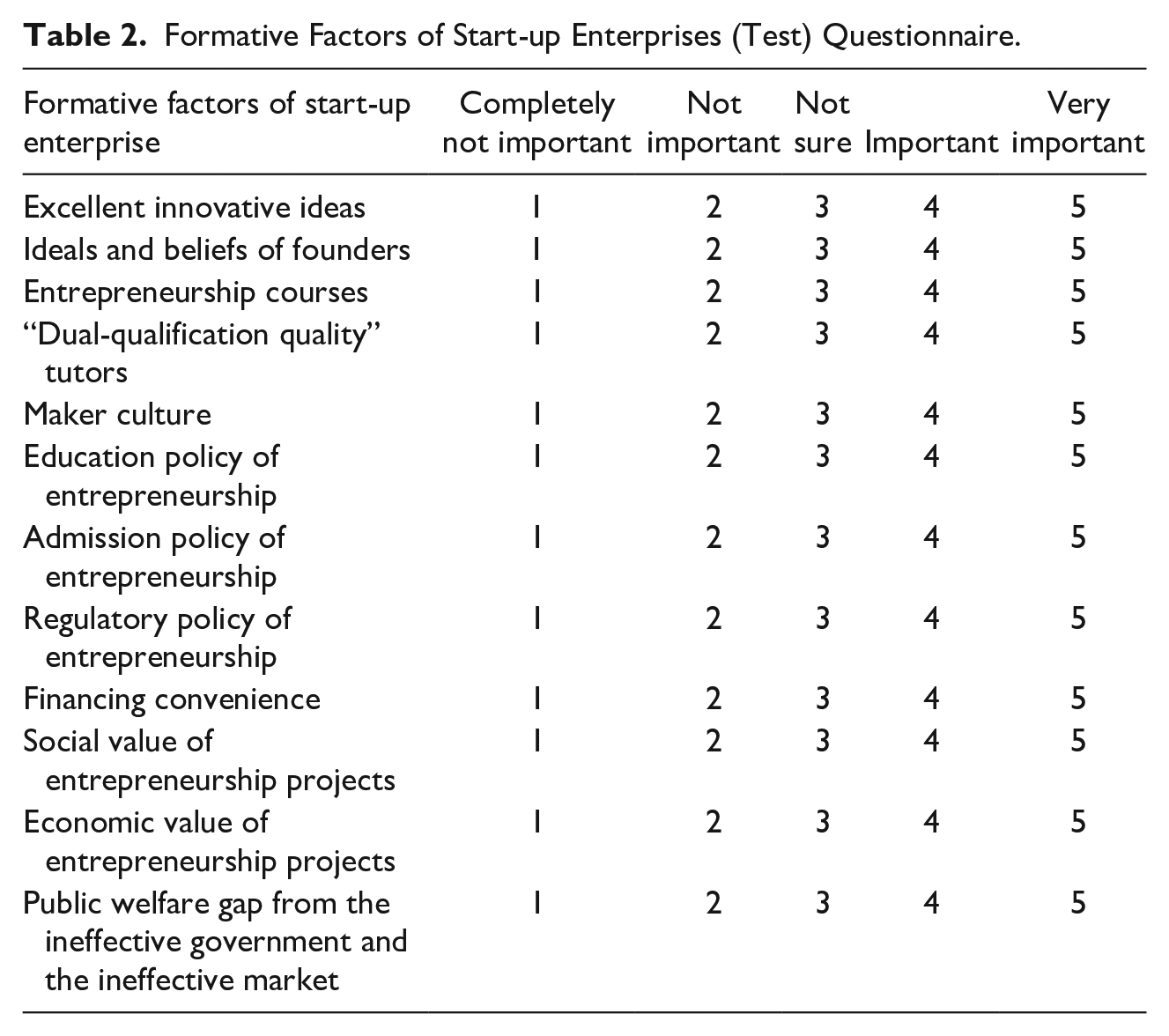
The questionnaire was distributed to the 6th training course (Beijing) and 7th training course (Shenzhen) of Innovative Entrepreneurship Higher Education Teacher Qualification Certification held in November and December 2017 respectively by the Innovation & Entrepreneurship Education Alliance of China (whose students are mainly from 23 provinces and municipalities including Beijing, Shanghai, Tianjin, Heilongjiang, Jiangsu, Shaanxi, Sichuan, Hubei, and Fujian). A total of 185 questionnaires were distributed and 178 were collected. Of the collected, 172 questionnaires were valid and 6 were blank or invalid. After the item correlation analysis of the collected data and the discrimination of the extreme value method, results are shown in Table 3:
Project Analysis Report on Formative Factors of Start-up Enterprises.
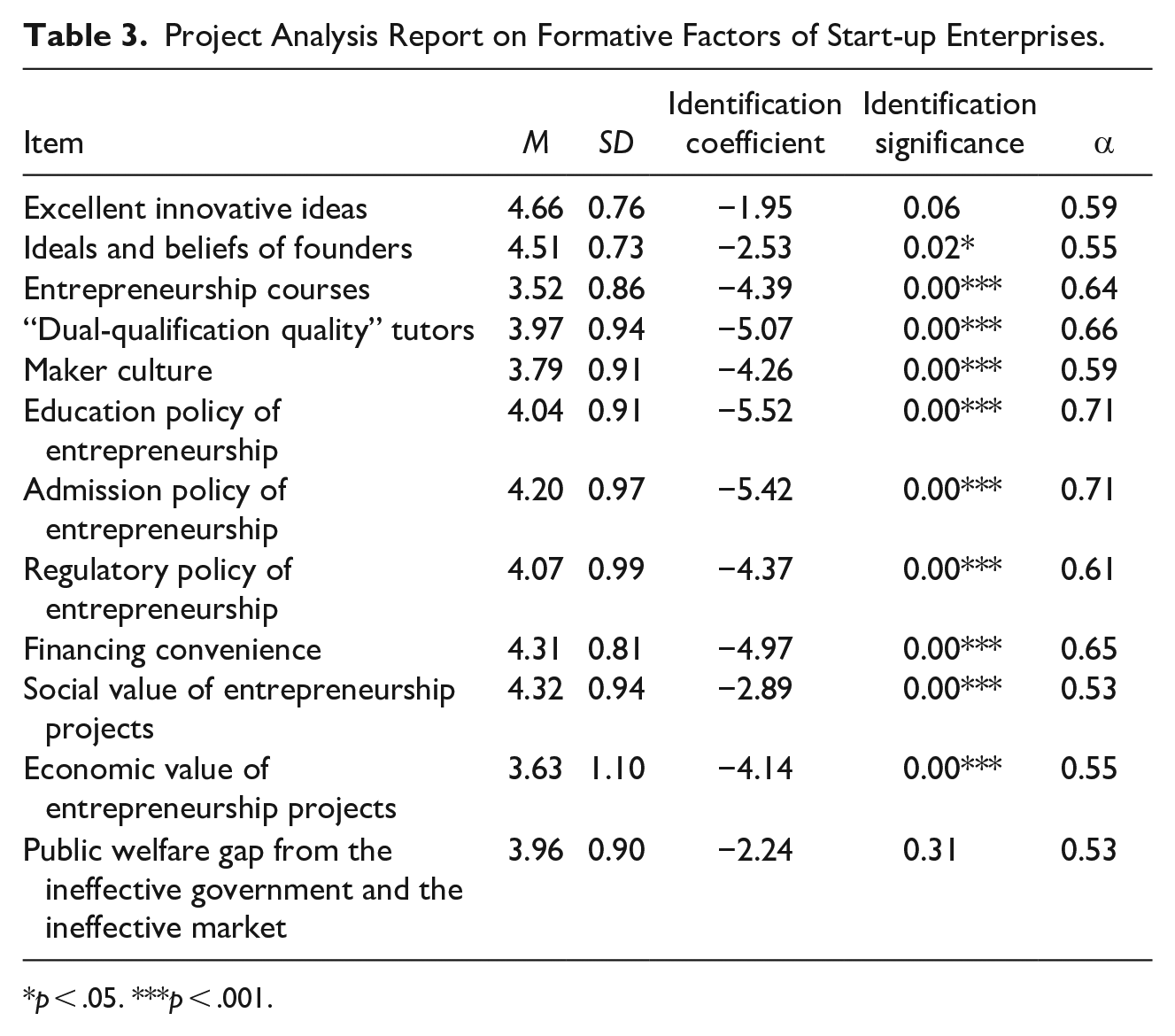
p < .05. ***p < .001.
We consider two indicators to screen the factors. One is the correlation coefficient with the total score, which reflecting the contribution of the factor to the total score. The factor whose correlation coefficient is less than 0.30 is eliminated. In addition, by classifying the data according to 27% forwards and backwards of the total score, the high and low score groups are performed with the independent sample T test to verify whether there are significant differences, thus examining the discrimination of the project.
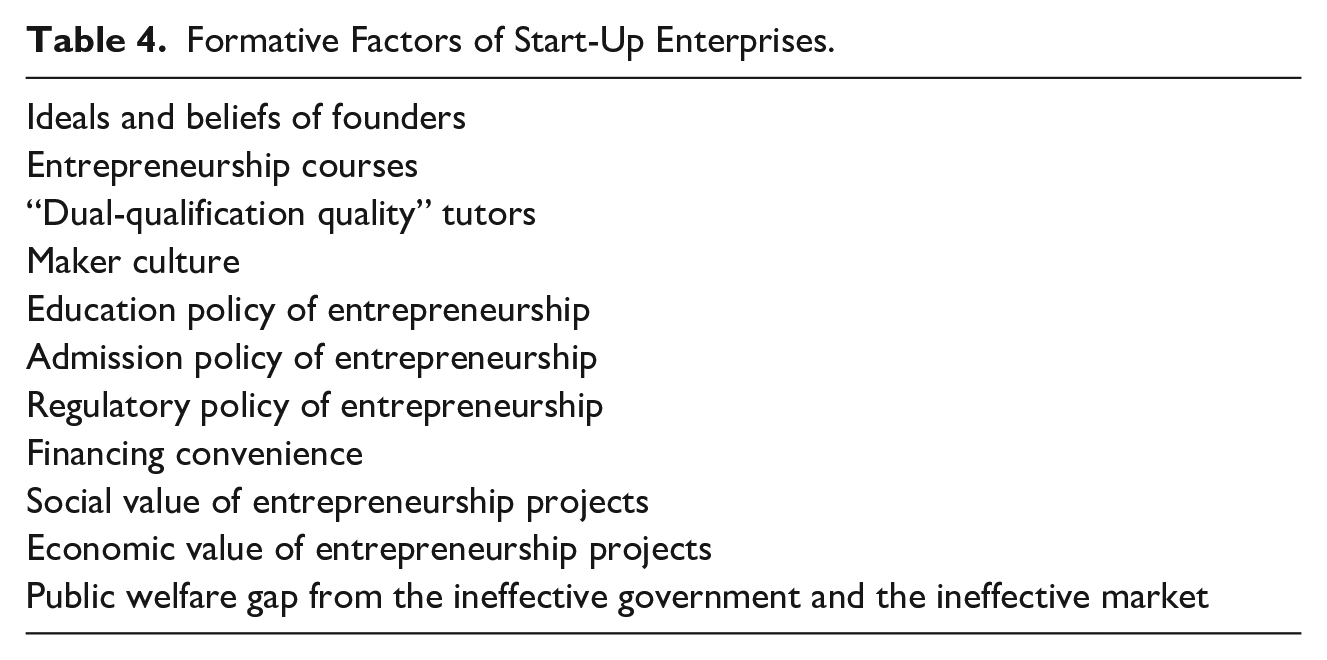
Table 3 shows that most of the factors are significantly correlated with the total score and the coefficients are higher than 0.3. Each item contributes significantly to the total score. According to the identification coefficient, the item “excellent innovative ideas” Sig = 0.06 and “Public welfare gap from the ineffective government and the ineffective market” Sig = 0.31 are not significant. It can be known that the “excellent innovative ideas” factor and “Public welfare gap from the ineffective government and the ineffective market” factor do not have a good discrimination, so they are eliminated.
It can be known that 11 items have been retained, as shown in Table 4:
Formative Factors of Start-Up Enterprises.
After the project analysis, the factor analysis of the formative factors is carried out as follows: the factor analysis condition test, the rotated coefficient matrix and the variance load table are shown in Table 5:
KOM Spherical Test Results.
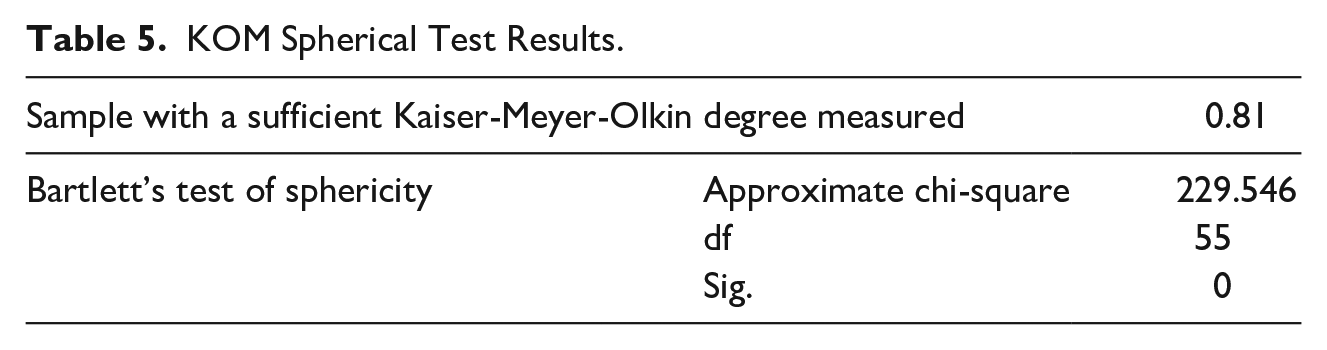
It can be seen from Table 5 that there are enough sample points whose KMO = 0.8, which is greater than 0.7, df = 55, which is greater than 30. SigKMO = 0.000 KMO which is significant. Therefore, the factor analysis can be conducted on formative factors of start-up enterprises, as shown in Table 6:
Load of Secondary Factors to Variances.
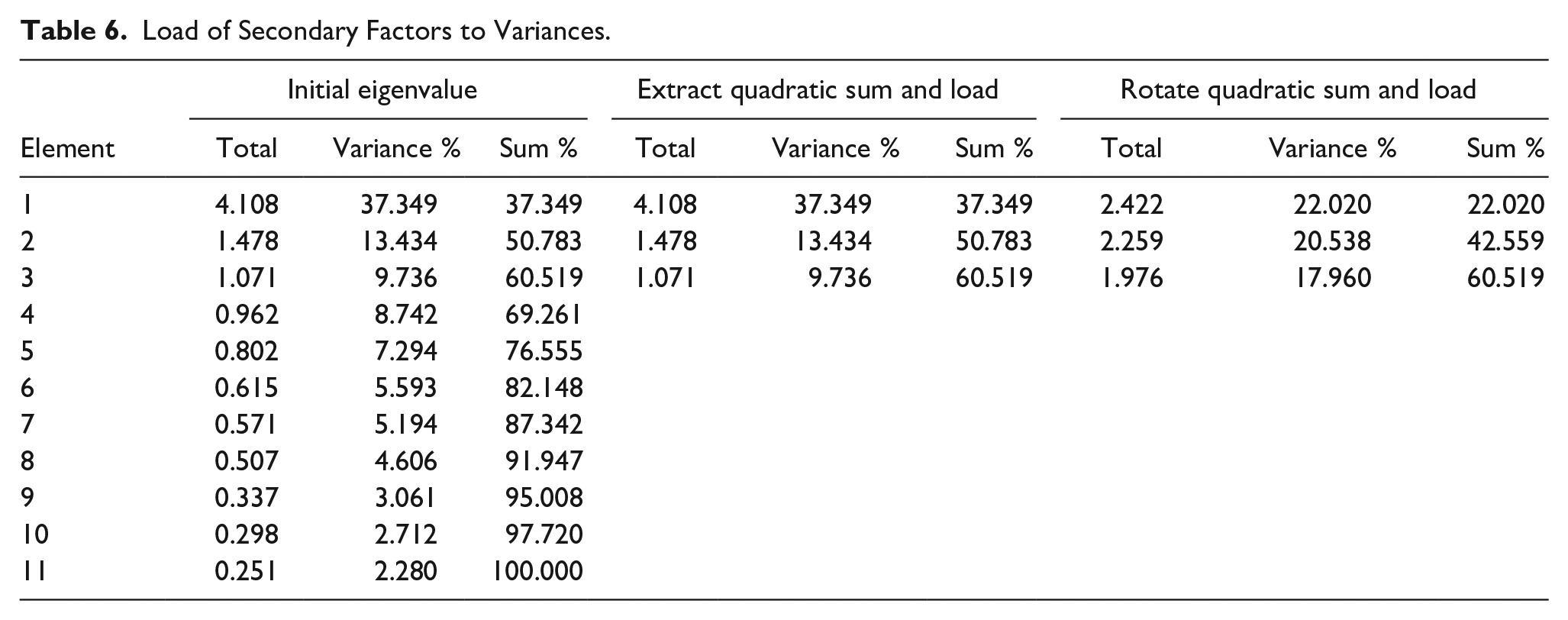
As shown in Table 6, after the 11 factors are orthogonally rotated under the maximum variance method, the interpretation degree of three factors to the variation of the total variance is 22.02% (Factor 1), 20.54% (Factor 2), and 17.96% (Factor 3). There is no single factor precipitation or single factor interpretation of more than 50%, which eliminates the possibility for false correlations and collinearity.
It can be seen from Table 7 that a total of three secondary factors are generated on the basis of 11 primary factors. Among them, entrepreneurship education policy, entrepreneurial admission policy, and entrepreneurial regulatory policy converge to Factor 1; beliefs of founders, maker culture, social value of entrepreneurship projects, economic return of entrepreneurship projects, financing convenience, and public welfare gap converge to Factor 2; entrepreneurship course, dual-qualification quality tutor, and maker culture converge to Factor 3. Among them, the maker culture shows a high load in both Factor 2 and Factor 3. After the discussion and analysis, it is believed that this is due to the dual embodiment of the maker culture in the younger generation through universities and the society.
Rotation Component Matrix.
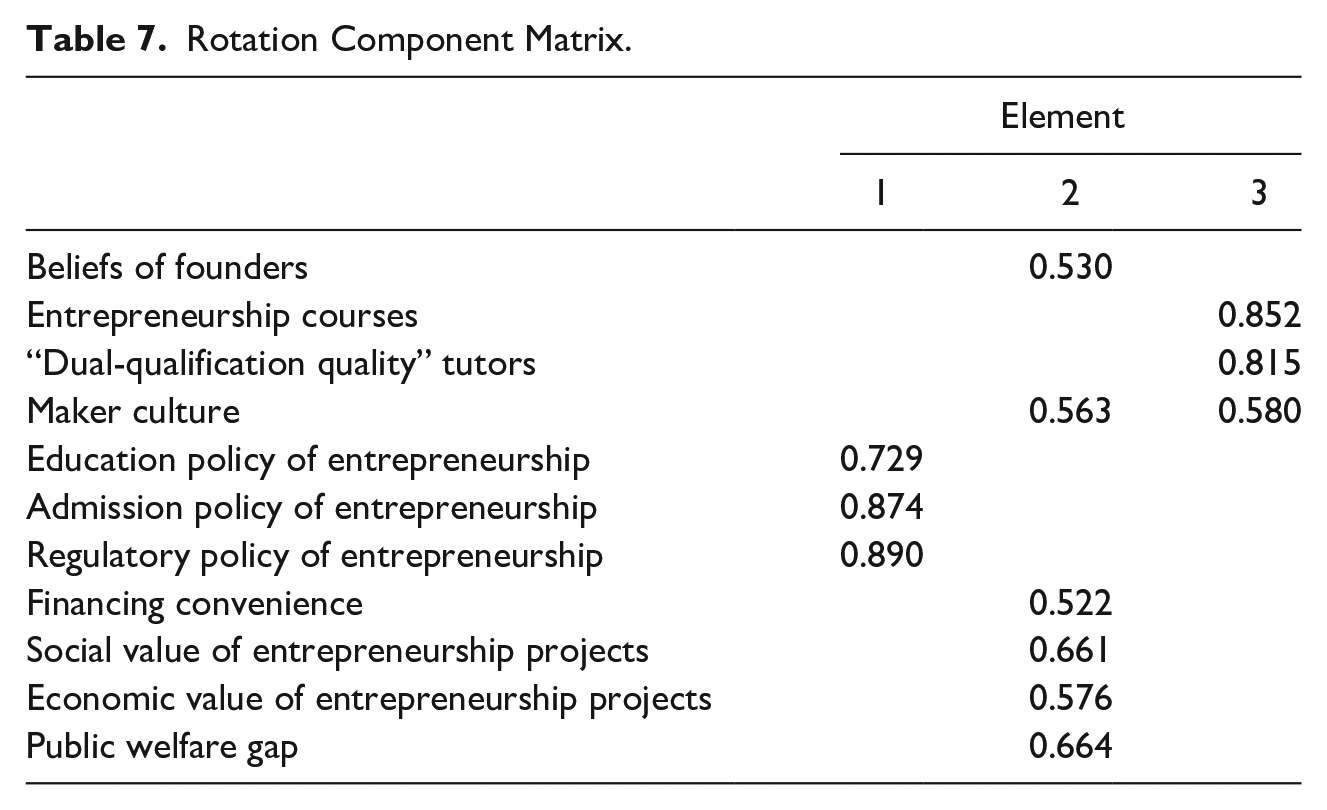
After the thorough discussion with experts in the field, it is considered that the three secondary factors should be the policy factor (Factor 1) with the variance contribution rate of 22.02%, the social factor (Factor 2) with the variance contribution rate of 20.54%, the educational factor (Factor 3) with the variance contribution rate of 17.96%. In addition, due to the cultural communication characteristics of the maker culture, this factor is attributed to social factors. Hence the factor structure of the formative factors of start-up enterprises can be obtained.
As can be seen from Figure 1, there are mainly three factors affecting the formation of start-up enterprises: policy factors, educational factors, and social factors.
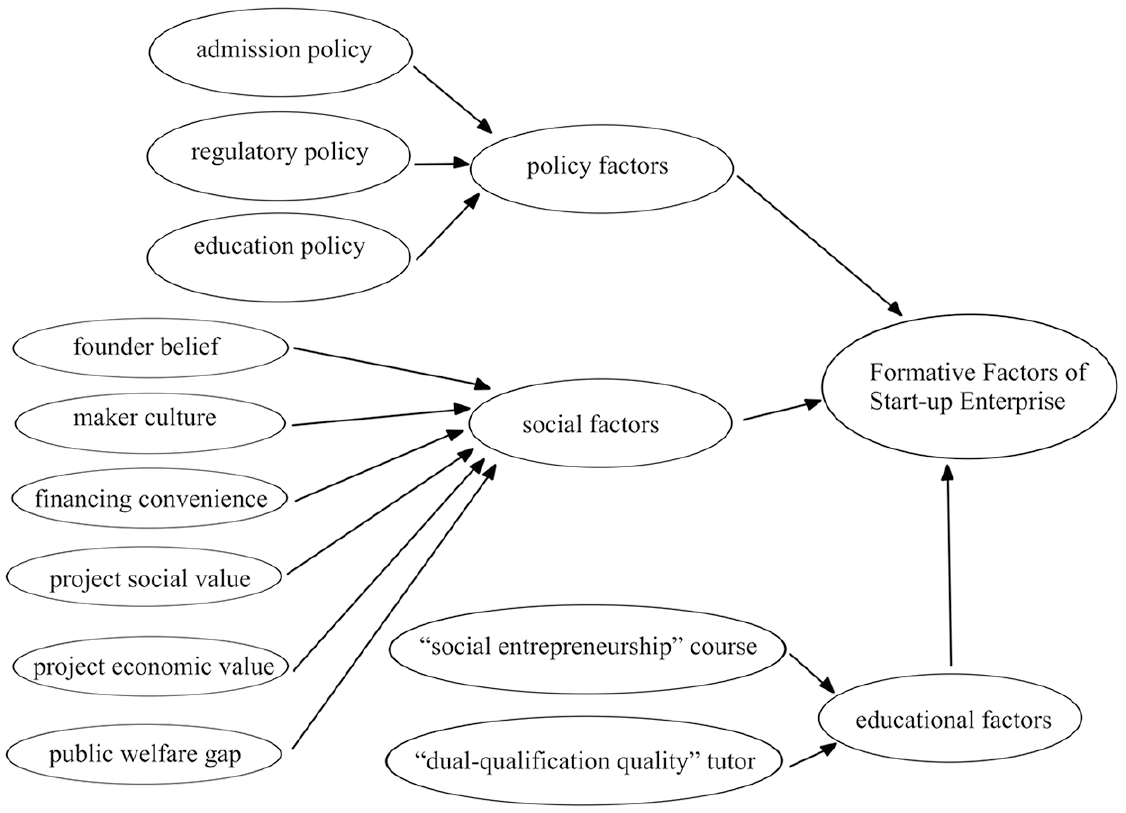
Structure diagram of formative factors of start-up enterprises: formative factors of start-up enterprises: 1. Policy factors (admission policy, regulatory policy, education policy); 2. Social factors (founder belief, maker culture, financing convenience, project social value, project economic value, public welfare gap); and 3. Educational factors (“social entrepreneurship” course, “dual-qualification quality” tutor).
Scores of each formation factor through the fuzzy evaluation is shown as Figure 2:
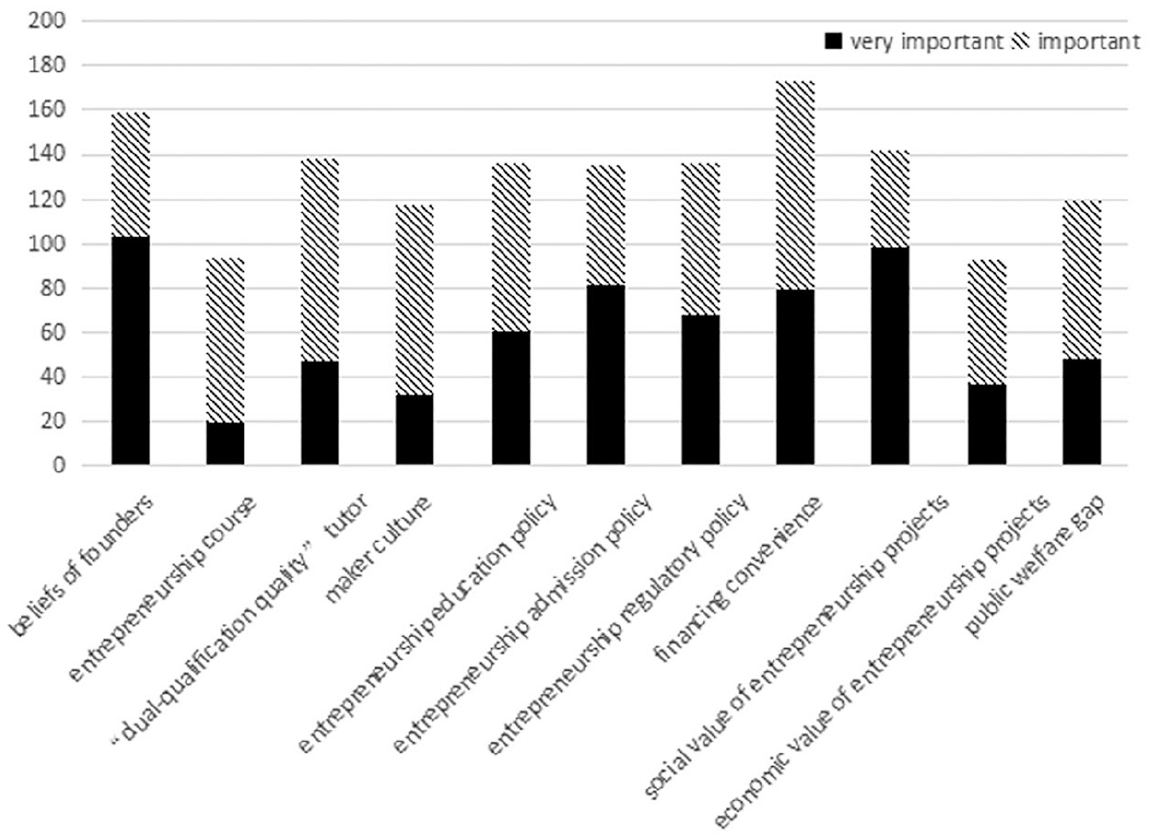
Ranking of formative factors of start-up enterprises: beliefs of founders (very important), entrepreneurship course, “dual-qualification quality” tutor, maker culture, entrepreneurship education policy, entrepreneurship admission policy, entrepreneurship regulatory policy, financing convenience (important), social value of entrepreneurship projects, economic value of entrepreneurship projects, and public welfare gap.
It can be seen from Figure 2 that among the most important factors for the formation of start-up enterprises, the founder’s belief ranks the first. The top three factors are: founder’s belief N belief = 103; social value of entrepreneurship projects N social value = 98; admission policy N admission policy = 81.
After the dimension is upgraded, each dimension contains multiple formative factors. The paper selects at least one sub-influencing factor under each type of evaluation to count the number of people in each dimension (each person is calculated only once in each dimension and each type). Therefore, the score ranking of the fuzzy evaluation after the dimension of each formative factor is upgraded is obtained, as shown in Figure 3:
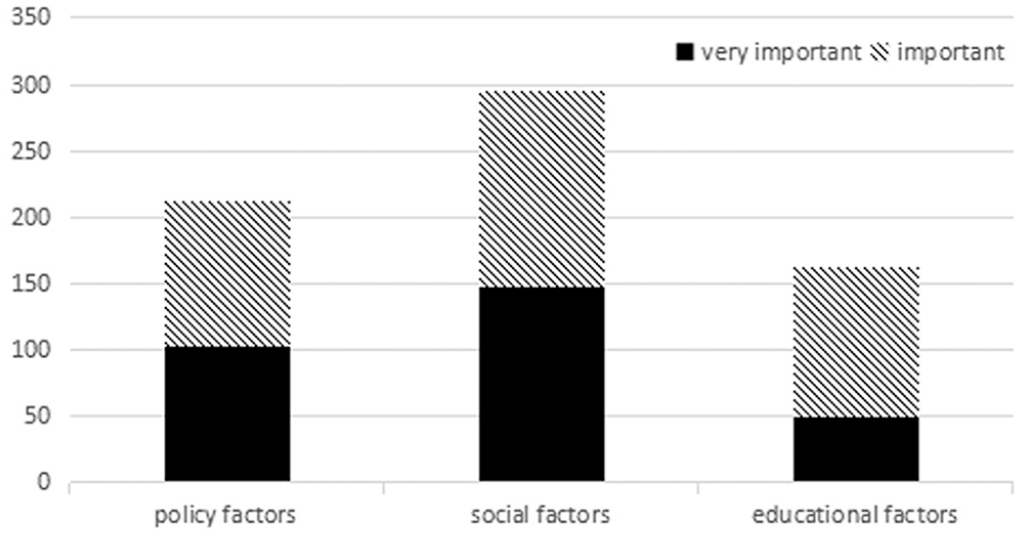
Ranking of formative factors of start-up enterprises (upgraded): policy factors (important), social factors (very important), and educational factors.
As can be seen from Figure 3, among the “very important” factors in the formative factors of start-up enterprises, the first one is social factor N society = 148, followed by policy factor N policy = 103, then comes educational factor N education = 50; among the “important” factors in the formative factors of start-up enterprises, the first one is social factor N society = 296, followed by policy factor N policy = 212, then comes educational factor N education = 162.
In the analysis of social entrepreneurial evaluations, we have sorted the formative causes of entrepreneurship by referring Table 1. The ranking results of the main indicators of public welfare (the social value of social entrepreneurship projects and the public welfare gap) are as shown in Table 8:
Cause Evaluation of Social Entrepreneurship Projects.
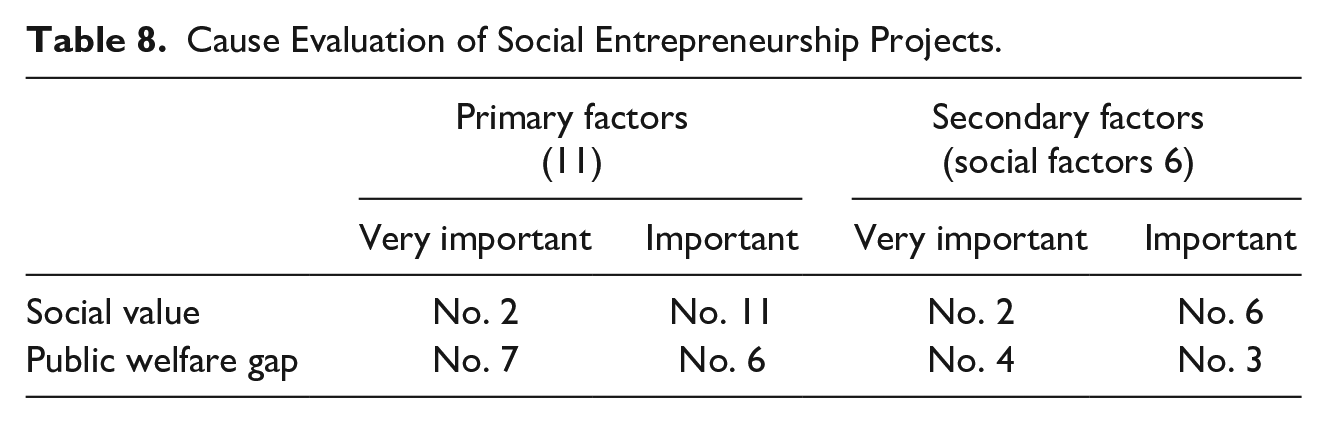
As seen from Table 8, teachers’ evaluations of the main influencing factors of social entrepreneurship projects puts the social value of entrepreneurship projects in a very high position (primary factor, No. 2; social factor, No. 2). They pay much attention to the social value brought by social entrepreneurship projects; the public welfare gap of the market is ranked in the middle position. (11 primary factor 11 /M No. 5.5: No. 5.5 > No. 7; 6 social factors /M No. 3: No. 3 > No. 4) This may indicate that teachers focus more on the ability of public welfare entrepreneurs to marketize their products or services than the needs and opportunities of the public welfare market.
The understanding differences between teachers on the formative causes of entrepreneurship, the impacts of entrepreneurial roles on the evaluation of policy factors are shown in Table 9:
Evaluation Differences of Policy Factors between Entrepreneurial Roles.
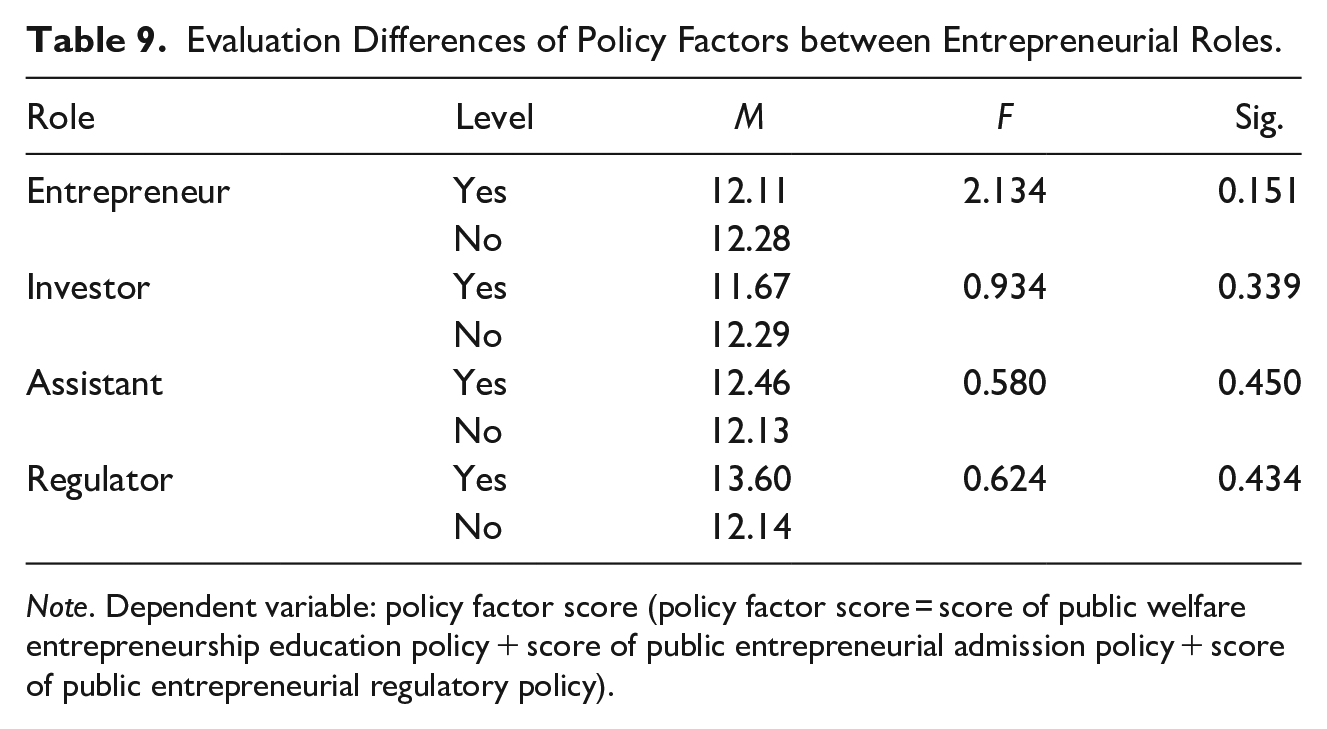
Note. Dependent variable: policy factor score (policy factor score = score of public welfare entrepreneurship education policy + score of public entrepreneurial admission policy + score of public entrepreneurial regulatory policy).
The differences in the evaluation of social factors between entrepreneurial roles are shown in Table 10:
Evaluation Differences of Social Factors between Entrepreneurial Roles.
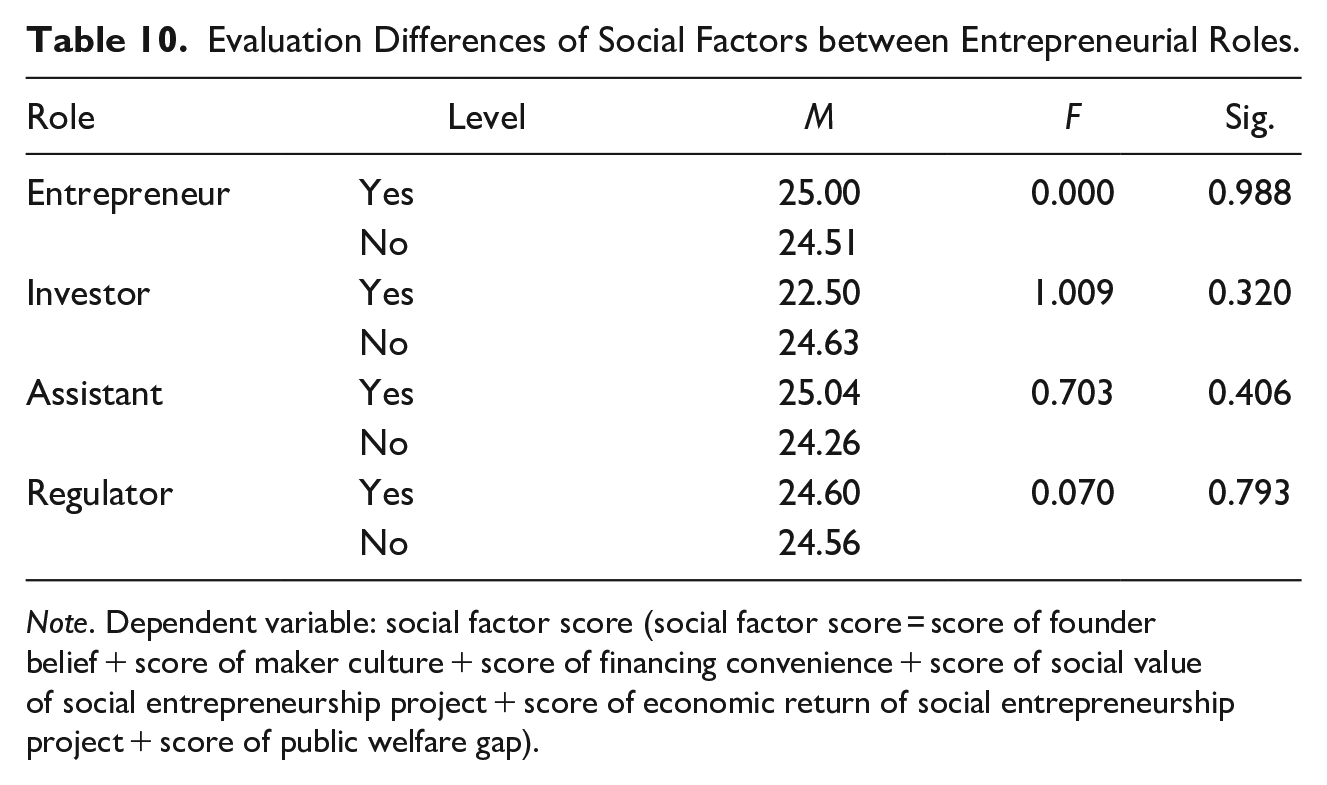
Note. Dependent variable: social factor score (social factor score = score of founder belief + score of maker culture + score of financing convenience + score of social value of social entrepreneurship project + score of economic return of social entrepreneurship project + score of public welfare gap).
The differences in the evaluation of educational factors between entrepreneurial roles are shown in Table 11:
Evaluation Differences of Educational Factors between Entrepreneurial Roles.
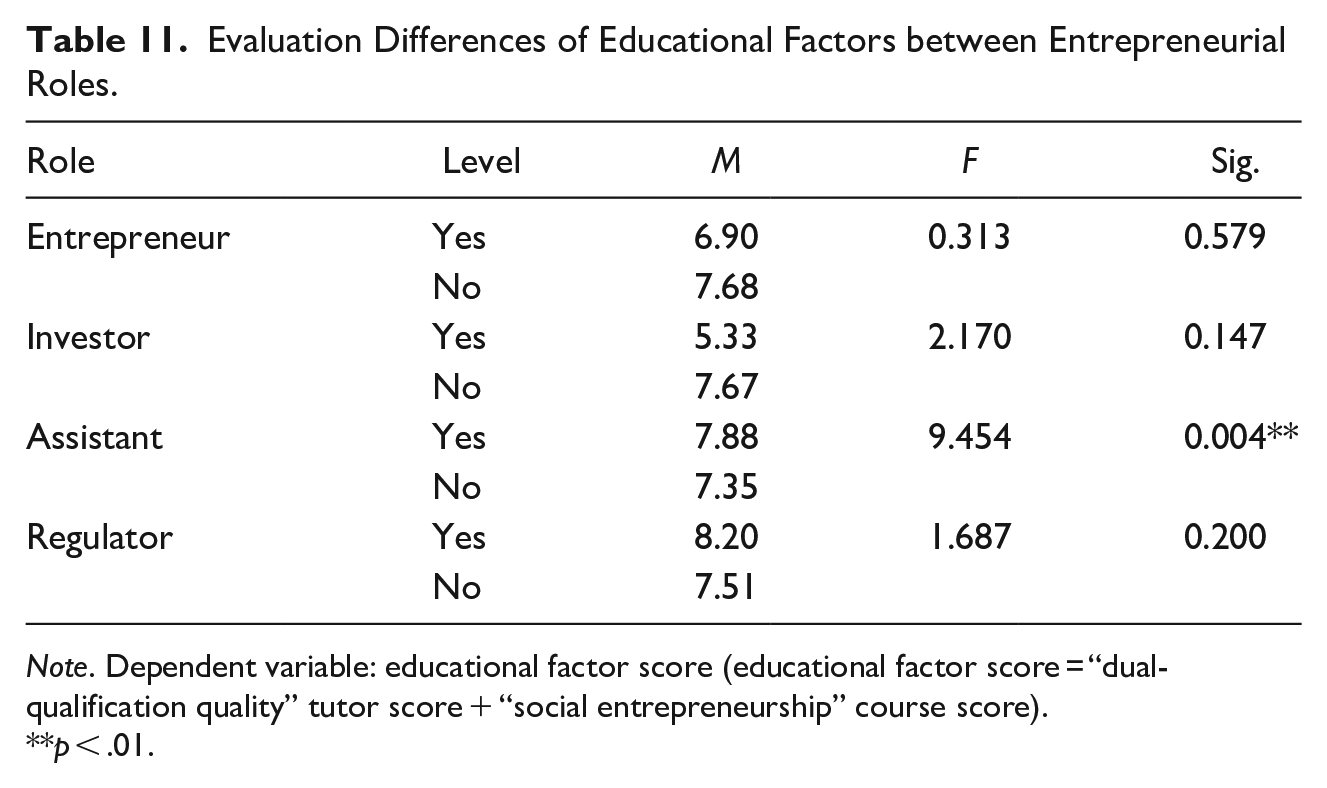
Note. Dependent variable: educational factor score (educational factor score = “dual-qualification quality” tutor score + “social entrepreneurship” course score).
p < .01.
From Table 9 to Table 11, it can be seen that with different entrepreneurial experiences, there exist significant differences in the evaluation of educational factors only when teachers are entrepreneurial assistants (F = 9.4541; Sig = 0.004 p 0.004 < 0.01).
Discussion
Teachers’ classification results of formative causes of entrepreneurship can be interpreted from the development history and development status of entrepreneurship education in Chinese universities. The exploration of entrepreneurship education in Chinese universities has been carried out for 20 years and its pilot development for more than 10 years. Now it has experienced stages of spontaneous entrepreneurship, gradual expansion, school-enterprise cooperation, and strategic reflection. The development of entrepreneurship education has changed from the bottom-up diffusion development to the top-down strategic planning. At present, for entrepreneurship education in universities under the multiple supports of the “central-local-university” policy, teachers participate in entrepreneurship education mainly through the course teaching, entrepreneurial competition guidance, and entrepreneurial practice assistance. First of all, the impact of policy factors on entrepreneurship education teachers is mainly reflected in teacher training and development. The development mode of entrepreneurship education in the period of strategic planning follows the logical order of “policy calls of governments at all levels—top-level design of universities—middle-level embodiment of entrepreneurial department and colleges—the grassroots implementation of teacher training and talent cultivation.” From the perspective of entrepreneurship education teachers, this policy has promoted the establishment of entrepreneurship education teachers; on the other hand, it has also realized the development of teachers, that is, the cross-integration of non-entrepreneurship education teachers. Secondly, the educational factors have helped students achieve the transition from unknown state to known state, from perceptual understanding to rational understanding, and from experience to theory in the field of entrepreneurship. Specifically, teachers impart the knowledge entrepreneurship to students, cultivate the innovative spirit and motivate the entrepreneurship intention during the teaching process through compulsory entrepreneurial course or elective entrepreneurial course, making students gaining knowledge and principles of entrepreneurship through course learning and forming a certain preparation for entrepreneurship. In the process of participating in student entrepreneurship competitions, teachers can discover outstanding entrepreneurial achievements and promote the implementation of entrepreneurial projects. Finally, the impact of social factors is mainly reflected in the transformation and implementation phrase of entrepreneurship projects. Teachers emphasize that the evaluation of the external environment by the entrepreneurial team should be changed from the on-campus evaluation to the market evaluation. The development should be considered from the perspective of supply and demand (market demand, demand gap), input-output (project value, financing factors) and business management.
The evaluation differences of the entrepreneurship influencing factors between teachers can be interpreted from the teaching process and the participation process of entrepreneurial competition. First of all, teachers pay more attention to the entrepreneurial traits of students (personality traits (willpower, anti-frustration ability), entrepreneurship willingness, and entrepreneurial related traits in the process of teaching and guidance based on their own entrepreneurship experience and entrepreneurial awareness. They believe that founders with excellent entrepreneurial literacy are the key factors in achieving entrepreneurial success. Secondly, the results show that among the primary influencing factors, teachers put the founder’s belief in the first place. In the teaching process, they prefer to encourage and inspire students with excellent entrepreneurial literacy. They also pay more attention to such students and have more interactions (this will also bring about a benign learning encouragement). Thirdly, teachers believe that the main way for college students to start a business is to enter the university entrepreneurship park for incubation first and then gradually participate in the real market environment competition later, as the university entrepreneurship park can provide the entrepreneurial team with infrastructure and supporting services (including entrepreneurial guidance). When these college entrepreneurs graduate, the impact of entrepreneurship education at universities and colleges on them has been gradually solidified. Finally, after separating from the incubation of the entrepreneurship park for college students, the key to the survival of start-up enterprises lies in whether they can focus on the market and pay attention to all the favorable factors for the survival and development of enterprises. From the perspective of the founders, transformation of the entrepreneurial strategies is urgently needed. In general, teachers believe that social factors are the most important in terms of the impacts of various secondary factors on entrepreneurship.
The evaluation differences of the entrepreneurship factors between teachers can be interpreted from the career planning of teachers. At present, in terms of the establishment attribution, entrepreneurship education teachers in China can be categorized into on-campus entrepreneurship education teachers and off-campus entrepreneurship education tutors. The on-campus entrepreneurship education teachers can also be divided into two categories: entrepreneurship education teachers with a strong professional background, and part-time entrepreneurship education teachers who serve students and work as administrative staffs. For on-campus entrepreneurship education teachers, the professional title assessment is the main driving force for their career development. It follows the path of “scientific research output—topic declaration—professional title assessment—promotion award—scientific research output.” This kind of career development model directly affects the participation of teachers in entrepreneurship education. Specifically, there are two aspects that can directly help teachers with the professional title assessment in the process of entrepreneurship education. One is the academic output of scientific research innovation and the other is the award of entrepreneurial competitions. Teachers with strong professional backgrounds can achieve technological innovations by recruiting students to participate in team researches. After the research results have been transformed into the forms of intellectual properties, such as academic achievements or patents, they have reached the demand for their professional development. The subsequent result realization and project incubation are difficult to attract teachers. Naturally, they lack initiative in the later-stage investment and participation. Part-time entrepreneurship education teachers who work as counselors and administrative staffs have cumbersome tasks and large workloads with relatively fixed working hours, making their investment in the guidance and assistance of students’ entrepreneurial competitions congenitally insufficient. Moreover, for entrepreneurship projects that have completed the entrepreneurial competitions, because the benefits to the promotion of their professional titles have been reached, they lack the initiative in the subsequent project implementation and incubation. In general, teachers’ participation in student entrepreneurship is passive and not for the purpose of final entrepreneurship itself. They do not consider the entire entrepreneurial preparation process from the perspective of entrepreneurs. As assistants, teachers intend to gain benefits of career promotion by participating in the student entrepreneurship. It can be seen that whether teachers have working experience as entrepreneurial assistants will make different evaluations of the influencing factors of entrepreneurship. The entrepreneurial experience, investment experience, and regulatory experience have not shown significant differences in evaluations of the influencing factors of entrepreneurship. This may be because that the student entrepreneurship process is not examined from these perspectives. Among policy factors, social factors, and educational factors, there are significant differences in evaluations of the importance of educational factors made by teachers. This may indicate that they often participate in interactions as teachers in the entrepreneurial team, providing information and resources that are mostly from teachers’ perspectives. In other words, this reflects the mode teachers participate in the student entrepreneurship: they participate in the entrepreneurial team as a teacher, providing school resources to assist students in entrepreneurial competitions and practice. Off-campus entrepreneurship instructors are generally industry leaders or successful entrepreneurs who work part-time. Their motivation to work with universities is mainly due to their social status and inner demand for innovation highlands. They often have rich practical experience in entrepreneurship, high practical teaching qualities but lack theoretical teaching qualities. They participate in entrepreneurship education mainly by giving entrepreneurial experience, sharing lectures or serving as tutors for college students’ entrepreneurial competition projects. Due to the limited time and lack of energy, their guidance is often piecemeal and unsystematic. They cannot provide comprehensive and systematic guidance. However, in terms of discovering innovation, grasping social needs and promoting project implementation, they are often more sensitive and open-minded than on-campus entrepreneurship education instructors. They can grasp the pain points in the society more accurately and better guide the implementation and development of excellent projects. On one hand, due to the relatively small proportion of off-campus tutors in colleges and universities, their guidance coverage of entrepreneurship projects is insufficient. On the other hand, from the assumption of economic man (Larson, 1937), due to the distinctiveness of the identity of the off-campus tutors, they may be more willing to be judges of entrepreneurial competitions or contact good entrepreneurship projects as angel investors than sharing entrepreneurship lectures or being entrepreneurship project instructors. Based on the facts above, college entrepreneurship education must include basic teaching activities and project guidance centered on the on-campus tutors, guidance for key project competitions, and project landing resources.
Teachers’ evaluation of the formative causes of social entrepreneurship projects shows results different from commercial entrepreneurial projects. Teachers rank the social value of the entrepreneurship projects close to the first factor (No. 1: founder’s belief), which ranks higher than the commercial value of the project. This may come from their understandings of the public welfare property of projects. They believe that social entrepreneurship is not for profits and puts more emphasis on solving social issues. This kind of understanding may be reflected in the guidance of the concerned issues, the establishment of the corporate mission, the business model, and the conception of the shareholding structure during the guiding process of entrepreneurial competitions. When guiding the entrepreneurial team, teachers pay more attention to the realization of people’s welfare than to the return of the entrepreneurial profits. In addition, compared with the pain points in the society, teachers are more concerned about the maturity of the business model of social entrepreneurship (this is also an important factor affecting the “hematopoietic” ability of social entrepreneurship). During the guidance of the entrepreneurial competition, teachers believe that the public welfare gap of the market can indeed provide good opportunities for entrepreneurship, but the creativity and opportunities can be effectively participated in the market competition through the process of productization and commercialization. Therefore, the entrepreneurial team should be more concerned about the marketization of their own products.
Conclusion
The entrepreneurship awareness of teachers is formed under the guidance of policy factors, based on working experience and entrepreneurial experience. It is believed that the successful implementation of start-up enterprises is mainly influenced by social factors. The main influences of teachers on college entrepreneurship education are as follows: in the teaching process, teachers may pay more attention to students with good entrepreneurial literacy; in the competition and practice of entrepreneurial projects, on-campus entrepreneurial teachers mainly participate as assistants and they are quite passive. It may be because that their participation motivation is departed from the purpose of entrepreneurship; the off-campus entrepreneurship education instructors examine the social entrepreneurship projects from the perspective of investors. Compared with the needs and opportunities of the public welfare market, they focus more on the ability of the social entrepreneurial team to marketize the products or services, which may stem from the inherent expectation of return on investment.
Footnotes
Authors’ Note
Zi Ye is now affiliated with College of Marxism, Zhejiang Institute of Economics and Trade, Hangzhou, Zhejiang, China.
Declaration of Conflicting Interests
The author(s) declared no potential conflicts of interest with respect to the research, authorship, and/or publication of this article.
Funding
The author(s) disclosed receipt of the following financial support for the research, authorship, and/or publication of this article: This research is funded by the National Social Science Foundation Education Project (No. BIA180190).