







Abstract
This article forms part of research into the role of support offered to children and youth by different community agents during the pandemic. In order to carry out the research, an online questionnaire was designed and administered between October 2021 and January 2022, to which 1,216 people in Catalonia (Spain) aged between 9 and 18 years responded. This article presents the results of the analysis of the open questions, in which participants specified the type of support and help they had received. The results show that the support offered by schools mainly focused on the continuity of the learning process; that the family was a main source of emotional support; and that communal leisure activities contributed to health and recreation. It concludes underlining the importance of the community, and the need to strengthen the complementarity of the various surroundings as support providers when situations of generalized adversity arise.
Introduction
The COVID-19 pandemic has created structural and systemic imbalances that have particularly affected children and youth (Masten & Motti-Stefanidi, 2020). These groups are consequently at greater risk of vulnerability (Gomà, 2021), which has required the search for personal, social, and community conditions that facilitate the development and adaptation of the group to contexts characterized by change, disruption, and uncertainty. This responds to the construct of the “resilient community,” understood as the context capable of promoting and involving a range of communal and ecological-systemic resources (Bronfenbrenner, 1977) that provide creative transformative responses which reduce risks arising from tense or adverse events or upheavals such as those produced by the COVID-19 pandemic. Examples of these are personal strategies; the actions of organizations, schools, and educational bodies; and the establishment of networks and interactions that, among others, offer support, help, and collaboration (Iglesias et al., 2022). In line with the above, Research “Resilient children, youth and communities: identifying and analysing social and educational practices from a multidimensional and intersectional perspective to address the pandemic” (AGAUR, ref. 2020PANDE00166) was undertaken to identify those social and educational practices focused on children and youth that have contributed to the construction of resilient communities during COVID-19.
Experiences of Support and Help During the COVID-19 Pandemic and Lockdown
This article focuses on the experiences of support and help related to children and youth in the context of the pandemic. Support is any aid received from different networks (formal, informal, or mixed; De Federico, 2008), and is generally classified into three groups: instrumental support (direct aid and services); emotional support (aid that contributes to a feeling of being loved and taken care of); and informational support (references and orientation that serve a practical purpose; Molina et al., 2008). The lack of support in adverse health, educational, psychological, social, and economic contexts is understood to lead to higher degrees of anxiety, frustration, and stress (Lidegran et al., 2021; Platero & López-Sáez, 2020; Ward & Lee, 2022), while also increasing inequality, precariousness, and exclusion (Uribe, 2021). Therefore, if a community is to be resilient, it has to be able to provide its members with support.
There have been a number of international studies regarding the experiences of support during COVID-19. The results highlight a significant relationship between the support offered and perceived by networks such as schools and organizations, friends, relatives, and neighbors (Kurudirek et al., 2022; Lidegran et al., 2021; Lim et al., 2023; Ward & Lee, 2022). During COVID-19, different types of support have proved important in guaranteeing educational and professional continuity (Lidegran et al., 2021), promoting healthy eating habits (Ward & Lee, 2022), and producing high levels of psychological well-being (Kurudirek et al., 2022) and hope (Lim et al., 2023) in children and youth.
The Impact of the COVID-19 Pandemic on Areas of the Daily Life of Children and Youth
This research focuses on three specific contexts: the family; the school; and leisure and communal activities. Research in Spain has shown that lockdown and pandemic measures in all three areas have had significant effects on children and young people.
In the context of the family, some studies have identified problems related to cohabitation and care in that many families have been unable or not known how to make remote working compatible with looking after children at home (Zies et al., 2020). Fuentes-Peláez et al. (2020) note that, at times it has been hard to maintain cordiality between parents and children given the limited space of the home, intense cohabitation, and being forced to stay indoors. On spending all their time in the family environment, children have been witnesses to financial and family stresses, the mental health problems of relatives, and domestic violence. This has exposed them to more risk factors (Fernández-Rodrigo, 2020).
Regarding schools, difficulties have been experienced in guaranteeing the continuity at home of educational activities; pre-existing educational inequalities have worsened, and the digital divide has grown wider (Bonal & González, 2020; Jacovkis & Tarabini, 2021; Palau et al., 2021). The school timetable has also been affected. It has proved impossible, for example, for break time to serve as a pedagogical resource furthering curricular progress, as teachers were insufficiently trained in how to direct this time during the pandemic (Del Arco et al., 2021). All of this leads to a negative impact on the educational and emotional development of schoolchildren, and the quality of the teaching received (Baltà-Salvador et al., 2021).
Regarding leisure and communal activities, inequalities have been noted with respect to the participation of children and young people (Alberich et al., 2020) and weaknesses of socialization, network, and territorial links (Schmidlin et al., 2020). Places for shared social play have been lost (Pineda et al., 2021), problems have been seen regarding physical inactivity (Ventura et al., 2021) and the community has faced struggles in uniting and responding ( Associació Col·lectiu i+, 2021).
In most of this research, the main sources of information have been adults. Few studies have taken into account the opinions of children and/or youth (Associació Col·lectiu i+, 2021; Baltà-Salvador et al., 2021; Ventura et al., 2021). The research presented in this article stems from the importance of listening to their voices in order to gather information that enables a global understanding of the characteristics needed by resilient communities that provide support to children and young people in adverse situations which has transformed their routines, activities, and relations during an important stage of their lives.
Such considerations make to ask ourselves to what extent the family, the school, and leisure and communal activities have helped mitigate tensions and adversities in order to increase the resilience of children during lockdown. What kind of support has been most frequently used to support children and youth? Why? How have they perceived and valued this support? The research presented here provides the visions of children and young people regarding these questions.
Method
The aim of this study is to assess the perceptions of children and youth aged between 9 and 18 years in Catalonia (Spain) regarding the support they received and gave throughout the pandemic and in particular during the lockdown. A three-part questionnaire was devised; the first part related to personal data; the second questions about four dimensions of community educational resilience analysis; and the last to personal opinions. The questionnaire included closed questions (dichotomies, multiple-choice, Likert scale of agreement or frequency, and an 11-point satisfaction scale, from 0 to 10), and open questions, for free expression. The tool was internally validated by 14 researchers from the team who were not directly involved in the questionnaire. A pilot phase was then carried out with six participants, four girls and two boys aged between 10 and 17 years. Both processes allowed us to improve questions comprehensibility. The final questionnaire comprised 23 questions, eight were open, of which we analyze five in this article:
(1) Which two things did the family do that helped you most during lockdown?
(2) Which two things did the school do that helped you most during lockdown?
(3) Which two extracurricular or leisure activities helped you most during lockdown?
(4) How did school, or educational, leisure, cultural, sporting, social, and health services, neighbors’ associations help you?
(5) How could you help?
We also produced a simplified version for use in special needs centers. The questionnaire was administered online between October 2021 and January 2022, through the Mach Form virtual platform. The questionnaire was created using GSuite, licensed to the University of Girona.
The questionnaire was administered to students of 26 schools (10 primary schools, 13 secondary schools, and 3 special needs centers) in five areas of Catalonia: Ciutat Vella, Barcelona (population 102,138); Girona (population 101,852); Olot (35,228); Palafrugell (22,860); and Celrà (5,390). Three criteria were used when selecting the areas: their socio-economic and urban diversity (district, city, inland town, coastal town, and village); the previous experience of the researchers with local social agents; and proximity to the university’s area of influence.
A total of 1,216 students aged between 9 and 18 years old (M = 14.3; DT = 2,468) answered the questionnaire. About 23.7% of them were in years 4, 5, and 6 of primary school, while 76.3% were studying obligatory and post-obligatory secondary school. The remaining 0.9% were students of special needs schools. About 52.4% of the participants were female, 45% male, and 2.6% non-binary. About 90.5% of participants were born in Spain, and 34.1% had parents born abroad.
Collaboration was requested from the schools of the Education Consortium of Barcelona City Council, and Girona territorial services of the Department of Education of the Government of Catalonia. The questionnaire was completely anonymous and self-administered. The students gave their consent online before commencing the questionnaire. Students under 14 years old needed the informed consent of their fathers or mothers. Data confidentiality and anonymity was guaranteed throughout the whole process under Organic Law 3/2018 on Data Protection and Guarantee of Digital Rights and the General Data Protection Regulation (GDPR) 2016/679 of the European Parliament and of the Council. The study was approved by the Ethics and Research Biosecurity Committee of the University of Girona (CEBRU0028).
Of the 1,216 students, 973 wrote answers to some of the open questions, representing 80% of the total. Qualitative data was subjected to a thematic content analysis (Braun & Clarke, 2006), and the answers to the open questions were codified and categorized. Eight researchers participated in the thematic analysis, two of whom began the codification and categorization process. The team then agreed on the main analytical categories. A further three researchers reviewed the categorization and sub-categorization. Each researcher analyzed a different source of support, and produced a synthesis report for each. These were then reviewed by another three researchers. The information from the five questions analyzed was organized in three categories: instrumental support (10 sub-categories); emotional support (13 sub-categories); and informational support (2 sub-categories). The sub-categories can be seen in Tables 1 to 4. A fourth category was also included, concerning support that had not been given, or had been viewed as unnecessary. The sub-categories for each type of support varied slightly between the questions.
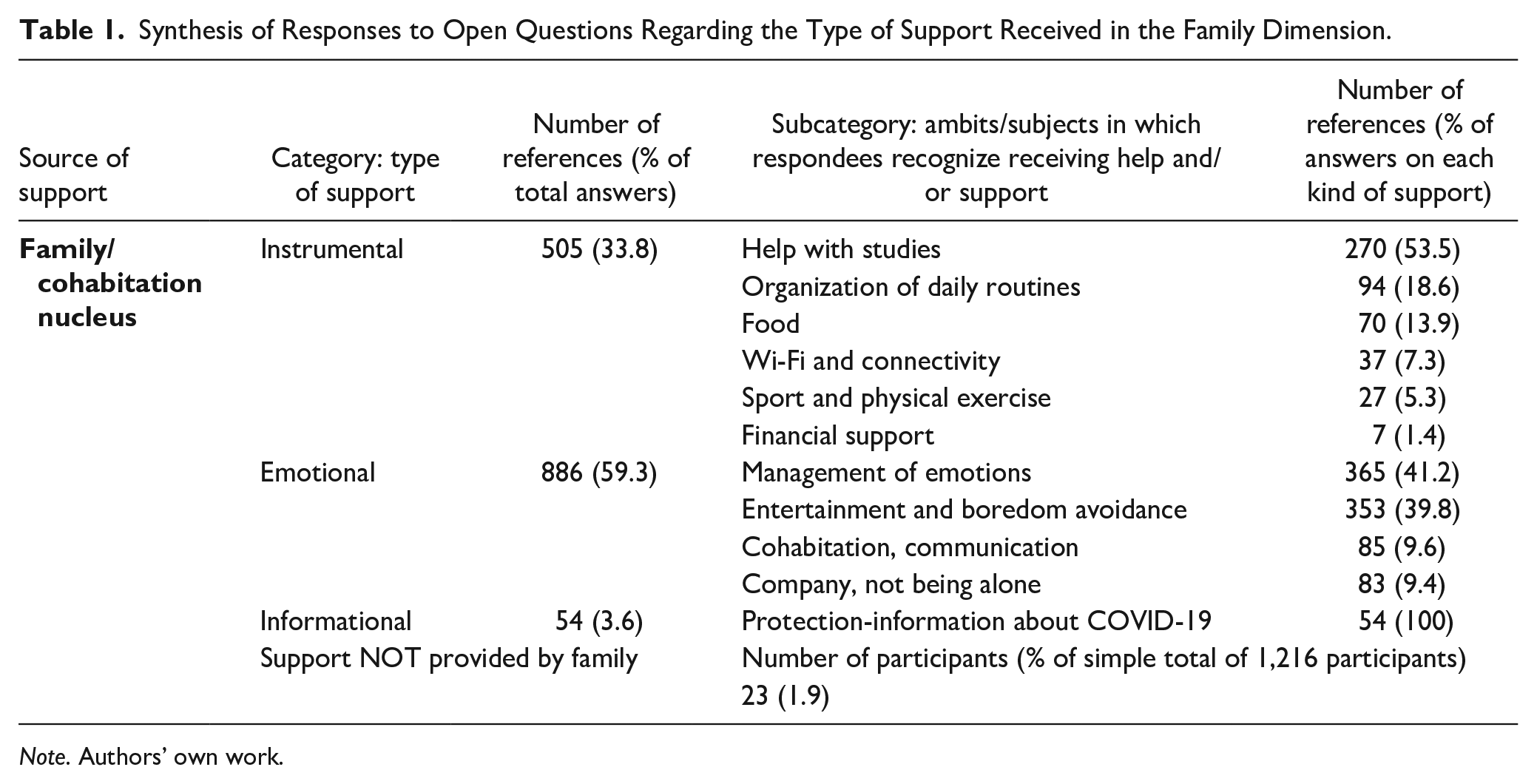
Synthesis of Responses to Open Questions Regarding the Type of Support Received in the Family Dimension.
Note. Authors’ own work.
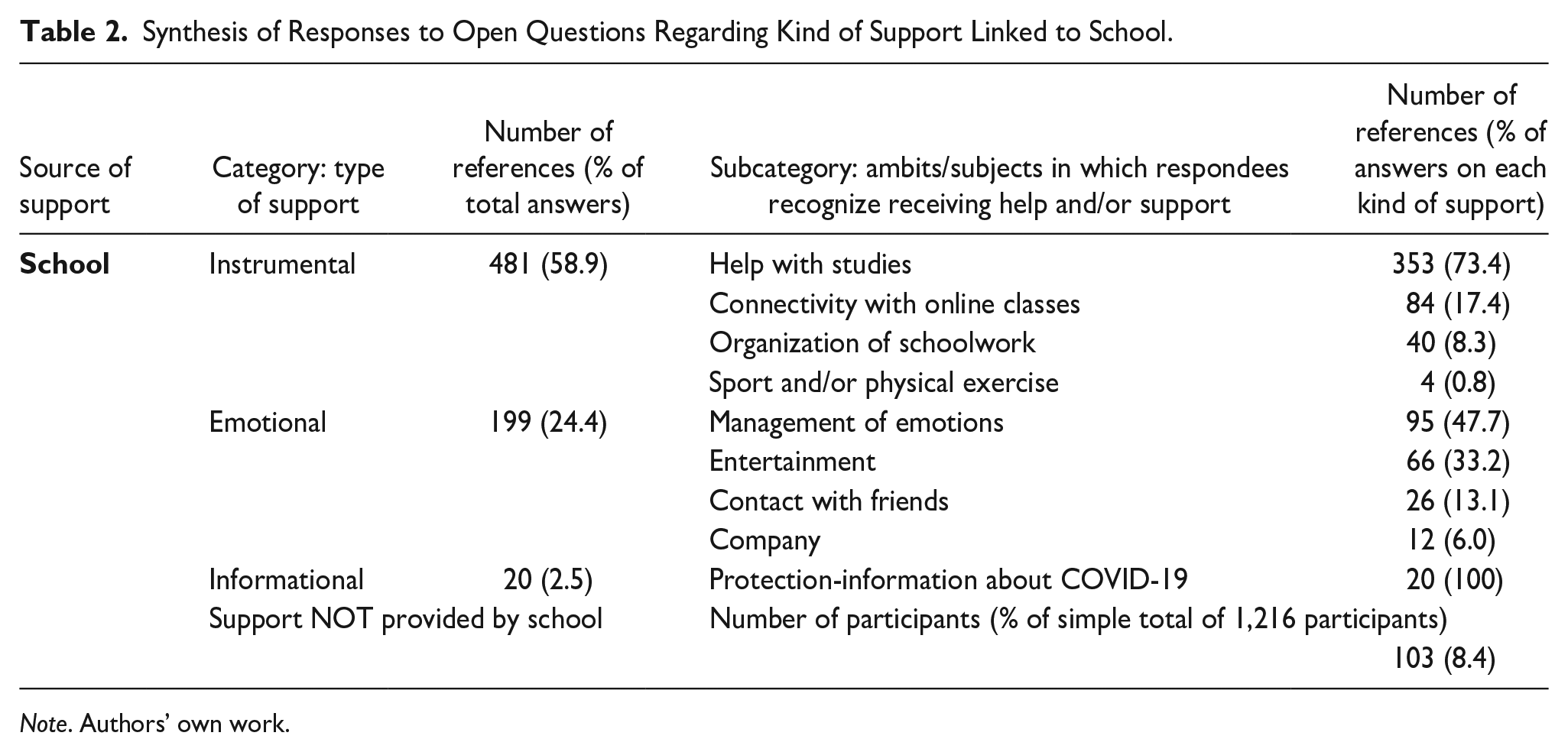
Synthesis of Responses to Open Questions Regarding Kind of Support Linked to School.
Note. Authors’ own work.
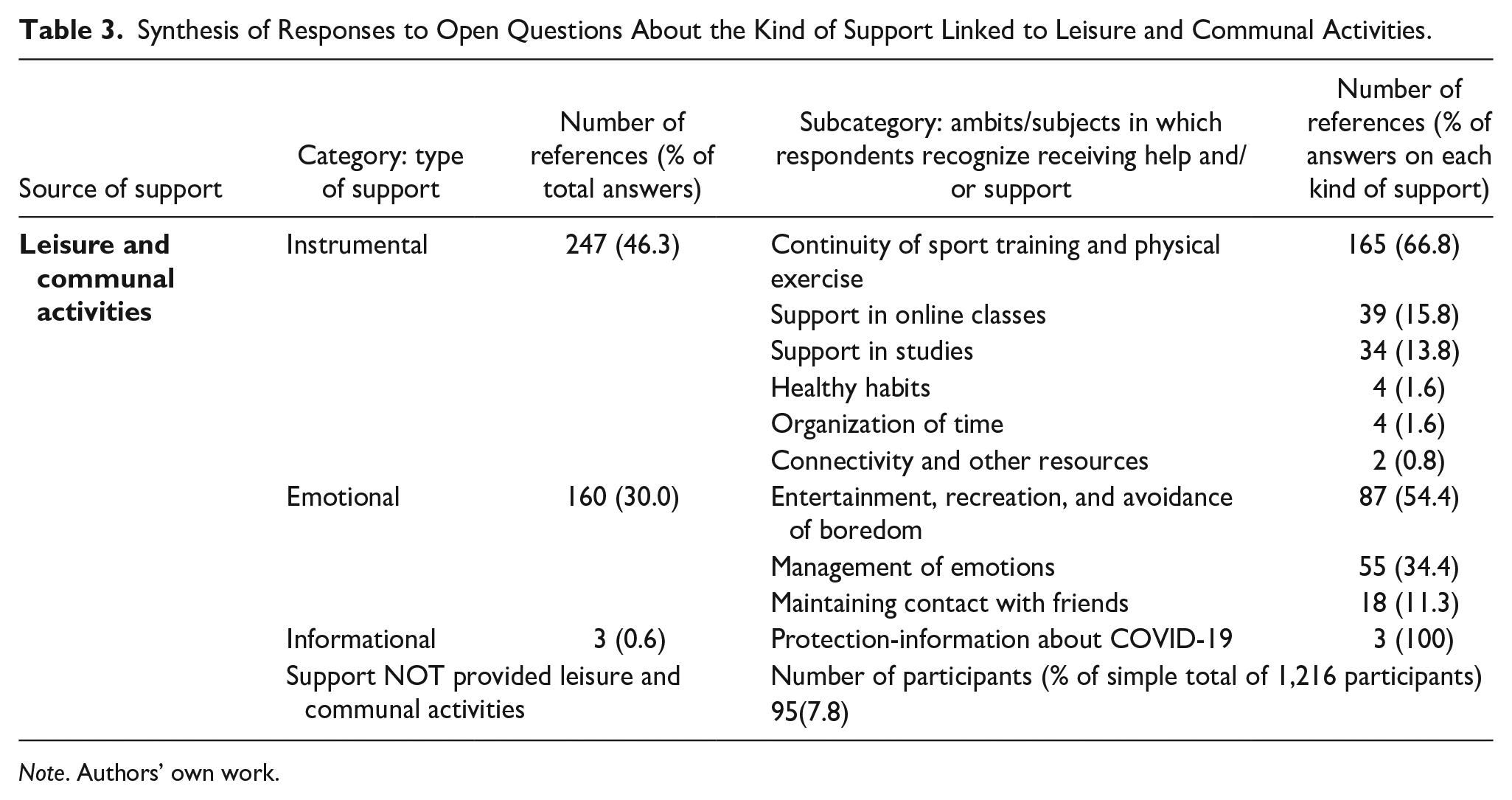
Synthesis of Responses to Open Questions About the Kind of Support Linked to Leisure and Communal Activities.
Note. Authors’ own work.
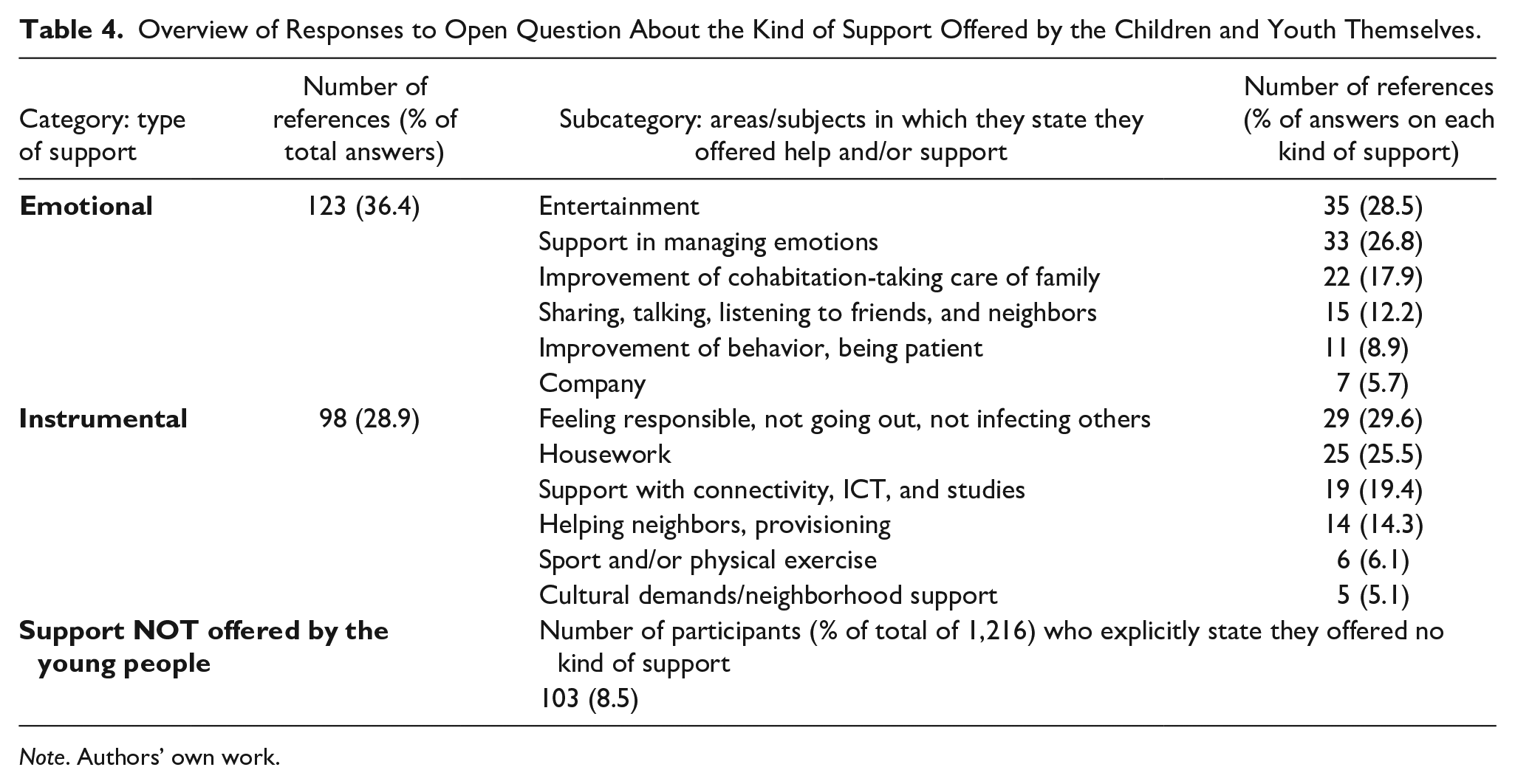
Overview of Responses to Open Question About the Kind of Support Offered by the Children and Youth Themselves.
Note. Authors’ own work.
Results
The perception that participants have of the support received is analyzed in each of the three sources, the family or cohabitation nucleus; the school; and communal leisure activities. Then the perception the participants have of the support they themselves offered to others during the pandemic is examined.
The next tables synthesize the main results, indicating the number of answers obtained for each kind of support (instrumental, emotional, and informational, and “support not given”) in the different surroundings. For each type of support, the sub-category that received most responses and the percentage relative to the said type of support are shown (Tables 1–4).
Perceptions of Children and Young People Regarding the Support Received During the Pandemic
Support Provided by the Family and Cohabitation Nucleus
This was explored through the analysis of the answers to the open question “Which two things did the family do that helped you most during lockdown?” (Table 1).
Of the 1,216 participants who answered the questionnaire, 67.9% (822) stated that the family or members of the cohabitation nucleus had given some kind of support during the COVID-19 lockdown. Just 1.9% said that they had received no support, and 1.2% that they had not needed help. The most common type of support the family or tutors had given was emotional support. Within such help, a large majority of mentions referred to the support given in managing their own emotions during the pandemic: “[They helped me] not get stressed about all the schoolwork I was given” (girl, 15), and coping with the frustration caused by not being able to see their friends, and maintaining good mental health.
The family also played an important role in providing space and time for entertainment and fun, which helped distract them from their worries, particularly when lockdown restrictions were at their height: “[The family helped] make the time go by faster, and that it wasn’t so hard” (girl, 15). Some also highlighted the fact that the forced cohabitation meant they had more time to share and talk with the people they lived with. In these cases, lockdown was seen as a chance to grow as a family.
Instrumental support is also reflected in the responses. Most comments referred to the support given by the family in educational continuity: “[The family] helped me do the huge amount of schoolwork they gave us” (boy, 16). Support in maintaining a balanced diet was also mentioned as part of the help received from the family.
While emotional and instrumental support are the most frequently mentioned, some can be classified as informational support in that they provided information on COVID-19 and ways to protect oneself and avoid infecting others. Finally, it should be noted that, of all responses referring to support received from the family, just 23 (1.5%) said that they had received no support of any kind.
Support Provided by the School
Support given by the school was studied through the analysis of the responses to question “Which two things did the school do that helped you most during lockdown?” (Table 2).
A total of 37.2% of participants (452) noted that the school had given some kind of support during lockdown, while 8.4%, mainly boys, said that they had received no kind of support. Just five of the participants said that they had not needed any type of support from the school.
Around 60% of the comments mention support that can be classified as instrumental support. Those answers referring to support in study continuity, doing schoolwork, understanding the subjects, losing the rhythm of study, and being able to move up to the next year are all classified. “We had the chance to have virtual individual tutorials, which were useful in letting the teachers know how we were coping with the situation and our studies” (girl, 16).
Roughly a quarter of the comments regarding the school refer to its role as the provider of emotional support. The participants say they received calls or emails from teachers to encourage them, ask how they and their family were, reassure them, and reduce their worries about their studies: “There were teachers who were always writing emails asking us how we were, if anything was worrying us, if there was anything we hadn’t understood. . . Just the fact that some teachers spent part of their day writing to us made me feel special (girl, 17).
The participants also note the role the school played in promoting entertainment and avoiding boredom. Some state that doing schoolwork helped time pass more quickly: “They gave us work, and that kept you busy, and you didn’t think about the problems for a while” (girl, 15). Some responses refer to the fact that learning how to make video calls helped them keep in touch with the friends and classmates, which provided emotional support.
A small number of responses can be classified as informational support. They refer to the information received about COVID-19 and how to protect themselves. The schoolhelped them to “understand Coronavirus better” (boy, 14), “to wear my mask” (girl, 9), and “to socially distance” (girl, 10).
Regarding the 103 participants who stated they had received no support (12.6%), they stated that others had provided more help: “My sisters supported me much more than the teachers” (girl, 16). Some of the responses reveal that not only did they receive no support from the school, but that they perceived the school as creating problems for them, above all for the amount of work they were given.
Support Provided by Leisure and Communal Activities
The support provided by leisure and communal activities is explored through the analysis of the responses to the questions: “Which two extracurricular or leisure activities helped you most during lockdown?”, and “How did school, or educational, leisure, cultural, sporting, social and health services, and neighbours’ associations help you?” (Table 3).
Of the 1,216 participants, 22.9% (279) specified some aspect in which such activities had given them help or support during lockdown. About 7.8% (95) stated that these activities had not provided any support, and 1.8% (23) that they had not done any leisure activities. This final percentage may in fact be much higher, as the vast majority made no comments about the support received in this area. Just three participants stated that they had not needed the support of this type of activity.
Most responses referred to instrumental support. Almost 67% of responses classified as instrumental support noted the importance that leisure activates played in continuing to practice sport. Some highlighted the fact that being able to do physical exercise at home was a way to keep in form and maintain training routines: “We did online workout sessions so we didn’t lose our physical form or the habit of doing sport” (girl, 16). In some cases, being able to continue practicing sport added an emotional dimension to instrumental support, as it meant being in the company of others and enabled them to disconnect from the lockdown.
Some responses mention other kinds of activity, such as online English and music classes or other activities related with the support for learning, in which the young people received help with homework and revision. Above all, youth between 15 and 16 years old noted that this helped lend a certain sense of normality to the situation they were experiencing. “Breaking the routine, in the sense of waking up, doing homework, eating and sleeping” (boy, 16); “It made everything seem more normal (boy, 16).
Although to a lesser extent, some participants mention that they took part in activities that helped them maintain healthy habits (normally connected to sport), organize their time, and even solve connectivity problems with the computer and mobile phone.
A third of the answers referred to extracurricular and leisure activities as providers of emotional support. Those that link these activities with entertainment and recreation stand out, indicating that they helped pass the time, “entertain,” “disconnect,” “not be bored,” “make the most of time,” and “have fun.” The comments of some participants show that the bodies organizing such activities also played an important role in the emotional support they provided. Being connected with associations and centers helped keep their spirits up, cope better with the lockdown, and control their emotions more: “Managing the situation and knowing how to control feelings” (girl, 16). They also mention that these activities helped them keep in contact and relate with other young people.
Very little mention is made of the role played by neighbors. Among the most note-worthy comments are those that refer to relations established from windows and balconies in a context in which children were at home and could not move around their local surroundings: “We talked from balcony to balcony, and that’s how we passed the time” (girl, 15).
Perceptions of Children and Young People Regarding They Help They Gave During the Pandemic
Support given by the young people themselves is explored through the analysis of the answers to the question: “How could you help?”. A total of 338 students (27.8% of all participants) responded to this question (Table 4).
A third of the comments mentioned that they had given no help during the pandemic. A frequent reason for this is the sensation of not being able to offer support, rather than not wanting to: “I did everything I could” (boy, 14); “I wasn’t allowed to leave the house” (girl, 14).
Another sizable part of the comments referred to emotional support, above all through entertainment, raising spirits, or reassuring those people in their surroundings. Making them laugh, calming them down, encouraging, or amusing them are the most frequently repeated comments. This emotional support took place most frequently within the family, aiding in improving cohabitation, and looking after the family. The expressions “to get on with others” and “patience” stand out in the responses. Emotional support was also offered to friends and neighbors, with whom the participants shared, listened, spoke, and kept company: “Keeping me in contact with my relatives, above all with my grandparents, I mean helping them socialize and spend their time with other people” (boy, 15).
Comments regarding instrumental support referred firstly to attitudes and behavior such as being responsible, not going out, and not catching COVID-19, both to protect the individual and other people: “Being responsible and staying at home” (boy, 10); “Staying at home to protect myself and those around me” (girl, 11). Secondly, the comments mentioned a general increase in helping with housework such as cleaning, cooking, and other such jobs. Thirdly, they state that they helped their siblings with their studies and homework; they gave support in the neighborhood by helping with food supplies or general shopping depending on the needs; and passing on their knowledge in non-formal educational spaces: “My classmates and friends who had problems with their emotions or schoolwork” (girl, 17).
Discussion and Conclusions
The method used in this research has given voice to a group of people not frequently listened to by research (Lundy & McEvoy, 2011), and one that was particularly hard hit by the pandemic. Children and young people have been blamed and ignored, accused of acting imprudently, and not following government orders (Padrosa & Bolíbar, 2023) because they knew they were at a lower risk than older generations (Day et al., 2020). This resulted in them feeling that the response to the health crisis did not take their needs and opinions into account. For all of the above reasons, our priority has been to take a non-paternalistic approach and listen to them individually, making them the center of our research and exploring their perceived wishes during the pandemic. The focus on their perception of the support received is another contribution of this article, which allows us to assess their opinions of the role played by the main agents connected with the development of childhood and youth; in turn, this provides information as to the role these agents could and should play. The results of the study suggest a number of improvements in the support that the family, school, and community can offer in contexts of an emergency.
While some studies highlight the problems families faced in taking care of their offspring during the pandemic (Fernández-Rodrigo, 2020; Fuentes-Peláez et al., 2020; Zies et al., 2020), our research shows that many children were able to name at least a couple of aspects in which their family supported them. Most are connected to emotional support, but the role played by the family in substituting the functions of the school also shows instrumental support. The results of the study by Mumbardó-Adam et al. (2021) are similar. With more time available, families have been able to offer support and accompaniment to teach their children new personal, social, and communicative abilities such as autonomy and those connected with looking after the home, thus fomenting family cohesion. The children have perceived this support, which has helped them cope with the lockdown better than they had originally thought. Nonetheless, those children who have not perceived this help may be under-represented in our research. It has become clear that when the family is present, the young people are aware of the role it has played and the support it has given. We would highlight the need for children who do not have a family context that can provide such support to be able to count on people/professionals to provide emotional support during emergencies.
Fewer participants indicated that they had received specific support from their school than from their family. Those that had referred above all to instrumental support aimed at providing academic continuity, particularly in secondary education. Some students mentioned their appreciation of this support, however, for others it has been a cause of stress and anxiety (Demirbilek, 2023). They have had problems accessing online classes and materials; managing the amount of work given by teachers; and have missed the contact with their class and the emotional support of the teachers (Trujillo et al., 2020). One hundred participants felt unsupported by their teachers and valued that given by their family, which provided a sense of academic continuity and helped access and complete online work. These results are in line with earlier studies showing an increase in educational inequality and the digital divide (Bonal & González, 2020; Jacovkis & Tarabini, 2021; Palau et al., 2021). From the perspective of the young people, there was a direct link between academic development and performance during lockdown and the quality and coordination of teaching, the teachers’ digital ability, adapting of tasks, conditions of their work-space, and contact with other students and teachers (Baltà-Salvador et al., 2021; Trujillo et al., 2020).
Regarding leisure activities, the study highlights the support perceived by those who could maintain their links with sport and cultural centers, in that they provided a distraction, helped them keep to routines, and contact with their friends. Digital technologies were the alternative that enabled social connections to be maintained, and are associated with well-being and the levels of loneliness felt by the young people (Marston et al., 2020). In the case of sporting activities, they helped them stay in good physical shape and look after their health. While inequalities in the participation of young people in leisure activities have been noted (Alberich et al., 2020), and physical spaces for social relations have been lost (Pineda et al., 2021), the participants in our research positively valued the support received by professionals linked to extracurricular services (sporting and cultural). Taking part in and learning such activities provided emotional support during the pandemic.
By contrast, the role of the community (in particular that of the neighborhood) was not frequently mentioned as a source of support. This may well be the result of the severe limitations on movement around the local area during the lockdown, when contact and socialization took place mostly from balcony to balcony, the only open-air spaces in which movement was permitted (Gerez et al., 2020). In addition, community support was largely directed at old people, who were the most vulnerable group. This explains why 8.5% of participants, when asked if they had been able to provide support, said that they could not, and that collective responsibility meant that it was better for them not to leave their homes. The answers suggest that the restrictions hindered them from taking a more active role in giving support. These results are in line with those of the Associació Col·lectiu i+ (2021), whose participants highlighted the difficulties they faced to autonomously organize and self-manage community initiatives and citizen networks aimed at looking after other people.
The access to the instrument used, which have conditioned the final composition of the sample, it’s a limitation of the study. The way in which the questionnaire was accessed, as described in the “Method” section, meant that some vulnerable groups, such as the disabled, or those who live in foster homes, are under-represented; this is particularly the case of those under 14 years of age, who needed the consent of their parents or tutors. Since the target group of our research was potentially enormous, we chose a range of territories of different sizes and community dynamics. While the results therefore do not represent Catalonia as a whole, they have enabled us to gain an idea of the role played by the family, school, and leisure and communal activities as sources of resilience.
The research underlines some of the lessons learnt from the experience of the pandemic. Firstly, the need for schools to show greater flexibility when confronted with unexpected situations, and a better ability to analyze and modify their priorities in order to play a more important role as providers of support for students. Schools should have stronger roots in their area, and be a fundamental reference point for children and young people, as well as establishing relations with other agents in the community. This requires education management to dispose of the means by which they can offer a rapid, efficient response in times of social emergencies. The school should be able to lead the search for, and application of, educational solutions that ensure academic continuity, forging strong ties with the community to guarantee a communal network in which all agents can work together effectively and in co-ordination. Moreover, the results of the study show the need for schools to understand how to adequately implement their role as providers of emotional and not just educational support.
Secondly, the family has played a vital role in giving emotional support; in many cases it has also undergone an increase in its function of providing instrumental educational support. The question that arises is how those children who were insufficiently accompanied by their families during the pandemic and, particularly, during lockdown, coped with the situation. While our study shows that such cases are a minority, they do exist. Other research should look in more depth at the specific needs of this group in order to establish adequate support strategies in highly adverse contexts.
Thirdly, when leisure activities and those supporting learning outside school could take place online, they provided an important source of support for young people. They helped them maintain healthy routines and habits and provided entertainment, which, in turn, had an impact on their emotions. Communal activities are an important source of support, and a lack of such activities can increase vulnerability in stressful situations such as the pandemic. Ensuring that children and young people have the chance to participate in social and communal activities should be one of the priorities of educational and social policy. Our research contributes to defining possible roles of the family, school, and community as sources of support in contexts of widespread adversity, and highlights the importance of the community and the need to foster the complementary nature of different contexts as providers of support in unfavorable circumstances. The analysis also permits a deeper understanding of the different types of support, and the need for this to be taken into account in the study of resilient communities.
Footnotes
Acknowledgements
We want to thank the participants for sharing their experiences with us, making this research possible.
Data Availability Statement
Survey respondents were assured raw data would remain confidential and would not be shared. Data not available. The data that has been used is confidential.
Declaration of Conflicting Interests
The author(s) declared no potential conflicts of interest with respect to the research, authorship, and/or publication of this article.
Funding
The author(s) disclosed receipt of the following financial support for the research, authorship, and/or publication of this article: This work was supported by The University and Research Aid Management Agency—Government of Catalonia (AGAUR) under Grant 2020PANDE00166.
