







Abstract
A growing body of research suggests that nature experiences and feeling connected to nature are positively associated with the experience of meaning in life. However, meaning in life is multifaceted, and it is unclear which facets explain this relationship. We examined this question across five studies (N = 1,864): three cross-sectional surveys, a quasi-experimental field study, and an experimental video immersion study. In Studies 1a–1c, trait nature connectedness was linked to higher meaning in life, with experiential appreciation emerging as the strongest correlate and most robust mediator. Study 2 showed that nature exposure (i.e., survey location) predicted greater meaning in life indirectly through experiential appreciation, even after controlling for other facets and positive affect. Study 3 experimentally examined indirect nature exposure (i.e., nature video), providing causal evidence for the role of all four meaning-related facets. Exploratory analyses further suggested that enhanced meaning perceptions predicted greater pro-environmental behavioral intentions.
Keywords
Introduction
One thing I’ve learned in the woods is that there is no such thing as random. Everything is steeped in meaning, colored by relationships, one thing with another. – Robin Wall Kimmerer
Even in today’s urbanized society, most people still spend time outdoors. According to the National Recreation and Park Association, in a survey of nearly 1,000 people, 96% reported spending time outside daily, with 58% saying they spend more than 30 minutes outdoors each day (2023). For some, time outdoors is more than just a break from screens; it can foster a sense of closeness, or even oneness, with the natural world, as they consciously integrate nature into their sense of identity (Mayer & Frantz, 2004).
Across a variety of cultures, experiences in nature are linked to greater health and well-being (Capaldi et al., 2017). At the physiological level, time spent in nature has been shown to reduce stress, lower blood pressure, and is associated with lower prevalence of heart disease and overall mortality (Gascon et al., 2016; White et al., 2019). Nature connectedness, or the extent that people incorporate nature into their sense of self (Mayer & Frantz, 2004), is further associated with improved social functioning, problem-solving, cognitive development, attention, physical activity, life satisfaction, meaning in life, and other aspects of psychological well-being (Bratman et al., 2012; Capaldi et al., 2014; Cervinka et al., 2012; Howell et al., 2011; Mayer et al., 2009; Poon et al., 2016; Russell et al., 2013; White et al., 2013; Zelenski & Nisbet, 2012). Many of these benefits emerge from a wide range of encounters with nature, including living or working near green spaces (White et al., 2021), simply hearing birdsong (Stobbe et al., 2022), or even having a view of natural scenery from one’s window (Chang et al., 2020). Indeed, some scholars have argued that a sense of connection and appreciation for nature may represent a basic psychological need (Baxter & Pelletier, 2019).
The present studies aimed to examine how nature contributes to the experience of meaning in life. The desire to experience meaning has long been argued to be a primary human motivation (e.g., Frankl, 1959/1984; Heine et al., 2006). Consistent with this view, research has consistently shown that subjective meaning in life is strongly linked to both physical and psychological well-being (e.g., King & Hicks, 2021), motivating scholars to investigate what engenders this important experience. One challenge for this endeavor has been the lack of definitional precision. For instance, King et al. (2006, p. 180) suggest that “lives may be experienced as meaningful when they are felt to have significance beyond the trivial or momentary, to have purpose, or to have a coherence that transcends chaos.” Although such definitions are deliberately broad to encompass the construct, they can obscure the processes that give rise to meaning. Accordingly, scholars have increasingly emphasized the importance of distinguishing among the facets of meaning in life (e.g., Costin & Vignoles, 2020; George & Park, 2017; King & Hicks, 2021; Martela & Steger, 2016).
Current frameworks suggest that judgments of meaning in life typically emerge from four facets: coherence (i.e., the sense that life makes sense as a whole), purpose (i.e., having meaningful, future-oriented goals that guide behavior), mattering (i.e., the belief that one’s existence is significant and impactful to others), and experiential appreciation (the capacity to connect with and find value in the present moment; George & Park, 2016; Kim et al., 2022; Martela & Steger, 2016). Although experiences in nature have been shown to foster general perceptions of meaning in life (Howell et al., 2013), it remains unclear, from an empirical standpoint, which of these specific facets of meaning are most strongly shaped by nature connectedness, or nature experiences more broadly (Passmore & Krause, 2023).
How might nature contribute to the different facets of meaning? Passmore and Howell (2014) suggested that nature offers stability in a rapidly changing world, thereby fostering one’s sense of coherence. Building on this, Passmore and Krause (2023) argued that feeling connected to nature can evoke feelings of belonging to something greater, inducing mattering. They further noted that nature connectedness may provide a sense of purpose by inspiring pro-environmental action. Moreover, for many individuals, reflecting on humanity’s origins in nature may also serve as a source of purpose and a sense of mattering. Supporting these perspectives, research has shown that the association between connectedness to nature and well-being is partially explained by its link to general judgments of meaning in life (Howell et al., 2013). In fact, spending just 30 minutes a day in wilderness settings significantly increased perceptions of meaning in life, though the mechanisms underlying these effects were not directly examined (Hamann & Ivtzan, 2017).
From a Self-Determination Theory perspective, nature enhances eudaimonic well-being, including meaning, by fostering intrinsic value orientations (e.g., intimacy, personal growth; Cleary et al., 2017; Ryan et al., 2008) and by satisfying the basic psychological needs of autonomy, competence, and social relatedness (Yang et al., 2022). These processes may support distinct facets of meaning. For instance, autonomy may promote experiential appreciation through self-directed engagement, competence may foster purpose through feelings of efficacy, and social relatedness may enhance mattering through connection to others. At the same time, these needs likely contribute to meaning in an overlapping manner rather than mapping onto single facets. For example, autonomy may also support purpose and coherence, competence may enhance both purpose and mattering, and social relatedness may contribute to experiential appreciation and coherence through shared experience (i.e., Ryan & Deci, 2001). Thus, these needs likely contribute to multiple, overlapping facets of meaning, with nature providing a uniquely supportive context in which these psychological processes converge to support eudaimonic well-being.
While nature may help to increase all of the facets, we believe it most directly gives rise to experiential appreciation. Frankl (1959/1984) described experiential values as one of the primary pathways to meaning, highlighting the capacity to derive significance from everyday experiences such as listening to music, savoring a meal, or watching a sunrise. Experiential appreciation reflects the ability to connect with and value the present moment (Adler & Fagley, 2005; Fagley, 2016; Kim et al., 2022), and one’s encounters with the natural world are uniquely suited to cultivating this form of meaning.
Haybron (2011) proposed that nature contributes to meaning by offering “engagement with matters of independent worth” (p. 238), emphasizing that such experiences are intrinsically valuable – ends in and of themselves. Attention Restoration Theory further underscores this perspective, suggesting that nature promotes meaning by providing a sense of being away, enabling immersion, and evoking a gentle “soft fascination” that restores attention and deepens presence (Kaplan, 1995). Importantly, soft fascination reflects attention that is captured effortlessly, fostering an experiential state characterized by absorption and present-moment engagement. This mechanism aligns closely with experiential appreciation, which emphasizes direct experiential valuing. The other facets, such as coherence or purpose, rely more heavily on cognitive processes, including sense-making and goal-directed behaviors, rather than experiential valuing in the moment. Accordingly, we hypothesize that experiential appreciation may represent the primary mechanism through which nature fosters meaning in life, as nature experiences are valued not only because of their instrumental benefits, but also their intrinsic beauty and immediacy (Capaldi et al., 2017; Gainsburg et al., 2023).
To test this, we conducted five studies examining how nature connectedness and nature exposure relate to the experience of meaning in life by testing their unique associations with each proposed facet of meaning. To ensure these associations were not simply driven by mood, we controlled for positive affect in most analyses, given that nature manipulations reliably boost positive affect (Capaldi et al., 2014; Ryan et al., 2010), and that positive affect is a well-established predictor of meaning (e.g., Hicks & King, 2009; King et al., 2006). Studies 1a–1c employed cross-sectional designs to examine how trait-level individual differences in nature connectedness influences meaning in life. Study 2 used a quasi-experimental design, comparing participants surveyed in a campus garden versus a parking lot to test whether direct exposure to nature enhanced meaning in life perceptions. Lastly, Study 3 experimentally manipulated nature exposure by having participants view videos of natural or built environments and vividly imagine themselves in those settings.
Studies 1a–1c
The Present Research
In Studies 1a–1c, we first examined the associations among trait-level nature connectedness and meaning in life and its facets, and then tested whether these relationships remained after controlling for positive affect. We further explored which facet of meaning in life most strongly mediated the link between nature connectedness and general meaning in life. These studies were exploratory and were not preregistered.
Method
Participants
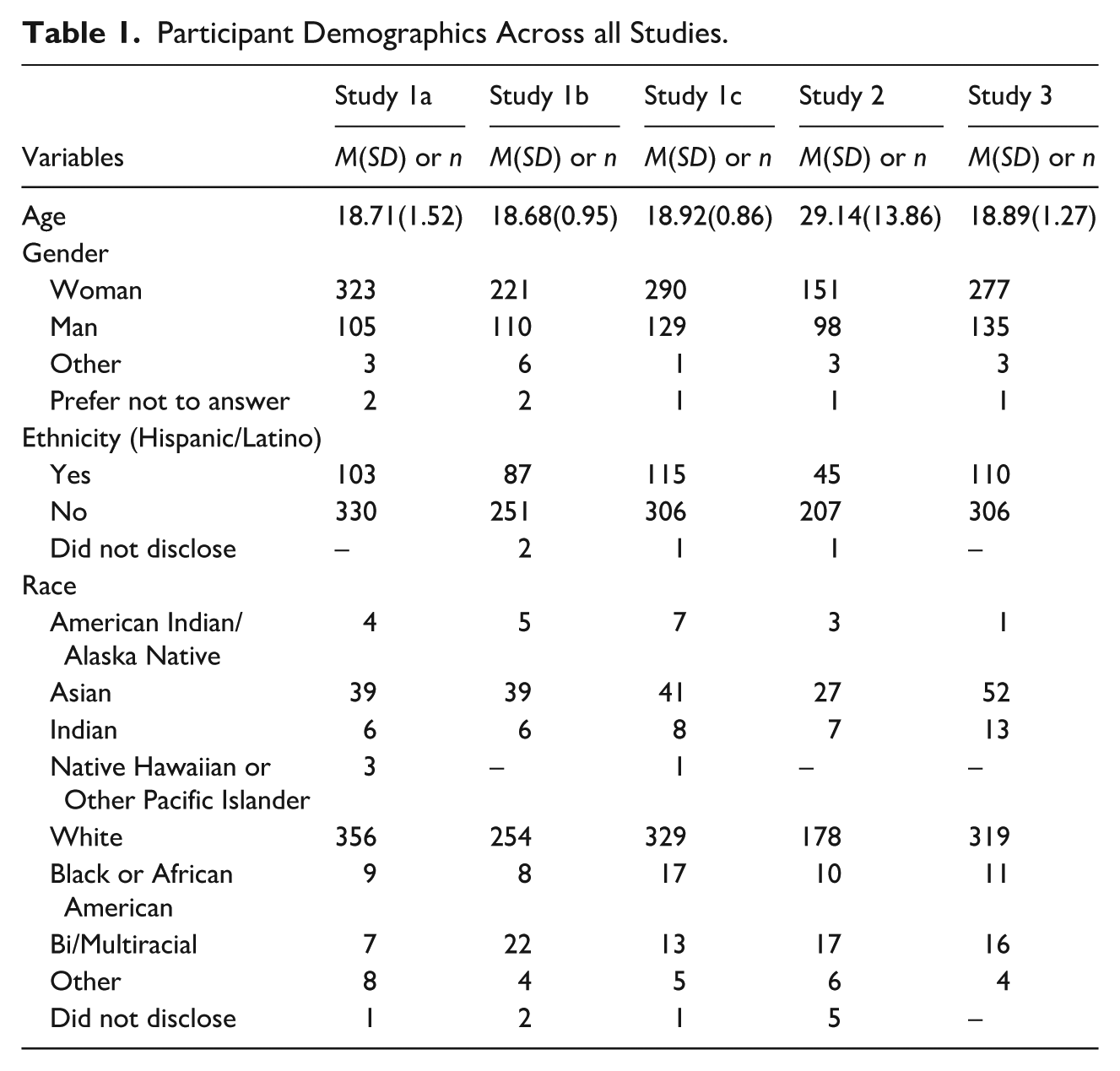
We aimed to recruit at least 250 participants per study, consistent with recommendations for obtaining stable correlation estimates (Schönbrodt & Perugini, 2013). Whenever possible, we over-recruited within the limits of our lab resources to further increase statistical power. Study 1a took place during Fall 2021 and included 554 participants. Of these, 70 failed to complete our seriousness check item, and 51 self-reported that their data were invalid, leaving a final sample of 433 participants. Study 1b took place during Fall 2022 and began with 400 participants. After removing those who self-reported invalid data (n = 25) and did not respond to the seriousness check item (n = 35), the final sample was 340. Study 1c was conducted during Spring 2023 and we recruited 462 participants. We excluded those who self-reported invalid data (n = 17) and did not respond to the seriousness check item (n = 23), which resulted in a final sample of 422 participants. Across all studies, participants were undergraduate students recruited through the university subject pool and received course credit for their participation (see Table 1 for participant demographics).
Participant Demographics Across all Studies.
Procedure
All studies were online exploratory studies that included measures for connectedness to nature, meaning in life, and positive affect. Students signed up online and took the survey at their convenience. The measures listed below were presented in random order, and they included other unrelated measures. The current studies received ethical approval from the Texas A&M University IRB.
Measures
Connectedness to Nature
To measure participants’ connection with nature, we used The Connectedness to Nature Scale (Mayer & Frantz, 2004). This is a 14-item trait measure of one’s affective and experiential connection to nature. Sample items are as follows: “I feel a sense of oneness with the natural world around me” and “Like a tree can be part of the forest, I feel embedded within the broader world.” Participants rated their agreement with each item on a scale from 1 (“Strongly disagree”) to 9 (“Strongly agree”). The scales displayed adequate internal reliability (α = .81a, .74b, .74c; M = 5.19a, 5.19b, 5.19c; SD = 1.07a, 1.00b, 1.00c).
Meaning in Life
We administered the Multidimensional Meaning in Life Scale (Costin & Vignoles, 2020) and the five-item Experiential Appreciation Scale (Kim et al., 2022) to measure trait-level general meaning in life and its facets. Specifically, the Multidimensional Meaning in Life Scale consists of four, four-item subscales: general meaning in life judgments (α = .88a, .89b, .89c; M = 5.60a, 5.70b, 5.79c; SD = 1.19a, 1.19b, 1.15c; “My life as a whole has meaning”), coherence (α = .73a, .72b, .73c; M = 4.76a, 4.77b, 4.91c; SD = 1.10a, 1.09b, 1.08c; “I can make sense of the things that happen in my life”), purpose (α = .84a, .86b, .84c; M = 5.30a, 5.37b, 5.47c; SD = 1.18a, 1.21b, 1.16c; “I have certain life goals that compel me to keep going”), and mattering (α = .77a, .82b, .79c; M = 5.01a, 5.07b, 5.12c; SD = 1.28a, 1.36b, 1.33c; “Whether my life ever existed matters in the grand scheme of the universe”). The Experiential Appreciation Scale 1 included statements such as, “I have great appreciation for the beauty of life” and “I appreciate the little things in life” α = .73b, .77c; M = 5.61b, 5.50c; SD = 0.81b, 0.90c). Participants rated their agreement with each item on a scale from 1 (“Strongly disagree”) to 7 (“Strongly agree”).
Positive Affect
In order to assess trait-level positive affect, participants were asked to indicate how much they felt each of 12 positive emotions “in general” (e.g., joyful, calm, interested) from the Positive Affect Subscale of the Positive and Negative Affect Schedule (PANAS; Watson et al., 1988). Participants rated their general feeling of each emotion on a scale from 1 (“very slightly or not at all”) to 5 (“extremely”; α = .92a, .91b, .92c; M = 3.24a, 3.36b, 3.35c; SD = 0.72a, 0.68b, 0.71c).
Results
A Pearson correlation matrix was used to explore the associations between connectedness to nature, meaning in life (and its facets), and positive affect. As shown in Table 2, connectedness to nature was positively correlated with general meaning in life and its facets across studies, with the exception of a nonsignificant association for general meaning in life in Study 1b. The strongest and most consistent associations emerged for experiential appreciation and positive affect in Studies 1b and 1c. To provide more stable estimates of the bivariate correlations (not controlling for positive affect), we conducted a six mini-meta-analyses using Goh et al.’s (2016) procedure. As demonstrated in Table 3, nature connectedness shows consistent, small-to-moderate positive associations across facets of meaning in life and with positive affect.
Pearson Correlations Between Nature Connectedness and Relevant Variables.
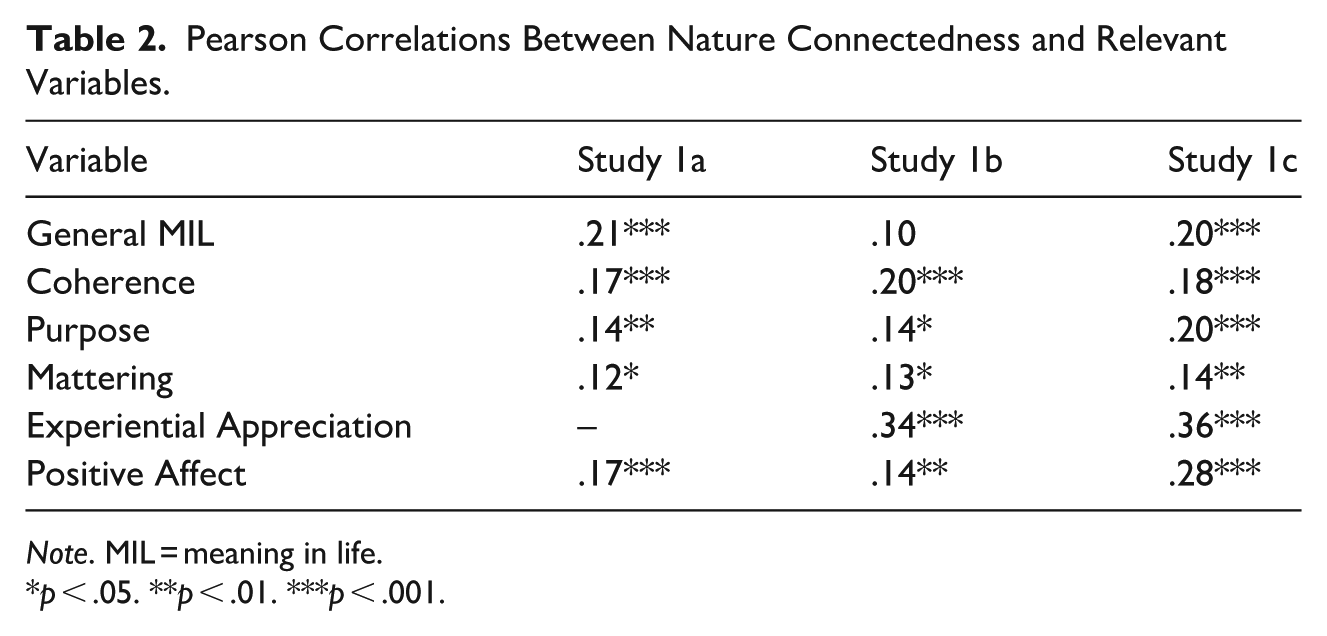
Note. MIL = meaning in life.
p < .05. **p < .01. ***p < .001.
Mini Meta-Analyses of Nature Connectedness Associations With Meaning in Life and Positive Affect.
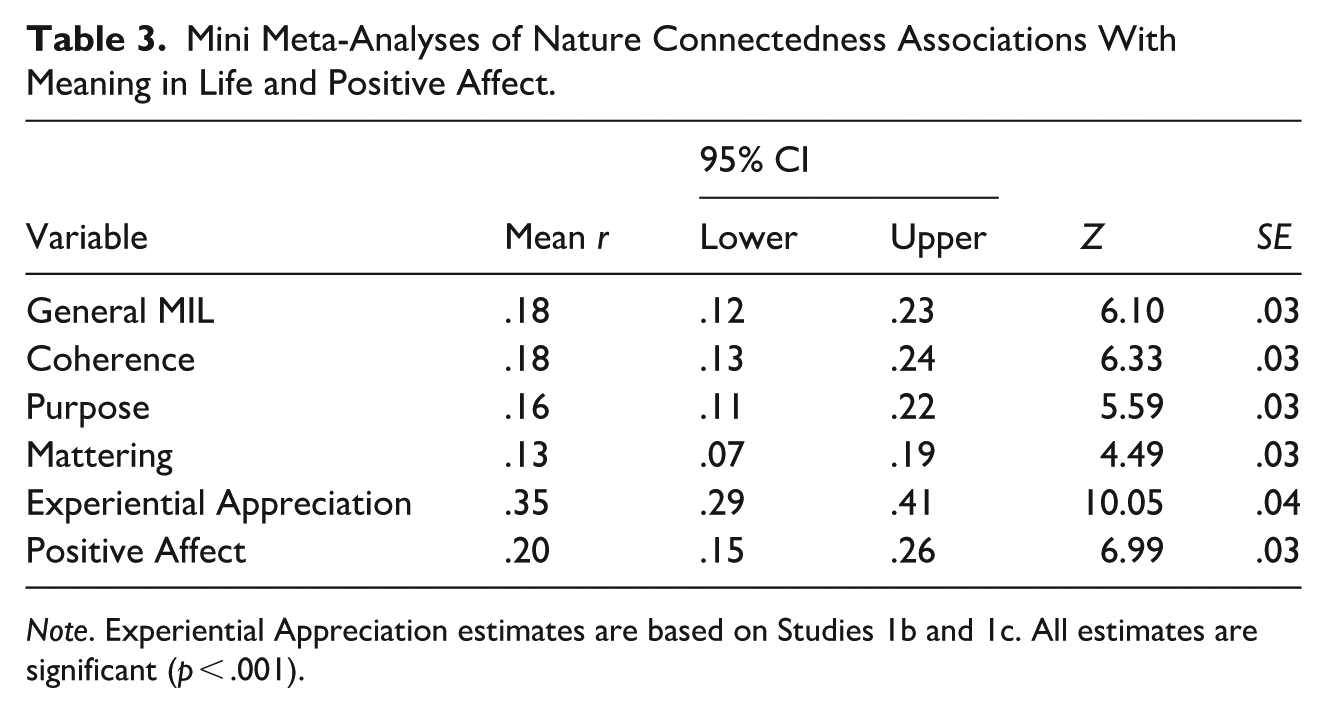
Note. Experiential Appreciation estimates are based on Studies 1b and 1c. All estimates are significant (p < .001).
To determine whether these associations were independent of positive affect, we examined partial Pearson correlations controlling for positive affect. Demonstrated in Table 4, the associations between connectedness to nature and meaning in life were substantially attenuated after controlling for positive affect, with only coherence showing a small but somewhat consistent positive relation across studies. In contrast, experiential appreciation remained moderately correlated with connectedness to nature in both Study 1b and 1c.
Partial Pearson Correlations Between Nature Connectedness and MIL Controlling for Positive Affect.
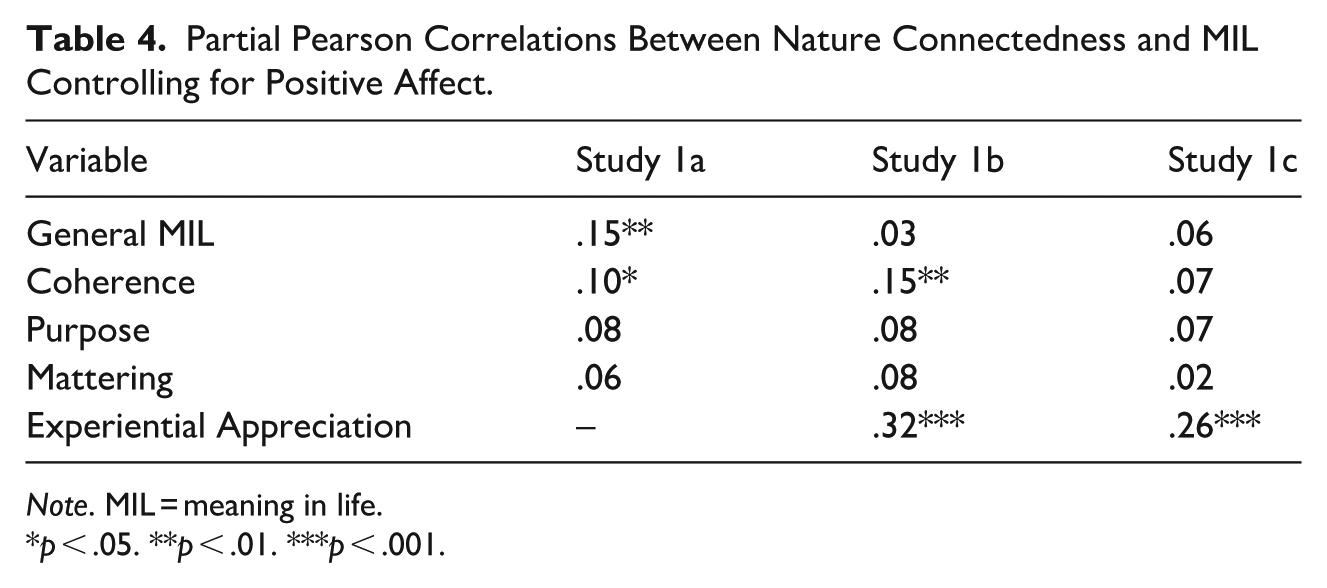
Note. MIL = meaning in life.
p < .05. **p < .01. ***p < .001.
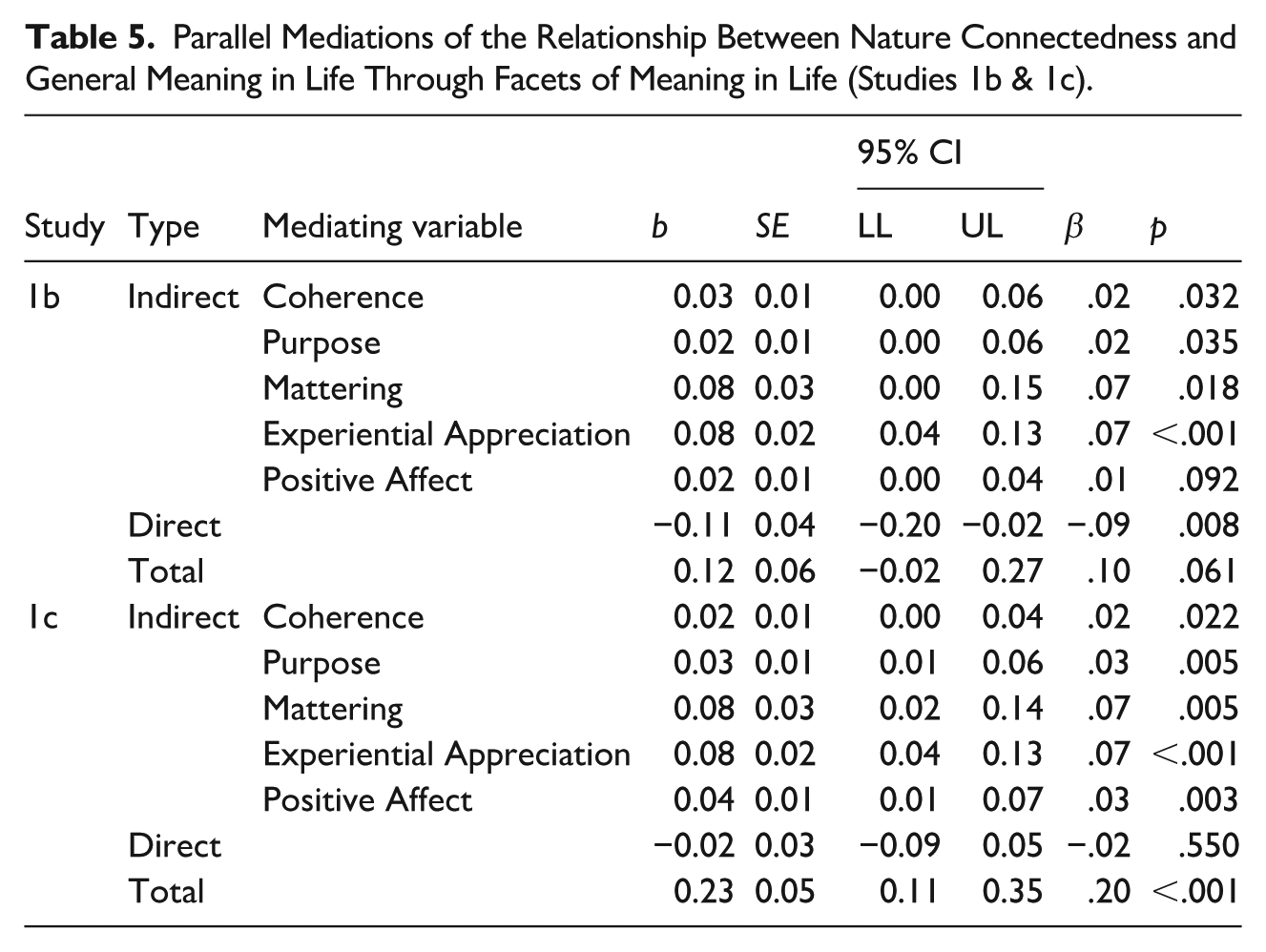
Next, we conducted two parallel mediation analyses 2 using the data from Studies 1b and 1c to examine how each facet of meaning in life, as well as positive affect, contributes to the relationship between nature connectedness and general meaning in life. We focused on these two studies because they included experiential appreciation, which our prior correlation analyses suggested plays an important role. As can be seen in Table 5, experiential appreciation emerged as the most robust mediator of the relationship between nature connectedness and general meaning in life, with mattering also accounting for a comparable portion of the effect. Of note, although nature connectedness was positively associated with general meaning in life through multiple mediators, the direct effect was negative. This pattern is consistent with a suppressor effect. Nature connectedness was positively related to the facets of MIL and positive affect, which, in turn, predicted greater meaning. When these pathways are controlled, the remaining residual variance in nature connectedness shows a small negative association with meaning. Importantly, total effects remained positive, indicating that the overall association operates primarily through the mediators.
Parallel Mediations of the Relationship Between Nature Connectedness and General Meaning in Life Through Facets of Meaning in Life (Studies 1b & 1c).
Studies 1a–1c Discussion
Across studies, connectedness to nature was positively associated with general meaning in life and its facets, as well as positive affect. These associations were strongest and most consistent for experiential appreciation and positive affect. However, when controlling for positive affect, most associations between connectedness to nature and meaning in life were significantly attenuated, with coherence showing a small but consistent positive link and experiential appreciation remaining a robust correlate.
Building on these findings, parallel mediation analyses in Studies 1b and 1c revealed that experiential appreciation was the most reliable mediator of the relationship between nature connectedness and general meaning in life, with mattering also contributing comparably. Although the direct effect of nature connectedness on general meaning in life was negative, the total effects were positive, indicating that the association is carried primarily through these mediating pathways. Of course, the correlational nature of our design precludes us from confidently interpreting any of these relationships as causal. In Study 2, we sought to provide more direct evidence for our hypotheses by conducting a quasi-experimental field study.
Study 2
Study 2 sought to test the relationship between nature exposure and meaning in life through a quasi-experimental field study, such that being exposed to a relatively natural setting (e.g., a park) would elicit greater feelings of experiential appreciation and, subsequently, greater meaning in life. Hence, we hypothesized that there would be a significant difference in meaning in life and experiential appreciation ratings based upon the location in which participants took the survey, and experiential appreciation would mediate this relationship. Moreover, we hypothesized that experiential appreciation would mediate this relationship while accounting for the other facets of meaning in life.
Method
Participants
We recruited 300 participants who were either students, faculty, or university staff members during the Spring 2022 semester. In exchange for their participation, participants received an opportunity to be entered into two $100 raffles. One participant was initially dropped for not completing the survey in its entirety, leaving us with 299 participants. Data collection took place in two locations on campus, either in the university gardens (i.e., quasi-experimental group; n = 145) or a university parking lot (i.e., control group; n = 154). The parking lot was in close proximity to the university gardens; hence, we excluded 44 people in the control condition for indicating they had been to the university gardens that day, and two for not responding to the question at all from the primary analyses. This left us with a total of 253 participants (quasi-experimental group n = 145; control group n = 108; see Table 1 for demographic information).
Procedure
Participants completed our survey either in the university gardens space (https://gardens.tamu.edu/) or in a nearby parking lot, which served as our quasi-experimental manipulation. The garden and parking lot were selected as proxies for relatively naturalistic and built environments, respectively, with the aim of contrasting two distinct spatial contexts rather than exhaustively representing these environment types. Responses were gathered with pen and pencil on clipboards containing a sheet of paper with the measures listed below. This study was approved by the Texas A&M University IRB; it was not preregistered. All materials can be found on our OSF 3 site.
Measures
Connectedness to Nature
Similarly to Study 1, we used the Connectedness to Nature Scale (Mayer & Frantz, 2004); however, we adapted it to a state measure and reduced the number of items to five. The scale demonstrated adequate internal reliability (α = .87; M = 4.82; SD = 1.27).
Meaning in Life
We adapted the measure of MIL used in Study 1 (Costin & Vignoles, 2020) to assess state levels of MIL, and administered three items from the Experiential Appreciation scale developed by Kim et al. (2022). The subscales measuring each facet displayed adequate internal reliability: Experiential Appreciation
Positive Affect
Momentary positive affect was assessed using a single-item (“Right now, I feel happy”) measure. Participants rated the item on a scale from 1 (“Strongly disagree”) to 7 (“Strongly agree”; M = 5.75, SD = 1.20).
Results
To determine if there were differences in state-level perceptions of nature connectedness based upon survey location (i.e., parking lot or university gardens), we ran a Welch’s 4 independent samples t-test. Unexpectedly, there was no significant difference in nature connectedness based upon survey location (p = .576). There was also no significant difference in positive affect (p = .356) between survey locations.
We conducted Welch’s independent samples t-tests to determine whether there were differences in state-level perceptions of general meaning in life and experiential appreciation. Contrary to our hypothesis, we found that there was no significant difference (p = .617) in general meaning in life. As predicted, however, there was a significant difference in experiential appreciation based upon conditions, t(202.72) = −2.20, p = .029, d = −0.28, such that those in the garden condition (M = 6.17, SD = 0.86) reported more experiential appreciation compared to those in the parking lot (M = 5.90, SD = 1.04). No other significant differences emerged for the other facets of meaning in life (p > .05).
To determine if experiential appreciation mediated the relationship between survey location and general meaning in life, we conducted a GLM mediation analysis in Jamovi (medmod module). We found a significant indirect effect, such that being in the university gardens led to greater experiential appreciation and, subsequently, increased general meaning in life (see Table 6 and Figure 1). Moreover, a parallel GLM mediation analysis revealed that experiential appreciation significantly mediates the relationship between survey location and general meaning in life even when controlling for the other facets of meaning in life. These results suggest that the survey location did influence general perceptions of meaning in life indirectly through its influence on experiential appreciation. This pattern held even after entering positive affect as an additional mediator.
Experiential Appreciation as a Mediator of the Association Between Survey Location and General Meaning in Life.
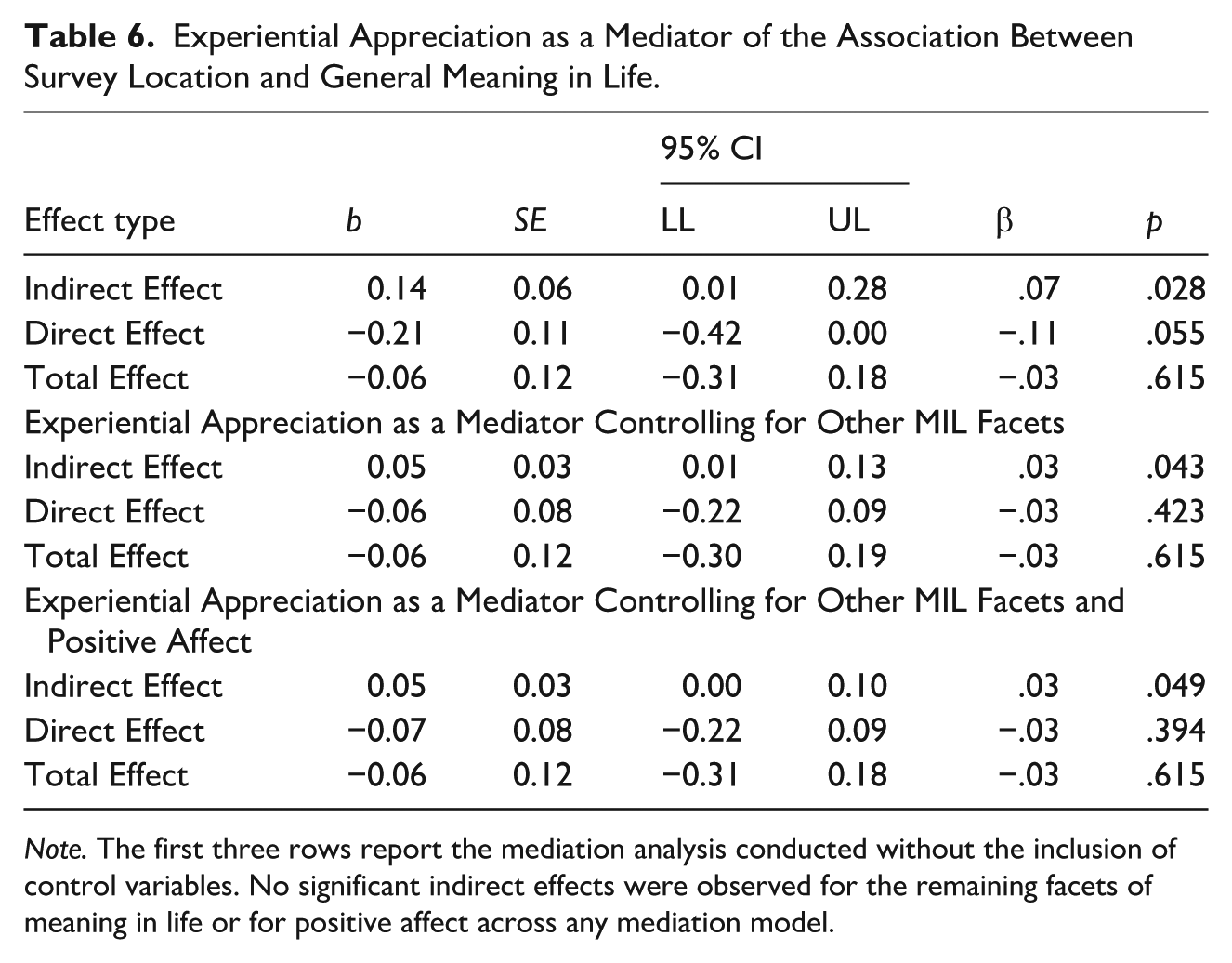
Note. The first three rows report the mediation analysis conducted without the inclusion of control variables. No significant indirect effects were observed for the remaining facets of meaning in life or for positive affect across any mediation model.
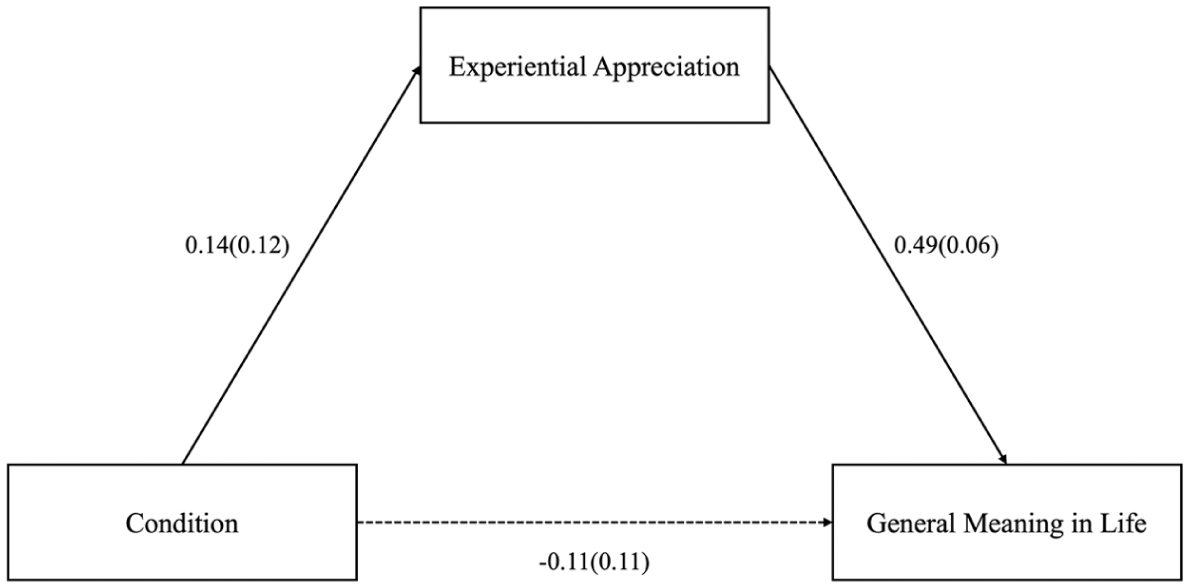
Experiential appreciation mediating the association between survey location and general meaning in life.
Study 2 Discussion
The findings from Study 2 support the idea that being in natural settings has a unique influence on experiential appreciation, and this, in turn, engenders general perceptions of meaning in life. Although the survey context (i.e., being in the gardens vs. being in the parking lot) did not influence perceptions of general meaning in life directly as we predicted, it did influence experiential appreciation, which was then associated with meaning in life. This finding held even when controlling for other facets of meaning in life and positive affect. Of course, the quasi-experimental field design did not allow for random assignment to conditions, leaving open the possibility that individual differences and other factors (e.g., people in the parking lot condition may have been more pressed for time) may have influenced our findings. Hence, Study 3 sought to address these limitations.
Study 3
The previous studies have established initial support for the connection between nature connectedness and nature exposure to meaning in life. Study 3 sought to build upon the previous findings by randomly assigning participants to view videos of either a natural or built environment before completing our measures of meaning in life. As outlined in our preregistration, 5 we hypothesized a main effect of the condition on general meaning in life, and that this difference would remain even when controlling for positive affect. 6 Additionally, we hypothesized an indirect effect of experiential appreciation. However, for this last hypothesis, we deviated from the preregistration plan in order to examine which facet was most predictive of general meaning in life, while controlling for positive affect, as we believed this provided a more informative and stringent test.
Finally, we examined whether general meaning in life predicted self-reported behavioral intention outcomes, such as those theorized by Passmore and Krause (2023). Specifically, we predicted that general meaning in life would mediate the relationship between condition and pro-environmental behaviors, such that participants in the nature condition would experience greater meaning and, thereby, report stronger pro-environmental behavioral intentions. It should be noted that this last hypothesis was not preregistered.
Method
Participants
We recruited 421 participants from the university SONA subject pool during the Fall 2024 and Spring 2025 semesters. All participants received course credit as compensation for their time. Five participants were removed from analyses: Three for reporting that their data were invalid, one for being under the age of 18, and one for displaying indications of illicit substance use during the study. This left us with 416 total participants (see Table 1 for demographics).
Procedure
Participants completed the study in person on individual computers in private cubicles and used lab-provided headphones during the video portion of the study. After consenting, participants were randomly assigned to one of two conditions: the natural environment condition (experimental; n = 206) or the built environment condition (control; n = 210). In each condition, participants were instructed to watch and listen to the corresponding 2.5-minute video (McAllister et al., 2017) and immerse themselves in the displayed environment “mentally, physically, and emotionally.” In the natural environment video, participants watched footage of forests and nature trails, whereas the built environment video contained cityscapes, roads, and storefronts. These videos were selected because they have been used in prior research (see McAllister et al., 2017) and are consistent with similar video stimuli commonly used to elicit nature connectedness (see Lau et al., 2023). Participants then completed the measures listed below.
Measures
Meaning in Life
To examine participants’ perceived state general meaning in life, its facets, and experiential appreciation, we again adapted the Multidimensional Meaning in Life Scale (Costin & Vignoles, 2020) and Experiential Appreciation scale (Kim et al., 2022). Specifically, we adapted all items such that they referenced the location of their condition (e.g., “Imagining myself in this location makes me feel as though my life as a whole has meaning”). Participants rated their agreement with each item on a Likert scale from 1 (“strongly disagree”) to 7 (“strongly agree”). All facet scales displayed marginally adequate internal reliability: General MIL (M = 4.90, SD = 1.06, α = .69), Coherence (M = 4.72, SD = 0.98, α = .57), Purpose (M = 4.86, SD = 1.05, α = .67), Mattering (M = 4.98, SD = 1.22, α = .78), and Experiential Appreciation (M = 5.12, SD = 1.24, α = .88). Although the internal reliability of these scales was lower than expected, we retained them for analyses to maintain consistency across studies and because they are widely used in research on meaning in life.
Connectedness to Nature
To measure perceived state connectedness to nature, we used the same measure as in Studies 1a–1c (i.e., Connectedness to Nature Scale; Mayer et al., 2009). Participants rated their agreement with the items on a Likert scale from 1 (“strongly disagree”) to 7 (“strongly agree”; M = 4.31, SD = 0.97, α = .86).
Positive Affect
We assessed positive affect using the same scale as in Studies 1a–1c, but adapted it to the state level (PANAS; Watson et al., 1988). Participants were asked to rate the extent to which they felt various positive emotions “right now” on a Likert scale from 1 (“Very slightly or not at all”) to 5 (“Extremely”; M = 3.03, SD = 0.81, α = .83).
Pro-Environmental Behavioral Intentions
To assess pro-environmental behavioral intentions, we adapted the multi-dimensional Pro-Environmental Behavior scale (PEB; Larson et al., 2015) to the present tense where items were rated on a Likert scale (1 = “Never” to 5 = “Very often”). This 13-item scale captures four domains of PEB: Environmental Citizenship, reflecting tangible behaviors related to environmental policy and decision-making (e.g., “Vote to support a policy or regulation that affects the local environment”); Social Environmentalism, encompassing conservation efforts rooted in social relationships (e.g., “Talk to others in my community about environmental issues”); Land Stewardship, referring to direct engagement with local ecosystems (e.g., “Make my balcony, patio, yard, or land more desirable for wildlife”), and Conservation Lifestyle, which includes household choices that promote environment sustainability (e.g., “Conserve water or energy in my home”). For our analyses, we use the average of all items across the scale (M = 2.98, SD = 0.69, α = .88).
Results
Non-Preregistered Preliminary Analyses
Preliminary analyses indicated that participants in the natural environment condition (M = 4.51, SD = 0.94) reported greater perceived nature connectedness than participants in the built environment condition (M = 4.11, SD = 0.96; t(408) = −4.26, p < .001, d = −0.42). Similarly, positive affect differed by condition, t(412) = −4.24, p < .001, d = −0.42, with participants in the natural environment (M = 3.20, SD = 0.84) reporting greater positive affect than those in the built environment (M = 2.86, SD = 0.75), further solidifying the need to control for it in our main analyses.
Preregistered Analyses
We conducted an independent samples t-test to determine if there was a difference in general meaning in life between conditions. We found that participants in the natural environment condition (M = 5.24, SD = 0.98) reported significantly higher levels of general meaning in life than participants in the built environment condition (M = 4.58, SD = 1.03; t(414) = −6.68, p < .001, d = −0.65). Moreover, to test our second hypothesis, we ran an ANCOVA to determine whether this difference held while controlling for positive affect. This finding held: Those in the natural environment condition (M = 5.17, SE = 0.07, 95% CI [5.03, 5.30]) reported significantly more general meaning in life compared to those in the built environment condition (M = 4.65, SE = 0.07, 95% CI [4.52, 4.78]), even when controlling for positive affect, F(1,411) = 29.54, p < .001, η 2 ₚ = .07.
Non-Preregistered Main Analysis
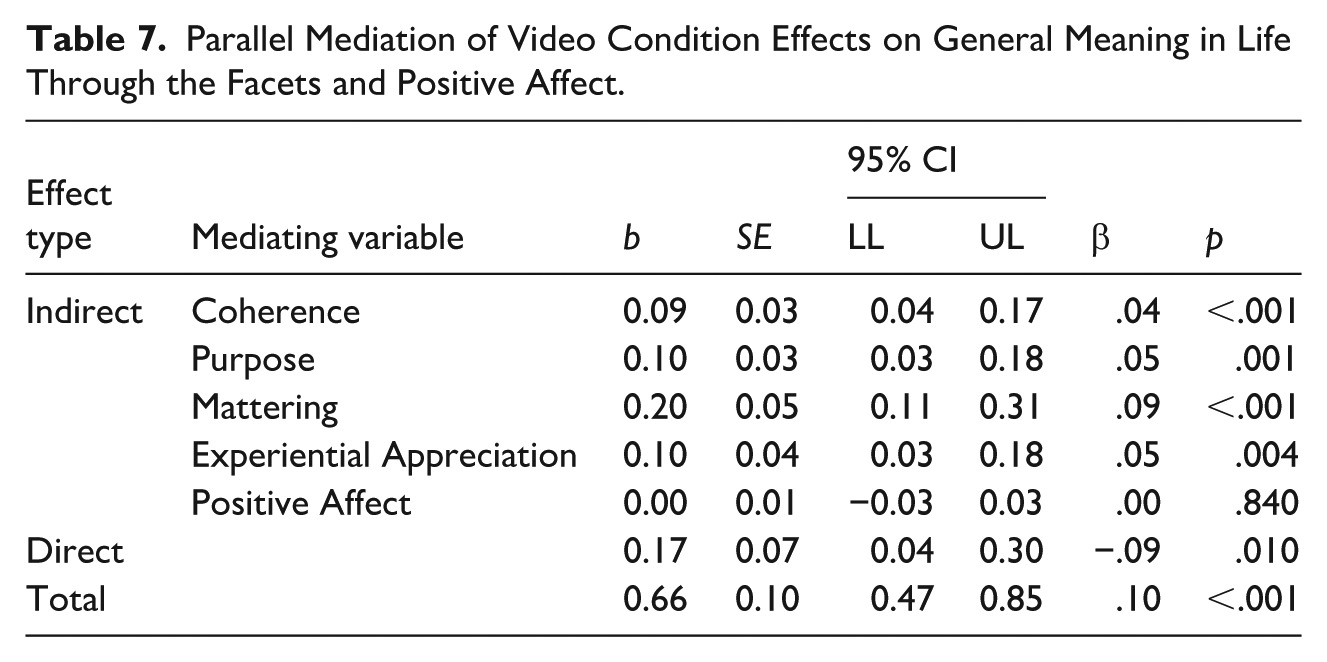
To examine which facet of meaning in life most strongly mediated the relationship between condition and general meaning in life, we conducted a parallel mediation analysis using the GLM mediation function within the medmod package of Jamovi. Somewhat unexpectedly, all facets of meaning in life, not just experiential appreciation, were significant mediators of the relationship between condition and general meaning in life (see Table 7). However, the strongest mediator was mattering, followed by experiential appreciation and purpose. Those exposed to the natural environment video experienced greater levels of all the facets (i.e., mattering, experiential appreciation, purpose, and coherence) which, in turn, predicted greater general meaning in life (see Figure 2).
Parallel Mediation of Video Condition Effects on General Meaning in Life Through the Facets and Positive Affect.
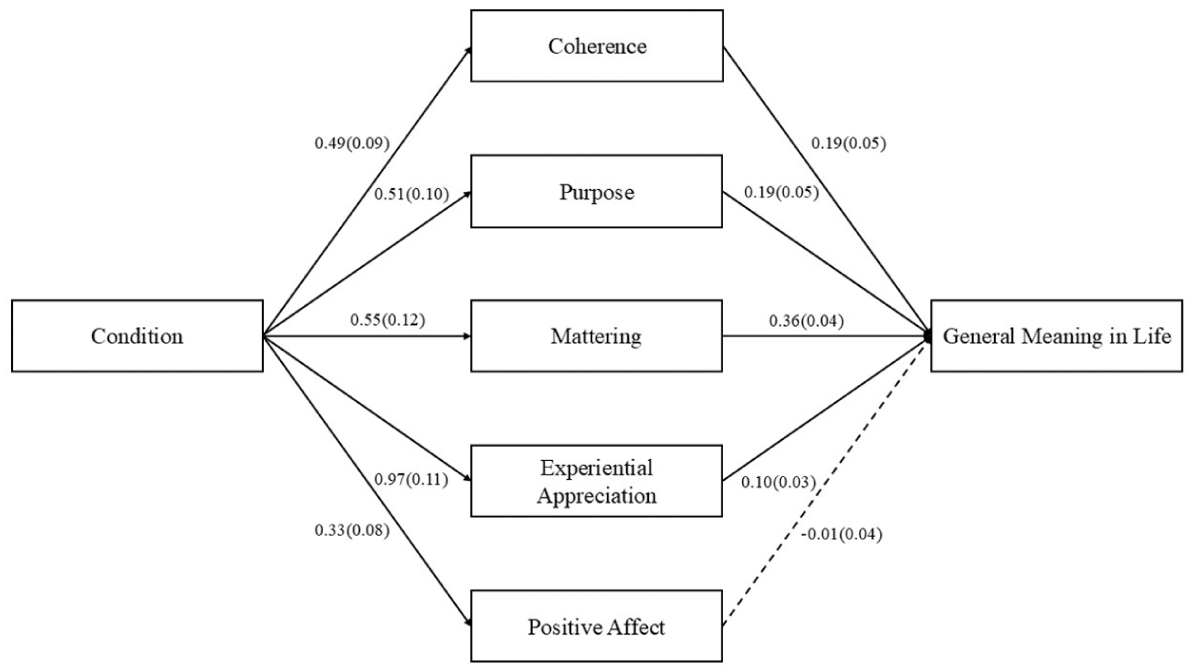
Parallel mediation of the association between video condition and general meaning in life through the facets and positive affect.
Non-Preregistered Exploratory Analyses
Although it was not preregistered, we ran a GLM mediation analysis to examine whether general meaning in life mediates the relationship between condition and pro-environmental behavioral intentions. We used the GLM mediation function from the medmod package in Jamovi. We found a significant indirect effect (b = 0.06, SE = 0.02, 95% CI [0.01, 0.12], β = .04 p = .011; direct effect: b = .09, SE = 0.07, [−0.05, 0.23], β = .07, p = .193) of general meaning in life on the relationship between condition and pro-environmental behavioral intentions, such that those exposed to the natural environment video experienced greater general meaning in life, which then predicted greater intention to engage in pro-environmental behaviors. This finding highlights the potential importance of meaning in life as a mechanism linking nature exposure to behaviors that support the natural environment.
Study 3 Discussion
The findings from Study 3 provide limited causal evidence that mere exposure to a natural setting, even through video rather than direct experience, can enhance perceptions of meaning in life, above and beyond momentary positive affect. Moreover, all facets of meaning in life appear to contribute to this overall increase, even when controlling for positive affect. This pattern diverges somewhat from Study 2, which identified experiential appreciation as the primary mediator. However, differences in the nature exposure manipulations (i.e., Study 2 compared time spent in the university gardens versus a parking lot, whereas Study 3 relied on video exposure) may help explain this discrepancy. Direct nature exposure may operate through embodied, sensory engagement with the environment, aligning most closely with experiential appreciation. Consistent with this perspective, research suggests that urban nature parks facilitate psychological restoration by providing immersive, embodied natural experiences (Cao et al., 2024). In contrast, indirect nature exposure through videos represents a less immersive and more representational form of nature. As such, it may prompt greater cognitive processing, prompting individuals to interpret, organize, and reflect on what they observe, which could engage more cognitively elaborate facets of meaning. Supporting this possibility, previous research has demonstrated that merely exposing participants to images of trees aligning with seasonal patterns, as opposed to random presentation order, can elicit greater meaning in life through the facet of coherence (Heintzelman et al., 2013), which is a more cognitively elaborate facet (Martela & Steger, 2016).
Nonetheless, Study 3 suggests that meaning in life can foster stronger pro-environmental behavioral intentions, consistent with prior theorizing (Passmore & Krause, 2023) and research linking nature experiences to environmental concern (Larson et al., 2015). For example, Gainsburg et al. (2023) found that across nearly 12 counties, morality- and identity-based reasons for valuing nature were the strongest predictors. Our results extend this by highlighting perceptions of meaning in life as an additional, previously overlooked predictor. Thus, meaning in life may play a potential role in linking nature exposure, even through video, to behaviors that support the natural environment.
General Discussion
Connectedness to nature and nature exposure are both argued to facilitate the experience of meaning in life. The current studies support this idea and help clarify how nature augments the feeling of existential meaning. In Studies 1a–1c, trait-level nature connectedness was generally linked to greater meaning in life, with the strongest association emerging for experiential appreciation. Experiential appreciation also served as the most robust mediator of the link between nature connectedness and general meaning in life. Study 2, a quasi-experimental field study, showed a similar pattern: Nature exposure (i.e., location of survey completion) was associated with greater general meaning in life indirectly through experiential appreciation, a finding that remained significant when controlling for the other facets of meaning in life and positive affect. Lastly, Study 3 provided evidence that even indirect nature exposure (i.e., through video format) can lead to greater perceived meaning in life, an effect found to be mediated by all the facets of meaning in life, even when controlling for positive affect. Moreover, an exploratory analysis indicated that these enhanced perceptions of general meaning in life were associated with greater self-reported pro-environmental behavioral intentions, suggesting that a sense of meaning connected to the natural world may further influence environmentally conscious behaviors. Taken together, these findings highlight the central role of experiential appreciation in linking trait-level nature connectedness and nature exposure to a greater sense of meaning in life, and suggest that fostering this connection to nature may also promote environmentally responsible behavior.
There are many theoretical perspectives that support the link between experiential appreciation and meaning in life. For example, Attention Restoration Theory suggests that nature experiences can help alleviate mental fatigue for common daily tasks that require direct focus (e.g., writing a paper, solving a difficult math problem, reading a research article; Kaplan, 1995). Nature experiences not only alleviate mental fatigue, but they can also revitalize one’s ability to concentrate. This effect occurs when one feels fully immersed and present in the environment; the environment itself is a break from one’s routine; when the individual is open to and appreciative of that experience; and, especially, when the person attends to the experience effortlessly, which is referred to as soft fascination. Soft fascination is perhaps most integral for attention restoration – one’s attention is placed effortlessly upon the natural environment, allowing one to take a break from directed attentional focus. Experiential appreciation is likely a byproduct of the intrinsic value associated with resting directed attention and engaging in soft fascination.
This research lends support to the idea that meaning in life may be simple and attainable in day-to-day life (e.g., Heintzelman & King, 2014). Meaning in life is not always about grand pursuits or accomplishments, but can also be about appreciating the present moment, including experiences in nature (Kim et al., 2022). Experiential appreciation is more related to detecting meaning present in the environment, rather than constructing meaning in life (Kim et al., 2022). Attention Restoration Theory suggests nature experiences are valuable when we appreciate the experience (Kaplan, 1995). Our findings suggest that this type of appreciation serves as a cue that life is meaningful, which may, in turn, encourage behaviors that support the natural world.
Of course, as evidenced in Study 3 and theorized in previous work, experiences in nature might also influence the other facets of meaning in life. Relaxing directed attention allows this resource to be replenished (Kaplan, 2001) which may support the construction of purpose and coherence. For example, turning to nature as a break from everyday obstacles may offer new insight and foster a renewed sense of purpose upon returning to daily life (Kaplan & Kaplan, 1989). Separately, Heintzelman et al. (2013) found that viewing nature images ordered by season increased coherence, suggesting that nature also contributes to a sense of consistency in the world. Nature experiences over larger timespans, or even memorable experiences in nature, such as awe-inspiring nature experiences (Shiota et al., 2007), may also directly influence feelings of coherence, mattering, and purpose to the extent to which it helps people reevaluate their priorities.
Limitations & Future Directions
A limitation of our work across studies is that our samples come from WEIRD (Western, Educated, Industrialized, Rich, and Democratic; Henrich et al., 2010) societies. With the exception of Study 2, most participants were undergraduate students, which limits representation of older and more diverse adult populations. As a result, we cannot assume that our findings generalize beyond the characteristics of our samples. This limitation is especially important to acknowledge because experiences of, and connections to, nature are not culturally neutral. Nature is deeply intertwined with cultural traditions and worldviews (Bang et al., 2007; Milfont & Schultz, 2016; Nelson & Shilling, 2018; Pascual et al., 2023). For example, research examining conceptualizations of “nature” across more than 60 languages demonstrates substantial variation in whether nature is viewed as separate from or inclusive of humans (Coscieme et al., 2020). Moreover, Indigenous cultural knowledge, beyond simple group identification, has been linked to greater nature relatedness (Niigaaniin & MacNeill, 2022). Related work further suggests that representations of human-nature relationships and nature connectedness vary meaningfully based on cultural heritage and socio-historical contexts (see Belz & Wittek, 2025). Consequently, the facet of meaning in life that most strongly predicts overall perceptions of meaning following exposure to natural settings may vary across cultural contexts. For individuals who view nature as inextricably intertwined with the self, engagement with the natural world may primarily foster a sense of coherence by reinforcing culturally-bound self-views, rather than environmental appreciation per se. Additionally, although meaning in life may be a fundamental aspect of the human experience, its sources and significance are not universal (Steger et al., 2008), and can vary with cultural identity (Zhou et al., 2025). While some facets of meaning are relatively robust across cultures, like having a sense of purpose (Mask et al., 2025) and viewing relationships as a key source of meaning (Heintzelman et al., 2020), there remains considerable variance in how meaning is construed and experienced. While our current studies cannot speak to how different cultural contexts may shape the experience of meaning in life through nature connectedness and exposure, we believe future research should address this.
Another limitation is that Study 2, our quasi-experimental field study, did not yield a direct effect on general meaning in life. A likely reason is that participants may not have been fully immersed in the natural setting, as the garden condition was located in the middle of a college campus where the built environment remained visible. Supporting this possibility, Hamann and Ivtzan (2017) found that wilderness areas, but not park environments, increased mindfulness, well-being, and meaning. Hence, simply being in the campus gardens may not have afforded participants a fully immersive nature experience, which could explain the absence of a direct effect on meaning in life. Instead, the garden setting may have primarily encouraged a sense of experiential appreciation, which in turn emerged as the key pathway linking nature exposure to meaning in life.
Study 3 relied on video-based nature exposure, which, while allowing controlled presentation of natural stimuli, may not fully capture the immersive qualities of real-life nature experiences. However, our findings highlight the potential of digital technologies (i.e., videos, virtual reality, etc.) as effective tools for studying the psychological effects of nature exposure. This approach may be especially useful in applied settings, including clinical or counseling psychology, by providing access to the benefits of nature for individuals who may not otherwise have direct or easy access to natural environments. For instance, individuals with disabilities may face challenges accessing nature due to physical barriers (Aguilar-Carrasco et al., 2023). Similarly, those residing in densely populated urban areas, those who are hospitalized, and those who are incarcerated may struggle to reach nature due to a lack of nearby natural spaces (Cox et al., 2017). As such, digital natural interventions for meaning in life could improve the mental health outcomes of these nature-deprived populations. In addition to supporting human well-being, Study 3 highlights how digital nature experiences may also promote pro-environmental behavioral intentions, thereby offering potential benefits for the natural environment itself.
Despite present methodological limitations, these results carry important theoretical and practical implications. Theoretically, they advance our understanding of how nature connectedness and exposure promote a sense of meaning in life, primarily through experiential appreciation. Practically, these results suggest accessible green spaces may enhance community well-being through the perception that life is inherently valuable and significant. Experiential appreciation also holds promise within Attention Restoration Theory, potentially serving as a cue of resting directed attention while engaging with soft fascination. Overall, connecting with nature appears to be a powerful avenue for both enhancing a sense of meaning by fostering present-moment appreciation and providing unique insight into meaning-making processes. Additionally, our exploratory findings point to the possibility that enhanced meaning garnered through nature exposure may also encourage pro-environmental behavioral intentions. Future research should replicate and extend this finding to determine whether the sense of meaning derived from nature influences downstream intentions to preserve the natural environment.
Conclusion
Humans are argued to have an innate motive to find meaning in life (Frankl, 1997). The results of our studies suggest the fulfillment of this motive may be attainable through simply valuing and appreciating the natural environment. Much work remains in order to understand all the ways people derive meaning from nature. These findings, however, suggest that the natural world can help fulfill humanity’s fundamental needs for connection and meaning.
Footnotes

Ethical Considerations
This research was approved by the Texas A&M University’s Institutional Review Board.
Funding
The authors received no financial support for the research, authorship, and/or publication of this article.
Declaration of Conflicting Interests
The authors declared no potential conflicts of interest with respect to the research, authorship, and/or publication of this article.