






Abstract

This issue marks the end of our final year as Editors of Exceptional Children. We began our editorship with the traditional hard-copy mailing of manuscripts to authors, field reviewers, and publisher; then we moved to an electronic portal site with BePress. More recently, Exceptional Children moved to a new portal site with SAGE: http://mc.manuscriptcentral.com/ecx for submission of manuscripts. Online versions of accepted manuscripts now appear to read and review prior to the Exceptional Children hard-copy publication (http://ecx.sagepub.com/). This feature allows more convenient full access to all manuscripts as they are accepted for publication in Exceptional Children.
We are pleased to report that Exceptional Children now has a 1-year impact factor of 2.745, and a 5-year impact factor of 3.016, which is presently the highest impact factor of any special education journal according to Thomson Reuters (2015). This is an excellent rating for the journal, and means that articles in Exceptional Children are cited more frequently by other scholars than articles appearing in other special education journals. We are optimistic that Exceptional Children will be able to continue to maintain its high level of visibility in the future.
Over the past year, Exceptional Children received 112 original manuscript submissions. Across the SAGE and BePress portal sites 22 manuscripts were accepted for publication, resulting in a 19.6% acceptance rate. Seventy-one manuscripts were rejected and 45 manuscripts were in various stages of revision. All manuscripts that were accepted had initially received a “revise and resubmit” initial decision. During this period, the time from initial decision to author resubmission ranged from 1 month to over a year. Although we received a high number of submissions last year, Exceptional Children is always interested in receiving additional submissions, particularly of outstanding manuscripts that describe new and better methods for improving the lives of exceptional individuals.
As in previous years, Exceptional Children continues to publish articles representing a wide range topics, research methodologies, and target populations. Volume 81 has maintained this tradition by including articles addressing such topics as social-behavioral functioning, literacy and language, math, and social studies, as well as other topics including teaching and teacher education, educational placement, parents and families, and characteristics of exceptional populations. These latter articles have featured subgroup analysis, prevalence, relative access to general education settings, and population needs. Figure 1 displays graphically these main focus areas.

Percentages of Primary Focus of Articles Published in Exceptional Children Volume 81.
A varied range of special populations was addressed in Volume 81. Articles addressed students considered at risk; students who are deaf and hard of hearing; students with autism spectrum disorder, mild disabilities, intellectual disability, learning disabilities, emotional disabilities and behavioral disorders; special and general education; and teachers and families (see Figure 2). More often than in previous decades, individuals representing several disability categories were included in individual studies. Race and ethnicity were also distributed among participants in the research, including White, African American, Hispanic American, Native American, and Asian American students, as well as those of mixed race or ethnicity. All grade levels—preschool, elementary, and secondary—were represented in these articles, as shown in Figure 3.
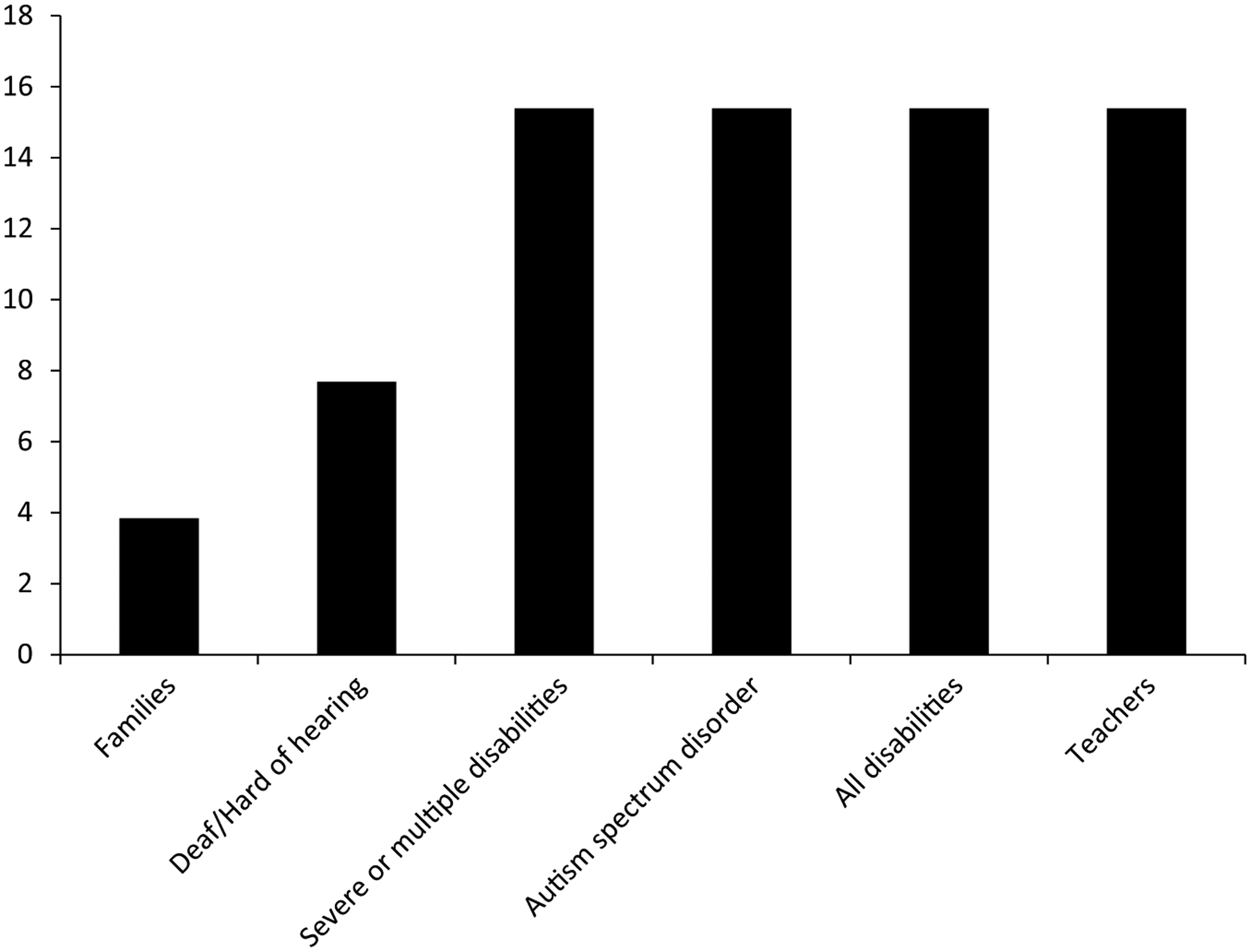
Percentages of Populations Addressed in Articles Published in Exceptional Children Volume 81.
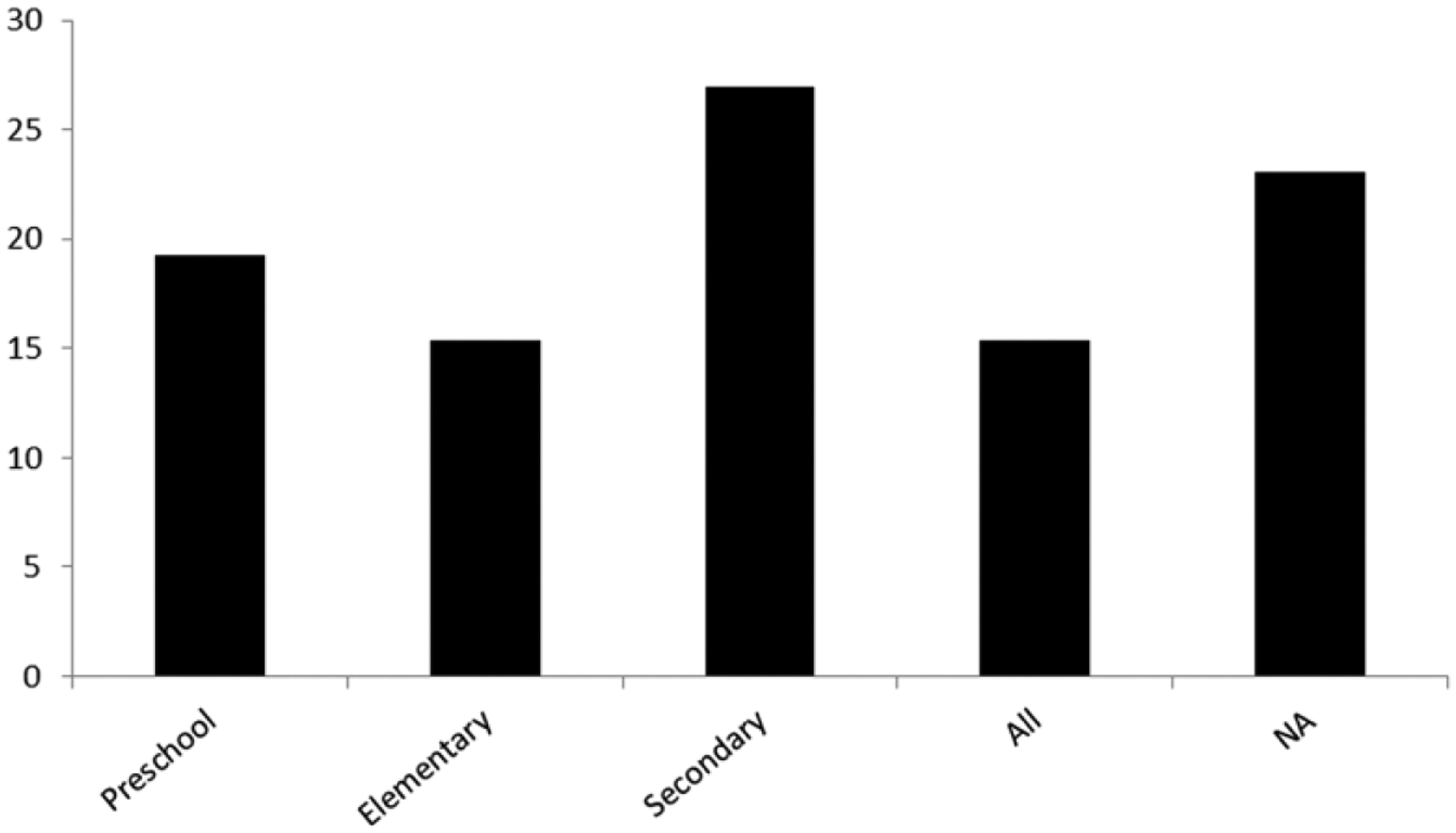
Percentage of Grade Levels Addressed in Articles Published in Exceptional Children Volume 81.
As with previous volumes, Volume 81 of Exceptional Children published predominantly research articles. Single-subject and group-experimental intervention research was well represented in this volume, as were qualitative investigations, survey research, and reviews or meta-analyses of previous research. In addition, other quantitative research methods were employed to further our understanding of special populations, including descriptive/correlational, longitudinal, and regression methodologies, and latent group or latent variable analysis. Figure 4 displays the percentages by article type.
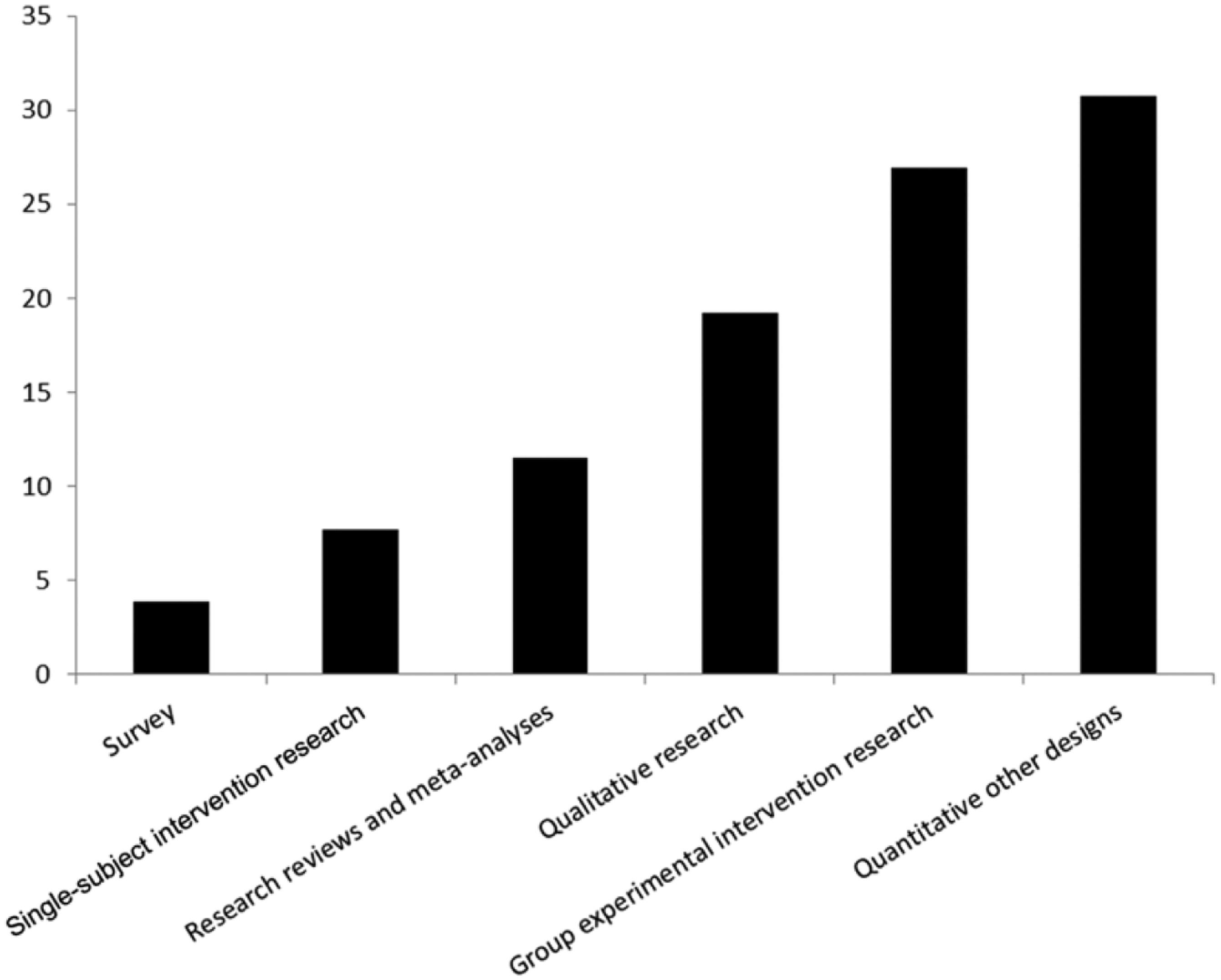
Percentage of Types of Articles Published in Exceptional Children Volume 81.
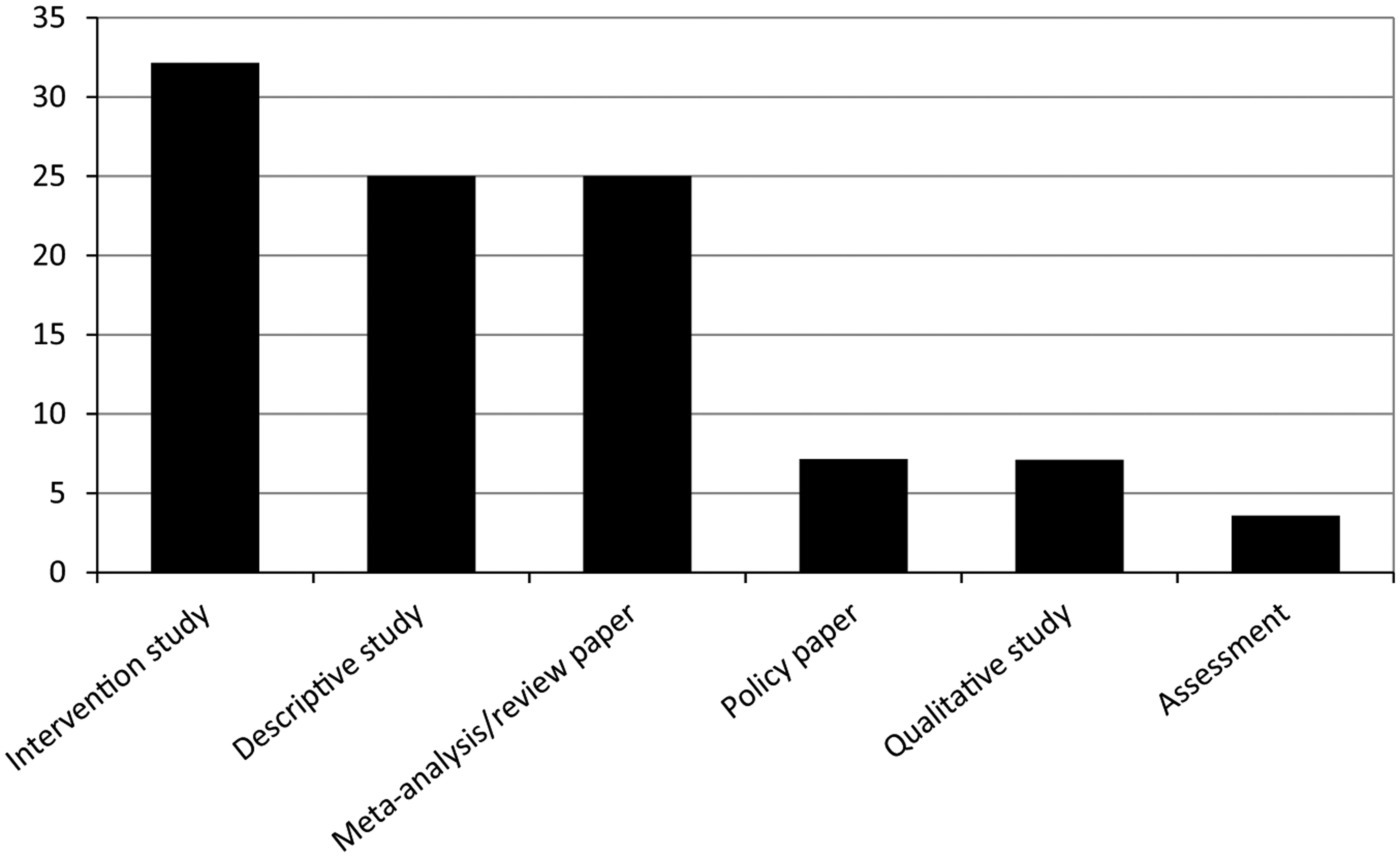
Percentage of Types of Articles in Volme 80.
In our final year as Editors, we have relied enormously on the efforts and expertise of many talented individuals. Our Associate Editors, Doug Fuchs, Donna Ford, Diane Browder, Rick Brigham, Robin McWilliam, Mike Behrmann, and Vivian Fueyo, have provided continuous support and expertise in guiding the direction of Exceptional Children. We also express our genuine appreciation to Kevin Good for his outstanding efforts as our editorial assistant. In addition, we greatly appreciate the countless hours our field reviewers have contributed to maintaining the quality of the peer review process. Exceptional Children’s field reviewers have time and time again provided thoughtful, expert manuscript reviews that have strengthened the overall quality of the journal. We also thank our many guest reviewers who have shared their expertise in providing thoughtful reviews, and have contributed significantly to the overall review process.
In addition, there are many individuals who worked behind the scenes to produce the journal in the format that arrives on the desktops and in the mailboxes of our readers. This was a year of transition for both the journal and for CEC. We thank Meridee Mucciarone and Kathleen McLane, the previous CEC production team. As CEC transitioned to our new publisher, SAGE, Karen Niles, former Assistant Executive Director of Professional Development Services provided invaluable assistance, along with Lorraine Sobson, the current Manager of Professional Publications. We also thank CEC’s other staff members and journal production staff who provided tireless and important assistance over the years.
We continued to rely on the electronic portal site to facilitate our receipt and review of manuscripts, and we are thankful again to the support staff at SAGE, including Allison Leung, Jesse Soll and Alisia Lemos, who provided us (as well as our authors and reviewers) with prompt and helpful assistance. This has made our job considerably easier.
The field of special education continues to offer great successes and enormous potential, as well as significant challenges, for the future. Although much is known today that was unknown in years past, there is still much to learn and share. We hope authors will continue to submit their very best scholarship to Exceptional Children, and that readers will continue to receive the best new information on the cutting-edge developments in the field. Finally, we express our sincerest gratitude and thankfulness to CEC and the field of special education for the opportunity to serve as Editors of Exceptional Children over the past 6 years.
Best wishes,